39
RESEARCH REGARDING THE PHYSIOLOGY OF
COTINUS COGGIGRIA
Scop. SPECIES
BUSE DRAGOMIRLUMINITA 1, NICOLAE ION2 1 University of Craiova, [email protected] 2University of Craiova,[email protected]
Key words :smoke tree , photosynthesis, transpiration, chlorophyll
ABSTRACT
Cotinuscoggygria is a deciduous shrub growing to 3 m at a medium rate. It is in flower from Jun to July, and the seeds ripen from September to October. The flowers are dioecious (individual flowers are either male or female, but only one sex is to be found on any one plant so both male and female plants must be grown if seed is required).The plant is not self-fertile. Suitable for: light (sandy), medium (loamy) and heavy (clay) soils, prefers well-drained soil and can grow in nutritionally poor soil. Suitable pH: acid, neutral and basic soils. It can grow in semi-shade (light woodland) or no shade. It prefers dry or moist soil and can tolerate drought.
INTRODUCTION
Cotinuscoggygria (Eurasian smoketree, smoketree, or smoke bush) is a species of
flowering plant in the order Sapindales, familyAnacardiaceae, native to a large area from southern Europe, east across central Asia and the Himalayas to northern China.
The leaves are 3-8 cm long rounded ovals, green with a waxy sheen. In autumn the color can be strikingly varied, from peach and yellow to scarlet. The flowers are numerous, produced in large inflorescences 15–30 cm long; each flower 5-10 mm in diameter, with five pale yellow petals. Most of the flowers in each inflorescence abort, elongating into yellowish-pink to pinkish-purple feathery plumes (when viewed en masse these have a wispy 'smoke-like' appearance, hence the common name) which surround the small (2-3 mm) drupaceousfruit that do develop.
It gets its common name of smoke tree (or smoke bush) not from the tiny, insignificant, yellowish flowers which appear in branching, terminal panicles (to 6-8” long) in spring, but from the billowy hairs (attached to elongated stalks on the spent flower clusters) which turn a smoky pink to purplish pink in summer, thus covering the tree with fluffy, hazy, smoke-like puffs throughout summer. Bluish green leaves are ovate to obovate. Fall color is highly variable, but at its best produces attractive shades of yellow, orange, and purplish-red.
Grows best in moderately fertile, moist but well-drained soil in full sun or partial shade, but is tolerant of alkaline soils, moist, clay soils, dry, rocky soils, and drought.
Cotinus coggigriagrown in the south-west of Romania ( Iron Gates Park, Domogled
- Cerna Valey Park, Mehedinti Plateau). It plays a very important role in preventing soil erosion, soil water loss and regulating climate, as well as in retaining ecological stability in the region.
Owing to its fast growth and drought tolerance, contribute to forest restoration as a pioneer species.
Analele Universităţii din Craiova, seria Agricultură – Montanologie – Cadastru (Annals of the University of Craiova - Agriculture, Montanology, Cadastre Series)Vol. XLIV 2014
40
Huang et al. (2008) observed that drought determined an increasing chlorophyll content. Yan Li et al.(2011) found that drought affected the differences in chl a /b and significantly drought decreases, the net photosynthesis. Similar results have been reported by Duan et al.(2009).
MATERIAL AND METHODS
The research was carried in May- September 2014 in three different areas: - Danube Gorge, Dubova locality, Mehedinti county
- MehedintiPlateau,Isverna locality, Mehedinti county - TesneyValey, Mehedinti and CarasSeverin county
For determination were chosen plants of the some height ( approximately 1,5 meters), on south -west and southern exposed slopes.
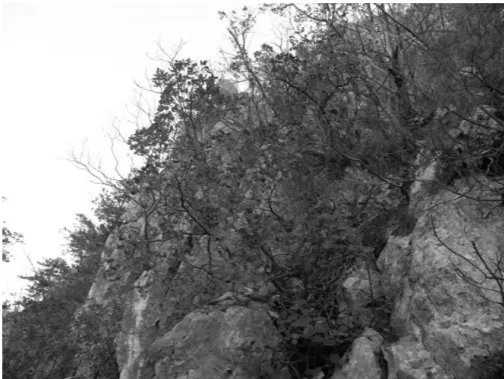
Fig. 1.Cotinuscoggigria in TesnaValey(orig.)
41
Fig.3.CotinuscoggigriaMehedintiPlateau(orig.)
On the biological material were determined: the intensity of leaf transpiration, the respiration intensity, the compensation point of light, the intensity of photosynthesis, the content of assimilatory pigments and the water content.
Transpiration, photosynthesis and respiration inleaveswere determinedusingLCiportabledevice.
The chlorophyllcontentofleaveswas determined with the Minolta portable chlorophyll meter (SPADunits).
RESULTS AND DISCUSSIONS The intensity of photosynthesis (µmol CO2/m2
/s) had relatively constant values during determinations at plants from Dubova si Tesna Valey, but it showedsignificant variations at plants from Tesna Valey. At these last ones, it was also recorded the highest value in July (4,4 µmol CO2/m2
/s)(gr.1).
Gr. 1. The intensity of photosynthesis (µmolCO2/m 2
/s)
Regardingthesweat process, Cotinus coggigria leaves present high values throughout the day, from here resulting that theresistance to drought of these plants is not
0 0,5 1 1,5 2 2,5 3 3,5 4 4,5 5
June July August September
Isverna
Tesna Valey
Analele Universităţii din Craiova, seria Agricultură – Montanologie – Cadastru (Annals of the University of Craiova - Agriculture, Montanology, Cadastre Series)Vol. XLIV 2014
42
due totheir ability toreducewater losses, butthe ability toachieve ahighsuctionforce that will allow theabsorptionof enoughwater. The greatestlosses ofwaterthrough sweat were recorded at plants from Mehedinti Plateau (gr.2).
.
Gr.2. The intensity of transpiration (mmol H2O/m 2
/s)
The intensity of leaf respiration has shownsignificant variationsdepending on thetemperature that was in the assimilation room. If at18 degrees Celsius ithadan average value of 0,7 µmol CO2/m2/s, the value doubled atall plantsstudied. The mostintensebreathingplants are those from Dubova area, thisexplaining thelower values ofapparentphotosynthesisobtainedfrom them too (gr.3).
Gr.3. The intensity of leaf respiration (µmolCO2/m 2
/s)
The amount ofchlorophyllvarieswithin very wide limits, even at the same plant. The data presentedingraphic4showsthe result ofdeterminationsmadeinthe monthsfrom June to September. As seen, inSeptember isrecordedthe minimum contentofchlorophyll at plants from Dubova and Tesna Valey.During this period there is a great increase in red pigments content, which give thecharacteristiccolorto leavesof these plants.
0 0,5 1 1,5 2 2,5 3
10 12 14 16
Isverna
Tesna Valey
Dubova
0 0,2 0,4 0,6 0,8 1 1,2 1,4 1,6
18 23 26 28degrees
Isverna
Tesna Valey
43
Gr.4. The chlorophyll content (SPAD)
CONCLUSIONS
-Cotinus coggigriagrows best in moderately fertile, moist but well-drained soil in full sun or partial shade, but is tolerant of alkaline soils, moist, clay soils, dry, rocky soils, and drought.
-Inthe climatic conditionsof the year2014, plants from Dubova area recordedthe lowestvalues regarding theintensity ofphotosynthesis
-Although itsdrought resistance, Cotinuscoggigriapresentshigh values ofsweat intensity.
-The amount ofchlorophyllin theleavesshowssignificant variationswithin the sameplantanddepending on the period in which thedetermination was made.
REFERENCES
Duan B.,Ly, I., Zhang X.,Korpelainen , H, Li,C, 2009,Water deficit affects
mesophyll limitation of leaves more strongly in sun that in shade, Three physiology, 29, pp
1551-1561
Koslowski,T.T., Pallardy, S.G., 2002, Acclimation and adaptative responses of
woody plants to environmental stresses, Bot. Rev.,68, 270-334
Yan Li,Hongxia Zhao, Baoli Duan, Korpelainen H.,Chunyang Li, 2011, Effect of drought, photosynthesisand antioxidant system of Cotinus coggigria seedlings under two different light conditions, Elsevier Journal of Environmental and Experimental Botany, pp 107-113
Nardini A.,Salleo S.,Trifilo A., Lo Gullo M.A.,2003, Water relations and hydraulic characteristics of three woody species co-occuring in the same habitat, Ann For. Sci.60, pp 297-305
0 5 10 15 20 25 30 35
June July August September
Tesna
Dubova