BLACK WORLD LANGUAGE INSTRUCTORS IN HIGHER EDUCATION: SOCIAL JUSTICE-BASED PERSPECTIVES AND PEDAGOGIES
Mariah S. Murrell
A dissertation submitted to the faculty at the University of North Carolina at Chapel Hill in partial fulfillment of the requirements for the degree of Doctor of Education in the School of
Education.
Chapel Hill 2017
Approved by: Xue Rong
Dana Thompson Dorsey George Noblitt
ABSTRACT
Mariah S. Murrell: Black World Language Instructors in Higher Education: Social Justice-Based Perspectives and Pedagogies
(Under the direction of Xue Rong)
The field of world language education is one that has historically been dominated by traditional pedagogical practices and perspectives that limit the opportunity for rich, critical examination of course content. This often leaves much to be desired in students’ learning
experiences for many students, and frequently causes students of color to feel alienated from the language learning process. There has been a recent shift within the field in which social justice pedagogies are utilized by educators in an effort to create more meaningful learning experiences for students.
This study explores the former learning experiences of three Black, post-secondary Spanish instructors and examines their pedagogical practices as they explore social justice-based phenomena and question and challenge systems of inequity and injustice with their students through use of the target language. The pedagogies implemented within the classrooms are based on the educators’ own perceptions of what it means to teach for social justice.
Furthermore, these practices are the educators’ intentional efforts to prepare their students to be globally-minded, critical thinkers who work to disrupt systems of privilege and power within our world.
For my son still growing inside of me. Thank you for the constant kicks that keep mommy going. In loving memory of my amazing grandmothers, Mariah Killings and Mary Jane Smith. I will
ACKOWLEDGEMENTS
better scholar. I appreciate you. To Drs. Noblitt and Randolph, thank you for agreeing to serve on my committee in the midst of your busy schedules, and for sharing your expertise and knowledge. I appreciate you both. Finally, thank you to each of my study participants. I am so grateful that you took the time to participate in this project and support my work. I am
TABLE OF CONTENTS
LIST OF TABLES ... xiv
LIST OF ABBREVIATIONS ... xv
CHAPTER 1: INTRODUCTION ... 1
Background of the Problem: World Language Education History and Traditions ... 1
Social Justice Pedagogy ... 8
Social Justice Terminology Defined ... 8
Misconceptions Regarding Social Justice Pedagogy ... 10
Descriptions and Characteristics of Social Justice Pedagogy ... 11
Goals of Social Justice Pedagogy ... 13
Purpose of Study ... 14
Importance of Study ... 16
Conclusion ... 18
CHAPTER 2: REVIEW OF LITERATURE ... 19
The World Language Experiences of African Americans ... 19
Eurocentrism and Linguicism ... 20
World Language Education and Racism/Racialism ... 25
World Language Education and the Intersection of Race and Class ... 28
Theoretical and Conceptual Framework ... 31
Critical Race Theory (CRT) ... 31
The Relationship between Critical Race Theory and Social Justice Pedagogies/Culturally Relevant Pedagogy (Specifically in World
Language Education) ... 42
Teaching World Languages for Social Justice ... 48
Conclusion ... 54
CHAPTER 3: METHODOLOGY ... 56
Constructivist Paradigm/Approach to Research ... 57
Positionality ... 58
Case Study Methodology ... 62
Entry/Sampling ... 63
Researcher Role ... 64
Data Collection Plans ... 65
Observations ... 67
Data Analysis ... 68
Limitations ... 70
Conclusion ... 70
CHAPTER 4: FINDINGS ... 72
Lisa ... 73
Setting ... 73
Personal Connections to Spanish Language Learning ... 73
The HBCU as a Motivating Factor ... 74
“They Didn’t Want Me to be Black”: Study Abroad Experiences ... 75
A Vastly Different Learning Experience ... 75
Connections between Past Experiences and Current Pedagogical Practices: Culturally Relevant Pedagogy ... 80
Setting ... 84
Personal Connections to Spanish Language Learning ... 84
Formal Spanish Education as a Deterrent ... 85
The HBCU as a Motivating Factor ... 86
Study Abroad Struggles ... 87
Formal Education as a Deterrent…Again ... 89
“I Want Them to Have Better Experiences Than Mine”: Motivations to Implement Social Justice/Culturally Relevant Pedagogies ... 91
Complications ... 95
Corina ... 96
Setting ... 96
Early Spanish Language-Learning Experiences ... 96
Positive Personal Learning Experiences ... 97
Career, College, and a Caring College Professor ... 97
Study Abroad ... 99
“My Experiences Were Mostly Positive, But…” ... 100
Activism and Teaching for Social Justice ... 101
The Educator’s Role as a Social Justice Advocate ... 105
Conclusion ... 105
CHAPTER 5: RESULTS OF THE CROSS-CASE ANALYSIS ... 108
Research Question 1 ... 109
Theme 1: Eurocentrism and Language Hierarchy/Linguicism ... 109
Theme 2: Race/Racism and Identity ... 110
Theme 3: Social, Cultural, and Political Aspects of Language Education ... 113
Themes 4 and 5: Culturally Relevant Pedagogies/Social Justice
Activism ... 114
Research Question 3 ... 125
Theme 6: Community/Spanish Language Learning Outside of the Classroom ... 125
Theme 7: The Role of Vested Educators ... 127
Theme 8: The Value of Study Abroad ... 129
Theme 9: Intersectional Experiences ... 131
Conclusion ... 135
CHAPTER 6: DISCUSSION ... 137
Summary of Findings ... 138
Eurocentrism and Language Hierarchy/Linguicism ... 138
Race/Racism and Identity ... 139
Social, Cultural, and Political Aspects of Language Education ... 139
Culturally Relevant Pedagogies/Social Justice Activism ... 140
Community/Spanish Language Learning Outside of the Classroom ... 140
The Role of Vested Educators ... 141
The Value of Study Abroad ... 142
Intersectional Experiences ... 142
Contributions of this Study ... 143
Enhanced Understandings of African Americans’ Language Learning Experiences ... 143
Specific Examples of Social Justice Pedagogy within the World Language Classroom ... 143
Uncovers Issues of Race, Identity and Language Hierarchies within the Language Classroom ... 143
Teacher Education/Professional Development Programs ... 144
Curriculum Development ... 145
Implications for Future Research/ Recommendations ... 145
Limitations ... 148
Participants of Similar Demographic ... 148
Limited Number of Potential Participants ... 149
Conclusion ... 149
APPENDIX A: THE CHRONOLOGICAL DEVELOPMENT OF LANGUAGE TEACHING (1994) ... 151
APPENDIX B: INTERVIEW PROTOCOL ... 152
APPENDIX C: OBSERVATION PROTOCOL ... 154
LIST OF TABLES
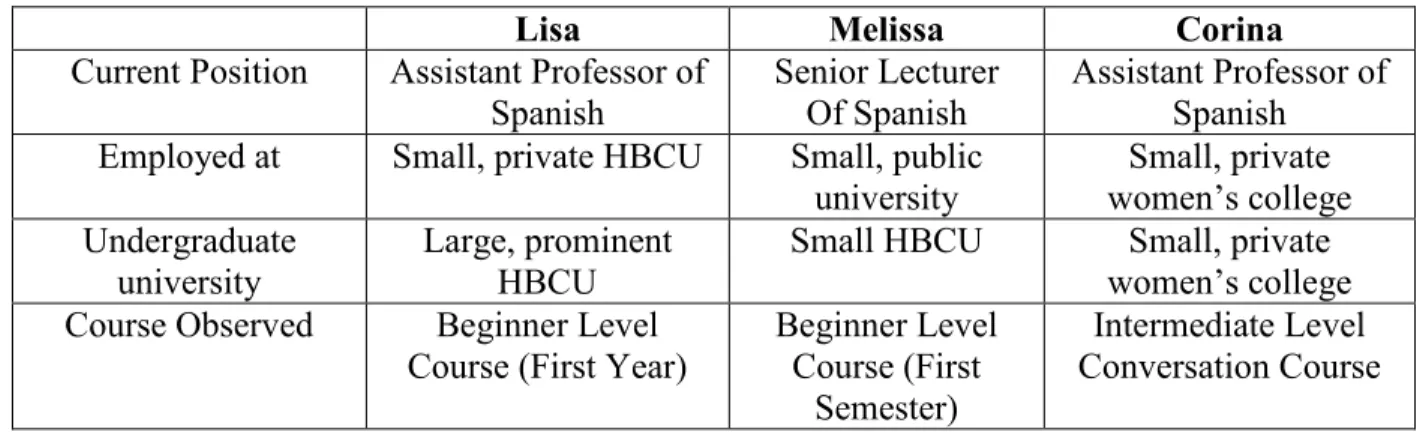
Table 1. Description of Study Participants ... 72
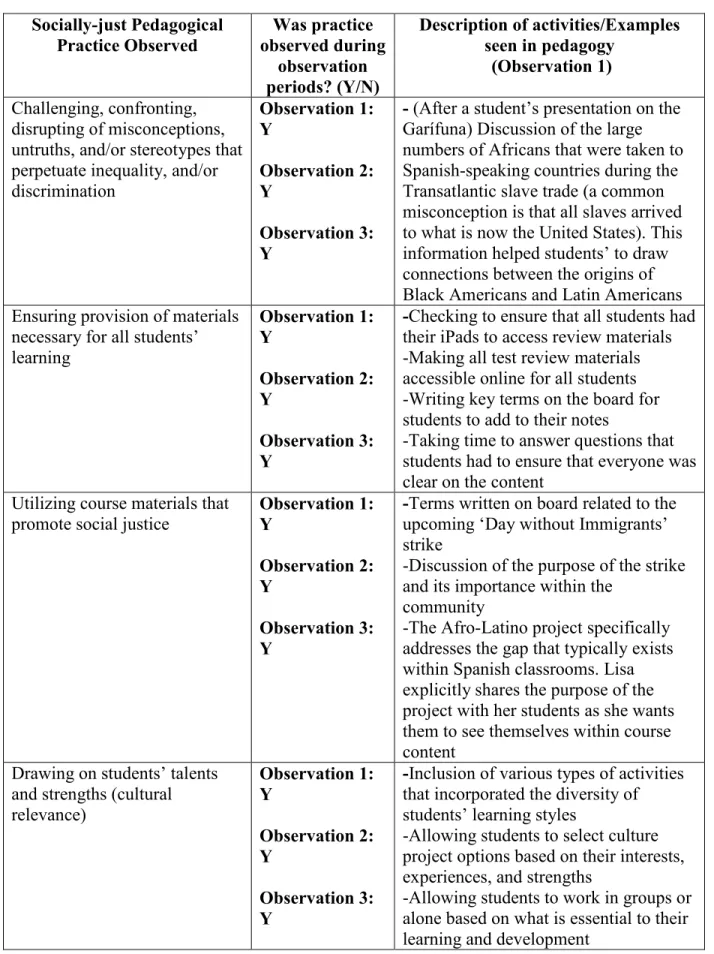
Table 2. Lisa’s Pedagogical Approaches to Social Justice ... 117
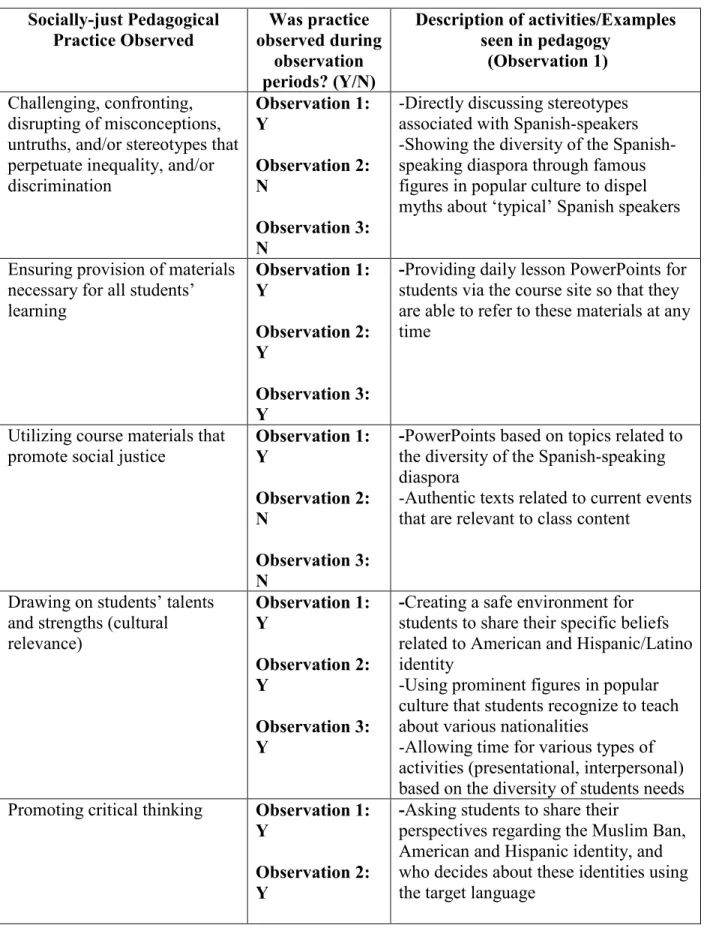
Table 3. Melissa’s Pedagogical Approaches to Social Justice ... 119
LIST OF ABBREVIATIONS BSU Black Student Union
BVE Black Vernacular English
CIEE Council on International Educational Exchange CRP Culturally Relevant Pedagogy
CRT Critical Race Theory
ESL English as a Second Language
FLES Foreign Language Essential Standards HBCUs Historically Black Colleges and Universities IRB Internal Review Board
OPI Oral Proficiency Interview
CHAPTER 1: INTRODUCTION
Background of the Problem: World Language Education History and Traditions As with most other disciplines, the field of world language education (WLE) has
experienced various changes throughout its history. Within the last decade or so, there has been a slight push to promote more social justice-based teaching and learning practices that will enable students to become more critically conscious as they prepare to live and lead in an increasingly diverse society (Glynn, Wesley & Wassell, 2014; Guillaume, 1994; Osborn, 2006). However, this change has been gradual and complicated as the traditional approaches to the teaching of world languages are difficult for many educators to leave behind.
The field of world language education (previously and still commonly referred to as foreign language) has changed based on the traditions and tendencies of society at various points
in history. Shrum & Glisan (2005) provide a historiography of the field in their text, Teacher’s Handbook: Contextualized Language Instruction. Initially, in the decades leading up to World
War II, the purpose of foreign language education was to aid students in the development of their reading and writing skills. During the time of the war, however, the purpose of language
instruction was to prepare Americans to communicate effectively with speakers of other
languages. Language proficiency is a valuable skill especially during these times as it is crucial that messages are appropriately interpreted/translated by military personnel. Furthermore, military personnel are at an advantage if they are able to communicate in the language spoken in the nation in which they are based.
Beginning approximately in the 1950s, language schools and programs began to rate and assess students’ on their foreign language proficiency. This trend continues throughout the development of the field and has manifested itself in the form of the Oral Proficiency Interview (OPI), former President Jimmy Carter’s Commission on Foreign Language and International Studies (1978-79) which raised the public’s understanding of the value of foreign language, and grants in the 1980s to further develop the field (Shrum & Glisan, 2005).
chronology also includes the techniques associated with each approach as well as the experts of the field/creators of these various methods and techniques.
The customary approaches to world language education parallel with the typical approaches to education in most, if not all, other fields. There is a tendency, unfortunately, to teach about language instead of using language study as a tool to help students grow in their understandings of our world. Focusing on “safe” content that is centered around basic
information about students instead of focusing on larger, more controversial issues within our world using the target language as a navigational tool is one of the major shortcomings of our field. Specifically speaking, the textbook is the main source of the curriculum and is used as the guidebook to determine how lessons are planned, and the order in which material is taught (Ariew, 1982; Shrum & Glisan, 2005). Ariew (1982) reminds us to consider the fact that textbooks are not created with student success as the first priority in mind. The goal is for publishers to make a profit by creating and selling their innovative products to educators.
Additionally, as a means of satisfying the needs of consumers, publishers also have a tendency to sterilize content as a means of not being too controversial or including information that could be uncomfortable to discuss in a classroom setting.
learning in ways that are meaningful and relevant. Furthermore, these paper-based activities and assessments do not grant students the opportunity to practice their interpersonal communication skills (Moore, 2005). For this reason, there are so many students that are uncomfortable or unprepared when it comes to speaking to others in the target language, or who mention that they are really good at listening but have had very limited practice in applying what they have learned in ways outside of the interpretive or written presentational mode.
Within language classrooms (and in the textbooks utilized), there is a large focus on grammatical content. Studying verb conjugations, subject-verb agreement, and verb tenses are all major components within the traditional world language classroom. Students are expected to be able to understand the previously mentioned grammatical concepts and are often drilled as a means of testing their knowledge. Verb conjugation charts, for example, are excellent practice tools for students to use, but should by no means be the central focus of a lesson. Osborn (2006) discusses a “legacy of nonsuccess” in which students enrolled in language courses are expected to demonstrate comprehension of subject matter through the completion of the aforementioned activities, but are not expected to show growth in their levels of proficiency (p.3). This leads to students who spend years in language courses but are unable to effectively communicate in the target language.
Teachers often stray away from critical and controversial content because it can potentially be uncomfortable. Such is the case because many educators have not been prepared in their academic programs to deal with more complex content. Though they may not necessarily be opposed to rich discussion about real and relevant phenomena, they do not know how to approach complicated topics and find that it is safer to stick with grammar, vocabulary and the typical world language course material. The traditional teaching of target language vocabulary also has a tendency to be unsuccessful in ensuring that students retain information. Students are often drilled on vocabulary words and/or given exercises in which there is little or no room for context to assist them with memorization.
Another customary practice within the field of WLE relates to the teaching of culture. Unfortunately, culture is often times placed on the backburner and is not a primary focus within the language classroom. Shrum & Glisan (2005) examine four traditional approaches to the teaching of cultural content;
• The Frankenstein Approach-using isolated, non-contextualized examples of culture (i.e.
the occasional discussion of food from one location, dance from another, and clothing from another)
• The 4-F Approach-“folk dances, festivals, fairs, and food”
• The Tour Guide Approach-the discussion of various geographic landmarks within target
language-speaking countries
• The “By-the-Way” Approach-random and inconsistent discussions about the culture
within various target language-speaking countries. (p.141)
studying (Herman, 2002; Kubota, 2003). Furthermore, there is trend to group all target language speakers into one homogenous category. This, however, is extremely dangerous as it promotes stereotypical beliefs and does not address the diversity of speakers of a target language. For example, Spanish speakers in Spain possess different cultural norms and participate in different cultural practices than Spanish speakers in Equatorial Guinea. We often lump ‘Spanish-speakers’ or ‘French speakers’ into one category, which limits students opportunities to think critically about diversity and cultural difference.
The teacher as the focal point of the learning experience and the giver of knowledge is another tradition which has also found and maintained its place within the field of WLE. Instead of serving as a facilitator of learning, the teacher is often the gatekeeper that stands between passing and failing and is typically the one to determine what knowledge looks like within the classroom. Students rarely have opportunities to be in charge of their own learning. Instead of creating knowledge, they are regurgitating information that has been conveyed to them based on what their teachers or other school officials deem valuable. A metaphorical image that
immediately comes to mind is a teacher “filling” the minds of students (or “receptacles”) who are responsible for learning exactly what is being dictated to them (Freire, 1968). He writes,
The more meekly the receptacles permit themselves to be filled, the better students they are. Education thus becomes an act of depositing, in which the students are the
teacher stems from the emphasis placed on classroom management. A classroom that is full of students speaking, moving around, asking questions and learning in a way that seems too rowdy is a reflection of the teacher’s classroom management skills (Osborn, 2006). In order to avoid the stigma of not being “in charge,” often times teachers resort to assigning work and teaching in ways that will keep students under control.
In addition to a lack of critical content in itself, the methods in which material is taught are often not the most culturally relevant/responsive (Ladson-Billings, 1995). For example, a study conducted in the early 2000s explores the perspectives of students of color enrolled in university world language classrooms. Findings showed that these students often felt like
outsiders in their classes because content was not made relevant to them and was neither rich nor engaging. More specifically, students expressed that “real” issues affecting them and/or target language speakers were rarely discussed, and the content was often watered down because instructors seemingly felt that students were not capable of grasping challenging material (Kubota, Austin & Saito-Abbott, 2003). Kissau, Kolano and Wang (2011) also cite the lack of cultural relevance as an issue within the field of WLE. Students are left at a major disadvantage when they are not taught based on the realities of their own lives and the lived experiences of members of target language groups. For example, students involved in Kinginger’s (2004) longitudinal study about language learning experienced many of the feelings of foreignness often associated with foreign/world language study. Their teacher taught using examples about
chateaus, which was a very foreign concept to one student in particular who had been raised
seemed perfect and vastly different from her normal surroundings. However, she was surprised to discover that there were areas with people that were impoverished and struggling in France just as there were in the United States. In fact, Alice ended up spending quite a bit of time in these places. Her classroom experiences had not adequately prepared her for her experiences as a student abroad. This is reflective of the aforementioned “tour guide” approach that exposes students to only the most beautiful and exciting places that create illusions of perfection and expectations of a fantasy world within countries in which target languages are spoken. This could potentially lead to feelings of discouragement similar to those that Alice felt during her travels abroad in France.
Each of the traditions of world language instruction contribute to the tendency to teach about language instead of teaching through language. Language classrooms are ideal places for discussion about important topics faced by members of our communities. Because it is a discipline in which students can learn about various people and their cultures, it is necessary to take advantage of opportunities to engage in conversation that enable them to learn about, analyze, and critique various issues affecting our world. An excellent way for teachers to do this exists in the form of socially just approaches to instruction.
Social Justice Pedagogy Social Justice Terminology Defined
Though it is now an incredibly trendy topic for researchers and practitioners alike, there is not necessarily one clear and widely agreed upon definition of social justice pedagogy. Much of this lack of clarity stems from the use of the term itself. For example, the terms social justice, social justice pedagogy/teaching for social justice, and social justice education are often used
that “includes a vision of society in which the distribution of resources is equitable and all members are physically and psychologically safe and secure” (p. 1). Social justice education is the process by which students [and teachers] approach social issues related to power, equity, equality and oppression, and how these issues affect members of our world (Adams, Bell & Griffin, 2007). Social justice pedagogy, however, refers to the educators’ approaches to instruction, lesson planning and engaging with students. It requires instructors to teach their students to address and understand the realities of our society while encouraging the creation of solutions to combat the aforementioned issues (Ayers, 1998). Essentially, social justice pedagogy is the method by which educators present the opportunity to obtain a social justice education.
Misconceptions Regarding Social Justice Pedagogy
Descriptions and Characteristics of Social Justice Pedagogy
Most scholars agree that equity, fairness and power sharing are important components of definitions of teaching for social justice (Osborn, 2006; Sensoy & DiAngelo, 2012). There are race, class, gender, sexuality and ability-based hierarchies that have existed within our society since the beginning of time. Members of groups that are located at higher levels of this social hierarchy (i.e. White, male, heterosexual, etc.) have better access to resources because these individuals are valued more than members of other groups (Sensoy & DiAngelo, 2012).
Examples of such structural inequalities can especially be found in our schools, which is one of the reasons why social justice-based pedagogies are especially important (Agarwal, et. al, 2010). Reddy (1998) posits that a major component of social justice pedagogy is preparing students to discuss various issues of equity, power, and oppression, including racism. She recounts a situation in which her son was called a “nigger” by a schoolmate, and how she discussed the situation with other parents who did not consider this name-calling to be racially motivated. They even went as far as expressing their own colorblind ideologies and the fact that most people no longer see color or consider it an issue (Reddy, 1998). Reasons such as these are why socially just pedagogical practices are crucial. We must equip our students with the skills necessary to address issues of inequity that perpetuate systems of White supremacy and the marginalization of members of non-mainstream groups.
(a) enact curricula that integrate multiple perspectives, question dominant Western narratives, and are inclusive of the racial, ethnic, and linguistic diversity in North America; (b) support students to develop a critical consciousness of the injustices that characterize our society; and (c) scaffold opportunities for students to be active participants in a democracy, skilled in forms of civic engagement and deliberative discussion (p. 238).
Aside from specific examples of how social justice can be applied within the classroom, it is also important to make mention of the need for teacher reflection and introspection prior to, during and after their interactions with students (Alsup & Miller, 2014; Howard, 2003). In order for teachers to effectively converse with their students about race, class, discrimination,
sexuality, etc., they must themselves be prepared for such conversation. Reflecting on their own biases, epistemologies, and ideologies is imperative for teachers as they critically examine the curricula and their own pedagogy.
willing to acknowledge the pervasiveness of racism and understand that it is endemic (Delgado & Stefancic, 2012) in our society in order to better prepare students to address critical content both within and outside of the classroom.
Goals of Social Justice Pedagogy
One of the most important goals of teaching for social justice is to convey to students that the world in which we live is unfair and inequitable. As a means of working against instances of inequity, teachers must encourage the integration of various perspectives, not just those of members of mainstream groups. A primary goal of socially-just pedagogical practices is to prepare students to promote democracy within our world and to work to ensure that all are able and encouraged to participate (Hunt, 1998). The intent of this preparation is to enable students to think critically about issues affecting society and take action and fulfill their “civic duties” in the future (Westheimer & Kahne, 1998, p.3.)
Because of the increasingly diverse nature of our world, it is important that teachers are prepared to work with diverse populations of students in ways that are meaningful and effective (Nieto, 2013). Teacher education programs must ensure that they prepare pre-service teachers to be successful in more ways than just their grasp of content knowledge and disciplinary methods, but also on ways to address difficult issues with their students using social justice-based
I'm always thinking about in the back of my head, is this going to get me in
trouble? So that’s kind of limiting. And Stacey described a fear of legal ramifications: "I think a lot of teachers are fearful of undertaking [social justice]. I think fear is a big factor. [W]e live in the age of litigation . . . gosh if I go out on a limb and say this, could I be sued?" And Frank, a teacher with eight years of experience, suggested that teachers must be careful choosing texts to "make sure that injustice or whatever in a particular article isn't going to be too close to home or offensive 'cause there are things ... I don't know maybe something that's physically abusive or something . . . but some that might be more emotionally upsetting or unsettling. Sometimes I think you can scratch that wound or something (p. 192).
Although this perspective was communicated by a K-12 educator, the same fear may exist in the minds of post-secondary educators as they are expected to limit their discussions of political concepts, which is sometimes perceived as being synonymous with social justice. Since opponents of social justice education see it as a political act, critics argue that there is no room for it within the classroom, regardless of the level of education and make efforts to silence its proponents (Fine, 1991). In the midst of this fear of critique or being seen as “too political,” teachers must search for ways to incorporate social justice content, even if just gradually until they become more comfortable with taking an activist stance within the classroom. This may be more challenging for newer teachers. On the other hand, administrators must also champion for social justice education within their schools, which will encourage teachers to transform their classrooms. This is a continuous obstacle within the field of education, but as research and examples of social justice pedagogy increase, perhaps trends related to world language pedagogy will progress.
Purpose of Study
As was discussed in the previous section, social justice pedagogy is a fairly new
educators within the field and examines their perceptions and practices related to social justice pedagogy. This study answers the following research questions:
• Research Question 1: What are the world language instructors’ interpretations of social
justice pedagogy related to world language education?
• Research Question 2: How do the instructors’ interpretations of social justice inform their
pedagogies in the world language classroom?
• Research Question 3: What were the instructors’ K-20 (and beyond) experiences as world
language learners? How might their experiences influence their interpretations of social justice within the world language classroom?
The purpose of this project is to explore the experiences of Black post-secondary Spanish instructors, and to understand how these experiences inform their conceptualizations of social justice both generally and within their own pedagogy. This study specifically examines the experiences of Spanish educators as it has consistently been the most popular language program within our region (NC Department of Public Instruction, 2016) and throughout the country. This trend exists due to the large population of Spanish speakers throughout the United States.
According to the 2015 United States Census, there is a population of approximately 56.6 million Hispanic people living within this country. They are the largest ethnic and racial minority within the United States (US Census, 2015). Due to the changing nature of our country’s racial and linguistic demographics, many education programs have been promoting the importance of Spanish language education, specifically as it relates to marketability with finding jobs for those who are bilingual (Tse, 2001). Spanish educators are also the focus of this study as I, the
would not possess the same comprehension capabilities during the observation of classes in which other languages are spoken.
This study is a contribution to the current discourse regarding Blacks/African Americans and world language education, though much of the existing literature is quite dated and does not focus on the experiences of those that have found success within the field. Furthermore, there is no literature on the ways in which Black educators’ time as previous language learners informs their current interactions with students. The results of this research project fill a major gap within the field in that they shed light on more contemporary experiences of African American scholars in the field of world language. Additionally, social justice pedagogy is a fairly new concept within the world languages discipline and this study provides insight on Black educators’ understandings and applications of such practices within their classrooms. For the purposes of this project, I have examined the instructors’ perspectives on and conceptualizations of social justice, and the ways in which these understandings inform their pedagogy and engagement with students.
Importance of Study
allow them to serve their communities through their labor (Davis & Markham, 1991). The idea was that African Americans should devote their time to learning skills that would be practical for their careers as field hands, sharecroppers, cleaning ladies, cooks, etc. while the more liberal studies (including foreign language) should be reserved for the White elite. This mentality is still engrained in the minds of many African Americans, who today still believe that foreign language education is for the wealthy and will not result in the attainment of a useful skill (Kissau, Kolano & Wang, 2011).
Furthermore, many African Americans feel like outsiders within foreign language classrooms because materials primarily focus on European Spanish language and culture and rarely on the diversity of the Hispanic diaspora, including many groups with African origins (Moore, 2005). Therefore, the issue is twofold: African Americans have historically been turned away from the study of world languages because it was reserved for members of a higher socio-economic status, which typically meant White. Secondly, African Americans have been unable to connect with course content because they are generally not included in the curricula at all, or in ways that are relevant (Hubbard, 1980; Moore, 2005).
teaching. Much of the observation data shows instructors keeping students engaged with Spanish course materials while allowing the promotion of critical thinking that will prepare them, our future leaders, to disrupt the status quo and work towards improving issues of inequity/inequality caused by racism, sexism, ageism, ableism, etc. In understanding the experiences of Black post-secondary world language instructors, we will be able to better understand what motivates them to engage with all students, not just Black students, using culturally relevant and other socially-just practices.
Conclusion
In this chapter we have addressed some of the key aspects of this proposed project. Firstly, we examined the history of and traditional approaches to world language education. As a means of providing an alternative to these customary practices, we explored the social justice pedagogy/education framework generally, and examined key terms related to this method of teaching and learning. Understanding both the norms of the field and the key components of social justice pedagogy is crucial to considering the experiences of African Americans within the field as they directly contradict one another. In studying the experiences, pedagogy, and
perspectives of Black Spanish instructors, we are able to see how these individuals interpret and understand various phenomena of a field that is typically not one explored by African
CHAPTER 2: REVIEW OF LITERATURE
This chapter/literature review will first focus on the educational experiences of African Americans within the field of world language, which is the motivation and driving factor behind this study. I will then review the literature on Critical Race Theory (CRT), Culturally Relevant Pedagogy, and teaching world languages for social justice, which are the key components of this project’s theoretical/conceptual framework.
The World Language Experiences of African Americans
Though this project focuses on Black Spanish educators who engage with students from various backgrounds, it is important to identify and examine research related to the experiences of Black students specifically. This literature aligns with the experiences that will be shared by participants, as they were all once Spanish/world language students. Based on the history of the field described in Chapter 1, it seems that there is a tendency to exclude critical, culturally relevant and inclusive practices from the classroom. Unfortunately, it also seems that African American students are affected the most by this issue. Multiple language fluency and exposure to different cultures through world language education is instrumental to the development of
While the problem of low achievement and interest in world language study is clearly visible within the K-20 setting and beyond, the amount of research present on this subject is limited. In searching for articles to include within this literature review, many sources were written during the 1970s and 1980s, although all of the difficulties discussed are still obstacles that persist within the area of Black world language study. James J. Davis of Howard University, for example, has authored many articles throughout the 1980s and 1990s that discuss the
attitudes of African American students toward language study. The more contemporary
documents on this subject often cite Davis’ works, and come to the same conclusions about the issues that exist and what needs to be done to combat them. Alvarez Harvey (1974) and Hubbard (1980) are also two authors that are cited heavily in the discourse regarding African Americans and foreign language study. Their most valuable works are related to cultural relevance and the historical aspects connected to low foreign language enrollments for African Americans.
Eurocentrism and Linguicism
This causes many African American students to feel as though they are “outsiders” within their own classrooms, which results in lower levels of interest and achievement.
Spain is often viewed by many world language educators as the most important country within the Spanish-speaking world. This trend exists because Whiteness is often perceived as more valuable than Blackness and Brownness, and contributes to the alienation of diverse Spanish-speaking groups and their language and cultures. Language based discrimination (Chen-Hayes, Chen & Athar, 1999; Phillipson, 1992), or linguicism, greatly contributes to the
perpetuation of the Spanish language/dialect hierarchy and often alienates students of color from learning experiences. Spain’s dialects of Spanish are also often perceived as more ‘proper,’ motivating instructors to encourage their students to select this European country as the ideal site to study abroad.
Aside from offering foreign language courses, programs must also provide culturally relevant materials within their classrooms. African American students taking beginner-level Spanish courses are often uninterested in the more common l cultural portions of foreign language textbooks, which is why it is imperative to provide the essential cultural relevance piece in these courses. In 1979, Hampton University began to develop their foreign language curriculums to include Afro-French and Afro-Latino literatures and cultures in an effort to engage students by connecting the languages with their cultural identities (Clark, 1982). Ladson Billings’ theory of culturally relevant pedagogy (1995) posits that connections must be drawn between life outside of school (home, community) and the classroom. She argues that “The dilemma of African-American students becomes one of negotiating the academic demands of school while demonstrating cultural competence. Thus, culturally relevant pedagogy must
476). For example, inclusion of Afro-Hispanic culture, including important figures in history, food, language variations and pertinent connections to students’ lives are ways to make curricula more dynamic. This implementation of more culturally relevant materials could potentially boost enrollments and levels of interest in world language classes.
African American participants in a fairly recent study (Anya, 2011) at a small, liberal arts college express that they were much more interested in foreign language courses that infused culture with language in ways that were relevant to them and that countered the whiteness in world language studies. Students were extremely receptive to African and Caribbean aspects of Brazilian culture. For example, “Didier” recalls being immediately drawn to Portuguese music because it had melodies that were rhythmic and upbeat, which also reminded him of Hip Hop (Anya, 2011). The use of music within the language classroom is an excellent way to engage students with course content. Furthermore, inclusion of Afrocentric materials in the world language classroom can greatly benefit the self-esteem of African American students by drawing parallels between the cultures of the speakers of the target language and backgrounds of
language learners.
Additionally, knowing the specific background of each student enables teachers to handpick materials that will be culturally engaging and empowering. For example, there are differences between Black students with Caribbean backgrounds versus African backgrounds. Being able to incorporate these different cultures is a way to interest students in the language while also strengthening their self-perceptions and cultural awareness (Anthony, 1997; O’Neill, 2000).
alienated from the learning process. Respondent “Kyle” references being confused by difficult course content and frustrated that he later had to complete homework assignments that were not fully comprehensible in class. He also mentions being intimidated by native speakers in the class that would get through lessons with ease, making those around them ashamed to ask for
assistance or clarification (Anya, 2011). These negative experiences lead to students’ fear of continuing with language study
A 1998 (English & Moore, 1998) qualitative study conducted at an inner-city middle school assessed the performance of ten African American males learning Arabic through an analysis of teacher notes, student journals and videotaped class sessions. Students benefitted from being in the foreign language because it taught them to cooperatively work in groups, communicate effectively by presenting various cultural aspects associated with the language. Perhaps this class was extremely effective because it was taught by an African American male who spoke the language fluently. The students were well-behaved, engaged and fully capable of comprehending all course materials, which refutes previous notions that minority students cannot be successful language classrooms (English & Moore, 1998). Perhaps African American students will be more inclined to participate in world language courses when they are able to culturally identify with the instructors. Moore (2005) provides a recommendation that is not often mentioned in other articles. She suggests that an increased number of Black instructors within the field of world language education could help to heighten student interest in language study (Moore, 2005).
actually inclusive of all students. They ponder the notion of minorities being made to feel like outsiders, although the field is one that should help students to feel empowered.
World Language Education and Racism/Racialism
Racism based on the racialization of behaviors of certain groups plays a large role in the status of Black students in the world language classroom. White teachers are unaware, in many cases, that they, too, are racialized beings. According to A.E. Lewis (2004) “Although numerous all-white groups are not explicitly racial, their racial composition is not an accident but is a result of whites' status as members of a passive social collectivity whose lives are shaped at least in part by the racialized social system in which they live and operate” (627). They fail to
incorporate diverse content in with their lessons because they fail to realize its value and instead choose to provide students with course content that is not culturally rich. Being unaware of their roles as racial beings, they ignore their connection with the dominant White culture (Picower, 2009). Teachers who do not embrace their own race and privilege typically fail to have
discussions with their students about race, which allows them to maintain their perceptions and stereotypes about people of color. This leads to an extremely racist classroom environment in which African American have a more difficult time finding success. Instead of getting to know their students, they allow dominant discourses to prevail, which typically view students of color in a negative light, especially with the expectation that they cannot find success in world
language classrooms. Furthermore, there is the notion that African American students to stick to more appropriate subjects with more practical coursework.
languages. She also mentions the notion of the study of languages being considered exclusive only to those within the upper levels of society, which often alienates Blacks and other
minorities. This idea was supported in 1961 by the Conant report which declared the teaching of world languages in urban areas as “futile” (Hubbard, 1980).
As it relates to the curriculum, many students on lower educational tracks are not required to take world language classes because they generally are not expected to attend college. Many teachers do not realize the academic benefits associated with second language learning, and fail to realize that comprehension of a second language can assist in English comprehension and performance in other classes. Often times, teachers do not make an effort to include their Black students because they view them as lost causes that will not benefit from learning a second language.
Kubota, Austin and Saito-Abbott (2003) refer to the often repeated idea that world language study excludes Black students because instructors feel that courses are too difficult for them because they sometimes do not have a grasp of how to speak “proper” English. According to many historians and sociologists, certain physical features and behaviors can be attributed to certain races while others argue that science does not explain the concept of race since there are no genetic differences among different racial groups (Smedley & Smedley, 2005). Some teachers racialize their students by assuming that certain groups are capable of learning a second language while others are not.
Vernacular English instead of Standard English, it is extremely difficult to teach them a second language, a notion that was proven to be untrue by scholars such as Baugh, Hymes, Dowdy and Perry (Anya, 2011; Pratt, 2012). Students will automatically feel that their identities are being threatened if they are led to believe that their communication styles are incorrect or
inappropriate.
Aside from the state of “outsiderness” that Black students feel in language classrooms, there is also the issue of racist attitudes that many teachers have toward their African American students. The expectations that many teachers have of their black students are low, perhaps because they feel that their minority students are not capable of understanding course content as well as their White counterparts. Some teachers even believe that it is impossible to teach world languages to students that do not yet have a command of proper English and still use Black Vernacular English (BEV) in their daily lives (Kubota, Austin, Saito-Abbott, 2003). Some teachers accept their students’ use of BEV and do not challenge them to improve their English speaking skills. When use of this form of communication is allowed within the classroom setting, an improvement in the student’s native language is not being advocated, which further distances the student from his/her potential to learn world languages (Hubbard, 1980).
The discriminatory attitudes mentioned previously contribute to the racism that occurs in world language settings. Many teachers feel that students should study subjects that will be practical and useful in their future lives, including the types of careers that students choose (Anya, 2011). This parallels with the racialization of world language study that has been an issue for Blacks since the late 1800s. Many African Americans do not pursue opportunities associated with knowledge of multiple languages; therefore both the teachers and students find it
World Language Education and the Intersection of Race and Class
The issue of African American students’ low interests and low levels of performance in world language classrooms is further complicated by economic status/class. Specifically as it relates to study abroad, Black students are not as exposed to opportunities for travel as members of other racial groups. The social and cultural capital and educational backgrounds of Black parents greatly affect their children’s role within educational systems. In order to find success in school, students must have support from their parents, which is sometimes difficult when it comes to providing financial support for study abroad. This parallels with discussions regarding the intersection of race and property rights (Ladson-Billings & Tate, 1995). If parents are unable to fund study abroad or are unaware of the benefits or fearful of potential dangers, this limits the student’s opportunities to improve their second language proficiency and expand cultural
experiences. Furthermore, if a student’s social class limits them from obtaining information regarding the benefits of pursuing an education in world language, they will be less inclined to do so. This leads to further limitations on future educational and career opportunities.
Lack of exposure, high costs, and apprehensiveness toward international travel due to fear of discrimination are all factors that deter African American students from pursuing study abroad opportunities (Stroud, 2010). In many cases, students express their lack of knowledge about these educational options because they are not adequately advertised and information is not made readily available. This topic is extensively discussed in Brux and Fry’s “Multicultural Students in Study Abroad: Their Interests, Their Issues and Their Constraints” (2010). The authors cite a 1993 study conducted by the CIEE (Council on International Educational
concern represented in the data collected by the CIEE. In the Profile of U.S. Study Abroad Students completed in 1996/97 and 2006/07, numbers reveal a very minimal increase in study abroad by African Americans (3.5% of 99.448 students in 1996/97 and 3.8% of 241,791 in 2006/07). Other minorities also had numbers drastically lower than those of their White peers. These factors are also attributed to the attitudes of students’ families to education abroad, lack of awareness of study abroad programs offered at their schools and the lack of relevance of study abroad options for multicultural students.
A 2007/2008 study (Penn & Tanner, 2009) conducted by the University of Wisconsin at River Falls (UWRF), shows that out of 12 students that studied abroad during the school year, none of them were Black while all other minority groups listed had a least two students that participated in study abroad program. While UWRF does not have a large minority population, the data collected aligns with the usual findings regarding Black student’s lack of participation in education outside of the U.S. In a focus group at UWRF with the BSU (Black Student Union), none of the students present participated in study abroad. Many expressed financial strain, fear of the complications of being the only Black student within the group while also being different from those within the host country, and lack of information about study abroad opportunities presented by the university (Penn & Tanner 2009).
constraints, fear of the unknown, lack of information, lack of encouragement from teachers and family, etc.) (Brux & Fry, 2009; Penn & Tanner, 2009) found in previous studies regarding minorities and international education in that the students expressed their knowledge of the importance and benefits of studying outside of the United States. Although previous research has shown that Black students pursue study abroad options at a rate far lower than that of White students or other minorities (Brux & Fry, 2009), the student responses to research questions show their acknowledgment of the benefits of studying in countries outside of the United States, countering the notion that Black students believe experiencing different cultures will take away from their own cultural identities. While there were many who gave responses to the open-ended questions that suggested that education abroad would take away from their college experience, the results overwhelmingly showed the students’ positive attitudes toward studying in another country (Brux & Fry, 2009).
A 1993 study conducted at the University of Michigan cited four major reasons for Black students’ lack of representation in education abroad: (a) choice of major, (b) attrition rates, (c) lower level of affluence than White students, and (d) lack of encouragement and support from teachers (Penn & Tanner, 2009). Many students surveyed expressed some form of interest in study abroad opportunities as way to experience something new or to travel to a country that they considered interesting. However, based on their responses to questions about family income, they believed that studying abroad would be a great financial burden that could not be supported by the income of their parents (specifically mother since family matriarchs were specifically asked about in survey questions) (Penn & Tanner, 2009).
examines students’ understandings of the relationship between world language study and socioeconomic status, race, gender and social-justice related topics. Many participants in the study indicated that their language coursework did not allow them to engage in dialogue regarding the aforementioned topics because the focus was primarily on grammar and
vocabulary, and “basic conversation" (Kubota, Austin & Saito-Abbott, 2003, p. 18) and there was typically not enough time to further investigate issues of identity and social justice. Many of the advanced students partaking in this study expressed a need to incorporate topics related to the intersections of student identity while beginner-level students did not see a need to address these concepts within a language course. This article allows us to see that many students do not recognize the importance of aspects of their identity as it relates to language study. On the other hand, students who see these connections as valuable are limited in their opportunities to
examine the relationship between their identities and what they learn in the classroom. Theoretical and Conceptual Framework
Critical Race Theory (CRT)
Because we live within a society that is and has historically been plagued by issues of institutional racism, it is obvious that these issues trickle down to our educational systems (including the world language classroom). Throughout its history, our nation has been controlled by a hierarchy that perpetuates the belief that Whites are superior to people of color, thus
do enough to unpack and challenge the race-based legal practices that negatively impacted people of color, and their creation of CRT was in response to this shortcoming of members of the legal field.
CRT aims to understand, observe, and challenge the connection between race, racism and power (Delgado & Stefancic, 2012). Additionally, there is an element of action/activism that seeks to eliminate racial inequities by disrupting the status quo and eradicating systems of White supremacy in an effort to promote racial equality throughout society. CRT as a theoretical framework is multi-faceted in its approach to challenging the status quo. The descriptions of CRT’s key components and features is essential to understanding its history and development. Various seminal works by CRT scholars cite some aspects of the theory as tenets while others refer to them as themes or key constructs (Brown & Jackson, 2013; Delgado, 1987; Delgado & Stefancic, 2012; Donnor, 2013; Ladson-Billings, 2013). The most critical tenet of CRT is that it acknowledges that racism is a normal practice embedded within all structures of society
This normality of racism and stereotyping contributes to its continued perpetuation, and allows for racist practices to be the norm within our culture. Scholars work to expose this pervasiveness of racism by encouraging the reframing of race-based narratives in ways that expose the true racist tendencies of our society. This is referred to as counter- storytelling and is a critical tenet of CRT (Delgado & Stefancic, 2012). The United States maintains a trend in which dominant narratives, or stock stories provided by members of the mainstream group, are taken for face value and accepted as truth. CRT seeks to discover truth by empowering people of color to share their experiences as a means of showing broader social implications of situations rooted in racism. Storytelling is not simply a way for people of color to vent about their
experiences. Its purpose is to disrupt racism at the macro level by showing how individuals are affected at the micro level (Ladson-Billings, 2013). Moreover, storytelling and
counterstorytelling ensure that history is recounted in a way that is unbiased and shares the experiences of all involved, regardless of their race, gender, ability level, etc. (Delgado, 1989; Solórzano & Yosso, 2002). This speaks to the importance of the data that will be shared from this study in that it will shed light on narratives based on experiences that are often excluded from the more seminal pieces of literature on world language education.
Critical Race Theory encourages the understanding of intersectional experiences (i.e. the relationship between race and social class or race and gender) and seeks to combat meritocratic and colorblind ideologies and practices that contribute to the maintenance of inequitable systems of power (Bell, 1992; Delgado, 1989; Gotanda, 1991; Ladson-Billings & Tate, 1995). Scholars argue that ignoring the connection between race and other factors perpetuates inequity.
recognizing the systems in place that set them up for failure (i.e. in academics, in the workplace, etc.). Intersections of race and other factors that have affected the world language experiences of potential participants and/or their students were evident within this study, as well.
Another important feature or tenet of CRT is interest convergence, meaning that racial compromises are made to appease people of color only if people there is some major benefit to the dominant group. Many pivotal instances in history (Executive Orders 10925 and 11426, Brown v. Board of Education, etc.) have been critiqued by CRT scholars as being examples of interest convergence (Bell, 1980; Delgado & Stefancic, 2012; Ladson-Billings, 2013). CRT theorists posit that these events took place to give people of color an opportunity to progress, but not enough to make society completely equitable for all, because the primary purpose of such compromises was to fulfill the needs of members of the mainstream. Derrick Bell, Harvard School of Law’s first Black, tenured professor, is considered to be one of the founding fathers of CRT. He coined the term ‘interest convergence’ and used it to analyze the Brown v. Board decision and the President Abraham Lincoln’s issuance of the Emancipation Proclamation (Brown & Jackson, 2013). When the interests of Blacks and Whites align, especially Whites of higher socioeconomic status, changes are made. Even today, CRT theorists hold that many decisions are made that seem good for people of color in essence, though their intentions are not necessarily to benefit members of these groups. Much of the education policy that is in existence and many social programs can be cited as examples of interest convergence (i.e. No Child Left Behind, Planned Parenthood, and Affirmative Action) (Brown & Jackson, 2013).
Although it is more of a theme of CRT versus a tenet, Cheryl Harris’ (1993) discussion on whiteness as property added a new dimension to the movement. The theory holds that
benefit from privileges not granted to members of other racial groups. Theorists also posit that because courts refuse to acknowledge whiteness as a form of property, it enables the value to be maintained since systems that privilege whiteness remain untouched by legislation that could inhibit them from doing so (Bell, 1980). Though CRT does not express a belief that all White people are racist, its scholars do believe that they all benefit from their whiteness. This same notion of white privilege/whiteness as property/whiteness as an asset exists within schools and educational systems as pedagogical approaches and curricular content tend to serve the needs of White students while seemingly ignoring the needs of others. CRT’s discussion of whiteness as property also holds that it works to perpetuate White societal norms and marginalize those that cannot and do not behave in the ways of mainstream White culture (Harris, 1993). It could be argued that whiteness as property is a primary reason for the existence of CRT in education as it challenges the norms that exclude and marginalize students of color (Tate, 1997). Such issues exist within the language classroom when students of the majority [White] group see themselves represented within images presented within course materials while Black students are often not taught about culturally relevant material, such Afro-Latino culture, and the influence of African culture on Hispanic/Latino culture.
Traditionally, CRT has comprised of members of three camps; the idealists, realists, materialists. According to Delgado and Stefancic (2012):
Idealists hold that racism and discrimination are matters of thinking, mental
categorization, attitude, and discourse. Race is a social construction not a biological reality. Hence we may unmake it and deprive it of much of its sting by changing the system of images, words, attitudes, unconscious feelings, scripts, and social teachings by which we convey to one another that certain people are less intelligent, reliable,
example, planters and ranchers in Texas and the Southwest circulated notions of Mexican inferiority at roughly the same period that they found it necessary to take over Mexican lands… (pp. 21-22).
Various CRT scholars consider themselves as members of one or multiple camps, though most recognize the rationale behind each groups’ description and ideologies. Furthermore, CRT still maintains its strong connection with legal studies and practices as it did during its initial period of inception. The movement still focuses on the ways in which law, education and other social systems are affected by racism and racist practices.
Though each of the tenets of CRT are crucial to discussions of race and power, I will be focusing on three within the context of this project. Whiteness as property, the endemic nature of racism and racialization, and intersectionality (of race and class) will be utilized as components of my conceptual framework. The aforementioned tenets align very well with the literature discussing the world language experiences of African Americans, and will provide a strong foundation and basis of analysis for the data within this project.
The Relationship between Culturally Relevant Pedagogy (CRP) and Critical Race Theory (CRT)
Because our educational systems mimic the trends and tendencies of larger societal systems and institutions, we know that race is a key factor within the classroom. More specifically speaking, Black students are affected by race-related practices, perspectives, and privileges (or lack thereof) within the world language classroom. Though it goes without saying that there are wonderful language instructors that effectively work with students of all
imperative as it allows us to examine a possibility in addressing race-based phenomena in the classroom.
There are obvious and significant connections between Critical Race Theory (CRT) and Culturally Relevant Pedagogy (CRP) (Ladson-Billlings, 1995). It is important to mention that CRP goes by various names including Culturally Responsive Pedagogy (Harmon, 2012), culturally congruent, culturally compatible, culturally appropriate, and even as multicultural education (Irvine & Armento, 2001). Most apparent is the fact that CRP was created by Ladson-Billings (1995), who is also responsible for some of the key pieces of CRT literature. Her
perspectives on race inform both her discussions on CRT and CRP. Because the previous section on CRT provides an overview of its history and development, it is important to also discuss the most important aspects CRP. Culturally Relevant Pedagogy is one of the most prominent examples of social justice pedagogy, and was founded in response to teacher education programs’ failure to prepare teachers to meet the needs of diverse students (Ladson-Billings, 1995). Ladson-Billings’ scholarship on CRP is centered around the idea that there should be a connection between students’ home, community and school as a means of ‘reaching’ them in ways that are meaningful and relevant (Ladson-Billings, 2009). The three key components of Billings’ CRP include academic success, cultural competence, and sociopolitical consciousness (Billings, 1995; Milner, 2011). Firstly and most essential to the approach is CRP’s focus on the cultural capital (Bourdieu, 1986) that students possess. Recognizing that students bring their own valuable knowledge to the classroom, and finding effective ways in which students have
components of CRP are essential to improving the value that Black students place on their language learning experiences. When students do not feel like foreigners within the classroom, they do not view the material as foreign and are able to overcome barriers that previously hindered them from finding success.
Another important quality of CRP is that it stresses the importance of teaching students in ways that are challenging (Ladson-Billings, 2006). Many teachers believe that they are helping their students of color when they allow them to pass without putting forth the appropriate amount of effort. Instead of helping the students, this lack of rigor is reflective of teachers’ own biases, and perpetuates the stereotype that people of color do not possess the propensity to achieve academically. This connects with CRT’s tenet related to the pervasiveness of racism. It is engrained in our mentalities and, in many cases, teachers tend to act on the racist-based perspectives that they hold.
Both CRT and CRP acknowledge the inequitable nature of our society and postulate that racism plays a huge role in all systems within this country, including educational systems. (Delgado & Stefancic, 2012; Ladson-Billings, 1995, 2014). Though CRP obviously focuses almost entirely on education, it addresses many of the sociopolitical factors that are a part of CRT discourses and recognizes that they are an important part of students’ experiences. The world, the classroom, and students are viewed using a critical lens. Let us consider the
background, so the achievement gap should not be viewed from a racial perspective. This is a common argument posed by those who view the world from a ‘colorblind’ perspective. Based on the literature presented by various scholars (Ladson-Billings, 2005, 2009), we can respond to the aforementioned arguments regarding achievement using the construct of CRP. Students of color are often not taught in ways that are culturally relevant and reflective of their own experiences. They are taught based on mainstream norms that do not consider the learning needs of diverse populations. A lack of connection with course materials results in students’ alienation from their learning experience, and can often result in lower levels of achievement. This lack of cultural relevance aligns very closely with other tenets of CRT. For example, there is a tendency to ignore important demographic intersections that are relevant to students’ everyday lives.
Instead of teachers, administrators, and policymakers viewing these academic disparities from a CRT and CRP perspective, they instead draw from negative perspectives of students of color, thus perpetuating the cycle of inequity. For this reason, advocates of social justice in education have created specific examples of CRP being effectively used within teacher education programs (Ladson-Billings, 2009), just as many have done with CRT (Milner, Pearman &
also wanted to determine if pre-service teachers would be interested in incorporating Latino children’s literature with their pedagogy and course content.
The study focuses on the perspectives of 27 participants, including members of the previously mentioned white, female demographic though six identified as racial minorities. The researchers held monthly seminars in which pre-service teachers were broken into study groups where they discussed and wrote about their reactions to two Latino children’s books per month. Responses surrounding questions about thoughts related to the books, similar experiences faced by participants and if teacher candidates would consider using the texts with their students were coded based on the following categories: “a) cultural; b) general or universal; c) negative; or d) no response or opinion” (Escamilla & Nathensen-Mejia, 2003, p.242). Most participants provided universal responses related to general concepts such as school and family life, though not necessarily related to culture. Some responses indicated negative feelings about the selected literature, including the notion that too many controversial topics unsuitable for students (such as religion, for example) were included.
study specifically addresses the ways in which teachers can use children’s literature with their students, it could also be utilized within teacher education programs in the potential discussions between teacher educators and their students mentioned previously.
Milner (2010) provides a poignant example of a White teacher establishing rapport and building strong relationships with his students within an urban school. This study could be an exemplar within teacher education programs to not only discuss definitions and features of CRP, but also how it can be done in the classroom. Teachers are always in search of examples of practical applications of theory, which is why Milner’s study is so valuable. Most notably, Mr. Hall (the teacher whom which the study centers around) acknowledges the existence of race and racism and discusses these phenomena with his students (Milner, 2010). As CRT informs us, many White individuals (including teachers) shy away from such topics and instead employ colorblind and/or post-racial (Delgado & Stefancic, 2012) viewpoints, either because they are uncomfortable or because they do not see the value in conversations about race. Mr. Hall, on the other hand, welcomes these conversations and acknowledges the role that identity and the intersection of race and other factors play in the students’ everyday lives. Furthermore, he recognizes the role that his whiteness (Picower, 2009; Sleeter; 2001) plays in his own identity, experiences, and relationships with students. His methods counter the race-based issues described in the previous section on CRT and work against systems of racism and oppression within the field of education. Additionally, he draws on students’ cultural capital (Bourdieu, 1986) as valuable resources, using them to further his own understandings of our world. In learning about his students and their experiences, Mr. Hall was able to display his cultural
As is evident in this example, CRP could potentially be seen as an answer to the
questions that CRT raises about the injustices within our educational systems. For example, by utilizing materials that allow students to think critically about their lives, families, communities and experiences, teachers are creating an element of relevance for students. Furthermore, by asking students to share these experiences which counter or oppose dominant narratives, educators empower them to recognize the importance and value of their own lives. Creating classroom communities in which storytelling is promoted allows for the transformation of
mentalities and prepares students to take action to affect change within their communities outside of the school (Bell, Desai, Irani, 2013). One could argue that CRT and CRP are quite similar, with the exception that the former analyzes our world while the latter takes these analyses and specifically uses them as evidence and examples of how/where our pedagogical practices must change.
The Relationship between Critical Race Theory and Social Justice Pedagogies/Culturally Relevant Pedagogy (Specifically in World Language Education)
There are various language ideologies that are evident within our culture. The United States has traditionally been a country that is very monolingual although it is home to members of various linguistic groups. Speaking English has commonly been regarded as a feature that is mandatory in establishing one’s connection with this nation and is seemingly treated as a requirement for societal membership (Hermann, 2002). We have a tendency to stress the
importance of speaking English, contributing to a language-based hierarchy that situates English at the top and other languages below. Both minority and nonminority members of society