PROCESS EVALUATION OF A BEHAVIORAL WEIGHT LOSS PROGRAM FOR LOW-INCOME, MID-LIFE WOMEN IN LOCAL HEALTH DEPARTMENTS: THE
WEIGHT-WISE II PROGRAM
Arnita Ford Norwood
A dissertation submitted to the faculty of the University of North Carolina at Chapel Hill in partial fulfillment of the requirement for the degree of Doctor of Philosophy in the Department of Nutrition.
Chapel Hill 2013
Approved by: Dianne Ward
Carmen Samuel-Hodge Alice Ammerman
ii ©2013
iii ABSTRACT
ARNITA FORD NORWOOD: Process Evaluation of a Behavioral Weight Loss Intervention for Low-income, Mid-life Women in Local Health Departments:
The Weight-Wise II Program
(Under the direction of Dianne Ward and Carmen Samuel-Hodge)
iv
Carolina local health department (n=55) capacity to implement intensive behavioral weight loss programs. Although we found that health departments have the staff who typically deliver behavioral weight loss programs, there is more to learn regarding health department’s capacity to deliver such programs. The results of this
v
In memory of my sister
Sylvia J. Jacobs for introducing me to the magical world of books and inciting a passion for reading; you are missed.
To my parents
Henry and Elnora Ford for believing in me; you are treasured.
To my husband and my daughter
vi
ACKNOWLEDGMENTS
I thank my family and friends for the many prayers, words of encouragement, and laughs throughout this process. You kept me grounded and gave me the
strength to endure until the end. Especially my sisters, Sharon Dallis and Claudine Wilson, you have always been there for me and I can never thank you enough.
vii
TABLE OF CONTENTS
LIST OF TABLES ... xii
LIST OF FIGURES ... xiii
Chapter I. INTRODUCTION ... 1
Overview ... 1
Specific Aims... 2
II. LITERATURE REVIEW ... 3
Prevalence of Overweight and Obesity ... 3
Health and Economic Consequences of Obesity ... 4
Dietary Strategies in Lifestyle Weight Loss Interventions ... 4
Physical Activity Strategies in Lifestyle Weight Loss Interventions ... 5
Cognitive and Behavioral Strategies in Lifestyle Weight Loss Interventions ... 6
Intensive Behavioral Weight Loss Efficacy Trials ... 7
Translating Evidence-Based Interventions to Real World Settings ... 10
Translating Evidence-Based Interventions into Local Health Departments ... 11
Process Evaluation ... 12
Fidelity ... 14
viii
References ... 16
III. INTERVENTION FRAMEWORK ... 22
Theoretical Framework ... 22
Weight-Wise II Study Description ... 24
References ... 27
IV. PROCESS EVALUATION OF A WEIGHT LOSS PROGRAM FOR LOW-INCOME, MID-LIFE WOMEN: THE WEIGHT- WISE II PROGRAM ... 29
Introduction ... 29
Methods ... 32
Analysis ... 41
Results ... 42
Discussion ... 50
Conclusion ... 58
References ... 67
V. EVALUATING THE PUBLIC HEALTH IMPACT OF THE WEIGHT-WISE II PROGRAM USING THE RE-AIM FRAMEWORK ... 71
Introduction ... 71
Methods ... 74
Analysis ... 80
Results ... 80
Discussion ... 85
Conclusion ... 90
ix
VI. ASSESSING NORTH CAROLINA’S LOCAL HEALTH DEPARTMENT’S CAPACITY TO IMPLEMENT INTENSIVE
BEHAVIORAL WEIGHT LOSS PROGRAMS ... 100
Introduction ... 100
Methods ... 103
Analysis ... 105
Results ... 106
Discussion ... 110
Conclusion ... 113
References ... 122
VII. SUMMARY OF FINDINGS, RECOMMENDATIONS, AND FUTURE RESEARCH ... 124
Summary of Findings ... 124
Recommendations ... 128
Future Research ... 129
APPENDIX A: HEALTH DEPARTMENT APPLICATION FORM ... 131
APPENDIIX B: HEALTH DEPARTMENT CAPACITY SURVEY ... 135
APPENDIX C1: PARTICIPANT RECRUITMENT MATERIALS – STUDY BROCHURE ... 138
APPENDIX C2: PARTICIPANT RECRUITMENT MATERIALS – FLYER/POSTER ... 140
APPENDIX C3: PARTICIPANT RECRUITMENT MATERIALS – NEWSPAPER AD ... 141
APPENDIX C4: PARTICIPANT RECRUITMENT MATERIALS – PUBLIC SERVICE ANNOUNCEMENT ... 142
x
APPENDIX D: PRESCREENING LOG ... 144
APPENDIX E: TRAINING SESSION AGENDAS... 145
APPENDIX F: PROTOCOLS TRAINING AGENDA ... 149
APPENDIX G: COMING IN SURVEY ... 151
APPENDIX H: GOING OUT SURVEY ... 152
APPENDIX I1: TRAINING SESSION 1 EVALUATION ... 153
APPENDIX I2: TRAINING SESSION 2 EVALUATION ... 154
APPENDIX I3: TRAINING SESSION 3 EVALUATION ... 155
APPENDIX I4: TRAINING SESSION 4 EVALUATION ... 156
APPENDIX J: GROUP SESSION ATTENDANCE & FOLLOW-UP FORM ... 157
APPENDIX K: MONITORING CHECKLIST ... 158
APPENDIX L: CONTENT ACCURACY CHECKLIST ... 160
APPENDIX M: ADAPTATION RATIONALE FORM ... 197
APPENDIX N: STAFF SURVEY ... 198
APPENDIX O: FOOD AND FITNESS DIARY ... 203
APPENDIX P: WEIGHT LOSS ACCEPTABILITY SURVEY ... 204
APPENDIX Q: INTERVENTIONIST SURVEY ... 205
APPENDIX R: POST-INTERVENTION HEALTH DEPARTMENT SURVEY ... 209
APPENDIX S: POST-INTERVENTION HEALTH DEPARTMENT SURVEY INTRODUCTORY EMAIL ... 214
xi
APPENDIX U: POST-INTERVENTION HEALTH DEPARTMENT
SURVEY REMINDER EMAIL/THANK YOU 1 ... 216 APPENDIX V: POST-INTERVENTION HEALTH DEPARTMENT
SURVEY REMINDER/THANK YOU EMAIL 2 ... 217 APPENDIX W: POST-INTERVENTION HEALTH DEPARTMENT
xii
LIST OF TABLES Table
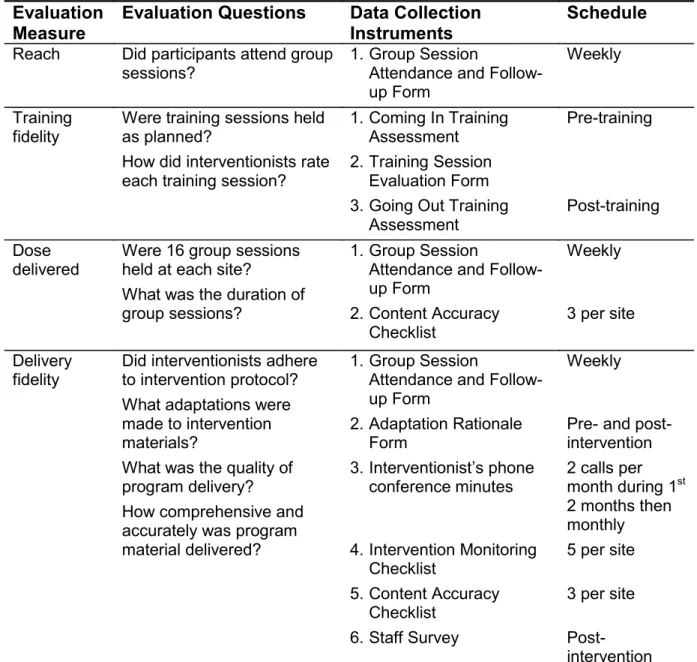
4.1 Process Evaluation Measures and Questions, Data
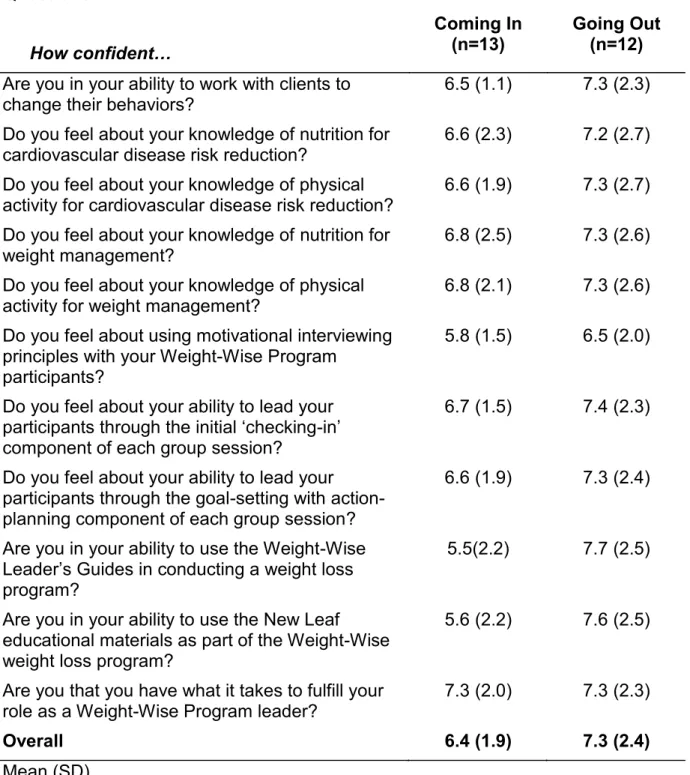
Collection Instruments, and Schedule for Data Collection ... 59 4.2 Interventionists Self-reported Level of Confidence Pre- and
Post- Training ... 60 4.3 Number of Group Sessions, Mean Minutes of Session Duration,
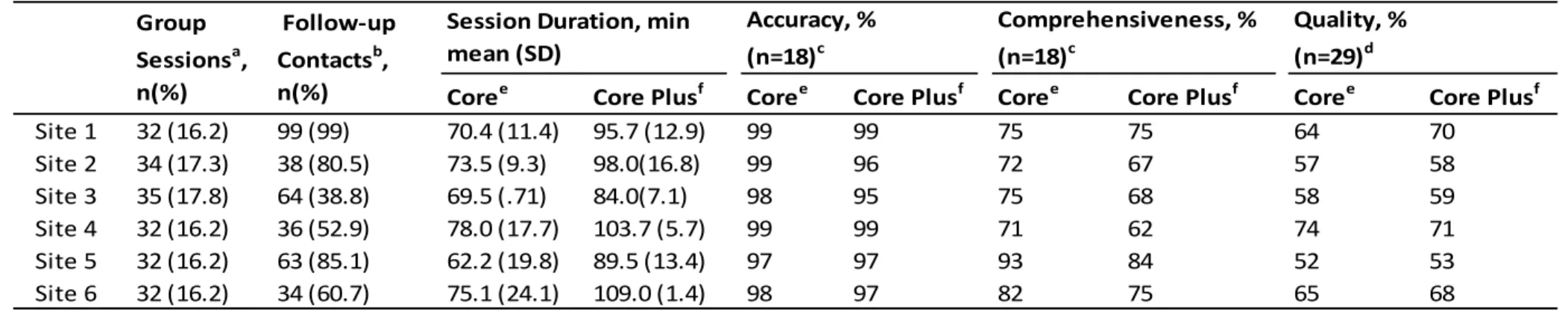
Number of Unplanned Absences, and Number of Follow-up
Contacts, by Site ... 61 4.4 Session Number, Session Monitoring Type, and Delivery Fidelity
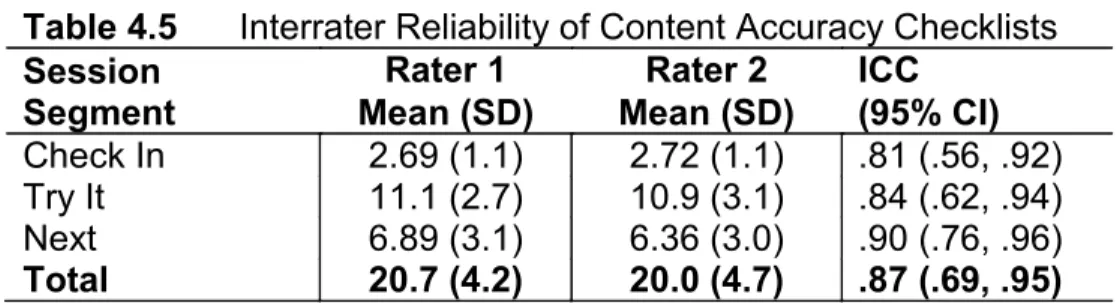
Measures: Quality, Accuracy, and Comprehensiveness, by Site ... 62 4.5 Interrater Reliability of Content Accuracy Checklists ... 64 4.6 Reach and Enactment Fidelity: Participant Attendance, Mean
Number of Days and Weeks Food and Fitness Diaries Kept, Mean
Number of Minutes of Physical Activity Per Week ... 65 4.7 Acceptability of the Weight-Wise II Program by Participants ... 66 5.1 Program Specific Description of RE-AIM Dimensions, Measures,
And Sources of Data ... 91 5.2 Weight Change and Measures of Participant Behavior Strategies:
Attendance, Days and Weeks Food and Fitness Diaries Kept
And Weekly Physical Activity, by Site ... 92 5.3 Measures of implementation Fidelity, by Site ... 93 5.4 Scores for each RE-AIM Dimension, by Site ... 94 6.1 Characteristics of Health Departments in North Carolina and
County Demographics ... 115 6.2 Budgets for Fiscal Year 2012-2013, by Health Department Size ... 116 6.3 Health Department Full-time and Part-time Staff Involved in
Patient and Community Education, by Local Health Department Size ... 117 6.4 Percentage of Health Departments Collaborating with Agencies
xiii
LIST OF FIGURES Figure
3.1 Weight-Wise II Study Flow Diagram ... 26 6.1 Percent of Local Health Departments Offering On-site
Programs and Services, by LHD size ... 119 6.2 Percent of Local Health Departments Offering Off-site
Programs and Services, by LHD size ... 120 6.3 Percent of Local Health Departments Offering Programs and
CHAPTER I INTRODUCTION
Overview
While there is sufficient evidence that behavioral weight management interventions are generally effective in producing clinically significant weight loss, few studies have examined the translation of evidence based weight loss
interventions into public health settings. Fundamental to successfully translating evidence based interventions to real life settings with diverse populations is achieving fidelity to the intervention within the given public health setting. Process evaluation is used to determine whether the intervention was delivered and received as intended. Through process evaluation, interventions may be monitored to assess necessary adaptations to enhance implementation, outcomes may be interpreted and explained, and key elements for successful implementation within a given context identified.
2
adapted from 3 evidence-based weight loss interventions, the Diabetes Prevention Program (DPP), the Dietary Approaches to Stop Hypertension (DASH) intervention tested in the PREMIER trial, and the weight loss program of the Weight Loss Maintenance (WLM) trial. The intensive intervention was conducted in 6 health departments in North Carolina. Participants were randomized into a special intervention group, receiving the 16-week long intervention, or a delayed control group. As a secondary purpose, we assessed health departments’ capacity to implement an evidenced based intensive behavioral weight management intervention. Research that seeks to translate effective behavioral weight management interventions from resource intensive efficacy trials to long-term
adoption and implementation by public health settings serving a diverse low-income population is timely and of great public health significance.
Specific Aims
Aim 1: Conduct a process evaluation of the Weight-Wise II Program.
Aim 2: Evaluate the public health impact of the Weight-Wise II Program using the RE-AIM framework.
CHAPTER II LITERATURE REVIEW
Prevalence of Overweight and Obesity
Variation in the prevalence of obesity exists between age, race, and ethnic groups. According to the National Health and Nutrition Examination Survey (NHANES) 2007–2008, the age adjusted prevalence of obesity (body mass index [BMI] >30) was 33.8% overall, 32.2% among men and 35.5% among women aged 20 years and older (1, 2). Within racial and ethnic groups, non-Hispanic blacks and Hispanics had a higher prevalence of obesity compared to non-Hispanic whites. The age-adjusted prevalence of obesity among non-Hispanic white women was 33.0% compared to 45.1% among Hispanic women and 49.6% among non-Hispanic black women. Approximately 65% of adults in North Carolina are overweight or obese (3). In the last two decades the percentage of obese adults has increased from
4
Health and Economic Consequences of Overweight and Obesity
Overweight/obesity increases the risk for medical conditions including type 2 diabetes, cardiovascular disease, hyperlipidemia, hypertension, stroke, sleep apnea, liver and gallbladder disease, osteoarthritis and certain cancers (4-7). Psychosocial consequences include discrimination, social stigmatization, reduced quality of life, low self-esteem, negative body image, anxiety, and depression (4, 8-10). These medical and psychosocial consequences are associated with increasingly high health care costs. Studies have shown that obese individuals have longer hospital stays compared to normal weight individuals (11, 12). In 2003, estimated adult obesity-attributable medical expenditures in the US were $75 billion with North Carolina contributing $2,138 million (13). In North Carolina, health care costs for Blue Cross Blue Shield customers who were obese were 32% higher compared to normal weight customers (14). For 2006, medical costs associated with obesity were estimated at $147 billion (2008 dollars) (15).
Dietary Strategies in Lifestyle Weight Loss Interventions
5
fat/high carbohydrate, and very high carbohydrate) to assess effects on weight loss and metabolic variables (17). Although weight loss was modest (4.7 kg over 12 months), participants assigned to the diet with the lowest carbohydrate intake lost significantly more weight. In contrast, Foster and colleagues found no differences in weight loss (~11 kg at year 1 and ~7 kg at year 2) between participants randomized to a low carbohydrate or a low fat diet (18). In another study comparing four diets (low fat, average protein; low fat, high protein; high fat, average protein; and high fat, high protein) weight loss was the same in participants assigned to high fat and low fat diets (3.3 kg; p=0.94) and similar in participants assigned to the high protein and low protein diets (3.6 and 3.0 kg, respectively; P=0.22) (19). In a randomized trial comparing weight loss among participants randomized to a low fat vegan diet or a diet following the guidelines of the National Cholesterol Education Program (NCEP), the vegan diet associated with significantly greater weight loss at one and two years (p<0.05) (20).
Physical Activity Strategies in Lifestyle Weight Loss Interventions
6
intensity physical activity, or an equivalent combination for health benefits (22).
According to the Dietary Guidelines, adults should also include muscle strengthening activities on two or more days a week. Due to the sedentary behavior of most
individuals seeking to lose weight, the initiation of a daily regimen of walking
provides a simple means of being physically active that can gradually be intensified as the individual becomes more physically fit.
Cognitive and Behavioral Strategies in Lifestyle Weight Loss Interventions
In an attempt to maximize weight loss and minimize weight regain, cognitive and behavioral strategies have been incorporated as an integral part of weight loss interventions. Cognitive strategies focus on thoughts which affect emotional and behavioral responses (23). While behavioral strategies seek to identify and diminish or eliminate cues that trigger unwanted behaviors and assess consequences of behaviors (24). Combined, cognitive and behavioral strategies help individuals develop skills to identify and modify antecedents (i.e., cues) to dietary, physical activity, and thinking (i.e., cognitions) habits that contribute to weight gain (23, 24). Cognitive and behavioral strategies include: goal setting, self-monitoring, stimulus control, problem solving, relapse prevention, cognitive restructuring, stress
7
Intensive Behavioral Weight Loss Efficacy Trials
The objective of the Diabetes Prevention Program (DPP), a 27-center randomized clinical trial, was to determine whether lifestyle intervention or
pharmacological therapy (metformin) would prevent or delay the onset of diabetes in individuals with impaired glucose tolerance (26). In the Diabetes Prevention
Program (DPP) (27), a total of 3234 participants across 27 centers were randomized to one of the three interventions (1082 to placebo, 1073 to metformin, and 1070 to the intensive lifestyle intervention). The DPP lifestyle intervention program included: 1) a goal based behavioral intervention (lose 7% of initial body weight and maintain weight loss through caloric restriction and a minimum of 150 minutes of moderate physical activity each week), 2) case managers or “lifestyle coaches” to deliver the intervention through individual face-to-face contacts, 3) frequent contact and
ongoing intervention throughout the trial, 4) “toolbox” strategies to tailor the intervention, 5) intervention materials and strategies for ethnically diverse
populations, and 6) an extensive local and national network that provided training, feedback, and clinical support for the interventionists. Half of the participants
8
the placebo group, 296+23kcal in the metformin group, and 450+26 in the lifestyle intervention group (p<0.001) (28).
The goal of the PREMIER trial was to determine the blood pressure lowering of two behavioral lifestyle interventions in individuals with pre-hypertension through stage 1 hypertension (29). In the Dietary Approaches to Stop Hypertension (DASH) intervention tested in the PREMIER trial (29), 810 participants were randomized into one of three groups: Advice Only (n=273), Established (n=268), Established Plus DASH (n=269). Participants assigned to the advice only group received the standard of care. Participants assigned to the Established group received a behavioral intervention that included established lifestyle recommendations (e.g. weight loss if overweight, reduced sodium intake, limited alcohol intake, and increased physical activity). While those assigned to the Established Plus DASH group received the Established recommendation listed above plus the DASH diet.
The PREMIER behavioral lifestyle interventions, based on the social cognitive theory, applied behavior modification techniques (i.e., behavior
9
diaries. Weight loss occurred in each group [Advice Only (-1.1 kg); Established (-4.9 kg); Established +DASH (-5.8 kg)] but fitness improved significantly in both
behavioral intervention groups (Established vs Advice only p=0.005; Established Plus DASH vs Advice only p<0.001) (30).
10
Translating Evidence Based Interventions to Real World Settings
Numerous interventions have shown that weight loss can be achieved with the use of behavioral strategies. However, these studies have been conducted in controlled settings. Therefore, research is needed that implements and evaluates evidence based programs and practices in real world settings (32, 33).
The Weight Wise Study is a randomized controlled trial to test the weight loss effectiveness of a 16-week intervention among low-income midlife women (34). Women were recruited through the North Carolina Enhanced WISEWOMAN Project and clinician referrals at a community health center, via newspaper and radio
advertisements, and at community events and health fairs. Inclusion criteria were based on the North Carolina Breast and Cervical Cancer Control Program criteria (i.e., women ages 40-64, gross family income ≤ 200% of the federal poverty level, and uninsured or under insured). Additionally, women were included who had a BMI of 25 to 45 and physician clearance, if diagnosed with diabetes or previous
cardiovascular event, and who were willing to abstain from using weight loss medications during the study, follow a healthy diet, attend group sessions, and maintain a food and physical activity diary.
11
goal energy intake to promote weight loss of 0.45 kg (1 lb) per week was calculated for each participant. Daily record-keeping monitored behavioral goals of at least 7 servings of fruits and vegetables per day and 150 minutes per week of physical activity.
Translating Evidence Based Interventionsto Local Health Departments
Functional local health departments not only understand health issues
confronting the community but also how to engage the community to address health issues and provide timely, evidence-based health programs and interventions
implemented by trained staff (35). However, state and local infrastructure and
capacity must exist to enable health departments to address risk factors contributing to overweight and obesity. The North Carolina Statewide Health Promotion program required local health departments to focus on policy and environmental change strategies for addressing three major risk factors: physical inactivity, poor diet, and tobacco use (36). The transfer of some services (e.g., adult health, home health, prenatal, and child health) to local hospitals and community health centers allowed health departments to transition limited resources to community-based programs and interventions.
An assessment of North Carolina’s local health departments (LHD)
12
control programs (37). In a profile of public health educators in North Carolina, Glascoff and colleagues noted that lone health educators with administrative roles may lack the time to deliver programs (38). Assessing LHD capacity to conduct weigh loss programs will provide a better understanding of programs, services, and resources available to prevent and control two chronic disease risk factors -- poor eating habits and physical inactivity (35).
Process Evaluation
The complexity of interventions and use of multi-methods during
implementation are suggested as reasons process evaluation is a necessity in social and behavioral research (39, 40).Through process evaluation, researchers can determine the extent to which interventions are implemented, explain significant and insignificant results, link theoretical constructs to outcomes, understand the
relationship between and effectiveness of intervention components and activities, and assess quality and accuracy of the intervention delivered (38).Baranowski and Stables list 11 components as the minimum needed for process evaluation:
recruitment, maintenance, context, resources, implementation of program (fidelity), reach, barriers, exposure, initial use, continued use, and contamination(41).
13
Several large scale multi-component interventions have used various components to conduct process evaluations. For example, Pathways, a health promotion intervention to lower percent body fat in American Indian children in 21 elementary schools, consisted of four coordinated intervention components (42). To answer the main process evaluation question, “to what extent were the Pathways interventions implemented?”, researchers assessed reach, extent, and fidelity (42). In another process evaluation of a multi-component intervention, Rosencrans and colleagues assessed fidelity, dose, reach and context of Zhiiwaapenewin
14
strategies for self-care, curricula implementation, and enabling factors and challenges to curriculum implementation.
Fidelity
15
interventionists in delivering the program, and quality of delivery (44, 49, 53). Assessment of receipt fidelity focuses on whether participants understand
information and use or perform the behavioral skills and cognitive strategies during the intervention (43, 44).While enactment fidelity focuses on whether participants use or perform behavioral skills and cognitive strategies in appropriate real life settings (43, 48).
Summary
16 References
1. Flegal KM, Carroll MD, Ogden CL, Curtin LR. Prevalence and trends in obesity among US adults, 1999-2008. JAMA 2010;303(3):235-41.
2. Wang Y, Beydoun MA. The obesity epidemic in the United States--gender, age, socioeconomic, racial/ethnic, and geographic characteristics: a systematic review and meta-regression analysis. Epidemiol Rev 2007;29:6-28.
3. North Carolina Department of Health and Human Services, Division of Public Health. Behavioral Risk Factor Surveillance System. In: State Center for Health Statistics; 2009.
4. US Department of Health and Human Services UPHS, Office of the Surgeon General The Surgeon General’s call to action to prevent and decrease overweight and obesity. In. Rockville, MD: US Department of Health and Human Services 2001.
5. Dietz WH. Health consequences of obesity in youth: childhood predictors of adult disease. Pediatrics 1998;101(3 Pt 2):518-25.
6. Field AE, Coakley EH, Must A, Spadano JL, Laird N, Dietz WH, et al. Impact of overweight on the risk of developing common chronic diseases during a 10-year period. Arch Intern Med 2001;161(13):1581-6.
7. NIH NOEI. Clinical guidelines on the identification, evaluation, and treatment of overweight and obesity in adults.
8. Zhao G, Ford ES, Dhingra S, Li C, Strine TW, Mokdad AH. Depression and anxiety among US adults: associations with body mass index. Int J Obes (Lond) 2009;33(2):257-66.
9. Simon GE, Von Korff M, Saunders K, Miglioretti DL, Crane PK, van Belle G, et al. Association between obesity and psychiatric disorders in the US adult
population. Arch Gen Psychiatry 2006;63(7):824-30.
10. Janssen I, Craig WM, Boyce WF, Pickett W. Associations between
17
11. Wang YC, McPherson K, Marsh T, Gortmaker SL, Brown M. Health and economic burden of the projected obesity trends in the USA and the UK. Lancet 2011;378(9793):815-25.
12. Zizza C, Herring AH, Stevens J, Popkin BM. Length of hospital stays among obese individuals. Am J Public Health 2004;94(9):1587-91.
13. Finkelstein EA, Fiebelkorn IC, Wang G. State-level estimates of annual medical expenditures attributable to obesity. Obes Res 2004;12(1):18-24.
14. North Carolina Department of Health and Human Services. The burden of obesity in North Carolina; 2009. In; 2009.
15. Finkelstein EA, Trogdon JG, Cohen JW, Dietz W. Annual medical spending attributable to obesity: payer-and service-specific estimates. Health Aff (Millwood) 2009;28(5):w822-31.
16. Seagle HM, Strain GW, Makris A, Reeves RS. Position of the American Dietetic Association: weight management. J Am Diet Assoc 2009;109(2):330-46.
17. Gardner CD, Kiazand A, Alhassan S, Kim S, Stafford RS, Balise RR, et al. Comparison of the Atkins, Zone, Ornish, and LEARN diets for change in weight and related risk factors among overweight premenopausal women: the A TO Z Weight Loss Study: a randomized trial. JAMA 2007;297(9):969-77.
18. Foster GD, Wyatt HR, Hill JO, Makris AP, Rosenbaum DL, Brill C, et al. Weight and metabolic outcomes after 2 years on a low-carbohydrate versus low-fat diet: a randomized trial. Ann Intern Med 2010;153(3):147-57.
19. Sacks FM, Bray GA, Carey VJ, Smith SR, Ryan DH, Anton SD, et al. Comparison of weight-loss diets with different compositions of fat, protein, and carbohydrates. N Engl J Med 2009;360(9):859-73.
20. Turner-McGrievy GM, Barnard ND, Scialli AR. A two-year randomized weight loss trial comparing a vegan diet to a more moderate low-fat diet. Obesity (Silver Spring) 2007;15(9):2276-81.
18
Evaluation, and Treatment of Overweight and Obesity in Adults. In. Bethesda, MD: National Institutes of Health; 2000.
22. Agriculture USDO, Services USDHH. Dietary Guidelines for Americans 2010: Books Express Publishing; 2012.
23. Van Dorsten B, Lindley EM. Cognitive and behavioral approaches in the treatment of obesity. Endocrinol Metab Clin North Am 2008;37(4):905-22.
24. Wadden TA, Butryn ML. Behavioral treatment of obesity. Endocrinol Metab Clin North Am 2003;32(4):981-1003, x.
25. Fabricatore AN. Behavior therapy and cognitive-behavioral therapy of obesity: is there a difference? J Am Diet Assoc 2007;107(1):92-9.
26. The Diabetes Prevention Program. Design and methods for a clinical trial in the prevention of type 2 diabetes. Diabetes Care 1999;22(4):623-634.
27. The Diabetes Prevention Program (DPP): description of lifestyle intervention. Diabetes Care 2002;25(12):2165-71.
28. Knowler WC, Barrett-Connor E, Fowler SE, Hamman RF, Lachin JM, Walker EA, et al. Reduction in the incidence of type 2 diabetes with lifestyle intervention or metformin. N Engl J Med 2002;346(6):393-403.
29. Svetkey LP, Harsha DW, Vollmer WM, Stevens VJ, Obarzanek E, Elmer PJ, et al. Premier: a clinical trial of comprehensive lifestyle modification for blood
pressure control: rationale, design and baseline characteristics. Ann Epidemiol 2003;13(6):462-71.
30. Appel LJ, Champagne CM, Harsha DW, Cooper LS, Obarzanek E, Elmer PJ, et al. Effects of comprehensive lifestyle modification on blood pressure control: main results of the PREMIER clinical trial. JAMA 2003;289(16):2083-93.
19
32. Woolf SH. The meaning of translational research and why it matters. JAMA 2008;299(2):211-3.
33. Rohrbach LA, Grana R, Sussman S, Valente TW. Type II translation: transporting prevention interventions from research to real-world settings. Eval Health Prof 2006;29(3):302-33.
34. Samuel-Hodge CD, Johnston LF, Gizlice Z, Garcia BA, Lindsley SC, Bramble KP, et al. Randomized trial of a behavioral weight loss intervention for low-income women: the Weight Wise Program. Obesity (Silver Spring) 2009;17(10):1891-9.
35. National Association of County and City Health Officials. Operational Definition of a Functional Local Health Department. In. Washington, DC; 2005.
36. Plescia M, Young S, Ritzman RL. Statewide community-based health promotion: a North Carolina model to build local capacity for chronic disease prevention. Prev Chronic Dis 2005;2 Spec no:A10.
37. Porterfield DS, Reaves J, Konrad TR, Weiner BJ, Garrett JM, Davis M, et al. Assessing local health department performance in diabetes prevention and control--North Carolina, 2005. Prev Chronic Dis 2009;6(3):A87.
38. Glascoff MA, Johnson HH, Glascoff WJ, Lovelace K, Bibeau DL. A profile of public health educators in North Carolina's local health departments. J Public Health Manag Pract 2005;11(6):528-36.
39. Steckler AB, Linnan L. Process evaluation for public health interventions and research. 1st ed. San Francisco: Jossey-Bass; 2002.
40. Young DR, Steckler A, Cohen S, Pratt C, Felton G, Moe SG, et al. Process evaluation results from a school- and community-linked intervention: the Trial of Activity for Adolescent Girls (TAAG). Health Educ Res 2008;23(6):976-86.
41. Baranowski T, Stables G. Process evaluations of the 5-a-day projects. Health Educ Behav 2000;27(2):157-66.
20
healthful diet and physical activity in American Indian third, fourth, and fifth grade students. Prev Med 2003;37(6 Pt 2):S80-90.
43. Rosecrans AM, Gittelsohn J, Ho LS, Harris SB, Naqshbandi M, Sharma S. Process evaluation of a multi-institutional community-based program for diabetes prevention among First Nations. Health Educ Res 2008;23(2):272-86.
44. Feathers JT, Kieffer EC, Palmisano G, Anderson M, Janz N, Spencer MS, et al. The development, implementation, and process evaluation of the REACH Detroit Partnership's Diabetes Lifestyle Intervention. Diabetes Educ 2007;33(3):509-20.
45. Moncher FJ, Prinz RJ. Treatment fidelity in outcome studies. Clinical Psychology Review 1991;11(3):247-266.
46. Dusenbury L, Brannigan R, Falco M, Hansen WB. A review of research on fidelity of implementation: implications for drug abuse prevention in school settings. Health Educ Res 2003;18(2):237-56.
47. Dobson D, Cook TJ. Avoiding type III error in program evaluation: Results from a field experiment. Evaluation and Program Planning 1980;3(4):269-276.
48. Bellg AJ, Borrelli B, Resnick B, Hecht J, Minicucci DS, Ory M, et al.
Enhancing treatment fidelity in health behavior change studies: best practices and recommendations from the NIH Behavior Change Consortium. Health Psychol 2004;23(5):443-51.
49. Ory MG, Jordan PJ, Bazzarre T. The Behavior Change Consortium: setting the stage for a new century of health behavior-change research. Health Educ Res 2002;17(5):500-11.
50. Resnick B, Bellg AJ, Borrelli B, Defrancesco C, Breger R, Hecht J, et al. Examples of implementation and evaluation of treatment fidelity in the BCC studies: where we are and where we need to go. Ann Behav Med 2005;29 Suppl:46-54.
51. Gearing RE, El-Bassel N, Ghesquiere A, Baldwin S, Gillies J, Ngeow E. Major ingredients of fidelity: a review and scientific guide to improving quality of
21
52. Stein KF, Sargent JT, Rafaels N. Intervention research: establishing fidelity of the independent variable in nursing clinical trials. Nurs Res 2007;56(1):54-62.
CHAPTER III
INTERVENTION FRAMEWORK
Theoretical Framework
Social and behavior change interventions take an ecological approach to behavior change by incorporating change efforts on multiple factors (e.g. physical activity, eating habits, etc.) at various levels (e.g. individual, interpersonal, and organizational) (1-3). Constructs are derived from the transtheoretical model (TTM), social cognitive theory (SCT), social supports and social networks theory,
organizational change theory, and diffusion of innovations.
23
mechanism to promote mastery of learning through skills training, model positive outcomes of healthful behaviors, train in problem solving and stress management, and provide opportunities for self monitoring, goal setting, feedback, and self reward.
Similar to individuals, an organization also changes or adopts innovations through a series of stages including awareness, adoption, implementation, and institutionalization (2).The development of an organization influences the diffusion of innovations, the process in which an idea, practice, or object perceived as new is communicated through certain channels over time among the members of a social system (2, 3).
24
evaluating maintenance. At the individual level, maintenance is the extent to which participants maintain behavior change. However, at the organizational or setting level, maintenance refers to the extent to which intervention components become institutionalized or sustained over time.
Weight-Wise II Study Description
The Weight-Wise II Program (10) is a behavioral weight management program adapted from 3 evidence-based weight loss interventions, the Diabetes Prevention Program (DPP) (11), DASH intervention tested in the PREMIER trial (12), and the weight loss program of the Weight Loss Maintenance (WLM) trial (13). The overall goal of the study was to evaluate an intense behavioral weight loss intervention among midlife low-income female patients in public health settings.
25
scheduled gastric bypass surgery; 4) weight loss of > 20 pounds in the last 3 months; and 5) current use of medications for weight loss or psychosis.
27 References
1. McLeroy KR, Bibeau D, Steckler A, Glanz K. An ecological perspective on health promotion programs. Health Educ Q 1988;15(4):351-77.
2. Glanz K, Rimer BK, Viswanath K. Health Behavior and Health Education: Theory, Research, and Practice: Wiley; 2008.
3. Rogers EM. Diffusion of Innovations, 5th Edition: Free Press; 2003.
4. Klesges LM, Estabrooks PA, Dzewaltowski DA, Bull SS, Glasgow RE. Beginning with the application in mind: designing and planning health behavior change interventions to enhance dissemination. Ann Behav Med 2005;29 Suppl:66-75.
5. Belza B, Toobert DJ, Glasgow RE. RE-AIM for program planning: overview and applications. In; 2006.
6. Farris RP, Will JC, Khavjou O, Finkelstein EA. Beyond effectiveness: evaluating the public health impact of the WISEWOMAN program. Am J Public Health 2007;97(4):641-7.
7. Bopp M, Wilcox S, Laken M, Hooker SP, Saunders R, Parra-Medina D, et al. Using the RE-AIM framework to evaluate a physical activity intervention in churches. Prev Chronic Dis 2007;4(4):A87.
8. Abildso CG, Zizzi SJ, Reger-Nash B. Evaluating an insurance-sponsored weight management program with the RE-AIM Model, West Virginia, 2004-2008. Prev Chronic Dis 2010;7(3):A46.
9. Glasgow RE, Vogt TM, Boles SM. Evaluating the public health impact of health promotion interventions: the RE-AIM framework. Am J Public Health 1999;89(9):1322-7.
28
11. The Diabetes Prevention Program (DPP): description of lifestyle intervention. Diabetes Care 2002;25(12):2165-71.
12. Svetkey LP, Harsha DW, Vollmer WM, Stevens VJ, Obarzanek E, Elmer PJ, et al. Premier: a clinical trial of comprehensive lifestyle modification for blood
pressure control: rationale, design and baseline characteristics. Ann Epidemiol 2003;13(6):462-71.
CHAPTER IV
PROCESS EVALUATION OF A WEIGHT LOSS PROGRM FOR LOW-INCOME MID-LIFE WOMEN: THE WEIGHT-WISE II PROGRAM
INTRODUCTION
The U.S. Preventive Services Task Force recommends obesity screening for adults and referral of individuals with a body mass index (BMI) ≥ 30 kg/m2 to
intensive behavioral interventions (1). Lifestyle modification or behavioral weight control typically consists of 3 components: diet, exercise, and behavioral therapy (2). Efficacy trials of intensive behavioral weight management interventions have
demonstrated clinically significant reductions in weight (i.e., 7% to 10% reduction of initial body weight) resulting in decreased cardiovascular disease risk factors
30
Process evaluation is considered a necessity for evaluating complex interventions using multi-methods during implementation (7). Through process evaluation, researchers can: determine the extent to which interventions are implemented; assess necessary adaptations to enhance implementation; explain significant and insignificant results; link theoretical constructs to outcomes;
understand the relationship between and effectiveness of intervention components and activities; assess quality and accuracy of the intervention delivered; and identify key elements for successful implementation within a given context (7) . Steckler and Linnan (2002) propose 7 components of process evaluation: context (the larger social, political, and economic environment), reach (who participated), dose delivered (what the program actually delivered), dose received (what participants received), implementation (a combination of reach, dose delivered, dose received, and fidelity) and recruitment (what was used to approach and attract potential participants), fidelity (extent to which the intervention was delivered as intended (7).
Fidelity, considered critical to successful translation of evidence-based interventions (8-10), is assessed to avoid type III errors (erroneously concluding that the outcomes are a result of the intervention when the intervention is not
implemented as planned) (11, 12), improve reliability and validity of interventions, document deviations and variations in program implementation, and help explain why interventions succeed or fail (11, 13). Dimensions of fidelity defined in the literature include adherence to intervention protocols, exposure or dose,
31
quality of delivery, and presence or absence of key program elements (program differentiation) (8, 9, 11, 14-16). More recently, the treatment fidelity workgroup within the Behavior Change Consortium (BCC) (17, 18), a National Institutes of Health funded group of 15 projects investigating mechanisms of health behavior change, proposed 5 components of treatment fidelity: design, training, delivery, receipt, and enactment (17, 19). The authors believe that these five components provide a comprehensive model to assess fidelity.
Due to the complex nature of implementing evidence-based programs, there is a call for research on how to effectively delivery such programs in real-world settings (10). With increased attention on translating interventions for use in practical settings, there is a need to measure the process of implementation (7, 20) and develop strategies to assess implementation fidelity (4, 21). Furthermore, public health decision makers may be more accepting of implementing interventions that have been effectively tested within the specific setting targeting the same population base (22). For this report, we present the process evaluation of a weight loss
program for low-income, mid-life women in local health departments. We used the process evaluation based on the steps outlined by Steckler and Linnan (7) with an
expansion of the fidelity component as described by the NIH BCC (17). We describe
the monitoring procedures and process evaluation measures, and present findings
on process evaluation components including recruitment, training fidelity, dose
32
adaptations), dose received (enactment fidelity and receipt fidelity), and context
(barriers and facilitators to implementation).
METHODS
Intervention Design
Details of the intervention design and rationale have been previously reported
(23). In short, the Weight-Wise II Program is a behavioral weight management program adapted from the Weight-Wise I Program (24), which represents an adaptation of several evidence-based interventions (25-27). The theoretical
foundation of the Weight-Wise II Program was developed from constructs and behavioral approaches derived from the transtheoretical model (TTM) (28), social cognitive theory (SCT) (29), self-applied behavior modification (30), motivational counseling (31), and problem-solving techniques (32).The goals of the intervention were to achieve a weight loss of 10lbs through caloric restricts (no less than 1200 calories per day) and at least 150 minutes of moderate intensity physical activity each week (23).
Participants were randomized into the special intervention group or the delayed intervention group. The special intervention group received an intensive 16-week long intervention. At the first group session, each participant received a
33
topics on healthy eating, physical activity, and weight management. Participants also received a calorie counter and food and fitness diaries to record daily food intake and minutes of physical activity. A shorter 10-week version of the intervention was offered to the delayed intervention group. During the waiting period, delayed
intervention participants received 2 newsletters with general health information and Weight-Wise II Program updates.
Process Evaluation Procedures and Data Collection
Process data were collected using both quantitative and qualitative methods. Below are descriptions of the process data collected from staff and participants as part of the intervention, and summaries of how selected process data were used in generating fidelity-specific scores for this study. Table 4.1 denotes the data
collection instrument, associated process evaluation measure, and the timeframe for collecting data.
Recruitment
Details of the recruitment of health departments and interventionists have
34
directors, or mailed to directors not in attendance. Invitations for study participation were also mailed to the director of nursing at potential sites, announcements were circulated via email lists, and follow-up phone calls were made to each site. An optimized probability sampling protocol was used to select 6 North Carolina health
departments among those expressing interest in the study (33). Each participating health department then selected current staff persons (i.e., registered dietitian, registered nurse, or health educator) to serve as the interventionist and an assistant to implement the Weight-Wise II Program. Selection of the interventionist’s assistant was at the discretion of the health department as there were no skill-based or
training requirements specified in the research protocol.
Participant recruitment is described elsewhere (23). Briefly, women between 40-64 years of age who met the following criteria were eligible for participation: 1) BMI between 27.5 and 45; 2) willingness to lose 5% or more of initial body weight and follow recommendations for healthy dietary and physical activity patterns; 3) English speaking; 4) able and willing to give informed consent; and 5) household income at or below 250% of the poverty level. Participant recruitment consisted of study advertisement to health department clients and pre-screening interviews with interested women. Five templates (Appendix C1 – C5) consisting of a study
35
loss program, potential barriers to participation, and available support persons (23). Interventionists documented responses on the Prescreening Log (Appendix D).
Staff Training
Training for interventionists and assistants, conducted by UNC research staff, included multiple methods before and during the intervention. Pre-intervention face-to-face instruction was comprised of 4 weekly group sessions lasting 5 hours each for a total of 20 hours, homework assignments (2 hours per weekly group session for a total of 8 hours), and online instruction (4 - 6 hours). During these training
sessions, interventionists were provided with an overview of the study and study materials, training in ethics, weight management, motivational interviewing principles, group counseling strategies, group facilitation, and program planning (Appendix E).
A 4-hour protocol training session (Appendix F) was conducted at each health department immediately prior to implementation of the Weight Wise II
36 Training Fidelity
At the beginning (Appendix G) and completion (Appendix H) of the face-to-face training, interventionists completed an 11-item questionnaire assessing their level of confidence in: 1) knowledge of nutrition and physical activity for weight management and cardiovascular disease reduction; and 2) ability to implement behavioral weight loss and weight management programs (1=low to 10=high). Similarly, at the end of each training session, interventionists completed an 11 item questionnaire (Appendix I1 – I4) rating session topics and activities (5=excellent to 1= poor) and indicated the duration for completing online training and homework. Content varied at each session and included ethics training, skill-building activities, intervention planning, and topics on motivational interviewing principles and group counseling strategies. In addition, interventionists also had the opportunity to “chat” informally with an experienced counselor who had previously delivered the
intervention.
Dose Delivered
The Weight-Wise II Program special intervention consisted of 16 weekly group sessions offered on 2 different days at different times to accommodate
participant’s schedules. Participant attendance and nonattendance was recorded on the Group Session Attendance and Follow-up Form (Appendix J). If a participant
37
the reason for the absence and noted the method of follow-up (e.g., phone,
face-to-face, email).
In accordance with research protocol, session duration was recorded for 5 of 16 group sessions (i.e., monitored group sessions) at each site. The duration of group sessions and session segments was captured by trained research staff during observations of group sessions using the Monitoring Checklist (Appendix K) and by a graduate assistant and research assistant during review of audio recordings of group sessions using the Content Accuracy Checklist (Appendix L).
Each group session was to last a duration of 1.5 to 2 hours. Sessions began with Check-In (about 25 minutes) during which each participant’s weight was
measured and previous session content reviewed. The Try It segment, ranging from 35 to 50 minutes, covered a variety of topics and activities including planning ahead for meals, environmental triggers for physical activity, and finding other support systems. Do It, physical activity demonstration segments, and Taste It, food
38 Delivery Fidelity
To measure the extent to which the intervention (i.e., the dose) was delivered, we derived a Core Components score based on the delivery of core or essential intervention components: Check in, Try it, and Next Steps segments. Core
Components with the addition of the Do It or Taste It segment comprised the Core Components Plus score. Thus Core Components Plus included all intervention components as outlined in the interventionists’ guide for delivering the intervention.
Quality: Intervention protocol called for direct observations to occur in the first
half (group sessions 2 to 8) of the intervention, with at least one observation at each
site before group session 5. Furthermore, at least one audiotape or observations
was to be conducted for each session excluding sessions 1 and 16. A total of 5
group sessions, 2 directly observed sessions and 3 audio taped sessions, per health
department were scheduled to be reviewed to determine quality of program delivery.
During directly observed sessions and audiotape reviews, a trained research
staff member completed the Intervention Monitoring Checklist (Appendix K) to
document quality of delivery. The checklist was organized into sections
corresponding with the format of group sessions: Check In, Do It, Taste It, Try It, and
Next Steps. Each section consisted of 3 questions rated on a 5-point scale (1=not at
all, 5=completely). Section scores were calculated by averaging the score of the 3
corresponding section questions and the overall session score was calculated by
averaging the 5 section scores. For each group session, a quality score was
39
activities occurred during alternating group sessions, section scores are reported as
Core Components (Check In, Try It, and Next Steps) and Core Plus (Check In, Try
It, Next Steps, and Try It or Do It). Additionally, three open-ended questions allowed
the observer to provide session summary notes and comments.
Accuracy and Comprehensiveness: The Content Accuracy Checklist (Appendix L), a yes/no checklist, was used by trained raters to review 3 audio-taped group sessions per health department to assess the accuracy and
comprehensiveness of program material delivered. Accuracy was defined as the extent to which interventionists provided correct information on program session topic areas. Comprehensiveness was the degree to which interventionists covered program materials. Each interventionist audio taped 3 group sessions for a total of 18 audio-taped group sessions. Audio taped sessions were predetermined per the study protocol with at least one observation at each site before group session five. However, the first and last group sessions were excluded from monitoring. During the first group session, interventionists and participants were new to program materials. The last session was structured such that variability in content delivery was allowed to accommodate differences in how each site celebrated weight loss successes and closed out the program.
40
session material. Additionally, adaptations to group session material that occurred immediately prior to or during a group session (e.g. change in physical activity due to inclement weather) were documented as a part of the weekly interventionist’s
conference call in conference call minutes taken by research staff. Interventionists were also asked to identify adaptations to program materials on the Staff Survey (Appendix N) which was administered at the end of the weight loss program.
Dose Received
Enactment Fidelity: The extent to which participants perform behavioral skills and cognitive strategies in daily life (17). At each weekly group session, participant attendance was recorded by Interventionists on the Group Session Attendance and Follow-up form (Appendix J). Participants were given a Food and Fitness Diary (Appendix O) to record daily food intake (amount and calories for food and
beverages, and fruit and vegetable servings), and moderate intensity physical
activity (type and number of minutes). Food and fitness diaries were reviewed
weekly by the interventionist.
Acceptability:The extent to which the participants receive the Weight-Wise II Program materials and attend group sessions. At the end of the intervention,
41
participants (1=not very good to 5=very good) and overall satisfaction with the Weight Wise II Program (1=not very satisfied to 5=very satisfied).
Barriers and facilitators
Intervention staff completed a 44 item questionnaire (Appendix N) to assess
facilitators and barriers to program implementation. The survey assessed ease of
use of intervention materials and data collection protocols, assistance with
implementation, logistics of implementation, satisfaction with communication with
research staff, and plans for future implementation of program materials.
ANALYSIS
42
intraclass correlation coefficient (ICC) because content accuracy ratings were measured on a continuous scale.
RESULTS
Recruitment
Details of the recruitment and selection of health departments are reported elsewhere (23, 33). Briefly, the 6 randomly selected health departments were representative of North Carolina health departments in terms of type, size (small, medium, and large counties based on tertile of county population), distance from Chapel Hill (all sites within 200 miles with no more than 1 site more than 150 miles), interventionist training (no more than 1 site with a bachelor’s level health educator), and minority population served (at least 3 sites with at least a 30% racial/ethnic minority population) (33). Each health department selected one interventionist and one assistant. The interventionist was a staff of the health department serving as a registered nurse assigned to patient education roles, a registered dietitian, or a health educator.
Training Fidelity
The total estimated pre-intervention training time was 32-34 hours per
43
weekly group sessions, expected to take about 2 hours per session (8 hours total), was completed in 1.9 hours (SD = 0.4) per session (mean total hours = 5.7, SD = 3.2).
Interventionists assessed their confidence in implementing the Weight-Wise II Program (1=low to 10=high) before and after the face-to-face training sessions (Table 4.2). Thirteen of 14 pre-training session surveys were returned. All 12 post training session surveys were returned.
Interventionists were also asked to evaluate each of 4 weekly training
44
strategies were rated excellent or above average by 100% of intervention staff. Review of the Leader’s Guide was rated above average or excellent by 91% (n=10) of interventionists. The remaining 9% (n=1) of intervention staff were neutral.
Similarly, review of the New Leaf Manual was rated above average or excellent by 92% (n=11) of interventionists with the remaining 8% (n=1) neutral. Review of the New Leaf Healthy Weight materials was rated excellent or above average by 83% (n=10) of intervention staff with 17% (n=2) remaining neutral. Implementation strategies and intervention planning was rated excellent or above average by all intervention staff.
Intervention
Dose Delivered
45 Delivery Fidelity
A total of 29 out of 30 checklists to assess quality and all 18 checklists to assess accuracy and comprehensiveness were completed. Table 4.4 details quality, accuracy, and comprehensiveness scores. The number of scored checklists for Do It and Taste It sections varied based on the session number monitored. Do It
segments occurred during even numbered group sessions while Taste It segments occurred during odd numbered sessions.
Quality:
To assess quality, each section of the Monitoring Checklist consisted of 3
questions rated on a 5-point scale (1=not at all, 5=completely). Do It sections,
scheduled for even numbered group sessions, were not applicable for three of the
five monitored sessions for 3 sites. Similarly, Taste It sections, occurring during odd
numbered group sessions, were not applicable for 3 of 5 monitored sessions for one
site and 4 of 5 sessions for another site. Section scores were calculated by
averaging the score of the 3 corresponding section questions and the overall
session score was calculated by averaging the 5 section scores. For each group
session, a quality score was calculated for each section and the overall session. The
maximum mean score for each component was 5 and higher scores represent better
46
(3.54; SD=0.31) scores while Site 5 had the lowest mean Core and Core Plus scores
of 2.61 (SD=.24) and 2.66 (SD=.27), respectively.
Accuracy and comprehensiveness: Table 4.4 shows the percent accuracy
and comprehensiveness with which the Core and Core Plus components were
delivered. Of the 18 audio taped sessions, 67% of Core segment materials were
delivered with 100% accuracy. While 61% of the Core Plus segment materials were
delivered with 100% accuracy. Site 5 was most comprehensive in program delivery
with the highest mean Core Component (93%) and Core Plus (84%). Site 3 was
least comprehensive in delivery of Core (50%) segments while Site 4 was least
comprehensive in delivery of Core Plus (62%) segments.
We conducted a comparison of the reliability of measurements between the
two research staff members rating the Content Accuracy Checklist. Intraclass
correlation (ICC) was used to assess interrater reliability using a sample of 18 audio
taped sessions rated by two raters. Means, standard deviations, and intraclass
correlations coefficients for the two raters are shown in Table 4.5. Using Shrout and
Fleiss (1979), the ICC scores of 0.81 to 0.90 indicate a high level of agreement
between raters using the Content Accuracy Checklist as an assessment tool.
Adaptations: Of the 45 adaptations reported by interventionists, 62.2% were
reported during the interventionist’s weekly phone calls, 33.3% were reported on the
47
were related to physical activity which typically resulted in an alternate activity than
what was outlined in the Weight-Wise II Program Leader’s Guide. Changes were
related to inclement weather (e.g., excessive heat, rain), time constraints (e.g.,
session ended, day light savings time), costs, and lack of equipment. Additionally,
two interventionists attended a stress reduction class then taught stress reduction
techniques to their respective groups.
There were fewer nutrition-related adaptations (26.6%). One site did not have
kitchen equipment; therefore, could not prepare foods on site. Another site placed
limitations on the number of foods to sample due to costs, and at one site,
participants requested a trip to the grocery store. All other nutrition-related
adaptations involved modification of recipes.
Few adaptations (8.8%) were made to incentives given to participants. One
site did not use any incentive system based on points earned for adherence to
behavioral goals (e.g., attendance, maintaining food and fitness diaries), while
another created a tiered incentive program using a points system for earning larger
incentives. Adaptations not specific to nutrition, physical activity, or incentives
(22.2%) included setting ground rules for group sessions and having participants list
48 Dose Received
Enactment Fidelity:Table 4.6 showsenactment measures including
participant attendance, adherence to self-monitoring (days per week and number of
weeks food and fitness diaries maintained) and physical activity recommendations
(≥150 minutes per week). Participants attended a mean of 11 weekly group sessions
(SD=4.1). Diaries were maintained for a mean of 6.3 days (SD=0.81) for a mean of
8.8 weeks (SD=5.3). Of 101 participants, the mean weight loss was 3.8 kg (SD=4.9).
Acceptability: Table 4.7 shows how participants rated various components of the Weight Wise II Program. Of 104 participants, 58% (n=60) thought 16 sessions were about the right number, 32% believed 16 sessions were not enough, and 5% (n=5) thought 16 sessions were too many. In rating the overall program, 86% (n=91) of participants were very satisfied or satisfied, 6% (n=6) remained neutral, with 1% (n=1) not satisfied. Site 5 is the only site with 100% of participants rating group interaction, the group leader, and overall program as very good.
Barriers and Facilitators
49
very satisfied with the multiple methods (email, individual and conference calls, and courier mail system) of communicating with UNC research staff. Logistics of
program implementation and overall data collection were viewed as easy. Conducting the study eligibility and motivational screenings were rated as
“somewhat easy by 5 of 6 interventionists and rated as “somewhat difficult” by one interventionist at site 2. Likewise, collecting data during the enrollment visit was viewed as easy by 5 of 6 interventionists and “somewhat difficult” by the site 6 interventionist.
Interventionists were asked about the help received from an assistant or other health department staff with program implementation. Five of the 6 sites had a
designated assistant. The Program Assistant helped the interventionist with
50
“good”. These findings suggest that assistance is needed to complete interventionist’s duties as outlined in the program protocol.
Discussion
Research that seeks to translate effective behavioral weight management
interventions from resource intensive efficacy trials to long-term adoption and
implementation in public health settings serving a diverse low-income population is
timely and of great public health significance. As part of a larger translational
research effort, we conducted a comprehensive process evaluation of an intensive
behavioral weight loss program for mid-life low-income women. Measures included
multiple components of process evaluation (recruitment, dose delivered, dose
received, and context) and fidelity (training, delivery, receipt, and enactment). We
also identified barriers and facilitators to program implementation. Overall, our
findings indicate that the Weight-Wise II Program was well received by
interventionists and participants alike with 91% of the participants expressing
satisfaction with the program. Furthermore, the full complement of program content,
Core Plus segments comprised of Check In, Try It, Next Steps, and Taste It or Do It,
was delivered with moderate success with 97% accuracy, 72% comprehensiveness,
and 62% quality.
51
minutes for Core Plus and 50 to 90 minutes for Core segments, it was evident on the audiotapes and during observations that some interventionists did not have enough time to go over all the materials. Feedback provided to some interventionists
indicated that some conversations during group sessions were not about program materials; thus, better facilitation was needed to steer conversations back to the session topic. This may be reflected in the comprehensiveness scores which ranged from 55% to 98%. We believe it is important to note that while lower
comprehensiveness scores may indicate program material was not directly discussed, the conversations and interactions during group sessions may have served as a source of social support to participants and therefore, played a positive role in their overall outcomes.
Interventionists delivered all Core segments of group sessions with greater than 90% accuracy. Only two of the 18 reviewed Core Plus segments of group sessions were delivered with less than 90% accuracy. The main source of
52
Only one site comprehensively delivered more than 90% of Core segments program materials. This site had the lowest quality score but the highest participant satisfaction with the group leader, other group members, and the overall program. It is possible that what we as researchers expect for quality of program delivery may exceed what is needed for a desired outcome or may not be in alignment with what participants gain from group interactions. In summary notes during a site visit, the rater believed their presence may have “changed the dynamics of the group”. This may suggest that the interventionist’s quality of delivery (2.44 out of 5) was
negatively impacted when being observed. Examination of the Monitoring Checklist scores for this site show that the quality of delivery was higher for the first and second audio taped, monitored group sessions, 3.33 and 3.0, respectively. The final two audio-taped sessions received low scores because the Next Steps segments were not completed. It seems that this interventionist comprehensively covered program content but did not have remaining time to allow participants to create personal plans. There may also have been no remaining session time for the
53 Strengths
Our study had several strengths. First, although we captured a large amount of qualitative and quantitative data, we streamlined the data collection process as much as possible because of cost constraints and logistics. Since we did not have the budget for interventionists to express mail enrollment and other data collection forms to the research office, a statewide courier system was used as an alternative for mail delivery. Interventionists were current health department staff, and all but one continued their job responsibilities while implementing the intervention. As such, we maintained a balance between capturing critical data for program implementation and evaluation without unduly over-burdening the staff.
Second, we monitored program implementation through observations and
audio-taping of group sessions. On-going monitoring of evidence-based
interventions is needed to maintain fidelity over time by discovering contextual
issues that may influence the intervention, identifying adaptations to the intervention,
and serving as a mechanism to provide training and technical assistance to
interventionists (8). Standardized and ongoing training ensures interventionists
receive the same training for program delivery (11, 17) and prevents deviations from
intervention implementation over time (16). All interventionists and assistants
received training pre-intervention via multiple modes (e.g., online, face-to-face).
Feedback provided to interventionists after the 2 site visits and review of 3
54
staff received feedback as a part of intervention monitoring activities (debriefing and
oral feedback after observation visits and audio-taped session).
Adaptations to program materials were captured before the intervention at the pre-intervention training, throughout the duration of the intervention during weekly interventionist’s phone calls, and after the intervention on the Staff Survey.
Adaptability may make the program more acceptable but make fidelity more difficult to achieve (10). This decrease in fidelity is likely to occur when essential
components of the intervention are changed (10). In our case, we determined that adaptations were usually based on participant preferences for foods and physical activities or corresponded with contextual factors. For example, several sites switched the order of the session covering special occasions to correspond with holidays. One interventionist held individual sessions for a participant who was unable to attend the regularly scheduled group sessions. These adaptations did not alter core elements of the program but enhanced implementation by being
responsive to the needs of participants and circumstances within a given site.
Limitations
There are several limitations to the process and fidelity data. First, monitoring checklists used to calculate quality scores were not immediately reviewed for
55
demonstrations) and Taste It (food demonstrations), consequently, interventionists inconsistently recorded these segments. For group sessions with incomplete recordings, we were not able to review those missing segments for quality, accuracy, or comprehensiveness of program delivery. Ten of 29 Monitoring
Checklists and 6 of 18 Content Accuracy Checklists have at least one item missing.
Although our tracking form indicated that feedback was provided to the
interventionist at site 3 after the observation visit, the Monitoring Checklist form for
session 4 was misplaced and therefore no quality scores were calculated for the
group session. Despite these missing data, two-thirds of both checklists were
completed by trained staff. Furthermore, the interrater reliability of the Content
Accuracy Checklist, used to measure comprehensiveness and accuracy of program
delivery, was high (ICCs 0.81-0.90).
Second, site visits for monitoring delivery of intervention group sessions were scheduled with each interventionist in advance. Although observation data are considered more accurate than self-report (11), interventionists may have been more adherent to intervention protocols when directly observed because site visits were planned.
56
Implications
Given the complexities involved with the delivery of a multi-component weight loss intervention by interventionists with various levels of education and experience, across multiple locations in public health settings with unique characteristics,
conducting a process evaluation with an emphasis on fidelity is necessary but can prove to be a daunting task. A comprehensive evaluation of this type requires a dedicated evaluation team or committee responsible for all aspects of the evaluation. As part of this evaluation team, trained research staff should have regular meetings to discuss evaluation activities and debriefings after providing feedback to
interventionists.
The magnitude of qualitative and quantitative data that is collected requires continuous review by team members. Monitoring data such as that collected for reviewing quality, accuracy, and comprehensiveness of delivery should be reviewed within a specified time period to provide timely feedback to interventionists. More importantly, diligence in reviewing data within a specified period after data collection may decrease the amount of missing data or partially recorded group sessions.