DETERMINANTS OF IMPLEMENTATION EFFECTIVENESS OF
STATE-BASED INJURY AND VIOLENCE PREVENTION PROGRAMS
IN RESOURCE-CONSTRAINED ENVIRONMENTS
Kelly Nichole Weidenbach, M.P.H.
A dissertation submitted to the faculty of the University of North Carolina at Chapel Hill in partial fulfillment of the requirements for the degree of Doctor of Public Health in the
Department of Health Policy and Management.
Chapel Hill 2013
Approved by:
Rebecca Wells, Ph.D.
Edward Baker, M.D., M.P.H., M.Sc. Karen Blase, Ph.D.
ii
©2013
iii
Abstract
KELLY NICHOLE WEIDENBACH: Determinants of Implementation
Effectiveness of State-based Injury and Violence Prevention Programs
in Resource-Constrained Environments
(Under the direction of Rebecca Wells)
Injuries are the leading cause of death for individuals aged 1-44 years in the United
States (National Center for Injury Prevention and Control, 2012). State health agencies have
been recognized as critical to addressing the burden of injury and violence through the
Public Health Approach. Guidance documents for state health agencies describe the critical
activities and components of an effective injury prevention program, yet the factors that
affect the successful implementation of these programs are not well understood. Research is
needed to determine how state health agencies initiate and implement injury prevention
programs with limited resources and within the complex social contexts that state health
policy.
This project was a mixed-method study aimed at exploring and describing the
organizational and environmental factors influencing the implementation of state injury and
violence prevention programs. The study incorporated two separate phases: a series of
holistic case studies examining implementation effectiveness in states health agencies that
have received no Centers for Disease Control core funding among state health agencies in
iv
policy recommendations for the implementation of an injury prevention program within the
Wyoming Department of Health based on the findings from the series of case studies.
Differences in implementation effectiveness among participating state injury and
violence prevention programs could be described by meaningful differences in the support
for programs among upper-level state health agency administrators, in the availability of
resources designated for comprehensive program implementation, and in relevant policies
and practices that foster program implementation. Shared decision-making and partnerships
with external stakeholders were important in all participating state health agencies but did
not explain the differences in the outcome variable. External climate was a limiting factor in
all participating states—particularly in regard to funding—but may be overcome when
certain organizational factors are present and fostered.
These findings can be used by state health agency leadership to improve
implementation of injury and violence prevention programs at the state-level and may have
policy implications for improving implementation of other types of state-based public health
v
To my parents, Nick and Kathy Weidenbach, who taught me to ask questions,
to think critically, and that hard work can make anything possible.
vi
Acknowledgements
Completion of this doctoral program and dissertation project would not have been
possible without immense support and encouragement from a multitude of people.
I would like to start off by thanking my dissertation committee for their thoughtful
feedback and mentorship as I completed the various stages of the dissertation process. I am
indebted to my committee chair, Dr. Rebecca Wells, for her guidance, patience, and
straightforwardness. Many thanks to my other committee members for their collegial
support and contributions to this project: Dr. Edward Baker, Dr. Karen Blase, Dr. Bryan
Weiner, and Ms. Angela Marr.
Thank you to Lori Haskett with the Kansas Department of Health Injury Prevention
and Disability Programs for her assistance in connecting me with representatives from the
state health departments included as cases in this project. And, thank you to Ellen Schmidt
with the Children’s Safety Network for providing feedback on early versions of the
dissertation proposal and for helping to connect me with leaders in the injury prevention
field. I am indebted to the interview participants, especially to the injury prevention program
managers, who took time out of their busy schedules to participate in the interviews, who
helped me connect with other interview participants in their states, and who generously
answered all of the questions that I had along the way.
To my cohort members, I am so grateful for getting to know each of you, for being
able to learn from your diverse experiences, and for becoming your lifelong friend and
vii
Many thanks to my work colleagues, especially, Clay Van Houten, Linda Chasson,
Tiffany Lupcho, Dr. Ashley Busacker, Dr. Lee Hampton, Dr. Dan Budnitz, and Katie Rose,
for your ongoing support, reassurance, and words or encouragement and also for assisting
me with my normal work duties when I was obsessively working on this dissertation. Each
of you has helped in innumerable ways.
And most importantly, I am thankful for my family. My husband, Marshall Vigil, is
my rock. He picked up my slack, lent an ear when I needed it most, and provided
continuous encouragement over many months. To my father, Nick Weidenbach, and my
sister, Kristi Weidenbach, who inspired me to be the best that I can be. Thank you; and I
love you.
viii
Table of Contents
List of Tables ... xi
List of Figures ... xii
Chapters 1: Introduction ... 1
Statement of Problem ... 1
Background ... 3
Research Objectives ... 13
Rationale and Policy Implications ... 14
2: Literature Review ... 16
Implementation and Implementation Effectiveness ... 16
Innovation-Specific Factors Affecting Implementation ... 20
Organizational Factors Affecting Implementation ... 21
Summary of Findings of Literature Review... 29
Limitations in the Literature Review and Implications for Future Research ... 31
3: Methodology ... 33
Research Questions ... 33
Setting ... 33
Case Study Overview and Selection Process ... 34
Data Collection Strategy ... 36
ix
Limitations and Tactics Employed for Addressing these Limitations ... 42
Human Subjects’ Protection and Confidentiality ... 43
4: Individual Case Summaries ... 45
Case Study A ... 45
Case Study B ... 49
Case Study C ... 51
5: Cross-Case Findings ... 54
Implementation Effectiveness ... 54
Management Support ... 55
Resource Availability ... 56
Implementation Policies and Practices... 57
Implementation Climate ... 58
Organizational Readiness to Change/Change Efficacy ... 59
Enabling Factors in All States ... 69
Limiting Factors in All States ... 70
Expected Vs. Observed Relationships Between Factors... 70
6: Discussion ... 76
Applicability of the Theoretical Framework ... 79
Limitations of the Theoretical Framework ... 80
Limitations of the Research Project ... 80
7: Recommendations and Plan for Change ... 83
Recommendations Relevant to Management Support ... 83
Recommendations Relevant to Implementation Policies and Practices ... 84
Plan for Change ... 86
x
Appendix B: Question Matrix for Examining Organizational and
Environmental Factors Affecting the Implementation of State Injury and
Violence Prevention Programs (IVPPs) ... 93
Appendix C: Coding Protocol for Outcome Variable - Implementation Effectiveness ... 104
Appendix D: State Injury Prevention Director Interview... 106
Appendix E: State Injury Prevention Program Staff Interview ... 114
Appendix F: State Health Agency Administrator Interview ... 120
Appendix G: State Injury Prevention Program Stakeholder Interview ... 125
Appendix H: Email Recruitment/Follow-up Letter ... 129
Appendix I: Dissertation Proposal Abstract ... 133
Appendix J: Theoretical Model ... 135
Appendix K: Coding Manual ... 136
Appendix L: Map of State Injury and Violence Prevention Programs in Health and Human Services (HHS) Regions 7 & 8, 2012-2016 ... 155
xi
List of Tables
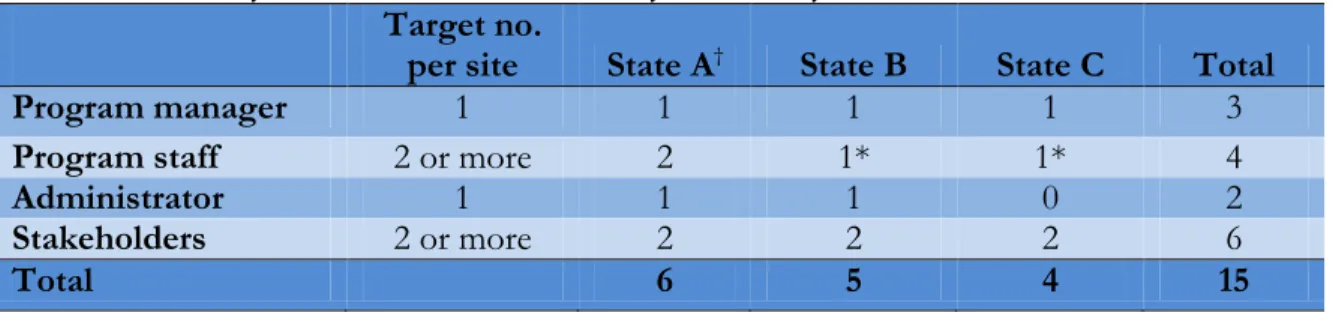
1: Summary of Interviews Conducted by Case Study Site ... 38
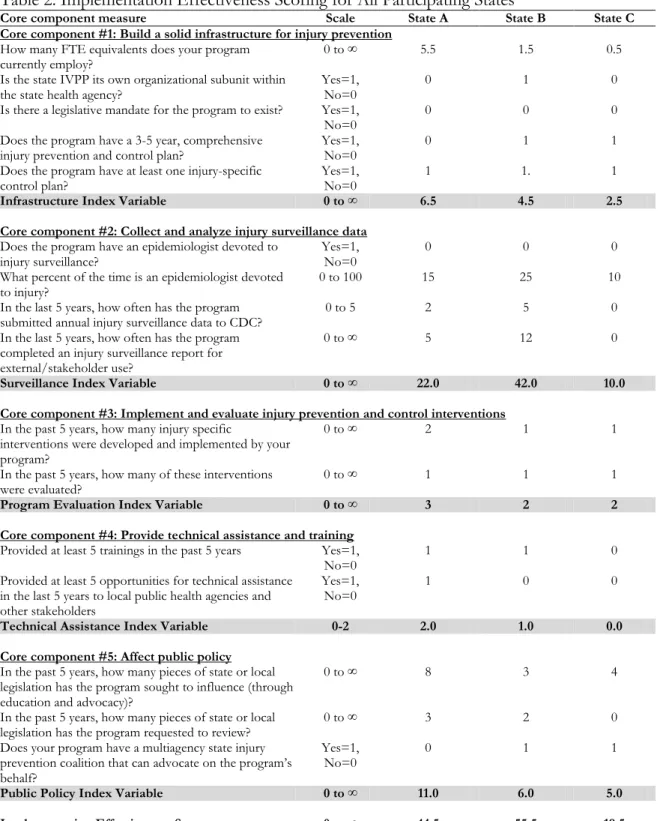
2: Implementation Effectiveness Scoring for All Participating States ... 48
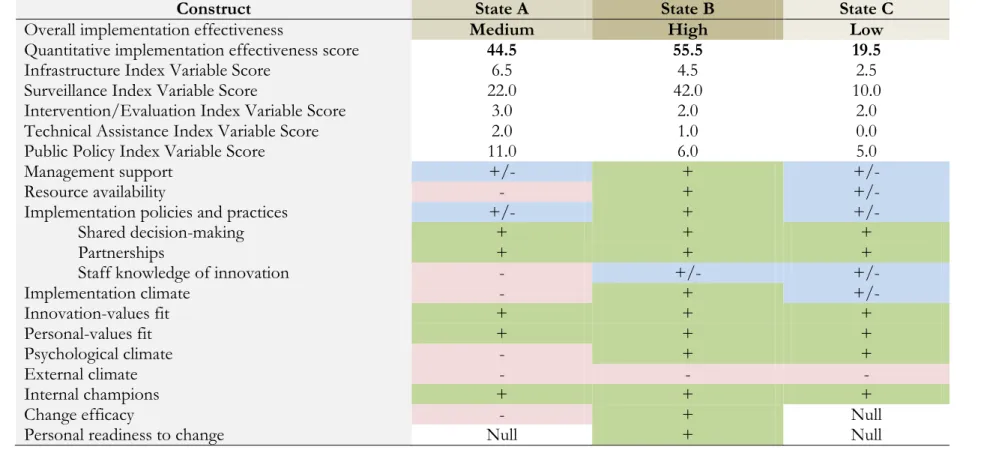
3: Summary of Case Findings for All Participating States ... 60
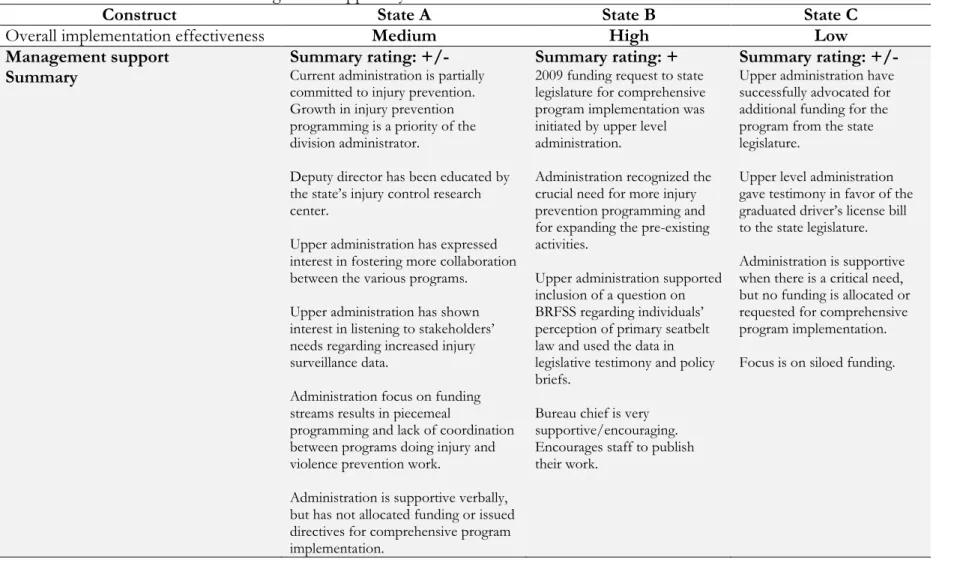
4: Illustrative Narrative of Management Support by Case ... 61
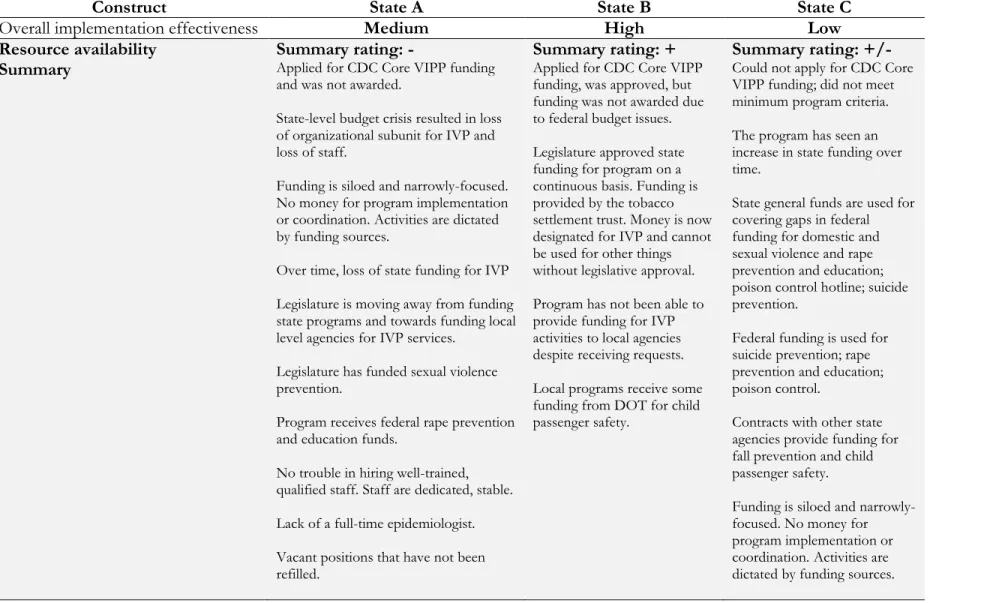
5: Illustrative Narrative of Resource Availability by Case ... 62
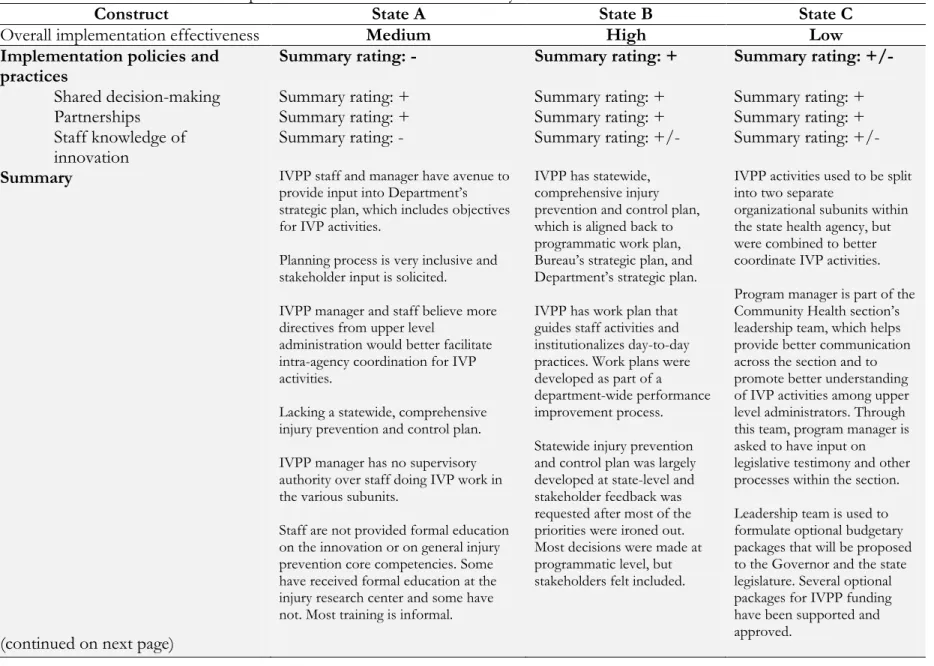
6: Illustrative Narrative of Implementation Policies and Practices by Case ... 63
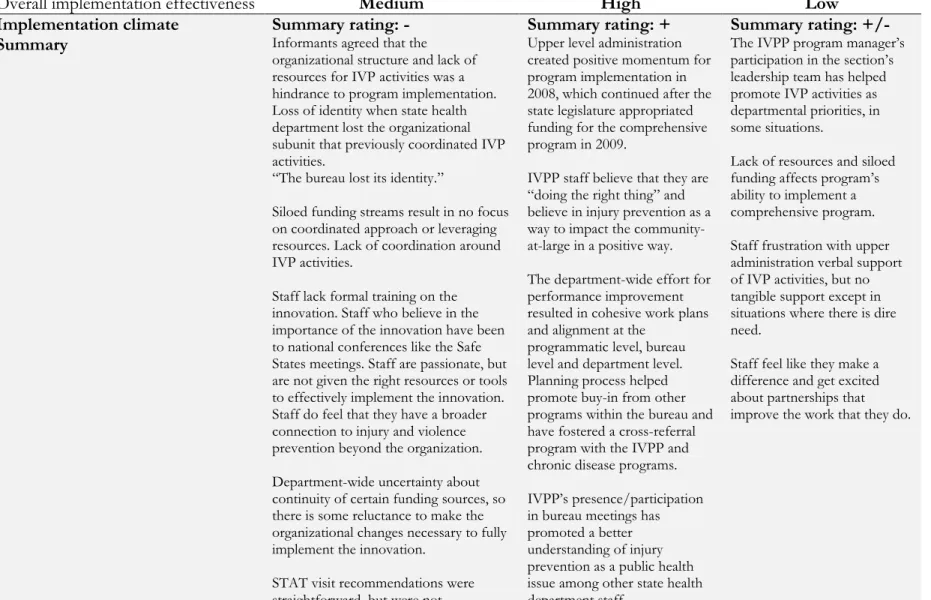
7: Illustrative Narrative of Implementation Climate by Case ... 65
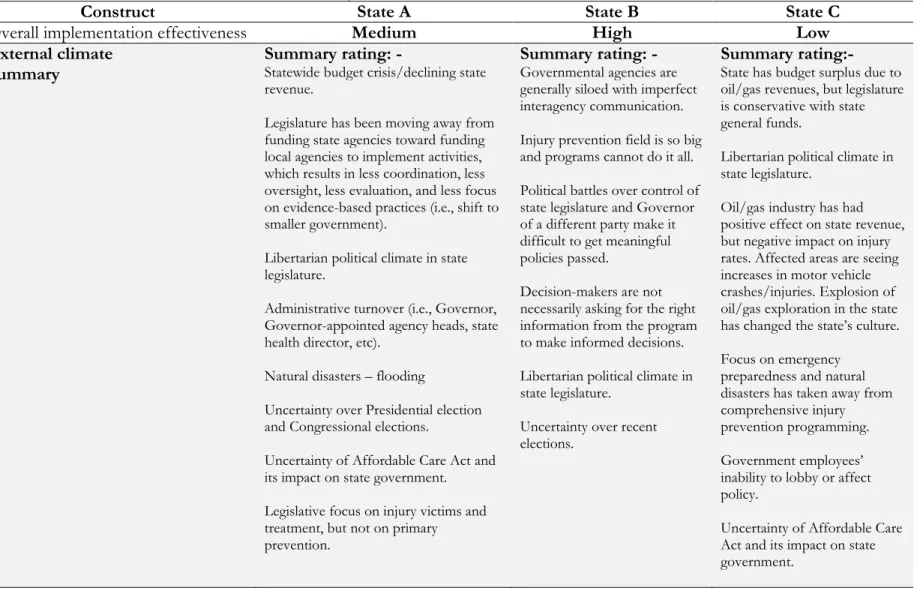
8: Illustrative Narrative of External Climate by Case ... 66
9: Illustrative Narrative of Innovation-Values Fit by Case ... 67
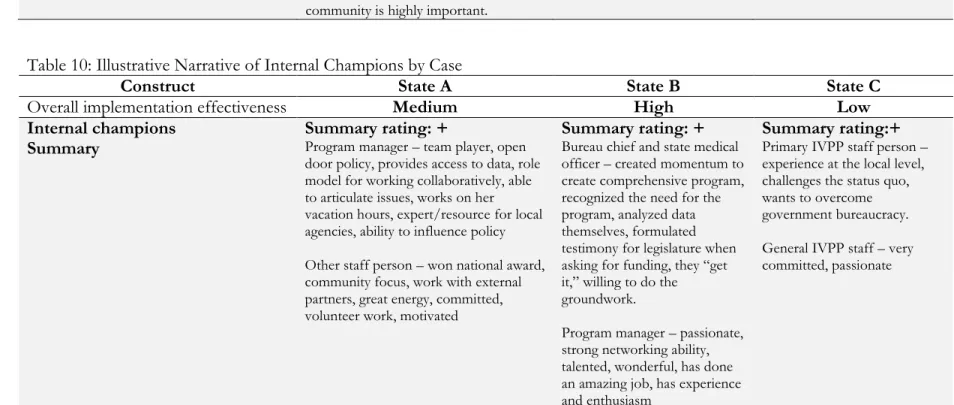
10: Illustrative Narrative of Internal Champions by Case ... 67
xii
List of Figures
1: Safe States Alliance Core Components ... 7
2: Multilevel Factors Influencing Implementation Effectiveness ... 20
Chapter 1
Introduction
Statement of Problem
Injuries are the leading cause of death for individuals aged 1-44 years in the United
States (National Center for Injury Prevention and Control, 2012). State health agencies have
been recognized as critical organizations to address the burden of injury and violence
through the Public Health Approach (State and Territorial Injury Prevention Directors
Association, 1997; Bonnie, Fulco, & Liverman, 1999; Wilcox 2001; State and Territorial
Injury Prevention Directors Association, 2003). Despite the burden of injury and violence as
a leading cause of premature death and disability, the development and implementation of
infrastructure and programs for injury prevention has been slow to develop within state
health agencies. In 1997, the Safe States Alliance, formerly known as the State and Territorial
Injury Prevention Directors Association (STIPDA) until a name change in 2010, published
Safe States: Five Components of a Model State Injury Prevention Program and Three Phases of Program
Development, which established a list of five essential components of state injury and violence
prevention programs. The components of Safe States continue to be diffused and adopted
throughout the public health community yet great variation continues to exist in terms of the
states’ fidelity in implementing those core activities. While guidance documents describe the
critical activities and components of an effective injury prevention program (STIPDA, 1997;
STIPDA, 2003), the factors that affect the successful implementation of these programs are
2
implement those programs with limited resources and within the complex social contexts
that define the environment of state health policy.
Federal funding has played a critical role in establishing core infrastructure in many
states (Klein, O'Connor, & Fuhrman, 1997), yet many state health agencies do not receive
this core funding for injury and violence prevention. Recent changes to federal grant
requirements for state health agencies in the area of injury and violence prevention have
resulted in more competition among state health agencies and have made it more difficult
for state health agencies with less pre-existing injury prevention infrastructure to compete
against states that have previously received the federal funding and/or those that have been
able to develop infrastructure and capacity. Increased competition and stricter requirements
for receiving federal funding make it even more important for state health agencies to
identify strategies for improving implementation of injury prevention programs. Virtually no
literature exists on injury and violence program implementation in states without federal
funding provided by the Centers for Disease Control (CDC) and/or states with less
established injury prevention infrastructures.
Implementation research provides a context for analyzing the multifactorial
processes necessary to initiate and implement state health programs. Implementation
research is a field of inquiry aimed at problem-solving and the identification of strategies that
enable organizations and leaders to more effectively put programs into place and have those
programs produce the desired outcomes. Previous implementation research asserts that
initial implementation success of health programs often depends on a number of complex
factors, including, but not limited to, innovation-specific, organizational, and environmental
variables (Fixsen, Naoom, Blase, Friedman, & Wallace, 2005). This dissertation aimed to
3
influential to implementation success or effectiveness of state-based injury prevention
programs that do not have core federal funding.
Background
History of the State Health Agency as a Leading Organization for Injury Prevention and Control in the United States
Injury is defined as “any unintentional or intentional damage to the body resulting
from acute exposure to thermal, mechanical, electrical or chemical energy that exceeds a
threshold of tolerance in the body or from the absence of such essentials as heat or oxygen”
(Society for the Advancement of Violence and Injury Research & STIPDA, 2005a). Injuries
are the fourth leading cause of death among all age groups in the United States and continue
to be the leading cause of death among persons aged 1-44 years, according to the National
Center for Injury Prevention and Control (NCIPC, 2012). The burden of injury in the
United States includes premature death, disability, and the overextension of the healthcare
system. According to the US Centers for Disease Control and Prevention (CDC), in 2007
more than 182,000 people die each year due to injury and violence. Furthermore, nearly 50
million individuals are treated in the emergency department each year as the result of injury
and violence (NCIPC, 2012). Unintentional and intentional injuries account for over 30% of
the years of potential life lost before the age of 65 years, surpassing losses from heart disease,
cancer and stroke combined (NCIPC, 2012). And, an estimated $406 billion is spent each year
due to injuries of which $80 billion is the result of direct medical costs and $326 million is
due to lost productivity (Finkelstein, Corso, & Miller, 2006).
In 1999, the Institute of Medicine published a landmark report, Reducing the Burden:
4
prevention and control were not proportionate to the magnitude of the problem and
outlined specific recommendations to overcome these investment deficiencies, building
upon reports from earlier committees (National Research Council, 1988). A major finding of
Reducing the Burden related to infrastructure for injury prevention and control within state
health agencies. In Reducing the Burden, the committee called for the creation of core injury
prevention programs in each state's department of health and stated that, “the strengthening
of a well-developed injury prevention program in the state health department is the
foundation for state and local injury prevention efforts”(Bonnie et al., 1999). Years after
Reducing the Burden was published, the issue of inadequate infrastructure remains. Runyan,
Villaveces, and Stephens-Stidham, in their 2008 paper, “Improving infrastructure for injury
control: a call for policy action,” recommended that governmental bodies overseeing health
agencies
should recognize the importance of injury control, mandating that units exist and be positioned prominently in agencies at all levels (e.g., federal to local) with funding appropriate to the role of injury as a source of morbidity and mortality. In most if not all jurisdictions, this would mean placing injury control units at levels comparable to those focused on infectious disease and/or chronic disease (Runyan et al., 2008).
While state and local health agencies are recognized as the foundation of injury prevention
and control efforts, these efforts are largely fragmented and limited due to barriers in
funding, infrastructure, staffing, and variation in execution (Bonnie et al., 1999).
Federal Support for Injury Prevention and Control in State Health Agencies
Starting in 1989, the National Center for Injury Prevention and Control (NCIPC) at
CDC began providing funding for state and local injury prevention programs. Fifteen state
and local programs received funding totaling $3.9 million per year for injury prevention
5
capacity-building funds were critical in strengthening much needed infrastructure in all
locations, and because of the programs’ success, the evaluators recommended that CDC
expand its funding to all 50 states (Hersey et al., 1995). However, the funding mechanisms
for these grants changed in the mid-1990s because of federal budget cuts, and NCIPC began
to provide funding for injury-specific prevention programs within state health departments
like smoke detector and bicycle helmet campaigns through cooperative agreements.
In 2000, NCIPC began its State Core Program (now called Integrated Core Injury
Prevention Program)—funding 24 states to develop injury surveillance prevention programs.
Between 2000 and 2005, increases in federal funding provided an increase in the number of
state receiving CDC core funds from 24 to 30. In December 2010, CDC announced the
request for proposals for the third five-year grant cycle for the State Core Program. For this
new grant cycle starting in 2011, a total of 28 states were funded for the Base Integration
Component through the CDC core funding. These states included: Arkansas, Arizona,
California, Colorado, Delaware, Florida, Georgia, Hawaii, Kansas, Kentucky, Maine,
Massachusetts, Maryland, Minnesota, Nebraska, New Hampshire, New Mexico, New York,
North Carolina, Ohio, Oklahoma, Oregon, Pennsylvania, Rhode Island, South Carolina,
Tennessee, Utah, and Washington (CDC, 2011). The criteria used to qualify states for this
competitive grant also became more stringent in the 2010 request for proposals—making it
harder for states with little or no injury prevention infrastructure to compete with states with
well-established programs and existing infrastructure for injury and violence prevention and
6
Safe States’ Core Components: Defining Critical Activities for State-based Injury Prevention and Control Programs
In 1997, the Safe States Alliance published its first Safe States report, which outlined
the five core components of state injury and violence prevention programs (STIPDA, 1997).
In 2003, the Safe States Alliance refined the five core components to reflect changes in the
infrastructure of state injury and violence prevention programs and development in the
knowledge base over the previous five years. The revised components are: 1) build a solid
infrastructure for injury and violence prevention; 2) collect and analyze injury and violence
data; 3) design, implement, and evaluate programs; 4) provide technical support and training;
and 5) affect public policy (STIPDA, 1997; STIPDA, 2003). The components have evolved
over time and currently include principles of the Public Health Approach to reducing the
burden of injury and violence (Rosenberg & Fenley, 1990). The components were developed
as part of a consensus-building process organized by the Safe States Alliance and with input
from experts in the field of injury prevention and control. State injury programs that
successfully implement all five components are well-situated to have an impact on the
burden of injury and violence in their state (STIPDA, 2008b; Safe States Alliance, 2011; Safe
States Alliance, 2013). In this dissertation, outcome measures for implementation
7
Figure 1: Safe States Alliance Core Components
Source: Safe States Alliance (2013)
Component #1: Build a solid infrastructure for injury and violence prevention. Program
characteristics that are hypothesized to influence the infrastructure of state-based injury
programs include: state mandate for the existence of the program, program focus, program
location, strategic planning, staffing, funding, partnerships, and administrative support (Safe
States Alliance, 2013). The existence of a state mandate requiring the creation of an injury
prevention program at the state level is thought to be important to the successful
implementation of state-based injury prevention programs because a legislatively-mandated
program may be more likely to have the necessary resources for implementation and
program management, may be more sustainable, and may have increased visibility among
policy-makers (Safe States Alliance, 2011). The importance of a legislative mandate has not
been empirically evaluated. Ideally, the program’s activities are imbedded or institutionalized
into other public health programs within the state health agency (Bobbitt-Cooke & Cole,
1997; Cassady et al., 1997). State-based injury prevention programs are recommended to
8
coordinates efforts by various organizations that have a responsibility or interest in reducing
the burden of injury and violence (Beauregard-Crowe et al., 1997; Kelter, 1997; STIPDA,
2003; Safe States Alliance, 2013).
The Safe States model has identified adequate staffing, funding, and interagency
partnerships as critical pieces of state-based injury prevention program infrastructure. Ideal
staffing entails having key positions filled by adequately trained staff in each of the six
primary roles (management, data collection/analysis, coalition building/coordination,
program coordination/intervention, technical assistance/training and public
policy/advocacy) (Cassady et al., 1997; STIPDA, 2003). Funding streams for such programs
should be diverse and should include dedicated funding from the state budget
(Beauregard-Crowe et al., 1997; Cassady et al., 1997; STIPDA, 1997; Downey et al., 2008). Because
injuries and violence have many causes requiring diverse prevention and response strategies,
collaboration and coordination between a variety of public and private organizations is
essential. Therefore, ideal infrastructure for state-based injury prevention programs includes
partnerships among other state health department programs (such as chronic disease,
maternal and child health, mental health, aging, substance abuse, public health preparedness),
among other state agencies (transportation, police, fire, emergency medical services, criminal
justice), and among other community organizations (hospitals, schools, academic
institutions, and special interest groups). Interagency and/or intra-organizational agreements
that specify the roles, duties and responsibilities of collaborating agencies should be in place
(Bobbitt-Cooke & Cole, 1997; Cassady et al., 1997; Kelter, 1997; STIPDA, 2003; Downey et
al., 2008). Various aspects of the “infrastructure” core component will be examined in this
dissertation as both outcome measures (staffing) and determinants of implementation
9
Component #2: Collect and Analyze Injury and Violence Data. The Public Health
Approach to a problem begins with the collection and analyses of accurate and consistent
public health data through traditional epidemiologic methods (Rosenberg & Fenley, 1990).
The collection and analyses of injury and violence data is critical to understanding how to
prevent injury and violence events and informs the policy-making process. These data allow
state injury and violence prevention programs to monitor incidence of injuries and violence,
to identify high risk groups, to recommend and implement evidence-based prevention
strategies, and to evaluate the effectiveness of such strategies (Bobbitt-Cooke & Cole, 1997;
Kelter, 1997; Klein et al., 1997; Downey et al., 2008; Safe States Alliance, 2013). The
collection and analysis of injury surveillance data is used as a component of the outcome
variable in this dissertation.
Component #3: Design, Implement, and Evaluate Programs. State injury and violence
prevention programs must be able to use surveillance data to inform state injury control
plans and must be able to implement the priorities outlined in the plan. The translation from
data to implementation occurs when state injury prevention programs are able to identify
appropriate, evidence-based interventions, to implement those interventions, and to
continuously evaluate these interventions using epidemiologic data. State injury and violence
prevention programs must ensure that the most appropriate program or agency is
implementing the strategy and that the strategy is targeting the most appropriate group
(Bobbitt-Cooke & Cole, 1997; Hayes, Goodman, & Wilt, 1997; Kelter, 1997; STIPDA, 2003;
Downey et al., 2008). State injury and violence prevention programs often oversee external
organizations that are implementing local and community-based programs and executing
10
put into place and evaluated by the state injury prevention program is used as a component
of the implementation effectiveness outcome variable.
Component #4: Provide Technical Support and Training. Implementation of injury
prevention and control strategies often involves organizations external to the state injury and
violence prevention programs; therefore, it is necessary for these state programs to provide
training and technical support to local injury prevention and control staff and to other
stakeholders (Bobbitt-Cooke & Cole, 1997; Klein et al., 1997; Downey et al., 2008). Training
should include continuing education for professionals with an emphasis on basic concepts of
injury prevention and control and the Safe State Alliance’s five components, including:
conducting strategic planning, building and sustaining coalitions, collecting and analyzing
data, evaluating prevention programs, and affecting public policy. The National Training
Initiative for Injury and Violence Prevention, an initiative created by the Society for the
Advancement of Violence and Injury Research (SAVIR)-STIPDA Joint Committee on
Infrastructure and Development, has developed training competencies for injury prevention
professionals and serves as a resource for state injury and violence prevention programs
(SAVIR & STIPDA, 2005b). State programs should also develop communication methods
so that it can provide additional training and technical assistance to other professionals,
students, and the public (STIPDA, 2003). The number of trainings and opportunities for
technical assistance provided by the state injury prevention program to partner agencies will
be used as a portion of the outcome variable.
Component #5: Affect Public Policy. In order to have the most impact on the burden of
11
three levels of government (i.e., federal state, and community levels). Much of this work can
be done through the work of coalitions and community-based advocates. State injury
programs may be directly involved in informing policy by reviewing and recommending
health department action on proposed legislation, by testifying on proposed legislation, by
providing data regarding the importance and effectiveness of existing state or local policies
and programs, by providing surveillance data to inform decision-makers, and by identifying
model legislation. However, state injury programs are often limited in the methods through
which they can affect policy and may only be able to conduct the activities mentioned above
if directly invited by the policy-makers. Hence, coalitions and community-based advocacy
groups play an extremely important role in ensuring that policy-makers and the public are
well informed about issues affecting injury prevention and control and the state and local
infrastructure that carries out basic public health activities like surveillance and data
collection, regulation/enforcement, and other activities necessary to protect the public’s
health (Bobbitt-Cooke & Cole, 1997; Cassady et al., 1997; STIPDA, 2003; Downey et al.,
2008). A portion of the outcome variable for this dissertation will depend on the extent to
which the state injury prevention program has been able to affect public policy and its use of
statewide coalitions.
The core components of implementing state injury prevention programs have been
well-defined and provide a framework for activities under these state programs that are
grounded in the Public Health Approach (STIPDA, 2003). The components of Safe States are
regarded as “best practices” for state injury prevention programs even though they have not
been empirically evaluated. The framework clearly represents what is currently known about
creating and sustaining state injury and violence prevention programs and is used to guide
12
NCIPC, 2008). It is not the intention of this dissertation to evaluate the components of Safe
States. Previous research has demonstrated that knowing the necessary core components is
an important step in timely and effective implementation: “The speed and effectiveness of
implementation may depend upon knowing exactly what has to be in place to achieve the
desired results for consumers and stakeholders: no more, and no less” (Fixsen & Blase, 1993;
Arthur & Blitz, 2000; Winter & Szulanski, 2001).
Great variation continues to exist in terms of the states’ capacity and infrastructure
needed to carry out the core activities. In 2005, the Safe States Alliance initiated the “State of
the States” project, a cross-sectional survey describing capacities of state injury prevention
programs. The initial publication, The STIPDA 2005 State of the States Survey: Highlights Report,
identified major achievements in state-level injury prevention infrastructure but also
highlighted continued infrastructural challenges in these comprehensive programs (STIPDA,
2006). Subsequent surveys were conducted in 2007, 2009, and 2011 (STIPDA, 2008a; Safe
States Alliance, 2011; Safe States Alliance, 2013). A total of 47 states participated in the 2011
survey. The 2009 survey found that CDC core funding was critical in promoting leadership,
partnerships, and policy involvement in the states receiving funding and that states without
the core funding were less likely to carry out certain critical activities outlined in the five Safe
States’ components (Safe States Alliance, 2011). The number of states that reported using
epidemiologic data to identify program priority areas increased from 63% in 2007 to 92% in
2009, indicating increased use of the Public Health Approach for addressing injury and
violence priorities (Safe States Alliance, 2011). Despite increased use of the Public Health
Approach for addressing injury prevention in state health agencies, the survey also showed
that from 2007 to 2009 state funding sources for injury prevention programs decreased 11%,
13
(Safe States Alliance, 2011), highlighting the critical importance of state health agencies to
identify ways to facilitate program implementation with less funding and to advocate for
injury prevention with state and federal policymakers.
The “State of the States” surveys and reports represent the only national assessments
of capacity for injury and violence prevention within state health agencies. The reports
provide critical information about current and past activities, funding mechanisms, staffing
capacities, partnerships, and program foci among state-based injury prevention programs.
The reports indicate that activities of state injury programs continues to vary by state, but
that most activities are guided by the Safe States model, and many of the challenges facing
programs do not vary greatly. While the reports contain valuable information for national
and state-level advocacy and policy development, the reports do not specifically identify
determinants of successful program implementation and do not address strategies that state
program staff can use to influence their organizational and external climate to better address
the burden of injury and violence in their state using the best practices identified in the Safe
States model.
Research Objectives
The ultimate objectives of this research were to describe how state health agencies
successfully implement complex social programs like state injury and violence prevention
programs that have not received federal funding through the CDC core injury program, to
explain how organizational and environmental factors interact to influence the
implementation of state injury and violence prevention program, and to develop
recommendations for a state injury and violence prevention program in Wyoming utilizing
14
that managers and staff at the state health agency have the capability to change or influence.
This project entailed organizational research and attempted to describe differences in
implementation effectiveness between multiple state health agencies. Furthermore, this
project also entailed multilevel research, as it attempted to describe how implementation
effectiveness is affected by perceptions among multiple groups of actors , including state
injury and violence prevention program staff, state health agency administrators,
representatives from community-based organizations, and other stakeholders (Klein & Sorra,
1996).
Primary Question
How do state health agencies successfully implement state injury and violence
prevention programs in the absence of core federal funding?
Sub-questions
1) Which organizational and environmental factors, that are subject to managerial or
staff influence, shape the implementation of state-based injury and violence
prevention programs? How does the interaction of these factors influence
implementation effectiveness?
2)
How might these factors affect the implementation of a new, comprehensive state and injury violence prevention program in Wyoming?Rationale and Policy Implications
Implementation tends to be a neglected phase in policymaking. Much that is written
15
describe how one gets from point A to point B. As Petersilia (1990) stated, “The ideas
embodied in innovative social programs are not self-executing.” Little research had been
conducted to examine the internal and external factors influencing the implementation of
state injury and violence prevention programs, particularly in states receiving no CDC core
funding. Implementation of state health programs is overwhelmingly complex, and research
was needed to foster an in-depth understanding of how these factors influence each other
and how they influence the implementation outcome. Furthermore, previous research had
identified that involvement of multiple groups of actors , such as staff, community-based
organizations, and other stakeholder groups, from various levels within and outside of the
agency played an important role in implementation of state injury and violence prevention
programs(Cassady et al., 1997); however, these studies did not describe the mechanisms in
which these groups influence the implementation process. Additional research was needed
to examine these factors among multiple state health agencies (multiorganizational) and
between user-groups (multilevel) of state injury and violence prevention programs (Klein &
Sorra, 1996). A case study methodology was well suited for this dissertation because it
offered the researcher an opportunity to thoroughly examine and describe behaviors of the
state health agency and relevant actors and the context that ultimately influences how the
program is implemented. The final product of this research is a list of recommendations that
can be used by public health leaders in Wyoming and other similar states to guide program
Chapter 2
Literature Review
Implementation and Implementation Effectiveness
Implementation was defined as “a specified set of activities designed to put into
practice an activity or program of known dimensions” (Fixsen et al., 2005). Often, complex
innovations, such as state health programs, require the coordination of not only multiple
individuals, but also multiple organizational subunits and/or multiple agencies.
Implementation requires collective action (Weiner, Lewis, & Linnan, 2009). Because of this,
implementation of a state injury and violence prevention program was viewed as an
organizational act, and, here, the state injury and violence prevention program was the
innovation of interest. Implementation differs from adoption, where adoption is “a decision
to make full use of an innovation as the best course of action available” (Rodgers, 2003).
Implementation also differs from program planning, where program planning describes the
program activities used to address a problem and may provide a guide that specifies the
step-by-step details in implementing those activities (Weiner et al., 2009).
Implementation effectiveness was defined as “the overall, pooled, or aggregate
consistency and quality” of innovation use (Klein & Sorra, 1996). Implementation
effectiveness differs from innovation effectiveness, where innovation effectiveness
“describes the benefits an organization receives as a result of its implementation of a given
innovation” (Klein & Sorra, 1996). Implementation effectiveness is a necessary and critical
17
effectiveness may not always be sufficient to provide innovation effectiveness (Klein &
Sorra, 1996; Klein, Conn, & Sorra, 2001). Thus, effective implementation does not always
translate into the innovation having its intended effect.
The implementation of state injury and violence prevention programs represented
the implementation of a complex innovation within the multifaceted environment of state
health policy. While guidance documents from CDC and the Safe States Alliance provide
information regarding “what” needs to be done, the literature on state injury and violence
prevention programs and other state health programs was limited and provided modest
guidance for public health leaders and program managers on “how” to successfully
implement these complex social programs.
Literature review identified only one published study that attempted to empirically
measure the implementation of state injury and violence prevention programs. The study’s
main finding was that constituent participation and organizational capacity had the greatest
effect on successful program implementation, where organizational capacity was a function
of the number of staff within the program and their skills (Cassady et al., 1997). Strong
organizational policies and directives were also positively associated with implementation
success. In this study, directors of individual state-level injury programs completed
self-administered, written questionnaires regarding five indicators of implementation success, and
written questionnaires were followed up with telephone-based, semi-structured interviews in
which questions were asked about barriers to program implementation, strategies used to
overcome specific barriers, and efforts to institutionalize the program within the state health
agencies. The authors defined implementation success as “the incorporation of certain
critical programmatic activities” in which the critical programmatic activities included
18
the ability to create a permanent place for the program within the state agency
(institutionalization).” To measure successful implementation, the researchers created an
implementation index (dependent variable) using the five indicators described above. Some
of these indicators of success reflect core activities of the Safe States model. These indicators
and additional indicators from the Safe States model were used in creating the outcome
variable for this dissertation project.
The study by Cassady et al. (1997) represented the only study examining
implementation effectiveness of state injury and violence prevention programs. While the
study provided useful information regarding significance of various organizational and
environmental factors influencing implementation effectiveness, the study did not aim to
explain the nature of the multifactorial relationships or how they are influenced by various
actors in the organizational setting. The study surveyed only one person per organization,
the program director, and did not seek to gather information from other actors within and
outside of the state health agency, such as state health agency administrators, state injury and
violence prevention program staff, or stakeholders. Furthermore, the study was conducted
over 16 years ago, and much has changed within state health agencies since 1997 where
many state health agencies have seen an increase in capacity in critical areas of injury and
violence prevention such as epidemiology, public health preparedness, evidence-based
practice, and policy formulation. Finally, the external sociopolitical climate had also
drastically changed since 1997.
Previous research on factors that affect implementation success have identified a
host of organizational, environmental, and innovation-specific factors that affect
implementation effectiveness. Literature review identified four separate systematic reviews
19
Kyriakidou, 2004; Fixsen et al., 2005; Stith et al., 2006; Durlak & DuPre, 2008). All reviews
indicated that a multilevel, ecological model is needed to understand implementation.
Although each review focused on different types of programs and target populations, 11
factors influencing implementation were identified by all four reviews (Durlak & DuPre,
2008). These factors included funding, organizational climate, constituent or community
involvement in decision-making, organizational policies and procedures, leadership,
champions, interorganizational coordination/partnerships, management/administrative
support, formulation of tasks, staff skills, training, and technical assistance (Greenhalgh et
al., 2004; Fixsen et al., 2005; Stith et al., 2006; Durlak & DuPre, 2008). Durlak and DuPre
(2008) identified only a few studies that attempted to examine the relationships and influence
on various factors of implementation, and because of the paucity of multifactor research on
implementation, they stated that much more research is needed to determine which factors
are most important and in what contexts the factors are important.
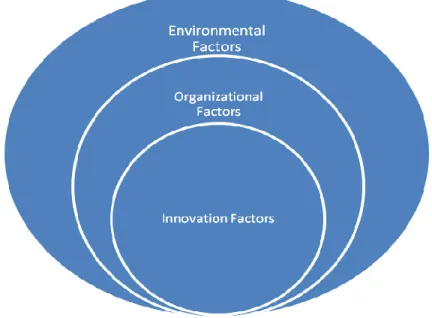
The factors influencing implementation identified through literature review can be
condensed into larger multilevel categories. These categories include innovation factors,
organizational factors, and environmental factors. Figure 2 below depicts a schematic of how
these multilevel factors relate to one another (Damanpour, 1991; Fixsen et al., 2005). This
dissertation focuses on organizational and environmental factors that are subject to influence
20
Figure 2: Multilevel Factors Influencing Implementation Effectiveness
Adapted from Fixsen et al. (2005) and Durlak and DuPre (2008)
Innovation-Specific Factors Affecting Implementation
Innovation-specific factors are characteristics of the innovation itself that influence
how the innovation is adopted and implemented. A large body of literature has focused on
how organizations identify the right innovation to be adopted, specific to the organization’s
needs and context, and how characteristics of that innovation can influence implementation
effectiveness and outcomes. In addition to innovation appropriateness, a number of other
innovation-specific factors have been identified in the literature. A critical assumption of this
dissertation was that the Safe States model, discussed above, represents the most effective,
available innovation for state health agencies to adopt for comprehensive injury and violence
control. Innovation-specific factors of the Safe States model will be assumed to be outside of
state-21
based injury and violence prevention programs attempt to meet model criteria. Essentially,
the innovation is a given here.
Organizational Factors Affecting Implementation
Much of the previous literature on factors of implementation effectiveness focused
on organizational factors because of the potential for managerial influence. Rosenheck
(2001) hypothesized that organizational behaviors are the critical missing link between
research and practice, “The daily decision-making of those who work in complex
organizations is shaped more by power structures, ingrained routines, and established
resource configurations than by current scientific findings” (Rosenheck, 2001). The factors
identified by Durlak and DuPre (2008) can be further characterized into larger categories
including: general organizational factors, implementation policies and practices, and
leadership characteristics (categories adapted by the author of this dissertation) (Helfrich,
Weiner, McKinney, & Minasian, 2007). The remainder of this literature review will follow
the categories mentioned above.
General Organizational Factors
Organizational and Implementation Climate. Organization climate is the summation of
attitudes, beliefs and perceptions among an organization’s members of its policies and
procedures, communication processes, role clarity, processes for conflict resolution, member
participation in management, leadership, among others and how these perceptions influence
collective behavior (Glanz, Rimer, & Viswanath, 2009). This construct is not necessarily
specific to the innovation. Conversely, implementation climate is defined as “employees’
22
organization” (Klein et al., 2001). Like organizational climate, implementation climate is a
collective construct and is the collective perception among organizational members that the
innovation is a priority to the organization and that the innovation is “promoted, supported,
and rewarded by the organization” (Klein et al., 2001). Implementation climate is specific to
each innovation that an organization is implementing. Because of this, implementation
climate differs from general organizational climate where an organization may have a
positive workplace environment but have a negative implementation climate (Klein & Sorra,
1996).
Glisson and James (2002) differentiated between Klein et al.’s (2001) definition of
implementation climate (called “organizational climate” in their paper) as the aggregated,
perceived “importance” of an innovation among user groups within the organization by
describing implementation climate as the aggregate perceptions of the innovation in terms of
its importance and of its anticipated impact on their work environment. The investigator
believes that both the perceived importance of the state injury prevention program and its
anticipated impact on the work environment, as components of implementation climate,
may be important to successful implementation. Additionally, implementation climate occurs
when individuals within a specific group of actors, such as employees of a particular
organizational team or subunit, agree on their perceptions and that those perceptions can be
aggregated to characterize the overall implementation climate (Glisson & James, 2002).
While implementation climate is an aggregated measure, climate, in general, is a construct
belonging to the individuals within the organizational subunit. Glisson and James (2002)
stated, “If there is agreement among individuals within a work unit, the individual
perceptions are shared and can be aggregated to characterize the work unit (and labeled
23
This dissertation will explore behaviors, perceptions and beliefs across multiple groups of
actors to examine implementation climate thoroughly.
Helfrich et al. (2007) developed and tested a framework for organizational factors of
implementation in the healthcare sector. In this framework, the authors posited that positive
implementation climate is the result of high quality “implementation policies and practices”
and influenced by “innovation-values fit” and “champions” and that management support
and resource availability directly influence the quality of implementation policies and
practices (Klein et al., 2001; Helfrich et al., 2007). Thus, the implementation climate is
affected by all of the constructs defined in this framework. Examples of strong
implementation climate include employees’ perceptions of an organizational policy that
supports their use of the innovation or employees’ perceptions that engaging in
innovation-related activities is expected, rewarded and supported (Klein et al., 2001; Helfrich et al.,
2007). Here, implementation climate was hypothesized to be an important factor influencing
the implementation of state injury prevention program through implementation policies and
practices and through the innovation-values fit posited by Helfrich et al. (2007). Each
construct will be discussed more thoroughly below.
Organizational culture. Organizational culture is simply the way things are done within
an organization (Glisson & James, 2002; Verbeke, Volgering, & Hessels, 2002). Glisson and
James (2002) specifically defined organizational culture as “the normative beliefs and shared
behavioral expectations in an organizational unit…These beliefs and expectations prescribe
the way work is approached and are the basis for socializing coworkers in the way things are
24
agencies and may partially explain differences in implementation effectiveness of state injury
prevention programs.
Organizational readiness to change. Organizational readiness to change is described as the
product of two distinct constructs, which include “change commitment” and “change
efficacy,” where change commitment is defined as “organizational members’ shared resolve
to pursue the courses of action involved in change implementation” (Weiner et al., 2009) and
change efficacy is defined as “organizational members’ shared beliefs in their collective
capabilities to organize and execute the courses of action involved in change
implementation” (Weiner et al., 2009). State health agencies implementing injury prevention
programs with greater organizational readiness to change may have more implementation
success. Collectively, organizational readiness to change is a construct measuring
psychological and behavioral readiness rather than structural readiness of an organization,
although organizational structures and resources are important in that they shape the
organizational members’ perceptions of the change or innovation (Weiner et al., 2009).
Furthermore, organizations that have a high readiness for change are more likely to put
structures, policies, and procedures into place to reinforce and facilitate implementation of
the innovation (Weiner et al., 2009). These constructs may be encompassed by
implementation climate as described above; however, the researcher would like to explore
these concepts as potentially distinct and important constructs.
Resource availability. In the framework provided by Helfrich et al. (2007), financial
resource availability was thought to indirectly influence implementation climate through the
25
financial resources or “that cushion of actual or potential resources which allows an
organization to adapt successfully to internal pressures for adjustment or to external
pressures for change in policy as well as to initiate changes in strategy with respect to the
external environment.” Financial resource availability is directly and positively related to the
organization’s implementation policies and practices, as these resources are needed to
provide the infrastructure needed for implementation (Klein et al., 2001). Thus, many
articles on injury prevention programs specifically indicated that available funding was a
critical factor in the implementation of the program (Beauregard-Crowe et al., 1997;
Bobbitt-Cooke & Cole, 1997; Cassady et al., 1997; Downey et al., 2008). Furthermore, previous
research also indicates that the timing in which critical funding is received is important to
implementation (Fixsen et al., 2005). In their review of the work of Panzano, Seffrin,
Chaney-Jones, Roth, and Crane-Ross (2002), Fixsen et al. (2005) noted, “Top management
support and access to dedicated resources during the exploration stage were important to the
adoption decision but were not related to later implementation outcomes. However, top
management support and access to dedicated resources during the initial implementation
stage were directly related to implementation outcomes.”
Innovation-values fit. Innovation-values fit was an organizational and group construct.
Innovation-values fit was “the extent to which targeted users perceive that use of the
innovation will foster (or, conversely, inhibit) the fulfillment of their values” (Klein & Sorra,
1996). A good fit exists when employees consider the innovation as harmonious with their
shared organizational values. A poor fit exists when employees’ consider the innovation to
be contrasting to their organizational values. Weiner et al. (2009) differentiated between
26
are values shared by members of subunits within the organization. Klein and Sorra (1996)
postulated about innovation use when the innovation-values fit differs across groups of
actors and suggest that groups with higher authority within the organization will determine if
the implementation climate will be strengthened or not (through implementation policies
and practices among other factors) to support or thwart the use of the innovation based on
their values even if they differ from the values of groups lower than them within the
organization’s hierarchy. The investigator will examine how aspects of the state injury
prevention program foster or inhibit the fulfillment of employees’ shared values across
different groups of actors within the organization and how the collective perceptions
ultimately affect implementation climate.
Organizational Policies and Practices
Implementation policies and practices. Implementation policies and practices were “the
formal strategies (i.e., the policies) the organization uses to put the innovation to use and the
actions that follow from those strategies (i.e., the practices)” (Klein et al., 2001). In practice,
implementation policies and practices can be formal or informal policies, plans, processes,
protocols, structures, and work flows (Klein & Sorra, 1996). These policies and practices can
designate communication processes, hierarchical chains-of-command, formulation of tasks,
hiring practices, etc... as related specifically to implementation. While implementation
policies and practices directly influence the implementation climate, it is important to note
that they are not the same thing (Klein et al., 2001). Implementation climate includes a
summation of the influences of a variety of factors (described above). Not one single policy
or practice is critical for implementation, but the quality of the cumulative policies and
27
Knight, 2005; Helfrich et al., 2007). In a study of 64 injury prevention programs in 44 states,
“attributes of relevant policies and directives” were associated with implementation
effectiveness (Cassady et al., 1997). Constructs such as “communication” and “formulation
of tasks” identified by Durlak and DuPre (2008) should be included under the construct of
implementation policies and practices as defined above, as they are subcategories of the
larger construct (Helfrich et al., 2007; Weiner et al., 2009).
Shared decision-making/community involvement. Four systematic reviews found that
community input, involvement, and collaboration in implementation-related
decision-making was an important construct affecting implementation success (Greenhalgh et al.,
2004; Fixsen et al., 2005; Stith et al., 2006; Durlak & DuPre, 2008). Shared decision-making
is “the extent to which relevant parties (e.g., providers, administrators, researchers, and
community members) collaborate in determining what will be implemented and how”
(Durlak & DuPre, 2008). Cassady et al. (1997) examined community involvement and
constituent participation as factors for successful implementation of state-based injury
prevention programs and found that constituent participation was the factor most strongly
associated with implementation success. The authors indicated that advocacy coalitions, in
particular, were instrumental in securing additional program funds, evaluating program
outcomes, garnering additional support of other community groups and by coordinating
legislative activities (Cassady et al., 1997). Thus, implementation is likely affected by the types
of community groups involved, the extent to which they are involved, and in which activities
28
Coordination with other agencies/partnerships. Interagency coordination and partnerships
was yet another construct identified by several systematic reviews of factors influencing
implementation effectiveness (Greenhalgh et al., 2004; Fixsen et al., 2005; Stith et al., 2006; Durlak & DuPre, 2008). The extent to which other local agencies and community groups are
involved and contribute expertise, multidisciplinary viewpoints, and other resources is
important to the success of implementation of programs (Durlak & DuPre, 2008). As
discussed above, the development and use of multiagency, multidisciplinary advocacy
coalitions has been associated with successful implementation of state-based injury
prevention programs, and to be eligible for core federal funding for state-based injury
prevention programs, state health agencies must demonstrate the existence and activities of a
statewide, multidisciplinary injury prevention coalition.
Leadership Factors
Management Support. Management support was defined as “managers’ commitment to
conduct transformation of the organization and to invest in quality implementation policies
and procedures to implement the innovation” (Klein & Sorra, 1996). Management support is
critical to implementation because implementation is resource intensive. Managers control
scarce resources within the organization and have direct control over workflow processes,
human resource structures, and reward structures. Managers can also change the
implementation climate through symbolic actions that can affect employees’ perceptions of
the innovation (Sharma & Yetton, 2003). In their study of cancer clinical research networks,
Helfrich et al’s (2007) findings were consistent with the hypothesized framework discussed
above where “group leaders signaled their support for [cancer control and prevention]
29
central role in the implementation process. Furthermore, in a study of a wide range of
organization types, Nutt (1986) found that “implementation by intervention,” in which
leaders “became protagonists by creating rationales for action in the minds of key people”
was a more effective tactic than the other three tactics that he studied (i.e., “implementation
by participation,” “implementation by persuasion,” and “implementation by edict”).
Champions/Internal Advocate. In Diffusion of Innovations, an innovation champion is a
“charismatic individual who throws his/her weight behind the innovation, thus overcoming
the indifference or resistance that a new idea often provokes in an organization” (Rodgers,
2003). A literature review identified no published articles that examined the role that
champions played in the implementation of injury prevention programs. By adapting the
conceptual framework by Klein et al. (2001) in a qualitative study of cancer prevention and
control research as a complex innovation, Helfrich et al. (2007) found that innovation
champions were an important component of implementation climate and their findings
supported the inclusion of the innovation champions construct in the model.
Summary of Findings of Literature Review
The study by Cassady et al. (1997) appears to be the first and the only study to
empirically examine the implementation of state injury and violence prevention programs.
This study identified constituent participation as the factor most strongly associated with
implementation success. Administrative control over program decisions, organizational
capacity (as defined as the number of staff assigned to injury and violence prevention), and
policies related to injury prevention were also statistically associated with implementation
30
current state and injury prevention programs. First, the study was conducted well over 16
years ago. State health agency infrastructure and the knowledge base for state injury and
violence prevention programs have changed significantly since 1997. Second, the authors
examined indicators for implementation effectiveness that have important organizational and
environmental antecedents. To thoroughly examine factors influencing the implementation
of such programs, researchers must critically analyze the role in which these organizational
and environmental antecedents play in supporting or hindering innovation implementation.
Organizational researchers have developed a multitude of conceptual models for
examining implementation and these models vary based on level of perspective (i.e.,
individual, organizational, and community levels)and constructs of interest (Wandersman et
al., 2008). Literature review identified four separate systematic reviews, which individually
identified a plethora of factors that potentially influence implementation effectiveness. In
their meta-analysis, Durlak and DuPre (2008) summarized 11 factors categorized as general
organizational factors, policies and practices and leadership factors that were found in
common among the four systematic reviews, which have been consolidated and discussed in
detail above. No single conceptual model was found to be comprehensive enough to
describe factors that may influence implementation effectiveness of state-based injury
prevention programs. Very little literature was found that examined the interrelationships
among factors affecting implementation effectiveness. The conceptual model put forth by
Helfrich et al. (2007) provides one of the most comprehensive conceptual models for
implementation effectiveness in health programs and may be particularly well suited for
studying implementation in state health agencies. However, their conceptual model does not
address factors related to interagency collaboration, partnerships, and coalitions, that have
31
program and which may be influenced by managers and leaders within the state health
agency.
Limitations in the Literature Review and Implications for Future
Research
The literature review discovered articles that largely represent a range of single site
studies, descriptive program analyses, or guidance documents for state injury and violence
prevention programs. Single site studies typically focused on program performance
(innovation effectiveness) rather than implementation success or failure. Multiorganizational
studies are needed to examine between-organization differences in implementation. A
multiorganizational study of injury and violence prevention programs in the diverse
environment of state health agencies was needed to more thoroughly describe the
organizational factors influencing implementation of these programs. Multiple case study
design, with purposive sampling, allows researchers to make more robust comparisons than
single case study design allows.
Research was also needed to examine innovation-values fit and other group
constructs across multiple groups of actors (i.e., program staff, state health agency
administrators, and stakeholders) (Klein & Sorra, 1996). Previous research, in other settings,
suggests that shared perception of an innovation among organizational members was an
important organizational factor influencing innovation implementation (Klein & Sorra, 1996;
DiFranceisco et al., 1999; Helfrich et al., 2007), and that shared perception may vary by
horizontal and hierarchical groups within an organization (Klein & Sorra, 1996). Literature
on state injury and violence prevention programs also suggests that constituency support and
32
successful implementation (Cassady et al., 1997; Hayes et al., 1997; Klein et al., 1997;
Downey et al., 2008), which suggested that the shared perception of the program among
these groups of actors were also likely to be important to implementation success.
This research attempted to describe factors influencing the implementation of state
injury and violence prevention programs across multiple state health agencies and attempted
to utilize acquired knowledge to inform program development of a comprehensive, state and
Chapter 3
Methodology
This project was a qualitative study aimed at exploring and describing the
organizational factors influencing the implementation of state injury and violence prevention
programs. The study design incorporated two separate phases, which included multiple,
holistic case studies and the development of policy and program recommendations.
Research Questions
1) Which organizational and environmental factors influence the implementation of
state-based injury and violence prevention programs? How do these factors
influence implementation effectiveness?
2) How might these factors affect the implementation of a new, comprehensive state
and injury violence prevention program in Wyoming?
Setting
This study investigated the implementation of state injury and violence prevention
programs that have received little to no federal monetary support for capacity-building (e.g.,
received no core IVPP funding from CDC since the 2000 grant cycle). State injury and
violence prevention programs were programs implemented in state health agencies with the
aim of reducing injuries and violent events. The 2011 Safe States State of the States report