EXPLORING THE USE OF AN EVIDENCE-BASED GUIDELINE FOR URINARY INCONTINENCE AND RELATED OUTCOMES IN OLDER WOMEN
DURING HOSPITALIZATION
Celine S. Marquez
A dissertation submitted to the faculty at the University of North Carolina at Chapel Hill in partial fulfillment of the requirements for the degree of Doctor of Philosophy in the School of
Nursing.
Chapel Hill 2019
Approved by: Mary H. Palmer Jan Busby-Whitehead Cheryl B. Jones
iii ABSTRACT
Celine S. Marquez: Exploring the Use of an Evidence-Based Guideline for Urinary Incontinence and Related Outcomes in Older Women during Hospitalization
(Under the direction of Mary H. Palmer)
Urinary incontinence (UI) is a prevalent condition among hospitalized older women. Despite the availability of the Hartford Institute for Geriatric Nursing (HIGN) UI guideline, UI is often overlooked and undertreated. This study explored HIGN UI guideline use and identified associated patient-level risk factors and outcomes.
A random sample of 192 medical records of women 65 years and older who had been discharged from a large teaching hospital between November 2015–June 2016 was examined. A data abstraction form that contained 28 standards was used. The number of standards used per medical record determined HIGN UI guideline use, which was based on a percentage across all medical records. Descriptive statistics and multiple and logistic regression were used.
iv
with guideline use. Decreased guideline use was not significantly associated with having at least one negative outcome. Moderation analyses did not support that UI moderates the relationship between HIGN UI guideline use and negative outcomes. The above findings were reported in the adjusted model.
v
vi
ACKNOWLEDGEMENTS
Over the past several years, I have received support and encouragement from many people. But I would like to give special thanks to my academic advisor and committee chairperson, Dr. Mary H. Palmer, for her professionalism and unwavering belief in me. Her guidance has made this graduate school experience a thoughtful and rewarding journey. She has assisted me in navigating my way through academia and directed me to the appropriate
researchers and literature. Her knowledge, mentorship, and communication skills are superior. I would also like to thank my dissertation committee members, Drs. Cheryl B. Jones, Jan Busby-Whitehead, and Annemarie Dowling-Castronovo, for their constant support as I moved from an idea to a completed study. Also, Dr. Todd Schwartz, who gave me the opportunity to teach statistics in his course, provided valuable statistical guidance for this study and I thank him for his unwavering support.
vii
TABLE OF CONTENTS
LIST OF TABLES ... xi
LIST OF FIGURES ... xii
LIST OF ABBREVIATIONS ... xiii
CHAPTER 1: INTRODUCTION ... 1
The Problem ... 5
Outcomes Associated with Urinary Incontinence ... 5
Patient-Level Risk Factors Associated with Urinary Incontinence ... 10
Background ... 11
The Hartford Institute for Geriatric Nursing Urinary Incontinence Guideline ... 12
Conceptual Model of the Use of a Urinary Incontinence Evidence-Based Practice for Hospitalized Older Women ... 13
Problem Statement ... 20
Purpose ... 21
Specific Aims ... 23
Research Questions ... 23
Research Hypotheses ... 24
Summary ... 28
CHAPTER 2: LITERATURE REVIEW ... 29
Selection and Systematic Review of Intervention Studies ... 30
Inclusion and Exclusion Criteria ... 31
viii
Data Extraction and Data Items ... 33
Quality Appraisal or Assessment of Risk of Bias in Individual Studies ... 34
Data Synthesis ... 34
Results of the Literature Review and Description of Studies ... 35
Systematic Literature Review Findings ... 36
Defining Urinary Incontinence ... 36
Patient-Level Risk Factors ... 37
Control Variables ... 42
Urinary Incontinence Assessment... 45
Management or Nursing Care Strategies ... 46
Outcomes ... 48
Moderator ... 49
Discussion ... 50
Chapter Summary ... 52
CHAPTER 3: RESEARCH DESIGN AND METHODOLOGY ... 54
Overview ... 54
Summary of the Research Approach ... 55
Participants ... 55
Sample and Setting ... 55
Sample Size ... 56
Sampling Technique ... 56
Inclusion Criteria ... 58
Exclusion Criteria ... 58
Methods... 59
ix
Validity ... 66
Reliability ... 67
Institutional Approval ... 69
Data Collection Methods ... 69
Preparation Phase ... 69
Implementation Phase ... 71
Procedures (Data Protection and Data Management) ... 72
Data Analysis ... 74
Question 1 ... 74
Question 2 ... 74
Question 3 ... 76
Question 4 ... 77
Summary ... 78
CHAPTER 4: RESULTS ... 79
Description of the Sample ... 81
Research Question 1 ... 87
Summary Statistics of the Percentage of HIGN UI Guideline Use and Select Patient Characteristics ... 88
Frequency and Percentage of Each Standard Across All 192 Patients ... 89
Research Question 2 ... 94
Research Question 3 ... 98
Research Question 4 ... 100
Summary ... 102
CHAPTER 5: DISCUSSION ... 104
Interpretation of Findings ... 106
x
Question 1 ... 108
Question 2 ... 112
Question 3 ... 116
Question 4 ... 118
Application of the Conceptual Model and Implications for Nursing Practice... 118
Implications for Research ... 124
Implications for Policy ... 126
Limitations of the Study... 127
Conclusions ... 129
APPENDIX A: HARTFORD INSTITUTE UI GUIDELINE ... 131
APPENDIX B: LITERATURE MATRIX ... 133
APPENDIX C: MEDICAL RECORD ABSTRACTION TOOL ... 144
APPENDIX D: DISTRIBUTION OF GUIDELINE STANDARDS PER CONTINENCE STATUS ... 150
APPENDIX E: CODING MANUAL (PROTOCOL) ... 152
xi
LIST OF TABLES
Table 1. Levels of Evidence...34 Table 2. Description of Overall Sample ...83 Table 3. Description of Sample by Continence Status ...85 Table 4. Summary Statistics for HIGN UI Guideline Use in Terms of Percentage(Overall
Use) and by Select Patient Characteristics (Continence and BMI Status)...89 Table 5. Documentation of Assessment of Possible Etiologies of Urinary Incontinence
(Assessment Standards) and Nursing Care Standards for 17 Patients with
Transient Urinary Incontinence ...91 Table 6. Documentation of Nursing and Interdisciplinary Care Standards Used to Treat or
Prevent Urinary Incontinence during Hospitalization and/or at Discharge (for
All Patients) ...93 Table 7. Patient-Level Risk Factors Associated with Guideline Use (n = 175 in Model 3) ...97 Table 8. Percentage of Guideline Use Associated with Negative Outcome(s) (n = 178
in Model 2) ...100 Table 9. Logistic Regression Results: Interaction Model for Continence Status, Guideline
xii
LIST OF FIGURES
Figure 1. Conceptual model of the use of a UI evidence-based practice for hospitalized
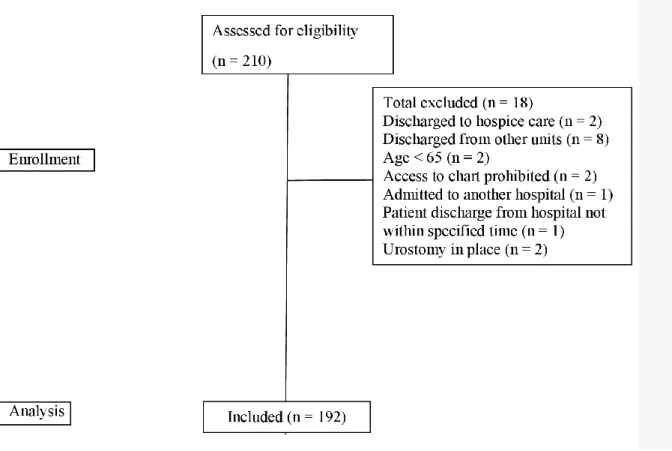
older women ... 18 Figure 2. Flow diagram of selection process ... 33 Figure 3. CONSORT chart for eligibility criteria ... 59 Figure 4. Modified conceptual model of the use of a UI evidence-based practice for
xiii
LIST OF ABBREVIATIONS
ACE Acute Care for the Elderly ADL Activities of daily living
AHRQ Agency for Healthcare Research and Quality APRN Advanced Practice Registered Nurse
BMI Body mass index
CAUTI Catheter-associated urinary tract infection CDC Centers for Disease Control and Prevention CI Confidence interval
CMS Centers for Medicare and Medicaid Services CONSORT Consolidated Standard of Reporting Trials
ED Emergency department
HIPAA Health Insurance Portability and Accountability Act
HR Hazard ratio
ID Identification
IIT Information and instructional technology HIGN Hartford Institute for Geriatric Nursing
M Mean
MRN Medical record number
NC TraCS North Carolina Translational and Clinical Sciences NICHE Nurses Improving Care for Health System Elders NPUAP National Pressure Ulcer Advisory Panel
xiv
PU Pressure ulcer
RA Research Assistant
RN Registered Nurse
RQ Research question
SAS Statistical Analysis Software SD Standard deviation
SON School of Nursing UI Urinary incontinence
UNC-CH University of North Carolina at Chapel Hill UTI Urinary tract infection
1
CHAPTER 1: INTRODUCTION
Urinary incontinence (UI), defined as the involuntary leakage of urine (Abrams et al., 2002), is a prevalent health condition that negatively affects the quality of life of older women. Population studies have reported that the prevalence of UI ranged from approximately 47% to 61.1% (Bootsma, Burman, Geerlings, & de Rooij, 2013; Gosch, Talasz, Nicholas,
Kammerlander, & Lechleitner, 2015; Zürcher, Saxer, & Schwendimann, 2011), with studies reporting incidence of UI in the range of 21% to 28% (Palmer, Baumgarten, Langenberg, & Carson, 2002; Zisberg, Gary, Gur-Yaish, Admi, & Shadmi, 2011), in acute care hospitals in women aged 65 and older. Also, older women use hospital services more than men of the same age. According to the Agency for Healthcare Research and Quality (AHRQ) (2012, 2016), the ratio of hospitalized older women to hospitalized older men is approximately 57 to 43 (18.2 million hospitalized women in comparison to 13.7 million hospitalized men).
2
Despite the high prevalence of UI among older women, its financial burden, and its
significant adverse effects on quality of life, research has shown that healthcare providers, including nurses, tend to manage UI poorly (Palmer et al., 2002; Lee et al., 2017; Zürcher et al., 2011). For example, studies that have examined the management of UI in older adults in hospital settings often found that the care focused on containing urine rather than assessing and managing the underlying cause(s) of UI (Colborne & Dahlke, 2017; Zisberg et al., 2011). The use of absorbent products such as incontinence pads (Zürcher et al., 2011), indwelling catheters, intermittent catheters, and external collection devices (Lee et al., 2017; Zisberg, 2011; Zürcher et al., 2011) to contain urine was
3
Most relevant research on this topic has focused on the association between nurses’ perceptions and knowledge of UI and their practice of continence care (Brady et al., 2016; Connor & Kooker, 1996; Cooper & Watt, 2003; Dingwall & McLafferty, 2006; Kadir, 2004; Kristiansen et al., 2011; Vinsnes, Harkless, Haltback, Bohm, & Hunskaar, 2001), which is defined as management strategies that are used to prevent, assess, and manage or treat already existing UI. Most findings revealed that nurses’ lack of knowledge about UI in older adults, their attitude toward the care of an older adult with UI, and perceptions about UI in general had a negative impact on the continence care provided to hospitalized older adults, including older women (Colborne & Dahlke, 2017).
By contrast, Keilman and Dunn (2010) found that Advanced Practice Registered Nurses (APRNs) had positive knowledge, attitudes, and perceptions about UI in older women and that these characteristics probably were related to their higher education level compared to less experienced nurses. However, these APRNs still had difficulty applying their knowledge to clinical settings to assess and manage UI. For instance, Keilman and Dunn (2010) conducted a sample survey of 54 APRNs in several areas. Their survey questionnaire included items related to UI risk factors and treatment/management of UI. For this small sample of APRNs, the results revealed that scores for items on the survey that related to knowledge about UI risk factors were on average higher than scores for the items related to knowledge about treatment/management of UI. Notably, APRNs felt uncertain about teaching the correct way to perform pelvic floor muscle exercises (also called Kegel exercises) (n = 35, 64.8%). They also reported not being sure
4
APRNs’ perceptions of uncertainty may be associated with the various ways that continence care can be provided. For example, treatment may include the use of absorbent products, urinary catheters, or other containment strategies used by healthcare providers, including nurses, to address the continence care of hospitalized older women (Kadir, 2004; Dingwall & McLafferty, 2006). Dingwall and McLafferty (2006) conducted an exploratory study using five focus groups and four single semi-structured interviews that involved 21 Registered Nurses (RNs) and non-RNs from acute medical wards. Their findings revealed that, despite nursing knowledge and awareness about inappropriate catheterization (e.g., using catheters to manage UI), the use of catheters was based on medical direction and the nurse’s preference instead of on the thorough assessment of the need for catheters.
One way to address these variations in continence care is to use a guideline, such as the Hartford Institute for Geriatric Nursing (HIGN) UI guideline, Urinary Incontinence in Older Adults Admitted to Acute Care, hereafter referred to as the HIGN UI guideline. This guideline’s aims are to improve the quality of continence care, the process of care, and patient outcomes and to reduce unnecessary healthcare expenditures (Dowling-Castronovo & Bradway, 2016). Using the HIGN UI guideline would enable practitioners to translate knowledge into actual clinical practice within the scope of individualized care, thereby improving patient outcomes. Despite the availability of this guideline, data suggest that continence care remains suboptimal in hospital settings for adults aged 65 and older, including older women (Lee et al., 2017; Zisberg et al., 2011; Zürcher et al., 2011).
5
setting, healthcare providers (including nurses) also need organizational support from the workplace culture, environment, and an interdisciplinary team in order to provide appropriate continence care and to decrease unnecessary variations in the type of care provided. Such organizational support also includes the provision of more clinical experiences that relate specifically to UI in older women (Keilman & Dunn, 2010).
The Problem Outcomes Associated with Urinary Incontinence
UI is a pervasive problem, especially for hospitalized older women, and has been associated with serious and potentially persistent physical sequelae or negative outcomes, such as falls (Ackerman et al., 2010; Foley et al., 2012), PUs (Baumgarten et al., 2006), urinary tract infections (UTIs) (Hooton et al., 2010), and catheter-associated urinary tract infections
(CAUTIs) (Conterno, Lobo, & Masson, 2011), which can occur or develop during
hospitalization. These four negative outcomes are known as hospital-acquired conditions and have a negative impact on the health of women during and after hospitalization.
Falls. Falls may lead to fractures, fear of falling, and loss of confidence. They can lead to unplanned readmissions (Wong et al., 2019) and may also result in patient injury or death
6
Foley and colleagues (2012) found that UI was positively correlated with falling; the greater the volume of urine lost, the greater the risk of falling (p < .0001).
Ackerman et al. (2010) found that female patients had a significantly greater likelihood of falling than male patients in a post-operative orthopedic unit (odds ratio [OR] = 1.9, 95% CI [1.1, 3.1]; p = 0.015). In the unit, 47 (1.3%) of the 3,631 female admissions resulted in a fall compared with 23 (0.7%) of the 3,281 male admissions. The circumstances surrounding these falls were as follows: Most (n = 45, 64%) were elimination related, with 17 (24%) of the falls occurring in the bathroom, 22 (31%) occurring while going to and returning from the bathroom, and 6 (9%) occurring while using the bathroom (Ackerman et al., 2010). However, the study did not differentiate the circumstances of the falls by gender.
In a study of three hospitals in the U.S., the operational costs for patients who had fallen and suffered serious injury were $13,316 higher (95% CI [$1,395, $35,561], p < .01) and the length of hospital stay was 6.3 days longer than for patients who did not fall (p < .001; 95% CI [2.4, 14.9]) (Wong et al., 2011). The financial costs from fall-related injuries in the U.S. have resulted in an estimated $31 billion in annual Medicare costs (Centers for Disease Control and Prevention [CDC], 2014).
Pressure ulcers. Older adults, including older women who have UI, are at increased risk for PUs (Baumgarten et al., 2006; Lachenbruch, Ribble, Emmons, & VanGilder, 2016).
Prolonged exposure of skin to urine may result in skin irritation, including
7
including older women, at greater risk for incontinence-related skin breakdown than younger people (Baumgarten et al., 2006).
In a prospective cohort study conducted in two hospitals on the third day of patient hospitalization, Baumgarten and colleagues (2006) found that, out of the total number of patients aged 65 and older who were examined (n = 3233), 6.2% (n = 201) of those patients with
urinary/fecal incontinence experienced hospital-acquired PUs. Both UI and fecal incontinence were associated with a higher risk of having a PU (OR = 2.41, 95% CI [1.39, 4.19]; p = .002 and OR = 2.31, 95% CI [1.41, 3.77]; p = .001 respectively.)
Lachenbruch and colleagues (2016) used the 2013-2014 International Pressure Ulcer Prevalence survey to conduct a cross-sectional survey of various populations, most of whom were from the U.S. (n = 182,832) and in acute care settings (91.4%), to determine the prevalence of PUs among patients with incontinence. Patients whose care was managed using an indwelling urinary catheter and/or fecal management system were deemed incontinent. Among the analyzed patients (n = 176 689), 53% were incontinent (n = 92 889). The prevalence of PUs was 4.1% for continent patients and 16.3% for incontinent patients (p < .0001). The prevalence of facility-acquired PUs was 1.6% for continent patients and 6.0% for incontinent patients (p < .0001). Furthermore, Lachenbruch and colleagues (2016) found that incontinent patients were
significantly older than continent patients (68.2 vs. 62.0; p < .0001), but no statistical difference was evident between the gender composition of the two groups (continent, 51.1% female vs. incontinent, 52.0% female; p = .99).
8
Lyder and colleagues (2012) conducted a retrospective secondary analysis of the National Medicare Patient Safety Monitoring database of Medicare-eligible hospitals across the U.S. They found that, out of 51,842 patients, at least one patient developed a new PU during hospitalization (n = 2,313, 4.5%). The mortality risk-adjusted ORs were 2.81 (95% CI [2.44, 3.23]) for in‐ hospital mortality, 1.69 (95% CI [1.61, 1.77]) for mortality within 30 days after discharge, and 1.33 (95% CI [1.23, 1.45]) for readmission within 30 days. The hospital risk-adjusted mean length of hospital stay was 4.8 days (95% CI [4.7, 5.0]) for patients who did not develop PUs and 11.2 days (95% CI [10.19, 11.4]) for those patients with hospital‐acquired PUs (p < .001). Also, patients with PUs were significantly older than patients without PUs (aged 78 vs. 73,
respectively, p < .001). Among female patients, no significant statistical difference was evident between those with PUs (n = 1 307, 56.5%) versus those without PUs (n = 7 781, 56.1%) (p = .69).
9
leads to UTIs is not known. Any condition that prevent the bladder from emptying completely such as bladder prolapse, can lead to post-void residual that can retain pathogens, urinary
urgency and urge urinary incontinence (Baker, 2018). In this dissertation, the investigator sought to test the association between UI and UTI.
More than seven million cases of lower UTIs in the U.S. account for clinical visits each year, resulting in more than $1 billion of total annual costs for urine cultures, dipsticks, and microscopic urinalyses (Winters et al., 2012; Gradwohl et al., 2016). These statistics were not differentiated by gender.
Catheter-associated urinary tract infections. A clinical association may exist between UI and CAUTIs (Fonda et al., 2011). Moreover, most of the cases of hospital-acquired UTIs were also catheter-associated (Meddings et al., 2014). Conterno, Lobo, and Masson (2011) found that, upon admission to a medical intensive care unit, females were independently associated with indwelling catheter placement. The mean age of patients in the study was 61 (SD = 15.92) and 50% were female. CAUTIs occurred in 129 (14%) of the patients. Conterno et al. (2011) also found that catheters were used inappropriately when a urinary catheter had not been prescribed, when its indication had not been documented, and, in the event of documentation, when the indication was inappropriate. Urinary catheters that are in place for longer than 24 hours or were placed based on improper medical justification, such as UI, also put the patient at higher risk for CAUTI (Bootsma, et al., 2013; Hooton et al., 2010). As previously mentioned, any extended use of catheters may be related to UI management, which in turn may place
10
Services (CMS) to link medical care and prescription payments to quality of care resulted in penalties for hospitals that requested reimbursement for additional costs related to these hospital-acquired conditions (CMS, 2014; Meddings et al., 2012) because healthcare providers should be able to prevent them. In summary, the overall problem of UI is exacerbated by the negative outcomes of falls, PUs, UTIs, and CAUTIs that are themselves associated with decreased quality of life.
Patient-Level Risk Factors Associated with Urinary Incontinence
The patient-level risk factors associated with UI in older women include decreased functional status, cognitive impairment, and secondary diagnoses, such as diabetes, chronic obstructive pulmonary disease, heart failure, Alzheimer’s disease, stroke, spinal cord disorders, dementia, depression, and fecal incontinence (Coyne et al., 2013; Gosch et al., 2015). Many older women have disabling conditions, such as fractures from falls, and at least one comorbid health problem identified at hospital admission that may affect their urinary system and/or their cognition or judgment related to toileting needs. In a retrospective cross-sectional study of 1,857 consecutively admitted adults aged 65 and older with fractures (80.7% female, mean age
11
cognitive dysfunction, with Mini Mental State Examination scores ≤ 27, versus those patients without UI (62.1 vs. 45.9%, p < .001). Other variables, such as age, body mass index (BMI), length of hospital stay, race, acuity level, and type of unit, also have been associated with UI. These variables, as well as patient-level risk factors such as cognitive status, functional status, secondary diagnosis, and fecal incontinence, are discussed further and examined in Chapter 2, the literature review.
Background
12
The Hartford Institute for Geriatric Nursing Urinary Incontinence Guideline
The HIGN UI guideline for hospitalized older adults (2012, 2016) is available in a condensed format on the AHRQ website. This HIGN UI guideline is part of a textbook for evidence-based protocols that were developed for clinicians (including RNs in hospital settings) in 1992 by a group of nursing experts from across the U.S. as part of the Nurses Improving Care for Health System Elders (NICHE) program at New York University (Boltz, Capezuti, Fulmer, & Zwicker, 2012, 2016). The HIGN UI guideline is currently undergoing another revision. The purpose of the guideline is to recommend preventive screening and strategies to reduce the number of incontinence episodes and occurrences of associated conditions in a hospital setting (Dowling-Castronovo & Bradway, 2012, 2016). The potential benefits of implementing the HIGN UI guideline include “fewer or no episodes of UI or complications (such as falls, PUs, UTIs, and CAUTIs associated with UI” (Dowling-Castronovo & Bradway, 2012, pp. 363–387). The HIGN UI guideline’s population of interest is all hospitalized older adults, which includes older women without UI and those who have either transient or established UI (see Appendix A: HIGN UI guideline).
13
HIGN UI guideline. To this end, the investigator developed a conceptual model to help identify ways the HIGN UI guideline is, or is not, being utilized to improve evidence-based practices. Conceptual Model of the Use of a Urinary Incontinence Evidence-Based Practice for Hospitalized Older Women
Definition of evidence-based practice by Melnyk and Fineout-Overholt. Evidence-based practice is a problem-solving approach that incorporates the best available scientific evidence, clinicians’ expertise, and patients’ preferences and values (Melnyk & Fineout-Overholt, 2004). The investigator derived her conceptual model from the work of Melnyk and Fineout-Overholt to identify/develop hypotheses and constructs. Melnyk and Fineout-Overholt (2002, 2005, 2011) focused on the use of evidence-based practices in acute care and community settings to improve healthcare quality and patient outcomes as well as to identify barriers to evidence-based practice implementation; such barriers include lack of knowledge and skills of healthcare providers. As these barriers diminish, and with increased knowledge and skills, healthcare providers can enhance the implementation of evidence-based practices to improve patient outcomes. Although this study does not explicitly examine barriers to evidence-based practices, the investigator postulated that healthcare providers’ knowledge and skills about UI, and/or the associated strategies needed to prevent, assess, and treat UI, would be reflected in electronic documentation. In order to identify the indicators of care specific to the care of hospitalized older adults to assess, prevent, and/or treat UI, the investigator used the NICHE program to develop a testable theoretical model to investigate the quality of continence care of hospitalized older adults.
14
at healthcare facilities to achieve patient-centered care for older adults (NICHE, 2019). The NICHE program focuses specifically on improving the care of hospitalized older adults by helping to prevent functional and cognitive decline and reduce iatrogenic complications
(complications associated with treatment administered by healthcare providers). Since its genesis in 1992, NICHE has evolved beyond its initial focus, i.e., hospitals, and now addresses the nursing care of older adults across healthcare systems, including long-term care settings (Popil, Gilmartin, Greenberg, & Sullivan-Marx, 2017). Healthcare systems that participate in the NICHE program receive a comprehensive report with narrative and summary tables from the national office that allow system administrators to review their site’s strengths and weaknesses in comparison to peer institutions.
The NICHE program is unique compared to other geriatric care models (e.g., the Geriatric Consultation Service and Hospital Elder Life Program) in that it specifically provides nurses with tools to initiate clinical protocols of care, change their environment to improve functionality, and work in collaboration with other disciplines (Capezuti et al., 2012). The nursing practice models that the NICHE program promotes include the Geriatric Resource Nurse model, the Acute Care of the Elderly unit, the Syndrome Specific Model, and the Discharge Planning Model for the Elderly. The NICHE program facilitates the integration of these models in the hospital setting and at various health system levels to improve the care of older adults. The Geriatric Resource Nurse core curriculum of the NICHE program includes, but is not limited to, the following topics: age-related changes in health, falls, PUs, and UI (Bub, Boltz, Malsch, & Fletcher, 2015). Clinical and staff-related data are collected at the unit level. The clinical
15
(Bub et al., 2015). Because nurses are the frontline healthcare providers that care for older adults, these models of care supported by the NICHE program hold great potential to improve the care of older adults by providing nurses with a comprehensive approach to care for hospitalized older adults, including older women.
Furthermore, evidence of the effectiveness of the NICHE program is documented. The NICHE program was pilot-tested in 1992 at four hospitals using a pre/post 68-item self-report survey known as the Geriatric Institutional Assessment Profile (Fulmer et al., 2002). The pilot test results revealed that knowledge and attitude scores (p < .0001 and p < .0001, respectively) of nurses increased positively for incontinence management and that the perceived barriers to best practices in geriatric nursing decreased (p < .0001) (Fulmer et al., 2002). Based on these results, the four hospital test sites developed strategies to improve their geriatric nursing care, including the implementation of the NICHE nursing practice models, clinical practice protocols such as the HIGN UI protocol, and staff education about specific geriatric care management resources such as the Try This Assessment Instrument Series (Mezey et al., 2004). By educating nurses in order to change current practices, the NICHE developers aimed to improve patient outcomes (Steele, 2010).
16
as mobility and delirium were evaluated in one of the two units on patients 65 and older. The Research Assistant measured the mobility status by asking the patient, family caregiver, or nurse if, in the past day, the patient had been (1) up to the chair, (2) walked in the hall, and/or (3) walked off the unit. The RA also performed the two-minute Nurses Delirium Screening Scale (Nu-DESC) to evaluate the cognitive status of the patients. The Nu-DESC assesses five
symptoms: disorientation, inappropriate behavior, inappropriate communication, hallucinations, and psychomotor retardation. The findings showed that, after the virtual ACE intervention, in one of the units, more patients 65 and older were up to the chair the past day (36.4% versus 63.5%, p = .04) and the percentage of patients with delirium was lower, although the difference was not significant (13.6% versus 4.8%, p = .16). Furthermore, the percentage of patients in both units with completed screening assessments (standardized care processes) for functional status and delirium (62.5% vs. 88.5%, p < .001 and 4.2% vs. 96.5%, p < .001, respectively) increased (Booth et al., 2019) after the intervention. However organizational data in this pilot study revealed no difference in mean length of stay (4.9 vs. 4.3 days, p = .38), or variable cost
($12,466 vs. $11,365, p = .54) for all patients aged 65 years and older who were discharged from both units pre-versus post-virtual ACE intervention (Booth et al., 2019). No gender differences were evident in these findings.
17
HIGN UI guideline. This study used an evidence-based guideline, the HIGN UI guideline, which is one of the NICHE nursing protocols, to evaluate the continence care of hospitalized older adults, focusing on older women. To the best of the investigator’s knowledge, no study identified in the literature thus far has examined the extent to which the current
continence care given by healthcare providers, including RNs, compares to the continence care recommended in the HIGN UI guideline. This study hereby addressed this gap in the literature. The investigator developed an abstraction tool for this study based on the HIGN UI guideline to abstract data from electronic medical records, because evidence-based protocols, such as the HIGN UI guideline standards, may be incorporated systematically into the charting systems of hospitals that use the program (NICHE, 2019). The conceptual model developed for this study is presented in Figure 1: Conceptual Model of the Use of a UI Evidence-Based Practice for
18
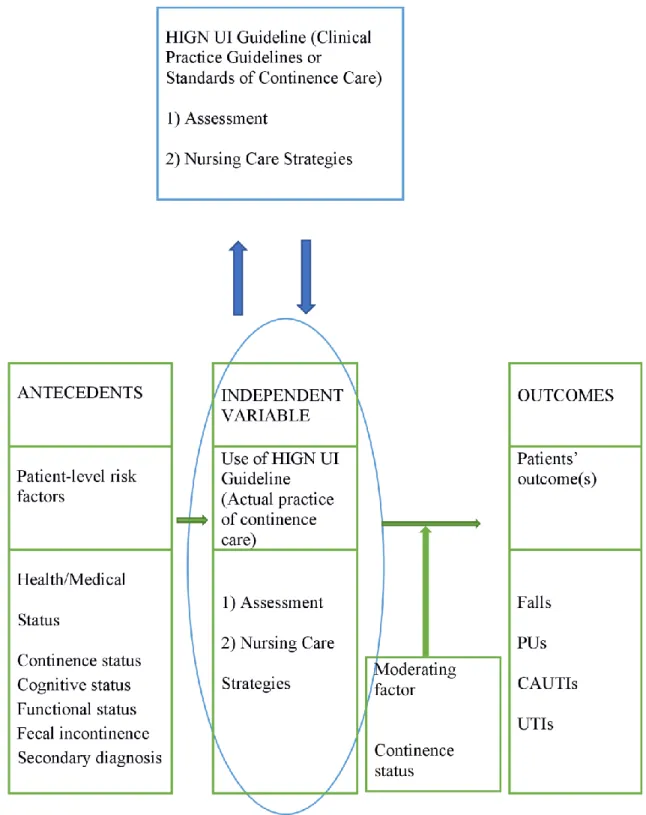
Figure 1. Conceptual model of the use of a UI evidence-based practice for hospitalized older women.
19
This model conceptualized the relationships between 1) patient-level risk factors
(independent variables) and HIGN UI guideline use (dependent variable), 2) HIGN UI guideline use (independent variable) and documented patient outcomes (dependent variables), and 3) Continence status as a potential moderator for HIGN UI guideline use and documented patient outcomes. This model was used to test whether 1) select patient-level risk factors (presence of UI [transient UI and established UI], cognitive and functional impairments, having two or more secondary diagnoses, and fecal incontinence) were associated with HIGN UI guideline use; 2) increased HIGN UI guideline use were associated with positive patient outcomes or decreased HIGN UI guideline use were associated with negative patient outcomes; and, 3) Continence status moderated the relationship between HIGN UI guideline use and patients’ outcomes. Continence status, defined as the presence of UI or not, includes patients with transient UI, established UI and without UI.
To gain a better understaning of these relationships, the developed conceptual model specifically targeted these selected patient-level risk factors that may be associated with healthcare providers’ use of evidence-based continence care practices as reflected in the HIGN UI guideline. Specifically, patients with these risk factors would be at higher risk for developing UI or worsening existing UI. If patients have these risk factors and have UI, the assumption made in this study was that their UI would be associated with the lack of or decreased use of evidence-based strategies found in the HIGN UI guideline.
20
organizational variables such as acuity level, length of hospital stay, and type of unit were used, but as controlled variables.
The primary hypothesis of this study was that healthcare providers’ increased use of the HIGN UI guideline would be associated with positive patient outcomes. Or, conversely,
decreased use of the HIGN UI guideline would be associated with negative patient outcomes. The primary hypothesis also assumed that enhanced knowledge among nurses would lead to positive outcomes. To explore these relationships, this retrospective study included the
development and use of an abstraction tool based on the HIGN UI guideline and the conceptual model. This tool was similar to that used in a study (Watson et al., 2003) that examined the use of the AHRQ guideline in nursing homes. The developed conceptual model thus relied on the work of Melnyk and Fineout-Overholt (2002, 2005, 2011) as well as the NICHE program and the HIGN UI guideline that the NICHE program developed.
Problem Statement
Despite the availability of evidence-based practices and expert opinion recommendations to assist in the implementation of strategies to prevent, treat, and manage UI, the extent of the use of an evidence-based guideline that is effective in the prevention, treatment, and
management of UI in the hospital setting, particularly for older women, remains lacking. Reducing UI in this setting is particularly challenging and requires a systematic approach to continence care. UI remains more prevalent in the hospital setting than in other settings due to patients’ higher risk for developing UI in hospitals and barriers to reducing UI that include the management of chronic illnesses that can take precedence over the primary reason for
hospitalization.
21
CAUTIs, and most of these practices and protocols are already present in the HIGN UI
guideline. Evidence-based practices, such as daily rounds, scheduled toileting, and medication review, when used together have been effective in preventing falls, PUs, and CAUTIs, but they also could be implemented to help prevent UI. At present, however, the effect of these
interventions to prevent UI is not known. Furthermore, the use of guidelines other than the HIGN UI guideline, such as the National Institute for Health and Care Excellence guideline, has not been effective in reducing the UI rate for hospitalized older adults (Wagg, Duckett, McClurg, Harari, & Lowe, 2011).
Purpose
The HIGN UI guideline serves to acknowledge that most research that has focused on care for women with UI was conducted in long-term care and community settings. Studies have shown the effectiveness of a variety of behavioral interventions in these settings, such as the use of pelvic floor muscle exercises, to improve UI symptoms. Studies also have shown the
inefficacy of using only educational and awareness programs to change practices and the substantive need for administrative buy-in and support for continence care (Lekan-Rutledge, Palmer, & Belyea, 1998; Mueller & Cain, 2002; Palmer, 1995; Sampselle, 2003). Further studies by Boltz et al. (2008a, 2008b) recommended a multilevel organizational approach and
organizational support to change care practices and systems.
Interventions to reduce the incidence of falls, PUs, CAUTIs, and UTIs that are integrated into the HIGN UI guideline could decrease UI incidence and prevalence. By using the HIGN UI guideline, healthcare providers, including RNs, can incorporate nonsurgical evidence-based practices that have been successful in the management of UI in long-term care and community settings and adapt them to meet the needs of hospitalized older women. The interventions
22
patient instructions upon discharge from the hospital, and for continued care management in community or long-term care settings (Dowling-Castronovo & Bradway, 2012).
Despite the availability of the HIGN UI guideline, little is known about its
implementation in hospital settings. Specifically, literature is lacking that describes the extent to which healthcare providers, including RNs, use the HIGN UI guideline or the patient-level factors and outcomes associated with the use of the guideline. Based on the positive association between the use of evidence-based interventions/practices and positive patient outcomes
(Melnyk & Fineout-Overholt, 2002, 2005, 2011; Nyman, Forsman, Ostaszkiewicz, Hommel, & Eldh, 2018), the investigator assumed that increased use of the HIGN UI guideline likewise would be associated with positive patient outcomes, including fewer or no falls, PUs, UTIs, and CAUTIs. Conversely, the investigator also assumed that decreased use of these interventions would be associated with negative patient outcomes. In addition, she sought to gain a better understanding about which evidence-based interventions for UI are used in the hospital setting for hospitalized older women and to determine whether healthcare providers, including nurses, would use these interventions based on women’s risk factors and whether decreased use of these interventions would be associated with negative patient outcomes.
23
results provide the evidence needed to improve the quality of nursing care for hospitalized older women with UI.
Specific Aims The four specific aims of this study are as follows:
A1: Determine the extent to which the HIGN UI guideline is used by healthcare
providers, including RNs, for hospitalized women aged 65 years and older, irrespective of these patients’ continence status.
A2: Identify patient-level factors that are associated with the decreased use of the HIGN
UI guideline.
A3: Compare negative outcomes, i.e., falls, PUs, UTIs, and CAUTIs, of patients with
regard to decreased versus increased use of the HIGN UI guideline by healthcare providers, including RNs.
A4: Determine whether the relationship between the use of the HIGN UI guideline and
patient outcomes depends on the continence status of hospitalized older women. Research Questions
The following research questions addressed the research problem:
R1: To what extent do healthcare providers, including RNs, use the standards in the
HIGN UI guideline?
R2: What patient-level risk factors are associated with decreased use of the HIGN UI
guideline?
R3: Is there a significant relationship between decreased use of the HIGN UI guideline
24
R4: Is the relationship between the decreased use of the HIGN UI guideline and patients’
negative outcomes dependent on the continence status of the hospitalized older women?
Research Hypotheses
The hypotheses are as follows (starting with Question 2, as Question 1 is descriptive): H1 (Research Question 2):
1. A significant negative association exists between UI and the decreased use of the HIGN UI guideline, adjusting for the other variables (age, BMI, race, acuity level, length of stay, and type of unit).
2. A significant negative association exists between cognitive impairment and the decreased use of the HIGN UI guideline, adjusting for the other variables. 3. A significant negative association exists between functional impairment and the
decreased use of the HIGN UI guideline, adjusting for the other variables. 4. A significant negative association exists between the presence of two or more
secondary diagnoses and the decreased use of the HIGN UI guideline, adjusting for the other variables.
5. A significant negative association exists between fecal incontinence and the decreased use of the HIGN UI guideline, adjusting for the other variables.
H2 (Research Question 3): A significant negative association exists between the decreased
25
H3 (Research Question 4): Continence status moderates the relationship between the use
of the HIGN UI guideline and the presence of patients’ negative outcomes. Specifically, among patients with UI, a significant negative relationship exists between the decreased use of the HIGN UI guideline and the patients’ negative outcomes. Among patients without UI, a significant positive relationship exists between the increased use of the HIGN UI guideline and the patients’ positive outcomes, defined as the absence of
documentation of at least one of the negative outcomes, i.e., falls, PUs, UTIs, or CAUTIs, adjusting for the other variables in the final model.
Definitions of Terms
Urinary incontinence: The International Continence Society (2002) defines UI as an involuntary loss of urine. The two categories of UI are transient (acute) or established (chronic) UI.
• Transient UI is defined as new-onset UI during hospitalization and at discharge. • Established UI is defined as UI that is present upon the patient’s admission,
during hospitalization, and at discharge.
Established UI may be further defined according to the patient’s symptoms: • Urgency UI is the complaint of involuntary leakage accompanied by or
immediately preceded by urgency.
• Stress UI is the complaint of involuntary leakage upon effort or exertion or upon
sneezing or coughing.
• Mixed UI is the complaint of involuntary leakage associated with urgency and
26
• Functional UI is the presence of UI due to health problems or hospital
interventions, such as the use of certain medications, that make it difficult to reach the bathroom.
• Overflow UI is UI that is related to either poor bladder contraction or blockage of
the urethra.
Guidelines: Recommended evidence-based practices that allow some discretion regarding their use.
Assessment and management: Set of evidence-based ecommendations that are needed to improve the continence care of hospitalized older adults, including older women.
Continence care: Management methods or strategies that are used to prevent, assess, manage or treat already existing UI.
Continence status: The presence of UI or not. Continence status includes patients with transient UI, established UI and without UI. UI includes patients with transient UI and
established UI.
Cognitive status: The state of mind and thought processes.
Functional status: The patient’s independence level.
Secondary diagnosis or comorbidity: Simultaneous presence of two or more chronic diseases. These existing chronic diseases are present in addition to the patient’s presenting diagnosis at admission.
Fecal incontinence: The inability to control bowel movement.
Age: Age at the time of admission.
Body mass index (BMI): An indicator of obesity and underweight (cut-off point = 27).
27
Race:
• American Indian or Alaska Native • Asian
• Black or African American
• Native Hawaiian or Other Pacific Islander • White/Caucasian
• Other
Acuity level: Measurement of the intensity of nursing care required by a patient.
Type of unit: Units found in acute care settings, such as a medical-surgical unit.
Negative outcomes:
• Documentation of the presence of at least one of the following outcomes: falls,
PUs, UTIs, and CAUTIs.
• Falls: Unplanned/accidental descent to the floor.
• Pressure ulcer: Localized injury to the skin and/or underlying tissue, usually over
a bony prominence, as a result of pressure or pressure in combination with shear. • Urinary tract infection: Infection of the kidney, ureter, bladder, or urethra,
sometimes accompanied by a sudden urge to void or by pain.
• Catheter-associated urinary tract infection: UTI caused by the use of a urinary
catheter in place more than 24 hours.
28 Summary
29
CHAPTER 2: LITERATURE REVIEW
This review of relevant literature was focused on the following central components of the conceptual model developed by the investigator: 1) use of evidence-based guidelines that address UI, 2) patient-level risk factors for UI, and 3) patient outcomes of UI (falls, PUs, UTIs, and CAUTIs). In this study, use of an evidence-based guideline referred to the documentation of the nonsurgical management strategies that were implemented in the studies included in this
literature review. The investigator employed this study’s conceptual model specifically to study the application of the HIGN UI guideline for hospitalized older women and to investigate ways that patient-level risk factors and patient outcomes related to the guideline’s use.
Abrams, Cardozo, Wagg, and Wein (2017) evaluated current available UI guidelines (n = 55) within a ten-year period (2007-2017). Some of these guidelines were from the U.S. (n = 12), of which only one reported the nonsurgical management of UI in women 65 years and older (Qaseem et al., 2014). However, the focus of that nonsurgical guideline was nursing home residents and women who were receiving Medicare home care services (Qaseem et al., 2014), not hospitalized women with UI. The AHRQ guideline was developed initially to lay the foundation for evidence-based recommendations about UI care based on studies conducted in community long-term care settings (Urinary Incontinence Guideline Panel, 1992). However, only one of the ten studies selected for this literature review explicitly used the AHRQ guideline to evaluate the continence care provided during long-term care (Watson et al., 2003).
30
was to understand and apply the current state of science in order to study the extent to which the HIGN UI guideline was used for hospitalized older women with UI and to determine whether increased use of the HIGN UI guideline was associated with positive patient outcomes, including fewer or no falls, PUs, UTIs, and CAUTIs. This literature review included findings from a systematic review of studies that investigated interventions for the management of UI and the promotion of continence in hospitalized women aged 65 and older, as well as related patient-level risk factors and outcomes. A synthesis of these findings followed.
Selection and Systematic Review of Intervention Studies
31
publications. After the investigator reviewed the titles and abstracts of these publications, she excluded case reports, commentaries, guidelines, protocols, and books and then examined the remaining full-text peer-reviewed articles.
Inclusion and Exclusion Criteria
Studies were included in this review if the studies examined phenomena that were consistent with the purpose of the study. Specifically, studies were included if:
• They were empirical, evidence-based, peer-reviewed studies. • They were conducted in hospitals or acute care settings.
• They used sample participants who included hospitalized women aged 65 and older. • They used official government data.
• Their research aims and objectives included investigating evidenced-based
assessment or management strategies for continence promotion, continence
maintenance, or management of incontinence, with the exclusion of drugs or surgical interventions.
• They addressed the risk factors associated with these management strategies and/or
they included outcomes related to these management strategies. Studies were excluded if:
• They were not empirical.
• They did not include women aged 65 and older.
• They were conducted in settings other than hospitals, such as nursing homes, homes,
32
• They involved drugs only and/or surgery and had aims that were not related to
investigating evidence-based assessment and management strategies for continence promotion, continence maintenance, or management of incontinence.
• They focused only on the risk factors or outcomes of UI without investigating
assessment and/or management strategies. Search Outcomes and Selection of Studies
33
Figure 2. Flow diagram of selection process. Data Extraction and Data Items
The thematic analysis that was guided by the conceptual model developed for this study included UI assessment and management strategies that were employed in the reviewed studies as well as the patient-level risk factors and outcomes associated with the use of these
34
Quality Appraisal or Assessment of Risk of Bias in Individual Studies
No articles were excluded based on quality, because the purpose of this review was to describe the state of the science. However, quality and validity were assessed using
methodological comments. Most of the selected studies were descriptive in nature. The ‘level of evidence’ of each reviewed study was reported by Ackley, Swan, Ladwig, and Tucker (2008, p. 7). The level of evidence that represents the use of nursing activities ranges from rigorous to weak, and levels are assigned to rate the strength of the evidence to help assess the quality of the body of evidence. This rating scheme, developed by Melnyk (2004) and adapted by Ackley et al. (2008), ranges from Level I to Level VII; see Table 1. Levels of Evidence.
Table 1
Levels of Evidence
Level and Quality of Evidence
Type of Evidence
Level I Evidence from a systematic review or meta-analysis of all relevant randomized clinical trials (RCTs), or evidence-based clinical practice guidelines based on systematic reviews of RCTs or three or more RCTs of good quality that have similar results
Level II Evidence obtained from at least one well-designed RCT
Level III Evidence obtained from well-designed controlled trials without randomization Level IV Evidence from well-designed case-control or cohort studies
Level V Evidence from systematic reviews of descriptive and qualitative studies (meta-analysis)
Level VI Evidence from a single descriptive or qualitative study
Level VII Evidence from the opinion of authorities and/or reports of expert committees Note. Adapted from Melnyk (2004), A focus on adult acute and critical care, Worldviews Evidence Based Nursing,1(3), 194–197; modified from Guyatt and Rennie (1993); Harris et al. (2001).
Data Synthesis
35
and/or sample characteristics. Variations in patient characteristics, aims, methods, and findings require a narrative synthesis approach (Whittemore & Knafl, 2005). The investigator thus employed a narrative synthesis approach to present the current understanding of the use of UI assessment and management strategies in hospitalized older adults, including women, and to report patient-level risk factors and outcomes, if any, that were associated with these strategies.
Results of the Literature Review and Description of Studies
The literature review presented in Appendix B includes an overview of UI assessment and management strategies that use nonsurgical interventions (excluding surgical and
pharmaceutical interventions) for older people, including older women in hospitals. Appendix B also presents the risk factors and outcomes associated with the use of UI assessment and
management strategies.
The ten studies selected for the literature review were conducted in several different countries: U.S. (n = 1), Italy (n = 1), Australia (n = 2), England, Wales, and Northern Ireland (n
= 1), Israel (n = 2), Switzerland (n = 1), Sweden (n = 1), and South Korea (n = 1). Based on the inclusion and exclusion criteria as well as the design of this literature review, all studies reported UI assessment and management strategies in the hospital setting. Half of the studies did not report the patient-level risk factors associated with UI or UI assessment and management strategies. Two studies reported PUs and UTIs as patient outcome measures (Junkin & Selekof, 2007; Lee et al., 2017). The two other outcomes, falls and CAUTIs, were not reported in any of the studies. None of the selected studies evaluated relationships among risk factors, UI
management strategies, and outcomes (falls, PUs, UTIs, or CAUTIs) together.
36
trial (Parkinson et al., 2007), cross-sectional retrospective audit (Wagg, Lowe, Peel, & Potter, 2008), and cross-sectional survey questionnaire (Junkin & Selekof, 2007; Lee et al., 2017). Six studies used a mixed-methods design with the following combinations: interviews and medical record reviews (Zisberg, 2011; Zisberg et al., 2011; Zürcher et al., 2011), interviews and survey questionnaire (Palese et al., 2007), and survey questionnaire and audit of medical records
(Ostaszkiewicz, O’Connell, & Millar, 2008). Of the ten studies, six studies were conducted in the following units: medical, surgical, rehabilitation, geriatric, and orthopedic (Nyman et al., 2016; Ostaszkiewicz et al., 2008; Palese et al., 2007; Zisberg, 2011; Zisberg et al., 2011; Zürcher et al., 2011). The other four studies did not mention a specific unit but used the terms ‘inpatients’ or ‘hospitals’ (Junkin & Selekof, 2007; Lee et al., 2017; Parkinson et al., 2007; Wagg et al., 2008).
Content analysis of these studies revealed both evidence and lack of evidence that support the need to investigate the relationships among patient-level risk factors, UI assessment and management strategies, and outcomes for hospitalized older adults, especially older women. The following findings provide details regarding the content analysis of the systematic literature review.
Systematic Literature Review Findings Defining Urinary Incontinence
The International Continence Society set the standardized definition of UI to be the involuntary leakage of urine (Abrams et al., 2002). Buckley and Lapitan (2011) reported that the prevalence of UI is difficult to establish accurately because of the different types of UI,
37
experienced voiding difficulties within the last month (Nyman et al., 2017). Another study defined UI in terms of ‘yes’ or ‘no’ answers to any of the following questions: 1) Do you ever leak urine when you do not want to? (2) Do you ever leak urine when you cough, laugh, or exercise? (3) Do you ever leak urine on the way to the bathroom? (4) Do you ever use pads, tissue, or cloth in your underwear to catch urine? (Zürcher et al., 2011).
UI also can be defined by its types: stress, urgency, mixed, and functional. However, among the studies under review, only one study reported its findings according to types of UI (Wagg et al., 2008). In a cross-sectional study of adults aged 65 and older in 198 hospitals, using chart audits, Wagg et al. (2008) found clear identification of the types of UI (25%) in hospital settings. UI also can be defined according to the two categories of established or transient UI. Patients who have reported urine leakage prior to admission are most likely to have established UI. Transient UI, also referred to as new-onset UI or hospital-acquired UI, is UI that has newly occurred during hospitalization (Zisberg et al., 2011).
The prompt and accurate identification of the causes and categories of UI is vital to prevent persistent UI and deleterious outcomes. The various measurements and definitions used in the ten studies selected for review show the need for research and practice that use
standardized measurements and definitions as recommended by the International Continence Society.
Patient-Level Risk Factors
The patient-level risk factors identified in this literature review are continence status, cognitive status, functional status, having two or more secondary diagnoses, and fecal
38
Urinary incontinence. An association may exist between UI and the strategies used to manage it. The findings obtained from the literature review of the ten selected studies suggest that patients with UI were likely to have their UI managed by containment strategies such as the use of incontinence pads and urinary catheters (Ostaszkiewicz et al., 2008; Wagg et al., 2008; Zisberg, 2011; Zisberg et al., 2011). In addition, the identification of UI in nursing records in hospital settings (25%) were less frequent than in primary care facilities (63%) and care homes (40%) (Wagg et al., 2008). Only one study reported no differences in management strategies between two groups (intervention and control) that were comparable in terms of urinary urgency, UI, or nocturia based on a comprehensive bladder and bowel checklist completed by the
intervention group (Parkinson et al., 2007). In that study, Parkinson et al. (2007) used a
randomized controlled trial design (pilot test) with patients who were individually randomized to either the intervention or control group. However, only 45 eligible patients aged 63 to 93 were randomly assigned to intervention (n = 26) or control group (n = 19), with 11 being lost to follow-up at 12 weeks. This loss in the number of patients resulted in 34 eligible patients (intervention = 15 [9 women and 6 men] and control = 19 [15 women and 4 men]) which were used for the final analysis. This small sample size might have explained the non-significance found between the two groups of patients in the Parkinson et al. (2007) study.
39
found that patients who had new-onset UI did not differ among patients with lower cognitive status (low scores on the Short Mental Status Questionnaire; range 0-10) compared to those patients without cognitive impairment (OR = 1.03, 95% CI [0.88, 1.21]). However, patients with a lower cognitive status were more likely to use the containment strategies of urinary catheters (26.3%) and adult diapers (13.1%) versus self-toileting (3.3%), (7.1 ± 2.7 vs. 7.6 ± 3.0 vs. 9.0 ± 1.4, respectively, p < .001). Also, in a prospective 45-day cohort study conducted in two medical wards that were part of two acute care hospitals with 650 and 900 beds, respectively, Palese et al. (2007) found that, according to nurses, the primary reason for body-worn pad use, simply
referred to as ‘pad use’ throughout this study, was to treat UI that was associated with acute confusion and dementia (incontinence caused by space-time disorientation).
Although comparing these associations across studies was difficult due to differing study methods and definitions of cognitive status, these three studies’ findings revealed that the UI of patients with lower cognitive status in the hospital setting was likely to be managed using containment strategies.
40
was 3.27 (95% CI [1.49, 7.15]) times higher for the dependent group and 2.96 (95% CI [1.01, 8.71]) times higher for the partially dependent group than for the independent group, adjusting for age, cognitive impairment, disease severity, length of stay, and whether the participant or surrogate provided information. Ostaszkiewicz et al. (2008) surveyed 447 participants in three acute care hospitals and one sub-acute care facility. They found that patients who required “person assistance to mobilize or supervision” or were “not currently mobile” were significantly more likely to experience accidental leakage of urine than those patients who “mobilized with a gait aid” or “mobilized independently” (n = 386, p < .01). Palese et al. (2007) also found that the second main reason for pad use, according to nurses, was UI that was associated with functional impairment.
Although comparing these associations across studies was difficult due to the differing study methods and definitions of functional impairment, these four studies’ findings suggested that patients with functional impairment and who required assistance with mobilization in the hospital setting were at increased risk to be managed with containment strategies.
41
Although Lee at al. (2017) did not perform correlational analysis, their findings revealed that management was poor overall as evidenced by the high prevalence of UI (50.1%). Almost half of the incontinent patients (45.8%) suffered severe incontinence, defined as requiring at least five pads per day. Interventions included the use of medications (n = 384, 20.7%) and containment strategies such as ‘diaper’ (as called in the study) (n = 991, 53.3%) and indwelling catheters (n = 363, 19.5%). Palese et al. (2007) also found that one of the reasons for pad use, according to nurses, was UI that was associated with a secondary diagnosis (caused by an existing disorder or comorbidity) (n = 39, 18.8%).
These three studies’ findings may suggest an association between having two or more secondary diagnoses and the use of poor UI management strategies.
Fecal incontinence. Only one study in this literature review, Junkin and Selekof (2007), explicitly examined the relationship between fecal incontinence and UI. These researchers used an observational descriptive study design at two teaching hospitals with a total of 48 inpatient units. The survey was completed by 608 patients (aged four and older) or their caregivers. The highest prevalence of incontinence was found in the oldest age group (80+ years). The overall prevalence of UI and fecal incontinence was 19.7% (120 of 608 study participants). The most common containment device used to manage all incontinence was an under-pad (by 52 patients with UI and 17 with fecal incontinence). However, Junkin and Selekof (2007) did not specify for which patients the pads were used (patients with UI only, patients with fecal incontinence, or patients with both conditions). These findings suggested that a correlation between fecal
42
recent study by Condon, Mannion, Molloy, and O’Caoimh (2018) that examined the prevalence of UI and fecal incontinence in an Irish acute care setting, gender was found not to be associated with fecal incontinence (β= 0.007, 95% CI [0.47, 2.18]; p = .99.) Pads were used for patients with fecal incontinence irrespective of the patient’s gender.
As it is well-documented that UI and fecal incontinence tend to coexist, the investigator of the current study added the fecal incontinence variable as a patient-level risk factor.
Control Variables
43
associated with the use of urinary catheters (81.1 vs. 77.1, p < .001) and adult diaper use (80.7 vs. 77.1, p < .001) versus self-toileting.
Acuity level, length of stay, and type of unit. In addition to the age variable, other factors that researchers have found to be associated with UI are acuity level, length of stay, and type of unit (Zisberg et al., 2011; Zürcher et al., 2011).
Zisberg et al. (2011) found that patients with a higher illness severity score (10.9 vs. 9.8,
p = .02) (assessed using the Acute Physiology, Age, and Chronic Health Evaluation tool) and a two-day longer hospital stay (p = .002) were more likely to be associated with new-onset UI than those patients who did not develop new UI. These risk factors were found to be more common among older adults and significantly associated with UI. These variables (acuity level, length of stay, and type of unit) were used as control variables in the Zisberg (2011) study for multivariate logistic regression analysis to study the relationships between the risk factors of cognitive and functional impairments and new-onset UI at discharge, adjusting for the other variables in the model.
44
Body mass index. None of the ten studies selected for this literature review reported an association between BMI and UI. However, a positive association between BMI and UI has been well documented in cross-sectional, longitudinal, and intervention studies (Hunskaar, 2008; Subak, Richter, & Hunskaar, 2009; Townsend, Curhan, Resnick, & Grodstein, 2008). For example, the longitudinal study conducted by Townsend et al. (2008) from 2000 to 2002
identified 6,790 women with episodes of UI at least monthly among 35,754 women (aged 54-79) in 2002 who had reported no UI in 2000 in their questionnaires. Questionnaires were sent to women who had at least weekly instances of incontinence. The Townsend et al. (2008) study’s multiple regression analysis results showed highly significant trends of an increased risk of UI with an increase in BMI and waist circumference (p < .001 for both). However, little is known about the association between BMI or waist circumference and UI among hospitalized older women.
45
association between UI management strategies and race for hospitalized older women has not been studied.
The investigator included these control variables (age, acuity level, length of stay, type of unit, BMI, and race) because most of them were significantly associated with UI or UI
management strategies and they had previously been used in other studies as control variables to study these relationships in this setting. The investigator did not include other variables (such as pre-existing bladder dysfunction), which had been significantly associated with UI because they were not available in the medical records.
Urinary Incontinence Assessment
Four studies selected for this literature review lacked comprehensive documentation of the assessment of UI among hospitalized older adults: Nyman et al. (2017), Ostaszkiewicz et al. (2008), Wagg et al. (2008), and Zürcher et al. (2011). Two of these four studies reported that UI assessment was documented in about a quarter of the cases (Wagg et al., 2008; Zürcher et al., 2011). Wagg et al. (2008) reported that the ability to identify UI type was the lowest in the hospital setting (24%) compared with primary care facilities (63%) and care homes (40%). The Nyman et al. (2017) study reported the lack of assessment tools for UI. Ostaszkiewicz et al. (2008) emphasized the lack of documentation regarding bladder function upon admission. In these four studies, the prevalence of UI ranged from 6.1% to 48.4% (Nyman et al., 2017; Ostaszkiewicz et al., 2008; Wagg et al., 2008; Zürcher et al., 2011).
46
help improve understanding about ways the HIGN UI guideline and evidence-based management strategies are used (or not used) to help mitigate or prevent UI in hospitalized older women. Management or Nursing Care Strategies
The literature review of the ten selected studies revealed that nursing care for hospitalized women with UI typically consisted of containment strategies, such as the use of absorbent
products and urinary catheters as well as continence aids such as commodes and bedpans. In addition to using such products and devices to manage UI, healthcare providers also encouraged self-toileting and stress the importance of mobility to help mitigate UI in hospitalized patients. Lastly, management of UI was enhanced when an interdisciplinary healthcare team was in place.