EARLY LIFE EFFECTS OF A DUAL BURDEN ENVIRONMENT:
CHILDHOOD INTESTINAL HEALTH AND IMMUNE FUNCTION IN GALÁPAGOS, ECUADOR
Kelly Marie Houck
A dissertation submitted to the faculty at the University of North Carolina at Chapel Hill in partial fulfillment of the requirements for the degree of Doctor of Philosophy in the Department of
Anthropology.
Chapel Hill 2017
ABSTRACT
Kelly Marie Houck: Early Life Effects of a Dual Burden Environment: Childhood Intestinal Health and Immune Function in Galápagos, Ecuador
(Under the direction of Amanda Thompson and Mark Sorensen)
Early life pathogenic and nutritional environments impact health over the life course by training the immune system to adapt to local microbial conditions and developing metabolic trajectories based on resource availability. Exposure to environmental microbes during
childhood, common throughout evolutionary history, can provide immunoregulatory properties that strengthen the immune system’s ability to resolve inflammation. In populations with childhood undernutrition, pathogenic exposures due to unsanitary living conditions can cause chronic intestinal inflammation. This condition, known as environmental enteric dysfunction, allows for microbes to enter the blood causing endotoxemia and systemic infection. Chronic immunostimulation during childhood is energetically demanding and often results in growth deficits.
This dissertation uses the emerging field of the gut microbiome as pathway to investigate the early life effects of overnutrition and poor water quality on childhood intestinal health and immune function in Galápagos, Ecuador. Residents of San Cristóbal are unfortunately
experiencing a dual burden of both increasing rates of obesity, coupled with persistent rates of infectious disease. Data was collected from 169 children aged two to ten and their 119 mothers. Interviews obtained information concerning household water use and sanitation practices, and children’s hygiene behaviors, illness histories and diets. Household water samples were collected
status. Blood spots were measured for immune biomarkers and fecal samples were collected to
examine gut microbial compositions.
Novel hypotheses are tested for the dual burden environment that examine the
relationship between pathogenic and obesogenic factors on inflammation, endotoxemia and gut microbial composition, and provide insight into the early life health impacts of the dual burden environment on childhood intestinal health and immune function. The significant of this research is that even in the context of a pro-inflammatory state, driven by overweight and obesity, early life exposure to Escherichia coli contaminated water, which does not result in diarrhea, can provide an immunoregulatory effect among children in Galápagos. Identifying gut microbial symbiosis as a possible mechanism underlying this protective effect is an original contribution to the evolutionary “old friends” hypothesis and is of particular importance to public health
To Mom, Dad, Héctor and Luka.
ACKNOWLEDGEMENTS
I owe many people and organizations recognition for their support and guidance in the completion of my dissertation. First, I would like to thank my wonderful advisors who provided me with the confidence, encouragement and skills to become an independent researcher. I am indebted to Amanda Thompson for her brilliant ability and insight in focusing and reframing my ideas into articulate research, and for being an inspiring and compassionate mentor and friend. I am equally grateful for Mark Sorensen whose enthusiasm for research drew me into the field of human biology, and for teaching me resilience when faced with many challenges. Second, I would like to offer a special thanks to Margaret Bentley for supporting and pushing me to become a better anthropologist, and to Jill Stewart whose guidance during fieldwork was invaluable. Also, many thanks to Paul Leslie and Michael Emch for their wise advice and support of my project.
Human Development (NICHD) Traineeship, UNC’s Weiss Urban Livability Fellowship, and UNC’s Department of Anthropology.
I owe so much to my amazing research assistant, Gyssell Zapata, and all the mothers and children in Galápagos who participated in my project. A special thanks to Stephen Walsh, Philip Page and others at the Galápagos Science Center for their incredible logistical support, and for providing laboratory facilities and equipment essential for my fieldwork. I thank Paul Voss, Jan Hendrickson-Smith and others at CPC during my time studying population health. I am
TABLE OF CONTENTS
LISTS OF FIGURES ... xi
LIST OF TABLES ... xii
LIST OF ABBREVIATIONS ... xiii
CHAPTER 1. INTRODUCTION ... 1
1.1. Paper 1- Measuring Chronic Low-Grade Inflammation ... 5
1.2. Paper 2- E. coli Exposure and Immune Function ... 5
1.3. Paper 3- Gut Microbiota Mediate Immunostimulation ... 6
CHAPTER 2. LIFE, HEALTH AND NUTRITION IN GALÁPAGOS, ECUADOR ... 8
2.1. Ecuadorian Health Landscape... 8
2.2. Tourism, Economic Growth and Urban Development on the Galápagos Islands ... 10
2.3. People of San Cristóbal ... 12
2.4. Childhood Health and Nutritional Status ... 14
2.5. Adult Nutritional Status and Health ... 16
2.6. Diet and Food Availability... 17
2.7. Household Income, Living Conditions and Assets ... 18
2.8. Water Use and Availability ... 20
CHAPTER 3. LITERATURE REVIEW ... 24
3.1. Dual Burden Life History Theory ... 24
3.2. Developmental Origins of Health and Disease ... 25
3.3. Early Life Infectious Disease ... 26
3.5. C-Reactive Protein and Inflammation ... 28
3.6. Environmental Enteric Dysfunction and Endotoxin Core Antibodies ... 29
3.7. Gut Microbiota and Immune Dysregulation ... 31
3.8. Early life Pathogen Exposures and Immunoregulation: the “Old Friends” Mechanism ... 32
CHAPTER 4. DISSERTATION PROJECT OVERVIEW ... 34
4.1. Pilot Project ... 34
4.2. Dissertation Project ... 35
CHAPTER 5. STUDY DESIGN, DATA COLLECTION AND MEASURES ... 37
5.1. Fieldwork ... 38
5.2. Visit One ... 39
5.3. Visit Two ... 41
5.4. Visit Three ... 41
5.5. Follow-Up Study ... 42
5.6. Key Study Measures ... 42
CHAPTER 6. PAPER 1- MEASURING CHRONIC LOW GRADE INFLAMMATION ... 47
6.1. Introduction ... 47
6.2. Sample and Data Collection... 50
6.3. Measures ... 51
6.4. Statistical Analyses ... 52
6.5. Results ... 53
6.6. Discussion ... 56
6.7. Conclusion ... 61
CHAPTER 7. PAPER 2- E. COLI EXPOSURE AND IMMUNE FUNCTION ... 66
7.2. Sample and Data Collection... 69
7.3. Measures ... 70
7.4. Statistical Analyses ... 72
7.5. Results ... 73
7.6. Discussion ... 77
7.7. Conclusion ... 85
CHAPTER 8. PAPER 3- GUT MICROBIOTA MEDIATE IMMUNEOSTIMULATION ... 91
8.1. Introduction ... 91
8.2. Sample and Data Collection... 94
8.3. Measures ... 95
8.4. Statistical Analyses ... 97
8.5. Results ... 98
8.6. Discussion ... 101
8.7. Conclusion ... 107
CHAPTER 9. DISSERTATION SYNTHESIS ... 115
9.1. Significance of Galápagos as a Dual Burden Environment Research Setting ... 115
9.2. Overall Strengths and Limitations of the Study Design ... 115
9.3. Paper Summaries and Contributions ... 117
9.4. Directions for Future Research ... 121
9.5. Conclusion ... 122
LISTS OF FIGURES
Figure 1.1 Conceptual model of the health consequences of the dual burden
environment ... 7
Figure 2.1 Populated Islands of Galápagos, Ecuador ... 22
Figure 2.2 Neighborhoods of Puerto Baquerizo Moreno, San Cristóbal ... 22
Figure 2.3 Prevalence of stunting and overweight/obesity in Galápagos and Ecuador ... 23
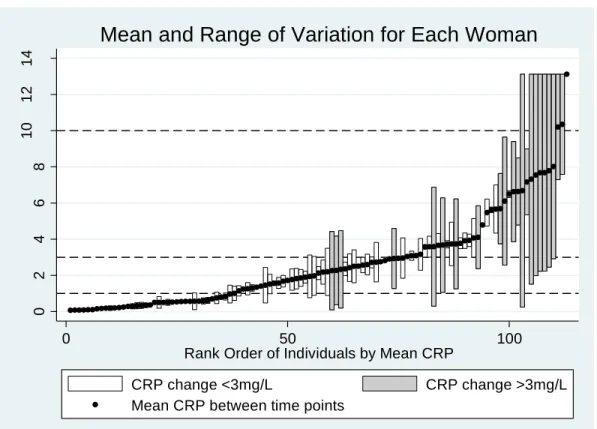
Figure 6.1 Mean and range of variation of CRP between time-1 and time-2 for women. ... 63
Figure 6.2 Mean and range of variation of CRP between time-1 and time-2 for children. ... 63
Figure 7.1 Mean predicted exponentiated CRP levels. ... 86
Figure 7.2 Mean predicted exponentiated EndoCAb levels. ... 86
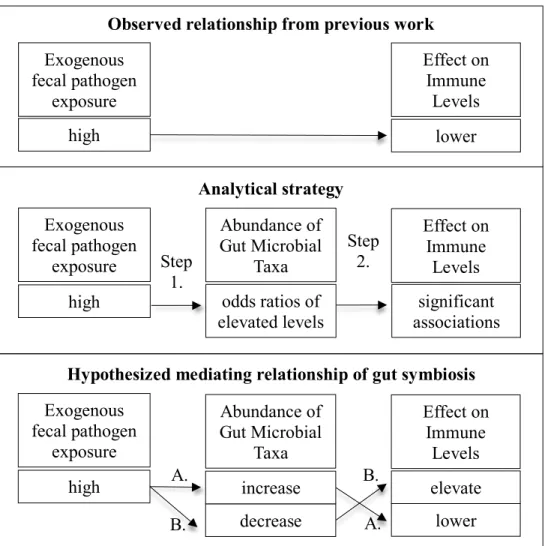
Figure 8.1 Observed and hypothesized relationships of fecal pathogen exposure on immunostimulation. ... 109
Figure 8.2 Odds ratios of fecal pathogen exposure on family taxa. ... 110
Figure 8.3 Standardized effects of family taxa on immunostimulation. ... 111
LIST OF TABLES
Table 6.1 Measures of moderately elevated CRP using four different methods
of discarding... 64
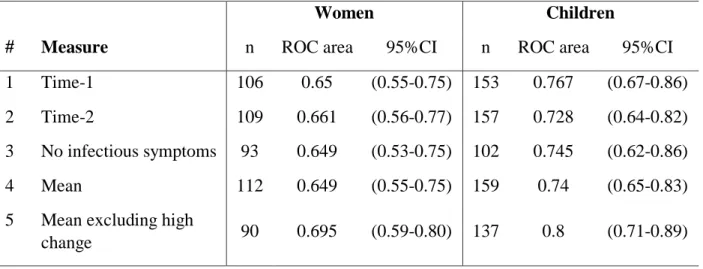
Table 6.2 Area under the ROC curve for all measures in women and children ... 64
Table 6.3 Sensitivity, specificity and percent correctly classified for measures using the ranges 3-10mg/L and 1-10mg/L in women ... 65
Table 6.4 Sensitivity, specificity and percent correctly classified for measures using the ranges 3-10mg/L and 1-10mg/L in children ... 65
Table 7.1 Sample characteristics... 87
Table 7.2 Associations with age, reported infections and E. coli exposure levels on immune function biomarkers and infectious symptoms ... 88
Table 7.3 Fixed effects of log-CRP models ... 89
Table 7.4 Coefficients of log-EndoCAb models... 90
Table 7.5 Coefficients of interaction model for log-CRP and log-EndoCAb... 90
Table 8.1 Sample characteristics, fecal pathogen exposure and levels of immunostimulation ... 113
LIST OF ABBREVIATIONS AHA American Heart Association
BMI Body mass index
CDC Center for Disease Control CRP C-reactive protein
DOHaD Developmental origins of health and disease EED Environmental enteric dysfunction
ELISA Enzyme-linked immunosorbent assay EndoCAb Endotoxin core antibodies
IFNγ Interferon gamma
Ig Immunoglobulin-G
kg Kilograms
L Liter
L:M Lactulose: mannitol LPS Lipopolysaccharides
m Meters
mg Milligrams
mL Milliliter
MPN Most probable number
MU Median units
n Total number of observations OTUs Operational taxonomic units ROC Receiver operator characteristic SCFA Short-chain fatty-acid
SE Standard error
SES Socio-economic status
Th Helper T cell
CHAPTER 1.INTRODUCTION
calorically-dense diets, high in sugars and fats and low in fiber (Popkin et al. 2012). Ecuador’s 2012
National Health and Nutrition Survey reported that Galápagos children have the highest rates of overweight and obesity in the entire country (Freire et al. 2014a). A better understanding of the health impact of living in a dual burden environment, where higher infectious disease burdens
are coupled with increasing rates of obesity and cardio-metabolic disorders, is crucial to improve
the lives of children from Galápagos, Ecuador.
Adverse environmental conditions and events early in life have consequences for adult health (e.g. Barker 1994). The developmental origins of health and disease (DOHaD) framework investigates the health impact of a mismatch between changing nutritional and disease
environments from early to later life (Adair and Prentice 2004; Gluckman and Hanson 2006). Much attention is focused on the link between prenatal undernutrition and postnatal overnutrition with later risk of cardio-metabolic disease (Adair and Cole 2003; Gluckman et al. 2007). Studies on the development of the immune system suggest that inflammation is a key mechanism linking childhood health and growth with adult risk of cardio-metabolic disease (Danesh et al. 2004; Tzoulaki et al. 2008). Infants are born immunologically naïve, and evolutionary theory suggests that early life disease exposure influences the development of immune function and
inflammatory trajectories throughout the life course. The “old friends” mechanism suggests that modern lifestyles and improved living conditions in high income countries limit exposure to immunoregulatory pathogens common throughout human evolution, causing
in children from non-Western populations with low resources (Blackwell et al. 2010; McDade et al. 2005; McDade 2005; Nazmi et al. 2009) and little is known about the early life consequences of a dual burden environments on immune regulation.
The energetic costs of maintaining robust immune function during childhood in
environments with heavy pathogen burdens comes at the expense of linear growth restrictions, often resulting in stunting (McDade et al. 2008; Stephensen 1999). Evolutionary life history theory provides a framework to study human variation in terms of energetic investments in life history strategies or events throughout the life course, such as birth, growth, maturation, and pregnancy, which have been shaped by natural selection (Hill 1993). Studies modeling energetic life history tradeoffs between immunocompetence (normal immune response to pathogens) and growth during childhood have traditionally focused on populations with scarce food resources. In malnourished environments, chronic intestinal inflammation and systemic immune activation caused by repeated pathogen exposure due to poor sanitation contributes childhood stunting (Campbell et al. 2003a; Humphrey 2009; Prendergast et al. 2014). This is known as
environmental enteric dysfunction (environmental enteropathy), a subclinical condition characterized by local inflammation and poor intestinal barrier function allowing for the
translocation of microbes into the blood stream resulting in endotoxemia (Syed et al. 2016). This chronic state of immune dysfunction can divert energetic resources from normal growth and development during childhood in populations experiencing undernutrition. However, in countries already plagued by overnutrition, excess adiposity also induces an inflammatory response
growth restrictions in high food resource environments during childhood because the amount of energetic resources available would cover the cost of pathogenic immunocompetence (McDade 2003). In dual burden environment, concurrent pathogenic and obesogenic exposures may further contribute to gut immunodysregulation, creating a new synergism between overnutrition and infection contributing to environmental enteric dysfunction.
The emerging field of gut immunology has the potential to contribute to evolutionary theory and broader health concerns by providing a new pathway, the gut microbiome, to examine the effects of the pathogenic, nutritional and social environments on human physiology and consequently variation in human growth and development. Over the course of human evolution, gut microbiota have developed a symbiotic relationship with their host, and their bacterial metabolites play a vital role in regulating metabolic and immune function (O'Hara and Shanahan 2006). Pathogens and dietary patterns can influence the composition of microbiota and
consequently alter the production of metabolites causing gut immunodysregulation (De Filippo et al. 2010; Kau et al. 2011). Although changes to the gut microbiome caused by habitual
ingestion of fecal pathogens in contaminated water and food have been hypothesized to underlie the etiology of environmental enteric dysfunction (Brown et al. 2015; Kau et al. 2011), its role remains untested in human populations.
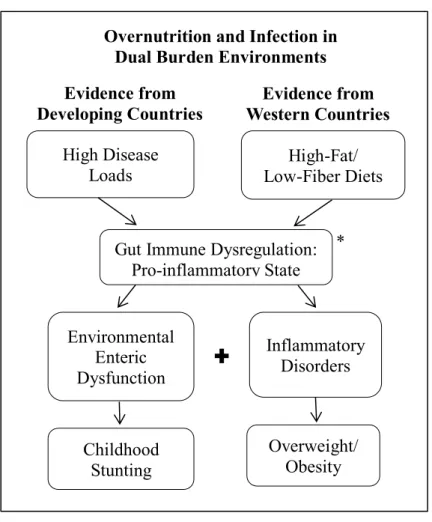
This project modifies versions of life history theory and the DOHaD framework to fit the dual burden environment, accounting for the traditional pathogen-induced immunocompetence and incorporating obesity-induced immunostimulation (Figure 1.1). These evolutionary
innovative use of gut microbial analysis, as an indicator of intestinal health, in relation to systemic inflammation and endotoxemia associated with environmental enteric disorder. 1.1. Paper 1- Measuring Chronic Low-Grade Inflammation
The objective of Paper 1 is methodological in disentangling the use of C-reactive protein (CRP) as a marker of inflammation in mothers and children living in a dual burden environment. CRP is both reactive to infection causing acute, high elevations and obesity, resulting in chronic, low-grade elevations. Elevated ranges commonly used to indicate chronic, low-grade
inflammation as cardiovascular disease risk in populations with low infectious disease burdens, may be problematic due to infection-induced elevations in high pathogenic environments. Several methods are tested for measuring low-grade, chronic inflammation using cross-sectional and longitudinal data, to determine which is the most discriminating in predicting obesity using specificity and sensitivity analyses. The findings provide methods for estimating chronic, low grade inflammation in a dual burden population, along with practical health statistics for the study population.
1.2. Paper 2- E. coli Exposure and Immune Function
sanitation and hygiene studies (WASH) and evolutionary theory by providing novel evidence of an early life protective effect of exposure to fecal contamination on immunostimulation among children living in a dual burden environment.
1.3. Paper 3- Gut Microbiota Mediate Immunostimulation
The purpose of Paper 3 is to determine whether the gut microbiome is a mechanism underlying the immunoregulatory effect of exogenous fecal pathogen exposure among children from Galápagos. First, gut microbial taxa that are significantly influenced by fecal pathogen exposure in household tap water are identified. The effects of those taxa on levels of
immunostimulation in children are determined. Specific gut microbiota are determined to be responsible for the protective effect on inflammation and endotoxemia if fecal pathogen
Evidence from Developing Countries
High Disease Loads
Evidence from Western Countries
High-Fat/ Low-Fiber Diets
Childhood Stunting
Overweight/ Obesity Environmental
Enteric Dysfunction
Inflammatory Disorders Gut Immune Dysregulation:
Pro-inflammatory State Overnutrition and Infection in
Dual Burden Environments
*Other exposures outside the scope of this project: genetics, maternal transfer, psychosocial stress
*
CHAPTER 2.LIFE, HEALTH AND NUTRITION IN GALÁPAGOS, ECUADOR 2.1. Ecuadorian Health Landscape
Urbanization, industrialization and globalization are key processes shaping the disease landscape of the second epidemiological transition in affluent developed countries where declines in infectious diseases and malnutrition are taken over by chronic, non-infectious degenerative disease (Armelagos and Harper 2010; Barrett et al. 1998; Omran 2005).
Urbanization has extensively transformed human health, not only in changing social structure, behavior and lifestyles, but also in the form of exposures to new stresses (Schell 1997) and protections from others (McMichael 2000; Satterthwaite 1993). Improvements in nutrition (McKeown 1976), public health, sanitation and living conditions (Woods 1990) are regarded as being primarily responsible for the second transition in the high income countries. However in many low and middle income countries, social inequality, especially in urban areas, results in an overlap of both infectious and chronic disease due to the lack of adequate drinking water,
sanitation infrastructures and medical services, along with changing dietary patterns and physical activity levels. The introduction and reliance on new food products in developing markets
through international trade and globalizing forces is particularly concentrated in urbanized areas (Popkin and Gordon-Larsen 2004). This transition is responsible for increasing rates of
Ecuador is currently experiencing this dual burden of chronic and infectious diseases (Waters 2006). Ecuador’s Living Standards Survey in 2014 reports that 78% of households have access to the public water networks, though only 60% of bathrooms are connected to the public sewage system (INEC 2014). Although these indicators of basic household sanitation needs have been steadily improving since 1999, health effects of are still evident among children. Roughly 25% of children under five experienced acute diarrheal disease and 46% had acute respiratory infection at the time of study (INEC 2014), which may be due to increasing levels of air pollution (PAHO 2012). Infectious diseases, such as gastrointestinal infections, influenza and pneumonia are among the top causes of death in Ecuadorian children under five (PAHO 2010). Poor hygiene and inadequate sanitation infrastructures are major health risks among children who are more susceptible to pathogens due to their developing immune system. However, more research is need to better understand how household sanitation and hygiene deficits impact childhood health and risk of infection in Ecuador.
Despite achieving middle income country status, chronic childhood malnutrition in Ecuador is a major health concern and is strongly associated with socio-economic disparities, lifestyle differences between ethnicities, and the urban-rural divide (Larrea and Freire 2002; Walker 2007; Waters 2006). In 2012, approximately 25% of Ecuadorian children under the age of five were stunted, indicating a state of chronic malnutrition, which has dropped from 34% in 2004 (Freire et al. 2013). However, Ecuador is also undergoing a nutrition transition with a shift from low calorie plant-based foods to a high calorie diet rich in refined carbohydrates, fats and sugars, resulting in increasing rates of obesity and cardio-metabolic disorders (Bernstein 2008). Freire and colleagues (2014b) found that 13% of households nationwide in Ecuador had
aged five to ten were overweight or obese and stunted. The health effects of this transition in Ecuador are evident in the top five causes of death for adults over 45 years according the Pan American Health Organization, of which three are attributable to cardio-metabolic problems (PAHO 2010). Since levels of economic development and urbanization are highly influential in shaping dietary patterns associated with both chronic childhood malnutrition and overweight and obesity in Ecuador, nutritional status is a vital component of the disease ecology of Ecuador.
Rapid economic and urban development driven by the tourism industry has transformed health and nutrition on the Galápagos Islands (Walsh et al. 2010). Over the past several decades the population has quadrupled (INEC 2010), increasing pressure on the islands’ water and sanitation infrastructures. With a heavy reliance on processed foods shipped from the mainland, residents of Galápagos currently have the highest rates of overweight and obesity in all of Ecuador (Freire et al. 2014a; Page et al. 2013). High levels of infectious disease, due to poor water quality and inadequate sanitation, are found alongside increasing rates of chronic conditions such as hypertension and diabetes (CGREG 2010b; Gerhard et al. 2016). The Galápagos Islands provide a unique research setting to investigate the health consequences of a dual burden environment.
conservation and research (Epler 2007). Meanwhile the Ecuadorian government established 97% of the undeveloped land on the islands as the Galápagos National Park (Walsh and Mena 2013). At that time, the four populated islands of San Cristóbal, Santa Cruz, Isabella and Floreana had limited infrastructure with residents working in agriculture and fishing. The islands became a United Nations Educational, Scientific and Cultural Organization (UNESCO) World Heritage Site in the 1978 (Walsh and Mena 2013). Although the tourism industry began much earlier, it was not until the late 1980s with a fundamental shift from boat-based tourism to land
accommodations that the islands’ residents started engaging in the economic development of tourism (Epler 2007). Mainland Ecuadorians also began to migrate to Galápagos seeking
opportunity in the profitable tourism industry, especially since Ecuador’s economy was suffering due to the devaluation of oil prices (Epler 2007).
Since that time, the population has expanded from around 6,000 in the early 1980s to over 25,000 in 2010 (INEC 2010), with over 200,000 visitor annually (Schep et al. 2014).
tourism has undoubtedly change the ecological and social environments of the islands, increasing pressure on the limited infrastructures and resources (Walsh and Mena 2013).
2.3. People of San Cristóbal
The 2010 Ecuadorian census reports that 7,475 people live in the canton of San
Cristóbal1, which is the second largest populated canton following Santa Cruz (INEC 2010), and represents 30% of the total population for Galápagos (Figure 2.1) (CGREG and INEC 2010). The island has experienced high population growth over the past several decades, mainly from migration from the mainland. In 2010, approximately 66% of the islands’ population were migrants, mostly from mainland Ecuador moving to join family on the island or for economic opportunities (CGREG and INEC 2010). Most Galápagos residents live in concentrated urban areas consisting of 3% of the islands’ land, since the majority is protected national park space. On San Cristóbal, people live in the urban port town and surrounding neighborhoods of Puerto Baquerizo Moreno (Figure 2.2), which comprises 82% of the canton of San Cristóbal (CGREG and INEC 2010). Thus, the town provides a good representation of the survey area for this dissertation project.
The dominant ethnicity in San Cristóbal is mestizo (which represents a mix between Indigenous Ecuadorian and Spanish descent) at 81%, followed by indigenous ethnicities from the mainland at 9%, European ancestry at 6% and Afro-Ecuadorian ethnicity at 4% (CGREG and INEC 2010). As in the rest of Ecuador, Spanish is the most common spoken language followed by indigenous languages.
The average age of women is 45 years and women were considered the
head-of-household in 16% of homes on the island (CGREG and INEC 2010). In terms of demographic dependence, which provides a measure accounting for the proportion of active-working age to dependent children under 15 or adults over 65 years, 54% of residents are dependent on working age residents. Roughly 64% of adults are either married or living in a common law marriage, while the divorce or separation rate in San Cristóbal is low at 4% (CGREG and INEC 2010).
Education and literacy in Galápagos are high. Around 96% of children attend primary school and 90% attend secondary school, while 35% of children under five years attended preschool (CGREG and INEC 2010). There are four primary schools on the island, two are public and two private. Universidad de San Francisco de Quito has a campus on the island and a well-attended English language program. Under 3% of children cannot read or write by the age of 15. Among adults, 47% finished secondary school while 21% finished higher levels of education (CGREG and INEC 2010).
Roughly 68% of residents are of working age in San Cristóbal, including 62% of women, with an unemployment rate of just above 2% (CGREG and INEC 2010). A high percentage of workers are engaged in some form of public administration at 23%, which is much higher compared to other islands because Puerto Baquerizo Moreno is the capital town of the province (CGREG and INEC 2010). This is followed by commerce at 12%, transportation at 11%, and then tourism and agriculture or farming at around 8% each (CGREG and INEC 2010). In a somewhat conflicting report on 2009 data from the employment management system in
Galápagos, with most participating in vending food and other goods, or small restaurants and hotels (CGREG and INEC 2010).
2.4. Childhood Health and Nutritional Status
Childhood health and nutritional status are important indicators of overall population health, and are of particular interest given the dual burden environment of Galápagos since children are more susceptible to changing nutritional and pathogenic environments (DeBoer et al. 2012). Only 38% of children under five years of age receive annual health checkup on the island (CGREG and INEC 2010), which may be due to the lack of trust mothers have with the public hospital and staff (Page et al. 2013). However, vaccination rates are high with 100% of children receiving tuberculosis BCG, 96% receiving poliomyelitis OPV and 92% receiving the measles, mumps, rubella (MMR) vaccine. During the time of the Galápagos Living Conditions Survey, around 8% of mothers reported that their children under five had acute diarrheal disease, all of whom were under doctor’s care and the majority were taking medication or
oral-rehydration fluids (CGREG and INEC 2010). The rate of diarrheal infection on the island was much lower than the national average, yet the rate of respiratory infections was equivalent (INEC 2014). Again, the majority of children with symptoms were receiving medication and medical attention. Although estimates for children are unknown, around 64% of the total island
population had received deworming medication, yet it is unclear whether this reflects preventive or active treatments of infection (CGREG and INEC 2010).
According to Ecuador’s National Health and Nutrition Survey in 2012 (ENSANUT), children living in Galápagos have the lowest rates undernutrition and highest rates of
Galápagos was also the only province were no child exhibits wasting, a short-term indicator of severe weight loss, compared to 4% of all children in Ecuador. At the national level, childhood stunting is strongly linked to poverty, limited maternal education and indigenous ethnicity (Freire et al. 2014a).
Conversely, rates of overweight and obesity are high. Approximately 13% of Galápagos children under five are either overweight or obese, compared to 9% in all of Ecuador (Figure 2.3) (Freire et al. 2014a). Similar to low income countries, there is a positive relationship between obesity and income quintiles at the national level, except for the highest quintile that has the lowest rate. Yet more like a pattern seen in higher income countries, obesity is inversely related to mother’s education, again with the exception of the highest level of education exhibiting the highest obesity rate (Freire et al. 2014a). Research at the national level is needed to understand the relationship between mother’s education and household income quintiles and their impact on childhood obesity.
2.5. Adult Nutritional Status and Health
Overnutrition among the adult population in Galápagos is a growing concern, especially in relation to chronic disease risk. Rates of overweight or obesity in Galápagos adults are the highest in the country at 76%, over 10% higher than the national prevalence (Figure 2.3) (Freire et al. 2014a). Around 66% of Ecuadorian women and 60% of Ecuadorian men are overweight or obese. Rates increase with age and are the highest among Afro-Ecuadorians and the
mestiza/European ethnic groups (Freire et al. 2014a). Although declining over the past decade,
cardiovascular disease remains the leading cause of death in Ecuador (WHO 2014) and, between 2005 and 2016, obesity replaced malnutrition as the number one risk factor for deaths and disability according to the Global Burden of Disease Study (2017). Rates of diabetes in
Galápagos have seen an dramatic 12-fold increase, whereas hypertension has more than doubled (CGREG 2010a). Considering the high obesity rates, it is surprising that 47% of residence reported playing sports or being active for almost two hours each day (CGREG and INEC 2010). There are several public sports centers scattered throughout the island’s neighborhoods and one private gym. Due to the concentrated nature of urban development on the island, most residents walk as a primary means of transportation. A study of the mothers’ perceptions of body size on the island of Isabella found that women preferred to be smaller and wished their children were larger (Waldrop et al. 2016). A better understanding of the factors underlying high rates of obesity in Galápagos are crucial in preventing cardio-metabolic disease on the islands.
of the dissertation study, there was one public hospital, one social security health center and one rural health center on the island.
Galápagos residents are experiencing the effects of a dual burden environment, with increasing rates of cardiovascular and metabolic disorders, coupled with infectious disease. According to a report on data from the public hospital, diarrhea and gastrointestinal infections, and urinary infections were among the top ten causes of hospital internments in 2009, among complications due to pregnancy, bone fractures and injuries, and disease of the gallbladder and appendix (CGREG 2010a). Based on weekly reports submitted to the Ministry of Public Health in Galápagos of all diseases and illnesses treated at the hospitals and public health centers in 2009, 59% of all cases on San Cristóbal were acute respiratory infections, followed by over 8% due to acute diarrhea disease, 6% from sexually transmitted diseases, 2% caused by violence or accidents, including domestic and work related issues, and less than 1% of each: hypertension, diabetes, anxiety, depression and suicide attempts (CGREG 2010a). Respiratory infections in all of Galápagos have seen a sharp rise between 2006 and 2009 with more than a 150% increase, whereas rates of diarrheal disease has shown a more steady increase of 13%. More research is needed to better understand the causes underlying increasing rates of both chronic, non-communicable and infectious diseases, and their implications for residents of Galápagos. 2.6. Diet and Food Availability
sell produce; yet diversity, availability and pricing vary. The limited availability and
consumption of fresh fruits and vegetables is evident from data on household food expenses. Monthly expenditures on foodstuffs on the island reveal that chicken is the most common purchased item, followed by bread, beef, fresh fish, rice, milk and cheese (CGREG and INEC 2010). Some researchers have suggested that there is a lack of education concerning the
nutritional consequences of highly processed, low value foods that may be contributing to poor diets (Waldrop et al. 2016).
As a possible indicator of food insecurity, a 2013 report on children and adolescents in Galápagos found that 17% never eat breakfast and 20% only sometimes eat breakfast during weekdays (Granda Leon et al. 2013a). However, it is unclear whether this is a direct result of a lack of resources. Especially given than there are several social programs where families can receive fortified cereals, drinks and school lunches for their children (CGREG and INEC 2010). 2.7. Household Income, Living Conditions and Assets
Approximately 47% of households on San Cristóbal own their homes, which is the same for all of Galápagos (CGREG and INEC 2010). Although poverty is apparent on San Cristóbal, most people do not consider their household as being financially poor (CGREG and INEC 2010). A 2013 report assessing measures of poverty in all of Galápagos found that 10% of households are in extreme poverty, based on two or more unsatisfied needs, such as inadequate sanitation, overcrowding, children not attending school or high economic dependence (Granda Leon et al. 2013b). In contrast, the same study revealed that based on the extreme poverty line method, which accounts for household income per capita in relation to expenditures on food
household income in San Cristóbal is $2,610 (US dollars are the currency for Ecuador), compared to the lowest quintile at $1,230 (CGREG and INEC 2010). As food availability is sometimes limited, prices can fluctuate and the majority of household expenditures go to food and drinks, followed by public utilities and transportation.
Perception of quality of life on San Cristóbal is somewhat low. Only 15% of residents consider themselves as having a good standard life, 79% consider their lives as more or less well, and 6% consider their lives as bad (CGREG and INEC 2010). In terms of perception of
99% of residents use gas, and for heating, 56% use gas while others rely on coal, firewood, candles or fuel, spending approximately $5 per month (CGREG and INEC 2010). As almost all homes have electricity, the use of technology in Galápagos is high. The national census reports that 46% of Galápagos residence used the internet within the past six months, 54% used
computers and 79% used cellular phones (INEC 2010). 2.8. Water Use and Availability
Water quality and availability are a great matter of public health concern on the islands (Page et al. 2013; Walsh et al. 2010). San Cristóbal is the only inhabited island with highland fresh water sources, which supply water for the municipal network year-around. Roughly 93% of households receive municipal piped water that is collected and stored in household cisterns, where others rely on water delivery trucks or rain water (Guyot-Tephany et al. 2013). Some researchers have suggested that free municipal water has created a paradoxical supply and demand problem. While almost all residents are connected to the system, over half report that they do not receive enough water for their household uses (Guyot-Tephany et al. 2013). During the time of this dissertation, the city had just begun to install water meters to account for and regulate household water use. Water waste is a large concern with almost half of residents with cisterns admitting that they allow them to overflow when full (Guyot-Tephany et al. 2013).
have their own filters, and 4% drink their water without any treatment (CGREG and INEC 2010). On average, households in San Cristóbal spend $20 on drinking water per month. A study on perceptions of water quality found that on San Cristóbal, 71% of participants agreed that they could not use water on the island in the same ways as on the mainland, commonly citing that it was polluted or that it can cause disease, followed by viewing water as a limited resource (Guyot-Tephany et al. 2013).
Figure 2.1 Populated Islands of Galápagos, Ecuador
Note: Data are from the Ecuadorian 2010 Census (INEC 2010)
Figure 2.3 Prevalence of stunting and overweight/obesity in Galápagos and Ecuador Note: Data are from ENSANUT 2012 (Freire et al. 2014a).
0
20
40
60
80
Stunting
Overweight/Obese
Stunting
Overweight/Obese
Stunting
Overweight/Obese
A
dul
ts
A
ges
5-10
year
s
A
ges
0-5
year
s
Prevalence (%)
Comparison of Stunting and Overweight or Obese Rates in
Ecuador and Galápagos
CHAPTER 3.LITERATURE REVIEW 3.1. Dual Burden Life History Theory
In populations living in dual burden environments, both pathogenic and obesogenic factors may synergistically contribute to gut immunodysregulation. This new synergism between overnutrition and infection may be contributing to the pattern of childhood stunting and obesity afflicting rapidly developing countries. Life history tradeoff hypotheses that conceptualize diet as exclusively energy availability need to be redesigned to account for the interaction between diet, gut immunocompetence and linear growth and obesity. Traditional hypotheses suggest that in developing countries with populations experiencing high pathogen loads and low food resources, we would expect to find stunting due to the limited energetic resources that are diverted from linear growth to maintaining immune function (McDade 2003). In populations with adequate food resources, the impact on growth would be reduced since additional resources could buffer the cost of immunocompetence. However, this framework does not account for dietary quality in which high-fat, low-fiber diets, characteristic of populations undergoing nutrition transition, produce direct effects on inflammation and may cause indirect effects due gut microbial
dysbiosis. This situation can possibly lead to a synergistic relationship between dietary-induced and pathogens-induced gut immunodysregulation. This research proposes that gut
caused by the increased cost of gut immunodysregulation, higher inflammation levels could also divert resources from bone growth to adiposity deposits.
This dissertation expands upon life history theory studies of childhood tradeoffs between maintenance and growth by providing a new application for the dual burden environment that 1) uses three measures of gut immune function: inflammation, microbial composition and antibody response to microbial translocation, 2) disentangles the use of CRP levels associated with acute infection and chronic low-grade inflammation using a longitudinal method, 3) models the possible synergistic effect of early life overnutrition and pathogen exposure on gut
immunodysregulation, and 4) determines the roles of the gut microbial symbiosis in mediating immunoregulation due to exogenous fecal pathogen exposure on environmental enteric
dysfunction (EED).
3.2. Developmental Origins of Health and Disease
The developmental origins of health and disease (DOHaD) framework uses evolutionary and ecological developmental biology to link early life nutritional environments to
dual burden environments, since the impact on later life effects of simultaneous mismatched early life environments between infections resulting in programing for nutritional stress and overnutrition programing for resource abundance, are unknown. The DOHaD framework
provides the foundation of the dissertation in investigating the impact of early life nutritional and pathogenic environments on childhood health in a dual burden environment.
3.3. Early Life Infectious Disease
Growth faltering in low and middle income countries typically occurs within the first two years of life (Shrimpton et al. 2001), further indicating that the nutritional and disease
environments during this time are crucial. Nutrition, including the role of macro- and micro-nutrients and the impacts to the intestinal microbiome, can significantly alter immune function (De Rosa et al. 2015). Synergistic forces between malnutrition and infection during childhood can often result in stunting (Scrimshaw and SanGiovanni 1997; Ulijaszek 1996), and are highly influenced by dietary quality and quantity, along with weaning practices. The feeding of
supplementary foods during weaning often exposes infants to unclean water and is correlated with diarrheal disease in Ecuador (Brussow et al. 1992). Significant associations between stunting and both diarrheal disease and helminthic infections are evident in children from the developing countries (Martorell et al. 1975; Moore et al. 2001). Bacterial and parasitic infections have critical implications to Ecuadorian children, who by the age of two, exhibit a 90%
diarrheal disease in Ecuadorian children under five years old (Brussow et al. 1995). Early life infectious disease burdens and unsanitary living conditions are significant drivers of childhood nutritional deficiencies and growth restrictions, and may set up trajectories of future conditions of nutritional stress.
3.4. Traditional Life History Theory
Life history theory provides an evolutionary framework for examining how natural selection influences energetic tradeoffs between growth, maintenance and reproduction at different life stages based on ecological conditions (Hill and Hurtado 1996; Stearns 1992). Key tradeoffs during childhood can occur between growth and maintenance of the
immunocompetence (McDade 2003). Anthropological studies have found direct effects of immunostimulation on linear growth caused by non-specific inflammation among Tsimané children in the Bolivian Amazon (McDade et al. 2008) and Shuar children in Ecuador (Blackwell et al. 2010). In addition, chronic inflammation in combination with the humoral immune
response, due to environmental enteropathy, were associated with reduced growth measures among infants in Gambia (Campbell et al. 2003a), Nepal (Panter-Brick et al. 2009) and Bangladesh (Mondal et al. 2012). Due to the concern of undernutrition in these populations, traditional life history theory frameworks have concentrated on energetic resource availability, which has limited our understanding of the energetic cost of immunocompetence in newly emerging dual burden environments. Investigating immunocompetence as a life history trait has also been critiqued for its use of a single measure of immune function (Long and Nanthakumar 2004). My research builds on this scholarship by examining the relationships between
phase protein used as an indicator of the innate, indirect response of inflammation (Du Clos 2000); 2) endotoxin core immunoglobulin-G (EndoCAb IgG) antibodies signifying endotoxemia and the humoral response to microbial translocation into the blood (Barclay 1995); and 3) the gut microbiome, as indicators of gut immune health (symbiosis) (Maslowski and Mackay 2011; Turnbaugh et al. 2006).
3.5. C-Reactive Protein and Inflammation
C-reactive protein (CRP) is an acute-phase protein stimulated by the pro-inflammatory cytokine interleukin-6 (Du Clos 2000). Acute levels indicate pathogenic infection (Pearson et al. 2003) and moderately elevated levels indicate risk factors for cardiovascular and metabolic disorders (Ridker et al. 2000). In anthropological research in developing countries, childhood CRP has been studied in association with infectious disease and malnutrition (Blackwell et al. 2009; Shell-Duncan and McDade 2004). For example, disease exposures from unsafe drinking water and measures of acculturation were associated with moderate childhood inflammation levels in an indigenous Bolivian population (McDade et al. 2005). In contrast, moderate childhood inflammation in the United States is associated with measures of adiposity, weight gains, ethnicity and socio-economic status (Dowd et al. 2010; Ford et al. 2003; Pirkola et al. 2010). In recent studies investigating environmental disease exposures related to contact with domesticated animals did not find any significant predictive effects on childhood low-grade inflammation in Western Europe (Mustonen et al. 2012) or in China (Thompson et al. 2013). Household environmental exposures such as inadequate sanitation, limited access to water and the presence of animal feces also failed to significantly influence levels of moderate
Helicobacter pylori were also not predictive of inflammation levels among British children
(Cook et al. 2000). These moderately elevated levels indicate risk factors for cardiovascular and metabolic disorders (Ridker et al. 2000), which are associated with obesity and not infection.
Using CRP levels to evaluate both acute inflammation due to infection or injury and chronic low-grade inflammation associated with obesity and cardiovascular disease risk is complicated. A common practice in epidemiology studies is using a cross-sectional measure of CRP and discarding high levels indicative of infection. This could be highly problematic in populations with high infectious disease burdens. It has been suggested that longitudinal measures are need to evaluate intra-individual variability related to infectious exposures, as demonstrated in an indigenous Ecuadorian population with high variability, yet no chronic low-grade elevations (McDade et al. 2012b). This dissertation uses repeated measures CRP to explore variations due to infectious and obesogenic factors present in dual burden environments.
3.6. Environmental Enteric Dysfunction and Endotoxin Core Antibodies
Environmental enteric dysfunction is thought to be caused by chronic mucosal exposure to bacteria from fecal contaminated water and food, which induces the T-cell mediated pro-inflammatory response causing chronic gut inflammation and reduced barrier function (Campbell et al. 2003b). This results in the translocation of microbes across the intestinal barrier into the blood stream, initiating endotoxemia and a systemic antibody immune response. Previously referred as tropical or environmental enteropathy, it is typically found in middle and low income countries where the majority of the population lives in unsanitary conditions characterized by unsafe drinking water, poor hygiene practices, and inadequate sanitation (Humphrey 2009; Neto et al. 1994). EED is marked by structural changes to intestinal villi causing poor nutrient
resources from linear growth and weight gains in infants and children, and the condition is thought to contribute to chronic malnutrition and growth faltering in these environments (Humphrey 2009; Mondal et al. 2012; Panter-Brick et al. 2009).
Lipopolysaccharides (LPS) or endotoxins are components of gram negative bacteria released from the cell wall after destruction. Circulating levels in blood (endotoxemia) indicate microbial translocation due to a compromised intestinal barrier (Brenchley et al. 2006), and are highly correlated with bacterial DNA levels (Jiang et al. 2009). Endotoxin core antibodies (EndoCAb) provide a measure of the humoral immune response to LPS from four gut microbial species: Escherichia coli, Pseudomonas aeruginosa, Klebsiella aerogenes and Salmonella typhimurium (Barclay 1995). Initial exposure to LPS activates the humoral immune response
producing EndoCAbs: immunoglobulin G, M and A (IgG/M/A). EndoCAb levels are a more robust measure compared to endotoxins themselves because the antibodies remain in the blood for a longer period (Gardiner et al. 1995). Since EndoCAb varies by Ig type, IgG was chosen for this study because it is present from birth and stabilizes by age six (Barclay 1995). EndoCAb IgG has been tested in infants and children from diverse populations (Pasternak et al. 2010; Stephens et al. 2006) and has long been used as a marker of tropical and environmental
intestinal barrier function are key component of inflammatory gut disorders common in high income countries (Pasternak et al. 2010), this dissertation proposes that obesogenic risk factors and high-fat, low-fiber diets typical of population experiencing nutrition transition, may
contribute to elevated EndoCAb levels and endotoxemia. 3.7. Gut Microbiota and Immune Dysregulation
Within anthropology, limited attention has focused on the relationship between obesity and infection (Solomons 2007). However, awareness of the role of gut microbiota in immune function, obesity and chronic disorders is growing (Clemente et al. 2012). Gut microbiota produce short chain fatty acids (SCFAs) metabolites from the fermentation of dietary fiber, which are used for lipid and glucose synthesis (Maslowski and Mackay 2011). In mice, gut microbiota can regulate fat storage by the increased processing of plant polysaccharides (dietary fiber) (Bäckhed et al. 2004). The beneficial effects of SCFAs have also been demonstrated to help control appetites and regulate energy homeostasis (Byrne et al. 2015). In rural African children who typically consume a low-fat, high-fiber diet had more than double the amount of total SCFAs, indicating enhanced gut health compared to European children with a high-fat, low-fiber diet (De Filippo et al. 2010). Along with providing an important source of energy, SCFAs are ligands for G protein-coupled receptors that influence cytokine production, resolve
inflammation and maintain the intestinal barrier (Maslowski and Mackay 2011). Animal studies demonstrate increased intestinal permeability in obese mice and those fed high-fat, low-fiber diets (Brun et al. 2007; Cani et al. 2007); yet, this has not been confirmed in human population (Teixeira et al. 2012).
are balanced, gut symbiosis allows for the proper regulation of inflammatory responses and immune homeostasis (Maslowski and Mackay 2011). Alterations to the microbiome and SCFA production associated with undernutrition may cause decreased immune responses. This can exacerbate the synergism between malnutrition and infection by increasing susceptibility to gastrointestinal infections and environmental enteric dysfunction (Kau et al. 2011). Conversely, environmental pathogens, obesity and high-fat, low-fiber diets can disrupt this balance, leading to microbial dysbiosis that causes immune dysregulation and inflammation. Due to the role of the gut microbiome in regulating immune function, it has been hypothesized that changes to the intestinal microbiota caused by environmental microbial exposures or diets may be underlying the “old friends” mechanism discussed below (Kau et al. 2011; Maslowski and Mackay 2011). This dissertation investigates the relationship between overnutrition and immunoregulation through the examination of the gut microbiome.
3.8. Early life Pathogen Exposures and Immunoregulation: the “Old Friends” Mechanism
Social and environmental factors characteristic of modern lifestyles, such as increases in sanitation practices, use of antibiotics in food sources, the hospitalization of births and
vaccinations, all reduce exposure to pathogens in early life among high income countries (Bach 2002; Rook 2009). Originally called the hygiene hypothesis, the terminology has changed because the mechanism is not solely focused on hygiene. Now, the “old friends” mechanism suggests that without proper stimulation of the immune system through exposures to
immunoregulatory pathogens found in soil, water and with animal contact, immune dysregulation occurs resulting in higher rates of inflammatory, allergic and autoimmune disorders (Rook et al. 2017). These “old friends”, such as helminths, Mycobacterium
differentiation of dendritic cells allowing them to induce regulatory T cells, which downregulate the inflammatory autoimmune responses by producing suppressive cytokines (Rook et al. 2014). Similarly, exposures to these pathogens help to regulate inflammatory pathways and cytokine profiles through the differentiation of Helper T cells (Th) into the Th1-subset, which offsets the allergic response of IgE driven by Th2-subset (Yazdanbakhsh et al. 2002).
Evidence of the “old friends” mechanism has been demonstrated in studies from the United States and Europe. Early life environmental microbial exposures associated with farms, household pets and day-care centers have shown to provide protection against allergies (Braun-Fahrländer et al. 2002; Krämer et al. 1999; Lynch et al. 2014). However, a study in the
Philippines found that both early life disease episodes, as indicated by prevalence of diarrhea in the second year of life, and pathogen exposure, as indicated by the presents of animal feces in the household, significantly lowered the risk of elevated levels of inflammation in adulthood
(McDade et al. 2010). These findings are significant to health research in human disease ecology since they suggest that traditional epidemiological models of environmental microbial exposures and infection may need to incorporate an evolutionary approach to better understand the impact on immune function and regulation, in addition to disease risk. Additional research is needed to measure and conceptualize early life infectious environments from other low and middle income countries with low rate of allergies, asthma and other autoimmune disorders. This project
CHAPTER 4.DISSERTATION PROJECT OVERVIEW 4.1. Pilot Project
The pilot project during field season one was carried out on the island of San Cristóbal from June to August 2013 in two phases: formative research and initial fieldwork. For the formative stage, I conducted interviews with five health workers and five mothers of children who had at least one child between the ages of two and five years old. Questions addressed health workers’ and mothers’ local perceptions of childhood illness and infections, water quality, healthy and unhealthy foods, childhood growth and obesity, and concerns regarding health research and the collection of blood and fecal samples among children. The objective of this formative research was to determine whether the study’s methods of explaining the project, obtaining informed consent, collecting blood spots and fecal samples, and interviewing mothers were cultural accepted, appropriate and feasible for the proposed study population on San Cristóbal.
For the initial fieldwork stage, I sampled 81 children aged two to ten years and
larger theoretical objectives. These initial data were used to address the following specific aims of the pilot fieldwork:
Pilot Aim 1) To describe the range and variation of gut health, immune function, and adiposity and growth measures in children from the island of San Cristóbal.
Pilot Aim 2) To determine possible pathogenic, dietary, social and demographic predictors of childhood gut immunodysregulation and adiposity and growth outcomes.
Pilot Aim 3) To explore the relationship between gut immunodysregulation and adiposity and growth outcomes.
4.2. Dissertation Project
The second field season began in January 2014 and was carried out over four months. First, a follow-up study was conducted by re-visiting participants from field season one, and then, an additional 88 children were sampled along with their 60 mothers or caregivers, bringing the total to 169 children and 119 mothers. The final season fieldwork was conducted in July and August 2014 to perform the follow-up study on participants recruited during field season two. Data from all three field seasons were used to address the following dissertation project aims.
Dissertation Aim 1) To test the synergistic relationship between overnutrition and infection on gut immunodysregulation. I hypothesized that the interaction between dietary overnutrition and poor water quality was associated with higher levels of gut
immunodysregulation, compared to healthy diets and poor water quality or overnutrition and safe water quality. The results of these analyses provided the foundation and were reformulated for Paper 2- E. coli Exposure and Immune Function.
CHAPTER 5.STUDY DESIGN, DATA COLLECTION AND MEASURES The pilot study’s protocols, recruitment, research design and informed consent
documents were based on my previously fieldwork experience with a similar project
investigating childhood health in the Ecuadorian Amazon (Houck et al. 2013) and modified to
the Galápagos setting based on suggestions from other University of North Carolina (UNC)
researchers who have conducted fieldwork in the Galápagos in association with the Galápagos
Science Center. The Galápagos Science Center is a state of the art research facility on the island
of San Cristóbal, jointly partnered by UNC and Universidad de San Francisco de Quito to
promote science and education. As a graduate research associate, I was able to use the center’s
infrastructures to acquire appropriate permits, carry out my fieldwork and perform laboratory
analyses. The center’s microbiology laboratory provided use of their equipment to conduct water
quality tests and urine analyses. According to the Ecuadorian Natural Health Law (Ley Orgánica
de Salud (CND 2006)), blood samples may not be taken from the country and all biomarker
assays were performed at the center (Law 67, Part 2, Chapter 4, Section 80). I was loaned a
microplate reader from the Amazon project and shipped it to the island to run the blood spot
assays. The fecal samples were transported back to UNC and analyzed at the Microbiome Core Facility. Since participating in health research focused on mothers and children may be a personal and culturally sensitive topic, a local mother was hired as a research assistant for the
project to help recruit and conduct all interviews with mothers and caregivers. All research
protocols for this dissertation project were approved by the human subject research ethics
5.1. Fieldwork
Two rounds of recruitment were conducted during field seasons one and two. A total of
169 children ages two to ten years old and 119 of mothers or caregivers (3 grandmothers) were
sampled from 12 neighborhoods in Puerto Baquerizo Moreno, the capital of Galápagos, which
constitutes the densely populated urban zone of San Cristóbal. This represents 14% of the town’s
population of children under ten years (CGREG 2013). We recruited mothers by going
door-to-door in each neighborhood with the highest number of children (according to local informants)
until saturation was reached. We anticipated and met a high rate of participation based on
mothers’ expressed interest in public health research (Page et al. 2013), their concern with a lack
of health services (Walsh et al. 2010) and the project’s association with the Galápagos Science
Center. Recruitment incentives for mothers included information on the height, weight, body
composition and iron status of themselves and their child (and other family members if
requested). This provided feedback on health and nutritional status that would not otherwise be
available without consultation by a physician. In addition, mothers were informed of their
household drinking water quality, which was of high local interest according the results from the
pilot study. If fecal pathogen levels were deemed unhealthy according to the World Health
Organization’s (WHO) recommendations (WHO 2011b), culturally appropriate preventive
strategies were discussed. A total of 71 children and 50 mothers participated in the follow-up
study collectively during field season two and three.
Data collection included interviews with mothers about their children and households,
anthropometric assessments, one fecal sample, two rounds of blood spots collected
approximately ten days apart, and one household tap water sample for each child. After
were visited three times over approximately two weeks to conduct interviews and obtain
necessary samples. Interviews and sample collection took place in their household unless
otherwise requested by the mother.
5.2. Visit One
During the first visit, mothers were interviewed and given detailed instructions for the
child’s fecal sample collection. We performed anthropometric assessments and collected the first
round of blood spots from the child and water samples for each household.
Mother’s Interview: Each mother or caregiver was asked a structured oral questionnaire
in Spanish and with relevant sections on 1) household socio-demographics, 2) household water and sanitation characteristics, 3) child’s demographics including birth, breastfeeding, weaning
and health information and 4) child’s hygiene practices including bathing, hand washing and
defecation, 5) one-week symptom history and 6) 24-hour diet food recall and food frequency
questionnaire. The one-week child symptom history section asked whether the child experienced
any symptoms of diarrhea, cough, vomiting, urinary tract infection, skin rash, allergies and other
possible illnesses within the past week, along with their duration. The dietary recall asked for all
types and quantities of foods, drinks and medicines consumed by the child within the past 24
hours (Buzzard 1998).
Water Sample: We collected a small 100mL sample of household tap water in a sterile
container, which was tested for the presence of E. coli and total coliforms at the Galápagos
Science Center. Results of the baseline test were given to the mothers during the second visit. If
levels are deemed unhealthy according to the WHO recommendations (WHO 2011b), preventive practices, such as boiling water, washing fresh produce and hand washing, were discussed. Since
bottled water for drinking and sometimes cooking uses. During field season one, we also
collected household drinking water samples and tested for E. coli and total coliforms.
Round One Blood Spots: Blood samples were collected during visit one and three, after
approximately ten days, from each child. A minimally invasive 50μL blood sample was obtained
by pricking the finger with a sterile, disposable microlancet (pin prick). This typically resulted in
three to five drops of blood. One drop was analyzed for hemoglobin levels in the field using the
HemoCue HB201 point-of-care device (HemoCue Cypress,CA), which indicated iron status. The
hemoglobin results were immediately given to the mothers. If iron status was low we referred
them to the free public hospital. The rest of the drops were stored and allowed to dry on protein
saver cards (Whatman 903) (McDade et al. 2007). Once dried, the cards were sealed in plastic
bags with packets to absorb moisture and stored in the freezers at the Galápagos Science Center
until assayed.
Fecal Sample: Each mother was given oral and written detailed instructions for the
collection of the fecal sample, and a sample collection kit including gloves, a paper plate, a
spatula, a small container similar to ones given at the doctor’s office and a sealed ziptop bag to
store the sample. Mothers were asked to collect a small sample of feces (400mg, roughly the size
of a vitamin) and store it in the provided containers inside their freezers. If freezers were not
available or they did not feel comfortable, we provided them with insulted bags and ice-packs.
We checked with the households each day following visit one to pick up the sample. Once we
collected the fecal samples, they were then stored in freezers at the Galápagos Science Center
until transported to UNC for analysis after the completion of fieldwork.
Urine Sample: Based on the high rates of reported urine tract infections during field
mother was given oral and written instructions for the collection of urine for both themselves and
their child, including a sample collection kit with gloves, hygiene wipes, sealed bags and urine
collection containers similar to those given at the doctor’s office. They were asked to collect the
required amount specified on the container the following morning. The sealed container was then
stored in their refrigerator or provided insulated cooler until it was picked up later that day.
Anthropometric Assessment: Height, weight, waist and mid-upper arm circumference
and triceps, subscapular and suprailiac skinfolds were taken from each child following
standardized methods (WHO 1995). Only height and weight were taken from mothers. Portable
equipment was used including a SECA stadiometer, an electronic scale, measuring tape and
Lange skinfold calipers. These results were given to the mothers or caregivers immediately.
Blood Pressure Assessment: Blood pressure assessments were taken from mothers using
an automated Omron wrist monitor.
5.3. Visit Two
The following day, we went by each household interviewed the previous day to check
whether they had collected the fecal and urine samples. If ready, we collected them immediately
and if not, we continued to check with them daily to arrange for their pickup.
5.4. Visit Three
After approximately ten days from the visit one, we returned to each household to collect
the second round of blood spots. Mothers were again given the one-week symptom questionnaire
to account for illness between blood spot collections. The results from the household water
quality test were given to the mothers. To assess variation in water quality over time, we
5.5. Follow-Up Study
During the following field season after recruitment and baseline interviews (including
visits one to three), we attempted to follow-up with each household to collect a second round of
anthropometrics to determine linear growth and weight gains, and collect additional blood spots.
Growth and weight gain results were given to the mothers immediately. One final household tap
water sample was collected and analyzed to assess for long-term changes in water quality.
Follow-up data was collected for a total of 71 children and 50 mothers.
5.6. Key Study Measures
Household Water Quality: Escherichia coli levels are a highly reliable of measures of fecal contamination of water sources and are an indicator of inadequate sanitation (Edberg et al. 2000). Household water samples were tested for the presence and most probable number (MPN) of E. coli and total coliforms using the culture-based IDEXX Colilert test (IDEXX Laboratories, Inc. Westbrook, Maine) at the Galápagos Science Center (Cochran 1950; Eckner 1998).
Reagents were added to each sample and sealed in the IDEXX counting tray. After incubation, the sample was fluoresced to obtain the upper and lower bacterial concentrations using the Quanti-tray 2000’s most probable number methodology (IDEXX Laboratories, Inc. Westbrook, MA). Based on the WHO’s recommendations, household water samples were categorized based on potential health risk (Havelaar et al. 2001; WHO 2011b) and were used as the primary pathogenic predictor variable in Pilot Aim 2 and Dissertation Papers 2 and 3.
Blood Immune Biomarkers: Three rounds of blood spots were assayed for CRP and
EndoCAb levels using double sandwich enzyme-linked immunosorbent assay (ELISA)