Missing the Target for Routine Human Papillomavirus
Vaccination: Consistent and Strong Physician
Recommendations are Lacking for 11–12 Year Old Males
Susan T. Vadaparampila,1,2,3, Teri L. Malo4, Steven K. Sutton1,3, Karla N. Ali1, Jessica A. Kahn5, Alix Casler6, Daniel Salmon7, Barbara Walkosz8, Richard G. Roetzheim1,9, Gregory D. Zimet10, and Anna R. Giuliano1,2,3
1Division of Population Science, Moffitt Cancer Center, Tampa, FL, USA
2Center for Infection Research in Cancer, Moffitt Cancer Center, Tampa, FL, USA
3Department of Oncologic Sciences, College of Medicine, University of South Florida, Tampa, FL,
USA
4Lineberger Comprehensive Cancer Center, University of North Carolina, Chapel Hill, NC, USA 5Department of Pediatrics, Cincinnati Children’s Hospital Medical Center, Cincinnati, OH, USA 6Department of Pediatrics, Orlando Health Physician Associates, Orlando, FL, USA
7Department of International Health and Health Behavior Society, John Hopkins Bloomberg
School of Public Health, Baltimore, MD, USA
8Klein Buendel, Boulder, CO, USA
9Department of Family Medicine, College of Medicine, University of South Florida, Tampa, FL,
USA
10Department of Pediatrics, Indiana University School of Medicine, Indianapolis, IN, USA
Abstract
Background—Rates of routine human papillomavirus (HPV) vaccination of adolescent males in the U.S. are low. Leading health organizations advocate consistent and strong physician
recommendations to improve HPV vaccine dissemination. This study describes the prevalence and correlates of consistent and strong physician recommendations for HPV vaccination of adolescent males.
Methods—We surveyed pediatric and family medicine physicians in Florida about their HPV vaccine recommendations for male vaccine-eligible age groups (11–12, 13–17, 18–21 years).
aCorresponding Author: Susan Thomas Vadaparampil, Moffitt Cancer Center, Division of Population Science, 12902 Magnolia Drive MRC-CANCONT, Tampa, Florida 33612, United States, [email protected], Phone: (813) 745-1997, Fax: (813) 449-8020.
Conflict of Interest Statement
Regarding potential conflicts of interest, A.R. Giuliano (co-author) has received funding from Merck for consultancy and lectures and
HHS Public Access
Author manuscript
Cancer Epidemiol Biomarkers Prev
. Author manuscript; available in PMC 2017 April 01.Published in final edited form as:
Cancer Epidemiol Biomarkers Prev. 2016 October ; 25(10): 1435–1446. doi: 10.1158/1055-9965.EPI-15-1294.
A
uthor Man
uscr
ipt
A
uthor Man
uscr
ipt
A
uthor Man
uscr
ipt
A
uthor Man
uscr
Descriptive statistics compared consistency and strength of HPV recommendations across age groups. Multivariable logistic regression examined factors associated with of consistent and strong recommendations for 11–12 year olds.
Results—We received 367 completed surveys (51% response rate). Physicians most often consistently and strongly recommended HPV vaccine to males 13–17 (39%) compared to ages 11– 12 (31%) and 18–21 (31%). Consistent and strong recommendation for 11–12 year old males was more likely to be delivered by Vaccine for Children providers and less likely among physicians who reported more personal barriers to vaccination, particularly concerns about vaccine safety, concerns about adding vaccines to the vaccine schedule, and difficulty remembering to discuss HPV vaccination.
Conclusion—Physicians’ current consistency and strength of HPV vaccine recommendations do not align with national recommendations. Interventions to improve HPV vaccine
recommendations must also consider the influence of physicians’ personal barriers to HPV vaccine delivery.
Impact—As one of the first studies to examine both consistency and strength of physicians’ HPV vaccine recommendations for males, our findings can inform future interventions focused on facilitating physicians’ recommendations.
Keywords
Human Papillomavirus Vaccines; Recommendation; Barriers; Males; Physicians
Introduction
In 2011, the Advisory Committee on Immunization Practices (ACIP) recommended routine human papillomavirus (HPV) vaccination of all males ages 11–12 years, catch-up
vaccination for males ages 13–21 years, and vaccination for men who have sex with men ages 22–26.(1) The ACIP updated this recommendation in 2015 to include the recently licensed 9-valent HPV vaccine.(2) Yet, HPV vaccination uptake among adolescent males nationally and in Florida is modest. In 2014, HPV vaccine initiation rates among males both in Florida and nationally was ~41%; coverage with ≥3 dose among males ages 13–17 was 22% in the United States (US) and 17.5% in Florida (range: 9% in Alabama to 43% in Rhode Island).(3) Available data suggest rates are even lower for 11–12 year olds, who constitute the target age group for vaccination.(4) Florida has among the nation’s highest rates of HPV-related diseases in males, including the 5th highest rate of anal cancer.(5) Given the established efficacy of preventing HPV infections that cause anal and penile cancer,(6, 7) HPV vaccination has tremendous potential for primary prevention,(8, 9) particularly for males from racial/ethnic and sexual minority groups disproportionately affected by HPV-related diseases.(10–12)
The Centers for Disease Control and Prevention (CDC)(13) and the President’s Cancer Panel(14) advocate consistent and strong physician recommendations, particularly for the target age group of 11–12 year old adolescents, as a primary approach to improving HPV vaccine dissemination. Yet, relatively little research has examined the consistency and strength of physicians’ HPV vaccine recommendations specific to males following the
A
uthor Man
uscr
ipt
A
uthor Man
uscr
ipt
A
uthor Man
uscr
ipt
A
uthor Man
uscr
ACIP’s recommendation for routine vaccination. Regarding consistency, results from a statewide survey of pediatricians, family physicians, and nurse practitioners in Minnesota showed that about 46% of providers routinely recommended HPV vaccine for boys ages 11– 12 years.(15) A national survey found that 61% of pediatricians and family physicians started routinely recommending HPV vaccine for males at or before age 12. For strength, a national survey of pediatricians and family physicians found that 52% of pediatricians and 41% of family physicians strongly recommend HPV vaccine for 11–12 year old males,(16) compared to 64% of pediatricians and 50% of family physicians in Hawaii.(17) To our knowledge, only one study has examined both consistency and strength of physicians’ HPV vaccine recommendations as part of a larger recommendation quality measure, but did not focus solely on male patients.(16) Because available literature demonstrates a disparity in recommendation practices such that fewer physicians report consistent and strong HPV vaccine recommendations for males compared to females,(15–18) it is important to further explore factors associated with physicians’ HPV vaccine recommendations for males.
Understanding recommendation practices and factors associated with those practices in a state with low vaccine uptake is essential to designing and implementing interventions to improve physicians’ HPV vaccine recommendations. The medical encounter presents competing demands that pull physicians in many directions and influence how they recommend/provide preventive services during patient encounters. These ideas serve as the basis for the Competing Demands Model (CDM),(19) originally developed to understand delivery of clinical preventive services in the primary care setting. The CDM proposes that physician (e.g., specialty, attitudes), patient (e.g., knowledge, attitudes), and practice environment (e.g., setting, location) factors influence physicians’ delivery of preventive health services. While several of these CDM factors have been explored by our group(20– 22) and others(23), few have delved into vaccine-specific factors within the practice environment such as the presence of a vaccine coordinator and use of specific types of reminder systems for series initiation and completion.
This study examines the prevalence of physician recommendation of HPV vaccination to vaccine-eligible males ages 11–12, 13–17, and 18–21 in Florida. Given ACIP
recommendations emphasize routine vaccination targeting 11–12 year olds and an emphasis on multilevel approaches to improving HPV vaccination rates,(24) we assessed examined physician reported factors relevant to the physician and practice (both general and vaccine specific) domains of the CDM as correlates of HPV vaccine recommendation for this age group.
Materials and Methods
Recruitment
Physicians were recruited from the American Medical Association (AMA) Physician Masterfile, a database of all licensed U.S. physicians.(25) Our initial sampling frame excluded those who: 1) were trainees, 2) locum tenens, 3) reported their major professional activity as non-patient care, 4) were ≥65 years of age, as the AMA Masterfile has been shown to have a significant lag in updating retired physicians,(26) and 5) listed a post office box for their address (precluding use of FedEx mailing). Florida pediatric and family
A
uthor Man
uscr
ipt
A
uthor Man
uscr
ipt
A
uthor Man
uscr
ipt
A
uthor Man
uscr
medicine (FM) physicians were sampled based on their proportional representation in the Florida physician primary care workforce and randomly selected from the AMA Masterfile (n=770). We selected only 1 physician per group practice. Informed by Dillman’s Tailored Design Method,(27) pre-notice postcards were mailed in May 2014, followed by the first survey mailing in June 2014. Although the survey itself was anonymous, we limited subsequent mailings by using a postage paid postcard that was included with every survey mailing where physicians were asked to provide their name, address, and select from options including: (1) I have completed and sent the survey back in the prepaid envelope or (2) I do not wish to participate and have returned the blank survey and the $25 incentive. Follow up mailings were sent to all those from whom we did not receive a completed postcard through August 2014. Participating physicians received a $25 cash incentive.
Of the 770 surveys mailed, 367 were received. After accounting for undeliverable surveys (n=36) and ineligible respondents (n=10), the overall response rate was 51% (367/724). We excluded 12 participants who reported not seeing male patients ages 9–26, for an analytic sample size of 355.
Instrument
Where possible, we used previous survey items to assess HPV vaccination recommendation; (20, 28–34) new items were created to measure constructs not assessed in previous studies are noted below. The final 49-item survey assessed three domains relevant to the CDM: physician characteristics, physician reported general and vaccine specific practice characteristics.
Physician reported characteristics were perceived personal and parental barriers related to HPV vaccination, HPV-related knowledge, and demographic characteristics. Sixteen items assessed physician-reported barriers to immunizing male patients against HPV. Perceived parental HPV vaccination barriers for 9- to 17-year-old male patients were measured using 14 items. Response options for physician-reported and perceived parental barriers were on a 4-point Likert scale (1=not a barrier at all to 4=a major barrier). Items were summed to create scores for perceived personal (range: 16–64; Cronbach’s alpha=0.88) and parental barriers (range: 14–56; Cronbach’s alpha=0.90). Lower scores indicated lower perceived barriers. Knowledge was measured using 9 items regarding HPV infection, disease, and vaccine guidelines for males. We built on previous surveys by creating new items to assess knowledge specific to guidelines and financial coverage for vaccinating males. One point was awarded for each correct response and correct responses were summed to create a knowledge score (range: 0–9).
Physician reported general practice characteristics included number of physicians in the practice, practice situation (single specialty, multispecialty, other), practice type (private, other), race/ethnic category of the majority of patients seen, whether the practice serves Medicaid patients, typical daily patient load, and practice location (urban, suburban, rural, other). Vaccine-specific practice characteristics were administration of HPV vaccine, Vaccines for Children (VFC) provider, strategies for remembering to discuss HPV vaccine with male patients, specific strategies to get patients into the office for the first and subsequent dose(s) of vaccine, total number of strategies used to get patients into the office
A
uthor Man
uscr
ipt
A
uthor Man
uscr
ipt
A
uthor Man
uscr
ipt
A
uthor Man
uscr
for the first and subsequent dose(s) of vaccine, and presence of an office vaccine
coordinator. We created new survey items to assess whether other healthcare professionals (i.e., medical assistant, nurse, nurse practitioner, physician assistant) in the practice discuss and recommend HPV vaccine. The final survey can be obtained by emailing the
corresponding author.
In addition to items evaluating domains relevant to CDM, our survey included new and previous items that assessed the context and content of vaccination recommendation.(35) New items also assessed provider’s acceptance and use of the Centers for Disease Control and Prevention messages and materials to support HPV vaccine recommendation for adolescent males(36) and intervention preferences.
The primary outcome variables were HPV vaccine recommendations to vaccine-eligible males ages 11–12, 13–17, and 18–21. Given that national guidelines call for consistent and strong recommendations, we assessed recommendation consistency and strength using two questions from prior studies.(33, 34) The first question asked providers to indicate how often they recommended HPV vaccination by age group: never/almost never (<10%), occasionally (10–39%), about half the time (40–59%), usually (60–90%), and always/almost always (>90%). Providers were also asked how strongly they recommended vaccination by age group: I recommend against; I make no recommendation for or against; I recommend, but not strongly; and I strongly recommend. In addition to reviewing these items individually, we created a composite variable to reflect that national guidelines call for both consistent and strong recommendations. We combined these two questions into one variable to
compare those who reported recommending vaccination consistently (always/almost always) and strongly to physicians who reported any other combination of responses.
Data analysis
Frequencies and percentages were calculated for independent and outcome variables. To reflect national guidelines for consistent and strong HPV vaccine recommendations targeted to adolescent males ages 11–12, we focused analyses on assessing correlates of
recommendation for this age group. This was done in three steps. First, simple logistic regression models examined each correlate. Second, within each domain, significant univariate correlates were entered into a multivariable model. A backward elimination approach (significance level of stay = 0.05) was used to determine those correlates making relatively independent contributions to consistent and strong HPV vaccine recommendations for each domain. Significant correlates in the final model for each domain were then entered into a multivariable model using a backward elimination approach to generate a model of the relatively independent correlates across domains. Odds ratios (OR) and their 95%
confidence intervals (CI) were estimated in each model. All analyses used two-tailed tests with the significance level set at p < 0.05, and were performed using the SAS® 9.3 statistical software package (SAS Institute Inc., Cary, North Carolina).
Results
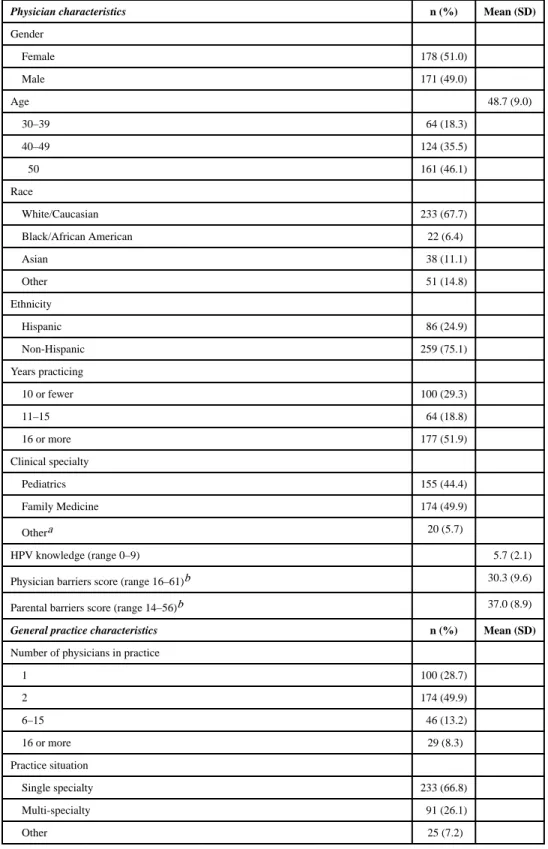
The sample was almost equally comprised of female (51.0%) and male (49.0%) physicians (Table 1), with an average age of 48.7 years (standard deviation [SD] = 9.0). Most were
A
uthor Man
uscr
ipt
A
uthor Man
uscr
ipt
A
uthor Man
uscr
ipt
A
uthor Man
uscr
White (67.7%) and non-Hispanic (75.1%). About half specialized in FM (49.9%) and had been practicing for ≥16 years (51.9%). HPV vaccine knowledge scores averaged 5.7 (SD = 2.1; range: 0–9).
Physicians most often reported their practice had two physicians (49.9%), was single specialty (66.8%), private practice (67.2%), and in a suburban location (52.6%). Over one-third (36.6%) reported seeing mostly patients from minority groups and about one-fifth (20.2%) reported no definable majority. The majority reported seeing Medicaid patients either along with other types of insurance (67.6%) or solely (1.9%). Almost half (44.5%) saw 20–29 patients daily. The majority reported administering HPV vaccine in their practice (68.8%) and nearly half were VFC providers (45.9%). Over half did not use a strategy to get patients in for the first dose of HPV vaccine (52.5%), but most used ≥1 strategies to get patients vaccinated with subsequent doses (84.3%). Physicians reported using flagging charts (16.6%), automatic prompts (22.2%), and electronic queries (13.6%) to remind themselves to discuss HPV vaccine. About three-fourths reported having a vaccine coordinator (72.2%).
The anonymous nature of the survey precludes examining the degree to which survey responders and non-responders were similar on demographic and practice characteristics. However, we were able to compare responding physicians to the population of physicians in Florida meeting our study eligibility criteria on characteristics including age, sex, and clinical specialty. We found no statistically significant difference between responding physicians and the larger population of Florida physicians for age, sex, and clinical specialty (all p > .05).
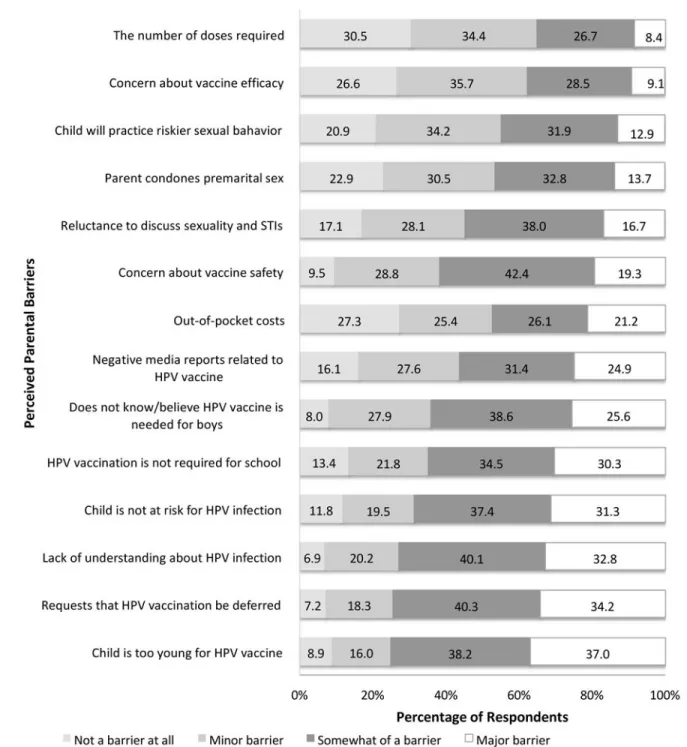
Compared to older adolescent groups, a lower proportion of physicians reported consistently (34.8%), strongly (42.9%), and both consistently and strongly (30.6%) recommending HPV vaccine to the 11–12 year old group (Figure 1). As shown in Figures 2 and 3, physicians’ mean perceived personal barriers score was 30.3 (SD = 9.6; range: 16–61) and the mean perceived parental barriers score was 37.0 (SD = 8.9; range: 14–56). As can be seen in Table 2, consistent and strong HPV vaccine recommendation for 11–12 year olds was associated with the following variables in univariate analyses: physician gender, specialty, personal barriers, HPV knowledge, patient race, Medicaid patients seen, practice location, and all vaccine-specific practice characteristics.
Within each domain (physician characteristics, general practice characteristics, and vaccine-specific practice characteristics), a multivariable analysis using a backward stepwise approach was applied starting with the significant univariate correlates in each group (Table 2). Two physician characteristics were significantly associated with consistent and strong recommendations: pediatric specialty (AOR = 2.55; 95% CI, 1.38–4.71) and fewer (or lower) physician reported barriers (AOR = 0.94; 95% CI, 0.90–0.97). The lone general practice characteristic was serving Medicaid patients (OR = 3.11; 95% CI, 1.48–6.53). The lone vaccine-specific characteristic was being a VFC provider (OR = 6.48; 95% CI, 3.47– 12.1).
A
uthor Man
uscr
ipt
A
uthor Man
uscr
ipt
A
uthor Man
uscr
ipt
A
uthor Man
uscr
A multivariable analysis was performed using backward stepwise regression starting with the significant correlates in the domain-specific multivariable models (Table 2). In the final multivariable model, fewer (or lower) physician barriers (AOR = 0.91; 95% CI, 0.88–0.94) and being a VFC provider (AOR = 5.43; 95% CI, 2.80–10.55) were statistically significant correlates of HPV vaccine recommendation in 11–12 year olds.
Given that that the total score for physician barriers was inversely associated with strong and consistent HPV vaccine recommendations, we performed a posthoc analysis to explore each of the 16 physician barriers as a correlate. The results of these analyses are presented in Table 3. Alpha was adjusted to 0.0031 (=.05/16) for univariable analyses and alpha=.05 for multivariable analyses. Ten of the 16 individual barriers were significant correlates (left column). Only one of these ten barriers was significant in a multivariable model (middle column), highlighting the positive correlation among the individual barriers which is also exhibited in the relative high Cronbach’s alpha (0.88). The barriers that remained statistically significant following a backward stepwise approach (right column) were physician concern about vaccine safety, concern about adding another vaccine to the schedule, and remembering to discuss the vaccine.
Discussion
Recent efforts to improve physician recommendation for HPV vaccination have focused on two critical components. First, the recommendation should be consistent for all adolescent males and females, particularly the 11–12 year old age group for which routine vaccination is recommended. This is clearly demonstrated by the 2011(1) and 2015(2) ACIP guidelines endorsed by all professional medical societies that provide preventive care to adolescent males. Second, as noted in the President’s Cancer Panel Report focused on HPV
vaccination, the recommendation must be strong.(24) Our study demonstrates that, despite available guidelines, a minority of physicians indicated that they consistently (35%), strongly (43%), and both consistently and strongly (31%) recommend HPV vaccination to the target 11–12 year old adolescent male age group. While our study focused on
recommendation for males, studies that have examined differences in recommendation by gender highlight a marked disparity in vaccine recommendations between boys and girls. (15–18) Without immediate and targeted intervention, the nation is unlikely to achieve Healthy People 2020 goal of 80% of 13–15 year old adolescents receiving the entire three dose HPV vaccine series.(37)
Relative to physicians reporting high HPV vaccination barriers, those reporting low barriers were more likely to consistently and strongly recommend vaccination. This finding aligns with previous research reporting that barriers to vaccination were associated with physicians not strongly recommending HPV vaccination to females aged 11–12 years(38) or offering the vaccine at all.(39) Thus, one approach to improving vaccination recommendation may be to reduce provider barriers.
Barriers significantly associated with recommendation in the current study included concerns about vaccine safety, adding another vaccine to the schedule, and remembering to discuss vaccination. Interestingly, a systematic review of provider communication about
A
uthor Man
uscr
ipt
A
uthor Man
uscr
ipt
A
uthor Man
uscr
ipt
A
uthor Man
uscr
HPV vaccination identified no studies demonstrating an association between providers’ perceptions of HPV vaccine safety and their recommendation behaviors.(40) However, our survey took place more recently than those included in the systematic review and may reflect the cumulative impact of media coverage that presents HPV vaccination in a controversial political context and as a vaccine for females.(41) Thus, providers responding to our survey may be less aware of the safety of HPV vaccine for males. The ACIP recommendations for universal male HPV vaccination also coincided with political debates surrounding the vaccine during the 2012 presidential campaign.(42) Additionally, physician concerns about safety may be influenced by events such as the Japanese government’s decision in June 2013 to stop proactive recommendation of HPV vaccine due to safety concerns.(43, 44)
Physicians in our study also expressed concerns about adding another vaccine to the schedule. This concern has been documented in the context of adding a new vaccine to the early childhood immunization schedule (45) and HPV vaccination (20, 23). This finding is particularly concerning and should be addressed when suggesting that providers deliver a bundled recommendation that includes HPV alongside Tetanus, diphtheria, & acellular pertussis (Tdap) and meningococcal vaccines, which are also recommended at ages 11–12 for boys and girls.(46)
Difficulty remembering to discuss HPV vaccine with males was the third barrier associated with recommendation for males. Given the strong correlation between provider
recommendation and HPV vaccine uptake in males,(47) providers forgetting to discuss the vaccine offers one possible explanation for lower series initiation rates in males compared to females, despite the 2011 ACIP recommendation for routine vaccination in age eligible males.(1) The President’s Cancer Panel recommends use of provider reminders to reduce missed opportunities for HPV vaccination.(24) Almost two thirds of respondents (67%) did not use any reminders to discuss HPV vaccination with patients and approximately half (44%) used no strategy to get patients into the office for the first dose. In our study, we specifically examined the manual and electronic strategies for remembering to discuss HPV vaccine with male patients, and specific strategies to get patients into the office for the first and subsequent dose(s) of vaccine. Although our study found no association between use of reminders and recommendation, it is possible that the relatively small number of those using these approaches precluded detection of a statistically significant association.
One study found that clinics using an electronic health record based point of care reminder system targeting both clinicians and patients resulted in significantly more young women initiating and completing the HPV vaccine series in a timely fashion. The authors suggested that this combined strategy may have supported the creation of a common agenda that facilitates HPV vaccine series initiation.(48) A recent literature review of interventions to increase HPV vaccination rates suggested that there was sufficient evidence to support the use of Community Preventive Task Force recommendations related to client reminder and recall systems as well as provider assessment and feedback.(49) Thus, future interventions may benefit from considering point-of-care reminders that simultaneously prompt
physicians and patients to discuss HPV vaccination.(50)
A
uthor Man
uscr
ipt
A
uthor Man
uscr
ipt
A
uthor Man
uscr
ipt
A
uthor Man
uscr
In our study, physicians who participated in the VFC program were more likely to
recommend vaccination than those not participating. VFC-enrolled providers administer to Medicaid-eligible, uninsured, or American Indian or Alaska Native children younger than age 19.(51, 52) VFC also serves underinsured children in limited public settings (e.g., federally qualified health centers). Davis et al.(53) found that physician recommendation for pneumococcal conjugate vaccine (PCV7) was associated with the child’s insurance coverage for the vaccine and state VFC policy. Another study demonstrated that patients of VFC providers were 59% more likely to be up-to-date with early childhood vaccines than patients of non-VFC providers.(54) However, it is unclear why these providers are more likely to recommend vaccination. It is possible that participating in the VFC program reduces physicians’ up-front costs by offering free vaccines for VFC-eligible children.(55) Providers also do not have to send patients elsewhere to receive vaccines. It is also possible that VFC providers also represent those who are more supportive of vaccines overall and willing to offer in-office vaccination in their practice setting. Future qualitative interviews with VFC and non-VFC providers may help to further explore these possible explanations.
To our knowledge, our study is among the first to focus specifically on physicians’ HPV vaccine recommendations for males after the ACIP guidelines for routine vaccination of adolescent males. Additionally, this is among the first observational studies to describe the current use of electronic and manual reminders for both physicians and patients related to HPV vaccination. This study has several notable strengths, including a statewide sample of primary care providers and an examination of physicians’ recommendation with respect to both consistency and strength. There are also limitations. Our cross sectional survey design precluded our ability to make causal inferences about variables significantly associated with recommendation of HPV vaccination. Additionally, we surveyed physicians from a single state; although this design limits our ability to generalize findings to physicians practicing in our states, it allowed us to focus on HPV vaccine recommendations in a state with relatively high rates of HPV-related disease in males. We provided quantitative “anchors” for our questions regarding consistency but not strength of vaccine recommendation. Physicians may vary in their interpretation of a strong recommendation. Physicians may have reported socially desirable responses regarding practice behaviors; however, the anonymity of the survey likely reduced this bias. Physicians most in favor of HPV vaccination may have completed the survey, possibly providing an overestimate of the proportion that consistently and strongly recommend HPV vaccination. In our sample, 31% of providers reported HPV vaccine currently is not administered to males in their clinical setting. However, we did not include any follow up questions as to why they currently do not administer. It is possible that they simply do not vaccinate in their office. Although less likely, they may specifically not offer HPV vaccination for males. Finally, our study was limited to physicians, although other healthcare providers may recommend HPV vaccination. Thus, study of groups delivering care to adolescent males, such as nurses, medical assistants, and physician assistants, is warranted.
Physician recommendation is key to increasing HPV vaccine coverage; yet, physicians’ current HPV vaccine recommendations do not align with national guidelines and U.S. health organization recommendations. Interventions are needed to support HPV vaccine
recommendation consistency and strength. Our research and others’ suggest these
A
uthor Man
uscr
ipt
A
uthor Man
uscr
ipt
A
uthor Man
uscr
ipt
A
uthor Man
uscr
interventions also should include education about and strategies as well as policy level interventions to address financial barriers to HPV vaccination. Current efforts to bolster physician recommendation have largely been focused on communication skills and office-based strategies to increase HPV vaccination rates. For example, the CDC’s You are the Key Campaign(56) largely provides patient and provider educational materials and provider communication strategies. More recently, the American Academy of Pediatrics HPV Champion Toolkit(57) has extended resources provided in the You are the Key Campaign to include tools to facilitate change at the practice level (e.g., electronic health record-based reminder recalls). Our survey found that Florida physicians’ barriers to consistently and strongly recommending HPV vaccine were related to concerns about vaccine safety, concerns about adding vaccines to the vaccine schedule, and difficulty remembering to discuss HPV vaccination. These findings suggest that future interventions should include components to address these issues at the physician and practice level. By addressing physicians’ challenges and supporting their HPV vaccine recommendations to their male patients, we can increase HPV vaccine coverage in Florida and reduce HPV-related disease.
Acknowledgments
We thank Janine Cory and Allison Kennedy Fisher for their survey feedback and Dr. Ji-Hyun Lee for assistance with sample selection.
Financial Support
This research was supported by funding from the Bankhead-Coley Cancer Research Program (4BB10). T.L. Malo is supported by the UNC Lineberger Cancer Control Education Program (R25CA057726). This work was also supported in part by the Biostatistics Core at the H. Lee Moffitt Cancer Center & Research Institute, an NCI designated Comprehensive Cancer Center (P30-CA076292).
Abbreviations and acronyms
ACA Affordable Care Act
ACIP Advisory Committee on Immunization Practices
AMA American Medical Association
CDC Centers for Disease Control and Prevention
FM family medicine
HCP health care provider
HPV human papillomavirus
SD standard deviation
STI sexually transmitted infection
US United States
VFC Vaccines for Children program
PCV7 pneumococcal conjugate vaccine
A
uthor Man
uscr
ipt
A
uthor Man
uscr
ipt
A
uthor Man
uscr
ipt
A
uthor Man
uscr
References
1. CDC. Recommendations on the use of quadrivalent human papillomavirus vaccine in males– Advisory Committee on Immunization Practices (ACIP), 2011. MMWR. 2011; 60:1705–8. [PubMed: 22189893]
2. Petrosky E, Bocchini JA Jr, Hariri S, Chesson H, Curtis CR, Saraiya M, et al. Use of 9-Valent Human Papillomavirus (HPV) Vaccine: Updated HPV Vaccination Recommendations of the Advisory Committee on Immunization Practices. MMWR Morb Mortal Wkly Rep. 2015; 64:300–4. [PubMed: 25811679]
3. Reagan-Steiner S, Yankey D, Jeyarajah J, Elam-Evans LD, Singleton JA, Curtis CR, et al. National, Regional, State, and Selected Local Area Vaccination Coverage Among Adolescents Aged 13–17 Years - United States, 2014. MMWR Morb Mortal Wkly Rep. 2015; 64:784–92. [PubMed: 26225476]
4. Cullen KA, Stokley S, Markowitz LE. Uptake of human papillomavirus vaccine among adolescent males and females: Immunization Information System sentinel sites, 2009–2012. Academic pediatrics. 2014; 14:497–504. [PubMed: 24954170]
5. CDC. Human papillomavirus (HPV)-associated cancers, by anatomic site and state – United States, 2004–2008 nd. Jul 19. 2013 Available from: http://www.cdc.gov/cancer/hpv/pdf/HPV-state-rates.pdf
6. Giuliano AR, Palefsky JM, Goldstone S, Moreira ED Jr, Penny ME, Aranda C, et al. Efficacy of quadrivalent HPV vaccine against HPV Infection and disease in males. The New England journal of medicine. 2011; 364:401–11. [PubMed: 21288094]
7. Palefsky JM, Giuliano AR, Goldstone S, Moreira ED Jr, Aranda C, Jessen H, et al. HPV vaccine against anal HPV infection and anal intraepithelial neoplasia. The New England journal of medicine. 2011; 365:1576–85. [PubMed: 22029979]
8. Gillison ML, Chaturvedi AK, Lowy DR. HPV prophylactic vaccines and the potential prevention of noncervical cancers in both men and women. Cancer. 2008; 113:3036–46. [PubMed: 18980286] 9. Marty R, Roze S, Bresse X, Largeron N, Smith-Palmer J. Estimating the clinical benefits of
vaccinating boys and girls against HPV-related diseases in Europe. BMC Cancer. 2013; 13:10. [PubMed: 23298365]
10. Human papillomavirus-associated cancers - United States, 2004–2008. MMWR. 2012; 61:258–61. [PubMed: 22513527]
11. Machalek DA, Poynten M, Jin F, Fairley CK, Farnsworth A, Garland SM, et al. Anal human papillomavirus infection and associated neoplastic lesions in men who have sex with men: a systematic review and meta-analysis. Lancet Oncol. 2012; 13:487–500. [PubMed: 22445259] 12. Daling JR, Madeleine MM, Johnson LG, Schwartz SM, Shera KA, Wurscher MA, et al. Human
papillomavirus, smoking, and sexual practices in the etiology of anal cancer. Cancer. 2004; 101:270–80. [PubMed: 15241823]
13. CDC. National and state vaccination coverage among adolescents aged 13–17 years – United States, 2011. MMWR. 2012; 61:671–7. [PubMed: 22932301]
14. Brewer, NT.; Croyle, R. Presidents Cancer Panel: Acheiving Widespread HPV Vaccine Uptake. Bethesda, MD: 2012.
15. McRee AL, Gilkey MB, Dempsey AF. HPV vaccine hesitancy: findings from a statewide survey of health care providers. Journal of pediatric health care: official publication of National Association of Pediatric Nurse Associates & Practitioners. 2014; 28:541–9.
16. Gilkey MB, Malo TL, Shah PD, Hall ME, Brewer NT. Quality of Physician Communication about Human Papillomavirus Vaccine: Findings from a National Survey. Cancer Epidemiol Biomarkers Prev. 2015
17. Soon R, Dela Cruz MR, Tsark JU, Chen JJ, Braun KL. A Survey of Physicians’ Attitudes and Practices about the Human Papillomavirus (HPV) Vaccine in Hawai’i. Hawai’i journal of medicine & public health: a journal of Asia Pacific Medicine & Public Health. 2015; 74:234–41.
18. Allison MA, Hurley LP, Markowitz L, Crane LA, Brtnikova M, Beaty BL, et al. Primary Care Physicians’ Perspectives About HPV Vaccine. Pediatrics. 2016; 137:1–9.
19. Jaen CR, Stange KC, Nutting PA. Competing demands of primary care: a model for the delivery of clinical preventive services. J Fam Pract. 1994; 38:166–71. [PubMed: 8308509]
A
uthor Man
uscr
ipt
A
uthor Man
uscr
ipt
A
uthor Man
uscr
ipt
A
uthor Man
uscr
20. Vadaparampil ST, Kahn JA, Salmon D, Lee JH, Quinn GP, Roetzheim R, et al. Missed clinical opportunities: provider recommendations for HPV vaccination for 11–12 year old girls are limited. Vaccine. 2011; 29:8634–41. [PubMed: 21924315]
21. Vadaparampil ST, Malo T, Kahn J, Salmon D, Lee JH, Quinn G, et al. Physician Recommendation of HPV Vaccine at Three and Five Years Post-Vaccine Licensure: Modest Increases Leave Many Missed Clinical Opportunities. under review.
22. Vadaparampil ST, Staras SAS, Malo TL, Eddleton KZ, Christie J, Rodriguez M, et al. Provider Factors Associated with Disparities in Human Papillomavirus Vaccination among Low-Income 9- to 17-Year-Old Girls. Cancer. 2013; 119:621–8. [PubMed: 23341308]
23. Daley MF, Crane LA, Markowitz LE, Black SR, Beaty BL, Barrow J, et al. Human Papillomavirus Vaccination Practices: Survey of US Physicians 18 Months After Licensure. Pediatrics. 2010; 126 24. Rimer, B.; Harper, H.; Witte, ON. A Report to the President of the United States from the
President’s Cancer Panel. Bethesda, MD: 2014. Accelerating HPV Vaccine Uptake: Urgency for Action to Prevent Cancer.
25. Freed GL, Nahra TA, Wheeler JR. Counting physicians: inconsistencies in a commonly used source for workforce analysis. Acad Med. 2006; 81:847–52. [PubMed: 16936499]
26. Kletke PR. Physician workforce data: when the best is not good enough. Health Services Research. 2004; 39:1251–5. [PubMed: 15333107]
27. Dillman, D. Mail and Internet Surveys: The Tailored Design Method. New York, NY: Wiley; 2000. 28. Kahn JA, Zimet GD, Bernstein DI, Riedesel JM, Lan D, Huang B, et al. Pediatricians’ intention to
administer human papillomavirus vaccine: the role of practice characteristics, knowledge, and attitudes. J Adolesc Health. 2005; 37:502–10. [PubMed: 16310128]
29. Riedesel JM, Rosenthal SL, Zimet GD, Bernstein DI, Huang B, Lan D, et al. Attitudes about human papillomavirus vaccine among family physicians. J Pediatr Adolesc Gynecol. 2005; 18:391–8. [PubMed: 16338604]
30. Kahn JA, Rosenthal SL, Tissot AM, Bernstein DI, Wetzel C, Zimet GD. Factors influencing pediatricians’ intention to recommend human papillomavirus vaccines. Ambul Pediatr. 2007; 7:367–73. [PubMed: 17870645]
31. Daley MF, Liddon N, Crane LA, Beaty BL, Barrow J, Babbel C, et al. A national survey of pediatrician knowledge and attitudes regarding human papillomavirus vaccination. Pediatrics. 2006; 118:2280–9. [PubMed: 17142510]
32. Malo TL, Giuliano AR, Kahn JA, Zimet GD, Lee JH, Zhao X, et al. Physicians’ human
papillomavirus vaccine recommendations in the context of permissive guidelines for male patients: a national study. Cancer Epidemiol Biomarkers Prev. 2014; 23:2126–35. [PubMed: 25028456] 33. Vadaparampil ST, Malo TL, Kahn JA, Salmon DA, Lee JH, Quinn GP, et al. Physicians’ human
papillomavirus vaccine recommendations, 2009 and 2011. Am J Prev Med. 2014; 46:80–4. [PubMed: 24355675]
34. Allison MA, Dunne EF, Markowitz LE, O’Leary ST, Crane LA, Hurley LP, et al. HPV vaccination of boys in primary care practices. Academic pediatrics. 2013; 13:466–74. [PubMed: 24011749] 35. Malo TL, Ali KN, Sutton SK, Perkins RB, Giuliano AR, Vadaparampil ST. The content and
context of physicians’ communication with males about human papillomavirus vaccination. Human vaccines & immunotherapeutics. 2016; 12:1511–8. [PubMed: 26835599]
36. Scherr CL, Augusto B, Ali K, Malo TL, Vadaparampil ST. Provider-reported acceptance and use of the Centers for Disease Control and Prevention messages and materials to support HPV vaccine recommendation for adolescent males. Vaccine. 2016
37. U.S. Department of Health and Human Services. Healthy People 2020. 2014. [cited 2014 July 1]; Available from: http://healthypeople.gov/2020/topicsobjectives2020/pdfs/HP2020objectives.pdf
38. Daley MF, Crane LA, Markowitz LE, Black SR, Beaty BL, Barrow J, et al. Human papillomavirus vaccination practices: A survey of US physicians 18 months after licensure. Pediatrics. 2010; 126:425–33. [PubMed: 20679306]
39. Ko EM, Missmer S, Johnson NR. Physician attitudes and practice toward human papillomavirus vaccination. J Low Genit Tract Dis. 2010; 14:339–45. [PubMed: 20885162]
40. Gilkey MB, McRee AL. Provider communication about HPV vaccination: A systematic review. Human vaccines & immunotherapeutics. 2016:1–15.
A
uthor Man
uscr
ipt
A
uthor Man
uscr
ipt
A
uthor Man
uscr
ipt
A
uthor Man
uscr
41. Gollust SE, LoRusso SM, Nagler RH, Fowler EF. Understanding the role of the news media in HPV vaccine uptake in the United States: Synthesis and commentary. Human vaccines & immunotherapeutics. 2015:1–5. [PubMed: 25483551]
42. Krakow M, Rogers B. Collateral Damage and Critical Turning Points: Public Health Implications of HPV Vaccine News Coverage for Boys and Men in 2011. Health Commun. 2016:1–8. [PubMed: 27542072]
43. Dornbusch HJ, Stiris T, Del Torso S, Ross-Russell R, Zavrsnik J, Wettergren B, et al. Human papillomavirus vaccination crisis in Japan. Journal of paediatrics and child health. 2015; 51:1146– 7. [PubMed: 26633608]
44. Hanley SJ, Yoshioka E, Ito Y, Kishi R. HPV vaccination crisis in Japan. Lancet. 2015; 385:2571. [PubMed: 26122153]
45. Kempe A, Patel MM, Daley MF, Crane LA, Beaty B, Stokley S, et al. Adoption of rotavirus vaccination by pediatricians and family medicine physicians in the United States. Pediatrics. 2009; 124:e809–16. [PubMed: 19822592]
46. Bratic JS, Seyferth ER, Bocchini JA Jr. Update on barriers to human papillomavirus vaccination and effective strategies to promote vaccine acceptance. Current opinion in pediatrics. 2016; 28:407–12. [PubMed: 27093354]
47. Reiter PL, Gilkey MB, Brewer NT. HPV vaccination among adolescent males: Results from the National Immunization Survey-Teen. Vaccine. 2013; 31:2816–21. [PubMed: 23602667] 48. Ruffin, MTt; Plegue, MA.; Rockwell, PG.; Young, AP.; Patel, DA.; Yeazel, MW. Impact of an
Electronic Health Record (EHR) Reminder on Human Papillomavirus (HPV) Vaccine Initiation and Timely Completion. Journal of the American Board of Family Medicine: JABFM. 2015; 28:324–33. [PubMed: 25957365]
49. Oliver K, Frawley A, Garland E. HPV vaccination: Population approaches for improving rates. Human vaccines & immunotherapeutics. 2016; 12:1589–93. [PubMed: 26890685]
50. Jacobson RM, Agunwamba AA, St Sauver JL, Finney Rutten LJ. The most effective and promising population health strategies to advance human papillomavirus vaccination. Expert Rev Vaccines. 2016; 15:257–69. [PubMed: 26559567]
51. Centers for Disease Control and Prevention. VFC: for parents. 2012 Aug 6. 2012]; Available from:
http://www.cdc.gov/vaccines/programs/vfc/parents/default.htm
52. Lee GM, Santoli JM, Hannan C, Messonnier ML, Sabin JE, Rusinak D, et al. Gaps in vaccine financing for underinsured children in the United States. Journal of the American Medical Association. 2007; 298:638–43. [PubMed: 17684186]
53. Davis MM, Ndiaye SM, Freed GL, Clark SJ. One-year uptake of pneumococcal conjugate vaccine: a national survey of family physicians and pediatricians. J Am Board Fam Pract. 2003; 16:363–71. [PubMed: 14645326]
54. Mennito SH, Darden PM. Impact of practice policies on pediatric immunization rates. The Journal of pediatrics. 2010; 156:618–22. [PubMed: 20056238]
55. Prevention CfDCa. VFC Healthcare Providers Information Flyer. 2014. Available from: http:// www.cdc.gov/vaccines/programs/vfc/providers/questions/qa-flyer-hcp.html
56. Prevention CfDCa. HPV Vaccine Resources for Healthcare Professionals. 2015. Available from:
http://www.cdc.gov/vaccines/who/teens/for-hcp/hpv-resources.html
57. Pediatrics AAo. HPV Champion Toolkit. 2015. Available from: https://www.aap.org/en-us/ advocacy-and-policy/aap-health-initiatives/Pages/HPV-Champion-Toolkit.aspx
A
uthor Man
uscr
ipt
A
uthor Man
uscr
ipt
A
uthor Man
uscr
ipt
A
uthor Man
uscr
Figure 1. Percentage of Physicians Reporting Consistent and Strong Recommendation of HPV Vaccination (n=355)
Note. The number of patients seen differs by patient age group and category: 11–12 years, n ranges from 284–305; 13–17 years, n = 303–318; 18–21 years, n = 312–321.
A
uthor Man
uscr
ipt
A
uthor Man
uscr
ipt
A
uthor Man
uscr
ipt
A
uthor Man
uscr
Figure 2. Physicians’ Barriers when Immunizing Male Patients against HPV Abbreviations: STIs, sexually transmitted infections; VFC, Vaccines for Children Notes: N values differ for each barrier due to missing data. Missing data for each item ranged from 8 to 23 participants.
A
uthor Man
uscr
ipt
A
uthor Man
uscr
ipt
A
uthor Man
uscr
ipt
A
uthor Man
uscr
Figure 3. Physicians’ Perceptions of Parental Barriers when Immunizing Male Patients against HPV
Abbreviations: STIs, sexually transmitted infections
Notes: Number of respondents ranged from 261 to 263. Many non-responders see only patients 18 years or older.
A
uthor Man
uscr
ipt
A
uthor Man
uscr
ipt
A
uthor Man
uscr
ipt
A
uthor Man
uscr
A
uthor Man
uscr
ipt
A
uthor Man
uscr
ipt
A
uthor Man
uscr
ipt
A
uthor Man
uscr
ipt
Table 1
Sample characteristics (N=355)
Physician characteristics n (%) Mean (SD) Gender
Female 178 (51.0)
Male 171 (49.0)
Age 48.7 (9.0)
30–39 64 (18.3)
40–49 124 (35.5)
≥50 161 (46.1)
Race
White/Caucasian 233 (67.7)
Black/African American 22 (6.4)
Asian 38 (11.1)
Other 51 (14.8)
Ethnicity
Hispanic 86 (24.9)
Non-Hispanic 259 (75.1)
Years practicing
10 or fewer 100 (29.3)
11–15 64 (18.8)
16 or more 177 (51.9)
Clinical specialty
Pediatrics 155 (44.4)
Family Medicine 174 (49.9)
Othera 20 (5.7)
HPV knowledge (range 0–9) 5.7 (2.1)
Physician barriers score (range 16–61)b 30.3 (9.6)
Parental barriers score (range 14–56)b 37.0 (8.9)
General practice characteristics n (%) Mean (SD) Number of physicians in practice
1 100 (28.7)
2 174 (49.9)
6–15 46 (13.2)
16 or more 29 (8.3)
Practice situation
Single specialty 233 (66.8)
Multi-specialty 91 (26.1)
A
uthor Man
uscr
ipt
A
uthor Man
uscr
ipt
A
uthor Man
uscr
ipt
A
uthor Man
uscr
ipt
Physician characteristics n (%) Mean (SD) Practice type
Private practice office 229 (67.2)
Other 112 (32.8)
Practice location
Urban 129 (37.7)
Suburban 180 (52.6)
Rural/Other 33 (9.7)
Race of majority of patients seen
White, non-Hispanic 143 (43.2)
Minority group(s) 121 (36.6)
No definable majorityc 67 (20.2)
Medicaid patients served
Medicaid, only 6 (1.9)
Medicaid and others 215 (67.6)
No Medicaid 97 (30.5)
Typical daily patient load
Less than 15 41 (11.8)
15–19 96 (27.6)
20–29 155 (44.5)
30 or more 56 (16.1)
Vaccine specific characteristics n (%) Mean (SD) Administer HPV vaccine
Yes 242 (68.8)
No 110 (31.2)
VFC provider
Yes 162 (45.9)
No 156 (44.2)
Do not know 35 (9.9)
Strategies used for remembering to discuss HPV vaccine with eligible patients
Flag charts 55 (15.5)
Use automated electronic medical record prompts 74 (20.9)
Perform periodic electronic queries to identify vaccine-eligible patients 45 (12.7)
Used any of the 3 strategies 111 (31.3)
Strategies to get patients into office for first dose of HPV vaccine
Send reminder regarding preventive visit 75 (21.3)
Send letter or call patients specifically for HPV vaccine 37 (10.4)
Place reminder flag/tag in patients’ medical record 31 (8.7)
Use a computerized immunization database/registry to track when first dose is due 47 (13.2)
A
uthor Man
uscr
ipt
A
uthor Man
uscr
ipt
A
uthor Man
uscr
ipt
A
uthor Man
uscr
ipt
Physician characteristics n (%) Mean (SD)
Do not use any strategy 156 (43.9)
Not applicable: Do not administer vaccine 60 (16.9)
Strategies to get patients into office for second and third dose of HPV vaccine
Record does due date on card kept by patient 75 (21.3)
Send letter or call patients specifically for HPV vaccine 62 (17.5)
Place reminder flag/tag in patients’ medical record 43 (12.1)
Schedule patient for next dose during office visit 189 (53.2)
Use a computerized immunization database/registry to track when first dose is due 49 (13.8)
Use some other strategy 20 (5.6)
Do not use any strategy 43 (12.1)
Not applicable: Do not administer vaccine 62 (17.5)
Number of strategies used for first dose of vaccined
None 140 (50.0)
1 89 (31.8)
2 or more 51 (18.2)
Number of strategies used for second and third doses of vaccinee
None 38 (13.3)
1 134 (47.0)
2 or more 113 (39.7)
Other HCP in practice recommends HPV vaccine
Yes 153 (43.7)
No 197 (56.3)
Other HCP in practice discusses HPV vaccine
Yes 148 (42.4)
No 201 (57.6)
Vaccination coordinator in practicef
Yes 252 (72.2)
No 88 (25.2)
Do not know 9 (2.6)
a
Other clinical specialty includes Urgent Care, Acute Care, Internal Medicine, Hospice, Geriatrics, General Physician, Primary Care, Emergency Room.
b
Response options for physician-reported and perceived parental barriers were on a 4-point Likert scale (1=not a barrier at all to 4=a major barrier). Items were summed to create scores for perceived personal (range: 16–64) and parental barriers (range: 14–56). Lower scores indicated lower perceived barriers.
c
There was no racial/ethnic group that comprised the majority of their patients.
d
Strategies used to get patients into the office for the first dose of HPV vaccine for those who administer vaccine.
e
Strategies used to get patients into the office for the second and third doses of HPV vaccine for those who administer vaccine.
f
A
uthor Man
uscr
ipt
A
uthor Man
uscr
ipt
A
uthor Man
uscr
ipt
A
uthor Man
uscr
ipt
Table 2
Predictors of Consistent and Strong Recommendation to 11–12 Year Olds for Physicians at Practices that Administer HPV Vaccine (N=208)
OR [95% CI]a
Multivariable AOR [95% CI]b
Multivariable AOR [95% CI]c
Physician Characteristics
Female gender 1.45 [0.82, 2.57] – –
Age 0.99 [0.96, 1.02] – –
White, non-Hispanic race/ethnicity 1.00 [0.80, 1.27] – –
Years practicing 0.99 [0.96, 1.03] – –
Pediatric clinical specialty 2.54 [1.36, 4.75] 0.74 [0.21, 2.67] –
Physician barriers score 0.92 [0.89, 0.96] 0.94 [0.89, 1.00] 0.93 [0.89, 0.97]
Perceived parental barriers score 0.96 [0.93, 1.00] 0.98 [0.93, 1.03] –
HPV knowledge 1.24 [1.06, 1.45] 1.08 [0.88, 1.34] –
Practice Characteristics: General
Number of physicians in practice 0.89 [0.64, 1.24] – –
Single specialty practice 0.54 [0.29, 0.99] 0.45 [0.18, 1.13] –
Private practice office 0.49 [0.26, 0.90] 0.69 [0.25, 1.89] 0.45 [0.22, 0.92]
Majority of patients non-Hispanic White 0.42 [0.23, 0.78] 0.69 [0.31, 1.57] –
Medicaid patients seen 2.89 [1.32, 6.28] 0.58 [0.17, 2.34] –
Typical number of patients/day 1.01 [0.73, 1.40] – –
Urban practice location 2.08 [1.16, 3.71] 2.57 [1.17, 5.64] 2.08 [1.08, 4.02]
Practice Characteristics: Vaccination
VFC provider 3.74 [1.87, 7.47] 5.73 [1.31, 25.1] 3.80 [1.70, 8.54]
Flag charts of vaccine eligible patients 1.94 [0.99, 3.81] – –
Use automated electronic medical record prompts* 1.59 [0.84, 3.01] – –
Perform periodic electronic queries to identify vaccine-eligible patients* 1.78 [0.86, 3.70] – –
Other HCP recommends vaccination 1.24 [0.69, 2.25] – –
Other HCP discusses vaccination 1.28 [0.69, 2.35] – –
Strategies for 1st vaccination: None 1.30 [0.92, 1.87] – –
Strategies for 2nd vaccination: None 1.19 [0.77, 1.84] – –
Vaccination coordinator 3.06 [1.10, 8.52] 1.09 [0.28, 4.33] –
Abbreviations: CI, confidence interval; HCP, healthcare provider; HPV, human papillomavirus; OR, odds ratio; AOR, adjusted odd ratio; VFC, Vaccines for Children.
Notes: Bold ORs and CIs are statistically significant. For vaccination subset, the 5 variables not applied to the multivariable analysis were excluded due to high covariation with one or more variables that were included.
*
More than 10% of the data were missing for this predictor.
a
Simple logistic regression model examined association between individual predictor and outcome variable.
b
A
uthor Man
uscr
ipt
A
uthor Man
uscr
ipt
A
uthor Man
uscr
ipt
A
uthor Man
uscr
ipt
c
A
uthor Man
uscr
ipt
A
uthor Man
uscr
ipt
A
uthor Man
uscr
ipt
A
uthor Man
uscr
ipt
Table 3
Physician Barriers as Predictors of Consistent and Strong Recommendation of HPV Vaccine to 11–12 Year Olds
Physician Barrier
Univariate OR [95% CI]*
Multivariable AOR [95% CI]a
Multivariable AOR [95% CI]b
Concerns about vaccine safety 0.32 [0.18, 0.56] 0.55 [0.27, 1.12] 0.47 [0.25, 0.86]
Concerns about vaccine efficacy 0.37 [0.22, 0.61] 0.90 [0.45, 1.80] –
Discussing sex 0.41 [0.22, 0.75] – –
Riskier sex behaviors 0.65 [0.42, 1.00] – –
Adding another vaccine to schedule 0.35 [0.22, 0.56] 0.65 [0.38, 1.13] 0.57 [0.34, 0.95]
Up-front cost 0.52 [0.40, 0.69] 0.84 [0.50, 1.41] –
Insufficient reimbursement 0.55 [0.43, 0.71] 0.80 [0.44, 1.46] –
Insufficient insurance coverage 0.63 [0.50, 0.80] 1.22 [0.71, 2.09] –
VFC program does not cover males >age 18 0.86 [0.70, 1.07] – –
Determining insurance coverage 0.62 [0.49, 0.79] 1.11 [0.71, 1.74] –
Vaccine expiring before use 0.44 [0.32, 0.62] 0.78 [0.49, 1.25] –
Insufficient time to discuss 0.37 [0.24, 0.55] 0.86 [0.50, 1.45] –
Remember to discuss 0.28 [0.18, 0.45] 0.49 [0.29, 0.84] 0.40 [0.25, 0.64]
Will not complete the series 0.64 [0.48, 0.86] – –
Not required by schools 1.01 [0.80, 1.28] – –
Rarely see adolescent males 0.69 [0.53, 0.90] – –
Abbreviations: CI, confidence interval; OR, odds ratio; AOR, adjusted odd ratio; VFC, Vaccines for Children.
Notes: Bold ORs and CIs represents statistical significance with alpha=.05/16=.0031 for univariate analyses and alpha=.05 for multivariable analyses.
*
OR with CI from simple logistic regression model for each physician barrier item.
a
Multivariable model with all statistically significant variables from univariate analysis.
b