Marya Karen Plotkin
A dissertation submitted to the faculty at the University of North Carolina at Chapel Hill in partial fulfillment of the requirements for the degree of Doctor of Public Health in the Health Policy and
Management Department in the Gillings School of Global Public Health.
Chapel Hill 2019
Approved by:
Stephanie B. Wheeler Linda A. Fogarty Rohit Ramaswamy Jim Ricca
iii ABSTRACT
Marya Karen Plotkin: Doppler to Improve Fetal Heart Rate Assessment in Intrapartum Care in Tanzania: Does It Save Newborn Lives, and What Are the Implications for Scale-up?
(Under the direction of Stephanie B. Wheeler)
In low and middle income countries (LMIC), intrapartum stillbirth and newborn death,
associated with lack of or poor quality obstetric care, cause staggering levels of perinatal and neonatal death. Globally, over 2.7 million neonates die annually, including roughly 700,000 intrapartum stillbirths. In Tanzania, an estimated 46,000 infants died in the neonatal period in 2017. Intermittent fetal heart rate (FHR) monitoring is a key intrapartum intervention recommended by WHO. The standard of care for FHR monitoring in most LMIC is the Pinard stethoscope, but studies in Uganda, Zimbabwe and Tanzania have shown that using a hand-held Doppler can be more effective in detecting abnormal FHR.
This mixed methods study used qualitative and quantitative methods to assess outcomes of Doppler use in health facilities and attitudes around scale up of Doppler in Tanzania. In a qualitative assessment, nine high-level experts/policymakers were interviewed based on theoretical domains
drawn from Proctor’s implementation outcomes. Findings included high alignment between national priorities and improving intrapartum FHR monitoring using Doppler, and a need to learn lessons from Helping Babies Breathe (HBB) program experience, including effective training, clinical mentoring, and a system for monitoring outcomes.
iv
intervention sites in Kagera, but perinatal mortality also decreased in the comparison (Mara region) site in the same period. Cesarean delivery did not significantly increase in any sites other than Kagera regional hospital. These largely negative findings indicate that the proposed pathway between Doppler use and reduced perinatal death may be less directly related than assumed. Further research should address contextual factors and be designed to capture implementation outcomes.
v
To the nurse/midwives who opened my eyes to the world of maternal and newborn care in Tanzania: Gaudiosa Tibaijuka, Asma Ramadhan Khamis, Scholastica Chibehe, and Ukende Shalla, among others. Your service to the women of Tanzania inspires me. I hope the findings presented here will help in a small way to assist in the work you do every day improving maternal and newborn care in Tanzania.
vi
ACKNOWLEDGMENTS
I could not have completed this massive effort without the generous support of friends and family. First and foremost, I acknowledge my boys, Janusz Fundikira Kumpuni and Tadzio Giryn Kumpuni, for helping their Mama become a doctor. You boys are the center of my world – you motivate me to do my best.
vii
TABLE OF CONTENTS
LIST OF TABLES ... x
LIST OF FIGURES ... xii
LIST OF ABBREVIATIONS ...xiii
CHAPTER 1: INTRODUCTION ... 1
REFERENCES ... 5
CHAPTER 2: SYSTEMATIC REVIEW ... 7
2.1 Introduction ... 9
2.2 Methods ... 10
Search Strategy and Search Terms ... 11
Data Collection and Analysis ... 12
2.3 Results ... 12
Studies on FHR Abnormalities and Adverse Perinatal Outcomes ... 14
Doppler as a Tool for Improving Measurement of Perinatal Deaths Occurring in Health Facilities ... 17
Health Care Provider or Client Preferences for Doppler Versus Pinard Stethoscope ... 17
2.4 Discussion ... 18
2.5 Conclusion ... 22
REFERENCES ... 30
CHAPTER 3: SCALE-UP OF DOPPLER TO IMPROVE INTRAPARTUM FETAL HEART RATE MONITORING IN TANZANIA: A QUALITATIVE ASSESSMENT OF NATIONAL AND SUBNATIONAL IMPLEMENTATION FACTORS ... 33
3.1 Introduction ... 33
viii
Participants ... 37
Data Collection Procedures and Study Tool ... 38
3.3 Results ... 39
Costs ... 39
Appropriateness ... 41
Acceptability and Alignment with National Priorities ... 43
3.4 Discussion ... 49
3.5. Conclusion ... 54
REFERENCES ... 55
CHAPTER 4: DOPPLER UPON ADMISSION TO LABOR AND DELIVERY SERVICES IN TANZANIA: AN OBSERVATIONAL STUDY OF PERINATAL OUTCOMES WITH MICROCOSTING ... 59
4.1 Background ... 59
4.2 Methods ... 61
Study Design ... 62
Study Setting ... 63
Analysis ... 66
Micro-cost Analysis ... 66
4.3 Results ... 68
Perinatal Death ... 70
Cesarean Deliveries ... 73
Micro-costing ... 75
4.4 Discussion ... 79
4.5. Conclusion ... 84
REFERENCES ... 85
CHAPTER 5: PLAN FOR CHANGE... 88
ix
REFERENCES ... 96 APPENDIX 1: KEY INFORMANT INTERVIEW (KII) QUESTIONNAIRE ... 98 APPENDIX 2: LEARNING RESOURCE MATERIALS: DAY OF ACTION FOR IMPROVING INTRAPARTUM CARE ... 101 APPENDIX 3: DOPPLER PANEL PRESENTATION AT THE ASSOCIATION OF GYNECOLOGISTS AND
x LIST OF TABLES
Table 2.1. Studies on effectiveness of fetal heart rate monitoring using Doppler at reducing
perinatal mortality ... 23
Table 2.2. Risk of bias and strength of evidence using Cochrane criteria for assessment of bias in Effective Practice and Organization of Care (EPOC) studies... 26
Table 2.3. Studies on measurement of health facility-occurring perinatal mortality using Doppler ... 28
Table 2.4. Studies related to health care provider or client preference for Doppler versus Pinard ... 29
Table 3.1. Study participants ... 37
Table 3.2. Domains for scale-up of Doppler for intermittent fetal heart rate monitoring in Tanzania ... 38
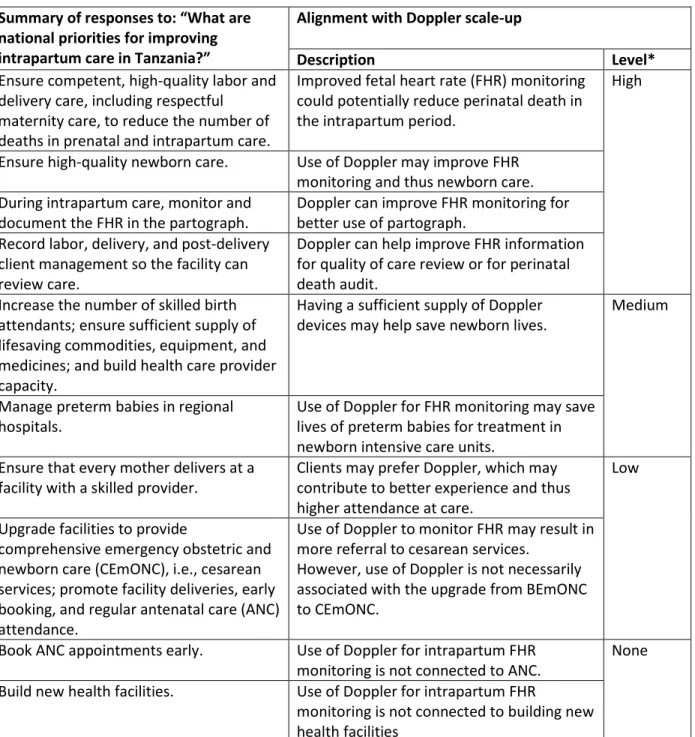
Table 3.3. Summary of national priorities mentioned by interviewees and alignment to scale-up of Doppler ... 46
Table 3.4. Policy and organizational-level factors affecting scale-up of Doppler in Tanzania ... 50
Table 4.1. Selected demographic characteristics of Kagera and Mara regions in Tanzania, Demographic and Health Survey 2015–16 ... 63
Table 4.2. Overview of costs included in micro-costing analysis ... 67
Table 4.3. Health care providers trained and annual delivery volume in Kagera sites ... 68
Table 4.4. Overview of study facilities, pre-intervention (November 2015 – April 2016) and post-intervention (November 2016 – April 2017) in Kagera and Mara regions ... 69
Table 4.5. Perinatal mortality per 1,000 admissions in regional hospitals, pre- and post-intervention, Kagera and Mara regions ... 72
Table 4.6. Perinatal mortality per 1,000 admissions in district hospitals, pre- and post-intervention, Kagera and Mara regions ... 72
Table 4.7. Perinatal mortality rates per 1,000 admissions in health centers, pre- and post-intervention, Kagera and Mara regions ... 73
Table 4.8. Cesarean deliveries per 1,000 admissions in regional hospitals, pre- and post-intervention, Kagera and Mara regions ... 74
Table 4.9. Cesarean deliveries per 1,000 admissions in district hospitals, pre- and post-intervention, Kagera and Mara regions ... 75
Table 4.10. Summary of study outcome measures by level of health facility ... 75
xi
Table 4.12. Costs associated with revising training materials and standardizing master trainers ... 77 Table 4.13. Costs associated with health care provider training ... 77 Table 4.14. Health care providers trained in use of Doppler for admission to labor,
xii LIST OF FIGURES
Figure 2.1. Search results ... 13 Figure 3.1. Social ecological framework for environmental factors surrounding scale-up of Doppler ... 36 Figure 3.2. Roles and responsibilities at policy, organizational, and subnational level for
scale-up of Doppler ... 48 Figure 4.1. Use of Doppler to reduce to perinatal mortality ... 62 Figure 4.2. Perinatal mortality per 1,000 admissions, Kagera region, pre-intervention period
(Nov 2015 – Apr 2016) and post-intervention period (Nov 2016 – Apr 2017) ... 71 Figure 4.3. Perinatal mortality per 1,000 admissions, Mara region, pre-intervention period
(Nov 2015 – Apr 2016) and post-intervention period (Nov 2016 – April 2017) ... 71 Figure 4.4. Cesarean deliveries per 1,000 admissions, Kagera region, pre-intervention period
(Nov 2015 – Apr 2016) and post-intervention period (Nov 2016 – Apr 2017) ... 73 Figure 4.5. Cesarean deliveries per 1,000 admissions, Mara region, pre-intervention period
xiii
LIST OF ABBREVIATIONS
ECSACOG East, Central and Southern Africa College of Obstetrics and Gynaecology
FHR Fetal Heart Rate
FPM Facility Perinatal Mortality
FSB Fresh Stillbirth
HBB Helping Babies Breathe
GoT Government of Tanzania
KII Key Informant Interview
LBW Low birthweight
LMIC Low and Middle Income Countries LDHF Low Dose / High Frequency
MSB Macerated SB
MOHCDGEC Ministry of Health, Community Development, Gender, the Elderly and Children PO-RALG President’s Office, Regional and Local Government
SMTWG Safe Motherhood Working Technical Group
SB Stillbirth
SSA Sub-Saharan Africa
VEND Very Early Newborn Death
1
CHAPTER 1: INTRODUCTION
The Problem: Perinatal death, which is often preventable, occurs too often within the facility setting in Tanzania
Perinatal deaths which occur in the facility setting (both stillbirths and newborn deaths) are both a devastating reality for millions of families and a public health problem of massive proportions. Globally, it is estimated that over 2.7 million babies die in the neonatal period annually: of these deaths over half a million (roughly 700,000) are attributable to intrapartum-related events1 and almost all (98%)
of these occur in low and middle income countries (LMIC).2 In Tanzania, like in other LMICs, stillbirths
are not only many times more numerous, but also occur proportionally much more frequently in the intrapartum period, directly related to lack of or poor quality of obstetric care.3 It is estimated that 47%
of the 47,550 stillbirths which occur annually in Tanzania are intrapartum stillbirths,4 and many of these
deaths could be averted with improved intrapartum care.5
Tanzania is a major contributor to the global burden of perinatal mortality.6 Newborn and
intrapartum death is particularly persistent and high in Tanzania: 66% of neonatal deaths in Tanzania occur in the first 24 hours (65.5%), one of the highest rates among LMICs.7 When these deaths occur
after a woman is admitted to maternity services, a high proportion of the deaths are preventable. For
example, in Tanzania’s Muhimbili national referral hospital, suboptimal care factors were associated with 80% of perinatal deaths. Specifically, poor fetal heart monitoring in labor was associated with nearly half (47%) of the deaths.8
2
pregnancy and delivery, poor hygiene during delivery and immediately following birth, and lack of newborn care.9 UNICEF has declared that the key to reducing neonatal death is building stronger health
services, ensuring attendance by skilled personnel and making emergency obstetric services available.10
In summary, many major causes of intrapartum stillbirth and very early newborn death are preventable with better obstetric care in the intrapartum period – globally, and in Tanzania.
The intervention: Doppler for improving fetal heart monitoring in intrapartum care
Fetal heart monitoring is an important and WHO-recommended part of intrapartum care.11 The
Pinard fetoscope has been widely used in sub-Saharan Africa as the standard of care for auscultation of fetal heart rates (FHR),12 but studies have shown that a hand-held Doppler device may be more effective
at detecting abnormal FHR.13–15 WHO guidance specifies intermittent FHR monitoring and charting FHR
on the partograph,11 as does guidance from the Ministry of Health, Community Development, Gender,
the Elderly and Children (MOHCDGEC) of Tanzania.16 However, WHO does not recommend which tool is
preferred for intrapartum FHR auscultation (Pinard stethoscope or Doppler). However, expert consensus arising from a recent Delphi review of intrapartum management recommends use of a hand-held Doppler device for intermittent fetal heart auscultation in health facilities in LMIC.17 This leaves
countries with high levels of intrapartum stillbirth and very early newborn death, including Tanzania, in a position of considering which tool may best improve intrapartum fetal monitoring and contribute to improved intrapartum care, with the goal of fewer perinatal deaths.
Cost information is an important consideration in bringing public health programs to scale.18 The
cost of developing training curricula and national trainers, training health care providers and the cost of the Doppler and related commodities will be needed to take steps towards scale up. Finally, an
3
priorities as detailed in vision statements such as the National Roadmap for Improving Maternal and Newborn care in Tanzania?
The study: actionable information to guide program planners to scale up improvements to intrapartum fetal heart rate monitoring in Tanzania
This mixed methods, sequential exploratory study set out to provide the MOHCDGEC of
Tanzania and other key stakeholders, policy-makers and program implementers in Tanzania with useful information on using Doppler to assess FHR upon admission to labor and delivery services, costs associated with use of the Doppler, and an assessment of the environment for scale up of Doppler to improve intrapartum care in Tanzania. The study used qualitative and quantitative methods, with the goal of providing actionable information to make changes to improve intrapartum fetal heart monitoring in Tanzania. My final chapter, the Plan for Change, outlines key actions taken and plans for further action to move forward with improving intrapartum fetal heart monitoring in Tanzania using Doppler.
Study Questions
The study answered the following questions:
1. Was an intervention to improve FHR assessment (women admitted to labor and delivery services had FHR assessed using Doppler) associated with a change in perinatal death and cesarean delivery rates in health facilities in Kagera region, Tanzania?
2. What were the costs associated with revising training materials, preparing Master Trainers, training health care providers and operational costs of using Doppler for intrapartum FHR assessment in the study facilities?
4
4. What is my Plan for Change in introducing Doppler for improved intrapartum care in Tanzania?
5 REFERENCES
1. Liu L, Oza S, Hogan D, et al. Global, regional, and national causes of under-5 mortality in 2000–15: an updated systematic analysis with implications for the Sustainable Development Goals. Lancet. 2016;388(10063):3027-3035. doi:10.1016/S0140-6736(16)31593-8
2. Blencowe H, Cousens S, Jassir FB, et al. National, regional, and worldwide estimates of stillbirth rates in 2015, with trends from 2000: A systematic analysis. Lancet Glob Heal. 2016;4(2):e98-e108. doi:10.1016/S2214-109X(15)00275-2
3. Goldenberg R, Mcclure E, Bann C. The relationship of intrapartum and antepartum stillbirth rates to measures of obstetric care in developed and developing countries. Acta Obs Gynecol Scand. 2007;86(11).
4. Afnan-Holmes H, Magoma M, John T, et al. Tanzania’s Countdown to 2015: An analysis of two decades of progress and gaps for reproductive, maternal, newborn, and child health, to inform priorities for post-2015. Lancet Glob Heal. 2015;3(7):e396-e409.
doi:10.1016/S2214-109X(15)00059-5
5. Lawn JE, Blencowe H, Waiswa P, et al. Stillbirths: Rates, risk factors, and acceleration towards 2030. Lancet. 2016;387(10018):587-603. doi:10.1016/S0140-6736(15)00837-5
6. UNICEF. Levels and Trends in Child Mortality: Report 2015.; 2015.
https://www.unicef.org/publications/files/Child_Mortality_Report_2015_Web_9_Sept_15.pdf. Accessed October 11, 2017.
7. Baqui AH, Mitra DK, Begum N, et al. Neonatal mortality within 24 hours of birth in six low- and lower-middle-income countries. Bull World Health Organ. 2016;94(10):752-758B.
doi:10.2471/BLT.15.160945
8. Kidanto HL, Mogren I, van Roosmalen J, et al. Introduction of a qualitative perinatal audit at Muhimbili National Hospital, Dar es Salaam, Tanzania. BMC Pregnancy Childbirth. 2009;9(1):45. doi:10.1186/1471-2393-9-45
9. WHO. Neonatal and Perinatal Mortality: Country, Regional and Global Estimates. Geneva; 2006. 10. UNICEF. Levels and Trends in Child Mortality: Report 2017. Geneva Switzerland; 2017.
doi:10.1016/S0140-6736(10)60703-9
11. WHO. Intrapartum Care for a Positive Childbirth Experience. Geneva Switzerland; 2018.
6
13. K. M, T. M, J. K, et al. Randomised controlled trial of intrapartum fetal heart rate monitoring. Br Med J. 1994;308(6927):497-500.
http://www.pubmedcentral.nih.gov/articlerender.fcgi?artid=2542781&tool=pmcentrez&rendert ype=abstract%5Cnhttp://www.embase.com/search/results?subaction=viewrecord&from=export &id=L24084236%5Cnhttp://rug.on.worldcat.org/atoztitles/link/?sid=EMBASE&issn=09598. 14. Byaruhanga R, Bassani DG, Jagau A, Muwanguzi P, Montgomery AL, Lawn JE. Use of wind-up fetal
Doppler versus Pinard for fetal heart rate intermittent monitoring in labour: a randomised clinical trial. BMJ Open. 2017;5(1):e006867-e006867. doi:10.1136/bmjopen-2014-006867
15. Kamala B, Kidanto HL, Mduma ER, Perlman JM, Ersdal HL. Intrapartum fetal heart rate monitoring using a handheld Doppler versus Pinard stethoscope : a randomized controlled study in Dar es Salaam. Int J Womens Health. 2018:341-348.
16. Reproductive and Child Health Section, Ministry of Health and Social Welfare, Tanzania UR of.
Maternal and Perinatal Death Surveillance and Response.; 2015.
17. Housseine N, Punt MC, Browne JL, et al. Delphi consensus statement on intrapartum fetal monitoring in low-resource settings. Int J Gynecol Obstet. 2019;146(1):8-16.
doi:10.1002/ijgo.12724
7
CHAPTER 2: SYSTEMATIC REVIEW
Background: Using Doppler to improve detection of intrapartum fetal heart rate (FHR) abnormalities linked to appropriate, timely intrapartum care in low- and middle-income countries (LMIC) can save lives.
Objective: To review the literature on using Doppler to improve detection of intrapartum FHR abnormalities and intrapartum care quality in LMIC health facilities.
Search Strategy: PubMed, Web of Science, Embase, Global Health, and Scopus databases were searched from inception to October 2018, by combining terms for Doppler, perinatal outcomes, and FHR
monitoring.
Selection Criteria: Selected studies compared Doppler to Pinard stethoscope for detecting/monitoring intrapartum FHR or described provider and client preferences for FHR monitoring in LMIC settings.
Data Collection and Analysis: Two team members independently screened and collected data. Risk of bias was assessed using EPOC criteria.
8
Conclusion: Studies and program learning in LMICs are needed to translate improved detection of FHR abnormalities to improved case management. Doppler should be used to calculate a facility indicator on intrapartum care quality.
9 2.1 Introduction
Globally, an estimated 2 million early neonatal deaths occur in low- to middle-income countries (LMIC) annually: 904,000 intrapartum-related neonatal deaths and 1.02 million fresh stillbirths.1-2 Nearly
all intrapartum stillbirths and newborn deaths that occur in health facilities could be prevented by good obstetric care,3 essential newborn care, and prompt identification and resuscitation of asphyxiated
neonates.4
Interruption of placental blood flow during labor can result in fetal heart rate (FHR)
accelerations, decelerations, bradycardia (under 120 beats per minute) and/or tachycardia (over 160 bpm). Such FHR abnormalities have been associated with low Apgar scores, intrapartum stillbirths, and neonatal deaths.5-6 Early detection of FHR abnormalities linked to timely and appropriate obstetric case
management practices can potentially reduce adverse perinatal outcomes.
A 2017 Cochrane review found that continuous monitoring of FHR using cardiotocography, the standard of care in high-income countries, was associated with increased cesarean sections and assisted births, without a corresponding decrease in adverse newborn outcomes.7 This may have contributed to WHO’s recommendation of intermittent FHR monitoring.8-9 The guidance, however, contains no
recommendation of which device (Pinard stethoscope or Doppler) should be used for auscultation,9 and
multiple studies have arisen examining effectiveness of Doppler for intrapartum FHR monitoring in LMIC settings.
The usefulness of Doppler in the intrapartum care setting is not limited to diagnosis of abnormalities of fetal heart. The importance of tracking an indicator for intrapartum deaths in health facilities was noted in a call to action in the Lancet in 2007.10 Additional studies have used Doppler to
10
Mothers’ preferences may increasingly influence which method is used for FHR monitoring in LMIC settings.8 Some laboring women have noted that hearing the fetal heart beat amplified by Doppler
is a positive experience, and some have noted that the Pinard fetoscope causes discomfort.11-12
However, client preferences for method of FHR monitoring in the LMIC health facility setting has not been systematically described in the literature.
This systematic review synthesized evidence on whether Doppler for intrapartum FHR monitoring was associated with a decrease in adverse perinatal outcomes; whether Doppler could be effectively used in calculation of a facility-based indicator on perinatal mortality; and whether clients and health care providers expressed preferences for Doppler over Pinard stethoscope for intrapartum FHR monitoring in LMIC settings.
2.2 Methods
This review sought to answer the following research questions:
1. What is the available evidence that using Doppler to intermittently or continuously to monitor intrapartum FHR is associated with a reduction in adverse perinatal outcomes? 2. What is the available evidence that using Doppler upon admission to labour and delivery
services can be used to improve measurement of perinatal mortality?
11 Search Strategy and Search Terms
This review was registered with PROSPERO (Reference: CRD42019121924). We followed guidelines detailed in the PRISMA statement (Preferred Reporting Items for Systematic Reviews and Meta-Analyses).13 We searched up to October 2018 in the following databases: PubMed, Web of
Science, Embase, Global Health, and Scopus. Searches were limited to English and had no date restriction. Both American and UK English spelling was considered in the search terms.
The following search terms were used: (Doppler OR fetoscope OR Pinard) AND (newborn* OR labor OR labour OR delivery OR perinatal OR intrapartum OR stillbirth OR still birth OR fetal OR foetal OR fetus OR neonatal OR “intermittent fetal heart rate monitoring” OR “fetal heart”).
Records received through the searches were imported into Covidence systematic review
software (Veritas Health Innovation, Melbourne, Australia)—deduplication was conducted automatically by Covidence. Additional studies were identified using backward searches (snowballing) from references in relevant articles.
Inclusion Criteria
12 Data Collection and Analysis
Title and abstract screening
We conducted a title and abstract screening using inclusion and exclusion criteria. In this stage, the abstract was perused to assess fit given the criteria. Studies were selected for inclusion by two authors (MP,BK), working independently. Disagreements between the two authors were resolved by discussion and review by another author (SW).
Full text review
Following screening, full text versions of eligible citations were examined fully. We extracted data from included studies using a pre-defined data extraction form. Abstracted data included: study setting and design, study outcome measures, key findings, summary of limitations, type and
characteristics of the intervention, outcome measures, and effect of the intervention on the outcome measures. Qualitative data were described using textual narrative synthesis as recommended for systematic reviews. To assess risk of bias and quality of evidence, we used the Cochrane criteria detailed
in “Suggested risk of bias criteria for EPOC reviews.”14
2.3 Results
Search results
13 Figure 2.1. Search results
Included studies
Of the 11 included studies, all but one15 were published in the last 10 years. Six studies assessed
14
Studies on FHR Abnormalities and Adverse Perinatal Outcomes
Six studies addressed effectiveness of Doppler compared to Pinard stethoscope for detection of abnormal FHR during intermittent or continuous FHR monitoring in the intrapartum period 15-20 (Table
2.1). All of these studies had secondary outcome measures of adverse perinatal outcomes. Two studies compared continuous fetal monitoring using a Doppler to intermittent monitoring with the Pinard stethoscope. Types of Doppler used in the studies included the PowerFree Education Technology Wind-up Fetal Doppler;16 Freeplay (wind up) Doppler;17 Moyo strap-on Doppler using the continuous or
intermittent monitoring function;18-19 and the Huntleigh pocket Doppler.15
Findings on detection of abnormal fetal heart rate
All but one study17 comparing FHR monitoring showed that Doppler significantly increased
detection of abnormal FHR as compared to Pinard 33 (Table 2.1), whether continuous Doppler
monitoring (adjusted odds ratio [AOR] 6.90, 95% confidence interval [CI] 3.89–12.24)19 (risk ratio [RR]
2.64, 95% CI 1.8–3.7)20 or with intermittent monitoring (incidence rate ratio=1.61, 95% CI 1.13–2.30)
(AOR 1.59, 95% CI: 1.13–2.26, p=0.008)16 (RR 3.6, 95% CI 2.4–5.3).15 The one study that showed no
difference in detection of abnormal FHR was thought to be due to a Type 2 error.17
Findings on adverse perinatal outcomes
Adverse perinatal outcomes were defined as intrapartum stillbirth, newborn death within 24 hours, neonatal seizures, hypoxic ischaemic encephalopathy, bag and mask ventilation, or admission to the neonatal intensive care unit (NICU). Two studies15,18 documented a reduction in perinatal adverse
15
0.6% in the Doppler arm compared to 2–3% in the two Pinard arms.15 No statistics were presented to
demonstrate significance of the finding. In a more recent study in Tanzania, among newborns with abnormal intrapartum FHR who were delivered vaginally, lower rates of adverse outcomes (composite of fresh stillbirth, perinatal death and admission to NICU) were seen in the Doppler compared to the Pinard arm (16.3% in Doppler versus 45.3% in Pinard arm, P=0.021) (16.3% in in Doppler arm versus 45.3% in the Pinard arm, P=0.021).18 However, in the same study, there was no decline in adverse
perinatal outcomes if all newborns included in the study were considered. In the other four studiesno difference in adverse perinatal outcomes was seen between Doppler for FHR monitoring and Pinard fetoscope (Table 2.1).15,17,19
Multiple studies looked at intrapartum clinical management procedures that would be expected to increase after detection of an abnormal FHR and potentially be associated with a reduction in
perinatal mortality. These measures included cesarean delivery;15-18,20 shortening the length of time
from abnormal FHR detection to delivery,15-18,20 vacuum delivery, admission to the NICU and intrauterine
resuscitations.20
Findings on clinical management associated with abnormal FHR
Two studies showed a higher rate of cesarean sections with use of Doppler: in a randomized controlled trial (RCT) in Zimbabwe, the relative risk of cesarean section compared to routine monitoring with the Pinard was 1.6 (95% CI 1.2 -2.0).15 In an observational study in Tanzania, cesarean section rates
increased from 2.6 – 5.4% (p<0.001) with continuous monitoring with Doppler compared to intermittent monitoring with Pinard.19 Studies in Uganda16 and in Tanzania17-18 showed no difference in cesarean
section rates between Doppler and Pinard arms.
16
(RR 2.07, 95% CI 1.4–2.9) – as described above, there was no difference in adverse perinatal outcomes between the arms.20
In Tanzania, two RCTs of intermittent monitoring using Doppler compared to intermittent monitoring using Pinard did not find a difference in time from abnormal FHR detection to delivery between the Doppler and the Pinard arms.17-18 In Zimbabwe, there was no difference in mean duration
of labor between the four study groups.15 An observational study conducted in Tanzania found that
continuous FHR monitoring with Doppler was associated with a shorter time from last FHR assessment to delivery (45 minutes median time compared to 60 minutes, p<0.001), as were vacuum deliveries (from 2.2 to 5.8%).19 The RCT in Uganda did not report any measure of time associated with clinical
management of the client.16
Risk of bias and quality of evidence
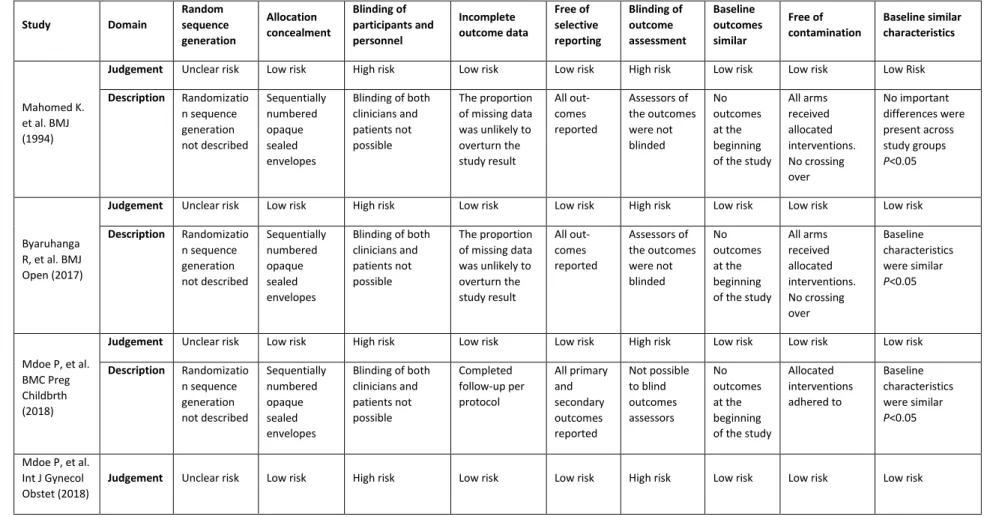
For these six studies, risk of bias and quality of evidence was assessed using the Cochrane Effective Practice and Organisation of Care (EPOC) criteria.14 The most pervasive risk in all of the RCTs
was the lack of blinding regarding which device participants and study staff used (Table 2.2). All studies had unclear or undescribed generation of randomization sequence, with the exception of an RCT at Muhimbili Hospital in Tanzania, in which a computer-generated sequence was created by an
independent researcher.18 All studies were at low risk of incomplete outcome data reporting and were
17
Doppler as a Tool for Improving Measurement of Perinatal Deaths Occurring in Health Facilities
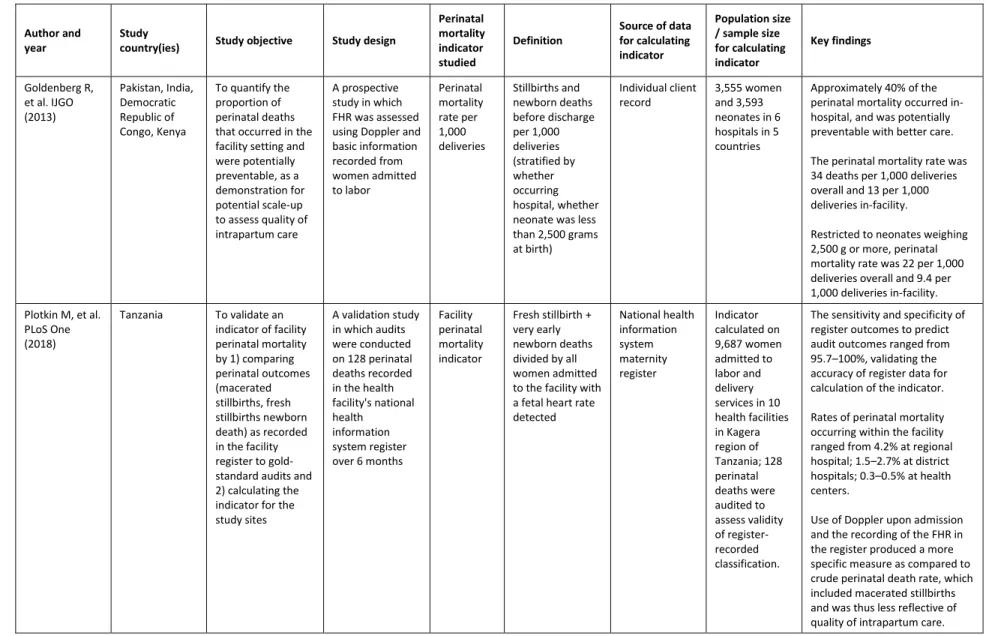
Two studies assessed feasibility and validity of measurements of perinatal mortality in facilities based on the use of Doppler to verify the presence or absence of a FHR upon admission to labor and delivery services (Table 2.3).21-22 A multi-country study was conducted to determine the level of
potentially preventable perinatal deaths occurring in study facilities and to describe feasibility of the measure. The study found that 40–45% of intrapartum deaths occurring in the facility were potentially preventable (based on the presence of positive fetal heart sounds on admission) and deemed
measurement of the indicator to be feasible.21
A study in Tanzania had health care providers use Doppler to check FHR upon admission to the facility and record the findings in the national facility register. Perinatal deaths recorded in the register in the study period were verified through use of perinatal death audit. The aim of the study was to create an indicator of facility perinatal mortality, tracked through national health information systems. The study authors recommended that the indicator be used to track perinatal deaths occurring following after admission to the facility and link the results of the indicator tracking to quality improvement initiatives.22
Health Care Provider or Client Preferences for Doppler Versus Pinard Stethoscope
Three studies examined client or health care provider preferences for Pinard fetoscope compared to Doppler for intrapartum FHR monitoring (Table 2.4).11,23-24 In a South Africa study which
compared client preferences for Doppler, Pinard, and cardiotocography, 74% of women noted Doppler as their first choice.23 In a qualitative assessment of women who had been continuously monitored using
a strap-on Doppler device in Tanzania, women were reassured by the sound of their baby’s heartbeat,
18
using Doppler for intrapartum FHR monitoring was appreciated by clients, further use of this device should be accompanied by educating women on its functions.11 In a Tanzania RCT among nurses and
nurse-midwives who had used either Doppler or Pinard fetoscope for intermittent FHR monitoring, the nurses and midwives tended to prefer the device with which they were most familiar. The arising recommendation was to include adequate education on Doppler for health care providers when introducing the device and in preservice/professional training.24
All three of these studies had notable limitations that lessen the generalizability of results. The Tanzanian study was conducted with relatively few midwives, only reflected views from one health facility, and reflected experiences in which the device used was based on random assignment rather than provider preference. The South Africa study, which compared client preferences between Doppler, Pinard and cardiotocography, did not test FHR monitoring throughout labor, but rather at a single point during the first stage of labor. Additionally, authors did not address potential effects of being in active labor while giving feedback, nor did the authors describe what information they provided to participants about efficacy of the devices for FHR monitoring. Finally, this study did not provide statistics to test significance of the findings. The qualitative study from Tanzania, which assessed women’s perceptions on Doppler for continuous monitoring of FHR during labor, reflected views from women who attended services at one facility, and only women who had healthy babies were included in the study. Interviews were conducted before discharge from the facility, which may have affected the women’s openness to
answer questions frankly.
2.4 Discussion
An estimated 1 million newborn deaths and half of all maternal deaths could be prevented with higher quality maternal and newborn care.25 Lack of intrapartum monitoring of FHR according to
19
assessment of the fetus at time of admission to labor and delivery services is supposed to be routine,27
in practice, there is evidence to suggest that FHR is often not assessed17 and/or not recorded21 in LMIC
health facilities. A study of perinatal death audits in Tanzania showed that poor FHR monitoring was associated with over 40% of the deaths.27 In Zanzibar, poor quality of intrapartum care was a
determinant in virtually all stillbirths that occurred in the hospital, with median time from last fetal heart assessment to fetal death or delivery being 210 minutes.28 These persistent gaps in quality of
intrapartum FHR monitoring have consequences for the survival of newborns; new means to close the gaps are needed. To contribute to filling this gap, our study reviewed the literature for the ways Doppler has been used in intrapartum care in LMIC health facilities: to improve detection of intrapartum FHR abnormalities; respond to client and provider preferences or improve measurements for quality of intrapartum care.
Doppler and Perinatal Mortality
Except in one instance,19 none of the reviewed studies demonstrated a reduction of perinatal
mortality associated with the use of Doppler for FHR monitoring compared to Pinard fetoscope. This finding echoed that of a broader systematic review of intrapartum fetal surveillance in LMIC.29 In
multiple studies where Doppler was used for FHR monitoring,15-18,20 while detection of abnormal FHR
increased, proxy measures of clinical management following this (cesarean births, shortened time to delivery) did not. The implication of this finding is that introduction of Doppler to improve early detection of intrapartum fetal hear abnormalities needs stronger support for what follows after the detection of the abnormality. This may include job aides, such as decision-trees as developed by UK’s
NICE,30protocols addressing case management or referral processes, or other structural support to
20
Continuous monitoring of fetal heart has been associated with an increase of caesarean sections which may not benefit the client.8 Given WHO guidance cautioning about potential overuse of caesarean
sections in LMIC,31 any quality improvement work which introduces Doppler, particularly continuous
monitoring, should also monitor potential overuse of caesarean section.
Doppler to Improve Measurement of Facility Perinatal Mortality
WHO has called for a metric for perinatal mortality occurring after admission to a health facility that can be used to monitor quality of intrapartum care.11,32 In two studies in five countries, Doppler was
used to detect FHR in women upon admission, allowing for the verification of whether fetal deaths occurred before or after facility admission. This information is useful to calculate an indicator of perinatal mortality that occurs in a health facility (i.e., mother was admitted to the facility with a documented FHR and was discharged with a stillborn or deceased newborn). It can be presumed that many of these cases represent poor quality of care. Both of these studies concluded that such a facility perinatal mortality indicator is a feasible and useful measurement21-22– one study also noted the
feasibility of integrating the indicator into the national health information system.22 Despite the small
number of studies, the findings support increased use of Doppler to accurately measure preventable perinatal deaths (intrapartum stillbirths and early newborn deaths) occurring after admission to labor and delivery services LMIC health facilities. Further studies might address the feasibility of integrating the indicator into health information management systems, provider acceptance of the indicator, cost
associated with scaling up Doppler use, and national policy makers’ understanding of the need for the
21
Health Care Provider and Client Preference for Doppler as a Means of FHR Monitoring
WHO considers client and health care provider preferences key elements for a positive childbirth experience,9 and the importance of the woman having informed choices regarding
interventions in labor.27 A strong client or health care provider preference for Doppler over Pinard may
be sufficient to justify integrating the device into LMIC intrapartum care protocols. Three reviewed studies addressed health care provider and client preference for Doppler compared to other devices for monitoring FHR. All three had substantial limitations to generalizability which limit their usefulness in drawing programmatic or policy conclusions. The current evidence on client and provider preferences should be bolstered with studies that have greater generalizability and that include perspectives of women who experienced deliveries with fetal distress.
Limitations
There are some limitations that should be noted. First, the findings rely on the quality of included studies. All studies that examined adverse perinatal outcomes were designed with perinatal outcomes as a secondary outcome measure, and hence had relatively low power to detect these differences. Second, two studies indicated that, although FHR monitoring protocols were properly followed due to study oversight, there were delays in proper case management, impacting perinatal death rates.16-17 This study did not include a meta-analysis due to dissimilarity of interventions and
22 2.5 Conclusion
23
Table 2.1. Studies on effectiveness of fetal heart rate monitoring using Doppler at reducing perinatal mortality
Study Study
country Study objective
Intermittent or continuous FHR monitoring
Study design
N of study population (per arm or overall)
Difference in clinical management Difference in perinatal outcome or
abnormal FHR detection
Byaruhanga R, et al. BMJ Open (2017)
Uganda To compare intermittent fetal heart monitoring using Doppler vs. Pinard for detection of FHR abnormalities (primary outcome measure), and intrapartum stillbirth and death within first 24 hours of life (secondary outcome measures)
Intermittent Two-arm randomized controlled trial Overall 1,987 women admitted to one peri-urban hospital
Doppler arm = 1,000 Pinard arm = 987
No differences in rates of cesarean deliveries.
Significantly higher detection of FHR abnormalities in the Doppler arm (incidence rate ratio=1.61, 95% CI 1.13–2.30 p=0.008).
No differences in rates of intrapartum stillbirths, neonatal deaths, Apgar score <7 at 5 min, or admission to NICU.
Kamala B, et al. IJWH (2018)
Tanzania To compare intermittent fetal heart monitoring using Doppler vs. Pinard on detection of FHR abnormalities (primary outcome measure), and intrapartum stillbirth and newborn death, time to delivery, mode of delivery (secondary outcome measures)
Intermittent Two-arm randomized controlled trial Overall, 2,844 women admitted to Tanzania’s national referral hospital
Doppler arm = 1,421 Pinard arm = 1,423
No difference in time between detection of an abnormal FHR to delivery.
Significantly higher detection of FHR abnormalities in the Doppler arm (6%) compared to Pinard arm (3.9%) (aOR=1.59, P=0.008). Overall, no difference in perinatal death. Among newborns with abnormal FHR delivered vaginally, fewer adverse outcomes in Doppler (16.3%) compared to Pinard arm (43.5%), P=0.021.
24
Mahomed K, et al. BMJ(1994)
Zimbabw e To compare effectiveness of cardiotocography, intermittent monitoring with Doppler; intermittent monitoring with Pinard by a research midwife and intermittent monitoring with a Pinard by facility midwife on detection of abnormal FHR (primary outcome) and cesarean section, neonatal mortality, and admission to NICU (secondary outcomes)
Intermittent Four-arm randomized controlled trial Doppler for intermittent monitoring; cardiotocogra phy; Pinard with research midwife (gold standard); Pinard with facility midwife (routine monitoring) Overall, 1,255 women admitted to one urban referral hospital
Doppler arm = 312 Pinard with research midwife arm = 310
Pinard with facility midwife arm = 315 Cardiotocograp hy arm = 318
No difference in time between detection of FHR abnormality and delivery in the 4 groups. Cesarean section more common in the cardiotocography (28%) and Doppler arms (24%) than in the Pinard arms with research midwife (10%) and with facility midwife (15%). Fetal distress was indication for cesarean section for 63% of those from cardiotocography arm and 67% of Doppler arm— each significantly higher than Pinard stethoscope arms (41%).
Compared with routine monitoring, relative risk of detecting abnormal FHR was 6.1 (95% CI 4.2–8.8) with cardiotocography, 3.6 (95% CI 2.4–
5.3) with Doppler, and 1.7 (95% CI 1.1–2.7) with the Pinard
stethoscope with research midwife.
Stillbirth or newborn death was 3% in cardiotocography arm; 0.6% in Doppler arm; 2% in Pinard with research midwife and 3% in routine monitoring group. Significantly fewer babies in the Doppler arm were admitted to the NICU compared to the other groups.
Mdoe P, et al. BMC Preg Childbrth (2018)
Tanzania To compare intermittent fetal heart monitoring using Doppler vs. Pinard for detection of FHR abnormalities (primary outcome measure) and intrapartum stillbirth and newborn death and infants admitted in the neonatal unit after 24 hours (secondary outcome measures)
Intermittent Two-arm randomized controlled trial Overall, 2,684 women admitted to one rural referral hospital
Doppler = 1,309 Pinard = 1,375
No difference in time between detection of an abnormal FHR to delivery and no difference in cesarean delivery rates.
Abnormal FHR detected in 4.2% of Doppler arm vs 3.1% in the Pinard arm—the difference was not significant (RR=1.38; 95% CI: 0.93–
2.04)
25
Kamala B, et al. PLoS One (2018)
Tanzania To assess the association between introduction of continuous FHR monitoring on detection of abnormal FHR (primary outcome measure); time to delivery, time from detection of abnormal FHR to delivery, and intrauterine resuscitations (secondary outcome measures)
Continuous Observationa l pre- and post-intervention study
At one urban referral hospital, 1,640 women were enrolled in the
pre-implementation stage and 2,442 were enrolled in the implementation stage.
A higher rate of cesarean sections was seen post-intervention (5.4%) compared to pre-intervention (2.6%) (P <0.001).
Post-intervention, the cause of cesarean section was fetal distress in 48% of cases compared to 35% pre-intervention. Median time from last FHR assessment to delivery was 60 min pre-intervention vs 45 min post-intervention(p<0.001).
Continuous FHR monitoring using Doppler (post-intervention) was associated with 6.9-fold increased detection of abnormal
FHR compared to routing FHR monitoring using Pinard (pre-intervention).
Mdoe P, et al. Int J Gynecol Obstet (2018)
Tanzania To compare continuous fetal heart monitoring using Doppler vs. intermittent monitoring using Pinard on detection of FHR abnormalities (primary outcome measure) and intrapartum stillbirth and newborn death, mode of delivery, 5-minute Apgar score, bag-mask ventilation, time from abnormal FHR detection to delivery, adverse fresh stillbirth, newborn death within 24 hours, and admission to the NICU (secondary outcome measures)
Continuous Two-arm randomized controlled trial
Overall, 2652 women enrolled at one rural referral hospital Doppler with continuous monitoring arm: 1,340 Doppler with intermittent monitoring arm: 1,312
Increased rate of intrauterine resuscitations in continuous vs intermittent monitoring groups (6.6% vs 3.2%; RR 2.07, 95% CI 1.4–
2.9; P<0.001). Fetal heart distress was the cause of 20.2% of cesareans in the continuous vs 7.4% in intermittent monitoring group (2.79, 95% CI 1.7–4.6,
P<0.001). Median time interval between detection of abnormal FHR to birth was shorter in continuous monitoring group (52 minutes versus 75 minutes) (P<0.04).
Continuous FHR monitoring with Doppler detected abnormal FHR in 8.1% vs 3.0% of women in intermittent monitoring group (RR 2.64, 95% CI 1.8–3.7; P<0.001). No significant differences in adverse outcomes between groups.
26
Table 2.2. Risk of bias and strength of evidence using Cochrane criteria for assessment of bias in Effective Practice and Organization of Care (EPOC) studies
Study Domain
Random sequence generation Allocation concealment Blinding of participants and personnel Incomplete outcome data Free of selective reporting Blinding of outcome assessment Baseline outcomes similar Free of contamination Baseline similar characteristics Mahomed K. et al. BMJ (1994)
Judgement Unclear risk Low risk High risk Low risk Low risk High risk Low risk Low risk Low Risk
Description Randomizatio
n sequence generation not described Sequentially numbered opaque sealed envelopes
Blinding of both clinicians and patients not possible
The proportion of missing data was unlikely to overturn the study result All out-comes reported Assessors of the outcomes were not blinded No outcomes at the beginning of the study
All arms received allocated interventions. No crossing over No important differences were present across study groups P<0.05 Byaruhanga R, et al. BMJ Open (2017)
Judgement Unclear risk Low risk High risk Low risk Low risk High risk Low risk Low risk Low risk
Description Randomizatio
n sequence generation not described Sequentially numbered opaque sealed envelopes
Blinding of both clinicians and patients not possible
The proportion of missing data was unlikely to overturn the study result All out-comes reported Assessors of the outcomes were not blinded No outcomes at the beginning of the study
All arms received allocated interventions. No crossing over Baseline characteristics were similar P<0.05
Mdoe P, et al. BMC Preg Childbrth (2018)
Judgement Unclear risk Low risk High risk Low risk Low risk High risk Low risk Low risk Low risk
Description Randomizatio
n sequence generation not described Sequentially numbered opaque sealed envelopes
Blinding of both clinicians and patients not possible Completed follow-up per protocol All primary and secondary outcomes reported Not possible to blind outcomes assessors No outcomes at the beginning of the study
Allocated interventions adhered to Baseline characteristics were similar P<0.05
Mdoe P, et al. Int J Gynecol Obstet (2018)
27
Description Randomizatio
n sequence generation not described Sequentially numbered opaque sealed envelopes
Blinding of both clinicians and patients not possible Completed follow-up per protocol All primary and secondary outcomes reported Not possible to blind outcomes assessors No outcomes at the beginning of the study
Allocated interventions adhered to Baseline characteristics were similar P<0.05
Kamala B, et al. PLoS One (2018)
Judgement Unclear risk Low risk High risk Low risk Low risk High risk Low risk Low risk Low risk
Description No
randomizatio n; controlled before-after study Controlled before-after studies
Blinding of both clinicians and patients not possible Completed follow-up per protocol All primary and second-ary out-comes reported Not possible to blind outcomes assessors All mothers had normal FHR on admission Unlikely since the 2 interventions took place in different times
Imbalances were adjusted in the regression models
Kamala B. et al. IJWH (2018)
Judgement Low risk Low risk High risk Low risk Low risk High risk Low risk Low risk Low risk
Description A
randomizatio n sequence was computer-generated by an indepen-dent statistician Sequentially numbered opaque sealed envelopes
Blinding of both clinicians and patients not possible Completed follow-up per protocol All primary and secondary out-comes reported Not possible to blind outcomes assessors All mothers had normal FHR on admission Allocated interventions adhered to Adjusted for baseline imbalances using logistic regression, multinomial regression, and linear regression
Mangesi L, et al. S Afr J Obstet Gynaecol (2009)
Judgement High risk High risk High risk Low risk Low risk High risk Unclear risk Unclear risk Unclear risk
Description No
randomizatio n; cross-sectional study No randomizatio n; cross-sectional study No blinding; cross-sectional study All data obtained All out-comes reported No blinding because of the study design Not described
28
Table 2.3. Studies on measurement of health facility-occurring perinatal mortality using Doppler
Author and year
Study
country(ies) Study objective Study design
Perinatal mortality indicator studied
Definition
Source of data for calculating indicator
Population size / sample size for calculating indicator
Key findings
Goldenberg R, et al. IJGO (2013)
Pakistan, India, Democratic Republic of Congo, Kenya
To quantify the proportion of perinatal deaths that occurred in the facility setting and were potentially preventable, as a demonstration for potential scale-up to assess quality of intrapartum care
A prospective study in which FHR was assessed using Doppler and basic information recorded from women admitted to labor Perinatal mortality rate per 1,000 deliveries Stillbirths and newborn deaths before discharge per 1,000 deliveries (stratified by whether occurring hospital, whether neonate was less than 2,500 grams at birth)
Individual client record
3,555 women and 3,593 neonates in 6 hospitals in 5 countries
Approximately 40% of the perinatal mortality occurred in-hospital, and was potentially preventable with better care.
The perinatal mortality rate was 34 deaths per 1,000 deliveries overall and 13 per 1,000 deliveries in-facility.
Restricted to neonates weighing 2,500 g or more, perinatal mortality rate was 22 per 1,000 deliveries overall and 9.4 per 1,000 deliveries in-facility.
Plotkin M, et al. PLoS One (2018)
Tanzania To validate an indicator of facility perinatal mortality by 1) comparing perinatal outcomes (macerated stillbirths, fresh stillbirths newborn death) as recorded in the facility register to gold-standard audits and 2) calculating the indicator for the study sites
A validation study in which audits were conducted on 128 perinatal deaths recorded in the health facility's national health
information system register over 6 months
Facility perinatal mortality indicator
Fresh stillbirth + very early newborn deaths divided by all women admitted to the facility with a fetal heart rate detected National health information system maternity register Indicator calculated on 9,687 women admitted to labor and delivery services in 10 health facilities in Kagera region of Tanzania; 128 perinatal deaths were audited to assess validity of register-recorded classification.
The sensitivity and specificity of register outcomes to predict audit outcomes ranged from 95.7–100%, validating the accuracy of register data for calculation of the indicator.
Rates of perinatal mortality occurring within the facility ranged from 4.2% at regional hospital; 1.5–2.7% at district hospitals; 0.3–0.5% at health centers.
29
Table 2.4. Studies related to health care provider or client preference for Doppler versus Pinard
Author Study
country
Primary research
question Study design Population studied
Number of interviews/ FGDs
Key findings Recommendations
Lafontan S, et al. Int J Environ Res Public Health. (2018)
Tanzania To describe attitudes and perceptions of women in labor continuously monitored with a strap-on Doppler device and their perceptions of quality of intrapartum care A cross-sectional qualitative study; conducted in-depth interviews with women who had delivered in an urban hospital within 12–24 hours of delivery
Multiparous women monitored using a continuous Doppler monitoring system during their delivery; only women with positive birth outcome interviewed
20 interviews Use of the monitor positively
affected the women’s birth
experience by providing reassurance about the wellbeing of the child. Women believed that use of the device improved care received by the health facility staff through increased communication and attention from birth attendants. Participants were given little to no information about the purpose or functions of the device, thus did not fully understand and often overestimated its capabilities.
Upon introduction of the Doppler for intrapartum care, information should be included in counseling during antenatal care and/or in the early stages of labor. Information should include limitations of the technological device to avoid overestimation of its capabilities.
Mdoe P et al. BMC Preg Childbirth (2018)
Tanzania To explore
midwives’ perceptions on using either Doppler, Pinard fetoscope, or Freeplay wind-up for intermittent FHR monitoring in a rural hospital Cross-sectional qualitative assessment using focus group discussions (FGDs)
Midwives employed at the study hospital for at least 6 months; trained in use of both Doppler and Pinard fetoscope
5 FGDs held with 25 participants
The study did not reveal a common and clear preference for Doppler versus fetoscope for FHR assessment. Three themes emerged: 1) sufficient training and experience in using a device, 2) perceived ability of devices to produce reliable measurements, and 3) convenience of use and comfort of the device.
Regular trainings to make the use of Doppler easier, and equal availability of
fetoscopes and Doppler in labor wards.
More research needed
to address practitioners’
preferences on best ways to conduct FHR monitoring.
Mangesi L, et al. S Afr J Obstet Gynaecol (2009)
South Africa
To document preferences on 3 different methods of FHR assessment (Doppler, Pinard fetoscope, and cardiotocography) by laboring women
Cross-sectional based on interview with women in labor
Women in the first stage of labor. In the course of 30 minutes, women were assessed using the wind-up Doppler, the Pinard fetoscope and the cardiotocograph in succession. Women were then asked to rank their first and second choice.
97 women were interviewed
72 out of 97 women preferred the Doppler for assessing FHR in the first stage of labor.
The authors concluded that fetal heart rate monitoring using the Doppler was more acceptable to laboring women than monitoring with a Pinard
30 REFERENCES
1. Liu L, Oza S, Hogan D, et al. Global, regional, and national causes of under-5 mortality in 2000–15: an updated systematic analysis with implications for the Sustainable Development Goals. Lancet. 2016;388(10063):3027-3035. doi:10.1016/S0140-6736(16)31593-8
2. Lawn JE, Lee ACC, Kinney M, et al. Two million intrapartum-related stillbirths and neonatal deaths: Where, why, and what can be done? Int J Gynecol Obstet. 2009;107(SUPPL.):S5-S19. doi:10.1016/j.ijgo.2009.07.016
3. Lawn JE, Blencowe H, Waiswa P, et al. Stillbirths: Rates, risk factors, and acceleration towards 2030. Lancet. 2016;387(10018):587-603. doi:10.1016/S0140-6736(15)00837-5
4. Darmstadt GL, Bhutta ZA, Cousens S, Adam T. Evidence-based, cost-effective interventions: how many newborn babies can we save? Lancet. 2005;365(9463):977.
papers2://publication/uuid/2DD8BBCA-BF43-491D-BC10-86A13130060D.
5. Hadar A, Sheiner E, Hallak M, Katz M, Mazor M, Shoham-Vardi I. Abnormal fetal heart rate tracing patterns during the first stage of labor: Effect on perinatal outcome. Am J Obstet Gynecol.
2001;185(4):863-868. doi:10.1067/mob.2001.117359
6. Langli Ersdal H, Mduma E, Svensen E, Sundby J, Perlman J. Intermittent detection of fetal heart rate abnormalities identify infants at greatest risk for fresh stillbirths, birth asphyxia, neonatal resuscitation, and early neonatal deaths in a limited-resource setting: A prospective descriptive observational stud. Neonatology. 2012;102(3):235-242. doi:10.1159/000339481
7. Martis R, Emilia O, Nurdiati D, Brown J. Intermittent Auscultation ( IA ) of Fetal Heart Rate in Labour for Fetal Well-Being ( Protocol ).; 2017.
doi:10.1002/14651858.CD008680.pub2.www.cochranelibrary.com
8. WHO. Intrapartum Care for a Positive Childbirth Experience. Geneva Switzerland; 2018.
9. Alfirevic Z, Devane D, Gyte GM. Continuous cardiotocography (CTG) as a form of electronic fetal monitoring (EFM) for fetal assessment during labour. Cochrane Database Syst Rev. 2017;(5 Art. No.: CD006066):1-136. doi:10.1002/14651858.CD006066.pub2
10. Fauveau V. New indicator of quality of emergency obstetric and newborn care: the intrapartum case fatality rate. Lancet. 2007;370(9595):1310. doi:10.1016/S0140-6736(07)61571-2
11. Rivenes Lafontan S, Sundby J, Ersdal HL, Abeid M, Kidanto HL, Mbekenga CK. “I was relieved to know that my baby was safe”: Women’s attitudes and perceptions on using a new electronic fetal heart rate monitor during labor in Tanzania. Int J Environ Res Public Health. 2018;15(2).
doi:10.3390/ijerph15020302
31
13. Liberati A, Altman DG, Tetzlaff J, et al. The PRISMA statement for reporting systematic reviews and meta-analyses of studies that evaluate health care interventions: explanation and
elaboration. J Clin Epidemiol. 2009;62(10):e1-34. doi:10.1016/j.jclinepi.2009.06.006
14. Cochrane Effective Practice and Organisation of Care (EPOC). Suggested Risk of Bias Criteria for EPOC Reviews.; 2017.
http://epoc.cochrane.org/epoc-specific-resources-review-authors%0Ahttp://epocoslo.cochrane.org/epoc-specific-resources-review-authors.
15. K. M, T. M, J. K, et al. Randomised controlled trial of intrapartum fetal heart rate monitoring. Br Med J. 1994;308(6927):497-500.
http://www.pubmedcentral.nih.gov/articlerender.fcgi?artid=2542781&tool=pmcentrez&rendert ype=abstract%5Cnhttp://www.embase.com/search/results?subaction=viewrecord&from=export &id=L24084236%5Cnhttp://rug.on.worldcat.org/atoztitles/link/?sid=EMBASE&issn=09598. 16. Byaruhanga R, Bassani DG, Jagau A, Muwanguzi P, Montgomery AL, Lawn JE. Use of wind-up fetal
Doppler versus Pinard for fetal heart rate intermittent monitoring in labour: a randomised clinical trial. BMJ Open. 2017;5(1):e006867-e006867. doi:10.1136/bmjopen-2014-006867
17. Mdoe PF, Ersdal HL, Mduma ER, et al. Intermittent fetal heart rate monitoring using a fetoscope or hand held Doppler in rural Tanzania: A randomized controlled trial. BMC Pregnancy Childbirth. 2018;18(1):1-8. doi:10.1186/s12884-018-1746-9
18. Kamala B, Kidanto HL, Mduma ER, Perlman JM, Ersdal HL. Intrapartum fetal heart rate monitoring
using a handheld Doppler versus Pinard stethoscope : a randomized controlled study in Dar es
Salaam. Int J Womens Health. 2018:341-348.
19. Kamala BA, Ersdal HL, Dalen I, et al. Implementation of a novel continuous fetal Doppler (Moyo) improves quality of intrapartum fetal heart rate monitoring in a resource-limited tertiary hospital in Tanzania: An observational study. PLoS One. 2018;13(10):1-14.
doi:10.1371/journal.pone.0205698
20. Mdoe PF, Ersdal HL, Mduma E, et al. Randomized controlled trial of continuous Doppler versus intermittent fetoscope fetal heart rate monitoring in a low-resource setting. Int J Gynecol Obstet. 2018;143(3):344-350. doi:10.1002/ijgo.12648
21. Goldenberg RL, McClure EM, Kodkany B, et al. A multi-country study of the “intrapartum stillbirth
and early neonatal death indicator” in hospitals in low-resource settings. Int J Gynecol Obstet. 2013;122(3):230-233. doi:10.1016/j.ijgo.2013.04.008
22. Plotkin M, Bishanga D, Kidanto H, et al. Tracking facility-based perinatal deaths in Tanzania: results from an indicator validation assessment. PLoS One. 2018;13(7).
doi:10.1371/journal.pone.0201238
23. Mangesi L, Hofmeyr G, Woods D. Assessing the preference of women for different methods of monitoring the fetal heart in labour. S Afr J Obstet Gynaecol. 2009;15(2):58-59.
24. Mdoe PF, Ersdal HL, Mduma E, Moshiro R, Kidanto H, Mbekenga C. Midwives’ perceptions on
32
25. Kruk ME, Gage AD, Arsenault C, et al. High-quality health systems in the Sustainable Development Goals era: time for a revolution. 2018;6(November):1196-1252. doi:10.1016/S2214-109X(18)30386-3
26. WHO. Neonatal and Perinatal Mortality: Country, Regional and Global Estimates. Geneva, Switzerland; 2006. http://apps.who.int/iris/bitstream/10665/43444/1/9241563206_eng.pdf. Accessed September 12, 2017.
27. WHO. Standards for Improving Quality of Maternal and Newborn Care in Health Facilities. Geneva; 2016. http://apps.who.int/iris/bitstream/10665/249155/1/9789241511216-eng.pdf?ua=1. Accessed April 5, 2017.
28. Maaløe N, Housseine N, Bygbjerg IC, et al. Stillbirths and quality of care during labour at the low resource referral hospital of Zanzibar: a case-control study. BMC Pregnancy Childbirth.
2016;16(1):351. doi:10.1186/s12884-016-1142-2
29. Housseine N, Punt MC, Browne JL, et al. Strategies for intrapartum foetal surveillance in low-and middle-income countries: A systematic review. PLoS One. 2018;13(10):1-17.
doi:10.1371/journal.pone.0206295
30. WHO. WHO Statement on Caesarean Section Rates. Geneva, Switzerland; 2014. doi:10.1016/j.rhm.2015.07.007
31. WHO. Consultation on Improving Measurement of the Quality of Maternal, Newborn and Child Care in Health Facilities. Vol 1.; 2013.
33
CHAPTER 3: SCALE-UP OF DOPPLER TO IMPROVE INTRAPARTUM FETAL HEART RATE MONITORING IN TANZANIA: A QUALITATIVE ASSESSMENT OF NATIONAL
AND SUBNATIONAL IMPLEMENTATION FACTORS 3.1 Introduction
Globally, an estimated 2.1 million early neonatal deaths and 2.6 million stillbirths occurred in 2015, including 1.3 million intrapartum stillbirths.1 Almost all of these (98%) occurred in low- and
middle-income countries (LMICs).1–2 Skilled birth attendance, where intrapartum and newborn care
comply with globally recommended quality standards, could prevent a substantial portion of these deaths.3
Abnormal fetal heart rate (FHR) in the intrapartum period can indicate a hypoxic state in a fetus resulting from interruption of placental blood flow.4 Due to this connection between fetal heart
abnormalities and adverse outcomes, poor quality intrapartum FHR monitoring contributes to
intrapartum stillbirths.5 In Tanzania, studies have provided strong evidence of fetal heart abnormalities
as a predictor of fresh stillbirth, birth asphyxia, and newborn death. Improvements to intrapartum monitoring have had demonstrated results, as in a 1989 study in southwest Tanzania where an intervention related to intrapartum monitoring was associated with a reduction of perinatal mortality from 71 to 39 deaths per 1,000 births.6 Despite this evidence, quality of intrapartum FHR monitoring,
both upon admission to labor and delivery services and intermittently throughout labor, is often poor in Tanzania.5
34
stethoscope is widely used to assess FHR in the intrapartum period, rather than cardiotocography (the standard of care in high resource countries) or handheld Doppler device.8 However, multiple
randomized controlled trials in sub-Saharan Africa have demonstrated that Doppler is superior to Pinard stethoscope at detecting abnormal FHR. 9–13 And although evidence on client preference for Doppler
over Pinard is not strong, a small study in South Africa showed that laboring women preferred Doppler over Pinard for FHR monitoring.14 In a qualitative study in Tanzania, women in labor showed a strong
liking for Doppler for continuous FHR monitoring.15 Although further evidence is needed, a growing
base of findings suggests that using Doppler to monitor FHR during labor in the LMIC facility setting may
improve both quality of clinical care and women’s experience of intrapartum care.
In 2008, following a call for a single plan to address reproductive, maternal, newborn, and child health strategies, the Tanzanian Ministry of Health (now the Ministry of Health, Community
Development, Gender, the Elderly and Children) developed “The National Road Map Strategic Plan to
Accelerate Reduction of Maternal, Newborn, and Child Deaths in Tanzania 2008–2015,” referred to as
the One Plan.16 The One Plan included basic emergency obstetric and newborn care (BEmONC) targets,
such as intermittent FHR monitoring through use of the partograph. The Sharpened One Plan, created in 2013, emphasized obstetrics and family planning and focused on the Western and Lake Zones of
Tanzania.17 An evaluation of the Sharpened One Plan found that achievements fell far short of targets;
for example, the proportion of public health facilities offering BEmONC services was 45% in 2015 against a target of 70%.17 Currently, the policy framework for improving maternal and newborn care is
governed by the One Plan II, the country’s second national strategic plan, which covers 2016–2020.
Tanzania’s National Service Quality Improvement Tool of 2013 recommends FHR monitoring
every 5 minutes when a woman is in the second stage of labor.18 Similar to WHO guidance, the tool says