The handle http://hdl.handle.net/1887/32960
holds various files of this Leiden University
dissertation
Author
: Ruiz Muñoz, Manuel Jesús
Title
:
Controlling thought and action : a perspective from khat users and cocaine users
C
ONTROLLING THOUGHT AND
ACTION
:
A PERSPECTIVE FROM KHAT USERS
AND COCAINE USERS
E
L CONTROL DEL PENSAMIENTO
Y LA ACCIÓN
:
UNA PERSPECTIVA DESDE LOS
CONSUMIDORES DE KHAT Y
CONSUMIDORES DE COCAÍNA
Cover design by: Dueñas Ruiz Taller de Grabado y Estampación Printed & Lay Out by: Proefschriftmaken.nl||Uitgeverij BOXPress Published by: Uitgeverij BOXPress, ’s-Hertogenbosch
Doctoral Dissertation
C
ONTROLLING THOUGHT AND
ACTION
:
A PERSPECTIVE FROM KHAT
USERS AND COCAINE USERS
International Ph.D. Candidate
M
ANUELJ
ESÚSR
UIZM
UÑOZAdvisors
M
ªT
ERESAB
AJOM
OLINAB
ERNHARDH
OMMELCo-advisor
L
ORENZAC
OLZATOPh.D. in Psychology
Department of Experimental Psychology
UNIVERSIDAD DE GRANADA
DPTO. DE PSICOLOGÍA EXPERIMENTAL Campus Universitario de Cartuja, s/n
Tfno. +34 958 24 37 63 – Fax +34 958 24 62 39 18071 – GRANADA – ESPAÑA
Tesis doctoral presentada por Manuel Jesús Ruiz Muñoz, en el
Departamento de Psicología Experimental, para aspirar al grado
de Doctor Internacional en el programa de Doctorado de
Psicología de la Universidad de Granada.
El doctorando,
Manuel Jesús Ruiz Muñoz
, y los directores
de la tesis,
Mª Teresa Bajo Molina
y
Bernhard Hommel
garantizamos, al firmar esta tesis doctoral, que el trabajo ha
sido realizado por el doctorando bajo la dirección de los
directores de la tesis y hasta donde nuestro conocimiento
alcanza, en la realización del trabajo, se han respetado los
derechos de otros autores a ser citados, cuando se han
utilizado sus resultados o publicaciones.
Firmado en Granada, a 12 de mayo de 2015
Directores de la tesis: Doctorando:
Mª Teresa Bajo
Bernhard Hommel
C
ONTROLLING THOUGHT AND ACTION
:
A PERSPECTIVE FROM KHAT USERS AND
COCAINE USERS
E
L CONTROL DEL PENSAMIENTO Y LA
ACCIÓN
:
UNA PERSPECTIVA DESDE LOS
CONSUMIDORES DE KHAT Y
CONSUMIDORES DE COCAÍNA
PROEFSCHRIFT
ter verkrijging van
de graad van Doctor aan de Universiteit Leiden,
op gezag van de Rector Magnificus Prof. Mr. C.J.J.M. Stolker,
volgens besluit van het College voor Promoties
te verdedigen op dinsdag 12 mei 2015
klokke 11.15 uur
door
Manuel Jesús Ruiz Muñoz
Promotor: Prof. Dr. B. Hommel, Universiteit Leiden Prof. Dr. M.T. Bajo, Universidad de Granada
Co-promotor: Dr. Lorenza S. Colzato, Universiteit Leiden
A todos aquellos que alguna vez me enseñaron algo,
To everyone who has at one point taught me something,
Index
C
HAPTER1
I
NTRODUCTION... 13
C
HAPTER2
P
HARMACOKINETICS AND PHARMACODYNAMICS OF KHAT AND MEPHEDRONE... 31
C
HAPTER3
L
ONG-
TERM EFFECTS OF CHRONIC KHAT USE:
IMPAIRED INHIBITORY CONTROL... 69
C
HAPTER4
K
HAT USE IS ASSOCIATED WITH IMPAIREDW
ORKINGM
EMORY ANDC
OGNITIVEF
LEXIBILITY... 89
C
HAPTER5
K
HAT USE IS ASSOCIATED WITH INCREASED RESPONSE CONFLICT IN HUMANS... 113
C
HAPTER6
C
HRONIC AND RECREATIONAL USE OF COCAINE IS ASSOCIATED WITH A VULNERABILITY TO SEMANTIC INTERFERENCE... 133
C
HAPTER7
D
IRECTEDF
ORGETTING OF MEMORIES AND COCAINE USE... 165
C
HAPTER8
C
ONCLUSIONS... 203
S
AMENVATTING... 211
R
ESUMEN... 217
Chapter 1
Introduction
Cognitive control
One of the most intriguing mysteries of human cognition is the capacity for judgment, reasoning, decision-making and planning. This capacity allow us to face problems that need to be solved immediately and make decisions quickly and appropriately by monitoring the information of the external world continuously. Executive functions are considered the key that allows human high-order cognitive processes. They coordinate operations of various processes to accomplish a particular goal in a flexible manner (Miyake & Shah, 1999; Roberts, Robbins, & Weiskrantz, 1998). The mechanism or system responsible for the coordination of operations is called ‘cognitive control’.
and action. This model proposes that cognitive control emerges from three distinct cognitive processes: switching between mental sets or task sets (mental flexibility), monitoring and updating of information in working memory (WM updating), and inhibiting automatic or prepotent responses (inhibitory control). These processes have been studied in different contexts, such as development (Jones, Rothbart, & Posner, 2003), healthy aging (see Braver & Barch, 2002 for a review), bilingualism (Bialystok, Klein, & Viswanathan, 2004), psychiatric disorders (see Millan et al., 2012 for a review), and drug abuse (see Gould, 2010 for a review), providing useful insights into the nature, organization and role of individual differences in executive functions.
2004; Robbins & Arnsten, 2009) to modulate the flow of information processing and the high sensibility of PFC to neurochemical environment alterations (Arnsten & Robbins, 2002). This interaction between the dopaminergic system and the PFC may serve as a gating function that regulates and protects from interference during information processing. Several factors like severe periods of stress and fatigue may alter this particular relationship (Chaudhuri & Behan, 2000; Lorist, Boksem, & Ridderinkhof, 2005; Lorist & Tops, 2003), but central for the aim of this thesis we focused on the stimulant drugs’ ability to produce a core failure between neurotransmission and adapting behaviour to changing environmental demands (Dalley, Everitt, & Robbins, 2011; Ersche et al., 2012; Garavan & Hester, 2007; Jentsch & Taylor, 1999; Volkow et al., 2010).
Cognitive processes on drug abuse
cortices (Goldstein & Volkow, 2002; Koob & Le Moal, 2001; Nader et al., 2002; Rácz, 2014; Smith, Jones, Bullmore, Robbins, & Ersche, 2013; Volkow et al., 1993; Volkow et al., 2010).
Although hedonic and pleasant feelings might be at the center of motivation for the drive to seek and take drugs, certain cognitive processes such as memory likely contribute to obeying the drive, whereas others, like inhibitory control, contribute to the individual’s effort to resist it. From this point of view, cognitive processes may be of significance in understanding the resisting to take the drugs, the transition from recreational use to chronic drug abuse, and the relapse so typical of those attempting abstinence or recovery when the drug use ceases. A core deficit in drug abuse is the failure to regulate behavior in response to changing environmental demands, leading to mental inflexibility, impulsivity, and/or compulsivity, therefore making the cognitive system more vulnerable to the intrusion of distracting information (Bolla et al., 2003; Colzato, Ruiz, van den Wildenberg, Bajo, & Hommel, 2011; Colzato, Ruiz, van den Wildenberg, & Hommel, 2012; Colzato, van den Wildenberg, & Hommel, 2007; Colzato, Ruiz, van den Wildenberg, & Hommel, 2011; Crean, Crane, & Mason, 2011; Fillmore & Rush, 2002; Fishbein et al., 2005; Hester & Garavan, 2004; Kelley, Yeager, Pepper, & Beversdorf, 2005; Kenney & Gould, 2008; Lyvers & Yakimoff, 2003; Moriyama, Muramatsu, Kato, Mimura, & Kashima, 2006; Ornstein et al., 2000; Solowij et al., 2002; Verdejo-García, Perales, & Pérez-García, 2007).
Thesis Question
and there is still a lack of studies researching the possible cognitive impairment of khat users.
Both drugs are powerful stimulants of the central nervous system, acting on catecholaminergic synapses by releasing DA in the synaptic cleft and/or blocking the re-uptake action of dopamine transporters (DAT). Cathinone and cocaine also potentiate the neurotransmission of serotonin, epinephrine, and norepinephrine. Although these neurotransmitters are not mainly responsible for the rewarding properties of the drugs, they do have an effect on the central and peripheral nervous system. In any case, the major part of this research is concerned with the rewarding, reinforcing, and addicting properties of khat and cocaine that occur through their effect on DA and its transporters (Banjaw, Mayerhofer, & Schmidt, 2003; Kalix, 1990; Kuhar, Ritz, & Boja, 1991; Ritz, Lamb, Goldberg, & Kuhar, 1987).
Regarding the stimulant drug cocaine, the available studies on chronic cocaine abuse still produce inconsistent results when comparing the performance of different types of cocaine users with cocaine-free controls (Goldstein et al., 2004; Jovanovski, Erb, & Zakzanis, 2005; Rogers & Robbins, 2001). Although certain studies have found deficits in memory, attention abstraction, decision-making and visuospatial abilities, others have failed to find deficits in some of the same functions (see Spronk et al., 2013 for a review). A common executive dysfunction that researchers in this field agree upon is related to inhibitory function (Bolla, Rothman, & Cadet, 1999; Colzato & Hommel, 2009; Colzato et al., 2007; Fillmore & Rush, 2002; Rosselli & Ardila, 1996; Verdejo-García, López-Torrecillas, Aguilar de Arcos, & Pérez-García, 2005). We investigated if this dysfunction extends to the performance of inhibition in the field of memory and language production. This thesis shows a set of studies in which chronic and recreational cocaine users were tested through a blocked-cycled naming task and a directed forgetting procedure. The performance on these tasks requires inhibition of word representations in virtue of their semantic-relatedness, and inhibition of prepotent memories in episodic memory, respectively.
Outline of thesis
This thesis contains six chapters reporting empirical work on the impact of khat and cocaine abuse on cognitive control and a review about the pharmacokinetics and pharmacodynamics of khat and mephedrone.
Chapter 2 reviews the behavioral and physiological effects of the natural psychomotor stimulants khat and the cathinone-derived designer drug mephedrone. This chapter describes their diverse historical and geographical background, their variety, their mechanisms of action, and their potential for producing abuse and dependence.
users. Response inhibition and response execution were measured in a stop-signal paradigm. The results show that users and non-users are comparable in terms of response execution, but non-users need significantly more time to inhibit responses than non-users.
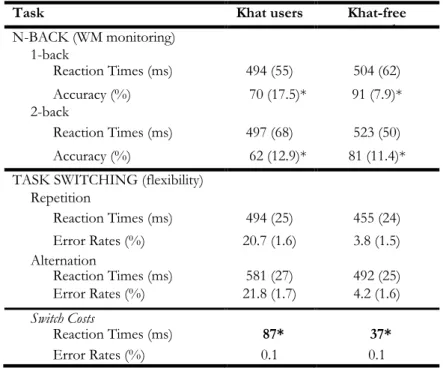
Chapter 4 reports two experiments studying whether khat use is associated with changes in working memory (WM) and cognitive flexibility in adult khat and khat-free users. The results show that khat users perform significantly worse than controls on tasks tapping into cognitive flexibility and monitoring of information in WM. The inability to monitor information in WM, and to adjust behavior rapidly and flexibly may have repercussions on daily life activities.
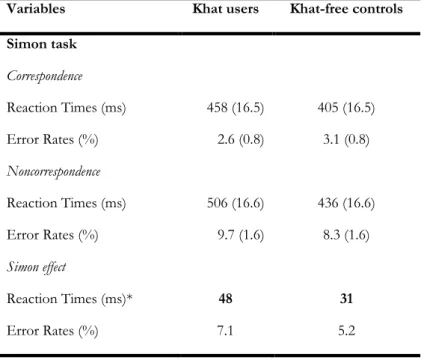
Chapter 5 presents an experiment on the impact of khat on the emergence and resolution of response conflict. Khat users and khat-free controls were tested on response conflict, as measured through a Simon task. Khat users show a general slowing and less efficient resolution of response conflicts, which is likely to impair decision making in everyday life situations.
Chapter 6 investigates the possible impairment of inhibitory control in language production among recreational and chronic cocaine polydrug users. Two experiments were carried out with chronic and recreational cocaine polydrug users using a blocked-cycled naming task, an index of semantic interference. Chronic and recreational users show bigger semantic interference than cocaine-free controls, as indicated by a deficit in inhibiting interfering information. We propose that the consumption of cocaine impacts the inhibitory processes that suppress the overactive lexical representations in the semantic context.
attribute the inability to exert memory inhibition in chronic and recreational cocaine users to cocaine consumption.
Chapters 2 to 7 are published, under revision, or submitted in international psychological journals. They have been inserted in this thesis in their original, submitted, or published form. To acknowledge the important contributions of several co-authors to each of these articles, a list of references is presented here.
Chapter 2: Ruiz, M. J. & Colzato, L. S. (2014). Pharmacokinetics and Pharmacodynamics of khat, mephedrone and MDPV. Submitted to The Handbook of Drug & Alcohol Studies Volume 2. SAGE publications.
Review of the existing literature and development of writing: Manuel J. Ruiz and Lorenza S. Colzato.
Chapter 3: Colzato, L. S., Ruiz, M. J., van den Wildenberg, W. P. M., Bajo, M. T., & Hommel, B. (2011). Long-Term Effects of Chronic Khat Use: Impaired Inhibitory Control. Frontiers in Psychology, 1.
Conceived and designed the experiments: Lorenza S. Colzato. Performed the experiments: Manuel J. Ruiz. Analyzed the data: Wery Van Den Wildenberg. Contributed reagents/materials/analysis tools: Wery Van Den Wildenberg and Teresa Bajo. Wrote the paper: Lorenza S. Colzato and Bernhard Hommel.
Chapter 4: Colzato, L. S., Ruiz, M. J., van den Wildenberg, W. P. M., & Hommel, B. (2011). Khat use is associated with impaired working memory and cognitive flexibility. PloS one, 6(6).
Chapter 5: Colzato, L. S., Ruiz, M. J., van den Wildenberg, W. P. M., & Hommel, B. (2012). Khat use is associated with increased response conflict in humans. Human psychopharmacology, 27(3), 315-321.
Conceived and designed the experiments: Lorenza S. Colzato. Performed the experiments: Manuel J. Ruiz. Analyzed the data: Wery Van Den Wildenberg. Contributed reagents/materials/analysis tools: Wery Van Den Wildenberg. Wrote the paper: Lorenza S. Colzato and Bernhard Hommel.
Chapter 6: Ruiz, M. J., Paolieri, D., Colzato, L. S., & Bajo, M. T. (2014). Chronic and recreational use of cocaine is associated with a vulnerability to semantic interference. Psychopharmacology, 1-10. doi: 1-10.1007/s00213-014-3806-9.
Conceived and designed the experiments: Manuel J, Ruiz, Daniela Paolieri and Teresa Bajo. Performed the experiments: Manuel J. Ruiz. Analyzed the data: Manuel J. Ruiz and Daniela Paolieri. Contributed reagents/materials/analysis tools: Lorenza Colzato. Wrote the paper: Manuel J. Ruiz, Daniela Paolieri and Teresa Bajo
Chapter 7: Ruiz, M. J., Paolieri, D., Colzato, L. S., & Bajo, M. T. Directed forgetting of Memories and cocaine use. Submitted to Psychopharmacology.
References
Arnsten, A. F. T., & Robbins, T. W. (2002). Neurochemical modulation of prefrontal cortical function in humans and animals. In D. T. Stuss & R. T. Knight (Eds.), Principles of frontal lobe function (pp. 51-84). New York, NY, US: Oxford University Press.
Baddeley, A. (1996). Exploring the Central Executive. The Quarterly Journal of Experimental Psychology Section A: Human Experimental Psychology, 49(1), 5. doi:10.1080/713755608
Badre, D. (2008). Cognitive control, hierarchy, and the rostro– caudal organization of the frontal lobes. Trends in Cognitive Sciences, 12(5), 193-200. doi:10.1016/j.tics.2008.02.004
Banjaw, M. Y., Mayerhofer, A., & Schmidt, W. J. (2003). Anticataleptic activity of cathinone and MDMA (Ecstasy) upon acute and subchronic administration in rat. Synapse, 49(4), 232-238. doi:10.1002/syn.10236
Bialystok, E., M, I., Klein, R., & Viswanathan, M. (2004). Bilingualism, Aging, and Cognitive Control: Evidence from the Simon Task. Psychology and Aging, 19(2), 290-303. doi:10.1037/0882-7974.19.2.290
Bolla, K. I., Eldreth, D. A., London, E. D., Kiehl, K. A., Mouratidis, M., Contoreggi, C., … Ernst, M. (2003). Orbitofrontal cortex dysfunction in abstinent cocaine abusers performing a decision-making task. NeuroImage, 19(3), 1085-1094.
Bolla, K. I., Rothman, R., & Cadet, J. L. (1999). Dose-Related Neurobehavioral Effects of Chronic Cocaine Use. The Journal of Neuropsychiatry and Clinical Neurosciences, 11(3), 361-369.
Braver, T. S., & Barch, D. M. (2002). A theory of cognitive control, aging cognition, and neuromodulation. Neuroscience & Biobehavioral Reviews, 26(7), 809–817.
Chaudhuri, A., & Behan, P. O. (2000). Fatigue and basal ganglia. Journal of the Neurological Sciences, 179(1–2), 34-42. doi:10.1016/S0022-510X(00)00411-1
Cohen, J. D., Dunbar, K., & McClelland, J. L. (1990). On the control of automatic processes: A parallel distributed processing account of the Stroop effect. Psychological Review, 97(3), 332-361. doi:10.1037/0033-295X.97.3.332
Cohen, J. D., & Randall O’Reilly. (1996). A preliminary theory of the interactions between the pre- frontal cortex and hippocampus that con- tribute to planning and prospective memory. In Prospective Memory: Theory and Applications (M Brandimonte, G Einstein, M McDaniel). Hillsdale, New Jersey: Erlbaum.
Colzato, L. S., & Hommel, B. (2009). Recreational use of cocaine eliminates inhibition of return. Neuropsychology, 23(1), 125-129. doi:10.1037/a0013821
Colzato, L. S., Ruiz, M. J., van den Wildenberg, W. P. M., Bajo, M. T., & Hommel, B. (2011). Long-Term Effects of Chronic Khat Use: Impaired Inhibitory Control. Frontiers in Psychology, 1. doi:10.3389/fpsyg.2010.00219
Colzato, L. S., Ruiz, M. J., van den Wildenberg, W. P. M., & Hommel, B. (2011). Khat use is associated with impaired working memory and cognitive flexibility. PloS one, 6(6), e20602. doi:10.1371/journal.pone.0020602
Colzato, L. S., Ruiz, M. J., van den Wildenberg, W. P. M., & Hommel, B. (2012). Khat use is associated with increased response conflict in humans. Human psychopharmacology, 27(3), 315-321. doi:10.1002/hup.2229
Users. PLoS ONE, 2(11), e1143. doi:10.1371/journal.pone.0001143
Cools, R., & Robbins, T. W. (2004). Chemistry of the adaptive mind. Philosophical Transactions. Series A, Mathematical, Physical, and Engineering Sciences, 362(1825), 2871-2888. doi:10.1098/rsta.2004.1468
Crean, R. D., Crane, N. A., & Mason, B. J. (2011). An Evidence Based Review of Acute and Long-Term Effects of Cannabis Use on Executive Cognitive Functions. Journal of addiction medicine, 5(1), 1-8. doi:10.1097/ADM.0b013e31820c23fa
Dalley, J. W., Everitt, B. J., & Robbins, T. W. (2011). Impulsivity, Compulsivity, and Top-Down Cognitive Control. Neuron, 69(4), 680-694. doi:10.1016/j.neuron.2011.01.020
Ersche, K. D., Jones, P. S., Williams, G. B., Turton, A. J., Robbins, T. W., & Bullmore, E. T. (2012). Abnormal Brain Structure Implicated in Stimulant Drug Addiction. Science, 335(6068), 601-604. doi:10.1126/science.1214463
Ersche, K. D., Jones, P. S., Williams, G. B., Turton, A. J., Robbins, T. W., & Bullmore, E. T. (2012). Abnormal Brain Structure Implicated in Stimulant Drug Addiction. Science, 335(6068), 601-604. doi:10.1126/science.1214463
Fillmore, M. T., & Rush, C. R. (2002). Impaired inhibitory control of behavior in chronic cocaine users. Drug and Alcohol Dependence, 66(3), 265-273. doi:10.1016/S0376-8716(01)00206-X
Fishbein, D. H., Eldreth, D. L., Hyde, C., Matochik, J. A., London, E. D., Contoreggi, C., … Grant, S. (2005). Risky decision making and the anterior cingulate cortex in abstinent drug abusers and nonusers. Brain Research. Cognitive Brain Research, 23(1), 119-136. doi:10.1016/j.cogbrainres.2004.12.010
Fletcher, P. C., & Henson, R. N. (2001). Frontal lobes and human memory: insights from functional neuroimaging. Brain: A Journal of Neurology, 124(Pt 5), 849-881.
Garavan, H., & Hester, R. (2007). The Role of Cognitive Control in Cocaine Dependence. Neuropsychology Review, 17(3), 337-345. doi:10.1007/s11065-007-9034-x
Goldman-Rakic, P. S. (1996). The prefrontal landscape: implications of functional architecture for understanding human mentation and the central executive. Philosophical Transactions of the Royal Society of London. Series B, Biological Sciences, 351(1346), 1445-1453. doi:10.1098/rstb.1996.0129
Goldstein, R. Z., Leskovjan, A. C., Hoff, A. L., Hitzemann, R., Bashan, F., Khalsa, S. S., … Volkow, N. D. (2004). Severity of neuropsychological impairment in cocaine and alcohol addiction: association with metabolism in the prefrontal cortex. Neuropsychologia, 42(11), 1447-1458. doi:10.1016/j.neuropsychologia.2004.04.002
Goldstein, R. Z., & Volkow, N. D. (2002). Drug Addiction and Its Underlying Neurobiological Basis: Neuroimaging Evidence for the Involvement of the Frontal Cortex. The American journal of psychiatry, 159(10), 1642-1652.
Gould, T. J. (2010). Addiction and cognition. Addiction science & clinical practice, 5(2), 4.
Hester, R., & Garavan, H. (2004). Executive dysfunction in cocaine addiction: evidence for discordant frontal, cingulate, and cerebellar activity. The Journal of neuroscience: the official journal of the Society for Neuroscience, 24(49), 11017-11022. doi:10.1523/JNEUROSCI.3321-04.2004
Hyman, S. E., & Malenka, R. C. (2001). Addiction and the brain: The neurobiology of compulsion and its persistence. Nature Reviews Neuroscience, 2(10), 695-703. doi:10.1038/35094560
Jones, L. B., Rothbart, M. K., & Posner, M. I. (2003). Development of executive attention in preschool children. Developmental Science, 6(5), 498-504. doi:10.1111/1467-7687.00307
Jovanovski, D., Erb, S., & Zakzanis, K. K. (2005). Neurocognitive deficits in cocaine users: a quantitative review of the evidence. Journal of Clinical and Experimental Neuropsychology, 27(2), 189-204.
Kalix, P. (1990). Pharmacological properties of the stimulant khat. Pharmacology & therapeutics, 48(3), 397–416.
Kelley, B. J., Yeager, K. R., Pepper, T. H., & Beversdorf, D. Q. (2005). Cognitive Impairment in Acute Cocaine Withdrawal. Cognitive and behavioral neurology : official journal of the Society for Behavioral and Cognitive Neurology, 18(2), 108-112.
Kenney, J. W., & Gould, T. J. (2008). Modulation of hippocampus-dependent learning and synaptic plasticity by nicotine. Molecular Neurobiology, 38(1), 101-121. doi:10.1007/s12035-008-8037-9
Koob, G. F. (1992). Drugs of abuse: anatomy, pharmacology and function of reward pathways. Trends in Pharmacological Sciences, 13, 177-184. doi:10.1016/0165-6147(92)90060-J
Koob, G. F., & Le Moal, M. (2001). Drug Addiction, Dysregulation of Reward, and Allostasis. Neuropsychopharmacology, 24(2), 97-129. doi:10.1016/S0893-133X(00)00195-0
Koob, G. F., Sanna, P. P., & Bloom, F. E. (1998). Neuroscience of Addiction. Neuron, 21(3), 467-476. doi:10.1016/S0896-6273(00)80557-7
Kuhar, M. J., Ritz, M. C., & Boja, J. W. (1991). The dopamine hypothesis of the reinforcing properties of cocaine. Trends in Neurosciences, 14(7), 299-302. doi:10.1016/0166-2236(91)90141-G
Leshner, A. I. (1997). Addiction Is a Brain Disease, and It Matters. Science, 278(5335), 45-47. doi:10.1126/science.278.5335.45
mental fatigue. Cognitive Brain Research, 24(2), 199-205. doi:10.1016/j.cogbrainres.2005.01.018
Lorist, M. M., & Tops, M. (2003). Caffeine, fatigue, and cognition. Brain and Cognition, 53(1), 82-94. doi:10.1016/S0278-2626(03)00206-9
Luria, A. R. (1973). The frontal lobes and the regulation of behavior. En Psychophysiology of the frontal lobes (pp. xii, 332). Oxford, England: Academic Press.
Lyvers, M., & Yakimoff, M. (2003). Neuropsychological Correlates of Opioid Dependence and Withdrawal. Humanities & Social Sciences papers. http://epublications.bond.edu.au/hss_pubs/6
Millan, M. J., Agid, Y., Brüne, M., Bullmore, E. T., Carter, C. S., Clayton, N. S., … Young, L. J. (2012). Cognitive dysfunction in psychiatric disorders: characteristics, causes and the quest for improved therapy. Nature Reviews Drug Discovery, 11(2), 141-168. doi:10.1038/nrd3628
Miller, E. K. (2000). The prefrontal cortex and cognitive control. Nature Reviews. Neuroscience, 1(1), 59-65. doi:10.1038/35036228
Miyake, A., Friedman, N. P., Emerson, M. J., Witzki, A. H., Howerter, A., & Wager, T. D. (2000). The unity and diversity of executive functions and their contributions to complex «Frontal Lobe» tasks: a latent variable analysis. Cognitive Psychology, 41(1), 49-100. doi:10.1006/cogp.1999.0734
Miyake, A., & Shah, P. (1999). Models of working memory: mechanisms of active maintenance and executive control. Cambridge; New York: Cambridge University Press.
Moriyama, Y., Muramatsu, T., Kato, M., Mimura, M., & Kashima, H. (2006). Family history of alcoholism and cognitive recovery in subacute withdrawal. Psychiatry and Clinical Neurosciences, 60(1), 85-89. doi:10.1111/j.1440-1819.2006.01464.x
initial and chronic exposure. Neuropsychopharmacology: Official Publication of the American College of Neuropsychopharmacology, 27(1), 35-46. doi:10.1016/S0893-133X(01)00427-4
Niendam, T. A., Laird, A. R., Ray, K. L., Dean, Y. M., Glahn, D. C., & Carter, C. S. (2012). Meta-analytic evidence for a superordinate cognitive control network subserving diverse executive functions. Cognitive, Affective, & Behavioral Neuroscience, 12(2), 241-268. doi:10.3758/s13415-011-0083-5
Norman, D. A., & Shallice, T. (1986). Attention to Action. En R. J. Davidson, G. E. Schwartz, & D. Shapiro (Eds.), Consciousness and Self-Regulation (pp. 1-18). Springer US. http://link.springer.com/chapter/10.1007/978-1-4757-0629-1_1
O’Reilly, R. C., Herd, S. A., & Pauli, W. M. (2010). Computational Models of Cognitive Control. Current opinion in neurobiology, 20(2), 257-261. doi:10.1016/j.conb.2010.01.008
Ornstein, T. J., Iddon, J. L., Baldacchino, A. M., Sahakian, B. J., London, M., Everitt, B. J., & Robbins, T. W. (2000). Profiles of Cognitive Dysfunction in Chronic Amphetamine and Heroin Abusers. Neuropsychopharmacology, 23(2), 113-126. doi:10.1016/S0893-133X(00)00097-X
Posner, M. I., & Petersen, S. E. (1989). The attention system of the human brain. Annual Review of Neuroscience, 13, 25-42. doi: 10.1146/annurev.ne.13.030190.000325
Rácz, I. (2014). Neuroplastic changes in addiction. Frontiers in Molecular Neuroscience, 6, 56. doi:10.3389/fnmol.2013.00056
Ritz, M. C., Lamb, R. J., Goldberg, S. R., & Kuhar, M. J. (1987). Cocaine receptors on dopamine transporters are related to self-administration of cocaine. Science (New York, N.Y.), 237(4819), 1219-1223.
Roberts, A. C., Robbins, T. W., & Weiskrantz, L. (1998). The Prefrontal Cortex: Executive and Cognitive Functions (1 edition.). Oxford ; New York: Oxford University Press.
Rogers, R. D., & Robbins, T. W. (2001). Investigating the neurocognitive deficits associated with chronic drug misuse. Current Opinion in Neurobiology, 11(2), 250-257. doi:10.1016/S0959-4388(00)00204-X
Rosselli, M., & Ardila, A. (1996). Cognitive effects of cocaine and polydrug abuse. Journal of clinical and experimental neuropsychology, 18(1), 122-135. doi:10.1080/01688639608408268
Shallice, T., & Burgess, P. (1996). The domain of supervisory processes and temporal organization of behaviour. Philosophical Transactions of the Royal Society of London. Series B, Biological Sciences, 351(1346), 1405-1411; discussion 1411-1412. doi:10.1098/rstb.1996.0124
Smith, D. G., Jones, P. S., Bullmore, E. T., Robbins, T. W., & Ersche, K. D. (2013). Cognitive control dysfunction and abnormal frontal cortex activation in stimulant drug users and their biological siblings. Translational Psychiatry, 3(5), e257. doi:10.1038/tp.2013.32
Solowij, N., Stephens, R., Hoffman, R., Babor, T., Kadden, R., Miller, M., … Vendetti, J. (2002). Cognitive functioning of long-term heavy cannabis users seeking treatment. Journal of the American Medical Association, 1123-1131.
Spronk, D. B., van Wel, J. H. P., Ramaekers, J. G., & Verkes, R. J. (2013). Characterizing the cognitive effects of cocaine: A comprehensive review. Neuroscience & Biobehavioral Reviews, 37(8), 1838-1859. doi:10.1016/j.neubiorev.2013.07.003
Verdejo-García, A. J., Perales, J. C., & Pérez-García, M. (2007). Cognitive impulsivity in cocaine and heroin polysubstance abusers. Addictive Behaviors, 32(5), 950-966. doi:10.1016/j.addbeh.2006.06.032
Volkow, N. D., Fowler, J. S., Wang, G. J., Hitzemann, R., Logan, J., Schlyer, D. J., … Wolf, A. P. (1993). Decreased dopamine D2 receptor availability is associated with reduced frontal metabolism in cocaine abusers. Synapse (New York, N.Y.), 14(2), 169-177. doi:10.1002/syn.890140210
Volkow, N. D., Fowler, J. S., Wang, G.-J., Telang, F., Logan, J., Jayne, M., … Swanson, J. M. (2010). Cognitive Control of Drug Craving Inhibits Brain Reward Regions in Cocaine Abusers. NeuroImage, 49(3), 2536. doi:10.1016/j.neuroimage.2009.10.088
Chapter 2
Pharmacokinetics and pharmacodynamics
of khat and mephedrone
Abstract
This chapter considers the behavioral and physiological effects of the natural psychomotor stimulants khat (Catha Edulis) and the cathinone-derived designer drug mephedrone. These natural and synthetic stimulants increase alertness, arousal, energy, talkativeness and motor excitement. This chapter describes their diverse historical and geographical background, their variety, their mechanisms of action, and their potential for producing abuse and dependence.
Khat
Background and History
East Africa and the Arabian Peninsula have spread the use of khat leaves around the world. Fresh khat is usually wrapped in banana leaves for transportation to preserve its moisture. The vast majority of those ingesting khat do it by chewing. Only a small number ingest it by making a “tea” from dried leaves, or, even more rarely by smoking dried leaves. The chewer fills his mouth with fresh leaves and young stalks, and chews them slowly and intermittently to release the active components in the juice, which is swallowed along with saliva. When khat leaves and stalks are chewed, cathinone is absorbed through the buccal mucosa and the stomach. In a single khat session, approximately 100-500 g of fresh khat is chewed for several hours (Feyissa and Kelly, 2008).
Mechanisms of Khat action
liposolubility (Kalix and Braenden, 1985), it facilitates access into the central nervous system (CNS) (Zelger et al., 1980). So, it can be assumed that khat-induced symptoms are mainly due to cathinone (Kalix, 1990). Cathinone, mainly increases levels of dopamine and norepinephrine in the brain by acting on catecholaminergic synapses, delaying the reuptake and/or enhancing the release of those neurotransmitters. Cathinone is relatively unstable and during maturation it is enzymatically degraded to cathine and norephedrine (Al-Obaid et al., 1998) within a few days after harvesting. These molecules are less lipophilic and act at a peripheral level, provoking the sympathomimetic effects. Thus, only fresh picked leaves have full efficacy, while cathine and norpseudoephedrine occur mainly just in older leaves and/or by degradation of cathinone (Sporkert et al., 2003). The phenylalkylamine content of khat leaves varies within wide limits. Other phenylalkylamine alkaloids found in khat leaves are the phenylpentenylamines merucathinone, pseudomerucathine and merucathine. However, they seem to contribute less to the stimulant effects of khat (Geisshüsler and Brenneisen, 1987).
Basic Pharmacology of Khat
Absorption
levels were on average 83 µg ml-1 after one hour of chewing 60 grams of fresh khat leaves.
Distribution
The active ingredients are not extracted rapidly by chewing and thus do not have a fast onset of action. Little is known about the distribution of khat psychoactive alkaloids in the human body, and a consistent pharmacokinetic model of action has not been developed. Plasma concentration curves vary between studies due to differences in the alkaloids doses, however these studies show a good agreement in results (Halket, Karasu, & Murray-Lyon, 1995; Widler et al, 1994; Toennes, Harder, Schramm, Niess, & Kauert, 2003). In the study by Toennes et al. (2003) the plasma concentration-time was described using a two-compartment model with two segment absorption. The time until the compound appeared in the central compartment (tlag 1) was between 0.1-0.2 h for the three alkaloids, whereas the lag time for the second segment (tlag 2) was more than 1.2 h. Maximum plasma concentrations were reached, on average, after 2.3h for cathinone (58±18.8 µg L-1), after 2.6h for cathine (58±18.8 µg L-1), and after 2.8 h for norephedrine (72±12.2 µg L-1). Cathinone in the central compartment had an average half-life of 1.50±0.8 h. The apparent volume of distribution from central compartment was 2.7±1.6 L kg-1 for cathinone and 0.7±0.4 L kg-1 for cathine. Cathinone is a more lipophilic alkaloid than cathine, and its more rapid and intense action is explained by its higher lipid solubility, which facilitates access into the CNS (Zelger et al., 1980).
Metabolism and Excretion
1986; Guantai and Maitai, 1983). The principal stereoisomer S-(−)-cathinone is metabolized to norephedrine and cathine. Both metabolites remain active in plasma concentrations for no less than 9h, when cathinone is no longer found in plasma. Cathine is excreted unaltered for nearly 24 hours (Maitai and Mugera, 1975; Widler et al., 1994). Since both norephedrine and cathine are pharmacologically active compounds, they may contribute to the general effects of khat chewing (Graziani et al., 2008). Less than 7% of cathinone is excreted unchanged in the urine (Brenneisen et al., 1986; Toennes and Kauert, 2002). Since norephedrine is both a khat alkaloid and a cathinone metabolite, it is difficult to determine its metabolism and excretion. There is evidence of higher amounts of norephedrine being excreted in urine than is ingested due to a combination of absorbed norephedrine and the product of cathinone metabolism (Mathys and Brenneisen, 1992; Toennes and Kauert, 2002). Brenneisen et al. (1986) found that 21-50% of cathinone was recovered mainly as aminoalcohol metabolites in 24 hour urine samples. The elimination half-life of cathinone is 1.5±0.8 hours, and that of cathine is 5.2 ± 3.4 hours. In the study of Toennes et al. (2002) the maximum concentrations of cathinone, cathine and norephedrine in urine samples were 2.5, 20 and 30 mg L-1, respectively. The metabolite cathine has been found in both urine and breast-milk of lactating women who habitually chewed khat. As a result, breast-fed infants will ingest a sympathomimetic and anorectic compound, such as cathine (Kristiansson et al., 1987).
Behavioral and Neural Effects of Khat: Abuse
and Dependence
users. Khat use also affects nutrition and absorption of nutrients, which leads to malnutrition. (Al-Habori, 2005). There is evidence for a strong association between the development of buccal cancer and cirrhosis and khat use (Chapman et al., 2010; Fasanmade et al., 2007; Kassie et al., 2001), especially when combined with alcohol and tobacco. Habitual use of khat is known to seriously impair male sexual functions leading to a high incidence of spermathorrea and a permanent impotence (el-Shoura et al., 1995; Halbach, 1972; Mwenda et al., 2003).
Khat is known to produce paranoid psychosis, auditory hallucinations and hypomanic illness with grandiose delusions, fear and anxiety (Kalix, 1988). These effects are exceptional and associated with chewing high amounts of khat, moreover these effects disappear spontaneously within 1-2 days of cessation of khat use. Depression often appears during withdrawal, but in nearly all cases that report this symptom, it disappears after khat cessation as well (Hassan et al., 2002; Kalix and Braenden, 1985; Pantelis et al., 1989). The administration of benzodiazepine and antipsychotic medication is often necessary. To date there are no sufficient scientific reports and large-scale studies, excepting clinical cases, that associate the effects of khat use and psychiatric disorders (Warfa et al., 2007). However, literature suggests that the adverse psychiatric sequelae may relate to traumatic experiences such as war or combat, and the lack of social support of immigrants, which favors the experience of negative effects of the drug in vulnerable subjects.
of tolerance should be similar to amphetamine tolerance, however, it is improbable that khat users ingest enough cathinone to develop dependence, because the bulk volume of khat self-limits consumption (Nencini and Ahmed, 1989). Nevertheless, khat-induced changes appear to be less pronounced in chronic users, which would indicate that tolerance may develop for the acute sympathomimetic and neuroendocrine effects of khat, such as increased levels in blood pressure, heart rate, respiratory rate and body temperature (Kalix and Braenden, 1985). The reinforcing properties of khat are weaker than amphetamines or cocaine; thus development of dependence is unlikely to be similar in extent and severity to amphetamines. In fact, there are very few cases of khat dependence and khat users do not have serious problems when they stop using it.
Cognitive Effects of Khat Exposure
Long-term cognitive deficit
present letter matched the one that was presented directly before (1-back) or in the second-to-last trial (2-back). Chronic khat users made significantly more errors in both the 1-back and 2-back conditions, an indication of more deficient WM updating.
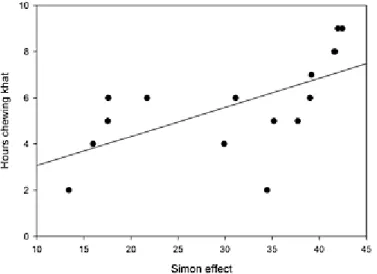
Third, Colzato, Ruiz, van den Wildenberg, and Hommel (2012) showed that chronic khat users displayed less efficient resolution of response conflicts in the Simon task in which participants had to respond, by pressing left and right response buttons, to the color of visual stimuli while disregarding their irrelevant location. Moreover, the amount of hours chewing khat positively correlated with the size of the Simon effect, indicating that longer chewing was associated with increased response conflict.
Acute Cognitive Effects
So far, only one study has investigated the acute effect of khat on cognition. Colzato and colleagues (2013) explored how acute khat use affects the emergence and resolution of response conflict as measured by the Simon task. In one single session, participants worked through two task blocks: the khat group chewed exclusively khat whereas the khat-free group chewed solely a gum. Results showed that in the second block, which reflects the acute impact of khat, the khat group was better than controls in resolving stimulus-induced response conflict. These results suggest that the acute intake of khat may improve participants’ ability to handle response conflict.
Mephedrone (4-methcathinone)
Background and History
the South–East Asia, Australia and North America. These are the so-called beta-keto designer drugs. They come from synthetic ring-substituted phenylethylamines with substitution of a ketone group at the β-carbon position (Gibbons and Zloh, 2010; Gibbons, 2012). Various R-group substitutions give rise to approximately 30 known synthetic cathinones, many of them identical except for the β-carbon ketone group (European Monitoring Centre for Drugs and Drug Addiction, 2012).The most widely abused synthetic cathinones are 4-methcathinone (mephedrone), 3,4-methylenedioxymethcathinone (methylone) and 3,4-methylenedioxypyrovalerone (MDPV). Mephedrone is the most abused synthetic drug in Europe, while methylone and MDPV are the most frequently abused synthetic cathinones within the US. The first most popular synthetic cathinone in EU countries was mephedrone (4-methcathinone, 4-MMC), and it was seen as an alternative to MDMA (3,4-methylenedioxymethylamphetamine).
and knowledge as amphetamines (Camilleri et al., 2010). Synthetic cathinones are usually produced in countries such as China, India or Pakistan by rogue chemists, and it is then shipped directly to distributors. Mephedrone was controlled as a Class B substance under Misuse of Drug acts, 1971 in the UK. The substance is available from a number of different sources, including drug-dealers, headshops, and most importantly via the internet. Before the UK legislation in 2010, there were more than 50 websites that sold mephedrone and other cathinones. Since the banning, the number of websites decreased, and people started to sell replacements called “legal highs”. In May 2010 the Council of the European Union decided that mephedrone should be controlled in all EU countries based on a risk assessment by a scientific committee (EMCDDA, 2011). There are little data about the prevalence of use of mephedrone. The available data are from self-reported surveys of particular demographics, showing that it was a very popular “party drug” frequently used in nightclubs, discos and dance parties (Dick and Torrance, 2010; Schifano et al., 2010a; Winstock, 2011). However, the use of mephedrone has declined, primarily due to the banning of the substance, the increasing difficulty in gaining access to it, and the increased price of the drug. In the absence of epidemiological data on prevalence, an internet-based cross-sectional survey in 2012 of over 22,000 world-wide clubbers showed that 13.9% of the UK subgroup reported to have used mephedrone in the last 12 months (MixMag’s Global Drug Survey, 2013).
regularly used in conjunction with other drug of abuse including GHB, alcohol, cannabis, opiates, cocaine, MDMA, ketamine and amphetamine (Dargan et al., 2011).
Basic Pharmacology and Mechanisms of
Mephedrone action
stereoisomer is thought to be more potent than (R). Mephedrone is less lipophilic than amphetamines, therefore it shows a reduced ability to cross the blood-brain barrier due to the presence of the beta group (Gygi et al., 1996; Nagai et al., 2007). At present, the pharmacokinetics of synthetic cathinones in humans is poorly documented and it is compared to traditional amphetamines pharmacokinetics. However, animal studies and the action of natural cathinones show insights in the action of these drugs.
Absorption and distribution
a more recent study carried out by Martínez-Clemente and colleagues (2013) mephedrone was administered intravenously (10 mg/kg) and orally (30 and 60 mg/kg) to Sprague-Dawley rats. Results fitted a two compartment model, showing that after oral administration mephedrone achieved a peak concentration between 0.5-1 hours and declined to undetectable levels after 9 hours. The bioavailability of mephedrone was about 10% and the percentage of mephedrone protein binding was 21.59±3.67%.
The effects of cathinone when taken by insufflation start within 10-20 min and last 1-2 hours, with oral effects taking longer to peak, at around 20-40 min and lasting 2-4 hours. This may vary in association with the amount of food present in the stomach (Wright et al., 2012).
Metabolism and excretion
they found 17 metabolites from Phase I and Phase II, and a half-life of 61.9 min for the active substance mephedrone.
In an in vitro study by Pedersen et al. (2013) using cDNA-expressed CYP enzymes and human liver microsomal preparations, it was demonstrated that the cytochrome P450 (CYP) 2D6 is the main responsible enzyme for the phase I metabolism of mephedrone, with some minor contribution from other NAPDH-dependent enzymes. The majority of cathinone derivatives are eliminated by metabolites via urine, which can be detected with appropriate urine testing technology (Meyer and Maurer, 2010). However, there is still a lack of studies that look into the time course detection and/or the major metabolites in blood.
Behavioral and Neural Effects of Mephedrone: Abuse,
Dependence and Toxicity
postulate that the stimulant and empathogenic effect may be exerted by increasing concentrations of catecholamines such as dopamine (DA), serotonin (5-HT) and norepinephrine (NE), with similar releasing potencies in each neurotransmitter (Baumann et al., 2012; Cameron et al., 2013; Cozzi et al., 1999; Kehr et al., 2011; Martínez-Clemente et al., 2012; Motbey et al., 2012b; Ramoz et al., 2012). An animal model study conducted by Hadlock (2011) revealed that mephedrone has a DA-releasing capability in striatal tissue resembling methamphetamines, but this does not cause dopaminergic deficits. Repeated administrations rapidly decreased DA and 5HT transporter functions by 20% in rat striatal and hippocampal synaptosomes, causing serotonergic, but not dopaminergic deficits. Hadlock also observed reduced DAT and SERT function by approximately 20% in the striatal and hippocampal synaptosomes, respectively. In addition, in vivo mycrodialisys studies in rats demonstrated that mephedrone produces increased extracellular DA levels in the nucleus accumbens (Baumann et al., 2013a, 2012; Kehr et al., 2011).
Acute and long-term exposure to amphetamines has been associated with a loss of transporter function in the DA and 5-HT systems (Fleckenstein et al., 1999), so it seem plausible that synthetics cathinones follow the same pattern of DA and 5-HT neurotoxicity, and DAT and SERT activity. However, there are a number of other studies that report no loss of DA and 5-HT, or transporter alterations following several mephedrone doses at different administrations (Angoa-Perez et al., 2012; Baumann et al., 2012; den Hollander et al., 2013; Motbey et al., 2012b). All synthetic cathinones also inhibit NE transporters (NET; Eshleman et al., 2013; Iversen et al., 2013). Increased NE levels in the brain are not known to correlate with the intoxicating effects of the drug, but this feature is likely to contribute importantly to peripheral sympathomimetic effects (Iversen et al., 2014).
activity, learning and memory, thermoregulation and abuse liability (Shawn M Aarde et al., 2013; Angoa-Perez et al., 2012; Baumann et al., 2012; den Hollander et al., 2013; Gregg and Rawls, 2014; Lisek et al., 2012; López-Arnau et al., 2012; Marusich et al., 2012; Motbey et al., 2012b; Wright et al., 2012; Shortall et al., 2013; Dargan and Wood, 2013).
There is a variety of sources of information about the acute effects of mephedrone, which include self-reported toxicity on internet discussion fora, data from sub-population user surveys, data from regional and national poisons information services and published case reports and case series of mephedrone intoxication. Despite the different origin of intoxication information, a general acute toxic effect pattern can be observed (Wood and Dargan, 2012), and the clinical presentations of intoxicated humans coincide with the monoamine dysfunctions observed in animal studies. Most of the effects seem to be similar to those already documented for amphetamine, methamphetamine and MDMA (Schifano et al., 2010a).
kidney failure, rhabdomyolysis, and the developments of compartment syndrome (Adebamiro and Perazella, 2012; Borek and Holstege, 2012; Levine et al., 2013; Stoica and Felthous, 2013). There have been numerous, well-documented deaths associated with mephedrone and other synthetic cathinones, some linked to self-reported use, others with post-mortem toxicological analysis (Aromatario et al., 2012; Cosbey et al., 2013; Dickson et al., 2010; European Monitoring Centre for Drugs and Drug Addiction, 2011, 2012; Ghodse et al., 2010; Marinetti and Antonides, 2013; Maskell et al., 2011; Schifano et al., 2012; Torrance and Cooper, 2010; Wood et al., 2010a). However, the data must be interpreted with caution due to the concomitant consumption of synthetic cathinones and other recreational drugs such as alcohol, cannabis, cocaine, amphetamine or opioids (Dargan et al., 2011).
cathinones, which is likely related to the increase in extracellular dopamine in the nucleus accumbens that has been demonstrated in animals models (Kehr et al., 2011). There is strong evidence for craving responses elicited in mephedrone users that reveal an intense compulsion to self-administer the drug on repeated occasions (Bajaj et al., 2010; Dargan et al., 2011; EMCDDA, 2011; Newcombe, 2009).
Cognitive Effects of Mephedrone Exposure
References
Aarde, S. M., Angrish, D., Barlow, D. J., Wright, M. J., Jr, Vandewater, S. A., Creehan, K. M., … Taffe, M. A. (2013). Mephedrone (4-methylmethcathinone) supports intravenous self-administration in Sprague-Dawley and Wistar rats. Addiction Biology, 18(5), 786-799. doi:10.1111/adb.12038
Adebamiro, A., & Perazella, M. A. (2012). Recurrent Acute Kidney Injury Following Bath Salts Intoxication. American Journal of Kidney Diseases, 59(2), 273-275. doi:10.1053/j.ajkd.2011.10.012
Al-Habori, M. (2005). The potential adverse effects of habitual use of Catha edulis (khat). Expert Opinion on Drug Safety, 4(6), 1145-1154. doi:10.1517/14740338.4.6.1145
Al-Motarreb, A., Baker, K., & Broadley, K. J. (2002). Khat: pharmacological and medical aspects and its social use in Yemen. Phytotherapy Research, 16(5), 403-413. doi:10.1002/ptr.1106
Al-Motarreb, A., Briancon, S., Al-Jaber, N., Al-Adhi, B., Al-Jailani, F., Salek, M. S., & Broadley, K. J. (2005). Khat chewing is a risk factor for acute myocardial infarction: a case-control study. British Journal of Clinical Pharmacology, 59(5), 574-581. doi:10.1111/j.1365-2125.2005.02358.x
Al-Obaid, A. M., Al-Tamrah, S. A., Aly, F. A., & Alwarthan, A. A. (1998). Determination of (< i> S</i>)(-)-cathinone by spectrophotometric detection. Journal of pharmaceutical and biomedical analysis, 17(2), 321–326.
Angoa-Perez, M., Kane, M. J., Francescutti, D. M., Sykes, K. E., Shah, M. M., Mohammed, A. M., … Kuhn, D. M. (2012). Mephedrone, an Abused Psychoactive Component of «Bath Salts» and Methamphetamine Congener, Does not Cause Neurotoxicity to Dopamine Nerve Endings of the Striatum. Journal of Neurochemistry, 120(6), 1097-1107. doi:10.1111/j.1471-4159.2011.07632.x
Mephedrone. Forensic Science International, 223(1-3), e38-e41. doi:10.1016/j.forsciint.2012.09.014
Arunotayanun, W., & Gibbons, S. (2012). Natural product ‘legal highs’. Natural Product Reports, 29(11), 1304-1316. doi:10.1039/C2NP20068F
Bajaj, N., Mullen, D., & Wylie, S. (2010). Dependence and psychosis with 4-methylmethcathinone (mephedrone) use. Case Reports, 2010(nov03 1), bcr0220102780-bcr0220102780. doi:10.1136/bcr.02.2010.2780
Banjaw, M. Y., Mayerhofer, A., & Schmidt, W. J. (2003). Anticataleptic activity of cathinone and MDMA (Ecstasy) upon acute and subchronic administration in rat. Synapse, 49(4), 232-238. doi:10.1002/syn.10236
Baumann, M. H., Ayestas, M. A., Partilla, J. S., Sink, J. R., Shulgin, A. T., Daley, P. F., … Cozzi, N. V. (2012). The designer methcathinone analogs, mephedrone and methylone, are substrates for monoamine transporters in brain tissue. Neuropsychopharmacology, 37(5), 1192–1203.
Baumann, M. H., Partilla, J. S., & Lehner, K. R. (2013). Psychoactive «bath salts»: Not so soothing. European Journal of Pharmacology, 698(1-3), 1-5. doi:10.1016/j.ejphar.2012.11.020
Borek, H. A., & Holstege, C. P. (2012). Hyperthermia and Multiorgan Failure After Abuse of «Bath Salts» Containing 3,4-Methylenedioxypyrovalerone. Annals of Emergency Medicine, 60(1), 103-105. doi:10.1016/j.annemergmed.2012.01.005
Brenneisen, R., Fisch, H. U., Koelbing, U., Geisshusler, S., & Kalix, P. (1990). Amphetamine-like effects in humans of the khat alkaloid cathinone. British journal of clinical pharmacology, 30(6), 825–828.
Cameron, K., Kolanos, R., Verkariya, R., Felice, L., & Glennon, R. A. (2013). Mephedrone and methylenedioxypyrovalerone (MDPV), major constituents of «bath salts,» produce opposite effects at the human dopamine transporter. Psychopharmacology, 227(3), 493-499. doi:10.1007/s00213-013-2967-2
Camilleri, A., Johnston, M. R., Brennan, M., Davis, S., & Caldicott, D. G. E. (2010). Chemical analysis of four capsules containing the controlled substance analogues 4-methylmethcathinone, 2-fluoromethamphetamine, α-phthalimidopropiophenone and N-ethylcathinone. Forensic Science International, 197(1–3), 59-66. doi:10.1016/j.forsciint.2009.12.048
Chapman, M. H., Kajihara, M., Borges, G., O’Beirne, J., Patch, D., Dhillon, A. P., … Morgan, M. Y. (2010). Severe, acute liver injury and khat leaves. The New England Journal of Medicine, 362(17), 1642-1644. doi:10.1056/NEJMc0908038
Colzato, L. S., Ruiz, M. J., van den Wildenberg, W. P. M., & Hommel, B. (2011). Khat use is associated with impaired working memory and cognitive flexibility. PloS one, 6(6), e20602. doi:10.1371/journal.pone.0020602
Colzato, L. S., Ruiz, M. J., van den Wildenberg, W. P. M., & Hommel, B. (2012). Khat use is associated with increased response conflict in humans. Human psychopharmacology, 27(3), 315-321. doi:10.1002/hup.2229
Colzato, L. S., Ruiz, M. J., Wildenberg, W. P. M. van den, Bajo, M. T., & Hommel, B. (2011). Long-term effects of chronic khat use: impaired inhibitory control. Frontiers in Cognition, 1, 219. doi:10.3389/fpsyg.2010.00219
Colzato, L. S., Sellaro, R., Ruiz, M. J., Sikora, K., & Hommel, B. (2013). Acute khat use reduces response conflict in habitual users. Frontiers in Human Neuroscience, 7. doi:10.3389/fnhum.2013.00285
the issue and further research. Annali dell’Istituto superiore di sanità, 47(4), 445–464.
Cosbey, S. H., Peters, K. L., Quinn, A., & Bentley, A. (2013). Mephedrone (methylmethcathinone) in toxicology casework: a Northern Ireland perspective. Journal of Analytical Toxicology, 37(2), 74-82. doi:10.1093/jat/bks094
Cozzi, N. V., Sievert, M. K., Shulgin, A. T., Jacob III, P., & Ruoho, A. E. (1999). Inhibition of plasma membrane monoamine transporters by β-ketoamphetamines. European Journal of Pharmacology, 381(1), 63-69. doi:10.1016/S0014-2999(99)00538-5
Dargan, P. I., Albert, S., & Wood, D. M. (2010). Mephedrone use and associated adverse effects in school and college/university students before the UK legislation change. QJM, 103(11), 875-879. doi:10.1093/qjmed/hcq134
Dargan, P. I., Sedefov, R., Gallegos, A., & Wood, D. M. (2011). The pharmacology and toxicology of the synthetic cathinone mephedrone (4-methylmethcathinone). Drug Testing and Analysis, 3(7-8), 454-463. doi:10.1002/dta.312
Dargan, P., & Wood, D. (2013). Novel Psychoactive Substances: Classification, Pharmacology and Toxicology. Academic Press.
Den Hollander, B., Rozov, S., Linden, A.-M., Uusi-Oukari, M., Ojanperä, I., & Korpi, E. R. (2013). Long-term cognitive and neurochemical effects of «bath salt» designer drugs methylone and mephedrone. Pharmacology Biochemistry and Behavior, 103(3), 501-509. doi:10.1016/j.pbb.2012.10.006
Dick, D., & Torrance, C. (2010). MixMag Drugs Survey. Mix Mag, (225), 44-53.
Dickson, A. J., Vorce, S. P., Levine, B., & Past, M. R. (2010). Multiple-drug toxicity caused by the coadministration of 4-methylmethcathinone (mephedrone) and heroin. Journal of Analytical Toxicology, 34(3), 162-168.
of khat addiction on semen parameters and sperm ultrastructure. Human Reproduction (Oxford, England), 10(9), 2295-2300.
Erowid 4-Methylmethcathinone Vault : Dose/Dosage. https://www.erowid.org/chemicals/4_methylmethcathinone/4 _methylmethcathinone_dose.shtml
Erowid 4-Methylmethcathinone Vault : Effects. http://www.erowid.org/chemicals/4_methylmethcathinone/4_ methylmethcathinone_effects.shtml
Eshleman, A. J., Wolfrum, K. M., Hatfield, M. G., Johnson, R. A., Murphy, K. V., & Janowsky, A. (2013). Substituted methcathinones differ in transporter and receptor interactions. Biochemical Pharmacology, 85(12), 1803-1815. doi:10.1016/j.bcp.2013.04.004
European Monitoring Centre for Drugs and Drug Addiction, EMCDDA (2011). Annual report on the state of the drugs problem in Europe. Lisbon.
European Monitoring Centre for Drugs and Drug Addiction, EMCDDA. (2012). Annual Report 2012: The State of the Drug Problem in Europe. Publications Office of the European Union.
European Monitoring Centre for Drugs and Drug Addiction, EMCDDA. (2011). Report on the Risk Assessment of Mephedrone in the Framework of the Council Decision on New Psychoactive Substances. Publications Office of the European Union.
Fasanmade, A., Kwok, E., & Newman, L. (2007). Oral squamous cell carcinoma associated with khat chewing. Oral Surgery, Oral Medicine, Oral Pathology, Oral Radiology, and Endodontology, 104(1), e53-e55. doi:10.1016/j.tripleo.2007.01.010
Fleckenstein, A. E., Haughey, H. M., Metzger, R. R., Kokoshka, J. M., Riddle, E. L., Hanson, J. E., … Hanson, G. R. (1999). Differential effects of psychostimulants and related agents on dopaminergic and serotonergic transporter function. European Journal of Pharmacology, 382(1), 45-49. doi:10.1016/S0014-2999(99)00588-9
Freeman, T. P., Morgan, C. J. A., Vaughn-Jones, J., Hussain, N., Karimi, K., & Curran, H. V. (2012). Cognitive and subjective effects of mephedrone and factors influencing use of a «new legal high». Addiction (Abingdon, England), 107(4), 792-800. doi:10.1111/j.1360-0443.2011.03719.x
Geisshüsler, S., & Brenneisen, R. (1987). The content of psychoactive phenylpropyl and phenylpentenyl khatamines in Catha edulis Forsk. of different origin. Journal of Ethnopharmacology, 19(3), 269-277.
Ghodse, A., Corkery, J., Oyefeso, A., Schifano, F., Ahmed, K., & Naidoo, V. (2010). Drug-related deaths reported by coroners in England, Wales, Northern Ireland, Guernsey, Jersey and the Isle of Man; Police forces in Scotland; & the Northern Ireland Statistics and Research Agency: annual report January-December 2009. London, UK: International Centre for Drug Policy, St Gerorge’s, University of London.
Gibbons, S. (2012). ‘Legal Highs’ – novel and emerging psychoactive drugs: a chemical overview for the toxicologist. Clinical Toxicology, 50(1), 15-24. doi:10.3109/15563650.2011.645952
Gibbons, S., & Zloh, M. (2010). An analysis of the ‘legal high’ mephedrone. Bioorganic & Medicinal Chemistry Letters, 20(14), 4135-4139. doi:10.1016/j.bmcl.2010.05.065
Graziani, M., Milella, M. S., & Nencini, P. (2008). Khat Chewing from the Pharmacological Point of View: An Update. Substance Use & Misuse, 43(6), 762-783. doi:10.1080/10826080701738992
Guantai, A. N., & Maitai, C. K. (1983). Metabolism of cathinone to d-norpseudoephedrine in humans. Journal of Pharmaceutical Sciences, 72(10), 1217-1218.
Gygi, M. P., Gibb, J. W., & Hanson, G. R. (1996). Methcathinone: an initial study of its effects on monoaminergic systems. Journal of Pharmacology and Experimental Therapeutics, 276(3), 1066-1072.
Hadlock, G. C., Webb, K. M., McFadden, L. M., Chu, P. W., Ellis, J. D., Allen, S. C., … Fleckenstein, A. E. (2011). 4-Methylmethcathinone (Mephedrone): Neuropharmacological Effects of a Designer Stimulant of Abuse. Journal of Pharmacology and Experimental Therapeutics, 339(2), 530-536. doi:10.1124/jpet.111.184119
Halbach, H. (1972). Medical aspects of the chewing of khat leaves. Bulletin of the World Health Organization, 47(1), 21-29.
Halket, J. M., Karasu, Z., & Murray-Lyon, I. M. (1995). Plasma cathinone levels following chewing khat leaves (< i> Catha edulis</i> Forsk.). Journal of ethnopharmacology, 49(2), 111–113.
Hassan, N. A., Gunaid, A. A., Abdo-Rabbo, A. A., Abdel-Kader, Z. Y., al-Mansoob, M. A., Awad, A. Y., & Murray-Lyon, I. M. (2000). The effect of Qat chewing on blood pressure and heart rate in healthy volunteers. Tropical Doctor, 30(2), 107-108.
Hassan, N. A., Gunaid, A. A., El-Khally, F. M., Al-Noami, M. Y., & Murray-Lyon, I. M. (2005). Khat chewing and arterial blood pressure. A randomized controlled clinical trial of alpha-1 and selective beta-1 adrenoceptor blockade. Saudi Medical Journal, 26(4), 537-541.
Hassan, N. A., Gunaid, A. A., El-Khally, F. M., & Murray-Lyon, I. M. (2002). The effect of chewing Khat leaves on human mood. Saudi Medical Journal, 23(7), 850-853.
Iversen, L., Gibbons, S., Treble, R., Setola, V., Huang, X.-P., & Roth, B. L. (2013). Neurochemical Profiles of some novel psychoactive substances. European journal of pharmacology, 700 (1-3), 147-151. doi:10.1016/j.ejphar.2012.12.006
Iversen, L., White, M., & Treble, R. (2014). Designer psychostimulants: Pharmacology and differences. Neuropharmacology. doi:10.1016/j.neuropharm.2014.01.015
James, D., Adams, R. D., Spears, R., Cooper, G., Lupton, D. J., Thompson, J. P., & Thomas, S. H. L. (2011). Clinical characteristics of mephedrone toxicity reported to the UK National Poisons Information Service. Emergency Medicine Journal : EMJ, 28(8), 686-689. doi:10.1136/emj.2010.096636
Kalix, P. (1981). Cathinone, an alkaloid from khat leaves with an amphetamine-like releasing effect. Psychopharmacology, 74(3), 269-270.
Kalix, P. (1983). A comparison of the catecholamine releasing effect of the khat alkaloids (-)-cathinone and (+)-norpseudoephedrine. Drug and Alcohol Dependence, 11(3-4), 395-401.
Kalix, P. (1984). Effect of the alkaloid (-)-cathinone on the release of radioactivity from rat striatal tissue prelabelled with 3H-serotonin. Neuropsychobiology, 12(2-3), 127-129.
Kalix, P. (1988). Khat: a plant with amphetamine effects. Journal of Substance Abuse Treatment, 5(3), 163–169.
Kalix, P. (1990). Pharmacological properties of the stimulant khat. Pharmacology & therapeutics, 48(3), 397–416.
Kalix, P. (1992). Cathinone, a Natural Amphetamine. Pharmacology & Toxicology, 70(2), 77–86. doi:10.1111/j.1600-0773.1992.tb00434.x
Kalix, P. (1996). Catha edulis, a plant that has amphetamine effects. Pharmacy World & Science: PWS, 18(2), 69-73.