A Proposal
By
Cristy Parker
A Master's Paper submitted to the faculty of The University of North Carolina at Chapel Hill
In partial fulfillment of the requirements for The degree of Master in Public Health in
The Public Health Leadership Program.
Chapel Hill
2002
A
Proposal
By
Cristy
Parker
A Master's Paper submitted to the faculty of
The Un!vershy ofNorth Carolina at Chapel Hill
In partial fulfillment of the requirements for
The degree ofMaster
in
Public Heal1h
in
The
Public Health Leadership Program.
Abstract
Skin cancer accounts for one third of newly diagnosed cancers in the
United States, making it the most common human malignancy. Although
nonmelanoma skin cancers are the most common, melanoma is generally the
malignancy that receives the most interest among public health professionals due
to its relatively high mortality rate. Malignant melanoma accounts for over 75%
of deaths due to skin cancer. The incidence of this cancer seems to be increasing
worldwide, doubling approximately every decade. Persons with increased risk
include those with clinical evidence of melanocytic precursor or marker lesions
(i.e., atypical moles, certain congenital moles), a large number of common moles,
immunosuppression, a family or personal history of skin cancer, substantial
cumulative lifetime sun exposure, intermittent intense sun exposure or severe
sunburns in childhood, freckles, poor tanning ability, and light skin, hair, and eye
color.
More than 90% of skin cancers are attributed to ultraviolet radiation
(UVR) from the sun, and exposure to UVR is the most significant risk factor for
skin cancer. Due to this strong association, nearly all skin cancers could be
prevented through the use of sun protection strategies for reducing risk. Primary
prevention of skin cancer involves reducing avoidable sun exposure and
protecting the skin when sun exposure is unavoidable. People know very little
about skin cancer and in relationship to a perception that a suntan is attractive,
persons in the general population remain committed to seek sun and have low
attempt to prevent skin cancers. These interventions include education through
the media, outreach to professionals, school-based education, and education and
policy changes at outdoor sun exposure sites.
Physician counseling is another component of primary prevention. At the
American Academy of Dermatology and Centers for Disease Control and
Prevention Consensus Conference in 1996, the following recommendations were
developed: " a) limit exposure to UC radiation, especially between 1 Oa.m. and
4p.m., b) wear protective clothing and sunglasses, c) use sunscreens (SPF-15 or
higher) including SPF lip balms, d) avoid artificial tanning devices, e) for children
younger than 6 months of age, use hats, clothing, and shading rather an sunscreen,
f) encourage children to practice the shadow rule: seek shade when your shadow
is shorter than you are tall. Provision of shady areas and preservation of the
ozone layer should contribute to primary prevention of skin cancer" Because no
studies have evaluated whether physician counseling reduces morbidity and
mortality from skin cancer, recommendations regarding physician counseling
vary.
Secondary prevention efforts are aimed at preventing death from
cutaneous malignant melanoma by detecting cancers early. Strategies for skin
cancer screening can be categorized in four ways: 1) routine screening of the
general population in an out-patient setting; 2) surveillance screening, or the
examination or individuals who are at high risk or have had a previous skin
cancer; 3) mass screening, or population-based screening of asymptomatic
1s to decrease skin cancer related mortality; however, there have been no
controlled trials evaluating this potential impact. Because evidence is based on
intermediate measures rather than morbidity and mortality outcomes,
recommendations for screening practices widely vary. Screening and surveillance
of high-risk persons may be an effective way of detecting melanoma before the
malignancy has metastasized. Two studies have also demonstrated that screening
high-risk patients for melanoma may be cost effective.
Primary Care Physicians are in an ideal position to implement skin cancer
prevention counseling and early detection in their practices. Approximately 79%
of persons in the US visit their primary care doctor at least once a year, and
routine examinations are among the 10 most common reasons for patient visits.
Further, in a study of patients diagnosed with malignant melanoma, 87% stated
that they had regular physicians, 63% had seen those physicians in the year prior
to diagnosis, but only 24% had regular dermatologists.
Despite the potential for effectiveness, multiple studies show that skin
cancer control practices are performed less frequently than other preventive
practices. One key barrier to skin cancer prevention practices involves the
conflicting recommendations and lack of morbidity and mortality outcomes from
randomized controlled trials. Until the evidence clarifies effective
recommendations, efforts in prevention of skin cancer morbidity and mortality
will remain anchored in the implicit potential of primary prevention and early
detection. During this period of uncertainty, we must use the available evidence
risk for skin cancer. The MacKie method of identifying a high-risk population
appears to be a feasible way to target high-risk patients for skin cancer prevention
efforts. A second barrier to skin cancer prevention practices in the primary care
setting is the lack of physician confidence and skill in this area. Education is the
answer to overcoming this obstacle, Several studies have demonstrated that
educational interventions can improve primary care providers' attitudes, skills,
and self-reported behavior toward preventing skin cancer.
North Carolina physicians have expressed interest in learning about skin
cancer control practices through continuing medical education (CME)
presentations, and a CME curriculum focused on improving physician skills and
ability to target high-risk patients is warranted. A one-hour CME curriculum is
included in this proposal. It will be tested in a randomized controlled trial fashion
to determine whether it is effective in improving physician attitudes, knowledge,
skill, and self-reported behavior before it is implemented as a CME for North
Tables
Table 1: Recommendations for sun protection ... 56
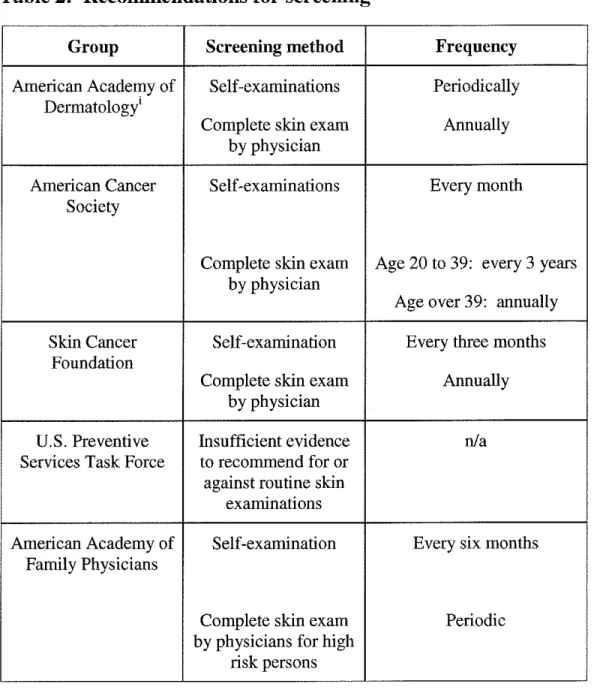
Table 2: Recommendations for screening ... 57
Table 3: Comparison of diagnostic accuracy ... 58
Table 4: Educational interventions on skin cancer prevention
INTRODUCTION
Skin cancer affects over one million persons each year, and the
incidence of skin cancer is increasing at an alarming rate. Multiple efforts
have been made in both primary and secondary prevention with the hope
of reducing the morbidity and mortality resulting from skin cancer. The
primary care physician may have an important role in reducing the
morbidity and mortality from skin cancer, but strong evidence to defend
these practices is limited and multiple barriers to preventive care exist.
This paper provides an overview of the problem of skin cancer, the
I
literature regarding primary prevention as it pertains to the primary care
physician, and the literature regarding secondary prevention strategies. It
then exaruines current practices of skin cancer prevention strategies made
by primary care physicians, barriers that exist, and ways to overcome
those obstacles. Finally, it includes a proposal for educating primary care
physicians through a continuing medical education curriculum focused on
diagnostic skills and strategies to target prevention efforts to high risk
II.
THE PROBLEM OF SKIN CANCER :
Burden of Suffering
Skin cancer represents an increasingly urgent worldwide public health
problem. The American Cancer Society estimated that approximately 1 million
new cases of nonmelanoma skin cancer (basal cell and squamous cell carcinomas)
and an additional 47,700 new cases of malignant melanoma were diagnosed in
2000. The total incidence is roughly equal to that of all other cancers combined,
and in 2000 alone, skin cancer claimed the lives of almost 9,600 people.1 Skin
cancer accounts for one third of newly diagnosed cancers in the United States,
making it the most common human malignancy.2
Although nonmelanoma skin cancers are the most common, melanoma is
generally the malignancy that receives the most interest among public health
professionals due to its relatively high mortality rate. Malignant melanoma
accounts for over 7 5% of deaths due to skin cancer2 Melanomas alone account
for 2% to 3% of all cancers in the United States3 The incidence of this cancer
seems to be increasing worldwide, doubling approximately every decade. The
lifetime risk for an American to develop malignant melanoma has been steadily
increasing since 19354 Current data estimate that 1 in 74 newborns in the United States will develop melanoma in their lifetime, compared with 111500 in 19353•4
In addition, a study by the CDC has reported that over the past two decades,
malignant melanoma incidence and mortality have increased by 4% and 2% per
. I z
The effect of melanoma is particularly noticeable because it is one of the
few malignancies that frequently affects young people. With a median age at
diagnosis of 53 years, melanoma ranks second among adult-onset cancers in years
of potential life lost per death. 5 According to the Skin Cancer Foundation,
malignant melanoma is the most frequent cancer in women in the United States
aged 25 and 29 years and is the second most common malignancy after breast
cancer for women aged 30-34 years.2 Overall, about !5% of melanoma patients
will die of their disease, with one fifth of these victims being younger than forty
years. This translates to approximately 1200 deaths per year of people in a young
age group3
The average thickness of melanoma at the time of diagnosis has fallen.
This may have led to an overall increased survival rate for persons with Stage I
melanoma from approximately 50% in the 1950's to approximately 90% today.
However, despite this, the death rate from melanoma continues to rise. It has
consistently risen by an average of 2% annually since 1950. In fact, during the
1973-1991 SEER interval, the mortality rate for melanoma increased faster than
for any other tumor except for prostate cancer. 6
• RISK FACTORS AND RECENT TRENDS
Persons with increased risk include those with clinical evidence of
melanocytic precursor or marker lesions (i.e., atypical moles, certain congenital
moles) (relative risk [RR] 7-70), a large number of common moles (RR 1-64),
substantial cumulative lifetime sun exposure (RR 3-5), intermittent intense sun
exposure or severe sunburns in childhood, freckles, poor tanning ability (RR 2-3),
and light skin, hair, and eye color.5'7 Geller et al found tbat, compared with
patients of various socioeconomic strata, Massachusetts patients with tbe lowest
socioeconomic status (census tracts witb lowest proportion of high school
graduates and households witb low median income) were more likely to be
diagnosed witb advanced-stage tumors and die from tbeir melanomaY Studies
suggest tbat melanoma is more common among persons in tbe higher
socioeconomic strata, except among those over 70 years of age, but the case
fatality may be greatest among the lower socioeconomic groups.9 Data show that
whites, older age groups, and men face a greater risk of melanoma tban do blacks,
younger people, and women, respectively. 10
• COST
According to Tsao et al, in an article in 1998 witb estimates of the annual
direct cost of treating melanoma, the annual direct cost of treating newly
diagnosed melanoma in 1997 was estimated to be $563 million. Stage I and Stage
II disease each comprised about 5% of the total cost; Stage III and Stage IV
disease consumed 34% and 55% of the total cost, respectively. About 90% of tbe
total annual direct cost of treating melanoma in 1997 was attributable to less than
I.
PRIMARY PREVENTION
More than 90% of skin cancers are attributed to ultraviolet radiation
(UVR) from the sun, and exposure to UVR is the most significant risk factor for
skin cancer. Due to this strong association, nearly all skin cancers could be
prevented through the use of sun protection strategies for reducing risk. Primary
prevention of skin cancer involves reducing avoidable sun exposure and
protecting the skin when sun exposure is unavoidable.
This section will review (a) current knowledge, attitudes and behavior of
the general population toward skin cancer and sun protection, (b) a brief overview
of public health programs to prevent skin cancers, (c) a review of counseling to
prevent skin cancer, including the evidence regarding recommended
sun-protection measures.
• CURRENT KNOWLEDGE, ATTITUDES, AND BEHAVIOR
"There is good news: skin cancer can be prevented. The challenge, however, lies
in changing the attitudes and behaviors that increase a person's risk of developing
skin cancer." --David Satcher, MD, PhD, Assistant Secretary for Health and
Surgeon General1
People know very little about skin cancer and in relationship to a
perception that a suntan is attractive, persons in the general population remain
committed to seek sun and have low rates of sun protection. The studies included
in this section are all large surveys performed in the U.S. or Australia. Survey
data may be limited by recall bias, which would likely provide an underestimate
of sun protection factors, and reporting bias, which might lead to an
overestimation (if respondents to the survey report the socially desirable answer).
Further, definitions such as "use of sunscreen" often vary by the interpretation of
the respondent, and therefore may not represent the recommended use of
sunscreen. (i.e., a man may place a small amount of sunscreen with SPF 4 on his
nose when it feels burned and report that he "regularly uses sunscreen".)
Knowledge
Multiple surveys have shown that people in the general population know }
I
little about skin cancer. In 1996 the American Academy of Dermatology
(A.A.D.) performed a random telephone survey of 1000 U.S. adults to poll
knowledge, attitudes, and behaviors associated with skin cancer and sun
protection. This survey was in follow-up of a similar 1986 survey by the A.A.D.
The 1996 survey revealed that only one third of the surveyed adults knew
melanoma was a skin cancer, and 50% of men and 35% of women did not know
the word "melanoma." Further, only 26% of adults knew early signs of
melanoma. Common misperceptions included that there is no risk from the sun
during the winter, that sun exposure is not harmful if one gradually tans to "build
up resistance", and that tanning beds are "safe". However, comparing data for
adults from 1986 to 1996, adults' knowledge of the perceived harmful effects of
Studies have also shown that in children and adolescents, knowledge
about sun protection and the effects of the sun increase as age increases.13'14 In
one study by Pion et al. of 693 school children ranging from 4-13 years of age,
4% of children 4-6 years old were aware of the need to wear sunscreen, versus
95% of children 9-10 years old.13 While almost all children were aware of the
negative immediate effects of sun exposure, namely sunburn, the same study
found that only 30% of children 11-13 years old knew that sun exposure is a risk
for skin cancer. A common misperception in children was that they should not be
worried about sunburns since sunburns usually go away in a few days.13
Attitudes
A prevailing attitude of both adults and children is that having a suntan is
attractive. The 1996 AAD survey found that women in a high-risk group had a
higher desire for a tan than women in low-risk groups.12·7 Results from the same
survey indicated that up to 68% of adults in the U.S. may feel healthier and more
attractive with a suntan.12 A study by Dixon et al. of primary school students and
their parents in Australia revealed that thirty percent of 735 primary school
parents believed their children looked healthier with a tan and 40% intended to let
their children get suntans the following summer14 Trends analyzed by the AAD
from 1986 to 1996 show that the attitude of adults that having a tan is healthy
became less prevalent, although the attitude that having a tan enhances
The Pion et al study of 693 school children found that 10% of children 4-6
years old already perceived having a suntan as attractive.13 The Dixon et a!
Australian study showed that attitudes about sun protection behaviors decline as
children approach adolescence.14 Many adolescents hold positive attitudes toward
tanning, reporting that having a tan is attractive and that it suggests physical and
emotional good health.15'16.17 The social influences of appearance and tanning are
especially important in the adolescent population.17
Behavior
Adults and children are intentionally tanning, and have generally low rates
of sun protection behavior. A general population-based telephone survey of 2459
white adults found that about 25% report frequent sunbathing, and only about a
quarter of these sunbathers use sunscreens at recommended levels.15 According
to the Behavioral Risk Factor Surveillance system data from 1999, only 40% of
men and 65% of women were likely to protect their skin when outdoors18 Other
studies report 26%-75% compliance with sunscreen use.12•7•3 Data from 10,048
white respondents to the 1992 national Health Interview Survey Cancer Control
Supplement found that a large percentage of US white adults did not protect
themselves from sun exposure. Proportions of 32%, 28%, and 30% were reported
for use of sunscreen, protective clothing, or seeking of shade if outside for more
than one hour on a sunny day, respectively16 In North Carolina, during
1997-1999, 48% of adults reported using sunscreen or protective clothing always, or
Several studies have indicated that sun protection practices are more
common at the beach or on vacation than at other outdoor activities7'19 In a beach
setting the following measures were used by 871 children ages 2-9 years (as
reported by children themselves and their caregivers): sunscreen, 79% of the
time; pants to the knee, 49%; shirts, 22%; shade, 12%; and hats, 3%.20 Trends
also suggest that more preventive practices are used among the following groups:
persons with fairer skin, females, persons with a personal or family history of skin
cancer, persons with higher education, older people, and persons with more
knowledge about skin cancer. 15'19'21'22
Some studies have reported that sunscreen is the most common form of
solar protection in children, adolescents, and adults7•8•23 According to the AAD
national survey of adults, from 1986 to 1996 the regular use of sunscreen
increased from 35% to 53%12 A large survey of 489 parents' behaviors with
respect to their children indicated that after sunscreen (which was used by 53%),
the most frequently used forms of sun protection ranked as follows: using shade
(30%), wearing hats (27%), and wearing shirts (8%).24
In North Carolina, the percentage of children who always or nearly always
used sunscreen or protective clothing when outdoors ranged from 53% to 71%
during 1997-1999. 1 In a study of a randomly selected sample of 200 adolescents
and 150 children, adequate sun protection measures were used in only 63% of 3
year olds and 38% of adolescents.25 Other studies support that sun protective
behaviors decrease as children become adolescents26•17·14 Two studies reported
that 33% of adolescents never use sunscreen.27'28 For all ages, sunscreen use was
greater for girls than for boys.15
Children and adults in the United States are getting sun-burned. Because
an estimated 50% to 80% of the skin's lifetime sun damage is thought to occur in
childhood and adolescence, it is during these critical periods that intense,
intermittent sun exposure causing burning increases melanoma risk, making it of
concern?0 One survey of parents in a single pediatric office found that 53% of
infants and young children had a history of sun-burning, with 31% having had
moderate or severe burns54 Another survey of 133 mothers in Australia reported
that by the age of six months, 33% of the infants had been sun-burned and by
three years of age, 82% had been sun-burned. 55 A random telephone survey in
Chicago of one child from each of 500 households found that13% of children had
been sunburned during the previous week?0 North Carolina statistics from the
CDC show that 24% of adults reported that they had been sunburned during 1999
and 36% reported that they had more than two sunburns that year.1 The AAD
data trends for adults indicate that from 1986 to 1996, the number of adults
reporting "at least one sunburn per year" increased from 30% to 39% in the U.S.12
There are multiple barriers to using sun protective methods, such as
products being too expensive, sunscreen being uncomfortable to wear, and
sunscreen being too inconvenient to put on.31 Sun protective clothing is reported
by some to be unattractive, too hot, too difficult to wear while active, and
expensive31 Along the same lines, the desire to obtain a tan is a major barrier to
that from 1986 to 1996 tanning booth use increased from 2% to 6%n In the 1996
survey, 28% of adolescents reported using a tanning facility at least once a
month.12 In adults in North Carolina, 8% report regularly using a tanning facility,
and 21-25% reported trying to get a suntan in 1999I8 Perceptions of tans as
attractive and as an indicator of good health for both adolescents and adults are
important causes of ignoring sun protection methods.25•26
• PUBLIC HEALTH CAMPAIGNS
Public education campaigns are an important part of the attempt to prevent
skin cancers. These interventions include education through the media, outreach
to professionals, school-based education, and education and policy changes at
outdoor sun exposure sites. Programs to educate the general public have been
implemented in numerous countries, although the evaluation of these programs is
limited. The aim of public educational interventions is to increase public
awareness and knowledge of the dangers of excessive sun exposure and to teach
people how to protect themselves from the sun with the hope of improving sun
protection behaviors.7•56 Of the few programs that have been evaluated, most
programs have been shown to increase knowledge, but only a few have been able
to report significant change in behavior7
For more than 25 years, Australians have implemented numerous public
health campaigns toward primary prevention of skin cancer7 In Australia,
to rise in older groups. Many public health professionals believe that these
changes are due to the reduction in sunlight exposure that has occurred in the
young age groups as a result of public education campaigns32 Australians have a
high level of knowledge about skin cancer; more than 90% of Australians have
heard of the term melanoma and more than 95% believe that skin cancer is a
dangerous disease.32 Of note, significant improvement in behaviors has also been
documented. In a study of 4, 428 adults in Melbourne, Australia from 1988 to
1995, the use of wide-brimmed hats when outdoors during peak hours increased
from 9% to 20%, the use of sunscreen increased from 19% to 34%, and sunburns
dropped from 15% to 9% in men and from 9% to 5% in women.21 Although the
community interventions in Australia may be producing a positive impact, their
use of many different complementary interventions makes it difficult to evaluate
the relative contribution of each intervention.
The United States did not begin coordinated efforts toward primary
prevention campaigns until the eighties. Because of the 10-20 year latency
between exposure and clinical appearance of skin cancer, it is too early to
evaluate morbidity and mortality outcomes in the U.S?3 In order to measure the
success of public education programs, evaluators must rely on a variety of
intermediate outcomes, including increased levels of knowledge and improvement
in attitudes, decreased rates of intentional tanning, decreased rates of sunburn, and
an increased use of sunscreens and protective clothing.23'7'8'29 However, results
based on these intermediate measures must be interpreted with caution. Although
and attitudes about the desirability of tanning has moderated during the past ten
years, there is little evidence that sun protective behaviors have significantly
changed.12"30 Many studies have shown that knowledge about the dangers of sun
exposure and about methods of sun protection does not ensure positive attitudes
toward sun protection or practicing sun protection behaviors.12·34
• COUNSELING TO PREVENT SKIN CANCER
Individual physicians must consider whether to take time to counsel
patients about skin cancer and sun protection. Additionally, when undertaking
counseling, knowing what behaviors and practices to recommend in order to
reduce a patient's risk of skin cancer is crucial.
The Recommendations (or Primary Prevention (See Table 1)
At the American Academy of Dermatology and Centers for Disease
Control and Prevention Consensus Conference in 1996, the following
recommendations were developed: " a) limit exposure to UC radiation, especially
between lOa.m. and 4p.m., b) wear protective clothing and sunglasses, c) use
sunscreens (SPF-15 or higher) including SPF lip balms, d) avoid artificial tanning
devices, e) for children younger than 6 months of age, use hats, clothing, and
shading rather an sunscreen, f) encourage children to practice the shadow rule:
areas and preservation of the ozone layer should contribute to primary prevention
of skin cancer"8'35·36 Further, one of the CDC Healthy People 2010 goals is to
"increase the proportion of persons who use at least one of the following
protective measures that may reduce the risk of skin cancer: avoid the sun
between 10 a,m, and 4 p.m., wear sun-protective clothing when exposed to
sunlight, use sunscreen with a sun-protective factor (SPF) of 15 or higher, and
avoid artificial sources of ultraviolet light." 36
A Review ofthe Evidence
A voiding sun and staying in the shade
The sun's UVR is strongest during peak sun hours, when a person's
shadow is shortest. Although UVR intensity varies with latitude and altitude, the
general recommendation is to avoid the sun between the hours of 10 a.m and 4
p.m. Using shade is certainly important, but it is also essential to keep in mind
that sun exposure, and even sunburns, can occur while in the shade. Up to 90% of
UVR can be reflected by bright colored surfaces, water, white sand, concrete,
snow, and ice36'38 The degree of protection provided by a canopy (or umbrella) is
a function of the material lining the canopy and the height of the canopy off the
Dressing in protective clothing
Protection from clothing can be quantified in terms of SPF, although few
studies have examined the protective abilities of different fabrics. Studies show
that specially designed sun protective clothing can provide up to an SPF of 30,
while normal summer weight clothing provides an SPF of around 5-6?9•40 Hats,
depending on the style, can provide around SPF 15 for the forehead and SPF 3-7
(if wide-brimmed) to the nose, cheek, and back of neck38 Nylon stockings
provide an SPF of 239 The available studies show that woven nylon and cotton
and other tightly woven fabrics provide the most protection and that the tightness
of the weave and not the thickness of the fabric is most important. 38•41
Recommended protective clothing includes wide-brimmed hats that shield the
face, ears, and neck, long-sleeved shirts and tee shirts rather than tank tops, long
shorts to the knees, socks, tennis shoes rather than sandals, and sunglasses with
UVR protection. The more coverage provided by clothing, the more it protects
from the sun38.41'42
Using Sunscreen
Recent data have shown that regular use of sunscreens can prevent the
development of new actinic keratoses and hasten the remission of existing ones.
By inference, they are capable of reducing the long-term risk of
nonmelanomatous skin cancer. 43'44'3 Investigators have estimated that regular use
as a 78% reduction in the lifetime incidence of basal cell cancer and squamous
cell cancer.45,46,34
The protective link between melanoma and sunscreens has been much
more controversiaL Practical evidence suggests that since UVR is implicated in
melanoma risk and that sunscreens reduce the amount of UVR absorbed by the
skin, sunscreen use would be important in melanoma prevention. Further, lack of
sunscreen has been associated with melanoma.47 However, early studies have
suggested that sunscreen use might not reduce the risk for melanoma and some
critics have even suggested that sunscreen use might actually increase the risk for
melanoma. These studies-despite weakness in design (i.e., retrospective nature
and potential for recall bias, interval bias, lack of power, and definitions for
sunscreen use)-have led to debate over the evidence involving the use of
sunscreens.33.48 Skeptics have also suggested that people who wear sunscreen may
actually stay out in the sun longer, since they can endure more hours in the sun
before their skin burns. 7
More recent, prospective studies are showing favor for sunscreen. A
recent randomized controlled trial found that the number of new nevi-a risk
factor for melanoma-was decreased in children regularly using sunscreens57.49
Although we do not yet have direct evidence of sunscreen use on melanoma risk,
we can also look at the melanoma incidence rate in areas where regular sunscreen
use is common. In Australia, where 74% of the population regularly uses
Melanoma rates are also decreasing in white persons in Hawaii, a group that has
among the highest per capita use of sunscreen in the United States. 51
Deliberate tanning (indoor and outdoor)
Approximately 2 million Americans use tanning beds each day, and
approximately 28 million Americans tan indoors annually52 Behavior studies
show that many people who tan indoors also seek outdoor sun. The use of
tanning facilities has not been directly linked to cancer risk, but skin damage after
use is common5·58 Since skin damage can occur from the UV radiation found in
tanning beds, as well as UVR received directly from the sun, both indoor and
outdoor tanning should be discouraged. 36
EVALUATION OF PHYSICIAN COUNSELING
No studies have evaluated whether physician counseling reduces
morbidity and mortality from skin cancer. From 1983-1987, Robinson et a!
performed a prospective study to see if patients who received education about sun
protection coupled with the removal of a nonmelanoma skin cancer changed
behavior. After 2-6 years of annual education by physicians in addition to written
materials, the study population-which consisted primarily of women-reduced
tanning by only I %59 The authors also reported a small increase the use of
protective clothing, increase in the use of sunscreen, and decrease in the amount
of deliberate tanning among patients59 Worksite educational interventions have
shirts, and use of shade after the intervention, 60•61 although whether this is
generalizable to physician counseling is unknown.
Prevention strategies must be weighed with regard to harms and benefits.
The main harm associated with physician counseling is time, which is precious to
the busy physician. Further, physicians may not be financially compensated for
their time spent counseling. Another potential harm is a strain on the
doctor-patient relationship, particularly if the doctor-patient is not interested in changing
behavior. The benefits are difficult to assess without strong prospective data
showing that physician counseling reduces morbidity and mortality associated
with skin cancer. In theory, education and advice by a physician would result in
more persons protecting themselves from the sun, which would result in a
decreased incidence of skin cancer and thus lower associated morbidity and
mortality. Most certainly, this is a difficult area of research, and more study is
needed.
Based on the established efficacy of risk reduction from sun avoidance,
the potential for large health benefits, low cost, and low risk of adverse effects
from counseling, the United States Preventive Services Task Force concludes that
counseling adults and children at increased risk of skin cancer to avoid excess un
exposure and use protective clothing is recommended, even though the
effectiveness of physician counseling is not well established. They conclude that
there is insufficient evidence to recommend for or against counseling patients to
IV. SECONDARY PREVENTION AND EARLY
DETECTION STRATEGIES
As an external tumor, melanoma should be more readily discovered than
other types of cancer--"Melanoma writes its message in the skin with its own ink
and is there for all to see. "62 A wide range of opinion exists, however, about the
value and efficacy of screening. (See Table 2) The American Academy of
Dermatology and the American Cancer Society endorse regular skin cancer
examinations. The Canadian Task Force on the Periodic Health Examination
recommends skin examinations only for high-risk patients, including those with a
personal or family history of skin cancer, precursor lesions, or increased exposure
to sunlight. The US Preventive Services Task Force and the International Union
Against Cancer do not recommend for or against screening for melanoma based
on insufficient evidence5·63
• THEORY
Screening is appropriate when l) the disease is highly prevalent and
causes considerable morbidity and mortality, 2) the natural history of the disease
includes a detectable pre-symptomatic phase, 3) early treatment is more beneficial
in preventing morbidity and mortality than later treatment, and 4) an acceptable,
safe, and inexpensive screening test exists, (the benefits of testing outweigh the
harms). In theory, screening for skin cancer meets these criteria and should
and the incidence and mortality of melanoma are increasing at an alarming rate.
There is a detectable pre-symptomatic phase, and removal of "early", thinner
lesions is associated with longer survival than "later" thicker lesions (although
lead time bias may exist). The skin is accessible and easy to treat. In fact, many
biopsy procedures are both diagnostic and therapeutic. Screening is noninvasive,
inexpensive, and acceptable to the public.
• HOW DO WE MEASURE SCREENING STRATEGIES?
The goal of screening for skin cancer is to decrease skin cancer related
mortality; however, there have been no controlled trials evaluating this potential
impact. Because there is no randomized trial data evaluating the effects of
screening on mortality, other types of studies track intermediate outcome
measures, including: a decrease in the rate of thick melanoma lesions in a defined
population following introduction in screening, reversing years of potential life
lost (YPLL) per death for melanoma, improving quality of life by detecting
thinner, more curable melanoma (and thereby reducing levels of physical and
psychosocial morbidity seen with recurrent melanoma), and cost-effectiveness
analysis.2
STRATEGIES
Secondary prevention efforts are aimed at preventing death from
cutaneous malignant melanoma by encouraging early detection and thus removal
of thin melanomas. Strategies for skin cancer screening can be categorized in
four ways: I) routine screening of the general population in an out-patient
setting; 2) surveillance screening, or the examination or individuals who are at
high risk or have had a previous skin cancer; 3) mass screening, or
population-based screening of asymptomatic individuals; and 4) skin self-examinations.
• ROUTINE SCREENING OF THE GENERAL POPULATION
Integration of a total skin examination-consisting of a thorough
examination of patients' skin-into a health maintenance visit for primary care
patients may be a practical and efficient strategy for reducing skin cancer
morbidity and mortality. Many opportunities for such screening exist, since
approximately 85% of the population of the United States sees a physician every
2 years7, and routine examinations are among the 10 most common reasons for
patient visits86 (16.5% of total outpatient visits in 1996 according to the NIH).110
In one study of 216 melanoma cases, 87% had regular physicians and 63% had
seen those physicians in the year prior to diagnosis, but only 20% reported having
had a "physician skin examination", as defined by the patient (although this may
be an underestimate due to the retrospective nature of the study).8 Studies of
melanoma case-finding note that an estimated 14% to 25% of melanoma is
discovered by the doctor at a time when the patient had not noticed anything
wrong.7
However, routine screening will not work unless general physicians can
make accurate assessments. The sensitivity and specificity of a
dermatologist-conducted total cutaneous examination approach 93.3% and 97.8%, respectively,
the sensitivity and specificity of well trained physician skin exam ranges from
84.5%-97% and 72.4%-97.8%, respectively.65 However, studies suggest that
primary care physicians are less skilled at detecting skin cancers. Cassileth et a!
showed that only 12% of nondermatologists could correctly identify at least five
of six melanomas, as compared with 69% of dermatologists83 In another study,
89% of second-year medical students were capable of identifying a clinical
photograph of a melanoma; however, only one fourth-year student of 285 detected
a melanoma on a standardized patient.66 In another study, primary care residents
failed 50% of the time to diagnose correctly nonmelanoma skin cancer and
malignant melanoma7 Routine screening will not work unless primary care
providers are educated to make more accurate assessments.
A total skin examination (TSE) may be performed in 5-10 minutes, and
many physicians view the additional time required to be a barrier to
implementation. 67 Other barriers include lack of reimbursement and distraction by
other health problems. Further, the fact that only 20% of melanomas occur on
normally exposed body surfaces likely decreases the yield of screening for skin
cancer67 Patient embarrassment may be an adverse effect of TSE, although no
serious adverse affects of TSE and follow-up biopsies have been reported. Other
limitations include the low positive predictive value from screening (with a likely
increase in biopsies) in a low prevalence population and the resulting morbidity
from false positive findings. There are no studies available that describe the effect
• MASS SCREENING
Few studies have been conducted on the efficacy of mass screenmg
programs, which are typically designed to attract people in the community to
attend a skin screening fair. Most studies to date have reported on the number of
individuals screened and the results of screenings in terms of lesions identified.
Little is known about the long-term follow-up of individuals who participate in
these screenings. However, a few mass screening programs have demonstrated
feasibility and success in detecting thinner melanomas than those of the general
population. For example, the American Academy of Dermatology (AAD) has
provided free skin screenings by volunteer dermatologists for more than 6,000
Americans from 1985 to 1993. The AAD screenings appear to detect early
melanomas, with stage and thickness distributions comparing favorably with
those of the SEER population-based data. However, self-selection bias and other
screening biases exist, and there is no information available on improved
mortality.68'69
One proposed benefit of mass screening is to provide a mechanism by
which persons, especially the poor, can gain access to medical care. Based on
1992-3 data from the AAD, greater than 75% of participants reported not having a
regular dermatologist, 47% would not have seen a physician without the AAD
screen, and 9% had no health insurance. 10
However, formal evaluation of mass screening programs to date has been
limited. Randomized controlled trials to assess the effectiveness of these
evidence in the absence of RCT's are those aimed at very high-risk patients, such
as those with familial melanoma. Although these programs have detected
substantially thinner melanomas than the melanomas that occurred prior to
enrollment in the program, these programs are resource-intensive and give rise to
I . . f I Jo
on y a nnnonty o me anomas.
In addition, most mass screening programs are in fact voluntary screening
programs in which the people who participate are in a higher risk population.
Studies of screening in Massachusetts showed that many persons at risk attended
the American Academy of Dermatology screening programs. Greater than 86%
had at least one risk factor and 78% had at least two risk factors.19 Thus, the mass
screening programs available for evaluation may in fact be screening programs
dedicated to high-risk populations. Since their outcome measures include
comparing lesion thickness to the general population, this may be comparing
apples to oranges (no appropriate control group). However, these screening
programs may be a feasible way to target screening efforts toward high-risk
patients.
The main potential problems with population based screening for melanoma
are that the sensitivity and specificity have not been quantified and the cost is
substantial. Further, if every individual in the United States were put through a
skin cancer screening, and the screeners were so well trained that their specificity
approached 99.9%, more than 200,000 false-positives would result. Each of these
time spent66 Stndies with long-term follow-up and formal control groups should
determine the impact of early detection programs on melanoma mortality.
• SCREENING HIGH-RISK PATIENTS
Screening and surveillance of high-risk persons may be a more effective
way of detecting melanoma before the malignancy has metastasized. Targeting
screening to high-risk persons should improve the predictive value of the visual
exam, since the baseline prevalence in this population is higher than the general
population. The percent of the total population that is at "high-risk" is unknown,
since risk factors and high-risk definitions vary significantly in studies. The value
.
I
in targeting screening and surveillance to high-risk persons is dependent on the
extent to which readily measurable markers of risk statns may be obtained and
used in the screening program. The most desirable markers are those with high
attributable risk percentages; however, specific data about attributable risk
(estimates with narrow confidence intervals) are lacking. There may be special
value in screening those at risk for advanced disease and death, including
middle-aged and older white men and possibly those of lower socioeconomic statns in
addition to the risk factors mentioned previously.7
A precedent for screening high-risk persons has evolved by monitoring
and educating persons with multiple nevi or atypical moles/dysplastic nevi within
the familial melanoma setting. Although such persons comprise only a small
fraction of the population, they represent a model for a comprehensive program to
The Netherlands and in Philadelphia led to the detection of thinner melanomas,
which is often used as an intermediate marker for morbidity and mortality. In
both sites, family members receiving intensive screening and education were
more likely to be diagnosed with thinner lesions than were index cases. The
authors of both studies concluded that surveillance and education within such a
high-risk population could have a beneficial effect on early detection7'8
Other studies have focused on identifying high-risk populations that may
benefit from targeted screening practices. In Scotland, Mackie et al followed 85
patients after the diagnosis of three or more clinically atypical nevi in the absence
of a personal or family history of melanoma. After 583 person-years of
follow-up, they found five invasive melanomas, compared with an expected number of
invasive melanomas of 0.054 (RR 92, 95% CI:30-216).70 Rigel et al found 18
newly diagnosed melanomas during a 27 month follow-up of 452 patients with
dysplastic nevi6 Kang et al concluded that careful monitoring of patients with
atypical nevi yielded thin, early melanomas? Similarly, Marghoob followed
patients with classic atypical moles and found five melanomas, all less than
0.80mm.7 In a case-control study, Tucker et al noted that family members of
unselected persons with dysplastic nevi are more likely to have dysplastic nevi
(RR 7.2, 95% CI: 2.1-24) and may be at an increased risk for melanoma7
Asking patients to count moles is one way of identifying patients at high
risk of developing melanoma. These counts have been shown to be comparable to
a physician's count. One study considering whether an individual patient could
freckles, number of palpable nevi, and number of nevi greater than 5mm in
diameter, specificity ranged form 80% to 95% (using physician exam as the gold
standard).71 Taking this one step further, MacKie has developed a risk factor flow
chart, which incorporates four independent risk factors---freckling, more than 20
moles, presence of atypical nevi, and history of episodes of severe sunburn--that
is suitable for patients to complete themselves. This flow chart was derived from
weightings of independent risk factors found in cases and controls matched for
age and sex. One study by Jackson et al of 3,105 patients in 16 randomly selected
group practices showed that 8.7% of patient respondents to the MacKie
questionnaire were at "high-risk", and agreement existed with the results of the
skin examination for the three physically recordable high risk factors--freckles,
I
moles, and atypical nevi. The MacKie risk factor flow chart showed that this
combined high-risk group had a median excess risk for melanoma of 60-90 times
base risk in men and 40 or more times base risk in women72 This method of
identifying a high-risk population appears to be feasible and may be an important
step in implementing screening of high-risk individuals.
• SKIN SELF-EXAMINATIONS
The patient's ability to perform visual skin examinations is another
consideration. Skin self-examination (SSE) can raise awareness and familiarity of
one's own moles, but until recently little data existed about the value of this type
of activity. One study of 195 patients showed that using a seven-point checklist,
dermatologist. The patient checklist had a sensitivity of 71%, specificity of 99%,
and positive predictive value of 7% for malignant melanoma diagnosis, using the
dermatologist's clinical diagnosis as the "gold standard..5'73•84 Healtsmith et al
compared the seven-point checklist and the ABCD system and found all
melanomas (n=65) to have at least one of the three major criteria of the seven
-point list74 Gruber et al studied the ability of dermatology patients without
melanoma to accurately record factors associated with an increased risk for
melanoma (the number of freckles on the right forearm, the number of palpable
arm nevi, and nevi greater than 5mm in diameter on the entire body). These
persons were first asked to examine their own skin and were subsequently
examined by a physician. Using physician examination as the standard, they
found that specificity ranged form 83% to more than 95% for these three
cutaneous markers.7·8·63
Berwick et al performed a population-based case-control in Connecticut,
showing that only 15% of patients performed skin self-examinations. However,
the performance of SSE was associated with a reduced risk of advanced disease
(unadjusted RR 0.58; 95% CI: 0.31-1.11).32 Koh et al have reported that only one
in five patients with melanoma practiced self-screening prior to diagnosis. One
study documented that only 6% of patients followed recommendations for
self-examination. 33
Benefits of self-screening include ease and patient comfort, time
efficiency, and inexpensive nature of the practice. Limitations include the need to
examine their skin for suspicious lesions. This would take a massive public
health effort that may be costly. In light of the low performances of patients who
have been advised by their physicians to perform SSE, the massive effort to teach
the public may not be cost-effective.
• THE BALANCE BETWEEN BENEFITS AND HARMS OF SCREENING
FOR SKIN CANCER.
The main benefit from aggressive screening strategies is that they may
improve prognosis for individuals whose disease is detected by screening. On a
population level, this may translate to decreased mortality from skin cancer. In
addition, because thinner, less advanced lesions will be detected more frequently,
less radical treatments may be utilized to cure some cases, which would lower
treatment costs on a population level. Further, screening may provide reassurance
for individuals with negative results.
On the other hand, although prevention strategies are aimed to benefit
people, they can lead to harms that may outweigh potential benefit. Firstly,
because there may be lead-time in diagnosis from screening, patients whose
prognosis is unaltered may experience an unnecessarily longer period of
morbidity. Further, there is potential for over-diagnosis, which may lead to the
over-treatment of borderline abnormalities. In addition, screening may provide
false reassurance for those with false-negative tests or unnecessary surgery for
those with false-positive results, initiating a complex series of diagnostic tests.
investigators to conclude that there is no gold standard for diagnosis79 Without a
valid and reliable gold standard, it is not possible to evaluate a screening test and
there is a strong likelihood for causing harm through misdiagnosis. If a malignant
nevus is misdiagnosed as being benign, the diagnostic process of excisional
biopsy may or may not cure it. If a benign nevus is misdiagnosed as malignant,
that patient will unnecessarily undergo routine skin examinations for the rest of
his or her life and may be unable to obtain health or life insurance in the future.
That patient's family members also may undergo skin cancer screening for an
indefinite period of time79 Although no serious adverse effects have been
reported, there is potential for wound infection and scarring from the diagnostic
test. Finally, screening strategies may bear a high economic burden, stemming
from administration, diagnosing, and over-treatment. There may be limitations in
adequate facilities for diagnosis and treatment of detected cancers.
• COST EFFECTIVENESS STUDIES
Freedberg et al published a cost-effectiveness analysis for screening
high-risk patients in a clinic setting for malignant melanoma in the Journal of the
American Academy of Dermatology in 1999.78 They developed a decision
analysis cost-effectiveness model to project the impact of large-scale (one time)
skin cancer screening in high-risk patients in the United States. Results showed
that the cost-effectiveness ratio for the screening program is $29,170 per year of
life saved compared with no screening. This translated to $30,360 per QAL Y
In a sensitivity analysis, Freedberg et al. discovered that as long as the
prevalence in the screened population was above 9 per 10,000, the
cost-effectiveness ratio remained below $50,000 per year of life saved.78 The
cost-effectiveness in men 50 and over (prevalence 25 per 10,000) was $15,580 per ear
of life saved, compared with women younger than 50 years (prevalence 8 per
10,000) with a ratio of $51,320 per year of life saved. The results of the model
were highly dependent on the cost of screening, which was estimated to be $30
per screen (not counting the cost of biopsy, follow-up visit, pathology, or
treatment). As long as the true screening cost is below $57, the cost-effectiveness
ratio fell below $50,000 per year oflife saved.78
According to this study, skin cancer screening appears to be likely to
increase both life expectancy and quality-adjusted life expectancy. For every 1
million persons screened, the authors project an increase of 1200 years of life
saved, with total expenditures, including screening and treatment, of $826 million.
This translates to a cost-effectiveness ratio of $29,170 per year of life saved
compared with the unscreened group. A rough ranking suggests that a one-time
skin cancer screening of high risk individuals is generally comparable in
cost-effectiveness to other cancer screening programs (i.e., every 3'd year
pap=$46,410/YLS, annual mammogram age 55-65 =$32,130/YLS).78
In the only other published cost-effectiveness study of melanoma
screening Girgis et al. found that screening of Australians age 50 years and older
by family practice doctors had a cost-effectiveness of Aust. $6,900 for men and
done more frequently. These results translated to US $12,137 per life saved if
screening was implemented by family practitioners for men over the age of 50
years.78·7
There are several limitations to this study. First, the authors assume that
screening itself is effective, which has not yet been proven. The survival benefit
from screening in this model is projected from thickness and stage distribution
from available screening and population-based data and not from randomized
trials. Lead-time and length bias may be involved in any apparent survival
advantage seen with thinner melanoma lesions. Better data on the incidence rates
and growth rates of melanoma would ideally be incorporated into these models as
they become available. Finally, this model addresses the impact of screening by
dermatologists rather than primary care physicians, and therefore may not be
V.
SKIN CANCER PREVENTION AND THE
PRIMARY CARE PHYSICIAN
Primary Care Physicians are in an ideal position to implement skin cancer
prevention counseling and early detection in their practices. Approximately 79%
of persons in the US visit their primary care doctor at least once a year, 85 and
routine examinations are among the 10 most common reasons for patient visits.86
Further, in a study of patients diagnosed with malignant melanoma, 87% stated
that they had regular physicians, 63% had seen those physicians in the year prior
to diagnosis, but only 24% had regular dermatologists87
In this section, I will briefly review the literature showing that primary
care physicians are not screening and counseling patients about skin cancer,
describe two primary barriers to skin cancer prevention practices, and discuss
ways to overcome these obstacles.
• Primary care providers are not screening and counseling patients
about skin cancer
Despite the potential for effectiveness, multiple studies show that skin
cancer control practices are performed less frequently than other preventive
practices. Oliveria et a! published a descriptive study analyzing 1-page
summaries by physicians on 784 primary care visits, revealing that skin
examinations were recorded in only 15.8% of all outpatient visits by whites or
non-hispanics to family practitioners or internists.88 The frequencies for other
examination, and 27.6% for rectal examination. Skin cancer prevention education
and counseling was reported at 2.3% of visits versus 13.0% for breast
self-examination, 25.3% for diet and nutrition, 5.7% for tobacco cessation, and 17.9%
for exercise. 88 Federman et al also assessed the frequency of documented skin
examinations in the charts of 200 randomly selected patients older than 50 and
receiving care in outpatient clinics, reporting that skin examination was
performed in 18% of patients without skin-related complaints.89 The frequency of
skin cancer examination was much lower when compared to other cancer
screening examinations such as fecal occult blood testing, rectal examination,
sigmoidoscopy, prostate examination, mammography, and pap smear.89
In another study-a telephone survey conducted in Rhode Island-48%
of respondents reported that their general medical physician or nurse practitioner
rarely or never examined their skin.7"12 Recommendations by a physician to
regularly examine skin for signs of skin cancer were reported by 25% of these
participants. The American Cancer Society conducted a survey of physicians'
attitudes and practices in early cancer detection, revealing that 59% of internists
and 62% of family practitioners discussed skin cancer with their patients. Only
27% and 32% of internists and family physicians, respectively, cautioned most
patients about skin cancer. 7 In a survey of 216 melanoma patients, Geller et al
found that only 20% reported having a physician skin examination in the year
prior to their diagnosis (although data on patient recollection of physician skin
examinations may be an underestimate)87 Dolan et al assessed skin cancer control
based on self-report, the results showed that 44% of physicians performed a
complete skin examination at the first visit for a new patient 61-100% of the time,
while only 15% performed these examinations at follow-up visits90 More than
half of the physicians reported that they infrequently counseled their patients
about skin cancer.
A large study of outpatient physicians examined 703 million office
visits and found that skin cancer prevention counseling or education was
documented in 12 million visits (1.5%
)?
4 For patients younger than 20 years,counseling was documented in only 1% of 169 million office visits. For patients
who are high-risk--defined as having a current or previous history of
nonmelanoma or melanoma skin cancer or actinic keratosis that was identified by
the treating physician-35% of 7.9 million patients received documented
counseling about skin cancer prevention. In these high-risk patients,
dermatologist documented counseling at 41% of visits, compared with 24% for
general and family practice and 7.7% for internal medicine.74 This same study
revealed that in high risk patients, skin examinations were documented at 78% of
dermatology visits versus 27% of family physician visits and 0% of internal
medicine visits. Likely many counseling and screening efforts are not recorded in
medical records, thus giving results that are falsely low. Further, it is unclear if
the authors identified which providers referred counseling and screening efforts to
a dermatologist.
Regarding counseling practices, the largest study of 756(60%) of 1263
safe sun practices to more than half of their patients and their parents during the
summer months.91 In this study, four variables were independently associated
with a practitioner's providing safe sun recommendations to more than 50% of
parents and children: I) private setting and health maintenance organization
practitioners as opposed to academic physicians, 2) high ranking of patients' safe
sun knowledge, 3) high priorities of both parents and physicians for sun
protection counseling and parental knowledge of safe sun practices relative to
other recommendations, and 4) pediatrician interest in receiving instructional
materials91
In a 1986 survey of pediatricians, Pupo et a! found that 62% of
pediatricians included sun protection as part of their well-child care. Of these
respondents, 66% said patients asked questions related to sun exposure in an
average month, and 65% of pediatricians requested further information regarding
sun-related issues92· Another study in New Jersey found that only 30% of 96
pediatric faculty and residents at 3 pediatric centers warned their patients about
sun exposure. 93 A survey of 600 US pediatricians showed that, although most
pediatricians believed that they had a professional responsibility to counsel about
sun protection and that counseling would be effective in decreasing skin cancer
the number of sunburns, 78% believed they had not had adequate training on sun
protection counseling in their residency program.95 Only 13% indicated that they
"always" counseled parents and children about sun protection, and 47% "usually"
counseled. 95 Comparing 261 primary care providers for children, one study
compared to 43.8% ofN family practitioners.94
• Why are primary care doctors not counseling and screening for skin cancer?
Barriers to skin cancer prevention practices include conflicting
recommendations, lack of physician confidence and inadequate training, time and
reimbursement issues, and potential perception of lesser importance compared
with other medical issues. I will address the former two barriers and suggest
ways to overcome these obstacles.
Barrier#l: Conflicting Recommendations (See Table 2)
Regarding primary prevention, the American Cancer Society, the
American Academy of Dermatology, the American Medical Association, and an
NIH Consensus Panel all recommend patient education concerning sun avoidance
and sunscreen use as well as avoiding artificial tanning devices. Further, the
American Academy of Family Physicians recommends protection from ultraviolet
light for all persons with increased exposure to sunlight.5
The U.S. Preventive Services Task Force states that there is insufficient
evidence to recommend for or against counseling patients to perform periodic
self-exantination of the skin, and adds that "clinicians may wish to educate
patients with established risk factors (i.e., patients with atypical moles, certain
congenital moles, large numbers of common moles, immunosuppression, a family