1
The HPV Vaccine: Are Dosing Recommendations Being Followed?
By
Weiyi Tan
A Master’s Paper submitted to the faculty of the University of North Carolina at Chapel Hill
in partial fulfillment of the requirements for the degree of Master of Public Health in
the Public Health Leadership Program.
Chapel Hill
2010
[signature]
__________________________
Advisor: [printed name]
____ ________________
Date
[signature]
_________________________________
Second Reader: [printed name]
___________________
2
Table of Contents
Abstract ... 3
HPV vaccine initiation and completion rates and associated factors: a systematic review ... .. Introduction ... 4
Methods ... 6
Results ... 9
Discussion ... 25
Secondary data analysis of the North Carolina Immunization Registry ... .. Introduction ... 30
Methods ... 31
Results ... 33
Discussion ... 37
References ... 42
Figures and Tables ... Systematic Review ... .. Figure ... 10
Table 1 ... 12
Table 2 ... 14
Table 3 ... 21
Table 4 ... 22
Secondary Data Analysis ... .. Table 1 ... 45
Table 2 ... 46
Table 3 ... 47
Figure 1 ... 48
3 Abstract
Objective: This Master’s paper aims to characterize the extent of HPV vaccination in the United States, and to summarize the current literature about HPV vaccination, series completion, and factors related to uptake and completion. It also aims to determine the percentage of HPV vaccine completion and on-time dosing, as well as identify factors associated with series completion and on-time dosing.
Design: We determined the rates of HPV vaccination and series completion through a systematic review. We also conducted a secondary data analysis of the North Carolina Immunization
Registry (NCIR) to answer a focused clinical question about the rates of HPV vaccination
completion and on-time dosing among a select population of females aged 9-26 years of age with at least one dose of the HPV vaccine.
Results: The literature review indicated that the rates of HPV vaccination vary widely depending on the type of patient population selected. Initiation rates varied between 5 – 77% and
completion rates between 0.2% and 58.2%. Correlates for uptake and series completion varied for each study, but most found associations between race, ethnicity, insurance status and the measured outcomes. Of the 138,823 females analyzed in the secondary data analysis, 55% completed the vaccine series and 28% completed the series on-time. The percentage of those receiving the vaccine on-time has decreased each year from 43% in 2006 to 25% in 2009. African American race and public funding were significantly associated with lower rates of on-time dosing as well as series completion when compared to White race and private funding, respectively.
4 Introduction
The human papillomavirus (HPV) infects an estimated 6.2 million people in the United
States every year, and is the most common sexually transmitted infection.1 Persistent infection
with high-risk HPV serotypes, particularly types 16 and 18, is the most important risk factor for
developing cervical cancer1 while infection with HPV types 6 and 11 is responsible for most
genital wart cases.1 The quadrivalent HPV vaccine (Gardasil®) is designed to prevent anogenital
disease and cervical cancer associated with HPV types 6, 11, 16, and 18.2 Since HPV is such a
common sexually transmitted infection, the HPV vaccine is most effective when administered
prior to sexual debut.3 For this reason the Advisory Committee on Immunization Practices
(ACIP) recommended to routinely vaccinate females 11-12 years of age in 2007.1 Catch-up
vaccination of women not previously vaccinated extends up through 26 years of age. The
American Academy of Pediatrics and the American Academy of Family Practitioners also
espouse similar recommendations.4 In October of 2009, the ACIP updated its recommendations
about HPV vaccination.5-6 The bivalent vaccine was also approved for use in females 9-26 years
of age,5 and the quadrivalent vaccine was approved for use in males 9-26 years of age in order to
prevent anogenital warts.6 Nevertheless, the focus of this report is on the use of the vaccine in
women, specifically the quadrivalent product, given the relatively recent introduction of the
bivalent vaccine and use of the quadrivalent vaccine in males.
Despite the federal government’s approval of the vaccine, its recommendation to vaccinate
females from 9-26 years of age,1 and its addition of Gardasil® to the Vaccines for Children
Program,7 the reported rates of HPV vaccination for young girls remains low. Nationally, only
37.2% of adolescent females (aged 13-17) had initiated the HPV vaccine series in 2008, and only
5
the vaccine against cervical cancer and genital warts had high rates of compliance,9 and thus the
effectiveness of the vaccine in girls who do not complete the series is unknown.
The quadrivalent vaccine is recommended to be administered as 3 separate doses with the 2nd
and 3rd dose given at 2 and 6 months following the first dose, respectively. In clinical practice, it
is likely that some females will receive their 2nd and 3rd vaccine doses at intervals outside the
recommended dosing window.10-12 Currently, the standard of care is to finish the three-doses
regardless of the schedule.1 There are limited data to assess how the late timing of the intervals
between the 1st and 2nd or 2nd and 3rd dose of the vaccine will affect the humoral immune
response, but studies are currently underway.13-16
To our knowledge, no systematic reviews about the uptake, completion, and adherence to
dosing schedules of the HPV vaccine exist in the literature. Few studies have examined
correlates for completion of the HPV vaccination series.17-19 However, we are aware of no study
documenting factors associated with on-time dosing in addition to vaccine series completion.
This report is a new systematic review of the current state of the literature on the subject. The
review focuses on the completion rates of the HPV vaccine and on factors that are associated
with series uptake or completion. The goal of this review is to highlight the extent to which the
HPV vaccine is being completed when initiated, along with the factors associated with
completion and uptake. This information will give insight into ways physicians, public health
professionals, and policymakers can act in order to address the problems of low uptake and poor
completion rates. Low uptake may reduce vaccine’s impact on the population to prevent cervical
cancer, while poor completion rates may reduce the effectiveness of the vaccine against cervical
6
In order to answer the question about actual uptake and completion of the HPV vaccine, we
sought observational studies characterizing HPV vaccination rates (uptake or completion) and
factors associated with vaccination in women between the ages of 9-26. Clinical trials were not
chosen in this review due to the fact that trial settings have inflated adherence rates, and the goals
of this review were to determine actual HPV vaccination rates in various real-world practice
settings, as well as to determine socioeconomic and other demographic factors associated with
these rates.
Methods
Eligibility Criteria:
Studies which included women living in the United States who were also between the ages of
9-26 (or any group within that range) were eligible for review. All observational study designs
(cross-sectional, retrospective cohort, and prospective cohort) were eligible. Given the paucity of
data, since the vaccine is relatively new, information from published abstracts without a
corresponding published manuscript were also included. All controlled trials (randomized and
non-randomized) that measured the effectiveness of an intervention program were excluded from
the review in order to assess the completion rates of the HPV vaccination in a real-world clinical
setting rather than in an experimental situation. Included studies had to have the primary
outcome as the rate of vaccine uptake or vaccine completion. Studies examining socioeconomic
and demographic factors associated with vaccine utilization were also included. Studies
examining factors for vaccination acceptance (intention to receive the vaccine or openness to
receiving the vaccine) were excluded from analysis due to the fact that acceptance and actual
vaccine uptake are different outcomes that have different factors associated with them. Studies
7
all studies since the FDA approval of the HPV quadrivalent vaccine, which was necessary for
widespread dissemination and acceptance of the vaccine.
Information Sources:
We conducted literature searches using PubMed (2006-present) and Google Scholar (2006 –
present). Limits on both databases were set to English language articles published after 2006.
The last search was run on March 8, 2010. In addition to database searching, studies were
identified through the cross-checking of reference lists of the selected articles.
Search Strategy:
Search terms included the following MeSH terms in PubMed: Papillomavirus vaccines,
vaccination statistics and numerical data, vaccination administration and dosage, vaccination
trends, vaccination utilization, and immunization schedule. The following keywords were also
used in both PubMed and Google Scholar: HPV vaccination rates, HPV vaccination uptake,
delayed dosing vaccine, completion rates, timeliness, and completion.
The search strategy conducted using PubMed is shown below:
1. Papillomavirus Vaccines[Mesh] AND ("Vaccination/statistics and numerical data"[Mesh] OR "Vaccination/trends"[Mesh])
2. Papillomavirus Vaccines[Mesh] AND ("Vaccination/administration and dosage"[Mesh] OR "Vaccination/utilization"[Mesh])
3. Immunization Schedule[Mesh] AND "Papillomavirus Vaccines"[Mesh] 4. Papillomavirus Vaccines[Mesh] AND completion
5. HPV vaccination rates 6. HPV vaccination uptake 7. delayed dosing vaccine
8. ("Vaccination/administration and dosage"[Mesh] OR "Vaccination/statistics and numerical data"[Mesh] OR "Vaccination/trends"[Mesh] OR
"Vaccination/utilization"[Mesh]) delayed 9. Immunization Schedule[Mesh] AND uptake
8 Study Selection:
After the database searches, studies were screened based on relevant titles by the author
(WT) in an unblinded manner. Eligible studies were then identified using abstracts to further
narrow the selection to articles relevant to HPV vaccine uptake, series completion, and factors
associated with both uptake and completion. Studies were excluded if they were not written in
English, were clinical trials, or had a study population not based in the United States. The
remaining articles were then fully reviewed by the author (WT).
Each stage of the study selection (screening, eligibility criteria, and full text review) was
conducted by one author (WT) in an unblinded fashion. If the author had any concerns regarding
the eligibility or relevancy of a study, he discussed the study with an expert methodologist (AV)
and physician (EBW) who is an expert in the field of vaccines.
Data Collection:
The data from each study included in the full-text review were extracted using a standardized
form based on a critical appraisal form that has been pilot tested and used in a graduate-level
literature appraisal course at the UNC Gillings School of Global Public Health. I extracted the
information from all the studies included in the full-text review.
The information extracted from each trial included: author, title, study year, study
design/type, length of follow-up, source population, main results, study strengths, study
weaknesses (biases), generalizability, conclusion, and overall study quality.
Data Quality:
When assessing risk of bias in individual studies, the author examined the risk of selection
bias (patient selection, inclusion/exclusion criteria, loss to follow-up, dropouts), measurement
9
confounding bias (statistical adjustments) in order to determine the quality and reliability of each
study’s results. Outcome level biases were not assessed given the paucity of data and
heterogeneity between study populations and outcome measures.
The quality of each fully reviewed article was evaluated using an appraisal scheme based on
USPSTF guidelines. Each article was graded based on its strength of study design, risk of bias,
implementation, and generalizability of results. The article was then assigned a grade of poor,
fair, or good. Since there are so few studies examining the completion rates of HPV vaccination
and factors associated with uptake or series completion, poor quality studies were included in the
review.
When reporting outcomes measures, the studies investigating vaccine uptake and series
completion summarized rates in terms of percentages. The factors associated with uptake and
completion were reported using either odds ratios or adjusted risk ratios.
The potential for publication bias or selective reporting is low as these are observational
studies with results that would be informative regardless of the findings. Selective reporting of
data might be a problem, but the methods and results were reviewed for each study to detect any
discrepancy between stated design and reporting of the actual outcomes.
Results
Study Selection:
A total of 14 studies were identified for inclusion in the review (Figure). The initial literature
search yielded 530 article citations. Based on the title alone, 390 articles were excluded as
irrelevant. After reviewing the abstracts and excluding studies based on previously described
criteria, such as experimental trials and studies about vaccine acceptability, 12 articles were
10
by checking references of the 12 articles identified through the literature search. Of the 14 total
studies included in the systematic review, one was an abstract that had no corresponding
published full manuscript.
Flow Diagram about Search Strategy
Literature Search:
Databases: PubMed and Google Scholar Limits: English-language, 2006-present
Search results combined (n = 530)
Articles screened on basis of Title
Included (n = 140)
Excluded (n=390) Irrelevant title: 390
Review of Abstracts
Included (n = 12)
Excluded (n = 138) Irrelevant to topic: 109 Vaccine Acceptance: 17 Not about HPV Vaccine: 7 Clinical Trial setting: 2 Not in the US: 3 Review of References
Included (n = 2)
11 Study Characteristics:
The 14 studies were all observational reports published in English within the past four years.
All the studies were based in the United States. Three of the studies17, 20-21 were prospective
cohort in design, three were retrospective cohort studies,18-19, 22 and eight were cross-sectional
studies.23-30 The prospective and retrospective cohort studies had follow-up periods ranging from
6 to 24 months with 5 out of 6 of these studies having follow-up periods lasting at least 12
months.17-20, 22 The cross-sectional studies sampled their respective study populations between
October of 2006 and November of 2008, and four studies sampled between May and October of
2007.23-25, 27 The study populations for all 14 studies varied greatly; for example, some studies
sampled from a large, managed care organization like Kaiser Permanente while another study
used a small set of urban pediatric practices affiliated with one academic institution.
The cohort studies (both retrospective and prospective) enrolled females between the ages of
9 and 26 years,17, 20 but some studies focused more on adolescents (9-18 years old)19, 22 while
others focused on young women (13-26 years old).21 These studies obtained their study
population from a large managed care organization (Kaiser Permanente),17, 20, 22 an urban
hospital-based teen health center,21 and university-based outpatient clinics.18-19 The
cross-sectional studies surveyed females between the ages of 11 and 26 years of age,24-27, 29-30 as well
as parents of females aged 9 to 18 years.23, 28 Four studies used a nationally representative sample
for their surveys,23-24, 29-30 while four studies surveyed females from a specific area, such as two
universities26 or five urban pediatric practices.27
Depending on the study in question, the outcomes addressed were either HPV vaccine
initiation rates, HPV vaccine completion rates, or both. Three of the 14 articles concentrated on
12
addressed both.19, 21-22, 25-26, 30 The other three articles did not explicitly look at initiation or
completion rates, but only at factors associated with vaccine uptake or series completion.23, 28-29
Factors associated with either vaccine initiation or completion were discussed in all cohort
studies17-22 and in five of the eight cross-sectional studies.24, 26, 28-30 One cross-sectional study
discussed factors associated with acceptance of a hypothetical 3-shot vaccine,23 another
discussed factors associated with intent to vaccinate,25 while a third study did not discuss the
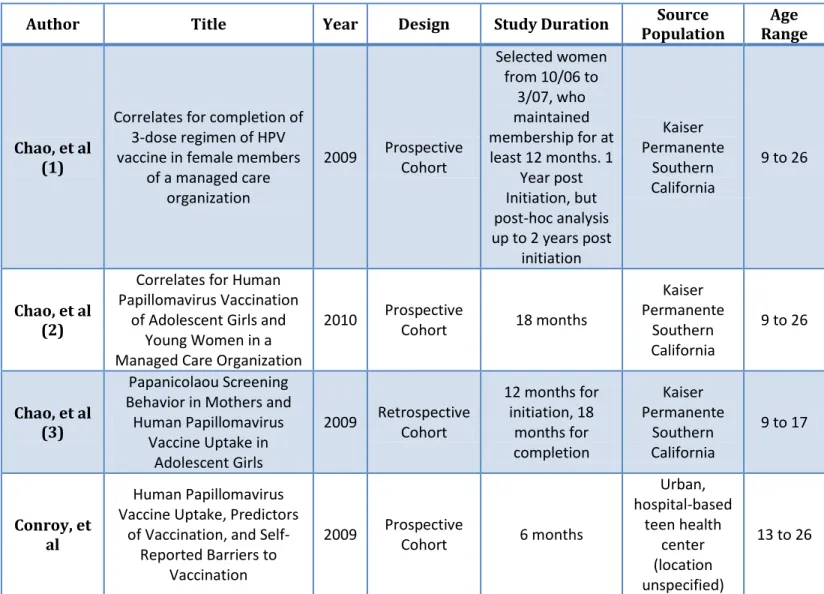
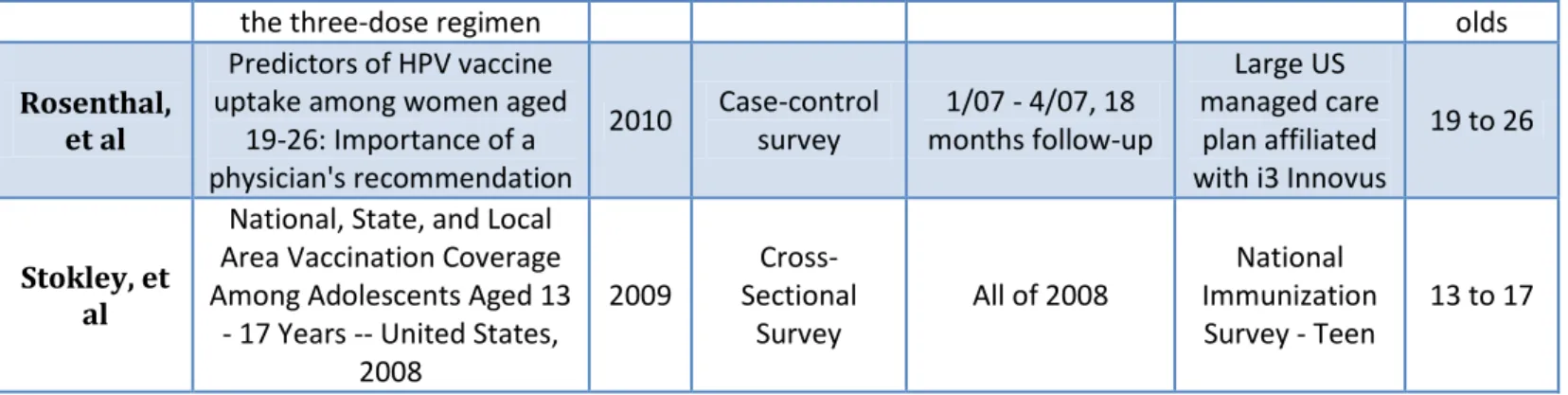
subject.27 Please refer to Table 1 for a comprehensive review of the study characteristics.
Table 1. Study Characteristics
Author Title Year Design Study Duration Source
Population
Age Range
Chao, et al (1)
Correlates for completion of 3-dose regimen of HPV vaccine in female members
of a managed care organization
2009 Prospective Cohort
Selected women from 10/06 to
3/07, who maintained membership for at least 12 months. 1
Year post Initiation, but post-hoc analysis up to 2 years post
initiation
Kaiser Permanente
Southern California
9 to 26
Chao, et al (2)
Correlates for Human Papillomavirus Vaccination
of Adolescent Girls and Young Women in a Managed Care Organization
2010 Prospective
Cohort 18 months
Kaiser Permanente
Southern California
9 to 26
Chao, et al (3)
Papanicolaou Screening Behavior in Mothers and
Human Papillomavirus Vaccine Uptake in
Adolescent Girls
2009 Retrospective Cohort
12 months for initiation, 18 months for completion Kaiser Permanente Southern California
9 to 17
Conroy, et al
Human Papillomavirus Vaccine Uptake, Predictors
of Vaccination, and Self-Reported Barriers to
Vaccination
2009 Prospective
Cohort 6 months
Urban, hospital-based teen health center (location unspecified)
13 Dempsey,
et al (1)
Patient and Clinic Factors associated with adolescent
human papillomavirus vaccine utilization within a
university-based health system
2010 Retrospective
Cohort 14 months
University of Michigan Health System
outpatient clinics for peds,
FM, and ob/gyn
9 to 18
Dempsey, et al (2)
Parents' Views of 3 Shot-Related Visits: Implications
for Use of Adolescent Vaccines Like Human Papillomavirus Vaccine 2009 Cross-Sectional Survey Cross sectional, 7/07 - 8/07
Random sample of 2906
adults from Knowledge-Panel (US
adults)
Parents of 9 to 17
year olds
Jain, et al
Human papillomavirus (HPV) awareness and vaccination initiation among women in the United States, National Immunization Survey - Adult
2007 2009 Cross-Sectional Survey Cross sectional, 5/07 - 8/07
National Immunization Survey - Adult (telephone survey, 7055 respondents)
18 to 26
Kahn, et al
Rates of Human Papillomavirus Vaccination, Attitudes about Vaccination,
and Human Papillomavirus Prevalence in Young Women
2008
Cross-Sectional
Survey
Cross-sectional, 10/06 to 5/07
Hospital-based teen health center, ob/gyn
clinic, and std clinic in Cincinnati
13 to 26
Licht, et al
Is use of the HPV vaccine among female college students related to HPV
knowledge and risk perception? 2009 Cross-Sectional Survey Cross-sectional, unknown date Two universities (location unspecified)
18 to 26
Neubrand, et al
Factors Associated with Completion of the Human
Papillomavirus Vaccine Series
2009 Retrospective Cohort
17 - 23 months follow-up University-based pediatric clinic or community practice (location unspecified) Under 21
Patel, et al.
Are Our Adolescent Females Becoming "One Less"? HPV
Vaccination Rates and Barriers to Vaccination
2009
Cross-Sectional Chart Review
7/07 - 10/07
Five Urban Pediatric Practices affiliated with an academic institution in New York City
11 to 21
Reiter, et al
How much will it hurt? HPV vaccine side effects and influence on completion of
2009
Cross-sectional
survey
10/08 - 11/08
Five North Carolina counties
14 Outcome Results of Individual Studies:
The results of each individual study are shown in the table below.
Table 2. Results of Individual Studies
Author Initiation
Rates Completion Rates Factors Associated with Initiation or Completion
Chao, et al
(1) n/a
Overall: 42.8% (12,663 / 29,598)
9-17 year olds: 41.9% (10,347 /
24,676) 18-26 year olds:
47.1% (2,316 / 4,922) With 2 years of follow-up, overall
completion rate increased to 50%
For 9-17 year olds:
Older age: 17 year olds versus 11-12 year olds RR: 0.87 (0.82-0.93)
Black Race versus White: RR: 0.7 (0.64-0.77) Hispanics versus Whites:
RR: 0.88 (0.83-0.93) Medi-cal coverage versus none:
RR: 1.14 (1.07-1.22)
Neighborhood education level (RR for a 10% in percentage of adults with high school diploma in census
block) RR: 1.03 (1.02-1.05)
For 18-26 year olds:
Same as younger group, but not statistically significant, except for provider type.
Family medicine versus pediatrics: RR: 1.24 (1.08-1.42)
Internal medicine versus pediatrics: RR: 1.26 (1.06-1.50)
the three-dose regimen olds
Rosenthal, et al
Predictors of HPV vaccine uptake among women aged
19-26: Importance of a physician's recommendation
2010 Case-control survey
1/07 - 4/07, 18 months follow-up
Large US managed care
plan affiliated with i3 Innovus
19 to 26
Stokley, et al
National, State, and Local Area Vaccination Coverage Among Adolescents Aged 13
- 17 Years -- United States, 2008
2009
Cross-Sectional
Survey
All of 2008
National Immunization Survey - Teen
15
Chao, et al (2)
Overall: 29.4% (83,904 / 285,265) 9-17 year olds:
37% (67,297 / 179,580) 18-26 year
olds: 16% (16,607 / 105,
685)
n/a
For 9-17 year olds:
Older age: 15-16 year olds in reference to 11-12 year olds RR: 1.14 (1.12 – 1.16)
13-14 year olds in reference to 11-12 year olds: RR: 1.17 (1.15 – 1.18)
Black Race in reference to Whites: RR: 0.93 (0.90 – 0.95)
Higher income (RR is regarding every $10,000 increase) RR: 1.02 (1.01 – 1.02).
Male PCP versus female: RR: 0.92 (0.91 – 0.93)
For 18-26 year olds:
Older age: 25-26 year olds in reference to 18 year olds RR: 0.31 (0.29 – 0.33)
Black Race in reference to Whites RR: 0.82 (0.77 – 0.88) Hispanics versus Whites
RR: 0.95 (0.91 – 0.99)
Chao, et al (3)
Overall: 27% (40,288 / 108,062)
Overall: 42% (7,713 / 18,275)
41% (7,430 / 18,275) completed series
within 1 year of initiation and were within the
recommended dosing schedule,
while 1.5% (283 /
18,275) completed the series, but were
not on-time.
Factors for initiation:
If mother had history of Pap test: OR 1.47 (1.43 – 1.52) If mother had abnormal Pap test:
OR: 1.11 (1.07 – 1.14) If mother had genital warts:
OR: 1.19 (1.10 – 1.28) If mother had other STIs:
OR: 1.13 (1.04 – 1.22) Factors for Completion:
If mother had at least 1 Pap test in the past 3 years: OR 1.42 (1.31 – 1.54)
If mother had abnormal Pap test: OR: 1.16 (1.07 – 1.24) If mother had genital warts:
OR: 1.26 (1.05 – 1.52)
History of STI inversely associated with completion in African Americans but positively associated with
completion in Asians.
16
Conroy, et al
Overall: 36% (68 / 189)
Overall: 13% (9 / 68) 14.7% (10 / 68)
initiated late enough so they weren’t due for a
second dose by the end of the
study, which raises completion
rate to 16% (9 / 58) 45% (26 / 58) were late for 2nd
dose.
Factors associated with Initiation: Age, in years:
OR: 0.64 (0.52 – 0.77), unadjusted Insurance coverage for versus none:
OR: 5.31 (1.61 – 17.49)
Normative beliefs (scale of 1-5 about how a patient perceives importance of the vaccine):
OR: 2.21 (1.29 – 3.79)
Dempsey, et al
Overall: 28% (2,855 / 10,082) 78% (2,038 /
2,625) received a second dose
Overall: 40% (1,134 / 2,855)
75% (1,134 / 1,515) completed
series after receiving 2nd
dose. 28% (318 / 1,134)
completed series on-time. 69% (782 / 1,134)
completed series within 1 year. 15% (706 / 4,712)
completed series among a sub-population of girls
who had >12 months from first
visit to study end date (Overall completion rate,
not rate within group that
initiated).
Factors associated with initiation: Black race versus White race:
OR: 1.06 (0.91 – 1.24)
Older age, 16+ years old versus 11-12 year olds: OR: 1.92 (1.66 – 2.23)
Private Insurance versus Public Insurance: OR: 0.52 (0.45 – 0.59)
Preventive visits versus problem-focused visits: OR: 5.18 (4.64 – 5.79)
Factors associated with completion: African-American race and public health insurance associated with lower completion rates (absolute number
results not shown).
17
et al N= 1025, percentages don’t add up to 100 because
parents could choose more than 1 barrier. Unnecessary for healthy adolescents to be seen so
frequently: 15% (12 – 17%)
Adolescent would miss too much school: 14% (11 – 17%) Problems getting off work: 11% (8 – 14%)
Too much time: 10% (7 – 13%) Adolescent doesn’t like shots: 9% (6 – 11%)
Against child receiving shots: 7% (5 – 9%) No regular health care provider: 2% (1 – 3%)
Transportation problems: 2% (1 – 4%)
Jain, et al Overall: 10%
(17 / 168) n/a
Univariate Factors associated with initiation: Not being married: 11.8% (5.7 – 22.7%)
>200% FPL: 22.8% (11.2 – 40.7%) Receiving Hep B vaccine: 14.5% (7.2 – 27.2%)
Having Insurance: 12.5% (6.1 – 24.1%)
Results of analysis of factors associated with HPV vaccine initiation not presented due to lack of reliability caused
by small sample sizes.
Kahn, et al Overall: 5% (4
– 7%)
Overall 0.2% (0 – 0.6%) (measuring out of all subjects,
not just those who initiated)
n/a (measured factors associated with vaccination intent and beliefs of vaccination)
Licht, et al Overall: 43.6%
(177 / 406)
Overall: 53% (93 / 177)
Factors associated with Initiation:
Age: Students 19-26 years old compared to 18 years old : OR: 0.27 (0.17 – 0.41)
African-American race compared to White race: OR: 0.26 (0.08 – 0.81)
Asians compared to Whites: OR: 0.42 (0.18 – 0.99)
HPV knowledge and vaccination status not related, except for knowledge that genital warts are caused by
HPV
OR: 1.85 (1.20 – 2.93), adjusted
Neubrand,
et al n/a
Overall: 58.2% (205 / 352) 12% took more
than 1 year to complete series.
Factors associated with vaccine completion: Bivariate analysis showed that Caucasians (69.1% completed) were more likely to complete the series than African Americans (48.6% completed) or Hispanics (38.8%
completed).
18
Medicaid/SCHIP (45.3% completed). Logistic Model:
Hispanics versus Caucasians: OR: 0.341 (0.160 – 0.727)
African-Americans and Caucasians did not differ statistically (p = 0.081)
If second visit was a nonstick visit versus a vaccine-only visit:
OR: 0.164 (0.078 – 0.343)
No statistical difference between sick visit versus vaccine-only visit (p = 0.538)
Patel, et al.
Overall: 67% 11 – 12 year olds: 55% 18 – 21 year
olds: 77%
n/a n/a
Reiter, et
al n/a n/a
Factors associated with vaccine initiation: 83% (154/186) had pain from tetanus booster while 62% (116/186) had pain from HPV vaccine at time of injection.
OR: 6.43 (2.88 – 16.90).
70% (133/191) had pain from tetanus booster while 45% (85/191) had pain from HPV vaccine in the hours after
injection. OR: 4.43 (2.45 – 8.57).
Pain from vaccination did not influence timely uptake or completion of vaccine. 62% (114/185) of parents of daughters who completed series reported pain at time of
injection while 68% (19/28) of parents with daughters who were late for their 2nd or 3rd dose reported pain. OR:
0.76 (0.33 – 1.77)
Rosenthal,
et al n/a n/a
Factors associated with vaccination: Student status (yes versus no):
OR: 2.79 (1.53 – 5.09)
Personal Importance of vaccine (very important versus other):
OR: 7.69 (4.22 – 14.01) Physician Discussion (yes versus no):
OR: 93.5 (39.1 – 223.6).
For people with discussion with a physician, each increase of 1 point on the Likert scale was associated with a 41%
increase OR: 1.41 (1.06 – 1.88) in odds of vaccination.
19
al (6,635 / 17,835) in
2008, compared with
25.1% (740 / 2,947) in 2007.
sample): 17.9% (3,193 / 17,835)
Overall (among those who initiated): 48.1%
(3,193 / 6,635)
Bivariate analysis: Hispanics had higher coverage than Whites: 44% (896 / 2,017) versus 35% (4,420 / 12,628).
Adolescent females below poverty level had higher vaccination initiation coverage for HPV vaccine than those at or above poverty level: 45.4% (993/2140) versus
35.8% (5353/14951), but not 3 dose coverage (data not shown).
Factors associated with completion:
Poorer females completed series at a rate of 14.9% (319 / 2,140) while richer females completed at a rate of 18.6%
(2,781 / 14,951).
Completion rates were 19.5% (2,463 / 12,628), 14.9% (288/1,934), and 14.7% (297 / 2,017) for Whites, Blacks,
and Hispanics, respectively.
Synthesis of Results:
The study designs, participants, reported outcomes, and measured factors associated with the
outcomes varied markedly for all of the 14 studies in this review, and therefore results are
synthesized qualitatively rather than through a meta-analysis.
The results of the review show a wide range of initiation rates for the HPV vaccine varied
between 5% and 77% (9 studies), with the majority of studies falling between 25% and 45% (6
studies). The completion rates of the vaccine varied between 0.2% and 58.2% (8 studies), with
the majority of studies falling between 40% and 50% (4 studies). Three studies reported on-time
dosing, but did not further describe factors associated with the finding. There was wide
variability in the results, as demonstrated by the range of 1.5% to 72% for women receiving the
vaccine in a delayed fashion.
In terms of factors associated with uptake, the studies varied in which correlates they decided
to choose, the statistical methods in which they analyzed these factors, and also in the
20
results, a few trends emerged. In the younger age group (under 18 years old), older age is
associated with increased initiation. On the other hand, young women aged 18-26 years are more
likely to initiate the vaccine if they are younger, which implies that vaccination initiation rates
are highest in the late adolescent age group. Those who are too young (9-11 years old) or too old
(24-26 years old) have not initiated HPV vaccination as much as the 14-18 year olds. A few
studies also documented a racial/ethnic disparity where Whites had a higher rate of initiation
than other races and ethnicities. Some studies, however, showed that Blacks were more likely to
initiate the vaccine than Whites. One interesting study by Chao, et al.22 showed that mothers who
received a recent pap smear or who had a history of warts, abnormal pap test, or other STI were
more likely to have daughters who started the HPV vaccine. An association with insurance status
is also unclear – one study reported that having insurance compared to no insurance is predictive
of vaccination initiation, but another found that public insurance was better than private in terms
of initiation rates.
In terms of factors associated with completion, the results were also difficult to synthesize
given the same reasons highlighted above for the factors associated with vaccine initiation.
Nevertheless, there are still a few trends of note. One is that people with private insurance more
likely to complete the series than those with public insurance. Economically disadvantaged
females also completed the series at a lower rate than those at or above the poverty level. The
racial and ethnic disparities also exist, where Whites are more likely to complete the vaccine
series than African Americans or Hispanics. The study by Chao, et al. investigating
mother-daughter pairs also showed similar results to the initiation arm, except that African American
21
Asian mothers with a history of STI had daughters that were much more likely to complete the
series.22
Study Quality:
The cross-sectional studies have the greatest potential for confounding and temporal effects.
Many of the studies suffered from small sample sizes, large chunks of missing data, and poor
generalizability. A summary of the major potential sources of bias in each study are shown in
Table 3.
Table 3. Risk of Bias within Studies
Author Possible sources of Bias
Chao, et al (1) Cannot capture all results outside of electronic system, had 40-60% missing data for race/ethnicity (no mention of sample size in Logistic model)
Chao, et al (2) A lot of missing data for race/ethnicity (50%). No mention of sample size in Logistic Model
Chao, et al (3)
A lot of exclusions limit generalizability, used census data to indicate SES. Also used pap test history as a surrogate for mom's view on vaccination, which is not
an accurate representation of vaccine attitudes. No mention of sample size in logistic model
Conroy, et al Small sample, limited generalizability (hospital setting), short interval between recruitment and study.
Dempsey, et al (1) Small sample with respect to completion, limited generalizability (university health system), no women over age 18, no subjects without insurance. Dempsey, et al (2) Hard to generalize, used a hypothetical vaccine scenario. Survey had fixed
responses which could bias answers. Response bias. Jain, et al
Small sample (only 168 women), no females younger than 18 years old, a cross-sectional design, subject to recall bias and non-response bias. Administered soon
after approval, early in the process.
Kahn, et al Small sample, subject to selection bias and also did not have vaccine availability in clinics.No absolute numbers reported, only percentages.
Licht, et al Small sample, used convenience sample, so subject to selection bias. Weak study design. No way to validate survey answers. Not generalizable, no age under 18. Neubrand, et al Small sample, limited generalizability (only 1 academic center). Cannot capture vaccinations outside clinic. Did not report sample used for logistic regression. Patel, et al. Poor information, not enough detail about the study. No absolute numbers
given, no definition of vaccination rate.
Reiter, et al Recall bias, parental opinion rather than vaccinee's. Small sample size. Rosenthal, et al
Landline telephone survey, risk of sampling bias. Underestimate of vaccination coverage due to incomplete records. Insufficient sample size for subgroup
22
Stokley, et al Only 19-26 year olds. Low response rate for surveys. Did not say how they randomized. Missing data/exclusions. Recall bias possible. Difficult to generalize
The table below summarizes each study’s quality. Each study was evaluated based on an
appraisal scheme outlined in the methods. Many studies had poor generalizability given a limited
sample population and age restriction. The cohort studies were either fair or good quality, but
most of the cohort studies were limited to one study site or location,19 and two of these studies
were further limited by a small sample size.18, 21 The exceptions, however, were three studies by
Chao that included many patients captured from a data repository within a managed care
organization in southern California.17, 20, 22 Nevertheless, the benefit of a large sample size was
diminished by the fact the data set had large amounts of missing data and that the study
population did not include subjects who lacked insurance or who were on public insurance.
The cross-sectional designs were much more varied in their quality; one was good quality,28
four were fair quality,23-24, 26, 30 and three were poor quality.25, 27, 29 Although poor quality studies
were included in this review due to the paucity of literature on the subject, their results need to
be cautiously interpreted given how fraught they are with flaws. For example, the study by Patel
was only a published abstract with no corresponding full manuscript in publication, which gives
the audience no idea about its quality or its methods.27 Another study assessed vaccination rates
in clinics where the vaccine was unavailable for parts of the study period, which has the potential
to greatly affect the outcome in question.25 The rest of the cross-sectional studies were mainly
limited by the lack of response from survey participants, which might lead to a response bias.
Table 4. Evaluation of Each Study’s Quality
Author Title Generalizability Conclusion Overall
Quality
Chao, et al (1) Correlates for
completion of
3-Fairly good, but all patients were within the
HPV vaccination
23 dose regimen of
HPV vaccine in female members of
a managed care organization
insurance system. No public insurance people
low
Chao, et al (2)
Correlates for Human Papillomavirus Vaccination of Adolescent Girls and
Young Women in a Managed Care
Organization
Fairly good, but all patients were within the
insurance system. No public insurance people
HPV vaccination initiation is negatively
associated with black race, low income, and
other factors. Adolescents are more
likely to initiate than young girls or young
women
Fair
Chao, et al (3)
Papanicolaou Screening Behavior
in Mothers and Human Papillomavirus Vaccine Uptake in
Adolescent Girls
Good - wide patient population, even with
many exclusions.
Daughters who received HPV vaccine were 50% more likely to have a mom with a pap test in the past 3
years. Vaccine completion was only 41% within 1 year, but
most were on time.
Fair
Conroy, et al
Human Papillomavirus Vaccine Uptake, Predictors of Vaccination, and Self-Reported Barriers to Vaccination
Poor - small sample, from an urban,
hospital-based adolescent primary care clinic.
HPV vaccination rates were low (36%), and completion was even
lower (13%). Factors associated with vaccination included
insurance and normative beliefs.
Fair
Dempsey, et al (1)
Patient and Clinic Factors associated with adolescent
human papillomavirus vaccine utilization within a university-based health system
Poor - university setting, and no women over age
18.
HPV vaccination initiation is associated with African American
Race and public insurance. Completion
is associated with White race and Private insurance. Completion rates are
low.
Good
Dempsey, et al (2)
Parents' Views of 3 Shot-Related Visits: Implications for Use
of Adolescent Vaccines Like
Human
Fair - response bias
Among national sample of parents of
adolescents, high willingness to participate in 3-dose vaccination visits, but
24 Papillomavirus
Vaccine
many barriers included lack of perceived need for
frequent visits.
Jain, et al
Human papillomavirus (HPV) awareness
and vaccination initiation among
women in the United States,
National Immunization Survey - Adult 2007
Poor - not the right age group
Vaccination initiation was 10% among women 18-26 years old, and initiation is associated with not being married, having
insurance.
Fair
Kahn, et al
Rates of Human Papillomavirus Vaccination, Attitudes about Vaccination, and Human Papillomavirus Prevalence in Young
Women
Poor - no vaccine availability
Vaccine initiation was only 5%. Completion
was only 0.2%.
Poor
Licht, et al
Is use of the HPV vaccine among female college students related to HPV knowledge and
risk perception?
Fair - college students seem to be quite varied.
Vaccine initiation was 43.6%. Completion was 53% among those
who did start. Younger age and White race associated
with vaccination.
Fair
Neubrand, et al
Factors Associated with Completion of
the Human Papillomavirus Vaccine Series
Fair - small sample, only 1 academic center
sampled.
Completion rate is 58.2%. Race (Hispanic)
associated with less completion in multivariate logistic
model.
Fair
Patel, et al.
Are Our Adolescent Females Becoming
"One Less"? HPV Vaccination Rates
and Barriers to Vaccination
Poor - no idea about quality of the study
Vaccination for HPV is lower than tetanus
vaccination in an urban practice setting.
Poor
Reiter, et al
How much will it hurt? HPV vaccine
side effects and influence on completion of the
Fair - patients were oversampled for 10-18
year old daughters, African American race,
and rural.
Pain is not related to
25 three-dose regimen
Rosenthal, et al
Predictors of HPV vaccine uptake among women aged
19-26: Importance of a physician's recommendation
Poor - poor response rate, sampling bias
Physician recommendation and
discussion is vital for vaccine initiation among 19-26 year
olds.
Poor
Stokley, et al
National, State, and Local Area Vaccination Coverage Among Adolescents Aged 13 - 17 Years -- United States, 2008
Fair - large national sample, but because of
telephone survey and loss of respondents (only 58.7% response
rate), it's hard to generalize
37.2% initiation rate, 17.9% completion
rate.
Fair
Discussion
Summary of Evidence:
Overall, the evidence is too heterogeneous for the data to be combined in a meta-analysis.
Nevertheless, the studies themselves point to a HPV vaccine initiation rate between 25-45%,
depending on the specific patient population (11-12 year olds or 18-26 year olds for example).
This number is likely to increase over time as the vaccine becomes more established within the
medical system and becomes more accepted as a safe and efficacious option against cervical
cancer. The vaccine completion rates also varied greatly, but most studies indicated a completion
rate (sampling only from a group that initiated) between 40-50%. The overall completion rate,
which refers to the number of females who completed the vaccine series out of the entire group
of eligible subjects (not just the ones who initiated), ranged between 15-18% in two studies.19, 30
When discussing correlates for vaccine initiation or series completion, many studies
employed varied statistical methods to find significant predictors, such as a log-log binomial
regression model, logistic regression, or simple bivariate analyses. Given the different methods,
the outputs were different as well; some studies used risk ratios, others used odds ratios, and
26
similar across all studies. Vaccine initiation and completion are associated with covariates like
age, race, ethnicity, insurance type and status, socioeconomic status, normative beliefs about the
vaccine, a mother’s pap smear history, and discussion with a physician. Some studies found that
economically disadvantaged females or minorities like Hispanics or African Americans had
paradoxically higher rates of vaccine initiation, but that may be due to the fact that economically
disadvantaged patients have access to the Vaccines for Children program and do not have to face
the financial barrier of paying for the vaccine that some privately insured patients face. The
majority of African-Americans and Hispanics in some of these studies were also below the
poverty level – which might indicate that the higher vaccination initiation rates might be due to
socioeconomic factors rather than racial factors.19, 30 When looking at completion rates, however,
private insurance and White race become predictors for completion, which then indicates that
there might be some differences between getting a patient to initiate the vaccine and having them
return for the 2nd and 3rd visit to complete the series.
It is quite difficult for a clinician to apply the literature known about HPV vaccine to his or
her patient population since each study has a specific target patient population (limited by age
range, practice location, and insurance status), and has limitations that impair its generalizability
(poor study design, lack of adequate follow-up, or even lack of vaccine availability during the
study period). Furthermore, with the exception of the MMWR report utilizing 2008 data, most of
the studies cite data collected either in 2006 or 2007. Hopefully this report has synthesized the
data available so that a clinician may apply the current knowledge about vaccination rates to his
or her own patient population.
Thus, a study with a larger, representative sample of patients with enough follow-up periods
27
needed. While three of the studies also looked at on-time dosing rates, they were not explicitly
discussed and had no correlates for on-time dosing either.
Limitations:
At the outcome level, the main limitation of trying to compare each of the studies is that the
patient population and follow-up periods are not the same across studies. Various studies had
shorter follow-up times which would decrease completion rates, and furthermore, the different
patient populations studied might also lead to systematic differences in vaccination rates and
correlates for uptake or completion. This makes it hard to make generalizable statements when
pooling the outcomes. Furthermore, some studies measured completion rates of the HPV vaccine
relative to the entire study population while other studies measured completion rates within a
cohort of patients that initiated the vaccine. Therefore, it is difficult to compare completion
percentages without knowing the absolute numbers, and some studies did not provide the number
of patients that initiated the vaccine.
At the study level, many of the studies had limitations due to small sample size, missing data,
or weak study design. A lot of the studies were cross-sectional surveys, which subjects the
results to recall bias and non-response bias. Furthermore, although a cross-sectional survey
design is good for detecting prevalence of a condition (such as vaccine uptake), it cannot
appropriately address vaccination completion rates, given that completion of the series is
time-dependent; some females who would complete the series might not be captured with a survey at
that moment in time. The cohort studies (retrospective or prospective) were limited by missing
data (2 studies), a small sample size (2 studies), and limited generalizability due to a selective
patient population (4 studies). Many studies also used logistic regression models to find
28
reported about the sample sizes used in the models, and what impact missing data had on the
study results.
Conclusions:
The quadrivalent HPV vaccine has only been available for a short period of time (less than 4
years). There have been no systematic reviews attempting to document the national rate of
vaccine initiation or completion. When discussing HPV vaccine initiation and completion rates,
one of the most widely quoted studies is the CDC report about vaccination coverage among
adolescents aged 13-17 years in the US.30 This phenomenon may be due to its governmental
affiliation, national sample, and recent publication, but the study is limited by its methods
(telephone survey) and its low response rate (58.7%). Furthermore, they did not have enough
data to make conclusions about 2007 completion rates. Nevertheless, initiation rates around 37%
and completion rates of 17.9% (but 41.8% of those that initiated) in 2008 have been cited by
many studies as truly representative of the national rate.
Thus an implication for future research would be to update the literature using more current
data about the HPV vaccination rates. A study with a longer follow-up period could also increase
the robustness of the results and the use of a more inclusive study population (i.e. using 9-26
year olds instead of 13-17 year olds) would yield more generalizable results as well. Lastly, a
study investigating the rates of on-time dosing would be helpful given the paucity of data on the
subject. Given the fact that there is no evidence regarding the efficacy of the HPV vaccine with a
delayed dosing schedule or an incomplete dosing regimen, knowing the prevalence of both
problems might be informative for development of interventions to boost vaccination rates if
future studies do show a decrease in efficacy given poor adherence to the recommended dosing
29 Funding:
This systematic review was not funded by any source. The author has no conflicts of interest
30 Introduction:
The human papillomavirus (HPV) infects an estimated 6.2 million people in the United
States every year, making it the most commonly sexually transmitted infection (STI).1 Persistent
infection with high-risk HPV serotypes, including types 16 and 18, is the most important risk
factor for developing cervical cancer1 while infection with HPV types 6 and 11 is responsible
for most anogenital wart cases.1 The quadrivalent HPV vaccine (HPV4, Gardasil) is designed to
prevent cervical cancer and anogenital warts by preventing infection with HPV types 6, 11, 16,
and 18.2 Since HPV is a widespread STI, the HPV vaccine is most effective when administered
prior to sexual debut.3 Therefore, the Advisory Committee on Immunization Practices (ACIP)
recommends routine vaccination of girls starting at 11-12 years of age with catch-up vaccination
of vaccine naïve young women suggested up through 26 years of age.1 The HPV4 vaccine is
administered as a 3 dose series with the 2nd and 3rd dose given at 2 and 6 months following the
first dose, respectively.
Despite the ACIP’s recommendation and the government’s support in making HPV4 vaccine
series available through the Vaccines For Children (VFC) Program,4 the reported rates of HPV
vaccination remain low. Nationally, only 37.2% of adolescent females (aged 13-17) had initiated
the HPV vaccine series in 2008, and only 17.9% of the adolescent females had received all 3
doses.8 Furthermore, adherence to the recommended dosing intervals is likely to be poor among
adolescents.10-12
A few studies have examined correlates for completion of the HPV vaccination series.17-19
However, we are not aware of any studies documenting factors associated with on-time dosing in
addition to vaccine series completion. Therefore, the goal of this study was to measure the rates
31
among those who initiate the series, along with factors associated with series completion and
on-time dosing. This information may be helpful in developing strategies to increase on-on-time
completion of HPV vaccination among adolescent girls.
Methods:
Study Design
This retrospective cohort study was a secondary data analysis of computerized immunization
records in the state of North Carolina. The study protocol was submitted to the Duke University
Health System Institutional Review Board (IRB) and exempted from full review.
Data Source
The North Carolina Immunization Registry (NCIR) is a statewide database containing
information on immunizations delivered in all the health departments and more than 600 private
practices throughout the state. As of 2009, 72% of public providers and 61% of private providers
used the registry to record immunizations. A public provider is defined as a public health
department, a community/migrant health/rural health clinic, Indian health service clinic, or any
public clinic that provides immunizations, such as a publically funded non-profit neighborhood
clinic. A private provider is defined as a private health plan, group of doctors, or clinic that is not
a federally qualified health center (FQHC). For each individual included in the dataset there are
fields for the person’s county of residence, race, ethnicity, and each vaccination date. For every
individual vaccination date the recipient’s age, clinic type, and funding source for the vaccine
could also be entered.
Study Population
Our study sample consisted of all females whose immunization information was included in
32
was administered between 9 and 26 years of age. Entries were excluded if the date of the first
dose entered was before 6/8/2006 (the day the FDA approved the HPV4 vaccine) or after
2/17/2009 (to allow time for all those in the study to potentially complete the series on-time
before the date of data censoring). For these reasons, of the 172,948 girls and young women in
the data set, 34,118 were excluded (273 were less than 9 years of age, 185 were greater than 26
years of age, 286 entries had a first dose before 6/8/2006, and 33,374 entries had a first dose after
2/17/2009). Seven entries with obviously discordant dates, such as duplications or vaccinations
only days apart, were also excluded from analysis. Our final sample consisted of 138,823 girls
and young women.
Variables
The main outcomes were completion of the HPV vaccine series and on-time completion of
the vaccine series. Completion of the series was defined as documentation of at least 3 separate
HPV vaccine doses. On-time completion was assessed by the intervals between the three doses.
An on-time dose was defined as 2 ± 1 months (28-84 days) between the first two doses and 6 ± 2
months (112-224 days) between the first and third doses as outlined by the HPV4 package
insert.13 This dosing window was used since studies by Merck have shown no reduction in
immunogenicity with the aforementioned schedule flexibility.13
The exposure variables examined were: race, ethnicity, age, county of residence, the clinic
type, and funding type. Race was categorized as American Indian/Alaska Native, Asian,
Black/African-American, Native Hawaiian/Pacific Islander, Other, or White. Ethnicity was
divided into Hispanic or non-Hispanic. Clinic type (Family, local health department, hospital,
internal medicine, juvenile corrections, K-12 school, university/college, pediatrician, or other),
33
vaccine dose. Each variable was not self-reported, but rather manually entered for each entry by
the provider using the registry.
Data Analysis
We used means or proportions to describe the characteristics of the girls and young women
in the sample. We examined factors associated with series completion as well as on-time dosing
using unadjusted bivariate analyses and tested for significance using Pearson’s chi-squared test.
We used logistic regression to examine the independent effects of the exposure variables on
series completion and on-time dosing. The subjects were categorized into three age groups, 9-12
years of age (young girls), 13-17 years of age (adolescents), and 18-26 years of age (young
women), in order to compare the differences among age groups with regards to vaccination
completion and on-time dosing. Counties were classified as metropolitan statistical areas based
on US census data.31 For the logistic regression analysis, age, funding source and clinic type
were based on the first dose of the vaccine. We used listwise deletion to handle missing data.
This method of logistic regression ignores all entries with missing data and only uses entries with
a complete set of variables in the analysis, which yields a complete-case analysis. To examine
the effect of missing data, we created a regression model with dummy variables for all unknowns
and compared it to the complete-case analysis. All p-values were considered significant at ≤ 0.05
and 95% confidence intervals were reported when appropriate. Stata Version 11.0 (Statacorp,
College Station, TX) was used for all analyses.
Results
Characteristics of the Study Population
The girls and young women in the cohort were mainly White (63%) and non-Hispanic (91%)
34
insurance. The median age was 14.8 years, 15.1 years, and 15.3 years at doses 1, 2, and 3
respectively. The average length of follow-up was 19 months, with a range of 8 months to 40
months.
Completion Rates and On-Time Dosing
Of the 138,823 girls and young women in the study population, 23% (n = 31,771) received a
single dose of the quadrivalent HPV vaccine; 22% (n = 30,561) received only two doses; 55% (n
= 76,491) completed the HPV vaccine series. Approximately 28% of the entire group (n =
39,123), completed the HPV vaccine series on-time (Figure 1). For those who received a dose
that was not on-time, the median interval in relation to the first dose was 5.7 months for the
second dose and 10.8 months for the third dose. Most of the girls and young women (82%) who
completed the series did so within 12 months, and nearly all (98%) had completed the series by
24 months. Over 83% of those (3,354/4,013) who initiated the vaccine series in 2006 completed
it by the final study date, compared to 32% (1,585/4,985) of those who initiated the vaccine in
2009. The percentage of girls and young women who have completed the series on-time out of
those who initiated the series has decreased each year, from 43.2% (1,732/4,013) in 2006 to
25.2% (1,258/4,985) in 2009 (Figure 2). Among those who received the second dose on time,
72.8% received the third dose on time, whereas only 19.6% of females received the third dose on
time if they were late in receiving the second dose (p-value < 0.001).
Factors Associated with Vaccine Completion and On Time Vaccine Dosing
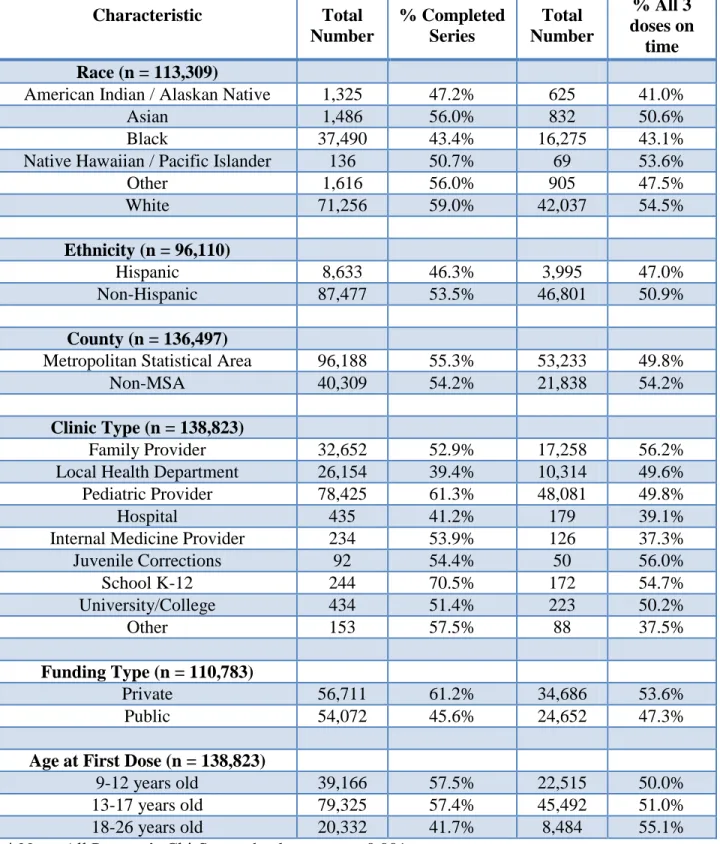
Vaccine series completion and on-time series completion varied significantly with race
(p<0.001 for both) with Whites more likely than Blacks to complete the series (59% vs. 43%) as
35
Hispanics to both complete the series (54% vs. 46%, p<0.001) and do so on-time (51% vs. 47%,
p<0.001).
Both those 9-12 years of age and 13-17 years of age had similar completion rates (57%) that
were higher than those 18-26 years of age (42%). Nevertheless, when comparing on-time dosing
rates, of those 18-26 years of age who completed the series 55% did so on-time, compared with
approximately 50% of those 9-12 years of age and 51% of those 13-17 years of age. Compared
to those whose vaccine was publically funded, the girls and young women whose vaccine was
funded by private insurance were more likely to complete the series (61% vs. 46%, p<0.001 and
do so on-time (54% vs., 47%, p<0.001)
Completion and on-time dosing rates differed by the type of health care clinic from which the
girls and young women received immunizations. Those vaccinated at pediatric clinics had the
highest completion rates at 61%, followed by those vaccinated at family medicine practices at
53% and those vaccinated at local health departments at 39%. For on-time dosing, girls and
young women vaccinated at family medicine practices had the highest rate at 56%, while those
vaccinated at pediatric clinics or at local health departments had on-time dosing rates at 50%.
Of those who completed the series (n = 76,491), the vast majority (96.1%) stayed with the
same clinic, and 52% of them completed the series on-time. Only 28% of those who switched
clinic type, however, completed the series on-time. Additionally, 85% (47,802 / 56,389) of
females who completed the series stayed with the same funding source, and 52% of them
completed the series on-time. Among those who switched funding sources, 47% completed the
36
Independent Associations with Vaccine Completion
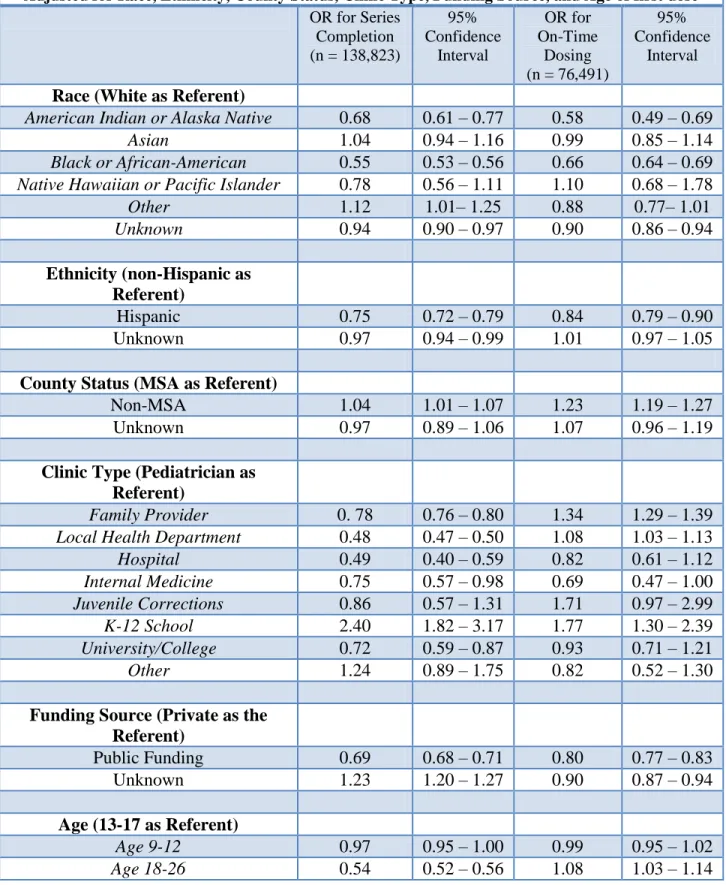
Compared to Whites, African-Americans were less likely to complete the series (OR 0.55;
95% CI 0.53 – 0.56) as well as complete it on-time (OR 0.66; 95% CI 0.64 – 0.69) (Table 3).
American Indians were also less likely to complete the series (OR 0.68; 95% CI 0.61 – 0.77) and
do so on-time (OR 0.58; 95% CI 0.49 – 0.69) than Whites. Hispanics were less likely to
complete the series (OR 0.75; 95% CI 0.72 – 0.79) and do so on-time than non-Hispanics (OR
0.84; 95% CI 0.79 – 0.90). Young women were less likely to complete the series than the
adolescents (OR 0.54; 95% CI 0.52 – 0.56), but were more likely to finish the series on-time (OR
1.08; 95% CI 1.03 – 1.14) if completed. Those who lived outside a metropolitan statistical area
were also more likely both to complete the series and do so on-time. Those whose clinic type
was a family medicine practice or local health department were less likely to complete the series
than those whose clinic was a pediatric practice. Patients who went to family medicine practices,
however, were more likely to complete the series on-time than patients of pediatric clinics. The
females who saw providers in K-12 schools, however, were much more likely to both complete
the series and do so on-time than those who went to pediatric clinics (OR 2.40; 95% CI 1.82 –
3.17 and OR 1.77; 95% CI 1.30 – 2.39, respectively). Public funding for vaccines was associated
with lower completion rates (OR: 0.69, 0.68 – 0.71) and on-time dosing rates (OR: 0.80, 0.77 –
0.83) when compared with private funding.
The results for the logistic regression model using a complete-case analysis are similar to the
model with dummy variables for unknown data, except that local health departments and
Hispanic ethnicity became statistically insignificant for on-time dosing. For series completion,
37 Discussion
Using a large statewide database, we found that after three years of availability on the
market, completion of the HPV vaccine series among those who initiate it is low (overall 55%),
and on-time dosing of the vaccine is even lower (overall 28%). When examining completion
rates stratified by the year the patient initiated the vaccine, the percentage of those completing
the series increased steadily over time (32% after one year to 84% after three years). Most of the
girls and young women completing the vaccination series, however, did so within one year
(82%). The percentage of those completing the series on-time, however, has decreased from 43%
of those who initiated the series in 2006 to 25% for those who initiated in 2009. This likely
means a sizeable majority of those who started the series will complete it, but not on-time.
African Americans and Hispanics were less likely to complete the series and receive all doses
on-time compared to Whites and non-Hispanics. Furthermore, private funding for the vaccine
was associated with higher odds of completion and on-time dosing compared to public funding.
These results are in agreement with previous studies about HPV vaccination completion, which
also found that African Americans and those on public health insurance were less likely than
those of other races or those with private health insurance to complete the series.17-19, 30 Studies
examining factors associated with reduced vaccine series completion have shown mixed
results19, 30.20, 26 Differences may be secondary to the vast differences in study population
demographics. Nevertheless, the results from our study indicate that the rates of completion of
the series as well as on-time dosing of the three doses differ across racial and socioeconomic
groups, a finding that is consistent with the few existing studies investigating correlates for
completion (and not initiation).More work is needed to develop and test interventions or
38
We found the factors associated with series completion and on-time dosing to be similar but
not identical. For example, our data suggest that young women (18-26 year olds) are much less
likely to complete the series than the adolescents(13-17 year olds), but of those who do, are more
likely to complete it on-time. Our results are in agreement with other studies that have shown
that college-age women are much less likely to initiate the vaccine than younger girls.20-21, 26 This
finding might be due to the fact that young adult women are not covered under the Vaccine for
Children Program, or they might have lost insurance previously provided by their parent’s
private coverage. Nevertheless, the observation that of those who do complete the series, those in
the adult age range are more likely to complete it on-time may be due to their ability to have a
more flexible schedule than younger girls. Furthermore, compared to younger women, older
women may exhibit more health care seeking activities and hence have more opportunities for
HPV vaccination. One such example is the pap test, which has been shown in one study to be a
predictor of HPV vaccination amongst daughters of mothers with a history of regular pap
smears.22 Our result, however, is in contrast to one other study by Chao, et al., which found that
those aged 18-26 years old had higher vaccination completion rates than younger girls aged 9-17
year old (47.1% versus 41.9%).17 This latter study was limited by a fairly small sample in the
older age group and only looked at women within a managed care organization which eliminates
observed differences in insurance coverage between older women and younger girls as a
potential barrier to vaccination completion.
With regards to clinic type, patients of who saw providers at pediatric clinics were more
likely than those of at family medicine practices and local health departments to complete the
series. This finding is in contrast to that in a study by Chao, et al., which stated that patients of