2017 2nd International Conference on Artificial Intelligence: Techniques and Applications (AITA 2017) ISBN: 978-1-60595-491-2
Analysis of AI Development and the Relationship of AI to IoT Security
Hang SONG
1,*, Hong-yi WANG
1, Ya-lan MI
2and Yan-qiang SUN
31
College of Electronic Science, National University of Defense Technology, 410073, China 2Foreign and Overseas Chinese Affair Office of Zhengzhou, 450006, China
3
College of Computer, National University of Defense Technology, 410073, China
*Corresponding author
Keywords: AI(Artificial Intelligence), IoT(Internet of Things), Security, Cognition.
Abstract. After convolutional neural network has been simulated by neuroscience in deep learning, Label-Free Supervision with domain knowledge can also tell us that we shall take advantage of shoulders of giants like Newton in the development of AI. In fact, AI’s development has been on the shoulders of giants, such as Optimization Theory, Calculus. This paper explores whether some of Maslow's Theory can serve as the other (or next) giant of AI's shoulders, and tries to discuss the AI and security issues with Maslow's Theory. The human ego has the basic need that be extended to the security requirements of things in the IoT. Finally, learning from the unity of "natural science", "social science" and "harmony between humanity and nature (Yang-ming WANG’s Cognitive idea)", a mutual development for human intelligence, the intelligence of things and the natural intelligence with respect of each other is discussed.
Introduction
Deep learning discovers intricate structure in large data sets by using the backpropagation algorithm to indicate how a machine should change its internal parameters. And their computational models are composed of multiple processing layers to learn representations of data with multiple levels of abstraction. These methods have dramatically improved the state-of-the-art in image recognition1 and speech recognition2. Under some situations, in training and generalizing better than networks with full connectivity between adjacent layers, one particular type of deep, feedforward network called the convolutional neural network (ConvNet3 ,or CNN).Then deep belief net(DBN) and layer wise Pre-Training, and deep Boltzmann machine(DBM) gave some new ideas4. The convolutional and pooling layers in ConvNets are directly inspired by the classic notions of simple cells and complex cells in visual neuroscience1. Deep neural networks exploit the property that many natural signal are compositional hierarchies, in which higher-level features are obtained by composing lower-level ones1. Deep neural network tries to find the relationship between the whole and the parts, where the part is recognized or comprehended formerly and individually. Each part may be comprehended one by one and layer by layer without or with grasping. The process allows to eyesight- sensation-intuition one by one with brain-working likewise. Are there some principles working well with penetrating the part and the whole? Can we supervise networks without individual examples by instead describing only the structure of desired outputs5? Humans are often able to learn across fields of knowledge, unite rules across fields, even sharing experience of other people's without direct experiment, opting instead for high level rules for how our society or a task should be performed to satisfy our needs for long term, or what it will look like with furtherly deep mind or opinions by sociologies and psychologies when ongoing AI.
Supervised Learning and Label-Free Networks with Domain Knowledge
In supervised learning, we first collect a large data set of images, each labelled with its category. The known borders are set between each other with assumption and images classifying is needed, the machine is made to find the parameters for the set division. The methods include four steps in multilayer neural networks and backpropagation1. A deep learning architecture with multiple non-linear layers, can implement extremely intricate functions of its inputs that are simultaneously sensitive to minute details, and insensitive to large irrelevant variations such as the background. We discover the structure of the world by observing it, not by being told the name of every object; we find the rules of life by reading or listening without being told true or false. When we explore ourselves, Human vision is an active process that sequentially samples the optic array in an intelligent, task-specific way using a small, high-resolution fovea with a large, low-resolution surround. When we explore the nature with ourselves, Physics and other laws of nature that have been clearly understood gives us new clues.
Label-Free Neural Networks in Tracking an Object
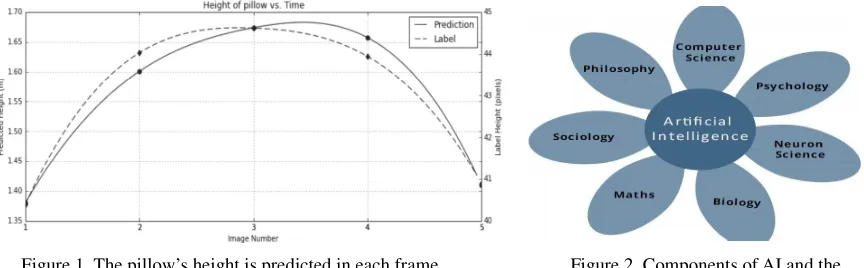
An improved Label-Free Supervision of Neural Networks5 were made with physics and domain knowledge by specifying constraints that should hold over the output space, rather than direct examples of input-output pairs. These constraints are derived from prior domain knowledge, e.g., from known laws of physics (such as law of gravitation) 5,as shown in Figure 1. Informally, there will be no chance towards the optimizing without restricting condition. As the so-called No Free Lunch Theorems, training or optimizing process just work under the restricted context and step with the restricting condition. In the experiment below5, An object acting under gravity will have a fixed acceleration of a = −9.8m/s2, and the plot of the object’s height over time will form a parabola: yi =
y0 + v0(i∆t) + a(i∆t) 2 where ∆t = 0.1s is the duration between frames. This experiment demonstrates that one can teach a neural network to extract object information from real images by writing down only the equations of physics that the object obeys5. Formally, all things in our earth obey this objective law (high level instructions of a=−9.8m/s2), and show an orbit as in the Figure 1. The orbit curve explains the relationship between the object’s height and time sequence. The example leads to open a door by using instructions of cross-field in order to find solutions in AI. Are there higher level instructions or rules working beyond the constraint field of AI, or across AI? How to find them (instructions) in recognizing the relationship between human and things in IoT (a society of things, some of them will have AI)?
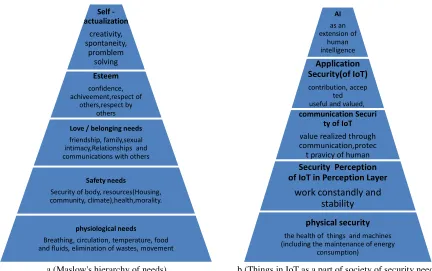
Figure 1. The pillow’s height is predicted in each frame Figure 2. Components of AI and the without providing labels. relationships with other science.
The Cross-field of AI in Recognition and Insights
“Learning without thought means labor lost; thought without learning is perilous(by Confucius, in “Analects of Confucius”).”The labeled learning has the form as “Problems of what or why---answers (Labels)”, and with the feedback to the neural nets to self-adjustment. Un-labeled learning have the form as “observing-thinking-insight”, and with the introspection of neural nets under some useful known rules (Physics and domain knowledge).The former is that one asking and one answer, and the latter is that asking less and thinking more. Newton gives a shoulder in un-labeled learning with Law of gravitation and Math. As is shown in Figure 2, many fields work across AI and psychologist (such as Maslow) gives some clues to AI. Unsupervised learning with domain knowledge which is accumulated one by one, one generation by one generation; is based on the pattern of question-answer from the past, and is based on observation, reflection and insight. It is supervised by the rules of nature. It does not depend on enlightenment entirely, but on accumulation, by choosing a giant's shoulder one by one. Boundaries are established by domain knowledge, but they need to be combined comprehensively to AI, safety of human and things in IoT.
AI in IoT and the Needs for Safety and Security of Social Development
Domain knowledge can be used in training the neural net and genetic algorithms (GA) that simulate human evolution have been widely used in AI, although the door to Strong AI is not open sufficiently. For connatural (innate) knowledge acquiring, Human can find answers constantly from genetic exploration and human brain decryption, maybe with AI. For the latent knowledge and cognitive (the learned ability in AI) ability, "basic skills" training that is being used for AI application, such as playing chess and driving. Security and safety of IoT need extension by social analysis. Generally, AI is trying to be used in a category of things in IoT. Networking is the way that provides better services through communication. Potential things with lack intelligence are still in the development stage that should be protected and valued, although robots are helping human exploration of world and routine repetitive work. And people will utilize the raw intellectual efficacy of things with lack self-securing systems to do whatever they wish4.One idea of the global strategy for AI security is about preventing and mitigating the most significant disruptions and negative outcomes from Strong AI, while simultaneously enabling its positive impacts to occur, as any opportunity cost on the benefits of the technology also represents a significant threat. As in Figure 3a, the needs of human reflect the safety of our society being well and development.
communication of others in IoT, as well as privacy keeping. Especially AI gives things more opportunity, one day things will be proud of knowing what to do and how to do as well as human. So the smart IoT has its top layer as AI layer ----an extension of human intelligence, as shown in Figure 3b. As Maslow's hierarchy of needs enlightening us, each lay needs protection when they are undeveloped. Most things in IoT are resource constrained(sensors, actuators and GPS devices) with less memory, lower data processing and other capability (constrained by their size) than computer. But they can share our privacy between things or machines, even being uncovered in internet. IoT (as a part of society extension) needs security protection for humanity's sake. Analysis of each layer in IoT hierarchy is shown in Figure 3 b. Measures taking are analyzed in Figure 4.
[image:4.612.89.521.228.499.2]
a (Maslow's hierarchy of needs) b (Things in IoT as a part of society of security needs)
Figure 3. Maslow's hierarchy of needs and things in IoT as a part of society of security needs.
Structure of securing things in IoT composed of three main organizations. The left organization in Figure 5 is cognitive structure of securing things in IoT, which included three parts. a, Ideas. How to regard the relationship between human in society and IoT, and the relationship between technology (such as AI and IoT) and nature? Can AI or IoT protect our privacy and never hurt us? From anthropocentrism to eco-centrism and to sustainable development, whether we should review on in nature resource allocation when AI is general in IoT? b,System. Each one or country should have the same opportunity to access, untilize and understand advantages and disadvantages of ongoing AI, especially when IoT is equipped with AI. The threat of security and fear of the future stems from the possibility that advantages or vulnerabilities may be exploited maliciously, by someone or group achievement of selfish. Securing system of society should have such a system to restrict misuse and malicious behavior through equality, ethics, and morality cross company and countries. c, Law. Furthermore, laws need to make to regulate the securing system above.
Cognitive structure of securing things in IoT is particularly relevant to guarantee permanent values such as fundamental rights, protection of integrity, inclusion, as well as openness, fair competition and open innovation.
Self -actualization creativity, spontaneity, promblem solving Esteem confidence, achiveement,respect of others,respect by others
Love / belonging needs
friendship, family,sexual intimacy,Relationships and communications with others
Safety needs
Security of body, resources(Housing, community, climate),health,morality.
physiological needs
Breathing, circulation, temperature, food and fluids, elimination of wastes, movement
AI as an extension of human intelligence Application Security(of IoT) contribution, accep ted useful and valued,
communication Securi ty of IoT
value realized through communication,protec t pravicy of human
Security Perception of IoT in Perception Layer
work constandly and stability
physical security
the health of things and machines (including the maintenance of energy
IoT Security Structure
Cogn
ition
Idea
System
Law
Physical Security Layer Communication Security Layer
Application Security Lay er
Mana
gem
ent
Service
Strategy
Technique Perception Security Layer
Figure 4. Three main organizations of IoT Security Structure.
The middle organization in Figure 4 is layers of securing IoT, which included 4 parts in Figure 4. Sometimes physical security lay can be seen as a basic part of perception layer security, and AI layer is promised as an affiliation in Application Security Lay. The other three parts are: Security Perception of IoT in Perception Layer, Communication Security of IoT and Application Security in IoT, where the right organization in Figure 4 is defined as the management of securing IoT technically and it is compose of technique, service and strategy in securing IoT. Education is needed as well as legal guidance in cognition progress to make sure that the IoT and AI serves the unite values of nature and things, which will benefits human sustainably. Safe guard is needed to avoid the perception that IoT could lead to a dehumanized society controlled by the machines and/or a reinforcing of the digital divide and of social exclusion.
Conclusion
The latest progress in unsupervised neural networks, tendency of extending these AI methods in IoT shows that IoTs and things in them are becoming smarter in a good way. Weak AI and undeveloped IoT give us the preparing stage with weak supervision. Things can do more when they know more about us. For example, your smart telephone can tell you something useful around you just after it know where you are. Structure of securing things in IoT and AI is based on the fact that it is impossible to permanently secure AI implementations against tampering and modification, and, due to it likely being software or equipped with smart things, that it will be spread throughout the IoT, becoming widely accessible. A possibility that all safeguards we could devise will potentially be circumvented face grave challenges. To strengthen AI and IoT development with global cooperation and meet the challenges in a joint way is to the best interest of the people of all countries. Then fully unrestricted versions of strong AI will become publicly available. We are facing with the best and worst aspects of our nature in a joint cognitive of nature science, social science and their mutual respect of intelligence by Human, nature and Artificial in a joint way.
Acknowledgments
This work was supported by a grant from the Post-Doctoral Foundation of China for IoT security Research, and by the National Natural Science Foundation of China under Grant No.61402512. The authors would like to thank Ya-lan MI and her Psychology work team for helpful discussions.
References
[2]Hinton, G. et al. Deep neural networks for acoustic modeling in speech recognition[J]. IEEE Signal Processing Magazine 29, 82–97 (2012).
[3] LeCun, Y., Bottou, L., Bengio, Y. & Haffner, P. Gradient-based learning applied to document recognition[J]. Proc. IEEE 86, 2278–2324 (1998).
[4] Sun Zhi-jun, Xue Lei, Xu Yang-ming, et al. Overview of deep learning [J]. Application Research of Computers. 2012(08).
[5] Russell Stewart, Stefano Ermon. Label-Free Supervision of Neural Networks with Physics and Domain Knowledge [J]. Proceedings of the Thirty-First AAAI Conference on Artificial Intelligence (AAAI-17).