2020 4th International Conference on Modelling, Simulation and Applied Mathematics (MSAM 2020) ISBN: 978-1-60595-674-9
Quantitative Analysis of Hotspots and Trends in User-generated Content
Yong XU*, Ya-li WU, Qian WANG, Xin-rui ZHANG and Fan-hua LI
School of Management Science and Engineering, Anhui University of Finance and Economics, Bengbu 233000, China
*Corresponding author
Keywords: User Generated Content, CiteSpace, Visualization analysis, Sentiment analyzing.
Abstract. User generated content (UGC) is a kind of Internet product mode leaded by user under Web 2.0, which is more active in recent years. In the paper, the text mining and visual analysis tool CiteSpace was used to analyze literatures with key words of "user generated content" published in Web of Science database from 2008 to 2019. The themes of literatures, institutes of authors, key words, and co-citation were analyzed to get focuses and trends of UGC. In the paper, the research hotspots of UGC were included to provide suggestion for further work: basic information, motivation, application and analysis of UGC, and legal issues.
Introduction
User generated content (UGC) is the information produced and published by Internet users on Internet platforms, also known as User Created Content, Consumer Generated Media, Consumer Generated Content, User Contributed Content. At the beginning, UGC was appeared in the form of letters from readers, calls from audiences and so on, which was known by a few of Internet users. With the progress of information technology, Internet has gradually advocated people-oriented, and the dominant position of users has become increasingly prominent.
As a mode of creation and organization for network information resources, UGC can improve user’s participation. So it has been accepted and applied to many fields, such as blog, Wiki, forum, business review, tourism review, unexpected events, marketing management.
Data Collection
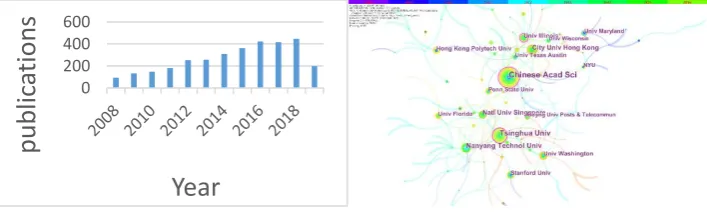
[image:1.595.121.475.580.686.2]The data for bibliometric analysis is collected on the Web of Science Core Collection. With the subject keyword of User generated content, 3224 articles were downloaded as analysis data (retrieval time: June 11, 2019). Authors, abstracts, keywords, citations and other information of each article are downloaded to achieve bibliometrics. The annual number of articles is displayed in Figure 1.
Figure 1. Number of publications. Figure 2. Distribution of institutions and Authors.
Data Processing and Analysis
Co-Authorship and Co-Institute Analysis
We use Minimum Spanning Tree algorithm to implement co-authorship and co-institute analysis. The data extraction object is set to Top 20. Then, a comprehensive analysis map of publishing
0 200 400 600
p
u
b
lic
ation
s
institutions and authors in the field of UGC is obtained, which is shown in Figure 2. Nodes represent authors or institutions respectively, and the size of nodes represents the amount of text sent.
[image:2.595.76.520.112.243.2]
Figure 3. The Top 10 most productive institutes. Figure 4. Distribution of keywords.
Fig. 3 lists the institutions of Top10, in which 52 papers were sent by CAS, which occupies the highest position.
Co-Occurring Keywords Analysis
[image:2.595.173.424.392.554.2]In order to find the research hotspots of UGC, "Keyword" network node is set up in Cite Space 5.3, and the data extraction object is Top 20. The keyword co-occurrence map is drawn as shown in Figure 4. According to the occurrence frequency of keywords, the top 20 keywords are listed in descending order (Table 1).
Table 1. Top 20 keywords.
Freq. Keyword Freq. Keyword
411 social media 121 twitter 328 user generated content 121 social network
241 word of mouth 109 network
239 internet 108 communication
207 information 107 web
196 model 97 online
176 system 95 Facebook
157 impact 89 performance 155 media 88 algorithm
127 behavior 84 Community
Document Co-Citation Analysis
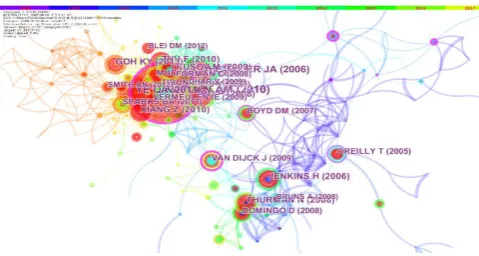
[image:2.595.176.416.651.779.2]Co-citation analysis is an important method to reveal the basic topics of research field. Citation is a common phenomenon in the scientific research achievements of scientists. If two papers appear together in reference of the third article, they are co-citation. Documents with high co-citation frequency are usually valuable documents in this field. More than 110,000 citations were cited in this project. Figure 5 reflects the co-citation phenomenon in UGC field.
Figure 5. Document co-citation analysis.
52 39 28 27 25 23 21 21 20 20
0 20 40 60
Chinese Academy of… nanyang… Stanford University
University Of… The Hong Kong…
Through the analysis of the existing literatures by CiteSpace 5.3, the maps of co-authorship and co-institute analysis, co-occurring keywords analysis and document co-citation Analysis are obtained. The hotspots of UGC can be concluded into four points: Basic Concepts, Motivation, Application and Legal Issues of UGC.
Research Hotspots and Trends
Research Hotspots of UGC
Basic Concepts. In the 2005 Internet Industry Report, Mary Meeker introduced concept of UGC firstly which attracted extensive attention from scholars. Now, the definition of UGC in the report of OECD published in 2007 accepted by most of researchers. It figures that UGC has three key characteristics: (1) Information should be published on the Internet publicly; (2) Content may have some creative efforts; (3) UGC must be published by non-professional or authoritative persons [4].
UGC is regarded as a new form of media in modern society. Research on UGC actually is utilization of “Media”, the purpose is to connect different objects in the network environment [5]. Various forms of interactive information between user-user and user-media constitute strong relationship and weak relationship in UGC platform. Taking social media as an example, strong relationship refers to the interaction between users, such as attention, comments and so on. It often has high commercial value, such as the Bloggers with a large number of fans. However, the business value brought by weak relationship is generally low, such as browsing among users, content retrieval in Web pages, etc.
UGC analysis is also defined as a collection of methods and tools to extract value from user data [6]. Based on the value of content, UGC is located at the bottom of the pyramid. From bottom to top are Electronic Word-of-Mouth or Online Word-of-Mouth, Online Reviews, Online Recommendations [7]. The value of UGC is embodied in two aspects: User and Content. Through the research of users, we can mine the information of different users' preferences, characteristics, points of interest, and so on, so as to carry out user portrait or tagging processing. By analyzing the content, we can get the rules of topic distribution and topic dissemination. Users' preferences are reflected in the UGC created by them and their rating behavior to others. The value of UGC is reflected in its content and the ratings given by other users. ZHANG et al. proposed a personalized topic regression model (PTR), which combines hierarchical topic modeling and matrix decomposition, to provide an interpretable topic representation for users and UGC [8].
Motivation. (1) The division of motivation
In the early stage of UGC researching, many scholars have partitioned its generating motivation in detail. The basis of partitioning is mostly based on Flow Theory, Exchange Theory, Technology Acceptance Model (TAM), Maslow's hierarchy of needs.
Deci designed UGC motivation as a gradual spectrum, which was divided into external motivation and internal motivation from left to right [9]. UGC's creative motivation could be divided into social, psychological and technical perspectives. Consumers wanted to exchange opinions with other customers before making purchase decisions [10]. So the motivation of online reviews could be divided into two categories: helping others to buy products and ensuring that no one will buy products in the future [11].
At present, the classification of UGC generation motivation has been relatively perfect, but they are all based on experience, or through questioning and investigation. However, there is no research directly through the analysis of UGC to find out what kind of motivation it belongs to, which is also an interesting issue.
(2) Incentive methods
According users’ motivation, stakeholders can take some incentive measures to encourage users who would produce more high-quality UGC to share their opinion, complain and so on. Therefore, some scholars have done research on UGC incentive policy [12, 13].
play their creativity and give feedback, create a sense of ownership, let users socialize in it, set up rare content, etc. Crowston found that altruistic consumers were more likely to create positive user generated content [14]. Therefore, marketers should study highly altruistic groups and implement incentives.
Application. (1) Pragmatic value of UGC
Comments analysis can help to solve the problem of cyberbullying and hate speeches [15], the risk of network crowdsourcing can be reduced too [16]. When disaster or accident occurs, supervisor could pay more attention to victim's microblog, especially track victim's negative reaction, and then find out the potential post-disaster events [17]. Question Answering in Knowledge Base is a research hotspot related to UGC. It can be regarded as a matching problem between questions and answers. This matching problem can be divided into two stages: candidate retrieval stage and answer selection stage [18].
In terms of tourism, UGC includes the views freely expressed by tourists. Therefore, it is considered as a source of information for National Tourism Organization (NTO), other decision makers, destination marketing organization (DMO) and potential tourists [19]. Shanshan collected on-line reviews of Macao from 2005 to 2013 in TripAdvisor, which included some tourists' cultural tourism experiences in Macao [20]. Based on such reviews, they identified the characteristics of tourists, divided the cultural tourism market, and forecasted tourists' preferences.
News communication is also one of applications of UGC. In many cases, users couldn’t describe the facts faithfully and comprehensively when producing UGC, which would leave a lot of space for imagination for network users. It is easy to make people prejudice or misunderstand the facts, mislead public opinion and confuse social audiovisual. UGC is produced by ordinary users. It has strong personal emotional tendency and is easy to be followed by other emotional users.
In e-commerce environment, information asymmetry is mainly reflected in product quality and communication between buyer and seller. Based on the convenience of digital payment, the lifestyle of consumers is also changed imperceptibly. Users communicate directly in the network platform, or publish UGC to provide purchase advice for others, which greatly reduces the information imbalance caused by space, time and other factors, and reduces the risk of users shopping.
(2) Quality Analysis of UGC
The quality of UGC can also be understood as the reliability of UGC. There are a lot of junk information or useless information in UGC, which seriously hinders the realization and utilization of UGC value. Therefore, it is interesting to mine the opinions of UGC, that is, to process, summarize, analyze and summarize the brief, discrete and decentralized UGC, so as to provide useful information for users. In addition, it can also judge the opinions or emotional tendencies that users want to express on specific matters, so as to provide important basis for other stakeholders. On the view of big data, user's ability to process information couldn’t keep up with the development of the times because of mass data. Therefore, it is necessary to have a more intelligent way to help users find useful information without lost on spam information.
At present, spam review detection is mostly based on statistical data, so the problem of cold start appears. When the number of comments is too small, how to quickly identify whether it is false information? Wang X et al. believes that UGC published by network users is interrelated with their behavior information. The background information, motivation and interactive behavior style of commentators have a great influence on UGC and behavior information of commentators. They proposed that both of UGC and user behavior information would be embedded in the cold-start task, so that the neural network model could be used to detect junk comments in the cold-start problem without supervision [21]. To identify malicious Posts generated during news production, Dewan et al. deployed Facebook Inspector, which is different from the existing malicious content detection technology [22]. It does not depend on message similarity features, which were mainly used for detection activities in the past.
(3) Emotional Analysis of UGC
emotion should be studied and the emotional polarity of UGC would be calculated too [23, 24]. Now, many fields have been involved in emotional analysis research. It is of great practical significant to judge users' emotional inclination by UGC, and more and more algorithms related to emotional analysis are designed.
The emotional analysis of UGC can be summarized as extraction of emotional information, classification of emotional information, retrieval and induction of emotional information. For a long time, extraction of emotional information has been confronted with the problems of diversity, ambiguity and structure in natural language processing (NLP), as well as the lack of a universal emotional dictionary. Marc Egger and André Lang classified text-based UGC information extraction into collection, analysis and visualization, which included such steps: data collection and cleaning, document-level information extraction, sentence, phrase and word-level information extraction, selection challenges and so on [25]. As the earliest English dictionary, emotional words in General Inquirer (GI) Dictionary come from Harvard Dictionary and Rasville Dictionary. GI dictionary contains 1914 commendatory words and 2293 derogatory words. Each emotional word is labeled according to its polarity, intensity and part of speech. Senti WordNet Dictionary is an extension of WordNet Dictionary. In addition to the emotional words and their corresponding emotional extremes, there are also some additional contents such as synonyms and antonyms of emotional words. To get more accurate emotional words and their corresponding extremes, Dragoni et al. aggregates emotional extremes by integrating Senticnet, The General Inquirer Vocabulary and MPQA [26]. Opinion Lexicon is an English Emotional Dictionary published by Bing Liu, which has 6800 words of praise and derogation. Compared with English emotional dictionaries, Chinese emotional dictionaries is slow-growing. Although Chinese natural language processing is a difficult problem, there are some classic Chinese emotional dictionary which can be used in many fields, for example, HowNet dictionary, DUTIR and NTUSD. DUTIR Emotional Vocabulary Ontology Library is provided by Dalian University of Technology, it classifies Chinese Emotional Words into 7 categories and 21 sub-categories, and annotates emotional words with their lexical and emotional intensity values. National Taiwan University Sentiment Dictionary (NTUSD) is published by Taiwan University mainly expands the derogatory meanings. Dilip Raghupathi et al. proposed a more accurate overall emotional rating algorithm to provide a comprehensive evaluation of product reviews. Beginning with a text analysis, an impact language dictionary is used to evaluate the leaves of a word tree, and a series of basic heuristics are used to calculate the backward overall emotional rating for review. However, such algorithms pay more attention to the overall emotional tendency, but ignore the role of individual UGC [27].
Legal Issues. Due to the difficulty of network management, and the randomness, anonymity and massive data of UGC, users often ignore copyright of UGC which leads to infringe on the rights and interests of others.
UGC may bring risks of disseminating pornography and violence, infringing other people's portrait rights, privacy rights and intellectual property rights. Therefore, rules and regulations are needed in the management of UGC and UGC platform. However, existing laws and regulations may not be enough to deal with the widespread "dangers" of UGC platforms. George explored various legal cases and the legal challenges posed by these "dangers" [28]. There are still some technical difficulties in the supervision of UGC and UGC platform. For example, the real-name system can prevent network fraud and false comments, but some people need "tree hole" to hide their identity. Tree hole UGC is also used to cure depression. The identity information of patients is kept secret, which is conducive to experts' psychological counseling.
Conclusion and Future Works
The development of mobile Internet technology has enriched the dissemination and utilization of UGC, which prompted users to continue to play their initiative. According to the existing discussion on UGC, follow-up research can be carried out in the following aspects:
Design of Incremental Mining Algorithm
Data stream is dynamic data reaching in real time. Data stream mining is one of the hotspots in the field of data mining at present. In order to satisfy the timeliness and efficiency of information, incremental UGC classification and other algorithms can be considered.
Improving the Emotional Lexicon
The method based on dictionary and lexicon matching is a common method in Chinese word segmentation, but there is no universal emotion lexicon that can be applied to UGC emotional analysis. In the field of NLP, how to extract Chinese semantics accurately and correctly has always been a problem.
Dynamic Evolution of UGC Emotion
Because of the real-time fluidity of data, UGC emotions will also change with time. How to deal with the dynamic evolution of UGC emotional analysis is also attracting. In the future research, we will try to construct the emotional change curve for a single user and for a topic.
Acknowledgement
This research was financially supported by Anhui Provincial Natural Science Foundation under No. 1808085MF194; the Natural Science Foundation of Anhui Education Department of China under Grant No. KJ2019A0663.
References
[1] To Q, Soto J, Mark V. A survey of state management in big data rocessing systems[J]. The VLDB Journal (2018) 27:847–872.
[2] Rout J, Choo K, Dash A, et al. A model for sentiment and emotion analysis of unstructured social media text[J]. Electron Commer Res (2018) 18: 181-199.
[3] Somayyeh A, Masoud M. Activity-based Twitter sampling for content‑based and user‑centric prediction models [J]. Aghababaei and Makrehchi Hum. Cent. Comput. Inf. Sci. (2017) 7:3
[4] WunschVincent S,Vickery G. Participative web and user-created content: web 2.0, wikis and ocial networking[M]//Participative Web and User-Created Content: Web 2.0 Wikis and Social Networking. Organization for Economic Cooperation and Development (OECD), 2007.
[5] Darabi K, Ghinea G. User-centred personalised video abstraction approach adopting SIFT features[M]. Kluwer Academic Publishers, 2017.
[6] Omidvar-tehrani B, Amer-yahia S, Borromeo R. User group analytics:hypothesis generation and exploratory analysis of user data[J]. The VLDB Journal (2018)
[7] Zablocki A, Schlegelmilch B, Houston M J. How valence, volume and variance of online reviews influence brand attitudes[J].2018
[8] Zhang W, Zhuang J, Li J, et al. Personalized topic modeling for recommending user generated content [J]. Frontiers of Information Technology & Electronic Engineering, 2017 18(5):708-718.
[10] Wang Y, Yu C. Social interaction-based consumer decision-making model in social commerce: The role of word of mouth and observational learning[J]. International Journal of Information Management, 2015, 37:91-102.
[11] Raghupathi D, Yannou B, Farel R, et al. Customer sentiment appraisal from user generated product reviews: a domain independent heuristic algorithm[J]. International Journal on Interactive Design & Manufacturing, 2015, 9(3):201-211.
[12] Fradkin A, Grewal E, Holtz D. The Determinants of Online Review Informativeness: Evidence from Field Experiments on Airbnb[J]. Social Science Electronic Publishing, 2018.
[13] Burtch G, Hong Y, Bapna R, et al. Stimulating Online Reviews by Combining Financial Incentives and Social Norms[J]. Social Science Electronic Publishing, 2016.
[14] Crowston K, Fagnot I. Stages of Motivation for Contributing User-Generated Content: A Theory and Empirical Test[J]. International Journal of Human-Computer Studies, 2017, 109:S107158191730126X.
[15] Chen J, Yan S, Wong K. Verbal aggression detection on Twitter comments: convolutional neural network for short-text sentiment analysis[J]. Neural Computing and Applications, 2018.
[16] Kaminski J, Hopp C, Lukas C. Who benefits from the wisdom of the crowd in crowdfunding? Assessing the benefits of user-generated and mass personal electronic word of mouth in computer-mediated financing[J]. Journal of Business Economics, 2018, 88(9):1133-1162.
[17] Bai H, Yu G. A Weibo-based approach to disaster informatics: incidents monitor in post-disaster situation via Weibo text negative sentiment analysis[J]. Nat Hazards (2016) 83:1177– 1196
[18] Xie Z, Zeng Z, Zhou G, et al. Topic enhanced deep structured semantic models for knowledgebase question answering[J]. Sci China Inf Sci, 2017, 60(2): 110103, doi: 10.1007/s11432-017-9136-x
[19] Marine-Roig E, Clavé S. Information Technology & Tourism volume 15, pages341–364(2. A detailed method for destination image analysis using user-generated content[J]. Information Technology & Tourism, 2016, 15(4):341-364.
[20] Qi S, Wong C, Chen N, et al. Profiling Macau cultural tourists by using user-generated content from online social media[J]. Information Technology & Tourism, 2018.
[21] Wang X , Liu K , Zhao J . Handling Cold-Start Problem in Review Spam Detection by Jointly Embedding Texts and Behaviors[C]//Proceedings of the 55th Annual Meeting of the Association for Computational Linguistics (Volume 1: Long Papers). 2017.
[22] Dewan P, Kumaraguru P. Facebook Inspector (FbI): Towards automatic real-time detection of malicious content on Facebook[J]. Social Network Analysis and Mining, 2017, 7(1):15.
[23] Wu X, Lu H, Zhuo S. Sentiment Analysis for Chinese Text Based on Emotion Degree Lexicon and Cognitive Theories[J]. Shanghai Jiaotong Univ. (Sci.), 2015, 20(1): 1-6.
[24] Singh J, Singh G, Singh R. A review of sentiment analysis techniques for opinionated web text[J]. CSIT, 2016, 4(2-4): 241-247.
[25] Egger M, Lang A. A Brief Tutorial on How to Extract Information from User-Generated Content (UGC) [J]. KI-Künstliche Intelligenz, 2013, Vol.27 (1), pp.53-60.
[27] Dilip R, Yannou B, Farel R, Poirson E. Customer sentiment appraisal from user-generated product reviews: a domain independent heuristic algorithm [J]. International Journal on Interactive Design and Manufacturing (IJIDeM), 2015, Vol.9 (3), pp.201-211.
[28] George C, Scerri J. Web 2.0 and user-generated content: legal challenges in the new frontier[J]. Social Science Electronic Publishing, 2007(2).