2016 International Conference on Electronic Information Technology and Intellectualization (ICEITI 2016) ISBN: 978-1-60595-364-9
The Application of 5G Technology in Logistics
Information Acquisition
Shipeng Que, Jinhui Chen, Baozhu Chen and Huying Jiang
ABSTRACT
The main problems and technical defects have been pointed out by by analyzing the current status of logistics information collection and come up with logistics dynamic information acquisition solutions of integrated utilization of 5G mobile communication technology and RFID according to intelligent logistics and internet of things, to meet the needs of logistics management’s real-time, visualization and intelligence.
INTRODUCTION
With the features of connectivity internal and external and the characteristic of information transfer delay in logistics industry, while face mobile Internet and real networking main application scene, business needs and challenges, it expect much on promptness and mobility of information collection. Therefore, it is an urgent task to achieve logistics dynamic information acquisition and goods information internet sharing in the process of logistics industry’s development. Current information collection technology has already enhanced the connectivity and mobility to some extent. In terms of meeting the increasing personalized need, however, there still exists a big gap. The development of 5G mobile communication technology and the promotion of formal commercialization give us the technology support to solve the problem[1].
__________________________
SOLUTION METHOD
Logistics Information Collection Solutions Based on 5G Technology
In the process of utilizing and exploiting logistics information, the first problem is how to obtain reliable information which is also a problem for logistics information recognition and collecting technique research. Logistics information acquisition whose basic demand is accurate and effective is the most fundamental as well as the most important link in logistics industry, so it must realize automatic collection and transmission. Nevertheless, the universal ways in our country are bar code technology and automatic recognition technology. No matter which is, it only influences the front end of logistics information collection. In order to realize its instantaneity and accuracy, logistics information needs the support of communication technology.
THE FEATURES OF 5G TECHNOLOGY
5G is short for 5rd-generation,which takes user experience rate as its important capacity index and improve its user experience rate to Gbps grade whose basic features lie in: users can experience 100Mbps in every scene; providing extremely high flux density for parts of hot spot region users; satisfying network with the ability of hundred billion connecting to guarantee terminal low power dissipation and low cost; offering millisecond delay and near 100% business reliability; realizing global single standard; combining WLAN technology, cloud calculating and 5G; so on. All in all,5G technology inherits 4G and unifies technology standard, with the merits of “switching freely”, “high speed transmission”, “cloud controlling” and “low power dissipation” .
LOGISTICS DYNAMIC INFORMATION ACQUISITION SYSTEM FUNCTION BASED ON 5G TECHNOLOGY
long-distance controlling terminal self-inspection and communication inspection function;
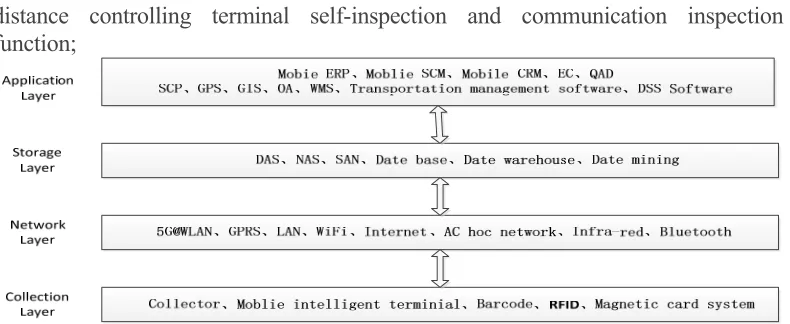
Figure 1. Logistics dynamic information acquisition system framework based on 5G technology.
eighth, initialization: initializing long-distance terminal and getting default setting parameters; ninth, real time storage: besides, choosing, analyzing, looking up and printing.
LOGISTICS DYNAMIC INFORMATION ACQUISITION SYSTEM FRAMEWORK BASED ON 5G TECHNOLOGY
The system can be divided into four layers: information acquisition layer, network transmission layer, information storage layer and application layer. Its application framework is shown in Figure.1.
APPLICATION EXAMPLES
Logistics Dynamic Information Acquisition Scheme Implementation Based on 5G Technology –Taking Food Safety Traceability Solution For Example
The key technology to food safety traceability is data collection technology. Presently, the main collection technology used for food safety traceability are unidimensional bar code, planar bar code and RFID; they have their own advantages and disadvantages, therefore, it’s unable to solve food safety traceability data collection problems successfully with only one collection technology[2].
INTRODUCTION OF LOGISTICS DYNAMIC INFORMATION ACQUISTION TRACEABILITY SOLUTION BASED ON 5G TECHNOLOGY
in feeding link of food safety and 5G mobility communications & WLAN is taken as network platform; one-dimensional bar code or planar bar code are used for
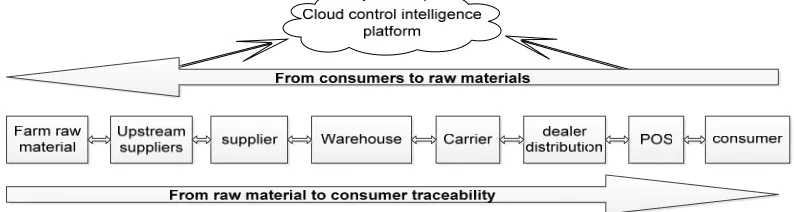
Figure 2. The sketch map of food safety traceability system based on 5G technology.
collecting data in process link; RFID is applied for collecting data in logistics transportation link and 5G intelligence device connect 5G cloud to transfer intelligently; one-dimensional bar code or planar bar code are also used in sales link, regarding Internet and WLAN as network platform; consumer use one-dimensional bar code or planar bar code for data collection and 5G&WLAN is network platform, meanwhile, a series of important links where consumer get food from source area are recorded by streaming media and kept in 5G cloud controlling intelligence platform and data management system. Only in this way can solve the problem of dynamic information acquisition successfully in food safety traceability.
The sketch map of food safety traceability system based on 5G technology is shown in Figure.2.
OPERATING PRINCIPLE OF LOGISTICS DYNAMIC INFORMATION
ACQUISITION TRACEABILITY SOLUTION BASED ON 5G TECHNOLOGY
In planting or feeding link of farm primary commodity, unit is determined by planting dividing feeding and used for recording planting/feeding information. Put feeding information onto RFID label, for instance, give a cow a RFID ear tag when feeding cows. Collect feeding information by using information collector such as 5G intelligence terminal device when necessary, then upload to cloud information storage through network. Users can make use of 5G terminal to watch feeding process any time through traceability system.
supervision department and users, at the same time videos can be uploaded to information storage layer.
In transmission link, transportation batch as unit, read the logistics information from RFID tag when receiving and delivery. Logistics intelligence transportation
[image:5.612.146.447.170.368.2]
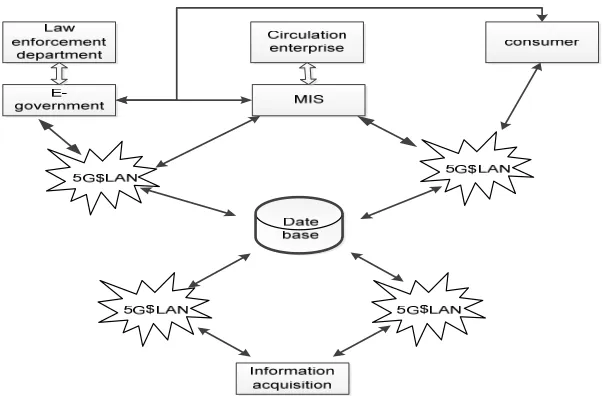
Figure 3. Traceability solution based on 5G technology.
management information system which contains 5G mobility communications, GPS and GIS technology is used in the whole transmission process.
In sales link, taking the minimum unit of retail (product packing) as traceability, one-dimensional bar code or planar bar code are recognized by bar code recognizer, on the other hand, automatic query terminal or mobile phone can be used for reading and tracing information.
MAIN PROCEDURES OF LOGISTICS DYNAMIC INFORMATION
ACQUISITION TRACEABILITY SOLUTION BASED ON 5G TECHNOLOGY
Law-enforcement department can take advantage of electronic government affairs system combining video supervision by LAN or 5G&WLAN to fulfill its supervision responsibility of food safety. When enforcing the law to check, specialized terminal or mobile devices can be made good use of to recognize and read one-dimensional bar code or planar bar code on products packaging. What’s more, 5G&WLAN, LAN, and Internet are used to retrieve relative information about planting/feeding, processing link, transmission link and sales link in order to enhance law-enforcement efficiency.
obtain the details of the products from feeding to sales. Of course, consumers can also trace relative goods’ videos of planting/feeding, producing, processing, transferring and selling through 5G&WLAN mobile communications before or after shopping to have an easy consumption. It is shown in Figure.3
As a consumer, if accredited by electronic government affairs and business administration information system, he/she can look up relevant data to exercise consumer’s right to know.
CONCLUSION
The application of 5G technology in logistics information collection system expand the collection space of logistics information, shorten the time of information collection and transmission, create the conditions of collection real time, visualization and intelligence and meet the users’ personalized services need. Therefore, 5G technology is a footstone of a new generation for logistics information. Logistics dynamic information acquisition solution based on RFID and 5G mobile communications technology can meet modern logistics management’s needs of real time, visualization and intelligence.
REFERENCES
1. Dingyi Dai, 2010, The Internet of things and intelligent logistics, Chinese Logistics and Procurement, Eighth, 34-36. In Chinese