http://www.scirp.org/journal/ojra ISSN Online: 2164-005X
ISSN Print: 2163-9914
Fermented Ethnic Medicine (
Pueraria mirifica
)
Designed by Lactobacillus Regulated Leukocyte
Subsets via Activation of Complement
Components
Yoshiichiroh Mastuba
1, Kazuhiro Okamoto
2, Yuma Kato
3, Nobuo Yamaguchi
1*,
Sumiyo Akazawa-Kudoh
31Ishikawa Natural Medicinal Products Research Center, Ishikawa, Japan
2Department of Rehabilitation, Kanazawa Medical University, Uchinada-machi, Japan 3Department of General Medicine, Kanazawa Medical University, Ishikawa, Japan
Abstract
A plant fermentation was carried out by Lactobaccilli against the Rhizome from Pueraria milifica (f-PMF). This material was evidenced by safe in animal toxic study. The main aim of this study was to revise the traditional way of hot water extraction to fermentation so as to use up the original material and finding new activity. We tried to show the new activity through phytoestrogen and immune-competent cells from the host that administrated either of orig-inal remedy and the new fermented sample, plus activated water SRE. In mice, compromised host was prepared by cancer chemotherapeutic agent (Mitomy-cin-C). After administration of f-PMF to immno-suppressed animals, the ef-fects by both samples were augmented by lymphocyte in number and func-tions, macrophage activities, anti-oxidative activity. However, the intense of effect was much more by fermented one but not by conventional one. The an-ti-oxidative assay was also carried out ex-vivo system by peritoneal macro-phage that we proposed as suitable system for evaluating anti-oxidative assay. In our clinical study by 20 healthy volunteers, granulocyte and lymphocyte ra-tio was regulated as neutral in peripheral white blood cells, increasing one, two and three weeks after the administration of f-PMF. We have found the significant regulation of blood chemical factors that were important makers for the lifestyle-related diseases. The mechanism of augmentation by probing directory with immuno-electrophoretic method, generating new complement component, especially found by alternative pathway of complement. So we discussed the process concerning designed f-PMF molecule for activation of complement component and bound for the biological activity of each physical component. In a limited condition, fewer numbers of volunteers, the breast
How to cite this paper: Mastuba, Y., Okamoto, K., Kato, Y., Yamaguchi, N. and Akazawa-Kudoh, S. (2017) Fermented Eth-nic Medicine (Pueraria mirifica) Designed by Lactobacillus Regulated Leukocyte Sub-sets via Activation of Complement Com-ponents. Open Journal of Rheumatology and Autoimmune Diseases, 7, 65-79. https://doi.org/10.4236/ojra.2017.71006
Received: February 3, 2016 Accepted: February 7, 2017 Published: February 10, 2017
Copyright © 2017 by authors and Scientific Research Publishing Inc. This work is licensed under the Creative Commons Attribution International License (CC BY 4.0).
size was tending to increase along with the administration time. Including these evidences, we discussed the possibility of this traditional ethnic medicine, originally found and spread in the highland area in Thailand and Myanmar.
Keywords
Family Pueraria, Fermentation, Lactobacilli, Cancer Chemotherapeutic Agent, Immune-Compromised Host, Lymphocyte, Granulocyte, Ant-Oxidative Activity, Complement, Alternative Complement Activation
1. Introduction
Recently, complementary and alternative medicines (CAM) have been conden- sed since they are able to cure many chronic diseases, such as chronic fatigue syndrome that plagues the developed society. The present team had reported that typical styles of CAM, preparing special molecule for both digestive and easy to activated human complement component that regulate functions of leu-kocytes in human as well as animal immune system [1]-[8]. Dietary and fer-mented formula held promise as powerful inducers of adoptive immune system. While the immune system attack against the local infection of pathogens, inter-leukins and immuno-competent cells reacted throughout the body in close lin-kage to the brain, the endocrine and immune system [9][10]. In this study, we hypothesized that f-PMF might influence immuno-competent cells qualitatively and quantitatively f-PMF targeting lymphocytes based on the constitution de-pendent manner of the host. PMF had been employed as tonic agent and the im-plication has little been made on the characteristics of the levels of leukocyte subset, such as granulocytes and lymphocytes. In this report, we sought to focus on the identity of f-PMF formula, comparing to another herbal medicine. The effect of f-PMF on leukocyte and/or lymphocyte in human peripheral blood was also discussed. The aim of this work was to revise the traditional way for prepa-ration of remedy, from hot-water extraction to fermentation in order to use up the original material and searching new activity instead of hot water extraction. For the preparation of TCM remedy had been succeeded as hot water extraction for a thousands of years, wasting the almost all the original material as that of many tea extraction/preparation in all over the world. Moreover, some prelimi-nary trial that concerned the new processing of the original material by degrada-tion by acidophilic bacteria, fermentadegrada-tion. The material used in this report was originated and traditionally selected as ethnic medicine for plant-estrogenic supplement for female at the highland area in Thailand and Myanmar [11][12].
2. Materials and Methods
2.1. Fermentation of PMF and GABA Accumulation
Lactobacillus leuteria for 5 days at 37˚C at the Jar Fermenta (Yamato Rika Kikai. Co. Ltd., Tokyo). Each ratio of powdered PMF, lactobacilli and water was 100:50:850. After the centrifugation of 4000 × g for 20 min and supernatant was served for fermented PMF. For the indirect evidence of degradation of PMF, GABA: gamma amino acid butyric acid was evaluated by the test system re-ported by following administration.
Followings were the method for quantifying γ-aminobutyric acid, which comprises the steps of: producing reduced nicotinamide adenine di-nucleotide phosphate by using a specific aminotransferase and a dehydrogenase that needs to use oxidized nicotinamide adenine di-nucleotide phosphate as a coenzyme and deactivating the enzymes, thereby removing any amino acid having a similar structure to that of GABA and acting an electron carrier on NADPH produced in the aforementioned step in the presence of a tetrazolium salt that can produce a water-soluble formazan dye and measuring the water-soluble formazan dye described and reported by the references [13][14].
2.2. Special Solution in This Study
We employed t test two materials for employed as solution of the material. One is regular purified distilled water (DW) and specially activated water; SRE (KAOU, Co. Ltd., Fukuoka, Japan).
2.3. Single Shot and Multiple Shot Toxicity Study
Ten female seven-week-old ddY mice (19 ± 2 gr), were used for the acute oral toxicity experiment. The selection of female mice was due to their gentle beha-vior in the animal cage and the material used for this report was the under the aim of post-menopausal use of human. The safety test was carried out in aim of Ethics of the Organization for Economic Co-operation and Development (OECD) Test Guideline 401. The mice were kept at 24˚C ± 1˚C, 50% relative humidity. Both conventional and f-PMF were suspended in sterile water and administered to mice in free supplemental system, calculating daily consump-tion around 100 mg/kg. Mice were weighted at 0 - 7 days after administraconsump-tion, and clinical observations were made once a day. Necropsy was performed on all mice seven days after the administration.
2.4. Experimental Model for Bone Marrow Suppressed
Immune-Suppressed Mice
In the animal model of immuno-competency reduction, male C57BL/6J mice, aged 8 - 9 weeks, were injected with Mitomycin-C (MMC) (5 mg/kg) to inhibit the bone marrow. Then, PMF extracts was administered orally at a dosage of 100 mg/kg/day for six consecutive days. Conventional PMF and fermented PMF were chosen as controls.
Recovery of Total Leukocytes and Its Subsets, Granulocyte & Lymphocyte Ratio
g/kg dairy for 5 days and after 1 week later, their blood were collected from their tail vain. Then, the number of leukocytes was counted in Bürker-Türk counting system.
2.5. Assessment of Anti-Oxidative Activity
2.5.1. Experimental AnimalsEight week-old female C57BL/6 were purchased from Sankyo Laboratory Service Corporation (Shizuoka, Japan). All mice were kept under specific pathogen-free conditions. Mice food and distilled water were freely accessible for each mouse. Housing temperature and humidity were controlled 24˚C ± 1˚C and 60%.
2.5.2. Reagents and Preparation
As for the basic medium, HEPES buffer (HEPES 17 mM, NaCl 120 mM, Glucose 5 mM, KCl 5 mM, CaCl2 1 mM, MgCl2 1 mM) was prepared and sterilized by
filtration. Phorbol 12-myristate 13-acetate (PMA, Sigma, USA) was diluted to 10−6 M by dimethyl sulfoxide (DMSO, Sigma, USA) and used as a stimulant for
super oxide anion generation for murine peritoneal exudates cells. Cytochrome- c (Sigma, USA) was diluted to 1 mM by HEPES buffer. Since cytochrome-c re-duced by super oxide showed maximum absorbance at 550 nm, we used cytoch-rome-c to measure the amount of super oxide anion generation through spec-tro-photometrical technique. Oyster Glycogen (Type II, Sigma, USA) was di-luted in the purified water (10% w/v, Wako, Japan) and autoclaved at 120˚C for 20 min. This solution was used for intraperitoneal injection to mice in order to induce peripheral neutrophils into the abdominal cavity.
2.6. Statistical Analysis
Data are expressed as means ± standard deviations. The differences between PMF-treated and non-treated conditions were compared using a one-tailed ana- lysis of variance. A P value < 0.05 was considered to be statistically significant.
3. Results
3.1. Animal Test for PMF and
f-
PMF
Single and Multiple Dose Toxicity Study for Conventional PMF and Fermented PMF
Ten female seven-week-old ddY mice were used for the acute oral toxicity study. Both mice were weighted at 0 - 7 days after administration of each PMF deriva-tive, and clinical observations were made once a day. Necropsy was performed on all mice seven days after administration. No deaths or abnormalities of body weight, water and food consumption, or coat condition were observed in the treated mice. Necropsy evaluation of the mice did not reveal any significant dif-ferences in thymus, liver, spleen, kidney, adrenal gland and testicle weights be-tween the control group and experimental group.
3.2. The Comparison of Generated Super Oxide Anion between
the Fermented and Conventional PMF
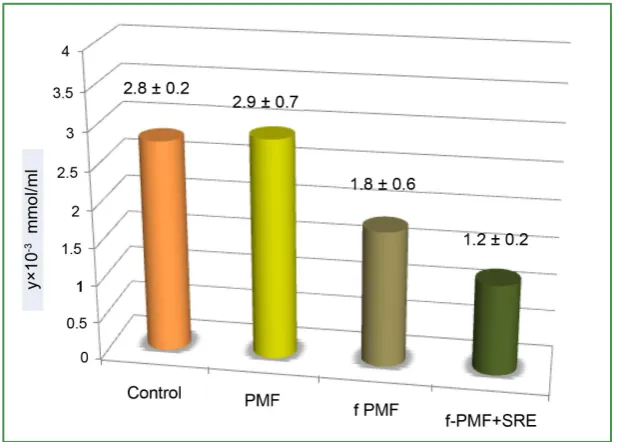
investigated the way to reinforce this effect. The fermentation is one of the pos-sibilities. Since the fermentation is proceeded by bacterial digestion and degra-dation, less efficient constituents would be lost than commonly used extraction by hot water. Therefore, we decided to ferment the herbal medicine by yeast (Saccharomyces cerevisiae), expecting the enhancement of its antioxidative ef-fects. The generated super oxide anion after one week administration of conven-tional PMF, f-PMF and f-PMF + SRE were 2.9, 1.8 and 1.2 × 10⁻⁵ mmol/ml,
re-spectively. All the fermented herbal medicine decreased super oxide anion gen-eration in compare with their corresponding unfermented ones (Figure 1).
4. Clinical Trial
4.1. Changes in Cell Number of Total Leukocyte and Subsets
Change by
f-
PMF
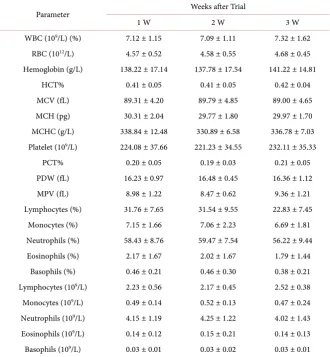
Leukocyte numbers have been counted one hour before and 1, 2 and 3 weeks af-ter the treatment of fermented PMF. The cell number measured one hour before the administration was set as 100%. Relative percentage of cell number on the one, two and three weeks were followed up to three weeks after the trial in case of human. As a result of this inspection, leukocyte subsets and platelet were in-creased and significant group were shown in red in Table 1.
4.2. Detecting Biochemical Factors after Administration of PMF
Derivatives
The volunteers were healthy subject, with no drastic change for the total number of leukocytes. However, we tried to check the regulative effect of PMF on the
[image:5.595.219.528.446.667.2]Table 1. Hematological analysis of volunteer administered by f-PMF.
Parameter Weeks after Trial
1 W 2 W 3 W
WBC (109/L) (%) 7.12 ± 1.15 7.09 ± 1.11 7.32 ± 1.62
RBC (1012/L) 4.57 ± 0.52 4.58 ± 0.55 4.68 ± 0.45
Hemoglobin (g/L) 138.22 ± 17.14 137.78 ± 17.54 141.22 ± 14.81
HCT% 0.41 ± 0.05 0.41 ± 0.05 0.42 ± 0.04
MCV (fL) 89.31 ± 4.20 89.79 ± 4.85 89.00 ± 4.65
MCH (pg) 30.31 ± 2.04 29.77 ± 1.80 29.97 ± 1.70
MCHC (g/L) 338.84 ± 12.48 330.89 ± 6.58 336.78 ± 7.03
Platelet (109/L) 224.08 ± 37.66 221.23 ± 34.55 232.11 ± 35.33
PCT% 0.20 ± 0.05 0.19 ± 0.03 0.21 ± 0.05
PDW (fL) 16.23 ± 0.97 16.48 ± 0.45 16.36 ± 1.12
MPV (fL) 8.98 ± 1.22 8.47 ± 0.62 9.36 ± 1.21
Lymphocytes (%) 31.76 ± 7.65 31.54 ± 9.55 22.83 ± 7.45
Monocytes (%) 7.15 ± 1.66 7.06 ± 2.23 6.69 ± 1.81
Neutrophils (%) 58.43 ± 8.76 59.47 ± 7.54 56.22 ± 9.44
Eosinophils (%) 2.17 ± 1.67 2.02 ± 1.67 1.79 ± 1.44
Basophils (%) 0.46 ± 0.21 0.46 ± 0.30 0.38 ± 0.21
Lymphocytes (109/L) 2.23 ± 0.56 2.17 ± 0.45 2.52 ± 0.38
Monocytes (109/L) 0.49 ± 0.14 0.52 ± 0.13 0.47 ± 0.24
Neutrophils (109/L) 4.15 ± 1.19 4.25 ± 1.22 4.02 ± 1.43
Eosinophils (109/L) 0.14 ± 0.12 0.15 ± 0.21 0.14 ± 0.13
Basophils (109/L) 0.03 ± 0.01 0.03 ± 0.02 0.03 ± 0.01
The analysis of CD positive cells by FCM was measured by gating in the lymphocytes region on the scattered gram. Figure shows an example analysis. Nonspecific reaction of the PE fluorescence was found in the isotype control.
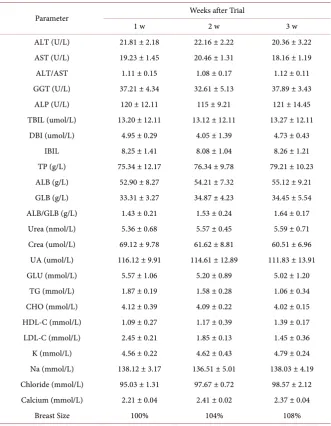
biochemical factors. Analysis that mixed both groups together showed no sig-nificant differences in TG value. Not sigsig-nificant but some trend was seen in high-dense cholesterol and low-dense-cholesterol. Each of factors move to the better condition and indicated in green in Table 2. As a results of total effect of this material f-PMF increased the bust size of volunteer ladies of senile.
The evident was shown that many leukocyte subsets regulated by f-PMF, we tried to check immune-globulin level in the f-PMF, administered volunteer. Manu of immunoglobulin level were increased after administrating f-PMF. However, only IgE was down regulated by this remedy (Table 3).
4.3. The Complement System-Another Stage of Evidence for
Focusing by Fragmented Polysaccharide,
f-
PMF
Table 2. Biochemical analysis of volunteer analysis administered by f-PMF.
Parameter Weeks after Trial
1 w 2 w 3 w
ALT (U/L) 21.81 ± 2.18 22.16 ± 2.22 20.36 ± 3.22
AST (U/L) 19.23 ± 1.45 20.46 ± 1.31 18.16 ± 1.19
ALT/AST 1.11 ± 0.15 1.08 ± 0.17 1.12 ± 0.11
GGT (U/L) 37.21 ± 4.34 32.61 ± 5.13 37.89 ± 3.43
ALP (U/L) 120 ± 12.11 115 ± 9.21 121 ± 14.45
TBIL (umol/L) 13.20 ± 12.11 13.12 ± 12.11 13.27 ± 12.11
DBI (umol/L) 4.95 ± 0.29 4.05 ± 1.39 4.73 ± 0.43
IBIL 8.25 ± 1.41 8.08 ± 1.04 8.26 ± 1.21
TP (g/L) 75.34 ± 12.17 76.34 ± 9.78 79.21 ± 10.23
ALB (g/L) 52.90 ± 8.27 54.21 ± 7.32 55.12 ± 9.21
GLB (g/L) 33.31 ± 3.27 34.87 ± 4.23 34.45 ± 5.54
ALB/GLB (g/L) 1.43 ± 0.21 1.53 ± 0.24 1.64 ± 0.17
Urea (nmol/L) 5.36 ± 0.68 5.57 ± 0.45 5.59 ± 0.71
Crea (umol/L) 69.12 ± 9.78 61.62 ± 8.81 60.51 ± 6.96
UA (umol/L) 116.12 ± 9.91 114.61 ± 12.89 111.83 ± 13.91
GLU (mmol/L) 5.57 ± 1.06 5.20 ± 0.89 5.02 ± 1.20
TG (mmol/L) 1.87 ± 0.19 1.58 ± 0.28 1.06 ± 0.34
CHO (mmol/L) 4.12 ± 0.39 4.09 ± 0.22 4.02 ± 0.15
HDL-C (mmol/L) 1.09 ± 0.27 1.17 ± 0.39 1.39 ± 0.17
LDL-C (mmol/L) 2.45 ± 0.21 1.85 ± 0.13 1.45 ± 0.36
K (mmol/L) 4.56 ± 0.22 4.62 ± 0.43 4.79 ± 0.24
Na (mmol/L) 138.12 ± 3.17 136.51 ± 5.01 138.03 ± 4.19
Chloride (mmol/L) 95.03 ± 1.31 97.67 ± 0.72 98.57 ± 2.12
Calcium (mmol/L) 2.21 ± 0.04 2.41 ± 0.02 2.37 ± 0.04
Breast Size 100% 104% 108%
The analysis of β2-AR receptor expressing cells and CD positive cells by FCM was measured. By gating in
the lymphocytes region on the scattered gram, figure shows an example analysis.
Table 3.Immunoglobulin class analysis of volunteer analysis administered by f-PMF.
Parameter Weeks after Trial
1 w 2 w 3 w
IgA (g/L) 2.25 ± 0.87 1.99 ± 0.79 2.47 ± 1.21
IgG (g/L) 12.92 ± 2.18 11.66 ± 2.06 12.41 ± 2.23
IgM (g/L) 1.40 ± 0.64 1.33 ± 0.62 1.54 ± 0.42
IgE (g/L) 71.96 ± 66.73 74.85 ± 47.75 55.66 ± 58.56
Time interval of blood sampling between before and after hot-spring hydrotherapy was approximately 24 hours. Measurements of the total and differential leukocyte counts and 3 catecholamines levels in the peri-pheral blood.
[image:7.595.207.538.569.655.2]to Alternative Medicine. So in this chapter, we would like to show the nature of complement and activated mechanism that lead to the activation of all the phys-ical activities through the augmentation of complement receptor positive struc-ture cells. Activation of the complement system results in a cascade of interac-tions of these proteins, leading to the generation of products that have important biologic activities and that constitute an important humoral mediator system involved in inflammatory reactions. First, coating of particles, such as bacteria or immune complexes, with certain components of complement facilitates the in-gestion of the particle by phagocytic cells (opsonic function of complement). Second, the activation event generates many fission products of complement proteins for which specific receptors exist on a variety of inflammatory cells, such as granulocytes, lymphocytes, and other cells. Binding of these comple-ment-derived products to such receptors results in biologic activities such as chemotaxis and hormone-like activation of cellular functions (inflammatory function of complement) [15][16].
4.3.1. Pathways of Complement Activation and Complement Proteins by
f-PMF
pathway, attachment of many C3b molecules to the target cell-will allow binding of C5 and its cleavage into C5a and C5b by the enzyme C3b, Bb, now referred to as C5 convertase. According to the potential of this positive feedback loop to ra-pidly use up Factor B and C3, the positive feedback must be carefully regulated. There are two important regulatory proteins in plasma. The first protein, Factor H (formerly referred to as PIH), competes with Factor B for binding to C3b and also dissociates C3b, Bb into C3b and Bb. The second control protein, Factor I (formerly referred to as C3b in activator), cleaves C3b that is bound to Factor H or to a similar protein found on the surface of the host cell. The resulting cleaved C3b, termed iC3b, can no longer for PMF3 convertase. The action of these two control proteins prevents the consumption of Factor B and C3 in plasma; in ad-dition, these two proteins in activate C3b, Bb on host cell surfaces. In contrast, surfaces of many target cells, such as bacteria and other microorganisms, protect C3b, Bb from in activation by Factors H and I. This protection results the posi-tive feedback integrate to proceed on the surface of the target cell, result to the activation of the pathway and subsequent cell death. With this mechanism, the alternative pathway is activated by those substances that prevent the inactivation of the positive feedback loop enzyme C3b, Bb. A substance is therefore recog-nized as “foreign” if it restricts the action of Factors H and I and allows the posi-tive feedback integration to continue. The chemical structures on surfaces of target particles and cells responsible for activation or non-activation of the al-ternative pathway have not been identified. There is some evidence that carbo-hydrate moieties are involved, particularly sialic acid. The alternative pathway protein(s) responsible for the recognition of these structures also remains to be determined. As mentioned before, the activation of the alternative pathway re-quires a C3b molecule bound to the surface of a target cell. An intriguing ques-tion is, “What does the critical first cab molecule kick off?” Although it can be presented by the C3 convertase of the classical pathway or by cleavage of C3 by plasmin and certain bacterial and other cellular proteases, the alternative path-way can generate this first C3b molecule without these proteases. The intramo-lecular thioester, which is highly reactive in nascent C3b and is responsible for the covalent bonding to targets, is also accessible in native C3 to water mole-cules. Thus, spontaneous hydrolysis of the thioester bond occurs constantly in plasma at a low rate. The C3 molecules in which the thioester bond has been hy-drolyzed behave like C3b, although the C3a domain has not been removed. C3 with a hydrolyzed thioester is called C3 or C3b-like C3. It can bind Factor B and allow Factor D to activated Factor B, which results in formation of a fluid-phase C3 convertase, C3, Bb. This enzyme is continuously formed and produces c3b molecules that can randomly attach to cells. Although these C3b molecules will be rapidly inactivated on host cells by Factors H and I, they will start the positive feedback loop on foreign surfaces, as outlined previously. Instead, the alternative pathway is constantly activated at a low rate, but amplification with subsequent cell death occurs only on foreign particles [17].
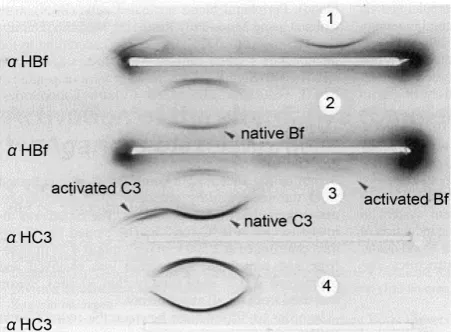
phoresis. The human serum was prepared after administrating fermented Puera-ria milifica together with the sample with before fermentation. Immuno- elec-trophoresis was setting up for 90 min, followed by incubating with anti- hu-man whole serum and specific for C3 and Bf component. These specific anti complement component serum were kindly supplied by Dr. Syunnosuke SAKAI, Cancer Research Institute of Kanazawa University, Japan [8].
4.3.2. Products of Complement Activation by PMF, Exhibiting Biological Activity
Activation of either the alternative or the classical pathway results in the genera-tion of many important peptides involved in inflammatory responses. The ana-phylaxis increase of vascular permeability degranulation of mast cells and baso-phils with release of histamine, degranulation of eosinobaso-phils, aggregation of platelets opsonization of particles and solubilization of immune complexes with subsequent facilitation of phagocytosis, release of neutrophils from bone marrow resulting in leukocytosis, smooth muscle contraction, increase of vascular per-meability, smooth muscle contraction, increase of vascular perper-meability, degra-nulation of mast cells and basophils with release of histamine, degradegra-nulation of eosinophils, aggregation of platelets, chemotaxis of basophils, eosinophils, neu-trophils, and monocytes, release of hydrolytic enzymes from neuneu-trophils, che-motaxis of neutrophils, release of hydrolytic enzymes from neutrophils, inhibi-tion of migrainhibi-tion and undulainhibi-tion of spreading of monocytes and anaphylatoxins C3a, C4a, and C5a are derived from the enzymatic cleavage of C3, C4, and C5 respectively. Historically, C3a and C5a were defined as factors derived from ac-tivated serum possessing spasmogenic activity. The anaphylatoxins are now rec-ognized as having many additional biologic functions. Both C3a and C5a are known to induce the release of histamine from mast cells and basophils. As shown in the figure anaphylatoxins cause smooth muscle contraction and induce the release of vasoactive amines, which cause an increase in vascular permeabili-ty [8] (Figure 2).
5. Discussion
Our investigation clarified how f-PMF affect the physiological factor, especially for female menopausal disorder and also known as tonic agent, influences the immune system (e.g. leukocyte, granulocyte and lymphocyte subsets in particular). We quantified blood biochemical factors and find many advance compare than that of non-fermented PMF. For qualitative and quantitative evaluation, we examined the cytokine expression levels, and directly measured the expression levels of cytokine-containing cells in peripheral blood, eliminating possible ar-tificial factors that could arise from culturing in test tubes or changes in net val-ue by catalyzation. To avoid any possible inflval-uence from the circadian rhythm, we obtained the whole blood from all donors at the same time.
Figure 2. Immuno-electrophoretic demonstration of activated human complement. The human serum was prepared after administrating f-PMF together with the sample with before fermentation. Immuno-electrophoresis was setting up for 90 min, followed by in-cubating with anti-human whole serum and specific for C3 and Bf component. These specific anti complement component serum were kindly supplied by Dr Syunnosuke SAKAI, Cancer Research Institute of Kanazawa University, Japan. Agar gel was dried and dyed by Trojan-Blue dye after de-saltation for three days [8].
protein (CRP). The value of CRP was 0.57 g/dl to 1.23 g/dl in our subjects, sug-gesting very mild inflammatory responses, which showed that hemophilic for-mula did not cause infection. Since the meridian may influence cells throughout the body and may pass through every organ system, hemophilic formula stimu-lation might provide maximum benefits without side effects. As an im-mune-enhancer, hemophilic formula merits further investigation as a possible treatment for acquired immunodeficiency syndrome, chronic fatigue syndrome and other disorders that have been concerned throughout the world.
Conflict of Interest
We declared that there was no conflict of interest in this study.
References
[1] Yamaguchi, N., Arai, M. and Murayama, T. (2015) Aspect of QOL Assessment and Proposed New Scale for Evaluation. Open Journal of Immunology, 5, 147-182. https://doi.org/10.4236/oji.2015.53014
[2] Suzuki, S., Toyabe, S., Moroda, T., Tada, T., Tsukahara, A., Iiai, T., et al. (1997) Circadian Rhythm of Leukocytes and Lymphocytes Subsets and Its Possible Corre-lation with the Function of the Autonomic Nervous System. Clinical Experimental Immunology, 110, 500-508. https://doi.org/10.1046/j.1365-2249.1997.4411460.x [3] Yamaguchi, N., Kawada, N., Ja, X.-F., Okamoto, K., Okuzumi, K., Chen, R. and
Ta-kahashi, T. (2013)Overall Estimation of Anti-Oxidant Activity by Mammal Macro- phage. Open Journal of Rheumatology and Autoimmune Diseases, 4, 13-21. https://doi.org/10.4236/ojra.2014.41002
[4] Kitada, Y., Okamoto, K., Takei, T., Jia, X.F., Chen, R., Yamaguchi, N., Tsubokawa, M., Wu, W.H., Murayama, T. and Kawakita, K. (2013) Hot Spring Hydro Therapy Regulate Peripheral Leukocyte Together with Emotional Hormone and Receptor Positive Lymphocytes According to Each Constitution/Condition. Open Journal of Rheumatology and Autoimmune Diseases, 3, 140-153.
https://doi.org/10.4236/ojra.2013.33022
[5] Hamada, M. and Yamaguchi, N. (1988) Effect of Kanpo Medicine, Zyuzentaihoto, on the Immune Reactivity of Tumor-Bearing Mice. Journal of Ethnopharmacology, 24, 311-320. https://doi.org/10.1016/0378-8741(88)90160-2
[6] Shimizu, S., Kitada, H., Yokota, H., Yamakawa, J., Murayama, T., Sugiyama, K., Izumi, H. and Yamaguchi, N. (2002) Activation of the Alternative Complement Pathway by Agaricus blazei Murill. Phytomedicine, 9, 536-545.
https://doi.org/10.1078/09447110260573047
[7] Yamaguchi, N., Ueyama, T., Amat, N., Yimit, D., Hoxur, P., Sakamoto, D., Katoh, Y., Watanabe, I. and Su, S.Y. (2015) Bi-Directional Regulation by Chinese Herbal Formulae to Host and Parasite for Multi-Drug Resistant Staphylococcusaureus in Humans and Rodents. Open Journal of Immunology,5, 18-32.
https://doi.org/10.4236/oji.2015.51003
[8] Yamaguchi, N., Mastuba, Y., Okamoto, K., Sakamoto, D., Ueyama, T., Matsuno, H. and Amat, N. (2017) Lactobacilli Enjoyed Fermented Herbs on to the Last Fragment and Regulated Leucocyte Subsets and Anti-Oxidative Activity. Open Journal of Rheumatology and Autoimmune Diseases, 7, 30-45.
https://doi.org/10.4236/ojra.2017.71003
Hashimo-to, H. and Yamaguchi, N. (2002) Effect of Acupuncture on Leukocyte and Lympho- cyte Sub-Population in Human Peripheral Blood Qualitative Discussion. The Jour-nal of Japanese Association of Physical Medicine, Balneology and Climatology, 65, 207-211.
[10] Geerlings, S.E. and Hoepelman, A.I. (1999) Immune Dysfunction in Patients with Diabetes Mellitus. FEMS Immunology & Medical Microbiology, 26, 259-265.
https://doi.org/10.1111/j.1574-695X.1999.tb01397.x
[11] Tiyasatkulkovit, W., Charoenphandhu, N., Wongdee, K., Thongbunchoo, J., Krish-namra, N. and Malaivijitnond, S. (2012) Upregulation of Osteoblastic Differentia-tion Marker mRNA Expression in Osteoblast-Like UMR106 Cells by Puerarin and Phytoestrogens from Pueraria mirifica.Phytomedicine, 19, 1147-1155.
https://doi.org/10.1016/j.phymed.2012.07.010
[12] Malaivijitnond, S. (2012) Medical Applications of Phytoestrogens from the Thai Herb Pueraria mirifica. Frontiers in Medicine, 6, 8-21.
https://doi.org/10.1007/s11684-012-0184-8
[13] Akçay, N., Bor, M., Karabudak, T., Ozdemir, F. and Türkan, I. (2012) Contribution of Gamma Amino Butyric Acid (GABA) to Salt Stress Responses of Nicotiana sylve- stris CMSII Mutant and Wild Type Plants. Journal of Plant Physiology,169, 452- 458. https://doi.org/10.1016/j.jplph.2011.11.006
[14] Brozoski, T., Odintsov, B. and Bauer, C. (2012) Gamma-Aminobutyric Acid and Glutamic Acid Level Sintheauditory Pathway of Rats with Chronic Tinnitus: A Di-rect Determination Using High Resolution Point-Resolved Proton Magnetic Reso- nance Spectroscopy (1H-MRS). Frontier Systems Neuroscience, 6, 1-12.
https://doi.org/10.3389/fnsys.2012.00009
[15] Yamaguchi, N., Takahashi, T., Sugita, T., Ichikawa, K., Sakaihara, S., Kanda, T., Arai, M. and Kawakita, K. (2007) Acupuncture Regulates Leukocyte Subpopulations in Human Peripheral Blood. Evidence-Based Complementary and Alternative Medi- cine, 4, 447-453. https://doi.org/10.1093/ecam/nel107
[16] Yamaguchi, N., Shimizu, S. and Izumi, H. (2004) Hydrotherapy Can Modulate Pe-ripheral Leukocytes: An Approach to Alternative Medicine, Complementary and Alternative Approaches to Biomedicine. Kluwer Academic/Plenum Publishers, New York, 239-251. https://doi.org/10.1007/978-1-4757-4820-8_18
[17] Murayama, T., Yamaguchi, N., Matsuno, H. and Eizuru, Y. (2004) In Vitro Anti- Cytomegalovirus Activity of Kampo (Japanese Herbal) Medicine. Evidence-Based Complementary and Alternative Medicine, 1, 285-289.
https://doi.org/10.1093/ecam/neh045
Abbreviations
CAM: Complementary and alternative medicine, beside the western medicine, there are many traditional medicine and/or health promoting menu all over the world.
CD: Cluster of differentiation. Each lymphocyte has name that expressed CD number, for example CD2, CD4, etc.
DM: Diabetes mellitus.
f-PMF: Fermented Pueraria milifica that had been depredated to micro frag-ment by Lactobacillus.
G-rich type: An individual that exhibit over 60% of granulocyte in peripheral blood, finding many in young gentleman.
L-rich type: An individual that exhibit over 40% of lymphocyte in peripheral blood, finding lot in ladies and senile.
Submit or recommend next manuscript to SCIRP and we will provide best service for you:
Accepting pre-submission inquiries through Email, Facebook, LinkedIn, Twitter, etc. A wide selection of journals (inclusive of 9 subjects, more than 200 journals)
Providing 24-hour high-quality service User-friendly online submission system Fair and swift peer-review system
Efficient typesetting and proofreading procedure
Display of the result of downloads and visits, as well as the number of cited articles Maximum dissemination of your research work
Submit your manuscript at: http://papersubmission.scirp.org/