TURAS Multidisciplinary urban landscape design guidelines: Poplar HARCA -
Carradale House
Authors: Dr Stuart Connop, Jack Clough and Caroline Nash
Contact: [email protected]
Published by the University of East London 4-6 University Way
Docklands London E16 2RD
Cover photo: Bug Hotel at the Carradale House, Brownfield Estate allotments © Stuart Connop
© University of East London 2013
Printed in Great Britain at the University of East London, Docklands, London
Table of contents
Page no.
1. Introduction... 4
2. Greening public and private urban infrastructure... 5
3. The London context... 6
4. Local focus, universal application... 7
5. Multifunctional biodiverse urban green infrastructure landscaping guidelines: Carradale House Renovation, Poplar, London, UK... 8
5.1 Wildflower meadows... 8
5.2 SuDs... 10
5.3 Native planting... 12
5.4 Nesting habitat... 13
5.5 Brownfield-inspired landscaping... 14
5.7 Green walls... 16
5.8 Ponds and ephemeral wet areas... 20
5.9 Incorporating art into landscape design... 22
5.20 'Grow your own' urban agriculture... 24
Table of Figures
Page no.
Figure 1. Wildflower meadow area of UEL's Beetle Bump brownfield nature area... 8
Figure 2. Rain garden fed by downpipes from neighbouring building... 10
Figure 3. Road calming rain garden... 11
Figure 4. Downpipe-fed stormwater attenuating planter... 11
Figure 5. Bee wall at Lend Lease offices, Central London... 13
Figure 6. Trellick bee tower at Roots and Shoots, Kennington, London... 13
Figure 7. Rubble, metal sheeting and ornamental planting landscape design at Barking Riverside... 15
Figure 8. Woodland pocket with standing deadwood and deadwood piles landscape design at Barking Riverside... 15
Figure 9. South facing sand bank with concrete features landscape design at Barking Riverside... 15
Figure 10. Pre-fabricated green roof bin store... 16
Figure 11. Green roof bike shelter... 17
Figure 12. Artists impression of the Ludwigsburg Baubotanik green wall... 18
Figure 13. Baubotanik green wall... 18
Figure 14. Nectar-rich plants for pollinators on a Baubotanik green wall... 19
Figure 15. Prototype of the Ludwigsburg Baubotanik green wall... 19
Figure 16. SuDs pond... 20
Figure 17. Using aggregates to create ground sculptures and biodiverse habitat at UEL's Beetle Bump... 23
Figure 18. Green man statue constructed from driftwood due to be installed as the first exhibition at UEL's Beetle Bump... 23
Figure 19. Interpretation board on brownfield landscaping... 24
Figure 20. Community grow your own project, Brownfield Estate, Poplar... 25
Figure 21. Rainwater harvesting water butt... 26
Figure 22. Bug hotel at the Brownfield Estate community allotment, Poplar HARCA.. 27
Multidisciplinary landscape design guidelines:
Poplar HARCA – Carradale House
1. Introduction
Transitioning Towards Urban Resilience and Sustainability (TURAS) is a European-wide research and development programme. The “TURAS” project aims to bring together urban communities, researchers, local authorities and SMEs to research, develop, demonstrate and disseminate transition strategies and scenarios to enable European cities and their rural interfaces to build vitally-needed resilience in the face of significant sustainability
challenges. To ensure maximum impact, the TURAS project has developed an innovative twinning approach bringing together decision makers in local authorities with SMEs and academics to ensure meaningful results and real change are implemented over the duration of the project. Eleven local authorities or local development agencies are involved as
partners in the project and they will orient research and development from the outset towards the priority sustainability and resilience challenges facing their cities. Nine leading academic research institutions and six SMEs will work with these cities helping them to reduce their urban ecological footprint through proposing new visions, feasibility strategies, spatial scenarios and guidance tools to help cities address these challenges. The specific challenges addressed in TURAS include: climate change adaptation and mitigation; natural resource shortage and unprecedented urban growth.
2. Greening public and private urban infrastructure
The increasing proportion of people living in urban areas has led to a range of
environmental issues and sustainability challenges. In order to ensure that urban living is sustainable and that cities have the resilience to cope with environmental change these challenges must be met. Restoration and re-creation of green infrastructure in urban areas is a potential solution to many of these challenges.
Green infrastructure in the built environment has traditionally been designed with limited consideration for biodiversity or regional context. Instead, a blend of horticultural
fascination with exotic species, ease of maintenance, accessibility and an innate desire to control nature have led to aesthetic appeal and amenity value being the key drivers for urban greenspace design (Eisenberg 1998). Even selection of species suited to local climates has been limited with artificial irrigation and heavy management of urban landscapes common place.
Given the increasing recognition that the natural environment can provide goods and services of benefit to humans and the planet (‘ecosystem services’), the European
Commission and the UK government are now advocating well-planned green infrastructure that provides opportunities to protect and enhance biodiversity (UK National Ecosystem Assessment 2011; DEFRA 2011; HM Government 2011; Town and Country Planning Association and The Wildlife Trusts 2012; Secretariat of the Convention on Biological Diversity 2012; European Commission 2013). In response to this, there is a need to develop and monitor ‘novel’, biodiversity-focused designs for green infrastructure at roof, wall and ground-level, and investigate its contribution to urban biodiversity. The key first step to maximising the resilience and sustainability in such a process is ensuring that design is multifunctional and is based on regional context both in terms of being current climate and climate adaptation resilient and relevant to regional biodiversity of national and
international conservation value. The 'added value' of such a biodiversity-focused climate resilient approach, beyond biodiversity and ecosystem service benefits, is that the
management requirements of the urban green infrastructure become more sustainable with reduced requirements for fossil fuel use, artificial irrigation, and fertilizer and pesticide input.
3. The London context
One of the key research cities for TURAS is London where the University of East London is leading Work Package 2- Greening public and private infrastructure. The aim of this Work Package is to develop state-of-the-art techniques for evaluating and enhancing the
ecological ‘quality’ of green infrastructure within urban environments. One of the ways that this is being achieved is through the design and establishment of field experiments
investigating state-of-the-art technology and processes to maximise the biodiversity and economic value of urban green infrastructure.
One of the key aims behind this research is to look at how landscape design can be
incorporated into new sustainable developments and retrofitted into existing developments in such a way as to promote biodiversity and the valuable ecosystem services it supports. This includes the use of biomimicry to incorporate habitat interest features typical of regional habitat of national or international conservation value.
In a London context, one of the key conservation priority habitats that lends itself to biomimicry in urban green infrastructure design is the exposed and arid characteristics of brownfield (post-industrial) sites. In intensively managed urban and rural environments, brownfield sites often represent some of the only remaining fragments of 'wildspace' in the landscape. This unmanaged nature of the sites lends itself to being able to support
biodiversity of national and international conservation value and this value has been recognised internationally (Harvey 2000; Harabiš et al. 2013).
Typically comprising a blend of friable substrates and pockets of contamination, many brownfield sites represent open flower-rich resources with no management intervention that lend themselves to supporting many warmth-loving species at the edge of their range. Such is the value of the habitat in otherwise heavily managed urban and rural landscapes that, in the UK, the habitat typical of the highest quality brownfield sites has been
characterised and recently been included in the new list of UK Biodiversity Action Plan (BAP) priority habitats (Riding et al. 2010) as Open Mosaic Habitats on Previously Developed Land. The value of brownfield sites lies in the complexity of microhabitats within the wider
mosaic, which support species throughout their lifecycles (Bodsworth et al. 2005). In addition to open flower-rich resources, much of the literature describing wildlife-rich brownfield sites (Bodsworth et al. 2005; Buglife 2009; Riding et al. 2010) list the essential components of the brownfield mosaic as:
shelter belts of mid/late successional trees and bushes;
early successional ruderal and scrub habitats;
south facing slopes;
a variety of aggregates;
ephemeral pools/standing water;
seasonal wet areas or inundation communities.
This habitat mosaic is thus something that should be aspired to through biomimicry in urban green infrastructure design.
Experiments investigating best practice for the design of biodiverse ground level landscaping are already underway at Barking Riverside and UEL. The systems put in place are being monitored by a UEL PhD student studying the link between green infrastructure design and maximising biodiversity.
4. Local focus, universal application
The ideas and principles behind the innovative design of the urban green infrastructure at Barking Riverside and UEL are applicable to all urban sustainable development initiatives. It is hoped that this case study will act as a blueprint for use throughout the TURAS
partnership and beyond to promote the use of biomimicry of regional habitat of
conservation value in the design of green infrastructure to maximise urban biodiversity. It is hoped that the principles established within this research framework will encourage other initiatives to develop globally. In particular, to investigate and extend the limits of
understanding of the habitats and ecosystems that can be replicated at ground level through urban landscaping, and the biodiversity of regional, national and international conservation priority that can be supported in urban areas through biodiverse green infrastructure implementation.
The specifics of the design features established within the Barking Riverside and UEL research projects in terms of regional value are equally relevant for developments throughout the UK's Thames Corridor. Where opportunity permits, it is hoped that the Barking Riverside and UEL green infrastructure design principles pioneered and promoted within TURAS will be adopted at other sites.
5. Multifunctional biodiverse urban green infrastructure landscaping
guidelines: Carradale House Renovation, Poplar, London, UK
5.1 Wildflower meadows
Incorporation of wildflower meadow areas (Figure 1) into landscape designs is a fantastic initiative if we are to return biodiversity and particularly pollinators to our urban areas. The advantages to a whole range of wildlife from pollinators through to birds and bats combined with the associated fossil fuel and cost savings associated with the reduction in
management requirements mean that moving away from heavily managed amenity grass has multiple ecosystem service benefits. With respect to Carradale House, this also represents a simple step towards the original Erno Goldfinger aim of bringing the
[image:9.595.67.524.415.718.2]countryside to the city. Whilst it is very encouraging to see wildflower meadow areas are already detailed on plans, there is room to increase these areas further and/or to create areas without associated tree planting to ensure that these areas are not overly shaded.
More intensive management of the edges of these areas can have the dual benefit of creating amenity grass areas for community use (and thus avoiding trampling wildflower meadow areas) and ensuring that the areas look managed and intentional to avoid any issues of negative perception.
Below is a list of species that should be considered for inclusion in wildflower meadow creation. The wildflower selection includes species of regional value and/or of importance in terms of Tower Hamlets Biodiversity Action Plan:
Wildflower meadow target species specific for the London Borough of Tower hamlets
Agrimony (Agrimonia eupatoria) Annual mercury (Mercurialis annua)
Autumn hawkbit (Scorzoneroides autumnalis) Birdsfoot trefoil (Lotus corniculatus)
Black horehound (Ballota nigra) Black medick (Medicago lupulina) Bladder campion (Silene vulgaris) Bulbous buttercup (Ranunculus bulbosus) Clustered bellflower (Campanula glomerata) Common knapweed (Centaurea nigra) Common poppy (Papaerva rhoeas) Common toadflax (Linaria vulgaris) Common sorrel (Rumex acetosa) Common vetch (Vicia sativa) Corncockle (Agrostemma githago) Cornflower (Centaurea cyanus) Cowslip (Primula veris)
Dog violet (Viola riviniana) Field scabious (Knautia arvensis) Greater knapweed (Centaurea scabiosa) Hoary plantain (Plantago media) Kidney vetch (Anthyllis vulneraria) Lady’s bedstraw (Galium verum) Lesser stitchwort (Stellaria graminea) Meadow buttercup (Ranunculus acris) Meadow vetchling (Lathyrus pratensis)
Musk mallow (Malva moschata)
Narrow-leaved birdsfoot trefoil (Lotus glaber) Oxeye daisy (Leucanthemum vulgare) Perforate St John’s-wort (Hypericum
perforatum)
Red bartsia (Odontites verna) Red deadnettle (Lamium purpureum) Rough hawkbit (Leontodon hispidus) Salad burnet (Sanguisorba minor) Scarlet pimpernel (Anagallis arvensis) Self-heal (Prunella vulgaris)
Small scabious (Scabiosa columbaria) Tufted vetch (Vicia cracca)
Vipers bugloss (Echium vulgare) Weld (Reseda luteola)
White clover (Trifolium repens) White deadnettle (Lamium album) Wild basil (Clinopodium vulgare) Wild carrot (Daucus carrota) Wild marjoram (Origanum vulgare) Wild mignonette (Reseda lutea) Wild pansy (Viola tricolor)
5.2 SuDs
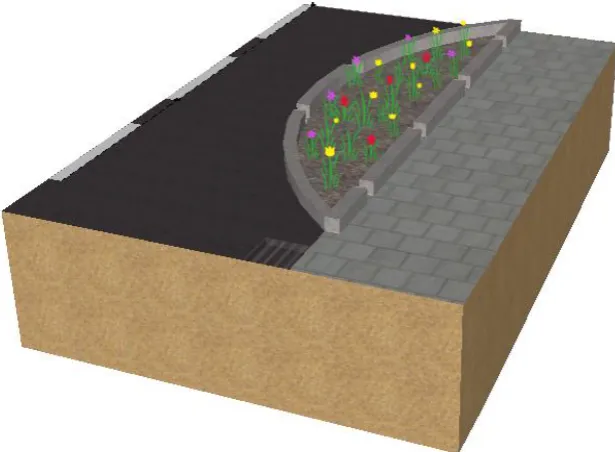
Incorporation of green infrastructure Sustainable Urban Drainage (SuDs) components such as rain gardens, tree pits and planters to manage stormwater can have additional benefits such as supporting biodiversity and improving runoff water quality. In addition, they offer a great opportunity for community engagement through initiatives such as green street wardens, whilst providing sites for educational activities and environmental research. Figures 2, 3 and 4 show some of the innovative ways that SuDs can be incorporated into high density urban areas and that biodiversity can be incorporated into SuDs design.
Where possible, native planting should be favoured in rain gardens. Species suitable for drier areas include:
• Autumn crocus (Colchium autumnale) • Bellflower (Campanula glomerata) • British bluebell (Hyacinthiodes non-scripta)
• Broad buckler fern (Dryopteris dilatata) • Bugle (Ajuga reptans)
• Dogwood (Cornus sanguine) • Geulder rose (Viburnum opulus) • Hemp agrimony (Eupatorium cannabinum)
• Male fern (Dryopteris felix-mas) • Pendulous sedge (Carex pendula) • Royal fern (Osmunda regalis) • Silverweed (Potentilla anserina) • Soft rush (Juncus effusus)
• Stinking hellebore (Helleborus foetidus) • Wild daffodil (Narcissus pseudonarcissus) • Wild tulip (Tulipa sylvestris)
[image:11.595.66.538.498.711.2]Wetter central areas should incorporate species suitable for the draw down zone or shallow water of ponds, especially sedges (Carex sp.) and rushes (Juncus sp.).
Figure 3. Road calming rain garden. Rain fed from pavement and road. The rain garden attenuates stormwater, improves water quality and calms traffic. Image © University of East London.
[image:12.595.39.556.391.748.2]5.3 Native planting
Substantial new planting of trees and shrubs is included within the designs. Where feasible native planting should be targeted. Often when design and planting takes place, it focuses predominantly on horticultural rather than biodiversity value. This practice is generally adopted due to a perception that horticultural species require less maintenance than native alternatives, but this is not necessarily the case and biodiversity benefits can be missed by not selecting native species. There is an increasing body of evidence to suggest that the greatest biodiversity value is achieved by planting with native/naturalised species. A number of studies comparing gardens planted with native species compared with more conventional horticultural gardens (with exotic species) found that bird and butterfly diversity was greater in ‘native gardens’ (French et al. 2005; Daniels & Kirkpatrick 2006; Burghardt et al. 2009). Corbet et al. (2001) found that native insects rarely make use of exotic species when compared with natives. There are a number of British native species that can be planted in a conventional gardening manner to provide a wonderful show throughout the summer (Baines, 2000). For hedgerow planting hawthorn (Crataegus monogyna), blackthorn (Prunus spinosa) and dog rose (Rosa canina) create huge interest in a small amount of space that can be further enhanced with climbers such as old man’s beard (Clematis vitalba), honeysuckle (Lonicera periclymenum) and hop (Humulus lupulus). This would help provide habitat for many species of invertebrates and birds, support foraging bats, and perhaps other small mammals.
If deciduous species are not suitable, native evergreen species such as holly (Ilex aquifolium), wild privet (Ligustrum vulgare) or yew (Taxus baccata) make a good and
beneficial alternative to exotic ornamental equivalents. If not managed too intensively (and this applies to exotic species also), these shrubs can provide a crop of flowers and berries, which provide the majority of the biodiversity interest (Thomas, 2010).
The following is a list of potential trees, including those suitable for SuDs tree pits:
Ash (Fraxinus excelsior) Aspen (Populus tremula) Beech (Fagus sylvatica)
Black poplar (Populus nigra subsp. Betulifolia)
Common alder (Alnus glutinosa) Commono oak (Quercus robur) English elm (Ulmus procera) Hawthorn (Crataegus monogyna)
Horse-chestnut (Aesculus hippocastanum) Large-leaved lime (Tilia platyphyllos)
London plane (Platanus occidentalis x orientalis)
Scots pine (Pinus sylvestris) Sessile oak (Quercus petraea) Silver birch (Betula pendula) Small-leaved lime (Tilia cordata) Sweet chestnut (Castanea sativa) Sycamore (acer pseudoplantanus) Walnut (Juglans regia)
Fruit trees should also be considered where appropriate as, in addition to the urban comfort and greenspace benefits, they can contribute to local food security and community
engagement with nature through 'grow your own' projects. It should be noted, however, that choice of trees should be subject to consultation with an arboriculturalist, as soil conditions and anticipated pollution conditions will influence species selection.
5.4 Nesting habitat
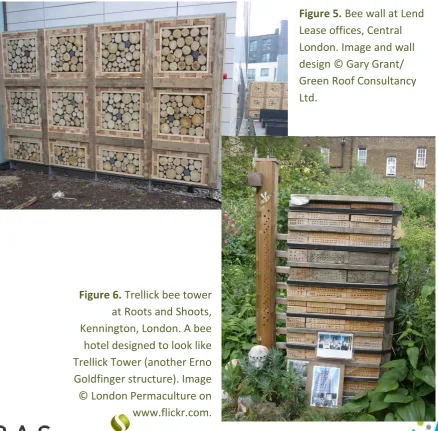
In addition to providing nectar and forage sources, it is important to provide other habitat requirements such as nesting habitat. This could include more typical features like bird and bat boxes but could also include more innovative features such as bug hotels. Innovative bug hotel design offers an opportunity to not only enhance biodiversity but also introduce an element of artistic design into landscape architecture. Features at Carradale House such as the expanse of concrete walls being retained throughout represent an ideal location for inclusion of these habitat walls. Figures 5 and 6 show the opportunities for including art and creativity into the design of these features.
[image:14.595.92.531.379.810.2]Figure 6. Trellick bee tower at Roots and Shoots, Kennington, London. A bee hotel designed to look like Trellick Tower (another Erno Goldfinger structure). Image © London Permaculture on www.flickr.com.
5.5 Brownfield-inspired landscaping
Brownfield sites in the Thames Gateway represent the last remnant pockets of wildspace in urban areas and thus some of the last sites to support a diversity of ecosystem services. Key to ecosystem service provision is the biodiversity that can be found on these sites. A
network of brownfield sites in the East Thames Corridor have been recorded supporting invertebrate populations of national importance (Harvey 2000; 2007) along with a host of other key conservation priority groups including birds (e.g. black redstart, linnet), reptiles (adders, grass snakes) and amphibians (great crested newts). The importance of brownfield habitat was officially recognised recently when Open Mosaic Habitat (OMH) on Previously Developed Land was added to the UK Biodiversity Action Plan as a Priority Habitat. It is also listed as a priority habitat within the Tower Hamlets Biodiversity Action Plan.
Brownfield sites are under greatest pressure from Thames Gateway development (Harvey 2000) and the highest quality sites are being lost to development at an alarming rate
(Robins & Henshall 2012). For development in the region to be environmentally sustainable, nationally important invertebrate populations in the region must be protected.
Redevelopment of urban greenspace represents an opportunity to achieve this. By
incorporating the floral diversity and diversity of habitat features typical of brownfield sites into urban landscape design it is possible to make our urban landscapes more permeable to biodiversity and create connectivity between key brownfield sites in the region.
Opportunities include providing vegetation of a variety of heights from taller herbs and grasses to sparser more stressed lower vegetation and finally to bare areas of sand and/or shingle. These areas are particularly important for thermophilic invertebrates (e.g. solitary bees and wasps) as they warm up quickly when exposed to the sun and provide basking areas. Ideally sand should be incorporated as banks with a sunny southerly aspect. Other key features include deadwood, particularly standing deadwood and areas of rubble and fixed metal sheeting blended with ornamental planting. Figures 7 to 9 comprise examples of how this kind of habitat can be incorporated into urban landscape design. For further details see the Barking Riverside landscaping report
(http://www.uel.ac.uk/erg/documents/BARKINGRIVERSIDE_with_cover_final.pdf).
.
[image:16.595.43.562.91.514.2]Figure 8. Woodland pocket with standing deadwood and deadwood piles landscape design at BR
[image:16.595.42.562.556.771.2]5.6 Small-scale green roofs
Green roofs offer enormous opportunity to restore biodiverse green infrastructure to urban areas and a range of associated ecosystem services including:
o Thermal insulation of buildings;
o Stormwater attenuation;
o Improved water quality;
o Improved air quality;
o Reduction of the urban heat island effect;
o Habitat for biodiversity (including pollinators, pest controllers);
o Human contact with wildlife and greenspace.
Currently, there is no provision for green roofs on the Carradale House landscape plans and, if at all possible, this should be considered. Nevertheless, even if large-scale green roofs are not feasible within this project, opportunities exist for the incorporation of small scale green roof systems as part of the landscape design (Figures 10 and 11). Innovation in thought and design means that green roofs are being incorporated in more and more locations in high density urban environments. This includes locations such as bike shelters, bus shelters and bin covers. Including small-scale green roofs within urban areas provides habitat to support biodiversity, breaks up and converts impermeable surfaces to permeable SuDs areas to alleviate stormwater problems and adds additional greenspace for community health and well-being. In fact, their value as SuDs features in urban areas has been recognised to such an extent that they are now being included in the London Borough of Tower Hamlets and LB of Newham SuDs planning guidance.
[image:17.595.70.548.498.723.2]
5.7 Green walls
Green walls represent another opportunity for multiple ecosystem service benefits. If designed correctly, green walls can provide space for biodiversity, a more pleasant visual environment for residents, create urban comfort zones, improve air quality and reduce noise pollution (Grant 2006; Newton et al. 2007; Alexandri & Jones 2008). As part of the TURAS green infrastructure research programme a novel free-standing green wall system is being installed and trialled in Ludwigsburg (Figure 12), Germany, to investigate its effect on air pollution, noise pollution and urban comfort zones. The buffer area between the
Carradale House estate and the neighbouring A12 road would make an ideal location for a mirror study to that in Stuttgart. The walls being installed use a novel ‘baubotanik’
technology to combine the engineering strength of trees within a modular green wall system (Figure 13).
[image:18.595.61.542.95.429.2]Figure 13. Baubotanik green wall. Image © Helix Pflanzen
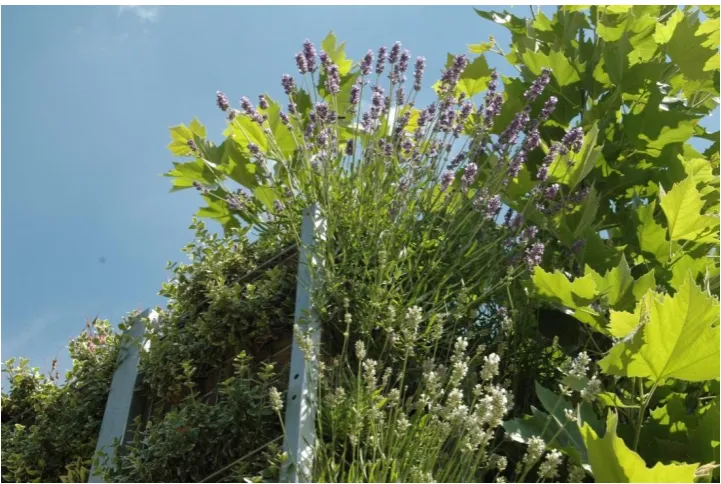
Such is the strength and flexibility of modular design that these systems can also be combined with seating structures, biodiverse planting, bug hotels and even bee hives (Figures 14 and 15).
Figure 14. Nectar-rich plants for pollinators on a Baubotanik green wall. Image © Helix Pflanzen
Figure 15. Prototype of the
[image:20.595.80.339.420.783.2]5.8 Ponds and ephemeral wet areas
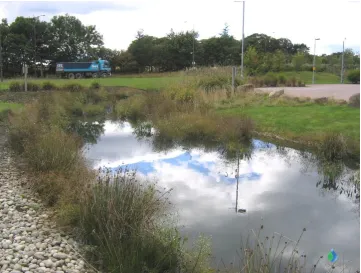
[image:21.595.75.437.243.516.2]Wet areas are typical habitat features of brownfield sites that are rarely incorporated into urban landscape design. Permanently wet ponds and ephemeral wet areas are key habitat features for supporting biodiversity and lack of available standing water is considered to be a significant limiting factor for urban biodiversity. Incorporation of wetland features (Figure 16) into the Carradale House design, either as part of a SuDs system or even as a habitat feature within the existing allotment garden could have substantial benefits to the landscape design both for biodiversity and for community engagement and educational activities such as pond dipping.
Figure 16. SuDs pond. Image ©Susdrain/CIRIA
Pond planting list suitable for Tower Hamlets planting include
Submerged and floating
• Broad-leaved pondweed (Potamogeton natans) • White water-lily (Nymphaea alba)
• Yellow water-lily (Nuphar lutea)
Emergent Plants for the draw down zone or shallow water • Branched bur-reed (Sparganium erectum)
• Bulrush (Typha latifolia)
• Greater Pond-sedge (Carex riparia) • Greater Water-dock (Rumex
hydrolapathum)
• Marsh woundwort (Stachys palustris) • Purple-loosestrife (Lythrum salicaria)
• Reed canary-grass (Phalaris arundinacea) • Reed sweet-grass (Glyceria maxima) • Rush (Juncus sp.)
• Yellow iris (Iris pseudacorus)
Marginal plants for base rich soils:
• Amphibious bistort (Persicaria amphibia) • Common spike-rush (Eleocharis palustris) • Common water-plantain (Alisma
plantago-aquatica)
• Creeping bent (Agrostis stolonifera) • Fools water-cress (Apium nodiflorum) • Marsh foxtail (Alopecurus geniculatus)
• Marsh marigold (Caltha palustris) • Marsh pennywort (Hydrocotyle vulgaris) • Sweet-grass sp. (Glyceria sp.)
• Water forget-me-not (Myosotis scorpioides)
• Water mint (Mentha aquatic) • Watercress (Nasturtium officinale)
Marginal plants for acid rich soils: • Articulated rush (Juncus articulatus) • Bog stitchwort (Stellaria uliginosa) • Bog-myrtle (Myrica gale)
• Bottle sedge (Carex rostrata) • Bulbous Rush (Juncus bulbosus) • Common sedge (Carex nigra)
• Common spike-rush (Eleocharis palustris) • Creeping forget-me-not (Myosotis
secunda)
• Deergrass (Trichophorum caespitosum) • Floating sweet-grass (Glyceria fluitans) • Flowering rush (Butomus umbellatus) • Hard rush (Juncus inflexus)
• Lesser spearwort (Ranunculus flammula) • Marsh speedwell (Veronica scutellata) • Marsh thistle (Cirsium palustre) • Marsh violet (Viola palustris)
• Marsh willowherb (Epilobium palustre) • Ragged-robin (Lychnis flos-cuculi) • Sharp-flowered rush (Juncus acutiflorus) • Soft rush (Juncus effusus)
• Star sedge (Carex echinata) • Tormentil (Potentilla erecta) • Tufted hair-grass (Deschampsia
caespitosa)
• Yellow iris (Iris pseudacorus)
Plants to avoid
Care should be taken not to use non-native plants, particularly vigorous alien plants that can take over ponds and exclude native species such as:
Canadian Pondweed (Elodea canadensis) Water Fern (Azolla filiculoides)
Nuttalls Pondweed (Elodea nuttallii) New Zealand Swamp-stonecrop (Crassula
helmsii)
Curly Waterweed (Lagarosiphon major) Floating Pennywort (Hydrocotyle
ranunculoides)
5.9 Incorporating art into landscape design
Aesthetics is a key consideration when trying to include biodiverse habitat features into urban landscape design as there is a danger that areas could be perceived as derelict or neglected if management is not obvious. However, over management of areas designed for biodiversity can lead to negative impacts on the biodiversity they are designed to support. In fact, one of the key reasons that brownfield sites can be so important for biodiversity is that they are typically not subject to intensive management.
Key to avoiding such issues is a combination of community engagement and incorporation of artistic design into the green infrastructure. Such input can comprise a variety of methods all of which should be planned to maximise the multifunctionality of the green space.
Examples include utilising sculpted aggregates at ground level to add to the aesthetics of the landscape design and increase the niches available for exploitation by biodiversity (Figure 17). Using recycled aggregates, whether from an on-site redevelopment or sourced locally, can also add to the sustainability of the development by reducing waste and the carbon footprint.
Incorporating art and sculpture installations into green infrastructure landscaping can also provide a host of multidisciplinary benefits (Figure 18). Primarily this adds to the aesthetics of a site and ensures that the site appears managed and intentional. However, if planned carefully, artistic involvement can also extend to community engagement if local artists are employed, and include opportunities for local school engagement. This can also open up opportunities for education on the importance of biodiverse green infrastructure in urban areas. Moreover, if an element of biomimicry is used in the creation of organic art pieces (as was done for the creation of the green man statue that will be displayed at UEL's Beetle Bump (Figure 18) the art itself can act to increase the usable niches for biodiversity.
A further tool to support this design for aesthetics and to reduce issues of public perception is to use interpretation boards with images of the target invertebrates and a description of the site (Figure 19). Including details of species that might be found on biodiverse green infrastructure such as that designed, and an explanation of the nature and value of sites in the region can increase understanding and engagement with the design.
Figure 17. Using aggregates to create ground sculptures and biodiverse habitat at UEL's Beetle Bump. Image © Stuart Connop
Figure 18. Green man statue
[image:24.595.69.347.418.787.2]5.10 'Grow your own' urban agriculture
With escalating food costs and an increasing recognition of the need to provide localised food security in urban areas (Secretariat of the Convention on Biological Diversity 2012), 'grow your own' pocket community urban agriculture projects should play an integral role in multifunctional urban green infrastructure design. The broad array of benefits possible if multifunctional design is incorporated include:
Cheap and local food source (Twiss et al. 2003)
Social capital (Midmore & Jansen 2003)
Community ownership of green spaces and social interaction (Ferris et al. 2001; Shinew
et al. 2004)
Biodiversity benefits (Matteson & Langellotto 2009)
Urban comfort zone benefits (Deelstra & Giradet 2000)
Health & well-being benefits (Smardon 1988; Alaimo et al. 2008; Parmer et al. 2009)
[image:25.595.47.543.72.443.2]Due to the unsuitable nature of the soil in many urban areas (in particular poor soil quality or contamination), the typical and simple solution to providing space for community grow your own projects is the provision of raised bed planters in communal green space or hard standing areas. Design and layout can vary but for increased sustainability, use of recycled materials should be considered (Figure 20).
[image:26.595.76.471.190.723.2]Substantial guidance exists on the governance involved in establishing such projects (REF?), and key to planning such areas is consideration of the long-term tenure of the land and ownership/management of the allotment areas. From an environmental sustainability perspective, consideration should be given to a water source for irrigation as grow your own projects can be relatively water intensive. As such, if possible, rainwater harvesting systems such as water butts or underground storage that collect rainwater from hard surfaces such as roof areas should be included within landscape plans (Figure 21). With careful planning, it is possible to link this in with the SuDs design of any development or renovation project.
[image:27.595.74.345.214.585.2]
Also critical for the sustainability of urban agriculture is consideration of the importance of biodiversity and the associated ecosystem services necessary for urban agriculture to be successful. When planning urban agriculture design it is necessary take lessons from traditional rural agricultural systems, in particular in relation to adopting a biodiversity-friendly approach. In urban pop-up agriculture projects, in addition to raised bed planters, particular focus should be placed on the provision of habitat suitable for the biodiversity that provides the ecosystem services that make urban agriculture possible and increase crop productivity and yield. This includes key pollinator groups such as honey bees, bumblebees, solitary bees and wasps, butterflies, moths, hoverflies, beetles, as well as groups such as
nutrient cyclers, decomposers, pest controllers. These groups tend have complicated life cycles requiring a diversity of habitats. By including a mosaic of habitats within urban landscape design that can support the broad range of life cycle requirements of these organisms, it is possible to ensure that they are conserved within urban landscape design. Habitat creation for these groups comprises increasing the number of niches available for supporting nesting, hibernation and feeding behaviour. This can be as simple as ensuring there is a year round supply of nectar and pollen sources, to leaving areas uncut to allow overwintering in dead seed heads. Additional simple measures that can be incorporated into urban landscape design include:
the provision of compost areas;
bug hotels and bug walls (Figure 22);
south facing sandy banks;
over turned plant pots for nesting/hibernating;
log/woodchip piles (Figure 23);
[image:28.595.78.404.353.723.2] brick/rubble/gravel piles (Figure 23).
6. References
Alaimo, K., Packnet, E., Miles, R. and Kruger, D. (2008) Fruit and vegetable intake amongst urban community gardeners. Journal of Nutrition, Education and Behaviour 40, 94-101. Alexandri, E. & Jones, P. (2008) Temperature decreases in an urban canyon due to green
walls and green roofs in diverse climates. Building & Environment, 43, 480-493. Baines, C. (2000) How to make a wildlife garden. London: Frances Lincoln.
Bodsworth, E., Shepherd, P. & Plant, C. (2005) Exotic plant species on brownfield land: their value to invertebrates of nature conservation importance. English Nature Research Report No. 650. Peterborough: English Nature.
Buglife (2009) Planning for brownfield biodiversity: a best practice guide. Peterborough: Buglife.
Burghardt, K., Tallamy, D. and Gregory Shriver, W. (2009) Impact of native plants on bird and butterfly biodiversity in suburban landscapes. Conservation Biology 23: 219-224.
Corbet S., Bee, J., Dasmahapatra, K., Gale, S., Gorringe, E., La Ferla, B., Moorhouse, T., Trevail, A., Van Bergen, Y. and Vorontsova, M. (2001) Native or exotic? Double or single? Evaluating plants for pollinator-friendly gardens. Annals of Botany 87: 219-232.
Daniels, G.D. & Kirkpatrick, J.B. (2006) Does variation in garden characteristics influence the conservation of birds in suburbia? Biological Conservation 133: 326-335.
Deestra, T. and Giradet, H. (2000) Urban agriculture and sustainable cities. In: Growing Cities, Growing Food: Urban Agriculture on the Policy Agenda; Bakker, N. Dubbeling, M., Gundel, S., Sabel-Kaschela, U. and de Zeeuw, H. (Eds) Deutsche Stiftung fur
Internationale Entwicklung (DSE): Feldafing, Germany, 43-65.
DEFRA (2011) Biodiversity 2020: A strategy for England’s wildlife and ecosystem services. London: Department for Environment, Food and Rural Affairs.
Eisenberg, E. (1998) The Ecology of Eden. Knopf Doubleday Publishing Group, New York City, USA.
European Commission (2013) Green Infrastructure (GI) — Enhancing Europe’s Natural Capital. Communication from the Commission to the European Parliament, the Council, The European Economic and Social Committee and the Committee of the Regions. Available from:
Ferris, J., Norman, C. and Sempik, J. (2001) People, land and sustainability: Community gardens and the social dimension of sustainable development. Social Policy
Administration 35, 559-568.
French, K., Major, R. and Hely, K. (2005) Use of native and exotic garden plants by suburban nectarivorous birds. Biological Conservation 121: 545-559.
Grant, G. (2006) Green roofs and façades. Bracknell: IHS BRE Press.
Harabiš, F., Tichanek, F. and Tropek, R. (2013) Dragonflies of freshwater pools in lignite spoil heaps: Restoration management, habitat structure and conservation value, Ecological Engineering 55, 51-61.
Harvey, P.R. (2000) The East Thames Corridor: a nationally important invertebrate fauna under threat. British Wildlife 12, 91-98.
Harvey, P.R. (2007) All of a buzz project reports. Report for Buglife, Peterborough.
HM Government (2011) The Natural Choice: securing the value of nature [Online]. Available at: http://www.official-documents.gov.uk/document/cm80/8082/8082.asp [Accessed: August 2012].
Matteson, K. and Langellotto, G. (2009) Bumble bee abundance in New York City community gardens: implications for urban agriculture. Cities and the Environment 2, article 5, 12 pp.
Midmore, D. and Jansen, H. (2003) Supplying vegetables to Asian cities: Is there a case for peri-urban production? Food Policy, 13-27.
Newton, J., Gedge, D., Early, P. & Wilson, S. (2007) Building greener: guidance on the use of green roofs, green walls and complementary features on buildings. London: CIRIA. Parmer, S., Salisbury-Glennon, J., Shannon, D. and Struempler, B. (2009) School gardens: An
experimental learning approach for a nutrition education program to increase fruit and vegetable knowledge, preference, and consumption amongst second-grade students. Journal of Nutrition, Education and Behaviour 41, 212-217.
Riding, A., Critchley, N., Wilson, L. and Parker, J. (2010) Definition and mapping of open mosaic habitats on previously developed land: Phase 1 [Onine]. Available at:
http://randd.defra.gov.uk/Document.aspx?Document=WC0722_9022_FRP.pdf [Accessed: August 2012].
Secretariat of the Convention on Biological Diversity (2012) Cities and Biodiversity Outlook. Montreal, 64 pages.
Shinew, K., Glover, T. and Parry, D. (2004) Leisure spaces as potential sites for social interaction: Community gardens in urban areas 36, 336-355.
Smardon, R. (1988) Perception and aesthetics of the urban environment - Review of the role of vegetation. Landscape and Urban Planning 15, 85-106.
Thomas, A. (2010) RSPB Gardening for Wildlife: a complete guide to nature friendly gardening. London: A&C Black.
Town and Country Planning Association and The Wildlife Trusts (2012) Planning for a healthy environment - good practice guidance for green infrastructure and biodiversity [Online]. Available at: http://www.tcpa.org.uk/data/files/TCPA_TWT_GI-Biodiversity-Guide.pdf [Accessed: July 2012].
Twiss, J, Dickinson, J., Duma, S., Kleinman, T., Paulsen, H. And Rilveria, L. (2003) Community Gardens: Lessons Learned From California Healthy Cities and Communities. American Journal of Public Health 92, 1435-1438.
UK National Ecosystem Assessment (2011) The UK National Ecosystem Assessment: Synthesis of the KeyFindings[Online]. Available at: