ScholarWorks @ Georgia State University
ScholarWorks @ Georgia State University
Sociology Dissertations Department of Sociology
Spring 5-7-2011
The Timely Use of Prenatal Care and its Effects on Birth
The Timely Use of Prenatal Care and its Effects on Birth
Outcomes in Black Women of Low Socioeconomic Status in the
Outcomes in Black Women of Low Socioeconomic Status in the
South
South
Pamela V. Daniels Georgia State University
Follow this and additional works at: https://scholarworks.gsu.edu/sociology_diss Part of the Sociology Commons
Recommended Citation Recommended Citation
Daniels, Pamela V., "The Timely Use of Prenatal Care and its Effects on Birth Outcomes in Black Women of Low Socioeconomic Status in the South." Dissertation, Georgia State University, 2011.
https://scholarworks.gsu.edu/sociology_diss/58
This Dissertation is brought to you for free and open access by the Department of Sociology at ScholarWorks @ Georgia State University. It has been accepted for inclusion in Sociology Dissertations by an authorized
administrator of ScholarWorks @ Georgia State University. For more information, please contact
THE TIMELY USE OF PRENATAL CARE AND ITS EFFECTS ON BIRTH OUTCOMES IN
BLACK WOMEN OF LOW SOCIOECONOMIC STATUS IN THE SOUTH
by
PAMELA VANNETT DANIELS
Under the Direction of Erin Ruel
ABSTRACT
Despite substantial evidence linking improved pregnancy outcomes with receipt of prenatal care and
recent improvements in prenatal care utilization, specific subpopulations continue to receive late
prenatal care and experience adverse birth outcomes. This study will use the Health Belief Model and
the Intersectionality Framework to examine the timing of prenatal care utilization, prenatal care
compliance, and adverse birth outcomes within a group of low-income, black women in the South.
Black women have worst rates of late prenatal care utilization and compliance than any other racial
group. This late prenatal care utilization and compliance leads to adverse birth outcomes. A secondary
data analysis was conducted using binary logistic regression and OLS regression to examine agency
factors, structural factor, and risk health behavior in predicting timing of prenatal care utilization and
compliance. In addition, this study also examines timing of prenatal care utilization and compliances
and its effects on preterm birth and low birth weight. The results show that family size and
knowledge/attitude significantly influences timing of prenatal care. Prenatal care compliance is
influenced by church social support and low birth weight is influenced by private insurance. The results
of this study show that although much is known in comparing different racial groups, more investigation
is needed to explain why low income black women still experience less prenatal care use and
compliance and worse adverse birth outcomes than any other racial group in the United States.
THE TIMELY USE OF PRENATAL CARE AND ITS EFFECTS ON BIRTH OUTCOMES IN
BLACK WOMEN OF LOW SOCIOECONOMIC STATUS IN THE SOUTH
by
PAMELA VANNETT DANIELS
A Dissertation Submitted in Partial Fulfillment of the Requirements for the Degree of
Doctor of Philosophy
In the College of Arts and Sciences
Georgia State University
Copyright by Pamela Vannett Daniels
THE TIMELY USE OF PRENATAL CARE AND ITS EFFECTS ON BIRTH OUTCOMES IN
BLACK WOMEN OF LOW SOCIOECONOMIC STATUS IN THE SOUTH
by
PAMELA VANNETT DANIELS
Committee Chair: Erin Ruel
Committee: James Ainsworth
Deirdre Oakley
Electronic Version Approved:
Office of Graduate Studies
College of Arts and Sciences
Georgia State University
DEDICATION
In loving memory of my Grandmother, Lucy Bell Martin. Your wisdom and strength
inspired me to believe that I can do anything. Although you are gone, I feel your presence
with me everyday encouraging me to do my best. I watched you struggle so that I wouldn’t
ACKNOWLEDGEMENTS
There are so many people that I would like to acknowledge and thank for supporting me
through the process of writing this dissertation. First and foremost, I would like to thank Dr. Erin
Ruel. Erin has been a constant source of strength and encouragement through the past four years.
Thank you for motivating me and inspiring me. Most of all, thank you for your patience and
never doubting my ability to succeed when I was at my lowest points during this process. You
are an excellent mentor and most of all, my friend. My other committee members, James “Jim”
Ainsworth and Deirdre Oakley, deserve many thanks for their support and encouragement during
this process. Jim has encouraged me since my first class and through all the obstacles that I have
faced since entering the program. Deirdre stepped in when I need another committee member
without giving it a second thought. Thanks for all your help.
This dissertation would not have been possible without the help and support of Dr.
Robert Mayberry. Thanks for asking me every day, “When are you going to finish your
dissertation?” Your support has been unwavering.
I would also like to thank my friends who have listen to me complain, taken my
dissertation out of the trash, and encouraged me to believe “No stress, No Worries.” Thanks to
Barbara Combs and Caroline Cusack for being the voice of encouragement and reason.
I would like to thank my family for their unconditional love and strength throughout the
process. I would also like to thank my dogs, Tiffany and Jeri for staying up with me and
providing comic relief during all the late nights.
And last, but not least, to the love of my life, Christopher Grey, for believing in me
without the Ph.D. I would like to thank you for always loving me in spite of the tantrums and
have taught me that it is alright to dream dreams that no one else can see and to think and dream
on a global level. Your humanitarian efforts inspire me to dream of a better world. I love you
TABLE OF CONTENTS
ACKNOWLEDGEMENTS v
LIST OF TABLES ix
LIST OF FIGURES xi
1 INTRODUCTION 1
1.1 Statement of the Problem 1
1.2 Research Agenda 8
1.3 Contribution to the Literature 10
2 LITERATURE REVIEW 13
2.1 Infant Mortality 13
2.2 Preterm Birth 18
2.3 Low Birth Weight 21
2.4 Prenatal Care 25
2.5 Theoretical Framework 29
2.6 Conceptual Model 39
3 DATA AND METHODOLOGY 50
3.1 Constructs 56
3.2 Independent Variables 59
3.3 Data Analysis 65
4 DESCRIPTIVE AND BIVARIATE RESULTS OF SAMPLE POPULATION 71
5 FACTORS AFFECTING TIMING OF PRENATAL CARE UTILIZATION AND PRENATAL CARE COMPLIANCE 83
7 CONCLUSIONS, LIMITATIONS, AND IMPLICATIONS 111
7.1 Discussion 111
7.2 Study Limitations 121
7.3 Study Strengths 122
7.4 Future Research 123
7.5 Conclusion 125
REFERENCES 127
LIST OF TABLES
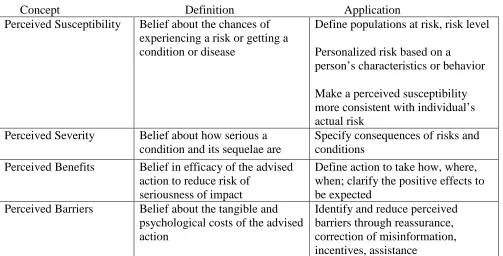
Table 2.1 Key Concepts and Definitions of the Health Belief Model 39
Table 2.2 Risky Health Behavior Associated with Preterm Birth 47
Table 3.1 Comparison of Late or No Prenatal Care (DeKalb and Fulton Counties and Georgia 54
Table 3.2 Comparison of Low Birth Weight (U.S., South, Georgia, and Counties) 54
Table 3.3 Number of Weeks Pregnant When Seeking Prenatal Care 57
Table 3.4 Prenatal Care Compliance Variables 58
Table 3.5 Variables Detecting Birth Weight 59
Table 3.6 Variable Detecting Preterm Birth 59
Table 3.7 Knowledge and Attitude Variable 60
Table 3.8 Financial Strain 61
Table 3.9 Stigma 62
Table 3.10 Social Support Variables 63
Table 3.11 Family Size Variables 64
Table 3.12 Health Risk Behavior 64
Table 3.13 Sample Model (Late Prenatal Care Utilization and Compliance) 68
Table 3.14 Sample Model (Birth Outcomes) 70
Table 4.1 Descriptive Statistics of Sample Population: Mean and (Standard Deviation and Percentages 75
Table 4.2 Bivariate Correlations of Independent and Dependent Variables for Agency, Structure, Risk Health Behavior, Timing of Prenatal Care and Prenatal Compliance 77
Table 5.2 Estimates of Prenatal Care Compliance Regressed on Agency and Structure Factors and Health Risk Behavior Based on OLS
Regression 95
Table 6.1 Estimates of Preterm Births Regressed on Agency and Structure Factors, Risk Health Behavior, and Prenatal Care Compliance Based on Logistic
Regression 103
Table 6.2 Estimates of Low Birth Weight Regressed on Agency and Structure Factors, Risk Health Behavior, and Prenatal Care Compliance Based on
LIST OF FIGURES
Figure 2.1 Infant Mortality Rates (per 1,000 live births) by Race and Ethnicity,
United States, 2006 Average 15
Figure 2.2 Infant Mortality Rates by Regions in the United States 2003-2005 16
Figure 2.3 Comparison of Infant Mortality Rates: United States, Southern Region,
Georgia, Fulton and DeKalb County 17
Figure 2.4 Percent of Preterm Births per 1,000 Live Births 2004- 2006 19
Figure 2.5 Preterm Birth Rates by Geographic Region, 2003- 2006 20
Figure 2.6 Percentages of Preterm Births by State and County 2004-2007 20
Figure 2.7 Percentage of Low Birthweight by Race, 2004- 2006 21
Figure 2.8 Comparisons of LBW Infants Across Regions 22
Figure 2.9 Percentage Low Birthweight Rate Births (<2,500 Grams) by State
and County 2004-2007 24
Figure 2.10 Early and Late Use of Prenatal care In the United States for All Races
(1970-2005) 27
Figure 2.11 Early and Late Utilization of Prenatal Care for Black Women (1970- 2005) 27
Figure 2.12 Percentage of Late or No Prenatal Care by Racial groups for Georgia,
DeKalb and Fulton Counties, 2006 28
Figure 2.13 Health Belief Conceptual Model: Barriers to Prenatal Care Utilization
and Compliance and Adverse Birth Outcomes 41
Figure A.1 Health Belief Model: Agency Barriers to Prenatal Care Utilization and
Adverse Birth Outcomes 139
Figure A.2 Health Belief Conceptual Model: Structural Barriers to Prenatal Care
Utilization and Adverse Birth Outcomes 140
Figure A.3 Barriers to Timing of Prenatal Care Utilization 141
CHAPTER 1:
INTRODUCTION
Statement of the Problem
Every year in the United States there are four million births. Although the greatest
proportion of these babies is healthy, there are still over 40,000 infant deaths each year (David &
Lucille Foundation, 2009). High rates of infant mortality (i.e., deaths under age of 1 year of
birth) in the United States have been linked to many factors. The most important factors that
lead to infant mortality are the increased number of preterm births (born less than 36 weeks
gestation) and babies born with low birth weight (infants weighing <2500grams or 5 lbs, 8
ounces) and very low birth weight (VLBW). Three-quarters of all infants’ deaths are due to
babies being born too small or too soon. Infants who are born with low birth weight are 40 times
more likely to die during the first 28 days of life than an infant of normal weight (CDC, 2010).
Infants born preterm have a better survival rate but they also have higher rates of birth defects,
developmental delays, and other health issues that can affect them into adulthood.
The thought of babies dying in America needlessly before their first birthday is alarming,
given the advancement of medical sciences over the past century. Every day in the United
States, over 11,000 babies are born. Of these births, over 1,300 are born preterm (11.8%) and
almost 1,000 (9.1%) are born with low birth weight (March of Dimes, 2010). The high rates of
adverse birth outcomes of low birth weight, premature births and infant mortality have been
persistence over the last four decades.
Although these issues surrounding adverse birth outcomes remain constant, the use of
early prenatal care has proven to be an important factor in improving birth outcomes. However,
agency and structural issues that have obstructed access and timing of prenatal care utilization
and compliance that exacerbates these adverse birth outcomes for black women in comparison to
their white counterparts. This is a critical piece of the puzzle as the racial divide widens for
adverse birth outcomes and prenatal care use.
Historical Events
There are many historical and contemporary issues that have shaped healthcare for
minorities groups especially blacks. These issues range from lack of access to healthcare,
competing needs (i.e. choosing food, housing and other necessities over healthcare needs), lack
of trust and other pressing issues. Braithwaite and Taylor’s book, Health Issues in the Black
Community (1992), addresses these issues with a supporting cast of key health disparity
researchers that offer a discussion and possible explanation for continued gaps in healthcare for
the minority population. Byllye Avery makes a profound statement in that “the health of one’s
mother begins with her mother’s mother” (Braithwaite &Taylor, 1992 p. 39). This statement
suggests that there is an intergenerational health pattern that is deeply rooted in historical events
that have shape and fueled old ideologies and beliefs that have been passed down from
generation to generation. Historically, the treatment of minority groups in the United States has
been seeded in racism and discrimination which has led to lack of trust and respect for the
government, the institution of healthcare, and healthcare providers (Bosher & Pharris, 2008;
Cowen, 2009; Hill, 2007).
Several studies that focus on health disparities have centered on the lack of trust in the
healthcare system by minority communities. Events such as the Tuskegee Syphilis Experiment
physicians and the government in general. This study is often cited by African Americans
(young and old) when asked why they do not trust healthcare officials and the government
(Beech and Goodman, 2004). This study alone can lay the foundation for health disparities
because of the lasting affects it has on minorities accessing care, trusting providers, and utilizing
services provided by government agencies.
Birth outcomes among minorities, especially black women are deeply affected by
historical events. As far back as the slave trade, fathers have been either sold to increase capital
for the slave traders or killed leaving the mother to take care of her and the children. The effect
that slavery has had on health has been theorized as the Slave Health Deficit (Byrd & Clayton,
2000). Byrd and Clayton argue that slavery is where health disparities originated and was
nourished (Williams, 2007). In today’s society, we see black men going to jail or even being
gunned down in the streets due to racial profiling, drugs, violence and other social ills. With all
these factors playing a role in the lives of African American women, accessing healthcare in
general, prenatal care, and other services to take care of themselves has been self reported in
studies as being nearly last on their list of priorities (Lane, 2003) . This leads to late or no
prenatal care, adverse birth outcomes and increased infant mortality. Those infants who are lucky
enough to survive experience worse health across their life course (Quarles, 1987; Smith, 1999;
Beech and Goodman, 2004).
Health Disparities
Health disparities are defined as differences between groups based on race/ethnicity,
socioeconomic status and gender. Groups showing disparities are those who have persistently
health or greater health risks than more advantaged social groups (Braveman, 2005). The health
status of minority populations in the U.S. are far worse that the health status of the white
population (LaVeist, 2005). Despite improvements, differences persist in health care quality
among racial and ethnic minority groups, individuals living in poverty, and those who have a low
socioeconomic position often suffer disproportionately from poor health outcomes both
nationally and around the world (LaVeist, 2005; Braveman, 2005).
Health disparities in the United States often highlight large social and geographic
disparities in life expectancy that cannot be solely explained by race, income and basic access to
healthcare (Murray et al 2006). These disparities include many social factors such as living
environment, employment, education, and social support that are all intersecting to
disproportionately affect the health of poor and minority populations (Williams et al, 2008).
Between 2000 -2005, some health disparities, including adverse birth outcomes and access to
prenatal care, have worsened or remained unchanged (AHRQ, 2008).
Infants born prematurely or of low birth weight oftentimes face birth defects, health
challenges and social issues that can lead to limited educational attainment, a continuation of the
cycle of poverty, single parent homes once they are parents, limited employment, and other
stressful life events that can lead to poor health outcomes (Johnson, 2007). These issues have
been linked back to adverse birth outcomes and their effects over the life course (Johnson, 2007).
This cycle of adverse birth outcomes is likely to repeat itself in successive generations.
Health Disparities in Prenatal Care
Even though there has been some enthusiasm generated by the improvements in prenatal
equally experienced these gains. Women at greater risk for adverse birth outcomes, such as
African American women, have seen less improvement in their access to and use of prenatal care
(Alexander, Kogan, Nabukera, 2002; Misra & Guyer, 1998). African American women and
women with less education have been highlighted as specific groups in which trends toward
more favorable prenatal care use has lagged behind other comparison groups. This is
particularly true for intensive or compliant use to recommend prenatal care content. This is
particularly important because the disparity in late or no prenatal care use between whites and
blacks has continued to widen and racial disparities in infant mortality continues to grow
(MMWR, 2000).
For this racial group, better birth outcomes are the health disparity. This is illustrated by
the fact that although adverse birth outcomes are higher among black women of low
socioeconomic status, black women who are college-educated and earn more money have higher
rates than their white counterparts as well. This leads to two questions, if over the past 40 years
infant mortality has decreased or stagnated among some U.S. racial groups, how do we explain
the increase among black women and the over doubled rates of infant mortality, preterm birth,
and LBW among this group? And how do we explain how women who are born in developing
countries with limited healthcare come to the United States and have better birth outcomes than
black women of lower socioeconomic status?
The Prenatal Debate
Many researchers in the field of public health have debated the causes of adverse birth
outcomes (low birth weight, preterm births, and infant mortality) for many years, dating back to
outcomes. The most recent recommendations are that pregnant women should obtain prenatal
care in the first trimester (within the first 12 weeks of pregnancy) and throughout the duration of
their pregnancy, especially those at greater risk for these adverse birth outcomes. Prenatal care
can be described as a set of services provided to improve pregnancy outcomes and engage the
expectant mother, other members of her family, and her friends in the healthcare decisions.
Although there is still some disagreements among researchers about the specific
components of prenatal care that impact favorable birth outcomes, it is increasingly clear that
health professionals, social scientists, and behavioral scientists all agree that a healthy prenatal
environment plays a key role in influencing and determining healthy birth outcomes. A healthy
prenatal environment consists of not just standard traditional prenatal care, but also includes
non-medical factors such as social environment, stressful life events brought on by social constructs
(i.e. race, class, and gender), social environment, social support, and other health behaviors such
as smoking and substance abuse. All these factors intersect to influence the choices of women to
seek and receive timely prenatal care. Access and timing of prenatal care is particularly
important because black women, who need these services the most, are utilizing them the least,
which will have an impact on the overall health of United States as a nation.
Health Disparities in Birth Outcomes
For several decades, black infants have had significantly worse birth outcomes than white
infants. The causes of these persistent racial disparities remained poorly explained. Much of the
research on this topic has focused on differential exposures to protective and risk factors during
pregnancy such as prenatal care, socioeconomic status, maternal risk behaviors, psychosocial
outcomes; however, they do not provide a complete picture. These studies provide very little
information on the lived experiences of women who are at greatest risk for preterm births, low
birth weight and infant mortality ((Lu Halfon, 2003). Although adequate prenatal care has been
accepted as a reasonable solution to adverse birth outcomes, significant disparities in prenatal
care use remains due in large part to access to prenatal services, location of prenatal services, and
compliance with prenatal care standards and recommendations during pregnancy.
Trends
Until recently, the United States had experienced a decrease in infant mortality. Despite
this dramatic change, the United States remains in a very disadvantaged position among
industrialized countries when they are ranked by infant mortality rates. The United States is
ranked 45th in comparison to both developed and undeveloped countries (NVS, 2009). This is
disturbing because infant mortality rates are the indicators of the health of the US as a nation.
While there has been stagnation in the decrease of infant mortality among all racial groups as a
whole, there have been some increases in infant mortality rates among individual racial groups.
This increase is highly persistent among black women who also see an increase among
premature births and low birth weight. Many researchers and medical professional believe that
early utilization of prenatal care will decrease the constant rise in low birth weight and premature
deliveries which would ultimately decrease the infant mortality rate among at risk groups (US
Research Agenda
In this dissertation, I will use the intersectionality framework (based on Intersectionality
Theory) as my foundation to argue that although the disparities in the utilization of early prenatal
care are important, there are some preexisting social constructs that intersect in the lives of black
women that play a substantial role in their health beliefs, behavior, choice and ultimately health
outcomes. These social constructs are race, class and gender. Race, class, and gender all
intersect in and collide with other barriers or maternal stressors, such as knowledge/attitude,
financial strain, stigma, social support, family size, and risk health behavior that lead to late
prenatal care use and adverse birth outcomes. These maternal stressors are all key factors in
predicting timeliness of prenatal care, adverse birth outcomes, and prenatal care compliance in
this sample of Southern, lower class, black women.
This study is important because we know that there is a black-white gap when examining
prenatal care use, compliance, and birth outcomes, however little to no research has been done to
examine these issues within the racial group that has the worst birth outcomes. This with-in
group design encourages further exploration of the diversity of perceptions, experiences, and
attitudes among black woman about prenatal care use and compliance and adverse birth
outcomes.
This social patterning of health is important for a number of reasons. The size of the gap
between the mortality rates of the most and least advantaged groups gives some indication of the
potential for improvement in a nation's health. Identification of the groups who are at greatest
risk of poor health can inform sound governance of medical services. Most interestingly,
perhaps, the graded relationship between health and social position can suggest hypotheses
the causes of social variations in health should lead to intervention strategies which can reduce
and eventually lead to a reduction in infant mortality rates.
In addition, this dissertation will test the health belief model, which is an offshoot of
rational choice theory, to explain timing of prenatal care usage, compliance, and birth outcomes
for this group intersected by race, class and region. Although the health belief model examines
belief and behavior, it does not examine or explain the psychosocial reasons that lead to these
beliefs or behaviors. Therefore, sociological theories can add tremendously to the understanding
of race, class, gender, and choices in explaining disparities in the use of prenatal care and its
consequences on birth outcomes. Using intersectionality framework as the foundation
(intersection of race, class, and region), I will developa new conceptual model using maternal
stressors to explain why black women do not seek or obtain early prenatal care. This model will
also seek to explain why health disparities and societal inequalities lead to adverse birth
outcomes.
Both the intersectionality framework and the Health Belief Model can be used in health
disparities research to examine how the intersection of race, class, gender can affect birth
outcomes in black women. In addition, this study will examine how the agency factors,
structural factors, risk health behavior and other factors in communities where black women of
low socioeconomic reside lead to late use of prenatal care and noncompliance as well as birth
outcomes. These theories provide a foundation to explain how preexisting conditions in society
Agency Factors
Agency is defined as the capacity of individuals to act independently and to make their
own free choices (Barker, 2005). These independent choices are important for women seeking
healthcare services when upon initial discovery of their pregnancy and being compliant to
receive all recommended prenatal care services until birth. The agency factors that will be
examined in this study are knowledge/attitude about pregnancy and prenatal care, social support
(church, and neighborhood), and family size (combining all adults and children in the
household).
Structural Factors
Structural factors are recurrent patterned arrangements which seem to influence or limit
the choices and opportunities that individuals possess (Barker, 2005). Structural factors can be
the healthcare system, education system, employment opportunities, etc. The structural factors
that will be used in this study are financial strain, Medicaid, private insurance, and stigma.
Contribution to the Literature
This dissertation has the potential to provide an explanation for why black women of low
SES do not seek timely prenatal care or adhere to recommended prenatal care content which
ultimately has an effect on preterm birth, low birth weight and ultimately infant mortality. From
prior comparative studies we know that structural factors such as access to care, financial strain,
insurance status, and stigma associated with number of pregnancies are predictive of worse birth
outcomes for black women compared to white women, and we know these structural factors are
what variation within the group intersected by race class and gender explains variation in
prenatal care utilization and birth outcomes. In addition, this dissertation will add to the
increasing importance of interdisciplinary research by combing sociology and public health
theories to provide a detailed explanation for the limited or lack of prenatal care use among black
women despite the possibilities of adverse birth outcomes. This study is important because of
the recent rise in preterm births, low birth weight, and infant mortality among black women.
This dissertation will answer the following questions: 1) what effects do agency factors
(knowledge/attitude, social support (church, neighborhood, and family), and family size (adults
and children) have on timing of prenatal care use and compliance and birth outcomes (preterm
birth and low birth weight) among Southern black women of low SES? 2) what effect does
structural factors (financial strain, Medicaid, private insurance, and stigma) have on timing of
prenatal care use and compliance and birth outcomes (preterm birth and low birth weight) among
Southern black women of low socioeconomic status obtain early or late prenatal care? 3) What
effect does risk health behavior play on timing of prenatal care use and compliance and birth
outcomes (preterm birth and low birth weight) among Southern black women of low
socioeconomic statuses? And 4) what effect does timing of prenatal care use and compliance
play on birth outcomes? In Chapter 2, I present an in-depth literature review of racial health
disparities and what we know about racial disparities in access to health care. I then focus in on
infant health and adverse birth outcomes and prenatal care services.
The next section develops a more nuanced theoretical model to explain poor black
women’s reduced use of prenatal care. Chapter 3 presents the study’s research design, data,
measures and analytic strategy for the secondary data analysis on both the cross sectional survey
and how the variables are correlated by bivariate analysis. In Chapter 5, I will present an
analysis of the agency and structural factors, and risk health behavior that predicts why black
women seek late prenatal care using binary logistic regression and prenatal care compliance
using OLS regression. Chapter 6 will present the analysis of birth outcomes (low birth weight
and preterm birth) predicted by agency and structural factors, risk health behavior and as a
function of timing of prenatal care and of prenatal care compliance (using binary logistic
regression). Finally, Chapter 7 will provide a discussion of the implications, limitations and
CHAPTER 2:
LITERATURE REVIEW
Prenatal care has been instrumental in reducing infant mortality rates through reducing
incidences of preterm birth and low birth weight. In this literature review, I will first provide a
brief history of infant mortality, preterm birth and low birth weight. I will break out these birth
outcomes by race, socioeconomic status, region, and locale separately and together. Next, I will
introduce typical public health explanations for increased adverse birth outcomes among black
women, which have several shortcomings. These shortcomings can be critically addressed with
the intersectionality framework.
I will then introduce my conceptual model using the intersectionality framework, and the
Health Belief Model, a form of Rational Choice Theory. The intersectionality framework will be
used to justify a focus within race, social class, and gender classifications, as these factors
together play a key role in one’s health beliefs and resultant behaviors. In this model, I examine
specifically maternal stressors, attitudes/knowledge, stigma, financial strains, private insurance,
Medicaid, social support, health risk behavior and family size.
Infant Mortality
Infant mortality has been defined as a baby born live that dies before its first birthday. It
is measured as a rate of death in a particular time period, within a particular region, per 1,000
live births. Public health professionals view infant mortality as “a measure of community health,
economic efficiency, collective moral well being, and future military strength” (Szreter, 2003;
Brosco, 1999). In fact, infant mortality is one of the most important indicators of the health of a
medical care, socioeconomic conditions, and public health practices (Mathews & MacDorman,
2008a).
In 1900, the U.S. infant mortality rate was approximately 100 infant deaths per 1,000 live
births. By 1995, the rate was 7.57 per 1,000 live births and by 2000; the rate was 6.9 infant
deaths per 1,000 live births (MacDorman & Mathews, 2008b). This demonstrates a significant
improvement in health over the last century attributable in large part to increasing use of prenatal
care and improved and better access to healthcare. (MacDorman & Mathews, 2008b).
Despite this dramatic improvement, the United States remains in a very disadvantaged
position among industrialized countries when they are ranked by infant mortality rates. The
United States is ranked 45th in comparison to both developed and developing countries
(CIA-World Factbook, 2009). The countries with the lowest infant mortality rates are Singapore
(2.31) and Bermuda (2.46), first and second respectfully out of 224 countries. The U.S. may be
trailing because the U.S. infant mortality rate did not decline significantly between 2000 and
2005. This has generated concern among researchers and policy makers leading to research to
understand where the problem lies (MacDorman & Mathews, 2008, 2009).
One possible direction is to examine racial differences in infant mortality rates.
According to the Centers for Disease Control and Prevention's National Center for Health
Statistics (2010), “Infant Mortality Statistics from the 2006 Period Linked Birth/Infant Death
Data Set,” there are also racial and ethnic disparities in infant mortality rates. Non-Hispanic
black women had the highest infant mortality rate in the United States in 2006 – 13.35 per 1,000
live births compared to 5.58 per 1,000 births among non-Hispanic white women (Figure 2.1)
(MacDorman & Mathews, 2010). Women of Central and South America descent in the United
Islanders had the second lowest rate of 4.52 per 1,000. It’s clear we need to target the group with
[image:28.612.70.494.126.375.2]the highest infant mortality rates if we want to further reduce overall infant mortality rates.
Figure 2.1 Infant Mortality Rates (per 1,000 live births) by Race and Ethnicity, United States, 2006 Average
Infant mortality by Socioeconomic Status
There is a striking consistency in the distribution of mortality and morbidity between
social groups. The more advantaged groups, whether expressed in terms of income, education,
social class or ethnicity, tend to have better health than the other members of their societies. The
distribution is not bipolar (advantaged vs the rest) but graded, so that each change in the level of
advantage or disadvantage is in general associated with a change in health (Blane, 1995).
Infant Mortality by Region
Infant mortality rates may also differ by region of the country. In the Southern Region of
the United States, the infant mortality rates for the 2003-2005 almost mirror the U.S. rates. In 0 2 4 6 8 10 12 14 16 Total Hispanic
White Black Native American Asian Pacific Islander Central and South America American Indian or Alaska Bative Puerto Rican Total
this region over 12,000 infants died before reaching their first birthday with and overall infant
mortality rate, higher than the national average, of 7.8 per 1,000 live births. Regional findings
show that the southern region has the highest infant mortality rates among all regions (March of
Dimes, 2006).
Figure 2.2 Infant Mortality Rates by Regions in the United States 2003-2005
Infant Mortality in Atlanta, GA
This study is situated in Georgia, which is within the Southern Region of the U.S. In
Fulton and DeKalb County, GA, the locations for this study, rates of infant mortality lower
(meaning better) than the national average. However, within these counties, the rates of infant
mortality for African American women are triple the rates of that of white women, suggesting
serious inequalities. Figure 2.3 illustrates the difference in infant mortality rates in 2006 for the
U.S, Southern Region, Georgia and DeKalb County, GA and Fulton County, GA. 0
1 2 3 4 5 6 7 8 9
United States South Northeast Midwest West
Figure 2.3 Comparison of Infant Mortality Rates: United States, Southern Region, Georgia, Fulton and DeKalb County (2006)
In 2008, The Department of Community Health along with health experts from across the
state of Georgia developed the 2008 Georgia Health Disparities Report. This report is a critical
first step in working together to eliminate health disparities in Georgia. Each county, within the
state of Georgia, received a grade for access to and quality of healthcare services, rates of certain
health issues, etc. and their affect on health disparities. Fulton and DeKalb Counties both
received a grade of D (based on A through F +/- system) for prenatal care use and birth
outcomes. For DeKalb County, 11.8% of the African American population live below the
poverty level and but less than 4% (3.9%) have less that a 9th grade education with an
unemployment rate of 7.4%. In comparison, Fulton County has 26.5% of its African American
population living below the poverty level and 6.8% of this population have less than a 9th grade
education with an unemployment rate of 13.1%. 0
1 2 3 4 5 6 7 8 9 10 11 12 13 14 15 16
Hispanic White Black Asian Total
The Healthy People 2010 objectives and now 2020 objectives have identified reductionof
the U.S. infant mortality rate as a national priority (NCVS, 2010). Afteryears of significant
decline, however, there has been minimalprogress in recent years; in 2002, national statistics
demonstratedthe first increase in the infant mortality rate since 1958 (Kochanek & Martin, 2005;
Callaghan et al, 2006). Policies aimed at improving infant survival ratesmust be informed by a
thorough understanding of the factorscontributing to infant mortality rates. Infant mortality has
been linked to several perinatal issues with the two prevalent health conditions being preterm
birth (majorcause) and low birth weight (second major cause) (Lumley, 2003).
Preterm Birth
Preterm birth is defined as babies born at less than 36 completed weeks of gestation
(NCVS, 2009). This means that babies are born before they are fully developed. Low birth
weight is defined as infants born with a birthweight less than 2500 grams or 5 pounds 8 ounces
(CDC, 2008). Between 1996 -2006, the preterm birth rate in the United States increased more
than 16%. Pre-term infants are 70 times more likely to die than infants born at term (37 to 41
weeks) (Matthews et al, 2009).
There are inequalities in preterm birth rates by race. Preterm birth rates are higher among
minority groups. In fact, from 2000 to 2005, preterm related infant mortality rates increased
significantly (p<0.05) for the total population and for non-Hispanic white, non-Hispanic black,
Hispanic, Asian/Pacific Islander, and Mexican women (MacDorman & Mathews, 2008). In
2005, preterm-related infant mortality rates were approximately three times higher for
non-Hispanic black women (6.26) and nearly twice as high for Puerto Rican woman (3.44) compared
American Indian/Alaska Native, Mexican, Asian/Pacific Islander, and Central and South
American women were similar to the rate for non-Hispanic white women. In 2005, 36.5% of all
infant deaths in the United States were attributed to preterm-related causes (MacDorman &
[image:32.612.71.510.179.356.2]Mathews, 2008). Figure 2.4 below is an illustration of preterm birth rates by race in 2004-2006.
Figure 2.4 Percent of Preterm Births per 1,000 Live Births 2004- 2006
Socioeconomic status is another factor associated with preterm birth. Research findings
show that there is not a direct linked between socioeconomic status and gestation. However,
women of low socioeconomic status often participate in risky health behavior as mentioned
above. It is this behavior that leads to shorter gestation (Kramer et al, 2001). Several studies
have also linked the socially disadvantaged to preterm birth which is the leading cause of infant
mortality in industrialized societies (Kramer et al, 2001). Several epidemiological studies have
reported that prolonged strenuous activities at work are associated with increased risk for
preterm birth which is work often done by minorities of low socioeconomic status (Chen, 2006;
Bell et al, 2006; Collins, 2006). Examining preterm birth rates by region, preterm births have
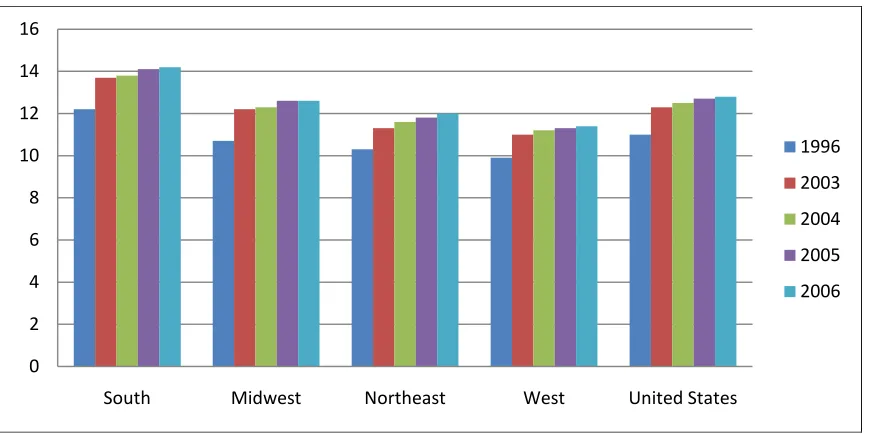
shown a recent rising trend from 2003-2006. The Southern Region has higher preterm birth rates
across all years from 2003 to 2006 (Figure 2.5). 0
2 4 6 8 10 12 14 16 18 20
White Black Hispanic Native American
Asian Total
Figure 2.5 Preterm Birth Rates by Geographic Region, 2003- 2006
In Georgia, the preterm birth rates are higher than the national rate (Figure 2.6). There is
an increase among preterm birth rates for all years for Fulton County. In 2007 there was a slight
decrease in preterm birth rates for DeKalb County which lead to a decrease in the overall rate for
the state of Georgia. However, the decline is not enough to return to 1996 levels.
Figure 2.6 Percentages of Preterm Births by State and County 2004-2007 0 2 4 6 8 10 12 14 16
South Midwest Northeast West United States
1996 2003 2004 2005 2006 0 2 4 6 8 10 12 14 16 18
Georgia Fulty County DeKalb County
[image:33.612.75.508.446.653.2]Low Birth Weight
Low birth weight is also an adverse birth outcome that is linked to infant mortality.
Low birth weight infants are 40 times more likely to die during their first month of life
(Thompson & Goodman, 2005). Low birth weight has been associated with long-term disabilities
such as cerebral palsy, autism, mental retardation, vision and hearing impairments and other
developmental disabilities (DHHS, 2000).
In the U.S., low birth weight rates have increased from 7.7% in 2001 to 7.8% in 2002; a
15% increase from rates in the middle of the 1980s (6.8%) (Martin et al., 2005; NCHS, 2003).
Black women are almost twice as likely to have a low birth weight infant (Guyer et al, 1998).
While low birth weight rates have decreased for white women (from 5.6%) and rates among
black women have remained relatively unchanged (from 13.6%) since 1990, the low birth weight
rate for black and white infants in 2002 were 13.4% and 6.9%, respectively (Martin et al., 2005).
[image:34.612.71.509.460.671.2]In 2004, there was an increase across races and has continued.
Figure 2.7 Percentage of Low Birthweight by Race, 2004- 2006 0
2 4 6 8 10 12 14 16
White Black Hispanic Native
American
Significant differences in the incidence of adverse birth outcomes by race and
socioeconomic status have long characterized infant health in the United States (Kleinman and
Kessel 1987; Schoendorf et al. 1992). The correlation between low socioeconomic status and
low birth weight is well recognized (Whitehead, 1997). Social class, maternal education,
income, and marital status have been used as individual and household based socioeconomic
status measures in the study of low birth weight (Spencer et al, 1999). These factors have an
influence on access to care, being able to pay for care, and whether or not women seek early
prenatal care (Almeisa, Dubay, Ko, 2001).
Although there are limited studies that examine the effects of geographic regions as a
factor in low birth weight, it is a growing factor for birth outcomes. Like other health issues,
where the South has been labeled the Stroke Belt, infant mortality rates, low birth weight and
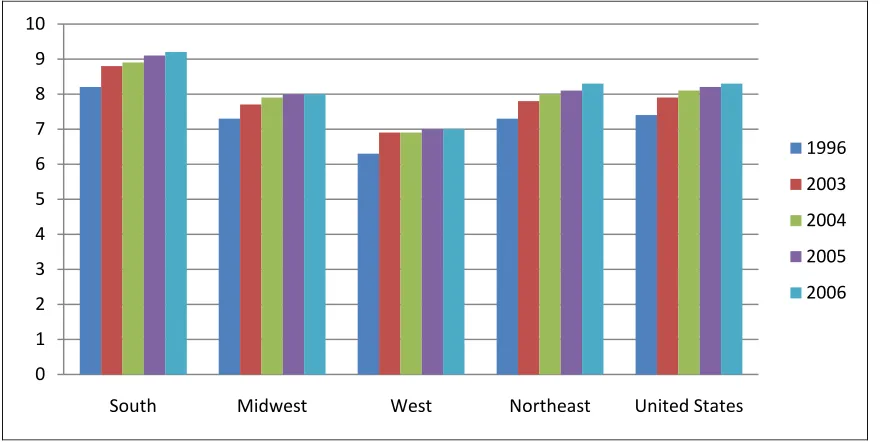
preterm births are more prevalent than in any other region. Figure 2.8 is an illustration of birth
outcomes by region. The South has the highest rate of low birth weight across regions and
[image:35.612.71.516.458.679.2]nationally.
Figure 2.8 Comparisons of LBW Infants Across Regions 0
1 2 3 4 5 6 7 8 9 10
South Midwest West Northeast United States
The regional differences in birth outcomes in the South are consistently higher than in
other regions. These rates are particularly higher in the Deep South states (AL, GA, LA, and MS)
(Goldhagen et al, 2005). Children born in the Deep South are 40% more likely to low birth
weight than children in the other U.S. states. This has been linked to the lower SES in these
states, teen births, maternal education, marital status, family income, checking or savings
account, financial assets, and whether the mother grew up in a two-parent family
(Nepomnyaschy, 2010).
Black women in the South are two times more likely than whites and Hispanics to have
low birth weight children. Leslie et al (2003) found that infant mortality rates were lowest
among Hispanic women. Low birth weight and prematurity rates were similar to those of white
women and lower than those of African American women. Variables significantly related to
healthy composite birth outcomes among Hispanic women included higher education, no preterm
delivery history, prenatal care, marriage, and no daily tobacco use. Hispanic birth outcomes in
North Carolina were better than those of African American women and similar to those of white
women, despite use of prenatal care and socioeconomic characteristics similar to African
American women.
In Georgia, as well as in DeKalb and Fulton Counties, the low birthweight rate continues
to fluctuate. In 2008, the low birth weight rate in Dekalb County was 13% for black women,
which is twice the rate for the entire county for all races. In Fulton County (2008), the low birth
weight rate was 14.6% for black women, which was also, double the county rate. Both counties
received very low grades in the Health Disparities Report for the state of Georgia. Figure 2.9 is
an illustration of the low birth weight rates for Georgia, DeKalb County and Fulton County from
Figure 2.9 Percentage Low Birthweight Rate Births (<2,500 Grams) by State and County 2004-2007
Infant mortality, preterm birth, and low birth weight are all increasing birth outcomes that
are consistently found across the United States. However, these birth outcomes are more
persistent among black women and in the Southern Region, including Fulton and DeKalb
Counties in Georgia. With adverse birth outcomes among black women being double and almost
triple that of other races, the importance of early prenatal care is essential to improving birth
outcomes among this racial group. This study can provide possible explanations for why black
women of all social classes are at risks for adverse birth outcomes particularly in the South.
Factors associated with Preterm Birth and Low Birth Weight
There is a large body of public health research designed to explain preterm births and low
birth weight. Early research focused on biological explanations only (Buekins & Klebanoff,
2001; Leitich & Kaider, 2003; Carey & Klebanoff, 2000; Guise et al, 2010). Many studies have
focused on biological factors such as vaginal infections. However, empirical findings from 0
2 4 6 8 10 12
Georgia DeKalb County Fulton County
clinical trials have shown that women that have been treated for these infections did not reduce
preterm birth and in some cases when treated actually increase the rates of preterm birth
(Buekins & Klebanoff, 2001; Leitich et al, 2003; Carey & Klebanoff, 2000; Guise et al, 2010).
More recent research finds that preterm births and low birth weight complexly inter-relates
biological, psychological, and social factors that all are a part of a common pathway to preterm
birth and ultimately infant mortality. Unfortunately, these studies do little to enlighten us as to
the mechanisms through which preterm birth and low birth weight actually happens. Despite
this, prenatal care has been shown to successfully intervene and reduce instances of preterm birth
and low birth weight (IOM, 2005; Schulz & Mullings, 2006).
Although prenatal care has been shown to be effective in reducing birth outcomes, the
lack of use of these services by minority women who could benefit the most from these services
remains a mystery. Public health researchers have studied biological issues, behavior and
beliefs, but have done little research to explain the social factors that are preexisting and constant
to provide a complete explanation as to why black women utilize prenatal care services less than
their white counterparts.
Studies have consistently established that women receiving prenatal care in the first
trimester (≤13 weeks) have better pregnancy outcomes, including a reduced risk of low birth
weight and preterm births, than do women who receive late or no prenatal care. Early prenatal
care has also been recommended to decrease the racial and ethnic disparities in adverse birth
outcomes (Cohall & Bannister, 2001).
Prenatal Care
Prenatal care is a set of services provided to improve pregnancy outcomes and engage
continued use of prenatal care, women receive an array of medical, educational, and nutritional
interventions throughout the duration of the pregnancy (Alexander & Kotelchuck, 2001;
Alexander & Korenbrot, 1995). Health professionals and policy makers generally agree that
early prenatal care intervention is an important contributor to infant health (Exworthy et al.,
2006; Rosman & Yoshikawa, 2001), and used to monitor maternal and fetal health, and finally to
identify women at risk for adverse birth outcome (Alexander & Cornely, 1987; Lang & Iams,
2009).
In the United States, 74.7% of live births were to women receiving adequate care
/adequate care plus prenatal care. However, 25.3% of women received late or inadequate
prenatal care. This averages out to about 1 in 9 infants (11.3% of live births) born to women
receiving inadequate prenatal care in the United States while 1 in 28 (3.6%) women received late
or no prenatal care (March of Dimes, 2009).
In the United States the utilization of early (during first trimester) prenatal care has
fluctuated from 68% among all racial groups in 1970 to an increase in 2004 to 84.2% then to
83.9% in 2005. In 1970, women in all racial groups receiving late (3rd trimester) or no prenatal
care were 32% in 1970. In 2005, that rate had decreased to 16.1% among all racial groups
Figure 2.10 Early and Late Use of Prenatal care In the United States for All Races (1970-2005)
However these rates differ among minority groups. For black women, though the use of
early prenatal care has increased from 44.2% in 1970 to 76.3% in 2005. This leaves a total of
23.7% of black women who receive late (after 1st trimester) or no prenatal care in the U.S, each
year. For black women, the rates for receiving late or no prenatal care has decreased from 1970
to 2005 (Figure 2.11) but the rates are still higher than any other racial group. However, the rate
for black women receiving late prenatal are almost triple that of their white counterpart.
Figure 2.11 Early and Late Utilization of Prenatal Care for Black Women (1970- 2005) 0
10 20 30 40 50 60 70 80 90
Early Prenatal Care Late Prenatal Care
1970 1990 2004 2005
0 20 40 60 80 100
Early Prenatal Care 3rd or no prenatal care
The utilization of prenatal care also varies across region. However due to all states not
converting to the new birth certificate format in 2002, prenatal care rates by region is not
available after 2002. This is also due to the fact that regions are loosely defined when it comes
to maternal and child health data.
Late or no prenatal in Georgia varies by county. The 2008 Health Disparities for Georgia
(described earlier) reported the rates by county for 2008. The rates for black women are
significantly higher than the rest of the county for inadequate (late or no) prenatal care. In
Dekalb County, the percentage of black women who received inadequate care was 23.9%, while
[image:41.612.89.527.317.543.2]in Fulton the percentage was 20.9%.
Figure 2.12 Percentage of Late or No Prenatal Care by Racial groups for DeKalb and Fulton Counties, 2006
Despite repeated recommendations for early use of prenatal care, many women,
especially black women, continue to seek or receive inadequate or no prenatal care. Several
studies have indicated that the socially disadvantaged (e.g., women of low socioeconomic status,
or minority status) derive the greatest benefits from prenatal care services (Coreil, 2009; Lucus, 0
5 10 15 20 25 30
All Races Blacks
2008). Among the socially disadvantaged, black women benefit most from prenatal care
services (Daniels et al, 2006; McGlade &Saha, 2004; Almond et al, 2005).
The above literature review demonstrates that black women have higher rates of adverse
birth outcomes compared to white women, especially in the South. Black women also (in the
south) show the lowest rates of prenatal care compliance compared to white women. Southern
Black women of low socioeconomic status have different life experiences, psychosocial stresses,
and coping strategies that may explain their differing use of prenatal care (Dole et al, 2004,
Hogue et al, 2001; Lu & Halfon, 2003). By focusing exclusively on this group and their uses of
prenatal care, this study may contribute greatly to our ability to intervene with low access
groups more broadly, to increase the use of early prenatal care use, and to reduce adverse birth
outcomes. Sociology, with its focus on structural explanations, provides the best framework for
explaining prenatal care usage and compliance by this group.
Theoretical Framework
Although there are many explanations for late or no prenatal care use and compliance by
black women of low socioeconomic status, no one theory explains it all. The literature to date
has shown there are inequalities in birth outcomes in prenatal care usage by race, class, and
region of country, therefore I will use the intersectionality framework (based on Intersectionality
Theory) as the theoretical foundation for this study. Also, I will use Health Belief Model which
is an offshoot of Rational Choice Theory to explain prenatal care usage and birth outcomes for
this group intersected by race, class and region.
Intersectionality is a term coined by legal scholar Kimberle´ Crenshaw (1989) to
understand the multiple dimensions of marginalized groups and their lived experiences. It is the
interaction between social constructs that offer a combined explanation for social issues in
society.
Theories in intersectionality are centered around inequality and the hierarchical structures
that are based on power relations. Intersectionality has emerged as the primary theoretical tool
designed to combat feminist hierarchy, hegemony (processes in which a dominant class exercises
their cultural leadership), and exclusivity (Anderson & Collins, 2004). Intersectionality Theory
is not limited to gender inequality and is also used to examine power inequalities between social
classes and race.
Race, Class, and Gender
Race- Race is one of the principal mechanisms through which societies self organize
(i.e. skin color), by creating dominate and subordinate subgroups. All societies create a status
hierarchy in which some groups are given privilege and power over other groups that are
marginalized and stigmatized (Delany, 2005). The social construction of race varies across
countries based on the differences in societal organization and the majority groups that are in
power. There is a dominant group that emerges and subordinate group(s) that fall in line
beneath the dominant group. This dominant group has all the advantages and resources that are
offered by society. They have power and elitism (Feagin & Feagin, 2003). The subordinate
group is viewed as different because of their physical and cultural characteristics. The
resources (Feagin & Feagin, 2003). It is the separation and classification into different racial or
cultural groups that ultimately lead to inequality.
Social Class- Similar to race, a class system is a social stratification based on the
ownership and control of resources and on the type of work that people do (Kendall, 2005).
Social class is a multidimensional economic construct that hierarchically groups people by
income, education, wealth and occupation. The stratification of social class is based on
hierarchical framework in which the individuals with more money, property, etc have the most
power. This power is associated with social mobility which uses occupational information as it
backbone, and also includes educational attainment when assessing an individual’s social
mobility. One’s social origins and “destinations” is based on social class. The higher a person is
on the hierarchical chart, the more likely they will possess power and have social mobility.
Gender- Gender is a primary mechanism in which societies create hierarchical structures,
with men at the top of the hierarchy and women at the bottom of the hierarchy. On the surface,
society views the differences between men and women as just a matter of sex and/or gender. In
the past, it was commonly thought that sex determined gender and the differences between men
and women were rooted in their biological origins. While the term sex refers to the physical
and anatomical characteristics used to distinguish male and female bodies, gender is defined as
the socially constructed roles, behaviors, activities, and attributes that a given society designates
as appropriate for each sex. This extends to the differences in the way men and women in a
particular society are expected to feel, think, and behave (Wharton 2005). Therefore women’s
Intersection of Race, Class and Gender on Access to Healthcare
The combination of race, class, and gender has had a devastating effect on the health of
minority groups. These effects are mostly seen in the black community and especially among
black women. Black women, who are among the double minority group (being both black and a
woman), fall at the bottom of the social hierarchy experiencing oppression in many different
forms and levels of intensity which lead to adverse health outcomes and health disparities.
In addition, the intersection of race, class, and gender has been linked to limited or no access to
healthcare based on structural issues such as clinic location and hours of service and to poor
health and health outcomes that lead to an overall poor quality of life among this group. These
poor outcomes are seen in maternal and child health issues, chronic diseases such as diabetes,
cardiovascular disease, HIV/AIDS, mental health, and other health issues. The explanation for
these poor health outcomes can be linked to lack of access and to the variation in power among
racial groups which is the core of intersectionality theory (Weber, 2006).
Patricia Hill Collins explores the oppression of black women in the United States based
on race, class, and gender imposed by the dominant society’s ideologies. Collins argues that
combined race, class, and gender form a matrix of domination. Collins adds to this theory by
addressing the feminist perspective from a black woman’s point of view. Collins argues that it is
the interlocking systems of oppression (race, class and gender) created by the white male
dominant society that has inhibited the success and empowerment of black women.
The class position in the black community is mostly shaped by their positions in the
economy. Blacks have limited economic opportunities based on institutional racism and
2000). Black Bourgeoisie (Frazier, 1957), identified the role of white racism in shaping the class
structure and inter-class dynamics of the black community.
The power dynamic for black women is generated by the intersection of race, class, and
gender and can easily be applied to the healthcare system. This intersection offers an
explanation as to why women who are poor and among the underclass group have limited or no
access to healthcare services, have limited health literacy, and are less likely to adhere to
regimens prescribed or recommended by their healthcare provider. The concepts of power and
class are both reasons for the observed health differences between blacks and whites in the U.S.
Mutchler and Burr’s (1991) work on racial differences in health and healthcare serves to make a
compelling argument that traces the differences in both groups for morbidity and mortality to
differences in socioeconomic status. Socioeconomic status conditions have an effect on health
outcomes because those with lower socioeconomic status have less ability to pay for services,
lack access to care, lack proper food for nutrition, and have limited knowledge of health care.
Socioeconomic determinants of health show conclusively that individuals with more education
and income are in better health (Victor, 1989). This study demonstrates that it is not enough to
have healthcare available but other factors such as transportation, social support, education, and
access to information to service locations, and financial issues all play a role in health outcomes.
Because of the limited power, and lack of knowledge, accessing healthcare can be a
daunting task for black women. Black women are faced with many other social issues, such as
working, caring for their families (immediate and extended), childcare, etc. It is crucial for
healthcare providers to understand the intersection of race, class, and gender to understand how
to communicate, interact, diagnosis, treat, and follow-up with black women. In An Analysis of
examine cultural competency in healthcare. Because of race, class, gender, and ethnicity
barriers, healthcare providers do not know the social conditions of the black community outside
of the clinic setting. The racialized structure in the black community is normally the “white”
provider and the black patient. For the providers to provide fair, equal, and impartial healthcare,
they must understand the patient’s culture, family and community norms. The provider must
have a larger sense of the patient’s story to improve the quality of communication and care
thereby improving the quality of healthcare for both the patient and the provider. Traditionally,
doctors have treated patients as if all their social conditions are the same. By failing to
acknowledge the differences among patients, the quality of care for minority patients will
continue to decline.
In this dissertation, I argue that although the disparities in the utilization of early prenatal
care are important, there are some preexisting social constructs that intersect in the lives of black
women that play a substantial role in their health beliefs, behavior, choice and ultimately health
outcomes. These social constructs are race, class and gender. The intersection of these three
social constructs is not additive but interlocking. That is, they all interact together
simultaneously and mutually to generate multiple oppressions (Andersen and Collins, 1995,
2009; Brodkin 2000:240; Brewer 1993:13). Race, class, and gender all intersect in and collide
with other barriers such as geographic location, access to care, knowledge of healthcare, social
support and stressors that lead to limited or no prenatal care use and adverse birth outcomes.
Therefore, it is important to limit the analysis of prenatal care to low-income, black women in
order to understand the factors associated with why some overcome structural barriers and utilize
Health Belief Model
The Health Belief Model is a form of Rational Choice Theory that is less well known to
sociologists. Rational Choice Theory is an approach used by social scientists to understand
human behavior. The approach has long been the dominant structural/functionalist paradigm in
economics, but also in sociology, political science, and anthropology. The basic principles of
Rational Choice Theory are derived from neoclassical economics and utilitarianism (Cook &
Levi, 1990; Lindenberg, 2001). This spread of the rational choice approach beyond conventional
economic issues is discussed by Becker (1976), Radnitzky and Bernholz (1987), Hogarth and
Reder (1987), Swedberg (1990), and Green and Shapiro (1996).
Rational Choice Theory is a theory that has been met in the sociology field with
apprehension because it begins with the actions of the individual not society and that it
contradicts the teachings of Marxian and Weberian approach of macro social forces and focuses
on the individual. Individuals are focused on specific goals or outcomes that they want to
achieve based on their preferences without regard for the societal constraints or barriers that are
inequitably imposed.
Another argument that causes some pause to the use of Rational Choice Theory is that
there is a large body of literature that speaks to how individuals are impulsive, emotional, or
habit forming when they make choices (Scott, 2000). Choices such as seeking healthcare,
children, jobs, etc can be emotionally taxing but rational choice theorist view these choices as
based on resources that are available and not emotions. Some social scientists believe that
because decisions are made based on numerous factors, that rational choice theory is