ScholarWorks @ Georgia State University
ScholarWorks @ Georgia State University
Counseling and Psychological Services
Dissertations Department of Counseling and Psychological Services
Spring 5-5-2012
Universal Screening as the Great Equalizer: Eliminating
Universal Screening as the Great Equalizer: Eliminating
Disproportionality in Special Education Referrals
Disproportionality in Special Education Referrals
Tara C. Raines
Georgia State University
Follow this and additional works at: https://scholarworks.gsu.edu/cps_diss
Recommended Citation Recommended Citation
Raines, Tara C., "Universal Screening as the Great Equalizer: Eliminating Disproportionality in Special Education Referrals." Dissertation, Georgia State University, 2012.
https://scholarworks.gsu.edu/cps_diss/83
ACCEPTANCE
This dissertation, UNIVERSAL SCREENING AS THE GREAT EQUALIZER:
ELIMINATING DISPROPORTIONALITY IN SPECIAL EDUCATION REFERRALS, by TARA C. RAINES, was prepared under the direction of the candidate’s Dissertation Advisory Committee. It is accepted by the committee members in partial fulfillment of the requirements for the degree Doctor of Philosophy in the College of Education, Georgia State University. The Dissertation Advisory Committee and the student’s Department Chair, as representatives of the faculty, certify that this dissertation has met all standards of excellence and scholarship as determined by the faculty. The Dean of the College of Education concurs.
_______________________________ _______________________________ R. W. Kamphaus , Ph.D. Bridget V. Dever, Ph.D.
Committee Co-Chair Committee Co-Chair
_______________________________ _______________________________ Andrew T. Roach, Ph.D. Miles A. Irving, Ph.D.
Committee Member Committee Member
_______________________________ Gwendolyn T. Benson, Ph. D.
Committee Member
_______________________________ Date
_______________________________ Brian Dew, Ph.D.
Chair, Department of Counseling and Psychological Services
_______________________________ R.W. Kamphaus, Ph.D.
AUTHOR’S STATEMENT
By presenting this dissertation as a partial fulfillment of the requirements for the
advanced degree from Georgia State University, I agree that the library of Georgia State University shall make it available for inspection and circulation in accordance with its regulations governing materials of this type. I agree that permission to quote, to copy from, or to publish this dissertation may be granted by the professor under whose direction it was written, by the College of Education’s director of graduate studies and research, or by me. Such quoting, copying, or publishing must be solely for scholarly purposes and will not involve potential financial gain. It is understood that any copying from or publication of this dissertation which involves financial gain will not be allowed without my written permission.
iii
NOTICE TO BORROWERS
All dissertations deposited in the Georgia State University library must be used in
accordance with the stipulations prescribed by the author in the preceding statement. The author of this dissertation is:
Tara C. Raines 8731 Hammond Forest Dr.
Jacksonville, Fl 32221
The director of this dissertation is:
R. W. Kamphaus, Ph.D. Office of the Dean College of Education Georgia State University
Tara C. Raines
[email protected] 8731 Hammond Forest Dr.
Jacksonville, Fl 32221 (904) 382-8020
EDUCATION
Ph.D. Georgia State University – Atlanta, GA School Psychology, May 2012
Psy.S. Nova Southeastern University – Davie, FL School Psychology, May 2007
M.S. Nova Southeastern University – Davie, FL School Psychology, May 2006
M.S. The Florida State University – Tallahassee, FL Special Education, December 2002
B.A. The Florida State University – Tallahassee, FL Special Education, December 2002
PROFESSIONAL EXPERIENCE
July 2011-
Present APA Pre-doctoral Psychology Intern
Children’s Hospital Los Angeles Los Angeles, CA February 2008-
Present Ecuador Professional Preparation Program Co-Founder & Executive Director- Quito, Ecuador
July 2007-
June 2011 School Psychologist
Gwinnett County Public Schools, Suwanee, GA August 2006-
June 2007 School Psychology Internship Experience
Gwinnett County Public Schools, (K-12), Suwanee, GA January 2003-
May 2006 Special Education Teacher
Paxon Middle School, Jacksonville, Florida
SCHOLARLY PRESENTATIONS AND PUBLICATIONS
Dever, B.V., Kamphaus, R.W., & Raines, T.C. (February 2012). The measurement equivalence of a
screener for behavioral and emotional risk across language form. Paper accepted to the Society for Research in Child Development (SRCD) Developmental Methodology themed meeting, Tampa, FL.
Reynolds, C.R., Kamphaus, R.W., & Raines, T. C. (2011). Reynolds Intellectual Assessment Scale
(RIAS). In D. Flanagan & P. Harrison (3rd Ed) (Eds.). Contemporary intellectual assessment (pp. 23-38). New York: The Guilford Press.
Poor Emotional Control, and Language Problems on Academic Achievement in Early Childhood. In N. Mather & L. Jaffe (Eds.), Comprehensive Evaluations: Case Reports for Psychologists, Diagnosticians, and Special Educators New Jersey: Wiley & Sons Publishers.
Raines, T.C. & Reynolds, C. R., (2011). Re-establishing Eligibility and Re-evaluation Post
Natural Disaster.In N. Mather & L. Jaffe (Eds.), Comprehensive Evaluations: Case Reports for Psychologists, Diagnosticians, and Special Educators. New Jersey: Wiley & Sons Publishers.
Berzins, A.R., & Raines, T.C., (2010). The Influence of Cultural Immersion Programs in
Creating Culturally Competent Education Professionals. In K. Warnick, P. Warnick, & A. Laffoon (Eds.), Educational Policy and Practice: The Good, the Bad and the Pseudoscience Volumes I & II. New York: Nova Science Publishers.
Raines, T.C. (November 2011) Homework Made Easy...Strategies for Structuring Afterschool Time.
Workshop presented at the Compton Unified School District 26th Annual District Advisory Committee Parent Training Institute, Ontario, CA.
Fernandez, L., Raines, T. C., & Berzins, A.R. (August 2011). Reflections on Models of Consultation
Used in a Cultural Emersion Program: Ecuador. Poster presented at the 119th Annual Conference of the American Psychological Association in Washington, D.C.
Kamphaus, R.W., Dever, B., Raines, T. C., Dowdy, E., & DiStefano, C. (August 2011). Implementation of
an Adolescent Behavioral and Emotional Risk Surveillance Protocol in Schools. Poster presented at the 119th Annual Conference of the American Psychological Association in Washington, D.C.
Berzins, A., Raines, T.C., Oakland, T., & Dejud, C (February 2011). The Influence of Cultural
Immersion Programs on Cultural Competence. Symposium presented at the Annual Convention of National Association of School Psychologists in San Francisco, CA.
Mays, K., Raines, T.C., & Dever, B (February 2011). Universal Screening for Behavioral and
Emotional Risks in Schools. Mini-Skills presented at the Annual Convention of National Association of School Psychologists in San Francisco, CA.
Raines, T.C., Crumpler, Y.M, Smith, O.W., & Torres-Villa, M.S. (February 2011). Development of
Bilingual Endorsement for School Psychologists in Georgia, Participant Information Exchange/Poster presentation presented at the Annual Convention of National Association of School Psychologists in San Francisco, CA.
Flowers, L., Whisenhunt, J., Grubbs, N., Raines, T.C., Shelton, L., Lokesmoe, K., Kargar, N.,
Dispenza, F., & Brack, G. L. (October 2011). Posttraumatic Growth with Counselors in Training. Paper presented at Southern Association for Counselor Education and Supervision, Williamsburg, VA.
Raines, T.C., Juechter, J., Mays, K., & Robertson, A. (March 2010). Screening for Children at Risk for
Behavioral and Emotional Problems. Poster presented at the Annual Convention of National Association of School Psychologists in Chicago, IL.
Berzins, A.R., Romero, P., & Raines, T.C. (March 2010). Reflections of and Professional Experiences in Quito, Ecuador. Poster presented at the Annual National Convention of NASP in Chicago, IL.
Ortiz, A., Guimares, M., & Raines, T.C. (August 2009). Pre-Kindergarten Screener Emphasizing a
Response-to-Intervention Approach in Ecuador. Paper presented at the Annual National Convention of American Psychological Association in Boston, MA.
Berzins, A.R., Raines, T.C., & Romero, P. (February 2009). Ecuadorian Professional Preparation
ABSTRACT
UNIVERSAL SCREENING AS THE GREAT EQUALIZER: ELIMINATING DISPROPORTIONALITY IN
SPECIAL EDUCATION REFERRALS by
Tara C. Raines
The overrepresentation of minority students identified for special education services continues to plague schools and serves as a challenge for researchers and practitioners (Ferri&Conner,2005). Teacher nomination, office discipline referrals (ODR), and functional behavior assessments (FBA) continue to guide referral processes (Bradshaw, Mitchell, O’Brennen, & Leaf, 2010; Eklund, et al., 2009; Mustian, 2010).
These methods have been found to be riddled with inconsistencies. Practices used to identify students for behavioral and emotional interventions over-identify students from culturally and linguistically diverse backgrounds. The use of a behavioral and emotional screener to make data-based decisions regarding placement and services could provide an objective assessment of student risk.
The first chapter of this dissertation reviews methods used in the identification of students for behavioral and emotional support services. Additionally, the use of universal screening in conjunction with student self-report are proposed as tools for alleviating the overrepresentation of minority students in special education programs for behavioral and emotional disorders.
The second chapter of this dissertation explores the measurement equivalence of Behavior Assessment System for Children, Second Edition (BASC-2) Behavioral and Emotional Screening System Student form (BESS Student) across the Black, Hispanic, and White participants in the norming sample. The BESS Student as a universal
identified by schools as having behavior and emotional disorders. This instrument also provides an avenue to identify students with internalizing disorders who are often overlooked in present referral practices (Bradshaw, Buckley, & Ialongo, 2008; Kataoka, Zhang, & Wells, 2002).
UNIVERSAL SCREENING AS THE GREAT EQUALIZER: ELIMINATING DISPROPORTIONALITY IN
SPECIAL EDUCATION REFERRALS by
Tara C. Raines
A Dissertation
Presented in Partial Fulfillment of Requirements for the Degree of
Doctor of Philosophy In
School Psychology in
the Department of Counseling and Psychological Services in
the College of Education Georgia State University
Copyright by Tara C. Raines
ACKNOWLEDGEMENTS
Many thanks to my committee members, Dr. R.W. Kamphaus, Dr. Bridget Dever, Dr. Andrew Roach, Dr. Miles Irving, and Dr. Gwen Benson for their patience, insights,
encouragement, and guidance. I am appreciative of my research team members who provided innumerable ideas and opportunities to sit in the presence of brilliance.
TABLE OF CONTENTS
Page
List of Tables ... iv
List of Figures ... v
Abbreviations...vi
Chapter 1 SCREENING AS THE GREAT EQUALIZER: ELMINATING DISPROPORTIONALITY IN SPECIAL EDUCATION REFERRALS...1
Introduction...1
Disproportionality...2
Current Identification Practices...4
Universal Screening………..……….10
Benefits of Universal Screening for Behavioral and Emotional Risk……..…….14
Choice of Informants………..……...16
Screening Diverse Student Populations………...…………..…………20
Implications for Practitioners………...………..22
Implications for Researchers ………...………..23
References...25
2 MEASUREMENT EQUIVALENCE OF BASC-2 BEHAVIORAL AND EMOTIONAL SCREENING SYSTEM BY RACIAL GROUPS ...34
Introduction...34
Methods...42
Results...48
Discussion ...56
iv
LIST OF TABLES
Table Page
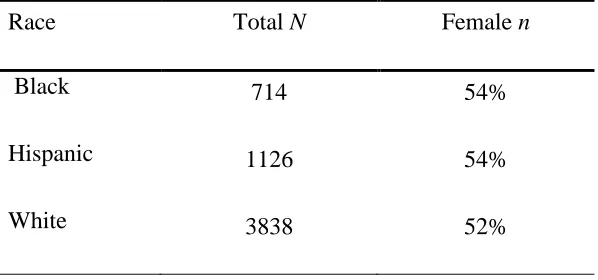
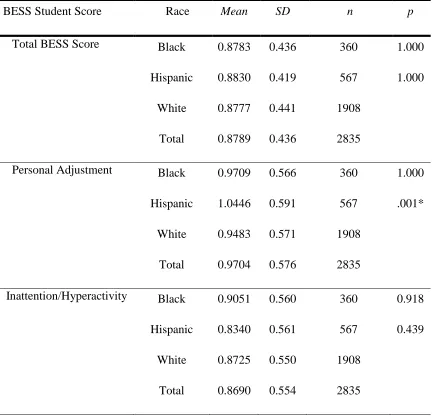
1 Demographics from Norm Sample race and gender...42
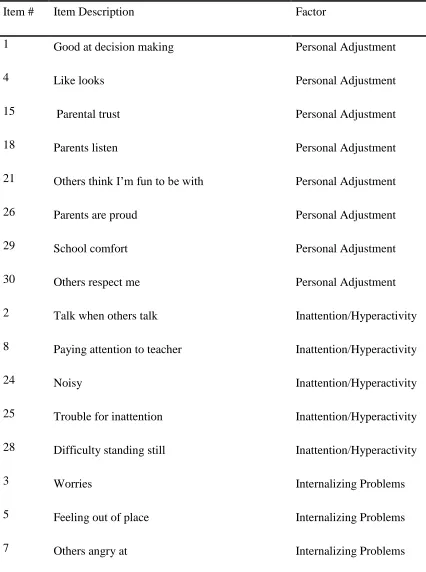
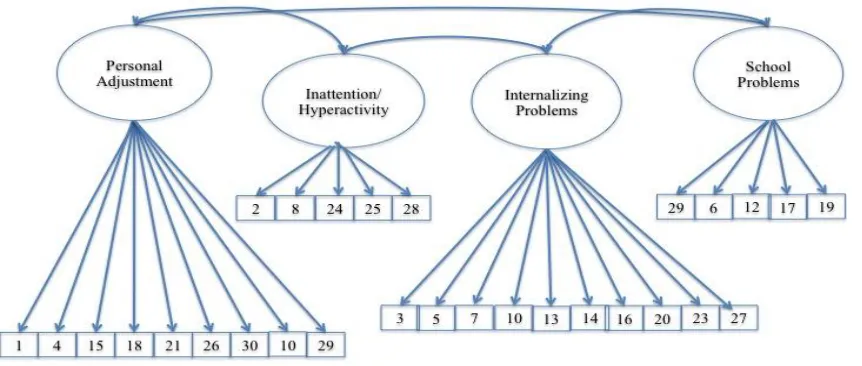
2 BESS Student Items and Factor - Dowdy et al (2011) CFA...46
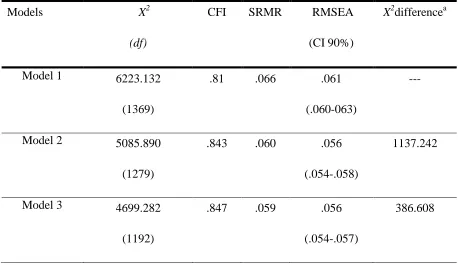
3 Model Fit Indices for Confirmatory Factor Analysis Models...55
v
LIST OF FIGURES
Figure Page
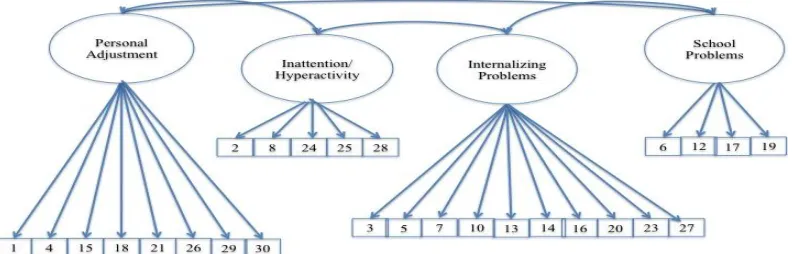
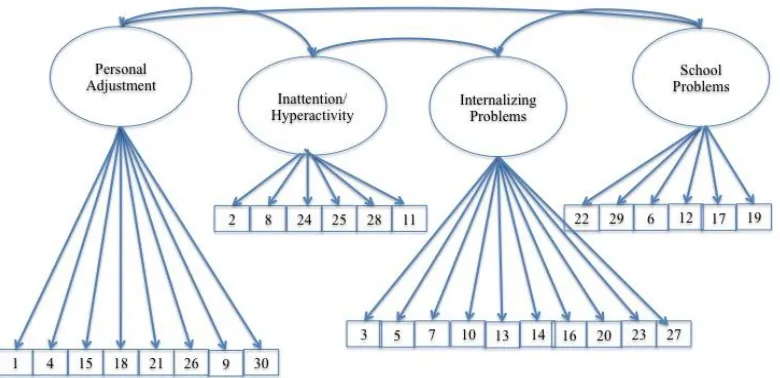
1 Path diagram of final Exploratory Factor Analysis Model (Dowdy et al, 2011)...45 2 Confirmatory Factor Analysis Model 1...49 3 CFA Model 10 for students identified as Hispanic for the national norming
sample of the BASC-2 BESS...54 4 CFA Model 10 for students identified as White for the national norming sample
vi
ABBREVATIONS
AERA American Educational Research Association
ASEBA Achenbach System of Empirically Based Assessment APA American Psychological Association
BASC-2 Behavior Assessment System for Children, Second Edition BER Behavioral and Emotional Risk
BESS Behavioral and Emotional Screening System CFA Confirmatory Factor Analysis
CFI Comparative Fit Index
CLD Culturally and Linguistically Diverse EBD Emotional Behavioral Disorder EFA Exploratory Factor Analysis ESI Emotional Symptoms Index FBA Functional Behavior Assessments
IDEA Individuals with Disabilities Education Act NCME National Council on Measurement in Education NPV Negative Predictive Value
ODR Office Discipline Referral PPV Positive Predictive Value
RMSEA Root Mean Square Error of Approximation RtI Response to Intervention
SES Socio-economic Status
1 CHAPTER 1
UNIVERSAL SCREENING AS THE GREAT EQUALIZER: ELIMINATING DISPROPORTIONALITY IN
SPECIAL EDUCATION REFERRALS
Introduction
The value of early intervention and prevention programs is generally
acknowledged (Blair & Diamond, 2008; Greenberg Domitrovich, & Bumbarger, 2000). Early intervention and prevention programs have been linked to positive school outcomes such as high school completion, promoting increased well-being, and enhanced resilience (Blair & Diamond 2008; Greenberg 2000). Blair and Diamond (2008), for example, found that intervening to improve emotional and behavioral regulation in students at risk for school failure positively impacts their likelihood of academic success. On the other hand, current practices for identifying students in need of behavioral and emotional support in schools often fail to identify all students who need support, are implemented after student problems have increased in magnitude, and tend to identify a large number of minority students (Ferri & Conner, 2005; Skiba, Simmons, Ritter, Kohler, Henderson, & Wu, 2006).
Increasing pressures on school districts and state education agencies to address the disproportionate number of minority students in special education programs have had little impact on the practices employed for identifying students for these programs
(Ferri & Conner, 2005; Semmel, Gerber & MacMillian, 1994).These practices also overlook the value of individual child data as these data are rarely used in special education decision-making, including the eligibility determination process (Kim & Rowe, 2004; Ferri & Conner, 2005). For these reasons, a change in the methods used to identify students with behavioral and emotional disorders is warranted. This paper reviews research suggesting that the use of student self-report universal screening
instruments may diminish the overrepresentation of students of color in special education programs, and guide early intervention for students at risk for behavioral and emotional disorders.
Disproportionality
This overrepresentation and restrictive school placements are also troubling given that research has demonstrated that students identified for special education services may suffer social isolation, lower self-esteem, substandard education, and they are twice as likely to drop out of high school (Deninger, 2008; Harris et al , 2004; Terras, Thompson, & Minnis, 2009; Thurlow, Sinclair, & Johnson, 2002; Waitoller, Artiles, and Cheney, 2010). Students in special education are often exposed to a less rigorous curriculum, instructed at a slower pace, and held to lower academic expectations than their peers. For students who are erroneously identified as requiring special education services, these curriculum inadequacies lead inevitably to poorer academic outcomes (Deninger, 2008).
The school incompletion or dropout rates for these misidentified students is particularly troubling. Students who have not completed high school have high rates of unemployment, have lower salaries if employed, are more likely to need public
assistance, and to become involved with the criminal justice system (Ferri & Conner, 2005). Other research suggests that only 20% of students in special education with
emotional and behavioral disorders pursue any type of post-secondary education (Wagner et al., 2005). It could be concluded that the practice of placing a disproportionate number of minority students in special education classes places them on a trajectory for
diminished life opportunities.
special education placement practices since their initiation (Ferri & Conner, 2005; Samuels, 2005).
Based on these findings, it could be argued that numerous changes need to be made in school-based special education identification practices, including provision of early intervention or additional support in the general education setting prior to referral for special education services. Such early intervention services are based on the premise that the effects of poor general education instruction can be mitigated but the effects of disabilities based on severe physiological impairments (i.e. neurological processing deficits) cannot. This premise, however, still does not hold. Some research has found that students who receive inadequate instruction, particularly in fundamental areas like
reading, are more at-risk for being wrongly identified later as requiring special education services (Harris et al, 2004). Thus, fundamental change is needed in the identification and prevention models currently used by U.S. school districts.
Current Identification Practices
teacher referral process is idiosyncratic and fraught with inaccuracy, specifically for children suspected of having behavioral and emotional disorders. Skiba and colleagues (1993) described teacher referral practices as an “economic process” in which student performance as well as the variety of classroom resources must be considered. Their research found teacher resources, behavior management strategies, and political climate of the building (i.e. administration discouraging special education referrals) all
influencing referral practices. They also found that classroom behavior and academic engagement influenced teacher perception of disability and likelihood of special education referrals. These markers of disability are particularly troubling in light of evidence that students from low SES backgrounds and minority group members vary in their presentation of early behavioral and academic skills due to expectations of varying cultural norms (Prince & Lawrence; 1993).
Teacher referral decisions about child behavioral and emotional problems frequently do not agree with referrals using structured and/or standardized ratings of a children’s behavioral and emotional adjustment (Eklund, et al., 2009). Waiting for
Numerous studies have shown that teacher referral for special education is related to the level of student disruption in the classroom. Students with more disruptive
behaviors, despite the cause or nature of the disruption, are more likely to be referred for special education (Bradshaw, Buckley, & Ialongo, 2008; Walker, Cheney, Stage, & Blum 2005). Boys are more likely to vary from the “norm” of good student behavior and,
therefore, be referred for special education. Mirkin (1982) found that even when academic weaknesses are evident, girls were less likely to receive referral for services because of generally compliant behavior (Anderson, 1997; Mirkin, 1982; Serbin
Marchessault, McAffer, Peters, & Schwartzman, 1993; Shaywitz, Shaywitz, Fletcher, & Escobar, 1990). Pas, Bradshaw, and Hershfeldt (2010) found that regardless of individual student risk, students placed in classrooms with teachers who had overall high rates of special education referrals were much more likely to be referred to special education. These findings further substantiate the notion that teacher referral alone may not be the most effective method for selecting students with behavioral and emotional problems.
Teacher referrals are often supplemented with anecdotal and archival data sources such as office discipline referrals (ODRs) and functional behavior assessments (FBA) for the purposes of identifying students in need of behavioral and emotional interventions and/or special education services. These practices are equally problematic. Bradshaw, Mitchell, O’Brennen, and Leaf (2010) determined that ODRs were influenced by school
peers. These findings were similar to those found by other researchers (Gregory &
Mosely, 2004; Cartledge & Dukes, 2008; Shaw & Braden, 1990). FBAs, in contrast, were found to help mediate and diminish externalizing behaviors in students and altering teacher perception of student need for special education services. When students presented less externalizing behaviors, teachers were less inclined to believe they were disabled. Additionally, the use of interventions developed based on the “function” of the
behavior as assessed by FBAs have been found to have more desirable outcomes. In a study of the use of function-based interventions with African American students, Mustian (2010) found that the use of such interventions could provide valuable information to pre-referral intervention teams and even prevent pre-referral for special education. However, Mustian acknowledges that knowledge of how to properly and effectively utilize FBAs to develop interventions is generally limited to special educators.
New federal mandates that require documentation of student “Response to Intervention” (RtI) as a key element in the identification of students with disabilities
Curriculum-Based Measures (CBM), and standardized assessment to establish
educational placement decisions (Fuchs & Deshler, 2007). However, some states have elected to implement a 4tiered model and others 2or 3tiered models. Variance both in the number of tiers as well as what actions are performed at different tiers leads to markedly different referral procedures not only across states but also often within school districts (Berkeley, Bender, Peaster, & Saunders, 2009)
RtI is commonly depicted as a pyramid, which represents the progression of intensity of interventions that at-risk students may receive. In the three-tiered RtI model, which is most commonly adopted, “Tier” provides increased academic or behavioral intervention. Tier 1 generally includes screening and general education “best practices.”
Tier 2 provides empirically validated interventions for students struggling to make adequate progress with general instruction, and for those identified as having risk for academic or behavioral difficulties as indicated by Tier 1 screening or identification practices. Tier 3 is the most intense level of intervention and often results in placement in special education programs (Fuchs & Fuchs, 2009). Using this method, RtI should theoretically identify 15%to 20% of children at Tier 1to receive a more intense
intervention at Tier 2. Roughly, 5% of children in Tier 2 would receive special education services at Tier 3 (Reschley &Ysseldyke, 2002; Tilly, Harken et al., 2008).
Using the RtI model, schools are now charged with providing data to monitor progress on both academic and behavioral interventions. With RtI, behavioral
intervention. One benefit of this model of identification is that it moves school teams from the common practice of “problem admiration” to attempting some type of intervention (Henderson, 2009). However, the determination of “adequate” progress remains inconsistent, varying often times by teacher, school team, district, and state. Unfortunately, due to the varying interpretations of the definition of “adequate progress” and the nebulous federal definition of Emotional Disturbance, RtI differs minimally from previous practices and is only marginally better than teacher referral alone (Gresham, 2005).
Optimal RtI programs assess the performance of students individually to determine their needs (Harris-Murri, King, & Rostenburg, 2006) and they consider the importance of culturally-sensitive and appropriate interventions through the RtI process when serving diverse student populations. They posit that an ecological approach
considering the influence of student culture on their learning and behaviors is vital in the development of optimal interventions. Theoretically, they also hypothesize that the use of culturally-appropriate interventions combined with more consistent RtI practices will ultimately decrease the overrepresentation of minorities in special education programs.
Universal Screening
Screening is defined by Gridley, Mucha, and Hartfield (1995) as “a brief, global, relatively low-cost procedure used to obtain preliminary information about a wide range of behavior for large groups of children” (p. 213). The goal of the administration of a
behavioral and emotional difficulties or the “risk factors” for the development of such problems. The term “risk factors” refers to environmental experiences or influences that
occur before the onset of emotional and behavioral disorders that increase the likelihood of the development of these disorders (Loeber, 1990). Screening informs stakeholders of the “statistical chances” of development of a specific pathology, in this case, behavioral
and emotional disorders (Skotko, 2011). A universal screening approach would provide information on the level of risk that could be used in the development of educational intervention plans (Dowdy, Mays, Kamphaus, & Reynolds, 2008; Kamphaus, Rowe, Dowdy, & Hendry, 2006).
Preventive interventions such as universal screening are proactive and provided to all students. For this reason, their potential to stigmatize students is limited (Greenberg, 2000). Additionally, universal screening fosters the implementation of interventions and attempts to eliminate prolonged exposure to risk. Based on the assumption that long-term behavioral and academic problems could be averted through early detection and
intervention, early identification of students at risk for behavioral and emotional disorders should be high priority for both educators and researchers (Aos, Lieb, Mayfield, Miller, & Pennucci, 2004; Feil & Walker, 1995; Patterson, Reid, & Dishion, 1992).
researchers were able to link 62% of these youth to mental health resources in an effort to promote positive coping.
The aforementioned weaknesses in practices used to identify and refer students for behavioral and emotional interventions might be addressed through the use of an instrument designed to screen for behavioral and emotional risk using student self-report. The information gathered from such screening could be used to design interventions and link students to appropriate mental health services. Furthermore, screening for behavioral and emotional risk reduces the potential for the harmful effects of erroneously labeling students as disabled (Greenberg, 2000).Another advantage is that the use of universal screening measures lead to data-based decisions regarding placement and provision of services based a norm-referenced assessment of student risk. The use of such a screener is currently supported by various professional bodies (AERA, APA, & NCME, 1999).
universal screening data. Presently, the schools and districts choosing to participate in such practices may collect different information, using various instruments, making it difficult to utilize the data collected systematically and meaningfully (Dowdy, Ritchey, & Kamphaus, 2010). Barriers to universal screening also include issues regarding the use of active vs. passive consent for collecting BER information from students (Gardner, 2011). Screening practices of known reliability and validity are crucial for promoting classroom practices and school services necessary to ensure that all children succeed in school. Schools commonly screen children for other types of disabilities at preschool and older age levels including problems with vision, hearing, speech, cognitive delays, and
academic problems associated with specific learning disabilities, but rarely for emotional and behavior problems (Feil & Walker, 1995). However, early identification and
intervention for youth with emotional and behavioral problems can help to minimize the long-term detriment of mental disorders (Aos, Lieb, Mayfield, Miller, & Pennucci, 2004; Campaign for Mental Health Reform, 2005)
The use of a universal screening tool is also in alignment with the Response to Intervention model. As previously outlined, this model recommends high-quality instructional practices at tier one and the use of universal screening tools to identify students at risk for disabilities (Fuchs & Fuchs, 2007). The use of a universal screening tool also fits well into the multi-gate/tier approach. With the results of a screening instrument, students can be triaged and receive appropriate interventions based on their level of risk in a timely fashion.
students who demonstrate significant behavioral and emotional problems in childhood are more likely to abuse drugs, drop out of high schools, and develop long-term disabling conditions in adulthood (Conroy & Brown, 2004). With the most commonly utilized identification practices, there is generally a substantial period of time between when the student begins exhibiting symptoms of behavioral and emotional difficulties and when they begin to receive treatment (Duncan, Forness, & Hartsough, 1995). Walker and colleagues (2000) found that referrals for students with academic difficulties were most common in 2nd or 3rd grades. In contrast, referrals for students with behavioral and emotional problems were higher in 9th grade. These findings are disheartening as symptoms of emotional or behavioral problems are often present as early as age 3 (Kazdin, 1987). In part, the problem is due to the current “wait to fail” service delivery
mechanisms in which services are not initiated until significant emotional and behavioral concerns are present. This occurs in spite of evidence suggesting that the longer
children’s behavioral and emotional symptoms go unidentified and untreated, the more
stable these symptoms are, making intervention efforts more difficult (Gottlieb, 1991). Benefits of Universal Screening for Behavioral and Emotional Risk
Through screening, both prevention and intervention work are able to begin simultaneously (Barnett et. al, 2006; Fuchs & Fuchs, 2007). Additionally, there are various options for the implementation of a universal screening program. School-Wide Positive Behavioral Support (SWPBS) programs have been used as universal screening tools. SWPBS programs are prevention-oriented models designed to teach, monitor, and encourage positive school behaviors. This approach is generally multi-tiered and
to measure student risk based on the individual school expectation for behavior. By using the standards set by the SWPBS programs, schools are able to assess which students are demonstrating the behaviors that place them at greatest risk for not being successful in program participation. Simultaneously, the SWPBS program provides both prevention and intervention support for all students (Burke et. al, 2010; Glover & Albers, 2007).
Another method for universal screening for behavioral and emotional risk is the Systematic Screening for Behavior Disorders (SSBD) system (Glover & Albers, 2007) This system, similar to the SWPBS method of screening, is multi-tiered and aims to intervene with students who are not meeting the school expectation for pro-social
behavior. The SSBD utilizes teacher nomination of at-risk students (Tier 1) and ratings of nominated students' adaptive and maladaptive behaviors (Tier 2). A structured
observation instrument is then applied to students who generate rating scale scores in Tier 2 that suggest substantial risk (Tier 3). In their research of the implementation of the SSBD program, Glover and Albers found schools were able to not only expand the quantity and types of students identified as at risk but they were also able to proactively intervene with these students, providing a wide range of interventions (Glover & Albers, 2007; Walker & Severson, 1990).
Universal screening can also be implemented using a more standardized normative approach. Instruments such as the BASC-2 Behavioral and Emotional
addition, using rating scales allows for the identification of students with risk for internalizing disorders that may be missed by teacher nomination (Walker, 2005). This would, hopefully, lead to the identification of students with the greatest risk. By accurately identifying students with the greatest risk and providing increasing levels of interventions, the number of students referred for special education may be reduced.
Choice of Informant
Parent and Teacher interviews and surveys, self-report interviews, and self-report surveys are frequently utilized to gather information about behavioral and emotional risk and problems (Achenbach, Krukowski, Dumenci, & Ivanova, 2005; Gross, Fogg, Young, Ridge, Cowell, & Richardson et al, 2006; Jaccard, 1998; Sweeting & West, 1998). Parents are often used as informants to provide information about behavioral functioning (Achenbach, McConaughy, & Howell, 1987; Achenbach, Krukowski, Dumenci, & Ivanova, 2005; Gross, Fogg, Young, Ridge, Cowell, & Richardson et al, 2006; Jaccard, 1998),yet research is conflicting on the role of parents as informants about child
behavior. Both the utility and validity of parents as informants has been repeatedly studied empirically (Achenbach, Krukowski, Dumenci, & Ivanova, 2005; Sweeting & West, 1998; Gross, Fogg, Young, Ridge, Cowell, & Richardson et al, 2006.)
Parental reporting of emotional functioning and negative behavior of their
experiencing symptoms often saw the same in their children in contrast to the adolescent self-report. When compared to other informants such as teachers and mental health workers, parent report was also found to yield different findings (Moretti, 1985). In contrast, on their study of Dutch students using the Strengths and Difficulties
Questionnaire, van Widenfelt, Goedhart, Treffers, and Goodman (2003) found parent and self-report of behavioral and emotional risk to be comparable. Additionally, the findings of Halvorsen, Andersen, and Heyerdahl (2005) in their comparison of parent and self-report of emotional and behavioral functioning in patients with anorexia nervosa also were similar. As a whole, this conflicting research would suggest, as informants, parents may not be the most reliable choice for gathering information about student behavioral functioning.
Because students spend a substantial portion of their day in the school setting, teachers are also frequent reporters for studies attempting to gather information about student behavior (Serbin, Marchessault, McAffer, Peters, & Schwartzman, 1993; Achenbach, Krukowski, Dumenci, & Ivanova, 2005; Lee, Elliot, & Barber, 1994).
girls was significantly different. Their study revealed that teachers often overlooked symptoms of this internalizing construct. In all, the findings of these studies suggest that, while information gathered from teachers may not be aligned with self-report, it is valuable information (Sharp, Croudace, Goodyer, & Amtmann, 2005).
As a tool for gathering information about behavioral functioning, self-report is used for innumerable constructs such as substance abuse and emotional functioning (Adams, Kelley, & McCarthy. 1997; Knight, Little, Losoya, & Mulvey, 2004; Lau, McCabe, Yeh, Garland, Hough, & Landsverk, 2003). In all populations, self-reports can be considered a very desirable form of data collection. Self-report presumably reduces bias that may be found in interviewing (e.g. social desirability bias and interviewer bias). Differences between the use of self-report surveys or questionnaires and interviews have been researched (Achenbach, 2006; Blount, Evans, Birch, Warren, & Norton, 2002). Self-report surveys or questionnaires remove interviewer bias and in most cases limit the influence of social desirability in participant responses that is common when information is gathered through interviewer. Additionally, the use of an interview may be time-consuming, as extensive training of interviewers as well as interrater reliability between interviewers must be established. In contrast, self-report surveys or questionnaires are generally low cost and easily distributed. Self-reports are also a valuable and preferred method of gathering information for personality and behavioral data (Blount, Evans, Birch, Warren, & Norton, 2002).
Krukowski, Dumenci, & Ivanova, 2005; Lam & Cheng, 2002; Sweeting & West, 1998; Waters, 2003). In a meta-analytic review of cross informant correlations for the ASEBA forms, Achenbach and colleagues (1987) found little correlation between child self-report of behavior and adult informant reports when assessing for behavioral and emotional problems. Their findings suggest that situational specificity has great impact on the ratings of children’s behavioral and emotional functioning. Environmental structures,
demands, and expectations may result in variance in reporting of behavior based on informant. In a later meta-analytic review of literature, Achenbach, Krukowski, Dumenci, and Ivanova (2005) compared the predictive validity of self-report with the predictive validity of reports by parents, caregivers, and teachers and found little correlation between the self-report and informant report. Additionally, the German study using the Screen for Child Anxiety Related Emotional Disorders (SCARED),Weitkamp, Romer, Rosenthal, Wiegand-Grefe, and Daniels (2010) explored self-report of anxiety related disorders in children and adolescents. They discovered moderate agreement between informants and self-report may yielded more symptoms for anxiety disorders than parent report.
Overall, it would appear that information gathered from self-report across ages may differ from information yielded by other informants. However, both the self-report and reports gathered from informants are believed to provide valuable information about behavioral functioning that should be integrated for the purposes of diagnosis, treatment, and program planning. The findings of the studies reviewed regarding informant-report and self-report have repeatedly found differences between self-report and other
but valid information, and the outcomes of the self-report and the informant report should be integrated for global outcomes (Achenbach, McConaughy, & Howell, 1987;
Weitkamp, Romer, Rosenthal, Wiegand-Grefe, & Daniels, 2010). While screening using multiple informants is may provide a broad range of information regarding student functioning, it is not practical. This approach is likely to be both costly and time consuming. Additionally, while some researchers suggest each informant provides a different perspective, studies have also found that information collected from an
additional informant provided little variance in information above and beyond what was provided by the initial informant (Biederman, Keenan, & Faraone, 1990) Pragmatically, in a school context, asking teachers to complete screening questionnaires on each of their students may not be feasible. This approach may be particularly difficult in middle and upper grades where teachers see hundreds of students. For this reason, in addition to the research indicating that youth are less likely to disclose covert mental health constructs to the adults, self-report appears to be the most practical method for collecting universal screening of child behavioral and emotional problems.
Screening diverse student populations
Adams and colleagues (1997) found in their study of self-reporting of behavioral and emotional difficulties that African American females reported more difficulties in the areas of poor work habits and social problems than their White peers on the Adolescent Behavior Checklist. In an investigation of the measurement equivalence of an instrument to measure self-reporting of juvenile offending, Knight and colleagues (2004) determined that while their instrument generally measured equivalent constructs, there were
differences in the reporting patterns between African American and white adolescents, as well as between Hispanic and white adolescents. Measurement equivalence studies using parents and teachers as informants have also yielded results that suggest differences across racial and ethnic groups. (Achenbach, McConaughy, & Howell, 1987; Achenbach & Rescorla, 2000;Gross, Fogg, Young, Ridge, Cowell, & Richardson et al, 2006). These studies, among others support the need for investigation of the measurement equivalence of screening measures to determine their comparability of measurement across CLD groups.
Research using measurement equivalence testing to explore the validity of screening instruments across CLD populations is limited. In their recent publication, Dowdy, Dever, DiStefano, and Chin (2011) explored teacher reporting of BER using the Behavioral Emotional Screening System (BESS) in students with limited English
that we thoroughly examine the validity and function of instruments used for screening to promote screening practices that are equitable across groups.
Implications for practitioners
The stakes are high for children classified by school personnel as having emotional or behavioral disorders (EBD). Children with this special
education classification are known to have poorer academic achievement and social outcomes, and are twice as likely to drop out of high school (Terras, Thompson, &Minnis, 2009; Thurlow, Sinclair, & Johnson, 2002; Waitoller, Artiles, and Cheney, 2010). Research has also shown that the stakes are higher for children of color,
especially boys, because these children are classified as EBD at a rate that is far higher than would be predicted by population proportions (Bradshaw, Mitchell, O'Brennan, & Leaf,2010). In other words, disproportional classification rates for EBD have an even more harmful impact on children of color, their families, and communities.
The use of universal screening tools encourages taking steps to assess risk for disabilities in order to develop interventions and if needed refer for special education services (Brown & Barlow, 2005). Screeners provide an overview of different levels of functioning in various domains and relevant individual student data. In particular, screeners “tap skills believed to be related to school learning tasks that are predictive of school success,” (Gredler, 1997, p. 99). Yet, the use of universal screening tools rarely
carries over into elementary, middle, and high schools. Furthermore, Blair and Diamond (2008) found that intervening to improve children’s emotional, attention, and behavioral
academic success. Universal screening may serve as a method for ensuring that all children have equal opportunity to have their academic, social, and behavioral needs met without reliance on the varying judgment of teachers alone.
Current flaws in the special education referral system might be addressed through the use of universal screening to make data-based decisions regarding placement and provision of services. Failure to provide early intervention services results in dire
outcomes. Barry (2008) determined that attention problems and delayed behavioral skills, as identified by the BASC-2 Teacher Rating Scale in third grade students were
predicative of high school dropouts with 80% accuracy. Blair and Diamond (2008) found that intervening to improve children’s emotional, attention, and behavioral regulation in
students at risk for school failure improves their likelihood of academic success.
Screening may serve as a method for ensuring that all children have equal opportunity to have their behavioral and emotional needs met, while also potentially addressing the problem of overrepresentation. The use of such a screener is currently supported by various professional bodies (AERA, APA, &NCME, 1999).
Implications for research
Research seeking to determine if the nature of teacher perceptions of elevated risk and behavioral and emotional problems are a result of cultural differences between the teachers and the students may also be beneficial. As was previously asserted, a large factor in the special education referral process is dependent on teacher nomination and recommendation. An examination of teacher behavioral and social expectations may assist in the exploration of the impetus behind the elevated ratings and frequent referrals for special education services.
Finally, an evaluation of the measurement equivalence and other psychometric properties of universal screening instruments by student race may provide valuable information about similarities and differences in the functioning of screening tools by student group. It has been found that 20% of the school age students require treatment for some emotional and behavioral difficulty, however, just under 1% of the school
25 References
Abebe, S., &Hailemariam, A. (2008). Factors Influencing Teachers’ Decisions to Refer Students to Special Education Evaluation.Online Submission.
Achenbach, T. (2006). As Others See Us: Clinical and Research Implications of Cross- Informant Correlations for Psychopathology.Current Directions in Psychological Science, 15(2), 94-98. doi:10.1111/j.0963-7214.2006.00414.x.
Achenbach, T., Krukowski, R., Dumenci, L., &Ivanova, M. (2005). Assessment of Adult Psychopathology: Meta-Analyses and Implications of Cross-Informant
Correlations. Psychological Bulletin, 131(3), 361-382. doi:10.1037/0033-2909.131.3.361.
Achenbach, T. M., McConaughy, S. H., & Howell, C. T. (1987). Child/adolescent Behavioral and emotional problems: Implications of cross-informant correlations for situational specificity. Psychological Bulletin, 101, 213–232.
doi:10.1037/0033-2909.101.2.213
Achenbach, T., &Rescorla, L. (2000).Manual for the ASEBA Preschool Forms and Profiles. Burlington: University of Vermont, Research Center for Children, Youth, and Families.
Adams, C., Kelley, M., & McCarthy, M. (1997). The Adolescent Behavior Checklist: Development and initial psychometric properties of a self-report measure for adolescents with ADHD. Journal of Clinical Child Psychology, 26(1), 77-86. doi:10.1207/s15374424jccp2601_8.
American Educational Research Association (AERA), American Psychological Association (APA), and National Council on Measurement in Education (NCME). (1999). Standards for educational and psychological testing. Washington, DC: Author.
Aos S, Lieb R, Mayfield J, Miller M, Pennucci A: Benefits and Costs of Prevention and Early Intervention Programs for Youth. Washington , Washington State Institute for Public Policy; 2004.
Artiles, A., &Bal, A. (2008). The next generation of disproportionality research: Toward a comparative model in the study of equity in ability difference. The Journal of Special Education. 42(1), 4-14. Doi:10.1177/0022466907313603
Barnett, D. W., Elliott, N., Wolsing, L., Bunger, C., Haski, H., McKissick, C., & Vander Meer, C. D. (2006). Response to Intervention for Young Children With Extremely Challenging Behaviors: What It Might Look Like. School Psychology Review, 35(4), 568-582. Retrieved from EBSCOhost.
Biederman, J., Keenan, K., & Faraone, S. (1990). Parent-based diagnosis of attention deficit disorder predicts a diagnosis based on teacher report. Journal of the American Academy of Child & Adolescent Psychiatry. 29(5), 698-701. doi:10.1097/00004583-199009000-00004
Berkeley, S., Bender, W., Peaster, L., & Saunders (2009). Implementation of Response to Intervention: A Snapshot of Progress. Journal of Learning Disabilities.42(1), 85-95.
Blair, C.& Diamond, A. (2008). Biological processes in prevention and intervention: The promotion of self-regulation as a means of preventing school failure.
Development and Psychopathology, 20 (3) 899-911.
Blount, C., Evans, C., Birch, S., Warren, F., & Norton, K. (2002). The properties of self-report research measures: Beyond psychometrics. Psychology and Psychotherapy: Theory, Research and Practice, 75(2), 151-164. doi:10.1348/147608302169616
Bradshaw, C. P., Buckley, J. A., & Ialongo, N. S. (2008). School-based service utilization among urban children with early onset educational and mental health problems: The squeaky wheel phenomenon. School Psychology Quarterly, 23(2), 169-186. doi:10.1037/1045-3830.23.2.169.
Bradshaw, C. P., Mitchell, M. M., O'Brennan, L. M., & Leaf, P. J. (2010). Multilevel exploration of factors contributing to the overrepresentation of black students in office disciplinary referrals. Journal of Educational Psychology, 102(2), 508-520. doi:10.1037/a0018450.
Brown, M., Grumet-Goldstein, J. (2009). School-based suicide prevention with African American youth in an urban setting. Professional Psychology: Research And Practice. 40 (2),111-117
Burns, B. J. & Hoagwood, K. (2002) Community treatment for youth: Evidence-based interventions for severe emotional and behavioral disorders, Oxford University Press, New York.
Conroy, M. A., & Brown, W. H. (2004). Early Identification, Prevention, and Early Intervention with Young Children At Risk for Emotional or Behavioral Disorders: Issues, Trends, and a Call for Action. Behavioral Disorders, 29(3), 224-236. Retrieved from EBSCOhost.
DeMarco, A., Deretich, S. (2006). Contributing Factors in Special Education Referrals for Emotional or Behavioral Problems. Online Submission.
Deninger, M., & Massachusetts Department of Education, O.(2008). Disproportionality: A Look at Special Education and Race in the Commonwealth. Education
Research Brief. Massachusetts Department of Elementary and Secondary Education.
DiStefano, C., & Morgan, G. B. (2010). Evaluation of the BESS TRS-CA using the Rasch Rating Scale model. School Psychology Quarterly, 25(4), 202-212. doi:10.1037/a0021509.
Dowdy, E., Dever, B., DiStefano, C., & Chin, J. (2011). Screening for emotional and behavioral risk among students with Limited English Proficiency. School Psychology Quarterly, 26(1), 14-26. doi:10.01097/a0022072
Dowdy, E., Mays, K. L., Kamphaus, R. W., & Reynolds, C. R. (2009).Roles of diagnosis and classification in school psychology. In T. B. Gutkin & C. R. Reynolds (Eds.). The Handbook of School Psychology (4th ed.). New York: John Wiley & Sons. Dowdy, E., Ritchey, K., & Kamphaus, R.W. (2010) School-based screening: A
population-based approach to inform and monitor children’s mental health needs. School Mental Health, 2 (4) 166-176. doi:10.1007/s12310-0109036
Dunn, L. M. (1968). Special education for the mildly retarded: Is much of it justifiable? Exceptional Children, 35(1), 5–21.
Eklund, K., Renshaw, T., Dowdy, E., Jimerson, S., Hart, S. R., Jones, C. N., & Earhart, J. (2009). Early identification of behavioral and emotional problems in youth:
Universal screening versus teacher-referral identification. The California School Psychologist, 14, 89-95.
Epkins, C., & Meyers, A. (1994). Assessment of childhood depression, anxiety, and aggression: Convergent and discriminant validity of self-, parent-, teacher-, and peer-report measures. Journal of Personality Assessment, 62(2), 364-381. doi:10.1207/s15327752jpa6202_16.
Feil, E. G., & Walker, H. M. (1995). The Early Screening Project for young children with behavior problems. Journal of Emotional & Behavioral Disorders, 3(4), 194. Retrieved from EBSCOhost. doi:10.1177/106342669500300401
(re)segregated education. Teachers College Record 107(3), 453.doi:10.1111/j.1467-9620.2005.00483.x
Ferri, B., Connor, D., & Connor, D. (2010). 'I Was the Special Ed. Girl': Urban Working- classYoung Women of Colour. Gender & Education, 22(1), 105-121.
doi:10.1080/09540250802612688
Fuchs, D. and D. D. Deshler (2007). What we need to know about
Responsiveness to Intervention (and Shouldn't be afraid to ask).Learning Disabilities Research and Practice, 22(2), 129-136.
Fuchs, L. S. and D. Fuchs (2009). On the importance of a unified model of Responsiveness to Intervention. Child Development Perspectives, 3(1), 41-43. Fuchs, L. S., & Fuchs, D. (2006). A model for implementing responsiveness to
intervention. Teaching Exceptional Children, 39(5), 14-20.
Gardner, N. (2011) Potentials and Impediments to Universal, School-based Screening for Behavioral and Emotional Risk: A Critical Discourse Analysis of Current Case Law. Unpublished doctoral dissertation, Georgia State University, Atlanta, GA.
Gartner, A., &Kerzner Lipsky, D., (1987).Beyond Special Education: Toward a Quality System for All Students, Harvard Educational Review,367 (57), 374-76.
Glover, T., & Albers, C., (2007). Universal Screening for Enhanced Educational and Mental Health Outcomes. Journal of School Psychology, 45(2), 117-135. doi:10.1016/j.jsp.2006.05.005.
Gottlieb, G (1991). Experiential canalization of behavioral development: Theory. Developmental Psychology 27:4–13doi:10.1037//0012-1649.27.1.4
Gottlieb, J., Alter, M., Gottlieb, B., Wishner, J., & Yoshida, R. K. (1990). Final report for year III of the consulting teacher program. Report submitted to New York State Education Department.
Gottlieb, J., & Alter, M. (1994). Special education in urban America: It's not justifiable for many. Journal of Special Education, 27(4), 453. Retrieved from EBSCOhost. doi:10.1177/002246699402700406.
Gresham, F. M. (2005). Response to Intervention: An Alternative Means of Identifying Students as Emotionally Disturbed. Education & Treatment of Children, 28(4), 328-344. Retrieved from EBSCOhost.
Gridley, B. E., Mucha, L., & Hatfield, B. B. (1995). Best practices in preschool
screening. In A. Thomas& J. Grimes (Eds.), Best practices in school psychology– III (pp. 213-225). Washington, DC: National Association of School
Psychologists.
Gross, D., Fogg, L., Young, M., Ridge, A., Cowell, J., Richardson, R., et al. (2006). The equivalence of the Child Behavior Checklist/1 1/2-5 across parent race/ethnicity, income level, and language. Psychological Assessment, 18(3), 313-323.
doi:10.1037/1040-3590.18.3.313.
Gur, H. Hendin, C. P. O’Brien, M. E. P. Seligman, & B. T. Walsh (Eds.), Treating and preventing adolescent mental health disorders (pp. 579–596). New York: Oxford University Press.
Harris, J. J., Brown, E. L., & Richardson, J. W. (2004). African Americans and multicultural education: A proposed remedy for disproportionate special education placement and under inclusion in gifted education. Education and Urban Society, 36, 304–341. doi: 10.1177/0013124504264444
Harris-Murri, N., King, K., &Rostenberg, D. (2006). Reducing Disproportionate Minority Representation in Special Education Programs for Students with Emotional Disturbances: Toward a Culturally Responsive Response to Intervention Model. Education &Treatment of Children, 29(4), 779-799. Retrieved from EBSCOhost.
Halvorsen, I., Andersen, A., & Heyerdahl, S. (2005). Girls with anorexia nervosa as young adults: Self-reported and parent-reported emotional and behavioural problems compared with siblings. European Child & Adolescent
Psychiatry, 14(7), 397-406. doi:10.1007/s00787-005-0489-0.
Henderson, J. (2009). Disproportionality in special education: The relationship between Prereferral Intervention Teams and the special education process(Doctoral
dissertation). Retrieved from ProQuest Dissertations and Theses.(Accession Order No. AAT 3323219)
Husky, M., Kaplan, A., McGuire, L., Flynn, L., Chrostowski, C., &Olfson, M., (2011). Identifying Adolescents at Risk through Voluntary School-Based Mental Health Screening. Journal of Adolescence, 34(3), 505-511.
Jaccard, J., Dittus, P., & Gordon, V. (1998). Parent-adolescent congruency in reports of adolescent sexual behavior and in communications about sexual behavior. Child Development, 69(1), 247-261. Retrieved from MEDLINE with Full Text
database. doi:10.1111/j.1467-8624.1998.tb06146.x
Jones, D., Dodge, K., Foster, E., Nix, R., & Conduct Problems Prevention Research Group (2002).Early identification of children at risk for costly mental health service use. Prevention Science. 3(4), 247-256.doi:10.1023/A:1020896607298
Jöreskog KG, Sörbom D. Chicago: Scientific Software International; 2006.
Kamphaus, R. W., Rowe, E., Dowdy, & Hendry, C.N.. (2006). Classification and Diagnosis Concepts. In R.W. Kamphaus & J.M. Campbell (Eds.).
Psychodiagnostic Assessment of Children: Dimensional and Categorical Approaches. New York: John Wiley & Sons.
Kamphaus, R. W., Thorpe, J., Winsor, A. P., Kroncke, A., Dowdy, E., &VanDeventer, M. (2007). Development and predictive validity of a teacher screener for child behavioral and emotional problems at school. Educational and Psychological Measurement, 67, 342–356. doi:10.1177/00131644070670021001
Kim, S., & Rowe, E. (2004, April). Similar risks, dissimilar outcomes: Rethinking risk in educational context. Paper presented at the annual conference of the American Educational Research Association, San Diego, CA.
Knight, G., Little, M., Losoya, S., &Mulvey, E. (2004). The Self-Report of Offending among Serious Juvenile Offenders: Cross-Gender, Cross-Ethnic/Race
Measurement Equivalence. Youth Violence and Juvenile Justice, 2(3), 273-295. doi:10.1177/1541204004265878
Lau, A., McCabe, K., Yeh, M., Garland, A., Hough, R., &Landsverk, J. (2003).
Race/ethnicity and rates of self-reported maltreatment among high-risk youth in public sectors of care.Child Maltreatment, 8(3), 183-194.
doi:10.1177/1077559503254141.
Lam, S., & Cheng, S. (2002). Cross-informant agreement in reports of environmental behavior and the effect of cross-questioning on report accuracy. Environment and Behavior, 34(4), 508-520. doi:10.1177/00116502034004006.
Lee, S., Elliott, J., & Barbour, J. (1994).A comparison of cross-informant behavior ratings in school-based diagnosis.Behavioral Disorders, 19(2), 87-97. Retrieved from PsycINFO database.
Milan, M. (1983). English Language Independent Prediction of Academic Readiness in Ethnically Diverse Low SES Four and Five Year Old Children.
Moretti, M., Fine, S., Haley, M., Marriage, K. (1985). Childhood and Adolescent Depression: Child-report versus Parent-report Information. Journal of the American Academy of Child Psychiatry, 24(3), 298-302.doi:10.1016/S0002-7138(09)61090-6.
Mustian, A.. The comparative effects of function-based versus nonfunction-based interventions on the social behavior of African American students. Ph.D.
dissertation, The University of North Carolina at Charlotte, United States -- North Carolina. Retrieved March 14, 2011, from Dissertations & Theses:
A&I.(Publication No. AAT 3422674).
Ollendick, T., Oswald, D., & Francis, G. (1989).Validity of teacher nominations in
identifying aggressive, withdrawn, and popular children. Journal of Clinical Child Psychology, 18(3), 221-229. doi:10.1207/s15374424jccp1803_4.
Pagano, M.E., Cassidy, L. J., Little, M., Myrphy, J. &Jellinek, M.S. (2000). Identifying psychosocial dysfunction in school-age children: The Pediatric Symptom Checklist as a self-report measure. Psychology In The Schools 37(2), 91-106.doi:10.1002/(SICI)1520-6807(200003)37:2<91::AIS-PTS1>3.0.CO;2-3 Pas, E. T., Bradshaw, C. P., Hershfeldt, P. A., & Leaf, P. J. (2010). A multilevel
exploration of the influence of teacher efficacy and burnout on response to student problem behavior and school-based service use. School Psychology Quarterly, 25(1), 13-27. doi:10.1037/a0018576
Patterson, G. R., Reid, J. B., &Dishion, T. J. (1992). Antisocial boys. Eugene, OR: Castalia Press.
Romer, D., & McIntosh, M. (2005).The roles and perspectives of school mental health professionals in promoting adolescent mental health. In D. L. Evans, E. B. Foa, R. E.
Serbin, L. A., Marchessault, K., McAffer, V., Peters, P., & Schwartzman, A. E. (1993). Patterns of social behavior on the playground in 9- to 11 year-old girls and boys: Relation to teacher perceptions and to peer raings of aggression, withdrawal, and likability. In C. H. Hart (Ed.), Children on playgrounds: Research perspectives. Sharp, C., Croudace, T. J., Goodyer, I. M. & Amtmann, D. (2005) The Strength and
Skiba, R., McLeskey, J., Waldron, N., Grizzle, K., & Bartley, J. (1993). The Context of failure in the primary grades: Risk factors in low and high referral rate
classrooms. School Psychology Quarterly 8(2), 81-98. doi: 10.1037/h0088837 Skiba, R., Simmons, A., Ritter, S., Kohler, K., Henderson, M., & Wu, T. (2006). The
Context of Minority Disproportionality: Practitioner Perspectives on Special Education Referral. Teachers College Record, 108(7), 1424-1459.
doi:10.1111/j.1467-9620.2006.00699.x
Skotko, B. (2011, October). Prenatal and Postnatal Diagnoses of Down Syndrome: New Advances and Updates for Today’s Physicians. Children’s Hospital Los Angeles Pediatric Grand Rounds. Lecture conducted from Children’s Hospital Los Angeles, Los Angeles, CA.
Sweeting, H. & West, P. (1998) Health at age 11: reports from schoolchildren and their parents. Archives of Disease in Childhood, 78, 427–434.
Tejeda-Delgado, M.(2009) Teacher Efficacy, Tolerance, Gender, and Years of Experience and Special Education Referrals. International Journal of Special Education.24(1), 112-119.
Terras, M. M., Thompson L.C. & Minnis, H. (2009) Dyslexia and psycho-social functioning: An exploration study of the role of self-esteem and understanding. Dyslexia: An International Journal of Research And Practice, 15 (4). 304-327.doi:10.1002/dys.386
Thurlow, M. L., Sinclair M.F., Johnson, D. R., & National Center on Secondary
Education and Transition, M. N. (2002). Students with Disabilities Who Drop Out of School: Implications for Policy and Practice. Issue Brief: Examining Current Challenges in Secondary Education and Transition
Twyford, J. M., Chin, J. K., Eklund, K. R., & Dowdy, E. (2009). Measurement Equivalence Across Ethnicities for a Teacher Behavior Rating Screener. 3. Retrieved from EBSCOhost.
U.S. Department of Education. (2006). 26th annual report to Congress on the
implementation of the Individuals with Disabilities Education Act, 2004. Jessup, MD: Ed Pubs.
Waitoller, F., Artiles, A., Cheney, D. ,Artiles, A. , & Cheney, D. (2010). The Miner's Canary: A Review of Overrepresentation Research and Explanations. Journal of Special Education, 44(1), 29-49.
Walker, H. M., Stiller, B., Severson, H. H., Feil, E. G., & Golly, A. (1998). First step to success: Intervening at the point of school entry to prevent antisocial behavior patterns. Psychology in the Schools, 35, 259–269.doi:10.1002/(SICI)1520-6807(199807)35:3<259::AID-PITS6>3.3.CO;2-B
Walker, H., Nishioka, V., Zeller, R., Severson, H., &Feil, E. (2000). Causal Factors and Potential Solutions for the Persistent Under identification of Students Having Emotional or Behavioral Disorders in the Context of Schooling. Assessment for Effective Intervention, 26(1), 29-39. doi:10.1177/073724770002600105
Walker, B., Cheney, D., Stage, S., & Blum, C. (2005).Schoolwide screening and positive behavior supports: identifying and supporting students at risk for school
failure. Journal of Positive Behavior Interventions, 7(4), 194-204. doi:10.1177/10983007050070040101
Waters, E., Stewart-Brown, S., & Fitzpatrick, R. (2003). Agreement between adolescent self-report and parent reports of health and well-being: results of an
epidemiological study. Child: Care, Health & Development, 29(6), 501-509. doi:10.1046/j.1365-2214.2003.00370.x
Weitkamp, K., Romer, G., Rosenthal, S., Wiegand-Grefe, S., & Daniels, J. (2010). German Screen for Child Anxiety Related Emotional Disorders (SCARED): Reliability, validity, and cross-informant agreement in a clinical sample. Child and Adolescent Psychiatry and Mental Health, 4doi:10.1186/1753-2000-4-19.
vanWidenfelt, B., Goedhart, A., Treffers, P., & Goodman, R. (2003). Dutch version of the Strengths and Difficulties Questionnaire (SDQ). European Child &
34 CHAPTER 2
MEASUREMENT EQUIVALENCE OF THE BASC-2 BEHAVIORAL AND EMOTIONAL SCREENING SYSTEM ACROSS RACIAL GROUPS
Introduction
The Behavioral Assessment System for Children-2 Behavioral and Emotional Screening System (BASC-2 BESS) is the most recent additional to the BASC-2 family of evaluation and intervention tools. This instrument was designed to measure the risk of behavioral and emotional problems in students, yet do so in approximately 5 minutes per child. The BASC-2 BESS screening system includes Parent and Teacher forms, which are available for children in pre-school-12th grade and a Student Self-Report form that is available for students in third -12th grades. Moreover, the authors designed the instrument to be administered universally as a part of a multi-gate approach to behavioral and
emotional intervention (Kamphaus & Reynolds, 2008).
Behavioral and Emotional Risk (BER) has been defined as “atypical development
in comparison to children of the same age in the areas of Maladaptive behaviors, emotions, thought patterns, and delayed acquisition of pro-social and coping skills” (Kamphaus, 2011). It is important to note that BER does not meet the diagnostic criteria for a mental health disorder or the criteria for qualification for special education
barriers, etc) position students in racial minority groups, particularly from urban settings, for increased exposure to the risk factors that contribute to BER. By assessing BER commonly associated with the development and manifestation of behavioral and
emotional disorders, the authors of the BASC-2 BESS aimed to support the use of early intervention. Early intervention has been identified as a method of deterring the
pernicious outcomes of a childhood characterized by both BER and/or behavioral and emotional disorders (Blair & Diamond, 2008; Greenberg, Domitrovich, & Bumbarger, 2000).
A systematic approach to identifying students who are demonstrating BER or “universal screening” for BER is aligned with data-driven approaches for identifying
students for interventions and special education services. Those students identified with BER who do not respond to empirically validated interventions in general education settings can receive more intensive educational supports in a timely fashion, thus improving their educational trajectory (Dowdy, Ritchey, & Kamphaus, 2010). The BASC-2 BESS is widely used to measure and provide an assessment of BER in children across the United States (e.g. Los Angeles Unified School District, State of New
Hampshire).
the nature of an instrument to assess the utility of the instrument with various groups (e.g. gender, race, etc.). Hu and Triandis (1985) summarize cross-cultural measurement
equivalence into four types of equivalence commonly sought after in psychology these are: 1) Conceptual/functional equivalence 2 )Equivalence in construct operationalization 3) Item equivalence 4) Scalar equivalence. Conceptual/functional measurement
equivalence evaluates the degree to which the construct measured by the instrument is perceived and functions across different groups. This type of equivalence assesses the antecedents and consequences for a construct as well as the presence of a “universal learning situation” and goals across groups. This type of equivalence aims to determine if
each construct holds the same meaning for each group and may do so by observing the relationship between latent and observed variables. Conceptual/functional equivalence also may also assess circumstances surrounding how scores are derived often by
comparing instruments to others seeking to measure the same construct. Equivalence in construct operationalization bridges the gap from theory to measurement by assessing if a construct can, in essence, be generalized (e.g. same operational definition and value) across cultures. For example, operationalizing the construct of “somatization” as the
verbal report of physical discomfort would lack equivalence if the aim were to compare somatic complaints of nonverbal and verbal populations. Item equivalence assumes both construct/functional equivalence and operationalization have been established. This more specific type of measurement equivalence explores the meaning of the individual items across groups to assess the validity of the scores that are derived. Finally, scalar
measurement equivalence, the most difficult to truly achieve, assumes the