ScholarWorks @ Georgia State University
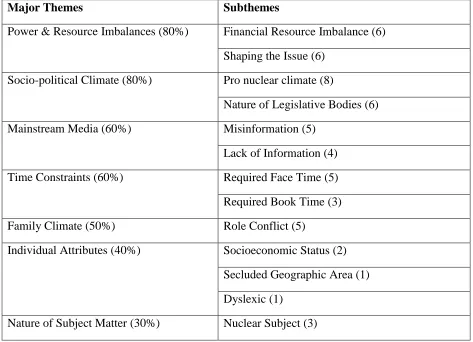
ScholarWorks @ Georgia State University
Psychology Dissertations Department of Psychology
Summer 8-7-2012
Development of Activism: The Elders of the Anti-nuclear
Development of Activism: The Elders of the Anti-nuclear
Movement
Movement
Emma JF Ogley-Oliver Georgia State University
Follow this and additional works at: https://scholarworks.gsu.edu/psych_diss
Recommended Citation Recommended Citation
Ogley-Oliver, Emma JF, "Development of Activism: The Elders of the Anti-nuclear Movement." Dissertation, Georgia State University, 2012.
https://scholarworks.gsu.edu/psych_diss/104
This Dissertation is brought to you for free and open access by the Department of Psychology at ScholarWorks @ Georgia State University. It has been accepted for inclusion in Psychology Dissertations by an authorized
DEVELOPMENT OF ACTIVISM: THE ELDERS OF THE ANTI-NUCLEAR MOVEMENT
by
EMMA OGLEY-OLIVER
Under the Direction of Gabriel Kuperminc
ABSTRACT
The US anti-nuclear movement formed in opposition to the development of nuclear weapons and
energy. Anti-nuclear activists have rallied since the late 1970’s opposed to the construction of
Plant Vogtle near Waynesboro, Georgia due to the social and environmental justice issues related
to the nuclear industry. In 2010, the nuclear industry proposed a nuclear resurgence in the US,
proposing to construct new reactors at Plant Vogtle. This represented the first time new nuclear
reactors had been proposed since the moratorium on new reactors as a result of the partial
meltdown at Three Mile Island in 1979. The aim of the study is to understand the experience of
“first wave” anti-nuclear activists in Georgia (those engaged for twenty years or more).
Bronfenbrenner’s Ecological Framework was employed to locate anti-nuclear activists’
perceived facilitators and barriers to their activism. Semi-structured interviews with these
endorsed facilitators and barriers related to individual characteristics however, the majority of
activists perceived facilitators and barriers beyond the individual level. Specifically, the majority
of activists mentioned facilitators and barriers relating to the media and political systems and the
power and resource imbalances within society. The role of community psychology is discussed
in relation to this field of inquiry.
DEVELOPMENT OF ACTIVISM: THE ELDERS OF THE ANTI-NUCLEAR MOVEMENT
by
EMMA OGLEY-OLIVER
A Dissertation in Partial Fulfillment of the Requirements for the Degree of
Doctor of Philosophy
in the College of Arts and Sciences
Georgia State University
Copyright by Emma Ogley-Oliver
DEVELOPMENT OF ACTIVISM: THE ELDERS OF THE ANTI-NUCLEAR MOVEMENT
by
EMMA OGLEY-OLIVER
Committee Chair: Dr. Gabriel P. Kuperminc
Committee: Dr. Julia L. Perilla
Dr. Fred P. Brooks
Dr. Kelly M. Lewis
Dr. Marci R. Culley
Electronic Version Approved:
Office of Graduate Studies
College of Arts and Science
Georgia State University
DEDICATION
I would like to dedicate this manuscript to all anti-nuclear activists who tirelessly strive for social
and environmental justice. These activists prompted this investigation and without their
collective energy and engagement it would not have been possible. I hope that this work is useful
TABLE OF CONTENTS
LIST OF TABLES ... viii
LIST OF FIGURES ... ix
CHAPTER ONE ... 1
1. Literature Review ... 1
1.1. Nuclear Resurgence... 2
1.2. Anti-nuclear Movement ... 4
1.3. Activism ... 7
1.3.1. Definition ... 7
1.3.2. Activism Literature ... 7
1.3.3. Anti-nuclear Activism Literature... 13
1.4. Rationale ... 17
1.5. The Current Study ... 18
CHAPTER TWO ... 19
2. Method ... 19
2.1. Participants ... 20
2.2. Procedures... 21
2.3. Interviews ... 23
CHAPTER THREE ... 25
3. Results ... 25
3.1. Facilitators to Activism ... 25
3.1.1. Personal Learning... 27
3.1.2. Individual Attributes ... 29
3.1.3. People ... 34
3.1.4. Non-profit Organizations ... 36
3.1.5. Sociopolitical Climate ... 39
3.1.6. Media ... 42
3.1.7. Self-interest... 44
3.1.8. Family Climate ... 46
3.2. Barriers to Activism ... 48
3.2.1. Resource and Power Imbalance ... 49
3.2.2. Sociopolitical Climate ... 51
3.2.3. Mainstream Media ... 54
3.2.4. Time Constraints ... 55
3.2.5. Family Climate ... 56
3.2.6. Individual Attributes ... 57
3.2.7. Nature of the Subject Matter ... 59
CHAPTER FOUR ... 63
4. Discussion... 63
4.1. Self-Location ... 64
4.2. Bronfenbrenner’s Ecological Framework ... 64
4.2.1. Individual Level... 65
4.2.2. Microsystem ... 69
4.2.3. Exosystem ... 71
4.2.4. Macrosystem ... 75
4.2.5. Summary... 76
4.3. Contributions to Community Psychology Research and Practice ... 77
4.4. Summary Paragraph... 80
4.5. Strengths and Limitations ... 80
4.6 Future Directions... 82
REFERENCES ... 86
APPENDICES ... 97
Appendix A ... 97
Appendix B ... 98
Appendix C ... 99
Appendix D ... 100
LIST OF TABLES
Table 1 Major Themes and Subthemes: Perceived Facilitators to
Anti-nuclear Activism
26
Table 2 Major Themes and Subthemes: Perceived Barriers to Anti-
nuclear Activism
LIST OF FIGURES
Figure 1 Perceived Facilitators to Anti-nuclear Activism 97
CHAPTER ONE
1. Literature Review
This study explored the development of anti-nuclear activism among ‘elders’ of the
movement—those involved for 20 or more years. To provide some context for the study, I will
first discuss the broader debate about the use of nuclear power. This will include discussion
about the recent and historic shift in U.S. energy policy that calls for the construction of new
nuclear reactors as a means to address global climate change (GCC), coined a ‘nuclear
renaissance’ by nuclear proponents and a ‘nuclear relapse’ by opponents1
(Culley & Angelique,
2010). I will then provide an overview of the roots of the anti-nuclear movement and associated
environmental justice issues and social costs. Next, I will define ‘activism’ and briefly review
extant social sciences literature about activism in general across disciplines and issues, with a
focus on literature within the field of psychology. Finally, I will discuss scholarly literature that
is specific to anti-nuclear activism published in the social sciences, focusing on literature from
community psychology. A fundamental goal of community psychology is to promote individual
and community well-being and social justice, and understanding the nature and process of
anti-nuclear activism is consistent with this goal (Culley & Angelique, 2011). Ultimately, this study
sought to understand what factors are perceived to promote or prevent anti-nuclear activism.
In keeping with a community psychological perspective, the ecological framework
(Bronfenbrenner, 1979) was used as a guiding heuristic to ultimately understand elder activists’
experiences within the anti-nuclear movement. Specifically, this framework allowed the
researcher to locate the multiple levels of influence that are perceived to affect individuals’
activism. This study focused on the experiences of long-term anti-nuclear activists in Georgia.
Such a study is timely, given that the first new reactors to be commissioned in decades are
1
proposed to be built at Plant Vogtle, near Waynesboro, Georgia (Culley & Angelique, 2011;
Culley, Ogley-Oliver, Carton, & Street, 2010). A key aim of this study was to uncover the events
and processes that were perceived to have facilitated or prevented these elders’ activism as early
as the 1970’s and late 1980’s when the first reactors were proposed and constructed at Plant
Vogtle, respectively (Nuclear Regulatory Commission, 2011).
1.1. Nuclear Resurgence
In January of 2006, the U.S. nuclear industry initiated a nuclear resurgence by proposing
the construction of new nuclear reactors. This represented an historic shift in U.S. energy policy,
in that no new reactors had been commissioned since the 1979 accident at Three Mile Island
(TMI), near Middletown, Pennsylvania. The Bush and Obama Administrations asked Congress
to appropriate billions in taxpayer-based federal subsidies as an incentive for the construction of
these new reactors. Most recently, in February of 2010, President Obama announced that the
operators of Plant Vogtle, near Waynesboro, Georgia, would be the first to receive $8.3 billion in
federal loan guarantees (Federal News Service, 2010 February 16). The new Vogtle reactors, if
completed, would add to the 104 commercial nuclear reactors that currently operate in the U.S.
and supply approximately 20% of US energy. In his FY 2012 budget, President Obama called for
an additional $36 billion for nuclear loan guarantees, though debate is ongoing.
Given the uncontrollable release of elevated levels of radiation that continue at the
Fukushima Dai-ichi nuclear plant in Japan, debate about federal monies to fund new nuclear
reactors is likely to continue. In March of 2011, a tsunami hit the north coast of Japan, which led
to power outages in the area including the Fukashima nuclear power plant. A failure in backup
power for the cooling systems for the nuclear reactors set into motion a series of events that
three of the plant’s six nuclear reactors. The escalating situation in Japan has led to increased
debate about nuclear energy. For example, the German government recently announced that it
will phase out nuclear energy production by 2012 and Switzerland, Venezuela, and China have
suspended the construction of new nuclear reactors (Beckow, March 2011). Back in 1979, the
partial meltdown of unit 2 at Three Mile Island instigated a moratorium on the commissioning of
nuclear reactors in the US. The Obama administration continues to support new reactors in the
US; however the meltdown at Fukashima may ultimately shift US energy policy away from
nuclear energy. The recent shift in US energy policy toward nuclear energy is rooted in concern
about climate change.
Global Climate Change According to the Intergovernmental Panel on Climate Change
(IPCC), there is overwhelming scientific agreement that global climate change (GCC) is related
to ever increasing ecological disruptions with potentially life-threatening consequences (IPCC,
2007). In particular, the IPCC has highlighted the importance of addressing the human role in
precipitating and perpetuating GCC – particularly via our use of fossil fuels. Within this context,
interest in new nuclear reactors in the US and abroad surfaced before the incident in Japan and
continues in many countries due to increased concerns about GCC. Because nuclear power plants
emit less greenhouse gases (a major cause of GCC) during normal plant operations than other
forms of electricity generation, such as coal-fired plants, it has been argued that the construction
of new nuclear reactors will provide a solution to GCC, despite evidence that this notion is
problematic at best (Culley & Angelique, 2010, 2011; Culley et al., 2010; Makhijani, 2007). For
example, disputes exist about how many new reactors it would take to affect GCC. Specifically,
the U.S. would need to construct more than 300 nuclear reactors and at least 1500 new reactors
(IEER, 2006; Makhijani, 2007). This would require a new reactor every one to two weeks until
about 2050, which is unrealistic, given the length of time it takes to license and build nuclear
reactors (Makhijani, 2007).
Despite questions about the role nuclear power might play with respect to GCC, in the
U.S., there are currently about 30 new nuclear reactors proposed. The majority (23) of these are
to be built in the southeastern U.S. in communities with existing nuclear power plants (NRC,
2010). This nuclear resurgence has re-awakened the anti-nuclear movement. Further, the
continuing aftermath of the meltdown at Fuskashima in Japan incites activists to mobilize.
1.2. Anti-nuclear Movement
While anti-nuclear activism has resurfaced in the past five years to oppose the nuclear
resurgence (and most recently, in response to the March 2011nuclear meltdown that occurred at
the Fukushima Dai-ichi Plant in Japan), the anti-nuclear movement has a long history of
resistance to the nuclear industry in the U.S. and elsewhere. In the U.S., the movement began in
the mid-1940s, with opposition to nuclear weapons development and testing (Siracusa, 2008;
Wittner, 2009). It also has roots in nuclear energy production of the 1950s and its related
activities, such as uranium mining and processing, reactor licensing, construction, operation and
decommissioning, and management of highly radioactive spent fuel wastes (Price, 1982;
Wellock, 1998). The longevity of anti-nuclear activism was reinforced with the infamous nuclear
disasters at TMI in 1979 and at Chernobyl in 1986. The recent disaster at the Fukushima Dai-ichi
Plant brought widespread publicity to concerns about nuclear technology and although yet to be
empirically assessed may have strengthened the movement. Opposition to the nuclear industry
and its programs among anti-nuclear activists was rooted in discussion of the social costs (health,
and the placement of new nuclear reactors these costs have disproportionately affected
indigenous peoples and poor communities of color (Alldred & Schrader-Freshette, 2009; Bullard,
1990; Pasternak, 2010) signifying the social and environmental injustices of the nuclear industry.
Social and Environmental InjusticesAccording to the NRC (2010), the vast majority of
new reactors are proposed for the southeastern U.S. Many of these locales (like Waynesboro,
Georgia) tend to be poor communities of color that are economically dependent upon the nuclear
industry and already disproportionately burdened with radioactive and other toxic wastes
(Alldred & Schrader-Frechette, 2009; Bullard, 1990; Culley & Angelique, 2011). Environmental
injustices associated with the nuclear industry are pervasive, particularly related to the
contamination of Native American lands due to uranium mining, processing, and waste disposal
(Churchill & LaDuke, 1983; Pasternak, 2010).
Alldred and Shrader-Frechette (2009) highlighted historical injustices related to the
nuclear industry stating the public health risks largely affecting indigenous peoples and poor
communities of color. For example, public health information about uranium was not widely
disseminated among Navajo uranium miners (Dawson, 1992; Pasternak, 2010) and thus Navajo
people only organized in protest after 1973, once miners and others living near mining and
enrichment sites developed cancer (Brugge & Goble, 2002). It appears that uranium mining and
related processes had a negative affect primarily on indigenous people in the U.S., due to lack of
alternative employment (Brugge & Goble, 2002) and the fact that the majority (70%) of uranium
is located on native lands (World Information Service on Energy (WISE), 2006). Furthermore,
since existing nuclear reactors are predominantly located in poor communities, this can lead to
radiation exposures above daily permissible levels outlined by federal environmental and public
on-going social and environmental injustices associated with the nuclear industry (Alldred &
Schrader-Frechette, 2009; Bullard & Johnson, 2000; Culley & Angelique, 2011; Ogley-Oliver,
Zorland, & Culley, 2007; Pasternak, 2010). These social and environmental injustices are further
delineated when the entire scope of social costs of the nuclear industry is considered.
Social Costs of the Nuclear Industry Since the inception of the nuclear industry, scholars
have documented numerous social costs that have driven the anti-nuclear movement. Social costs
include those related to human health such as cancer (Aamodt, 1984; Boice, Cohen, Mumma,
Chadda, & Blot, 2008; Gilliland, Hunt, Pardilla, & Key, 2000; Wing, Richardson, Armstrong, &
Crawford-Brown, 1997), leukemia (Spix, Schmiedel, Kaatsch, Schulze-Rath, & Blettner, 2008),
birth defects (Johnson & Rouleau, 1991), and psychological stress (Fleming, Baum, Gisriel,
Gatchel, 1982; Cleary & Houts, 1984; Culley, 1998; Culley & Angelique, 2003; Prince-Embury
& Rooney, 1987a; Prince-Embury & Rooney, 1987b). Environmental costs include air, water,
and soil pollution (Georgia Department of Environmental Protection Division, 2004). Additional
social costs include a history of economic problems in part due to construction cost overruns,
reliance on public funding, and the lack of private insurance for the nuclear industry, which is
wholly funded by taxpayers as outlined in the Price Anderson Limited Liability Act (Culley &
Angelique, 2011; Culley & Angelique, 2010). The magnitude of negative outcomes associated
with the nuclear industry has fueled the anti-nuclear movement for over 70 years.
Past and current work of the anti-nuclear movement reflects efforts conducted by other
social movements seeking to rectify social and environmental injustices. Individual activists
make up the core of social movements (Stern, Dietz, Abel, Guagnano, & Kalof, 1999) as those
who ultimately strive to promote democracy (Giddens, 1985) and gain control over political
1.3. Activism
1.3.1. Definition
Scholars have used numerous terms to describe individual and collective action to bring
about social change, including ‘civic engagement’ (Lukasik, 2003), ‘civic activism’ (Alexander,
1994), ‘civic mobilization’ (Cable, Walsh, & Warland, 1988), ‘political participation’ (Walsh,
1988), ‘public participation’ (Culley & Hughey, 2008), ‘citizen participation’ (Culley &
Angelique, 2011; Florin & Wandersman, 1990), ‘collective action’ (Olson, 1971), ‘citizen
involvement’ (Cable, 1992), ‘active citizenship’ (Angelique & Culley, 2010; Condor & Gibson,
2007), ‘committed activism’ (Stern, et al., 1999) or simply ‘activism’ (Culley, 1998). Here, I
primarily use the term ‘activism’ to reflect the process of individual involvement in the
anti-nuclear movement.
Activism may include protest, direct action, and/or civil disobedience as discussed by
Stern et al. (1999). Activists are differentiated from ‘supporters’ or ‘free riders’ (see Walsh, 1988)
of social movements, who partake in less risky activities such as providing monetary donations,
letter writing, and/or public support for policies advocated by activists (see Steel, 1996). Instead,
activists are distinct from such groups, as they are “committed to public actions intended to
influence the behavior of the policy system and of the broader population” (Steel, 1996, p.82).
Examples of activism are well documented in the social sciences.
1.3.2. Activism Literature
Numerous disciplines have discussed factors thought to influence activism. The Journal
of Social Movements is inter-disciplinary in scope and disseminates findings about political,
cultural, and social movements and related activism worldwide. As noted by Giddens (1991),
ecological, and peace. Activism may seek to rectify injustices pertaining to poverty (Loffredo,
2001), gender (Naples, 1998; Ryan, 1992), race (Reed, 2005), ability (Goodley, 2000), and
ecology (Gould & Schnaiberg, 1996), to name a few. I will briefly review activism discussed in
extant social sciences literature outside of psychology (e.g., political science and sociology).
However, I will focus primarily on activism published within the field of psychology. Generalist,
developmental, political, and community psychologists provide noteworthy discourse about
activism.
Activism Explained outside of Psychology It is important to note that a substantial amount
of literature relevant to activism is published outside of social sciences, and academia altogether.
Relevant academic literatures that discuss activism include public health (Cwikel, 2006),
women’s studies (McWilliams, 1995), and social work (Zakiya Newland, 2007), to name a few.
A review of the full range of these sources is beyond the scope of this current study. However, I
will briefly describe activism discourse within the fields of political science and sociology
because it appears that the majority of activism research is discussed within these two disciplines.
Political scientists have used blame attribution theory to explain activism. For example,
Javeline (2003) suggested that individual action might only arise when individuals perceive that
the source of grievance is a result of a specific and identifiable entity. Conversely, diffusion of
blame negates an individuals’ ability to act. In a similar vein, sociologists, Snow, Burke,
Rochford, Worden, and Benford (1986) stated that activist organizations engage in framing to
help define issues. In sum, activists (and activist organizations) not only engage in framing to
define the problem but also aspire to attribute the cause of the issue at hand, lay blame on a
specific entity, and deem this entity responsible for the issue. This attribution process incites
Sociologists have traditionally used social movement theories to explain how individuals
coalesce to produce social change. For example, within the realm of social movement research,
the resource mobilization theory (Gamson, 1975; Tilly, 1978; McCarthy & Zald, 1973; 1977)
explains activism as a product of knowledge, money, labor, support, and legitimacy. Resources
distributed between, and interactions within, organizations either dictate or hinder protests within
society. This theory postulates that protest is a result of individual deprivation and grievances
about a particular situation and the presence of structure and social networks that facilitate
individual action (Cable, 1992; McAdam, 1986). Likewise, Verba, Schlozman and Brady (1995)
found that faith based groups provide opportunities to participate in civic action. For example,
organizational structure and capacity is likely to facilitate activism whereas lack of structure and
opportunity for individuals to engage and gain skills may prevent individual activism. Similarly,
Harris (1995) and Pattillo-McCoy (1998) described the rich networks and resources within the
Black church that facilitated activism. In sum, research published outside of psychology that is
focused on activism suggests that there are many factors beyond the individual that promote or
prevent activism.
Activism Explained within Psychology The field of psychology varies in its level of
analysis regarding interventions and this is no different with respect to activism, an intervention
to bring about social justice (Watts, Griffith, & Abdul-Adil, 1999). Traditionally, literature in
psychology has focused on individual determinants of behavior. However, subfields of
psychology such as political psychology and community psychology tend to focus on social
factors beyond the individual to explain behavior.
At the individual level, Stewart and Healy (1989) noted that an individual’s
perspective is akin to Erikson’s stages of development (1968), whereby Stewart and Healy
suggested that experiences in adolescence affect identity formation. In addition, adults’
experiences may affect their perception of opportunities, which may work to re-define their
identity and in turn influence an individual’s motivation to act. In line with this developmental
stage theory, Duncan and Agronick (1996) found that age influenced activism in the Women’s
movement. Specifically, they found that older people were more likely to act. Similarly, Chen
(1992) found that older people rather younger people are more likely to participate in activism
due to the availability of time generally afforded to people later in life. Steward and Healy (1989)
found that socialization processes might influence activism. Specifically, acceptance of socially
defined gender roles was associated with non-action and pro-war attitudes. Conversely, Steel
(1996), Mohai (1992), and Steger and Witt (1989) reported that women were more likely to
engage in activism. Steward and Healy also found that modeling of parental war-related activism
influenced students’ support or opposition and engagement in war-related activism. Furthermore,
numerous researchers found that within the US, people with higher socioeconomic status are
more likely to participate in activism (Erikson et al. 1991; Verba & Nie, 1972; Verba, Scholzman,
& Brady, 1995). Pierce et al. (1992) found this especially salient among environmental activists.
Keiffer proposed a developmental perspective to understand activism, or what he coined
‘participatory competence,’ whereby empowerment was viewed as a long-term process of adult
learning and development. This model describes how “formerly politically ineffectual
individuals reconstruct their personal and social realities to become assertive and committed
grassroots activists” (1984, p. 11). Keiffer sought to understand the process of being powerless to
becoming socio-politically empowered and found that the process of empowerment led to
involves an “era of entry” (p. 18) whereby an individual alters their ideas about the workings of
authority via conflict and engagement. Secondly, the “era of advancement” (p. 20) facilitates
individuals’ appreciation for social and political contexts via participation in the community
organization. Thirdly, the “era of incorporation” (p. 23) involves developing a new, more mature
and aware identity due to increasing self-esteem and competence related to one’s sociopolitical
environment. Lastly, the “era of commitment” (p. 24) speaks to the stage where individuals have
fully realized their participatory competence and work to hone their skills in leadership to
mobilize the sociopolitical illiterate to become socio-politically literate.
In a similar vein, Watts and colleagues outlined an overarching developmental
framework to understand adolescent activism, namely sociopolitical development (SPD) (Watts,
Griffith, and Abdul-Adil, 1999; Watts, Williams, & Jagers, 2003). SPD involves individual and
societal levels of influence (Moane, 2010; Watts, et al., 1999; 2003). This framework suggests
that individual characteristics such as cognitive components influence individual action, which in
part is realized with a perceived inequitable social condition. Specifically, an individual’s sense
of empowerment (self-perception of competence), efficacy (individual and collective control),
and critical consciousness (heightened awareness) concerning an issue is expected to influence
their sociopolitical behavior. Furthermore, throughout this reflective process, individuals are
likely to change their analysis of the problem at hand, considering influential factors beyond the
individual. Analysis of the problem from multiple perspectives may affect individuals’ perceived
control to resolve the issue, which may influence individuals’ motivation to act. Watts et al.
(1999) also reinforced previous findings that an individuals’ spirituality may play an important
In sum, extant literature suggests that multiple factors influence individuals’ activism. As
Stokel (1992) noted, numerous levels beyond the individual influence behavior. Thus, analysis of
behavior driven by individual level factors as well as beyond the individual appears to be
important to understand the development of activism. Relevant to the current study, while
previous scholars have identified a range of factors that influence activism, no one has
specifically used the ecological framework (Bronfenbrenner, 1979) as a heuristic for
understanding activism broadly, or anti-nuclear activism more specifically. Thus, this study was
designed to uncover how the multiple levels outlined by Bronfenbrenner influence anti-nuclear
activists’ development. These levels include the microsystem (e.g., family, neighborhood,
community organization), mesosystem (the linkages between two microsystems), exosystem
(media and political systems), and macrosystem (cultural norms, values, and beliefs).
Among other phenomena, this framework has been used extensively to understand
student development within schools (Eccles & Roser, 2010). For example, a students’ family or
school (their microsystem) may influence their academic development. Furthermore, the linkages
between the students’ microsystems (namely their mesosystem), such as parent-teacher
relationships may influence development. Educational policies outside of the students’
immediate environment described as a component of their exosystem may also contribute to the
development of the student. Finally, cultural values about school may further affect student
development. This framework was used is locate the facilitators and challenges to anti-nuclear
activism in Georgia. Analysis of this phenomenon under this framework may increase our
understanding about specific factors that are salient to anti-nuclear activism, and will add to the
1.3.3. Anti-nuclear Activism Literature
Scholarly literature about anti-nuclear activism has primarily focused on individual
response to nuclear disasters. Specifically, numerous scholars have studied activism in response
to the partial meltdown at Three Mile Island (TMI) (Cable, Walsh, & Warland, 1988; Walsh,
1983; Walsh, & Warland, 1983) and the nuclear disaster at Chernobyl (Harper, 2001). In
addition, community psychologists have worked to understand the process of becoming and
staying active in response to the disaster at TMI (Culley, 1998; Culley & Angelique, 2003;
Culley & Angelique, 2010).
Shortly after the disaster at TMI, concerned residents formed social movement
organizations to monitor cleanup activities and protest the re-start of unit 1 at TMI. Some
residents became very active to this end whereas other residents became free riders. Walsh and
Warland (1983) collected survey data, compared these two groups, and found that the majority of
residents opposed to TMI were free riders. These free riders reported self-interest as a reason for
not becoming more active and noted “stronger neighborhood solidarity and trust in God
protect[ed] them in their daily lives” (p.776). Activists, as opposed to free riders, showed more
concern about nuclear issues before the disaster (increasing their negative ideology about the
disaster), which may have led to increased solidarity under the resource mobilization theory, as
proposed by Walsh and Warland.
Cable, Walsh, and Warland (1988) surveyed activists within four local social movement
organizations that formed in response to the disaster at TMI. These authors attempted to identify
two pathways to activism. They found that activists in Newbury Township and Middletown were
careful not to offend fellow neighbors and workers at the plant and essentially became politically
movement experience and thus developed mistrust for political entities, created new networks
and activated old networks to respond to this disaster.
Walsh (1988), a sociologist, documented citizen mobilization immediately after the
disaster at TMI and noted residents’ ability to act as watchdogs and advocate for more stringent
safety standards. Specifically, the increased resources from being part of a group, as opposed to
fighting alone, were found to increase individual activism. New activists noted that this structural
capacity made it easy for them to ‘plug in’ and learn the issues at hand. Walsh (1988) found that
this structural capacity increased new activists’ ability to identify leaders, develop legitimacy,
develop camaraderie, and a support system.
In 1998, Culley conducted a qualitative study that explored perceived transformation
regarding personal, familial, and political arenas of everyday life among 10 women involved in
anti-nuclear activism 20 years after the disaster at TMI. Culley noted that women developed an
understanding of nuclear technology and the effects of radiation on developing fetuses and the
human body, which gave women a sense of control over how to react to misleading media
reports. Personally, women stated that the process of gaining knowledge and developing skills to
respond to the misleading claims communicated by the industry was empowering; this
empowering process maintained their desire to remain activists. In terms of family relationships,
women stated that support and understanding from their husbands and families was vital for
them to stay active.
Women noted some negative aspects related to their activism. Specifically, women
described overwhelming stress, anxiety, and exhaustion due to lack of sleep and over-extending
themselves with monitoring activities and everyday responsibilities in life, such as family
privileged, possessing the power to do as they wished due to protection from the government.
Women underscored the importance of participating in the political process because of this
inequitable distribution of power given to the nuclear industry.
In 2003, Culley and Angelique reported on these same women’s gendered experiences as
long-term TMI activists. Women reported that their initial activism represented self-interest for
their immediate family; however, continued activism represented a desire to protect the wellness
of the larger community. Women noted that motherhood was a catalyst for their activism but that
greater understanding of sociopolitical events sustained their involvement. Due to their gender,
women felt that the male- dominated NRC did not take them seriously. Women stated that they
were perceived as uneducated and non-contenders in disputes against the industry; however,
women used these negative attributions as transformative experiences inciting them to learn
more and become effective leaders and public speakers, activities that were viewed as typically
afforded to male activists. Furthermore, women noted that their increased knowledge about the
issue and resultant sense of power maintained their activism.
Culley and Angelique later conducted follow-up interviews with 26 long-term TMI
activists as part of an ongoing research effort to document activists’ perceptions of national
policy change calling for new reactors. These data, published in 2010, described three major
themes that concerned activists as they recalled the history of the nuclear industry and the new
proposals. Specifically, activists described problems with the nuclear technology such as the
social costs previously described in relation to the nuclear industry. Furthermore, activists noted
frustration about proposals for new reactors because they felt that no one had learned from the
disaster at TMI. For example, citizens’ over-consumption, illiteracy about nuclear power and the
citizens to forget about the disaster at TMI. Finally, in light of these new proposals, activists
articulated hopes for a sustainable future, which involved changing energy policy and increasing
citizen participation to realize a world without nuclear power.
In 2011, Culley and Angelique published findings about public participation at federal
public meetings specific to new nuclear proposals. These public meetings were focused on the
proposed new reactors at Plant Vogtle and the re-licensing of the Unit 1 reactor at TMI. Culley
and Angelique used participant observation techniques to explore how social power theory could
be used to explain citizen participation and environmental justice issues related to these new
proposals. Data from these two public meetings helped to illustrate how dimensions of social
power (Lukes, 1974) shaped citizen participation and how “consensus” could be manipulated
via control of resources, barriers to participation, agenda setting, and shaping conceptions.
Findings revealed what the authors described as troubling implications for citizen participation
and environmental justice.
In sum, the literature focused on anti-nuclear activism within community psychology has
explored various topics relevant to anti-nuclear activism. This literature includes investigation
into how women’s long-term TMI activism was perceived to have transformed their personal,
family, and political lives and the gendered experiences of long-term activism (Culley, 1998;
Culley & Angelique, 2003), narratives from long-term TMI activists related to new energy
policies (Culley & Angelique, 2010), and the influence of social power on citizen participation in
federally-mandated processes for new nuclear proposals (Culley & Angelique, 2011). These
published works highlighted various factors that appear to influence the development of activism;
however, none were focused specifically on facilitators and barriers to activism. Furthermore,
forms of activism, Bronfenbrenner’s (1979) ecological framework has not been used as a
heuristic to locate barriers and facilitating factors that influence the development of activists
generally or the development of anti-nuclear activists specifically. The current study worked to
fill these gaps in the literature. Ultimately, the study aimed to document perceived barriers and
catalysts to activism to understand how numerous settings such as family, community-based
organizations, political systems, and cultural norms and interconnections between these settings
may prevent or facilitate activism.
1.4. Rationale
The goal of this investigation was to increase understanding of the complex factors that
influence the development of anti-nuclear activism. To date, extant psychological literature has
not included an assessment of the barriers and facilitators to anti-nuclear activism. I used
Bronfenbrenner’s (1979) ecological framework as a guiding heuristic to understand elder
activists’ experiences within the anti-nuclear movement in Georgia. Specifically, it was expected
that this framework would allow for a greater understanding of the multiple levels of influence
that are perceived to affect individuals’ activism. The assessment of long-term anti-nuclear
activists is timely given the ensuing nuclear resurgence in the US. Documenting the experiences
of ‘first wave’ elders of the anti-nuclear movement in Georgia provides an opportunity for
researchers and practitioners to learn about how individuals are motivated to act and understand
what circumstances sustain and prevent activism.
An aim of community psychology is to promote social justice and activism is an avenue
to this end. Specifically, Condor and Gibson (2007) proposed that individuals participate in their
local community with an intention to create a more just world. Further, a fundamental goal of
the nature and process of anti-nuclear activism is consistent with this goal (Culley & Angelique,
2011). Anti-nuclear activists have attempted to right the social and environmental injustices
associated with the nuclear industry for over 70 years. Given the disproportionate focus on the
southeast for new reactor proposals, a pattern of environmental injustice appears to exist (Alldred
& Shrader-Freschette, 2009; Bullard, 1990). Understanding the experience of anti-nuclear
activists in the southeast at this time is a worthy goal.
1.5. The Current Study
This research examined the development of activists within the Georgia anti-nuclear
movement. A qualitative case study design allowed for an in-depth exploration of elders’
experiences and the perceived barriers and facilitators to anti-nuclear activism. Understanding
anti-nuclear activism specific to Georgia is a timely research topic, due to the proposals to
construct two new reactors at Plant Vogtle, in Georgia. These proposals represent a nuclear
resurgence, the first time the nuclear industry has commissioned nuclear reactors since the 1979
TMI accident. Of particular interest is how elders’ perceptions of barriers and facilitators to
activism can be located in reference to the ecological framework. Understanding which
individual and societal level factors are perceived to influence activism is an important goal, in
CHAPTER TWO
2. Method
A qualitative case study design with a community narratives focus was utilized to record
the rich descriptions of elders’ own experiences specific to their development within the
anti-nuclear movement. As proposed by Denzin and Lincoln (1998) and Yin (1994) a community
case study approach allowed for rich description and analysis of complex phenomena in a
particular context such as anti-nuclear activism in Georgia. Furthermore, a narrative research
methodology was used to “describe the story… [and the] set of experiences” (Creswell, 2007, p.
156) among elders of the anti-nuclear movement. The units of analysis included the individual
experiences of elders within the anti-nuclear movement that coalesce to define the movement as
perceived by activists in Georgia.
This qualitative approach mirrors previous research focused on environmental activism
(Culley & Hughey, 2008; Keiffer, 1984; Krauss, 1993; Pardo, 1990) and anti-nuclear activism,
specifically (Culley, 1998; Culley & Angelique, 2003; Culley & Angelique, 2010). Keiffer (1984)
noted that by employing a qualitative approach, researchers might accurately understand
grass-roots activists’ journeys from powerless individuals to powerful collectives via documentation of
their development as activists. Furthermore, Culley and Angelique (2010), and Culley and
Hughey (2008) explored activism using this methodology and underscored its value as a
methodological approach. Specifically, Culley and Hughey (2008) noted that “the open-ended
nature of [this] method allow[s] for a rich and unrestricted unfolding of….experiences” (p. 21).
The narratives research approach is consistent with others who have explored similar phenomena
(Culley & Angelique, 2010; Harper, et al., 2004; Mankowski & Rappaport, 2000) in that it
serves to empower particular groups to tell their own stories on their own terms (Rappaport,
the group) allowed particular stories to be known and accessible. These stories may also serve as
a valuable resource for researchers and communities (Harper, et al., 2004; Mankowski &
Rapparport, 2000).
2.1. Participants
Ten activists were identified as ‘first wave’ elders of the anti-nuclear movement in
Georgia. These elders had ‘extensive involvement’ in anti-nuclear activism, which was defined
as those who continued to be engaged in various anti-nuclear activities, including community
organizing, meeting or demonstration attendance, civil disobedience, legal intervention related to
nuclear facilities and/or information dissemination to the public, press, or policymakers. Those
who were only tangentially involved in the anti-nuclear activism (e.g. those who only attended a
couple of meetings etc.) were not interviewed. Thus, each participant had been involved in the
anti-nuclear movement for more than 20 years, resided in Georgia and was still active in the
movement. Participants were recruited by email (two activists received a follow-up telephone
call due to their lack of response to emails). One activist refused to participate in the study and
another did not respond to either emails or phone calls. A snowball sampling technique (Henry,
2009) generated two additional elders who were contacted and these activists subsequently
agreed to participate. As proposed by Henry, “nonprobablility samples are often used very
effectively in qualitative research designs” (p. 81). Participant recruitment is more fully
described below in “Procedures.”
Of the ten activists who agreed to participate, seven were women and all were of
European descent. Age of activists’ at initial involvement in the anti-nuclear movement ranged
from 20 to 48 years (M=32 years old) and length of involvement in the movement ranged from
age range of initial involvement for male activists, 20 to 48 years and 23 to 34 years, respectively.
All activists indicated involvement in at least one organization throughout their activism. Half of
the participants lived within the city limits of Atlanta, Georgia and half lived in semi-rural areas
in Georgia. Activists’ homes in semi-rural areas were closer to nuclear reactors than activists
living in Atlanta but their proximity to reactors was not considered to be in these activists’
immediate locales. These 10 activists are representative of “first wave” elders of the anti-nuclear
movement in Georgia in that few lived immediately around nuclear reactors and the majority of
long-term activists identified for this study were of European decent.
Activists were asked to respond to demographic questions to paint a picture of their
personal life (see Appendix B). Nine activists directly responded to these questions, though only
partial information was provided by one activist. Eight of the 10 activists were married at the
time of the interview, and all but one activist had children. Activists were asked about their
income, education, and occupational status to get a sense of their socioeconomic status. All of
the responding nine activists graduated from high school, the majority earned a bachelor’s degree
(n=8), one held a masters degree, and one activist noted that she earned ‘all but dissertation’
(ABD) status in a PhD program. Three elders noted an income of over $50,000, two activists
earned between $50,000 and $40,000, two activists between $30,000 and $20,000 and one
activist noted earning a salary of less than $10,000.
2.2. Procedures
To gain entry to this community of elders, and in partial fulfillment of practicum
requirements for my doctoral program, I began volunteering with local environmental and
anti-nuclear organizations in the fall of 2006. Over the past four years, I have participated in local and
wave’ elders of the movement. With the assistance of Nuclear Watch South (NWS), the oldest
grassroots environmental organization in Georgia, and the only one focused on anti-nuclear
issues, activists who were active in the anti-nuclear movement in Georgia for more than twenty
years (i.e., ‘first wave’ anti-nuclear activists) and who continue to be involved in the movement,
were identified and contacted for an interview. NWS moderates an on-line listserv email
exchange where activists communicate about their anti-nuclear efforts. With direction from
NWS personnel, this on-line forum made it easy to identify, contact, and recruit elders of the
movement for participation in the study.
This study is part of a larger study that will explore the experiences of ‘first wave’ elders
of the US anti-nuclear movement. The Principal Investigator (PI) and I established initial contact
with elders via email and/or phone call and requested to arrange the interview (see Appendix A
for the email recruitment script). Interviews were conducted face-to-face in a setting of the
participants’ choice and at a date and time convenient for the interviewee and interviewer. All
interviews were conducted by the researcher (and in some cases, with the PI) over a three week
span in April of 2011 and were audio-recorded for subsequent transcription and analysis. All
procedures were conducted in accordance with Georgia State University’s Institutional Review
Board (IRB) guidelines for research involving human subjects. All participants gave informed
consent before participating in an interview. Additional consent was obtained to audiotape
interviews and for elective use of participants’ names throughout the study2, as has been
customary in previous studies focused on activists who often wish to receive credit for their work
(Culley & Angelique, 2003, 2010; Culley & Hughey, 2008). As stipulated by the IRB,
participants were given the option to consent to each of these three requests (see Appendix C).
2.3. Interviews
With consent, all interviews were conducted in-person and audio-recorded. A
semi-structured interview technique was used to guide the direction of the interview and to encourage
interviewees to disclose information that they deemed relevant to their development within the
anti-nuclear movement. The interview technique was modeled after interviews conducted by
Culley and Angelique (2003, 2010), Berg (1998), and Culley and Hughey (2008). This technique
was chosen because it allows for rich description of elders’ experiences related to their
development as anti-nuclear activists. All elders were asked the following set of open-ended
questions: 1) When, how, and why did you become involved in the nuclear issue? 2) What are
the most important things you learned over the years? 3) What are the things that helped keep
you involved? 4) What are the things that made it difficult to stay involved? However, I did not
assume that these questions represented all relevant questions and this open-ended approach
allowed participants to share related experiences and perspectives that the researchers might not
have considered (Lincoln & Guba, 1985). To ensure accuracy, audio recordings of interviews
were transcribed verbatim for subsequent analyses. Data collection and analyses procedures were
consistent with the methods advocated for community narrative work (Harper et al., 2004;
Rappaport, 1995; Mankoski & Rappaport, 2000).
2.4. Data Analysis
Audio tapes of interviews were transcribed verbatim. A team of three researchers read the
transcripts and gained 100% consensus regarding the coding of these transcripts. Following the
work of Berg (1998) and Tesch (1990), we first developed thematic categories that existed
within the data that were relevant to the research purpose. Specifically, we identified both
Secondly, we employed an iterative open coding procedure to identify subthemes that emerged
within these categories. These procedures are in keeping with previous researchers who have
explored the experiences of activists (Angelique & Culley, 2010; Culley & Angelique, 2003;
Culley & Hughey, 2008; Keiffer, 1982; Krauss, 1993; Pardo, 1990). NVivo, a qualitative
analysis software program, was used to support qualitative analysis and interpretation of the data
collected. Kohlbacher (2006) and Yin (2003a) suggested that analysis in case studies should be
couched within theory to better understand what emerges from participants’ narratives. As
previously described, the ecological framework articulated by Bronfenbrenner (1979) was used
as a heuristic to locate the themes that emerge from activists’ narratives – and thus – ultimately,
CHAPTER THREE
3. Results
Consistent with approaches taken by others who have explored similar phenomena (e.g.,
Culley & Angelique, 2010; Culley & Hughey, 2008; Keiffer, 1984), data from interviews with
key informants were textually analyzed for content (as outlined in the Method section) to identify
emerging thematic and subthematic categories that characterized participants’ perceptions of
facilitators and barriers associated with their nuclear activism. Interviews with elder
anti-nuclear activists uncovered rich descriptions about individual and societal factors, situations,
processes, and events that facilitated or challenged their activism. Presented here are the major
themes and subthemes that emerged from participants’ narratives.
Before proceeding, a brief explanation about the strategy employed by the researcher to
organize the interview data findings might be helpful. Findings are presented according to
thematic and subthematic categories that emerged from these data in the following manner.
Thematic categories served as the primary organizing framework for the content of each data set,
facilitators and barriers. When data within thematic categories were deemed by the researcher to
be diverse enough to warrant designation of subthemes, findings were organized to reflect such.
Further, it is important to note that themes were not necessarily mutually exclusive in that one
element of activists’ narratives may have been coded within two distinct themes.
3.1. Facilitators to Activism
Elder activists of the anti-nuclear movement perceived numerous facilitators or catalysts
to their activism. Overall, 8 major themes emerged from activists’ discussion about facilitators or
catalysts. In order of salience, (as depicted in Table 1) themes included Personal Learning,
Individual Attributes, People, Non-profit Organizations, Sociopolitical Climate, Media, Self
Table 1. Major Themes and Subthemes: Perceived Facilitators of Anti-nuclear Activism
Major Themes Subthemes
Personal Learning(100%) Realization of Larger Issues (10)
Studying the Issue (8)
Utility of Small Wins & Small Groups (5)
Individual Attributes (100%) Collective Values & Spiritual Worldview (6)
Personality (5)
Prior Political Engagement (5)
Self-efficacy (4)
Socioeconomic Status (4)
Identification as an Artist (4)
People (100%) Other Activists (10)
Professionals (7)
Colleagues and Friends (6)
Non-profit Organizations (100%) Organizational Activities (10)
Organizational Capacity (10)
Organizational Power (8)
Sociopolitical Climate (100%) Nuclear Related Events (7)
Social Movements (6)
Receptive Politicians (6)
Media (80%) Magazines/Newspapers (5)
Books (4)
Films (3)
Internet (3)
Self Interest (80%) Personal Validation (7)
Family Climate (70%) Adult Life (7)
Upbringing (3)
3.1.1. Personal Learning
All activists described some form of personal learning that facilitated their activism. For
the purposes of this research, personal learning was defined as individually-directed processes or
experiences that were perceived by activists to have increased their consciousness or awareness
of the nuclear issue. Presented in order of salience, Personal Learning subthemes included:
Realization of Larger Issues,Studying the Issue, and Recognizing the Utility of Small Wins and
Small Groups.
Realization of Larger IssuesAll activists spoke about how their realization of larger
issues had facilitated their anti-nuclear activism. Activists talked about becoming aware about a
range of issues related to the nuclear industry. The majority of participants discussed the
potential for negative outcomes, including the health and environmental issues inherent with the
nuclear life cycle. Activists also talked about those in powerful positions and the broader
political system that undergirds the nuclear industry and activists discussed issues related to
discrimination and oppression that they associated with the nuclear industry. In addition, activists
noted how their increased understanding of the financial underpinnings of the nuclear industry
that facilitated their involvement. Finally, a few activists discussed realizing the long term
commitment required to address the nuclear issue, which spurred them to maintain their activism.
The following direct quotes characterize this subtheme.
Jeaninne Honicker talked about her realizations about broader health implications. She
said: “nuclear plants were allowed to routinely release [radioactivity, increasing] cancer and
provided examples that highlighted how the information she gleaned about the larger health
concerns were a facilitator to her activism “a one-year-old child drinking milk from a cow that
grazed near this plant would receive 335 mg of iodine-131 to the thyroid, and the allowable
amount was 15 mg” (p. 5). Joanne Steele emphasized her learning about environmental injustices
associated with the nuclear industry as a major facilitator of her involvement. She noted:
The injustice to native peoples from the mining and the pollution of the water … The
mining companies a lot of times would just stop and leave once they got the mother load
and leave the folks with all the problems…The effects of uranium mining and coal
mining on indigenous lands was my introduction into the first phase of the nuclear chain
with the mining of uranium, and how it is affecting the people on the land. So, that’s
where my interest came (p. 1).
Bobbie Paul said, “it was …. the money and the insanity of this whole nuclear escapade … that
got our attention because it didn’t make sense” (p. 5). Finally, Neill Herring summarized the
implications about the complex nature of the nuclear industry stating “There’s not going to be
any quick resolution. …my initial commitment [was] five years and it’s multiplied into many
more than that” (p. 27). He realized that if activists were going to effectively counter the
powerful interests at play that it would take some time. In a similar vein, Danny Feig Sandoval
confirmed “the forces you’re working against are so big and powerful” (p. 3).
Studying the Issue The majority of activists described how diligent study of the issue (e.g.,
reading, attending workshops, meetings, and events) spurred their anti-nuclear activism. For
example, activists noted that they had read studies conducted by civic organizations (e.g., the
League of Women Voters), which they perceived had assisted in their personal learning of the
within this subtheme. Jeannine Honicker noted that she read public documents published by the
Nuclear Regulatory Commission at local libraries. She said, “this library was open four hours a
day; four days a week…I made trips back and forth. I looked for… the health effects, because
this was what I was interested in” (p. 3). In addition, Neill Herring spoke about reading nuclear
industry magazines and he said “[it] was the only reliable source [of information] (p. 12). Joan
King noted that studying the issue alongside the League of Women Voters facilitated her
activism. She said that the “League of Women Voters…had a book on nuclear waste… [from
when] they [conducted] a two-year study [and produced a] position paper” (p. 3, 4).
The Utility of Small Wins and Small Groups Activists stated that recognizing the utility of
small wins and small groups facilitated their activism. Activists talked about focusing on the
process of small wins or attainable goals such as framing the issue to gain attention or engaging
politicians. Activists routinely noted the ability of small groups to do this work. The following
quotes characterize this subtheme. Betsy Rivard said: “I just feel … on issues like this, your
rewards are sometimes elusive and you have to go for the little goals rather than the big goal …
So you just have to keep trudging forth” (p. 13). Danny Feig Sandoval noted:
You have to accept the fact that you might win some battles….but that you have to set
your expectations a little bit lower. You’ve got to keep the bar low and not let it go to
your head at that point. [Do] not let that frustrate you to the point that you don’t want to
[continue activism] (p. 3).
3.1.2. Individual Attributes
All activists spoke about individual qualities that were perceived to spur their
included Collective Values or Spiritual Worldview, Personality Traits, Prior Political
Engagement, Self-efficacy, Socioeconomic Status, and Identification as an Artist.
Collectivist Values or Spiritual Worldview Most activists described collectivist values or
a spiritual worldview that they perceived had facilitated their activism. These participants
expressed values related to eco-centrism (prioritizing nature over humans), being a peacemaker
and having a commitment to communal well-being as helping to facilitate their activism. For
example, Joanne Steele talked about her spiritual connection to the earth as a facilitator to her
activism, stating “Mother Earth is a source of motivation and just the sacredness of life” (p.5).
Furthermore, Joan King noted:
You better have some spiritual backbone or… something more than the material to keep
you going…the universe is a living organism…and we’re a unit of it…we are
individuals…but you have to be able to grow beyond that because man cannot live by
himself (p. 12, 17).
Speaking to the collectivist values and spirituality that propelled her activism, Glenn Carroll said:
There’s definitely a spiritual aspect…I always saw the earth as an organic being of its
own and we somehow are another piece of some big, grand thing. Our species does not
have the right to make this kind of footprint…. I have to stand up… and do something so
I can face Mother Earth. Those of us that have faith…and have actually tested that faith,
we see a lot of power in it (p. 5, 6).
Finally, Bobbie Paul consistently spoke about the collectivist values she held which she thought
had incited her activism. Throughout her interview, she noted her concern for the larger
whatever [work] you are doing, not just high art or high ideas or academia. It need[s] to be
integrated somehow” (p. 1).
Personality Traits Activists talked about particular personality traits that they perceived
had helped to compel their activism. They noted that optimism or positivity had facilitated their
involvement and one talked about stubbornness as propelling his activism. For example,
throughout her interview, Betsy Rivard routinely expressed an optimistic outlook indicating her
overwhelmingly positive of view on the future of nuclear related issues. She said “I … know that
…things change. Things go up and down and we didn’t have any nuclear power plants
[commissioned] in this country for over 20 years. Things change. It’s possible to have success”
(p. 19). Similarly, Bobbie Paul noted an overwhelming positive outlook on her work as an
anti-nuclear activist and said that “I do not really see barriers. Instead there are opportunities to be
overcome… when I hear the word barrier, I think like barrier reef or something – the barrier is
there but the water flows over it. And sometimes the water gets bounced back for a while. And
then I think there’s a wave sometimes that kind of pushes it over” (p. 16). Furthermore, Glenn
Carroll said “if anybody observed me, they would notice maybe a positivity and optimism…the
leap [of faith that] I make… [which] gives me comfort when all appears really dire and hopeless
(p. 5, 6). Unique from other activists, Neill Herring said that his stubbornness helped to propel
his activism: “I have invested a lot of time and thought and research into the field. … And I was
just stubborn about it. I'm right, they’re wrong and I’ll stick with it and prove it” (p. 20).
Prior Political Engagement Activists mentioned that their prior political engagement had
helped to facilitate their anti-nuclear activism. Participants noted previous non-nuclear related
activist experiences that included efforts to block the construction of a highway in their local
Speckled Bird, an Atlanta based newspaper. Joan King and Bobbie Paul talked about a long
history of prior affiliation with numerous organizations, which they perceived to have facilitated
their engagement in nuclear-related organizations. The following quotes are representative of this
subtheme.
Joan King said “I’ve been…on the state board of the Leagues of Women Voters [and]
then I was on the National Board of 20/20 Vision” (p.3). Neill Herring recalled his early honing
of skills with the Georgia Public Service Commission (PSC, the state utility regulator) prior to
being an anti-nuclear activist. This early experience facilitated his engagement in activities at the
PSC related to the nuclear issue. He said:
When I was at the S[tudents for] D[emocratic] S[ociety] at Georgia State [University], we
had fought the old Atlanta Transit Company [due to] …steady raises every 3
months …[in] bus fare …in ‘68-‘69. And so, I had experience at the Public Service
Commission, so we went down there and started opposing the power company (p. 1).
Self-efficacy Participants perceived self-efficacy or confidence in their ability to be a
productive and competent activist as something that facilitated their involvement. Adele Kushner
and Tom Ferguson spoke about their confidence in writing letters to the editor and engaging the
public through their writing in other ways. For example, Adele Kushner stated: “It’s really been
an educational thing. I have gotten educated and learned stuff …that's been a motivator to keep
on going because you … see your development and knowledge. And you can see that it could be
done. There are not any barriers” (p. 24). Danny Feig Sandoval said: “I felt so good about
knowing that stuff. I really knew it. It’s amazing how knowledge is really power. I was really
Socioeconomic Status (SES)Activists indicated that their socioeconomic status (SES)
helped to facilitate their activism. Of these activists, three noted that their education (more
specifically, their interest and aptitude for science, art, and critical thinking) had compelled them
to be anti-nuclear activists. Furthermore, three activists noted that their income level had helped
to facilitate their activism. For example, Joan King noted, “My husband supported me and so I
had leeway to do a lot of these things. … So being a reasonably, affluent housewife [helped]” (p.
9). Bobbie Paul stated that not having to worry about money facilitated her activism. She said “I
didn’t have too much of the desperation of not knowing where my next [meal] was coming from”
(p. 39). Thus, her affluence allowed her to focus on activism instead of putting food on the table.
Similarly, Adele Kushner indicated that her ability to take early retirement gave her increased
time that spurred her involvement.
Identification as an Artist Activists described how their identification as artists helped to
stimulate their activism. These activists noted that they incorporated the nuclear issue into their
artwork and writings. For example, Joan King stated that art was a creative outlet that maintained
her involvement. She perceived that this identification as an artist was a common thread across
activists. She noted: “so many people who have been activists are also artists [like] Glenn Carroll”
(p. 6). Another quote that is representative of this subtheme was from Glenn Carroll. She said:
I started as a volunteer [with] an art career. The spiritual thing [is] kind of hardwired to
my impulse as an artist [and the] creative process of making something beautiful and
communicat[ing] without using standard language [facilitated my anti-nuclear activism].
Some of my deepest diving on trying to problem solve [was through producing] art ….I