ScholarWorks @ Georgia State University
ScholarWorks @ Georgia State University
Nutrition Theses Department of Nutrition
Summer 6-5-2014
The Relationship between Fruit and Vegetable Intake of
The Relationship between Fruit and Vegetable Intake of
Adolescents Before Sleeve Gastrectomy and Success with Weight
Adolescents Before Sleeve Gastrectomy and Success with Weight
Loss Six Months Post-Surgery
Loss Six Months Post-Surgery
Abby L. Johnson
Georgia State University
Follow this and additional works at: https://scholarworks.gsu.edu/nutrition_theses
Recommended Citation Recommended Citation
Johnson, Abby L., "The Relationship between Fruit and Vegetable Intake of Adolescents Before Sleeve Gastrectomy and Success with Weight Loss Six Months Post-Surgery." Thesis, Georgia State University, 2014.
https://scholarworks.gsu.edu/nutrition_theses/52
This Thesis is brought to you for free and open access by the Department of Nutrition at ScholarWorks @ Georgia State University. It has been accepted for inclusion in Nutrition Theses by an authorized administrator of
This thesis, THE RELATIONSHIP BETWEEN FRUIT AND VEGETABLE INTAKE OF ADOLESCENTS BEFORE SLEEVE GASTRECTOMY AND SUCCESS WITH WEIGHT LOSS SIX MONTHS POST-SURGERY, by Abby L. Johnson was prepared under the direction of the Master’s Thesis Advisory Committee. It is accepted by the committee members in partial fulfillment of the requirements for the degree Master of Science in the Byrdine F. Lewis School of Nursing and Health Professions, Georgia State University. The Master’s Thesis Advisory Committee, as representatives of the faculty, certify that this thesis has met all standards of excellence and scholarship as determined by the faculty.
_____________________ ________________________
Sarah T Henes, PhD, RD,LD Anita Nucci, PhD, RD, LD
Committee Chair Committee Member
______________________ Sheethal Reddy, PhD
Committee Member
In presenting this thesis as a partial fulfillment of the requirements for the advanced degree from Georgia State University, I agree that the library of Georgia State University shall make it available for inspection and circulation in accordance with its regulations governing materials of this type. I agree that permission to quote, to copy from, or to publish this thesis may be granted by the professor under whose direction it was written, by the Byrdine F. Lewis School of Nursing and Health Professions director of graduate studies and research, or by me. Such quoting, copying, or publishing must be solely for scholarly purposes and will not involve potential financial gain. It is understood that any copying from or publication of this thesis which involves potential financial gain will not be allowed without my written permission.
All theses deposited in the Georgia State University library must be used in accordance with the stipulations prescribed by the author in the preceding statement. The author of this thesis is:
Abby Johnson 1610 Woodcliff Drive
Atlanta, GA 30350
The director of this thesis is:
Sarah T. Henes, PhD, RD, LD Assistant Professor Department of Nutrition
Byrdine F. Lewis School of Nursing and Health Professions Georgia State University
Abby Johnson
ADDRESS: 1610 Woodcliff Drive Atlanta, GA 30350
EDUCATION: M.S. 2014 Georgia State University Dietetics
B.A. 2005 Indiana University Kinesiology
PROFESSIONAL EXPERIENCE:
• Research Assistant 2012-2014
Dr. Sarah Henes, Georgia State University
• Program Advisory Member 2011-Present
Atlanta School of Massage, NASM Personal Training Program
• Owner, Personal Trainer 2006-Present
Abby J Fitness
PROFESSIONAL SOCIETIES AND ORGANIZATIONS:
• Greater Atlanta Dietetic Association 2013-present
• Academy of Nutrition and Dietetics 2013-present
THE RELATIONSHIP BETWEEN FRUIT AND VEGETABLE INTAKE OF ADOLESCENTS BEFORE SLEEVE GASTRECTOMY AND SUCCESS WITH
WEIGHT LOSS SIX MONTHS POST-SURGERY by
Abby Johnson
Importance: Childhood and adolescent overweight and obesity have more than tripled
over the past two decades. Bariatric surgery is becoming more common for adolescents.
Currently, there are few studies that describe outcomes after bariatric surgery in
adolescents and no studies that describe nutritional behaviors that predict sustained
weight loss in this population post-surgery.
Objective: To describe pre-surgery dietary intake in adolescents who underwent a sleeve
gastrectomy between 2011 and 2013 at an outpatient pediatric weight loss clinic. This
study specifically aims to determine whether there is a correlation between fruit and
vegetable intake before surgery and weight loss post-surgery in adolescents.
Design, Setting, and Participants: The participants in this study received the sleeve
gastrectomy procedure. Patients were between the ages of 13-17 years old and had a
BMI between 35 kg/m2 to 60 kg/m2. All patients had undergone extensive counseling
and assessment by a team of medical professionals (pediatrician, psychologist, exercise
physiologist, nurse, and dietitian) for at least six months before surgery. Weekly number
of servings of fruits and vegetables, cups of sweetened beverages (separated as fruit juice
or soda), servings of fried foods eaten, and meals eaten from or at restaurants as reported
vegetables consumed at baseline was 7.32 ± 4.38 servings per week and mean weekly
consumption of fruits was 6.0 ± 4.16 servings per week. There were no statistically
significant correlations between baseline fruit (p = 0.50) and vegetable (p = 0.44)
consumption with weight (kg) lost six months after surgery.
Conclusion: While the relationship between fruit and vegetable consumption with
weight lost six months post-surgery failed to reach significance, there was a trend such
that patients who consumed more servings of fruits and vegetables at baseline had lost
more weight at 6 months. It is interesting to note that none of the patients in the study
consumed the recommended daily servings of fruits or vegetables at baseline in
accordance with the USDA guidelines. A longer study may reveal a more significant
THE RELATIONSHIP BETWEEN FRUIT AND VEGETABLE INTAKE OF ADOLESCENTS BEFORE SLEEVE GASTRECTOMY AND SUCCESS WITH
WEIGHT LOSS SIX MONTHS POST-SURGERY by
Abby Johnson
A Thesis
Presented in Partial Fulfillment of Requirements for the Degree of
Master of Science in Health Sciences
The Byrdine F. Lewis School of Nursing and Health Professions
Department of Nutrition
Georgia State University
ii
ACKNOWLEDGMENTS
It has taken the love, support, and sacrifices of many for me to be able to complete my
research for this thesis. First I would like to thank my mentor Dr. Henes for guiding me
through my entire research process and giving me the opportunity to work with her over
the past two years. I would like to thank the Health 4 Life team at Children’s Health
Care of Atlanta for seeing the value in conducting nutrition research for their clinic. I
particularly would like to like to thank Dr. Reddy at the Health 4 Life clinic and Dr.
Nucci for their time and efforts throughout this process. I owe a huge thanks to my
amazing parents, Judy and Paul Jellinek for supporting all my academic pursuits and
encouraging me in all aspects of life. I would like to thank my husband, Kobie Johnson
for his unconditional love, patience, and support while I worked to reach my goals over
the past two years. Lastly, I would like to thank the entire nutrition faculty at Georgia
State University for providing me with the knowledge and experience to become an asset
iii
TABLE OF CONTENTS
List of Tables ... iv
Abbreviations ...v
Chapter I. INTRODUCTION ...1
Topic and Problem ...1
Significance...3
Purpose and Research Question ...4
II. REVIEW OF LITERATURE ...5
Bariatric Surgery and Weight Loss Maintenance ...5
Population Specific Guidelines ...7
Dietary Behaviors of Adult Bariatric Patients ...9
Fruit and Vegetable Intake in Adolescents ...12
Dietary Approaches to Weight Loss ...14
Factors Affecting Weight Loss and Weight Loss Maintenance ...18
Bariatric Surgery Procedures ...20
III. METHODS ...23
Participants ...23
Protocol: Pediatric Healthy Weight Clinic ...23
Research Design...24
Statistical Analysis ...25
IV. RESULTS ...26
Fruits and Vegetables ...28
Sweetened Beverages...31
V. DISCUSSION AND CONCLUSIONS ...33
Limitations ...38
Future Directions ...38
Conclusions ...39
REFERENCES ...40
APPENDICIES ...45
APPENDIX A – Nutrition Assessment Health 4 Life Form ...45
APPENDIX B – CDC Growth Chart BMI for Age for Girls ...46
iv
LIST OF TABLES AND FIGURES
Table/Figure Page
1. Diet Progression after the Gastric Sleeve Procedure ...8
2. Demographic and anthropometric characteristics of the total study ...27
3. Anthropometric characteristics and fruit and vegetable consumption by race……..28
4. Cups of Vegetables with Initial Weight in Kilograms ...29
5. Cups of Fruits with Initial Weight in Kilograms ...29
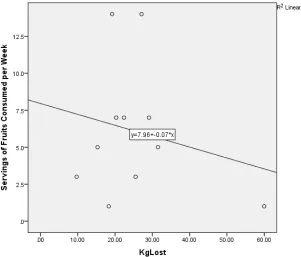
6. Cups of Vegetables with Weight Lost in Kilograms ...30
7. Cups of Fruits with Initial Weight in Kilograms ...30
8. Juice and Sweetened Beverage with Initial Weight in Kilograms ...31
9. Servings of Juice and Sweetened Beverage with Weight Lost in Kilograms ...32
v
ABBREVIATIONS
AGB Adjustable Gastric Banding
BMI Body Mass Index
CVD Cardiovascular Disease
CDC Center for Disease Control
ED Energy Density
EWL Estimated Weight Loss
FFQ Food Frequency Questionnaire
HDL High Density Lipoprotein
INTERMAP The International Study of Macro-/Micronutrients and Blood Pressure
IRB Institutional Review Board
NACHRI The National Association of Children's Hospitals and Related Institutions
NASPGHAN North American Society for Pediatric Gastroenterology, Hepatology and
Nutrition
NWCR National Weight Control Registry
NHANES National Health and Nutrition Examination Survey
USDA United States Department of Agriculture
RYGB Roux-en Y
SPSS Statistical Package for the Social Sciences
VSG Vertical Sleeve Gastrectomy
1
CHAPTER I
THE RELATIONSHIP BETWEEN FRUIT AND VEGETABLE INTAKE OF ADOLESCENTS BEFORE SLEEVE GASTRECTOMY AND SUCCESS WITH
WEIGHT LOSS SIX MONTHS POST-SURGERY
INTRODUCTION
Topic and Problem
An analysis of representative national hospital administrative data in the United
States revealed that the annual number of surgical weight loss procedures in adolescents
remained stable between 1996 and 2000.1 This analysis also found that between 2000
and 2003, the rate of surgical weight loss procedures in adolescents tripled to an
estimated 771 procedures nationwide. In a survey of bariatric surgeons in the United
States in 2005, 75 percent reported that they were planning to perform an adolescent
procedure in the upcoming year , while 42 percent reported they were in the process of
developing a multidisciplinary adolescent weight loss surgery program at their center.1
Childhood and adolescent overweight and obesity has more than tripled over the
past two decades.2 Overweight is defined in children and adolescents by the Center for
Disease Control and Prevention (CDC) as having a BMI at or above the 85th percentile
and lower than the 95th percentile for children of the same age and sex.3 Obesity in
adolescents is defined as a BMI at or above the 95th percentile for children of the same
age and sex.3 Children and adolescents who are overweight are likely to remain
Some pediatric studies report that bariatric surgery is a more effective weight loss
method than diet supervision and counseling for obese young patients who have
co-morbidities.5 Although bariatric surgery is becoming more common for adolescents,
evidence-based postoperative nutritional guidelines have yet to be published.6 While
bariatric surgery in adolescents has not been extensively studied, studies that examine
adult bariatric populations identify weight re-gain as one of the greatest challenges for
these individuals.5,7
Currently, there are few studies that describe outcomes after bariatric surgery in
adolescents or nutrition behaviors that predict sustained weight loss post-surgery. The
few studies that have analyzed predictors of success in adolescents undergoing bariatric
surgery have identified increased physical activity and more frequent nutritional
counseling as variables that aid in successful weight loss.7,8 Widhalm et al. (2011)
reported that patients with a mean age of 17.7 ± 2.6 years who underwent the gastric
banding procedure regained much of their weight at a 48 month follow-up. According to
dietary records, despite the limited ability to consume large amounts of food, patients had
re-adopted habits of drinking greater amounts of high calorie beverages and more calorie
dense foods leading to weight re-gain despite the bariatric surgery.8 This observation is
not surprising given that it has been found that adolescents who consume more
sugar-sweetened beverages have higher body weight compared to those who drink less.9 These
findings are just one example of why more emphasis needs to be placed on dietary habits
Significance
In a longitudinal study of 2,617 participants, Freedman et al. (2001) found that
77% of obese children would remain obese into adulthood (≥30 kg/m2).4 Participants
were initially screened at ages 2 to 17 years old and were reexamined at 18 to 37 years.
Mean follow up time was 17 years. The correlation between childhood BMI and adult
BMI was r = 0.58. This association did not vary significantly by race, age, or gender.
There is strong evidence to suggest that childhood obesity is associated with
elevated blood pressure, dyslipidemia, inflammatory markers, and insulin resistance
which are all factors that may produce increased risk of atherosclerosis.10 These factors
have been shown to improve with weight loss. Insulin resistances, along with blood
pressure, triglycerides, and HDL cholesterol have also been shown to improve after
losing weight. Additionally, postmortem studies have found that obesity in adolescents is
associated with strong evidence of atherosclerosis at autopsy.11 Baker et al.(2007) found
that with each single unit increase in Z score for BMI for boys aged 7-13 and girls aged
10-13, there was a significant increased risk for a coronary event in adulthood.12 This
study used information from the Danish National Cause of Death Register.13
Impaired glucose tolerance is also highly associated with obesity in adolescents.14
This can lead to insulin resistance, which can eventually lead to type II diabetes.14 Wing
et al. (2011) concluded from an observational analysis of adult participants in the Look
AHEAD (Action for Health in Diabetes) study that modest weight losses of just 5% to
10% were associated with significant decreases in CVD risk factors and that greater
While the use of bariatric surgery for adolescents has become more common
(Roux-en Y, gastric band, sleeve gastrectomy), sleeve gastrectomy has become a more
widely used method for adolescents in recent years, increasing in prevalence from 6.7 %
in 2008 to 24 % in 2011 (p < 0.01).16 With the rate of severe obesity (BMI ≥40 kg/m2)
rising in children in the United States to an estimated 4% to 6%,17 it is imperative to find
solutions that will encourage sustained weight loss in this population.
Purpose and Research Questions
The objectives of this study are 1) to describe fruit and vegetable intake in
adolescents who undergo a sleeve gastrectomy between 2011 and 2013 at a pediatric
healthy weight clinic in Atlanta Georgia and 2) to determine whether there is a
correlation between fruit and vegetable intake before surgery and weight loss
post-surgery. We hypothesize that adolescents who consume more servings of fruit and
vegetables before surgery will achieve greater weight loss six months after surgery. If we
fail to reject the research hypothesis, then increased fruit and vegetable intake after
5
CHAPTER II
REVIEW OF LITERATURE
Bariatric Surgery and Weight Loss Maintenance
Bariatric surgery does not guarantee sustained weight loss. It is possible to gain
the weight back.5,7 These procedures require the patient to adhere to a strict diet and
supplement regimen for the rest of his or her life. When patients are unable to maintain
such changes, it is likely that the individual will regain the weight lost. Studies that have
examined the long term effects of bariatric surgery on body weight in adults have
identified post-surgery weight re-gain as a significant concern.5,18,19 While specific
dietary patterns that may cause this weight re-gain have not been clearly defined through
research, it has been shown in adults that eating small meals throughout the day including
three servings of vegetables and one serving of fruit, drinking less sweetened beverages,
sleeping at least 7 hours, and exercising have all be linked to successful weight loss
maintenance after surgery.20
In a longitudinal assessment of 61 adolescents who underwent laparoscopic
Roux-en-Y gastric bypass at a single pediatric center from between 2002 and 2007, Inge et al.
(2010) explored the relationship between baseline BMI and BMI 1 year after surgery.
Patients were categorized into 1 of 3 preoperative BMI groups: group 1, BMI = 40.0 to
54.9 kg/m2 (n = 23); group 2, BMI = 55.0 to 64.9 kg/m2 (n = 21); and group 3, BMI =
65.0 to 95.0 kg/m2 (n = 17). Mixed linear modeling was used to show changes in BMI
the study cohort was 60.2 ± 11 kg/m2. The mean decrease in BMI was 37.4% of starting
BMI at 1 year after surgery (p < .001). Percent BMI change varied little by preoperative
BMI groups (-37.2%, -36.8%, and -37.7% for groups 1, 2, and 3 respectively; p = .8762).
One year after surgery, only 17% of patients achieved a non-obese BMI (<30 kg/m2).
Significant improvements in systolic and diastolic blood pressure (P < .0001), fasting
insulin (P < .0001), total cholesterol (P = .0007), and triglyceride levels (P < .0001) were
observed post-surgery irrespective of baseline BMI class. Inge and colleagues concluded
from this study that preoperative BMI served as an indicator of BMI at 1 year after
surgery. This study also suggests that one does not have to lose a significant amount of
weight in the first year post surgery in order to see significant improvements in other
markers of health.21
In a prospective controlled study, Sjostrom.et al (2004) compared obese subjects
who had undergone gastric banding, vertical banded gastroplasty, or gastric bypass with
matched subjects who had been treated for obesity using conventional methods ranging
from lifestyle intervention and behavioral modification to no intervention at all.
Treatments in the control group were not standardized. Subjects in the bariatric group
were matched with a control subject based on 18 matching variables; sex, age, weight,
height, waist and hip circumferences, systolic blood pressure, serum cholesterol and
triglyceride levels, smoking status, diabetes, menopausal status, four psychosocial
variables with documented associations with risk of death, and two personality traits
related to treatment preferences. At two years, weight had increased in the control group
by 0.1% from baseline and increased by 1.6% from baseline at 10 years (P < 0.001). In
years the decrease was only 16.1% decreased from baseline (P < 0.001). This study
revealed that while bariatric patients experienced weight gain between two and ten years,
their net weight loss was still significantly more than subjects who did not undergo
surgery.19
In a retrospective study, Christou et al. (2006) examined the percent of weight lost
or gained in 228 patients after undergoing gastric bypass surgery. Researchers found that
the failure rate for adult gastric bypass patients (mean age of 42 ± 3.4 years) who were
followed for at least 10 years (mean 11.4 ± 2.8 years) was 20% for severely obese
patients (BMI < 50 kg/m2) and 58% for super obese patients (BMI > 50 kg/m2). Failure
was defined as having a BMI ≥ 35 in morbidly obese and a BMI ≥ 40 for super obese at
10 years post-surgery. Super obese patients lost weight more rapidly from baseline to 2
years at which time they reached their lowest weight. There was a significant weight
re-gain in patients from the lowest BMI that was reached at approximately 2 years compared
with 5 years after surgery as well as 5 years to 10 years after surgery (P>0.0001). It
should also be noted that there was also a significant difference (P < 0.0001) between
super obese and severely obese patients. Super obese patients lost weight more rapidly
from baseline to lowest weight reached, but then re-gained weight more rapidly when
compared with severely obese patients.5
Population Specific Nutrition Guidelines
While evidence based guidelines have yet to be published for adolescents who
undergo bariatric surgery, the North American Society for Pediatric Gastroenterology,
Hepatology and Nutrition (NASPGHAN) and The National Association of Children's
2011. It is recommended that a preoperative nutritional assessment be given for all
patients planning to have bariatric surgery. During this assessment, patients should
undergo a nutritional evaluation which includes selective micronutrient needs as well as
identifying nutritional and educational needs. It is also suggested that a food
frequency/eating behavior questionnaire be completed by the patient to provide more
insight on current personal nutritional practices. During the pre-operative phase, a
healthy balanced diet consisting of adequate protein, fruits, vegetables, and whole grains
is recommended in order to encourage weight stabilization or weight loss. In the
post-operative phase, the NASPGHAN/NACHRI recommends a diet progression for gastric
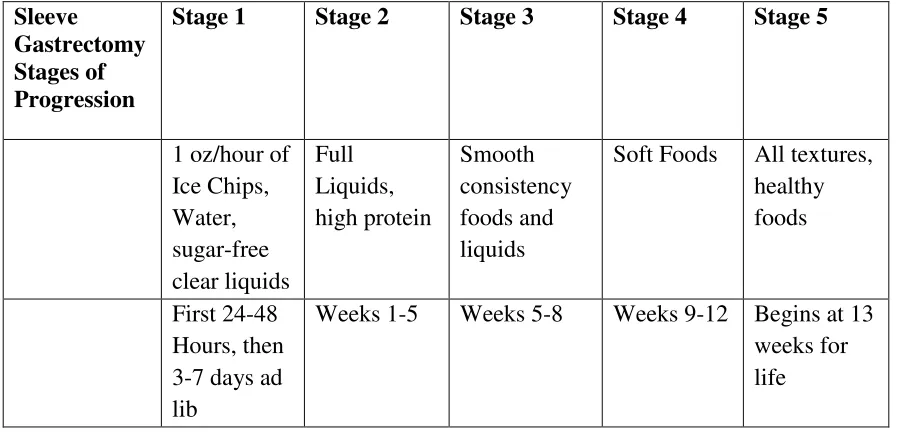
[image:20.612.101.550.375.592.2]sleeve patients occurring in 5 stages (Table 1).
Table 1. Diet Progression after the Gastric Sleeve Procedure
Sleeve
Gastrectomy Stages of Progression
Stage 1 Stage 2 Stage 3 Stage 4 Stage 5
1 oz/hour of Ice Chips, Water, sugar-free clear liquids Full Liquids, high protein Smooth consistency foods and liquids
Soft Foods All textures, healthy foods
First 24-48 Hours, then 3-7 days ad lib
Weeks 1-5 Weeks 5-8 Weeks 9-12 Begins at 13 weeks for life
Daily recommendations for Stage 5 which begins at 9 weeks and should be
followed for life include; a total of 800-900 calories, 60 grams of protein, and 80-90 oz.
introduced including all healthy food choices with a meal pattern of 3-6 meals per day
and a volume up to ¾ to 1 ½ cup per meal.
Dietary Behaviors of Adult Bariatric Patients
In a longitudinal clinical study, Johnson et al (2013) examined dietary changes in
obese patients ranging in age from 31 to 47 years of age undergoing gastric bypass (n=72,
mean age=42.6) or lifestyle intervention (n=54, mean age=46.8) and assessed their
dietary intake using a Food Frequency Questionnaire (FFQ) at baseline and at one year
follow up19. They found that dietary intake did not significantly differ between treatment
groups at baseline. Mean weight loss at 1 year follow up for the surgery group was 30%
while the lifestyle intervention lost an average of 8% of their original weight. At a one
year follow up, the lifestyle group had a significantly higher daily intake of fruits and
vegetables (P = 0.002), whole grains (P < 0.001) and fiber (P < 0.001) than the surgery
group. The surgery group also had a higher percentage of total energy consumption from
saturated fat than the lifestyle group at a one year follow up (P < 0.001). In this study,
the surgery group reported a significantly lower energy intake overall when compared to
the lifestyle intervention group at one year follow-up (P < 0.001). Some of these
differences in food group consumption can be explained by the proportional decreased
energy intake in the surgery group compared with the lifestyle intervention group.22
According to the NASPGH/NACHRI guidelines, for the first 4 months after
surgery, bariatric patients are advised to limit fiber containing foods such as fruits and
vegetable skins, and whole grains. However, after the first 12 weeks, patients are
allowed to introduce all foods back into the diet.6 This may be an indication that once the
successfully reintroduced. Thus, it is important to study dietary interventions for
patients undergoing bariatric surgery separately from patients who undergo a lifestyle
intervention.
Bond et al. (2009) studied a direct comparison of weight-loss maintenance in
adult individuals who achieved significant weight loss through bariatric surgery vs.
non-surgical approaches.23 Data was extracted from the National Weight Control Registry
(NWCR), which is an ongoing longitudinal study of individuals who have successfully
maintained weight loss.24 The registry includes participants who have lost weight
through both surgical and non-surgical means. The researchers identified participants
who underwent bariatric surgery (n=105, mean age=45.8) and matched each individual
these participant with 2 matching registry members who lost weight through non-surgical
means (n=210, mean age= 44.6). Inclusion criteria for the study included having lost at
least 13.6 kg and maintaining that weight loss for at least one year and being at least 18
years of age. The two groups were matched on sex, weight, weight loss, and weight
maintenance duration at the time of study entry within 2 years. The study found that both
groups gained small amounts of weight from time of registry entry to 1 year, but the
magnitude of weight re-gain did not differ significantly across groups (P = 0.034). There
were significant differences in dietary behaviors between surgical and non-surgical
groups. Participants who underwent bariatric surgery reported a higher percentage of
calories from fat than non-surgical participants (P = 0.001). Additionally, the surgical
group reported a higher amount of fast food consumption and a lower consumption of
breakfast during the week (P = 0.002).23 These differences identify a need to focus on
expected due to the stomach being resized to allow a fraction of the amount of food
previously allowed, it may also be a false sense of achievement, allowing the impression
that fast food consumption, skipping breakfast, and high fat meals can still yield weight
loss results. It begs the question of whether replacing these calories with more nutrient
dense foods such as fruits and vegetables might yield more long term, sustaining results.
Freiere et al. (2012) examined food quality, physical activity, and nutritional
follow-up as a determinant of weight regain after Roux-en-Y gastric bypass. Using a
food frequency questionnaire, Freire examined 100 patients who had underwent bariatric
surgery and divided them into three groups (1-2 years post-surgery, mean age = 45.0; 2-5
years post-surgery, mean age=41.5; and over 5 years post-surgery, mean age=48.7).
Most of the participants were women (84%). Rates of weight regain and the percentages
of excess weight loss (EWL) were calculated. Patients also indicated how often they
attended nutritional follow-up visits after the operation and the type and frequency of
physical activities. The study concluded that while fruit and vegetable intake did not
necessarily have an inverse effect on weight re-gain, patients who did re-gain weight
were found to have poor diet quality that included an increased intake of sweets as well
as oils and fatty foods. Patients who re-gained weight also reported less physical exercise
pre-surgery (P < 0.05) and had less nutritional counseling (P < 0.01) at follow-up. Mean
EWL among all participants was 59.1 ± 20.3%. Weight regain was seen in 56% of the
patients with 29% of the patients having regained over 10.1% of the minimum weight
reached after surgery. Weight regain significantly increased as time increased after
surgery (up to 2 y: 14.7%; from 2 to 5 y: 69.7%; over 5 y: 84.8%). Poor diet quality was
foods (P = 0.01) and was found to be statistically higher among those who regained
weight.7
In a longitudinal study, Laurenius et al. specifically examined the relationship
between decreased energy density in diet and changes in food selection following
Roux-en-Y. Food intake was calculated for 43 patients (31 women and 12 men) with a mean
age of 43 ± 10 undergoing Roux-en-Y and followed for 2 years post operatively. Mean
pre-operative BMI for participants was 44.3 kg/m2. A validated dietary questionnaire
was used to assess dietary intake. Mean pre-surgical dietary intake was found to be 1.07
kcal/g (0.99-1.16 kcal/g) before surgery and 0.78 kcal/g (0.74-0.83 kcal/g) at 6 weeks (P
< 0.001) post-surgery. At 1 and 2 years post-surgery, values were found to be 0.90kcal/g
(0.84-0.97 kcal/kg; P < 0.001) and 0.96 kcal/g (0.86-1.05; P < 0.01 kcal/kg), respectively.
The conclusion of this study revealed no significant correlation between weight change
and decreased energy density of diet at one year (P = 0.183) or two years (P = 0.775).
This study was done in an adult population and weaknesses of this study included a small
sample size and that it lacked information on physical activity.25
Dietary intake for adolescents undergoing bariatric surgery is an essential
component for their success in weight loss. While dietary recommendations have been
set forth by the NASPGHAN/NACHRI (2011) for the adolescent bariatric population,
more research needs to be conducted to create more population specific and evidence
based guidelines that will mediate successful weight loss.
Fruit and Vegetable Intake in Adolescents
Today in the United States, less than 20% of youth consume fruits and vegetables
from fruit juices rather than whole fruits, while the majority of vegetable intake for
adolescence seems to be coming more from white potatoes than from green, yellow, and
orange vegetables. Adolescents who consume high amounts of energy from fast food
have been found to be less likely to meet recommended intake for fruits (P < 0.01).28
Lorson et al. (2009) examined correlates of fruit and vegetable intake in children and
adolescence in the United States between 1999-2002 using NHANES data. A final
sample of 6,513 children and adolescents between the ages of 2-18 were analyzed. Using
the fruits and vegetables as the dependent variables, intakes from 24-hour recalls were
measured using the US Department of Agriculture MyPyramid Equivalents Database. To
further break down the fruit and vegetable food groups, vegetables consumed as French
fries and fruit intakes from 100% fruit juice were generated for each analysis. Weight
status categories were created using the following body mass index percentile ranges for
children: 5th to 85th percentile, 85th to 95th percentile, and 95th percentile and above.
Findings revealed that approximately 28% of reported vegetable intake by
adolescents came from French fries, while 38% of total fruit intake came from fruit
juice.27 Furthermore, the study found that overweight children and adolescents consumed
less total fruit and more French fries than those who were normal weight or at risk
overweight.27 It is not only important to pay attention to the amount of fruits and
vegetables consumed, but also the source of these fruits and vegetables. The Dietary
Guidelines for Americans 2010 recommend that people choose whole or cut-up fruits
which are not as calorie dense, more often than fruit juice which contains more calories
sugar-sweetened beverages have higher body weight compared to those who drink less (USDA,
2011).9
Dietary Approaches to Weight Loss
There are many variables that contribute to the diet and weight status of children
and adolescents. According to recent studies, some of the most important variables
include social support, socio-economic status, and availability of healthy food in the
household.29,30 Many dietary interventions used in the treatment of obesity employ the
concept of energy density (ED) of foods. This intervention is also sometimes referred to
as the stoplight method; developed by Epstein and colleagues in 1987.31 In practice, ≤1.5
kcal/g is considered low ED or “green light”, medium ED or “yellow” is 1.6-2.4 kcal/g,
and ≥2.5 kcal/g would be considered high ED or “red light”.31 Many studies have found
that weight loss success can be attained through consuming more low ED foods and less
high ED foods. Fruits and vegetables usually fall into the low ED category. Fruits and
vegetables also tend to have a more satiating effect due to their high water and fiber
content. The purpose of the stop light approach is to encourage foods that are higher in
fiber and more satiating, thus decreasing total energy consumption and increasing
micronutrient intake.32
Schusdziarra et al. (2011) evaluated a weight loss program that encouraged adult
overweight patients to replace high ED foods with low ED foods. The mean length of
intervention was 10.5 weeks and took place between 2003 and 2006. Dietary counseling
was based on a dietary recall recorded before the intervention. Counseling was provided
by a dietitian and two physicians. The first counseling session focused on encouraging
booklet that contained 1,500 food items divided into 37 groups. Within each group,
foods were listed in order by their ED. 189 patients were analyzed for follow up in 2008
for pre and post intervention eating habits. This intervention resulted in an average
monthly BMI decrease of 0.195 points over 16.8 months. At follow-up, food intake was
reduced by 10% from 1024±286.5 to 927±340.7g/day (p value < 0.0001). Total energy
intake was reduced by a mean of 568 (1,736 ± 571.5 to 1,168 ± 433.3) kcal per day. At
baseline, participants consumed 25% of food quantity from high ED foods, but
contributed to nearly 50% of energy intake. After the intervention, low ED foods such as
fruits and vegetables contributed the majority of energy intake (50%) while medium ED
and high ED food consumption was reduced.32
Using a similar approach to the aforementioned study, Ello-Martin et al (2007)
identified a correlation between dietary energy density and fruit and vegetable intake with
weight loss in obese women.28 This year-long study focused on reducing fat intake,
based on the principle that fat is more energy dense (9 kcal/g) than carbohydrates and
proteins (4 kcal/g). Ninety-seven, 20-60 year old women with a BMI of 30-40 kg/m2
were divided into two separate intervention groups. The reduced fat (RF) group was
advised to reduce fat intake, whereas the reduced fat plus increased fruits and vegetable
(RF+FV) group was advised to decrease fat intake while increasing intake of fruits and
vegetables. During the first six months of the study, all participants met with a dietitian
once a week for 30 minutes. During this phase, participants received written materials
and individual instruction from dietitians. Information included literature on cooking and
recipe modification, grocery shopping, dining out, meal, and snacking ideas. During the
for one group session and one individual session per month. These group sessions were
also led by a dietitian and consisted of 6 topics for review: holiday eating, cooking and
recipe modification, appropriate portion sizes, label reading, dining out, and grocery
shopping. After one year, participants from both groups had lost significant amounts of
weight. At months 6, 9, and 12 , fruit and vegetable intake was found to be the most
predictive factor of weight loss from baseline (R2 = 0.26, 0.16,and 0.20, respectively; all
P < 0.0006). Through dietary analysis, the study also revealed that participants from the
RF+FV group reduced their dietary energy density to a greater extent than the
participants in the RF group. Through the duration of the trial, however, participants in
the RF+FV group had a significantly different pattern of weight loss than the RF group.
(P = 0.002 for group × time interaction). During the first 6 months, participants in the
RF+FV group lost more body weight (19.6 ± 1.8 lbs) than did those in the RF group
(14.7 ± 1.5 lbs; P = 0.034), which resulted in a difference of 33% weight loss. During the
second 6 months of the trial, the pattern of weight change did not differ significantly
between the groups (P = 0.056). At the end of the trial, the RF+FV group lost
significantly more weight than the RF group (P = 0.021). Over the course of both phases,
participants in the RF+FV group also reported significantly lower hunger ratings (P =
0.030).33
Raynor et al. (2011) specifically examined the relationship between energy
density (kcal/g) of foods in the diet and weight loss management.34 The participants were
divided into 3 groups; the overweight group (OW group), weight loss management group
(WLM group), and the normal weight group (NW). The OW group consisted of
blocks and who were entering an 18 month weight loss program. The WLM group
consisted of individuals who had to have been overweight (BMI > 25 kg/m2) at some
point in their life, normal weight (BMI= 19-24.9 kg/m2) at entry into the trial, and have
lost 10% of their maximum body weight and maintained that weight loss for at least 5
years. The NW group were normal weight (BMI= 19-24.9 kg/m2) at entry into the trial
and had never been overweight or obese. In order to assess dietary intake, self-reported
intake was analyzed for all 3 groups using identical methods during the same time period.
Trained interviewers conducted three 24 hour dietary recalls at random on
non-consecutive days. After adjusting for baseline group differences in age, sex, and
self-reported weekly energy expenditure from physical activity, self-self-reported caloric intake
was significantly lower in WLM compared to the OW group (P < 0.05). The analysis
also revealed that the WLM group consumed more fiber than the OW group. While the
WLM group consumed more grams of food and beverage per day, the WLM group
reported the lowest ED (energy density) out of the all the groups followed by NW, and
then OW. The WLM group reported eating more fruits and vegetables per day (P <
0.005) as well as more whole grains (P < 0.005), compared to the OW and NW groups.
Furthermore, the OW group reported consuming significantly more servings per day of
fried potatoes than the NW or WLM group (P < 0.005). This investigation suggests that
eating a diet that is higher in fruits and vegetables leads to consuming a diet with a lower
ED encouraging sustained weight loss as illustrated by the WLM self-reported dietary
Factors Affecting Weight Loss and Weight Loss Maintenance
There are many non-dietary factors that contribute to potential weight loss, weight
gain, or weight maintenance. Phelan et al. (2009) distinguished environmental,
behavioral, and psychological variables that contributed to weight loss in weight loss
maintainers versus treatment seeking obese. This study was designed to identify
behavioral variables that distinguished weight loss maintainers (WLM, n=167) from
treatments seeking obese (TSO, n=306). The WLM group had lost at least 10% of their
maximum body weight and had kept it off for at least 5 five years and were of normal
body weight at the time of the study. The TSO group had a history of dieting and had a
BMI of ≥ 25 at the time of the study. The TSO group was further broken down into
TSO-1 (predominately Caucasian; n= TSO-153) and TSO-2 (predominately African American;
n=153). Using the Block Food Frequency Questionnaire in TSO-1 and a 24-h dietary
recall in WLM and TSO-2, researchers analyzed daily caloric intake and percentage of
calories from fat, protein, and carbohydrates. Amongst the dietary findings of the study,
WLM had more frequent breakfast consumption than TSO I and TSO II (OR = 0.86).
The study also revealed that the WLM group had more low-fat foods in the home than
TSO I and TSO II (OR= 1.01) and less high-fat foods and snacks in the house than TSO I
(OR= 1.67) and TSO II (OR=1.00). WLM also participated in more physical activity
than the TSO group (OR=1.08).35
Using a mailed survey of U.S. adults aged 18 years or older, Kruger et al. (2008)
examined behaviors associated with weight loss maintenance among people who reported
trying to lose weight. Data was analyzed on the number of daily fruit and vegetable
one's ability to engage in behavioral strategies. The study revealed that adults who
consumed fewer than five fruit and vegetable servings per day and accrued 420 minutes
or more per week of physical activity or consumed five or more fruit and vegetable
servings and accrued 150 minutes of physical activity per week were more successful at
weight loss maintenance.36
Other studies have looked at dietary changes over time in relation to weight loss
using multiple dietary recalls. The International Study of Macro-/Micronutrients and
Blood Pressure (INTERMAP) study (Shay et. al, 2012) examined associations of usual
energy, food, and nutrient intakes with BMI among US participants. The INTERMAP
was an international cross-sectional study of dietary factors and blood pressure in men
and women (ages 40–59 y). Data from 1,794 Americans who were not consuming a
special diet provided 24-h dietary recalls and 2 timed 24-h urine collections. Data was
collected over four office visits. The 24 hour recall was collected via an in depth
multi-pass 24 hour recall conducted by trained interviewers. They found that not only was
lower energy intake associated with lower BMI in both sexes, but higher intakes of fresh
fruit, pasta, and rice and lower intakes of meat were associated with lower BMI. These
associations were attenuated in multivariable analyses. Lower urinary sodium and intakes
of total and animal protein, dietary cholesterol, saturated fats, and heme-iron and higher
urinary potassium and intakes of carbohydrates, dietary fiber, and magnesium were
associated with lower BMI in all participants. They concluded from this study that diets
higher in nutrient-dense carbohydrate and lower in animal protein and saturated fat were
lower BMI.37 This study illustrates the importance of studying dietary composition as it
relates to weight and BMI using multiple dietary recalls and a larger study population.
Fruits and vegetables have a lower energy density, leading to lower overall caloric
intake. As a result, studies that have examined the dietary behaviors of children,
adolescents, and adults have identified consumption of fruits and vegetables as a
mediator of weight loss success and healthy weight maintenance.28–35 Further research
will need to be conducted in the bariatric population in order to determine similar benefits
in this population. Recommending fruits and vegetables as a part of a healthful and
balanced diet may be more effective for weight loss and maintenance for the adolescent
bariatric population than strict calorie counting and restriction. Current guidelines
provided by the NASPGHAN/NACHRI for adolescents undergoing bariatric surgery
only provide recommendations for caloric (800-900 kcal) and protein intake (60 grams),
meals size (¾ – 1 ½ cups per meal) , and meal frequency (3-6 meals per day).6 There are
currently no recommendations on fruit and vegetable intake or fiber intake. With such a
small volume of food being recommended per meal, it may prove beneficial and improve
overall satiety to focus on fiber containing foods with lower caloric density such as fruits
and vegetables in order to maximize lifelong adherence to the recommended diet for this
population.
Bariatric Surgery Procedures
There are three types of operations that are commonly offered in the United
States: adjustable gastric banding (AGB), Roux-en-Y gastric bypass (RYGB), and
vertical sleeve gastrectomy (VSG). The primary mechanism for AGB is in decreasing
restricts the size of the opening into the stomach. The surgeon can then control the size
of this opening using a circular balloon inside the band. This balloon is inflated or
deflated with saline solution to meet the needs of the patient.
RYGB restricts food intake by creating a small pouch that is similar in size to the
one created with the AGB procedure. Food absorption is also reduced by sending food
directly from the pouch into the small intestine. The food is absorbed differently because
the stomach, duodenum, and upper intestine no longer have contact with food. Bile and
other digestive juices then join up with the food lower in the small intestine.38
During a sleeve gastrectomy, the stomach is reduced to about 25% of its original
size. This is done by removing a large portion of the stomach and leaving a narrow
stomach tube. The open edges are then stapled to form a sleeve or tube. The sleeve
gastrectomy permanently reduces the size of the stomach to 60-100 mL, permitting
smaller amounts of food and encouraging early satiety.39 Ghrelin is a hunger regulating
hormone released from the fundus and has recently been linked to the cause of weight
loss success in patients undergoing this procedure. When the fundus is resected, the
majority of ghrelin secreting cells are removed, thus reducing circulating ghrelin.40 This
technique is unlike the laparoscopic adjustable gastric band, commonly referred to as an
“a band”, which is a purely restrictive procedure commonly used in obese patients that
does not affect the production of gastric hormones. The advantage to the sleeve
gastronomy procedure over the adjustable lap band is that the missing portions of the
stomach no longer produce ghrelin, possibly leading to less hunger stimulation. As sleeve
gastrectomy and other bariatric procedures become more common in the treatment for
patients. More research needs to be conducted to create more population specific and
evidence based nutritional guidelines for pre-surgery as well as post-surgery in order to
optimize weight loss potential and weight loss maintenance. The objectives of this study
are to describe fruit and vegetable intake in adolescents who undergo a sleeve
gastrectomy between 2011 and 2013 at a pediatric outpatient clinic and to determine
whether there is a correlation between fruit and vegetable intake before surgery and
23
CHAPTER III
METHODS
Participants
The participants in this study received the sleeve gastrectomy procedure.
Inclusion criteria for the study included that patients were over 13 years old and had an
initial BMI over 35 kg/m2 with a comorbidity or 40 kg/m2 with no comorbidity. All
patients had undergone extensive counseling and assessment by a team of medical
professionals (pediatrician, psychologist, exercise physiologist, nurse, and dietitian) for at
least 6 months to qualify for the surgery in order to optimize results after sleeve
gastrectomy.
Protocol: Pediatric Healthy Weight Clinic
Before scheduling an initial appointment with the clinic, parents are required to
send in a “Background and Medical Information Form” about their child that includes
general health history information, allergies, previous dieting attempts, time spent doing
physical activity, and total screen time, including televisions, tablets, phones, and
computers. After this form is received by the clinic, they are able to schedule an initial
appointment. It is then determined if the patient will be more appropriate for general
weight loss counseling or for bariatric surgery. In order to be eligible for bariatric
surgery, the patient must have a BMI of 40 kg/m2, or a BMI of 35 kg/m2 with
comorbidity, and between the ages of 13 and 20. If it is determined that the patient is
eligible for surgery, they are then counseled by the medical team which is made up of a
signed off by all team members as being ready for surgery in order to receive the bariatric
surgery. Important considerations that are monitored include: the ability to comply with
post-surgery diet, psychological readiness, and physical ability to undergo surgery. In
order to have surgery, patients must be seen and evaluated by the entire team for a
minimum of six months.
Research Design
This study was a retrospective chart review in collaboration with an outpatient
pediatric weight clinic in metro Atlanta, GA. The medical records of patients who
underwent bariatric surgery between 2011 and 2013 and were under the supervision of
the clinic for at least one year were reviewed and analyzed. Institutional Review Board
(IRB) approval was obtained from both the clinic and Georgia State University
Variables collected included demographic information; (date of birth, age, gender,
and race) baseline and six months post-surgery measures for height (cm), weight (kg),
and calculated BMI (kg/m2). Weight and height were collected during visits to the clinic
by the same nurse each time. Weekly number of cups of fruits and vegetables, cups of
sweetened beverages (separated as fruit juice or soda), and cups of fried foods eaten, and
meals eaten from or at restaurants as reported at the initial consultation were analyzed.
Because this study aimed to explore the relationship between dietary behaviors before
bariatric surgery and weight loss after surgery, dietary recall data from after surgery were
not analyzed. Dietary recalls were conducted by a registered dietitian (RD) using a
dietary recall and FFQ (see appendix 1) along with food and portion size models to
Statistical Analysis:
All statistical analyses were conducted using SPSS (version 21.0, SPSS, Inc.,
Chicago, IL). Descriptive statistics were used to describe mean weight, BMI and BMI
z-score, as well as fruit, vegetable and sweetened beverage consumption. Gender and race
were described using frequency tables. All variables were checked for normality. If
variables were not normally distributed, log transformations were conducted and
normality was reassessed. If the variables were still found to not be normally distributed,
non-parametric tests were used. Kruskal-Wallis tests were used to determine if there was
a difference in initial weight or weight lost by race as well as differences in fruit and
vegetable intake by race. Kendall’s tau rank correlation was used to analyze relationships
between initial weight and changes in weight with baseline fruit and vegetable intake.
Relationships between initial weight and changes in weight and baseline sweetened
beverage consumption were explored also using Kendall’s tau rank correlation. A
CHAPTER IV
RESULTS
Data from 13 patients were collected. Two patients were subsequently excluded
from the results analysis due to follow up time being less than six months. Thus, the
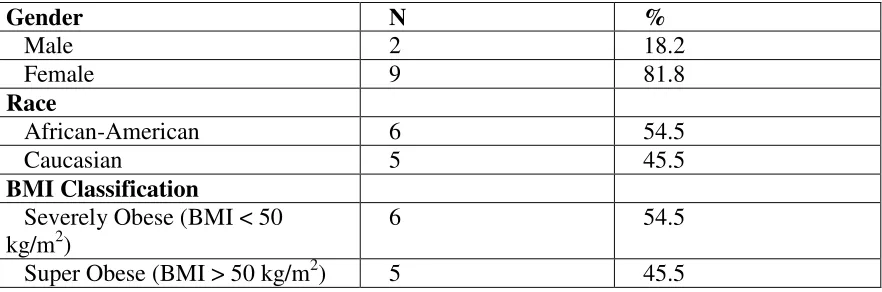
sample size included a total of 11 patients. The demographic and anthropometric
characteristics of the population are shown in Table 2. The mean age of participants was
17.1 ± 1.51 years. The final study population consisted of 6 African-Americans and 5
Caucasians; 2 males and 9 females. Initial mean weight of participants was 141.54 ±
29.34 kg; mean initial BMI was 50.78 ± 9.12 kg/m2. Patients were divided according to
BMI into severely obese (BMI < 50 kg/m2, n= 6); and super obese (BMI > 50 kg/m2, n =
5). Average follow up time was 7.45 ± 1.21 months. Mean follow up weight was 116.2.
± 20.89 kg; mean follow up BMI was 41.25 ± 6.5 kg/m2. Mean change in BMI was -9.54
± 3.9 kg/m2 and mean change in BMI percentage was -18.45 ± 4.46%. Mean BMI
Z-score at baseline for all patients was 2.73 ± 0.28 and 2.38 ± 0.37 at follow up. Mean
change in BMI Z score was -0.35 ± 0.12. The correlation between change in BMI Z
score with both fruit and vegetable and sweetened beverage consumption was found not
be significant.
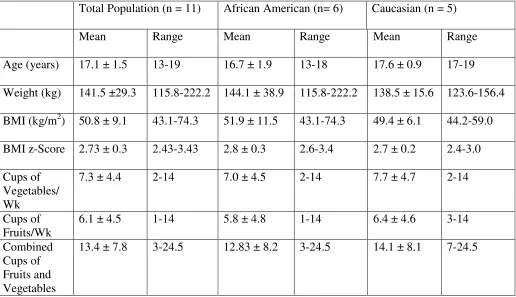
Anthropometric characteristics and fruit and vegetable intake by race is shown in Table 3.
Kruskal-Wallis tests revealed that there were no significant differences between initial
weight by race (p= 0.33) or weight lost by race (p= 0.30). There was also no significant
difference in fruit and vegetable or sweetened beverage consumption by race. Although
vegetable consumption was slightly higher in Caucasian patients vs. African American
patients (14.1 ± 8.1 cups’ vs.12.8 ± 8.2 cups, respectively). Mean vegetable consumed
weekly in all patients at baseline was 7.32 ± 4.38 cups and mean weekly consumption of
fruits was 6.0 ± 4.16 cups. None of the participants met the US dietary guidelines for
fruit or vegetable intake during their initial assessment. The US Dietary Guidelines
recommend 2.5 cups of vegetables per day and 1.5 cups of fruit per day for adolescent
females and 3 cups per day of vegetables and 2 cups per day of fruit for adolescent
males.9
Servings of sweetened beverages were divided into fruit juice and sweetened beverage
other than fruit juice. Data were available for sweetened beverages other than fruits juice
for 8 participants and mean consumption was 5.44 ± 9.79 servings per day (1 serving = 8
oz). Data were available for fruit juice intake for 7 participants and mean consumption
[image:39.612.105.546.539.685.2]was 7.93 ± 15.15 servings per day.
Table 2: Demographic and anthropometric characteristics of the total study
population
Gender N %
Male 2 18.2
Female 9 81.8
Race
African-American 6 54.5
Caucasian 5 45.5
BMI Classification
Severely Obese (BMI < 50 kg/m2)
6 54.5
Table 3: Anthropometric characteristics and fruit and vegetable consumption by
race
Total Population (n = 11) African American (n= 6) Caucasian (n = 5)
Mean Range Mean Range Mean Range
Age (years) 17.1 ± 1.5 13-19 16.7 ± 1.9 13-18 17.6 ± 0.9 17-19
Weight (kg) 141.5 ±29.3 115.8-222.2 144.1 ± 38.9 115.8-222.2 138.5 ± 15.6 123.6-156.4
BMI (kg/m2) 50.8 ± 9.1 43.1-74.3 51.9 ± 11.5 43.1-74.3 49.4 ± 6.1 44.2-59.0
BMI z-Score 2.73 ± 0.3 2.43-3.43 2.8 ± 0.3 2.6-3.4 2.7 ± 0.2 2.4-3.0
Cups of Vegetables/ Wk
7.3 ± 4.4 2-14 7.0 ± 4.5 2-14 7.7 ± 4.7 2-14
Cups of Fruits/Wk
6.1 ± 4.5 1-14 5.8 ± 4.8 1-14 6.4 ± 4.6 3-14
Combined Cups of Fruits and Vegetables
13.4 ± 7.8 3-24.5 12.83 ± 8.2 3-24.5 14.1 ± 8.1 7-24.5
Fruits and Vegetables
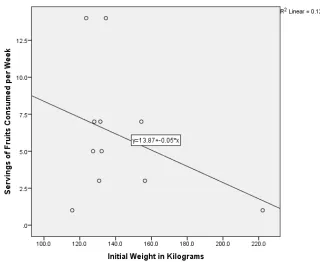
There was a weak and non-significant negative correlation between combined
fruit and vegetable consumption with initial weight (r = -0.34, p= 0.56) as well as with
weight lost (r = -0.25, p = 0.23) (Figures 1 and 2). There was also a weak and
non-significant negative correlation between servings of vegetables consumed at baseline with
weight lost (r = -0.22, P = 0.44) servings of fruit consumed at baseline and weight lost (r
= -0.22, P = 0.50) (Figures 3 and 4). When BMI was stratified by weight class into
severely obese and super obese; super obese patients consumed fewer cups of fruits and
Figure 1: Cups of Vegetables with Initial Weight in Kilograms
[image:41.612.163.483.401.663.2]Figure 3: Cups of Vegetables with Weight Lost in Kilograms
[image:42.612.193.494.448.705.2]Sweetened Beverages
There was a positive correlation between sweetened beverage intake and initial
weight (r = 0.91, p = 0.50) (Figure 5). There was also a positive correlation between
baseline sweetened beverage intake with weight lost (r = 0.96), however these
relationships did not meet statistical significance (p = 0.06) (Figure 6). Furthermore,
super obese patients at baseline consumed less daily sweetened beverage other than fruit
juice than severely obese patients (0.75 ± 1.5 vs. 10.13 ± 12.76). There was no
significant relationship found between initial weight and weight loss with other dietary
behaviors including dining out frequency, dairy consumption, fried food consumption, or
[image:43.612.166.487.377.630.2]breakfast consumption due to missing data from our sample size.
33
CHAPTER V
DISCUSSION AND CONCLUSIONS
We found a weak negative correlation between fruit and vegetable consumption
before surgery and weight loss six months post-surgery in adolescents’ bariatric patients.
While these findings fail to reject the null hypothesis, it is important to note studies have
shown that the greatest degree of relative weight loss occurs within the first 6 months
after surgery.41, 42 Thus, differences in dietary consumption may play a greater role in
weight lost after a longer period of time post-surgery. Because weight loss was
measured just six months after surgery, it may be important to consider that a longer time
frame would reveal a stronger relationship between weight loss with dietary patterns
before surgery.
Another study that examined dietary intake and weight loss 7 years after surgery
did find a relationship between dietary behaviors and weight lost. Cook et al. (1999)
examined habits that led to successful weight loss maintenance in 100 patients who
underwent gastric bypass surgery. Surveys were conducted in person, over the phone, or
in writing. Successful weight loss was defined as maintaining at least 74% of initial
weight loss. Results of the survey revealed that successful patients reported eating 3
servings of vegetables per day and 1 serving of fruit per day. Fifty-eight percent of
successful patients also reported not drinking carbonated beverages of any kind and 55%
reported not drinking any fruit juice or sweetened beverages. Seventy-seven percent of
successful patients reported exercising an average of four times per week for at least 40
gastric bypass patients an average of 7 years after surgery. This longer follow up time
allowed for a more realistic look at how dietary factors effected weight loss maintenance
over time. One weakness of this study was the use of self-reported dietary recall which
can overestimate adherence to dietary guidelines. To date, there have been no studies
that examine dietary behaviors that may lead to successful weight loss maintenance in
adolescents who undergo bariatric surgery. Conclusive data in this area will assist in
creating evidence based nutritional guidelines for this population. .
Our study analyzed dietary intake from an initial clinic visit. Examining multiple
dietary recalls in order to identify changes dietary habits over time may have been
valuable for this study. It is unknown what dietary changes these patients made leading
up to surgery and after surgery. It would be expected that some nutritional changes were
made before surgery as these patients visited with a registered dietitian multiple times
before having surgery. Additionally, patients are required to demonstrate that they can
maintain weight or lose weight before surgery, suggesting that nutritional changes were
implemented. Future studies that analyze initial dietary recalls along with subsequent
dietary recalls would provide more conclusive evidence about how initial dietary habits
affect ability to make dietary changes, successfully lose weight, and maintain weight loss.
While no significant differences in weight loss or dietary intake were found by
race, it is important to point out that the mean consumption of fruits and vegetables for
African-Americans was lower than that of Caucasians while mean sweetened beverage
intake for African-Americans was higher than that of Caucasians. Studies have shown
that Caucasians consume more fruits and vegetables on average than African-Americans.
3.53 servings fruit and vegetables per day, compared with 3.99 ± 3.38 servings per day
for African-Americans.43 Some studies have also shown that Caucasians have better
weight loss success over time compared with African-Americans.44 In contrast, during a
20 year study, Phelan et al. (2010) found that amongst 1,869 African-American and
Caucasian men and women between the ages of 18-30 years old, African Americans were
more likely to maintain weight loss than Caucasians while gender did not seem to play a
substantial role in weight loss maintenance after four years.45
It is important to not only study dietary intake in obese adolescents who undergo
bariatric surgery, but to evaluate psychological factors involved in a patient’s initial
dietary habits as well as the patient’s ability to make dietary changes. Backman et al.
(2002) studied the predictors of healthful dietary practices in adolescents using the
Theory of Planned Behavior to determine how gender and ethnicity influence the
relationship among the theoretical constructs. The Theory of Planned Behavior states
that attitude toward behavior, subjective norms, and perceived behavioral control,
together shape an individual's behavioral intentions and behaviors.46 The study sample
consisted of 780 adolescents recruited from four public high schools in California
between 14-18 years old. Researchers used an initial and one month follow up
questionnaire that measured intention, attitude, subjective norm, perceived behavioral
control, behavioral beliefs and outcome evaluations, normative beliefs and motivation to
comply, and control beliefs and perceived facilitation toward healthful dietary behavior.
A 67 item follow-up FFQ was used to assess the usual dietary intake and healthful eating
behaviors of adolescents during a 1-month period (3 weekdays, 1 weekend day).
behavior as measured by total calories, percent calories from fat, and servings of fruits
and vegetables reported. Perceived behavioral control did directly predict healthful
dietary behavior. This suggests that dietary practices in teenagers are controlled more by
personal motivation than by external control factors. Participants also reported feeling
that eating more fruits and vegetables and limiting caloric intake had a stronger
association with their intention to eat a healthful diet than consuming fewer calories from
fat. Female participants reported more positive attitudes towards healthful eating and
greater intentions to eat a healthy diet, and consumed significantly less calories than their
male counterparts. Females also perceived more social pressure to eat fruit and less
social pressure to consume chocolate, chips, and sweets than males.47 These findings
suggest that a dietitian and psychologist working in a healthy weight clinic such as the
one used in the current study, may need to approach dietary changes for patients
differently according to gender. Backman et al.(2002) also found that African-American
adolescents reported significantly more caloric intake and percent calories from fat than
Caucasians or Hispanics.47 Furthermore, adolescents with positive attitudes towards
healthful eating believed that they would like the taste of healthy foods, feel good about
themselves, tolerate giving up foods that they like to eat, and lose weight or maintain a
healthy weight.47 This should be taken into consideration when looking at a patient’s
initial psychological evaluation along with their initial dietary recall, recognizing that
consuming fruits and vegetables would be considered “adopting a healthy food” while
decreasing sweetened beverage intake would be considered “giving up a food they like”.
The study also revealed that adolescents felt that the mother was the most influential
mother, to adopt healthy eating behaviors may be important for the overall success of the
patient. Availability of healthy foods and access to enough money were also found to be
related to healthful dietary behaviors, revealing that monetary costs associated with
healthful foods were a concern for the participants.47 For this reason, it may also
important for the dietitian working with such patients to offer dietary suggestions that are
not cost-prohibitive.
Our results also suggested that patients, who consumed more sweetened
beverages at baseline, had lost more weight 6 months after surgery. However, patients
who consumed more sweetened beverages at baseline also had a higher initial weight and
BMI. The relationship between increased baseline sweetened beverage consumption
with increased weight loss could be due to a more extreme caloric reduction from initial
intake. These patients are encouraged to discontinue consumption of sweetened
beverages prior to and after surgery in order to avoid dumping syndrome and are also
advised to avoid caffeine6 which is often a component of soft-drinks. A longer study may
reveal if baseline beverage consumption presents itself later on after surgery and thus
affects potential long term weight loss.
It is not fully understood which dietary habits are easier to adopt for obese
adolescents. For example, it may be easier to decrease consumption of calorie dense
foods if the adolescent also enjoys less calorie dense foods such as fruits and vegetables.
It may be more difficult to avoid foods that contribute to weight gain if the adolescent is
not able to replace these foods with healthier options they already consume. Eliminating
foods they enjoy while introducing foods they do not enjoy may pose an additional
long term weight loss maintenance. While there are currently no studies to our
knowledge that explore this possibility, this may be an area of interest that will help to
understand dietary predictors of success in adolescents who undergo bariatric surgery.
For this reason, this study focused on baseline dietary behaviors.
Limitations
This study has several limitations. A longer study is needed to determine the
effects of dietary behaviors on weight loss, maintenance, and re-gain after bariatric
surgery among adolescents. Research has shown that there is an increased risk for weight
re-gain in bariatric patients at two to five years post-surgery.5 Thus, following up with
our patient population longer than six months post-surgery may more realistically reflect
how dietary behaviors affect their long term weight loss outcomes. Dietary recalls were
only considered from an initial assessment and there were no data on changes in dietary
behavior leading up to surgery or post-surgery. While it has been shown that an overall
reduction in energy consumption favors an ideal body weight34, few studies have been
able to identify individual components of dietary composition that determine success in
weight loss or favor an ideal body weight for bariatric patients, particularly in
adolescents. Furthermore, a larger sample size would possibly reveal more statistically
significant results.
Future Directions
It has been shown that patients who receive more dietary counseling after surgery,
also have a more significant decrease in BMI after surgery.48 Post-operative studies often
rely on dietary recall in form of surveys and FFQs rather than encounters with a