IMPLEMENTATION OF POPBL IN UTHM
MOHAMMAD FAHMI ABDUL GHAFIR
KHALID HASNAN
AMIR KHALID
MAS FAWZI MOHD ALI
2
n dREGIONAL CONFERENCE ON ENGINEERING
EDUCATION (RCEE 2007)
3 - 5 DECEMBER 2007
C u b Prix Experience: A Case Study on Implementation of P O P B L
in U T H M
Mohammad Fahnii Abdul Ghafir, Khalid Hasnan, Amir Khalid, Mas Fawzi Mohd Ali
Faculty of Mechanical and Manufacturing Engineering Universiti Tun Hussein Onn Malaysia (UTHM)
86400 Parit Raja, Malaysia
Abstract
Project-Oriented and Problem-Based Learning (POPBL) is a new educational approach to improve the quality of teaching and learning. Shifting from the conventional teaching and learning to POPBL requires a change in paradigm as well as system set up. This paper reports the experience of implementing POPBL at UTHM, particularly with regard to the participation in a national motorcycle race competition, the Petronas Sprinta A A M Malaysian Cub Prix Championship. One of the important elements is complementing experience-based-mechanic solutions with a more holistic solution using systematic engineering approach. Another important element includes augmentation of soft skills such as communication skills, managerial abilities, leadership, and teamwork. In general, the students, U T H M staff and the experience-based-mechanic have developed good relationship among each other which leads to the capability in solving real engineering problems.
Keywords: Project-Oriented and Problem-Based Learning (POPBL); Outcome Based Education (OBE); Problem Based Learning (PBL)
1. Introduction
Problem-based learning (PBL) is a curriculum model designed around real life problems that are ill-structured, open-ended, and ambiguous. It engages students in intriguing, real and relevant intellectual inquiry and allows them to learn from these life situations [1]. PBL originated from the medical education in 1969 [2] and has been implemented in various undergraduate and graduate student programmes around the world. Studies by previous researchers have shown that the push for a shift from conventional to this innovative method is driven by the demands of employers to recognize graduates who not only excel in technical knowledge but also in non-technical skills, abilities and traits, which are known as soft skills [3].
The past President of Institution of Engineers, Malaysia (IEM) had put a futuristic view that the new engineering education and training model shall build its strength on the fresh definition of engineering, which is more comprehensive, necessitating work at the frontiers of knowledge and relevant to the needs of the modern world [4]. PBL answers this as it is one of the best approaches to produce such engineers since it emphasizes on the task of learning more to the students themselves.
In Universiti Tun Hussein Malaysia, changing to PBL is certainly a challenge. It requires changes not only in the paradigm but also the system setup that involves huge amount of energy, time, facilities and
costs. The mode of delivery and assessment was revised to suit the PBL approach in the existing curriculum of the undergraduate programmes. Existing facilities such as classes, discussion rooms and teaching aids equipment were upgraded to accommodate the needs of the delivery. Numerous hours were spent to develop the academic staff. External and internal courses, seminars and educational visits were conducted continuously either at university level or faculty level. Not only that, coaching among staff is also carried out to ensure that the valuable experience can be shared among others.
At the faculty level, several subjects were assigned to implement PBL in their teaching and learning. The staffs were given the task to renovate the teaching methodology to ensure the learning become more self-directed and student-centred. Assessment schemes were improved, not only to evaluate students on their cognitive intelligence but comprehend their soft skills as well.
This paper discusses the implementation of Project-Oriented and Problem - Based Learning (POPBL) in one of the subjects, Diploma Engineering Project. It shares the experiences of several academic staffs in translating the problems and challenges that they faced during their participation in the A A M Malaysian Cub Prix Championship into several project titles. It also discusses how POPBL is being implemented and assessed through out the semester.
2. Diploma Engineering Project
Diploma Engineering Project is a subject offered in the undergraduate programmes of the Mechanical and Manufacturing Engineering Faculty. The subject is introduced in the second semester and offered to the final year diploma students. It is a 3-credit-hour subject, where the students will have a 3-hour meeting with the lecturer each week. The subject is a product-oriented project, where the students have to design, analyse and fabricate a product according to their project title.
The aim is to have a subject that can integrate the mechanical engineering subjects offered by the faculty. At the end of the subject, students will have the ability to apply the knowledge of mathematics, science, and engineering, acquire in-depth technical knowledge and competence, adapt and use techniques, skills and modern engineering tools, appreciate aesthetic values through application of personel judgement and creativity, communicate effectively using appropriate mediums, work effectively in groups and recognise the need to engage in life-long learning.
3. Participation in A A M Malaysian Cub Prix Championship
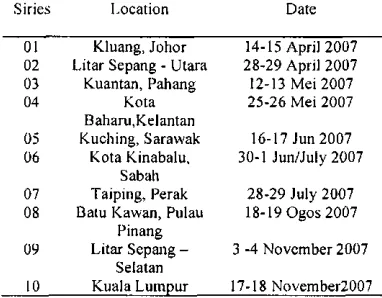
[image:3.597.91.282.535.684.2]The A A M Malaysian Cub Prix Championship, a grand event which was first started in 1992, is a national motorcycle race organised annually by Safe Aim Mutual Sdn Bhd. The race is divided into categories which are Expert (2 stroke, 125cc), Novice (4 stroke HOcc) and Wira (4 stroke HOcc). Ten series of racing event are held at different states for each series (Table 1) and the points for the participating teams and riders' championship will be accumulated at the end of the season. The overall champions will be the ones with the highest championship points.
Table 1. 2007 Cub Pix Championship Series
Sides Location Date
01 Kluang, Johor 14-15 April 2007 02 Litar Sepang - Utara 28-29 April 2007 03 Kuantan, Pahang 12-13 Mei 2007
04 Kota 25-26 Mei 2007
Baharu.Kelantan
05 Kuching, Sarawak 16-17 Jun 2007 06 Kota Kinabalu, 30-1 Jun/July 2007
Sabah
07 Taiping, Perak 28-29 July 2007 08 Batu Kawan, Pulau 18-19 Ogos 2007
Pinang
09 Litar Sepang - 3 -4 November 2007 Selatan
10 Kuala Lumpur 17-18 November2007
The faculty participation in the race started in
September 2006, during the 9t h series of the 2006
Championship. The team, UTHM Motorsports comprises ten academic staff, three supporting staff, three profesional riders and one profesional mechanic. The team has two functional units which are:
a. the academic, research and development unit that is responsible for the development of the motorcycle, and
b. the racing unit that is responsible for the management and participation of the race. The team participated in all three categories and managed to modify and upgrade four factory fitted motorcycles to compete in the race.
The objectives of the participation were not only to win the championship, but more towards the development of staff in research, development and commercialisation and also enhancement in the teaching and learning system. Problems faced during the race were expected to contribute to better research activities and improve the implementation of PBL or POPBL in teaching as well as in final year project.
4. Implementation of P O P B L
The implementation of POPBL was conducted in several phases:
4.1. Phase I: Problem identification
During series of races, the team encounters a lot of problems and challenges. The problems faced by the riders, the mechanic and the team were identified and documented. Some of the problems were solved during the race but most of the time; the problems were discussed during the post-mortem.
Besides self-experience, some of the problems were identified during discussions and interview sessions with other competitors or suppliers. The team also observes the competitors' motorcycles and mechanics. Not only that the team managed to identify the problem faced, but they also managed to get the experience-based mechanic solutions from them. These were vital information since the unproven hypothesis can be used for research and teaching purposes.
4.2. Phase II: Clustering of problem.
Problems then were gathered and clustered. The purpose is to identify which problem should be solved by the team, which could be given to other academic staff for their research and which could be given to the students for their final year project.. Among the considerations were:
a. depth of the problem.
b. duration of expected completion. c. expertise available.
4.3 Phase III: Formulation of project title
The identified problems were then formulated to form suitable titles. These titles were then given to the team or those had been assigned by the faculty to become the supervisors. The titles and the supervisors' name were then posted on the notice board at the beginning of the semester.
4.4 Phase IV: Implementation of POPBL
The implementation of POPBL was carried out during the second semester of 2006/2007 session. A total of 119 students registered for the subject but only 30 were chosen to be involved in the Cub Prix project. The chosen students were then divided into 15 groups that consist of two students per group. A total of 8 supervisors, among the academic staff appointed by the faculty were involved to monitor the group.
During the project, each team underwent three development stages:
a. Gathering information stage: During this stage the students will search for related literature, conduct researches, and interview the racing team to obtain information especially the experience-based mechanic solutions to start their project. This unproven hypothesis will later be explored using structured engineering techniques. The students will have to communicate with different groups to obtain information since there were titles that relate with each other.
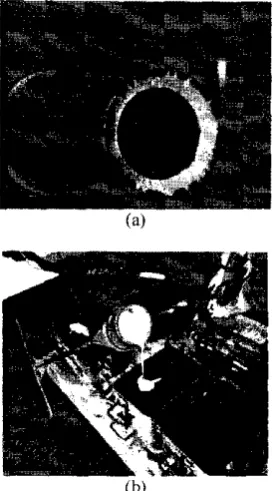
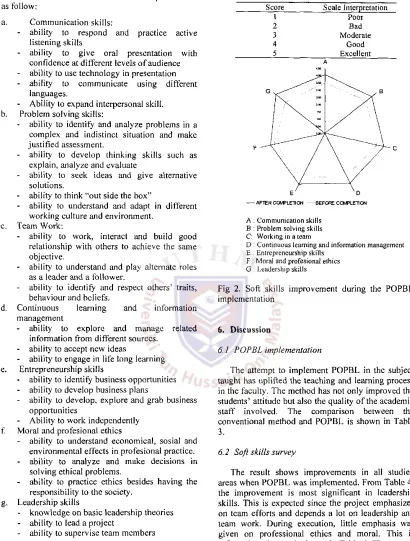
b. Processing stage: During this stage the students will process the information and obtain solutions to complete the project. They need to sketch or redraw the design using Computer Aided Design (CAD) software, perform analytical analysis and simulations using suitable engineering software or do experimental work. Scale model or prototype were developed using the Rapid Prototyping (RP) machines. Fig. 1 shows some of the processing works done by the students. c. Applying stage: During this stage the actual
model was built and fabricated using specified materials. Students applied the knowledge and skills they learnt during their in-house skill training. The models were then tested on the motorcycle during the actual race. The results and feedbacks from the racing teams were given back to the students for continuous quality improvement (CQI).
The project progress was monitored closely by their supervisors during the weekly meeting. The meetings were structured according to the master schedule set by the project coordinators. This would ensure the groups had enough time to produce their prototype which could be tested during the race for quality improvement. At the end of the semester, each group will have to give an oral presentation and showcase their finished product in a one day seminar.
[image:4.595.342.479.86.332.2]( b )
Fig. 1. Processing work done by the students: (a) Stress analysis using FEA software (b) Casting to produce project parts.
4.5 Phase V: Assessment
The assessments were divided into:
a. Log book and discussion (10%) which consist of their written project summary, written progress work, written weekly report and discussions with supervisors.
b. Project Final Report (40%) which consists of introduction, background and theories, planning and methodology, results and discussions, conclusion and suggestions.
c. Oral presentation and demonstration (35%) which consists of the seminar paperwork, delivery, understanding of the problems and the ability to respond to questions.
d. Product (15%) which consists of its idea and creativity.
The assessment of item (a) and (b) were carried out by the supervisors and item (c) and (d) were carried out by the assessors appointed by the faculty during the one day seminar.
5. Soft skill survey
completion of the subject. The questionnaires focused on seven soft skills and the descriptions were as follow:
a. Communication skills:
- ability to respond and practice active listening skills
- ability to give oral presentation with confidence at different levels of audience - ability to use technology in presentation - ability to communicate using different
languages.
- Ability to expand interpersonal skill. b. Problem solving skills:
- ability to identify and analyze problems in a complex and indistinct situation and make justified assessment.
- ability to develop thinking skills such as explain, analyze and evaluate
- ability to seek ideas and give alternative solutions.
- ability to think "out side the box"
- ability to understand and adapt in different working culture and environment.
c. Team Work:
- ability to work, interact and build good relationship with others to achieve the same objective.
- ability to understand and play alternate roles as a leader and a follower.
- ability to identify and respect others' traits, behaviour and beliefs.
d. Continuous learning and information management
- ability to explore and manage related information from different sources.
- ability to accept new ideas
- ability to engage in life long learning e. Entrepreneurship skills
- ability to identify business opportunities - ability to develop business plans
- ability to develop, explore and grab business opportunities
- Ability to work independently f. Moral and profesional ethics
- ability to understand economical, sosial and environmental effects in profesional practice. - ability to analyze and make decisions in
solving ethical problems.
- ability to practice ethics besides having the responsibility to the society.
g. Leadership skills
- knowledge on basic leadership theories - ability to lead a project
- ability to supervise team members
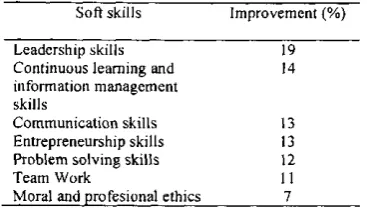
The Likert Scale was used to obtain the information required for this study (Table 2). The result of the survey was analyzed and the mean score for each soft skill is shown in Fig. 2.
Table 2. Interpretation of the Likert Scale
Score Scale Interpretation
1 Poor
2 Bad
3 Moderate
4 Good
5 Excellent
A
AFTER COMPLETION BEFORE COMPLETION
A : Communication skills B : Problem solving skills C: Working in a team
D : Continuous learning and information management E : Entrepreneurship skills
[image:5.597.88.498.94.635.2]F : Moral and profesional ethics G : Leadership skills
Fig 2. Soft skills improvement during the POPBL implementation
6. Discussion
6.1 POPBL implementation
The attempt to implement POPBL in the subject taught has uplifted the teaching and learning process in the faculty. The method has not only improved the students' attitude but also the quality of the academic staff involved. The comparison between the conventional method and POPBL is shown in Table 3.
6.2 Soft skills survey
Table 3. Comparison between conventional method and POPBL
N o Conventional Method P O P B L
1 Titles formulated Titles formulated were lecturer were based on real dependent problems
2 Supervisor dominant Student-oriented in problem solving. 3 N o opportunity for Received feedback
CQI. from team members
after race for CQI
4 Projects were Projects were independent of each interrelated with each
other other
5 Communication Communication within the group across teams 6 Completed products Completed products
were stored in were used in races. laboratories and
workshops.
7 N o risk and low cost High risk and cost dependent 8 Less attention to More serious in
safety consideration. safety consideration during the execution of project since the result would give impacts to the success o f the team. 9 Moderate motivation High motivation
among students among students due to the importance of the completed products.
10 Less attention in Extensive practice of engagement of life life long learning. long learning
11 Unlikely to be Have potential to be patented. patented.
The result also shows a 13% improvement in entrepreneurship skills. This is unexpected since less emphasis was given by the supervisors in the skills. The improvement might come when the students interact with the riders, mechanics and suppliers during the gathering information stage.
7. Conclusion
This paper concludes that the experience gained from the participation of A A M Cub Prix Championship opens the opportunity to improve the teaching and learning system in the faculty. Through tough time in the races, the team managed to translate and transform the real problems into projects. The experience gained by the team also managed to help the academic staff to be better supervisors and facilitators.
Table 4. Improvement of soft skills in percentage
Soft skills Improvement (%)
Leadership skills 19
Continuous learning and 14 information management
skills
Communication skills 13 Entrepreneurship skills 13 Problem solving skills 12
Team Work 11
Moral and profesional ethics 7
During the project, the students had the opportunity to portray themselves as real mechanical engineers, not only to solve real problems, but also to produce products which were used in real races. This gave them extra motivation since they could see their contributions put to use. The subject also helped the students to improve their soft skills. This is very important since they will graduate and enter the real engineering world that needs those traits and skills.
The racing team also get the benefit of sharing their knowledge and experience with the students especially the mechanic and riders. The output of the project really gave them the shortcut in solving their encountered problems.
In general, the students, U T H M staff and the experience-based-mechanic have developed good relationship among each other which leads to the capability in solving real engineering problems.
Acknowledgements
The authors would like to acknowledge all the DDA 3913 students, U T H M Motorsports team members and the university soft skills committee. The author would also express his gratitude to the academic and the supporting staff in the faculty who have helped in the study and writing of the paper especially Mr Mohd Haziman bin Wan Ibrahim and Mdm Mimi Nahariah Azwani bte Mohamed.
References
1. Robin Fogarty, Problem-Based Learning & Other Curriculum Models for the Multiple Intelegences Classroom, Skylight Training and Publishing Inc, United State of America, 1997. 2. Rono F, A Students' Review of the Challeges
and Limitation of PBL, Education for Health, October 1997, pp 199-204