Numerical Study of the Heat Transfer Rate of
Nano-fluid Flow in a Channel with a Triangular
Cross-section in the Presence of a Magnetic Field
Amir Haghighatkhah, Hossein Ahmadi-Danesh-Ashtiani*, Kourosh Amiraslani
Department of Energy and Mechanical Engineering, Faculty of Engineering, South Tehran Branch, Islamic Azad University, Iran
Copyright©2018 by authors, all rights reserved. Authors agree that this article remains permanently open access under the terms of the Creative Commons Attribution License 4.0 International License
Abstract
In this study, nanofluid flow inside a triangular channel in the presence of a magnetic field with two phase model was analyzed. For this purpose, the external surface of the channel is heated or cooled with a specific heat transfer coefficient, and the effect of the changes in the Nusselt number as well as the pressure drop for variable parameters such as nanoparticle concentrations, magnetic field strength, and channel shape (relative to the circular mode) was investigated. In order to the Grid Independent Study, the Nusselt number for different sizes of grid has been evaluated. As a result, comparing the Nusselt number changes, the average is seen by changing the size of the networking. A grading with the number of 350,000 elements is suitable for simulating the corresponding problem. In order to confirm the validity of the results, simulation of Nusselt number changes during the channel was evaluated and compared with the results presented by Saeed et al. [23]. The error rate between the data presented in reference [23] and the simulation claims is not tangible, and therefore the model used for simulation has been approved. In this study, a triangular channel with a flow inside it is a nanofluid, is analyzed in the presence of a magnetic field in a smooth, completely two phases. For this purpose, the external surface of the channel with a certain heat transfer coefficient and the effect of changes in the thermal and fluid parameters with the change in the parameters involved in the problem have been observed. The results show that with increasing magnetic field, friction coefficient, in-channel velocity, heat transfer rate, average Nusselt number increase. In this study, for simulation we used computational fluid dynamics and limited volume method, and specifically using the Ansys-Fluent version 17 software. The problem is investigated in the form of a three dimensional, stable, single-phase and two-phase flow.Keywords
Nano-fluid, Channel, Cross-section, Magnetic Field1. Introduction
Heat transfer in channels with non-circular surfaces is used in various industries such as automotive, power generation, heating and air conditioning, chemical engineering, electronic chip cooling, space science, etc. For this reason, many studies have been conducted to increase the level of heat transfer in channels with non-circular cross-section. Researches show that in cross-sectional heat exchangers for inlet and outlet channels, the cross-sectional area creates a triangular sample with equal edges with the highest cross-sectional area of heat transfer relative to volume [2]. In addition to cross section factor, other factors are also considered in increasing heat transfer. One of these factors is the use of solid particles in the operating fluid that creates a nanofluid compound. The reason for the increase in heat transfer due to the presence of nanofluids is an increase in the thermal conductivity coefficient of the operating fluid compared to the initial state [1]. Also, the use of magnetohydrodynamics (MHD) currents leads to an increase in heat transfer. In recent years, due to the large industrial applications, the study of magnetohydrodynamics flow (MHD) in conductive fluids, such as liquid metals, has been widely considered by researchers. Using the MHD current, the flow and heat transfer inside the tubes can be controlled in the desired direction.
In general, with the presence of a magnetic field that covers the flow inside the duct, the fluid or particles that have magnetic properties are affected and forces in a particular direction. Electromagnetic equations are considered equations that model the behavior of a magnetic field. In general, the equations of electromagnetism are expressed by Maxwell’s equations. These equations are a set of four separate equations that are known as the equations of matter, including Gauss law, Gaussian magnetism law, Faraday induction law, and the Ampere’s law with Maxwell’s correction.
on heat transfer using a single-phase and two-phase model using simulated flow in a triangular duct. They also used a pair of blades to produce a vortex at the duct entrance. Gedik and Kurt [2] have investigated the influence of the magnetic field on the flow inside a three-dimensional tube with the presence of a magnetic field. Luciu et al. [3] examined the effect of nanofluid on Co-axial heat exchangers and concluded that by increasing the nanofluid volume fraction from 1% to 4%, heat transfer can be increased by up to 15% Vasu et al. [4] showed that the cooling capacity of the converter used to cool the radiator of the vehicle increases significantly with the increase of Al2O3 nanoparticles. In order to compare single-phase and two-phase models in nanofluid modeling, Behzadmehr et al., Lotfi et al. [6] and Kalteh et al. [7, 8] have shown that the use of mixed models in a single-phase model can be as accurate as possible. But they have argued that using a two-phase model and a eulerin model, it is possible to model ultra-high precision of nanofluids and minimize the error between simulation and laboratory data. The maximum error between the numerical and laboratory data presented in these four papers and the homogeneous mode is 12.61% and in the two-phase simulation mode 7.42%. Akbari et al. [9] showed that the results of the hydrodynamic flow are not significantly different for the modeling of one phase and two phases, but the difference between thermal parameters is significant. Bianco et al. [10] showed that the heat transfer coefficient is higher with the use of nanofluids than the base fluid state, and as the concentration of nanofluid increases and the Reynolds number increases, this coefficient increases. Also, they compared the single-phase and two-phase models showing that the maximum difference in the heat transfer coefficient between the two models is 11%, which is observed in the volume fraction of 4% nanoparticles. Ellahi [11] has investigated the effect of using the inside of the tube; he has provided an accurate solution for solving the corresponding equations and analyzed the effects of the Hartmann and Reynolds numbers on heat transfer. Sheikholeslami et al. [12] nanofluid (water-CuO) heat transfer with a magnetic field in a square box is investigated using the Lattic-Boltzman method in single-phase. The effective parameters studied on heat transfer in this paper are Hartmann number, and the number of nanoparticles. They showed that increasing the Hartmann number (increasing the magnetic field) increases the heat transfer rate. Hajmohammadi [13] has investigated the effect of using metal nanoparticles with the presence of a magnetic field on hydrodynamics and thermal properties of the Couette flow with a single-phase and two-phase model. They have provided an analytical solution for the single-phase model and compared it with numerical solution of the two-phase model. They have stated that the one-phase model increases the amount of nanoparticle effects on hydrodynamics and thermal properties of the flow. But in general, the presence of nanoparticles in a
magnetic field increases thermal efficiency with a slight decrease in shear stress at the surfaces. Maiga et al. [14] investigated the slow forced transfer of Al2O3, water, Al2O3 and ethylene glycol into a tube with constant thermal flux, and concluded that with increasing nanoparticle fraction, the local convection coefficient increased. Heris et al. [15] studied the slow forced flow of Al2O3 nanoparticle and water inside the tube with constant wall temperature in a laboratory and numerical manner. Their results indicate an increase in the convection coefficient by increasing the volume fractions. In their study, the increase of the convection coefficient by the classical model was also predicted less than laboratory values. In 2004, Ding and colleagues [16] examined the slow flow of Al2O3 nanofluid and water in a laboratory in the inlet and outlet area, and observed a significant increase in the heat transfer coefficient in two regions. They showed that with increasing Reynolds number of flow and volume fraction of nanoparticles, the Nusselt number increases. Ding et al. [22] studied the carbon nanotubes - water nanowires in vitro and increased up to 350% heat transfer coefficient for a mass fraction of 0.5% in the Reynolds number 800. This dramatic increase is not justified by the only increase in thermal conductivity. This increase can be attributed to the high geometry of the nanotube, the propagation and proper stability of the nanoparticles in the fluid. They also showed that in the volume fraction and pH, there is a known Reynolds number for increasing the heat transfer coefficient.
2. Governing Equations
In this paper, we use a two-phase model to study the flow of nanofluid in a triangular duct under the magnetic field. For this purpose, the equations of mass and momentum survival will be written based on the two-phase model. The continuity equation in terms of the mass fraction for k is written as follows [2]:
(
)
+
∇
.
(
)
=
−∇
.
( )
+
S
k∂
∂
k k
k
um
j
m
t
ρ
ρ
( 1)In the above relation t is the time, ρ denotes the density
∇. (𝜌𝑚𝑉𝑚) = 0 ( 2)
𝜌𝑚 is the mixture density (nanoparticle solution in base
fluid) and 𝑉𝑚 is the mixture speed.
The momentum equation is written as follows:
∇. (𝜌𝑚𝑉𝑚𝑉𝑚) = −∇𝑝+ ∇.�∑ ∅𝑛𝑖=1 𝑖𝜌𝑖𝑉𝑑𝑟,𝑖𝑉𝑑𝑟,𝑖� (3)
The energy equation is written as follows:
∇. (∅𝑖𝑉𝑖(𝜌𝑖ℎ𝑖+𝑝)) = ∇.�𝑘𝑒𝑓𝑓∇𝑇 − 𝐶𝑝𝜌𝑚𝑣𝑡� � ( 4)
ℎ𝑖 is the enthalpy of i component, 𝑘𝑒𝑓𝑓 is the effective
thermal conductivity coefficient.
The volume fraction is written as follows:
∇.�∅𝑝𝜌𝑝𝑉𝑚�=−∇. (∅𝑝𝜌𝑝𝑉𝑑𝑟,𝑝) (5)
In the above relation, ∅ denotes the volume fraction of the i-th phase. 𝑉𝑑𝑟,𝑝 represents the drift velocity. The
mixture speed, density, and viscosity are calculated as follows:
𝑉𝑚= ∑ ∅𝑖𝜌𝑖𝑉�𝑖
𝑛 𝑖=1
𝜌𝑚 ( 6) 𝜌𝑚= ∑𝑛𝑖=1∅𝑖𝜌𝑖 ( 7)
𝜇𝑚= ∑ ∅𝑛𝑖=1 𝑖𝜇𝑖 ( 8)
slip velocity (relative velocity) is defined as the velocity of the secondary phase (p) relative to the initial phase velocity (f). So it can be written:
𝑉𝑝𝑓= 𝑉𝑝− 𝑉𝑓 ( 9)
In the above relation, 𝑉𝑝𝑓 represents the relative
velocity between the liquid phase and the particle phase, and 𝑉𝑝 and 𝑉𝑓 represent the particle velocity and the
liquid phase velocity, respectively. The drift speed is also determined by relative velocity as follows.
𝑉𝑑𝑟,𝑝= 𝑉𝑝𝑓− ∑𝑛𝑖=1∅𝜌𝑖𝑚𝜌𝑖𝑉𝑓𝑖 (10)
To calculate the drag coefficient, we can use the relationship provided by Schiller and Naumann [17].
1- 𝑓𝑑𝑟𝑎𝑔= 1 + 0.15𝑅𝑒𝑝0.687 (11)
3. Thermophysical Properties of
Nanofluid
Corcione [18] has presented a corrected equation for calculating the dynamic viscosity as follows. The relationship is based on a large number of empirical experiments.
𝜇𝑒𝑓𝑓
𝜇𝑏𝑓 =
1
1−34.87�𝑑𝑏𝑓𝑑𝑝�
−0.3
∅1.03
) 12 (
In the above relation 𝜇𝑒𝑓𝑓 represents the effective
viscosity and 𝜇𝑏𝑓 represents the dynamic viscosity of the
base fluid. Also, 𝑑𝑝 and 𝑑𝑏𝑓respectively represent the
diameter of the particle and the diameter of the base fluid
molecules as calculated below.
𝑑𝑏𝑓= 0.1�𝑁𝜋𝜌6𝑀
𝑏𝑓� 1 3
(13)
In the above relation, M is the molecular weight of the base fluid, and N is the Avogadro number.
To calculate the effective thermal conductivity, we can use the relationship provided by Koo and Kleinstreuer [19].
𝑘𝑒𝑓𝑓= 𝑘𝑠𝑡𝑎𝑡𝑖𝑐+ 𝑘𝐵𝑟𝑜𝑤𝑛𝑖𝑎𝑛 (14)
𝑘𝑆𝑡𝑎𝑡𝑖𝑐= 𝑘𝑏𝑓�𝑘𝑘𝑝𝑝+2𝑘+2𝑘𝑏𝑓𝑏𝑓+2∅�𝑘−∅�𝑘𝑝𝑝−−𝑘𝑘𝑏𝑓𝑏𝑓��� (15)
𝑘𝐵𝑟𝑜𝑤𝑛𝑖𝑎𝑛= 5 × 10⁴𝛽∅𝜌𝑏𝑓𝐶𝑝𝑏𝑓�𝜌𝐾𝑇𝑝𝑑𝑝𝑓(𝑇,∅) (16)
𝑓(𝑇,∅) = (2.8217 × 10⁻²∅+ 3.917 × 10⁻³)�𝑇
𝑇0�+
+(−3.0669 × 10⁻²∅ −3.91123 × 10⁻³) (17)
In the above relations f (T, ∅) is a function of the temperature and volume fraction of solid particles. Also,
the correction coefficient β is a function of the liquid
volume that travels with a particle, which is calculated for various nanoparticles by Vajjha and Das [20].
The effective density of the nanofluid through the Pak and Cho [21] relationship is calculated as follows:
𝜌𝑒𝑓𝑓= ∅𝜌𝑝+ (1− ∅)𝜌𝑏𝑓 (18)
To calculate the specific heat capacity of a nanofluid based on the balance between the nanoparticles and the base fluid, we can use the equation given by Xuan and Roetzel [22] as follows.
𝐶𝑝𝑒𝑓𝑓 =
(1−∅)�𝜌𝐶𝑝�𝑏𝑓+∅�𝜌𝐶𝑝�𝑝
(1−∅)𝜌𝑏𝑓+∅𝜌𝑝 (19)
4. Geometry
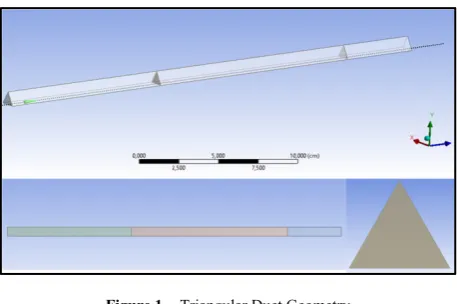
[image:3.595.307.536.564.716.2]The geometry of the problem is shown in Fig. 1.
Figure 1. Triangular Duct Geometry
Table 1. Simulation input characteristics
Value Usnit
Symbol Corresponding
parameter name
0.01 m
W Side of the
equilateral triangle
0.0057735 m
Dh Hydraulic
diameter
0.1454 m
L Main channel
length
0.1155 m
Lentrance Channel input
length
0.05 m
Loutlet Output length
25 Nm
dp Particle diameter
Al2O3 Particle type
0-4
٪ Φ
Fractional particle fraction
100-800 Re
Reynolds number
300 K
Tinlet Inlet fluid
temperature
330 K
Twall Main channel
side wall temperature
m/s Uinlet
Speed at the entrance
5. Grid Independent Study and
Validation
[image:4.595.64.291.87.416.2]In order to grid independent Study, the average Nusselt for different grid sizes is given in Table (2). Show in this table(2), a grid with 350,000 element number is appropriate to simulate the corresponding problem.
Table 2. Grid Independent Study
average Nusselt number element number
3.144 34000
3.162 87000
3.157 150000
3.156 350000
3.157 750000
In order to confirm the validation of the results, the data presented in this study is compared with the data provided by Saeed et al. [23] in Fig. 2.
Figure 2. Comparison of numerical data presented in this study with data provided by Saeed et al. [23]
The comparison of the data confirms the accuracy of the numerical results.
6. Results
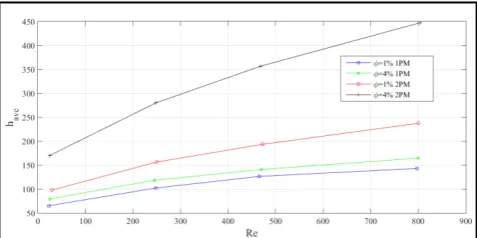
[image:4.595.305.544.320.439.2]In Fig. 3, changes in the heat transfer coefficient with the Reynolds number are shown for different volume fraction for the single-phase and two-phase models.
Figure 3. Changes in the surface heat transfer coefficient with Reynolds number in different volume fraction for single phase (1PM) and two phase (2PM)
[image:4.595.61.289.547.685.2]As the Reynolds number increases, the amount of surface heat transfer coefficient increases moderately, and changes from single-phase to two-phase models increase the amount of heat transfer coefficient. As the particles grow inside the nanofluid, the heat transfer rate increases.
Figure 4. Changes in the heat transfer coefficient across the channel for different volume fraction with a two-phase model
[image:4.595.304.545.555.673.2]then decreases. By increasing the amount of particles inside the nanofluid, the amount of heat transfer can be increased.
[image:5.595.307.540.85.196.2]In Fig. 5, the non-dimensional velocity chart in-channel is displayed at the input velocity as compared with the direction of travel from the center of the triangle to the crown. With the increase in the volume fraction, the velocity profile in the center has less variation and there is a velocity increase on the wall and hence increased friction.
Figure 5. Effect of volume fraction at non-dimensional velocity to the distance from the center of the canal to the wall
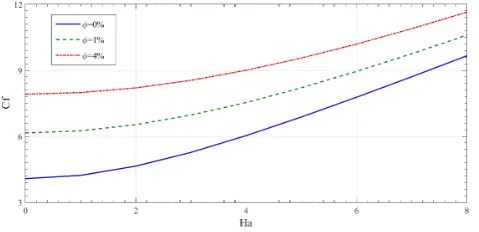
By placing a magnetic field with density B at the center of the main channel and by defining the Hartmann number as a force to the viscous force, it can be seen in Figures 6 to 10 that the effects of increasing or decreasing the magnetic field on the dynamic and thermal parameters are observed.
Figure 6. Influence of the magnetic field (Hartmann number) on the coefficient of friction for different volume fraction in single-phase models.
[image:5.595.60.292.205.319.2]Figure 7. Influence of the magnetic field (Hartmann number) on the coefficient of friction for different volume fraction in two-phase models.
Figure 8. Influence of the magnetic field (Hartmann number) on the velocity at the center of the channel to the wall for a different volume fraction for the two-phase model
[image:5.595.309.534.242.347.2]Figure 9. Influence of the magnetic field (Hartmann number) on the average Nusselt number in center of channel to wall spacing for a different volume fraction for two-phase model
Figure 10. The effect of the magnetic field (Hartmann number) on the temperature at the distance between center of channel to the wall for a different volume fraction of the two-phase model
In the following some important contours are shown including relative velocity contour, water velocity contour, water temperature contour, particle mass fraction contour, heat transfer coefficient contour, and shear rate contour for water-Al2O3 4% nanofluid.
[image:5.595.307.539.393.504.2] [image:5.595.56.292.433.546.2] [image:5.595.58.298.605.721.2] [image:5.595.133.524.605.733.2]Figure 12. Water-Al2O3 4% temperature Contour
[image:6.595.58.304.71.516.2]Figure 13. Al2O3 particles mass fraction with 4% concentration Contour
[image:6.595.59.294.505.737.2]Figure 14. Coefficient of heat transfer contour on the channel main wall for water-Al2O3 4%.
Figure 15. Water velocity contour for water-Al2O3 4%.
Figure 16. Shear rate contour on the channel main wall for water-Al2O3 4%.
7. Conclusions
In this paper, the heat transfer and nanofluid flow in an equilateral triangular duct under magnetic field has been numerically simulated in a 3D model. Two models are employed: single and two phase model with constant properties. Three nanofluids concentration are examined; -%, 1%, 4%. Non dimension velocity, Reynolds number and Hartmann number ranged from 0-1.6, 100-800 and 0-20, respectively. In order to grid independent Study, the average Nusselt for different grid sizes were compared. In order to confirm the validation of the results, the data presented in this study is compared with the data provided by Saeed et al. [23]
According to the simulations carried out in different situations, the results can be classified as follows:
With the increase of the magnetic field and hence the Hartmann number, the friction coefficient increases, which results from increased shear stress on the wall by increasing the magnetic field.
The velocity inside the triangular channel increases with a steep increase in the magnetic field, which increases the velocity gradient and thus increases the shear stress on the wall.
Due to the increase in the velocity gradient caused by the increase in the magnetic field strength, the heat transfer rate increases and the average Nusselt number increases on the surface. This causes a decrease in temperature on the wall, which in general indicates an increase in the efficiency of the system in heat transfer.
With increasing magnetic field strength, the velocity profile in the center is less variable and there is a velocity increase on the wall, resulting in increased friction.
By moving along the channel, the amount of heat transfer coefficient increases initially and then decreases. It is also clear that by increasing the amount of particles inside the nanofluid, the heat transfer rate can be increased.
The cutting rate on the channel along the channel wall initially increases and then decreases.
The velocity of the nanofluid mixes near zero to the triangular cores, and as far as the walls move, this velocity increases, and at the end, again, this value is reduced by adjacent to the wall of the cornea.
The heat transfer coefficient for Al2O3 particles on the channel wall is initially increased and slowly decreases towards the midpoint of the channel and approaches a steady state.
The heat transfer coefficient for water on the channel wall is less than that at the beginning of the main channel, and then increases and decreases again.
it moves towards the walls, this amount increases and, finally, decreases again when approaching the wall of the cornea.
The volume fraction of water in the areas close to the triangles is close to 1, and as far as the walls move, this amount decreases, and at the end the value increases again by approaching the wall of the cornea.
There is a difference between the results of single-phase and two-phase modeling, for example, in friction coefficient single-phase modeling; there is a significant difference with two-phase modeling.
As the Reynolds number increases, the amount of surface heat transfer coefficient increases moderately, as well as changes in the single-phase model with two-phase increase the amount of heat transfer coefficient. It is also clear at the end that the increase in the heat transfer rate can be increased by increasing the number of particles from 0% to 4% in the nanofluid. This happen because Thermophysical properties improve with increasing number of particles.
The results of this study can be used to enhancement the heat transfer in thermal systems, especially in compressed heat exchangers. One of the most important applications of this research is in the cooling of electronic components, supercomputers, microchannels, nuclear reactors, thermal power plant and etc.
REFERENCES
[1] Ahmed HE, Yusoff MZ, Hawlader MNA, Ahmed MI.
Numerical Analysis of Heat Transfer and Nanofluid Flow in a Triangular Duct with Vortex Generator: Two-Phase Model. J Heat Transf, 2014: 0 (0):1-21.
[2] Gedik E, Kurt H, CFD simulation of magnetohydrodynamic flow of a liquid- metal galinstan fluid in circular pipes, Fluid Dynamics and Materials Processing, 2013: 9-23
.
[3] Luciu RS, Mateecsu T, Cotorobai V, Mare T. Nusseltnumber and convection heat transfer coefficient for a coaxial heat exchanger using Al2O3–water pH = 5 nanofluid.
Bull Inst PolitIas¸i, t LV (LIX), f 2009; 2: 71–80
.
[4] Vasu V, Krishna KR, Kumar ACS. Application of nanofluids in thermal design of compact heat exchanger. Int J Nanotechnol Appl 2008; 2(1):75–87.
[5] Behzadmehr A, Saffar-Avval M, Galanis N. Prediction of turbulent forced convection of a nanofluid in a tube with uniform heat flux using a two phase approach. Int J Heat Fluid Flow 2007; 28: 211–219.
[6] Lotfi R, Saboohi Y, Rashidi AM. Numerical study of forced convective heat transfer of Nanofluids: comparison of different approaches. Int Commun Heat Mass Transf 2010; 37: 74–78
.
[7] Kalteh M, Abbassi A, Saffar-Avval M, Frijns A, Darhuber A, Harting J. Experimental and numerical investigation of nanofluid forced convection inside a wide microchannel heat sink. Appl Therm Eng 2012;36:260–268.
[8]
]
Kalteh M, Abbassi A, Saffar-Avval M, Harting J. Eulerian–Eulerian two-phase numerical simulation of nanofluid laminar forced convection in a microchannel. Int J Heat Fluid Flow 2011; 32:107–116.
[9] AkbariM, Galanis N, Behzadmehr A. Comparative analysis of single and two-phase models for CFD studies of nanofluid heat transfer. Int J Therm Sci 2011;50:1343–1354.
[10] Bianco V, Chiacchio F, Manca O, Nardini S. Numerical investigation of nanofluids forced convection in circular tubes. Appl Therm Eng 2009; 29: 3632–3642.
[11] Ellahi R, The effects of MHD and temperature dependent viscosity on the flow of non-Newtonian nanofluid in a pipe: Analytical solutions, Applied Mathematical Modelling, 2013:37 (3): 1451-1467
.
[12] Sheikholeslami M, Gorji M. Ellahi R. Zeeshan A. Simulation of MHD CuO–water nanofluid flow and convective heat transfer considering Lorentz forces, Journal of Magnetism and Magnetic Materials, 2014: 369: 69-80
.
[13] Hajmohammadi MR. Cylindrical Couette flow and heattransfer properties of nanofluids; single-phase and two-phase analyses, Journal of Molecular Liquids, 2017: ISSN 0167-7322.
[14] Maiga, S.E.B., Palm, S.J., Nguyen, ,C.T., Roy, G. and Galanis, N., "Heat Transfer Enhancement by Using Nanofluids in Forced Convection Flows", International Journal of Heat and Fluid Flow, Vol. 26, pp. 530-546, 2005. [15] Heris, S.Z., Esfahany, M.N., and Etemad, S.Gh.,
"Experimental investigation of convective heat transfer of Al2O3/water nanofluid in circular tube", International
Journal of Heat and Fluid Flow, Vol. 28, pp. 203–210, 2007.
[16] Wen, D., and Ding, Y., "Experimental investigation into convective heat transfer of nanofluids at the entrance region under laminar flow conditions", International Journal of Heat and Mass Transfer, Vol. 47, pp. 5181–5188, 2004 [17] Schiller L, Naumann A. A drag coefficient correlation. Z
Ver Deutsch Ing 1935;77:318–320
[18] Corcione M. Rayleigh–B´enard convection heat transfer in nanoparticle suspensions. Int J HeatFluid Flow 2011; 32:65–77.
[19] Koo J, Kleinstreuer C. A new thermal conductivity model for nanofluids. J Nanopart Res 2004; 6:577–588.
[20] Vajjha RS, Das DK. Experimental determination of thermal conductivity of three nanofluids and development of new correlations. Int J Heat Mass Transf 2009; 52:4675–4682. [21] Pak BC, Cho YI. Hydrodynamic and heat transfer study of
dispersed fluids with submicron metallic oxide particles. Exp Heat Transf 1998;11(2):151–170.
[23] Heris, Saeed Zeinali, et al. "Numerical investigation of Al 2