ISSN 2250-3153
Digital Transformation a Panacea to Workforce Low
Productivity
Nzenwata Chisom Beauty P.M.B 174 Garki, G.P.O Abuja, Nigeria.
DOI: 10.29322/IJSRP.9.09.2019.p9360
http://dx.doi.org/10.29322/IJSRP.9.09.2019.p9360
ABSTRACT
In this information age Africa specifically Nigeria face challenges which originate from insufficient digital technology infrastructure, down to lack of unskilled workers which affects the country’s economy. Nigeria is yet to utilize Digital technology in the delivery of services in most recognized organizations in different sector of its economy; this vacuum has contributed to workforce low productivity that requires immediate attention. Nigeria as a country needs to focus on its infrastructure establishment thereby creating reliable and affordable broadband for businesses future stages of digital transformation. Researchers affirmed that new technology introduced in any workplace arrives with an explicit aim to aid workers to become productive. From a theoretical point of view, the impact of digital transformation in an organization is ambiguous. It creates greater centralization as professional activities are monitored, it also enables employees to work more autonomously which aids an organization to attain greater heights. To fulfill the objective of this paper, systematic review of existing literature on digital transformation was presented, its plans and phases to avert low productivity at workplace was duly discussed. Further the study explored LeaserFiche digital transformational Model which consists of five phases oftransformation for effective digital transformation in a workplace.
Keywords: Digital, Technology, Productivity, Digital Transformation.
I. INTRODUCTION
Workplace encounter an exceptional transformation steered by technology which made style of work to be transferred from physical to digital in this digital age. The accelerating integration of digital technologies in all aspects of human lives is an advantage and also an issue for organizations and the entire workforce; however the benefit outweighs the challenges. Some of the ways organizations benefit from digital transformation include increased employee’s productivity, cost savings of overhead, positive output result, more mobile and agile workforce, flexibility and adaptability in the sector. Digital technology is driving transformation in the ways of working and jobs; it increases with speed in the future years which creates diverse influence across industries and their respective roles. According to the World Economic forum (WEF) [1] report indicates that there will be an overall net increase in all jobs worldwide, it states that these net gains are not a foregone conclusion. It also figures out that organizations must respond fast by energetically preparing their workforce through reskilling and up skilling, and individuals should take proactive role in their learning and personal career development. Transitioning to the digital technology deals with entire employee in a workforce and the need for active investment in developing a new burst of agile learners and skilled talent generally. It is very certain that the new technology will create more job opportunities as well as increase productivity in all sector of the Nigerian Economy; however workers should be ready to manage the interference of jobs and the design of work which will create changes. Another conceding report by Organization for Economic Cooperation and Development (OECD) [2] update its previous forecast of the impact of automation on work, stating that 14% of jobs in developed countries were highly automatable, while further 32% of jobs were likely to experience significant changes.
ISSN 2250-3153
will create loss of jobs due to digital automation which is marking an increased speed worldwide. McKinsey Global Institute reported that by 2020 one-third of the US workforce, or about 50 million people may be transformed through digital technologies, it also forecast that about half of all paid activities are likely to be automated using existing robotics, artificial and machine learning technologies for instance; computers can also be used for multiple tasks.
The World Bank’s World Development report “Digital Dividends”. [4] analyzed the factual proof of the effect of digital technologies on a countries economic growth, opportunity for individuals, and public service delivery. It presents many examples of benefits accrued to organizations, workers and governments; it also identifies a number of risks factors. It observed that some organizations in underdeveloped countries adopt digital technology at a very slow pace, white collar jobs are more automated which thereby contribute to most workers out of the labour market in developing countries, despite all these e-government initiatives fail to improve how public services are delivered.
From the study of similar researches, the report concludes that digital technology will contribute to development less than expected when important “analog complements” are absent. Organization is likely not to invest in productivity enhancing technology such as digital technologies if there are limited skills that do not allow them to take advantage of technology. However governments will not have the Incentives to deploy technology to empower citizens and deliver better services when institutions are not accountable. In other words, digital dividend implies faster growth, more jobs and better service which is variably to fall short if digital investments are not accompanied by long overdue reforms in a country’s business regulations and public sector governance.
The digital transformation has come to stay and should be welcomed and ameliorate rather than disregarded. In other to tackle workers low productivity Nigerian policymakers will need to respond briskly to metamorphose circumstances, integrate experiences across sectors and issues, as well as tailor advice effectively to the appropriates needs.
1.1 An overviewof digitalization
Digitalization has created communication and made it a universal language with the use of computers. In the world today small and medium businesses, government organizations as well as non-governmental agencies have transformed their process, activities and transactions with the use of digital technology.
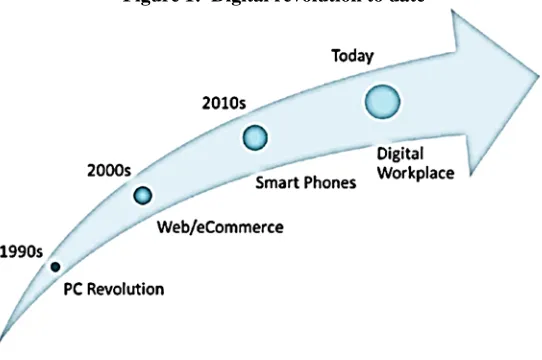
[image:2.612.169.440.431.611.2]Technology may be providing the fuel for digital transformation but it is the human element that will determine the outcome, from previous studies it is observed that digitalization has been on track right from 1950s until web came on board in the year 1990. This has made life easy by totally transforming the way we bank, govern, transact business, educate and shop etc. Digital technology gave birth to binary code of computer storage which is applied to traditional forms of information like paper and photograph for future use. It also converted analog signals into digital signals which translate media into bits and bytes. Researchers observed that in the year 1947 transistor was invented which made way to more advanced digital computers, from the late 1940s universities, military and businesses developed computer system to digitally replicate and automat previous manually performed mathematical calculation.
Figure 1: Digital revolution to date
Source: [5]
ISSN 2250-3153
first digital camera was invented in the year 1988. Tim Berners-Lee designed the worldwide web wrote the code and the server in 1990 which eventually became accessible to the public in 1991, it was first accessed by the government and university before it was released to the public. In 1993 Marc Anderson and Eric Bina initiated mosaic the first web browser which had the ability to display online images, later the internet enlarged swiftly by 1996, it was already part of most businesses in developed countries. In 2000 mobile phones serve purposes like computer and also digital revolution spread rapidly to developing countries, 2005 the number of internet users grew to 1billion while 3billion have access to mobile phones, HDTV became the standard television broadcasting in many developed countries in the late 2000.
According to [7] the late 1980s had less 1% of the world’s technologically stored information in digital format while in the 2007 it jump to 94% with more than 99% in the 2014. He also stated that 2005 is estimated to be the year human beings were able to store information in digital than in analog which marked the beginning of the information age of the modern world.
II. DIGITAL TRANSFORMATION
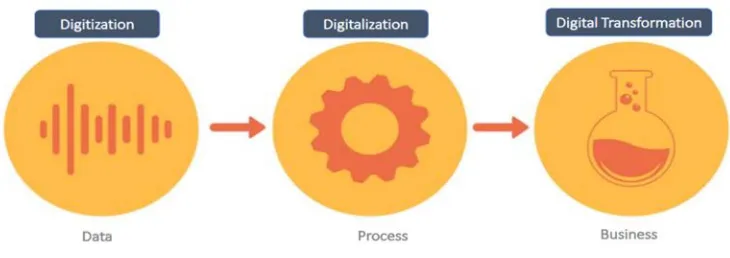
[image:3.612.113.478.377.506.2]Scholars defined digital transformation as the use of new, fast changing digital technology to solve problems often utilizing cloud computing, reducing reliance on user owned hardware but increasing reliance on subscription based cloud services. An organizational approach to digital transformation can have an immense positive impact on the nature of work, position of jobs, how employees are managed in a work place. Over the past two years, researchers from MIT’s Center for Digital Business and Capgemini Consulting have explored the question of, how fast are digital innovations changing the plan of organizations. Results from surveys and interviews collated from over 150 organizations shows that digital transformations varies from organizations both in the area of customer relationship, internal operations and employee relations. [8] Opined that a Digital transformed organization holds a distinct Mindset reflecting a deep confidence in digitization and an inclination to pursue digital solutions to its best. A Digital workforce reflects on the confidence on digital possibilities and key practices, workforce features and resources that can make those possibilities a reality. These essential qualities of a Digital Organization are captured as M-PWR (pronounced m-power).
Figure 2: Digital Transformation
Source: [9]
2.1 How to determine the right digital technology for a workforce
Basic digital skills: There are basic digital skills and level that is required in the transformation of a workplace, employees individual skills must be properly defined in other to determine the right digital transformation that will reduce low productivity. This certainly demands few security skills, skepticism and device use and may include collaborative skills, depending on the type of organization and their business. It might comprise the ability of an employee to work with a computer, or specific software packages that are pivotal to the way an organizational business are transacted. Without these minimal skills, workers may likely not respond effectively during and after workplace digital transformation.
Organizational goals and future plans:Management of the Organization needs to consider the goal, future plans in other to tailor the technological skills that will conform to the digital transformation in the workplace. Reflect on the organization’s short and long term goals to work out what digital technology are required to avert workforce low productivity, this will guide through inevitable challenges, numerous opportunities that may likely erupt as well as the organizations growth plans. A preplanned list of digital technological skills required for an organization must include general skills and package-specific competencies of the workers; this makes the transitioning much easier for both the employer and employee.
ISSN 2250-3153
backwards in its digital transformation. It will also aid in the recruitment process and succession planning in the workplace. Next is to look inwardly from the top to the bottom in the organization and identify the level of digital technology that already exist, this should be based on the planned strategies outlined already.
Evaluate Training: The final step four starts with evaluating organizational training provision and learning goals in other to make appropriate changes where necessary.After the successful completion of step three, the organization is already in the know on the digital gaps and how to improve the competence levels of workers in required digital skills during the transformation. At this point organization is aware of the type of training that is suitable for the organizational task and tailors it to the provision already mapped out for similar task. Training should be aimed at developing competencies that help avert low productivity in the workforce by availing workers the tools and opportunities to learn. Also the management of the organization ought to ensure that the learning provisions are mobile enabled, also available in time .This should also be combined with clarity on what level of digital skills is expected per job role in other to give the best training that will improve workers’ productivity during and after digital transformation.
III. REVIEW OF LITERATURE
Digital transformation concept is yet to receive full attention in academic research; most researchers view it from ICT media point of view, the definition is not uniformed as individual defined it according to what they feel. The concept digital transformation currently lacks a clear definition [10]. Digitalization, digital innovation, and digital transformation are closely related and are linked to one another in different ways. First, these concepts build on digital technology. Second, the outcome of a digital innovation can lead to digitalization through individuals’ absorption in the diffusion stage of the digital innovation process [11]. It is also believed that digitalization and digital innovation can enable major changes in how business is conducted, leading to digital transformation of organizations.
[12] States that music and publishing industries are typical example; they indicate that digital innovations and digital transformation are not an ordinary deliberate choice rather an unavoidable task all industries must undergo. [13] opined that Digital Transformation is characterized by the use of new digital technologies to enable significant business improvements which is viewed as an inevitable chance for an organization business development. [14] concur that the introduction of digital technologies can propel business to achieve their goals as innovation helps them develop their business swiftly. [15] maintain that integrating digital technology into business activities must surely require a transformation of central operation of an organization’s business, as technologies have rapidly reformed the way business are transacted. [16] conclude that digital transformation has changed the structure of organization, their product and process while [17] remark that information systems are acclaimed the principal behind business transformations. [14] opined that digital transformation aid rapid organizational goal achievement and that firms who drive performance also are contemplating taking advantage of technical innovation. [18] propound that implementation of business development allows organization to recognize modern growth potentials and to focus on understanding of creating new drivers for business growth while concurrently initiating business activities. According to [19], the aim of digital transformation is to achieve streamlined operational processes and entirely new business models either personnel or in collaboration with improved customer experience and engagement while [18] propound that implementation of business development allows organization to recognize modern growth potentials and to focus on the understanding of creating new drivers for business growth while concurrently initiated business activities.
According to [20] they opined that organizational culture is one of the aspects that can have an effective impact and outcome of a digital transformation in a workplace. They also believe that it is not straightforward as there are vital features to put into consideration before and after the transformation. For a successful digital transformation, the organization as a whole must adopt a supportive culture in which joint business and IT initiatives can flourish [21]. [22] conducted a Delphi study to examine what cultural values are considered supportive of digital transformation and crucial for digital transformation success. The most prominent organizational values identified were openness to change (openness to new ideas and readiness to embrace change) and customer centricity (designing activities to meet customer needs). An organization that values openness to change fosters a willingness to accept, implement, promote, and establish a change-oriented mindset, which is essential for mastering digital transformation [22], They also stated that organizational values like innovativeness, willingness to learn, tolerance of failure, risk factors, and entrepreneurial mindset were highlighted, furthermore trust, participation, cooperation, and communication [22] Digital transformation entails much more than incrementing the business with digital technologies; it requires rethinking and restructuring the entire business logics of an Organization [23]. [24] study stated, “Transforming digitally is not only technical rather it is certainly a transformational and organizational thing” (p. 9). Researchers have studied the effects of digital transformation in organizations and discovered that such Transformations is likely to steer up organizational changes, outcomes and performance measures [25]; [26].
IV. DIGITAL TRANSFORMATION PHASES IN A WORKPLACE
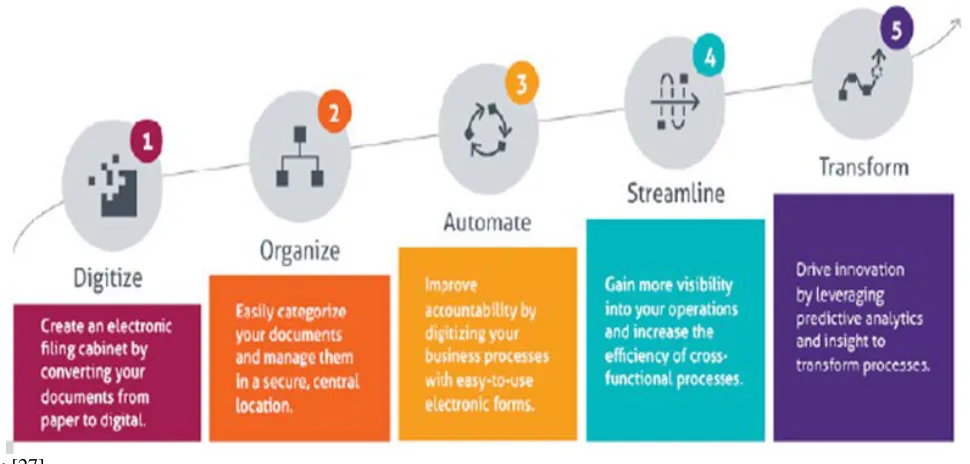
This research focuses on Laserfiche Digital Transformation Model, it identifies five (5) phases every organization must undergo to attain effective digital work force.
ISSN 2250-3153
paperless workplace while BusinessWeek in 1975 announced that the birth of computers will render paper obsolete. This process might be a bit challenging for organizations, for instance the risk of data loss due to damage of physical document, lack of paper storage space etc. however this can be overcome by the action plan of the next phase.
Organize: The act of digitizing office documents and creating a storage spaces is the phase 2, organizing can be an uphill task for an organization when they lack established rules and inconsistence in their filing practices. This phase makes the transition easier to identify document in a workplace, there is need to centralize information and streamline the classification and filing of electronic documents. A study by the International Data Corporation (IDC) discovered that numerous organizations documents, images, video and email are littered across a wide diverse of systems in the workforce. 23% of this content is stored in personal computers, 19% in cloud file sync and share services, 18% in file shares, 17% in email, 11% in team sites and only 12% is centrally and securely stored in an enterprise content management system.
Automate: deals with converting all official documents to be operated by equipment with little or no human assistance. This is the 3rd phase of digital transformation in a workplace, they might rely on inefficient, unstandardized manual processes that waste time and resources in a workplace but with automation service delivery is a lot easier. In this phase, organizations is required to automate all manual processes and tasks to increase efficiency, standardize work processes, and reduce the risk of regulatory noncompliance. If the workplace processes are not standardized to fit into the digital era, is likely to increase risk of error and makes it difficult to train new staff to flow with the trend. Managers could leverage on automation to discharge their administrative tasks such as data entry, follow up etc, employees can easily retrieve and access informations, this improves time management in a workplace thereby increases workforce productivity.
Streamline: this phase involves examining the automated processes and making them run smarter, faster and better for efficiency. According to Laserfiche Digital Transformation Model automated processes do not mean that an organization has fully arrived, is basically depends on how an organization interacted with manual paper processes before the transformation. The lesser the manual paper the better and faster the streamlining process consume, different organization might have a bit of complex processes due to organizational culture which may involve unnecessary steps, this can cause a limited visibility across teams. At the end of this phase organizations experience efficient service delivery and a productivity workforce across all process.
[image:5.612.64.549.437.669.2]Transform: After the streamlined processes that creates solid method of collecting and organizing information, next is automating and fine-tuning processes for maximum efficiency, there comes the transform phase which is the final stage of digital transformation. This is the phase an organization is fully ready to innovate as well as ready to face the new challenges that comes with the transformation process. The arrival of this phase makes it easier for organizations to discovered new technologies and also spot trends that will increase the workforce productivity. Digital transformation works with digital information in the digital era it averts problems and gain insights into operations of a digital organizations, the more the information flows the need for information management increases.
Figure 3. Digital Transformation phases
Source: [27]
ISSN 2250-3153
It is evident that there are considerable levels of development and adoption of technology to build and sustain a viable digital economy in Nigeria;however government policy with a strong applicable industrial strategy should be considered. The focus of this paper is to analyze digital transformation to gain more insights on how organization can take advantage of the digital technology to avert workers low productivity in a workplace. Basically, the paper comprises the steps and plans an organization can utilize to attain a desired goal during and after transformation. The study discovered that workplace digital transformation has a lot of benefits such as increase workers’ productivity, it is a stepping stone to a successful business strategy, it literally intensify alliance and leads to effective service delivery in any organization. It is also opined that transformation alone cannot solve productivity problems rather constant training of workers to be more acquainted in the use of the technology in other to meet the demanding digital trend. It makes no sense if workers of an organization lack the basic digital literacy to work with the new technology during and after transformation. It is advisable for Nigerian businesses to invest extensively on the training of their employees and try to improve employees’ motivation, and to also harness digital technology in all production and service process of an organization as well as industries. Finally, applying Laserfiche Digital Transformation Model for Organization’s to understand how to step up the transitioning game for more effective result and the positive outcome relays on managerial approach to the phrases and plans featured in the study.
REFERENCE
[1]. World Economic Forum, The Future of Jobs Report, Centre for the New Economy and Society, World Economic Forum, Switzerland, 2018.
[2]. L. Nedelkoska & G. Quintini, Automation skills use and training. OECD Social, Employment and Migration Working Papers, No. 202, OECD Publishing, Paris, 2018.
[3]. M. Mühleisen,” Impact of Digital Technology on Economic Growth” Available:
https://www.imf.org/external/pubs/ft/fandd/2018/06/impact-of-digital-technology-on-economic growth/muhleisen.pdf {Accessed Jan. 12, 2019}
[4]. World Bank. 2016. World Development Report 2016: Digital Dividends, Washington, D.C. [5]. M. Attaran, D. Kirkland, “The Need for Digital Workplace: Increasing Workforce Productivity
in the Information Age” International Journal of Enterprise Information Systems, Volume 15 , Issue 1 , January-March 2019.
[6] Wikipedia, “Digital Revolution” Avaliable : https://en.wikipedia.org/wiki/Digital_Revolution#cite_note-:0-1 [7]. M. Hilbert, & P. López, “The World’s Technological Capacity to Store, Communicate, and Compute Information Science”, 332(6025), pp. 60 –65, 2011. doi:10.1126/science.1200970.
[8] D. Soule, A. Puram, G. Westerman, & D. Bonnet, “Becoming a Digital Organization: The Journey to Digital Dexterity”, MIT Center for Digital Business, Working Paper #301, January 5, 2016.
[9] https://www.proshareng.com/admin/upload/reports/11597BPMPresentationSept14JoeUjoh-proshare.pdf [10] I. Haffke, B. Kalgovas, & A. Benlian, “The Role of the CIO and the CDO in an Organization’s Digital Transformation”. In ICIS 2016 Proceedings, pp. 1–20, 2016.
I. Haffke, B. Kalgovas, & A. Benlian, “The Transformative Role of Bimodal IT in an Era of In 50th Hawaii International Conference on System Sciences, pp. 5460– 5469, 2017. [11] R. G. Fichman,, B. L. Dos Santos & Z. (Eric). Zheng, “Digital Innovation as a Fundamental
and Powerful Concept in the Information Systems Curriculum” MIS Quarterly, 38(2), pp. 329–353, 2014. [12] O.A. El sawy, A. Malhotra, Y. park, & P.A pavlou, “Resource Commentary-Seeking the Configuration of Digital Ecodynamics: it Takes Three to Tango”, Information Systems Research, Vol.21, no.4, pp.835-848, 2010.
[13] M.Fitzgerald, N.Kruschwitz, D.Bonnet, & M.welch, “Embracing Digital technology: A new Strategic Imperative”, MIT Sloan Management Review, Vol.55, no. 1-4, 2013.
[14] D. Nylen, & J. Holmstrom, “Digital Innovation Strategy: A frame work for Diagnosing and Improving Digital Product and Services Innovation,” Business Horizons, Vol.58, no .1 Pp.57-67, 2015.
[15] C.S.Lee, “An analystical framework for evaluating e-commerce business model and strategies , “Internet Research, Vol.11, no.4,pp. 349-359,2001.
[16] C.Matt, T.Hess, & A. Benlian, “Digital transformation Strategies” Business and Information Systems Engineering, Vol.57. no.5, pp.339-343,2015.
[17] M.L.Markus, “Technochange Management: Using IT to drive Organizational Change”, Journal of Information Technology, Vol.19.no1, pp,4-20,2004.
[18] V.Lorenzi, & H. E Sorensen, “Business Development Capacity: Insights from the Biotechnology Industry”, Symphonya. Emerging issues in Management, vol. 2, pp. 45-60, 2014. Check*****************
[19] G. Westerman, C. Calmejane, D. Bonnet, P. Ferraris, & McAfee, “Digital Trans-Formation: A Roadmap for Billion-Dollar Organisations,” 2011. Avaliable:
ISSN 2250-3153
[20] B. Mueller, & U. Renken, “Helping Employees to be Digital Transformers – the Olympus . Connect Case”, In ICIS 2017 Proceedings ,pp. 1–19, 2017.
[21] I. Haffke, B. Kalgovas, & A. Benlian, “The Transformative Role of Bimodal IT in an Era of Digital Business”. In 50th Hawaii International Conference on System Sciences, 2017,pp. 5460– 5469, 2017.
[22] E. Hartl, & T. Hess, The Role of Cultural Values for Digital Transformation: Insights from a Delphi Study. In AMCIS 2017 Proceedings (pp. 1–10). 2017. Avaliable:
http://aisel.aisnet.org/cgi/viewcontent.cgi?article=1369&context=amcis2017
[23] E. Piccinini, A. Hanelt, R. W. Gregory, & L. M Kolbe, “Transforming Industrial Business:
The impact of Digital Transformation on Automotive Organizations”. In Icis 2015 ,pp. 1–20, 2015. Avaliable: https://pdfs.semanticscholar.org/ea87/b659e573ccd0b6e267c2ca30a1a0d3d98393.pdf [24] A. Yeow, C. Soh, & R. Hansen, “Aligning With New Digital Strategy: A Dynamic Capabilities Approach”, Journal of Strategic Information Systems, September, 0–1, 2017. Avaliable: https://doi.org/10.1016/j.jsis.2017.09.001.
[25] L. Hylving, & U. Schultze, “Evolving the Modular Layered Architecture in Digital Innovation: the Case of the Car’S Instrument Cluster. In ICIS 2013 ,pp. 1–17, 2013
[26] V. Isaksson, & L. Hylving, “The Effect of Anarchistic Actions in Digital Product Innovation Networks: The Case of Over the Air” Software Updates. In 50th Hawaii International Conference on System Sciences, pp. 5763–5772, 2017. Avaliable: http://hl-128-171-57-22.library.manoa.hawaii.edu/handle/10125/41858 .
[27] Laserfiche Digital Transformation Model white paper Available: http://hemingwaysolutions.net/wp- content/uploads/2017/08/digital-transformation-model.pdf