Georgia State University
ScholarWorks @ Georgia State University
Public Health Theses School of Public Health
Summer 8-7-2018
Associations of Sociodemographic Characteristics
and PMTCT Knowledge among a Sample of
Women of Childbearing Age in Zimbabwe by
Childbirth Status: A Descriptive Epidemiologic
Analysis
Laura Nguyen
Follow this and additional works at:https://scholarworks.gsu.edu/iph_theses
This Thesis is brought to you for free and open access by the School of Public Health at ScholarWorks @ Georgia State University. It has been accepted for inclusion in Public Health Theses by an authorized administrator of ScholarWorks @ Georgia State University. For more information, please contact
Recommended Citation
Abstract
Title: Associations of Sociodemographic Characteristics and PMTCT Knowledge among a Sample of Women of Childbearing Age in Zimbabwe by Childbirth Status: A Descriptive Epidemiologic Analysis
By: Laura P. Nguyen
Date: June 14, 2018
Introduction: Associations of knowledge and sociodemographic characteristics of individuals for risk of HIV have been documented; however, it remains to be clarified whether these relationships apply to examining women’s knowledge regarding vertical transmission risk of HIV on the basis of having delivered a child. The present study explores associations of sociodemographic risk and prevention of mother-to-child transmission (PMTCT) knowledge among a sample of women of childbearing age in Zimbabwe stratified by childbirth status.
Aim: The purpose of this study was to examine differences of sociodemographic characteristics and knowledge of HIV transmission among women of child-bearing age included in the 2015 Zimbabwe Demographic and Health Survey (DHS) based on HIV-blood test result.
Methods:Eligibility criteria for inclusion in the study were: female sex, aged 15-49, with HIV-blood test results. Secondary analyses (Chi-square and logistic regression) were conducted using data from the 2015 Zimbabwe DHS wave of data. Statistical tests between selected
sociodemographic variables (age, educational attainment, wealth index, and childbirth status) and knowledge of HIV transmission related to childbirth, breastfeeding, drugs to avoid, and known HIV-blood test result were conducted to compare women with HIV to those without.
Results: 8,433 female sex, aged 15-49, and known HIV-blood test result met the inclusion criteria and were included in the study sample. 18.02% of the sample were HIV+. Results of the analyses found that educational attainment and wealth index were significantly associated with knowledge of HIV transmission during pregnancy; age, wealth index, childbirth status, and HIV-blood test result were significantly associated with knowledge of drugs taken to avoid HIV transmission to baby during pregnancy; and age, educational attainment, childbirth status, and HIV-blood test result were significantly associated with knowledge of HIV transmitted to baby by breastfeeding.
Conclusion: This study revealed that age, educational attainment, wealth index, childbirth status, and HIV-blood test result were associated with knowledge of HIV transmission outcomes of interest among women of childbearing age in Zimbabwe. There is also a need for further
Associations of Sociodemographic Characteristics and PMTCT Knowledge among a Sample of Women of Childbearing Age in Zimbabwe by Childbirth Status: A Descriptive Epidemiologic
Analysis
by
Laura P. Nguyen
B.S., Texas A&M University
A Thesis Submitted to the Graduate Faculty of Georgia State University in Partial Fulfillment
of the
Requirements for the Degree
MASTER OF PUBLIC HEALTH
Approval Page
Associations of Sociodemographic Characteristics and PMTCT Knowledge among a Sample of Women of Childbearing Age in Zimbabwe by Childbirth Status: A Descriptive Epidemiologic
Analysis
by
Laura P. Nguyen
Approved:
_____________________________ Dr. Sheryl Strasser
Committee Chair
_____________________________ Dr. Scott Weaver
Committee Member
_____________________________ Amanda Gailey
Committee Member
Author’s Statement Page
In presenting this thesis as a partial fulfillment of the requirements for an advanced degree from Georgia State University, I agree that the Library of the University shall make it available for inspection and circulation in accordance with its regulations governing materials of this type. I agree that permission to quote from, to copy from, or to publish this thesis may be granted by the author or, in his/her absence, by the professor under whose direction it was written, or in his/her absence, by the Associate Dean, School of Public Health. Such quoting, copying, or publishing must be solely for scholarly purposes and will not involve potential financial gain. It is understood that any copying from or publication of this dissertation which involves potential financial gain will not be allowed without written permission of the author.
Notice to Borrowers
All theses deposited in the Georgia State University Library must be used in accordance with the stipulations described by the author in the preceding statement.
The author of this thesis is:
Laura Nguyen
The Chair of the committee for this thesis is:
Sheryl M. Strasser PhD, MPH, MSW, MCHES, CPHQ
Georgia State University School of Public Health Urban Life Building
140 Decatur St. Suite 603
Atlanta, GA 30303
Users of this thesis who are not regularly enrolled as student of Georgia State University are required to attest acceptance of the preceding stipulation by signing below. Libraries borrowing this thesis for the use of their patrons are required to see that each user records here the
information requested.
Table of Contents
Acknowledgements ...1
List of Tables ...2
Introduction ...3
1a. Background ...3
1b. Purpose of Study ...4
1c. Research Questions ...5
Review of Literature ...7
2a. Health Outcome of Interest/Disease ...7
2b. Overview of HIV/AIDS ...7
2c. Costs/Burden/Sequalae of HIV/AIDS Globally ...8
2d. HIV/AIDS in Zimbabwe ...9
2e. HIV and Sociodemographic Risks ...12
Methods and Procedures ...13
3a. Study Population ...13
3b. Data Source ...13
3c. Variables ...15
3d. Statistical Analysis ...17
Results ...18
Discussion and Conclusion ...26
5a. Discussion ...26
5b. Limitations and Strengths of Study ...27
5c. Conclusions ...28
Acknowledgments
I would like to thank Dr. Strasser, Dr. Weaver, and Amanda for their guidance, patience, and support throughout the completion of this thesis. Major thanks are also in order to my biggest champion who knocked me back on my feet and made this thesis possible—A. Elise Barnes. Thank you Helen Bisrat for helping me with the SAS codes in the early days of this paper.
List of Tables
Table 1. Descriptive Summary of Study Sample ...22
Table 2. Sociodemographic Associations by Knowledge of HIV Transmitted During
Pregnancy ...23
Table 3. Bivariate Regression Analyses Examining Sociodemographic Characteristics and HIV Knowledge by Birth History ...24
CHAPTER I
Introduction
1a. Background
Nearly 1.4 million people are living with the human immunodeficiency virus (HIV) in
Zimbabwe, with an estimated 64,000 new infections in 2015 and a mother-to-child HIV
transmission rate of 6.7% (The Elizabeth Glaser Pediatric AIDS Foundation, 2017). With a
population of over 13 million, approximately 794,000 women aged 15 and older and children
between the ages of 0-14 are living with HIV, and 29,070 deaths are attributed to acquired
immunodeficiency virus (AIDS) annually (The Elizabeth Glaser Pediatric AIDS Foundation,
2017). There are many determinants of maternal and child HIV/AIDS in Zimbabwe that impact
and affect treatment, diagnosis, and prevention of the disease such as lack of education and
cultural barriers which prevent patients from seeking medical care and healthcare workers from
educating patients (Avert, 2017).
The key populations most affected by HIV in Zimbabwe are sex workers, with an HIV
prevalence of 57.1% and prisoners, with an HIV prevalence of 28% (The Joint United Nations
Programme on HIV/AIDS [UNAIDS], 2018). Moreover, among pregnant women living with
HIV, 93% were accessing treatment or prophylaxis to prevent transmission of HIV to their
children (UNAIDS, 2018). Additionally, a 2016 UNAIDS (2018) reported that women aged 15
to 49 years of age have an HIV prevalence of 16.1% while their male counterparts had an HIV
Zimbabwe is one of the sub-Saharan African countries worst affected by the HIV
epidemic with a prevalence of 15% among adults aged 15–49 years (Zimbabwe DHS, 2015).
Zimbabwe’s response to HIV/AIDS include scale-up campaigns which promote HIV testing,
screening, and counseling (Kudakwashe et al., 2016). Normalizing routine HIV testing and
providing access to such services in the country has been integral to the successful
implementation and promotion of other key strategies which include voluntary medical male
circumcision, prevention of mother-to-child transmission, HIV care and treatment, and condom
programming and behavior change (Kudakwashe et al., 2016). That is why effective and
long-term programs and initiatives aimed at reducing HIV among women and children in Zimbabwe
are important.
1b. Purpose of Study
The purpose of this study is to understand the knowledge of transmission prevalence of
HIV among females, 15-49 years of age, with HIV-blood test results in Zimbabwe and any
associations between age, educational attainment, wealth index, HIV-blood test result, childbirth
status, knowledge of HIV transmission to baby during pregnancy, knowledge of drugs taken to
avoid HIV transmission to baby during pregnancy, and knowledge of transmission of HIV
through breastfeeding, using data from the 2015 Zimbabwe Demographic and Health Survey
(DHS). The findings of any associations among the variables will indicate statistical significance
which are important to identify in order to understand where to prioritize and allocate funding to
enhance programs and policies to reduce HIV among women aged 15-49 years of age. This study
is important in understanding knowledge of HIV transmission in prevention of mother-to-child
transmission (PMTCT) and determining if there are statistically significant associations of
result of women based on available data from the 2015 Zimbabwe DHS. Subsequently, these
findings can help inform directions for future preventive efforts related to HIV prevention
knowledge.
1c. Research Questions
1. Question #1: Is age significantly associated with knowledge of HIV transmission from
mother to baby among women aged 15-49 in Zimbabwe??
Null Hypothesis #1: Age has no association with knowledge of HIV transmission from
mother to baby among women, aged 15-49 in Zimbabwe.
Alternate Hypothesis #1: Age is positively associated with knowledge of HIV
transmission from mother to baby among women, aged 15-49 in Zimbabwe.
2. Question #2: Is educational attainment significantly associated with knowledge of HIV
transmission from mother to baby among women aged 15-49 in Zimbabwe?
Null Hypothesis #2: Educational attainment has not association with knowledge of HIV
transmission from mother to baby among women aged 15-49 in Zimbabwe.
Alternate Hypothesis #2: Educational attainment is positively associated with knowledge
of HIV transmission from mother to baby among women aged 15-49 in Zimbabwe.
3. Question #3: Is wealth index significantly associated with knowledge of HIV
transmission from mother to baby among women aged 15-49 in Zimbabwe?
Null Hypothesis #3: Wealth index has no association with knowledge of HIV
transmission from mother to baby among women aged 15-49 in Zimbabwe.
Alternate Hypothesis #3: Wealth index is positively associated with knowledge of HIV
4. Question #4: Is childbirth status significantly associated with knowledge of HIV
transmission from mother to baby among women aged 15-49 in Zimbabwe??
Null Hypothesis #4: Childbirth status has no association with knowledge of HIV
transmission from mother to baby among women, aged 15-49 in Zimbabwe.
Alternate Hypothesis #4: Childbirth status is positively associated with knowledge of
CHAPTER II
Review of Literature
2a. Health Outcome of Interest/Disease
Human immunodeficiency virus or HIV is a disease that weakens an individual’s immune
system by destroying CD4 cells, commonly known as T cells, which fight disease and infection
(Centers for Disease Control and Prevention [CDC], 2017a). There is currently no effective cure
for HIV, but with proper medical care and treatment, HIV can be controlled and managed. The
medications used to treat HIV are called antiretroviral therapies, or ART, which if taken daily
with the oversight of a medical professional, can prolong an individual’s life expectancy (by 32.1
years) and reduce transmission of HIV to their partner(s) (CDC, 2017a). Individuals who are at a
high risk for HIV include those who engage in risky sexual behavior such as unprotected sex
with multiple partners, uncircumcised men, fetuses of HIV-infected mothers, and/or those who
share needles and syringes for use of intravenous drugs (Mayo Clinic, 2015). HIV is spread
through contact of bodily fluids from an individual with HIV such as blood, semen, vaginal
fluids, and breast milk (U.S. Department of Health and Human Services [HHS], 2017). As a
result, the CDC (2017a) recommends regular and consistent screening and testing of individuals
who are sexually active every 3 to 6 months.
2b. Overview of HIV/AIDS
The first official reporting of what would mark the beginning of the AIDS epidemic was
on June 5, 1981 when the CDC published a Morbidity and Mortality Weekly Report (MMWR),
previously healthy, gay men in Los Angeles, California. Within days of the publication, other
similar cases across the U.S. were reported. In addition to reports of cases of PCP and other
opportunistic infections among gay men, the CDC also received reported cases of Kaposi’s
sarcoma, among a group of gay men in New York and California (CDC, 2017a). Then in 1985,
the U.S. Food and Drug Administration (FDA) licensed the first commercial blood test, ELISA,
to detect HIV (HHS, 2016). Following this discovery, further advancements to HIV testing and
screening were made to allow for faster and accurate results.
Since the start of the HIV/AIDS epidemic, an estimated 35 million people have died from
AIDS-related illnesses. In 2016, the CDC (2017a) reported there were approximately 36.7
million people living with HIV around the world, 1.8 million new cases of HIV, and an
estimated 1 million people dying from AIDS-related illnesses. Moreover, sub-Saharan Africa,
which bears the heaviest burden of HIV and AIDS worldwide, accounts for 64% of all new HIV
infections (CDC, 2017a).
2c. Costs/Burden of HIV/AIDS Globally
A large fraction of the economic burden of HIV/AIDS is the medical costs of treating
individuals with HIV (CDC, 2017b). Medical cost estimates are often based on health care
utilization by persons with HIV disease with the average annual cost of ART to be an estimated
$23,000 and the estimated cost of lifetime HIV treatment to be $379,668 as of 2010 (CDC,
2017b). It is important to note the distribution of HIV/AIDS burden is not equal across
demographics and regions with areas such as sub-Saharan Africa carrying the highest burden on
an individual level. The costs for treatment, care, management, and drugs associated with
country’s political stability, economy, and facilities and resources to tackle the HIV/AIDS
epidemic (Bakir & Skarzynski, 2015).
2d. HIV/AIDS in Zimbabwe
Zimbabwe faces multifaceted political and economic crises which have attributed to the
collapse of their health system (Munjanja, Nystrom, & Magwali, 2017). This has resulted in food
shortages across the country and lack of funding towards HIV/AIDS services and education. As
previously stated, nearly 1.4 million people are living with HIV in Zimbabwe, with an estimated
64,000 new infections in 2015 and a mother-to-child HIV transmission rate of 6.7% (The
Elizabeth Glaser Pediatric AIDS Foundation, 2017). While the rate of accessing HIV treatment
has increased since 2010, children lag disproportionately behind adults in terms of ART
coverage—with 43% of all children infected receiving ART in 2015 while adults receive 54%
(Avert, 2017). This is due to the limited range of age-appropriate antiretroviral drugs that are
available in pediatric formulations. Access and availability of ART for infants can be integral to
increasing PMTCT.
One study analyzed the implications of HIV and AIDS prevention, treatment, and care
programs on Zimbabwe’s healthcare system (Chevo & Bhatasara, 2011). It found that over half a
million newborns are infected with HIV in sub-Saharan Africa through mother-to-child
transmission and HIV infection rates among pregnant women range from 15-40 percent in
countries with the highest overall HIV prevalence, with women of reproductive age comprising
over 55 percent of HIV-infected adults. (Kak, Chitsike, Luo, & Rollins, 2009). These findings
indicated a need to strengthen HIV and AIDS service delivery and integrate them into the
primary health care system in Zimbabwe.
HIV prevention and care by assessing the relationship between socio-economic status (SES) and
HIV related stigma in Zimbabwe (Kudzanai, Singh, Chingono, Sibanda, & Machingura, 2016).
A total of 2,522 eligible participants responded to a psychometric assessment tool, which
assessed HIV related stigma and discrimination attitudes on 4-point Likert scale. The tool
measured three components of HIV-related stigma: shame, blame and social isolation, perceived
discrimination, and equity. The results showed that the shame, blame and social isolation
component of HIV-related stigma were significantly associated with medium and low SES. This
indicates there are more stigmatizing attitudes by participants belonging to medium and low SES
in comparison to high SES.
The transmission of HIV from an HIV-positive mother to her child during pregnancy,
labor, delivery, or breastfeeding is known as mother-to-child transmission (WHO, 2017b). The
highest transmission of HIV from mother-to-child is among breastfeeding with the second
highest being HIV-positive women who are not on ART during their pregnancy (McHugh et al.,
2017). However, the means of reducing mother-to-child transmission of HIV include early
testing/detection of HIV among women of child-bearing age and effective interventions, which
involve normalizing HIV education in communities and antiretroviral treatment for mother and
child during the periods of pregnancy, labor, delivery, and breastfeeding (WHO, 2017).
A different study evaluated the impact of implementing post-2010 WHO prevention of
mother-to-child transmission (PMTCT) guidelines on attainment of PMTCT targets
(Gumede-Moyo, Filteau, Munthali, Todd, & Musonda, 2017). Some of the targets were primary prevention
of HIV infection among women of childbearing age, preventing unintended pregnancies among
women living with HIV, and preventing HIV transmission from a woman living with HIV to her
focus on provision and utilization of PMTCT services. The outcomes of the study were the
proportion of pregnant women who were tested during their antenatal clinic visits had lower
mother-to-child transmission rate. The study found that uptake of antenatal HIV testing was
high, but later aspects of PMTCT such as adherence to ART post-antenatal care declined.
One study tested for approaches to improving retention in care among women living with
HIV during pregnancy and breastfeeding in six implementation research studies in Malawi,
Nigeria, and Zimbabwe (McCarthy et al., 2017). A computer-based state-transition model was
developed to estimate the impact of the retention interventions. Among the 5,742 participants,
the study found that almost 80% of all infant infections were attributed to the roughly 20% of
HIV-positive pregnant and breastfeeding women not retained on antiretroviral therapy
(McCarthy et al., 2017).
Potential solutions through funding, research, policy, and programs of HIV/AIDS in
Zimbabwe have improved over the last decade but continue to face challenges and obstacles such
as resistance to treatment from women and children due to the social stigmas of HIV in the
country, access to testing centers, management and adherence to treatment plans, lack of
healthcare professionals to provide HIV care, overcrowding of clinics, and facilities that are far
from served populations (McHugh et al., 2017). However, studies have found that antenatal care
visits serve as a critical gateway to HIV testing and counseling among women which can prevent
transmission of the disease to their children (Takarinda et al., 2014; Takarinda et al., 2016).
2e. HIV Prevention Knowledge and Risk Factors
A study examined PMTCT with HIV and antenatal care integrated services and explored
the determinants of antenatal HIV testing in Zimbabwe (Gazimbi & Magadi, 2018). The results
women’s economic and demographic status and HIV awareness and stigma within the
community. Other factors identified were high socioeconomic status, level of education, and
having no observed HIV-related stigma and knowledge of HIV-status based on a previous HIV
test. These factors were found to have a significantly higher likelihood of females being tested
for HIV during pregnancy than their counterparts of lower socioeconomic status, low levels of
educational attainment, and who had observed related stigma or did not know their
HIV-status. The results also showed that community HIV awareness is important for improving
antenatal HIV testing especially in school and clinic settings, while stigma is associated with
reduced testing uptake.
Another study assessed the impact of routine antenatal HIV testing for PMTCT of HIV in
urban Zimbabwe (Chandisarewa et al., 2007). The results of the study indicated that compared to
those who opted-in for PMTCT HIV-related services, during routine testing, more HIV-infected
women collected results of HIV-status at health facilities resulting in more mother and infant
pairs receiving antiretroviral prophylaxis. Additionally, women were satisfied with counselling
services and most stated that offering routine testing was helpful. However, the study lacked data
as to whether health facilities would develop long-term health plans on educating women on how
to properly take their medicines and what the trajectory of their life would be as an HIV-positive
CHAPTER III
Methods and Procedures
3a. Study Population
The eligibility criteria were specified as female sex, aged 15-49 years who voluntarily
participated in the questionnaire administration who could be linked to an HIV-blood test result.
Any case with missing data were excluded from the final study sample in the 2015 Zimbabwe
DHS, which was conducted over a span of 6 months between July 2015 and December 2015.
3b. Data Source
The cross-sectional data for this study was obtained from the DHS program. The DHS
program was established in 1984 by the United States Agency for International Development
(USAID) to collect, analyze, and disseminate over 260 surveys across 90 countries. These
surveys provide comprehensive information on the country’s HIV/AIDS, maternal and child
health, immunization, fertility, tobacco use, wealth, nutrition, and mortality rates, in addition to
numerous other health indicators. All DHS are designed to provide national-level statistics and
reliable indicators for various population sub-groups defined by age, sex, educational attainment,
urban/rural residence, wealth index, and region of the country. These statistics are released in a
standard set of tables included with the country reports on survey completion (Corsi, Neuman,
Finlay & Subramanian, 2012).
USAID administer one of two main types of DHS surveys. The first survey type is the
“Standard DHS,” which has sample sizes between 5,000 to 30,000 households and is conducted
and typically has a smaller sample size and shorter questionnaire. The Interim DHS is distributed
between Standard DHS periods and collects information on key performance monitoring
indicators. Each survey consists of three questionnaires: the Household Questionnaire, Men’s
Questionnaire, and Women’s Questionnaire. The Household Questionnaire collects information
on the features of the home and identifies eligibility of household members to participate in
individual interviews, in addition to measuring the height and weight for women and children in
the household (DHS, n.d.). The Men’s and Women’s Questionnaire identify men and women of
reproductive age, 15-59 and 15-49 respectively, to participate in the survey.
While each survey contains the same general questions, certain sections will vary and
may not be included in the standard questionnaires, or be relevant to other countries. Permission
to download the 2015 Zimbabwe Standard DHS was obtained by DHS, and the use of DHS
datasets have been previously approved by the Georgia State University Institutional Review
Board, who considers the data not human subjects research and exempt from additional approval
requirements (Georgia State University, 2018).
The sample size (n) for the 2015 Zimbabwe DHS was 44,489 household members. The
“Women’s” and “HIV” datasets were obtained from the DHS website and were merged using
SAS 9.4 statistical software package. The sample size (n) of the “Women” dataset was 9,955
whereas the “HIV” dataset was 32,192. An eligibility criterion was applied to this study to allow
for only females, aged 15-49 years old that had HIV blood test results to be analyzed.
Participants with incomplete or missing responses were excluded from the study. In addition,
appropriate weights were calculated and applied to the dataset, as well as cluster and strata
variables, to account for the complex survey design. Hence, 8,433 participants met the inclusion
3c. Variables
The following variables were included in the analyses for this study: age, educational
attainment, wealth index, HIV-blood test result, childbirth status, knowledge of HIV transmitted
during pregnancy, knowledge of drugs taken to avoid HIV transmission to baby during
pregnancy, and knowledge of HIV transmitted by breastfeeding (Zimbabwe Demographic and
Health Surveys, 2016). The SAS files in the 2015 Zimbabwe DHS analyzed in this study were
the “Women’s” and “HIV” datasets. Both datasets were merged using instructions on the DHS
website. Common identifiers (identification variables), were determined for both data files, then
sorted by the “Case ID” variable.
The predictor variables include respondent’s age at the time of survey categorized into
5-year increments (15-49), educational attainment (none, primary, secondary, higher), wealth index
(poorest, poorer, middle, richer, richest), HIV-blood test result (HIV-positive, HIV-negative),
and childbirth status (yes, no). Educational attainment was a standardized variable and no
specific formula or computation were used to generate the categories (USAID, 2013). As for
wealth index, a statistical procedure known as a principal component analysis was used to
generate quintiles for a composite measure of a household's cumulative living standard based on
a household’s ownership of selected assets, such as televisions and bicycles; materials used for
housing construction; and types of water access and sanitation facilities (USAID, 2013).
However, no weights were applied for the wealth index variable during the recoding of the
variable in SAS.
The outcome variables are as follows: knowledge of HIV transmitted during pregnancy
(yes or no), knowledge of drugs to avoid HIV transmission to baby during pregnancy (yes or no),
Table 1. Key Study Variables
Survey Question
Number
Survey Question Variable in SAS
Variable Label in SAS
Type Response
7 How old is (NAME)? V013 Age Independent 15-19 20-24 25-29 30-34 35-39 40-44 45-49 108 What is the highest level of
school you attended: primary, secondary, or higher?
V106 Educational Attainment
Independent No Education
Primary Secondary
Higher N/A N/A V190 Wealth Index Independent Poorest Poorer Middle Richer Richest N/A N/A HIV03 HIV-Blood Test
Result
Independent Negative Positive 201 Now I would like to ask
about all the births you have had during your life. Have you ever given birth?
V201 Childbirth Status
Independent Yes
No
1008 Can HIV be transmitted from mother to her baby: during pregnancy?
V774A (Knowledge of) HIV transmitted to baby during pregnancy
Dependent No Yes
1010 Are there any special medicines that a doctor or a nurse can give to a woman infected with HIV to reduce the risk of transmission to the baby?
V824 (Knowledge of) Drugs taken to avoid HIV transmission to baby during pregnancy
Dependent No Yes
1008 Can HIV be transmitted from a mother to her baby: by breastfeeding?
V774C (Knowledge of) HIV transmitted to baby by breastfeeding
3d. Statistical Analysis
The SAS software package (version 9.4) was used to merge, organize, and analyze the
data for this study. To account for unequal probabilities of selection, over sampling and
non-response, appropriate sample weights were utilized for the prevalence estimates. Frequency
tables were produced to determine the prevalence of each response for all variables of interest.
Chi-squared tables were performed to test for statistically significant associations between
predictors (i.e. age, educational attainment, wealth index, HIV-blood test result, and childbirth
status) and outcomes of interest (knowledge of HIV transmitted during pregnancy, knowledge of
drugs to avoid during pregnancy, and knowledge of HIV transmitted by breastfeeding). Bivariate
and multivariate logistic regression models were used to produce odds ratios to determine the
influence of the predictor variables on the outcomes of interest, using a reference group for
comparison. For all analyses performed, a p-value of 0.05 and confidence interval of 95% were
CHAPTER IV
Results
Table 1 summarizes the frequency of the variables of interest included in the study. A
total of 8,433 female participants, aged 15-49 with HIV-blood test results, met the study
eligibility criteria for the study out of 44,489 household members from the 2015 Zimbabwe DHS
wave of data collection. The explanatory variables of interest included in the study were age,
educational attainment, wealth index, HIV-blood test result, and childbirth status. Additionally,
the response variables of interest were knowledge of HIV transmitted during pregnancy,
knowledge of drugs to avoid HIV transmission to baby during pregnancy, and knowledge of HIV
transmitted by breastfeeding.
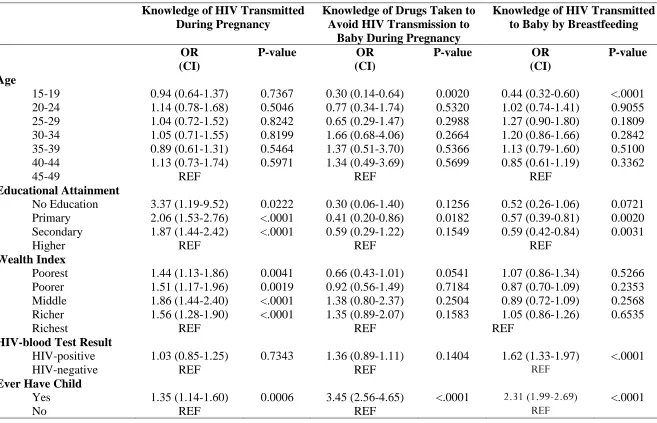
Tables 2 presents the results of the bivariate logistic regression analyses, which were used
to produce odds ratios for the three main predictors of interest (knowledge of HIV transmitted
during pregnancy, knowledge of drugs taken to avoid HIV transmission to baby during
pregnancy, and knowledge of HIV transmitted to baby by breastfeeding), using one response
category as a reference. All p-values produced by these bivariate analyses were significant at the
.05 level, indicating there is a statistically significant difference between the reference and other
response categories for the predictors of each knowledge outcome of interest. Among the three
outcomes of interest, groups with increased knowledge of HIV transmitted during pregnancy
were among those with no education (p-value, 0.0222), primary education (p-value, <.0001),
secondary education (p-value, <.0001), and all categories in wealth index. Groups with increased
those aged 15-19 (p-value, 0.0020) and with primary education (p-value, 0.0182). Lastly, groups
with increased knowledge of HIV transmitted to baby by breastfeeding were among those aged
15-19 value, <.0001), those with a primary value, 0.0020) and secondary education
(p-value, 0.0031), and have a HIV-blood test result of positive (p-(p-value, <.0001).
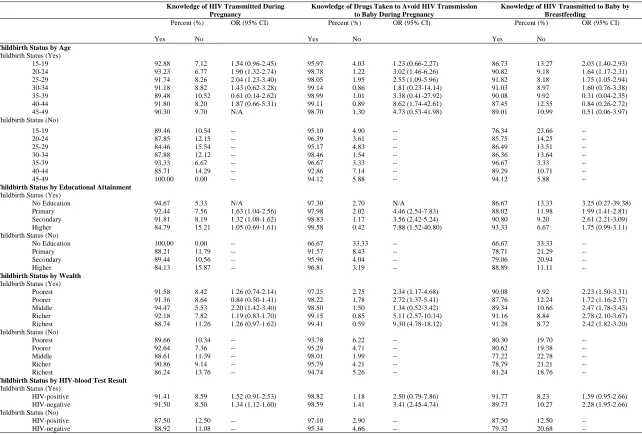
Table 3 is also a bivariate logistic regression analyses that examined the influence of each
predictor on the outcomes of interest when stratified by females who ever had a child compared
to those who never had a child while controlling for each individual predictor category response
option by having age, educational attainment, wealth, and HIV-blood test result constant. The
purpose for this stratified analysis is to determine if knowledge of HIV transmission varies
among women who have ever had a child compared to those who have never had a child while
holding the predictors constant (i.e. not comparing different categories to a reference group, but
rather to each response within a predictor based on childbirth status).
The findings showed that compared to those who have never had a child, 20-29 year olds
who ever had a child had significantly increased odds of knowledge of transmitting HIV during
pregnancy (OR=2.04). The age group, 35-39, had decreased odds (OR=0.61) of knowledge of
HIV transmission during pregnancy compared to those who never had a child; however, these
findings were not significant. This could be attributed to a low sample of individuals who never
had a child and knowledge of HIV transmission during pregnancy. It should be noted that older
age groups greater than 30 should be interpreted with caution due to the relatively low number of
individuals that may not have a child in that age group.
As for knowledge of transmission of HIV during pregnancy by educational attainment,
the findings show that among those who have had a child and had a primary (OR=1.63) and
during pregnancy compared to those who had never had a child. Interestingly, there was no
significant difference in knowledge of HIV transmission during pregnancy by child status among
those with a higher education. This is somewhat surprising to find those with higher education
have less knowledge of transmission of HIV during pregnancy compared to those with a primary
and secondary education. Additionally, compared to those with higher educational attainment, all
other educational attainment categories have increased knowledge of transmission of HIV during
pregnancy. One potential reasoning could be effective targeting or receipt of HIV transmission
knowledge elsewhere.
Knowledge of transmission of HIV during pregnancy by wealth indicated that those who
have had a child and have a middle wealth index (OR=2.20) are the only ones with a significant
increased odds of knowledge of HIV transmission during pregnancy compared to those who
never had a child. As for knowledge of drugs taken to avoid HIV transmission during pregnancy,
the findings show that all age groups have good knowledge of drugs to avoid HIV transmission
during pregnancy despite wider confidence intervals as the age group increases. As for
knowledge of drugs taken to avoid HIV transmission to baby during pregnancy, all education
groups have increased knowledge of HIV transmission and are significant despite wide
confidence intervals.
Additionally, there is no significant difference in knowledge of drugs to avoid HIV
transmission to baby among age groups, education levels, and HIV-blood test result compared to
the reference groups. However, there is a significantly increased odds (OR=1.59) of knowledge
of drugs to avoid among those that are HIV-positive and have ever had a child compared to those
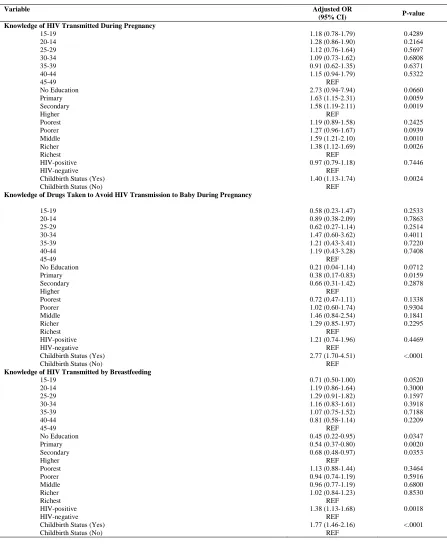
In table 4, findings show there was a significant increase in knowledge of HIV
transmitted during pregnancy among those with a primary education (p-value, 0.0059),
secondary education (p-value, 0.0019), middle wealth (p-value, 0.0010), richer wealth (p-value,
0.0026), and those who had a child (p-value, 0.0024). There was also no significant difference in
knowledge of drugs to avoid HIV transmission to baby during pregnancy among age groups,
education levels, and HIV-blood test result compared to their reference groups. However, there is
a significantly increased odds of knowledge of drugs to avoid among those that have ever had a
child compared to those without (p-value, <.0001). Lastly, compared to the reference group for
educational attainment (higher), all other educational attainment categories have significantly
decreased knowledge of HIV transmission by breastfeeding. This is also similar in the case for
Table 1. Descriptive Summary of Study Sample
Variable N Percent
Age
15-19 1,736 20.59
20-24 1,520 18.02
25-29 1,451 17.21
30-34 1,362 16.15
35-39 1,044 12.38
40-44 836 9.91
45-49 484 5.74
Missing 0
Educational Attainment
No Education 83 0.98
Primary 2,023 23.99
Secondary 5,658 67.09
Higher 669 7.93
Missing 0
Wealth Index
Poorest 1,296 15.37
Poorer 1,253 14.86
Middle 1,335 15.83
Richer 2,184 25.90
Richest 2,365 28.04
Missing 0
HIV-Blood Test Result
HIV-Negative 6,913 81.98
HIV-Positive 1,520 18.02
Missing 0
Children Ever Born
Yes 6,291 74.60
No 2,142 25.40
Missing 0
Knowledge of HIV Transmitted to Baby During Pregnancy
Yes 7,596 90.81
No 769 9.19
Missing 68
Knowledge of Drugs to Avoid HIV Transmission to Baby During Pregnancy
Yes 8,040 97.85
No 177 2.15
Missing 216
Knowledge of HIV Transmitted to Baby by Breastfeeding
Yes 7,326 87.58
No 1,039 12.42
Table 2. Bivariate Logistic Regression Examining Each Outcome of Interest by Each Predictor
Knowledge of HIV Transmitted During Pregnancy
Knowledge of Drugs Taken to Avoid HIV Transmission to
Baby During Pregnancy
Knowledge of HIV Transmitted to Baby by Breastfeeding
OR (CI)
P-value OR
(CI)
P-value OR
(CI)
P-value
Age
15-19 0.94 (0.64-1.37) 0.7367 0.30 (0.14-0.64) 0.0020 0.44 (0.32-0.60) <.0001 20-24 1.14 (0.78-1.68) 0.5046 0.77 (0.34-1.74) 0.5320 1.02 (0.74-1.41) 0.9055 25-29 1.04 (0.72-1.52) 0.8242 0.65 (0.29-1.47) 0.2988 1.27 (0.90-1.80) 0.1809 30-34 1.05 (0.71-1.55) 0.8199 1.66 (0.68-4.06) 0.2664 1.20 (0.86-1.66) 0.2842 35-39 0.89 (0.61-1.31) 0.5464 1.37 (0.51-3.70) 0.5366 1.13 (0.79-1.60) 0.5100 40-44 1.13 (0.73-1.74) 0.5971 1.34 (0.49-3.69) 0.5699 0.85 (0.61-1.19) 0.3362
45-49 REF REF REF
Educational Attainment
No Education 3.37 (1.19-9.52) 0.0222 0.30 (0.06-1.40) 0.1256 0.52 (0.26-1.06) 0.0721 Primary 2.06 (1.53-2.76) <.0001 0.41 (0.20-0.86) 0.0182 0.57 (0.39-0.81) 0.0020 Secondary 1.87 (1.44-2.42) <.0001 0.59 (0.29-1.22) 0.1549 0.59 (0.42-0.84) 0.0031
Higher REF REF REF
Wealth Index
Poorest 1.44 (1.13-1.86) 0.0041 0.66 (0.43-1.01) 0.0541 1.07 (0.86-1.34) 0.5266 Poorer 1.51 (1.17-1.96) 0.0019 0.92 (0.56-1.49) 0.7184 0.87 (0.70-1.09) 0.2353 Middle 1.86 (1.44-2.40) <.0001 1.38 (0.80-2.37) 0.2504 0.89 (0.72-1.09) 0.2568 Richer 1.56 (1.28-1.90) <.0001 1.35 (0.89-2.07) 0.1583 1.05 (0.86-1.26) 0.6535
Richest REF REF REF
HIV-blood Test Result
HIV-positive 1.03 (0.85-1.25) 0.7343 1.36 (0.89-1.11) 0.1404 1.62 (1.33-1.97) <.0001
HIV-negative REF REF REF
Ever Have Child
Yes 1.35 (1.14-1.60) 0.0006 3.45 (2.56-4.65) <.0001 2.31 (1.99-2.69) <.0001
Table 3. Bivariate Regression Analyses Examining Sociodemographic Characteristics and HIV Knowledge by Birth History
Knowledge of HIV Transmitted During
Pregnancy
Knowledge of Drugs Taken to Avoid HIV Transmission to Baby During Pregnancy
Knowledge of HIV Transmitted to Baby by Breastfeeding
Percent (%) OR (95% CI) Percent (%) OR (95% CI) Percent (%) OR (95% CI)
Yes No Yes No Yes No
Childbirth Status by Age Childbirth Status (Yes)
15-19 92.88 7.12 1.54 (0.96-2.45) 95.97 4.03 1.23 (0.66-2.27) 86.73 13.27 2.03 (1.40-2.93)
20-24 93.23 6.77 1.90 (1.32-2.74) 98.78 1.22 3.02 (1.46-6.26) 90.82 9.18 1.64 (1.17-2.31)
25-29 91.74 8.26 2.04 (1.23-3.40) 98.05 1.95 2.55 (1.09-5.96) 91.82 8.18 1.75 (1.05-2.94)
30-34 91.18 8.82 1.43 (0.62-3.28) 99.14 0.86 1.81 (0.23-14.14) 91.03 8.97 1.60 (0.76-3.38)
35-39 89.48 10.52 0.61 (0.14-2.62) 98.99 1.01 3.38 (0.41-27.92) 90.08 9.92 0.31 (0.04-2.35)
40-44 91.80 8.20 1.87 (0.66-5.31) 99.11 0.89 8.62 (1.74-42.61) 87.45 12.55 0.84 (0.26-2.72)
45-49 90.30 9.70 N/A 98.70 1.30 4.73 (0.53-41.98) 89.01 10.99 0.51 (0.06-3.97)
Childbirth Status (No)
15-19 89.46 10.54 -- 95.10 4.90 -- 76.34 23.66 --
20-24 87.85 12.15 -- 96.39 3.61 -- 85.75 14.25 --
25-29 84.46 15.54 -- 95.17 4.83 -- 86.49 13.51 --
30-34 87.88 12.12 -- 98.46 1.54 -- 86.36 13.64 --
35-39 93.33 6.67 -- 96.67 3.33 -- 96.67 3.33 --
40-44 85.71 14.29 -- 92.86 7.14 -- 89.29 10.71 --
45-49 100.00 0.00 -- 94.12 5.88 -- 94.12 5.88 --
Childbirth Status by Educational Attainment Childbirth Status (Yes)
No Education 94.67 5.33 N/A 97.30 2.70 N/A 86.67 13.33 3.25 (0.27-39.38)
Primary 92.44 7.56 1.63 (1.04-2.56) 97.98 2.02 4.46 (2.54-7.83) 88.02 11.98 1.99 (1.41-2.81)
Secondary 91.81 8.19 1.32 (1.08-1.62) 98.83 1.17 3.56 (2.42-5.24) 90.80 9.20 2.61 (2.21-3.09)
Higher 84.79 15.21 1.05 (0.69-1.61) 99.58 0.42 7.88 (1.52-40.80) 93.33 6.67 1.75 (0.99-3.11)
Childbirth Status (No)
No Education 100.00 0.00 -- 66.67 33.33 -- 66.67 33.33 --
Primary 88.21 11.79 -- 91.57 8.43 -- 78.71 21.29 --
Secondary 89.44 10.56 -- 95.96 4.04 -- 79.06 20.94 --
Higher 84.13 15.87 -- 96.81 3.19 -- 88.89 11.11 --
Childbirth Status by Wealth Childbirth Status (Yes)
Poorest 91.58 8.42 1.26 (0.74-2.14) 97.25 2.75 2.34 (1.17-4.68) 90.08 9.92 2.23 (1.50-3.31)
Poorer 91.36 8.64 0.84 (0.50-1.41) 98.22 1.78 2.72 (1.37-5.41) 87.76 12.24 1.72 (1.16-2.57)
Middle 94.47 5.53 2.20 (1.42-3.40) 98.50 1.50 1.34 (0.52-3.42) 89.34 10.66 2.47 (1.78-3.43)
Richer 92.18 7.82 1.19 (0.83-1.70) 99.15 0.85 5.11 (2.57-10.14) 91.16 8.84 2.78 (2.10-3.67)
Richest 88.74 11.26 1.26 (0.97-1.62) 99.41 0.59 9.30 (4.78-18.12) 91.28 8.72 2.42 (1.82-3.20)
Childbirth Status (No)
Poorest 89.66 10.34 -- 93.78 6.22 -- 80.30 19.70 --
Poorer 92.64 7.36 -- 95.29 4.71 -- 80.62 19.38 --
Middle 88.61 11.39 -- 98.01 1.99 -- 77.22 22.78 --
Richer 90.86 9.14 -- 95.79 4.21 -- 78.79 21.21 --
Richest 86.24 13.76 -- 94.74 5.26 -- 81.24 18.76 --
Childbirth Status by HIV-blood Test Result Childbirth Status (Yes)
HIV-positive 91.41 8.59 1.52 (0.91-2.53) 98.82 1.18 2.50 (0.79-7.86) 91.77 8.23 1.59 (0.95-2.66)
HIV-negative 91.50 8.50 1.34 (1.12-1.60) 98.59 1.41 3.41 (2.45-4.74) 89.73 10.27 2.28 (1.95-2.66)
Childbirth Status (No)
Table 4. Multivariate Regression Analyses Examining Sociodemographic Characteristics and Birth History by Each HIV Knowledge Outcome of Interest
Variable Adjusted OR
(95% CI) P-value
Knowledge of HIV Transmitted During Pregnancy
15-19 1.18 (0.78-1.79) 0.4289
20-14 1.28 (0.86-1.90) 0.2164
25-29 1.12 (0.76-1.64) 0.5697
30-34 1.09 (0.73-1.62) 0.6808
35-39 0.91 (0.62-1.35) 0.6371
40-44 1.15 (0.94-1.79) 0.5322
45-49 REF
No Education 2.73 (0.94-7.94) 0.0660
Primary 1.63 (1.15-2.31) 0.0059
Secondary 1.58 (1.19-2.11) 0.0019
Higher REF
Poorest 1.19 (0.89-1.58) 0.2425
Poorer 1.27 (0.96-1.67) 0.0939
Middle 1.59 (1.21-2.10) 0.0010
Richer 1.38 (1.12-1.69) 0.0026
Richest REF
HIV-positive 0.97 (0.79-1.18) 0.7446
HIV-negative REF
Childbirth Status (Yes) 1.40 (1.13-1.74) 0.0024
Childbirth Status (No) REF
Knowledge of Drugs Taken to Avoid HIV Transmission to Baby During Pregnancy
15-19 0.58 (0.23-1.47) 0.2533
20-14 0.89 (0.38-2.09) 0.7863
25-29 0.62 (0.27-1.14) 0.2514
30-34 1.47 (0.60-3.62) 0.4011
35-39 1.21 (0.43-3.41) 0.7220
40-44 1.19 (0.43-3.28) 0.7408
45-49 REF
No Education 0.21 (0.04-1.14) 0.0712
Primary 0.38 (0.17-0.83) 0.0159
Secondary 0.66 (0.31-1.42) 0.2878
Higher REF
Poorest 0.72 (0.47-1.11) 0.1338
Poorer 1.02 (0.60-1.74) 0.9304
Middle 1.46 (0.84-2.54) 0.1841
Richer 1.29 (0.85-1.97) 0.2295
Richest REF
HIV-positive 1.21 (0.74-1.96) 0.4469
HIV-negative REF
Childbirth Status (Yes) 2.77 (1.70-4.51) <.0001
Childbirth Status (No) REF
Knowledge of HIV Transmitted by Breastfeeding
15-19 0.71 (0.50-1.00) 0.0520
20-14 1.19 (0.86-1.64) 0.3000
25-29 1.29 (0.91-1.82) 0.1597
30-34 1.16 (0.83-1.61) 0.3918
35-39 1.07 (0.75-1.52) 0.7188
40-44 0.81 (0.58-1.14) 0.2209
45-49 REF
No Education 0.45 (0.22-0.95) 0.0347
Primary 0.54 (0.37-0.80) 0.0020
Secondary 0.68 (0.48-0.97) 0.0353
Higher REF
Poorest 1.13 (0.88-1.44) 0.3464
Poorer 0.94 (0.74-1.19) 0.5916
Middle 0.96 (0.77-1.19) 0.6800
Richer 1.02 (0.84-1.23) 0.8530
Richest REF
HIV-positive 1.38 (1.13-1.68) 0.0018
HIV-negative REF
Childbirth Status (Yes) 1.77 (1.46-2.16) <.0001
CHAPTER V
Discussion and Conclusion
5a. Discussion
The purpose of this study was to examine data collected from the 2015 Zimbabwe
Demographic and Health Survey (DHS) to determine if age, educational attainment, wealth
index, HIV-blood test result, and childbirth status were significantly associated with knowledge
of HIV-transmission routes from mother to baby among females, aged 15-49 in Zimbabwe. The
main HIV transmission knowledge outcomes of interest were knowledge of HIV transmission
during pregnancy, knowledge of drugs to avoid HIV transmission to baby during pregnancy, and
knowledge of HIV transmitted by breastfeeding.
Results of the analyses found that educational attainment and wealth index were
significantly associated with knowledge of HIV transmitted during pregnancy; age, wealth index,
and HIV-blood test result were significantly associated with knowledge of drugs taken to avoid
HIV transmission to baby during pregnancy; and age, educational attainment, HIV-blood test
result, and childbirth status were significantly associated with knowledge of HIV transmitted to
baby by breastfeeding.
The findings of this study support those found in previous literature that there are
differential risks which affect associations between age, educational attainment, wealth index,
HIV-blood test result, and childbirth status depending on the outcome of interest examined—
resulting in some factors having greater influence in predicting the outcome. Previous studies
limited knowledge of HIV prevention have a higher risk of HIV transmission, particularly among
at-risk populations, such as women and children. Moreover, the literature review on maternal and
child HIV in Zimbabwe and sub-Saharan Africa indicate that consistent ART, regular screening
and testing, and education on HIV transmission from mother-to-child during pregnancy and
post-partum were the most effective means in reducing HIV transmission rates. Lastly, the findings in
the literature review have noted the complex associations between HIV transmission routes from
mother-to-child. It was further indicated that HIV-positive mothers who are poorly educated and
are living below poverty are more likely to transmit HIV to their baby during their pregnancy
and not have the skills or knowledge on how to prevent transmission (e.g. knowledge on what
drugs to take to avoid transmission).
Overall, these analyses indicated that women who are pregnant play an integral role in
preventing their children from acquiring HIV during pregnancy. Lack of knowledge of
transmission routes and/or lack of accessibility to services and education which would provide
women with the skills, knowledge, and attitudes to prevent HIV transmission to their baby are
important to address when scaling programs and making policy changes. This is a result of
women with the lowest wealth index and educational attainment being at a higher risk for HIV
transmission.
5b. Limitations and Strengths of the Study
The findings of this study should be considered preliminary and caution should be taken
when interpreting the findings. This study cannot be generalized due to the robust nature of the
data, missing data (HIV tests were conducted for those who volunteered), use of an unweighted
variable (i.e. wealth index), and self-report biases. In addition, despite sample size being
inadvertently affected the results of the study. Lastly, the cross-sectional nature of DHS only
permits comparison of interest variables at one point in time, preventing an understanding of
causality that may exist between HIV transmission among women of child-bearing age and
factors that may influence the occurrence. However, despite the limitations, these analyses
provided tentative information to guide future research, particularly pertaining to knowledge of
HIV transmission as it relates to PMTCT.
5c. Conclusions
Maternal health services such as antenatal care visits, testing, and screening for HIV as
well as educational awareness of the disease are an important means of providing prevention and
treatment to the most vulnerable—women and children. Given the decreased prevalence of HIV
among those with high educational attainment and increased wealth status, policymakers should
consider strategies targeted at expanding HIV-testing facilities and treatment/resource centers to
ensure a wider population of interest is reached. This also involves increasing the capacity of
healthcare staff members to deliver services among those who are of lower-income and have
lower-educational attainment levels. However, to reduce HIV transmission among pregnant
mothers to their babies specifically, it is crucial to the health of the unborn baby that expectant
mothers maintain antiretroviral therapy treatments and understand the resources and tools
available to prevent the spread of the disease. Additionally, it is not only about understanding
one’s disease status but to also receive necessary and long-term support and care to keep viral
load low to minimize the risk of HIV transmission.
5d. Future Directions
Future research and intervention efforts need to consider more effective initiatives and
Zimbabwe, particularly in rural areas. In addition, role of social influences, norms, constructs,
and stigmas that contribute to HIV among these population groups should be examined. Other
areas of research and funding should also include: implementing support groups for men and
women to increase awareness about the negative consequences of engaging in risky sexual
behavior and facilitating impactful dialogues about the adverse consequences of living with
HIV/AIDS at an earlier age. Lastly, there is currently a lack of research on male involvement in
HIV-positive households with children—given that spousal support can greatly influence the
decision to seek early medical care. Other identified gaps in research include studying the
long-term effects of pregnant women in Zimbabwe who are HIV-positive, children who are born to
HIV-positive mothers, and effective interventions and strategies of reducing mother-to-child
References
Bakir, A. H., & Skarzynski, M. (2015). Health disparities in the immunoprevention of human
papillomavirus infection and associated malignancies. Frontiers in Public Health, 3.
https://doi.org/10.3389/fpubh.2015.00256
Chandisarewa, W., Stranix-Chibanda, L., Chirapa, E., Miller, A., Simoyi, M., Mahomva,
A.,…Shetty, A. K. (2007). Routine offer of antenatal HIV testing (“opt-out” approach) to
prevent mother-to-child transmission of HIV in urban Zimbabwe. Bull World Health
Organ, 83, 843–850. doi:10.2471/BLT.06.035188
Chevo, T., & Bhatasara, S. (2011). HIV and AIDS Programmes in Zimbabwe: Implications for
the Health System. ISRN Immunology, 11.doi:10.5402/2012/609128
Corsi, D. J., Neuman, M., Finlay, J.E., & Subramanian, S. (2012). Demographic and health
surveys: A profile. International Journal of Epidemiology, 41(6), 1602–1613.
Gazimbi, M., & Magadi, M. (2018). Individual-and community-level determinants of antenatal
HIV testing in Zimbabwe. Journal of Biosocial Science, 1-22.
https://doi.org/10.1017/S002193201800007X
Gumede-Moyo, S., Filteau, S., Munthali, T., Todd, J., & Musonda, P. (2017). Implementation
effectiveness of revised (post-2010) World Health Organization guidelines on prevention
of mother-to-child transmission of HIV using routinely collected data in sub-Saharan
Africa: A systematic literature review. Medicine, 96(40).
doi:10.1097/MD.0000000000008055
Kak, Y., Chitsike, I., Luo, C., & Rollins, N. (2009). Prevention of mother-to-child transmission
www.savethechildren.org/publications/technical-resources/saving-newborn-lives/snl-publications/oan-french/section-III-7-r2c.pdf
Kudzanai, M., Singh, B., Chingono, A., Sibanda, E., & Machingura, I. (2016). Is socio-economic
status a determinant of HIV-related stigma attitudes in Zimbabwe? Findings from project
accept. Journal of Public Health Africa, 7(1), 1-12. doi: 10.4081/jphia.2016.533
McCarthy, E., Joseph, J., Foster, G., Mangwiro, A. Z., Mwapasa, V., Oyeledun, B.,…Essajee,
S. (2017). Modeling the impact of retention interventions on mother-to-child transmission
of HIV: Results from INSPIRE studies in Malawi, Nigeria, and Zimbabwe. Journal of
Acquired Immune Deficiency Syndromes, 75(2), S233–S239.
doi:10.1097/QAI.0000000000001364
McHugh, G., Simms, V., Dauya, E., Bandason, T., Chonzi, P., Metaxa, D.,…Ferrand, R. A.
(2017). Clinical outcomes in children and adolescents initiating antiretroviral therapy in
decentralized healthcare settings in Zimbabwe. Journal of the International AIDS Society,
20(1). doi:10.7448/IAS.20.1.21843
Munjanja, S., Nystrom, L., Nyandoro, M., & Magwali, T. (2007). Maternal and perinatal
mortality study. Harare, Zimbabwe: Government of Zimbabwe, and Ministry of Health
and Child Welfare. Retrieved from
https://www.unicef.org/zimbabwe/ZMPMS_report.pdf
Takarinda, K. C., Madyira, L. K., Mhangara, M., Makaza, V., Maphosa, M., Rusakaniko, S.,
& Harries, A. D. (2014). Factors associated with HIV testing in the 2010-11 Zimbabwe
demographic and health survey. Retrieved from
http://dhsprogram.com/publications/publication-WP110-Working-Papers.cfm
Rusakaniko, S., Harries, A. D. (2016). Factors associated with ever being HIV-tested in
Zimbabwe: An extended analysis of the Zimbabwe demographic and health survey
(2010–2011). PLOS ONE, 11(1). https://doi.org/10.1371/journal.pone.0147828
Avert. (2017). Children, HIV and AIDS. Retrieved from
https://www.avert.org/professionals/hiv-social-issues/key-affected-populations/children
Centers for Disease Control and Prevention (CDC). (2017a). About HIV/AIDS. Retrieved from
https://www.cdc.gov/hiv/basics/whatishiv.html
Centers for Disease Control and Prevention (CDC). (2017b). HIV-cost effectiveness. Retrieved
from https://www.cdc.gov/hiv/programresources/guidance/costeffectiveness/index.html
Georgia State University. 2018. Human subjects (IRB) policy for publicly available, archival,
and secondary data. Retrieved from
https://ursa.research.gsu.edu/human-subjects/policy-for-publicly-available-archival-and-secondary-data/
Mayo Clinic. (2015). HIV/AIDS risk factors. Retrieved from
https://www.mayoclinic.org/diseases-conditions/hiv-aids/basics/risk-factors/con-20013732
The DHS Program - Demographic and Health Surveys (DHS). (n.d.). DHS overview. Retrieved
from https://dhsprogram.com/What-We-Do/Survey-Types/DHS.cfm
The Elizabeth Glaser Pediatric AIDS Foundation. (2017). Zimbabwe. Retrieved from
http://www.pedaids.org//countries/zimbabwe
The Joint United Nations Programme on HIV/AIDS (UNAIDS). (2018). Zimbabwe. Retrieved
from http://www.unaids.org/en/regionscountries/countries/zimbabwe
for DHS 6, demographic and health surveys methodology. Retrieved from
https://www.dhsprogram.com/pubs/pdf/DHSG4/Recode6_DHS_22March2013_DHSG4.
United States Department of Health and Human Services (HHS). (2016). A timeline of HIV and
AIDS. Retrieved from
https://www.hiv.gov/hiv-basics/overview/history/hiv-and-aids-timeline#year-1982
World Health Organization (WHO). (2017a). Metrics: Disability-adjusted life year (DALY).
Retrieved from http://www.who.int/healthinfo/global_burden_disease/metrics_daly/en/
World Health Organization (WHO). (2017b). Mother-to-child transmission of HIV. Retrieved
from http://www.who.int/hiv/topics/mtct/about/en/
Zimbabwe Demographic and Health Survey. (2016). Zimbabwe demographic and health survey
2015 final report. The DHS Program, 39-40. Retrieved from