Molecular Cloning and Characterization of the Ehrlichia chaffeensis
Variable-Length PCR Target: an Antigen-Expressing Gene That
Exhibits Interstrain Variation
JOHN W. SUMNER,* JAMES E. CHILDS,ANDCHRISTOPHER D. PADDOCK
Viral and Rickettsial Zoonoses Branch, Division of Viral and Rickettsial Diseases, National Center for Infectious Diseases, Centers for Disease Control and Prevention, Atlanta, Georgia 30333
Received 27 October 1998/Returned for modification 17 December 1998/Accepted 5 February 1999
A clone expressing an immunoreactive protein with an apparent molecular mass of 44 kDa was selected from an Ehrlichia chaffeensis Arkansas genomic library by probing with anti-E. chaffeensis hyperimmune mouse ascitic fluid. Nucleotide sequencing revealed an open reading frame (ORF) capable of encoding a 198-amino-acid polypeptide. The ORF contained four imperfect, direct, tandem 90-bp repeats. The nucleotide and deduced amino acid sequences did not show close homologies to entries in the molecular databases. PCR with primers whose sequences matched the sequences flanking the ORF was performed with DNA samples extracted from cell cultures infected with nine different isolates of E. chaffeensis, blood samples from seven patients with monocytic ehrlichiosis, and Amblyomma americanum ticks collected in four different states. The resulting amplicons varied in length, containing three to six repeat units. This gene, designated the variable-length PCR target, is useful for PCR detection of E. chaffeensis and differentiation of isolates.
Human ehrlichiosis was first described in the United States in 1987 (17), and the first isolation of an Ehrlichia species from a North American patient was reported in 1991 (8). The or-ganism was designated a new species, Ehrlichia chaffeensis, because the 16S rRNA gene sequence of the isolate was sig-nificantly different from that of previously described Ehrlichia species (2). Infection with E. chaffeensis results in a moderate to severe febrile illness observed most frequently in the south-eastern and south-central regions of the United States (11, 13, 28). Over 70% of patients describe a history of tick bite or exposure 1 to 2 weeks preceding the illness. Several studies have implicated the lone star tick, Amblyomma americanum, as the primary vector of E. chaffeensis (4, 12, 16). Approximately 750 cases of E. chaffeensis infection have been confirmed se-rologically by the Centers for Disease Control and Prevention (CDC) to date (5).
The emergence or recognition of human diseases caused by tick-transmitted ehrlichiae has stimulated interest in the mo-lecular biology of these obligate intracellular bacteria. The cloning and characterization of several antigen-expressing genes belonging to E. chaffeensis have recently been described, including the groESL heat shock operon (24, 25) and the 120-kDa immunodominant surface protein gene (29, 30). Ohashi et al. (18) and Reddy et al. (22) have described a multigene family of E. chaffeensis that demonstrates homology to major surface antigen genes (MAP 1) of a closely related bacterium, Cowdria ruminantium (21, 27).
Initially, E. chaffeensis was isolated and propagated in cell culture with difficulty, but more recently, multiple isolations of this pathogen from human patients from several geographic areas have been described. The original isolate was designated the Arkansas strain (2, 8). The 91HE17 and Sapulpa isolates were described in 1995 (10) and 1997 (6), respectively. Since 1996, six additional isolates of E. chaffeensis have been
ob-tained at CDC from blood samples from patients with ehrli-chiosis (reference 19 and data herein). The availability of mul-tiple isolates now provides ample material for the study of the molecular and immunologic diversity among different strains of E. chaffeensis. In this report, we describe the cloning and sequencing of an E. chaffeensis gene containing repetitive sequence motifs. We have referred to this gene as the variable-length PCR target (VLPT) and have described sequence dif-ferences among PCR products amplified from the Arkansas, Jax, and St. Vincent isolates of E. chaffeensis (19). In this report, we describe the detection of VLPT by PCR in a variety of samples from different sources, sequence variation among the amplicons, and recombinant expression of the VLPT pro-tein in Escherichia coli.
MATERIALS AND METHODS
Isolation and cultivation of E. chaffeensis.The Arkansas, 91HE17, Sapulpa, Jax, and St. Vincent isolates of E. chaffeensis were obtained from clinical samples as described previously (6, 8, 10, 19). The Liberty, Osceola, Wakulla, and West Paces isolates were recovered from EDTA-anticoagulated whole blood collected from patients with clinical disease by a previously described method (19). Briefly, patient blood samples (1 to 5 ml) were diluted with 2 volumes of sterile Hanks’ balanced salt solution and layered onto Histopaque 1083 (Sigma Diagnostics, St.
Louis, Mo.). The prepared samples were centrifuged at 4003g for 10 min. The
leukocyte pellets were resuspended in culture medium (minimal essential me-dium containing Earle’s salts and 16 mM some-dium bicarbonate [GIBCO BRL, Grand Island, N.Y.], 8.8% heat-inactivated fetal bovine serum [Hyclone
Labo-ratories, Logan, Utah], 1.8 mML-glutamine [GIBCO BRL], 0.1 mM minimal
essential medium with nonessential amino acids [GIBCO BRL], and 8.8 mM HEPES buffer [GIBCO BRL]). Semiconfluent monolayers of DH82 cells in a
25-cm2polystyrene cell culture flask were inoculated with the cell suspensions.
Cultures were incubated at 37°C in a 5.0% CO2atmosphere. Isolates of E.
chaffeensis were maintained in continuous culture in DH82 cells as described
previously (8, 19).
Construction of genomic expression library. Cell-free preparations of E.
chaffeensis Arkansas were obtained from infected DH82 cell cultures as
de-scribed previously (24). DNA was extracted by proteinase K digestion and phe-nol-chloroform extraction and was fragmented for library construction by using
EcoRI star activity (1). DNA fragments from 2 to 10 kb in size were isolated by
agarose gel electrophoresis and were cloned into Stratagene’s Lambda Zap II vector by the procedures recommended by the manufacturer (Stratagene, La Jolla, Calif.).
Immunoscreening of expression library.Clones were screened by using
anti-E. chaffeensis hyperimmune mouse ascitic fluid (HMAF; kindly provided by Tom
Ksiazek, Special Pathogens Branch, CDC). Preparation of HMAF has been
* Corresponding author. Mailing address: Viral and Rickettsial Zoonoses Branch, Centers for Disease Control and Prevention, 1600 Clifton Rd., Mailstop G-13, Atlanta, GA 30333. Phone: (404) 639-1075. Fax: (404) 639-4436. E-mail: [email protected].
1447
on May 15, 2020 by guest
http://jcm.asm.org/
described previously (14). Recombinant clones expressing reactive proteins were selected by immunoscreening phage plaques on lawns of E. coli XL-1 Blue.
Nitrocellulose filters soaked in 10 mM isopropyl-b-D-thiogalactopyranoside and
placed over lawns during plaque formation were reacted with a 1:200 dilution of HMAF for 1 h in Tris-buffered saline containing Tween 20 (TBST). The filters were washed three times in TBST and reacted for 1 h with anti-mouse immu-noglobulin G (heavy and light chains) peroxidase conjugate (Kirkegaard & Perry Laboratories, Gaithersburg, Md.) diluted 1:5,000 in TBST. The filters were then washed three times with TBST and reacted with tetramethylbenzidine membrane substrate (Kirkegaard & Perry). Immunoreactive plaques were subjected to three rounds of plaque purification. Phagemids from reactive plaques were rescued and excised by the Stratagene protocol, producing pBluescript plasmids contain-ing inserts.
Immunoblotting.E. coli containing excised recombinant phagemid or
trans-formed with plasmid subclones was grown overnight at 37°C in 5 ml of Luria
broth containing ampicillin (100mg/ml). Fresh cultures containing 1 mM
isopro-pyl-b-D-thiogalactopyranoside were subsequently inoculated with 50ml of the
overnight culture. Several 200-ml samples were removed when the optical density
of the culture reached 0.3 to 0.4 (600-nm wavelength), and the bacterial cells
were pelleted by centrifugation at 10,000 3g for 3 min. The bacteria were
resuspended in sample buffer (Novex, San Diego, Calif.) containing 5% 2-mer-captoethanol and 1% sodium dodecyl sulfate (SDS), heated at 100°C for 5 min,
and centrifuged at 10,0003g for 3 min. Ten-microliter samples of each
super-natant were loaded into individual wells of 4 to 20% gradient Tris-glycine-SDS gels (Novex) for SDS-polyacrylamide gel electrophoresis at 100 V for 90 min. The proteins were transferred to nitrocellulose membranes (Novex) for 2 h at 90 V with a Mini-Transblot Cell (Bio-Rad, Hercules, Calif.). The filters were re-acted with the HMAF as described above for immunoscreening.
Subcloning.The restriction endonucleases, calf intestinal alkaline phospha-tase, and T4 DNA ligase used for mapping and the construction of subclones were obtained from Boehringer Mannheim, Indianapolis, Ind., or New England Biolabs, Beverly, Mass. Some subclones were made by cloning PCR products directly into the T/A cloning vector pGEM-T (Promega Corp., Madison, Wis.) according to the manufacturer’s recommendations.
Nucleotide sequencing.Plasmids were purified with Wizard Minipreps (Pro-mega Corp., Madison, Wis.), and Wizard PCR preps (Pro(Pro-mega Corp.) were used for purification of PCR products. PCR products were sequenced directly, with the exception of one product obtained from an individual tick (tick 97-36; see Table 1) that was cloned into plasmid pGEM-T prior to sequencing (Promega
Corp.). If gel purification was necessary prior to sequencing, 40ml of the
indi-vidual PCR mixture was electrophoresed in gels containing 1.2% low-melting-point agarose (Boehringer Mannheim) and the appropriate band was excised. Purified preparations were sequenced with the Prism Ready Reaction DyeDeoxy Cycle Sequencing kit (Applied Biosystems, Foster City, Calif.) and a Perkin-Elmer 9600 thermocycler. Thermocycler parameters for sequencing were 96°C for 1 min, 50°C for 15 s, and 60°C for 4 min for 25 cycles. Unincorporated fluorescence-labeled deoxynucleoside triphosphates were removed with Centri-Sep columns according to the manufacturer’s recommendations (Princeton Centri- Sep-arations, Inc., Adelphia, N.J.). Samples were loaded onto 5% polyacrylamide gels for electrophoresis and detection on Applied Biosystem model 370A or 377 automated sequencers. Both strands were sequenced, initially by primer walking and later with established primer sets.
Samples selected for analysis of the VLPT gene.Three categories of specimens were evaluated by PCR for detection of the VLPT gene (see Table 1): (i) EDTA-anticoagulated whole-blood samples from patients with E. chaffeensis infection confirmed by PCR with primers HE1 and HE3 (3) for detection of the 16S rRNA gene; (ii) nine isolates of E. chaffeensis, in DH82 cells, obtained from human patients (Arkansas, 91HE17, and Sapulpa [kindly provided by D. H. Walker], Jax, St. Vincent, Osceola, Wakulla, Liberty, and West Paces); and (iii) individual and pooled A. americanum ticks collected from geographic regions where E. chaffeensis is endemic.
Extraction of E. chaffeensis DNA from patient blood, isolates, and ticks.DNA
was extracted from 200ml of patient whole blood by using the QIAmp Blood Kit
(Qiagen Inc., Santa Clarita, Calif.) according to the manufacturer’s
recommen-dations. Similarly, DNA was extracted from 20 ml of supernatant from E.
chaffeensis-infected DH82 cell cultures. Individual ticks were minced in a
cryo-tube with a sterile scalpel blade, and DNA was extracted with QIAmp tissue kits (Qiagen, Inc.). Extraction of DNA from pooled A. americanum ticks (see Table 2) was conducted at CDC’s Ft. Collins facility as part of a previous study, and the extraction procedure has been described previously (4, 15).
PCR amplification.PCRs were performed with GeneAmp kits (Roche Mo-lecular Systems, Inc., Branchburg, N.J.) according to the manufacturer’s recom-mendations and Perkin-Elmer thermal cyclers. Ten microliters from each DNA
extraction was added to 90 ml of the master mixture for each 100-ml PCR
mixture. The final reagent concentrations were 0.5mM each primer, 2.5 U of
AmpliTaq DNA polymerase per reaction mixture, 10 mM Tris-HCl (pH 8.3), 50
mM KCl, 1.5 mM MgCl2, and each deoxynucleoside triphosphate at a
concen-tration of 200mM. The following thermocycler parameters were used: 3 cycles of
94°C (1 min), 52°C (2 min), and 70°C (90 s), followed by 37 cycles of 88°C (1 min), 55°C (2 min), and 70°C (90 s), followed by an extension period (68°C, 5
min). VLPT primers FB5A (59-GTGACATCTTAGTTTAATAGAAC) and
FB3A (59-AAGACTGAAACGTTATAGAG) were used in primary PCRs.
Nested PCR with primers FB5 (59-AAATAGGGTATAAATATGTCAC) and
FB3 (59-GCCTAATTCAGATAAACTAAC) was performed with extracts from
individual ticks. One microliter of the primary PCR product was used as a template in the nested reactions. The cycling parameters for the nested PCRs were the same as those used for the primary reactions. Samples were also tested by a PCR assay with primers HE1 and HE3 targeted to the 16S rRNA gene (rDNA) of E. chaffeensis as described by Anderson et al. (3). In addition, extracts from individual isolates in cell culture were tested by PCR with primers WF1 and WR2 for amplification of the 120-kDa antigen gene as described by Yu et al.
(29). PCR products were detected by electrophoresis of 10-ml samples in 1.4%
Tris-acetate agarose gels containing ethidium bromide.
Computer analysis of sequence data.Nucleotide sequences were edited and assembled with the TED and XBAP programs of the STADEN sequence anal-ysis package (23). Nucleotide sequence homology searches were made through the National Center for Biotechnology Information BLAST network service. Sequence homology comparisons were made with the GAP program of the GCG package (Genetics Computer Group, Madison, Wis.). Multiple-sequence align-ments were made with the PILEUP and PRETTY programs of the GCG pack-age.
Nucleotide sequence accession numbers.The nucleotide sequence accession numbers for the complete VLPT sequences of the following E. chaffeensis iso-lates are as indicated: 91HE17, AF121237; Arkansas, AF121232; Jax, AF121234; Liberty, AF121236; Osceola, AF121233; Sapulpa, AF121230; St. Vincent, AF121231; Wakulla, AF121238; and West Paces, AF121235.
RESULTS
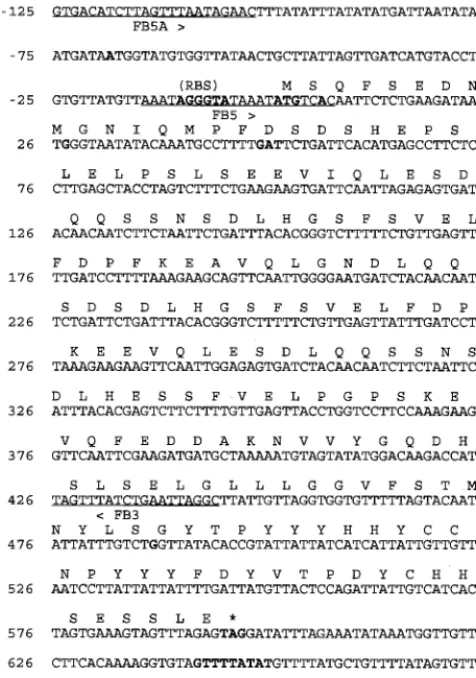
Sequence analysis of E. chaffeensis Arkansas clone.pBluescript clones derived from 10 immunoreactive plaques were analyzed by SDS-polyacrylamide gel electrophoresis and immunoblot-ting with HMAF. Three of 10 clones expressed an immunore-active protein that comigrated with an E. chaffeensis Arkansas protein with an apparent molecular mass of approximately 44 kDa. Restriction endonuclease digestion with EcoRI showed that each of the three clones contained an insert of approxi-mately 7 kb, and nucleotide sequencing with M13 universal and reverse primers showed identical sequences for the inserts of each clone near the plasmid junction. One clone was selected for further analysis. After restriction mapping, subclones were made and screened for protein expression. A subclone con-taining a 2.6-kb fragment of the original insert expressed a 44-kDa protein. The complete insert was sequenced by primer walking. The longest open reading frame (ORF) encoded a 198-amino-acid polypeptide, approximately one-half the size predicted for a 44-kDa protein. A sequence compatible with a ribosome-binding site was found 11 bp upstream of the putative ATG start codon (Fig. 1). Multiple stop codons were found down-stream of the first stop codon, and homologous sequences were not found elsewhere in the insert. Sequence homology searches with the nucleotide and deduced amino acid se-quences did not show significant similarities to entries in the genetic databases.
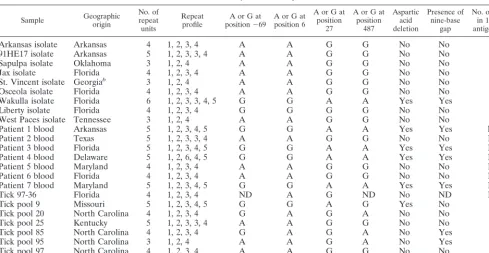
VLPT PCR.Multiple sample types were evaluated by using the primers derived from the sequenced clone. Analysis of sequences from nine isolates, seven clinical whole-blood spec-imens, seven A. americanum tick pools, and one individual tick are listed in Table 1. Amplicons of four different sizes were produced, with each differing in apparent size by a factor of 90 bp (Fig. 2). Nucleotide sequencing revealed that the size dif-ferences resulted from variations in the number of repeat units. The corresponding patient blood samples from which six of the isolates (Jax, Liberty, Osceola, St. Vincent, Wakulla, and West Paces) were obtained were tested individually. For each blood sample, the VLPT sequence was identical to the VLPT sequence of the corresponding isolate (data not shown). The seven blood samples listed in Table 1 were collected from ehrlichiosis patients for whom isolates were not obtained.
In addition to demonstrating concordance between repeat unit number for isolates and the corresponding whole blood samples, we investigated whether the number of repeat units in the VLPT remained stable with passage in cell culture. DNA
on May 15, 2020 by guest
http://jcm.asm.org/
samples were extracted from the St. Vincent, Jax, Osceola, and Wakulla isolates after the eighth cell culture passage. The sizes of the amplicons obtained from patient blood samples were identical to those obtained from the corresponding isolate af-ter the eighth cell culture passage, indicating that the number of repeat units remained stable through multiple passages in cell culture.
PCR specificity.DNA samples extracted from the blood of a healthy patient and uninfected DH82 cells were included as negative controls and did not produce amplicons. DNA sam-ples extracted from related bacteria were tested in PCRs with VLPT primers (FB5A-FB3A and FB5-FB3) to assess primer specificity. Samples included DNA extracted from cultures in-dividually infected with the human granulocytic ehrlichiosis agent (strain USG3), Ehrlichia canis Florida, Ehrlichia muris AS145, and Ehrlichia risticii HRC-IL and from purified Anaplasma marginale Virginia, Bartonella henselae Houston 1, and Rickettsia rickettsii R. DNA extracted from E. coli XL-1 Blue, which was used for construction of the genomic library, was also tested. None of the DNA samples produced bands of
significant intensity and size compatible with those of the VLPT amplicons obtained from E. chaffeensis. DNA extracted from whole blood from a dog naturally infected with Ehrlichia ewingii produced an amplicon of approximately 1,600 bp in a primary PCR with primers FB5A and FB3A. This amplicon was sequenced and did not contain an ORF with sequence homology to VLPT. DNA samples extracted from several strains of C. ruminantium were tested with VLPT primers FB5 and FB3, and amplicons of different sizes were obtained from different strains; however, none of the products hybridized with a labeled E. chaffeensis VLPT probe (20a).
Detection of E. chaffeensis in ticks.To determine whether VLPT PCR would be useful for detection of E. chaffeensis in ticks and to determine whether a variable number of repeat units would also be present in samples of nonhuman origin, 10 pools of A. americanum ticks were tested with primers FB5A and FB3A. Seven of the pools were selected on the basis of previous positive results for the E. chaffeensis 16S rDNA (4) and three pools that produced negative results were selected as controls (Table 2). The VLPT PCR results (Table 2) showed an exact correlation with the 16S rDNA PCR results. Three VLPT amplicon sizes were obtained, and these corresponded to three, four, or five repeat units (Table 1). Two bands were visible in the PCR product from pool 95: a bright band grating with a three-repeat unit marker and a faint band comi-grating with a four-repeat unit marker (data not shown). We were not able to recover sufficient DNA from the faint band for sequencing, but these results may indicate that more than one variant was detected in the pool.
Nested VLPT PCR was performed with DNA extracted from 42 individual adult A. americanum ticks collected in Baker County, Fla. Negative controls, a water extraction blank, and a colony-raised adult female A. americanum tick did not produce products. As a positive control, an adult female A. americanum tick infected with E. chaffeensis Arkansas by cap-illary feeding (20) produced a four-repeat-unit amplicon, as expected. Six of 42 tick extracts produced amplicons of the VLPT four-repeat-unit size. One of the six amplicons was sequenced and was confirmed to be VLPT (Table 1). Primary PCR with VLPT primer pair FB5A-FB3A and 16S rDNA primer pair HE1-HE3 did not produce visible products from individual ticks.
Sequence variation among VLPT amplicons.The amplicons were sequenced to confirm their identities and to characterize the sequence variations. Variations occurred at several levels, including the number and sequences of repeat units, the oc-currence of a codon deletion (aspartic acid residue) immedi-ately preceding the first repeat unit, the occurrence of a 9-bp deletion in the region downstream of the coding sequence, and single substitutions in certain nucleotide positions (Table 1 and Fig. 1).
[image:3.612.55.293.76.415.2]Amplicons from different samples contained three to six repeat units, representing the four different sizes. To facilitate characterization of sequence differences, the deduced amino acid sequences of the repeat units from all amplicons were aligned, and type numbers were assigned for conserved se-quences. There were five conserved types that differed at 4 to 18 amino acid positions. Two additional types (types 6 and 7) were each found in only one amplicon. The nucleotide se-quences of individual repeat unit types were very conserved, with little variation in the third positions of codons. The de-duced amino acid sequence of E. chaffeensis Wakulla, the only example of a six-repeat unit VLPT in our series, is shown in Fig. 3, and the repeat units are numbered to illustrate the five conserved types. A total of six different repeat profiles (number and order of repeat unit types) were represented among the
FIG. 1. Nucleotide and deduced amino acid sequences of the E. chaffeensis Arkansas VLPT. The following features are indicated in boldface type: putative ribosome-binding site (RBS), translation initiation codon, and termination codon (asterisk). An aspartic acid codon (GAT) and the sequence 59-GTTTTA TAT, which are absent from sequences amplified from some strains of E.
chaffeensis, and four individual nucleotide positions where substitutions (A or G)
occur among different strains are also indicated in boldface type. PCR primers are underlined and labeled, and directions are indicated. The nucleotide se-quence was numbered by designating the A of the putative translation initiation codon number 1.
on May 15, 2020 by guest
http://jcm.asm.org/
VLPT sequences amplified from isolates and patient whole blood (Table 1). Repeat types are listed in the downstream-to-upstream orientation. Type 1 represents the partial repeat always found the farthest downstream (Fig. 3). Among the amplicon sequences containing three or four repeats, the types and linear order of repeat units were conserved (e.g., 1, 2, 4 and 1, 2, 3, 4). Amplicons containing more than four repeat units usually contained a duplication of the type 3 unit or the addition of a type 5 unit. Among the amplicon sequences containing five repeats, we found three variations in the types and order of repeat units (Table 1).
In seven of the amplicons (representing one isolate, four patient blood samples, and two tick pools), three nucleotides representing an aspartic acid codon were absent. When present,
this aspartic acid residue was the 17th residue from the amino terminus and immediately preceded the beginning of the first repeat unit.
[image:4.612.57.547.83.336.2]A gap consisting of a nine-nucleotide deletion (59-GTTTT ATAT) occurred in the same position in seven amplicons (rep-resenting one isolate, four patient samples, and two tick pools). The G in this sequence is located 45 nucleotides downstream of the putative stop codon, and the sequence is marked in boldface type in Fig. 1. A repetitive motif (GTTTT) that may facilitate recombination was found in this region. The nine-base gap and the aspartic acid deletions were found more often in the amplicons with a larger number of repeats, and these deletions were always associated with each other in amplicons
TABLE 1. Summary of VLPT sequence variation
Sample Geographicorigin No. ofrepeat
units
Repeat
profile positionA or G at269 A or G atposition 6
A or G at position
27
A or G at position
487
Aspartic acid deletion
Presence of nine-base
gap
No. of repeats in 120-kDa
antigen genea
Arkansas isolate Arkansas 4 1, 2, 3, 4 A A G G No No 4
91HE17 isolate Arkansas 5 1, 2, 3, 3, 4 A A G G No No 4
Sapulpa isolate Oklahoma 3 1, 2, 4 A A G G No No 3
Jax isolate Florida 4 1, 2, 3, 4 A A G G No No 4
St. Vincent isolate Georgiab 3 1, 2, 4 A A G G No No 3
Osceola isolate Florida 4 1, 2, 3, 4 A A G G No No 3
Wakulla isolate Florida 6 1, 2, 3, 3, 4, 5 G G A A Yes Yes 4
Liberty isolate Florida 4 1, 2, 3, 4 G G G G No No 4
West Paces isolate Tennessee 3 1, 2, 4 A A G G No No 3
Patient 1 blood Arkansas 5 1, 2, 3, 4, 5 G G A A Yes Yes NDc
Patient 2 blood Texas 5 1, 2, 3, 3, 4 A A G G No No ND
Patient 3 blood Florida 5 1, 2, 3, 4, 5 G G A A Yes Yes ND
Patient 4 blood Delaware 5 1, 2, 6, 4, 5 G G A A Yes Yes ND
Patient 5 blood Maryland 4 1, 2, 3, 4 A A G G No No ND
Patient 6 blood Florida 4 1, 2, 3, 4 A A G G No No ND
Patient 7 blood Maryland 5 1, 2, 3, 4, 5 G G A A Yes Yes ND
Tick 97-36 Florida 4 1, 2, 3, 4 ND A G ND No ND ND
Tick pool 9 Missouri 5 1, 2, 3, 4, 5 G G A G Yes No 4
Tick pool 20 North Carolina 4 1, 2, 3, 4 G A G A No No 3
Tick pool 25 Kentucky 5 1, 2, 3, 3, 4 A A G G No No 4
Tick pool 85 North Carolina 4 1, 2, 3, 4 G A G A No Yes 3
Tick pool 95 North Carolina 3 1, 2, 4 A A G A No Yes 3
Tick pool 97 North Carolina 4 1, 2, 3, 4 A A G G No No 3
Tick pool 130 North Carolina 4 1, 2, 3, 7 A G A A Yes No 4
aThe 120-kDa antigen gene PCR results for tick pools were taken from Yu et al. (30).
bFlorida patient with history of tick exposure in Georgia.
cND, not done.
FIG. 2. Agarose gel electrophoresis of PCR products amplified from differ-ent cell culture isolates of E. chaffeensis and control samples with VLPT primers FB5A and FB3A. Lanes: A, water; B, extraction blank; C, uninfected DH82 cells; D, St. Vincent; E, Arkansas; F, Jax; G, Osceola; H, 91HE17; I, Wakulla. The
[image:4.612.312.550.566.695.2]outside lanes containfX174/HaeIII molecular mass markers.
TABLE 2. Collection information and PCR results for pools of adult A. americanum ticks
Tick
pool no. No. of ticksin pool State of origin
16S rRNA PCR
resulta
VLPT PCR result
120-kDa gene
PCR resultb
9 10 Missouri 1 1 1
20 12 North Carolina 1 1 1
25 2 Kentucky 1 1 1
85 10 North Carolina 1 1 1
95 10 North Carolina 1 1 1
97 10 North Carolina 1 1 1
130 10 North Carolina 1 1 1
13 4 Missouri 2 2 NDc
21 2 Missouri 2 2 ND
219 8 Missouri 2 2 ND
aThe 16S rRNA gene PCR results for positive pools were taken from
Ander-son et al. (4).
bThe 120-kDa antigen gene PCR results were taken from Yu et al. (30).
cND, not done.
on May 15, 2020 by guest
http://jcm.asm.org/
derived from the isolates and patient blood samples but not the tick pools.
Adenosine or guanosine substitutions were found primarily at four distinct positions (positions269, 6, 27, and 487) among the different VLPT amplicons (Table 1). Nucleotide tions at positions 27 and 487 resulted in amino acid substitu-tions from methionine to isoleucine and serine to glycine, re-spectively. Position 6 corresponds to the second nucleotide from the 39end of primer FB5. We are currently evaluating the use of a primer slightly upstream of FB5, because sequence variation in the primer site could adversely affect PCR sensi-tivity.
In summary, among the three-repeat-unit varieties, the Sapulpa, St. Vincent, and West Paces isolates had identical sequences, but the sequence of the amplicon from tick pool 95 differed at position 487 and had the 9-base gap. Among the four-repeat-unit varieties, amplicons from the Arkansas, Jax, and Osceola isolates, patient 5, patient 6, and tick pool 97 had identical VLPT sequences, although the Osceola isolate had a three-repeat-unit version of the 120-kDa antigen gene and the others had the four-repeat-unit version. The sequences of the remaining four-repeat-unit versions, those from tick pools 20, 85, and 130 and the Liberty isolate, are different from those listed above and from each other. Among the five-repeat-unit varieties, amplicons from the 91HE17 isolate, patient 2, and tick pool 25 had identical VLPT sequences. Amplicons from patients 1, 3, and 7 had identical sequences, and the sequences from patient 4 and tick pool 9 were unique. The Wakulla isolate contained six repeat units.
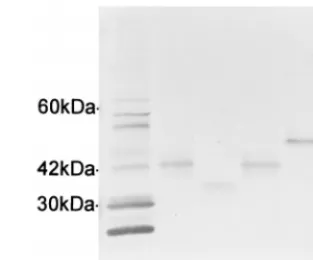
Expression of VLPT protein from cloned amplicons. Ampli-cons from the St. Vincent, Jax, and 91HE17 isolates (repre-senting the three-, four-, and five-repeat-unit versions, respec-tively) were cloned into an expression vector, and E. coli lysates were examined for expression of the VLPT protein. The VLPT genes of the Arkansas and Jax isolates were equal in size (four repeat units) and expressed comigrating proteins. The proteins expressed by the St. Vincent and 91HE17 clones were propor-tional to the sizes of the ORFs (Fig. 4). Expression of the VLPT was cytotoxic to E. coli, resulting in colonies approxi-mately a quarter the size of those produced by the same strain of E. coli not transformed with a recombinant plasmid con-taining the VLPT insert.
Amplification of 120-kDa antigen gene.PCR amplification of the E. chaffeensis 120-kDa antigen gene was performed to
additionally characterize each isolate, because variation among strains was described previously (30). Two size variants were found (Table 1), and these corresponded to the three- and four-repeat-unit versions described previously (6, 30) in the Sapulpa and Arkansas strains of E. chaffeensis, respectively. The Osceola, St. Vincent, and West Paces isolates produced amplicons of the same size as that produced by the Sapulpa strain, and the Jax, Wakulla, Liberty, and 91HE17 isolates produced amplicons of the same size as that produced by the Arkansas strain. These amplicons were partially sequenced with a single primer to confirm their identities. The corre-sponding patient blood samples were not tested. DNA samples from the tick pools were previously tested by PCR with the 120-kDa antigen gene primers (30), and one of the two size variations (e.g., three or four repeat units) was found in each pool (Table 1).
DISCUSSION
In this report we present the results of the cloning, se-quencing, and expression of a previously uncharacterized E. chaffeensis gene and describe a wide range of sequence varia-tion among PCR amplicons derived from different isolates, patient samples, and ticks. The VLPT gene appears to be a sensitive and specific marker for E. chaffeensis. This gene has multiple diagnostic applications and represents a potentially important tool for the study of the molecular epidemiology of E. chaffeensis. The VLPT gene conveniently differentiates strains of E. chaffeensis. Some of the established DNA finger-printing techniques for the detection of genetic diversity among strains of bacteria, such as arbitrary primed PCR (ran-domly amplified polymorphic DNA [RAPD] PCR [RAPD-PCR]), have the advantage of targeting the entire genome and require little knowledge of the nucleotide sequence (26). How-ever, RAPD-PCR is difficult to apply to obligate intracellular bacteria, primarily because of problems associated with con-tamination of preparations with host-cell DNA. Consequently, conserved genes or regions of known sequence must be tar-geted.
Two of the first Ehrlichia genes sequenced, the 16S rRNA gene (1) and the groESL operon (24), appear to be completely conserved among several isolates of E. chaffeensis (19). Anal-ysis of tRNA interrepeat length polymorphisms has been used
[image:5.612.351.508.75.205.2]FIG. 3. Deduced amino acid sequence of the VLPT gene of E. chaffeensis Wakulla with the six repeat units aligned and numbered according to sequence type. Repeat units with conserved sequences were categorized and numbered to facilitate description of genetic variation. Repeat unit types and the order in which they occur vary among some strains.
FIG. 4. Western immunoblot reacted with anti-E. chaffeensis HMAF showing the proteins expressed by three different size variations of the VLPT gene. The lanes contained lysates from purified E. chaffeensis Arkansas (lane Ec) E. coli transformed with a VLPT clone selected from the E. chaffeensis Arkansas genomic library (lane Ac), and E. coli transformed with plasmids containing PCR amplicons from the following strains: St. Vincent (lane 3R), Jax (lane 4R), and 91HE17 (lane 5R) (R indicates the number of 90-bp repeat units found in the VLPT gene of each strain).
on May 15, 2020 by guest
http://jcm.asm.org/
to detect and differentiate Ehrlichia species (9), but the utility of this method for the detection of differences among strains of the same species has not been determined. Two E. chaffeensis genes for which isolate-dependent sequence polymorphisms have been demonstrated are the 120-kDa antigen gene (29) and the VLPT described in this report. PCR amplification and nucleotide sequencing of the VLPT repeat region are conve-nient and more informative than PCR amplification and nu-cleotide sequencing of the 120-kDa antigen gene because of the smaller size of the VLPT repeat region and the greater variability in the number of repeat units. Finer resolution can be obtained by combining data obtained from assays with these genes. Interestingly, among the samples for which the number of repeats have been determined for both genes, there appears to be some correlation between gene sizes. In our study, the three-repeat-unit version of the 120-kDa antigen was always associated with fewer (e.g., three or four) repeat units in the VLPT. We have not detected any significant sequence homol-ogy between these two genes. The recently described p28 an-tigen gene family of E. chaffeensis may also prove to be useful for the study of strain variation (18), since variation was de-tected in a related gene family, map-1 of C. ruminantium (21). On a practical level, VLPT PCR is useful when conducting experiments involving different strains of E. chaffeensis. We have found it to be convenient to use DNA extracted from the Wakulla isolate as a positive PCR control. To date, the six-repeat version found in the Wakulla isolate appears to be relatively rare, and its use allows us to discern false-positive PCR results that might result from contamination of test sam-ples with amplicons derived from a positive control. This is particularly important when nested PCR is used. Isolates and patient samples are easily identified by the VLPT size differ-ences determined by gel electrophoresis of PCR amplicons. However, if sequencing is available, other variations at the nucleotide level may be discerned, allowing even finer separa-tion. These variations include the presence or absence of the aspartic acid codon preceding the repeat region, the presence or absence of a 9-bp gap beyond the coding sequence, and individual nucleotide substitutions that occur at defined posi-tions. Isolates, patient blood samples, and tick samples (24 total samples) could be segregated into 12 different groups by using information derived from individual VLPT sequences.
On an epidemiologic level, it would be interesting to find a correlation between the geographic origin of samples and vari-ations in gene sequences. A previous report on the geographic distribution of variants of the 120-kDa antigen gene failed to demonstrate convincing geographic clustering of three- and four-repeat-unit variants among DNA samples from tick pools. All tick pools showed a single PCR band, suggesting that a single-repeat variant was present in each pool (30). We were not able to identify obvious patterns among VLPT sequences from similar geographic locations, but relatively few samples have been tested. The ticks included in each individual pool were collected in the same county, and we were interested to see whether we would find more than one version of the VLPT in a single pool. A single tick pool produced two amplicons that comigrated with the VLPT markers, suggesting the presence of two versions in the same pool; however, the second (less in-tense) band could not be recovered in sufficient quantity to verify its identity by sequencing. We are currently developing labeled probes for confirmation of amplicon identity by hybrid-ization methods. Amplicons were separated by gel electro-phoresis, but different sequence types with the same number of repeats would not have separated. Although the electrophero-grams did not reveal ambiguities, sequence data from the tick pools should probably be interpreted with more caution than
sequence data derived from isolates and patient blood samples. The VLPT PCR appears to be as sensitive as 16S rDNA PCR for the detection of E. chaffeensis and produces less back-ground, particularly with ticks.
Current data do not allow us to determine the frequency with which VLPT sequences change or whether changes occur randomly or may be associated with the function of the pro-tein. The wide geographic distribution of different sequence types may indicate frequent change. However, in a limited number of passages, isolate-specific sequence patterns re-mained stable in cell culture, suggesting that this gene could be used as a reliable marker to distinguish among isolates of E. chaffeensis.
The VLPT ORFs of the St. Vincent, Jax, and 91HE17 iso-lates code for polypeptides of 168, 198, and 228 amino acids, respectively. The corresponding calculated molecular masses (without posttranslational modification) are 19, 22, and 25 kDa. The apparent molecular masses of the VLPT proteins (Fig. 4) derived by electrophoretic mobility were approxi-mately twice those calculated from the length of the ORF. The cause of this discrepancy remains to be determined. The E. chaffeensis 120-kDa antigen also migrates as though it has a molecular mass much higher than that predicted from the length of the ORF (29).
In our laboratory, characterization of the VLPT gene was concurrent with efforts to obtain new isolates of E. chaffeensis. The latter efforts produced six new isolates, and we naturally concentrated our efforts on using the VLPT gene as a tool for the differentiation of these isolates. Fundamental immunologic investigations on the role of this gene, the cellular location of the gene product, and its potential use as a diagnostic reagent remain.
ACKNOWLEDGMENTS
We thank Davis Janowski (Florida Department of Health) for guid-ance and assistguid-ance in collecting ticks; Scott Folks (Tallahassee Com-munity Hospital), Lisa Rotz (CDC), and G. Merrill Shore (St. Vin-cent’s Medical Center, Jacksonville, Fla.) for identifying the human monocytic ehrlichiosis patients from whom isolates were obtained; Pablo Manzowitz (National University of Tucuman, Argentina) for construction of VLPT subclones; Tom Ksiazek (CDC) for providing anti-E. chaffeensis hyperimmune mouse ascitic fluid David Walker (UTMB) for providing the Sapulpa and 91HE17 isolates; Burt Ander-son (University of South Florida) for providing DNA extracted from B. henselae and R. rickettsii; Steven Stockham (University of Missouri-Columbia) for providing canine blood infected with E. ewingii; Robin Gager and Michael Levy (North Carolina State University) for pro-viding E. canis; Will Goff (Animal Disease Research Unit, Agricultural Research Service, U.S. Department of Agriculture, Pullman, Wash.) for providing A. marginale DNA; Cynthia Holland (Antech Diagnostic Laboratories, Irvine, Calif.) for providing E. risticii; Yasuko Rikihisa (Ohio State University) for providing E. muris; Michael Zyzak (U.S. Naval Medical Research Detachment, Lima, Peru) for providing the A. americanum tick infected with E. chaffeensis by capillary feeding; and the staff of CDC’s Biotechnology Core Laboratory for providing oli-gonucleotide primers.
REFERENCES
1. Anderson, B., and G. McDonald. 1993. Construction of DNA libraries of A-T rich organisms using EcoRI star activity. Anal. Biochem. 211:325–327. 2. Anderson, B. E., J. E. Dawson, D. C. Jones, and K. H. Wilson. 1991. Ehrlichia
chaffeensis, a new species associated with human ehrlichiosis. J. Clin.
Micro-biol. 29:2838–2842.
3. Anderson, B. E., J. W. Sumner, J. E. Dawson, T. Tzianabos, C. R. Greene,
J. G. Olson, D. B. Fishbein, M. Olsen-Rasmussen, B. P. Holloway, E. H. George, and A. F. Azad.1992. Detection of the etiologic agent of human ehrlichiosis by polymerase chain reaction. J. Clin. Microbiol. 30:775–780. 4. Anderson, B. E., K. G. Sims, J. G. Olson, J. E. Childs, J. F. Piesman, C. M.
Happ, G. O. Maupin, and B. J. Johnson.1993. Amblyomma americanum: a potential vector of human ehrlichiosis. Am. J. Trop. Med. Hyg. 49:239–244. 5. Centers for Disease Control and Prevention. 1998. Unpublished data.
on May 15, 2020 by guest
http://jcm.asm.org/
6. Chen, S. M., X. J. Yu, V. L. Popov, E. L. Westerman, F. G. Hamilton, and
D. H. Walker.1997. Genetic and antigenic diversity of Ehrlichia chaffeensis: comparative analysis of a novel human strain from Oklahoma and previously isolated strains. J. Infect. Dis. 175:856–863.
7. Dame, J. B., S. M. Mahan, and C. A. Yowell. 1992. Phylogenetic relationship of Cowdria ruminantium, agent of heartwater, to Anaplasma marginale and other members of the order Rickettsiales determined on the basis of 16S rRNA gene sequence. Int. J. Syst. Bacteriol. 42:270–274.
8. Dawson, J. E., B. E. Anderson, D. B. Fishbein, J. L. Sanchez, C. S.
Gold-smith, K. H. Wilson, and C. W. Duntley.1991. Isolation and characterization of an Ehrlichia sp. from a patient with human ehrlichiosis. J. Clin. Microbiol.
29:2741–2745.
9. Dawson, J. E., C. K. Warner, S. A. Ewing, S. R. Telford, R. E. Corstvet, R.
Brennan, and J. G. Olson.1997. Fingerprinting of Ehrlichia species by repetitive element polymerase chain reaction. Am. J. Trop. Med. Hyg. 57: 109–114.
10. Dumler, J. S., S. M. Chen, K. Asanovich, E. Trigiani, V. L. Popov, and D. H.
Walker.1995. Isolation and characterization of a new strain of Ehrlichia
chaffeensis from a patient with nearly fatal monocytic ehrlichiosis. J. Clin.
Microbiol. 33:1704–1711.
11. Eng, T. R., J. R. Harkess, D. B. Fishbein, J. E. Dawson, C. N. Greene, M. A.
Redus, and F. T. Satalowich.1988. Epidemiologic, clinical and laboratory findings of human ehrlichiosis in the United States. JAMA 264:2251–2258. 12. Ewing, S. A., J. E. Dawson, A. A. Kocan, R. W. Barker, C. K. Warner, R. J.
Panciera, J. C. Fox, K. M. Kocan, and E. F. Blouin.1995. Experimental transmission of Ehrlichia chaffeensis (Rickettsiales: Ehrlichieae) among white-tailed deer by Amblyomma americanum (Acari: Ixodidae). J. Med. Entomol. 32:368–374.
13. Fishbein, D. B., A. Kemp, J. E. Dawson, N. R. Greene, M. A. Redus, and
D. H. Fields.1989. Human ehrlichiosis: prospective active surveillance in febrile hospitalized patients. J. Infect. Dis. 160:803–809.
14. Gamble, W. C., W. A. Chappell, and E. H. George. 1978. Comparison of viral antibody titers of acid-precipitated and non-precipitated mouse ascitic fluid. Health Lab. Sci. 15:91–94.
15. Johnson, B., C. Happ, L. Mayer, and J. Piesman. 1992. Detection of Borrelia
burgdorferi in ticks by species-specific amplification of the flagellin gene.
Am. J. Trop. Med. Hyg. 47:730–741.
16. Lockhart, J. M., W. R. Davidson, D. E. Stallknecht, and J. E. Dawson. 1996. Site-specific geographic association between Amblyomma americanum (Acari:Ixodidae) infestations and Ehrlichia chaffeensis-reactive (Rickettsia-les:Ehrlichieae) antibodies in white-tailed deer. J. Med. Entomol. 33:153– 158.
17. Maeda, K., N. Markowitz, R. C. Hawley, M. Ristic, D. Cox, and J. E.
McDade.1987. Human infection with Ehrlichia canis, a leukocytic rickettsia. N. Engl. J. Med. 316:853–856.
18. Ohashi, N., N. Zhi, Y. Zhang, and Y. Rikihisa. 1998. Immunodominant major outer membrane proteins of Ehrlichia chaffeensis are encoded by a polymorphic gene family. Infect. Immun. 66:132–139.
19. Paddock, C. D., J. W. Sumner, G. M. Shore, D. C. Bartley, R. C. Elie, J. G.
McQuade, C. R. Martin, C. S. Goldsmith, and J. E. Childs.1997. Isolation and characterization of Ehrlichia chaffeensis strains from patients with fatal ehrlichiosis. J. Clin. Microbiol. 35:2496–2502.
20. Rechav, Y., M. Zyzak, L. J. Fielden, and J. E. Childs. Comparison of meth-ods for introducing and producing artificial infection of ixodid ticks with
Ehrlichia chaffeensis. J. Med. Entomol., in press.
20a.Reddy, G.R. Personal communication.
21. Reddy, G. R., C. R. Sulsona, R. H. Harrison, S. M. Mahan, M. J. Burridge,
and A. F. Barbet.1996. Sequence heterogeneity of the major antigenic protein 1 genes from Cowdria ruminantium isolates from different geograph-ical areas. Clin. Diagn. Lab. Immunol. 3:417–422.
22. Reddy, G. R., C. R. Sulsona, A. F. Barbet, M. M. Suman, M. J. Burridge, and
A. R. Alleman.1998. Molecular characterization of a 28 kDa surface antigen gene family of the tribe Ehrlichieae. Biochem. Biophys. Res. Commun.
247:636–643.
23. Staden, R. 1994. The STADEN package. Methods Mol. Biol. 25:9–170. 24. Sumner, J. W., K. G. Sims, D. C. Jones, and B. E. Anderson. 1993. Ehrlichia
chaffeensis expresses an immunoreactive protein homologous to the Esche-richia coli GroEL protein. Infect. Immun. 61:3536–3539.
25. Sumner, J. W., W. L. Nicholson, and R. F. Massung. 1997. PCR amplifica-tion and comparison of nucleotide sequences from the groESL heat shock operon of Ehrlichia species. J. Clin. Microbiol. 35:2087–2092.
26. Vaneechoutte, M., and J. Van Eldere. 1997. The possibilities and limitations of nucleic acid amplification technology in diagnostic microbiology. J. Med. Microbiol. 46:188–194.
27. van Vliet, A. H. M., F. Jongejan, M. van Kleef, and B. A. M. van der Zeijst. 1994. Molecular cloning, sequence analysis, and expression of the gene encoding the immunodominant 32-kilodalton protein of Cowdria
ruminan-tium. Infect. Immun. 62:1451–1456.
28. Walker, D. H., and J. S. Dumler. 1996. Emergence of the ehrlichioses as human health problems. Emerg. Infect. Dis. 2:18–29.
29. Yu, X. J., P. Crocquet-Valdes, and D. H. Walker. 1997. Cloning and sequenc-ing of a gene for the 120-kDa immunodominant protein of Ehrlichia
chaffeensis. Gene 184:149–154.
30. Yu, X., J. F. Piesman, J. G. Olson, and D. H. Walker. 1997. Geographic distribution of different genetic types of Ehrlichia chaffeensis. Am. J. Trop. Med. Hyg. 56:679–680.