SEPT-OCT 2016, VOL-4/26 www.srjis.com Page 2678 A STUDY ON EMOTIONAL INTELLIGENCE OF PRIMARY SCHOOL TEACHER
TRAINEES
Bijendra Kumar
Research Scholar, Dept. of Education, Meerut College, Meerut
The main objectives of the study is to find out the level of Emotional Intelligence of Primary School Teacher Trainees and to see the difference among the trainees with respect to sex and annual income. The investigator has adopted the survey method. The tool developed by Bijendra was used to find out the Emotional Intelligence of Primary School Teacher Trainees. Percentage Analysis,‘t’ test, ANOVA and Chi-square analysis were employed for analysis of data. The major findings were that 24.4% of Primary School Teacher Trainees have high level of Emotional Intelligence and there is significant association between the annual income of Primary School Teacher Trainees and their Self-awareness, the dimension of Emotional Intelligence.
Introduction:
Shankaracharya says, “Education is realization of the self”. Education is continuous
reorganization and integration of activities and experiences. Kothari commission (1964) said
“of all the different factors which influence the quality of education and its contribution to
national development, the quality, competence and character of teachers are undoubtedly the
most significant. A course in teacher education should seek to reshape the attitudes, remodel
the habits and in the way to reconstitute the personality of a teacher”.
The term “Primary Education” is understood as a basic stage of education which is
either a self-contained phase or which forms a part of a longer cycle of general education. For
primary school students education plays a very prominent role in cultural, emotional, ethical,
intellectual, physical, social and spiritual development. The children become more dependent
and reliable on their teachers and parents for their growth in various aspects. Therefore, it’s
indeed the utmost duty of primary school teachers to reach the students emotionally.
Scholarly Research Journal's is licensed Based on a work at www.srjis.com
SEPT-OCT 2016, VOL-4/26 www.srjis.com Page 2679 Significance of the Study
Teachers with high Emotional Quotient know and manage their own emotional life well and
understand and deal effectively with the feelings of others. They are skillful in relationships.
Teacher education as an area of interdisciplinary knowledge is not merely an application of a
few core disciplines, but a praxis of a context where theories and practical wisdom are
generated continuously. Teacher education programe provide little scope for student teacher
to reflect on their expressions. In working towards holistic approach to education, the
importance of an emotionally supportive environment in the classroom is created by a
teacher. Emotionally healthy behavior is reflected in characteristic ways of thinking,
identifying, managing and expressing feelings and choosing effective behaviors.
Emotional experience and expression are unique to each teacher and student. As the primary
school teachers deal with childhood students, they are in a position to have a personal rapport
with them for which emotional intelligence plays a significant role. The primary school
teacher trainees should possess emotional quotient in order to handle the primary school
children in a healthy manner. Hence, the investigation at the level of Emotional Intelligence
of the Primary School Teacher Trainees is taken up for the study.
Statement of the Problem
The title of the present research paper is “A Study on Emotional Intelligence of Primary
School Teacher Trainees”
Objective of the Study
(i) To find out the level of Emotional Intelligence of Primary School Teacher Trainees
(ii) To find out the difference among primary school teacher Trainees if any, with respect to
gender, type of institution and annual income of parents.
Hypotheses of the Study
1. There is no significant difference between male and female Primary School Teacher
Trainees in their Emotional Intelligence and its dimensions - awareness,
Self-management, Social-awareness and Relationship management.
2. There is no significant difference among Primary School Teacher Trainees of boys‟, girls‟
and co-education institution in their Emotional Intelligence and its dimensions -
Self-awareness, Self-management, Social-awareness and Relationship management.
3. There is no significant association between the annual income of parents of the Primary
School Teacher Trainees and their Emotional Intelligence and its dimensions-
SEPT-OCT 2016, VOL-4/26 www.srjis.com Page 2680 Population and Sample
The population for the study consists of all Primary School Teacher Trainees in Meerut
district. The investigator has selected 90 Primary School Teacher Trainees using stratified
random sampling technique
Tool Used
For collecting data, the standardized tool “Emotional Intelligence Inventory” constructed by
Thomas Alexander and Annaraja (2008) was used which includes four major dimensions
namely Self-awareness, Social-awareness, Self-management and Relationship management.
Statistical Techniques Used
[image:3.595.129.473.300.431.2]Percentage Analysis,’t’ test, ANOVA and Chi-square analysis were used for analysis of data.
Table 1 Level of Emotional Intelligence Of Primary School Teacher
Dimensions of
Emotional Intelligence
Low Moderate High
N % N % N %
Self - awareness 22 24.4 47 52.2 21 23.3
Self-management 22 24.4 49 54.4 19 21.1
Social-awareness 21 23.3 48 53.3 21 23.3
Relationship Management
20 22.2 48 53.3 22 24.4
Emotional Intelligence
20 24.4 46 51.1 22 24.4
It is observed from the table that 24.4% of Primary School Teacher Trainees have low, 51.1%
of Primary School Teacher Trainees have moderate and 24.4% of Primary School Teacher
have high levels of Emotional Intelligence
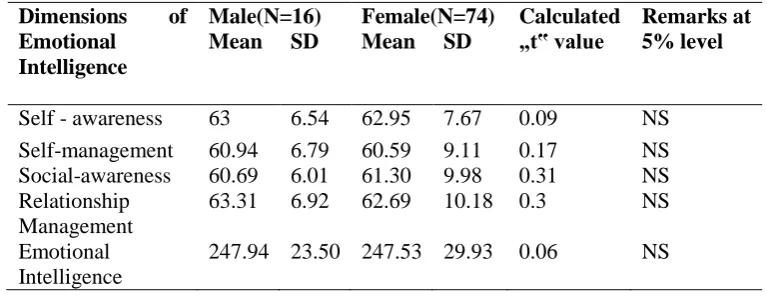
Table 2 Difference between Male and Female Primary School Teacher Trainees in
Their Emotional Intelligence
Dimensions of
Emotional Intelligence
Male(N=16) Female(N=74) Calculated
„t‟ value Remarks at 5% level
Mean SD Mean SD
Self - awareness 63 6.54 62.95 7.67 0.09 NS
Self-management 60.94 6.79 60.59 9.11 0.17 NS
Social-awareness 60.69 6.01 61.30 9.98 0.31 NS
Relationship Management
63.31 6.92 62.69 10.18 0.3 NS
Emotional Intelligence
247.94 23.50 247.53 29.93 0.06 NS
[image:3.595.105.489.551.699.2]SEPT-OCT 2016, VOL-4/26 www.srjis.com Page 2681 It is inferred from the above table that there is no significant difference between male and
female Primary School Teacher Trainees in their Emotional Intelligence and its dimensions
[image:4.595.87.510.175.357.2]Self-awareness, Self-management, Social-awareness and Relationship management.
Table 3 Difference among Primary School Teacher Trainees of Boys‟, Girls‟ and
Co-Education Instituitions in Their Emotional Intelligence
Dimensions of
Emotional Intelligence
Source of Variation
Sum of squares Degree of freedom Variance Estimate Calculated “f” value Remarks at 5% level
Self - awareness Between 13.38 2 6.69 0.18 NS
Within 4926.44 87 56.64
Self-management
Between 16.33 2 81.66 1.07 NS
Within 6592.99 87 75.78
Social-awareness Between 298.29 2 149.46 1.72 NS
Within 7530.86 87 86.56
Relationship Management
Between 290.61 2 145.31 1.57 NS
Within 8011.78 87 92
Emotional Intelligence
Between 1937.78 2 968.74 1.75 NS
Within 71746.11 87 824.66
(At 5% level of significance, the table value of “F” is 3.09)
It is inferred from the above table that there is no significant difference among Primary
School Teacher Trainees of boys‟, girls, and co-education institution in their Emotional
Intelligence and its dimensions Self-awareness, Self-management, Social awareness and
Relationship management
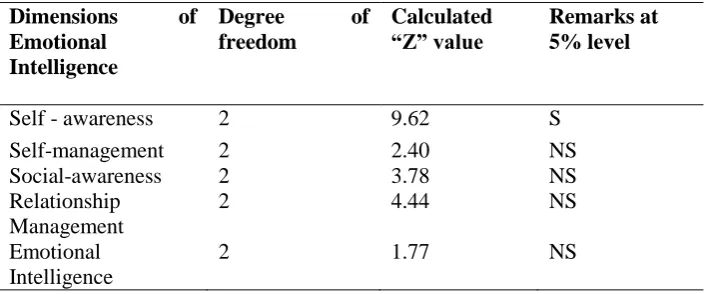
Table 4 Association between the Annual Income of Parents of the Primary School
Teacher Trainees and Their Emotional Intelligence
Dimensions of
Emotional Intelligence
Degree of
freedom
Calculated “Z” value
Remarks at 5% level
Self - awareness 2 9.62 S
Self-management 2 2.40 NS
Social-awareness 2 3.78 NS
Relationship Management
2 4.44 NS
Emotional Intelligence
2 1.77 NS
(At 5% level of significance, the table value of “ χ2” is 9.49)
It is inferred from the above table that there is no significant association between the annual
income of parents of the Primary School Teacher Trainees in their Emotional Intelligence and
its dimensions Self-management, Social-awareness and Relationship management but there is
[image:4.595.122.475.498.645.2]SEPT-OCT 2016, VOL-4/26 www.srjis.com Page 2682 Trainees in their Self-awareness
Findings and Discussion
1. 24.4% of Primary School Teacher Trainees have high level of Emotional Intelligence
2. There is no significant difference between male and female Primary School Teacher
Trainees in their Emotional Intelligence and its dimensions awareness,
Self-management, Social-awareness and Relationship management. Gender has no influence on
the level of their Emotional Intelligence.
3. There is no significant difference among boys‟, girls, and co-education institution
Primary School Teacher Trainees in their Emotional Intelligence and its dimensions
Self-awareness, Self-management, Social-awareness and Relationship management. Type of
institution has no influence on the level of their Emotional Intelligence.
4. There is no significant association between the annual income of parents of the Primary
School Teacher Trainees in their Emotional Intelligence and its dimensions
Self-management, Social-awareness and Relationship management but there is significant
association between the annual income of parents of the Primary School Teacher Trainees
in their Emotional Intelligence and its dimensions Self-awareness.
This may be due to the fact that economic conditions of an individual have a direct impact
on his self-awareness. When a teacher trainee is comfortable with the economic status of
the family, he or she is in relaxed state of mind and has sufficient time to become aware of
them.
Suggestions
Teacher education programs provide very little scope for trainees to reflect on their
experience. Ample opportunities should be provided to identify, understand, experience and
express human emotions in healthy and productive ways. Disciplinary knowledge is viewed
as independent of professional training in pedagogy. To achieve the high expectations of
education, the intentional inclusion and development of emotional intelligent skills in teacher
preparation programs is needed. The evaluation system followed in the teacher education
program is information-oriented, qualitative and lacks comprehensiveness. With the
established relationship of Emotional Intelligent skills and academic achievement, students
would benefit from learning and applying emotional intelligent skills to improve academic
performance in school settings. Primary School Teachers who model emotional intelligent
behavior on a daily basis experience more success and satisfaction in their professional career
SEPT-OCT 2016, VOL-4/26 www.srjis.com Page 2683 Conclusion
The training of teachers is a major area of concern at present, since pre-service and in-service
training of Primary School Teachers is extremely inadequate. Pre-service training needs to be
improved and differently regulated in government, aided and self-financing institutions.
Apart from conceptual and pedagogical aspects the teacher training program needs to develop
certain psychological attitudes, dispositions, habits and interests in teacher.
Reference
Aggarwal (2000) Statistical Method, Sterling Publishers Private Limited, New Delhi
Kothari (1990) Research Methodology Methods and Techniques, Wiley Eastern Limited,New Delhi Daniel Goleman (1996) Emotional Intelligence, Bloomsbury Publishers, London
Anthony Robbins (2001) Awaken the Giant Within, Harpercollins Publishers