An Integration Testing on Average Categorized
E-Commerce Based Data to Improve Their
Performance Using Automation Tool
Kumar Shankara Bhargav1, Sunil Sharma2 1.2 Dr. C. V. Raman University, Bilaspur
Abstract: in today’s rapid increasing digital world many numbers of electronic commerce companies have making transaction per second which makes it more sensitive data transaction process which need very much care. Big data is a growing trend in e-commerce and online marketing. Big data enables businesses to gather insights about their customers through monitoring their purchasing habits and decisions. By using big data, businesses can focus more on customization and personalization for their customers’ shopping experience. This can be done by tracking customer browsing patterns and monitoring loyalty programs. In this thesis we are going to focus on those customers who make transaction for particular data. On the basis of this analysis we will categories the whole data transaction in this manner where all the transaction are divided into three parts and at the end of the day all three category have got average data transaction. On that resultant average data we perform unit testing after that we integrate all the data into single form and apply integration testing and provide necessary suggestion to improve performance. Keywords: software testing, selenium ide, e commerce, edi, big data
I. INTRODUCTION
Electronic commerce, commonly written as e-commerce, is the trading or facilitation of trading in products or services using computer networks, such as the Internet. Electronic commerce draws on technologies such as mobile commerce, electronic funds transfer, supply chain management, Internet marketing, online transaction processing, electronic data interchange (EDI), inventory management systems, and automated data collection systems. Modern electronic commerce typically uses the World Wide Web for at least one part of the transaction's life cycle, although it may also use other technologies such as e-mail.
A. E-commerce businesses may employ some or all of the following 1) Online shopping web sites for retail sales direct to consumers
2) Providing or participating in online marketplaces, which process third-party business-to-consumer or consumer-to-consumer sales
3) Business-to-business buying and selling
4) Gathering and using demographic data through web contacts and social media
5) Business-to-business electronic data interchange
6) Marketing to prospective and established customers by e-mail or fax (for example, with newsletters)
7) Engaging in retail for launching new products and services
Big Data Big data is a term for data sets that are so large or complex that traditional data processing applications are inadequate. Challenges include analysis, capture, data curation, search, sharing, storage, transfer, visualization, querying and information privacy. The term often refers simply to the use of predictive analytics or certain other advanced methods to extract value from data, and seldom to a particular size of data set. Accuracy in big data may lead to more confident decision making, and better decisions can result in greater operational efficiency, cost reduction and reduced risk.
Analysis of data sets can find new correlations to "spot business trends, prevent diseases, combat crime and so on." Scientists, business executives, practitioners of medicine, advertising and governments alike regularly meet difficulties with large data sets in areas including Internet search, finance and business informatics. Scientists encounter limitations in e-Science work, including meteorology, genomics, connectomics, complex physics simulations, biology and environmental research.
sensor networks. The world's technological per-capita capacity to store information has roughly doubled every 40 months since the 1980s; as of 2012, every day 2.5 exabytes (2.5×10¹⁸) of data are created. One question for large enterprises is determining who
[image:3.612.130.494.143.378.2]should own big data initiatives that affect the entire organization
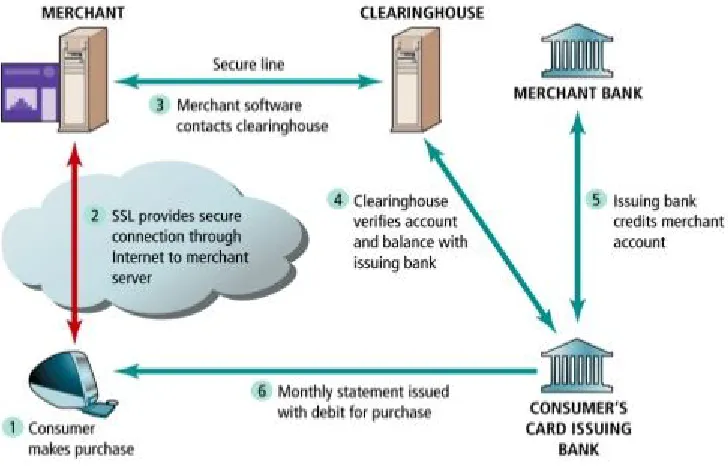
Figure 1: Basic architecture of online shopping process
Relational database management systems and desktop statistics and visualization packages often have difficulty handling big data. The work instead requires "massively parallel software running on tens, hundreds, or even thousands of servers". What is considered "big data" varies depending on the capabilities of the users and their tools, and expanding capabilities make big data a moving target. "For some organizations, facing hundreds of gigabytes of data for the first time may trigger a need to reconsider data management options. For others, it may take tens or hundreds of terabytes before data size becomes a significant consideration."
B. Manual Testing
Manual testing is the process of manually testing software for defects. It requires a tester to play the role of an end user and use most of all features of the application to ensure correct behavior. To ensure completeness of testing, the tester often follows a written test plan that leads them through a set of important test cases A key step in the process is, testing the software for correct behavior prior to release to end users.
For small scale engineering efforts (including prototypes), exploratory testing may be sufficient. With this informal approach, the tester does not follow any rigorous testing procedure, but rather explores the user interface of the application using as many of its features as possible, using information gained in prior tests to intuitively derive additional tests. The success of exploratory manual testing relies heavily on the domain expertise of the tester, because a lack of knowledge will lead to incompleteness in testing. One of the key advantages of an informal approach is to gain an intuitive insight to how it feels to use the application.
Large scale engineering projects that rely on manual software testing follow a more rigorous methodology in order to maximize the number of defects that can be found. A systematic approach focuses on predetermined test cases and generally involves the following steps.
1) Choose a high level test plan where a general methodology is chosen, and resources such as people, computers, and software licenses are identified and acquired.
3) Assign the test cases to testers, who manually follow the steps and record the results.
4) Author a test report, detailing the findings of the testers. The report is used by managers to determine whether the software can be released, and if not, it is used by engineers to identify and correct the problems.
In software testing, test automation is the use of special software (separate from the software being tested) to control the execution of tests and the comparison of actual outcomes with predicted outcomes. Test automation can automate some repetitive but necessary tasks in a formalized testing process already in place, or add additional testing that would be difficult to perform manually. Test automation is critical for continuous delivery and continuous testing.
Some software testing tasks, such as extensive low-level interface regression testing, can be laborious and time consuming to do manually. In addition, a manual approach might not always be effective in finding certain classes of defects. Test automation offers a possibility to perform these types of testing effectively. Once automated tests have been developed, they can be run quickly and repeatedly. Many times, this can be a cost-effective method for regression testing of software products that have a long maintenance life. Even minor patches over the lifetime of the application can cause existing features to break which were working at an earlier point in time.
C. There are many approaches to test automation; however below are the general approaches used widely:
1) Graphical user interface testing. A testing framework generates user interface events such as keystrokes and mouse clicks, and observes the changes that result in the user interface, to validate that the observable behavior of the program is correct.
2) API driven testing. A testing framework that uses a programming interface to the application to validate the behaviour under test. Typically API driven testing bypasses application user interface altogether. It can also be testing public (usually) interfaces to classes, modules or libraries are tested with a variety of input arguments to validate that the results that are returned are correct.
II. LITERATURE REVIEW
Diyan Ivanov et al [2012] The purpose of his work is to evaluate the influence of e-commerce on the small-size companies in Sweden. His work tells the drivers for ecommerce adoption and find the barriers and advantage faced from the companies when he started the process of implementation. A qualitative research was performed by him and an abductive approach was been used, where the research investigations and the theoretical background were connected by backtracking and forward in the process of analysis. He has taken interviews with small companies in Värmland Country, Sweden were conducted in order to answer the research questions investigated by him. By This study he shows that Swedish companies have relatively well developed e-commerce strategies if you compare it to other counties, but the difference between small and large companies can still be visible. The decisions for ecommerce adoption are dependent on the knowledge of the owner /manager and e-commerce is extensively used as a marketing tool. Main benefits of ecommerce adoption are improved internal efficiency and increased information exchange.
III. METHODOLOGY:
In this work our methodology would be manual as well as Automation testing. Manual testing is the process of manually testing software for defects. It requires a tester to play the role of an end user and use most of all features of the application to ensure correct behavior. To ensure completeness of testing, the tester often follows a written test plan that leads them through a set of important test cases A key step in the process is, testing the software for correct behavior prior to release to end users. using Hadoop tool and Big data technique Big data technologies are important in providing more accurate analysis, which may lead to more concrete decision-making resulting in greater operational efficiencies, cost reductions, and reduced risks for the business.
A. Proposed flowchart:
1) Step I: Source of Large Data: Cross-disciplinary data repositories, data collections and data search engines
a) http://datasource.kapsarc.org b) https://www.kaggle.com/datasets
c) http://www.assetmacro.com
d) http://usgovxml.com
g) http://datacite.org h) http://figshare.com i) http://linkeddata.org j) http://reddit.com/r/datasets k) http://thewebminer.com/
l) http://thedatahub.org alias http://ckan.net m) http://quandl.com
n) Social Network Analysis Interactive Dataset Library (Social Network Datasets)
o) Datasets for Data Mining p) http://enigma.io
q) http://www.ufindthem.com/
Figure 2: Proposed flow chart of algorithm
2) Step II: E Commerce Transaction
3) Step III: Data transaction per day: We will be using the different sources to get the number of transaction of any online store. It will include all the transactions made per day by customer. It will include all categories and its subcategories.
4) Step IV: Categorized in three part (irrespective of product type) All the transaction held per day by each customer will store in database we are categorizing every data into three parts irrespective of product category instead by the transaction made by every customer.
5) Step V: Unit Testing we have written test case for the each category since it is testing the particular category it i\will be called as unit testing.
6) Step VI: Result Analysis: After implement the unit testing in each category we have got the expected and actual result and we have analyzed the result in the form of transaction logs.
7) Step VII: Integration Testing: An integration testing is done once the results are analyzed and combine ll the transaction logs in the form of result.
8) Step VIII: Result Analysis: After implementing integration testing desired and actual result came out with f\great performance which will be shown in result analysis section.
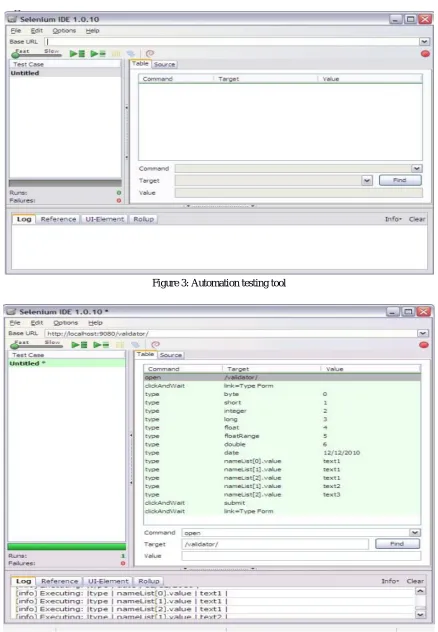
automation testing for this we have used Selenium IDE (with Firefox) as a automation tool.
Figure 4: Test script of result developed from manual testing
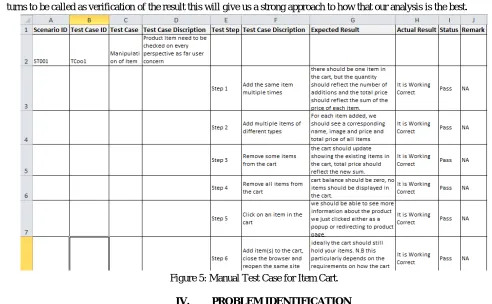
[image:8.612.52.544.116.420.2]10) Step X: Result Verification: After completed the au\tomation paert we havegot the result based on our pevious result which in turns to be called as verification of the result this will give us a strong approach to how that our analysis is the best.
Figure 5: Manual Test Case for Item Cart.
IV. PROBLEM IDENTIFICATION
On the daily based transaction we see now a days are huge in numbers and became very popular but if we see the second fold of the coin we find that it is very sensitive and need to care it so this make us attracted toward this area and the main wok is to secure and make it safe using emerging technologies.
V. CONCLUSION
This paper is also very beneficial for creating sales forecasts. E-commerce businesses should pay attention to sales, website performance, and customer behaviors to determine what they need to improve in the future thus our idea is to test on that part which may be sensitive and due to this sensitiveness system may be cashed or breakdown. We are emphasizing on this part to assure any client for their smooth, successful and uninterrupted business.
REFERENCES
[1] S.M.K Quadri, Sheikh Umar Farook, “Software testing- Goals, Principles and Limitations”, International Journal of Computer Applications, Volume 6- No. 9, September 2010, pp 7-10.
[2] Fangchun jiang, Yunfan Lu, “Software testing model selection research based on Yin- Yang testing theory”, IEEE, International Conference on Computer Science and Information Processing (CSIP), Vol. 9, 2012, pp. 590-594.
[3] Mohd. Ehmer Khan, “Different forms of software testing techniques for finding errors”, IJCSI International Journal of Computer Science Issues, Vol. 7, Issue 3, No. 1, May 2010, pp.11-16.
[4] Sahil Batra, Dr. Rahul Rishi, “Improving Quality using testing strategies”, Journal of Global Research in Computer Science, Volume 2, No. 6. June 2011. [5] Cem Karner, “Testing Computer Software”, 1993.
[6] Sheetal Thakare, Savita Chavan, Prof. P.M.Chawan, “Software testing strategies and techniques”, International Journal of Emerging Technology and Advanced Engineering, pp.567-569, Vol. 2, Issue 4 April 2012.
[7] Abhijit A. Sawant, Pranit H. Bari and P.M Chawan,”Software Testing Techniques and Strategies”, International Journal of Engineering Research and Applications (IJERA), pp. 980-986, Vol. 2, Issue 3, May-June 2012.
Research (IJAIR), Vol.2 Issue 4, pp.259-262, April 2013.
[10] Rajib Mall, “Fundamentals of Software Engineering”, Third edition, prentice hall of India, August 2011.
[11] Dr. S.S Riaz Ahmed,”Studying the feasibility and importance of software testing”, International Journal of Engineering Science and Technology, Vol. 1(3,), pp.119-128, 2009.
[12] Software testing Help available at http://www.softwarestestingmentor.com. [13] Ian Sommerville, “Software testing”, Software Engineering, 7th edition, chapter 23. [14] Introduction to software testing available at http://onestoptesting.com/introduction/
[15] Software testing techniques available a http://pesona.mmu.edu.my/~wruslan/SE3/Readings/GB1/pdf/ch14-GB1. [16] Paper by Lu Luo available at http://www.cs.cmu.edu/~luluo/Courses/17939Report.pdf
[17] Software testing by Jiantao pan available at http://www.ece.cmu.edu/~roopman/des-899/sw-testing/
[18] Software testing help tutorial available at http://www.guru99.com/software-testing. Rainer, K. &Cegielski, C.(2011). Introduction to Information Systems: Enabling and Transforming Business. Third Edition.Jonh
[19] Wiley & Sons Inc. Sajuyigbe, A.S (2012). Adoption of e-commerce to Business Operations: A key to Achieving Nigeria Vision 20:2020.
[20] A paper presented at 2012 National Conference on Nigeria‟s Transformation and the Vision 20:2020 Policy of the Federal Government. Organized by faculty of Business and Communication Studies. Ibadan, Nigeria.