R E S E A R C H
Open Access
Small bowel feeding and risk of pneumonia in
adult critically ill patients: a systematic review
and meta-analysis of randomized trials
Waleed Alhazzani
1,6*, Abdulaziz Almasoud
2, Roman Jaeschke
1,3, Benjamin W Y Lo
4, Anees Sindi
5, Sultan Altayyar
6and Alison E Fox-Robichaud
1Abstract
Introduction:This systematic review and meta-analysis aimed to evaluate the effect of small bowel feeding compared with gastric feeding on the frequency of pneumonia and other patient-important outcomes in critically ill patients.
Methods:We searched EMBASE, MEDLINE, clinicaltrials.gov and personal files from 1980 to Dec 2012, and conferences and proceedings from 1993 to Dec 2012 for randomized trials of adult critically ill patients in the intensive care unit (ICU) comparing small bowel feeding to gastric feeding, and evaluating risk of pneumonia, mortality, length of ICU stay, achievement of caloric requirements, duration of mechanical ventilation, vomiting, and aspiration. Independently, in duplicate, we abstracted trial characteristics, outcomes and risk of bias.
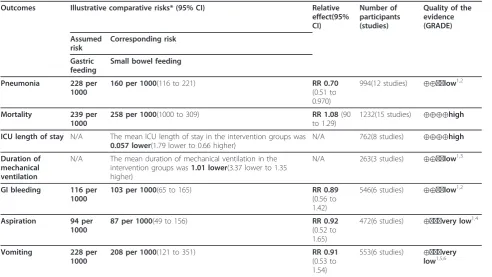
Results:We included 19 trials with 1394 patients. Small bowel feeding compared to gastric feeding was associated with reduced risk of pneumonia (risk ratio [RR] 0.70; 95% CI, 0.55, 0.90;P= 0.004;I2= 0%) and ventilator-associated pneumonia (RR 0.68; 95% CI 0.53, 0.89;P= 0.005;I2 = 0%), with no difference in mortality (RR 1.08; 95% CI 0.90, 1.29; P = 0.43;I2= 0%), length of ICU stay (WMD -0.57; 95%CI -1.79, 0.66; P= 0.37;I2= 0%), duration of mechanical ventilation (WMD -1.01; 95%CI -3.37, 1.35;P= 0.40;I2 = 17%), gastrointestinal bleeding (RR 0.89; 95% CI 0.56, 1.42; P= 0.64;I2= 0%), aspiration (RR 0.92; 95% CI 0.52, 1.65;P= 0.79;I2 = 0%), and vomiting (RR 0.91; 95% CI 0.53, 1.54; P= 0.72;I2= 57%). The overall quality of evidence was low for pneumonia outcome.
Conclusions:Small bowel feeding, in comparison with gastric feeding, reduces the risk of pneumonia in critically ill patients without affecting mortality, length of ICU stay or duration of mechanical ventilation. These observations are limited by variation in pneumonia definition, imprecision, risk of bias and small sample size of individual trials.
Keywords:enteral nutrition, critical illness, small bowel feeding, meta-analysis
Introduction
Enteral nutrition delivery is the preferred optimal method of nutritional supplement in patients in the ICU [1]. After careful consideration of an individual patient’s illness severity, level of physiologic stress, and baseline nutritional status, early enteral feeding has been shown to attenuate disease severity, maintain gastrointestinal (GI) physiology, and modulate the immune system [2]. A meta-analysis of randomized controlled trials (RCTs) suggested that early
enteral nutrition reduces infections when compared with parenteral nutrition, although the results were limited by the presence of heterogeneity and methodologic quality individual trials [3]. However, enteral nutrition can be associated with risk of aspiration, gastric and feeding intol-erance, and issues surrounding tube placements [4].
Guidelines from the American Society of Parenteral and Enteral Nutrition (ASPEN) recommend using enteral nutrition when feasible [2]. Strategies to optimize the ben-efits and minimize the risks of enteral nutrition include early initiation, within 24 to 28 hours of admission if feasi-ble, elevation of the head of the bed, use of motility agents, minimizing narcotic dosages, and reevaluation of gastric * Correspondence: [email protected]
1
Department of Medicine, McMaster University Medical Centre, 1200 Main Street West, Hamilton, Ontario, L8N 3Z5, Canada
Full list of author information is available at the end of the article
residual amounts. Although the value of routine measure-ment of gastric residual volume (GRV) in enterally fed cri-tically ill patients has been challenged by a recent RCT [5], the ASPEN guidelines recommend small bowel over gas-tric feeding in patients with persistent high GRV [2].
It is not known if small bowel feeding is associated with a lower risk of pneumonia in critically ill patients. Multiple systematic reviews reached conflicting results [6-9]. Recently, an RCT by Davies et al. that included 180 patients suggested that there is no difference in the risk of ventilator-associated pneumonia (VAP) between patients receiving gastric versus jejunal feeds [10]. At the time of writing, this is the largest published RCT on this topic.
In the view of unclear literature as well as presence of new information we conducted an updated systematic review and meta-analysis to examine the efficacy of using small bowel feeding as opposed to gastric feeding in critically ill patients.
Materials and methods Search strategy
We searched EMBASE, MEDLINE from January 1980 to December 2012, independently and in duplicate. Search strategy is summarized in Additional file 1. We searched clinicaltrials.gov, our personal files, and reference lists of eligible studies and review articles for additional trials. Uti-lizing a specialized search engine provided by McMaster University library we searched conferences and proceed-ings from January 1993 to December 2012 [11].
Inclusion criteria
Eligibility criteria included all of the following: 1) design -parallel groups RCTs (cross-over or quasi-randomized trials were not eligible); 2) population - critically ill adult patients in the ICU who received enteral nutrition supple-mentation through a tube or feeding device; trials includ-ing acute pancreatitis were eligible if the patients were admitted to the ICU or if they exclusively included patients with severe acute pancreatitis (severe pancreatitis should include at least one organ dysfunction or a vali-dated tool used to define this population); 3) intervention - post-pyloric feeding (duodenal or jejunal feeding) com-pared with gastric feeding strategy (trials using percuta-neous gastrostomy or jejunostomy tubes were not eligible); and 4) outcomes - primary outcome was pneu-monia (including ventilator-associated, nosocomial, or aspiration pneumonia). Secondary outcomes included: mortality; ICU length of stay; duration of mechanical ven-tilation (DMV); GI bleeding; aspiration defined as suction-ing of feeds through airways or endotracheal tube or documented aspiration through other techniques (e.g. radioisotope scanning, video fluoroscopy, or dye test); vomiting defined as ejection of feeds through the oral
cavity; and nutritional outcomes (including daily caloric intake, proportion of patients achieving target caloric requirements, and time to achieve goal rate). We did not apply any language restrictions.
In duplicate and independently, two of three reviewers selected articles by examining titles and abstracts and then full text after identifying potentially relevant articles. Agreement was assessed using kappa statistic [12].
Data extraction and quality assessment
In duplicate and independently, two reviewers abstracted data on the design, population, intervention, compari-son, and clinical outcomes. We wrote to authors to clar-ify or obtain missing data.
In duplicate and independently, two reviewers assessed the risk of bias of individual trials using the Cochrane risk of bias tool. For each outcome in each included trial, the risk of bias was reported as‘low risk’, ‘unclear risk’, or ‘high risk’in the following domains: random sequence generation; allocation concealment; blinding of partici-pants and personnel; blinding of outcome assessment; incomplete outcome data; selective reporting; or other bias [13]. For each of the outcomes, we independently rated the overall quality of evidence and confidence in effect estimates using the Grading of Recommendations Assessment, Development and Evaluation (GRADE) approach in which randomized trials begin as high-quality evidence, but may be rated down by one or more of five categories of limitations: risk of bias, inconsistency, indir-ectness, imprecision, and publication bias [14]. Disagree-ment was resolved by discussion and consensus.
Data synthesis and analysis
We combined data from all trials to estimate the pooled risk ratio (RR) and associated 95% confidence intervals (CI) for all binary outcomes. Weighted mean difference (WMD) was used to summarize the effect measure for continues outcomes. Pooled RRs were calculated using random effects models, applying inverse variance weight-ing, and the methods of DerSimonian and Laird [15]. Statistical heterogeneity was assessed by theI²statistic [16]; we interpreted substantial heterogeneity as anI²of more than 50%.
To address any observed heterogeneity associated with the effect of small bowel feeding, and to test the robust-ness of the data, we planned three a priori sensitivity analyses: excluding studies that did not provide defini-tion of the outcome, using odds ratio (OR) to summar-ize the results, and excluding studies that strictly included patients with severe acute pancreatitis.
Publication bias was assessed visually using funnel plot and statistically using the Egger test [19].
Results
Trial identification
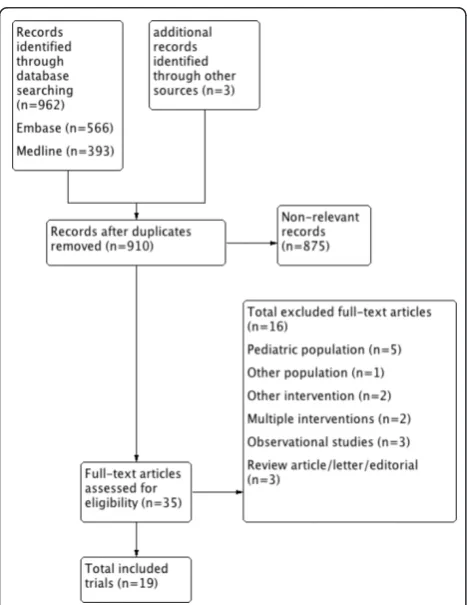
Of 959 citations, 35 full-text articles were assessed for eligibility and 16 were excluded (Figure 1). Overall, 19 fully published RCTs [10,20-37], were included in the quantitative and qualitative analysis. We did not identify any eligible abstracts. We translated one article that was published in Chinese [28]. Agreement on article inclu-sion after full-text assessment was excellent (kappa 1.0).
Trial characteristics
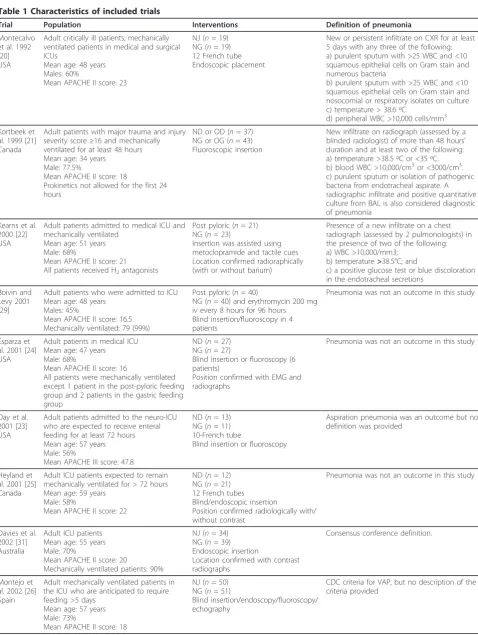
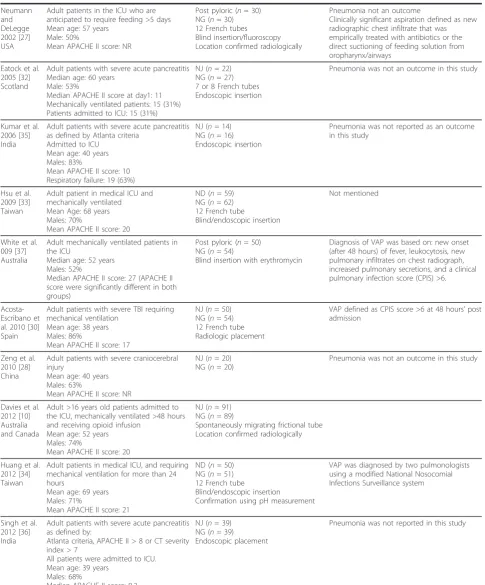
In Table 1 we describe characteristics of the included trials. Trials included a wide range of critical illnesses with patients in medical, surgical, and trauma ICUs. Three trials included only patients with severe acute pan-creatitis [32,35,36]. In one of these trials, not all patients were admitted to the ICU but due to inclusion of severe pancreatitis patients with a mortality rate of 25% we decided to include it [32]. Nine trials investigated the use of jejunal feeding tubes [10,20,26,28,30-32,35,36] and six the use of duodenal feeding tubes [21,23-25,33,34], whereas the rest did not specify the location of the
feeding tube in the small intestine [22,27,29,37]. VAP preventive strategies were not described consistently in the included studies. Seven trials clearly reported eleva-tion of the head of the bed in both groups [22-25, 30,33,37]; other VAP preventive measures were not reported. The use of prokinetic agents were allowed in most trials. Although one trial compared gastric feeding in combination with erythromycin with small bowel feed-ing alone [29], we included this trial because it only reported mortality and nutritional outcome, which are unlikely to be influenced by the use of erythromycin.
Risk of bias
Funnel plot (Figure 2) did not suggest the presence of publication bias; this was confirmed statistically using the Egger test (Egger: bias = 0.12; 95% CI = 1.05 to 1.30; P= 0.82).
In Figure 3, we report methodologic quality assess-ment using the Cochrane risk of bias tool for each trial. Overall, five studies were judged to be at low risk of bias, 13 at high risk of bias, and one had an unclear risk of bias. We considered a lack of blinding to be of low effect on mortality outcome; hence the risk of bias was considered low for this outcome. However, lack of blinding could introduce performance or ascertainment bias when assessing other less objective outcomes (e.g. pneumonia), so the risk of bias was considered to be high in this setting.
Pooled outcomes Nosocomial pneumonia
A total of 12 RCTs [10,20-23,26,30,31,33-35,37] includ-ing 994 patients reported pneumonia as an outcome. The pooled estimate across trials suggested that the use of small bowel feeding reduces the risk of pneumonia (RR = 0.70; 95% CI = 0.55 to 0.90;P = 0.004; I2 = 0%). The NNT is 17 for ACR 15% (Figure 4).
Ventilator-associate pneumonia
Eight RCTs [10,21,22,26,30,33,34,37] with 835 patients reported pneumonia in ventilated patients as an outcome. Small bowel feeding was associated with a lower risk of VAP (RR = 0.68; 95% CI = 0.53 to 0.89;P= 0.005; I2= 0%). The NNT is 21 for ACR of 15% (Figure 5).
Mortality
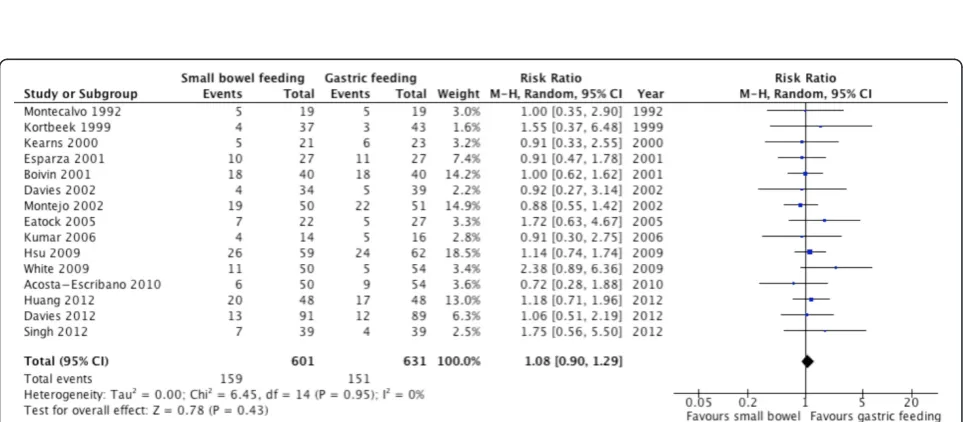
Fifteen RCTs [10,20-22,24,26,29-37] with 1232 patients reported mortality as an outcome. There was no differ-ence in mortality between both groups (RR = 1.08; 95% CI = 0.90 to 1.29;P= 0.43;I2 = 0%; Figure 6).
ICU length of stay
[image:3.595.57.291.400.703.2]Eight RCTs [10,20,22,26,30,31,33,34] that included 762 patients reported ICU length of stay as an outcome (Figure 7). There was no difference in days of stay in the ICU between both groups (WMD = -0.57; 95% CI = -1.79 to 0.66;P= 0.37;I2= 0%; Figure 7).
Table 1 Characteristics of included trials
Trial Population Interventions Definition of pneumonia
Montecalvo et al. 1992 [20] USA
Adult critically ill patients; mechanically ventilated patients in medical and surgical ICUs
Mean age: 48 years Males: 60%
Mean APACHE II score: 23
NJ (n= 19) NG (n= 19) 12 French tube Endoscopic placement
New or persistent infiltrate on CXR for at least 5 days with any three of the following: a) purulent sputum with >25 WBC and <10 squamous epithelial cells on Gram stain and numerous bacteria
b) purulent sputum with >25 WBC and <10 squamous epithelial cells on Gram stain and nosocomial or respiratory isolates on culture c) temperature > 38.6 ºC
d) peripheral WBC >10,000 cells/mm3
Kortbeek et al. 1999 [21] Canada
Adult patients with major trauma and injury severity score≥16 and mechanically ventilated for at least 48 hours Mean age: 34 years
Male: 77.5%
Mean APACHE II score: 18
Prokinetics not allowed for the first 24 hours
ND or OD (n= 37) NG or OG (n= 43) Fluoroscopic insertion
New infiltrate on radiograph (assessed by a blinded radiologist) of more than 48 hours’ duration and at least two of the following: a) temperature >38.5 ºC or <35 ºC. b) blood WBC >10,000/cm3or <3000/cm3. c) purulent sputum or isolation of pathogenic bacteria from endotracheal aspirate. A radiographic infiltrate and positive quantitative culture from BAL is also considered diagnostic of pneumonia
Kearns et al. 2000 [22] USA
Adult patients admitted to medical ICU and mechanically ventilated
Mean age: 51 years Male: 68%
Mean APACHE II score: 21 All patients received H2antagonists
Post pyloric (n= 21) NG (n= 23)
Insertion was assisted using metoclopramide and tactile cues Location confirmed radioraphically (with or without barium)
Presence of a new infiltrate on a chest radiograph (assessed by 2 pulmonologists) in the presence of two of the following: a) WBC >10,000/mm3;
b) temperature>38.5°C; and
c) a positive glucose test or blue discoloration in the endotracheal secretions
Boivin and Levy 2001 [29]
Adult patients who were admitted to ICU Mean age: 48 years
Males: 45%
Mean APACHE II score: 16.5 Mechanically ventilated: 79 (99%)
Post pyloric (n= 40)
NG (n= 40) and erythromycin 200 mg iv every 8 hours for 96 hours Blind insertion/fluoroscopy in 4 patients
Pneumonia was not an outcome in this study
Esparza et al. 2001 [24] USA
Adult patients in medical ICU Mean age: 47 years Male: 68%
Mean APACHE II score: 16
All patients were mechanically ventilated except 1 patient in the post-pyloric feeding group and 2 patients in the gastric feeding group
ND (n= 27) NG (n= 27)
Blind insertion or fluoroscopy (6 patients)
Position confirmed with EMG and radiographs
Pneumonia was not an outcome in this study
Day et al. 2001 [23] USA
Adult patients admitted to the neuro-ICU who are expected to receive enteral feeding for at least 72 hours Mean age: 57 years Male: 56%
Mean APACHE III score: 47.8
ND (n= 13) NG (n= 11) 10-French tube
Blind insertion or fluoroscopy
Aspiration pneumonia was an outcome but no definition was provided
Heyland et al. 2001 [25] Canada
Adult ICU patients expected to remain mechanically ventilated for > 72 hours Mean age: 59 years
Male: 58%
Mean APACHE II score: 22
ND (n= 12) NG (n= 21) 12 French tubes Blind/endoscopic insertion
Position confirmed radiologically with/ without contrast
Pneumonia was not an outcome in this study
Davies et al. 2002 [31] Australia
Adult ICU patients Mean age: 55 years Male: 70%
Mean APACHE II score: 20
Mechanically ventilated patients: 90%
NJ (n= 34) NG (n= 39) Endoscopic insertion
Location confirmed with contrast radiographs
Consensus conference definition.
Montejo et al. 2002 [26] Spain
Adult mechanically ventilated patients in the ICU who are anticipated to require feeding >5 days
Mean age: 57 years Male: 73%
Mean APACHE II score: 18
NJ (n= 50) NG (n= 51)
Blind insertion/endoscopy/fluoroscopy/ echography
Table 1 Characteristics of included trials(Continued) Neumann and DeLegge 2002 [27] USA
Adult patients in the ICU who are anticipated to require feeding >5 days Mean age: 57 years
Male: 50%
Mean APACHE II score: NR
Post pyloric (n= 30) NG (n= 30) 12 French tubes Blind insertion/fluoroscopy Location confirmed radiologically
Pneumonia not an outcome
Clinically significant aspiration defined as new radiographic chest infiltrate that was empirically treated with antibiotics or the direct suctioning of feeding solution from oropharynx/airways
Eatock et al. 2005 [32] Scotland
Adult patients with severe acute pancreatitis Median age: 60 years
Male: 53%
Median APACHE II score at day1: 11 Mechanically ventilated patients: 15 (31%) Patients admitted to ICU: 15 (31%)
NJ (n= 22) NG (n= 27) 7 or 8 French tubes Endoscopic insertion
Pneumonia was not an outcome in this study
Kumar et al. 2006 [35] India
Adult patients with severe acute pancreatitis as defined by Atlanta criteria
Admitted to ICU Mean age: 40 years Males: 83%
Mean APACHE II score: 10 Respiratory failure: 19 (63%)
NJ (n= 14) NG (n= 16) Endoscopic insertion
Pneumonia was not reported as an outcome in this study
Hsu et al. 2009 [33] Taiwan
Adult patient in medical ICU and mechanically ventilated Mean Age: 68 years Males: 70%
Mean APACHE II score: 20
ND (n= 59) NG (n= 62) 12 French tube
Blind/endoscopic insertion
Not mentioned
White et al. 009 [37] Australia
Adult mechanically ventilated patients in the ICU
Median age: 52 years Males: 52%
Median APACHE II score: 27 (APACHE II score were significantly different in both groups)
Post pyloric (n= 50) NG (n= 54)
Blind insertion with erythromycin
Diagnosis of VAP was based on: new onset (after 48 hours) of fever, leukocytosis, new pulmonary infiltrates on chest radiograph, increased pulmonary secretions, and a clinical pulmonary infection score (CPIS) >6.
Acosta-Escribano et al. 2010 [30] Spain
Adult patients with severe TBI requiring mechanical ventilation
Mean age: 38 years Males: 86%
Mean APACHE II score: 17
NJ (n= 50) NG (n= 54) 12 French tube Radiologic placement
VAP defined as CPIS score >6 at 48 hours’post admission
Zeng et al. 2010 [28] China
Adult patients with severe craniocerebral injury
Mean age: 40 years Males: 63%
Mean APACHE II score: NR
NJ (n= 20) NG (n= 20)
Pneumonia was not an outcome in this study
Davies et al. 2012 [10] Australia and Canada
Adult >16 years old patients admitted to the ICU, mechanically ventilated >48 hours and receiving opioid infusion
Mean age: 52 years Males: 74%
Mean APACHE II score: 20
NJ (n= 91) NG (n= 89)
Spontaneously migrating frictional tube Location confirmed radiologically
Huang et al. 2012 [34] Taiwan
Adult patients in medical ICU, and requiring mechanical ventilation for more than 24 hours
Mean age: 69 years Males: 71%
Mean APACHE II score: 21
ND (n= 50) NG (n= 51) 12 French tube
Blind/endoscopic insertion
Confirmation using pH measurement
VAP was diagnosed by two pulmonologists using a modified National Nosocomial Infections Surveillance system
Singh et al. 2012 [36] India
Adult patients with severe acute pancreatitis as defined by:
Atlanta criteria, APACHE II > 8 or CT severity index > 7
All patients were admitted to ICU. Mean age: 39 years
Males: 68%
Median APACHE II score: 8.2
NJ (n= 39) NG (n= 39)
Endoscopic placement
Pneumonia was not reported in this study
CDC, Centers for Disease Control; CPIS, Clinical Pulmonary Infection Score; CXR, chest x-ray; EMG, electromyography;NG, nasogastric; NJ, nasojejunal; ND, nasoduodenal; NR, not reported; VAP, ventilator-associated pneumonia; APACHE, acute physiology and chronic health evaluation; TBI, traumatic brain injury; WBC, white blood cell.
Duration of mechanical ventilation
Only three RCTs [20,30,33] with 263 patients reported DMV as an outcome; there was no difference between both groups in DMV in days (WMD = -1.01; 95% CI = -3.37 to 1.35;P= 0.40;I2 = 0%; Figure 8).
Gastrointestinal bleeding
Six RCTs [10,20,28,31,33,34] with 546 patients reported GI bleeding as an outcome; there was no statistically significant difference between both groups in the risk of GI bleeding (RR = 0.89; 95% CI = 0.56 to 1.42;P= 0.64; I2= 0%; Figure 9).
Aspiration
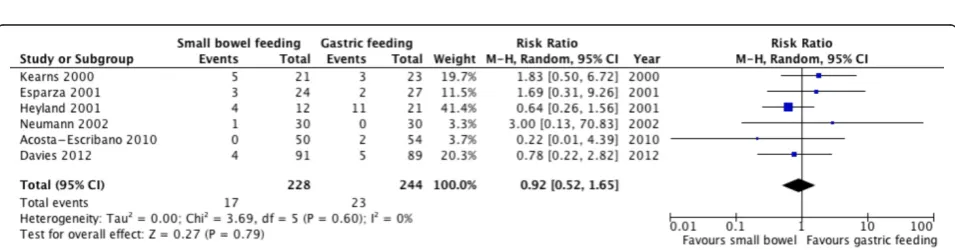
Six RCTs [10,22,24,25,27,30] with 472 patients reported aspiration outcomes. There was no statistically signifi-cant difference between both groups (RR = 0.92; 95% CI = 0.52 to 1.56;P= 0.79;I2 = 0%; Figure 10).
Vomiting
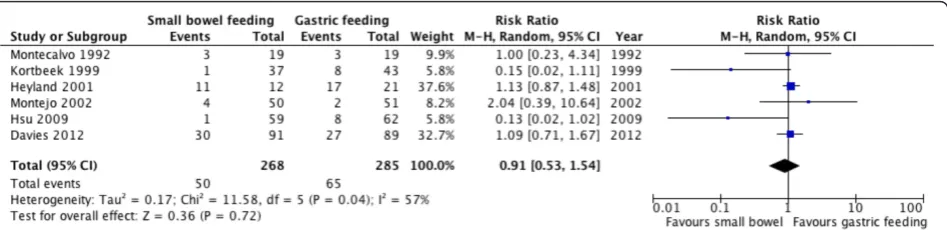
Six RCTs [10,20,21,25,26,33] with 553 patients reported vomiting as an outcome. There was no statistically sig-nificant difference between both groups (RR = 0.91; 95% CI = 0.53 to 1.54;P= 0.72;I2 = 57%; Figure 11).
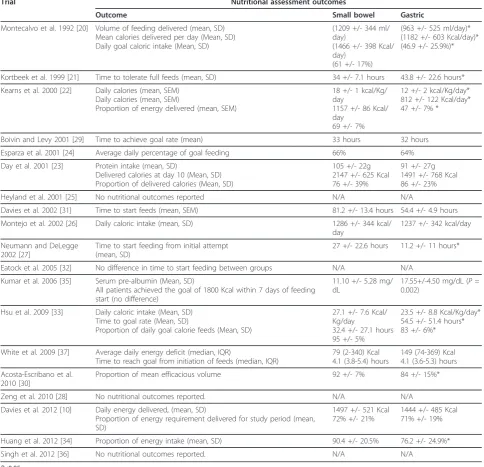
Nutritional requirements
[image:6.595.57.293.88.255.2]Due to marked variations in reporting of nutritional out-comes, meta-analysis was not performed. We summarize the nutritional outcomes of the included trials in Table 2. Overall seven RCTs [20,22,24,26,30,33,35] reported the mean daily caloric intake; in four studies the mean caloric intake was higher in patients receiving small bowel feed-ing, whereas the other studies did not report significant difference between groups. Four trials reported the mean time required to achieve target-feeding rate. Due to varia-tion in defining this outcome (i.e. time measured after ran-domization, after initial attempt, or after successful Figure 2Funnel plot. Figure visually testing for publication bias by plotting SE(log[RR]) against relative risk, examining the figure for a symmetry. j
[image:6.595.307.538.126.661.2]Figure 4Pneumonia. Forest plot comparing small bowel feeding with gastric feeding for pneumonia outcome; results are shown using random-effects model with relative risk and 95% confidence interval (CI).
Figure 5Ventilator-associated pneumonia. Forest plot comparing small bowel feeding with gastric feeding for ventilator-associated pneumonia outcome; results are shown using random-effects model with relative risk and 95% confidence interval (CI).
[image:7.595.57.539.490.701.2]Figure 7ICU length of stay. Forest plot comparing small bowel feeding with gastric feeding for ICU length of stay outcome; results are shown using inverse variance weighting with weighted mean difference (WMD) and 95% confidence interval (CI).
Figure 8Duration of mechanical ventilation. Forest plot comparing small bowel feeding with gastric feeding for duration of mechanical ventilation outcome; results are shown using inverse variance weighting with weighted mean difference (WMD) and 95% confidence interval (CI).
Figure 9Gastrointestinal bleeding. Forest plot comparing small bowel feeding with gastric feeding for gastrointestinal bleeding outcome; results are shown using random-effects model with relative risk and 95% confidence interval (CI).
[image:8.595.59.539.411.531.2] [image:8.595.59.537.578.703.2]insertion of feeding tube) quantitative analysis was not fea-sible. However, most of these studies report a statistically significant delay in achieving target-feeding rate in the small bowel feeding group (Table 2).
Subgroup analyses
Although statistical heterogeneity was not observed except for vomiting outcome (I2 = 57%), we performed thea priorisubgroup analyses to test the robustness of the data. There was no subgroup difference in risk of pneumonia or VAP by location of feeding tube (duode-nal vs. jeju(duode-nal), nor by risk of bias (low risk vs. high or unclear risk of bias). The heterogeneity observed in
vomiting outcome was not explained by our a priori
subgroup analyses.
Sensitivity analyses
Despite a lack of heterogeneity we performed a priori sensitivity analyzes for primary outcome. First analysis excluded studies that did not provide a definition of pneumonia outcome [23], the results remained signifi-cant (RR = 0.71; 95% CI = 0.55 to 0.90;P = 0.004;I2 = 0%). A second analysis used OR as a measure of treat-ment effect, the results remained statistically significant (OR = 0.61; 95% CI = 0.39 to 0.97;P = 0.006;I2 = 0%). A third planned sensitivity analysis excluded studies that included patients with severe pancreatitis; only one study reported pneumonia [35] and after excluding this study the results remained statistically significant (RR = 0.69; 95% CI = 0.50 to 0.96;P= 0.004;I2= 0%).
Overall summary of findings
We summarize the overall quality of evidence for each outcome in Table 3. Using GRADE criteria the quality of evidence was judged to be‘high’ for mortality and ICU length of stay outcomes; ‘low’ for pneumonia, DMV, and GI bleeding outcomes; and ‘very low’ for aspiration and vomiting outcomes. The main reasons for lowering the quality of evidence for most outcomes were risk of bias and imprecision (Table 3).
Discussion
In this systematic review we found that in critically ill patients small bowel feeding reduces pneumonia (including VAP) when compared with gastric feeding, without affecting mortality, ICU length of stay, duration of mechanical ventilation, or risk of GI bleeding.
The mechanism by which small bowel feeding could reduce pneumonia risk is not entirely clear. It has been presumed that the increased gastric volume leads to regurgitation and aspiration, yet multiple studies have demonstrated no relation between the GRV and the risk of aspiration [5,38]. Indeed, the risk of VAP is not increased when the GRV is not monitored [5]. These facts question the association between gastric feeding and the risk of pneumonia. In our meta-analysis we did not find a significant difference in the risk of clinically detected aspiration of feeds or vomiting. Only six of 19 eligible trials reported these outcomes, and using GRADE criteria the quality of evidence for those out-comes was judged to be very low. Moreover, there was variation in the definition and methods used for detect-ing aspiration; these limitations minimize any inferences we can make based on these outcomes.
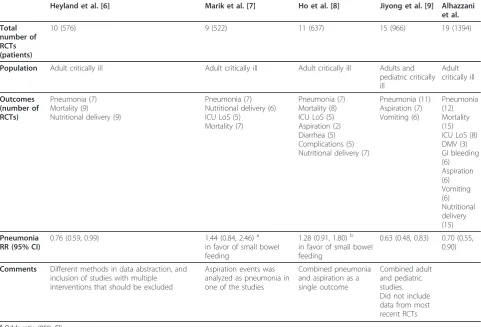
[image:9.595.64.538.89.204.2]after this review [10,34]. Hence, we conducted this updated systematic review hoping to resolve the ongoing controversy in the literature. In Table 4 we summarize the major characteristics and results of prior systematic reviews in comparison with our review.
One major limitation in the literature is the variation in reporting and assessing nutritional outcomes among stu-dies; hence, we only were able to qualitatively describe the data. Small bowel feeding was either similar or super-ior to gastric feeding in the amount of calories delivered per day. However, few studies reported that small bowel
feeding resulted in significant delay of achieving targeted feeding goals. This is due to longer time required for insertion of small bowel feeding tubes.
[image:10.595.56.541.105.572.2]Although the insertion of small bowel feeding tube appears to be safe, in one study [32] a patient developed cardiac arrest requiring cardiopulmonary resuscitation occurring during endoscopic insertion of jejunal tube. Fortunately, this is an extremely rare event and was not reported in other trials. However, insertion of small bowel feeding tubes may be technically challenging. We report the proportion of failed tube insertion in both
Table 2 Nutritional outcomes
Trial Nutritional assessment outcomes
Outcome Small bowel Gastric
Montecalvo et al. 1992 [20] Volume of feeding delivered (mean, SD) Mean calories delivered per day (Mean, SD) Daily goal caloric intake (Mean, SD)
(1209 +/- 344 ml/ day)
(1466 +/- 398 Kcal/ day)
(61 +/- 17%)
(963 +/- 525 ml/day)* (1182 +/- 603 Kcal/day)* (46.9 +/- 25.9%)*
Kortbeek et al. 1999 [21] Time to tolerate full feeds (mean, SD) 34 +/- 7.1 hours 43.8 +/- 22.6 hours*
Kearns et al. 2000 [22] Daily calories (mean, SEM) Daily calories (mean, SEM)
Proportion of energy delivered (mean, SEM)
18 +/- 1 kcal/Kg/ day
1157 +/- 86 Kcal/ day
69 +/- 7%
12 +/- 2 kcal/Kg/day* 812 +/- 122 Kcal/day* 47 +/- 7% *
Boivin and Levy 2001 [29] Time to achieve goal rate (mean) 33 hours 32 hours
Esparza et al. 2001 [24] Average daily percentage of goal feeding 66% 64%
Day et al. 2001 [23] Protein intake (mean, SD)
Delivered calories at day 10 (Mean, SD) Proportion of delivered calories (Mean, SD)
105 +/- 22g 2147 +/- 625 Kcal 76 +/- 39%
91 +/- 27g 1491 +/- 768 Kcal 86 +/- 23%
Heyland et al. 2001 [25] No nutritional outcomes reported N/A N/A
Davies et al. 2002 [31] Time to start feeds (mean, SEM) 81.2 +/- 13.4 hours 54.4 +/- 4.9 hours
Montejo et al. 2002 [26] Daily caloric intake (mean, SD) 1286 +/- 344 kcal/ day
1237 +/- 342 kcal/day
Neumann and DeLegge 2002 [27]
Time to start feeding from initial attempt (mean, SD)
27 +/- 22.6 hours 11.2 +/- 11 hours*
Eatock et al. 2005 [32] No difference in time to start feeding between groups N/A N/A
Kumar et al. 2006 [35] Serum pre-albumin (Mean, SD)
All patients achieved the goal of 1800 Kcal within 7 days of feeding start (no difference)
11.10 +/- 5.28 mg/ dL
17.55+/-4.50 mg/dL (P= 0.002)
Hsu et al. 2009 [33] Daily caloric intake (Mean, SD) Time to goal rate (Mean, SD)
Proportion of daily goal calorie feeds (Mean, SD)
27.1 +/- 7.6 Kcal/ Kg/day
32.4 +/- 27.1 hours 95 +/- 5%
23.5 +/- 8.8 Kcal/Kg/day* 54.5 +/- 51.4 hours* 83 +/- 6%*
White et al. 2009 [37] Average daily energy deficit (median, IQR)
Time to reach goal from initiation of feeds (median, IQR)
79 (2-340) Kcal 4.1 (3.8-5.4) hours
149 (74-369) Kcal 4.1 (3.6-5.3) hours
Acosta-Escribano et al. 2010 [30]
Proportion of mean efficacious volume 92 +/- 7% 84 +/- 15%*
Zeng et al. 2010 [28] No nutritional outcomes reported. N/A N/A
Davies et al. 2012 [10] Daily energy delivered, (mean, SD)
Proportion of energy requirement delivered for study period (mean, SD)
1497 +/- 521 Kcal 72% +/- 21%
1444 +/- 485 Kcal 71% +/- 19%
Huang et al. 2012 [34] Proportion of energy intake (mean, SD) 90.4 +/- 20.5% 76.2 +/- 24.9%*
Singh et al. 2012 [36] No nutritional outcomes reported. N/A N/A
P<0.05
groups. Eight trials clearly reported failure of feeding tube insertion; overall, there were more failures with small bowel tube insertion (7% vs. 0%), especially with blind insertion technique. This highlights the impor-tance of training of health care professionals to increase success rate and to avoid delays in starting nutritional support. The presence of backup methods (e.g. fluoro-scopic or endofluoro-scopic insertion) is thus important, although not always available. On a practical level, if the feeding tube does not reach the small bowel the alterna-tive of feeding into the stomach is available.
There are several strengths of our meta-analysis includ-ing comprehensive search strategy, multiple clinically important outcomes, inclusion of non-English trials, duplicate abstraction,a priorisubgroup and sensitivity analyses, obtaining missing data from authors, and adher-ence to the Preferred Reporting Items for Systematic
[image:11.595.56.549.99.376.2]Reviews and Meta-Analyses (PRISMA) guidelines [39]. However, there are major limitations of the existing data that lowers our confidence in the observed treatment effects. First, the included trials were small in size that could have biased the overall estimate of treatment effect - a recent study by Zhang et al [40] looked at the effect of small sample size on the estimates of mortality outcome in meta-analyses published in the critical care field and found that meta-analyses of studies with small sample size are more likely to be associated with larger treatment effect independent of methodologic quality of these stu-dies. They used a cut off of 200 patients per study to define small size studies, which is larger than any study included in this meta-analysis. Second, the VAP preven-tion measures were not reported in most trials, and it is difficult to ascertain if they were applied, especially that most included trials were conducted prior to recent
Table 3 Summary of findings
Outcomes Illustrative comparative risks* (95% CI) Relative
effect(95% CI)
Number of participants (studies)
Quality of the evidence (GRADE)
Assumed risk
Corresponding risk
Gastric feeding
Small bowel feeding
Pneumonia 228 per
1000
160 per 1000(116 to 221) RR 0.70
(0.51 to 0.970)
994(12 studies) ⊕⊕⊝⊝low1,2
Mortality 239 per
1000
258 per 1000(1000 to 309) RR 1.08(90
to 1.29)
1232(15 studies) ⊕⊕⊕⊕high
ICU length of stay N/A The mean ICU length of stay in the intervention groups was
0.057 lower(1.79 lower to 0.66 higher)
N/A 762(8 studies) ⊕⊕⊕⊕high
Duration of mechanical ventilation
N/A The mean duration of mechanical ventilation in the intervention groups was1.01 lower(3.37 lower to 1.35 higher)
N/A 263(3 studies) ⊕⊕⊝⊝low1,3
GI bleeding 116 per
1000
103 per 1000(65 to 165) RR 0.89
(0.56 to 1.42)
546(6 studies) ⊕⊕⊝⊝low1,2
Aspiration 94 per
1000
87 per 1000(49 to 156) RR 0.92
(0.52 to 1.65)
472(6 studies) ⊕⊝⊝⊝very low1,4
Vomiting 228 per
1000
208 per 1000(121 to 351) RR 0.91
(0.53 to 1.54)
553(6 studies) ⊕⊝⊝⊝very low1,5,6
*The basis for the assumed risk (e.g. the median control group risk across studies) is provided in footnotes. The corresponding risk (and its 95% CI) is based on the assumed risk in the comparison group and the relative effect of the intervention (and its 95% CI).
CI, confidence interval; GI, gastrointestinal; RR, risk ratio. GRADE Working Group grades of evidence
High quality: further research is very unlikely to change our confidence in the estimate of effect.
Moderate quality: further research is likely to have an important impact on our confidence in the estimate of effect and may change the estimate. Low quality: further research is very likely to have an important impact on our confidence in the estimate of effect and is likely to change the estimate. Very low quality: we are very uncertain about the estimate.
1
downgraded for risk of bias, most studies did not blind outcome assessors
2
downgraded for imprecision, total number of events is less than 200
3
downgraded for imprecision 95% CI ranged from - 3.35 to 1.35
4
downgraded for imprecision by 2 points, only 40 events in total and 95% CI ranged between 0.52 to 1.65
5
downgraded for inconsistency I2= 57%
6
advances in VAP prevention. This may limit the general-izability of the results to current patients in whom appli-cation of VAP preventive strategies is the standard of care. Third, the definition of pneumonia and VAP were not consistent across trials. Although the optimal defini-tion of VAP is controversial [41], the lack of standardized definition and the difficulty of blinding render the results susceptible to ascertainment bias. These limitations and other are reflected in low-quality evidence for pneumonia outcome (Table 3) and should be considered when inter-preting the results of this meta-analysis.
Conclusions
Although the use of small bowel feeding as opposed to gastric feeding appears to reduce the risk of pneumonia including VAP in critically ill patients, these observa-tions are limited by several factors and need to be inter-preted with caution. Small bowel feeding did not affect other clinically important outcomes. Insertion of small bowel feeding tube appears to be safe but technically more challenging than gastric tubes insertion, and may require radiologic or endoscopic assistance. In our
opinion before implementing this intervention in routine practice more information is required.
Key messages
•Literature surrounding small bowel feeding in criti-cally ill patients is ambiguous, with few meta-analyses reaching opposing conclusions; there were variation in inclusion criteria, outcome detention, and methodology that lead to the discrepancy of results.
• A recent RCT suggested that small bowel feeding does not reduce the risk of VAP in critically ill patients.
•This systematic review and meta-analysis of RCTs suggests that small bowel feeding is associated with sig-nificant reduction in risk of pneumonia compared with gastric feeding. The effect on other clinically important outcomes was not statistically significant.
Additional material
[image:12.595.57.539.101.428.2]Additional file 1: Search strategy and excluded references. Contains electronic database search strategy (search terms) and reference list of all excluded full-text articles that were assessed for eligibility.
Table 4 Comparison with prior meta-analyses
Heyland et al. [6] Marik et al. [7] Ho et al. [8] Jiyong et al. [9] Alhazzani
et al.
Total number of RCTs (patients)
10 (576) 9 (522) 11 (637) 15 (966) 19 (1394)
Population Adult critically ill Adult critically ill Adult critically ill Adults and
pediatric critically ill
Adult critically ill
Outcomes (number of RCTs)
Pneumonia (7) Mortality (9) Nutritional delivery (9)
Pneumonia (7) Nutritional delivery (6) ICU LoS (5)
Mortality (7)
Pneumonia (7) Mortality (8) ICU LoS (5) Aspiration (2) Diarrhea (5) Complications (5) Nutritional delivery (7)
Pneumonia (11) Aspiration (7) Vomiting (6)
Pneumonia (12) Mortality (15) ICU LoS (8) DMV (3) GI bleeding (6) Aspiration (6) Vomiting (6) Nutritional delivery (15)
Pneumonia RR (95% CI)
0.76 (0.59, 0.99) 1.44 (0.84, 2.46)a in favor of small bowel feeding
1.28 (0.91, 1.80)b in favor of small bowel feeding
0.63 (0.48, 0.83) 0.70 (0.55, 0.90)
Comments Different methods in data abstraction, and inclusion of studies with multiple interventions that should be excluded
Aspiration events was analyzed as pneumonia in one of the studies
Combined pneumonia and aspiration as a single outcome
Combined adult and pediatric studies. Did not include data from most recent RCTs
a
Odds ratio (95% CI)
b
Aspiration and pneumonia analyzed as single outcome
Abbreviations
ACR: assumed control risk; ASPEN: American Society of Parenteral and Enteral Nutrition; CI: confidence interval; DMV: duration of mechanical ventilation; GI: gastrointestinal; GRADE: Grading of Recommendations Assessment: Development and Evaluation; GRV: gastric residual volume; NNT: number needed to treat; OR: odds ratio; PRISMA: Preferred Reporting Items for Systematic Reviews and Meta-Analyses; RCT: randomized controlled trials; RR: risk ratio; VAP: ventilator-associated pneumonia; WMD: weighted mean difference.
Competing interests
The authors declare that they have no competing interests.
Authors’contributions
WA and RJ conceived the idea. WA, AA, BL, AS and AF designed the study and drafted the protocol. WA and AA performed data abstraction. WA and SA conducted the analysis. WA, RJ, and AF drafted the article. All of the authors critically revised the manuscript and agreed on the submitted version.
Acknowledgements
We thank Professor Sue-Joan Chang for providing us with requested information, and Dr. Yu-Hong Yuan for helping with data abstraction from non-English study.
Authors’details
1Department of Medicine, McMaster University Medical Centre, 1200 Main Street West, Hamilton, Ontario, L8N 3Z5, Canada.2Gastroenterology Department, Prince Sultan Military Medical City, Riyadh, Saudi Arabia. 3
Department of Clinical Epidemiology and Biostatistics, McMaster University Medical Centre, 1200 Main Street West, Hamilton, Ontario, L8N 3Z5, Canada. 4
Divisions of Neurosurgery & Critical Care Medicine, St. Michael’s Hospital, University of Toronto, 30 Bond Street, Toronto, Ontario, M5B 1W8, Canada. 5Department of Anesthesia & Critical Care, King Abdulaziz University, P.O. Box 80205, Jeddah, Saudi Arabia.6Critical care department, Prince Sultan Medical City, Riyadh, Saudi Arabia.
Received: 17 March 2013 Revised: 1 May 2013 Accepted: 2 July 2013 Published: 2 July 2013
References
1. Dellinger RP, Levy MM, Rhodes A, Annane D, Gerlach H, Opal SM, Sevransky JE, Sprung CL, Douglas IS, Jaeschke R, Osborn TM, Nunnally ME, Townsend SR, Reinhart K, Kleinpell RM, Angus DC, Deutschman CS, Machado FR, Rubenfeld GD, Webb S, Beale RJ, Vincent JL, Moreno R:
Surviving sepsis campaign: international guidelines for management of severe sepsis and septic shock, 2012.Intensive Care Med2013,39:165-228. 2. McClave SA, Martindale RG, Vanek VW, McCarthy M, Roberts P, Taylor B,
Ochoa JB, Napolitano L, Cresci G:Guidelines for the provision and assessment of nutrition support therapy in the adult critically ill patient: Society of Critical Care Medicine (SCCM) and American Society for Parenteral and Enteral Nutrition (A.S.P.E.N.).JPEN J Parenter Enteral Nutr
2009,33:277-316.
3. Gramlich L, Kichian K, Pinilla J, Rodych NJ, Dhaliwal R, Heyland DK:Does enteral nutrition compared to parenteral nutrition result in better outcomes in critically ill adult patients? A systematic review of the literature.Nutrition2004,20:843-848.
4. Montejo JC:Enteral nutrition-related gastrointestinal complications in critically ill patients: a multicenter study. The Nutritional and Metabolic Working Group of the Spanish Society of Intensive Care Medicine and Coronary Units.Crit Care Med1999,27:1447-1453.
5. Reignier J, Mercier E, Le Gouge A, Boulain T, Desachy A, Bellec F, Clavel M, Frat JP, Plantefeve G, Quenot JP, Lascarrou JB:Effect of not monitoring residual gastric volume on risk of ventilator-associated pneumonia in adults receiving mechanical ventilation and early enteral feeding: a randomized controlled trial.JAMA2013,309:249-256.
6. Heyland DK, Drover JW, Dhaliwal R, Greenwood J:Optimizing the benefits and minimizing the risks of enteral nutrition in the critically ill: role of small bowel feeding.JPEN J Parenter Enteral Nutr2002,26:S51-55, discussion S56-57.
7. Marik PE, Zaloga GP:Gastric versus post-pyloric feeding: a systematic review.Crit Care2003,7:R46-51.
8. Ho KM, Dobb GJ, Webb SA:A comparison of early gastric and post-pyloric feeding in critically ill patients: a meta-analysis.Intensive Care Med
2006,32:639-649.
9. Jiyong J, Tiancha H, Huiqin W, Jingfen J:Effect of gastric versus post-pyloric feeding on the incidence of pneumonia in critically ill patients: Observations from traditional and Bayesian random-effects meta-analysis.Clin Nutr2013,32:8-15.
10. Davies AR, Morrison SS, Bailey MJ, Bellomo R, Cooper DJ, Doig GS, Finfer SR, Heyland DK:A multicenter, randomized controlled trial comparing early nasojejunal with nasogastric nutrition in critical illness.Crit Care Med
2012,40:2342-2348.
11. PapersFirst:[http://library.mcmaster.ca/articles/papersfirst%5D].
12. Viera AJ, Garrett JM:Understanding interobserver agreement: the kappa statistic.Family Med2005,37:360-363.
13. Higgins JP, Altman DG, Gotzsche PC, Juni P, Moher D, Oxman AD, Savovic J, Schulz KF, Weeks L, Sterne JA:The Cochrane Collaboration’s tool for assessing risk of bias in randomised trials.BMJ2011,343:d5928. 14. Guyatt GH, Oxman AD, Vist GE, Kunz R, Falck-Ytter Y, Alonso-Coello P,
Schunemann HJ:GRADE: an emerging consensus on rating quality of evidence and strength of recommendations.BMJ2008,336:924-926. 15. DerSimonian R, Laird N:Meta-analysis in clinical trials.Control Clin Trials
1986,7:177-188.
16. Higgins JP, Thompson SG, Deeks JJ, Altman DG:Measuring inconsistency in meta-analyses.BMJ2003,327:557-560.
17. Cook DJ, Walter SD, Cook RJ, Griffith LE, Guyatt GH, Leasa D, Jaeschke RZ, Brun-Buisson C:Incidence of and risk factors for ventilator-associated pneumonia in critically ill patients.Ann Intern Med1998,129:433-440. 18. National Nosocomial Infections Surveillance (NNIS) System Report, data
summary from January 1992 through June 2004, issued October 2004.
Am J Infect Control2004,32:470-485.
19. Egger M, Davey Smith G, Schneider M, Minder C:Bias in meta-analysis detected by a simple, graphical test.BMJ1997,315:629-634.
20. Montecalvo MA, Steger KA, Farber HW, Smith BF, Dennis RC, Fitzpatrick GF, Pollack SD, Korsberg TZ, Birkett DH, Hirsch EF,et al:Nutritional outcome and pneumonia in critical care patients randomized to gastric versus jejunal tube feedings. The Critical Care Research Team.Crit Care Med
1992,20:1377-1387.
21. Kortbeek JB, Haigh PI, Doig C:Duodenal versus gastric feeding in ventilated blunt trauma patients: a randomized controlled trial.J Trauma
1999,46:992-996, discussion 996-998.
22. Kearns PJ, Chin D, Mueller L, Wallace K, Jensen WA, Kirsch CM:The incidence of ventilator-associated pneumonia and success in nutrient delivery with gastric versus small intestinal feeding: a randomized clinical trial.Crit Care Med2000,28:1742-1746.
23. Day L, Stotts NA, Frankfurt A, Stralovich-Romani A, Volz M, Muwaswes M, Fukuoka Y, O’Leary-Kelley C:Gastric versus duodenal feeding in patients with neurological disease: a pilot study.J Neurosci Nurs2001,33:148-149, 155-159. 24. Esparza J, Boivin MA, Hartshorne MF, Levy H:Equal aspiration rates in
gastrically and transpylorically fed critically ill patients.Intensive Care Med
2001,27:660-664.
25. Heyland DK, Drover JW, MacDonald S, Novak F, Lam M:Effect of postpyloric feeding on gastroesophageal regurgitation and pulmonary microaspiration: results of a randomized controlled trial.Crit Care Med
2001,29:1495-1501.
26. Montejo JC, Grau T, Acosta J, Ruiz-Santana S, Planas M, Garcia-De-Lorenzo A, Mesejo A, Cervera M, Sanchez-Alvarez C, Nunez-Ruiz R, Lopez-Martinez J:Multicenter, prospective, randomized, single-blind study comparing the efficacy and gastrointestinal complications of early jejunal feeding with early gastric feeding in critically ill patients.Crit Care Med2002,30:796-800.
27. Neumann DA, DeLegge MH:Gastric versus small-bowel tube feeding in the intensive care unit: a prospective comparison of efficacy.Crit Care Med2002,30:1436-1438.
28. Zeng R-c, Jiang F-g, Xie Q:comparison of nose jejunal tube and nasogastric tube in providing early enteral nutrition for patients with severe craniocerebral injury.Chinese J Clin Nutr2010,18:3.
30. Acosta-Escribano J, Fernandez-Vivas M, Grau Carmona T, Caturla-Such J, Garcia-Martinez M, Menendez-Mainer A, Solera-Suarez M, Sanchez-Paya J:
Gastric versus transpyloric feeding in severe traumatic brain injury: a prospective, randomized trial.Intensive Care Med2010,36:1532-1539. 31. Davies AR, Froomes PR, French CJ, Bellomo R, Gutteridge GA, Nyulasi I,
Walker R, Sewell RB:Randomized comparison of nasojejunal and nasogastric feeding in critically ill patients.Crit Care Med2002,
30:586-590.
32. Eatock FC, Chong P, Menezes N, Murray L, McKay CJ, Carter CR, Imrie CW:A randomized study of early nasogastric versus nasojejunal feeding in severe acute pancreatitis.Am J Gastroenterol2005,100:432-439. 33. Hsu CW, Sun SF, Lin SL, Kang SP, Chu KA, Lin CH, Huang HH:Duodenal
versus gastric feeding in medical intensive care unit patients: a prospective, randomized, clinical study.Crit Care Med2009,37:1866-1872. 34. Huang HH, Chang SJ, Hsu CW, Chang TM, Kang SP, Liu MY:Severity of
illness influences the efficacy of enteral feeding route on clinical outcomes in patients with critical illness.J Acad Nutr Diet2012,
112:1138-1146.
35. Kumar A, Singh N, Prakash S, Saraya A, Joshi YK:Early enteral nutrition in severe acute pancreatitis: a prospective randomized controlled trial comparing nasojejunal and nasogastric routes.J Clin Gastroenterol2006,
40:431-434.
36. Singh N, Sharma B, Sharma M, Sachdev V, Bhardwaj P, Mani K, Joshi YK, Saraya A:Evaluation of early enteral feeding through nasogastric and nasojejunal tube in severe acute pancreatitis: a noninferiority randomized controlled trial.Pancreas2012,41:153-159.
37. White H, Sosnowski K, Tran K, Reeves A, Jones M:A randomised controlled comparison of early post-pyloric versus early gastric feeding to meet nutritional targets in ventilated intensive care patients.Crit Care2009,13: R187.
38. Zaloga GP:The myth of the gastric residual volume.Crit Care Med2005,
33:449-450.
39. Moher D, Liberati A, Tetzlaff J, Altman DG:Preferred reporting items for systematic reviews and meta-analyses: the PRISMA statement.BMJ2009,
339:b2535.
40. Zhang Z, Xu X, Ni H:Small studies may overestimate the effect sizes in critical care meta-analyses: a meta-epidemiological study.Crit Care2013,
17:R2.
41. Tejerina E, Esteban A, Fernandez-Segoviano P, Frutos-Vivar F, Aramburu J, Ballesteros D, Rodriguez-Barbero JM:Accuracy of clinical definitions of ventilator-associated pneumonia: comparison with autopsy findings.
J Crit Care2010,25:62-68. doi:10.1186/cc12806
Cite this article as:Alhazzaniet al.:Small bowel feeding and risk of pneumonia in adult critically ill patients: a systematic review and meta-analysis of randomized trials.Critical Care201317:R127.
Submit your next manuscript to BioMed Central and take full advantage of:
• Convenient online submission
• Thorough peer review
• No space constraints or color figure charges
• Immediate publication on acceptance
• Inclusion in PubMed, CAS, Scopus and Google Scholar
• Research which is freely available for redistribution
![Figure 2 Funnel plot. Figure visually testing for publication bias byplotting SE(log[RR]) against relative risk, examining the figure for asymmetry](https://thumb-us.123doks.com/thumbv2/123dok_us/8595698.864460/6.595.307.538.126.661/figure-visually-testing-publication-byplotting-relative-examining-asymmetry.webp)