BIROn - Birkbeck Institutional Research Online
Berggren, Nick and Eimer, Martin (2018) Visual working memory load
disrupts template-guided attentional selection during visual search. Journal
of Cognitive Neuroscience 110 (2), pp. 357-371. ISSN 0898-929X. (In Press)
Downloaded from:
Usage Guidelines:
Please refer to usage guidelines at or alternatively
1
Running Head: VISUAL WORKING MEMORY LOAD AND ATTENTIONAL CONTROL
Visual working memory load disrupts template-guided attentional selection during visual
search
Nick Berggren* and Martin Eimer
Department of Psychological Sciences, Birkbeck College, University of London,
Malet Street, London WC1E 7HX, UK
* Corresponding author
Phone: 0044 20 76316522
Fax: 0044 20 76316312
2 ABSTRACT
Mental representations of target features (attentional templates) control the selection of
candidate target objects in visual search. The question where templates are maintained
remains controversial. We employed the N2pc component as an electrophysiological marker
of template-guided target selection to investigate whether and under which conditions
templates are held in visual working memory (vWM). In two experiments, participants
memorized one or four shapes (low versus high vWM load) before either being tested on
their memory or performing a visual search task. When targets were defined by one of two
possible colours (e.g., red or green), target N2pcs were delayed with high vWM load. This
suggests that the maintenance of multiple shapes in vWM interfered with the activation of
colour-specific search templates, supporting the hypothesis that these templates are held in
vWM. This was the case despite participants always searching for the same two target
colours. In contrast, the speed of target selection in a task where a single target colour
remained relevant throughout was unaffected by concurrent load, indicating that a constant
search template for a single feature may be maintained outside vWM in a different store.
Additionally, early visual N1 components to search and memory test displays were
attenuated under high load, suggesting a competition between external and internal
attention. The size of this attenuation predicted individual vWM performance. These results
provide new electrophysiological evidence for impairment of top-down attentional control
mechanisms by high vWM load, demonstrating that vWM is involved in the guidance of
attentional target selection during search.
Keywords: visual attention; attentional control; visual search; working memory;
3 INTRODUCTION
Visual search for known target objects is controlled by representations of the
features of these targets (e.g., their colour, shape, or size). These representations are
described as attentional control settings (e.g., Folk, Remington, & Johnston, 1992) or
attentional templates (e.g., Duncan & Humphreys, 1992). Once an attentional template is
activated, objects with matching features attract attention, whereas
template-nonmatching objects do not (e.g., Folk et al., 1992; Folk & Remington, 1998; Eimer & Kiss,
2008). During visual search, active search templates ensure that attention is more likely and
more rapidly allocated to possible target objects, thereby improving search efficiency (e.g.,
Wolfe, 2007). While the important role of attentional templates for the guidance of visual
search is generally acknowledged, the question where these representations are maintained
remains the subject of considerable debate. It is often assumed that search templates are
held in visual working memory (vWM; see Olivers, Peters, Houtkamp, & Roelfsema, 2011,
for a review). However, others (e.g., Carlisle, Arita, Pardo, & Woodman, 2011) have claimed
that in many search tasks, these templates are only kept in vWM for a brief period before
they are transferred to a different longer-term memory store.
Evidence for the storage of attentional templates in vWM comes from experiments
that used combined vWM and search tasks. The maintenance of additional information in
vWM was found to affect performance in a visual search task during the memory
maintenance period. For example, responses to target objects in a search display were
faster when these objects matched a feature (e.g., a particular colour) that was currently
held in vWM, and slower when a distractor matched this feature, relative to search displays
without any memory-matching object (e.g., Downing & Dodds, 2004; Olivers, Meijer, &
Theeuwes, 2006; Soto, Hodsoll, Rotshtein, & Humphreys, 2008). This suggests that when
particular features are maintained in vWM, perceptual objects that match these features
can attract attention. In other words, vWM representations can act as attentional templates
even when they are irrelevant for a currently performed selection task (see Olivers et al.,
2011, for further discussion). Such observations provide initial if somewhat indirect support
for the hypothesis that the attentional templates that are activated during the preparation
4
If this was the case, the storage of search-unrelated objects in vWM should generally
impair search performance, because these objects will interfere with the currently active
search template in the same working memory (WM) store. Previous work manipulating
verbal WM load has shown that high load impairs the ability to ignore irrelevant distractors
(Lavie & De Fockert, 2005), which may also suggest that WM load generally compromises
the attentional guidance by target templates (see Lavie, 2005, for a review). However, these
studies did not investigate specifically whether loading visual WM interferes with visual
search performance. When this prediction was tested directly, only limited evidence for
load-related interference effects was found. Woodman, Vogel, and Luck (2001) reported
that maintaining two or four colour objects in vWM produced a constant delay of reaction
times (RTs) in a concurrent search task with shape-defined targets, but had no effect on
search efficiency (measured as the slope of the function linking reaction times to the
number of items in a search display). These observations, which were confirmed by Oh and
Kim (2004, Exp. 2), cast considerable doubt on the hypothesis that search templates are
always held in vWM.
According to Carlisle et al. (2011), target templates are only briefly held in vWM and
are rapidly transferred to long-term memory in search tasks where target-defining features
remain constant, and the same templates can therefore be utilized for an extended period.
This was the case in the studies by Woodman et al. (2001), and Oh and Kim (2004), where
participants searched for the same target objects throughout the entire experiment. If
templates are no longer held in vWM under these conditions, increasing vWM load should
have no adverse effects on template-guided search performance, as was indeed observed.
Carlisle et al. (2011) obtained more direct evidence for a transfer of search templates from
vWM to long-term memory in tasks with constant targets in event-related potential (ERP)
experiments that recorded the contralateral delay activity (CDA; Vogel & Machizawa, 2004)
as an electrophysiological marker of vWM maintenance. They measured CDA components
during the preparation for an upcoming search episode across runs of trials where the
target-defining feature (a specific colour) remained constant. A CDA was present for the first
few trials of each run, implying the activation of a preparatory colour-specific target
5
that this template was no longer held in vWM, but had been transferred to a different
long-term store.
If the absence of vWM load effects on search performance (Woodman et al., 2001;
Oh & Kim, 2004) was the result of such a transfer, such effects should be found under
conditions where the identity of a search target changes from trial to trial, and attentional
target templates need to be maintained transiently in vWM. This was exactly what was
observed in a behavioural study by Woodman, Luck, and Schall (2007). When a particular
target shape was cued anew at the start of each trial, a concurrent vWM task impaired
search efficiency. In contrast, no such interference effect was obtained when target identity
remained constant across all trials. A somewhat different picture emerged in experiments
that investigated the impact of WM for locations on template-guided search performance
(Woodman & Luck, 2004; Oh & Kim, 2004, Exp. 1). Here, increasing spatial WM load
impaired search efficiency even in tasks with constant search targets. However, this does
not necessarily reflect an interference between spatial WM load and search templates in
WM. The mechanisms involved in maintaining locations in WM are likely to overlap with the
mechanisms required for controlling spatial attention during visual search (e.g., Awh,
Jonides, & Reuter-Lorenz, 1998). Effects of spatial WM load on search performance may
therefore reflect general load-induced impairments in the control of attention shifts during
the visual exploration of search displays (Woodman & Luck, 2004), rather than a reduced
ability of target templates to guide attentional selectivity.
Overall, these results suggest that search templates for target-defining features are
only maintained in vWM when the identity of these target features changes frequently. In
the more commonly investigated case where target features remain constant for an
extended period, these templates are held in a different long-term memory store. One goal
of the present study was to challenge the generality of this conclusion. More specifically, we
compared the effects of search-unrelated vWM load on the attentional selection of search
targets in a task where observers always searched for one specific feature-defined target
(e.g., a particular colour) and in a more demanding search task where targets were defined
by one of two possible colours. Although it has been claimed that constant target templates
are always held in a long-term memory store, and are therefore not affected by concurrent
6
target-defining attributes have to be maintained simultaneously. Such multiple-feature
templates appear to be kept in vWM (as reflected by reliable CDA components) even when
they remain unchanged for extended periods (Grubert, Carlisle, & Eimer, 2016). If this was
the case, template-guided target selection processes should be impaired with high as
compared to low concurrent vWM load.
A second goal of the present study was to identify the locus of any vWM
load-induced impairments of template-guided target selection processes during visual search.
Such impairments can affect different stages of visual processing. At an early stage, active
attentional templates produce rapid attentional biases towards objects with
template-matching features (e.g., Eimer & Kiss, 2008). At a later object identification stage, stored
target templates are compared to perceptual objects to determine their status as a target or
distractor (see Cunningham & Wolfe, 2014, for a model of visual search that includes an
early template-guided attentional selection stage as well as a later memory comparison
stage). Because search-unrelated vWM load could interfere with the operation of
attentional templates at either or both of these stages, it is difficult to dissociate these two
possible loci of load-induced interference effects with behavioural measures alone. Here,
we measured N2pc components to target objects in visual search displays as ERP markers of
attentional target selection to investigate when and under which conditions the attentional
processing of search displays is affected by the load of a concurrent search-unrelated vWM
task. The N2pc is an enhanced negativity elicited at posterior scalp electrode sites
contralateral to a candidate target object in visual search displays. Typically emerging at
around 200 ms post-stimulus onset, this component is believed to be generated in ventral
extrastriate visual areas (Hopf et al., 2000) and to reflect the emergence of an attentional
bias for objects with template-matching features at a relatively early stage of visual
processing (e.g., Luck & Hillyard, 1994; Eimer, 1996; Eimer & Kiss, 2008; Leblanc, Prime, &
Jolicoeur, 2008; Lien, Ruthruff, Goodin, & Remington, 2008). If the load of a concurrent
vWM task affects the operation of attentional biases at such early stages, this should be
reflected by systematic differences of N2pc components to search targets under high versus
low vWM load.
In the present experiments, a memory sample display that contained either one or
7
maintain these objects during a retention period for a subsequent memory test. Given that
average vWM capacity is estimated to be between three and four items (e.g., Cowan, 2010),
a memory load of one versus four shapes represents low versus high vWM load,
respectively. On some trials, a memory test display was presented immediately after the
retention period. This display contained a single object at fixation that either matched or did
not match an object in the memory display. On other trials, a search display was presented
after the retention interval that included a colour-defined target and another distractor
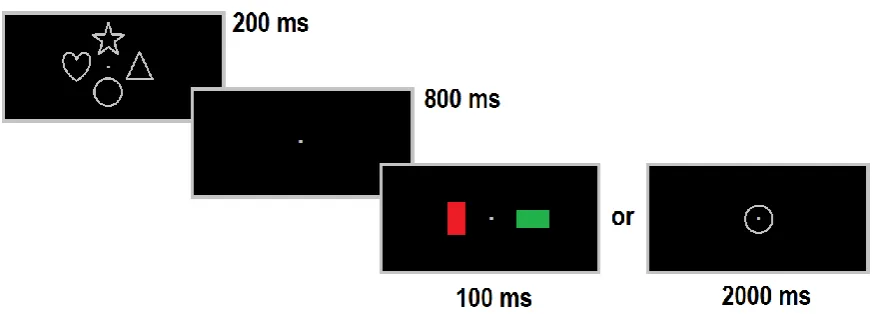
object in a nontarget colour on opposite sides (see Figure 1). Because no memory test
displays were shown on these trials, the information from the sample display that had been
maintained during the retention period could be discarded once a search display was
presented. However, because attentional templates are activated during the preparation for
search, vWM load in the retention interval should still affect the template-guided
attentional processing of the search display if these templates are held in vWM. By
presenting either a search display or a memory test display on any given trial rather than
presenting both successively, search or memory performance could be assessed at the same
point in time, immediately after the retention period (see Downing & Dodds, 2004, for a
similar method). Another advantage of this procedure is that trials are shorter, and more
trials can be included in one testing session, improving the signal-to-noise ratio for
EEG-based measures. We chose to use sparse search displays where a target is accompanied by
only a single distractor object as target selection should therefore be straightforward. The
presence of load-related effects in such a relatively easy selection task would provide strong
support for the hypothesis that concurrent vWM load interferes with the guidance of
attention by target templates.
In the current Experiment 1, a two-colour search task was employed where targets
were rectangular bars that were defined by one of two possible colours (e.g., blue or green).
Participants had to find the target bar in each search display and report its orientation
(horizontal or vertical). Search displays with either target colour were equally likely and
randomly intermixed within each block. Importantly, this two-colour task set remained
constant, as each participant searched for the same two target colours throughout the
experiment. The critical question was whether such constant multiple-feature templates
template-8
guided target selection processes should be impaired with high as compared to low vWM
load. If the ability of attentional templates to trigger rapid attentional biases towards target
objects was affected by concurrent search-unrelated vWM load, target N2pc components
should be attenuated and/or delayed when observers maintain four objects as compared to
just one object during the preceding retention period. The absence of any systematic
differences between target N2pc components as a function of high versus low vWM load
would either imply that vWM load only interferes with the operation of attentional
templates at later object identification stages, but not with their ability to trigger rapid
attentional biases, or that these templates were not held in vWM but rather in a different
longer-term memory store.
EXPERIMENT 1
Method
Participants
Fourteen participants (M age = 29 years, SD = 6; 7 male; 1 left-handed) took part in
Experiment 1. All reported normal or corrected-to-normal vision.
Stimuli and Procedure
The experiment was controlled and executed using E-Prime 2.0 software (Psychology
Software Tools, Inc.). Stimuli were presented on a 24-inch BenQ monitor (60 Hz; 1920 x
1080 screen resolution) attached to a SilverStone PC, with participant viewing distance at
approximately 90 cm. Manual responses were registered via a standard computer keyboard.
All stimuli were presented against a black background, with a grey fixation dot (0.2° x 0.2° of
visual angle) continuously present throughout each experimental block. The sequence of
trial events is illustrated in Figure 1. Each trial started with a memory sample display (200
ms). This was followed by a retention period of 800 ms, after which either a search display
(100 ms duration) or a memory test display (2000 ms duration) was shown. The interval
9
next trial was 2900 ms. When a memory test display was shown, the interval between the
offset of this display and the start of the next memory sample display was 1000 ms.
All stimuli in the memory sample and test displays were grey (CIE colour coordinates:
.305/.325). Memory sample displays included one or four outline shapes (square, circle,
triangle, hexagon, gate, heart, or star, each covering an area of 1.46° x 1.46°). In low vWM
load blocks, a single shape appeared either above or below fixation at an eccentricity of
1.21° (measured relative to the outer edge of this shape). In high vWM load blocks, four
different shapes appeared to the left, right, above and below fixation, each at an
eccentricity from fixation of 1.21°. Memory test displays always contained a single shape at
fixation. Search displays contained two rectangular bars in two different colours that were
oriented horizontally or vertically (0.45° x 0.89°) and were presented directly left or right of
fixation at an eccentricity of 1.59° relative to the centre of each bar. The set of possible bar
colours included red (.605/.322), orange (.543/.409), yellow (.405/.470), green (.296/.604),
blue (.169/.152), magenta (.270/.134), and grey (.305/.325). All colours were equiluminant
(14 cd/m2). The orientation of both bars in the search display was determined randomly and
independently on each trial.
Participants were instructed to memorise the item(s) in the memory sample display.
On trials where a memory test display appeared after the retention period, they had to
report whether or not the item in the memory test display matched an item in the sample
display by pressing the ‘a’ or ‘s’ key with their left hand. Matching and mismatching test
displays were presented with equal probability. When a search display appeared after the
retention period, participants had to select the target bar and report its orientation
(horizontal or vertical) by pressing the ‘0’ or ‘2’ key of the numeric keyboard with their right
hand. The target bar on any given trial was defined by having one of two possible colours
(e.g., red or blue). These two target colours were selected randomly and independently for
each participant, except that grey never served as a target colour. For each participant,
target colours remained constant throughout the experiment. As a reminder of the two
target-defining colours, two small uppercase letters were continuously visible at the top of
the computer screen during the experiment (e.g., RB for red/blue). The target-colour bar
appeared with equal probability on the left or right side of the search displays, and the
colour of the distractor bar on the opposite side was selected randomly from the five
10
The experiment consisted of 10 blocks (5 blocks with low vWM load, and 5 blocks
with high vWM load), each containing 36 trials. Search displays appeared in 24 trials and
memory test displays on 12 trials. Seven participants completed the low vWM load blocks
prior to the high vWM load blocks, and this order was reversed for the other seven
participants. The two blocked vWM load conditions were both preceded by a practice block
of 12 trials. Participants did not perform an additional articulatory suppression task. Such
tasks are often employed in vWM studies to prevent the verbalisation of visual objects
during their maintenance. However, a recent study (Sense, Morey, Prince, Heathcote, &
Morey, 2017) showed that the presence versus absence of articulatory suppression has no
effect on performance in visual change detection tasks, demonstrating that participants do
not engage in the verbal recoding of memorized visual objects in these tasks.
---
Insert Figure 1 about here
---
EEG Recording and Data Analysis
EEG was DC-recorded from 27 scalp electrodes, mounted on an elastic cap at sites
Fpz, F7, F8, F3, F4, Fz, FC5, FC6, T7, T8, C3, C4, Cz, CP5, CP6, P9, P10, P7, P8, P3, P4, Pz, PO7,
PO8, PO9, PO10, and Oz. A 500-Hz sampling rate with a 40 Hz low-pass filter was applied.
Channels were referenced online to a left-earlobe electrode, and re-referenced offline to an
average of both earlobes. No other filters were applied after EEG acquisition. Trials with eye
blinks (exceeding ±60 µV at Fpz), horizontal eye movements (exceeding ±30 µV in the HEOG
channels), and muscle movement artifacts (exceeding ±80 µV at all other channels) were
removed as artefacts, as were trials with incorrect trial responses. The average general EEG
data loss due to artefacts and response errors was 11 % (SD = 13). Following artefact
rejection, ERPs were computed separately for trials where a search display or a memory test
display was presented after the retention period. EEG was segmented into epochs from 100
ms before to 500 ms after the onset of search or memory test displays, relative to a 100 ms
pre-stimulus baseline. For both types of displays, averaged ERP waveforms were computed
11
blocks. For search displays, N2pc amplitudes were calculated based on ERP mean
amplitudes obtained at lateral posterior electrode sites PO7 and PO8 during the 260-360 ms
interval after search display onset. To compare target N2pc onset latencies between low
and high vWM load blocks, a jackknife-based analysis method was employed (see Miller,
Patterson, & Ulrich, 1998, for details). This analysis was based on difference waveforms
computed by subtracting ERPs at PO7/8 ipsilateral to the target from contralateral ERPs.
Fourteen subsamples of grand-averaged difference waves were computed, each excluding a
different participant from the original sample. Onset latencies were determined as the point
in time within the entire 500 ms interval following search display onset where 50 % of the
N2pc peak amplitude observed in high vWM load blocks was reached, which corresponds to
an absolute threshold of -0.41 V. These latencies were then compared between conditions
via paired t-tests, with t-values corrected according to the formula described by Miller et al
(1998).
Results
Behavioural performance
Correct reaction time (RT) and error rates for the visual search task were analysed
based on simple paired-sample t-tests, comparing low versus high vWM load performance.
There was a numerical trend for RTs to search targets to be slower in high as compared to
low vWM load blocks (M = 750 vs. 731 ms), but this difference was not statistically reliable
(t(13) = 1.35, p > .20). Similarly, there was no significant difference in error rates in the
search task between high and low vWM blocks (M = 1.5% vs. 1.2%; t < 1). As expected,
performance in the memory matching task was significantly modulated by vWM load, with
higher error rates in blocks with high as compared to low vWM load (M = 19% vs. 2%; t(13)
= 6.62, p < .001).
---
Insert Figure 2 about here
12
N2pc components
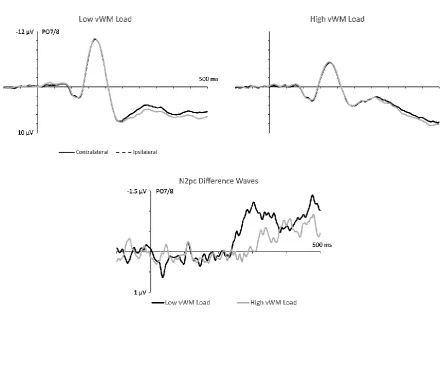
Figure 2 (top panel) shows ERPs triggered by search displays at electrodes PO7/PO8
contralateral and ipsilateral to the side of the target object, separately for low and high
vWM load blocks. Target N2pcs appear to be delayed and attenuated when concurrent
vWM load was high. This can be seen more clearly in the N2pc difference waveforms
obtained by subtracting ipsilateral from contralateral ERPs (Figure 2, bottom panel). While
target objects elicited a clear N2pc component that emerged around 250 ms in low vWM
load blocks, target N2pcs were delayed and smaller in size in high vWM load blocks. The
presence of a reliable effect of vWM load on the target N2pc onset latencies was confirmed
a jackknife-based latency analysis. In blocks with low vWM load, the estimated N2pc onset
was 250 ms after search display onset, as compared to 319 ms in high vWM load blocks
(tc(13) = 3.59, p < .005).
The ANOVA of N2pc mean amplitudes measured in the 260-360 ms post-stimulus
time window with the factors vWM Load (Low, High) and Laterality (Ipsilateral,
Contralateral) obtained a significant main effect of Laterality (F(1,13) = 18.29, p = .001, ηp2 =
.59) that was accompanied by an interaction with vWM Load (F(1,13) = 15.58, p < .005, ηp2 =
.55). Follow-up analyses comparing contralateral and ipsilateral amplitudes showed that a
significant target N2pc component was present during this measurement window in low
vWM load blocks (M diff = -.91 µV; t(13) = 6.67, p < .001), but not in blocks where vWM load
was high (M diff = -.17 µV; t < 1). This absence of reliable target N2pc components with high
concurrent vWM load may be due to the fact that these N2pcs were strongly delayed, and
only emerged during the late part of this 260-360 ms post-stimulus window. For this reason,
an additional post-hoc ANOVA of mean amplitudes measured within a later time window
(320-420 ms post-stimulus) was conducted. This analysis again revealed a significant
interaction between Laterality and vWM Load (F(1,13) = 5.21, p < .05, ηp2 = .29). However,
reliable contralateral negativities were now present not only with low vWM load, (M diff =
-.80 µV; t(13) = 6.13, p < .001), but also when vWM load was high (M diff = -.47 µV; t(13) =
13 ---
Insert Figure 3 about here
---
N1 components
As can be seen in Figure 2 (upper panels), the early visual N1 component in response
to search displays were affected by vWM load, with strongly attenuated N1 amplitudes in
high vWM load blocks. These load-induced N1 amplitude modulations were not lateralised,
but equally present at electrodes ipsilateral and contralateral to the target. A comparison of
N1 mean amplitudes (averaged across electrodes PO7 and PO8) in the 150-200 ms time
interval after search display onset between blocks with high and low vWM load confirmed
that the reduction in the size of N1 components in high vWM load blocks was significant (M
= -4.22 vs. -8.40 μV; t(13) = 5.30, p < .001). We also assessed whether an analogous
load-induced N1 attenuation would also be present for ERPs triggered by memory test displays
after the retention period. Figure 3 (left panel) shows ERPs at lateral posterior electrodes
(averaged across PO7 and PO8) in response to memory test displays in low versus high vWM
load blocks. N1 components were indeed smaller when vWM load was high, and this
difference was again reliable (M = -5.48 vs. -8.05 μV; t(13) = 3.43, p < .005). To explore
whether these reductions in the size of visual N1 components elicited by search and
memory test displays with high vWM load were associated with task performance, we ran
correlation analyses for N1 amplitudes for individual participants in high and low vWM load
blocks and their performance in the search and memory tasks (RTs for the search task, error
rates for the vWM task). The size of individual N1 components in high vWM load blocks
predicted participants’ memory performance in these blocks, with larger N1 components
associated with more errors in response to memory test displays. This correlation was
present both for N1 amplitudes elicited by search displays (r = -.533, p = .05) and also for N1
amplitudes triggered by memory displays (r = -.540, p = .046). There were no reliable
14
performance in low vWM blocks. N1 amplitudes were also unrelated to participants’ RTs in
the search task.
Discussion of Experiment 1
The results of Experiment 1 provide new electrophysiological evidence that
search-unrelated vWM load affects the efficiency of rapid template-guided attentional selection
processes. The N2pc to colour-defined target objects emerged approximately 70 ms later in
blocks with high vWM load during the preceding retention period relative to low vWM load
blocks. This suggests that maintaining multiple shapes in vWM impaired the preparatory
activation of colour-specific search templates, resulting in a delayed allocation of attention
to template-matching target objects in search displays. Target N2pc amplitudes were also
smaller in high vWM load blocks, indicating that template-guided attentional biases for
target objects were triggered less strongly in these blocks. A further unexpected finding was
that increasing vWM load in Experiment 1 also reduced the amplitude of the earlier
visual-evoked N1 component in response to both search and memory test displays. Notably, the
size of N1 components in high vWM load blocks was correlated with participants’ individual
performance in the vWM task, with larger N1 amplitudes to both search and memory test
displays associated with more incorrect memory matching responses. As visual N1
components are sensitive to manipulations of selective attention (e.g., Mangun & Hillyard,
1991; Eimer, 1994), the link between N1 amplitudes to displays presented at the end of the
retention period and memory performance could reflect an attentional trade-off between
memory maintenance and the perceptual processing of new visual input (see General
Discussion). Because these N1 amplitude effects were not predicted, their replicability
needs to be confirmed first. One goal of Experiment 2 was to provide such a confirmation.
In contrast to the clear effects of high versus low vWM load on target N2pc
components, there was no corresponding behavioural load effect on search performance, as
target RTs were only numerically but not reliably slower in high as compared to low vWM
load blocks. This is surprising, as a delay of template-guided attentional target selection
15
significant behavioural load effects in Experiment 1 could be due to the fact that vWM load
was blocked in this experiment, with five low-load blocks followed by five high-load blocks,
or vice versa. Any effects of vWM load may therefore have been masked by general practice
effects resulting in faster responses in the second half of the experiment, in particular for
participants who completed low vWM load blocks first. This possibility was addressed in
Experiment 2, where trials with high and low vWM load were randomly intermixed.
Importantly, the effects of high versus low vWM load on target N2pc components in
Experiment 1 were observed in spite of the fact that target colours remained constant
throughout the entire experiment, and the corresponding colour templates could therefore
in principle have been transferred to a different longer-term memory store (e.g., Woodman
et al., 2007). This suggests that multiple feature templates are maintained in vWM, even
when they remain unchanged (c.f., Grubert et al., 2016). In contrast, an attentional template
for a single target feature (e.g., a specific colour) may be transferred to a long-term memory
store when this feature stays constant (Woodman et al., 2007). If this is correct, increasing
vWM load should not affect template-guided attentional target selection processes (as
reflected by target N2pc components) when observers search for a single colour-defined
target object. This prediction was tested in Experiment 2. The vWM task was the same as in
Experiment 1, except that memory sample displays with one or four shapes (low versus high
vWM load) now appeared with equal probability and in random order within each block.
There were two search tasks. The two-colour task was identical to Experiment 1. In the
one-colour task, a single target one-colour remained task-relevant throughout. If multiple constant
target templates are maintained in vWM, whereas single constant templates are held in a
different memory store, increased vWM load should impair template-guided target
selection processes only in the two-colour task but not in the one-colour task.
EXPERIMENT 2
Method
16
Fifteen participants took part in Experiment 2. One participants’ data was excluded
due to a large number of artefacts produced by eye movements (> 80 % of all EEG epochs).
The remaining 14 participants (M age = 29 years, SD = 6; 6 male; 1 left-handed) all reported
normal or corrected-to-normal vision.
Stimuli and Procedures
Stimuli and procedures were similar to Experiment 1, with the following exceptions.
Trials with high and low vWM load were now randomly intermixed within blocks. There
were two versions of the search task, each presented in 10 successive blocks. The
two-colour task was identical to Experiment 1, with targets in the search displays defined by one
of two possible and equally likely colours. In the one-colour task, these targets were defined
by a single colour that remained constant throughout. This target colour was determined
randomly for each participant, with the exception that it was never identical to one of the
target colours in the two-colour task. Grey never served as target colour in either task. Each
block contained 36 trials (16 trials starting with a low vWM load memory sample display,
and 16 trials starting with a high-load vWM sample). On 24 trials, a search display was
presented after the retention period, and on 12 trials, a memory test display was shown
instead. Seven participants completed ten one-colour task blocks before the ten two-colour
task blocks, and this order was reversed for the other seven participants.
EEG Recording and Data Analysis
Procedures were identical to Experiment 1, except that ERPs were computed
separately for the one-colour and two-colour tasks. The average general EEG data loss due
to artefacts and response errors was 12 % (SD = 16). The absolute N2pc onset criteria used
in the jackknife-based analyses were again defined as 50 % of the N2pc peak amplitude for
high vWM load blocks, separately for the one-colour and two-colour tasks. This resulted in absolute thresholds of -0.72 V and -0.55 V for these two tasks, respectively. Based on the
observations of Experiment 1, additional planned analyses were now conducted to assess
150-17
200 ms post-stimulus time window. These analyses were conducted separately for N1
components to search displays and to memory test displays. In addition, correlational
analyses explored the link between load-dependent N1 amplitude modulations and
individual vWM performance.
Results
Behavioural performance
Correct RTs and error rates for the visual search task were entered into 2x2
repeated-measures ANOVAs with the factors Search Task (one-colour task, two-colour task)
and vWM Load (low, high). RT data showed a main effect of Search Task (F(1,13) = 33.62, p <
.001, ηp2 = .72), with slower RTs to targets in the two-colour as compared to the one-colour
task (M = 703 vs. 652 ms). There was no main effect of vWM Load (F < 1), but a significant
interaction between vWM Load and Search Task was observed (F(1,13) = 6.21, p < .03, ηp2 =
.32). In the one-colour task, there was no effect of low versus high vWM load on RTs to
search targets (M = 653 vs. 651 ms; t < 1). In contrast, target RTs in the two-colour task were
significantly delayed on trials with high vWM load relative to low vWM load trials (M = 710
vs. 696 ms; t(13) = 2.82, p < .02). Error rates in response to search displays varied between 2
% and 4 % in different task conditions. There were no significant main effects of Search Task
(F(1,13) = 2.58, p > .10) or vWM Load (F < 1), and no interaction between these factors (F <
1). An ANOVA of error rates in the memory matching task obtained a main effect of vWM
Load (F(1,13) = 43.34, p < .001, ηp2 = .77), with more errors on trials with high versus low
vWM load (M = 20% vs. 3%). There was no effect of Search Task and no interaction between
vWM Load and Search task for error rates (both F’s < 1)
---
Insert Figure 4 about here
---
18
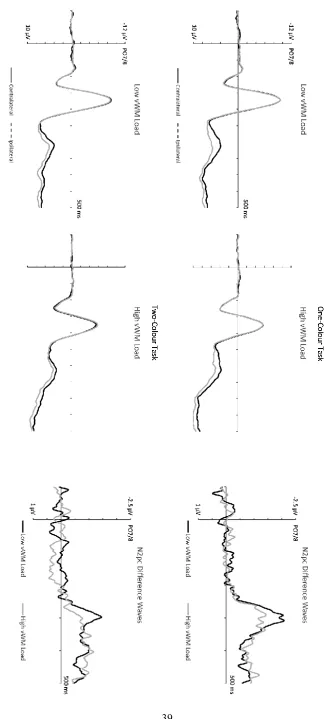
Figure 4 shows ERPs triggered by search displays at electrodes PO7/PO8
contralateral and ipsilateral to targets, and the corresponding N2pc difference waveforms
measured on trials with low and high vWM load in the one-colour task (top panels) and in
the two-colour task (bottom panels). Target N2pcs were present in both search tasks. In the
one-colour task, N2pcs emerged at the same time on trials with low and high vWM load, but
N2pc amplitudes appeared to be attenuated with high load. In the two-colour task, the
target N2pc was both delayed and smaller in size on trials where vWM load was high.
N2pc onset latencies determined with the jackknife-based method were evaluated in
an ANOVA with the factors Search Task and vWM Load. There was a marginal effect of
Search Task (Fc(1,13) = 3.60, p = .08), as target N2pcs tended to emerge later in the
two-colour relative to the one-two-colour task (M = 276 vs. 253 ms). More importantly, a significant
effect of vWM Load was present (Fc(1,13) = 4.69, p < .05), with delayed N2pc onsets on trials
with high vWM load (M = 272 vs. 253 ms). Critically, this effect of vWM load on N2pc onset
latencies differed between the one-colour and two-colour tasks (interaction between
Search Task and vWM Load: Fc(1,13) = 3.91, p = .04, one-tailed). In the two-colour task,
target N2pcs were significantly delayed on trials with high versus low vWM load (M = 288 vs.
264 ms; tc(13) = 2.44, p < .03). In contrast, no N2pc onset difference between these two
types of trials was present in the one-colour task (M = 255 vs. 251 ms; tc < 1).
N2pc mean amplitudes were entered into a 2x2x2 ANOVA with the factors Search
Task, vWM Load, and Laterality. This showed a significant main effect of Laterality (F(1,13) =
13.76, p < .005, ηp2 = .51), indicating the reliable presence of N2pc components. There was
also a Search Task x Laterality interaction (F(1,13) = 5.22, p < .05, ηp2 = .29). Although
reliable N2pc components were elicited in both tasks (t’s > 2.86, p’s < .02), N2pc amplitudes
were larger in the one-colour relative to the two-colour task (M diff = -1.37 vs. -.79 μV). A
trend for a vWM Load x Laterality interaction (F(1,13) = 3.28, p = .09, ηp2 = .20) reflected a
tendency for N2pc amplitudes to be smaller on trials with high versus low concurrent WM
load (M diff = -.93 vs. -1.23 μV), although N2pc components were reliably present on both
types of trials (t’s > 2.82, p’s < .02).
19
Figure 4 shows that non-lateralised N1 components were attenuated on trials with
high vWM load as compared to low vWM load trials, both in the one-colour and two-colour
tasks, analogous to Experiment 1. As can be seen in Figure 3 (right panel), the same was also
the case for N1 components triggered by memory test displays in Experiment 2 (here shown
collapsed across the one-colour and two-colour tasks). These load-induced N1 amplitude
modulations were assessed by analysing N1 mean amplitudes measured in the 150-200
post-stimulus time window for search and memory test displays, respectively, with the
factors vWM Load and Search Task. Main effects of vWM Load (reflecting reduced N1
amplitudes when vWM load was high) were found both in response to search displays
(F(1,13) = 57.26, p < .001, ηp2 = .82; M = -4.23 vs. -7.29 μV) and memory test displays
(F(1,13) = 14.57, p < .005, ηp2 = .53; M = -5.05 vs. -7.31 μV). There were no main effects of
Search Task or interactions between both factors on N1 amplitudes for either type of display
(all F < 1.3).
As in Experiment 1, additional correlation analysis across individual participants
investigated links between these load-related N1 amplitude modulations and behavioural
performance. Again, these modulations predicted memory matching performance when
vWM load was high. Participants who showed a larger N1 to search displays on trials with
high vWM load tended to show poorer vWM matching performance on these trials,
although this correlation was only marginally significant (r = -.495, p = .072). N1 amplitudes
to memory test displays on high vWM load trials were reliably linked to memory matching
errors on these trials, with larger N1 amplitudes associated with more errors (r = -.630, p =
.016). There were no correlations between the size of N1 amplitudes to search or memory
test displays on trials with low vWM load and vWM performance on these trials, and no
links between individual N1 amplitudes and participants’ RTs in the one-colour and
two-colour search tasks.
20
The N2pc onset latency differences observed in the two-colour task confirmed the
findings of Experiment 1. Target N2pc components were delayed when vWM load was high
relative to low load trials, demonstrating that increasing the number of shapes maintained
during the retention interval interfered with the activation of preparatory attentional
templates for target colours, and suggesting that these representations were held in the
same WM store. Importantly, there was now also a reliable behavioural load effect, with RTs
to search targets delayed on trials with high as compared to low vWM load. This suggests
that the absence of a significant behavioural load effect in Experiment 1 was the result of
vWM load being blocked rather than randomized across trials, as in Experiment 2.
While clear load-induced interference effects were found for target selection in the
two-colour task, no such effects were observed in the one-colour task. Here, increasing
vWM load had no clear effect on target RTs or on target N2pc onset latencies. Because
search performance and vWM maintenance were assessed on different trials, the absence
of a load effect in this task could in principle be the result of participants failing to maintain
multiple sample display items on trials where a search display was presented immediately
after the retention period. However, these trials were randomly and thus unpredictably
interleaved with trials where a memory test display was shown, and mean vWM accuracy
was approximately 80% on the latter type of trials in both experiments. This makes it highly
unlikely that the behavioural and electrophysiological effects of vWM load observed in
response to search displays were affected by a selective failure to retain memory sample
items. A more plausible alternative explanation for the absence of behavioural vWM load
effects in the one-colour task is that the target colour template was no longer held in vWM,
but in a different long-term memory store.
Target N2pc components also differed between the two tasks. They were reliably
larger and tended to emerge earlier in the one-colour relative to the two-colour task. This is
in line with previous N2pc results demonstrating that attentional target selection
mechanisms operate more efficiently when they are guided by a single target template than
by multiple templates (Grubert & Eimer, 2013). The fact that RTs to search targets were
about 50 ms faster in the one-colour as compared to the two-colour task also supports this
interpretation. It is notable that in both experiments, target N2pc components emerged
21
and analogous attentional selection tasks in the absence of concurrent search-unrelated
vWM load. In an experiment where observers had to find a single or one of two possible
colour-defined targets in search displays where these targets were accompanied by a single
distractor on the opposite side (Grubert & Eimer, 2013), target N2pcs emerged at about 180
ms (one-colour task) or 210 ms (two-colour task) after search display onset. In the present
study, the corresponding N2pc onset latencies for the one-colour and two-colour tasks were
generally delayed by about 50 ms when vWM load was low, and even more with high vWM
load. These delays could reflect general dual-task costs for the control of visual search that
arise whenever one or more search-unrelated items have to be concurrently maintained in
vWM. If this was correct, target N2pcs should emerge much earlier under conditions where
the same sample and search displays are presented, but participants are instructed to
ignore the sample displays and only perform the search task on each trial. This hypothesis
was tested in Experiment 3.
Similar to the first experiment, vWM load had a strong impact on visual N1
components triggered by search and memory test displays in Experiment 2, which were
attenuated on trials with high vWM load. This N1 modulation was identical in the
one-colour and two-one-colour tasks, demonstrating that it was determined entirely by the load of
the vWM task, irrespective of whether one or two target colour templates had to be
maintained. The link between these load-related N1 amplitude modulations and individual
memory performance observed in Experiment 1 was also confirmed: participants who
showed larger N1 components to search or memory test displays on trials with high vWM
load performed worse when their shape memory was tested. However, the factors
responsible for the load-induced modulation of N1 amplitudes observed in both
experiments remains unclear. One possibility is that this effect is directly linked to the
number of objects that are actively maintained in vWM. Alternatively, it may reflect an
attenuated sensory response to search displays on trials where they were preceded by
sample displays containing four objects1. Multiple-item sample displays may trigger a
stronger adaptation of visual neurons relative to single-item displays, and this could produce
a reduction of N1 amplitude to subsequent search displays. If this was correct, the same N1
1
22
adaptation effects should also be observed under conditions where memory sample
displays are task-irrelevant and do not have to be encoded into vWM.
Experiment 3 was conducted to test this prediction, as well as to investigate whether
target N2pc components emerge earlier in the absence than in the presence of a concurrent
vWM task. There were two task conditions. The combined search/vWM task was identical to
the one-colour task of Experiment 2. In the search-only task, the same one-item or
four-item sample displays were followed by a search display on all trials. Here, participants were
instructed to ignore all sample displays, and focus exclusively on the detection of target
objects in the search displays.
EXPERIMENT 3
Method
Participants
Thirteen participants took part in Experiment 3. One participant was removed due to
EEG artefacts affecting more than 45% of all trials, leaving a final sample of 12 (M age = 32
years; SD = 7; 5 male; 1 left-handed).
Stimuli and Procedures
These were similar to previous experiments, with the following exceptions.
Participants completed two tasks. The combined task was identical to the one-colour task of
Experiment 2. In the new search-only task, participants were instructed to passively view
the items in the memory sample displays without memorizing them, as they were
task-irrelevant. Memory sample displays were followed by a search display on all trials, and
participants had to report the orientation of the target bar defined by a particular colour.
This target colour remained constant across both tasks for each participant, and was
randomised across participants. Trials with one or four items in the memory sample displays
were randomly intermixed in both tasks. Each block contained 36 trials. Two blocks were
run for the search-only task and three blocks for the combined task, to equate the number
23
search-only blocks prior to the three blocks for the combined task, and this order was
reversed for the other six participants.
EEG Recording and Data Analysis
The average general EEG data loss due to artefacts and response errors was 11 % (SD
= 9). ERPs were computed separately for the search-only and combined tasks. All N2pc
analyses were conducted on EEG data averaged across trials with one and four items in the
sample displays. This was done to improve signal-to-noise ratio, and because Experiment 2
had found no target N2pc onset latency differences between trials with high versus low
vWM load in the one-colour task. The absolute N2pc onset criterion used in the
jackknife-based analyses was defined as 50 % of the N2pc peak amplitude measured in the combined
task, resulting in an onset threshold of -0.69 µV. Because this onset analysis showed that the
N2pc to search targets emerged much earlier in the search-only task relative to the
combined task, N2pc mean amplitudes were computed within different time windows for
these tasks (260-360 ms after search display onset in the combined task, as in Experiments 1
and 2, and 200-300 ms post-stimulus in the search-only task). N1 mean amplitudes in
response to search displays were again computed within a 150-200 ms post-stimulus time
window, separately for both tasks and for trials with one versus four items in the sample
displays.
Results
Behavioural performance
Correct RTs for the visual search task were entered into a 2x2 ANOVA with the
factors Task (Search-Only, Combined) and Number of Samples (one, four). Responses to
search targets were much faster in the search-only task than in the combined task (M = 548
vs. 646 ms), reflected by a main effect of Task (F(1,11) = 110.12, p < .001, ηp2 = .91). There
was no main effect of Number of Samples and no interaction between both factors (both F’s
< 1). Error rates in the search task varied between 2% and 3% in different task conditions,
and there were no significant effects (F’s < 1.69, p’s > .20). As expected, participants’
24
four sample items (error rates for high versus low vWM load: M = 20 vs. 1 %; t(11) = 7.70, p
< .001).
---
Insert Figure 5 about here
---
N2pc components
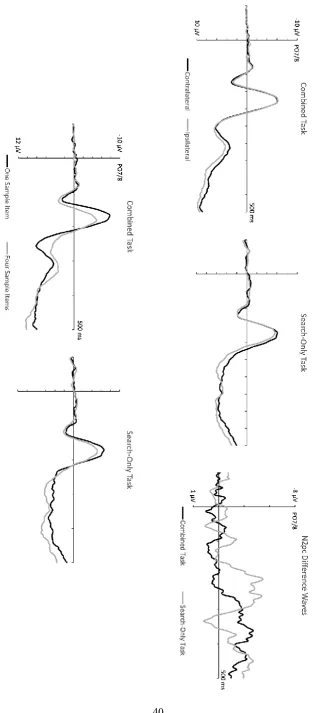
Figure 5 (top panel) shows ERPs elicited by search displays at electrodes P07/8
contralateral and ipsilateral to targets, and the corresponding N2pc difference waves,
separately for the combined task and the search-only task. While target N2pc onset latency
in the combined task was similar to the one-colour task of Experiment 2, N2pc components
emerged much earlier in the search-only task. This was confirmed by the jackknife-based
N2pc latency analysis, which revealed a reliable onset difference between both tasks (180
ms after search display onset in the search-only task, vs. 271 ms in the combined task, tc(11)
= 2.85, p < .02). The analysis of N2pc mean amplitudes (obtained during the 200-300 ms
and 260-360 ms post-stimulus time windows in the search-only and combined tasks,
respectively) showed a significant main effect of Laterality (F(1,11) = 9.37, p < .02, ηp2 = .46),
and an interaction between Laterality and Task (F(1,11) = 7.31, p < .05, ηp2 = .40), as N2pc
components were larger in the search-only than in the combined task (M diff = 1.40 µV vs.
-.89 µV). Follow-up paired t-tests investigating whether contralateral ERPs were more
negative than ipsilateral ERPs confirmed that N2pcs were reliably present in both tasks (t’s >
2.11, p’s < .03, one-tailed).
N1 components
Figure 5 (bottom panel) shows N1 components triggered by search displays in both
tasks, separately for trials with one versus four sample display items. An attenuation of N1
amplitudes to search displays following a four-item sample display was present in both
tasks, but appears considerably larger in the combined task. This was confirmed by the
analysis of N1 mean amplitudes with the factors Task and Number of Samples. There was no
main effect of Task (F < 1) but a highly significant effect of Number of Samples (F(1,11) =
25
(M = -4.00 vs. -6.06 µV). Importantly, there was an interaction between both factors (F(1,11)
= 5.93, p < .05, ηp2 = .35), as this reduction of N1 amplitudes was twice as large in the
combined task relative to the search-only task (M diff = 2.77 vs. 1.35 µV). Follow-up analyses
confirmed that this N1 reduction by four versus one preceding sample item(s) was reliably
present in both tasks (t’s > 4.90, p’s < .005)
Discussion of Experiment 3
In Experiment 3, N2pc components to search targets emerged much earlier in the
search-only task than in the combined task where participants maintained one or four
shapes in vWM during the interval prior to the onset of a search display. The N2pc onset
observed in the search-only task (180 ms post-stimulus) was identical to the N2pc onset
latency found in an earlier single-task experiment where similar two-item search displays
were used (Grubert & Eimer, 2013). In the combined task, the target N2pc was delayed by
about 90 ms, and emerged at a similar latency as in the one-colour task of Experiment 2.
These N2pc onset latency differences between the two tasks demonstrate that a concurrent
vWM task has substantial costs for the speed of allocating attention to search target
objects, even when participants search for a single target-defining feature.
The other main finding of Experiment 3 concerns the nature of the N1 amplitude
attenuations found in Experiment 1 and 2 on trials with high vWM load. The fact that this
effect remained present in the search-only task indicates that it partly reflects sensory
adaptation by multiple-item sample displays that is elicited even when these items do not
have to be retained in vWM. However, the N1 amplitude modulation was significantly larger
in the combined task, which suggests that active vWM maintenance processes also
contribute to this effect. This will be further considered below.
GENERAL DISCUSSION
The question whether and under which conditions attentional templates for visual
search are maintained in vWM is still under debate. Some have argued that such templates
are always held in vWM (e.g., Olivers et al., 2011), while others have claimed that in tasks
26
different long-term memory store (e.g., Carlisle et al., 2011). Here, we employed
electrophysiological markers of template-guided attentional target selection processes to
investigate how the load of a concurrent search-unrelated vWM task affects the efficiency
of these processes. If search templates are held in vWM, increasing vWM load should
interfere with the activation of these templates during the preparation for search, and thus
with their role in guiding attention towards target objects in search displays. Our results
demonstrate that vWM load modulates the speed with which attention is allocated to
target objects during relatively early visual processing stages. In Experiments 1 and 2, N2pc
components to search target objects were delayed when observers had to maintain four as
compared to just one shape during the retention period just prior to the presentation of a
search display. This was the case both when vWM load was blocked (Experiment 1) or
varied unpredictably across trials (Experiment 2). This target N2pc delay with high vWM load
was observed in tasks where observers searched for one of two possible colour-defined
target objects, indicating that when two colour-specific attentional templates have to be
activated, these templates are held in vWM, and thus interfere with other items that are
simultaneously maintained in the same store.
It is notable that vWM load delayed target N2pc components in Experiments 1 and 2
in spite of the fact that target-defining colours remained constant for each participant
throughout the entire experimental session. However, Experiment 2 demonstrated that this
was the case only for the two-colour search task. In the one-colour task where observers
always searched for the same colour-defined target, and target selection could therefore be
guided by a single colour template, there were no clear effects of high versus low vWM load
on behavioural or electrophysiological markers of target selection. The presence of such
effects in the two-colour task and their absence in the one-colour task suggests that
attentional templates for a single target-defining feature can be transferred from vWM to a
different long-term store when this template remains constant. However, multiple
templates for different possible target features are maintained in vWM, even when they
remain unchanged (see also Grubert et al., 2016, for corresponding evidence from the CDA
component). Thus, the suggestion that search templates for constant target features are
generally maintained outside of vWM (Woodman et al., 2007) would seem to require
27
at least when these features come from the same dimension. Situations where targets are
defined by one of two different possible target colours may involve additional top-down
control processes, such as the activation of one colour template and suppression of the
other once a particular target object is encountered, or switching between templates when
target colour changes across successive trials. None of these control processes is required
during single-colour search. It is important to note that the two-colour search task
employed in the present study where a target could have one of two possible colours is
different from a standard conjunction search task where targets are defined by a
combination of two features (e.g, red circles). Future studies will need to investigate
whether search templates for a single target object that is defined by a feature conjunction
are moved from vWM to a different long-term store when they remain constant, in spite of
the fact that these templates represent two different target features simultaneously.
The delay of target N2pc components with high as compared to low vWM load
observed in the two-colour tasks of Experiments 1 and 2 indicates that the storage of
search-unrelated objects in vWM affects the time course of attentional allocation processes
in visual search, with these processes initiated later when four objects as compared to a
single object are concurrently maintained. Importantly, even when vWM load was low,
target N2pc components also emerged substantially later in these two experiments than in
previous N2pc studies of visual search without an additional vWM task. This suggests that
the presence of such a task (regardless of its load) is sufficient to delay the start of target
selection processes. Experiment 3 confirmed this prediction. Here, target N2pcs emerged at
a typical latency of 180 ms post-stimulus in the search-only task, and were delayed by about
90 ms in the combined vWM/search task. This is consistent with previous behavioural
results by Woodman et al. (2001), who found a general delay of RTs to search targets in dual
search/memory tasks relative to search-only tasks. It is important to note that the delay of
target N2pc components by a concurrent vWM task in Experiment 3 was found in the
context of a one-colour search task. In Experiment 2, increasing vWM load in this one-colour
task had no effect on N2pc onset latencies. Similarly, Woodman et al. (2001) also found no
evidence for an additional delay of target selection processes when vWM load was
increased in a task where participants searched for a single shape-defined target object.
28
suggests that a concurrent vWM task can affect the attentional selection of search targets in
two different ways. On the one hand, there are dual-task costs relative to a search-only
baseline that affect both single-feature and multiple-feature search tasks, independently of
vWM load. These costs could be a generic effect of task expectancy. Participants may
prepare less fully for the search task under conditions where search displays are only
presented on two thirds of all trials and a memory test display on the other third.
Incomplete task preparation could result in a delayed onset of template-guided target
selection processes, irrespective of whether these templates are stored in vWM or in a
different long-term memory store. On the other hand, there is the additional
load-dependent delay of target selection processes that only emerged during multiple-feature
search. This delay is likely to reflect the costs for the efficiency of attentional guidance by
search templates that are produced by a competition between these templates and other
items that are simultaneously maintained in vWM.
In Experiments 1 and 2, increasing the load of the vWM task from one to four items
not only delayed N2pc components to search targets, but also affected the amplitudes of
the earlier visual evoked posterior N1 component elicited by the search and memory test
displays, which were attenuated when vWM load was high. This load-induced N1
modulation was bilateral and thus independent of the position of target objects, which
indicates that it represents a generic target-nonselective effect associated with the number
of objects included in a memory sample display. Experiment 3 tested whether this effect
simply reflects a stronger sensory adaptation of visual responses to search and test displays
that were preceded by sample displays containing multiple objects, or the number of items
currently maintained in vWM. N1 components to search displays were smaller on trials
where sample displays contained four objects even when these objects were task-irrelevant
in the search-only task, indicating that sensory adaptation was involved. However, these N1
modulations were reliably larger in the combined task where the shapes in the sample
displays had to be encoded into vWM. This suggests that this effect is at least partially
associated with active maintenance mechanisms (see Rose et al., 2005, for a similar
modulation of visual N1 components that was associated with the number of objects held in
WM in an n-back task). One possibility is that it reflects a competition for attention between
29
Because attention can be allocated selectively either to external objects or to
representations that are maintained internally (e.g., Chun, Golomb, & Turk-Browne, 2011),
these two types of external versus internal attention compete with each other in dual tasks
that involve both vWM maintenance and the selection of target objects in visual search
displays. In such situations, directing attention to items held in vWM will impair the
simultaneous allocation of external attention to new visual stimuli. This impairment will be
greater when multiple objects are maintained in vWM. Corresponding behavioural evidence
for such a competition between internal and external attention was found in a study by
Konstantinou and Lavie (2013), where increasing vWM load impaired detection sensitivity
for peripheral visual stimuli. The reduction of N1 amplitudes to search and memory test
displays under high vWM load that was observed in the present study is likely to reflect the
electrophysiological effects of the same underlying competitive mechanisms. The
observation that individual vWM performance was correlated with N1 amplitudes in the
context of high vWM load in both experiments is in line with this interpretation. If there is a
trade-off between external and internal attention, and if different individuals prioritize
these two types of attention differently, larger N1 components to search and memory test
displays will reflect a tendency to allocate attention preferentially to new external events.
Participants who have a tendency to prioritize external attention should show less accurate
vWM performance, reflecting the limited availability of internal attention during vWM
maintenance.
In summary, the current experiments provide new electrophysiological evidence for
impaired template-guided attentional target selection processes in the presence of high
concurrent vWM load. These impairments are likely to reflect the interference between
preparatory search templates for multiple colours and other search-unrelated information
that is concurrently held in vWM, and thus support the hypothesis that such search
templates are stored in vWM. The fact that only generic dual-task costs but no
load-dependent interference effects were found during single-colour search suggests that search
templates for a single constant target-defining feature can be transferred from vWM to a