Fisher, Katie and Towler, John and Eimer, Martin (2016) Effects of contrast
inversion on face perception depend on gaze location: evidence from the
N170 component. Cognitive Neuroscience 7 (1-4), pp. 128-137. ISSN
1758-8928.
Downloaded from:
Usage Guidelines:
Please refer to usage guidelines at or alternatively
Effects of contrast inversion on face perception depend on gaze location: Evidence from the N170 component
Katie Fisher, John Towler, & Martin Eimer* Department of Psychological Sciences Birkbeck College, University of London, UK
*Corresponding Author
Word count (Abstract, main text, and references): 5420
Corresponding author’s contact details: Martin Eimer, Department of Psychological Sciences, Birkbeck College, University of London, Malet Street, London WC1E 7HX, UK. Phone: 0044 207631 6358. Email: [email protected].
Abstract
Face recognition is known to be impaired when the contrast polarity of the eyes is inverted. We
studied how contrast affects early perceptual face processing by measuring the face-sensitive
N170 component to face images when the contrast of the eyes and of the rest of the face was
independently manipulated. Fixation was either located on the eye region or on the lower part of
a face. Contrast-reversal of the eyes triggered delayed and enhanced N170 components
independently of the contrast of other face parts, and regardless of gaze location. Similar N170
modulations were observed when the rest of a face was contrast-inverted, but only when gaze
was directed away from the eyes. Results demonstrate that the contrast of the eyes and of other
face parts can both affect face perception, but that the contrast polarity of the eye region has a
privileged role during early stages of face processing.
Introduction
Reversing the contrast polarity of familiar faces dramatically impairs their recognisability
(e.g., Galper, 1970; Johnston, Hill, & Carman, 1992). This effect appears to be specific to face
perception, as the recognition of non-face objects is much less sensitive to contrast reversal
(Vuong, Peissig, Harrison, & Tarr, 2005; Nederhouser, Yue, Mangini, & Biederman, 2007).
Changing contrast polarity may disproportionately affect face recognition because it removes
shading and pigmentation information that is critical for the discrimination of facial identity (e.g.,
Kemp, Pike, White, & Musselman, 1996; Liu, Collin, Burton, Chaudhuri, 1999; Liu, Collin, &
Chaudhuri, 2000; Russell, Sinha, Biederman, Nederhouser, 2006). The eye region in particular
contains contrast-related signals that are relevant for face recognition. For this reason, the eyes
may be prioritised during the structural encoding of faces, and serve as an “anchor” for holistic
face processing (Rossion, 2009; Nemrodov, Anderson, Preston, & Itier, 2014; see also Orban de
Xivry, Ramon, Lefèvre, & Rossion, 2008). In line with this hypothesis, it has been shown that
fixating gaze on the nasion region (between and just below the eyes) is beneficial for many face
processing tasks (Peterson & Eckstein, 2012). The first fixation on a face image is typically
directed to this region (Hsaio & Cottrell, 2008). Inverting the contrast of the eyes should
therefore have a greater effect on face processing than contrast inversions of other parts of a
face, in particular when eye gaze is directed towards its preferred position near the eye region.
Gilad, Meng, and Sinha (2009) explored this hypothesis with “contrast chimera” faces,
which include both contrast-inverted and contrast-normal regions, and demonstrated that
restoring only the eye region of a contrast-inverted face to positive contrast improved
recognition performance to approximately 90% of the level observed with contrast-normal faces
(see also Sormaz, Andrews, & Young, 2013). They also showed that fMRI activity in the
fusiform face area elicited by these positive-eyes chimeras was indistinguishable from the
inversion on face processing might be primarily or even exclusively driven by the contrast of the
eye region. In the present experiment, we tested this hypothesis by measuring the face-sensitive
N170 component of the event-related potential (ERP). The N170 is an enhanced negativity at
lateral occipital-temporal electrodes that emerges 150-200 ms post-stimulus in response to faces
as compared to non-face objects (e.g., Bentin, Allison, Puce, Perez, & McCarthy, 1996; Eimer,
2000; see Eimer, 2011, for review). Because the N170 is generally unaffected by face familiarity
(Eimer, 2000), it is interpreted as a neural marker of the perceptual structural encoding of faces
that precedes their recognition. The N170 is highly sensitive to face inversion and to
manipulations of face contrast. Upside-down faces and contrast-inverted faces elicit delayed and
enhanced N170 components relative to upright or contrast-positive faces (e.g., Itier & Taylor,
2002; Itier, Latinus, & Taylor, 2006). Such N170 modulations have been attributed to disruptive
effects on perceptual face processing caused by changing the typical orientation or the contrast
polarity of faces (Rossion et al., 1999; Itier et al., 2006).
Several ERP studies have shown that early face processing might be particularly sensitive
to the contrast polarity of the eye region. Itier, Alain, Sedore, and McIntosh (2007) found that
N170 modulations elicited by contrast-inverted as compared to contrast-positive faces were
eliminated for faces without eyes. Along similar lines, a recent ERP study with contrast chimera
faces (Gandhi, Suresh, & Sinha, 2012) showed the usual N170 delay and enhancement for fully
contrast-inverted faces, but found that the N170 to positive-eyes chimeras (where the eye region
appeared in normal contrast) was statistically indistinguishable from the N170 component to
contrast-normal faces. These observations suggest that early perceptual face processing stages
that are reflected by the N170 are exclusively sensitive to the contrast polarity of the eye region,
and remain unaffected by the contrast of other parts of the face. However, because Itier et al.
(2007) and Gandhi et al. (2012) did not manipulate gaze location, these studies could not
determine whether this differential effect depends critically on a fixation position near the eye
effects are strongly modulated by the current location of fixation (see also De Lissa et al., 2014,
for similar findings), and this might also be the case for N170 modulations that triggered by
changing the contrast polarity of faces or face parts.
In the present experiment, we varied the contrast of the eye region and the contrast of
the rest of a face orthogonally and also manipulated fixation location, to test whether N170
components are exclusively sensitive to eye contrast, and whether this depends on eye gaze being
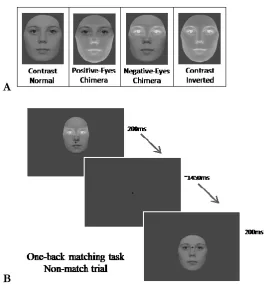
directed towards the eye region. Participants performed a one-back repetition detection task with
contrast-normal faces, fully contrast-inverted faces, and two types of contrast chimeras where
either the contrast of the eye region or the rest of the face was inverted (negative-eyes and
positive-eyes chimeras; see Figure 1A). This independent manipulation of the contrast of the eye
region and of the rest of the face allowed us to determine the relative effects of
contrast-inverting either of these regions on N170 amplitudes and latencies. One face image was
presented at a time, and appeared unpredictably either in the upper or lower visual field, so that
eye gaze was either centred between both eyes (upper fixation condition) or between the nose
and mouth (lower fixation condition; see Figure 1B). N170 contrast inversion effects were
measured separately for both fixation conditions to find out whether these effects are modulated
by gaze location, that is, by the relative distance between fixation and the contrast-inverted part
of a face.
Methods
Participants
Fourteen participants (10 female) aged 20-39 years (mean age 28 years) took part in the
study. Their face recognition abilities were tested with the Cambridge Face Memory Test
Stimuli and procedure
Photographs of 25 male and 25 female faces (front view; neutral expression; external
features removed) were employed, with permission from Bruno Rossion’s lab, where these face
images were created and first used (Laguesse, Dormal, Biervoye, Kuefner, & Rossion, 2012).
Four different contrast versions (Figure 1A) were generated for each face, using Adobe
Photoshop. Contrast-normal images were created by converting the original colour images into
greyscale, and adjusting their luminance to a constant level. Image contrast was inverted to
produce fully inverted faces. Negative-eyes chimeras were constructed by
contrast-inverting a horizontal section across the eye region of contrast-normal faces which included the
eyes, lower eye socket, nasion and eyebrows. The transition between the contrast-normal and
inverted regions was smoothed in Photoshop to avoid abrupt contrast polarity changes.
Negative-eyes chimeras were contrast-inverted to produce positive-eyes chimeras.
Luminance values for the four different face contrast types were recorded from a viewing
distance of 100cm with a Konica Minolta CS-100A colour/luminance meter, which has a
spatially restricted circular measurement window of approximately 1○. Because the experiment
included two fixation conditions (fixation centred between both eyes or between nose and
mouth), two luminance values within two spatially corresponding measurement windows were
obtained for each face contrast type. Measurement windows were centred either on the nasion or
the philtrum (the central ridge between the nose and the mouth) of the faces, respectively. For
nasion-centred measurements, average luminance values were 12.30 cd/m2 (contrast-normal
faces), 18.12 cd/m2 (fully contrast-inverted faces), 17.85 cd/m2 (negative-eyes chimeras), and
12.28 cd/m2 (positive-eyes chimeras). For philtrum-centred measurements, average luminance
values were 10.47 cd/m2 (contrast-normal faces), 21.22 cd/m2 (fully contrast-inverted faces),
10.47 cd/m2 (negative-eyes chimeras), and 21.17 cd/m2 (positive-eyes chimeras). Faces were
presented against a grey background (4.92 cd/m2). The visual angle of all face images was 3.55○ x
All face stimuli were shown on a CRT monitor for 200 ms at a viewing distance of 100
cm. The intertrial interval varied randomly between 1400-1500 ms. A black fixation cross (size:
0.60○ x 0.60○) remained on the screen throughout each experimental block. Faces appeared either
in the upper or lower visual field, randomly intermixed across trials, with a vertical displacement
relative to central fixation of ±1.35○ (Figure 1B). For faces in the upper visual field, the fixation
cross was located on the philtrum (lower fixation condition). For faces in the lower visual field,
fixation was centred on the nasion (upper fixation condition). Participants were instructed to
maintain gaze on the central fixation cross throughout each block. The experiment included 10
blocks of 80 trials, resulting in a total of 800 trials. Each of the eight combinations of stimulus
type (contrast-normal, contrast-inverted, positive-eyes chimera, negative-eyes chimera face type;
Figure 1A) and stimulus location (upper versus lower; Figure 1B) appeared on 90 randomly
distributed trials throughout the experiment. Repetitions of the same face image across
successive trials were not allowed on these trials. On the remaining 80 randomly interspersed
trials, the image that was presented on the preceding trial was immediately repeated at the same
location. Participants performed a one-back matching task, and responded with a right or
left-hand button press (counterbalanced across participants) to immediate stimulus repetitions.
Following the main experiment, participants completed the Cambridge Face Memory Task,
where the faces of six target individuals shown from different viewpoints have to be memorized
and then distinguished from distractor faces (see Duchaine & Nakayama, 2006, for a detailed
description).
EEG recording
EEG was recorded using a BrainAmps DC amplifier with a 40Hz low-pass filter and a
sampling rate of 500Hz from 27 Ag-AgCl scalp electrodes. Electrodes at the outer canthi of both
eyes were used to record the horizontal electroculogram (HEOG). During recording, EEG was
common average of all scalp electrodes. Electrode impedances were kept below 5 kΩ. The EEG
was epoched from 100 ms before to 250 ms after face stimulus onset. Epochs with HEOG
activity exceeding ±30 µV (horizontal eye movements), activity at Fpz exceeding ±60 µV (blinks
and vertical eye movements), and voltages at any electrode exceeding ±80 µV (movement
artefacts) were removed from analysis. EEG was averaged relative to a 100 ms pre-stimulus
baseline for each combination of stimulus type (contrast-normal, contrast-inverted, positive-eyes
chimera, negative-eyes chimera) and fixation position (upper, lower). Only non-target trials (i.e.,
trials where the immediately preceding image was not repeated) were included in the ERP
analyses. N170 peak latencies were computed at lateral posterior electrodes P9 and P10 (where
this component is maximal) within a 150-200 ms post-stimulus time window. N170 mean
amplitudes were calculated for the same electrode pair and time window. Additional analyses
were conducted for P1 peak latencies (measured within an 80-130 ms post-stimulus time
window). All t-tests comparing N170 latency or amplitude differences between stimulus types
were Bonferroni-corrected, and corrected p-values are reported.
Results
Behavioural Performance
Participants detected 81% of all immediate face stimulus repetitions in the one-back task.
Mean RT on these target trials was 618 ms. There were no significant differences between the
four face types (normal, inverted, positive-eyes or negative-eyes chimera) for RTs, F(3,39)=2.6,
or error rates, F(3,39)=1.7, on these infrequent target trials.
ERP components
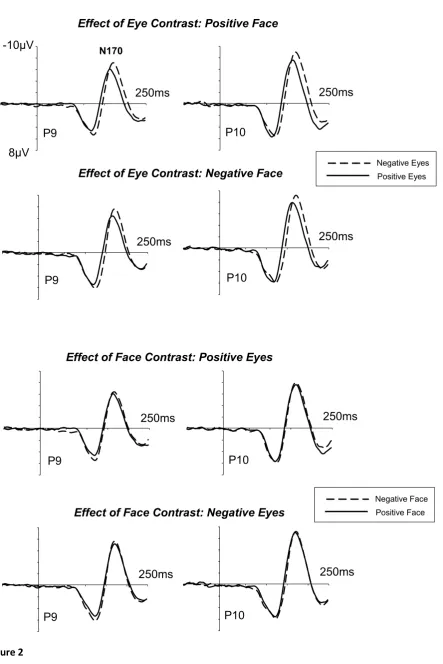
Figure 2 shows ERP waveforms measured at lateral posterior electrodes P9/P10 in
response to faces that appeared in the lower visual field (upper fixation condition). The contrast
polarity of the eye region affected N170 latencies and amplitudes, with delayed and enhanced
N170 components to faces with contrast-inverted eyes, and this was the case regardless of
whether the contrast of the rest of the face was normal or inverted (Figure 2, top panels).
Changing the contrast polarity of the rest of the face did not affect N170 amplitudes or latencies
when the contrast of the eye region was held constant (Figure 2, bottom panels). In other words,
with fixation on the nasion, N170 modulations are driven entirely by the contrast of the eye
region, but remain unaffected by the contrast polarity of the rest of the face. In addition to these
N170 differences, eye contrast also affected the peak latency of the earlier P1 component, which
appeared to be delayed specifically for face images with contrast-inverted eyes (Figure 2, top
panels).
These observations were confirmed by analyses of N170 peak latencies and mean
amplitudes with repeated-measures ANOVAs with the factors eye contrast (positive, negative),
face contrast (positive, negative) and hemisphere (left, right). There were significant effects of
eye contrast on N170 latencies, F(1,13)=108.72, p<.001, ηp2=.89, and N170 amplitudes, F(1,13)=21.31, p<.001, ηp2=.62, reflecting delayed and enhanced N170 components for faces
with contrast-inverted eyes. These effects did not interact with hemisphere, both F<2.2. Analyses of N170 peak latencies (collapsed across electrodes P9 and P10) confirmed N170
delays for face images with negative versus positive eyes both when the rest of the face was
positive (170.4 ms versus 163.4 ms; t(13)=7.7, p<.001) or negative (170.4 ms versus 162.6 ms;
t(13)=9.7, p<.001). Likewise, N170 amplitude enhancements for faces with negative versus
positive eyes were reliable both when the rest of the face was positive (1.55V; t(13)=4.23,
p<.002) or negative (1.07V; t(13)=3.97, p<.004). The absence of interactions between eye and
effects of face contrast on N170 latency, F<1.2, or amplitude, F<3.2, confirming that the contrast polarity of the rest of the face had no impact on N170 components in the upper
fixation condition.
An analysis of P1 peak latencies with the factors eye contrast, face contrast, and
hemisphere revealed a significant effect of eye contrast, F(1,13)=11.53, p<.005, ηp2=.47 confirming that the P1 component was delayed for faces with contrast-inverted eyes. There was
no main effect of face contrast, and no interactions between eye or face contrast and
hemisphere, all F<1.9. To test whether the N170 delay for faces with contrast-inverted as compared to contrast-normal eyes can be completely accounted for by the delay of the preceding
P1 component to contrast-inverted eyes, we performed an additional analysis of P1-N170
peak-to-peak differences (obtained by subtracting P1 peak latencies from N170 peak latencies) for the
factors eye contrast, face contrast, and hemisphere. A main effect of eye contrast, F(1,13)=8.21, p<.013, ηp2=.39, confirmed that the N170 delay in response to contrast-inverted eyes remained
reliably present even when the corresponding earlier P1 delay is taken into account.
Lower Fixation
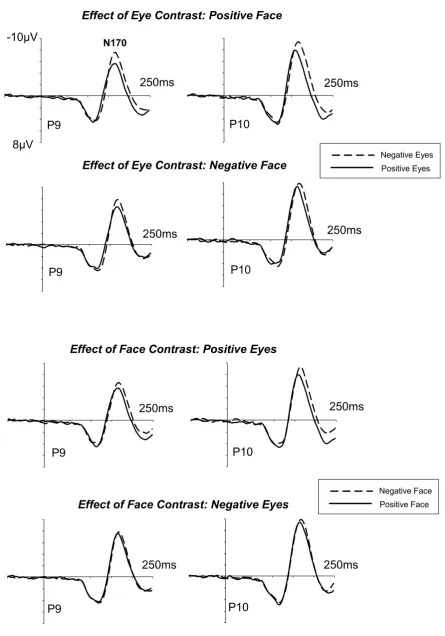
Figure 3 shows ERP waveforms measured at P9/P10 to faces in the upper visual field
(lower fixation condition). In contrast to the upper fixation condition, N170 latencies and
amplitudes were systematically affected not only by eye contrast (upper panel), but also by the
contrast polarity of the rest of the face (lower panel). There were main effects of eye contrast,
F(1,13)=13.4, p<.001, ηp2=.51, and face contrast, F(1,13)=20.5, p<.001, ηp2=.61, on N170
latency, and no interaction between these factors, F<1.32, suggesting that the effects of eye and face contrast on the latency of the N170 were independent and additive. N170 peak latencies
(collapsed across P9 and P10) were reliably delayed for negative versus positive face contrast
images (Figure 3, bottom panel) both when the eyes were positive (164.4 ms versus 161.9 ms;
interaction between eye contrast and hemisphere on N170 latency, F(1,13)=5.26, p<.05, ηp2=.29, was due to the fact that the N170 delay caused by negative eyes was largely confined to the right
hemisphere (see Figure 3, top panel). At right-hemisphere electrode P10, this delay for negative
versus positive eyes was present when the rest of the face was positive (165.4 ms versus 161.3
ms; t(13)=4.08, p<.003) or negative (170.3 ms versus 164.0 ms; t(13)=4.75, p<.002). There were no corresponding N170 delays over the left hemisphere (both t<1.6). For N170 mean
amplitudes, there were significant effects of both eye contrast, F(1,13)=19.4, p<.001, ηp2=.60,
and face contrast, F(1,13)=15.9, p<.001, ηp2=.55, and an interaction between these two factors, F(1,13)=8.4, p<.05, ηp2=.39. N170 amplitude enhancements to negative versus positive eyes
(Figure 3, top panel) were present both when the rest of the face was positive (1.81 µV;
t(13)=4.83, p<.001) and negative (0.91µV; t(13)=2.90, p<.04). However, the contrast of the rest
of the face affected N170 amplitude only when the eyes were positive (1.27µV; t(13)=4.33, p<.002), but had no significant differential effect for faces with negative eyes (0.37µV; t<1.8).
P1 peak latencies were not systematically affected by the contrast polarity of the eyes or
the rest of the face (see Figure 3). There were no significant effects of eye contrast, face contrast,
or interactions between these two factors and hemisphere in the lower fixation condition, all
F<2.9.
Comparison between fixation conditions
The comparison of Figures 2 and 3 shows that gaze location strongly affects how N170
components are modulated by inverting the contrast polarity of the eye region and the rest of the
face. This was confirmed by additional analyses that included fixation (nasion versus philtrum) as
an additional factor. An interaction between eye contrast and fixation for N170 latency,
F(1,13)=22.53, p=.001, ηp2=.63, was due to the fact that the N170 delay caused by inverting the
also an interaction between face contrast and fixation F(1,13)=22.58, p<.001, ηp2=.63, as inverting the contrast of the rest of the face delayed the N170 in the lower fixation condition,
but had no impact on N170 latency with upper fixation. For N170 amplitude, eye contrast did
not interact with fixation, F<1, demonstrating that inverting the contrast of the eye region
enhanced N170 amplitudes regardless of gaze location. However, the effect of face contrast on
N170 amplitude was modulated by fixation F(1,13)=6.26, p<.05, ηp2=0.32, as inverting the
contrast of the rest of the face enhanced N170 amplitude with lower fixation, but had no effect
in the upper fixation condition.
Discussion
Inverting the contrast polarity of face images impairs early stages of perceptual face
processing, and this is reflected by delayed and enhanced face-sensitive N170 components for
contrast-inverted as compared to contrast-normal faces. Recent studies have shown that
restoring the normal contrast polarity of the eye region while the rest of the face remains
contrast-inverted improves recognition performance (Gilad et al., 2009; Sormaz et al., 2013) and
can eliminate inversion-related N170 modulations (Gandhi et al., 2012). The present experiment
demonstrates that contrast-inversion of the eyes or of the rest of the face can both affect N170
components, depending on which part of a face is fixated.
Inverting the contrast polarity of the eye region delayed and enhanced the N170. These
effects were not modulated by the contrast polarity of the rest of the face, regardless of whether
fixation was centred between the eyes or on the lower part of the face. This observation that
N170 latency and amplitude modulations triggered by negative eyes are independent of the
contrast polarity of other face parts confirms and extends earlier observations (Gandhi et al.,
2012), and demonstrates that changing the polarity of the eye region affects perceptual face
delayed N170 components in both fixation conditions, this delay was larger when gaze was
centred near the eyes (upper fixation) than when gaze was centred below the nose (lower fixation
condition). In addition, the N170 delay for negative eyes was present bilaterally in the upper
fixation condition, but was restricted to the right hemisphere with lower fixation. This shows
that the proximity of the eye region to current fixation modulates the degree to which contrast
inversion of this region affects perceptual face processing.
It should be noted that the larger N170 delay for negative versus positive eyes in the
upper fixation condition may at least in part be due to the fact that the earlier P1 component was
also reliably delayed for faces with negative eyes in this condition, although the N170 delay
remained significant even when the P1 latency difference was taken into account. A P1 delay in
response to contrast-inverted as compared to contrast-normal stimuli has been observed before
(Itier & Taylor, 2002). The fact that this P1 delay was only found in the upper fixation condition
when the eye region was contrast-inverted shows that it is not simply a result of the luminance
differences between the four face contrast types used in this study (see Liu et al., 1999, for a
study where the luminance of normal and contrast-inverted faces was controlled), but appears to
be specific to the contrast polarity of the eyes when gaze is focused nearby.
Inverting the contrast of face parts outside the eye region can also modulate perceptual
face processing, as reflected by the N170 component, but this depends critically on gaze
direction. With fixation located between the nose and mouth, N170 components were delayed
and enhanced when the rest of the face was contrast-negative. The N170 delay was independent
of the contrast polarity of the eye region, while the N170 amplitude enhancement was only
reliable for faces with positive eyes (Figure 3, bottom panel). When gaze was focused on the
upper part of a face between the two eyes, the contrast polarity of the rest of the face had no
impact on N170 amplitudes and latencies (Figure 2, bottom panel). The fact that the contrast
inversion of face parts outside the eye region affected N170 components only in the lower
contrast near the currently fixated location. The contrast polarity of face parts outside the eye
region is not always irrelevant for early stages of perceptual face processing, but will affect face
perception when gaze is directed away from the eyes. The fact that restoring the normal polarity
of the eye region in contrast chimera faces does not improve face recognition up to the level
observed with normal faces (Gandhi et al., 2012; Sormaz et al., 2013) may be linked to the effects
of inverting the contrast of the rest of the face on perceptual face processing, as demonstrated in
this experiment during lower fixation.
Although the contrast of the rest of the face can affect perceptual face processing, our
results also emphasize the central importance of contrast information from the eye region. The
fact that N170 modulations triggered by contrast-inverted eyes were robustly present in both
fixation conditions, and the observation that they were independent of the contrast of the rest of
the face, both demonstrate a privileged status of the eye region that is already apparent during
early face processing stages between 150 and 200 ms post-stimulus. In addition to comparing the
effects of contrast-inverting the eye region with the effects of inverting the whole of the rest of
the face, as was done in the present study, future research should also investigate how
manipulating only the contrast of one specific face part outside the eye region (such as the
mouth) affects the N170 component, whether there are systematic differences in N170 contrast
inversion effects between facial features, and how this is affected by gaze direction and current
task demands. It should also be noted that no eye tracker was employed in the present study to
continuously monitor the precise location of fixation on the nasion or philtrum, and that there
may have been subtle differences in gaze direction between individual upper or lower fixation
trials. However, the fact that the vertical position of each face stimulus was unpredictable rules
out anticipatory gaze adjustments, and makes it highly likely that participants’ gaze was close to
the nasion or philtrum on the majority of all trials.
The current results show that structural encoding of faces is highly sensitive to contrast
perceptual processing primarily when eye gaze is directed away from the eyes to lower parts of a
face image. Reversing the contrast polarity of faces generally impairs face perception and
recognition, and this has been attributed to the disruption of information that can be derived
from skin pigmentation (e.g., Vuong et al., 2005), or of three-dimensional shape-from-shading
information that is important for representing facial shape (e.g., Johnston et al., 1992). Reversing
the contrast polarity of the eye region is particularly disruptive, because this region contains
several contrast-related signals (the boundaries between the sclera, iris, and pupil of the eye,
contrast differences between the eyes and surrounding regions, the shape of the eyebrows) that
appear to be critical for face detection and recognition processes (e.g., Peterson & Eckstein,
2012; Gilad et al., 2012; Sormaz et al., 2013). The delay and enhancement of the face-sensitive
N170 component to faces with contrast-inverted eyes may thus be interpreted as an
electrophysiological marker for impaired perceptual structural encoding when these signals are
disrupted. It has previously been shown that relative to intact faces, the N170 to faces without
eyes is also delayed (Eimer, 1998; Itier et al., 2007), analogous to the N170 delay elicited by
contrast-inverting the eye region in the present study. This effect may reflect a similar disruption
of face processing mechanisms that are selectively tuned to the eye region. Our additional
finding that N170 modulations triggered by contrast-inverting the eyes or the rest of the face are
strongly affected by fixation location may reflect systematic retinotopic biases that are linked to
the special role of contrast-related signals from the eye region. Because fixation near the eyes is
the default setting during face perception (Hsaio & Cotterell, 2008), the face processing system
may be particularly sensitive to contrast information that originates from a region that extends
horizontally from fixation into the left and right visual field. Such a retinotopic bias would
account for the fact that contrast-inverting the rest of the face affects N170 components only in
the lower fixation condition, where the inverted areas fall within the critical retinotopic region
next to fixation (see also Chan, Kravitz, Truong, Arizpe, & Baker, 2010, for further evidence for
biases towards particular retinotopic regions in face processing may be modulated by top-down
factors such as selective spatial attention.
Overall, this study has demonstrated the importance of contrast signals for early stages of
perceptual face processing. Because contrast differences between different face parts remain
constant under a wide variety of lighting conditions, they are critical for the rapid detection of a
generic face template in the visual field (Sinha, 2002). Contrast information from the eyes has a
privileged role, and focussing gaze and selective attention on the eye region therefore provides
the optimal reference point for the construction of contrast-sensitive representations during the
References
Bentin, S., Allison, T., Puce, A., Perez, E., & McCarthy, G. (1996). Electrophysiological Studies
of Face Perception in Humans. Journal of Cognitive Neuroscience, 8, 551–565.
doi:10.1162/jocn.1996.8.6.551
Chan, A.W.Y., Kravitz, D. J., Truong, S., Arizpe, J., & Baker, C. I. (2010). Cortical
representations of bodies and faces are strongest in commonly experienced
configurations. Nature Neuroscience, 13, 417–418. doi:10.1038/nn.2502
De Lissa, P., McArthur, G., Hawelka, S., Palermo, R., Mahajan, Y., & Hutzler, F. (2014). Fixation
location on upright and inverted faces modulates the N170. Neuropsychologia, 57, 1-11.
doi:10.1016/j.neuropsychologia.2014.02.006
Duchaine, B., & Nakayama, K. (2006). The Cambridge Face Memory Test: Results for
neurologically intact individuals and an investigation of its validity using inverted face
stimuli and prosopagnosic participants. Neuropsychologia, 44, 576–585. doi:10.1016/j.neuropsychologia.2005.07.001
Eimer, M. (1998). Does the face-specific N170 component reflect the activity of a specialized eye
processor? Neuroreport, 9, 2945-2948. doi: 10.1097/00001756-199809140-00005
Eimer, M. (2000). Event-related brain potentials distinguish processing stages involved in face
perception and recognition. Clinical Neurophysiology, 111, 694–705.
doi:10.1016/S1388-2457(99)00285-0
Eimer, M. (2011).The face-sensitive N170 component of the event-related brain potential. In A.
J. Calder, G. Rhodes, M. H. Johnson, & J. V. Haxby (Eds.), The Oxford Handbook of Face
Perception.(pp. 329-344). Oxford: Oxford University Press.
Galper, R.E. (1970). Recognition of faces in photographic negative. Psychonomic Science, 19, 207– 208.
Integrative Neuroscience, 11, 201–211. doi:10.1142/S021963521250015X
Gilad, S., Meng, M., & Sinha, P. (2009). Role of ordinal contrast relationships in face encoding.
Proceedings of the National Academy of Sciences, 106, 5353–5358. doi:10.1073/pnas.0812396106
Hsiao, J. H., & Cottrell, G. (2008). Two Fixations Suffice in Face Recognition. Psychological Science, 19, 998–1006. doi:10.1111/j.1467-9280.2008.02191.x
Itier, R. J., Alain, C., Sedore, K., & McIntosh, A. R. (2007). Early face processing specificity: It's
in the eyes! Journal of Cognitive Neuroscience, 19, 1815-1826. doi:
10.1162/jocn.2007.19.11.1815
Itier, R. J., Latinus, M., & Taylor, M. J. (2006). Face, eye and object early processing: What is the
face specificity? NeuroImage, 29, 667–676. doi:10.1016/j.neuroimage.2005.07.041
Itier, R. J., & Taylor, M. J. (2002). Inversion and contrast polarity reversal affect both encoding
and recognition processes of unfamiliar faces: a repetition study using ERPs. Neuroimage,
15, 353-372. doi:10.1006/nimg.2001.0982
Johnston, A., Hill, H., & Carman, N. (1992). Recognising faces: effects of lighting direction,
inversion, and brightness reversal. Perception, 21, 365–375. doi:10.1068/p210365
Kemp, R., Pike, G., White, P., & Musselman, A. (1996). Perception and recognition of normal
and negative faces: the role of shape from shading and pigmentation cues. Perception, 25, 37–52. doi:10.1068/p250037
Laguesse, R., Dormal, G., Biervoye, A., Kuefner, D., & Rossion, B. (2012). Extensive visual
training in adulthood significantly reduces the face inversion effect. Journal of Vision, 12,
14–14. doi:10.1167/12.10.14
Liu, C. H., Collin, C. A., Burton, A. M., & Chaudhuri, A. (1999). Lighting direction affects
recognition of untextured faces in photographic positive and negative. Vision Research, 39, 4003–4009. doi:10.1016/S0042-6989(99)00109-1
surface? Examining the role of shape-from-shading and shape-from-stereo. Perception, 29, 729–743. doi:10.1068/p3065
Nederhouser, M., Yue, X., Mangini, M. C., & Biederman, I. (2007). The deleterious effect of
contrast reversal on recognition is unique to faces, not objects. Vision Research, 47, 2134–
2142. doi:10.1016/j.visres.2007.04.007
Nemrodov, D., Anderson, T., Preston, F. F., & Itier, R. J. (2014). Early sensitivity for eyes within
faces: A new neuronal account of holistic and featural processing. NeuroImage, 97, 81–94.
doi:10.1016/j.neuroimage.2014.04.042
Orban de Xivry, J.-J., Ramon, M., Lefèvre, P., Rossion, B. (2008). Reduced fixation on the upper
area of personally familiar faces following acquired prosopagnosia. Journal of Neuropsychology, 2, 245-268. doi: 10.1348/174866407X260199
Peterson, M. F., & Eckstein, M. P. (2012). Looking just below the eyes is optimal across face
recognition tasks. Proceedings of the National Academy of Sciences, 109, E3314–E3323.
doi:10.1073/pnas.1214269109
Rossion, B. (2009). Distinguishing the cause and consequence of face inversion: the perceptual
field hypothesis. Acta Psychologica, 132, 300-312. doi:10.1016/j.actpsy.2009.08.002
Rossion, B., Delvenne, J. F., Debatisse, D., Goffaux, V., Bruyer, R., Crommelinck, M., & Guérit,
J. M. (1999). Spatio-temporal localization of the face inversion effect: an event-related
potentials study. Biological Psychology, 50, 173–189. doi:10.1016/S0301-0511(99)00013-7
Russell, R., Sinha, P., Biederman, I., & Nederhouser, M. (2006). Is pigmentation important for
face recognition? Evidence from contrast negation. Perception, 35, 749–759.
doi:10.1068/p5490
Sinha, P. (2002). Qualitative representations for recognition. In H. H. Bulthoff, S-W. Lee, T. A.
Poggio, & C. Wallraven (Eds.), In Biologically Motivated Computer Vision (pp. 249-262). Berlin: Springer.
the eye region for holistic representations of facial identity. Journal of Experimental Psychology: Human Perception and Performance, 39, 1667–1677. doi:10.1037/a0032449
Vuong, Q. C., Peissig, J. J., Harrison, M. C., & Tarr, M. J. (2005). The role of surface
pigmentation for recognition revealed by contrast reversal in faces and Greebles. Vision
Figure Legends
Figure 1: (A) Example of four different face contrast types tested (contrast-normal faces,
contrast-inverted faces, positive-eye chimeras, negative-eye chimeras). For the positive-eyes
chimeras, the face outside the eye region appeared in negative contrast. For the negative-eyes
chimeras, the eye region was contrast-inverted and the rest of the face was contrast-normal. (B)
Illustration of the stimulation procedure. Each face was presented for 200 ms, and there was an
interval of approximately 1450 ms between two successive face presentations. Faces appeared
randomly and unpredictably in a lower or upper position, so that participants’ gaze was either on
the upper part of the nose (upper fixation condition), or on the area between the nose and the
mouth (lower fixation condition). In the example shown, a lower-fixation face is followed by a
(non-matching) upper-fixation face.
Figure 2. Grand-averaged ERPs elicited at lateral temporo-occipital electrodes P9 (left
hemisphere) and P10 (right hemisphere) in the 250 ms interval after stimulus onset in the upper
fixation condition. Ticks on the time axes represent 50 ms intervals. Top panels: Effects of the
contrast of the eye region (negative eyes versus positive eyes) on N170 components, shown
separately for face images where the area outside the eye region was contrast-normal (positive
face) or contrast-inverted (negative face). Bottom panels: Effects of the contrast of the rest of
the face (negative face versus positive face) on N170 components, shown separately for face
images where the eye region was contrast-normal (positive eyes) or contrast-inverted (negative
eyes).
Figure 3. Grand-averaged ERPs elicited at lateral temporo-occipital electrodes P9/10 in the 250
ms post-stimulus interval in the lower fixation condition. Ticks on the time axes represent 50 ms
components, for face images where the area outside the eye region was contrast-normal (positive
face) or contrast-inverted (negative face). Bottom panels: Effects of the contrast of the rest of
the face (negative face versus positive face) on N170 components, for face images where the eye
A
[image:24.595.69.338.65.355.2]B
Figure 2
N170 -10µV
8µV
250ms
P10 P9
P10 P9
Upper Fixation
Negative Eyes Positive Eyes
P10 P9
P10 P9
Effect of Eye Contrast: Positive Face
Effect of Eye Contrast: Negative Face
Effect of Face Contrast: Positive Eyes
Effect of Face Contrast: Negative Eyes
Negative Face Positive Face
250ms
250ms 250ms
250ms 250ms
Figure 3
N170 -10µV
8µV
250ms
P10 P9
P10 P9
Lower Fixation
Negative Eyes Positive Eyes
P10 P9
P10 P9
Effect of Eye Contrast: Positive Face
Effect of Eye Contrast: Negative Face
Effect of Face Contrast: Positive Eyes
Effect of Face Contrast: Negative Eyes
Negative Face Positive Face
250ms
250ms 250ms
250ms 250ms