Deep Fake Image Detection based on Pairwise
Learning
Chih-Chung Hsu1 , Yi-Xiu Zhuang1, and Chia-Yen Lee2
1 Department of Management Information System, National Pingtung University of Science and Technology;
2 Department of Electrical Engineering, National United University; [email protected]
* Correspondence: [email protected]
Version May 5, 2019 submitted to Preprints
Abstract: Recently, generative adversarial networks (GANs) can be used to generate the
1
photo-realistic image from a low-dimension random noise. It is very dangerous that the synthesized or
2
generated image is used on inappropriate contents in social media network. In order to successfully
3
detect such fake image, an effective and efficient image forgery detector is desired. However,
4
conventional image forgery detectors are failed to recognize the synthesized or generated images by
5
using GAN-based generator since they are all generated but manipulation from the source. Therefore,
6
we propose a deep learning-based approach to detect the fake image by combining the contrastive
7
loss. First, several state-of-the-art GANs will be collected to generate the fake-real image pairs. Then,
8
the contrastive will be used on the proposed common fake feature network (CFFN)to learn the
9
discriminative feature between the fake image and real image (i.e., paired information). Finally, a
10
smaller network will be concatenated to the CFFN to determine whether the feature of the input
11
image is fake or real. Experimental results demonstrated that the proposed method significantly
12
outperforms other state-of-the-art fake image detectors.
13
Keywords:Forgery detection; GAN; contrastive loss; deep learning; pairwise learning.
14
1. Introduction 15
Recently, the generative model based on deep learning such as the generative adversarial net
16
(GAN) is widely used to synthesize the photo-realistic partial or whole content of the image and video.
17
Furthermore, recent research of GANs such as progressive growth of GANs (PGGAN)[1] and BigGAN
18
[2] could be used to synthesize a highly photo-realistic image or video so that the human cannot
19
recognize whether the image is fake or not in the limited time. In general, the generative applications
20
can be used to perform the image translation tasks [3]. However, it may lead to a serious problem
21
once the fake or synthesized image is improperly used on social network or platform. For instance,
22
cycleGAN is used to synthesize the fake face image in a pornography video [4]. Furthermore, GANs
23
may be used to create a speech video with the synthesized facial content of any famous politician,
24
causing severe problems on the society, political, and commercial activities. Therefore, an effective
25
fake face image detection technique is desired. In this paper, we have extended our previous study [5]
26
associated with paper ID #1062 to effectively and efficiently address these issues.
27
In traditional image forgery detection approach, two types of forensics scheme are widely used:
28
active schemes and passive schemes. With the active schemes, the externally additive signal (i.e.,
29
watermark) will be embedded in the source image without visual artifacts. In order to identify whether
30
the image has tampered or not, the watermark extraction process will be performed on the target
31
image to restore the watermark[6]. The extracted watermark image can be used to localize or detect the
32
tampered regions in the target image. However, there is no "source image" for the generated images by
33
GANs such that the active image forgery detector cannot be used to extract the watermark image. The
34
second one-passive image forgery detector–uses the statistical information in the source image that will
35
be highly consistency between different images. With this property, the intrinsic statistical information
36
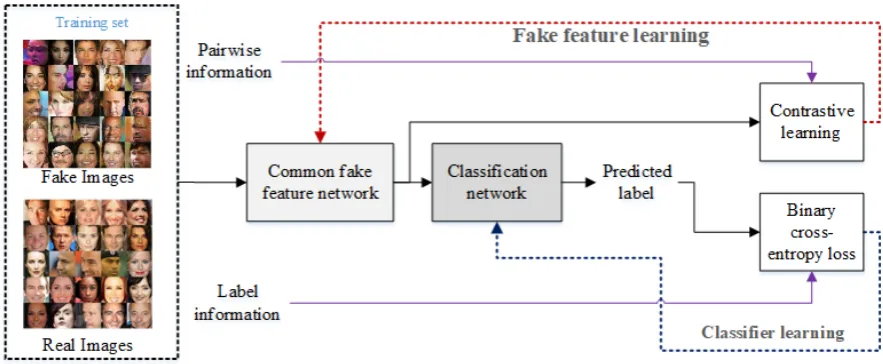
Figure 1. The flowchart of the proposed fake face detector based on the proposed CFFN with the two-step learning approach.
can be used to detect the fake region in the image[7][8]. However, the passive image forgery detector
37
cannot be used to identify the fake image generated by GANs since they are synthesized from the
38
low-dimensional random vector. Nothing change in the generated image by GANs because the fake
39
image is not modified from its original image.
40
Intuitively, we can adopt the deep neural network to detect the fake image generated by GAN.
41
Recently, there are some studies that investigate a deep learning-based approach for fake image
42
detection in a supervised way. In other words, fake image detection can be treated as a binary
43
classification problem (i.e., fake or real image). For example, the convolution neural network (CNN)
44
network is used to learn the fake image detector [9]. In [10], the performance of the fake face image
45
detection can be further improved by adopting the most advanced CNN–Xception network [11].
46
However, there are many GANs proposed year by year. For example, recently proposed GANs such
47
as [1][12][13][14][15][16][3][2] can be used to produce the photo-realistic images. It is hard and very
48
time-consuming to collect all training samples of all GANs. In addition, such a supervised learning
49
strategy will tend to learn the discriminative features for a fake image generated by each GANs. In
50
this situation, the learned detector may not be effective for the fake image generated by another new
51
GAN excluded in the training phase.
52
In order to meet the massive requirement of the fake image detection for GANs-based generator,
53
we propose novel network architecture with a pairwise learning approach, called common fake feature
54
network (CFFN). Based on our previous approach [5], it is clear that the pairwise learning approach
55
can overcome the shortcomings of the supervised learning-based CNN such as methods in [9][10].
56
In this paper, we further introduce a novel network architecture combining with pairwise learning
57
to improve the performance of the fake image detection. To verify the effectiveness of the proposed
58
method, we apply the proposed deep fake detector (DeepFD) to identify both fake face and generic
59
image. The primary contributions of the proposed method are two-fold:
60
• We propose a fake face image detector based on the novel CFFN consisting of several dense
61
blocks to improve the representative power of the fake image.
62
• The pairwise learning approach is first introduced to improve the generalization property of the
63
proposed DeepFD.
64
The rest of this paper is organized as follows. Sec. II and III present the proposed CFFN for
65
fake face image detection model with pairwise learning for face image and general image. In Section
66
IV, experimental results of the fake face and general images are demonstrated respectively. Finally,
67
conclusions are drawn in Sec. IV.
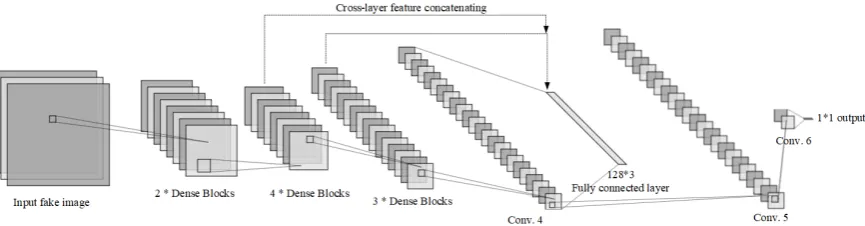
Figure 2.The network architecture of the proposed common fake feature network.
2. Fake Face Image Detection 69
In the image forgery detection techniques, the most impact of that is the fake face image. With the
70
fake face image, it can be used to synthesize the fake identity to cheat someone else. Once the fake
71
image generator is used to produce some of the celebrities with inappropriate content, it may cause
72
hazardous consequences. In this Section, we will introduce the details of the proposed novel network
73
architecture with pairwise learning policy.
74
Figure1depicts the proposed fake face image detection with the pairwise learning policy. There
75
are two steps in the training phase. The supervised learning policy of the fake face image detection
76
will face the learning difficulty problem since it is hard to collect the training samples generated by all
77
possible GANs. In this step, the fake and real images will be paired to obtain the pairwise information.
78
With the pairwise information, we construct the contrastive loss to learning the discriminative feature
79
over the proposed CFFN. Once the discriminative feature is learned, the classification network will be
80
used to capture the discriminative feature to identify whether the image is real or fake. The details of
81
the proposed method are described in the following paragraphs.
82
Let the collected training images generated byMGANs beXf ake = [xki==11,xki==21, ...,xki==N11,xki==NMM], 83
where each GAN will generate Nktraining images. Let the training set of real images indicate by 84
Xreal = [xi=1,xi=2, ...,xi=Nr]which containsNr training images. Therefore, the total number of the 85
training images including the real and fake samples will beNT= Nr+Nf = Nr+∑kM=1Nk. The labels 86
informationY= [y1,y2, ...,yNt]indicates whether the image is fake(y=0)or real(y=1). As stated 87
previously, the pairwise information is necessary in the training stage to make the CFFN can learn
88
the powerful discriminative feature. Toward this end, we can generate the pairwise information from
89
the training setXand its labelYby the permutation combination. Therefore, we haveC(NT, 2)pairs 90
P= [pi=0,j=0,pi=0,j=1, ...,pi=0,j=Nr, ...,pi=Nf,j=Nr]from the training samples pool. In this paper, we set 91
the total number of pairwise information toNr =2, 000, 000. 92
2.1. Common Fake Feature Network
93
There are many advanced CNN can be used to learn the fake features from the training samples.
94
For example, Xception Network is used in [10] to capture the powerful feature from the training
95
images in a supervised way. Other advanced CNNs such as DenseNet[17], ResNet[18], Xception[11]
96
network architectures can also be applied on this task. However, most of these advanced CNNs
97
are feed-forward architecture, which the performance of the classification layer (say, Softmax layer)
98
relies on the outputs of the previous layer. It is well known that CNN can capture the hierarchical
99
feature representation from low-level to high-level. In other words, these CNNs only rely on high-level
100
feature representation to identify whether the image is fake or not. However, the fake features of a
101
fake face image may not only existed in the high-level representation but also in the middle-level
102
feature learning. To deal with the cross-level fake feature learning, we have designed a novel CNN
103
architecture to capture the cross-level fake feature from the training images.
104
In order to have the best performance, we adopt the dense block[17] as the baseline of our
105
proposed common fake feature network. The proposed CFFN consists of three dense units including
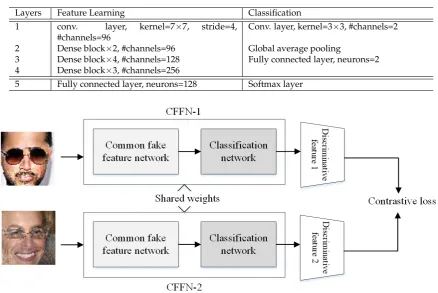
Table 1.Network Structures in the Proposed Common Fake Feature Network for Fake Face Image Detection
Layers Feature Learning Classification
1 conv. layer, kernel=7×7, stride=4, #channels=96
Conv. layer, kernel=3×3, #channels=2
2 Dense block×2, #channels=96 Global average pooling
3 Dense block×4, #channels=128 Fully connected layer, neurons=2 4 Dense block×3, #channels=256
5 Fully connected layer, neurons=128 Softmax layer
Figure 3.The proposed pairwise learning based on Siamese network architecture and contrastive loss.
two, four, and three dense blocks respectively. The number of the channels in these three dense units
107
are respectively 64, 96,and128. The parameterθin the transition layer is 0.5. Then, we concatenate a
108
convolution layer with 128 channels and 3×3 kernel size to the last layer of the dense unit. Finally,
109
we add the fully connected layer to obtain the discriminative feature representation. To obtain the
110
cross-layer feature representation, we also reshape the last layers of the first and second dense units
111
to aggregate the cross-layer feature into the fully connected layer. Therefore, we have 128×3=384
112
neurons in the final feature representation.
113
On the other hand, the classification can be performed by various existed classifiers such as
114
random forest, SVM, Bayes classifier. However, the discriminative feature may be further improved by
115
the back-propagation using the end-to-end architecture. In this paper, therefore, the convolution and
116
fully connected layers are concatenated to the last convolution layer of the proposed CFFN to obtain
117
the final decision result. The details of the proposed CFFN is depicted in Table1.
118
2.2. Discriminative Feature Learning
119
Since the main drawback of supervised learning may be failed to identify the subject that excluded
120
in the learning process. To boost the performance of the proposed method, we introduce contrastive
121
loss to address pairwise learning. Toward this end, the Siamese network architecture[19] should be
122
used for the pairwise information, as depicted in Fig.3.
123
To learn discriminative features while training the proposed CFFN, we incorporate the contrastive loss term into the energy function in traditional loss function (i.e., cross-entropy loss). Afterward, given the face image pairx1andx2and the pairwise labely, wherey=0 indicates an impostor pair
The most intuitive way to learn the discriminative feature is to minimize the energy functionEWabove. 124
However, directly computingEW(x1,x2)by calculatingl2norm distance in feature domain will lead
125
to a constant mapping. A constant mapping will make any input to a constant vector such that the
126
energy functionEWcan be minimized. To overcome this problem, we introduce the contrastive loss to 127
model the pairwise information as:
128
Follow by the method in [19], we obtain three types of the feature representations: 1)anchor example fCFFN(xa, 2)positive example fCFFN(xp, and 3)negative example fCFFN(xn. The goal of the
triple loss is to minimize the distance between the anchor and the positive samples and make the distance between the anchor and the negative samples as larger as possible. Toward this end, the inequality should be:
L(W,(P,x1,x2)) =0.5×(yijE2w) + (1−yij)×max(0,(m−Ew)22), (2)
wheremis the predefined marginal value, when the input is the genuine pairyij=1, the cost function 129
will tend to minimize the feature distanceEWbetween two images. Once the input is impostor pair, 130
the contrastive loss will minimize themax(0,(m−Ew). In other words, theEWwill be maximized if 131
the feature distance between the impostor pair is smaller than the predefined threshold valuem. In
132
this manner, it is possible to learn the common characteristic of the fake images generated by different
133
GANs. With the contrastive loss, the feature representation fCFFN(xi)will tend to become similar to 134
fCFFN(xj)ifyij =1 (i.e., fake-fake or real-real pair). By iteratively train the network fCFFNbased on 135
the contrastive loss, the common fake feature of the collected GANs should be able to be well learned.
136
2.3. Classification Learning
137
As we stated previously, the classification tasks can be solved by several existed classifiers. In order to boost the performance of the fake image detection, therefore, we adopt a sub-network as the classifier. As a result, the classification learning can be quickly learned by the cross-entropy loss function:
Lc(xi,pi) =− NT
∑
i
(fCLS(fCFFN(xi))logpi), (3)
where fCLSis the classification sub-network consisting of a convolution layer with two channels and a 138
fully connected layer with two neurons. The classifier can be easily trained by back-propagation [20].
139
With the learning strategies, we may adopt the joint learning incorporating the contrastive loss and
140
the cross-entropy loss to as the total energy function. We also can separately minimize the contrastive
141
loss and the cross-entropy loss instead. The first strategy is difficult to observe the impact of both
142
contrastive and cross-entropy loss functions. Hence, we adopt the second strategy to ensure the best
143
performance of the proposed method. We also note the first learning police as the baseline to have a
144
fair comparison.
145
3. Fake General Image Detection 146
Different from the fake face image detection, the general image is more difficult because the
147
contents of the general image are highly varying. Besides, the fake feature of the general image may be
148
more complicated than that of the face image. Toward this end, we increase the number of channels in
149
the CFFN proposed in the above Section. As depicted in Table2, the total number of dense units is
150
increased to 5. The number of channels in each dense block will also be increased simultaneously for
151
better capturing the fake features of the general image. Similarly, we also adopt contrastive loss and
152
the classification sub-network proposed in Section-II to detect whether the image is fake or real.
Table 2.Network Structures in the Proposed Common Fake Feature Network for Fake General Image Detection.
Layers Feature Learning Classification
1 conv. layer, kernel=7×7, stride=4, #channels=96
Conv. layer, kernel=3×3, #channels=2
2 Dense block×2, #channels=128 Global average pooling
3 Dense block×3, #channels=256 Fully connected layer, neurons=2 4 Dense block×4, #channels=384
5 Dense block×2, #channels=512
6 Fully connected layer, neurons=128 Softmax layer
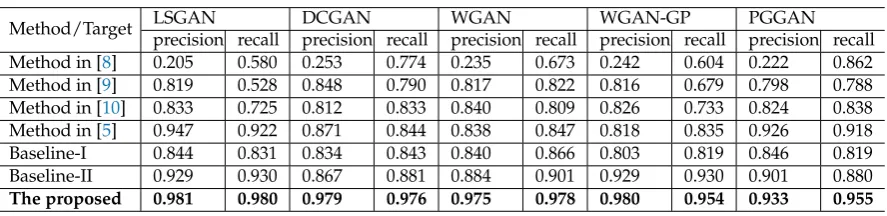
Table 3.The subjective performance comparison between the proposed fake face detector and other methods.
Method/Target LSGAN DCGAN WGAN WGAN-GP PGGAN
precision recall precision recall precision recall precision recall precision recall Method in [8] 0.205 0.580 0.253 0.774 0.235 0.673 0.242 0.604 0.222 0.862 Method in [9] 0.819 0.528 0.848 0.790 0.817 0.822 0.816 0.679 0.798 0.788 Method in [10] 0.833 0.725 0.812 0.833 0.840 0.809 0.826 0.733 0.824 0.838 Method in [5] 0.947 0.922 0.871 0.844 0.838 0.847 0.818 0.835 0.926 0.918 Baseline-I 0.844 0.831 0.834 0.843 0.840 0.866 0.803 0.819 0.846 0.819 Baseline-II 0.929 0.930 0.867 0.881 0.884 0.901 0.929 0.930 0.901 0.880 The proposed 0.981 0.980 0.979 0.976 0.975 0.978 0.980 0.954 0.933 0.955
4. Experimental Results 154
4.1. Fake Face Image Detection
155
The dataset used in this paper is extracted from CelebA[21]. The images in CelebA covers large
156
pose variations and background clutter including 10,177 number of identities and 202,599 aligned face
157
images. In experiments, we have collected five state-of-the-art GANs to produce the training set of
158
fake images based on the CelebA dataset:
159
• DCGAN (Deep convolutional GAN) [13]
160
• WGAP (Wasserstein GAN) [14]
161
• WGAN-GP (WGAN with Gradient Penalty) [15]
162
• LSGAN (Least Squares GAN) [16]
163
• PGGAN [1]
164
Each GAN will be used to generate 200, 000 fake images sized of 64×64 into the fake image pool.
165
In PGGAN, we adopt the best model released by the authors of the corresponding GAN. However,
166
the PGGAN [1] can be used to generate the high-resolution fake face image, which the size of the
167
generated face image is different from our experimental setting. In this paper, we downsample the
168
fake face image generated by PGGAN to 64×64. Then, we randomly pick 192, 599 fake images from
169
the fake face image pool. Finally, we have 385, 198 training images and 10, 000 test images consisting
170
of the real and fake images for training.
171
In the learning setting of the proposed CFFN and fake face detector, we set the learning rate
172
=1e−3, and the total number of epochs is 15. The marginal valuemin contrastive loss is 0.5. Adam
173
optimizer [22] is used for both first and second steps learning. The epochs of the first learning of CFFN
174
is 2, and the number of epochs of the classification learning of the classification sub-network is 11.
175
The batch size is 32 for all learning tasks. The parameters settings in [9][10][5] are the same with the
176
descriptions in their papers.
177
In the experiments, we also adopt the conventional image forgery method based on sensor pattern
178
noise [8] for performance comparison. The Baseline-I method is the jointly learning of the contrastive
179
loss and the binary cross-entropy loss without two-step learning. The Baseline-II method remove the
Figure 4.The visualized fake feature map for fake regions localization for face image. (a) - (c) are the fake face images generated by PGGAN[1] and (f) - (j) are the fake image generated by DCCAN[13] respectively.
CFFN architecture and adopt the DenseNet[17] with two-step learning of the contrastive and binary
181
cross-entropy loss functions.
182
4.1.1. Objective Performance Comparison
183
In order to verify the effectiveness of the proposed method, we exclude one of the collected
184
GANs as the training set and perform the testing process on that GAN. For example, we may exclude
185
PGGAN during the training phase of the proposed deep fake detector. Afterward, the real images
186
and fake images generated by PGGAN will be used to evaluate the performance of the learned fake
187
face detector. Table3demonstrates the objective performance comparison between the proposed fake
188
face detector, other baseline methods, and methods in [9][10][?] in terms of precision and recall. The
189
proposed method significantly outperforms other state-of-the-art methods due to the CFFN can be
190
used to capture the discriminative feature of the fake images well. Furthermore, the proposed pairwise
191
learning successfully captures common fake feature over the training images generated by different
192
GANs. It is also verified that the proposed method is more generalized and effective than others.
193
4.1.2. Visualized Result
194
Inspired by [23], the object can be localized by designing the number of channels in the last
195
convolution layers to the number of the classes. As the suggestion in [23], the channels of the last
196
convolutional layer of the proposed CDNN to enable the visualization ability. Therefore, the proposed
197
model can be used to visualize the fake regions of the generated image by extracting the last convolution
198
layer and mapping the responses to the image domain. Since the last convolution layer is designed
199
to two channels, the first channel can be regarded as the feature response of the first class (i.e., real
200
image) and the second channel is corresponding to the second class (i.e., fake image). In this way, the
201
proposed method can be used to visualize the fake region, making a more intuitive interpretation of
202
the typical fake features generated by GANs. As the results shown in Fig.4, the primary artifacts of the
203
fake face images in Fig.4are also drawn in red color.
204
4.1.3. Training Convergence
205
In the proposed method, it is necessary to guarantee the convergence of network learning. In this
206
Subsection, we will discuss the convergence of the contrastive loss and CFFN learning respectively.
207
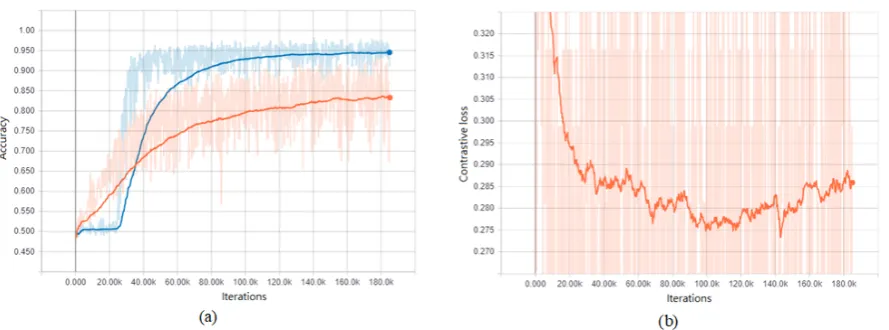
As shown in Fig. 5(a), the orange line depicts the accuracy curve during training for supervised
208
learning without contrastive loss. The blue line indicates the accuracy curve of the training process
209
of the proposed pairwise learning. It is clear that the proposed pairwise learning can be significantly
210
converged, compared to the supervised learning strategy. On the other hand, it is necessary to ensure
Figure 5.(a) The learning curves of the proposed method with contrastive loss and supervised learning respectively. (b) The energy term of the proposed pairwise learning method of CFFN learning.
Table 4.The subjective performance comparison between the proposed fake general image detector and other methods.
Method/Target BIGGAN SA-GAN SN-GAN
precision recall precision recall precision recall Method in [8] 0.358 0.409 0.430 0.509 0.354 0.424 Method in [9] 0.580 0.673 0.610 0.723 0.585 0.691 Method in [10] 0.650 0.737 0.682 0.762 0.653 0.691 Method in [5] 0.734 0.763 0.775 0.782 0.743 0.747
Baseline-I 0.769 0.789 0.787 0.811 0.798 0.791
Baseline-II 0.826 0.803 0.827 0.854 0.810 0.822
The proposed 0.909 0.865 0.930 0.936 0.934 0.900
the contrastive loss can be converged as well. Figure5(b) depicts the convergence of the proposed
212
contrastive loss during CFFN training. As a result, we can observe that the proposed contrastive loss
213
is successfully decreased after several iterations.
214
4.2. Fake General Image Detection
215
In fake general image detection, we have collected three state-of-the-art GANs to generate
216
high-quality general images as the follows:
217
• BIGGAN (Large Scale GAN Training for High Fidelity Natural Image Synthesis) [2]
218
• SA-GAN (Self-Attention GAN) [24]
219
• SN-GAN (Spectral Normalization GAN) [25]
220
The dataset used in this Section is extracted from ILSVRC12[26]. We adopt the source code provided by
221
the authors and its released model which is trained on ILSVRC12 to generate the fake general images.
222
Each GAN will be used to generate 200, 000 fake images sized of 128×128 into the fake general image
223
pool. Then, we randomly pick 300, 000 fake images from the fake face image pool. Finally, we have
224
600, 000 training images and 10, 000 test images consisting of the real and fake images for training. The
225
parameters in network learning are the same as the previous Section.
226
Table4demonstrates the objective performance comparison between the proposed method and
227
other state-of-the-art image forgery detection schemes. It is clear that proposed CFFN with pairwise
228
learning police is significantly better than other state-of-the-art image forgery detectors. Compared to
229
the supervised learning-based method in [9][10], the performance of the proposed method significantly
230
outperforms others. Based on these observations, we also prove that the proposed method can learn
231
the common fake feature of the fake general image.
5. Conclusion 233
In this paper, we have proposed a novel common fake feature network based the pairwise learning,
234
to detect the fake face/general images generated by state-of-the-art GANs successfully. The proposed
235
CFFN can be used to learn the middle- and high-level and discriminative fake feature by aggregating
236
the cross-layer feature representations into the last fully connected layers. The proposed pairwise
237
learning can be used to improve the performance of fake image detection further. With the proposed
238
pairwise learning, the proposed fake image detector should be able to have the ability to identify
239
the fake image generated by a new GAN. Our experimental results demonstrated that the proposed
240
method outperforms other state-of-the-art schemes in terms of precision and recall rate.
241
Author Contributions: Conceptualization, Chih-Chung Hsu; Data curation, Yi-Xiu Zhuang; Formal analysis, 242
Chih-Chung Hsu; Funding acquisition, Chih-Chung Hsu; Investigation, Chih-Chung Hsu; Methodology, 243
Chih-Chung Hsu; Resources, Yi-Xiu Zhuang; Software, Yi-Xiu Zhuang; Supervision, Chia-Yen Lee; Validation, 244
Yi-Xiu Zhuang; Writing – original draft, Chih-Chung Hsu. 245
Funding:This work was supported in part by the Ministry of Science and Technology of Taiwan under grant 246
MOST 107-2218-E-020-002-MY3. 247
Conflicts of Interest:The authors declare no conflict of interest. 248
Abbreviations 249
The following abbreviations are used in this manuscript: 250
251
CNN Convolution neural network CFFN Common fake feature network DeepFD Deep fake image detector GAN Generative adversarial net 252
References 253
1. Karras, T.; Aila, T.; Laine, S.; Lehtinen, J. Progressive growing of gans for improved quality, stability, and 254
variation.arXiv Preprint, arXiv:1710.101962017. 255
2. Brock, A.; Donahue, J.; Simonyan, K. Large scale gan training for high fidelity natural image synthesis. 256
arXiv Preprint, arXiv:1809.110962018. 257
3. Zhu, J.Y.; Park, T.; Isola, P.; Efros, A.A. Unpaired image-to-image translation using cycle-consistent 258
adversarial networks. arXiv Preprint,2017. 259
4. AI can now create fake porn, making revenge porn even more complicated,. 260
http://theconversation.com/ai-can-now-create-fake-porn-making-revenge-porn-even-more-complicated-92267, 261
2018. 262
5. Hsu, C.; Lee, C.; Zhuang, Y. Learning to detect fake face images in the Wild. 2018 International Symposium 263
on Computer, Consumer and Control (IS3C), 2018, pp. 388–391. doi:10.1109/IS3C.2018.00104. 264
6. H.T. Chang, C.C. Hsu, C.Y.a.D.S. Image authentication with tampering localization based on watermark 265
embedding in wavelet domain.Optical Engineering2009,48, 057002. 266
7. Hsu, C.C.; Hung, T.Y.; Lin, C.W.; Hsu, C.T. Video forgery detection using correlation of noise residue. Proc. 267
of the IEEE Workshop on Multimedia Signal Processing. IEEE, 2008, pp. 170–174. 268
8. Farid, H. Image forgery detection. IEEE Signal Processing Magazine2009,26, 16–25. 269
9. Huaxiao Mo, B.C.; Luo, W. Fake Faces Identification via Convolutional Neural Network. Proc. of the ACM 270
Workshop on Information Hiding and Multimedia Security. ACM, 2018, pp. 43–47. 271
10. Marra, F.; Gragnaniello, D.; Cozzolino, D.; Verdoliva, L. Detection of GAN-Generated Fake Images over 272
Social Networks. Proc. of the IEEE Conference on Multimedia Information Processing and Retrieval, 2018, 273
pp. 384–389. doi:10.1109/MIPR.2018.00084. 274
11. Chollet, F. Xception: Deep learning with depthwise separable convolutions. Proc. of the IEEE conference on 275
12. Goodfellow, I.; Pouget-Abadie, J.; Mirza, M.; Xu, B.; Warde-Farley, D.; Ozair, S.; Courville, A.; Bengio, Y. 277
Generative adversarial nets. Proc. of the Advances in Neural Information Processing Systems, 2014, pp. 278
2672–2680. 279
13. Radford, A.; Metz, L.; Chintala, S. Unsupervised representation learning with deep convolutional 280
generative adversarial networks. arXiv Preprint, arXiv:1511.064342015. 281
14. Arjovsky, M.; Chintala, S.; Bottou, L. Wasserstein gan. arXiv Preprint, arXiv:1701.078752017. 282
15. Gulrajani, I.; Ahmed, F.; Arjovsky, M.; Dumoulin, V.; Courville, A.C. Improved training of wasserstein 283
gans. Proc. of the Advances in Neural Information Processing Systems, 2017, pp. 5767–5777. 284
16. Mao, X.; Li, Q.; Xie, H.; Lau, R.Y.; Wang, Z.; Smolley, S.P. Least squares generative adversarial networks. 285
Proc. of the IEEE International Conference on Computer Vision. IEEE, 2017, pp. 2813–2821. 286
17. G. Huang, Z. Liu, L.v.d.M.; Weinberger, K. Densely connected convolutional networks. Proceedings of the 287
IEEE conference on computer vision and pattern recognition, 2017, pp. 4700–4708. 288
18. K. He, X. Zhang, S.R.; Sun, J. Deep residual learning for image recognition. Proceedings of the IEEE 289
conference on computer vision and pattern recognition, 2016, pp. 770–778. 290
19. S. Chopra, R.H.; LeCun, Y. Learning a similarity metric discriminatively, with application to face verification. 291
Proc. of the IEEE Conference on Computer Vision and Pattern Recognition. IEEE, 2005, Vol. 1, pp. 539–546. 292
20. LeCun, Y.; Boser, B.E.; Denker, J.S.; Henderson, D.; Howard, R.E.; Hubbard, W.E.; Jackel, L.D. Handwritten 293
digit recognition with a back-propagation network. Proc. of the Advances in Neural Information Processing 294
Systems, 1990, pp. 396–404. 295
21. Z.i Liu, P. Luo, X.W.; Tang, X. Deep Learning Face Attributes in the Wild. Proc. of the International 296
Conference on Computer Vision, 2015. 297
22. Sutskever, I.; Martens, J.; Dahl, G.; Hinton, G. On the importance of initialization and momentum in deep 298
learning. International Conference on Machine Learning, 2013, pp. 1139–1147. 299
23. M. Oquab, L. Bottou, I.L.; Sivic, J. Is object localization for free?-weakly-supervised learning with 300
convolutional neural networks. Proc. of the IEEE Conference on Computer Vision and Pattern Recognition, 301
2015, pp. 685–694. 302
24. H. Zhang, I. Goodfellow, D.M.; Odena, A. Self-attention generative adversarial networks. arXiv preprint 303
arXiv:1805.083182018. 304
25. T. Miyato, T. Kataoka, M.K.; Yoshida, Y. Spectral normalization for generative adversarial networks.arXiv 305
preprint arXiv:1802.059572018. 306
26. et.al., B.O. ImageNet large scale visual recognition challenge. International Journal of Computer Vision (IJCV) 307
2015,115, 211–252. doi:10.1007/s11263-015-0816-y. 308
999
309
Sample Availability: The source code and the partial samples can be found at 310