Environment. (Under the direction of Dr. Anne Collins McLaughlin.)
Previous behavioral change intervention studies have found that perceived behavioral control (from the Theory of Planned Behavior) is the best predictor for behavior change. However, relatively few studies have manipulated factors contributing to PBC to assess whether changes in PBC predict changes in behavior. Moreover, small effect sizes for interventions that used persuasion and/or education to change behavior suggest persuasion and education may not be the ideal techniques to encourage behavior change. The main goal of this study was to determine the effectiveness of feedback, an alternative intervention technique, on perceived behavioral control. Feedback was manipulated in terms of type and timing to answer three main questions: (1) What impact does the type of feedback (embodied versus text) have on game-based feelings of control?, (2) What impact does timing of
feedback (immediate versus delayed) have on game-based feelings of control?, and (3) Does the type and timing of feedback interact such that the effect of one depends on the other? Results showed a significant interaction of type and timing of feedback such that those who received text feedback after a delay reported significantly higher game-based feelings of control than those who received text feedback presented immediately. These findings may guide future studies aimed at leveraging virtual environments for behavioral interventions.
© Copyright 2015 Gina Tyree All Rights Reserved
by
Regina May Tyree
A thesis submitted to the Graduate Faculty of North Carolina State University
in partial fulfillment of the requirements for the degree of
Master of Science
Psychology
Raleigh, North Carolina 2015
APPROVED BY:
_______________________________ _______________________________
Anne McLaughlin, PhD. Chris Mayhorn, PhD.
Committee Chair
BIOGRAPHY
TABLE OF CONTENTS
LIST OF FIGURES ... iv
Introduction ... 1
Shortcomings of Behavior Change Interventions ... 3
Feedback ... 5
Learning in a Virtual Environment ... 6
Study Overview ... 7
Method ... 9
Participants ... 9
Materials ... 10
Survey. ... 10
Experimental task. ... 10
Design ... 15
Feedback type. ... 15
Feedback timing ... 15
Procedure ... 15
Results ... 16
Analysis of Covariance for Game-based Locus of Control ... 18
ANCOVA for internal locus of control. ... 19
ANCOVA for chance locus of control. ... 21
Performance as a driver for game-based locus of control. ... 22
Summary ... 29
Discussion ... 29
Future Directions ... 34
REFERENCES ... 36
APPENDIX ... 40
LIST OF FIGURES
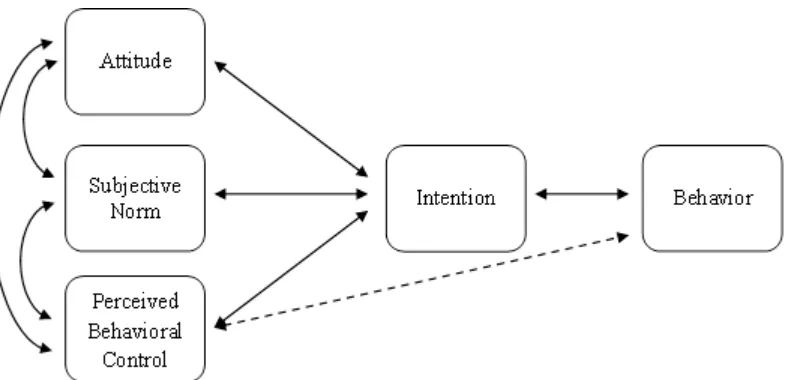
Figure 1. The theory of planned behavior (TPB; Ajzen, 1991). ... 2
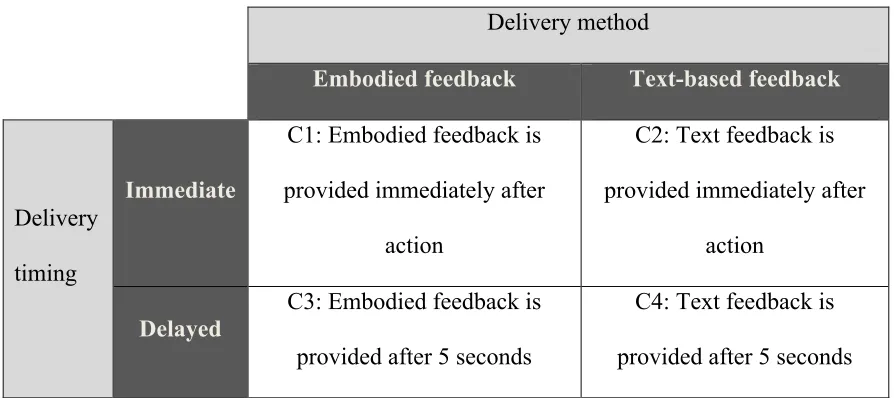
Figure 2. Four versions of the game representing four between-subjects factors. ... 8
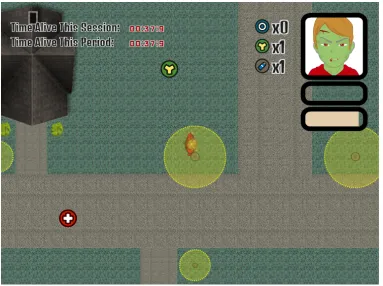
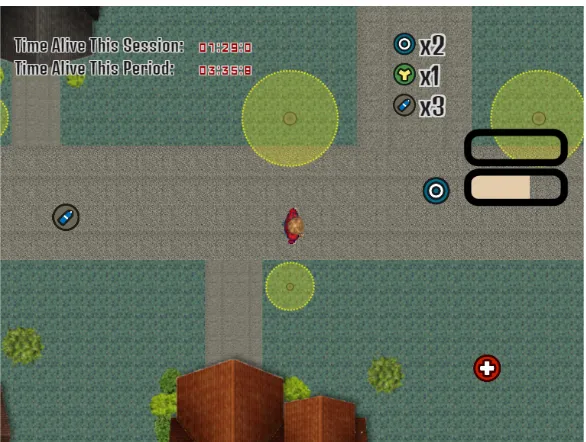
Figure 3. Game screenshot. ... 11
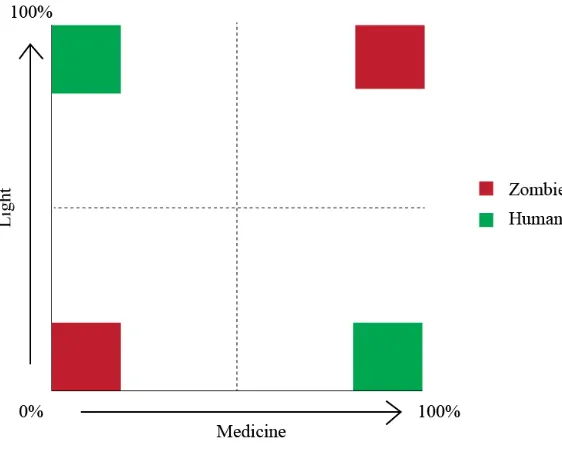
Figure 4. Interaction between light and medicine within the experimental task. ... 13
Figure 5. Seven stages of zombie-ness. ... 14
Figure 6. Game type 5. No feedback was displayed. ... 18
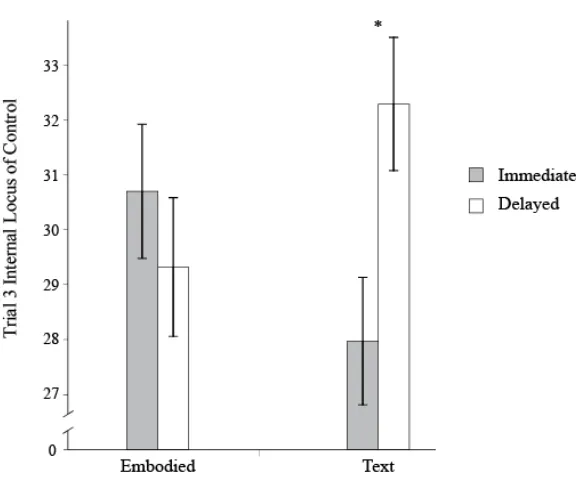
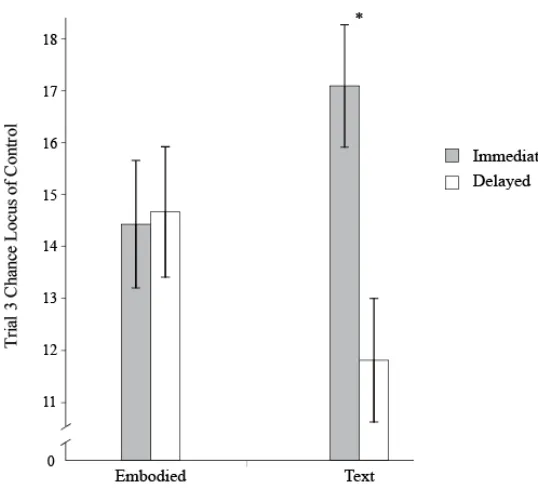
Figure 7. Significant difference of internal locus of control in the text feedback condition. 20 Figure 8. Significant difference of chance locus of control in the text feedback condition. . 22
Figure 9. Histograms showing the frequency of number of deaths for each trial (across conditions). ... 24
Introduction
Many people with health conditions have a difficult time understanding the
relationship between their behavior and their symptoms. For example, someone with Type 2 diabetes will often have trouble understanding the effects of carbohydrate intake, exercise, and prescription medication use on their blood glucose. This is made more challenging by the presence of interactions: for example, exercise tends to improve glycemic control, but high exertion in exercise can harm glycemic control. Success in self-management of health-related behaviors may depend on temporal proximity of the effects of actions so that persons
perceive the link between behavior and consequence (Bandura, 1998). However, health behaviors are performed over long periods of time and consequences of the behavior don’t necessarily occur immediately after the action. Therefore, it may be necessary to develop an alternative means of providing information about the consequences of a behavior immediately after it is performed.
intention, PBC, reflects the extent to which an individual believes the performance of the behavior is within their control. Ajzen (2002) divided PBC into two separate components: perceived self-efficacy (ease or difficulty of performing a behavior) and perceived
controllability (beliefs about the extent to which the performance a behavior is up to the actor). These two factors together comprise the higher order construct of PBC. Like attitude and subjective norm, PBC is thought to predict behavior through its influence on intention. It is also, however, thought to have a direct influence on behavior (i.e., it circumvents
intention). If one is realistic in their judgment of how difficult the behavior is to perform, the measure of PBC can serve as a proxy for actual control and directly contribute to the
prediction of behavioral execution (Figure 1).
Figure 1. The theory of planned behavior (TPB; Ajzen, 1991).
Attitude, subjective norm, and perceived behavioral control (PBC) are determinants of intention. Intention, in turn, predicts execution of behavior. Also, PBC may directly influence behavior, depending on an individual’s actual control of that behavior. The predictive ability of PBC on intention and on behavior has been the focus of many studies using the TPB. In a study that investigated the utility of the TPB in condom use, Rannie and Craig (1997) found PBC to be the strongest predictor of adolescent females’ intentions to use latex condoms. Eng and Martin Ginis (2007) found PBC to be the only predictor uniquely associated with intention to engage in leisure time activity among people with chronic kidney disease. Perceived behavioral control has also been found to be a significant predictor of exercise intention (Galea & Bray, 2006), exercise behavior (Hausenblas & Symons Downs, 2004), healthy living (being smoke-free, fruit and vegetable consumption, and physical activity; Murnaghan et al., 2010), and intention to use information technology (Venkatesh, Morris, & Ackerman, 2000). As is evident from the literature, high PBC is a desirable outcome of behavioral interventions.
Shortcomings of Behavior Change Interventions
Although the predictive ability of PBC has been well established, relatively few studies have manipulated factors contributing to PBC to assess whether changes in PBC lead to behavior change (for a review of TPB interventions see Hardeman et al., 2002).
& Amaratunga, 2011; Kothe, Mullan, & Butow, 2012) but are poor techniques for encouraging behavior change for two reasons. First, persuasion and education are not consequences of a behavior and, therefore, do not reinforce a behavior. As a result, it is less likely that persuasion and/or education (vs. reinforcement) would increase the likelihood of the occurrence of a behavior. Moreover, the methods of persuasion and education used in these studies were often not paired with the desired behavior. In fact, it was not uncommon for participants to read intervention materials at their leisure (e.g., a booklet sent by post; Elliott & Armitage, 2009), allowing for various and uncontrolled retention intervals. Second, there may be individual differences in susceptibility to persuasion (e.g., locus of control), where some individuals (e.g., internals, who tend to believe they control outcomes in life) may be particularly resistant to persuasive messaging (Lefcourt, 1982). Furthermore, an individual may already understand the benefits of a behavior and how to perform that behavior (e.g., eating fruits and vegetables), rendering education ineffective.
behavior change intervention and providing feedback immediately after a desired behavior is important for affecting these feelings of control.
Feedback
A hallmark of behavior modification is reinforcement, or the process in which a behavior is strengthened by the consequence that follows its occurrence. The effectiveness of a reinforcement is influenced by the time between the occurrence of a behavior and the reinforcing consequence (Miltenberger, 2004). Specifically, the consequence should occur immediately after the behavior. The longer the delay between the response and the
consequence, the less effective the consequence will be because the connection between the two is weakened (Miltenberger, 2004). Thus, immediate reinforcement is vital in
strengthening behavior. Reinforcement can be thought of as a type of feedback. However, results of studies that used immediate versus delayed feedback were contradictory (see p. 208-209, Dihoff, Brosvic, Epstein & Cook, 2004).
Kluger & Denisi, 1996) suggests that feedback interventions affect behavior by changing an individual’s locus of attention. Specifically, feedback effectiveness increases as attention moves closer to the task and farther from the self. According to FIT, feedback that links the task with higher order goals (e.g., increasing one’s scientific body of knowledge) will be unfavorable for performance whereas feedback that is specific to the task (e.g., reading a peer-reviewed article) will serve to augment performance. Thus, we believe that immediate feedback will be more beneficial than delayed feedback, given that the feedback is specific to the task itself.
Learning in a Virtual Environment
The expansion of the virtual environment as a pedagogical platform has obliged researchers to redefine the teacher-student paradigm. As a learner in a VE, an individual may experience effects of their actions vicariously through a self-representation as a visual agent – an avatar.
The use of avatars in computer-based environments is increasing dramatically, particularly in educational software (for a review see Connolly, Boyle, MacArthur, Hainey, & Boyle, 2012). Embodied entities, like avatars, are expected by the user to function in the human social context (Reeves & Nass, 1996), which includes communicating
van Vugt, Konijn, Hoorn, Keur, & Eliëns, 2007, Baylor, 2011). In contrast to photorealism, greater behavioral realism (the expression of human-like non-verbal behavior) in avatars has proven beneficial in several studies. Garau (2003) investigated both photorealism and behavioral realism in avatars and showed that behavioral realism is more important than photorealism in several different scenarios. Bailenson, Beall, and Blascovich (2002) demonstrated that higher behavioral realism produced positive changes in task performance and Chen et al. (2012) found that high behavioral realism (in the form of an empathetic avatar) resulted in greater willingness of students to continue a task. The benefits of behavioral realism in avatars have also been implicated in increasing an individual’s self-efficacy. Rosenberg-Kima, Baylor, Plant, and Doerr (2007) found that the visual presence of a speaking avatar was more beneficial to increasing a learner’s self-efficacy than voice alone. It is possible that these results may extend to information provided non-verbally. That is, information provided by an avatar via realistic behavioral responses (i.e., embodied feedback) may be more advantageous to increasing self-efficacy, and therefore PBC (see TPB review, pp. 2-3), than the same information provided in text form.
Study Overview
was considered novel to all participants. We believe this novelty is vital, as previous experience with a familiar behavior (e.g., proper dental hygiene) would likely affect an individual’s feelings of control at baseline and throughout the experiment. Four versions of the game were created, representing two between-subjects factors with two levels each (Figure 2).
Delivery method
Embodied feedback Text-based feedback
Delivery timing
Immediate
C1: Embodied feedback is provided immediately after
action
C2: Text feedback is provided immediately after
action
Delayed
C3: Embodied feedback is provided after 5 seconds
C4: Text feedback is provided after 5 seconds Figure 2. Four versions of the game representing four between-subjects factors.
C = Condition. Hypotheses proposed:
1. Participants who are provided embodied feedback will report a higher internal and lower chance game-based locus of control at trial 3 (post-intervention) than
participants who are provided feedback in text form (main effect of delivery method). 2. Participants who receive feedback immediately after performing an action will report
higher internal and lower chance game-based locus of control at trial 3 (post-intervention) than participants who experience a delay in feedback delivery (main effect of delivery timing).
3. Participants who are are provided embodied feedback and who receive feedback immediately after performing an action (C1) will report the highest internal and lowest chance game-based locus of control at trial 3 (post-intervention) compared to all other conditions. We believe that immediate feedback will be more important for increasing game-based feelings of control than the embodiment of feedback (delivery method × delivery timing interaction).
Method Participants
female (Mage = 24.55 years, age range: 16-64 years) and 56 were male (Mage = 26.50 years, age range: 17-64 years).
Materials
Survey. All participants were given a demographics survey at the beginning of the session. Participants then responded to two individual differences measures of general self-efficacy (Schwarzer & Jerusalem, 1995) and need for cognition (Cacioppo, Petty, & Kao, 1984).
Figure 3. Game screenshot.
Light and medicine both had an effect on zombie status, which was displayed in the top-right corner. Light was depicted as yellow circles and medicine as a white “+” inside a red circle. The remaining items were distractor items.
Light. The game was set at night thus sources of light were limited. In general, light
window (the beige, almost full bar in Figure 3). When the avatar moved into the light, the bar filled in increments of about 15%. When the avatar was not in a light source, the avatar’s light meter decreased at a steady rate, also in increments of about 15%.
Medicine. Success in the game could not be achieved by staying in light sources
alone. The participant had to also guide their avatar to medicine to avoid becoming a zombie. Medicine was represented by a white plus sign (+) inside a red circle. Medicine was placed among distracter items, thus it is believed that locating medicine was more difficult than finding light sources. The amount of medicine the participant accumulated was represented by a medicine meter which was located below the zombie status window and above the light meter. In general, medicine was beneficial to avoiding zombie symptoms. When the avatar collected medicine, the medicine meter would increase. Like light, medicine decreased at a steady rate.
The interaction of light and medicine. The most difficult aspect of the game was the
Figure 4. Interaction between light and medicine within the experimental task.
A greater amount of medicine was progressively more beneficial when an avatar had no light. A greater amount of light was progressively more beneficial when an avatar had no medicine. However, at 100% medicine and 100% light or at 0% medicine and 0% light, the avatar became a zombie. Varying stages of zombie-ness were associated with varying light-to-medicine ratios.
Feedback. The consequences of performing particular actions were presented as
feedback. After performing an action that had an effect on their zombie status, participants would be shown 1 of 7 different zombie stages (Figure 5). Feedback was either presented immediately or after a 5 second delay (interval based on results from pilot data) and was in the form of behavioral changes in an avatar (A; embodiment) or text (B).
Figure 5. Seven stages of zombie-ness.
Participants were shown feedback in text form (B) or embodied form (A), depending on their assigned condition.
Distractor items. Distractor items were placed among light and medicine to provide a
distractor items that had been obtained to encourage them to continue looking for and picking up distractor items.
Design
Two independent variables were manipulated between participants. The first
independent variable was feedback type (two levels) and the second independent variable was feedback timing (two levels). There were two dependent variables of internal locus of
control and chance locus of control, measured three times (baseline, intervention, test). Feedback type. The two versions of the game that provided embodied feedback delivered feedback through visual changes in the avatar. In this way, when a participant acted upon the environment, his or her avatar experienced the consequence of the action within the virtual environment. The text-based feedback groups received the same information as the embodied feedback group but in text form.
Feedback timing. Participants in the immediate feedback condition experienced the consequence of a particular action immediately after performing an action. Others
experienced the consequence of an action after a delay of 5 seconds (see Figure 2). Procedure
After registering for this experiment on a NCSU website, undergraduate participants were emailed a link to the online experiment. Those participants performing the HIT on Mechanical Turk (MT) accessed the link directly through the MT website. Once consent was collected, participants completed a demographics questionnaire and two individual
were then given instructions on how to complete the experiment. Participants engaged in a practice trial in which they played the computer-based game with no feedback provided. This trial lasted ten minutes. After this first trial, participants were asked to provide
information about their feelings of control over the behavior of avoiding zombie symptoms (Appendix A).
In the second (intervention) trial, participants played the version of the game which corresponded to their randomly assigned condition (see Figure 2). During this ten minute session, participants engaged in the experimental task described above. Depending on their assigned condition, they received: embodied feedback provided immediately after an action (C1); text-based feedback provided immediately after an action (C2); embodied feedback after a delay of 5 seconds (C3); or text-based feedback after a delay of 5 seconds (C4). After this intervention trial, participants were asked to provide information about their feelings of control over the behavior of avoiding zombie symptoms.
In the third (test) trial, participants played the game with no feedback provided (same as the practice trial). After ten minutes, participants were once more asked to provide
information about their feelings of control over the behavior of avoiding zombie symptoms. This trial served as a test to determine the intervention effectiveness.
Results
a potential issue in random assignment. Aa one-way ANOVA revealed an overall significant difference in internal locus of control between groups at trial 1 (F(3,124) = 4.77, p < .01, ηp2= .103). Those in condition 3 (embodied/delayed) reported higher internal locus of control at trial 1 than those in condition 4 (text/delayed) (p < .01). To further explore potential group differences before the intervention, and therefore check for additional evidence of nonrandom assignment, a demographics variable of age and an individual differences variable of general self-efficacy were analyzed. Both age (F(3,124) = .75, p = .53) and general self-efficacy (F(3,124) = 2.25, p = .09) did not differ significantly between groups, thus suggesting random assignment was met. The differences in internal locus of control at trial 1 cannot, however, be overlooked and may point to an error in the
Figure 6. Game type 5. No feedback was displayed.
An inspection of all back-end data collected indicated that every participant experienced only game type 5 in trial 1. Verification that participants did not receive feedback in trial 1
confirms there was no error in data collection that could have contributed to the unexpected differences in internal locus of control at trial 1.
Analysis of Covariance for Game-based Locus of Control
between groups. As this study was aimed at examining differences among four conditions at trial 3 (i.e., post-test), an ANCOVA is the proper statistical analysis technique. Second, it is likely that trial 3 scores may depend, at least to some degree, on trial 1 scores. Thus,
adjusting for trial 1 scores (i.e., using trial 1 scores as a covariate) is necessary. Third, unexpected differences in trial 1 internal locus of control discussed previously are controlled for in an ANCOVA.
ANCOVA for internal locus of control. Each participant completed an assessment of internal game-based locus of control after trial 1 (baseline: no feedback given), trial 2 (feedback given as assigned to condition) and trial 3 (test: no feedback given). An ANCOVA was run to determine the effect of feedback type and timing on trial 3 internal game-based locus of control after controlling for trial 1 internal game-based locus of control. Prior to the analysis, various assumptions for ANCOVA were verified. There was a linear relationship between trial 1 and trial 3 internal locus of control for each condition, as
assessed by visual inspection of a scatterplot. There was homogeneity of regression slopes as the interaction terms were not statistically significant (F(1,122) = 2.78, p = .10 and F(1,122) = 1.50, p = .22, respectively). There was homogeneity of variances as assessed by Levene’s test of homogeneity of variance (p = .179).
significantly greater in the text/delayed condition compared to the text/ immediate condition (p < .05, Figure 7), meaning delaying text feedback, as opposed to presenting text feedback immediately, tended to result in higher internal locus of control. No other statistically significant differences were found.
Figure 7. Significant difference of internal locus of control in the text feedback condition.
ANCOVA for chance locus of control. A second ANCOVA was run to determine group differences in chance game-based locus of control. Like the first ANCOVA, there was a linear relationship between trial 1 and 3 chance game-based locus of control as assessed by visual inspection of a scatterplot. There was homogeneity of regression slopes for both feedback type and timing (F(1,122) = 2.19, p = .14 and F(1,122) = 2.52, p = .12,
respectively), and there was homogeneity of variance (p = .207). After adjustment for trial 1 chance game-based locus of control, there was a statistically significant interaction of
Figure 8. Significant difference of chance locus of control in the text feedback condition.
Trial 3 chance locus of control was lower when text feedback was delivered after a delay compared to immediately. Error bars represent +/-1 standard error.
In summary, the timing of feedback did not seem to affect game-based locus of control (neither internal nor chance) when the feedback was in embodied form. However, those who received text feedback reported higher game-based feelings of control when the feedback was delayed for five seconds and reported lower game-based feelings of control when the feedback was presented immediately after execution of an action.
explain the difference in feelings of control between immediate and delayed feedback that was presented in text form. To examine this possibility, a performance metric of number of deaths per trial was created. Deaths per trial was a valid measure of performance because as participants’ understanding of the game increased, number of deaths should decrease. If performance were a driver for locus of control, it would be expected that, like the above ANCOVAs, there would be a difference in number of deaths between delayed and immediate feedback in the text condition. Although there was a negative correlation between number of deaths and internal locus of control across groups at trial 1 (r = -.22) and trial 3 (r = -.49), an ANCOVA showed no difference in number deaths between groups at trial 3 when controlling for number of deaths in trial 1 (F(1,123) = .20, p = .65, ηp2 = .002). A follow-up ANOVA also revealed no difference between the two text feedback groups in number of deaths at trial 3 (F(1,64) = .36, p = .55, ηp2= .006). In interim summary, although performance (number of deaths) is related to internal game-based locus of control in general, it does not help to explain the difference between the two timing groups within the text condition.
Figure 9. Histograms showing the frequency of number of deaths for each trial (across conditions).
Visual inspection of these three histograms suggests that even at trial 1 people generally
performed well, with mean number of deaths of 5.38. Over the next two trials, people
performed better still. The mean number of deaths at trial 2 was 3.18 and at trial 3 was 2.43.
Considering a ten minute game play session within each trial, the relatively low number of
deaths by trial 2 and the small amount of variability by trial 2 suggests that participants
performed well, even early in the study. Moreover, histograms of trial 3 deaths for each
condition (Figure 10) indicate the extent to which performance improved across groups by
Figure 10. Histograms showing the frequency of number of deaths in trial 3 for each condition.
Feedback Type
Embodied Text
Feedback
Timing
Delayed
It then seems possible that a high level of performance could explain why feedback type
(embodied versus delayed) had no effect on trial 3 internal or chance locus of control.
Summary
In summary, a significant difference between conditions 3 and 4 in trial 1 internal
game-based locus of control prompted a preliminary investigation into data collection
methods. Proper data collection techniques at trial 1 were confirmed; all participants did
indeed receive no feedback at trial 1. Thus, these unexpected pre-intervention differences
were not due to an error in data collection. Two ANCOVAs for internal and chance
game-based locus of control revealed a significant difference in the timing of feedback within the
text condition. In both cases, delayed text feedback resulted in higher game-based feelings of
control than immediate text feedback. A performance metric (number of deaths) was thought
to have contributed to the differences in feelings of control within the text condition.
However, analysis of number of deaths did not indicate that better performance was a driver
for higher game-based feelings of control.
Discussion
Previous behavioral change intervention studies have found that perceived behavioral
control (from the Theory of Planned Behavior) is the best predictor for behavior change.
However, relatively few studies have manipulated factors contributing to PBC to assess
whether changes in PBC predict changes in behavior. Moreover, small effect sizes for
interventions that used persuasion and/or education to change behavior suggest persuasion
of this study was to determine the effectiveness of feedback, an alternative intervention
technique, on perceived behavioral control. Two measures of PBC were used: internal
game-based locus of control and chance game-based locus of control (revised from the
Multidimensional Health Locus of Control Scale, Wallston, Wallston, Kaplan, & Maides,
1976).
Feedback was manipulated in terms of type and timing to answer three main
questions: (1) What impact does the type of feedback (embodied versus text) have on
game-based feelings of control?, (2) What impact does timing of feedback (immediate versus
delayed) have on game-based feelings of control?, and (3) Does the type and timing of
feedback interact such that the effect of one depends on the other? To answer these
questions, three hypotheses were made about the direction of the relationship between type
and timing of feedback and game-based feelings of control.
Hypothesis 1 (H1), which stated that people who received embodied feedback would
report higher feelings of control at post-intervention (trial 3) than those who received
feedback delivered in text form, was not supported by the analyses. After adjusting for
pre-intervention (trial 1) locus of control, there was no significant main effect of feedback type
on trial 3 locus of control. Although the results were in direct contrast with what was
hypothesized, a thoughtful analysis of the qualitative differences between the text feedback
and embodied feedback in this study may shed light on the otherwise surprising results.
It is possible that certain characteristics of the feedback in this study made
blindness, in which large changes occurring in full view in a visual scene are not noticed.
The effects of change blindness were originally investigated when McConkie and Currie
(1996) had participants observe everyday visual scenes and changed the scene when a
saccade occurred. As such, it was initially believed that change blindness was related to eye
movements (perhaps some brain mechanism that corrects shifts of the retinal image).
Subsequent experiments showed, however, that change blindness was not necessarily related
to eye movements; even a flicker of the visual scene (Rensink, O’Regan, & Clark, 1997) or a
small disruption (O’Regan, Rensink, & Clark, 1996) can inhibit correct detection of a change
in the visual scene. The feedback in the current study (both embodied and text) was
presented with a simultaneous flash of yellow that surrounded the window in which feedback
was presented. It was thought that this yellow flash would grab the attention of the
participant, alerting them to a change in their health status, but it is possible that the yellow
flash actually served as a disruption. In this way, it is possible for one to notice a change
occurred but not be able to identify what the change was. If this were the case, it would not
be surprising that the type of feedback had no effect on feelings of control: perhaps in all
conditions, participants were unaware of health status changes at least some of the time,
effectively creating a level playing field for all.
Another factor that could have contributed to the divergence of the results to what
was hypothesized in H1 is the difference in interpretation of text feedback compared to
embodied feedback, which may in turn differentially affect cognitive load. Whereas it is
Zombie-like,” it may be more difficult to understand the nuanced differences between two
similar zombie status faces. Moreover, it is likely that embodied feedback involved one
more step of extracting meaning from the visual information presented within the zombie
status face. For example, given the same zombie status of 3 (on a scale from 1 to 7 where a
higher number is associated with great zombie-ness), the text form is self-explanatory (“A
Bit Human-like”) whereas the embodied form requires an extra step of interpreting the
semantic meaning of a visual stimulus (e.g., one might have to make the connection that a
yellow face with droopy eyes and a squiggly line mouth equals “A Bit Human-like”). This
extra step may increase extraneous cognitive load (Chandler & Sweller, 1991), thereby
reducing the amount of resource for processing information. It may also introduce an
opportunity for error in interpretation (e.g., one might erroneously interpret the same yellow
face with droopy eyes and a squiggly line mouth as more zombie-like than it really is).
Hypothesis 2 (H2), which stated that people who received immediate feedback would
report higher feelings of control at trial 3 than those who received delayed feedback, was also
not supported by the analyses. After adjusting for trial 1 locus of control, there was no
significant main effect of feedback timing on trial 3 locus of control. Both non-significant
main effects were observed for both internal and chance locus of control. Immediate
feedback was hypothesized to have a beneficial effect on feelings of control because it was
predicted that pairing an action in close temporal proximity with its resulting consequence
would allow for easier interpretation of cause and effect. However, previous research on the
1988). In alignment with H2 in this study, one position maintains that feedback must be
provided immediately after a behavior to reinforce correct behavior (e.g., Skinner, 1954). On
the other hand, delayed feedback has been shown to be effective for two separate but related
reasons. First, delaying feedback may be an effective means of providing desirable
difficulties (Bjork, 2013). Bjork (2013) has contended that manipulations that slow the rate
of acquisition of knowledge and skills can benefit long-term retention. Second, delayed
feedback is a hallmark of a phenomenon called the spacing effect (Dempster, 1989), in which
delaying the presentation of feedback is beneficial to learning because it allows for extra
processing time in which people can analyze their own hypotheses about their behavior. It is
possible that, in this study, people who received immediate feedback benefited from
reinforcement while people who received delayed feedback benefited from additional
processing time. This hypothesis could explain why there was no difference in feelings of
control at trial 3.
Hypothesis 3 (H3) proposed that feedback timing and type would interact such that
the timing of feedback would be more important for influencing feelings of control than the
type of feedback. All analyses supported an interaction of type and timing, however, the
direction of effect was incongruent with what was hypothesized. Instead of the type of
feedback driving the difference in locus of control, the timing of feedback was more
important. Specifically, the timing of feedback did not seem to matter when the feedback
was in embodied form. However, when feedback was delivered in text form, delaying the
detrimental to feelings of control. This difference in feelings of control between timing
conditions when feedback was text-based held true for both internal and chance locus of
control. Taking into consideration possible explanations for the results of H1 and H2, it is
possible that combining text feedback with a delay in presentation of the feedback provided
people (1) easy interpretation of the text (e.g., I’m now at zombie status, “A Bit
Zombie-like”) and then (2) allowed time to create a hypothesis about their behavior (e.g., Picking up
a medicine pack when I’m at zombie status, “Neither Human- nor Zombie-like” and when
my light bar is at 100% made my zombie status worse). Without text feedback (i.e., with
embodied feedback), the first step of interpreting current zombie status may be inaccurate,
therefore making subsequent hypotheses inaccurate as well. Without a delay to allow extra
processing time, and therefore, without a hypothesis about the behavior, it would not be
surprising that people would report lower feelings of control, since they would likely play the
game without knowledge of what was affecting their zombie status.
Future Directions
First, to understand whether the presence of feedback, regardless of its type and
timing, has an effect on feelings of control above and beyond what might be observed when
feedback is not present, a control group would be necessary. Although it might be assumed
that feedback in general does positively affect feelings of control, the addition of a control
group would allow for empirical validation of this assumption against data from a group that
experiences no feedback whatsoever. In addition, the feedback in this study was defined as
however, that the two bars representing amount of medicine and amount of light provided
valuable information that could itself be considered feedback. An improvement to this study
would be to remove both the zombie status feedback and the light and medicine bars at trials
1 and 3. This may provide a more accurate representation of a truly no feedback experience.
To assess the possible explanations for results that contradicted what was
hypothesized, several changes to this study could be made. First, to control for possible
erroneous interpretations of embodied feedback, a number could be assigned to and
presented with each of the seven zombie statuses. In this way, the interpretation of zombie
status would be assumed as the same for both the text and embodied conditions, therefore
filtering out the unique effects of text versus embodiment. Second, to better understand the
effects of delaying feedback, different feedback presentation intervals could be used. For
example, there may be a difference between a 5 second delay and a 10 second delay.
Determining the “sweet spot” for delaying feedback may have significant impacts on future
game-based interventions. Third, it may be necessary to provide a brief training on zombie
statuses before beginning the experimental task. If a criterion level of zombie status
familiarity is met for both text and embodied feedback, the possibility of incorrect
interpretation of zombie status (particularly within the embodied conditions) would be
REFERENCES
Ajzen, I. (1991). The Theory of Planned Behavior. Organizational Behavior and Human
Decision Processes, 50, 179–211.
Ajzen, I. (2001). Nature and operation of attitudes. Annual Review of Psychology, 52, 27–58.
Ajzen, I. (2002). Perceived behavioral control, self-efficacy, locus of control, and the theory
of planned behavior. Journal of Applied Social Psychology, 32(4), 665–683.
Bailenson, J. N., Beall, A. C., & Blascovich, J. (2002). Gaze and task performance in shared
virtual environments. The Journal of Visualization and Computer Animation, 13(5),
313–320. doi:10.1002/vis.297
Bandura, A. (1998). Health promotion from the perspective of social cognitive theory.
Psychology & Health, 13(4), 623–649. doi:10.1080/08870449808407422
Baylor, A. L. (2011). The design of motivational agents and avatars. Educational Technology
Research and Development, 59(2), 291–300. doi:10.1007/s11423-011-9196-3
Bjork, R. (2013). Desirable difficulties perspective on learning. In H. Pashler (Ed.),
Encyclopedia of the mind. (Vol. 4, pp. 243-245). Thousand Oaks, CA: SAGE Publications, Inc.
Cacioppo, J. T., Petty, R. E., & Kao, C. F. (1984). The efficient assessment of need for
cognition. Journal of Personality Assessment, 48, 306–307.
Chandler, P. & Sweller, J. (1991). "Cognitive Load Theory and the Format of
Instruction". Cognition and Instruction8 (4): 293–332
Chen, G., Lee, J., Wang, C., Chao, P., Li, L., & Lee, Y. (2012). An empathetic avatar in
computer-aided learning program to encourage and persuade learners. Educational
Technology & Society, 15, 62–72.
Connolly, T. M., Boyle, E. A., MacArthur, E., Hainey, T., & Boyle, J. M. (2012). A systematic literature review of empirical evidence on computer games and serious
games. Computers & Education, 59, 661–686. doi:10.1016/j.compedu.2012.03.004
Dempster, F. N. ( 1989). Spacing effects and their implications for theory and
Dihoff, R.E., Brosvic, G. M., Epstein, M. L., Cook, M. J. (2004). Provision of feedback during preparation for academic testing: Learning is enhanced by immediate but not
delayed feedback. The Psychological Record, 54, 207–231.
Elliott, M. A., & Armitage, C. J. (2009). Promoting drivers’ compliance with speed limits:
Testing an intervention based on the theory of planned behaviour. British Journal of
Psychology, 100, 111–132. doi:10.1348/000712608X318626
Eng, J. J., Martin Ginis, K. A. (2007). Using the theory of planned behavior to predict leisure
time physical activity among people with chronic kidney disease. Rehabilitation
Psychology, 52(4), 435–442. doi:10.1037/0090-5550.52.4.435
Fishbein, M., and Ajzen, I. (2010). Predicting and Changing Behavior. The Reasoned Action
Approach. New York: Psychology Press.
Galea, M. N., & Bray, S. R. (2006). Predicting walking intentions and exercise in individuals with intermittent claudication: An application of the theory of planned behavior.
Rehabilitation Psychology, 51(4), 299–305. doi:10.1037/0090-5550.51.4.299
Garau, M. (2003). The impact of avatar fidelity on social interaction in virtual environments.
University College, London.
Hardeman, W., Johnson, M., Johnston, D. W., Bonetti, D., Wareham, N. J., & Kinmonth, A. L. (2002). Application of the Theory of Planned Behavior in behavior change
interventions: A systematic review. Psychology and Health, 17(2), 123–158.
Hattie, J., & Timperley, H. (2007). The Power of Feedback. Review of Educational Research,
77(1), 81–112. doi:10.3102/003465430298487
Hausenblas, H. a., & Symons Downs, D. (2004). Prospective examination of the Theory of Planned Behavior applied to exercise behavior during women’s first trimester of
pregnancy. Journal of Reproductive and Infant Psychology, 22(3), 199–210.
doi:10.1080/02646830410001723788
Kellar, I., & Abraham, C. (2005). Randomized controlled trial of a brief research-based
intervention promoting fruit and vegetable consumption. British Journal of Health
Psychology, 10, 543–558. doi:10.1348/135910705X42940
Kluger, A. N., & Denisi, A. (1996). The Effects of Feedback Interventions on Performance: A Historical Review, a Meta-Analysis, and a Preliminary Feedback Intervention
Kothe, E. J., Mullan, B. a, & Amaratunga, R. (2011). Randomised controlled trial of a brief
theory-based intervention promoting breakfast consumption. Appetite, 56(1), 148–55.
doi:10.1016/j.appet.2010.12.002
Kothe, E. J., Mullan, B. A., & Butow, P. (2012). Promoting fruit and vegetable consumption.
Testing an intervention based on the theory of planned behaviour. Appetite, 58(3), 997–
1004. doi:10.1016/j.appet.2012.02.012
Kulik, J. A., & Kulik, C. C. ( 1988). Timing of feedback and verbal learning. Review of
Educational Research, 58, 79– 97.
Lefcourt, H. M. (1982). Locus of Control: Current Trends in Theory and Research (2nd ed.).
Hillsdale, NJ: Erlbaum.
McConkie, G. W., & Currie, C. B. (1996). Visual stability across saccades while viewing
complex pictures. Journal Of Experimental Psychology: Human Perception And
Performance, 22(3), 563-581.
Miltenberger, R. G. (2004). Behavior Modification. Principles and Procedures (3rd ed.).
Belmont, CA: Wadsworth.
Murnaghan, D. A., Blanchard, C. M., Rodgers, W. M., LaRosa, J. N., MacQuarrie, C. R., MacLellan, D. L., & Gray, B. J. (2010). Predictors of physical activity, healthy eating
and being smoke-free in teens: A theory of planned behaviour approach. Psychology
and Health, 25(8), 925–941. doi:10.1080/08870440902866894
O'Regan, J. K., Rensink, J. A., & Clark, J. J. (1996). "Mud splashes" render picture changes
invisible. Invest. Ophthalmol. Vis. Sci., 37, S213.
Peters, M., Laeng, B., Latham, K., Jackson, M., Zaiyouna, R., & Richardson, C. (1995). A redrawn Vandenberg & Kuse mental rotations test: Different versions and factors that
affect performance. Brain and Cognition, 28, 39–58.
Rannie, K., & Craig, D. M. (1997). Adolescent females’ attitudes, subjective norms,
perceived behavioral control, and intentions to use latex condoms. Public Health
Nursing, 14(1), 51–57. Retrieved from http://www.ncbi.nlm.nih.gov/pubmed/9078850
Reeves, B., & Nass, C. I. (1996). The Media Equation: How People Treat Computers,
Televsion, and New Media Like Real People and Places. New York: Cambridge University Press.
Rensink, R. A., O'Regan, J. K., & Clark, J. (1997). To see or not to see: the need for
Rosenberg-Kima, R. B., Baylor, A. L., Plant, A. E., & Doerr, C. E. (2007). The importance of interface agent visual presence: Voice alone is less effective in impacting young
women’s attitudes toward engineering. Second International Conference on Persuasive
Technology (pp. 214–222). Palo Alto, CA.
Schwarzer, R., & Jerusalem, M. (1995). Generalized Self-Efficacy scale. In J. Weinman, S. Wright, & M. Johnston, Measures in health psychology: A user’s portfolio. Causal and control beliefs (pp. 35- 37). Windsor, England: NFER-NELSON.
Skinner, B. F. ( 1954). The science of learning and the art of teaching. Harvard Educational
Review, 24, 86– 97.
Van Vugt, H. C., Konijn, E. a., Hoorn, J. F., Keur, I., & Eliëns, a. (2007). Realism is not all!
User engagement with task-related interface characters. Interacting with Computers,
19(2), 267–280. doi:10.1016/j.intcom.2006.08.005
Venkatesh, V., Morris, M. G., & Ackerman, P. L. (2000). A Longitudinal Field Investigation of Gender Differences in Individual Technology Adoption Decision-Making Processes.
Organizational Behavior and Human Decision Processes, 83(1), 33–60. doi:10.1006/obhd.2000.2896
Wallston, B. S., Wallston, K. A., Kaplan, G. D., & Maides, S. A. (1976). The development
and validation of the health related locus of control (HLC) scale. Journal of Consulting
and Clinical Psychology, 44, 580-585.
APPENDIX
Appendix A. The Revised Multidimensional Health Locus of Control Scale
Locus of Control (I = Internal, C = Chance)
1. If I experience zombie symptoms, it is my own behavior which determines how soon
I get well again. (I)
2. No matter what I do, if I am going to experience zombie symptoms, I WILL
experience zombie symptoms. (C)
3. Most things that affect my zombie symptoms happen to me by accident. (C)
4. I am in control of my zombie symptoms. (I)
5. When I experience zombie symptoms, I am to blame. (I)
6. Luck plays a big part in determining how soon I will recover from zombie symptoms.
(C)
7. My avoiding zombie symptoms is largely a matter of good fortune. (C)
8. The main thing that affects my zombie symptoms is what I myself do. (I)
9. If I take care of myself, I can avoid zombie symptoms. (I)
10.No matter what I do, I am likely to experience zombie symptoms. (C)
11.If it's meant to be, I will avoid zombie symptoms. (C)