ENHANCING BUILDING SERVICES COST MANAGEMENT KNOWLEDGE AMONG QUANTITY SURVEYORS
SUHAILA BINTI REMELI
ENHANCING BUILDING SERVICES COST MANAGEMENT KNOWLEDGE AMONG QUANTITY SURVEYORS
SUHAILA BINTI REMELI
A thesis submitted in fulfillment of the requirements for the award of the degree of
Master of Science (Quantity Surveying)
Faculty of Built Environment Universiti Teknologi Malaysia
Special dedicated to:
My beloved parents, Ayah and Mak My dearest siblings,
Abang Rizal, Kak Jue, Kak Ida, Abg Joe, Kak Eni, Abg Ang, Kak Ena, Adik Paih
Who offered me unconditional love and support...
My supportive supervisor, Dr. Sarajul Fikri Mohamed Who teach and guide me throughout the research...
All my faithful friends, My dearest roommates, Nurizan, Mazlin, Khairiah, Nisa
My Comrades,
Shazwani, Ganiyu, Amirrul Amir, Faizal, Hayani, Dayah, Farah, Noien, Wani, Yong, Akma, Ridzuan, Qayyum, Hafiz and Shidah
ACKNOWLEDGEMENT
In the name of Allah, most benevolent and ever-merciful, All praises be to Allah Lords of the worlds. First and foremost, I would like to express my heartfelt gratitude to Dr Sarajul Fikri Mohamed to be such inspirational, supportive, patient and being so consideration through my research journey to produce a quality work, generous advices, guidance, comments, patience, commitments and exposed me to the world of research. I would also like to thank my examiners who provided encouraging and constructive feedback. It is not an easy task, reviewing a thesis, and I am grateful for their thoughtful and detailed comments.
This thesis was funded by grant by Universiti Teknologi Malaysia and I would like to endlessly thank university for the generous support. As a member of the Universiti Teknologi Malaysia, I have been surrounded by wonderful friends; they provided a rich and fertile environment to study and explore new ideas. Thank you Shazwani, Ganiyu, Nurizan, Mazlin, Khairiah, Nisa, Amirrul Amir, Faizal, Hayani, Farah Farhana, Hidayah, Anne, Akma, Hazren, Halwani, Ridzuan, Qayyum, Hafiz and Shidah and others who being so supportive along the lonely journey.
In addition, my sincere appreciation especially to my parents; Remeli and Fatimah; my siblings; Rizal, Norhalida, Rozaini, Ruzaina and Mohd Faiz who have never declined me any support and endlessly love throughout my research journey. They have been very supportive to my ideas and kept inspiring me besides pouring me their unconditional love that has been the drive in pursuing my dreams. Heartiest thank.
ABSTRACT
ABSTRAK
TABLE OF CONTENTS
CHAPTER TITLE PAGE
DECLARATION i
DEDICATION vi
ACKNOWLEDGEMENT vii
ABSTRACT viii
ABSTRAK ix
TABLE OF CONTENTS x
LIST OF TABLES xi
LIST OF FIGURES xiii
LIST OF ABBREVIATIONS xiv
1.0 INTRODUCTION 1
1.1 Introduction 1
1.2 Statement of Problems 5
1.3 Research Proposition 8
1.4 Research Questions 9
1.5 Research Objectives 9
1.6 Scope of Research 9
1.7 Research Methodology 11
1.8 Significance of Research 12
2.0 COST MANAGEMENT KNOWLEDGE OF BUILDING 14 SERVICES
2.1 Introduction 14
2.2 Quantity Surveying 15
2.2.1 Roles of Quantity Surveyor 17 2.2.2 Relationship Between Quantity Surveying And 20
Other Project Team
2.2.3 Pre-contract Duties of Quantity Surveyor 21 2.2.4 Post-contract Duties of Quantity Surveyor 23
2.3 Estimating For Building Projects 25
2.3.1 Methods of Estimate 25
2.3.1.1 Unit Method 26
2.3.1.2 Superficial Area Method 26
2.3.1.3 Cube Method 27
2.3.1.4 Storey-Enclosure Method 27 2.3.1.5 Approximate Quantities Method 28 2.3.1.6 Elemental Estimating Method 28 2.3.1.7 Resources Analysis Method 29
2.4 Building Services Work 29
2.4.1 Building Services Design Development 39 2.4.2 Roles of Building Services Engineer Under 42
RIBA Plan of Work
2.4.3 Cost of Building Services 44
2.5 Quantity Surveyor and Cost Management of Building 47 Services
2.5.1 Problem with Managing Cost of Building Services 49 by Quantity Surveyor
2.6 Improving Cost Management of Building Services 53 2.7 Quantity Surveying Education and Training in Malaysia 55 2.8 Issues in Current Quantity Surveying Education and 56
Training
2.9 Bridging Quantity Surveyors’ Knowledge Gap 61
2.9.1 Definition of Knowledge 61
2.9.3 Knowledge Mapping 64 2.10 Construction Industry Requirement From A 65
Quantity Surveyor
2.11 Improving Quantity Surveyor Knowledge and Skills 66
2.12 Conclusion 71
3.0 RESEARCH METHODOLOGY 72
3.1 Introduction 72
3.2 Data Collection 73
3.2.1 Technique Adopted for Data Collection 77
3.2.2 Research Design 78
3.2.2.1 Questionnaire 78
3.2.2.2 Semi-structured Interview 81
3.2.3 Research Sampling 82
3.2.3.1 Questionnaire 82
3.2.3.2 Semi-structured Interview 85
3.3 Techniques of Analysis 86
3.3.1 Questionnaire 86
3.3.1.1 Cronbach’s Alpha Coefficient 86
3.3.1.2 Mean Score 87
3.3.1.3 Relative Importance Index (RII) 89
3.3.1.4 T-Test 90
3.3.1.5 SWOT Analysis 91
3.3.2 Semi-structured Interview 93
3.3.2.1 Content Analysis 93
3.4 Validation of Research 93
3.5 Conclusion 97
4.0 DATA ANALYSIS AND FINDINGS 98
4.1 Introduction 98
4.2 Participation of Quantity Surveyors 99
4.2.1 Respondents’ Background 99
4.2.4 Interview Respondents 103
4.3 Level of Involvement of Quantity Surveyor in Building 104 Services Cost Management 4.4 Importance Level of Managing Cost of Building 113
Services by Quantity Surveyor 4.5 Knowledge in Education Level for Industry 115
Requirements 4.6 Barriers of Quantity Surveyor in Managing Building 117
Services 4.7 Benefits As A Quantity Surveyor Building Services 119
Specialist 4.8 Quantity Surveyors’ Knowledge Gap in Building 122
Services Cost Management 4.9 Strength-Weakness-Opportunity-Threats (SWOT) of 129
Enhancing Quantity Surveyors’ Knowledge in Building Services Cost Management 4.10 Strategies to Bridge Quantity Surveyors’ Knowledge 131
Gap in Building Services Cost Management 4.11 Validation of Findings 136
4.11.1 Current Involvement of Quantity Surveyors I 137
Building Services Cost Management 4.11.2 Quantity Surveyors’ Knowledge Gap Identified 138
4.11.3 Strategies Proposed According to Gap Identified 140 4.11.4 Strategies to Enhance Quantity Surveyors’ 144
Knowledge in Managing Building Services Cost Management 4.12 Conclusion 148
5.0 CONCLUSION AND RECOMMENDATION 149
5.1 Introduction 149
5.2 Conclusion Analysis 150
5.2.2 The Nature of Quantity Surveyors’ Knowledge 151
Gap in Building Services Cost Management 5.2.3 Strategies to Bridge Quantity Surveyors’ 151
Knowledge Gap in Building Services Cost Management 5.3 Contribution of Research 152
5.4 Recommendations for Further Research 153
REFERENCES 155
LIST OF TABLES
TABLE NO. TITLE PAGE
1.1 Building Services Cost’s Range of The Total Construction Cost 6 2.1 RICS Cost Estimating & Cost Planning Stages under RIBA 19
Plan of Work
2.2 Cost Planning 22
2.3 Building Services Engineer in Related to Quantity Surveying 32 2.4 Example of Building Services BoQ 41 2.5 Building Services Engineers’ Involvement Based on RIBA 43
Plan of Work
2.6 Knowledge, Skills and Roles of Quantity Surveyor 60 2.7 Tacit and Explicit Knowledge 62 2.8 Knowledge Types Relevant to Construction 63 2.9 Industry Requirements from Quantity Surveyor 65 2.10 RICS Model of Competencies for Quantity Surveyors 67 3.1 Likert Scale Used in Questionnaire 80 3.2 Krejcie and Morgan’s Table: Determining Sample Size from 82
a Given Population
3.3 Response Rate 84
3.4 The Cronbach’s Alpha Coefficient of Reliability Statistics 87 3.5 Mean Range for the Scale of Agreement Level 88 3.6 Response on the Agreement Level of Managing Building 89
Services Cost Management by Quantity Surveyors
3.7 Description of Validation Interview Question 95 4.1 Total Questionnaire Responses 99 4.2 Respondents of Semi-Structure Interviews 103 4.3 T-test Value of the Level of Involvement of Quantity Surveyor 105
4.4 Summary of QS Involvement in Building Services Cost 111
Management 4.5 Cross Tabulation of Involvement in Building Services Cost 112
Management 4.6 Relative Importance Index (RII) of Roles of Quantity Surveyor in 114
Building Services Cost Management 4.7 Relative Importance Index (RII) of Knowledge in Education Level 117
for Industry Requirement 4.8 Mean Score of Barriers of Quantity Surveyors in Managing 118
Building Services Cost Management 4.9 Knowledge Gap Identified According to Role of Quantity Surveyors 124
4.10 SWOT Matrix 130
4.11 Strategies to Bridge Quantity Surveyors’ Knowledge Gap in Building 135
Services Cost Management 4.12 Current Involvement of Quantity Surveyor in Building Services 137
Cost Management 4.13 Mean Score of Quantity Surveyors’ Knowledge Gap in 138
Managing Cost of Building Services 4.14 Comments on Quantity Surveyors’ in Building Services 139
Cost Management 4.15 Comments on Bridging the Gap According to the Gap Identified 140
4.16 Comments on Strategies to Bridge the Knowledge Gap 143
4.17 Mean Score of Strategies to Fulfill Industry Requirements 144
LIST OF FIGURES
FIGURE NO. TITLE PAGE
1.1 Exploratory Research 11
2.1 Quantity Surveying Services for Construction Project 24 2.2 The Process of Brief and Design Development for 38
Building Services
2.3 Building Services Costs in Percentage of The Total 46 Construction Cost
2.4 Knowledge and Roles Acquired in Building Services 59
2.5 Knowledge Mapping 64
3.1 Triangulation Method Used 73
3.2 Flow of Research Process 96
4.1 Designation in Quantity Surveying Firms 101 4.2 The Experience of Quantity Surveyors 102 4.3 Percentage of Criteria of Benefits Being Quantity 120
Surveyor Building Services Specialist
4.4 Quantity Surveyors’ Knowledge Gap in Building 126 Services Cost Management According to Construction
Stage
LIST OF ABBREVIATIONS
BCIS - Building Cost Information Service BoQ - Bills of Quantities
BQSM - Board of Quantity Surveyor Malaysia
BS - Building Services
QS - Quantity Surveyor
M&E - Mechanical and Electrical
RICS - Royal Institution of Chartered Surveyors RII - Relative Important Index
RV - Respondents of Validation
SMM - Standard Method of Measurement
SMM M&E - Standard Method of Measurement of Mechanical and Electrical
CHAPTER 1
INTRODUCTION
1.1 Introduction
This chapter covers background of research, problems statement and research proposition. Other than that, this chapter also highlighted the research questions, research objectives, scope of the research, methodology used in the research and significance of the research.
1.2 Background of Research
ensuring the values of the project (Abdul Aziz, 2009). QS will describe clearly about the project and precisely explain all the requirements, the designs and the arrangement of the Bill of Quantities (BoQ) to ease the contractor can estimate the work easily and quickly. Meanwhile, QS should also be able to write clearly in language that will not be misunderstood by other parties who also use the BoQ later.
In addition, QS need to be careful in calculating the works measured, broadly expand their knowledge in the measuring, as well as systematically visualize the drawings and details (Lee et al., 2005). One of Quantity Surveyor‟s biggest tasks is
preparing BoQ for construction project proposed (Abd Rashid, 1987). In the other study that had done by Matipa (2008), the professional QS will provide the initial and future cost that have considered by the team that focused on designing.
Apart from that, QS also play an important role to improve the efficiency and competitiveness of construction work by reducing the confrontation, not only secured the comprehensive brief from the client but to ensure the most suitable procurement route. The effective cost control procedure and the value of the money need to be provided by the QS all the time and make sure the client‟s satisfy with all the requirements such as time, quality, function and allocation of risk. It can be done by reducing the scope for errors and omissions to the minimum level and added some values or capital to the project as well (Matipa, 2008).
On the other hand, according to Cooke and Walker (1995), the role of QS as a separate profession is unknown in Denmark and Germany. QS role was performed as an architect or engineer consultant as part of their professional services. Most of QS professions were done by architect and engineer. Meanwhile, in France, the QS come nearest to carrying out the same function as the QS in the United Kingdom. Their services were regarded as a technical service and are not considered to be on the same professional level as an architect or the engineer.
Meanwhile, in Netherland the quantity surveying function is undertaken by the architect as part of his professional service. For example, the architect is responsible for providing cost advice at the project feasibility stage and contractor is responsible for preparing interim payment applications during the project (Cooke and Walker, 1995). There is not mentioning about any role of QS in engineering services in building.
According to BQSM (2011), QS in Malaysia has regarded as a project construction consultant and has been trained in all aspects including costs of the construction, and the administration of financial and contractual. QS will function as an advisor to the architects and engineers regarding about the cost implications of their designs and to ensure the clients‟ interests. QSs‟ capability and skills are estimating the project costs, organizing the tender documents, appraising the payments and variation of the works, administering the contract and settle the final account.
engineer (College of Estate Management, 2010). In order to achieve all the needed information, QS also needs a good communication skills towards their project team and instead of being persevering and proactive in looking for the information about the specifications and drawings. According to Levitt (1994), in building services, the estimator need to possess experience and knowledge in plumbing, mechanical and electrical work in order to prepare the estimation costs. In most cases, contractors specializing in the plumbing, mechanical or electrical trades will develop the detailed estimate based on the design of the respective system utilizing experienced personnel despite the fact that QSs should be the one who prepare the Bill of Quantities (BoQ) for building services as well as other related works. This role is not provided by QSs because there is an interface problem between the knowledge base and skill of QSs and the technologies associated with building services (Swaffield and Pasquire, 2000). In addition, they also stated that QSs could not provide a good service to their clients unless they could manage the costs of the total building projects. Thus, QS need to have good competencies to render the services to the required degree of skills and expertise (Oke et al., (2010).
Hence, this research argued that the cost advice provided by QSs could be enhanced if there is improvement in the QSs‟ knowledge of building services in buildings. These enable QS to have adequate understanding of the technology of building services and provide active cost control advice that will deliver better value for client‟s money in the total cost management of a project.
1.2 Problems Statement
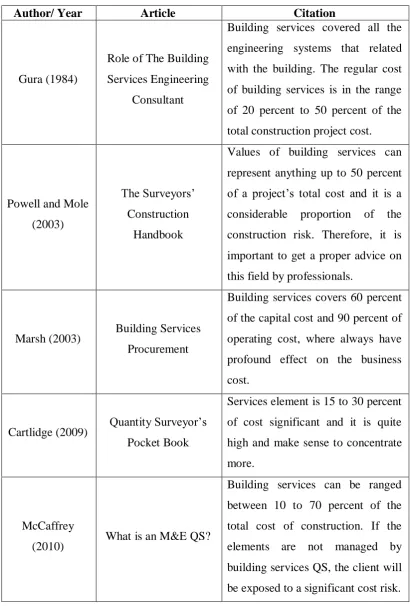
Table 1.1: Building Services Cost‟s Range of The Total Construction Cost
Author/ Year Article Citation
Gura (1984)
Role of The Building Services Engineering
Consultant
Building services covered all the engineering systems that related with the building. The regular cost of building services is in the range of 20 percent to 50 percent of the total construction project cost.
Powell and Mole (2003)
The Surveyors‟ Construction
Handbook
Values of building services can represent anything up to 50 percent of a project‟s total cost and it is a considerable proportion of the construction risk. Therefore, it is important to get a proper advice on this field by professionals.
Marsh (2003) Building Services Procurement
Building services covers 60 percent of the capital cost and 90 percent of operating cost, where always have profound effect on the business cost.
Cartlidge (2009) Quantity Surveyor‟s Pocket Book
Services element is 15 to 30 percent of cost significant and it is quite high and make sense to concentrate more.
McCaffrey
(2010) What is an M&E QS?
Electrical designers also need to figure the structures of the building that included the wiring, planning and coordinating the layout of the electrical system (Traister, 1975; Levitt 1994; Ashworth and Hogg 2002). The service designer should obtain an authentic knowledge of the building construction and competent to portray the drawing or plans in order to complete the project with all necessary mechanism (Traister, 1975). Then, QS can also explain the drawing precisely and easily as well can manage to measure the drawing accurately. Otherwise, Cartlidge (2009) argued that the item will measure as provisional sum because of lack of detailed information. QS needs to demonstrate the genuine knowledge of building services however, they always rely on the services or design engineer capabilities to design and manage the technical.
In addition, the engineer always be the references when having the difficulty in understanding the design or obtaining the information because graduated engineers must have an immense body of technical knowledge and possess personal, interpersonal and system-building skills to function in teams and be prepared to produce products and systems (Bankel et al., 2003). Furthermore, the additional expectation from QS graduates in developing as a whole, mature, thoughtful individual implicitly. The two roles of professional QS are really needed in order to have an excellent, first-class and worth work of detailed and proper BoQ of building services. However, the end result is whether the QS have the infinite knowledge in building services to prepare the BoQ. According to College Estate Management (2010), QS should have a broad comprehension to study, interpret and understand M&E drawings and qualifications. Some engineering systems or mechanism are hard to understand and they have to look for additional information from the engineer in order to explain it.
contractor to prepare an estimate cost of the work in order that a proper additional charge may be improved or a credit given. In spite of QSs main task to prepare the bills, current practices shows that building services engineer who is not familiar with the methods used to prepare the necessary detailed cost information carry out the function. Hence, the estimator must has a wide comprehensive knowledge of building services works to fill in the gap where QS could manage cost management in building projects including building services works in practice (Levitt, 1994).
Thus, this research is conducted as Traister (1975) and College of Estate Management (2010) argued that QS should has the working knowledge and a wide comprehension to interpret and understand M&E drawings and specifications so also building services engineer needs to be able to visualize the building structure and its relation to the building services system. In addition, Ekundayo et al. (2011) said that QS should provides a proper cost management of construction project in the context of forecasting, analyzing, planning, controlling and accounting and further suggested that competent QSs must has a range of skills, knowledge and understanding which can be applied in a scope of contexts, firms and organizations. College of Estate Management (2010) also stressed that the integration of the two professionals can produce a better, good and value of work of detailed and proper BoQ of building services. Hence, these problems can be overcome through this research whereby considering the outcome of the research which improving credibility of a quantity surveyor by knowledge especially in managing cost of building services.
1.3 Research Proposition
advice that will deliver better value for client‟s money especially in building services work.
1.4 Research Questions
Research questions are:
i. What is the level of involvement of quantity surveyors in cost management of building services?
ii. What is the nature of quantity surveyors‟ knowledge gap in cost management of building services?
iii. What are the strategies to bridge quantity surveyors‟ knowledge gap in cost management of building services?
1.5 Research Objectives
Research objectives are:
i. To examine the level of involvement of quantity surveyors in cost management of building services.
ii. To investigate the nature of quantity surveyors‟ knowledge gap in cost management of building services.
1.6 Scope of Research
This research conducts the questionnaire survey among the QSs in consulting firms and semi-structured interview among QS and mechanical and electrical consulting firms. The research will restrict the population of QSs to have minimum ten (10) years working experiences in the field to answer the semi-structured interviews and no restricted experiences for questionnaires respondents. This population is more relevant to the respondent of the research and familiar to the cost estimating practices.
1.7 Research Methodology
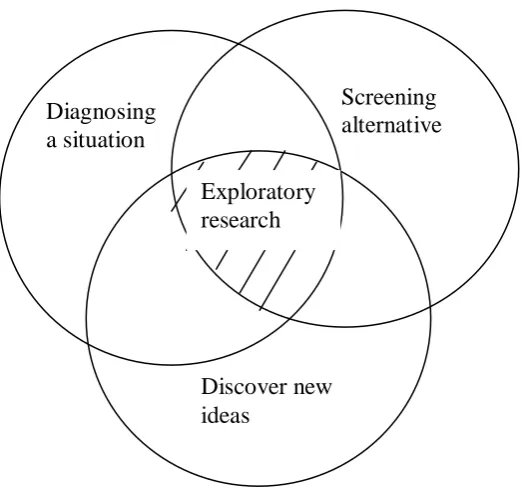
and to represent new ideas (Zikmund, 1997) as shown in Figure 1.1. The raw data provided in exploratory research will be obtain from the interview or recorded conversation or a description of what has been observed. On the other hand, quantitative method also use by developing sets of questionnaire.
Figure 1.1: Exploratory Research (Adapted from Zikmund, 1997)
1.8 Significance of Research
This research was conducted to propose the strategies to bridge the knowledge gap that exists in building services cost management. It will enable preparation of a detailed BoQ building services measure accurately in accordance with a viable standard method of measurement (SMM) and intelligently priced. In this context, Standard Method of Measurement for Building Woks: Second Edition (SMM 2) was established in Malaysia in 2001 was less concentrate on engineering services in building (Yusuf, 2012). SMM 2 less referred for these measurements as
Diagnosing a situation
Screening alternative
Discover new ideas
construction cost consultants are not master enough in this area. As the results, the measurements for particular item are given to building services engineer. According to Levitt (1994), the development of detailed estimate for plumbing, building services works require the estimator to have experiences in these areas. However, building services engineers also need to have a wide knowledge in buildings works area to ease QSs when interpret drawing and specifications.
Other than that, an improvement of syllabus QS and engineer programmes at education level need to be accomplish in order to help future QS to manage the total cost management of building services. Where, Liebowitz and Beckman (1998) said the tacit knowledge possess automatically by the academician can be change into explicit knowledge for students to practice or the academician themselves convey the knowledge personally to them during class as people can be trained to use tacit knowledge and develop their skills (Smith, 1998). In addition, Love et al. (2005) asserts that with the higher levels of expertise and knowledge, higher effectiveness in problem solving and enhanced employee capability which later be the benefits itself for QS. QS also can offers better service to their clients in a construction project.
1.9 Conclusion
REFERENCES
Abdul Hamid, M. F. (2004), Seminar on The Overview of Malaysian Standard Method of Measurement for Civil Engineering Work. 29 April 2004. Hotel MS Garden Kuantan Pahang.
Abdul Rashid, R. (1987). Pengenalan Kepada Ukur Kuantiti Binaan. Johor: Jabatan Ukur Bahan, Fakulti Alam Bina, Universiti Teknologi Malaysia. Akintoye, A. (2000). Analysis of Factors Influencing Project Cost Estimating
Practice. Journal of Construction Management and Economics. Volume 18, 77-89.
Amaratunga, D., Baldry, D., Sarshar, M. and Newton, R. (2002). Quantitative and Qualitative Research In The Built Environment: Application of “Mixed” Research Approach. Work Study MCB University Press. Volume 5 (1), 17-31. Architectural Services Department Quantity Surveying Branch (2001).
Standard Method of Measurement of Building Elements, Queensway Hong
Kong. Retrieved on August 17, 2011, from
http://www.archsd.gov.hk/english/publications/publication_pdf/Asdsmmbe_2 001.pdf.
Architectural Services Department Quantity Surveying Branch (2006). The
Review and Outlook of the Quantity Surveying Branch and the Quantity
Surveying Profession. China: Design and Production China Trend Building of Press Ltd.
Ashworth, A. (2004). Cost Studies of Buildings. Fourth Edition. Edinburgh: Pearson Education Limited.
Ashworth, A. and Hogg, K. (2000). Added Value in Design and Construction.
Edinburgh: Pearson Education Limited.
Surveyors. Oxford:Blackwell Science Ltd.
Babalola, O. (2009). An Appraisal of the Factors Affecting Production of Cost Estimates for Electrical Services in Nigeria. Journal of Environmental Design and Management. Volume 2 (1), 56-63.
Bankel et al. (2003). The CDIO syllabus: A Comparative Study of Expected
Student Profiency. European Journal of Engineering Education. Volume 28 (3), 297-315.
Bechina, A. A. A., Ribiere, V., Worashinchai, L. (2009). The Role of Knowledge Flow in The Thai GUIN Version of Triple Helix Model. Electronic Journal of Knowledge Management. Volume7(2), 287-296.
Bergthold, R. (1998). Building Services Integration. London: E. & F. N. Spoon Ltd 1983.
Bessant, J. and Rush, H. (1995). Building Bridges For Innovation: The Role of Consultants In Technology Transfer. Volume 24 (1), 97-114.
Best, R. (2005). How Much Measurement is Enough? Quantity Surveying Education in Australia. The Journal of The Australia Institute of QS. The Building Economist. 16-20.
Bitner, M. J (1995). Building Service Relationship: It’s All About Promises. Journal of the Academy of Marketing Science. Volume 23 (4), 246-251. Black, C. Akintoye, A. Fitzgerald, E. (2000). An Analysis of Success Factors and
Benefits of Partnering in Construction. International Journal Project Management. Volume 18 (6), 423-434.
Board of Quantity Surveyors, BQSM (2009). Quantity Surveyor. Retrieved on October 25, 2011, fromwww.bqsm.gov.my.
Bownass, D. (2000). Building Services Design Methodology. London and New York.: Spon Press Taylor & Francis Group.
Brewer, J. and Hunter, A. (1989). Multimethod Research: A Synthesis of Styles. Newbury Park. CA: Sage Publications.
Cartlidge, D. (2009). Quantity Surveyor’s Pocket Book. United Kingdon: Routledge. College of Estate Management (2010). Cost Control and Cost Management of M&E
Services. The College of Estate Management 2010. Paper 8167V1-0, 1-16. College of Estate Management (2012). Prospectus 2012/13 Building Futures. BSc
Cohen, J. (1992). Quantitative Methods in Psychology: A Power Primer.
Psychological Bulletin. Volume 112 (1), 155-159.
Chua, L. C. (2006). Sample Size Estimation Using Krejcie and Morgan and
Cohen Statistical Power Analysis: A Comparison. Jurnal Penyelidikan IPBL.
Jilid 7.
Cheng, J. C. P., Law, K. H., Bjornsson, H., Jones, A., Sriram, R. (2010). A Service Oriented Framework for Construction Supply Chain Integration. Automation in Construction. Volume 19, 245-260.
Cheung, F. K. T. and Skitmore, M. (2006). Application of Cross Valiation
Techniques for Modelling Construction Costs During The Very Early Design Stage. Building and Environment. Volume 41 (12), 1973-1990.
Churcher, D. (2009). A Design Framework For Building Services 2nd Edition. A BSRIA Guide. Berkshire: ImageData Ltd.
Collier, K. (1986). Estimating Construction Costs, Virginia: Reston Publishing Company, Incorporate, A Prentice-Hall Company Reston.
Coman, A. and Ronen, B. (2009). Focused SWOT: Diagnosing Critical Strengths and Weaknesses. International Journal of Production Research. Volume 47 (20), 5677-5689.
Cooke. B and Walker G. (1994). European Construction: Procedures and Techniques. Houndmills, Basingstoke, Hampshire RG21 2XS and London: The Macmillan Press Ltd.
Creswell, J. W. (2003). Research Design: Qualitative, Quantitative and Mixed Methods Approaches (2nd Edition). Thousand Oaks, CA: Sage Publication. Creswell, J.W. and Plano Clark, V. L. (2007). Designing and Conducting Mixed
Methods Research. Thousand Oaks, London and New Delhi: Sage
Publications.
Creswell, J. W. and Miller, D. L. (2000). Determining Validity in Qualitative Inquiry.
Theory Into Practice. Volume 39(3), 124-131.
Cronbach, L. and Meehl, P. (1995). Construct Validity in Psychological Tests. Psychological Bulletin. 281-302.
Crotty, M. (1998). The Foundations of Social Research: Meaning and Perspective in the Research Process. London: Sage Publication.
Davenport, T. H., Long, D. W. D. and Beers, M. C. (1998). Successful
Davis Langdon (2010). Africa Region Property and Construction Handbook. Africa: AECOM.
Davis, R., Watson, P. and Chi, L. M. (2007). Knowledge Management For The Quantity Surveying Profession. Strategic Integration of Surveying Services
FIG Working Week 2007. Hong Kong SAR, China 13-17 May 2007.
Dent, C. (1980). Construction Measurement In Accordance With SMM6, London: Granada Publishing Limited.
Department of Education and Science Planning and Building Unit (2004).
Mechanical and Electrical Building Services Engineering Guidelines for
Primary School Buildings. First Edition February 2004, Tullamore: Co. Offaly.
Dow, I., Sertyesilisik, B. and Ross, A. D. (2005). An Investigation on The Implications of Methodology of Sub-Contract Work Pricing. Journal of Financial Management of Property and Construction. Volume 14 (2), 98-125. Ekundayo, D. (2011). Mapping of Sustainability Education to Construction
Related Curricula: A Case Study of Quantity Surveying (QS) Degree Programme. RICS COBRA Conference 2011. 12-13 September 2011, School of Built Environment, University of Salford.
Flick, U. (2004). Triangulation: Qualitative Social Research. Springer D.E. Fotwe, F. T. and McCaffer, R. (2000). Developing Project Management
Competency: Perspective From The Construction Industry. International Journal of Project Management. Volume 18, 111-124.
Fussell, W. F. J. (1971). The Measurement of Engineering Services. London: E. & F. N. SPON LTD.
Gibbs, G. (2007). Analizing Qualitative Data. London: Sage Publication Ltd. Gliem, J. A. and Gliem, R. R. (2003). Calculating, Interpreting and Reporting
Cronbach’s Alpha Reliability Coefficient for Likert Scales. Midwest Research to Practice Conference in Adult, Continuing and Community Education. Gonick, L. and Smith, W. (1993). The Cartoon Guide to Statistics.
HarperPerennial. A Division of HarperCollinsPublishers.
Gura, J. H (1984). Role of the Building Services Engineering Consultant. IEEE Proceeding. Volume 131 (6), 413-419.
Hassan, F., Ismail, Z. Zaini, A. A., Hassan, S. and Maisham, M. (2011). An Evaluation of The Competencies, Skills and Knowledge of Quantity Surveying Graduates in Consultant Quantity Surveying Firms in Malaysia. Humanities. Science and Engineering (SHUSER) 2011 IEEE Colloqium. 5-6 December 2011 Penang, 228-232.
Headrick, H. (2008). Techniques to Improve Your Partnership: Undertaking a SWOT
Analysis. Retrieved on February 25, 2013, from
http://www.espartsed.org/resources/ss08_headrick_SWOT_Analysis_Model.d oc.
Hendrickson, C. (1998). Project Management for Construction: Fundamental Concepts for Owners, Engineers, Architects and Builders. Department of Civil and Environmental Engineering, Carnegie Mellon University, Pittsburgh, PA 15213: Prentice Hall.
Hiew, H. and Ng, P. (2007). How The QS Can Create Values in The Procurement of Construction Works in Hong Kong. Strategic Integration of Surveying Services FIG Working Week 2007. Hong Kong SAR, Chine 13017 May 2007. Hignett, S. (2005). Qualitative Methodology. Taylor & Francis Group, LLC.
Hoinville, G., Jowell, R. and Hoffman, K. R (1978). Survey Research Practice. London: Heinemann Education Books.
Huntsberger, David V. and Billingsley, Patrick P. (1989). Elements of Statistical Inference, Dubuque, Iowa: Wm. C. Brown Publishers.
Hussin, A. A and Omran, A. N.(2009). Roles of Professional in Construction Industry. The International Conference on Economics and Administration, Faculty of Administration and Business, University of Bucharest, Romania. ICEA – FAA Bucharest, 14 – 15th November 2009.
Hwang, B. G. and Ng, W. J. (2012). Project Management Knowledge and Skills for Green Construction: Overcoming Challenges. International Journal of Project Management. Volume 31(2), 272-284.
Jackson, R. M. and Powell, J. L. (1992). Jackson and Powell on Profession Negligence, 3rd Ed. London: Sweet & Maxwell Ltd.
Johnson, B. (2001). Toward a New Classification of Nonexperimental
Kanapeckiene, L., Kaklauskas, A., Zavadskas, E. K. and Seniut, M. (2010). Integrated Knowledge Management Model and System for Construction Projects. Engineering Application of Artificial Intelligence. Volume 23, 1200-1215.
Korman, T. M. (2008). Using Building Information Modeling To Improve The Mechanical, Electrical and Plumbing Coordination Process for Building.
ACSE Conference Proceeding. AEI 2008: Building Integration Solution. Kotler, P. (2010). Principles of Marketing. London: Prentice-Hall.
Krejcie, R. B. and Morgan, D. W. (1970). Determining Sample Size for
Research Activities. Journal of Educational and Psychological Measurement.
607-610.
Lam, A. (2000). Tacit Knowledge, Organizational Learning and Societal
Intitutions: An integrated Framework. European Group for Organizational Studies. Volume 21, 487-513.
Lee, S., Trench, W. and Willis, A (2005), Willis’s Elements of Quantity Surveying. 9600 Garsington Road, Oxford OX4 2DQ, UK: The Blackwell Publishing Ltd.
Levitt, R. E. (1994). Building Construction Estimating. New York: McGraw-Hill Series in Construction Engineering and Project Management.
Liebowitz and Beckman (1998). Knowledge Organizations: What Every Manager Should Know. St. Lucie: CRC Press Publication.
Liebowitz, J. (2005). Linking Social Network Analysis With The Analytic Hierarchy Process For Knowledge Mapping In Organizations. Journal of Knowledge Management. Volume 9 (1), 76-86.
Love, P. E. D. (2002). Influence of Project Type and Procurement Method
on Rework Costs in Building Construction Projects. Journal of Construction Engineering and Management. Volume 128, 18-29.
Love, P. E. D., Skitmore, M. and Earl, G. (1998). Selecting A Suitable
Procurement Method For A Building Project. Journal of Construction Management and Economics. Volume 16 (2), 221-223.
Mahbub, R. (2001). Perception and Expectation of Employers on the Quality of Quantity Surveying Graduates Entering the Construction Industry. Quantity Surveyor National Conference. 8-9 May 2001, 1-9.
Quantity Surveying Professionals: A Proposal For Developing A Legal Studies Module For Malaysian System. Journal of Applied Sciences Research. Volume 7 (13), 2249-2256.
Mainali, B., Ngo, H. H., Guo, W., Pham, T. T. N. and Johnston, A. (2011).
Feasibility Assessment of Recycled Water Use for Washing Machines in Australia Through SWOT Analysis. Resources, Conservation and Recycling.
Volume 56, 87-91.
Marsh, C. (2003). Building Services Procurement. London and New York: Spon Press Taylor & Francis Group.
Matipa, W. M., Kelliher D., Keane M. (2008). How A Quantity Surveyor Can Ease Cost Management at The Design Stage Using A Building Product Model.
Construction Innovation. Volume 8 (3), 164-181.
McCaffrey, J (2010). What is an M&E QS? Retrieved on August 8, 2011, from http://www.isurv.com.
McKenzie, G., Powell, J. and Usher, R. (1997). Understanding Social Research: Perspectives on Methodology and Practice. London and Washington, DC.: The Falmer Press (A Member of the Taylor & Francis Group).
Mercy, M. O. (1997). An Overview of Quantity Surveyors as Project Managers in Nigeria: Unpublished B. Tech. Dissertation. Department of Quantity Surveying, Federal University of Technology.
Merriam, S. B. (1998). Qualitative Research and Case Study Applications in Education. San Francisco: Jossey-Bass.
Meyer, T. and Semark, P. (1996). A Framework for The Use of Competencies for Achieving Competitive Advantage, South African Journal of Business Management. Volume 27 (4), 96-103.
Michie, A. (1981). Integration and Coordination of Building Services and Its Relation With Project Management. Building Services Engineering Research and Technology. Volume 2, 15-26.
Moeckli, J. (2011). Handbook of Driving Simulation for Engineering, Medicine and Psychology: The Qualitative Interview. The University of Iowa: Taylor & Francis Group, LLC.
Adavanvcement of Construction Management and Real Estate Towards
Sustainable Development of International Metropolis, 6th August 2010.
Mohamed, S. F. and Anumba, C. J. (2004). Towards A Framework For Integrating Knowledge Management Processes Into Site Management Practices. 20th Annual ACROM Conference. 1-3 September 2004, Heriot Watt University. Association of Researchers in Construction Management. Volume 1, 45-54. Mohamed, S. F., Yusoff, M. Z., Misnan, M. S., Mahmud, S. H., Remeli, S. (2012).
Towards A Framework to Integrate Quantity Surveyors’ Knowledge in Building Services Works. 3rd International Conference On Construction Industry (ICCI) 2012. Padang, Indonesia, 2-4 April 2012.
Mohamed, S. F. and Yusuf, G. A. (2011). Examination of Pre-Tender Budgeting Techniques for Mechanical and Electrical Services in Malaysia. WASET: World Academy of Science and Technology Conference Kuala Lumpur
Malaysia. 28-29 August 2012, Kuala Lumpur.
Moser, C., and Kalton, G. (1993). Survey Methods in Social Investigation. Aldershot: Gower.
Murray, G. P. (1997). Measurement of Building Services. MacMillan Press Ltd. Naoum, S. G. (2007). Dissertation Research & Writing For Construction Students.
Hungary: Elsevier Ltd.
Neideen, T. and Brasel, K. (2007). Understanding Statistical Tests. Journal of Surgical Education by The Association of Program Directors in Surgery
Published by Elsevier. Volume 64 (2), 93-96.
Newman, L. (2005). Handbook of Human Factors and Ergonomics Methods.
Pennsylvania State: CRC Press LLC.
Nkado, R. (2001). Competencies of Professionals Qss: A South African Perspective.
Construction Management and Economics. Volume 19, 481-491.
Nonaka, I. and Takeuchi, H. (1995). The Knowledge Creating Company, How Japanese Companies Create The Dynamics of Innovation. Oxford: Oxford University Press.
Nonaka, I. and Takeuchi, H. (1995). Theory of Organizational Knowledge Creation.
Oxford: Oxford University Press.
Odeyinka, H. A. (2003). The Development and Validation of Models for Assessing Risk Impacts on Construction Cash Flow Forecast. Glasgow Caledonian University.
Odusami, K. T. (2002). Perceptions of Construction Professionals Concerning Important Skills of Effective Project Leaders. Journal of Management in Engineering. Volume 18(2), 61-67.
Odusami, K. T and Iyagba, R. R (2001). The Most Suitable Professional for Team Leadership on Building Projects as perceived by The Proefessionals in The Construction Industry. The Professional Builder, July Edition, 64-73.
Ofori, G. and Lean, C. S. (2001). Factors Influencing Development of
Construction Enterprises in Singapore. Journal of Construction Management and Economics. Volume 19 (2), 145-154.
Ogunsemi, D. R., Oyediran, O. S. and Ekundayo, D. O. (2012). Construction
Professionals and Project Management Competencies in Nigeria. Journal of Construction. Official Journal of The Association of School of Construction of
South Africa. Volume 1 and Volume 2, 6-11.
Oladipupo, B. R. (2004). Comparative Study of Construction Professionals as Project Managers in Nigeria. Department of Quantity Surveying, Federal University of Techology.
Pallant, J. (2001). SPSS Survival Manual. John Wiley Publications.
Parsloe, C. and Wild, J. (1992). Project Management Handbook for Building Services. Building Services Research and Information Association. Pathirage, C. and Amaratunga, D. (2006). A Vision For The Quantity Surveying
Education in The 21st Century United Kingdom Perspective in Customising the Quantity Surveying Education, Department of Building Economics, University of Moratuwa, Sri Lanka.
Pathirage, C., Haigh, R., Amaratunga, D. and Baldry, D. (2008). Knowledge
Management Practices in Facilities Organizations: A Case Study. Journal of Facilities Management. Volume 6 (1), Oct, 5-22.
Pavittland, T. C. and Gibb, A. G. F. (2003). Interface Management Within
Construction: In Particular, Building Façade. Journal of Construction Engineering and Management. Volume 129, 8-15.
Industrial Development Needs for Quantity Surveyors: The Post Recession
Dynamics. RICS Trust Grant Project No: 401. Northumbria University Newcastle Upon Tyne United Kingdom.
Potts, K. 92008). Construction Cost Management: Learning From Case Studies.
London: Taylor and Francis.
Powell, C. and Mole, T. (2003). The Surveyors’ Construction Handbook. RICS Business Limited. The Royal Institution of Chartered Surveyors UK. Project Management Institute (2000). A Guide to The Project Management Body of
Knowledge. 2000 Edition. Newtown Square, Pennsylvinia: Nutek Incorporate. Ramaprasad, A. and Prakash, A. N. (2003). Emergent Project Management: How
Foreign Managers Can Leverage Local Knowledge. International Journal Project Management. Volume21, 199-205.
Ramus, J. and Birchall, S. (1994). Contract Practice for Surveyors. Reed Educational and Professional Publisher Ltd.
Rawlison, S., Nugent, B., Dedman, A. (2007). Procurement: Building Services. Retrieved on January 14, 2014, from www.building.co.uk/procurement-building-services/3086544.article.
Rawlison, S. and Dedman, A. (2010). Specialist Costs: M&E Services. Retrieved on January 14, 2014, from www.building.co.uk/specialist-cost-me-services/5001903.article.
Reed, J. (2009). RSMeans Building Constrcution Cost Data. Reed Construction Data. Remeli, S. (2011). Aplikasi SMM 2 Dalam Kerja-Kerja Perkhidmatan Bangunan.
Sarjana Muda Ukur Bahan. Universiti Teknologi Malaysia.
Remeli, S. and Mohamed, S. F. (2012). Towards a Framework To Integrate The Usage of Standard Method of Measurement in Building Services Works.
APSEC-ICCER; Sustaining The World with Better Structures & Construction
Practice 2012. Surabaya, Indonesia 2-4 October 2012.
Rezgui, Y., Hopfe, C. J. and Vorakulpipat, C. (2009). Generations of knowledge management in Architecture, Engineering and Construction Industry: An Evolutionary Perspective. Advanced Engineering Informatic. Volume 24, 219-228.
Richrath, B. (2007). Design and Project Management. Real Estate Investments in Germany, 123-147.
Ritchie, J. and Lewis, J. (2003). Qualitative research Practice: A Guide for
Social Science Students and Researchers. London and New Delhi: Sage Publications Thousand Oaks.
Robinson, N. M. (1978). Measurement (Volume 1). 32 Malmesbury Road, Kingsditch, Cheltenham: Stanley Thornes (Publishers) Ltd.
Robson, C. (2002). Real World Research. Blackwell, 2nd Ed.
Rosenholtz, R. (2009). A Very Brief Intro to Statistics: T-tests. Laboratory in Visual Cognition Fall 2009.
Royal Institution of Chartered Surveyors (1991). Constructing Real Estate Indices for Cyprus: An Evaluation of The Options, Reading United Kingdom.
Royal Institution of Chartered Surveyors (1998). The ABC Requirements and Competencies. London.
Royal Institution of Chartered Surveyor (2012). RICS New Rules of
Measurement: Detailed Measurement for Building Works. RICS, Page Bros, Norwich.
Ruan, X., Ochieng, E. G., Price, A. D. F and Egbu, C. O. (2012). Knowledge
Integration Process in Constrcution Projects: A Social Network Analysis Approach to Compare Competitive and Collaborative Working. Construction Management and Economics. Volume 30 (1), 5-19.
Said, I., Shafiei, M. W. M, Omran, A. (2009). The Competency Requirements For Quantity Surveyors: Enhancing Continuous Professional Development. ACTA Technica Corviniensis: Buletin of Engineering.
Sambasivan, M and Soon, Y (2007). Causes and Effects of Delays in Malaysian Construction Industry. International Journal of Project Management. Volume 25, 517-526.
Samekto, H (2007). Integrated Approach in Materials and Engineering
Design. Regional Symposium on Engineering Education 2007, 14 February 2007, Universiti Malaya.
Sanchez, A. (1998). Telephone Interview with Alfred Sanchez, President, Alfred J. Sanchez Inc., February 1998.
Public Sector Employees: Evidence From Malaysia. International Journal of Public Sector Management. Volume 24 (3), 206-226.
Sattar, S. (2012). Exploring Knowledge Management Practices. International Journal of Learning & Development. Volume 2 (1), 330-352.
Seeley, I. H. (1965). Building Quantities Explained S.I Edition. London and
Basingstoke Associated Companies in New York, Melbourne, Toronto, Johannesburg and Madras: Macmillan and Co Ltd.
Seeley, I. H. (1982). Advanced Building Measurement, Chartered Quantity
Surveyor Professor and Head of Department of Surveying and Dean of the School of Environmental Studies, Trent Polytechnic, Notthingham.
Seeley, I. H. (1989). Advanced Building Measurement- Building & Surveying. Basingtoke, Hampshire: Palgrave Macmillan.
Seeley, I. H. (1993). Building Technology (Building & Surveying Series).
Basingtoke, Hampshire: Palgrave Macmillan.
Seeley, I. H. (1996). Building Economics (Building & Surveying Series).
Basingtoke, Hampshire: Palgrave Macmillan.
Seeley, I. H. (2006). Quantity Surveying Practice (2nd Edition). Basingtoke, Hampshire:Palgrave Macmillan.
Senaratne, S. and Sabesan, S. (2008). Managing Knowledge As Quantity Surveyors: An Exploratory Case Study in Sri Lanka. Built-Environment- Sri Lanka.
Volume 8 (2), 41-47.
Senaratne, S. and Sexton, M. (2008). Managing Construction Project Change: A Knowledge Management Perspective. Journal of Construction Management and Economics. Volume 26 (12), 1303-1311.
Shamsuddin, S. M., Zakaria, R., Moahmed, S. F. amd Mustaffar, M. (2012).
Drivers and Challenges of Industrialised Building System (IBS) in Sustainable Construction. APSEC-ICCER; Sustaining The World with Better Structures & Construction Practice 2012. Surabaya Indonesia, 2-4 October 2012.
Shehu, Z. and Akintoye, A. (2009). Major Challenges to the Successful
Implementation and Practice of Programme Management in the Construction Environment: A Critical Analysis. International Journal of Project Management. Volume 28, 26-39.
Workplace. Journal Knowledge Management. Volume 5 (4). 311-321. Soliman, F. and Spooner, K. (2000). Strategies for Implementing Knowledge
Management: Role of Human Resources Management. Journal of Knowledge Management. Volume 4 (4), 337-345.
Statistical & Technical Team (1992). A Practical Guide to Sampling. National Audit Office.
Sturft, C. S. and Griffis, F. H (2005). Pricing Engineering Services. Journal of Management in Engineering. Volume 21 (2), 56-62.
Swaffield, L. and Pasquire, C. (2000). Improving Early Cost Advice Mechanical and Electrical services. Research Paper. Volume 3 (15). Department of Civil and Building Engineering Loughborough University.
Syed Alwee, S. N. A., Hassan, P@F., Ramli, H., Maisham, M. (2011). Bloom’s Taxonomy in The Provision of Quantity Surveying Degree Programme. Business. Engineering and Industrial Applications (ISBEIA) 2011, IEEE Symposium. 25-28 September 2011, Langkawi Conference Publication, Page 431-436.
Takim, R. and Adnan, H. (2008). Analysis of Effectiveness Measures of
Construction Project Success in Malaysia. Asian Social Science (CCSE).
Volume 4 (7), July 2008.
Tasshakkori, A. and Teddlie, C. (1998). Mixed Methodology: Combining Qualitative and Quantitative Approaches. Thousand Oaks, CA: Sage Publication.
Tasshakkori, A. and Teddlie, C. (2003). Handbook of Mixed Methods in Social & Behavioral Research. Sage Publication.
The Institution of Surveyors, Malaysia (2001). Malaysian Standard Method of Measurement of Building Works Second Edition. Selangor: The Institution of Surveyors, Malaysia.
Thompson, F. M. L. (1968). Chartered Surveyors : The Growth of A Profession, London: Routledge & Kegan Paul.
Traister, J. E. (1975). Residential Electrical Design. inc Indianapolis, Kensas City, New York 1975: Howard W. Sams & Co. Inc. The Bobs-Merrill Co.
Van Manen, M. (1990). Researching lived experience: Human Science for An Action Sensitive Pedagogy. London, ON: The University of Western Ontario.
Willis, A. and Trench, W. (2002). Willis’s Elements of Quantity Surveying Ninth
Wright, P. H. (1994). Introduction to Engineering Second Edition. Keyword Publishing Services Ltd.
Yeung et al. (2006). Attitudes Towards Industrial Training in The BEng.
Course in Building Services Engineering at Hong Kong Polytechnic.
Yik, F. W. H., Lai, J. H. K., Chan, K. T, Chau, C. K. and Lee, W. L. (2013). A Portrait of Building Services Engineers in Hong Kong. Engineering, Construction and Architectural Management. Volume 20 (1), 63-82.
Yuan, H. (2013). A SWOT Analysis of Successful Construction Waste Management.
Journal of Cleaner Production, Volume 39, 1-8.
Yunus, R. and Yang, J. (2012). An Integrated Approach to Enhance
Sustainability In Industrialised Building Systems. APSEC-ICCER; Sustaining The World with Better Structures & Construction Practice 2012. Surabaya, Indonesia, 2-4 October 2012.
Yusuf, G. A. and Mohamed, S. F. (2011). Identification of The Potentials and
Barriers of Adopting Standard Method of Measurement for Mechanical and Electrical Services in Malaysia. OIDA International Conference on Sustainable Development 2011. 5- 7 December 2011, Putrajaya Malaysia. Yusuf, G. A. and Mohamed, S. F. (2012). Perceived Benefits of Adopting Standard-
Based Pricing Mechanism for Building Services: Lesson from Building Fabrics and Finishes. Archives De Science. Volume 6 (9), September 2012. Yusuf, G. A., Mohamed, S. F., Mohd Yusof, Z. and Misnan, M. S. (2012).
Framework for Enhancing Cost Management of Building Service. International Congress on Interdisciplinary Business and Social Science.
Procedia-Social and Behavioral Sciences. Volume 65, 697-703.
Zack, M. (1999). Developing A Knowledge Management Strategy. California Management Review, Spring. Volume 41 (3), 125-145.
Zakaria, N., Che Munaaim, M. E. and Iqbal Khan, S. (2006). Malaysian Quantity Surveying Education Framework. Retrieved on June 14, 2012, from http://www.cebe.heacademy.ac.uk.news/events/beecon2006/pdf/P32_Norhani m_Zakaria.pdf.
Zikmund, W. G. (1997). Business Research Method Fifth Edition. Fort Worth, Texas: The Dryden Press.