American
Society of Range Management
The American Society of Range Management was created allied technologists, and to encourage professional improvement in 1947 to foster advancement in the science and art of grazing of its members.
land management, to promote progress in the conservation and Persons shall be eligible for membership who are interested greatest sustained use of forage and soil resources, to stimu- in or engaged in practicing range or pasture management or late discussion and understanding of scientific and practical animal husbandry ; administering grazing lands; or teaching, range and pasture problems, to provide a medium for the or conducting research, or engaged in extension activities in exchange of ideas and facts among society members and with range or pasture management or related subjects.
T
he JOURNAL OF RANGE MAN- AGEMENT, published bi-monthly, is the official organ of the American Society of Range Management. The Society, however, assumes no responsibility for the statements and opinions expressed by authors and contributors.Office, Executive Secretary. Address all inquiries and correspondence including memberships, renewals, replacements of JOURNALS, etc., to Executive Secretary, American Society of Range Management, P.O. Box 5041, Portland 13, Oregon. Dues. Membership dues should be sent to the Executive Secretary. The dues are 968.00 per year including’ a subscrip- tion to the JOURNAL OF RANGE MAN- AGEMENT. Dues for student members are $4.00 per year, including the JOURNAL. All subscriptions mailed outside the North American continent and insular possessions of the U. S. are $8.50 per year. Subscrip- tions must be paid in advance. Remit by draft or check on U. S. banks in U. S. funds. Reprinting. The reprinting of articles or parts of articles published in the JOURNAL OF RANGE MANAGEMENT is author- ized on the express condition that full credit be given the JOURNAL and the author. The date of original publication must be shown with the credit line.
Posf Office Entry. Second-class post- age paid at Portland, Oregon, and at .ad- ditional offices.
Change of Address. Notices of change of address should be received by the Execu- tive Secretary one month before the date of issue on which the change is to take effect. Both the new and old addresses should be sent to the Executive Secretary, American Society of Range Management, P.O. Box 5041, Portland 13, Oregon.
Printers. The Nebraska Farmer Company, 1420 P Street, Lincoln, Nebraska.
Copyright 1962 by the American Society of Range Management.
JOURNAL
OF RANGE MANAGEMENT
EDITOR E.
J.
WOOLFOLI<Pacific Southwest Forest & Range Exp. Sta. Berkeley 1, California
EDITORIAL BOARD 1960-62 F. A. BRANSON U.S. Geological Survey
Federal Center Denver, Colorado
L. T. BURCHA~I LYNN RADER
California Division of Forestry Pacific Southwest Forest Sacramento, California & Range Exp. Sta.
Susanville, California 1961-63
ROBERT W. LODGE Canada Dept. of Agric. Swift Current, Sask.
HAROLD A. PAULSEN DONALD F. BURZLAFF Rocky Mountain Forest
& Range Exp. Station
College of Agriculture
Room 221 Forestry Building
Lincoln 3, Nebraska
Fort Collins, Colorado
1962-64
JOHN L. LAUNCHBAUGH Kansas Agric. Expt. Sta.
C. WAYNE COOK
Hays, Kansas
V. L. DUVALL
Utah State Univ. Box 1192
Logan, Utah Alexandria, La.
OFFICERS OF THE SOCIETY President:
E.
WM. ANDERSON 215 N.W. 10thPresident Elect:
Pendleton, Oregon
M. W.
TALBOTExecutive Secretary: JOHN G. CLOUSTON
2590 Cedar P. 0. Box 5041
Berkeley, California Portland 13, Oregon BOARD OF DIRECTORS
1960-62
WAYNE KESSLER GERALD W. THOMAS
6710 N. 10th Ave. Phoenix 13, Arizona
Texas Technological College Lubbock, Texas 1961-63
AVON DENHAM OTTO J. WOLFF
Box 4137 912 St. Patrick St.
Portland 8, Oregon Rapid City, S.D. 1962-64
C. H. WASSER ROBERT A. DARROW
Colorado State University Texas A & M College Fort Collins, Colorado College Station, Texas
Past President:
V. A.
YOUNG 733 West 2nd St. Mesa, ArizonaIN
THIS
ISSUE
Facfors Affecting Resistance to Heavy Grazing in
Needle-and-Thread Grass... _____ ________________ _____ ________ ______ . . . ..RoaZd A. Peterson 183
An Allocafion Plan for Range Unit Sampling
Jack N. Reppert, Merton J. Reed, and Pinhas Zusman 190
A Comparison of Methods of Estimating Plant Cover in an Arid
Grassland Communify...R. E. Winkworth, R. A. Perry and C. 0. Rosetti 194
Effects of Low Level Sfilbesfrol on Weaner Steers and
Suckling Calves on Rangeland...M. C. Shoop and E. H. McIZvain 197
An Eastside Sierra Nevada Aerial Spraying Project
Phillip B. Lord and William H. Sanderson 200
The Mortality of Oak-Juniper Woodland Species
Following a Wild Fire...Donald E. Johnson, Hashim A. Mukhtar, Raymond Mapston and R. R. Humphrey 201
Influence of Soil Salinity and 2,4-D Treatments on Establishment of Desert Wheafgrass and Control of Halogeton and Ofher Annual Weeds
Robert H. Haas, Howard L. Morton and Paul J. ToreZZ 205
Selective Control of Big Sagebrush Associated
With Bif~erbrush..._.._..~~_~.~. N. Hyder and Forrest A. Sneva 211
A Comparison of Methods of Renovating Old Stands of
Crested Wheafgrass...RusseZZ J. Lorenz and George A. Rogler 215
Effects of Land Treatments on Erosion and Vegefafion on Range Lands in Parts of Arizona and New Mexico...H. V. Peterson and F. A. Branson 220
Seed Characteristics of Blue joint and Techniques
for Threshing... ______ . . . ..L. J. Klebesadel, C. I. Branton and J. J. Koranda 227
Effect of Seedbed Firming on the Establishment of
Crested Wheafgrass Seedlings..._____._W~ZZiam J. McGinnies 230
Book Reviews: An Introduction fo the Scientific Study of the Soil (Comber): Introduction fo Soil Microbiology (Alexander); Agricultural and Horfi- cultural Seeds. (FAO Agricultural Series No. 55): Regional Silviculfure of the United States (Barrett): Basic Problems and Techniques in Range Research (Subcommittee on Range Research Methods of the Agricultural Board) _...~... _____ __________._._ _____ _ ____________________ _______ _____ _ ________ ____ ____ __ ____ _____ ______ _ _______.._ 234
Current Liferafure... _____ ________ _____ __________ _____ __ ____ _________________ _____________ _______ __________ _ __.__ _________. 237
News and Nofes...__..__._.__.__..~~.___.___.__.~__.__ _.__ ______________________ ____. ____ ___. ____ 239
Cover Photo--Grazing out from “shade-up.”
Hope Valley, Toiyabe National Forest, September, 1944. ByHere’s how Phillips 66 products can help you
enjoy better living and improve profits
:(1) Phil-
lips 66 high nitrogen fertilizers for bigger, higher
profit yields; (2) a complete line of highest qual-
ity Phillips 66 Oils and Greases for every farm
machinery need; (3) top car performance with
Flite-Fuel and Sixty-Six Gasolines; (4) better
and longer engine protection with Trop-Artic*
All-Season Motor Oil; (5) Philgas * clean burning,
all purpose fuel, America’s largest
selling LP-Gas.*Atrademark
PHILLIPS
PETROLEUM
COMPANY
Bcwflesville, Oklahoma
Can You
Red
A Dozen Lctnguages?
If not, then you will appreciate
Herbage Abstracts and Field
Crop Abstracts,
two quarterly
journals which provide you with short
synopses, in Eng’lish, of articles
appearing
in the world literature
dealing
with research on grassland, fodder crops and annual field
crops.
Prepared
by the Commonwealth
Bureau of Pastures and
Field Crops where thousands of publications
in many languages are
abstracted annually.
Each journal
(with annual indexes)
costs 50s. sterling (in U.S.A. and
Canada
$7.00),
with 20% discount for subscribers
(non-trade)
in the British
Common-
Journal of
Volume 15, Number 4 July, 1962RANGE
MANAGEMENT
Factors Affecting Resistance to Heavy Grazing
In Needle-and-Thread Grass
ROALD A. PETERSON
Chief, Pasture and Fodder Crops Branch, Food and Ag- riculture Organization of the United Nations Rome, Italy.
Needle-and-thread grass (Stipa comata Trin. et Rupr.) an important perennial mid-grass of the Great Plains, is generally considered as relatively sensitive to grazing injury (Sarvis 1923, Allred 1940, Lodge 1954). Never- theless, this grass persisted in a very heavily grazed pasture, and maintained itself under less se- vere heavy grazing (Reed and Peterson, 1961) near Miles City, Montana.
This observation relates to the relatively high degree of stabil- ity observed in the northern Great Plains vegetation under heavy grazing (Black et al 1937, Sarvis 1941, Clarke et al 1943) and has implications in respect to expected rate of change in plant size and to change in spe- cies composition as grazing pres- sure is maintained over a series of years.
Changes in the size of plants and plant parts commonly occur in response to heavy grazing (Hanson et al 1931, Holscher 1945, Weaver and Darland 1947). There are apparently no reports to indicate the significance of these changes on plant resistance to grazing, except where this is complicated by secondary fac- tors such as competition for light, water, etc. Shorter and more prostrate grass types, how-
ever, have been shown to resist heavy grazing better than taller types (Stapledon 1928, Kemp 1937). Slower spring growth by permitting an “escape” from the high grazing pressure common at that time, favors survival
(Stapledon 1928).
Resistance to grazing is con- sidered to be associated with the “ability of the plants to regen- erate foliage tissues” (Cook and Stoddart 1953). The significance of a given amount of regrowth to the plants’ energy economy would depend upon the ratio of leaf area to total size (including roots). Heavy grazing or clipping reduces subsequent growth of herbage and roots (Graber 1931, Biswell and Weaver 1933) the latter being reduced most. Be- cause of the correlation between herbage production and root weight (Carter and Law 1948)) relative size of tops will under similar circumstances give an estimate of relative size of roots.
It was postulated that the per- sistence of needle-and-thread grass in the heavily grazed pas- ture might be favored by changes in responses to herbage removed (as compared to popu- lations of the same species which had not been exposed to heavy grazing), or to changes in the genetic structure of the popula-
183
tion. The specific objectives of the study were to ascertain if past grazing treatments influ- enced: (1) regrowth pattern after clipping and whether or not the pattern persisted with time; (2) regrowth pattern in the dark; and (3) plant popula- tions as measured by transplant responses.
The writer expresses his ap- preciation: to Dr. Donald B. Lawrence, Department of Bot- any, University of Minnesota, for helpful suggestions during the study, and to Mr. Merton J. Reed of the U.S. Forest Service, for making some of the observations reported and for useful com- ment.
The Study Area
184
Annual precipitation at the Miles City weather station dur- ing the years of study (1947-51) ranged between 8.79 inches in 1949 and 16.08 in 1948. The aver- age was 13.04 inches, very nearly the same as the long-time aver- age. Precipitation from March to July inclusive varied from 4 inches in 1949 to 13 inches in 1948. Spring temperatures, higher than normal in 1949, may have accentuated t h e shortage of moisture. Further d e t a i 1 s on weather data are available.
The 3-acre study area included adjacent portions of fields that had been protected, moderately grazed, or very heavily grazed for a 13-year period. The plants included in the study were pro- tected from grazing prior to spring growth. Within the heav- ily grazed pasture new portions were fenced off in each of 3 suc- cessive years, permitting com- parisons among heavily grazed plants with different duration of protection. The past grazing in- tensity and protection applying to a particular part of the study area, plant or group of plants will be frequently referred to as pretreatment in the discussion that follows.
Methods
Clipping Treatments Well established, representa- tive plants were selected each year at intervals along transects within the pretreatments being compared. These were clipped to a 2 cm. stubble height. Other veg-
etation within a foot of the ex- perimental plants was clipped regularly to the ground level to reduce variation in the microen- vironment of each treated plant. The number of plants clipped in relation to pretreatments and years of clipping were:
Number of Past Year of plants Year Grazing Protection clipped
1947 None 14th 10 Moderate 1st 10 Heavy 1st 20 1948 None 15th 20
PETERSON
Moderate 2nd 20 Heavy 2nd 20 Heavy 1st 20 1949 None 16th 15 Heavy 3rd 15 Heavy 1st 15 Clipping was begun each year in late April or in May and con- tinued at intervals of about 2 weeks or longer until growth stopped. For any particular clip-
ping, all plants were clipped the same day. Yield from each plant was bagged, air dried and weighed.
NEEDLE-AND-THREAD GRASS 185
FIGURE 2. Three transplants over a four-year period showing persistence of size and growth form. The central plant in each photo is from the long-term protected part of the area and the outer plants are from the heavily grazed part of the area. Grasshopper damage in 1949 weakened the plants, but did not change relationships.
Growth in Darkness
Twelve plants from each of three contrasting pretreatments were grown in darkness in 1949. Selection was as in the regular clipping trials. Before covering to exclude light they were clipped at ground level. The regrow- ing etiolated herbage was har- vested at intervals until growth stopped. Yields from the individ- ual plants were oven dried at 95°C. The system of covering is shown in Figure 1.
Transplants
In April 1947, 10 representa- tive plants from each of the long- term and the heavily grazed parts of the study area were transplanted into a previously cultivated strip in the long-term exclosure. The plants were set at 6-inch intervals, clipped to a 2 cm. stubble height, and watered once. No further clipping was done. Determinations of height,
width of leaves, number of veg- etative shoots and of certain other characters were made an- nually near the time when sea- sonal growth stopped from 1947 to 1951 inclusive.
Results
Regrowth After Clipping Total yields among pretreat- ments increased with duration of protection and with decreasing intensity of past grazing (Table 1). Long-term protected plants always yielded most, while plants which had been heavily grazed yielded less than those which had b e en moderately grazed, whether in their first or second year of protection. These differences w e r e attributable primarily to differences in the yield of the first clip, as weight of regrowth was similar.
Relative regrowth after the first clip was therefore the in- verse. The heavier the past graz-
ing and the shorter the period of protection, the greater the rela- tive regrowth. Relative regrowth of the heavily grazed plants in their first year of protection was about twice that of long-term protected plants. Differences, al- though less, were still substantial in the third year of protection.
186 PETERSON
Table 1. Total weight of dried herbage per 10 plants and regrowth, affer ihe first clip, by pretreatment for fhree years.
__~ _____ ~____
Year of ____-.__ Weight of herbage Year Past Grazing Protection Total ___~ Regrowth
1947
1948
1949
None Moderate Heavy None Moderate Heavy Heavy None Heavy Heavy
14th 1st 1st 15th 2nd 2nd 1st 16th 3rd 1st ______
Gms. Gms. Percent
33.5 7.4 22.1
27.0 6.7 24.8
15.7 6.5 41.1
34.5 13.1 37.9 22.0 10.2 46.4
15.1 8.5 56.2
13.6 10.3 75.7 37.2 17.5 46.9 31.8 19.6 61.6
10.7 7.3 68.3
shoots were new tillers.
Winter survival of the clipped plants was always higher among plants from the long-term pro- tected area than in those of the other pretreatments and tended to increase with increasing dura- tion of protection from grazing (Table 4). The number of shoots per surviving plant was usually reduced to about one-tenth of the initial number of the preceding year.
The growing point was ex- amined in unclipped plants sev- eral weeks after the time clipping normally began. In both, long- term protected plants and heav- ily grazed plants, it was only about % mm. long-well below clipping level. This agrees with Branson’s observation (1956).
Plants which had. been pro- tected for many years were 2 or more times taller than heavily grazed plants in their first year of protection (Table 3). This dif- ference was lessened, as pro- tection increased or past grazing intensity was reduced. Even in the 3rd year of protection, 1949,
formerly heavily grazed plants were still shorter than those which had been protected many years. Differences in weight of the individual shoots were pro- portionally greater than differ- ences in h e i g h t, reflecting disimilarity in overall dimen- sions. Green surface area of shoots per unit of dry weight was similar among pretreatments
(Peterson 1959).
The regrowing shoots of the plants which had been subjected to grazing were a uniform dark green color, and exhibited no un- usual drying of the tips. The re- growing shoots of the plants in the long-term protected are a
Higher survival in 1947-48 may have been due to fewer clippings (4) than in the other two years
(5 and 6 respectively) or to milder winter temperatures. The number of days with 0” F or be- low was 25 in 1947-48, compared to 60 in 1948-49 and 48 in 1949-50. Absolute minimum temperature was -19°F in the first winter and -33” and -29” in the latter two years.
Growth in Darkness Amount and duration of growth in darkness increased with the length of time the plants had been protected (Table 5). Total yield in darkness of Table 2. Relative number of shoots showing growth before successive clippings, on dates indicated, by pretreaf-
menf for fhree years.
were light green, and often had chlorotic spots and drying tips. These differences could be ex- pected to influence to some de- gree photosynthetic efficiency.
Year Past Grazing Protection Year of Relative number of shoots
947 5/10 5/24
None 14th 100 No
Moderate Heavy 1948
None 15th 100 88
Moderate 2nd 100 98
Heavy 2nd 100 91
Heavy 1st 100 100
1949
None 16th 100 92
Heavy 3rd 100 117
Heavy 1st 100 103
1st 1st
100 100 5/8
4/18 5/2 count made 5/22
6/11 7/7 (percent)
21 20
33 25
70 56
6/8 6/21 (percent)
68 65
81 86
79 87
97 108
7/2 54 73 71 96 5/14 5/27
(percent)
92 85
117 114 110 106
6/10
76 103 101
7/16*
24 34 42 47 6/24
long-term protected plants was almost 2% times as great as that of the heavily grazed plants in their first year of protection, and 1% times that of similar plants in their third year of protection. Duration of growth ranged from 13 to more than 20 days between the extreme pretreatments.
The percentage of the total growth in darkness which oc- curred during the first 8 days was inversely related to the length of time the plants had been protected, being 91 and 85 percent for the heavily grazed plants in their first and third year of protection, and 66 per- cent for the long-term protected plants. Amount of regrowth in the dark in relation to the initial clip was also greatest in the heavily grazed plants in their first year of protection, suggest- ing that the concentration of car- bohydrate reserves in their roots may have been as high or higher than for other pretreatments. These relationships help to ac- count for the relatively rapid and abundant regrowth of the heavily grazed plants observed in the clipping experiments.
Response of Transplants Transplants from the long-
NEEDLE-AND-THREAD GRASS
term protected and from the heavily grazed parts of the study area differed initially in regard to several characteristics (Table 6). While the magnitude of these differences decreased somewhat with passing time, most of them persisted through the course of the study, i.e. for 5 years.
During the first 3 years the number of vegetative shoots per plant was significantly greater in the plants which had been heavily grazed than in those which had received long-term protection. Differences were not significant during the last 2 years. Fruiting stalks were too few to permit statistical evalua- tion of differences, but they were consistently more numerous in the long-term protected plants. Fruiting stalks were also taller in the long-term protected plants. Length of vegetative shoots, height to the axil of the first leaf, and width of leaves were greater (P< 5%) during all years for the long-term p r o t e c t e d plants than for those which had received heavy grazing.
The relative length of vegeta- tive shoots, height to the 1st leaf and width of leaves between pre- treatments remained practically constant after the second year
187
from transplanting. Of the char- acters measured, length of vege- tative shoots seemed to have stabilized, with the greatest dif- ference between pretreatments about 30 percent. The difference in length of the vegetative shoots and a more spreading manner of growth can both be observed in Figure 2.
Discussion and Conclusions The evidence presented in this paper supports the general con- clusion that certain changes in structure and response induced by prolonged heavy grazing ap- pear to favor persistence of the needle-and-thread grass plants under such treatments. These changes consist of: (1) relatively rapid regrowth after clipping; (2) greener and more vigorous appearing regrowing shoots; (3) maintenance of at least moderate reserve concentration levels (as suggested by growth in dark- ness) ; (4) slower spring growth- permitting a certain “escape” of the excessive grazing pressure so common at that time of the year; and (5) a more prostrate growth form and shorter growth which further facilitates “escape” from grazing. Shorter internodes were observed in the heavily grazed
Table 3. Average height growth* of the clipped plants up until each harvest date. as indicated. in relation fo pre- treatment for three years.
____ Year of
Year Past Grazing Protection Height growth Total
1947 5/10 5/24 6/11 7/7
(centimeters)
None 1.4th 17.6 7.7 a.2 12.9 46.4
Moderate 1st 10.2 3.5 6.1 7.0 26.8
Heavy 1st a.4 3.6 4.8 5.4 22.2
1948 5/a 5/22 6/8 6/21 7/2
(centimeters)
None 15th 12.0 6.7 7.1 4.3 0.8 30.9
Moderate 2nd 10.0 5.3 6.1 3.8 1.0 26.2
Heavy 2nd a.3 4.0 3.5 3.0 0.6 19.4
Heavy 1st 3.9 2.5 3.1 2.3 0.7 12.5
1949 4118 5/2 5/14 5/27 6/10 6/24
(centimeters)
None 16th 5.8 6.3 5.4 3.3 2.9 0.5 24.2
Heavy 3rd 5.1 5.1 4.1 2.7 2.6 0.1 19.7
Heavy 1st 2.0 2.5 1.4 1.0 1.4 0.0 a.3
188
PETERSON
Table 4. Survival through the winier following clipping in relation fo pre- treatment for three years.
Year Past Grazing
Year of
Protection Survival
1947
1948
1949
None Moderate Heavy None Moderate Heavy Heavy None Heavy Heavy
14th 1st 1st 15th 2nd 2nd 1st 16th 3rd 1st
(Percent) 100
20 15 50 15 35 0 53 7 0
plants than in those under long-
term protection. This resulted in
more leafage being concentrated
near the soil surface. Some of
this will normally not be grazed,
and thereby permits more rapid
replenishment of reserves (Hyder
and Sneva 1959). This extra foli-
age tissue between the ground
and the 2 cm. clipping height
does not account for the superior
relative regrowth of the plants
which had been heavily grazed,
because the regrowth was also
greatest in the plants with this
pretreatment when clipping was
done at the ground level (Peter-
son 1959).
Low winter survival of the
clipped plants which had been
exposed to heavy grazing, can be
explained by recognizing that
the survival value of a given re-
sponse may be quite different
for frequent close clipping than
for heavy grazing. Rapid re-
growth could be expected to be
particularly deterimental to sur-
vival if intervals between foliage
removal do not permit reserve
accumulation to compensate for
the losses expended
in the
growth of the new tissues. This
may take about twice the time
allowed between clippings in
this study (Sullivan and Sprague
1943, Nielsen and Lysgaard 1956).
The heavily grazed plants having
the highest relative rate of re-
growth and lowest total reserves
quite naturally suffered the most
from this treatment. Further-
more, clipping at the 2 cm.
stubble length nullified what-
ever survival value more pros-
trate growth has under grazing.
Under heavy grazing, relative-
ly rapid regrowth would likely
favor survival, because
the
longer interval between leafage
removal would permit
quick
compensation for any reserve
losses in the production of this
growth once accumulation be-
gan. M o r e prostrate growth
would also favor survival, by
making more difficult uniform
close grazing.
T h e transplant experiment
supports the view that natural
selection of different biotypes
had occurred within the ex-
tremes of the pretreatments con-
sidered. To what degree such
segregation of biotypes may ac-
count for the differences ob-
served in the response to treat-
ments and for the changes in
growth form cannot be ascer-
tained from the data. Because
plants in the heavily grazed part
of the area in the second and
third year of protection re-
sponded differently quantitative-
ly than similar plants in their
first year of protection, one must
conclude that at least someof the
variation in response to treat-
ments is attributable to tempo-
rary somatic variations induced
directly by the past grazing
treatments. On the other hand,
the persistence of substantial
differential response in the third
year of protection suggests that
genetic differences may also be
involved.
Whatever the relative contri-
bution of somatic modification
and natural selection the fact re-
mains that prolonged h e a v y
grazing changed both form and
responses of needle-and-thread
grass, and that these changes are
such as to tend to favor its sur-
vival under continuous heavy
grazing.
To the extent applicable to
other species, the results suggest
that rate of change in the grass-
land vegetation resulting from a
given heavy stocking may de-
celerate with prolongation of the
treatment-as
changes in size
and response of the plants per-
mit the approach to a new
equilibrium between the grazing
animal and the vegetation. This
helps to explain why long-term
Table 5. Dry weight of herbage yield, clipped on the dates indicated, of 12 plants grown in the dark in relation fo prefreaimenf, 1949.
-
Growth in Darkness Past Year of Initial clip
grazing protection (in light) Individual clippings
4/17 4/25 4/30 5/7 5/14
(grams)
None 16th 15.75 1.970 0.775 0.227 Trace
Heavy 3rd 11.95 1.490 0.195 0.066 None
Heavy 1st 4.18 1.135 0.110 Trace None
*Significantly different from either of the other two pretreatments at the 5% level or less.
Percent of Total Initial clip
Table 6. Comparison of certain characteristics of transplants.
NEEDLE-AND-THREAD GRASS
Item
Past
grazing 1947 1948 1949 1950 1951
No. of plants alive No. of veg. shoots per plant No. of frtg. stalks per plant
Ht. of frtg. stalks Length of veg. shoots Ht. to 1st leaf
Width of leaves
None 10 9
(number)
8 6 6
Heavy 10 8 8 6 6
None 15.6 42.5 39.1 14.3 47.0
Heavy 22.2 69.7 61.1 10.2 42.3
None 2.8 1.9 3.6 1.0 7.0
Heavy
None
0.3 1.6
Not measured
Heavy Not measured
None 23.3 19.9
2.6 0.1 5.5
(centimeters)
22.5 27.8
21.7 26.0
19.6 25.2 19.0
Heavy 10.9 13.6
None 2.8 1.8
Heavy
None
Heavy
1.3 1.4
2.3 2.1
1.8 1.3
14.6 17.0 13.5
2.3 2.4
1.6 1.8
(millimeters)
2.0 3.0
1.8 2.6
Abbreviations: no.’ = number veg. = vegetative frtg. = fruiting ht. = height
grazing experiments in the Great gains of steers in northern Great Plains have not shown a conclu- Plains. U.S.D.A. Tech. Bull. 57. sive continuing downward trend BRANSON, F. A. 1956. Quantitative in an im a 1 production under effects of clipping treatment on heavy stocking with the passage five range grasses. Jour. Range of time, nor consistent large Mangt. 9: 86-88.
change in the composition of the vegetation.
LITERATURE CITED ALLRED, B. W. 1940. The role of
needle-and-thread grass in the Great Plains. Soil Conservation. U.S.D.A. 12: 290-292.
CARTER, J. F. AND A. G. LAW. 1948. The effect of clipping upon the vegetative development of some perennial grasses. Jour. Am. Sot. Agronomy. 40: 1084-1091.
BISWELL, H. H. AND J. E. WEAVER. ’ 1933. Effect of frequent clipping on the development of roots and tops of grasses in prairie sod. Ecology 14: 368-390.
BLACK, W. H., A. L. BAKER, V. I. CLARK AND 0. R. MATHEWS. 1937. Effect of different methods of grazing on native vegetation and
CLARKE, S. E., E. W. TISDALE AND N. A. SKOGLUND. 1943. The effects of climate and grazing practices on short-grass prairie vegetation in southern Alberta and southwest- ern Saskatchewan. Canada Dept. Agric. Tech. Bull. 46.
COOK, C. W. AND L. A. STODDART. 1953. Some growth responses of crested wheatgrass following herbage removal. Jour. Range Mangt. 6: 267-270.
189
GRABER, L. F. 1931. Food reserves in relation to other factors limiting the growth of grasses. Plant Phys- iology 6: 43-72.
HANSON, H. C., L. D. LOVE AND M. S. MORRIS. 1931. Effects of differ- ent systems of grazing by cattle upon a western wheat-grass type of range. Colorado Agric. Exp. Sta. Bull. 377: l-82.
HOLSCHER, C. E. 1945. The effects of clipping bluestem wheatgrass and blue grama at different heights and frequencies. Ecology 26: 148- 156.
HYDER, D. N. AND F. A. SNEVA. 1959. Growth and carbohydrate trends in crested wheatgrass. Jour. Range Mangt. 12: 271-279.
KEMP, W. B. 1937. Natural selection within plant species. Jour. Her- edity 28: 329-333.
LODGE, R. W. 1954. Effects of grazing on the soils and forage of mixed prairie in southwestern Saskat- chewan. Jour. Range Mangt. 7: 166-170.
NIELSEN, H. J. M. AND C. P. LYSGAARD. 1956. Relationship between root and top growth and organic root reserves in lucerne. Aarsskr. K. Vet. Landbhojsk. 77-107.
REED, M. J. AND R. A. PETERSON. 1961. Vegetation, soils and cattle re- sponses to grazing on northern Great Plains range. USDA Tech. Bull. 1252.
SARVIS, J. T. 1923. Effects of differ- ent systems and intensities of grazing upon the native vegeta- tion at the northern Great Plains Field Station. U.S.D.A. Bull. 1170. _._._._.__._______._____.~~..-~--.~-.~---~~ 1941. Grazing
investigations on the northern Great Plains. North Dakota Agric. Exp. Sta. Bull. 308.
STAPLEDON, R. G. 1928. Cocksfoot grass (Dactylis glomerata L.) Ecotypes in relation to the biotic factor. Jour. Ecology 16: 71-104. SULLIVAN, J. T. AND V. G. SPRAGUE.
1943. Composition of roots and stubble of perennial ryegrass fol- lowing partial defoliation Plant Physiology 18: 656-670.
WEAVER, J. E. AND R. W. DARLAND. 1947. A method of measuring vigor in range grasses. Ecology 28: 146- 162.
RANCH * Management Service * Consulting and Appraisals * Reseeding Contractors * Ranch Loans
Throughout the Western States and Canada, Call or Write: R. B. (Dick) Peck, WESTERN RANCHING SERVICES
An Allocation Plan for Range Unit Sampling
JACK N. REPPERT, MERTON J. REED, AND PINHAS ZUSMANlRange Conservationists and temporary Mathematical Statistician, respectively, Pacific Southwest Forest and Range Experiment Station, United States Department of Agriculture, Forest Service, Berkeley, California.
Researchers, like land admin- istrators and managers, fre- quently face the problem of how to sample a range. Almost al- ways, limitations of time because of growth and maturing of the vegetation and of money weigh heavily in developing a useable plan. Consequently, sampling- unit allocations which efficiently meet sampling objectives are of considerable value.
For researchers, whose stock- in-trade is range sampling and the products therefrom, sam- pling-unit placement has pro- found consequences. Any range has a mixture of sites. Different sites normally present mate- rially different capabilities for herbage production and composi- tion. Only rarely are site differ- ences small enough to be disre- garded. To compound the prob- lem, sites 0 c cur frequently in such small and irregular shapes that isolated study is impractical even in intensive grazing experi- ments, and proportional areas making up ranges almost inevi- tably differ.
Clearly, grazing studies con- ducted on these heterogeneous ranges are faced with funda- mental sampling placement problems (Hormay and Bentley, 1949). This is especially true on California annual-plant ranges
(Bentley and Talbot, 1951).
1The authors gratefully acknowledge the major contributions of W. G. O’Regan, Station Statistician, who helped translate our rangeman re- quirements into statistical sense, and Charles A. Graham, Superin- tendent, San Joaquin Experimental Range, whose previous work and intimate knowledge of the range proved invaluable in defining ob- jectives and practicalities of appli- cation.
What at first may seem like a single broad study objective-to determine herbage production or other change in range character- istics under a particular practice -may actually be two or more objectives depending upon what the researcher really intends to do with the collected data.
Almost always, the research intent is to extend results to other ranges of the same type. Many studies claim this objec- tive, but then neglect to sample accordingly. To improve appli- cability, range responses must be sampled so that results from a similar practice can be predicted for other ranges that will be of different site proportions. This requires satisfactory sampling of sites so that results can be syn- thesized for ranges of various site composition. Likewise, for ordinary management units, site recognition is important for
clearly evaluating the conse- quences of management prac- tices.
Other times, the research ob- jective may call for evaluating several grazing practices as to their effects on the range in a broad sense, sites combined. Here, some sort of equated- range-unit basis of comparison
provides the most critical test. Such hypothetical site makeup is usually one that has some practical meaning or general application.
In still other cases when the purpose is to coordinate range and livestock responses, it must be remembered that livestock graze upon the complex of sites available. This requires a sample drawn from the important graz- ing sites of the range unit con- cerned in the actual proportions that such sites occur on the ground. If proportional time spent grazing on various sites is known, further refinement in composition of the sample may be possible.
Last, but by far not least, cost is a mighty factor in determin- ing sampling scope. When it is known how much time has to be spent to collect each unit of data,
FIGURE 1. Open-rolling-upland site in the foreground, swale site in center, and rocky-brushy-rolling-upland site in the distance showing the varying character of the study range.
the number of units that can be collected under existing budgets can be closely estimated.
New grazing management studies at the San Joaquin Ex- perimental Range2 recently fo- cused renewed effort on improv- ing efficiency of sampling-unit allocation and placement, which satisfied these objectives. Fun- damentals of the plan are de- scribed below. Although devel- oped for California annual-plant ranges, procedures are applicable to other types. Similarly, the re- search nature of the studies per- mitted more intensive sampling than ordinarily possible for range managers, but certain principles may be applied.
Objectives of Sampling
One study at the Experimental Range involves nearly 2,000 acres of foothill range (Figure I). Four replicated season-of- grazing practices are’ being tested, involving 16 individual range units. This size project is probably close to the maximum in which entire range-unit sam- pling is practical at a research level. In the experimental units, roads are scarce making foot travel alniost obligatory.
Despite comprehensive efforts to keep site composition the same in all range units when establishing them, it soon be- came apparent that at best they could be only similar. This less- ened the sampling problem, but because differences that could be important in research existed, a. sizeable problem remained.
Study objectives were first analyzed and certain essential decisions reached. Interest was high for all three objectives mentioned. For our purpose, priority was in this order:
Satisfactory range site in- formation to allow good
2Maintained by the U.S. Department of Agriculture, Forest Service. 3Precipitous slopes; large, nearly
barren rock outcrops; and areas with dense brush or live-oak cover were excluded.
RANGE UNIT SAMPLING
extension of findings. Equated range-unit values
for critically evaluating the practices being tested. Actual range-unit values for relating to performance of assigned cattle groups.
Factors Considered in Allocation
A type of quasi-optimum al- location was used to arrive at the number of plots allotted each range unit and site. Principal factors that would have a mate- rial effect on the value of the re- sulting experimental data or size of sampling effort were taken into account.
Maximum Number of Plots The time and cost that could be afforded for the sampling job was fairly well defined by the short period from peak growth of plants to seed shatter and the number of men available to do the work. In our case, sampling units were square-foot, clipped plots, with a number of other records taken before clipping. Herbage yield was our first pri- ority range measure and was judged to be among the most variable of the characteristics sampled. Hereafter, these sam- pling units are referred to as plots.
Knowing from preliminary
191
work about how much time would be spent per plot, includ- ing travel and data collection, a maximum of about 1,800 plots was computed as feasible.
Dividon Among Range Unifs In order to take full advantage of the replicated design of the experiment and also serve prior- ity of sampling objectives, these 1,800 plots were then divided equally among the 16 study ranges. To do this 8 more plots were added, giving each range unit a total of 113.
Imporfanf Range Sites Three easily recognized but fairly broad sites, making up the useable range3, were defined from earlier comprehensive site mapping:
Swales, or gentle drainage bot- toms, with the greatest potential herbage production.
Open-rolling uplands, a desir- able site of intermediate pro- ductivity with few rocks or brush.
Rocky-brushy-rolling uplands,
the least productive site with the handicap of rocks or brush, or both, in various densities.
Proporfion of Sites
Site proportions within the 2,000 acres devoted to the graz- T
SECTOR
1 -%
zi 2 P 2 k! 2 3
.
.
.
.
.
q
.
l.
l . Swale: 650 feet of line; plot interval, 26 feet.Open -
rolling-upland: 2,500 feet of line; plot interval, 139 feet.
q
Rocky- brushyrolling-upland: 10,850 feet of line; plot interval, 155 feet.
192 REPPERT, REED, AND ZUSMAN
Equation and Solution ing study were
to that for 4,600 Joaquin Range mapped. From composition of
nearly identical acres of the San already type- experience, this useable range
An equation was next devel- oped using these factors to de- termine the initial number of plots to be allotted to each site within a range unit. To satisfy our first and second priority sampling objectives, a particular site would be given the same number of plots in each range unit. The number, however, would differ among the three sites depending upon the propor- tion each made up in the hypo- thetical range, its standard devi- ation of herbage yield, and its relative herbage productivity. For the third objective, range- unit values based on actual site composition could be easily com- puted from the site information. was known to be similar to con-
ditions on foothill range in this part of the Sierra Nevada. These proportions, therefore, were taken as an acceptable sample of a hypothetical range in this lo- cality to serve as a base for equating among range-unit samples. These proportions were swales 6 percent, open-rolling uplands 11 percent, and rocky- brushy-rolling uplands 83 per- cent.
Variability of Herbage Yields Herbage yields were known to vary considerably from place to place within each site. Such variations were increased or de- creased by different weather years. An estimate was obtained of the greatest variability (vari- ance) that probably could be ex- pected for each site. These were based on 12 years of clipped plot records for fairly extensive sub- samples of each site. Variances were expressed as standard devi- ations for use in later computa- tions.
Relative Productivity of Sites One additional item was in- cluded in our allocation equa- tion. We knew that the large proportional areas of the rocky- brushy-rolling uplands, aug- mented by intermediate vari- ability of their yields, would weigh heavily in giving this site a large part of the available plots. This met our need because of the importance of this site. At the same time, we wanted to favor the swale site because of its importance as a forage pro- ducer although limited in area. To help achieve this balance, av- erage productivity of each site based on longtime records was used. For example, swales were half again as productive as open- rolling uplands and 1% times more productive than rocky- brushy-rolling uplands.
The equation was expressed in this manner:
Number Total Plots of Plots That Can Be Per Par- = Afforded Per titular Range Unit
Site (113)
Percentage Standard Devia- Percentage of the
Site Area x Yield on the Site tion of Herbage x Productivity of the Site prove the expected level of sampling precision for certain sites, based on estimated vari- ability of yields. In this example, only slight changes were made. For the swale and open-rolling- upland sites, there was a go-per- cent chance that the sample mean would be within 20 percent of the true population mean; and for the rocky-brushy-upland site and for all sites combined, a go-percent chance of being with- in 15 percent of the population mean. This assumes no greater variation in yields than the greatest extreme measured dur- ing the past 12 years.
Field Placement of Plots At this stage, we knew that from each range unit we would obtain the same number of plots in each of the three sites. But
X
Sum for Percent- Standard Percent- All 3 age of Deviation
Sites thirTLe x ofyyE;i;gne x dyftiKiy age Pro-
the Site Site
Computations under San Joa- how could this be done in one quin conditions are shown in “pass” through a range and still Table 1. Initial numbers of plots, include adequate randomization? as determined by the equation, Complete randomization was out were adjusted as desired as a because it was too time consum- final step. This was done to im- ing. Further, we wanted to Table 1. Computation of plots fo be allotted each of 3 sites in a range unit,
San Joaquin Experimental Range, 1961.
Area Standard Aver- Cal. 4
in hypo- deviation age Product item + Plots
Site thetical of herb- produc- col. 2, sum of (113 x Adjusted range age yield tivity 38z4 col. 4 col. 5) plots’
(1) (2) (3) (4) (5) (6) (7)
(Grams/sq. (Per- (Per- (Num- (Num-
(Percent) ft.) cent) (Ifem) cent) ber) ber)
Swale 0.062 26.5 0.499 0.820 0.259 29 25
Open-
rolling- 0.113 9.4 0.303 0.322 0.101 12 18
upland
Rocky- brushy- rolling-
upland 0.825 12.4 0.198 2.026 0.640 72 70
t RANGE UNIT SAMPLING 193
sample entire range units. We Table 2. Plot locafions, in feef, for also wished to take advantage of all fransecfs wifhin a particular the natural adaptability of grass- experimenfal range unif, San Joa- lands to rapid sampling on a quin Experimenfal Range, 196 1. regularly spaced interval or, as SITE
frequently called, mechanical
basis. So a system of random Swale Open-rolling- Rocky-brushy- transects was used. Each range upland rolling-upland unit was divided along a refer- 26
ence line into 3 sectors of equal 52 width. Two transects were lo- 104 78 cated at random within each sec- 130
tor. This stratification prevented 139
samples from occurring only in 155
one end of a range unit. The 156 transects were then plotted on a 182 site map of the range unit and etc.’
the length of line, in feet, within 278
each of the 3 sites was measured 310 (Figure 2). The interval be- l The table continues for enough tween plots for each site was de- length to cover the longest transect termined by dividing the length in the range unit.
of line for the site by the number of plots allocated. This was done for each range unit. Additional supplemental transects were randomly drawn in cases where small areas of a particular site resulted in none of the 6 tran- sects crossing the site.
over sampling which yielded the number of plots in each site group determined by the alloca- tion computations. Cases where this number was not exactly at- tained were few, and easily ad- justed. The table of plot loca- tions was adapted to work in grazed range units which re- quired placement of cages early in the growing season.
The interval between plots varied according to the site and range unit. Therefore, a table of plot locations was prepared for each range unit (Table 2). This avoided a complicated procedure for the fieldman in having to re- member counts for 3 sites as he passed to the next site and changed plot interval. A random starting count for each transect was also selected, from zero to the largest plot interval (0 to 155 feet in this example). The table was entered at the starting. count. Each number in the table of plot locations was a potential plot location. When a given lo- cation occurred within the proper site, a plot was taken.
Proper analysis with this method of plot placement will depend upon independence or lack of independence of plot values. This may be tested by computing intraclass correla- tions among plot values for the several sectors of a particular site which are crossed by a tran- sect, each transect being treated independently.
Analysis of Data
This procedure of placing plots in the field resulted in a once-
If little or no correlation ex- ists, plots can be treated as basic sampling units and as being dis- tributed randomly. The advan- tage in the maximum degrees of
freedom available for hypothesis testing is obvious. If correlation exists, all plot values for a par- ticular site from a particular transect must be combined and treated as the basic (cluster) sampling unit. This is not en- tirely disadvantageous, statis- tically, since variation am on g such large sampling units would be expected to be greatly re- duced, giving good chances for finding small differences statis- tically signif icant.
Summary
Grazing management studies are conducted on ranges of vari- able site composition. The allo- cation of range sampling units among these different sites has much to do with the use that can be properly made of the findings. As a solution to this problem, a formula for quasi-optimum allo- cation is described which fits within the framework of par- ticular study objectives and time or cost limitations. The formula is based upon the proportions of the different sites, the variance of herbage production for each site, and the average production capability of each site. A method of field placement is described which requires only one trip over each range to give an en- tire range unit sample, and at the same time obtain the needed sample in each site. Appropriate analysis procedures for resulting data are suggested.
LITERATIJRE CITED
BENTLEY, J. R. AND M. W. TALBOT. 1951. Efficient use of annual plants on cattle ranges in the California foothills. U.S. Dept. Agr. Cir. 870, 52 PP.
A Comparison of Methods of Estimating Plant
Cover in an Arid Grassland Community
R. E. WINKWORTH, R. A. PERRY AND C. 0. ROSSETTIl
Division of Land Research and Regional Survey, C.S.I.R.O., Alice Springs and Canberra, Australia, re- spectively, and F.A.O. Rome, Italy.
The area of ground covered by the aerial parts of plants has proved a valuable measure of vegetation and its changes. In the study of pastures either the total crown area or the basal area of tussock grasses is used. Generally the area is considered as the projection of the plant onto a horizontal surface or one at 45” to the ground, and is ex- pressed as a percentage of the total area.
Pasture research has led to the development of a large variety of methods for estimating per- cent cover; these have been col- lated by Brown (1954). The methods fall into four basic cat- egories, depending on the type of observation made and the dimen- sions of the sampling unit (termed a quadrat sens. lat.). The categories are charting, ocu- lar estimates, line intercept and point methods.
Some recent attempts have been made by range workers in the U.S.A. to compare methods. Whitman and Siggeirsson (1954) found that the line transect method gave significantly lower estimates of cover than did a point method in mixed grass- land. Johnston (1957) found small differences between the line intercept and point methods, though the former gave lower values. Heady, Gibbons and Powell (1959) obtained the same estimate of cover using a chart- ing technique, line intercept and point methods in shrubland, and
1The authors are grateful to Mr. G. A. McIntyre, Division of Mathe- matical Statistics, C.S.I.R.O., who suggested and carried out the sta- tistical analyses in this paper.
the variances also appear to be very similar. Cook and Box (1961) compared a point method with an ocular estimate in a small circular plot (diameter 0.75 inches) and the latter gave significantly lower estimates of cover.
In these studies the testing of differences was not always rigor- ous. However the different re- sults obtained may be real and reflect differences in the type of vegetation being studied.
A comparison of methods in each of the four categories was made in a grassland of central Australia, the field work being carried out in 1957. The vegeta- tion of the study area was dom- inated by hard spinifex (Triodia basedowii); small numbers of feathertop spinifex (Plectrachne schinzii) plants were present. Both species are tussock grasses with long, terete, pungent leaves and are very unpalatable to stock. The tussocks are generally compact, l-2 feet tall, semi- spherical in cross section though often irregular in outline. These plants dominate many thousands of square miles in arid Australia. The possibilities of clearing and replacing them with more pal- atable species are being studied. It was therefore desirable to de- termine the most reliable method for a survey of these areas.
Methods
Eight parallel transects, each 50 m. in length, were measured out 5 m. apart. Observations were made at the same locus every 20 cm. along the transects using the following methods:
1. Charting method. A chart or
194
2
photo is made and used as a reproduction at reduced scale of the plane projection of the plant cover. The areas can then be measured by a planimeter. The process of charting oversimplifies the outlines of plants and loses such details as canopy gaps, leading to overestimation. Photographs may overcome this, and in the present study the whole area was sub-divided into a grid of squares and vertical photo- graphs taken by means of a camera on a tall step-ladder. Ocular estimates. These are methods in which a visual estimate is made of the pro- portion of the area of a plot which is covered by plant material. With sub-division of the plot by strings or wires considerable accuracy can be achieved by experi- enced observers. The main .errors are due to the use of relatively large quadrats; a reduction of quadrat size should reduce bias. In this study three small quadrat sizes were tested:
(a)
(W
(cl
A circular plot with a diameter of 1.9 cm. (0.75 inches) in which presence or absence was scored according to whether cover was greater or less than 50 percent. This plot is the same as the loop used in the S-step method
(Parker and Harris 1959) but in that method presence is recorded if a plant overlaps any part of the loop.
A rectangular plot measuring 5 cm. x 2 cm. in which cover was scored in 10 per- cent classes from 0 to 100.
COMPARISON OF METHODS 195
3. Line Intercept. In this method the sample area is reduced to a line along which the length of canopy projection is measured. The major difficulty is that it is not practicable to measure all the minor gaps in cover, or to assess narrow leaves and stems, and various ar- bitrary systems are adopted to define the minimum lin- ear measurement. In this study intercepts were meas- ured along the full length of the transects. Gaps and intercepts less than 1 cm. were ignored.
4. Point Method. The presence or absence of plant material over the upward projection of a series of points on the ground is recorded in this method. The main errors are associated with the thickness of the pin used to demarcate the point projec- tion (Goodall 1952) and with the grouping of points in clusters (e.g. frames of 10 pins are frequently used). Recent workers have tended to use a sharpened point. In this study a cross-wire sighting tube was used. This is particularly useful where species overlap is slight. Only 2 observers were available. One made all 3 ocular estimates and the other made the line and point observations. All observa- tions were made as the vertical projection.
Results
The photos gave an excellent. projectional representation of the vegetation (Figure 1) sub- ject to parallax errors and spher- ical aberration in peripheral re- gions. However, it was impos- sible to measure areas planimet- rically without simplifying the plant outlines quite arbitrarily. This was considered so unsatis- factory that the attempt was abandoned.
The percent cover estimates for the five sampling methods are shown in Table 1. An anal-
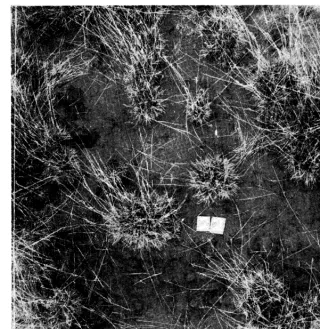
FIGURE 1. Vertical view of a 2% meter square quadrat.
ysis of the differences of each measure from the point method showed that only the line inter- cept was significantly lower for hard spinif ex, but clearly this has little practical significance. For this and other tests spinifex data were transformed to angles and the percent cover computed for each 10 m. length of transect, giving five such units in each of the eight transects.
An examination of the vari- ances (Table 2) shows that the line intercept method has the highest and the circular plots the lowest, but comparisons between
each of the methods did not re- veal significant differences. These tests were made by a method described by Morgan
(1939) in which correlations due to the observations being made at the same loci were taken into account.
A multivariate analysis of the hard spinifex data was next made. A test (Wilkes 1946) for homogeneity of variances and co-variances failed. The similar- ity of the variances suggests that this failure was due to co-vari- ances and so a test was made of the homogeneity of correlation Table 1. Mean percent cover for eight transects in fhe spinifex community.
Method
Rectangle Rectangle Line 5 cm. x 10 cm. x Inter-
Species Point Circle 2 cm. 4 cm. cept
~_____
Triodia basedowii 35.4 35.4 34.9 35.0 33.6
Plectrachne schinzii 0.4 0.3 0.4 0.3 0.1
Litter 4.0 4.6 4.2 4.8 5.7