by
Jennifer Tingen Tagsold
A dissertation submitted to the Graduate Faculty of North Carolina State University
in partial fulfillment of the requirements for the degree of
Doctor of Philosophy Curriculum and Instruction
Raleigh, North Carolina 2012
APPROVED BY:
_______________________________ ______________________________
Jenifer Corn Lori Holcomb McClaren
Committee Chair
________________________________ ________________________________
BIOGRAPHY
Jennifer came to the Triangle as a freshman at NC State and has lived in the area ever since. She recently got married and lives with her husband, Steve, in Raleigh. She is from Oxford, NC, and visits her beloved family often. In her free time, Jennifer enjoys working out, reading, piano, hiking, traveling, and serving with her church. Jennifer received a B.A. in Communication in 2005, and a M.A. in English in 2007. She has worked as an adjunct
instructor at various colleges around the Triangle.
Jennifer is grateful to be a part of the evaluation team at The William and Ida Friday Institute for Educational Innovation, working on projects such as the North Carolina
Learning Technology Initiative, IMPACT Model, Vance Schools 1:1 Learning Initiative, and Race to the Top. During this time, Jennifer also served on the editorial board of Meridian Online Journal and as president of Kappa Delta Pi International Honor Society in Education. Her research interests include distractive technologies, online education, and 1:1 learning.
ACKNOWLEDGMENTS
Thank You, God: You have sustained me through each goal I have pursued and through every trial along the way. Steve: last year when I married you one dream came true; one year later, you have helped make another dream come true. Your vibrant faith and kind heart continue to amaze me every day. To the best mother and father in the world: you gave me roots and wings. Your words, example, and Christ-like love guide me to this day. Thank you for never telling me I couldn’t! Jessi, precious sister: thank you for the constant laughs, friendship, and confidence in your big sis.
Dr. Lori Holcomb: we began this journey together as advisor-advisee and end the journey as colleagues and friends; thank you for connecting me with excellent professional opportunities, helping me to see that research is fun, and helping me navigate the doctoral waters. Dr. Jenifer Corn: you are an excellent supervisor, mentor, and friend; your kind advice, superb work ethic, and exquisite character will never be forgotten. I could work for you forever! Dr. Brad Mehlenbacher: your many suggested readings and great intellectual discussions helped to brighten my final days as a doctoral student. Dr. Kevin Oliver: you have been such a knowledgeable, friendly, and extremely helpful mentor. I hope to channel your brilliance through this process. Friday Institute colleagues: I thank you for your continual support and belief in me as you watched me grow from a baby research assistant into a mature doctoral candidate.
TABLE OF CONTENTS
LIST OF TABLES………. vii
LIST OF FIGURES……….. viii
CHAPTER ONE: INTRODUCTION……….. 1
Context of the Problem……… 1
Statement of the Problem………. 4
The Purpose and Research Questions……….. 5
Significance and Limitations………... 5
CHAPTER TWO: LITERATURE REVIEW……….. 7
Literature Review Logic Model………. 11
1:1 Learning and English Language Arts………...12
Self-Regulation Theory and 1:1 Learning………. 23
The Future of 1:1 Learning……… 30
CHAPTER 3: RESEARCH QUESTION AND METHODOLOGY……….34
Research Design……….34
Participants………. 38
Data Sources and Instruments……… 41
Procedures……….. 42
Data Analysis Procedures……….. 47
Trustworthiness……….. 47
Ethical and Political Considerations……….. 48
CHAPTER 4: RESEARCH FINDINGS……… 52
Students and Distraction Management………...52
Teachers and Distraction Management……….. 72
Observations………...84
Differences between AP/Honors and Traditional Students………... 91
Summary of Findings……… .97
CHAPTER FIVE: DISCUSSION………... .101
Themes………. 103
Critical Thinking and NETS………... .114
Theoretical Considerations………. .116
Implications……… .118
Limitations……….. .121
Recommendations for Future Research……….. .122
Conclusions………. .122
REFERENCES………... .125
APPENDICES……… .139
APPENDIX A: INFORMED CONSENT FORM FOR RESEARCH (PARENT/STUDENT)……… 140
APPENDIX B: INFORMED CONSENT FORM FOR RESEARCH (TEACHER……… .143
APPENDIX C: INTERVIEW PROTOCOL FOR STUDENTS……… .145
APPENDIX D: INTERVIEW PROTOCOL FOR TEACHERS……… .146
LIST OF TABLES
LIST OF FIGURES
Figure 1.1. Literature Review Logic Model……… .11
Figure 3.1. Diagram of Design………. .36
Figure 3.2. Observation Protocol………. .45
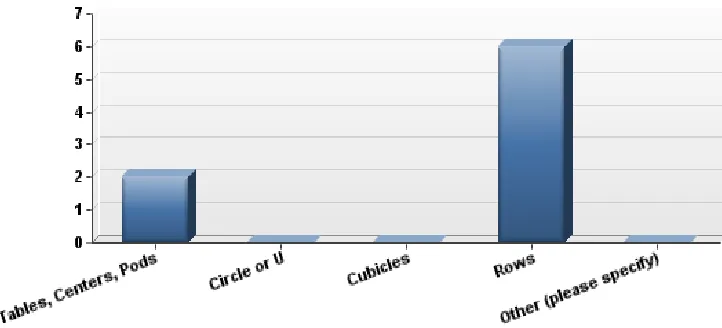
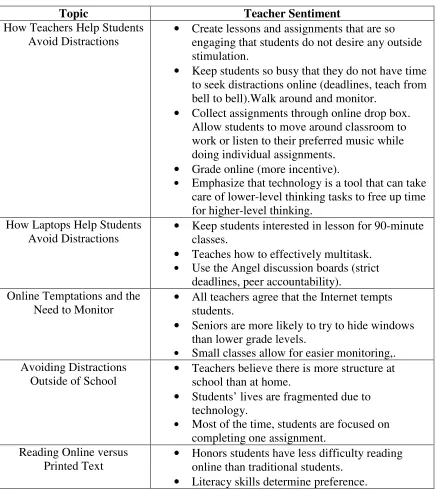
Figure 4.1. Design of classroom layout (n=8)………. .74
Figure 4.2. Designation of classroom observations (n=8)………... .84
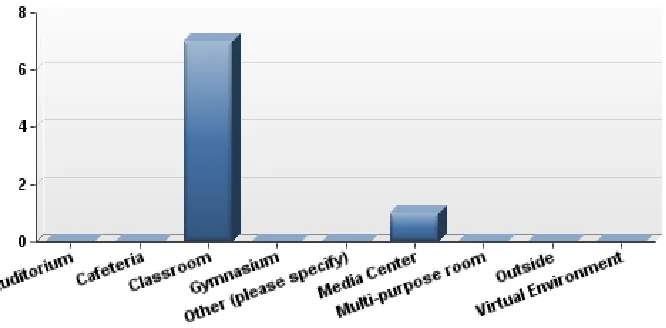
Figure 4.3. Designation of learning environment during observations (n=8)………….. .85
Figure 4.4. Designation of student grouping during observations (n=8)……… .86
Figure 4.5. Type of teacher activities during observations (n=8)………... 87
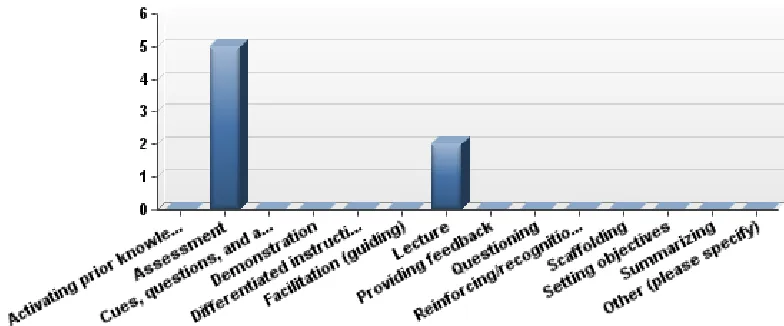
Figure 4.6. Type of assessment methods during observations (n=8)………... 87
Figure 4.7. Activity for which technology is used during observations (n=8)…………. 88
Figure 4.8. Technology hardware used during observations (n=8)………... 89
Figure 4.9. Technology software used during observations (n=8)………... 90
Figure 4.10. Engagement measures of AP/honors classes……… 93
CHAPTER ONE: INTRODUCTION
Sam has been using his new laptop for two weeks. He appreciates the shiny new tools available to him and gets a kick out of watching his teachers figure out how to use technology, but he finds himself constantly distracted. "Here Mr. Williams, I'm returning my laptop because I'm not getting any work done; if it’s not here to distract me, I will be able to
pay more attention to what you say in class.”
Mr. Williams enjoys having total access to myriad teaching tools through the new 1:1 laptop initiative, but he also has to learn to monitor his students. As his teaching became more tech-savvy and more directed at 21st century skill development, Mr. Williams develops a new goal: become more interesting than all the distractions available on his students’ laptops. After all,
if Facebook is more compelling than his lesson, what kind of teacher is he? Surely he can compete with social networking and other online activities…but how?
As a research assistant on a project that evaluates the 1:1 computing initiative in North Carolina schools, I have learned through surveys, interviews, focus groups, and classroom observations that most students easily adapt to the use of laptops in the classroom and experience positive effects on their entire learning experience due to laptop access (Bebell, 2005; Corn, 2009; Great Maine Schools Project, 2004; Lane, 2003; Lowther et al., 2007; Silvernail & Lane, 2004; Warschauer, 2006). One primary issue that keeps arising, however, is that of distraction. Teachers and students agree that monitoring software is excellent for helping students stay on task, which leads to a discussion of their struggle with distraction both in and out of school. This study seeks to enhance the field of instructional technology by exploring strategies that students and teachers use to maintain a focus on teaching and learning in a 1:1 environment when so many other options are available to distract the minds of the learners.
Nagel (2010) notes that 37% of school districts in the United States have
and access to the Internet at school (Penuel, 2006); and, a focus on using laptops for teaching and learning to meet certain goals (Muir, Manchester, & Moulton, 2005) such as increased equity of access to technology, transformed quality of instruction, increased student
engagement, improved academic achievement and technology literacy, increased economic competitiveness, and enhanced home-school connection. When a school district decides to implement a 1:1 initiative, students often discover that while laptops can enhance learning, they can also be a distraction during class.
Despite the positive impacts 1:1 initiatives can have on attendance and academic gains, there have been some reported drawbacks associated with these endeavors (Fried, 2008; Mathiasen, 2004). Some teachers have found that 1:1 immersion has negative effects on student behavior (Shapley et al., 2008). Teachers in one laptop program are concerned that the laptops are distracting and reduce student attention. They are dissatisfied with the lack of student adherence to acceptable-use policies and have difficulty getting students to bring their laptops to class (Mann, 2008). A lack of evidence of positive impact on learning combined with student misuse of laptops (e.g., cheating on tests, downloading pornography, and hacking into school and local business networks) can negatively impact a 1:1 initiative and the community surrounding it (Holcomb, 2009). Since students are reading, playing, messaging, and learning on the Internet now more than ever, research is needed to examine the impact of distractive technology on student distraction in a 1:1 environment.
first launched by the International Society for Technology in Education in 1998 as a response to the need for national technology standards. The primary goal of the NETS is to enable stakeholders in PK–12 education to develop national standards for educational uses of technology that facilitate school improvement. The NETS also help measure proficiency and set goals for what students (NETS*S), teachers (NETS*T), and administrators (NETS*A) should know and be able to do with technology in education (International Society for Technology in Education, 2010a). The NETS*S focus on higher-order thinking skills and ensuring that students can effectively participate in a digital citizenship. Major tenets of the NETS*S include:
• Creativity and Innovation
• Communication and Collaboration • Research and Information Fluency
• Critical Thinking, Problem Solving, and Decision Making • Digital Citizenship
• Technology Operations and Concepts. International Society for Technology in Education, 2010.
These skills align closely with those of the 21st century skills movement.
The Framework for 21st Century Learning illustrates a view of learning in the 21st century that is focused on: student outcomes (life and career skills, learning and innovation skills, and information, media, and technology skills) undergirded by support systems such as learning environments, professional development, and curriculum design (Partnership for 21st Century Skills, 2003).The six major tenets of 21st century learning are:
• Emphasize core subjects • Emphasize learning skills
• Use 21st century tools to develop learning skills • Teach and learn in a 21st century context, • Teach and learn 21st century content
Century Skills [P21], 2003
Understanding 21st century skills is essential for today’s high school graduate. The 21st century skills framework will be referenced throughout this study as I explore the topic of student distraction in 1:1 learning environments.
Topic and Purpose
This qualitative study will address strategies students and teachers use to avoid student distraction in a 1:1 learning environment. The purpose of this study is to explore participant views with the intent of understanding how students and teachers manage distraction in a 1:1 environment. The study explores teacher and student self-regulatory experiences by collecting interview data with a sample of four English language arts teachers and four students per teacher at one North Carolina high school currently implementing a 1:1 initiative.
Statement of Problem
K-12 education research has become increasingly concerned with technology’s
impact on student attention in the classroom, particularly with regard to laptop computers and other mobile devices (Gay & Hembrooke, 2004; Jackson, 2008; Mann, 2008; Kraushaar & Novak, 2010). While this classroom technology has created many positive implications for teaching and learning, few scholars have examined specific, practical approaches students and teachers use to avoid distraction. There has been no study to date examining the
Methods Overview
The researcher follows the multiple-case study design, a commonly used method for studying school innovation (Yin, 2003).The study answers the question, “How do students and teachers manage distraction in a 1:1 environment?” through qualitative methods, including interviews and classroom observations completed on location in the school environment. Sub questions include:
1a. How do English IV students manage distraction when working with technology? 1b. How do English IV teachers help students manage distraction when working with technology?
1c. How do these experiences differ based on achievement level (honors vs. non-honors)? Data analysis will include thematic content analysis (Creswell, 2007) in which the researcher will categorize and distill from the data a list of common themes that reflect the experience of all participants.
Definition of Terms
Distraction: source of reduced attention in class that can lead to negative effects on student learning and behavior (Mann, 2008; Shapley et al., 2008)
1:1 environment: an environment in which a personal digital wireless device with up-to-date software and access to the Internet is distributed to every student and teacher (Corn, 2009; Penuel, 2006)
Significance and Limitations
1:1 environment when so many other options are available to distract the minds of the learners. This study contributes to a deeper understanding of the distractive nature of laptops in the classroom. Through qualitative data collection and analysis, this study expands the field of instructional technology and can potentially increase the effectiveness of teachers and students so they may excel in school. By employing the techniques that students say work best for avoiding distraction, teachers can hypothetically prepare their students for a lifetime of uninterrupted learning.
CHAPTER TWO: LITERATURE REVIEW Benefits and Drawbacks of 1:1 Learning
The aim of this study was to discover ways in which English IV teachers and students manage student distraction in 1:1 learning environments. Because of digital media’s impact on learning styles, researchers must examine the fruits of laptop initiatives and how these help student navigate the non-linear world of the Internet and its similarities to the
“associational network of human long-term memory” (Dede, 2005, p. 5). There are numerous factors that play a role in 1:1 learning, particularly with regard to distraction avoidance. A brief history of 1:1 computing will provide the reader with a clear picture of the evolution of this 21st century learning environment.
There have been numerous lessons learned from research conducted around 1:1 initiatives over time. Rockman, Chessler, and Walker (1998) discovered that students with laptops spent more time using computers, were likely to use their computers more in public school than private school, did more collaborative work, had higher quality writing,
experienced improved critical thinking, and took on different roles (along with teachers). Cuban, Kirkpatrick, and Peck (2001) sought to explain why so many high-tech schools have low technology usage, which remains an issue to this day (particularly for initiatives in their early stages). Findings indicate that most teachers used the technology infrequently and in limited ways due to four factors: historical legacy of teaching high school as we know it,
limited time, the way the school day was structured (six periods per day), and defects in the
technologies (Cuban, Kirkpatrick, & Peck, 2001). One of the first major 1:1 projects was
(2004) sought to examine how the laptops were being used, the impacts of the laptops on teachers and students, and obstacles encountered in implementing the laptop program, leading researchers to discover that although student learning increased and improved, issues with professional development arose due to lack of sufficient time for teachers to learn technical skills for using laptops. Bonifaz & Zucker (2004) culled lessons learned from laptop initiatives around the country and established that aligning technology policies and supports with goals, building strong leadership at all levels, developing solid partnerships both inside and outside the school system, thinking about funding for the long term, planning logistical details carefully, providing professional development that focuses on curriculum integration and not just technical skills, training parents on basic technical skills and
informing them about rules/policies involved, providing necessary infrastructure and digital content, managing change, and monitoring and evaluating the initiative are essential pieces of the 1:1 learning puzzle. Penuel (2006) found that teachers’ attitudes and beliefs, along with infrastructure, play a central role in how and when teachers integrate computers into their instruction. As 1:1 initiatives expanded across the country (and world), researchers became more and more interested on technology’s impact on student achievement, particularly with testing demands being made on teachers. Lei & Zhao (2007) found that three hours per day of technology use was a critical point; the more time students spent on computers, up to three hours per day, the more their GPA increased. Differences in GPA gains and losses support the notion that the type of activities teachers use affects achievement. A review of
knowledge base regarding learning in high-tech environments where online distractions are an everyday occurrence.
A discussion of the positive and negative components of 1:1 learning will help reveal some of these fruits. Positive outcomes of 1:1 learning include enhanced student learning and engagement (Bebell, 2005; Great Maine Schools Project, 2004; Lane, 2003; Lowther, Strahl, Inan, & Bates, 2007; Silvernail & Lane, 2004; Warschauer, 2006), motivation (Harris & Smith, 2004; Mitchell Institute, 2004; Silvernail & Lane, 2004), achievement (Cavanaugh, Dawson, White, Valdes, Ritzhaupt, & Payne, 2007; Lowther et al., 2007), attendance (Harris & Smith, 2004; Lane, 2003; Silvernail & Lane, 2004), discipline (Corn, 2009; Silvernail & Lane, 2004;), and 21st century skills (Cavanaugh et al., 2007; Corn, 2009; Lowther et al., 2007; Mitchell Institute, 2004; Shapley et al., 2008). Results from 1:1 initiatives have also shown an increase in students’ math and writing skills (Bebell, 2005; Warschauer, 2006). Classroom teachers report benefits of 1:1 learning such as improved technology knowledge and skills, increased assistance with technology questions and problems, and improved classroom management (Fairman, 2004).
Although some results of 1:1 laptop initiatives show improvement in student learning and teacher use, factors other than the distribution of laptops contribute to successful
1:1 Learning and English Language Arts
Researchers have shown that English language arts instructors are continually one of the forerunners in high usage when schools implement laptop initiatives (Corn, 2009; Corn, Halstead, Tingen, Townsend, & Campbell, 2010). Unfortunately, there has not been a great deal of research on 1:1 learning and its effects on English language arts classes. There is, in fact, a lack of research regarding technology integration in English courses in general (McNabb, 2005). Multiple studies have emphasized the effect of 1:1 learning on learning English as a second language (Towndrow & Vaish, 2009; Yang & Huang, 2008; Lin & Wu, 2010). Yin and Wu (2010) found, for example, that netbooks encourage the instructor to design more innovative learning activities, provide students with more opportunities to practice listening and speaking, and increase engagement and confidence in learning a new language (Yin & Wu, 2010). While this information is useful and complements the purposes of this research, it does not provide a great deal of useful information for the sought-after population of 1:1 English language arts students.
Along with a lack of research on 1:1 learning and its effects on English language arts classes, there is also a dearth of literature investigating high school laptop initiatives and their effects on high- and low-achieving English language arts courses. Wurst, Smarkola, &
toward writing, decrease the number of errors in grammar and style, and write longer passages (Haynes, 1996). The two populations in these studies (university-level and middle school) have frequently been used in 1:1 learning research and, like the English language learning population, complement the purposes of this research but still lack insight about the high school population that is sought.
Instructional Practice
Teachers involved in 1:1 initiatives tend to develop new instructional practices as they become more familiar with the technology. Rochette (2007) noted that once given a SMART Board and laptops, her teaching becomes re-energized and she is able to grasp the possibilities available when one operates with a “Why not?” attitude. Rochette began
redesigning her lessons and discovered a renewed vision for composition, how to implement close reading of both literature and art work, and the benefits of blogging in an
interdisciplinary American Studies class. Stories like Rochette’s are heard all across the country as teachers realize the level of engagement that is possible when they include digital media and laptops in their lessons (Corn, 2009). Other fun activities for which English teachers use their laptops include digital storytelling (Lambert, 2002); engaging multimodal texts to enhance reading comprehension (McKenna, 1998); creating student election
The concept of New Literacies has stormed English teachers the world over. Leu, Kinzer, Coiro, & Cammack (2004) define New Literacies as
skills, strategies, and dispositions necessary to successfully use and adapt to the rapidly changing information and communication technologies and contexts that continuously emerge in our world and influence all areas of our personal and professional lives. These new literacies allow us to use the Internet and other ICTs to identify important questions, locate information, critically evaluate the usefulness of that information, synthesize information to answer those questions, and then communicate the answers to others (p. 1570).
Leu et al. (2007) admit that this definition will continually change; as new technologies appear, new literacies will emerge.
English language arts experiences. This type of lesson can reignite learning for both teachers and students.
Researchers are acknowledging that video technology is here to stay and falls outside the typical domain of reading-to-write activities used in the English classroom. Pino-Silva (2007) discussed a listening-to-write task called the video-based short comment, an exercise that aids skills integration and critical thinking for English as a Foreign language (EFL) students. Another popular tool used in English courses and other subject areas from elementary grades through college is VoiceThread, a tool that allows users to create multimedia slide shows that utilizing images, documents, and videos and allows people to navigate slides and leave comments in five ways (Barnes, 2011).
The gap in literature addressing 1:1 computing in high school and English language arts reveals a need for further research. The study of technology’s impact on American students is imperative, particularly in a world where digital media encourages multitasking and includes “seeking, sieving, and synthesizing, rather than on assimilating a single ‘validated’ source of knowledge as from books, television, or a professor lecturing” (Dede, 2005, p. 4-5). Due to the fresh, multimodal nature of learning engendered by laptops, a study involving English language arts students within a high school implementing 1:1 computing is of the utmost relevance and significance for the field of instructional technology.
Improved Teaching, Depending on … Pedagogy
lesson plans (Antonietti & Giorgetti, 2006; Churchill, 2006; Ertmer, Addison, Lane, Ross &Woods, 2000; Penuel, 2006). In addition to school and district support, teachers should support laptop learning in the classroom and have access to professional development or tools to aid them in integrating laptops into lesson plans (Kleiger Ben-Hur & Bar-Yossef, 2010; Penuel, 2006; Silvernail & Lane, 2004; Weston & Bain, 2010). In his three-year study, Rockman (2000) found that teachers who use laptops report a statistically significant change in practice towards constructivist teaching when compared to matched non-laptop teachers. Fairman (2004) supported this notion in her state-wide MLTI study titled “Trading Roles: Teachers and Students Learn with Technology.” Fairman found that principals and teachers report an “increased use of an inquiry approach as opposed to memorization and practice; increased use of interdisciplinary or integrated approaches; increased use of cooperative or collaborative structures for learning and increased use of differentiated or individualized learning tasks” (p. 18). Teachers have shifted roles, moving from the sage on the stage who lectures to the whole class into facilitators and coaches (Cavanaugh et al., 2007; Fairman, 2004; Lowther et al., 2008). Professional development experiences can enhance teachers’ technology knowledge and skill level and therefore improve the use of laptops in the classroom as well as teacher attitudes toward the technology (Kanaya, Light & Culp, 2005; King, 2002; Maninger & Holden, 2009; Swan & Dixon, 2006; Swan, Kratcoski, Mazzer & Schenker, 2005). Teacher support is imperative with regard to successful 1:1 learning.
laptop technology initiative, and the amount of required professional development. In an examination of technology and pedagogy, McGrail (2007) established that negative
outcomes resulting from the laptop initiative include social isolation, limited communication with a teacher or peers, and off-task behavior. Reasons for these outcomes include limited physical space, cumbersome furniture, poor technology infrastructure, and the largely instrumental use of technology in numerous learning engagements. Scholars from Singapore found that students rarely explore new media as alternative sources of legitimate knowledge and miss opportunities to investigate mobile technologies as sites for meaning-making and knowledge construction (Towndrow & Vaish, 2009). Ultimately, McGrail (2007) suggests that administrators address the physical constraints in each laptop classroom and enhance professional development so that pedagogy is a higher priority than technology, rather than putting technology before pedagogy. Teachers are challenged to design language learning and assessment tasks that embrace a wider set of twenty-first century skills (Towndrow & Vaish, 2009) and higher order thinking (Yang & Huang, 2008), rather than attempting to make yesterday’s teaching methods fit today’s technology.
Beliefs and Attitudes
An examination of teacher beliefs and attitudes leads to a more thorough
understanding of their role in 1:1 learning. Mathiasen (2004) concludes a three-year study by saying, “From a pedagogical perspective, the question of whether teaching is enriched when all students have a laptop in front of them is debatable” (p. 289). Furthermore, Schofield (1995) discovered that when teacher goals and beliefs are not aligned with supporting
Garthwait & Weller (2005) supported this research through a case study of two teachers which explored how teacher beliefs impact technology implementation. Overbay, Vasu, & Grable (2010) established that constructivist practices and beliefs are significant predictors of technology use in the classroom. Russell, O'Dwyer, Bebell, & Tao (2007) found that teachers who were new to a school typically use technology with students less frequently than
teachers who have been at the school for three to ten years. This is likely due to the time it takes for newer teachers to adjust to the curriculum and school culture. Further, student use of technology during class does not significantly differ based on the number of years teachers are in the profession (Russell et al., 2007). Seglem (2009) discovered that rhetorical
boundaries are embedded in the culture surrounding technology initiatives; when schools do not conform to traditional standards, the public often feels that schools are losing the
qualities that make them institutions of learning. Seglem noted that the rhetorical boundaries are formed by three categories: perceptions of student behavior, perceptions of technology, and perceptions of school’s role in society. This same concept applies to technology initiatives because they do not conform to traditional methods of learning, teaching, or materials with which these are conducted. Issues such as these have led to numerous
suggestions and programs for professional development in a technology-rich context (NC 1:1 Learning Collaborative, 2011). Teacher attitudes and beliefs have a profound impact on both teaching and learning in high-tech classrooms.
TPACK
model of teaching. Teachers have always had to adapt to new technologies; Plato, for example, believing the technology of writing would cause people not to trust their own memory, is just one example of the way humans have adapted over time regarding the implementation of new technologies. Koehler and Mishra seek to break down the false dichotomy between pedagogy and technology. Knowing about teaching does not exclude teachers from learning about and taking part in professional development so they may understand better and more relevant ways of teaching. In a similar vein, knowing about technology does not exclude them from continual learning about new educational
technologies. Koehler & Mishra use the word “satisficing” because it is a combination of satisfying and sacrificing; satisfying a technology requirement, for example, may result in sacrificing part of a lesson plan (p. 11). Many 1:1 teachers know the true meaning of the word “satisficing” and have learned that it comes with the territory when one’s district rolls out a technology initiative. This perfectly represents the concept of accepting a solution because it is the best one can do under the circumstances.
Student Learning
knowing how to explore the Internet, find necessary information, and share that information with others. When a school begins a laptop initiative, digital literacy skills (or lack thereof) are some of the first, and most relevant, to surface. Skills such as these are necessary for students who are growing up in high-tech worlds. The research suggests 1:1 initiatives provide numerous benefits for student learning; this study focuses on how students manage one of the negative outcomes of anytime, anywhere access: distraction.
Assessment
Laptop initiatives both affect and are affected by assessment methods in the school. There is evidence that students in 1:1 middle school classrooms have statistically significant improvements in English language arts achievement, but not in Mathematics (Shapley, 2008; Silvernail, 2008). Results similar to these have been reported concerning 1:1 initiatives and assessment of English language arts skills (Holcomb, 2009). Rosen (2011), however, investigated the effect of the Time to Know (T2K) program on student achievement and found that T2K students significantly outperform comparison groups. Results like these, along with evidence of improved 21st century skill knowledge (Corn, 2009) and increased student engagement (Bebell, 2005; Great Maine Schools Project, 2004; Lane, 2003; Lowther et al., 2007; Silvernail & Lane, 2004; Warschauer, 2006) lead one to ponder the source of teacher attitudes toward assessment and 1:1 learning.
There is more evidence that laptop initiatives can improve certain skills. Suhr,
Hernandez, Grimes, & Warschauer (2010) investigated the impact of laptops on standardized test scores of upper elementary students, a group that often faces a slowdown of literacy development during the transition from learning to read to reading to learn known as the "fourth-grade slump" (p. 4). The researchers found that after two years' participation in the program, laptop students outperformed non-laptop students on changes in the ELA total score and in the two subtests that correspond most closely to frequent laptop use: writing strategies and literary response and analysis (Suhr et al., 2010). Rosen (2011) investigated the effect of the Time to Know (T2K) program on student achievement. This program includes a structured mathematics and English language arts curriculum of guided learning sequences for elementary schools that included open-ended applets and discovery environments,
multimedia presentations, practice exercises, and games along with 1:1 laptops. T2K students significantly outperformed comparison groups on the reading assessment and math reasoning assessment. Evidence such as improved skills and test scores suggests that technology has an effect on learning particular skills.
limited regarding how much of an impact online distractions have on test scores (Bugeja, 2008); perhaps this study will shed some light on the topic of online distraction and student achievement.
Self-Regulation Theory and 1:1 Learning
A discussion of self-regulation leads to a better understanding of distraction
avoidance (Heckhausen & Dweck, 1998; Mischel, Shoda, & Peake, 1988). Self-regulation is defined as “how a person exerts control over his or her own responses so as to pursue goals and live up to standards” (Baumeister & Vohs, 2004, p. 500). Human beings develop self-regulation through cognitive strategies that make learning more effective. These strategies can be enhanced through instruction; the goal of self-regulation training is “to enhance learners’ control over their own learning” (Svinicki, 2010, p. 75).
emotional "go" system which affects the way humans perceive the world; stress, developmental level, and one’s self-regulatory dynamics determine the balancing act
between what’s “hot” and what’s “cool” (Metcalfe & Mischel, 1999). Temporal discounting (viewing rewards as hot or cold) invites one to visualize a long-term reward (e.g., a slim figure) as “hot” to make it outweigh a “cool” short-term reward (e.g., ice cream) (Smoyak, 2009). Students may be experiencing so much distraction in 1:1 initiatives due to tempering certain online activities as hot (i.e. Facebook) and others as cool (in-class assignment). The research will pursue the possibility that it is students’ perceptions of online distractions which leads them to be tempted or not.
assert that managing attention may be the most effective approach to self-regulation. This study attempts to find out how much of a role self-regulation plays in making effective academic decisions in a 1:1 learning environment.
Jackson (2008) writes, “Amid the glittering promise of our new technologies…we are nurturing a culture of social diffusion, intellectual fragmentation, sensory detachment” (p. 13).The object of one’s focus changes the brain (literally) as well as behavior (Gallagher, 2009). Posner’s theory of attention will be used to guide the researcher’s understanding of humans’ ability to pay attention in learning environments. Posner asserts that the human capacity to process information is selective and limited (Posner, 1982). Posner’s research focuses on the connection between performance, subjective experience, and neural systems. Posner asserts that the orienting network is the flashlight that directs our focus; the alerting network relates to wakefulness; and the executive network is at the heart of controlling attention (and oneself) (Posner & Boies, 1971; Posner & Rothbart, 2007). An emphasis on these three components will help the researcher to consider all of the key components of human attention when analyzing data regarding distraction in a 1:1 learning environment. How Students Avoid Distraction in High-Tech Learning Environments
More and more machines are present in students’ lives, and they must be vigilant to learn successful uses of new gadgets and platforms (Turkle, 2011). Students report that laptops help them to take control of their own learning (Wooten, 2009) and help them learn 21st century skills, such as life and career skills which include self-direction and social skills (Corn, 2009). Gay & Hembrooke (2004) established that ubiquitous computing is associated with high levels of temptation and addiction and tends to divert student attention from classroom activities.
Further evidence helps to explain the multitasking strategies of students in a 1:1 learning environment. In one study, students with laptops spend considerable time
There is a gap in the literature regarding gender and distractive technologies. Gender differences in male and female computer use have always existed; traditionally, males have had more positive attitudes, higher ability, and used computers more than females (Kay, 1994). Males tend to use computers more than females (Ching, Basham, and Jang, 2005) and tend to interact with the Internet, spreadsheets, presentation software, and games
significantly more often than females, but word processing and e-mailing are gender neutral (Finn & Inman, 2004). Kay (2011) found that females reported significantly more note-taking and participation in academic laptop-based activities than males; females were more distracted by their peers' use of laptops than males, whereas males reported that they played significantly more games during class. One study investigating university students'
problematic Internet use (PIU) levels found that females had significantly lower PIU levels on all dimensions (i.e., social comfort, loneliness/depression, diminished impulse control and distraction) than those of males (Tekinarslan & Gurer, 2011). This finding is echoed in other literature that suggests males are three times as bad at multitasking than females; researchers note that when multitasking, one’s IQ drops below that of someone who has smoked
suspects that teachers in this study will utilize techniques such as using new technologies or music to aid student distraction
Monitoring Software
Numerous schools involved in 1:1 initiatives use monitoring software to ensure that students stay focused on the lesson being taught. This will not play a role in the study, because no teachers will use monitoring software. Internet browsing, chatting tools, and online gaming are typically the most prominent activities that students are involved in when off-task (Corn, 2009). Popular types of monitoring software include Eduplatform, E-Chalk, and DyKnow. If a school decides to use monitoring software, the district must ensure that the software is able to handle the volume of laptops required for school-wide implementation (Corn, 2009).While North Carolina teachers note positive aspects of 1:1 learning like student engagement and active learning opportunities, they also acknowledge that negative aspects of 1:1 learning include increased teacher workload and issues related to monitoring and
managing classroom behavior (Corn, 2009).
Some issues occur when monitoring software blocks sites that are useful for teaching and learning. In the past, software blocked sites based on particular words; a site could be harmless for studying biology, for instance, but the word “sex” could cause it to be blocked on students’ computers. Barseghian (2011) received some answers that may comfort
blocked by filters, and “teachers’ professional judgment should be trusted” (Barseghian, 2011). One highly recommended monitoring software, DyKnow, offers features such as group chat, teacher viewing of each student’s computer, teacher viewing of how students take tests, and freezing every computer to gain students’ attention (Donnalley, 2011). Teachers have commented on DyKnow’s ability to hold students accountable, engage students every day, gain teaching time, and energize the classroom (Donnalley, 2011). Although it is important to understand the impact of monitoring software, the researcher is selecting a school that does not utilize monitoring software.
The Future of 1:1 Learning
After reviewing the benefits and drawbacks of 1:1 learning, one can see that the benefits are too enticing to discount the concept altogether. The customized, engaging, vivid world that high-tech classrooms afford will only continue to enhance teaching and learning.
Educators have learned many lessons through 1:1 computing, including various methods of carrying out student-centered activities (Lowther, Strahl, Zoblotsky, & Huang, 2008), such as authentic learning (Lowther et al., 2007), experiential, hands-on learning activities (Lowther et al., 2008), and project-based learning (Cavanaugh et al., 2007; Lowther et al., 2007; Lowther et al., 2008). They have also learned that students not only get more excited about learning when it involves technology (Lowther et al., 2007), but more creative as well (Corn, 2010). Inventive projects include digital storytelling (Lambert, 2002);
also the teachers. Rochette (2007) found that once given a SMART Board and laptops, her teaching became re-energized and she began to grasp the possibilities available when one operates with a “Why not?” attitude.
Educators have been made aware of what Dede calls “neomillenial” learning styles (2005). These include: (1) fluency in multiple media and in simulation-based virtual settings (2) communal learning involving diverse, tacit, situated experience, with knowledge
distributed across a community and a context as well as within an individual (3) a balance among experiential learning, guided mentoring, and collective reflection (4) expression through non-linear, associational webs of representations; and (5) co-design of learning experiences personalized to individual needs and preferences (2005). Emphasizing these learning styles is especially important for students who easily discard relationships much like they would a video game character or Facebook friend; Jackson (2008) calls this group “the undo generation” because they have always had the option to undo electronic mistakes (p. 59). Alan November suggests that a necessary skill for 21st century students is empathy; this includes global sensitivity developed through social media and tools like Skype (2011). As teachers become sensitive to neomillenial learning styles, they will come to view technology initiatives in a whole new light.
(Anderson et al., 2011). Research has shown that iPads are useful in improving digital literacy skills (Meurant, 2010) and have been used as a less expensive way to move forward with a 1:1 initiative (Steff & Beers, 2011).
The cell phone is another device likely to be observed in classrooms a decade from now, with a different look than the current model (as cell phones today have a much different appearance than a decade ago). Because students are more likely to own a cell phone than have Internet access at home, schools will likely integrate mobile learning even more fully into the classroom (Rogers, 2011b); research has shown that cell phones can be used for blogs, social media , enhancing student motivation, and achievement (Prensky, 2005). Other mobile learning devices gaining popularity include the iPod Touch, iPod, MP3 players, Nintendo DS, Sony PSP, and eReaders (Rogers, 2011a). These devices can make classes more interactive and engaging, and are not as heavy as a laptop, which have led some students to experience back and neck pain (Fraser, 2002), when beginning a laptop initiative (Corn, 2009). Mobile learning devices often surprise educators during implementation. One librarian, for example, found that students loved their Kindle eReaders for the instant access to requested books as well as the level of privacy afforded by the Kindle; teens were able to check out books that they may not have wanted their friends to know they were reading (Barack, 2011).
century skills they need to compete in a worldwide economy. One to one learning will indeed help the disadvantaged “become connected to each other, to the world and to a brighter future” (One Laptop Per Child, 2011).
CHAPTER 3: RESEARCH QUESTION AND METHODOLOGY
The purpose of this study is to discover strategies that students and teachers use to help students avoid distraction in a 1:1 setting. This chapter provides a description of the research question and methodology for this study. Because 1:1 learning has such an impact on student distraction, the primary research question under investigation is: How do students and teachers manage distraction in a 1:1 environment?
Sub questions include:
1a. How do English IV students manage distraction when working with technology? 1b. How do English IV teachers help students manage distraction when working with technology?
1c. How do these experiences differ based on achievement level (honors vs. non-honors)? Research Design
The aim of this study is to discover ways in which teachers and students manage distraction. Due to the nature of the research question, a qualitative orientation to the project is preferable over quantitative research and its reliance upon predetermined evaluation instruments. Research designs of studies in school settings are often guided by the qualitative research tradition, which allows the researcher to “enter and spend considerable time in schools…learning about educational concerns...the data are collected on the premises and supplemented by the understanding that is gained by being on location” (Bogdan & Biklen, 2003, p. 4). The researcher chose the sample school because she could make multiple visits to gain a clear picture of the school culture. The researcher chose a qualitative approach for these reasons and for the fact that studies utilizing quantitative methodologies have
approach if he or she has clearly identifiable cases and seeks to provide an in-depth understanding of the cases (Creswell, 2007). One may also wish to compare several cases, such as two classrooms that are experiencing the same program; this study compares multiple classrooms, teachers, and students experiencing a 1:1 initiative. This allows the researcher to thoroughly explore the clearly identifiable cases which include both AP/honors and
Qualitative Data Collection Qualitative Data Analysis Procedures: • One-on-one
semi structured interviews will answer RQ 1a and RQ 1b • Classroom
observations using LoFTI will answer RQ 1c
Products: •Transcripts •LoFTI Data •Journal
Procedures: •Coding • Thematic development
Products: •Coded text •Themes
Procedures: •Summarize dimensions
Products: • Description of dimensions •Application of Themes Interpretation
RQ: How do students and teachers manage distraction in a 1:1
environment?
1a. How do English IV students manage distraction when working with technology?
1b. How do English IV teachers help students manage distraction when working with technology?
1c. How do these experiences differ
The researcher must put forth a great deal of effort selecting the case amongst several that might be possible candidates (Creswell, 2007). The sample school was selected because they are the recipients of a highly refutable technology grant which provided laptops for each classroom. The researcher is choosing no more than three to four classes in which to collect observation and interview data because “the more cases an individual studies, the less the depth in any single case” (Creswell, 2007, p. 76). Yin (2003) criticized those who argue against generalizing from a single case; she asserts that case studies are “generalizable to theoretical propositions and not to populations or universes” (p. 10). The researcher used the data to generalize to theoretical propositions, such as the strategies students and teachers use to manage distraction in a high-tech learning environment.
External Factors
Bussey and Bandura (1999) discuss the agentic sociocognitive view in which “people are self-organizing, proactive, self-reflective, and self-regulating, and not just reactive
organisms shaped and shepherded by external events” (p. 691). This view suggests that controlling one’s thoughts and actions is a mechanism of personal agency. In a 1:1 learning environment, however, one must consider that external factors such as instructor strategies or monitoring software may play a role in preventing student distraction. The study seeks to discover the role that instructor strategies play in managing student distraction. Gay &
and norms for computer mediated communication environments as well as how researchers and designers can provide structure and guidance for participants (Gay & Hembrooke, 2004).
Participants
High school students and teachers from one western North Carolina school currently involved in a 1:1 initiative make up the sample. This school is a recipient of the IMPACT grant, which provides schools with a model for technology integration, with components such as: having a full-time technology facilitator and media coordinator in place; developing a school-wide focus on flexible access to computer labs, mobile computer carts, and libraries; a 1:1 setting in some cases; and collaborative planning (Mollette et al., 2011). The overall goal of the IMPACT model focuses on integrating technology into teaching and learning in North Carolina K-12 schools, with hopes that the model makes a significant difference in student achievement, improves teaching practices, and better prepares students for work and life in the 21st century (Mollette et al., 2011). The research site distributed Dell-mini laptops in the spring of 2010 to teachers and to students in the fall of 2010. Students are allowed to take laptops home; however, the in-school filters also apply to the laptops when used at home. The school has a full-time technology facilitator along with a full-time technician who are available throughout the day to help students with laptop issues. Teachers were provided with professional development funding so they could learn more about how to implement the technology. A technology team helped the teachers prepare for the new style of teaching that stems from laptop initiatives.
Interview data was collected from a sample of sixteen high school students and three high school teachers at one North Carolina high school currently implementing a 1:1 initiative. Nineteen total interviews (sixteen students, three teachers) and six classroom observations were conducted for this study. NC School Report Card data from the 2009-2010 school year reveals that there are less than 1,000 students and less than 100 teachers at the research site (2011). One hundred percent of classrooms are connected to the Internet, and due the IMPACT grant, every student has a laptop. Each teacher has professional development opportunities to enhance their knowledge about teaching with technology (Mollette et al., 2011).
Criteria for teacher selection include being an English language arts teacher of twelfth grade students in the sample high school who was willing to be interviewed and observed. The researcher sought a classroom sample in which group-based, self-directed, and teacher-led activities were taking place. Teachers were made aware of this through an e-mail notification and agreed to conduct these types of lessons on the days the researcher was present to conduct classroom observations.
Participants were chosen from AP/honors and traditional English language arts classes for numerous reasons, such as the student’s need to utilize different texts for different purposes; online versus printed reading preferences; the required nature of the course for all students; and the option to investigate AP/honors and traditional students. Along with
learning New Literacies and video technology, English teachers are discovering that the tools and resources available through the Internet lend themselves to the subject of English
language arts. Students have to locate, respond to, and evaluate information in a much more active way than they have historically done. Because English teachers have traditionally discussed language and the way texts influence each other, they may find it easier to
study. Coiro and Dobler (2007) discovered that reading online includes similar components one would use when reading printed texts, such as prior knowledge sources and inferential reading strategies. A third element, self-regulated reading processes, could help explain how reading online could require more complex skills (Coiro & Dobler, 2007). As leaders
navigate appropriate amounts of agency teachers should have in planning, English language arts practices in 1:1 learning environments warrant further study as teachers adapt to new meanings of literacy and language (Jarzab, 2003).
The researcher remained aware of issues such as the benefits of research to the participants over risk, deception or covert activities, and protecting the anonymity of the informants (Creswell, 2007). The researcher was particularly attuned to the emergent design that is a key part of qualitative research; this means that the phases of the process may shift after data collection begins (Creswell, 2007).
Data Sources and Instruments
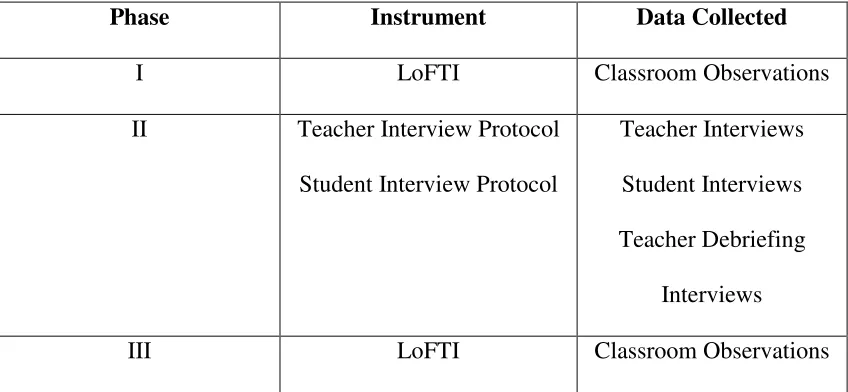
The study was conducted in three phases. Phase I and III consist of classroom
Table 3.1
Summary of data sources and instruments.
Phase Instrument Data Collected
I LoFTI Classroom Observations
II Teacher Interview Protocol Student Interview Protocol
Teacher Interviews Student Interviews Teacher Debriefing
Interviews
III LoFTI Classroom Observations
In Phase II of the study, the researcher used a semi-structured interview schedule featuring open-ended questions (see protocol below) to gather comparable data across participants (Bogdan & Biklen, 2007; Fontana & Frey, 2000). All interviews were audio taped and transcribed for data analysis. Teachers and students were approached during a face-to-face interview with the researcher. The researcher explained the scope of the study and asked permission to include the participants in the study. If participants agreed, they were given a hard-copy of the informed consent form and asked to sign the form if they wished to participate.
Procedures
related distraction while they provide instruction and how students manage technology-related distraction while they learn. By selecting multiple styles of classroom activity, the researcher can begin to decipher the relationship between laptop use and distraction (Fried, 2008). Because certain lessons have a more distractive nature than others, the researcher seeks to observe two types of lessons from each teacher. This way, one may gauge distraction management in light of two different activity models.
The researcher conducted interviews with 16 students and three teachers. Following the last round of classroom observations, the researcher debriefed with each teacher to ensure the trustworthiness of her interpretations. Both forms of data were discussed using code numbers for the students and code letters for the teachers. The observational data from the classroom visits is not identified by student or teacher name. Participants were assigned a random letter to allow the researcher to differentiate between the participants. The master key for the code is kept in an online, password-protected folder to which only the principle
investigator has access. Efforts were taken to ensure anonymity to the level possible. Incentives for teacher participation include one $25 Amazon gift card per teacher. Incentives for students include entrance into a drawing with a chance to win a $25 gift card. Winners included one student and every teacher who participated in the study by agreeing to be interviewed. Students had to complete one interview to win, and teachers had to complete both the first interview and the debriefing interview.
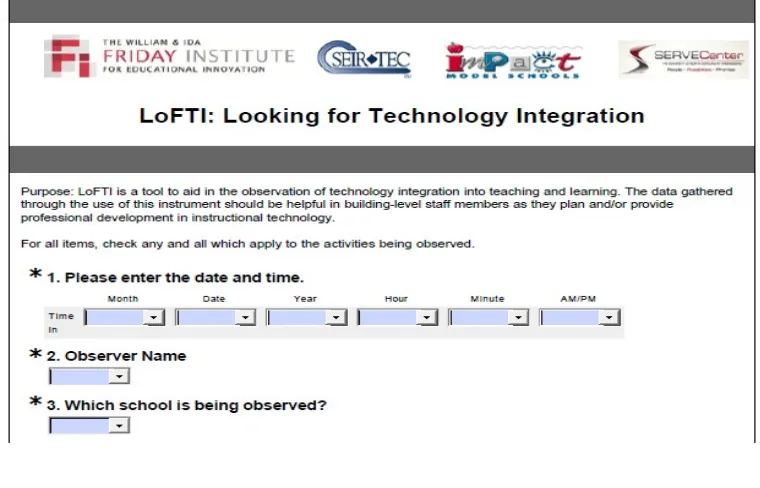
Phase I & III – Classroom Observations
The LoFTI instrument (see Figure 3.2) was developed by SEIR*TEC at SERVE in collaboration with the North Carolina Department of Public Instruction Educational
Technology Division to collect observation data about a variety of broad areas of technology implementation and impact (Looking for Technology Integration, 2010).
Figure 3.2. Observation Protocol.
Phase II - Interviews
The researcher conducted the interviews in the fall of 2011. Interviews were
Interview Protocol for Students Date/Time/Location:
Measuring Distraction Level
1. How often do you focus on just one task when you use the laptop in class? (e.g., Do you go directly to the site you need to visit?)
2. Does the Internet tempt you to do something non-instructional during class, like check personal e-mail or social networking sites? Explain.
3. When using computers in class, do you ever minimize windows quickly or try to hide what you are doing when the teacher walks by?
4. Do you focus better when reading online or when reading printed text like a book or magazine? Why?
Strategies for Managing Distraction
5. How do you deal with online distractions at school?
6. What is your process for completing an assignment on your laptop? For example, once you are sitting at your computer, do you use any special techniques to stay focused?
7. Does learning to avoid online distractions at school affect how well you avoid distractions outside of school? Explain.
8. Would you say that using the laptop has helped you learn to deal with distraction? Explain.
Interview Protocol for Teachers Date/Time/Location:
Measuring Distraction Level
1. How often do your students focus on just one task when they use the laptop in class? (e.g., Do they go directly to the site they need to visit?)
2. Does the Internet tempt students to do something non-instructional during class, like check personal e-mail or social networking sites? Explain.
3. When using computers in class, do students ever minimize windows quickly or try to hide what they are doing when you walk by?
4. Do students focus better when reading online or when reading printed text like a book or magazine? Why?
Strategies for Managing Distraction
5. How do you help students deal with online distractions at school?
6. What process do students use to complete assignments on their laptops? For example, once they are sitting at the computer, do they use any special techniques to stay focused?
7. Does learning to avoid online distractions at school affect how well your students avoid distractions outside of school? Explain.
Data Analysis Procedures
Interviews were analyzed using thematic content analysis (Corbin & Strauss, 2008) to answer the research question along with the sub questions. After gathering and organizing the data, it is important for the researcher to gain a sense of the whole database. The researcher sought to review the database to first identify major organizing ideas and “hear” what
participants are saying (Creswell, 2007, p. 151). After reflecting on the larger thoughts, initial codes were formed, particularly in light of evidence that included multiple perspectives regarding each category (Stake, 1995). The researcher began with a short list of tentative codes that matched text segments (Creswell, 2007). Next, the researcher organized strategy codes, comprised of methods used to accomplish a goal, into categories (Bogdan & Biklen, 2007). The researcher then utilized the statements that best illustrate these categories to understand how each participant avoids (or helps others to avoid) distraction in a 1:1 learning environment (Hesse-Biber, 2010). The researcher developed codes until the point of
saturation is reached (Denzin & Lincoln, 2000). The researcher was sure to intertwine the collection and analysis process through continual documentation of observer comments, writing memos to aid self-reflection, and considering metaphors and analogies (Merriam, 1998). A constructivist-interpretive paradigm, along with the framework for 21st century learning and Posner’s theory of attention, served as the lens of analysis (Denzin & Lincoln, 2000; Partnership for 21st Century Skills [P21], 2003; Posner, 1982).
Trustworthiness
An understanding of validity and reliability in qualitative research leads the
(Lincoln & Guba, 1985). To ensure that the study is trustworthy, the researcher used multiple data sources (semi-structured interview transcripts, field notes, LoFTI results) to triangulate the data (Merriam, 1998). Further, a debriefing occurred with each teacher to ensure member checking of the researcher’s interpretations (Miles & Huberman, 1994). This study follows the multiple-case study design, a commonly used method for “a study of school
innovations…in which individual schools [or classrooms within a school] adopt some innovation” (Yin, 2003, p. 46).
Ethical and Political Considerations
There are several steps the researcher has taken to achieve trustworthiness, validity, and reliability. Merriam (1998) asks the researcher to consider one’s own assumptions prior to the study. The researcher has ensured trustworthiness by keeping her own assumptions in check, and by writing notes in her journal before and after the interviews. Carlson (2010) has suggested that to control for reflexivity, a journal should be kept that contains the
researcher’s field notes, thoughts, uncertainties, values, and assumptions as they arise
throughout the research process. I ensure trustworthiness by following the interview protocol to be sure to ask all students and instructors the same questions. Preliminary visits to the school sites helped me develop early familiarity with the culture of the participating
institution, before I began the actual data collection and interview process. Member checks along with multiple forms of data, including interviews and classroom observations, increase trustworthiness.
phases of the process could shift after entering the field and beginning data collection (Creswell, 2007). The researcher stayed aware of any revisions that needed to be made for interview questions, but maintained the same research questions to stay within the boundaries of the IRB.
For the potential study, there were a few possible ethical issues and risks to
participants. Upon corresponding with a technology facilitator (TF) at each school, a handout was disbursed explaining the study to teachers. After obtaining teacher e-mail addresses from the TF, the researcher asked teachers to choose four students from their classes to be
interviewed (two who struggle with distraction in class due to the laptop and two who do not struggle with distraction in class due to the laptop). Teachers selected students based on how successfully the student maintains attention on appropriate task, regardless of input modality (visual, auditory) or type of task (Posner, 1986) and whether the student successfully
manages cognitive interference (Fried, 2008).
The researcher was able to collect a range of perspectives that adequately
Positionality
The researcher’s experience as a research assistant led her to the study of distraction in 1:1 learning environments. Because she helped evaluate the North Carolina laptop
initiative, the researcher is able to fully grasp the difficulties involved with sustaining student attention and engagement in the classroom. She brings many biases to the study, including the belief that more technology is not always better for a school district. There are many troubles that can never be solved by investing more money or technology into them. The researcher does, however, believe in the power of advanced technology to make learning fun for all students. She remained aware of these biases throughout the research process. The researcher’s relationship with those in the study is a professional one between researcher and those being researched. On a personal level, the researcher is from North Carolina and was a student in the public school system. The researcher sought to hear the voices of these
students who have discovered ways to conquer distraction in a technology-filled learning environment and learn how they have harnessed the power of that technology to become the best they can be.
Limitations
Because qualitative research is not value neutral, it can be difficult for the researcher to separate personal bias opinions from the data (Creswell, 2007; Merriam, 1998).
Qualitative researchers are challenged to balance personal perspective and interpretation of the data (Bogdan & Biklen, 2003; Maxwell, 2005). The researcher utilized various methods to balance subjectivity. As the primary instrument of data collection, the researcher
study (Merriam, 1998). One must also be aware that the data is self-reported and there is no comparison group. Limitations also include a lack of generalizability due to all participants being from North Carolina high schools.
CHAPTER 4: RESEARCH FINDINGS
Data analysis and coding processes are described in Chapter Three. This chapter presents the qualitative results of the study to answer the primary research question: How do students and teachers manage distraction in a 1:1 environment? The chapter is divided into four sections; the first section will answer research sub question 1a: How do English IV students manage distraction when working with technology? The second section will answer research sub question 1b: How do English IV teachers manage distraction when working with technology? The third section will answer research sub question 1c: How do these experiences differ based on achievement level (honors vs. non-honors)? The final section will summarize the findings that arose across all questions.
Students and Distraction Management
How Teachers Impact Student Distraction
Students commented mostly on the way filters help them to avoid distraction in class. They also mention some teacher behaviors that guide their distraction avoidance. One student appreciates her teacher’s approach to the laptop: “He has us do what he wants us to do and then it’s “Shut your laptops” and he makes us shut them.” This method helps to keep her attention focused on the lesson rather than on electronic distractions. The way in which teachers use the technology is a key factor; one honors student notes, “We don’t use them every day, every second of the block. They just allow us to use them whenever we need.” Students comment on the sheer lack of opportunity to get distracted due to their rigorous coursework. Both traditional and AP/honors students focus on which course of action will guide them toward completing their goals. One student remarks, “Culinary [class] won’t let me graduate; English [class] will.”
Another key method that teachers use is to set strict deadlines for assignments so that they have to be completed before the class period is over. This leaves little time for
succumbing to online temptations: “I just remember [that] I only have a time period to complete what he’s telling me to complete, so I better go ahead and get it done instead of playing around.” Teachers enjoy using the Angel course management system, which allows them to post syllabi, grades, and assignments. Similar to course management systems like Moodle and Blackboard, Angel provides a discussion board which is used frequently in the sample. Because teachers make use of the Angel platform for assignment submission,