419 | P a g e
Mobile Application Analysis and Classification Using Data
Mining -A Survey
J. Jeyaboopathiraja
1, Dr.G. Maria Priscilla
21
Research Scholar, Sri Ramakrishna College of Arts and Science, Coimbatore, Tamilnadu, (India)
2
Professor and Head, Sri Ramakrishna College of Arts and Science, Coimbatore, Tamilnadu, (India)
ABSTRACT
Data mining plays a great role in the current scenario, where every application and domain need the support of
data mining. The most popular application of data mining is web mining, mining web contents and analyses
teem for a knowledge discovery is the main task of web mining. In this paper, we surveyed several tools and
techniques used to extract and analyse data from several websites and pages. In specific, we analysed the
techniques, which are available to classify the Facebook and android applications from the web. Web app
classification is the task of grouping the application based on its features and functionalities. This process
enables the application to find duplicate, redundant, related mobile applications from a huge set of app dataset.
The classification involves in data classification based on complete training samples. It also plays an important
role in information retrieval and extracting useful information from huge amount of mobile applications. There
are n numbers of algorithms and techniques are available for feature extraction and classification. This survey
explores the popular mobile application classification as well as the general feature based classification
techniques along with its pros and cons.
Keywords
:
Data Mining, Text Mining, Classification, Pattern discovery, Mobile app classification.
I.INTRODUCTION
In the recent scenario all tasks and functionalities are rehabilitated into smart phone. Every user owns a smart
phone and performs all tasks using that. These processes are performed using several mobile applications, which
are available in the website for free of cost [1]. So classifying and analysing such mobile application is very
important. Machine learning techniques for App Classification aim at extracting those features which are helpful
in identifying the relevancy of an application to each category. The following two broad Machine Learning
techniques are usually employed.
A. Supervised Learning: Supervised learning is a technique to guide the process of classification by providing prior information such as labeled applications and features to train the classifier. The input app data is parted
into the two sets for these phases: the Training set that comprises labeled applications and the Testing set that
comprises applications to be classified. At the time of training process the classifier learns by categorizing
mobile applications to the appropriate categories by using labeled information in the Training samples. retaining
thus tuned its decision parameters, it enters the Testing process, when the classifier assigns categories to the
420 | P a g e
supervised ML classifiers are Naïve Bayes (NB), Decision Trees (DT), Support Vector Machines (SVM) andNeural Networks (NN) [2].
B. Unsupervised Learning: Here the classifier does not have any labeled information of applications for learning. K-Means clustering is the most popular technique for unsupervised technique. It classifies a given
dataset by initializing a pre-decided number of clusters with seed data and then assigning the remaining data
instances to one of them by using a suitable distance metric to calculate their similarity to each of the clusters.
C. Semi-Supervised Learning: the third and customized part of information labeling is semi-supervised learning, which doesn’t need complete training. Several data mining applications recently follow the third type
of learning framework with active learning paradigm.
Mobile App features are semi structured in nature, i.e., it is neither completely un-structured nor completely
structured. A feature may include a few structured data’s about the mobile app, such as title, provider and other
basic details about the application etc., and it also contains some huge unstructured textual descriptions. In
recent research on Mobile App feature analysis and classification, several studies have been done to build and
develop semi-structured data. To handle the un-structured features, text indexing and IR (Information Retrieval)
techniques have been developed. But those IR and other traditional techniques are not sufficient to handle vast
amount of data [2]. This paper discusses the various techniques and tools have been used for malicious and
duplication app classification and general feature classification algorithms. And finally provides an outline
about the problems of the existing works. This survey also handles the important process of feature extraction
and mobile app classification, which is known as feature discovery process. This relevance feature discovery
process helps to identify the useful features available in the Mobile App descriptions at the time of training [3].
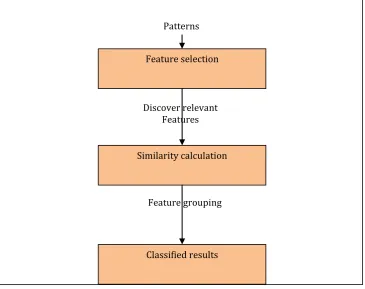
Fig 1.0 Feature discovery and file classification process
Feature grouping Patterns
Feature selection
Similarity calculation
Classified results Discover relevant
421 | P a g e
The above fig 1.0 represents the basic process involved in App Classification. In order to group the applicationbased on the features, this is important to find the relevant and appropriate features from its descriptions and
functionalities. The above process shows the feature selection and feature based application similarity
calculation and based on the similarity score, the applications are grouped together.
II.LITERATURE REVIEW
At the present time, people are using smart phones for different purposes, so different and numerous mobile
apps are available in the internet. Handling the hefty amount of apps in the internet, the task of how to define
their similarities, relationship becomes more and more useful. By performing the similarity calculation, app
retrieval and app recommendation are easy to be performed.
Authors in [3] presented a primary study to calculate and analyse spam campaigns launched on Online Social
Networks (OSN). The authors have an enormous anonymized dataset of asynchronous Facebook wall messages
collected from several Facebook users. The system has identified 200000 malicious wall posts with embedded
URLs in the wall message, which initiated from more than 50 thousand user accounts. Authors found that more
than 72% of all malicious wall posts advertise phishing sites. To study the distinctiveness of malicious accounts,
and see that more than 97% are compromised accounts, rather than “fake” accounts formed solely for the
principle of spamming.
Third-party applications capture the attractiveness of web and platforms providing mobile application. Many of
these platforms accept a decentralized control strategy, relying on explicit user consent for yielding permissions
that the apps demand [4]. Users have to rely principally on community ratings as the signals to classify the
potentially unsafe and inappropriate apps even though community ratings classically reflect opinions regarding
supposed functionality or performance rather than concerning risks. The advantages of user-consent permission
systems are examined through a large data collection of Facebook apps, Chrome extensions and Android apps.
The study confirms that the current forms of community ratings used in app markets today are not reliable for
indicating privacy risks. This study confirmed with some proofs, which indicating the attempts to mislead or
entice users for yielding permissions. This also grants permission for free applications with mature content
requests and for “look alike” applications which have similar names as that of popular applications also request
more permissions than is typical. Authors find that across all three platforms popular applications request more
permissions than average. OSNs such as Orkut, Face book and others have grown-up rapidly, with hundreds to
millions of active users. A new feature provided on several sites is social applications and services written by
third party developers that supply additional functionality linked to a user’s profile [5]. However, present
application platforms put users at risk, because it contains numerous applications and lots of predefined
recommendations. This may confuse the user to select a best app without malicious and malignant behaviour.
In this paper [6], authors proposed a personalized recommendation system for mobile application software (app)
to mobile user using semantic relations of apps. To achieve this, semantic relations between apps consumed by a
specific member and his/her social members are analysed using Ontology framework. With the help of app
associations, this identifies the most similar social members from the analysis method. The analysis is
422 | P a g e
features shared by the users, the more similar is their preference for consuming apps. This also developed aprototype of the system using OWL (Ontology Web Language) by defining ontology-based semantic relations
among 50 mobile apps in the internet. With the proposed prototype, the authors demonstrated the feasibility of
the recommendation algorithm.
In this paper [7], Chen, Lei, Chong Wu, and Yilan Dai proposed an iterative process for app relationship
detection. It combines the review similarity and app similarity together. So the authors used the iterative process
to dig deep relationship among apps via reviews and feedbacks. It finds the given two apps are similar in their
objective or not. This iterative process has two ways to run and only needs to set one initial parameter. By this
iterative procedure, deep relationship among apps and topic similarity among reviews can be both attained. But,
there are many kinds of relationship among apps which are very tough to identify. So the authors have
concluded, that the iterative process can only detect there is relationship and gives its value, however, cannot tell
which type of relationship it belongs to. The authors left some app relationship classification process as future
process.
In [8] Kim, Junhyoung, Tae Guen Kim, and Eul Gyu Im proposed a method for Android malware similarity and
clustering process. The structural information that is extracted from methods in given applications is compared
to match the similar apps in the targeted application with various factors, and the number of matched methods
and the total number of methods are used for similarity calculation. All the structured information’s are used for
the comparison process. This used DBSCAN algorithm for clustering. It also suggested clustering mechanism
that can provide some feedbacks about the malware apps to the others.
As a summarized view, the usual way to calculate app relationship and similarity is to extract attributes from
app’s description and other sources to represent apps similarity measurements has several challenging tasks.
From the literature, we can summarize that there only few researches made for App similarity and malicious
detection problems using data mining. The above methods have the following limitations.
One is that it can only detect shallow similarity between apps. So it doesn’t give deep variations Some useful information is unaware and insensible, such as the viewpoint in user’s review.
For this reason, this paper proposes a novel approach to combine app relationship calculation and review
similarity calculation together for duplicate app and malicious app detection. The proposed work can calculate
app similarity accurately. It can find more general relationships between apps, which are collected from Google
play store. Additionally, several improvements are made on this proposal. One is obtaining high-quality results
and the other is to replace calculation by matrix product to reduce time. And finally the malicious and similar
apps are filtered at the time of recommendation.
Due to the significance and essential of detecting and suspending Twitter spammers, many researchers along
with the engineers in Twitter Corporation have devoted themselves to keeping Twitter as spam-free online
communities [9]. In this paper, the authors made an empirical analysis of the evasion tactics utilized by Twitter
spammers, and then design several new and robust features to detect Twitter spammers on most popular and
important Internet sites, which are undertaken by the attacker like phishers, fraudsters, and spammers [10]. The
main intension of such attacker is to hack the user data and render them with spam content. The attackers have
423 | P a g e
compromised and infected accounts, and access to global botnets. Protecting the users is a challengingadversarial learning problem with extreme scale and load requirements. Over the past several years they have
built and deployed a coherent, scalable, and extensible real-time system to protect the users and the social graph.
This Immune System achieved the real-time checks and classifications on every action of the application such as
application access, read and written contents.
In [11] authors proposed phrase-based content similarity, which helps to compute the pair wise relationship between multiple text contents. The work by the authors is based on the Suffix Tree Content model. In general,
phrase in a contents have been considered as a more informative feature. And it improves the effectiveness of
text content clustering. The STD model is a phrase based approach, which inherits the tf-idf weighting scheme.
The authors have applied group average Hierarchical agglomerative clustering algorithm to develop a new
clustering algorithm. The experiments are conducted in RCV1 and corpora datasets. The authors proved that the
phrase based content similarity works better than the single word tf-idf measure. The new phrase based content
similarity successfully connects the two content models and inherits their advantages. The concept of STD is
simple and effective, but the implementation is become very difficult and tough. The STD structure is used
n-gram method to identify and extract phrases from the contents.
In[12] authors proposed a fuzzy similarity-based self-constructing algorithm for feature clustering, because the feature clustering is the most powerful tool for text classification. Based on the words, the contents are grouped
in the same cluster. The proposed FFC (Fuzzy Feature Clustering) is an incremental clustering approach to
reduce the dimensionality of the features in text classification. Here statistical mean deviation has been used.
While grouping the texts based on the words, outliers are considered as new clusters. The similarity measure is
calculated using the variance. The authors show the FFC is a feature reduction technique, which facilitates the
fast clustering process. The FFC method is only good for text categorization problems due to the suitability of
the distributional word clustering concept.
In[13] proposed a new spectral clustering method called CPI, which is abbreviated as correlation preserving indexing. This CPI method is performed in the correlation similarity measure space. The authors are much
concentrated on the intrinsic geometrical structure of the content. The work is not sufficient to apply on the huge
datasets.
Later In[14] developed a two phase cross domain method for text classification. Particularly, a CD-PLSA (Collaborative Dual Probabilistic Latent Semantic Analysis) model is first learned to effectively capture the
distinction and commonality from corner to corner numerous domains in a collaborative nature. In that case, the
authors further mined the intrinsic composition of desired domains by refining the outputs from CD-PLSA,
which also called RCD-PLSA. The work by [14] is based on EM (expectation Maximization) algorithm, and
provided various training samples for almost all domains. But the paper suffers from accuracy issues.
In[15] proposed supervised term weighting method, i.e., tf:rf, to improve the terms’ discriminating power for text categorization task. This paper utilizes vector space model for text representation, this transforms the
content of a text content into a vector. In this study, the authors investigated numerous unsupervised and
supervised term weighting methods with SVM and kNN algorithms. Finally the paper shows the supervised
424 | P a g e
are left for future work. And the proposal has been experimented in a sample synthetic dataset and the proposalis not efficient for huge dataset like RCV1 benchmark corpus. This doesn’t have the ability to handle huge text
collections.
In paper [16] authors have proposed a new concept-based mining model, which analyses terms on the sentences. This work bridges the gap between NLP and text mining regulations. A new concept based mining
model composed of four components. The authors proposed a method to enhance the text-clustering eminence
by exploiting the semantic structure of the sentences in contents. A better text clustering result is achieved by
using the above concept based mining model. The first one is sentence based concept analysis, content based
concept analysis, corpus level concept analysis and finally concept based similarity detection. The authors used
tf method for all the above analysis. This has the ability to calculate pair-wise content similarity accurately. It is
very robust and accurate. However, the work affected by several issues, such as this work only handles
homogeneous text contents and tough for real time implementation.
In the paper [17] authors presented a novel fuzzy clustering algorithm that operates on relational input data. The relational input data are such as in the form of a square matrix of pair-wise similarities between data
contents. The proposed algorithms utilize the graph representation and operate in the EM algorithms as like the
previous paper. The likelihood function is created using the graph centrality. In the paper, the concepts present
in natural language contents (NLD) usually display some type of hierarchical structures, while the algorithm
presented in this paper identifies only flat clusters rather than the hierarchical. So it doesn’t support hierarchical
structure.
In the paper [18] authors proposed a new similarity measure algorithm for text classification and clustering. This takes many cases for similarity calculation, which are features from both contents; features from a single
content and features are not in the given contents. The authors generated the awareness of detecting presence
and absence of features, features have non-zero values. This has been applied in hierarchical clustering and
KNN clustering algorithms. But the proposed work has been investigated only few clustering algorithm and
doesn’t provide accuracy in similarity finding.
In the paper [19] authors developed a novel unsupervised feature selection algorithm, named as clustering guided sparse structural learning, which is abbreviated as CGSSL. This algorithm integrates the cluster analysis
and sparse structural analysis as a joint framework. The authors used the nonnegative spectral clustering for
accurate cluster label detection. The cluster labels are predicted using non-negative analysis. This is suitable for
much type of text documents, however the algorithm has more iteration and the accuracy is not much satisfied.
III.CONCLUSION
Finding App relationship and similarity is an iterative process, which meets two imperfections. One is that it
needs to run once more when novel apps appear. Hence, it is time consuming. The other is that this iterative
process needs to set two initial factors. Certain results denoted that initial parameters deeply affect calculating
the outcomes. But, it is difficult to determine which factor is suitable to determine the App similarity and
relationship calculation. The research community has paid little attention to Google play store, Apple store apps
425 | P a g e
malicious contents and social spam posting. Google play store has dismantled its app rating functionalityrecently. A recent work studies how app permissions and community ratings correlate to privacy and security
risks of Google play store apps. At last, there are several complications misleads the App usage in the real-time
apps on social Medias. So detection and suggestion of valuable apps with the elimination of duplicate and
harmful featured apps is important. With the use of data mining approach, data management becomes easier and
convenient. Due to digital document process, the size of documents is very huge and very tough to manage. In
such environment, the effective and fast grouping is more important because the data should retrieve quickly
and effectively. In this survey, the different document clustering techniques and algorithms are discussed. This
survey gives the overall summary of the review by different metrics and parameters. In this survey, various
techniques in text mining for document management is discussed, this paper shows the pros and cons of several
traditional feature discovery algorithms based on different techniques.
However, the techniques almost concentrated on general text mining process, where the document clustering
needs additional concentration and work to improve the following problem. The first problem is discovering
appropriate features with less effort and validation on discovered features are not yet studied. And there is a
need for a new system to handle the above problem in document management and information retrieval.
REFERENCES
[1]. Liu, Ming, et al. "APP Relationship Calculation: An Iterative Process." IEEE Transactions on Knowledge
and Data Engineering 27.8 (2015): 2049-2063.
[2]. https://www.statista.com/topics/1002/mobile-app-usage/
[3]. Gao, Hongyu, et al. "Detecting and characterizing social spam campaigns."Proceedings of the 10th ACM
SIGCOMM conference on Internet measurement. ACM, 2010.
[4]. Chia, Pern Hui, Yusuke Yamamoto, and N. Asokan. "Is this app safe?: a large scale study on application
permissions and risk signals." Proceedings of the 21st international conference on World Wide Web. ACM,
2012.
[5]. Besmer, Andrew, et al. "Social applications: exploring a more secure framework." Proceedings of the 5th
Symposium on Usable Privacy and Security. ACM, 2009.
[6]. Kim, Jognwoo, et al. "Recommendation algorithm of the app store by using semantic relations between
apps." The Journal of Supercomputing 65.1 (2013): 16-26.
[7]. Chen, Lei, Chong Wu, and Yilan Dai. "Find relationship among applications."International Journal of
Networking and Virtual Organisations 15.1 (2015): 80-98.
[8]. Kim, Junhyoung, Tae Guen Kim, and EulGyuIm. "Structural information based malicious app similarity
calculation and clustering." Proceedings of the 2015 Conference on research in adaptive and convergent
systems. ACM, 2015.
[9]. Yang, Chao, Robert Chandler Harkreader, and Guofei Gu. "Die free or live hard? empirical evaluation and
new design for fighting evolving twitter spammers." International Workshop on Recent Advances in
426 | P a g e
[10].Stein, Tao, Erdong Chen, and Karan Mangla. "Facebook immune system." Proceedings of the 4th Workshopon Social Network Systems. ACM, 2011.
[11].Chim, Hung, and Xiaotie Deng. "Efficient phrase-based document similarity for clustering." IEEE
Transactions on Knowledge and Data Engineering 20.9 (2008): 1217-1229.
[12].Jiang, Jung-Yi, Ren-JiaLiou, and Shie-Jue Lee. "A fuzzy self-constructing feature clustering algorithm for
text classification." IEEE transactions on knowledge and data engineering 23.3 (2011): 335-349.
[13].Zhang, Taiping, et al. "Document clustering in correlation similarity measure space." IEEE Transactions on
Knowledge and Data Engineering 24.6 (2012): 1002-1013.
[14].Zhuang, Fuzhen, et al. "Mining distinction and commonality across multiple domains using generative
model for text classification." IEEE Transactions on Knowledge and Data Engineering 24.11 (2012):
2025-2039.
[15].Lan, Man, et al. "Supervised and traditional term weighting methods for automatic text
categorization." IEEE transactions on pattern analysis and machine intelligence 31.4 (2009): 721-735.
[16].Shehata, Shady, FakhriKarray, and Mohamed Kamel. "An efficient concept-based mining model for
enhancing text clustering." IEEE Transactions on Knowledge and Data Engineering 22.10 (2010):
1360-1371.
[17]. Skabar, Andrew, and Khaled Abdalgader. "Clustering sentence-level text using a novel fuzzy relational
clustering algorithm." IEEE transactions on knowledge and data engineering 25.1 (2013): 62-75.
[18].Lin, Yung-Shen, Jung-Yi Jiang, and Shie-Jue Lee. "A similarity measure for text classification and
clustering." IEEE transactions on knowledge and data engineering 26.7 (2014): 1575-1590.
[19].Li, Zechao, et al. "Clustering-guided sparse structural learning for unsupervised feature selection." IEEE
Transactions on Knowledge and Data Engineering 26.9 (2014): 2138-2150.