Australian Journal of Educational & Developmental Psychology Vol. 5, 2005, pp 77-90
Behaviour Problems Across Home and Kindergarten
in an Australian Sample
Maite Herrera & Emma Little
1RMIT University
ABSTRACT
The current study examined the extent to which kindergarten children display behaviour problems in the clinical range at both home and kindergarten. Differences between parents’ and teachers’ responses to misbehaviour were also assessed. The co-occurrence of problems at home and kindergarten was assessed using the Preschool and Kindergarten Behavior Scales- Revised (Merrell, 2002), for a sample of parents and teachers of a) 22 children whose parents responded to invitations to participate distributed through kindergartens (regular kindergarten sample); and b) 11 children who had been referred to services because of behaviour problems (clinic-referred sample). For the kindergarten sample, 9.2% exhibited problems of behaviour across settings, with 35.5% displaying them in only one setting. For the clinic-referred sample, 63.7% exhibited behaviour problems across settings, with 18.2% exhibiting them in one setting only. Responses to misbehaviour at home and kindergarten were assessed using the Competency and Behaviour Management survey in a sample of 142 participants (79 parents, 63 teachers). Results revealed significant differences in parents’ and teachers’ responses to misbehaviour. The present findings provide important information for consistent early intervention programs across settings and in single settings where warranted.
INTRODUCTION
Children with behaviour problems (also known as “conduct problems”) are a common source of referral to psychologists, and both parents and teachers frequently cite behaviour-related problems at home and in the classroom as one of their major challenges. Within this paper, the term “behaviour problems” is used to describe serious behaviour infractions such as those commonly seen as part of Oppositional Defiant Disorder and Conduct Disorder (e.g., high rates of oppositional defiant, aggressive, and noncompliant behaviours).
The actual prevalence of behaviour problems among kindergarten children is difficult to determine with any certainty because the prevalence rates reported in the literature vary greatly (Sourander, 2001). It has been reported that approximately 5% to 14% of
kindergarten children in the general population exhibit moderate-to-severe behavioural problems (Lavigne et al., 1996; Luk et al., 1991). There is also a view by professionals that the prevalence of behaviour problems in young children is increasing (e.g Webster-Stratton & Hammond, 1997). However, the majority of previous research on prevalence rates has been based on the report of one adult, therefore little research has examined the prevalence
1 Contact
Dr. Emma Little,
Division of Psychology, School of Health Sciences, RMIT University
PO Box 71 Bundoora 3083 Phone: 03 9925 7710
Email: [email protected].
ISSN 1446-5442 Web site: http://www.newcastle.edu.au/journal/ajedp/
of behaviour problems using joint parent and teacher reports. A joint perspective is important given that rates will differ depending on whether the informant is a parent, teacher, or clinician. Within this paper, the term “kindergarten” is used to define those children in the 3- through 5-year age group who do not attend formal schooling.
The prevalence rates reported are troubling because early behaviour problems in
kindergarten remain relatively stable and predict not only problems at school but also serious health and behavioural problems in adolescence, including depression, suicidal ideation, anxiety, and delinquency (Campbell, 1995). The belief that these types of problems are transient phenomena is not supported (Campbell, 1995; Richman & Stevenson, 1982). Several studies are available which indicate that early emergent behaviour problems are linked with serious behaviour problems later in life (Duncan, Brooks-Gunn, & Klebanov, 1994; Stormont, 2002). In support of this is the finding that 50% to 75% of kindergarten children with
significant behaviour problems continue to have these difficulties up to 7 years later (Campbell & Ewing, 1990; Marakovitz & Campbell, 1998; Speltz, McClellan, DeKlyen, & Jones, 1999). Adolescents with relatively serious disruptive behaviour problems in early adolescence often have a history of behaviour difficulties that began in the kindergarten years (Moffitt, 1990).
In addition to the finding that early behaviour problems are associated with negative outcomes, there is also evidence that the presence of behaviour problems across settings leads to poorer prognosis for children (Loeber, Stouthamer-Loeber, & Green, 1991). Studies have shown that the persistence of behaviour problems over time is higher for children who display problems in multiple settings (i.e., at home and kindergarten) compared to children who display these problems in one setting only (Miller, Koplewicz, & Klein, 1997). From a clinical perspective, these findings provide support for early intervention to prevent these behaviour problems from becoming pervasive and intractable.
There is a great deal of research evidence supporting the efficacy of early intervention (McMahon, 1994; Webster-Stratton, 1993). In addition, research suggests there is greater success with younger children with less severe cases of behaviour problems (Dodge, 1993). Furthermore, less severe forms of behavioural disturbance (for example, calling-out and aggressive behaviours in children) often appear as precursors to more severe forms of
behaviour problems (Loeber et al., 1991). Thus, early intervention should ideally occur when these behaviours first appear. However, this requires parents and caregivers to be able to identify problems accurately.
Parents and teachers are important sources of identification of children’s behaviour problems (Touliatos & Lindholm, 1981) and many studies have suggested that information should be obtained from multiple informants (Kaiser & Hancock, 2004; Kumpulainen et al., 1999). A recent Australian study found that 5.6% of school-aged children exhibited behaviour problems at home and school (Little, Hudson, & Wilks, 2000). It is logical to suggest,
therefore, that some kindergarten children are likely to exhibit behaviour problems in more than one setting. Surprisingly, little research has investigated the extent to which Australian kindergarten children display behaviour problems at home and at kindergarten.
In regard to cross setting prevalence, research has generally focused on the correlation between parents’ and teachers’ reports of child behaviour, rather than the extent of the problem behaviour in each setting. It has been demonstrated repeatedly that there is a low level of agreement between parent and teacher reports of behaviour problems. Achenbach, McConaughy, and Howell’s (1987) seminal meta-analysis of 119 studies investigated the agreement rates between parent and teacher reports of the behavioural and emotional problems of participants aged from 1 to 19 years. A mean correlation of .27 was found between parents and teachers when reporting on behaviour problems.
The majority of research on parent-teacher agreement has been conducted with school-aged children, leaving our understanding of cross-informant correspondence in behavioural reports for the kindergarten period unclear. Some investigators have found increased parent and teacher agreement (correlations of .29 to .50) for kindergarten children compared to older children (Keenan & Lachar, 1988; Vitaro, Gagnon, & Tremblay, 1991; Winsler & Wallace, 2002). These studies focussed on the agreement between parents and teachers ratings of ISSN 1446-5442 Web site: http://www.newcastle.edu.au/journal/ajedp/
children’s behaviour. However these studies did not provide prevalence data on how many children were considered to exhibit behaviour problems of a clinical nature at home, school, and across settings. While rates of agreement may be higher in the kindergarten years compared to the primary school years, the actual number of children with problematic behaviour might be lower. Therefore, it is unclear what proportion of kindergarten children are exhibiting behaviour-related problems across settings. Identifying the likelihood of kindergarten children exhibiting behaviour problems across both home and kindergarten will inform the clinical importance of implementing consistent home and kindergarten
interventions.
The few studies that have investigated the prevalence of behaviour problems across settings have been with school aged-children. As discussed previously, the study by Little et al. (2000) of 189 school children aged 5 to 14 years found that 5.6% of children demonstrated behaviour problems across settings. In addition, 4.8% were reported as having externalising behaviour problems at school only, and 16.9% were reported as having externalising behaviour problems at home only.
As identified by Little and colleagues (2000), an issue that may have an impact on the findings of prevalence studies is that of sampling bias. For example, the fact that participating parents are volunteers may influence the results. Little et al. found that this was indeed the case, that is, participants are frequently those with better-behaved children. When
investigating prevalence rates appropriate measures need to be taken in order to minimise the potential for sampling bias. Prevalence studies have typically focussed their attention on samples drawn from the general population, therefore, our understanding of whether the behavioural problems of kindergarten children referred to a clinic setting generalise across settings is less clear. This information is likely to be useful to clinicians in identifying whether there is a need for management programs that are consistent across settings.
Although previous reviews have identified the preschool years as a critical point for intervention, there still remains a paucity of well-designed outcome studies that have focused exclusively on kindergarten children. Although promising interventions exist for young children displaying behaviour problems, it is evident that treatment effectiveness for kindergarten children needs to be evaluated more rigorously (Kazdin & Weisz, 1998; Morrison, Macdonald, & LeBlanc, 1999; Reginald & Nixon, 2002). Furthermore, there is a lack of research in regard to the management strategies currently used by parents and teachers to deal with the behaviour problems of kindergarten children. This research would inform intervention programs by providing a frame of reference in regard to the most common practices of parents and teachers in managing misbehaviour.
A study by Gardner, Sonuga-Barke, and Sayal (1999) looked at the role of parenting styles in the development of disruptive behaviour problems. This home-observational study examined strategies used by 52 mothers to prevent conflict with three-year-old children. When mothers of children without problem behaviour were compared with mothers of children with behaviour problems, it was evident that children with lower behaviour problems had mothers who used proactive rather than reactive strategies to deal with their child’s behaviour problems. Proactive strategies are defined as preventative in nature and are designed to avert problem behaviour by altering a situation before problems escalate, and to simultaneously teach appropriate alternatives (Safran & Oswald, 2003). Reactive strategies involve logical and natural consequences following misbehaviour (Safran & Oswald, 2003).
Follow-up of a sub sample found that the use of reactive strategies at age three years predicted a continuation of behaviour problems in children aged five years in 25 of the original sample of 52 children (Gardner et al., 1999). Therefore, the types of strategies used by parents (proactive versus reactive strategies) may predict the continuation of behaviour problems years later. Identifying the types of management strategies currently used by parents in the home setting is likely to be useful in terms of highlighting the common approaches used by parents for dealing with behaviour problems in kindergarten children.
As past research has demonstrated that behaviour problems across settings are related a poorer prognosis for the child, it is logical to suggest that interventions be employed in as many settings as possible in which the child displays behaviour problems. Early intervention ISSN 1446-5442 Web site: http://www.newcastle.edu.au/journal/ajedp/
treatments for behaviour problems in the home setting have received some attention in the literature (Morrison et al., 1999). However, there appears to be a lack of research focussing on the management strategies currently used by teachers in the kindergarten setting to manage behaviour problems.
The studies that have investigated the most likely response by teachers to students’ appropriate and inappropriate behaviour have been conducted with school-aged children (Rosen, Taylor, O’Leary, & Sanderson, 1990; Wilks, 1996). Rosen et al. (1990) administered a self-report questionnaire to 136 primary school teachers, containing a list of likely
approaches to student misbehaviour. The results indicated that teachers tended to use more verbal strategies including praise, compliments, and reprimands than concrete consequences such as material rewards and detentions for appropriate or inappropriate child behaviour. Whether this is also the case for kindergarten teachers is yet to be investigated.
Therefore, the first aim of this study was to investigate the extent to which parents and teachers identify children as having behaviour problems in the clinical range across two participant groups. A further aim was to investigate the management strategies employed by parents and teachers to deal with behaviour problems. The specific research questions to be addressed were: (a) What proportion of children attending regular kindergarten are considered to have behaviour problems in the clinical range according to their parents and teachers?(b) What proportion of children referred to a clinic setting are considered to have behaviour problems in the clinical range according to their parents and teachers? and (c) Is there a significant difference in management strategies employed by parents and teachers for dealing with behaviour problems?
METHOD
Participants
Two groups were used in this study. First, participants in Group 1 were drawn from Victorian kindergartens (regular kindergarten sample) and clinical settings (clinic-referred sample). In total, the parents and teachers of 33 children aged 3 to 5 years formed the
participant pool for Group 1. Participants in Group 2 were drawn from regular kindergartens. In total, 142 parents and teachers formed the participant pool for Group 2. Group 1 and 2 did not include kindergartens catering for children with special needs.
Group 1. Of the 33 children who were the focus of the study, twenty-two were in the regular kindergarten sample. The regular kindergarten sample was comprised of 22 children (12 males, 10 females) aged between 3 and 5 years (mean age = 4 years, 5 months). These participants were recruited through kindergartens in metropolitan and rural Victoria. Eleven of the target children (6 males, 5 females) aged between 3 years and 5 years (mean age = 3 years, 6 months) were in the clinic-referred sample. These children were recruited on the basis of referral for behavioural problems to one of two services: a university psychology clinic, or parenting group for children with behavioural problems. Of the 25 kindergartens approached across Victoria, 12 agreed to participate, with 5 rural and 7 metropolitan kindergartens being involved.
Group 2. Of the 142 participants, 79 were parents (8 males, 71 females) aged 26 to 50 years (M = 35.84, SD = 4.03), and 63 were teachers (7 males, 56 females) aged 25 to 60 years (M = 40.08, SD = 9.55). Participants were recruited through kindergartens in metropolitan and rural Victoria. Of the 54 kindergartens approached, 28 agreed to participate, with 9 rural and 19 metropolitan kindergartens being involved.
Measures
Preschool and Kindergarten Behaviour Scales- Second Edition (PKBS-2) (Merrell, 2002). The PKBS-2 is used to assess children’s social skills and problem behaviour at home and at kindergarten. The PKBS-2 is a set of standardised questions that are norm referenced. It is designed to survey parents and teachers of children aged 3 to 6 years. There are 76 items on two separate scales on which parents and teachers rate the child. The Social Skills scale includes 34 items that measure positive social behaviours on three subscales: Social ISSN 1446-5442 Web site: http://www.newcastle.edu.au/journal/ajedp/
Cooperation, Social Interaction, and Social Independence. The Problem Behaviour scale includes 42 items that measure both externalising and internalising social-emotional problems on five subscales: Self-Centered/Explosive, Attention Problems/Overactive, Antisocial /Aggressive, Social Withdrawal, and Anxiety/Somatic Problems. The items are rated on a scale from 0 to 3 (0 being “never”, and 3 being “often”) relying on the parent and teacher to determine how true each item is for that child currently or over the past three months. Scale total scores are converted to standard scores and percentile ranks. Subscale scores are converted to Functional Levels, and Broad-band Externalising and Internalising Problem scores on the Problem Behaviour scale are converted to percentile ranks.
In the current study, the focus was on the results for the Externalising Problems subscale. Problem behaviour scores between 0 and 221 are classified as non-clinical, scores between 222 and 245 are classified as moderate risk and scores of 246 and above are classified as high risk for parent raters. When teachers are rating the child, scores between 0 and 223 are classified as non-clinical, scores between 224 and 247 are classified as moderate risk, and scores of 248 and above are classified as high risk. Internal consistency reliability ranges from .96 to .97 for the two scale totals and from .81 to .95 for the subscales (Merrell, 2002).
The Competency and Behaviour Management survey (CBM). The authors developed the CBM survey. This measure was primarily used to assess the types of management strategies used by parents and teachers to deal with behaviour problems. Twelve items covered management strategies. Items pertaining to the management of behaviour problems are rated on a scale of 1 to 5 (1 being “extremely likely”, and 5 being “extremely unlikely”) relying on parents and teachers to determine how true each item is for them. Parents and teachers were also asked to make qualitative comments regarding their level of confidence in managing children’s behaviour problems. This measure took approximately 5 minutes for parents and teachers to complete.
Procedure
Group 1. A letter describing the study was sent to directors of Victorian kindergartens in rural and metropolitan areas. Kindergartens were chosen on the basis of locality. Once the directors agreed to have their kindergarten participate in the study, the parents of children aged 3 to 5 years were sent a letter outlining the study. The parents then provided their consent to participate.
Once consent was received from a parent, the child’s teacher was sent a package containing two copies of the PKBS-2 and CBM survey, and two reply paid envelopes.
Teachers were asked to allocate a two-digit number to each child and write this on the back of each reply-paid envelope. The teacher then sent a copy of the PKBS-2, CBM survey and reply-paid envelope home with the child.
Once the parents and teachers had completed their questionnaires, they placed them in the reply-paid envelopes and returned them to the researcher. Parents and teachers provided no identifying information, with the two-digit code numbers only allowing the researcher to match parent and teacher questionnaires without identifying the individual. Parent and teacher questionnaires were then matched from the code and scored manually by the researcher.
Clinicians from the university psychology clinic and parent group leaders were given a letter describing the study to give to parents. The parents then provided their consent to participate in the study. The same procedure for distribution and matching of the questionnaires was followed for this group.
Group 2. A letter describing the study was sent to directors of Victorian kindergartens in metropolitan and rural areas. Kindergartens were chosen on the basis of locality. Once the directors agreed to have their kindergarten participate in the study, parents and teachers of children aged 3 to 5 years were sent a letter outlining the study.
Once consent was received, teachers and parents were sent a copy of the CBM survey and reply-paid envelope per participant. Parents and teachers then returned their completed questionnaires to the researcher in the reply-paid envelopes.
ISSN 1446-5442 Web site: http://www.newcastle.edu.au/journal/ajedp/
RESULTS
The results are presented as follows. First, crosstabulations of child behaviour across settings are presented. Second, correlations between parents and teachers on reports of child externalising problems are presented. Third, the types of strategies used by parents and teachers in their management of behaviour problems are presented.
Prevalence
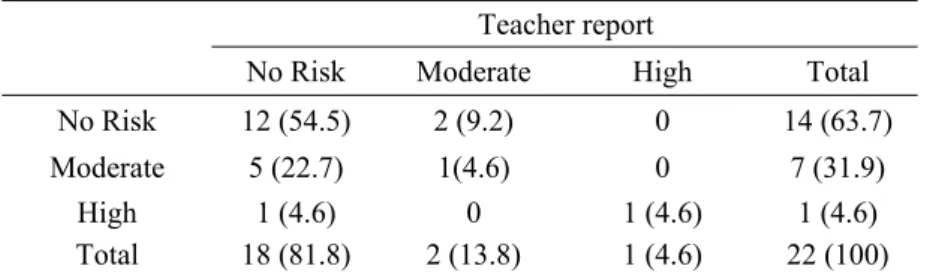
Table 1 presents the data for prevalence rates of behaviour problems according to risk level across settings for the regular kindergarten sample.
Table 1: The Occurrence of Externalising Behaviour Problems According to Risk Level Across Settings for Children in the Regular Kindergarten Sample.
Teacher report
No Risk Moderate High Total
No Risk 12 (54.5) 2 (9.2) 0 14 (63.7)
Moderate 5 (22.7) 1(4.6) 0 7 (31.9)
High 1 (4.6) 0 1 (4.6) 1 (4.6)
Total 18 (81.8) 2 (13.8) 1 (4.6) 22 (100) Note. Figures in brackets are percentages.
It can be seen from Table 1 that 9.2% of the children were reported to have externalising behaviour problems (moderate/high risk range) across settings. Two (9.2%) were reported as having externalising behaviour at kindergarten only, and six (27.3%) were reported as having externalising behaviour problems at home only. The remaining 54.5% demonstrated no behaviour problems across either setting.
Table 2 presents the data for prevalence rates of behaviour problems according to risk level across settings for the clinic-referred sample.
Table 2: The Occurrence of Externalising Behaviour Problems Across Settings According to Risk Level for the Clinic-referred Sample
Teacher report
No Risk Moderate High Total
No Risk 2 (18.2) 0 1 (9.1) 3 (27.3)
Moderate 1 (9.1) 2 (18.2) 0 3 (27.3)
High 0 0 5 (45.5) 5 (45.5)
Total 3 (27.3) 2 (18.2) 6 (54.6) 11 (100)
Note. Figures in brackets are percentages.
A crosstabulation of parent report and teacher report for externalising problems for the clinic-referred sample is shown in Table 2. It can be seen that seven (63.7%) of the children were reported to have externalising behaviour problems (moderate/high risk range) across settings. One child (9.1%) was reported as having externalising behaviour at kindergarten only, and one child (9.1%) was reported as having externalising behaviour problems at home only. The remaining 18.2% were not reported to display behaviour problems in either setting.
Data were analysed using a 2 x 2 between-subjects factorial ANOVA. The first factor consisted of the source of information (parent, teacher). The second factor was sample (regular, clinic-referred). A significant interaction between the two factors was found, F (1, 31) = 8.16, p = .01.
ISSN 1446-5442 Web site: http://www.newcastle.edu.au/journal/ajedp/
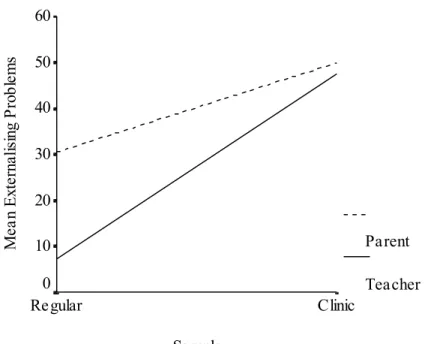
Figure 1 is an interaction plot illustrating the impact of informant and sample on reports of externalising problems.
Figure 1. Interaction between parents and teachers and sample for externalising
problems.
Sample Clinic Regular M ea n E xt er na lis ing P rob le m s 60 50 40 30 20 10 0 Parent Teacher
Together, these results indicate that parents report higher means for externalising problems than teachers for children in both regular and clinic-referred samples. Results also suggest that parent and teacher mean ratings of externalising problems scores are higher for children in the clinic-referred sample. Further, the difference between parents and teachers in their reports of externalising problems is less for children in the clinic-referred sample.
Cross-Informant Agreement
Tables 4 and 5 present the data for cross-informant agreement between parents and teachers on reports of children’s externalising problems using Intraclass and Pearson correlations.
Intraclass correlations were used given their statistical reliability in measuring level of agreement. A significant correlation was found between parent reported externalising problems and teacher reported externalising problems for the clinic-referred sample ric (N = 11) = .89, p <. 001. No such significant finding was reported for the regular kindergarten sample ric(N = 22) = .04, p = .33.
Table 4: Intraclass Correlations Between Parent and Teacher Reports for ChildExternalising Problems. Parent ric p Regular School Teacher .04 .33 Clinic Referred Teacher .89 <.001
ISSN 1446-5442 Web site: http://www.newcastle.edu.au/journal/ajedp/
Table 5: Pearson Correlations between Parent and Teacher Reports for Child
Externalising Problems. Parent r p Regular School Teacher .10 .66 Clinic Referred Teacher .91* <.001Pearson correlations were carried out to permit the direct comparison of correlational data obtained in this study with that of previous research that used Pearson's r values. A significant correlation between parents and teachers on reports of externalising problems for the clinic-referred sample was found, r (N = 11) = .91, p <. 001. No significant correlation between parents and teachers on reports of externalising problems for children in the regular kindergarten sample was found, r (N = 22) = .10, p = .66.
Management Strategies
Figure 2 presents the management strategies used by parents and teachers in dealing with behaviour problems. From Figure 2 it can be seen that teachers were more likely than parents to listen actively and negotiate commitments, instruct the child in coping skills, modify their current teaching style, and read articles about the problem and that parents were more likely than teachers to lecture and threat, use rewards and punishments, remove the child to another room, use corporal punishment, and state rules and expect compliance.
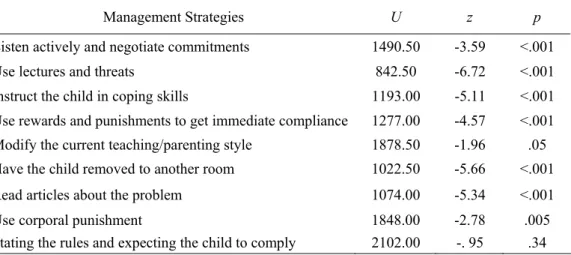
Table 6 presents the results from the significance tests undertaken which investigate differences between informants on their use of strategies to manage children’s behaviour problems.
Mann-Whitney U tests were selected over their parametric alternatives as the authors wanted to ensure a conservative and cautious approach to data analysis. A significant difference between parents and teachers was found for listening actively and negotiating commitments, p <. 001, lectures and threats, p <. 001, instructing the child in coping skills, p <. 001, rewards and punishments, p <. 001, modifying the current teaching or discipline style, p =. 051, removing the child to another room, p <. 001, reading articles about the problem, p <. 001, and corporal punishment, p =. 005. No significant difference between parents and teachers was found for stating rules and expecting the child to comply, p =. 34.
DISCUSSION
The primary aim of this study was to investigate the extent to which parents and teachers identify children as having behaviour problems in the clinical range at home and kindergarten. A further aim was to investigate parents’ and teachers’ responses to misbehaviour. The first research question was in regard to the distribution of behaviour problems in the moderate/ high risk range for children in the regular kindergarten sample. The results of this study indicate a small, yet clinically significant number of children were reported to have behaviour problems in the moderate/high risk range across settings and in single settings only.
The second research question investigated the distribution of behaviour problems in the moderate/high risk range for kindergarten children referred to a clinic setting. In contrast to the regular kindergarten sample, it was found that the majority of children had reported behaviour problems in the moderate/high risk range across settings. The results indicate that behaviour problems in this group also occur in single settings only.
The third question pertained to whether parents and teachers differed in their use of strategies when managing children’s behaviour problems. The results clearly indicate that informants differed significantly in most of their responses to children’s misbehaviour. Each of these research questions will now be examined in detail.
ISSN 1446-5442 Web site: http://www.newcastle.edu.au/journal/ajedp/
Figure 2. Mean strategies used by teachers and parents for managing behaviour problems in kindergarten children. 0 10 20 30 40 50 60 70 80 90 100 Liste n an d Neg otiate Lect ure/T hreat Copin g Sk ills Rew ards/P unish men ts Modify D/T Sty le Rem ove fro m R oom Read Arti cles Corp oral P unish ment State Ru les M anagement Strategies % of Strategies Used Teacher Parent
Note. High scores indicate parents/teachers are more likely to use the strategy in managing children’s misbehaviour
Table 6: Significance Test Results for Differences Between Parents’ and Teachers’ use of strategies for Managing Behaviour Problems.
Management Strategies U z p
Listen actively and negotiate commitments 1490.50 -3.59 <.001
Use lectures and threats 842.50 -6.72 <.001
Instruct the child in coping skills 1193.00 -5.11 <.001 Use rewards and punishments to get immediate compliance 1277.00 -4.57 <.001 Modify the current teaching/parenting style 1878.50 -1.96 .05 Have the child removed to another room 1022.50 -5.66 <.001 Read articles about the problem 1074.00 -5.34 <.001
Use corporal punishment 1848.00 -2.78 .005
Stating the rules and expecting the child to comply 2102.00 -. 95 .34
ISSN 1446-5442 Web site: http://www.newcastle.edu.au/journal/ajedp/
Prevalence and Cross Informant Agreement
The results of this study indicate that there were children in the regular kindergarten sample who were considered to display behaviour problems across settings. In addition, there were also children reported to exhibit behaviour problems in the moderate/high risk range in one setting only. It was found that the prevalence rate of behaviour problems for children aged 3-5 years was 27% when the parent was the informant. When the teacher was the informant, this prevalence rate was lowered to 9%. When parents and teachers were taken together (with both informants rating the behaviour to be in the moderate/high risk range) the prevalence of behaviour problems was 9%. These rates are all higher than the rates identified by Little et al. (2000), who found prevalence rates of 22.4% (parent), 10.5% (teacher), and 5.6% (both). Thus the current study found that prevalence rates were a little higher for kindergarten children than that found previously for primary school children. This may be the result of the different measurement tools used, as Little et al. (2000) used the Child Behavior Checklist (CBCL; Achenbach & Edelbrock, 1983) and the current study used the PKBS-2 (Merrell, 2002).
It may also be the case that primary school children have developed more self-control than kindergarten children and are therefore less likely to demonstrate problem behaviours. Alternatively, it may be that primary school teachers have more opportunity to demonstrate consistent management skills than kindergarten teachers (given the greater time spent in contact with the children) and therefore school-aged children are less likely to exhibit problem behaviours at school.
Not surprisingly, prevalence rates for behaviour problems were higher for children in the clinic-referred sample than prevalence rates for children in the regular kindergarten sample. Compared to children in the regular kindergarten sample the clinic-referred sample was found to have higher rates of behaviour problems across both settings. In the current study, 63% of clinic referred children fell in the moderate/high risk range for behaviour problems in both the home and school setting, compared with only 9% of the regular kindergarten sample. The results of this study are consistent with an investigation by Little et al. (2000) which revealed that prevalence rates for a school-aged clinic sample were higher than those for children in a regular school sample.
Theoretically these results provide support for the notion that the more severe a child’s behaviour problem, the higher the probability the child will display these problem behaviours across settings. Loeber et al. (1991) report that children who demonstrate behaviour problems across settings have a poorer prognosis than children who demonstrate behaviour problems in one setting only. Given these findings, the implications for intervention are clear. There is a need for children in regular kindergarten settings to have their behaviour problems targeted as early as possible to prevent these behaviours escalating. In addition, these results highlight the need for consistent interventions across home and kindergarten in order to reduce the impact of cross setting factors.
The discussion above relates to the number of children rated by parents and teachers as having behaviour problems in the moderate/high risk range. In regard to cross informant agreement, studies on teachers’ and parents’ reports of child behaviour in regular kindergarten samples have found only modest levels of agreement (.29 to .50) (Keenan & Lachar, 1988; Vitaro et al., 1991; Winsler & Wallace, 2002).
Achenbach et al. (1987) found a correlation of .27 between parents and teachers when reporting on behaviour problems. A similar Australian study by Little et al. (2000) found a correlation of .39 between parents and teachers when reporting on behaviour problems in a regular school-aged sample. The results of the current study also show low levels of agreement. In fact, agreement between parents and teachers was far lower than previous studies (r = .10). As kindergarten children spend relatively small amounts of time with their kindergarten teacher (usually only a few sessions each week, lasting approximately 3 hours each session), it may be that there is less time for the child to display behavioural problems. It may also be the case that there are less constraints in the kindergarten class for children to react to. The demands of the kindergarten class may be much less than the demands for focussed attention in the primary school class. It may be that children also have a greater ISSN 1446-5442 Web site: http://www.newcastle.edu.au/journal/ajedp/
choice in activities in the kindergarten class. In primary school, teachers may have more opportunity to observe behavioural problems similar to those shown by the child at home.
As expected, cross-informant agreement was higher for the clinic-referred kindergarten sample than for the regular kindergarten sample. These results are consistent with the findings by Little et al. (2000) who found agreement was higher for children referred to a clinic setting when compared to the regular school sample. These higher results for clinic referred children may reflect a recognition that severe behaviour problems are more likely to be seen by adults across settings as the child may be less likely to differentiate between settings and have less inhibitory skills. Given the clinically significant prevalence of behaviour problems in both the kindergarten and home settings, it is imperative that parents and teachers have effective management strategies.
Management Strategies
The management strategies used by parents and teachers to deal with behaviour problems for preschool children has not been widely researched. In the current study it was found that parents and teachers differed significantly on most of their responses to behaviour problems. Of the 9 management strategies, parents and teachers differed on 8 of 9 of their responses to misbehaviour. No significant difference was found between parents and teachers on their use of rules and subsequent compliance expectancy in dealing with misbehaviours. While these rules and compliance expectancies occur in different contexts (classroom versus home setting) and possibly differ in qualitative nature, they both occur in a wider common societal context. All members of a society are expected to be aware of societal rules and by
implication adhere to them.
For four of the six proactive management strategies, it was found that teachers were more likely than parents to use the strategies (listening and negotiating commitments, instructing the child in coping skills, modifying the discipline style, and reading articles on the problem). Further, of the 3 reactive approaches to misbehaviour, it was found that teachers reported being less likely to use all of these strategies compared to parents: including the use of lectures and threats, corporal punishment, and having the child removed to another room.
Taken together, the data collected from parents and teachers in this study indicate that parents and teachers at the kindergarten level are employing different strategies to manage behaviour problems. In addition, the results indicate that teachers are using more proactive strategies than parents to deal with behaviour problems, while parents appear to be using more reactive approaches than teachers. In addition to the use of more proactive strategies in the kindergarten setting compared with home, teachers were also reporting lower levels of behaviour problems. These results are consistent with previous research into parent behaviour that found reactive strategies were linked with higher levels of behaviour problems than proactive strategies (Gardner et al., 1999).
Perhaps parents are modelling the more traditional disciplinary practices used by their parents in response to misbehaviour. Alternatively, it may be that parents perceive reactive approaches as quick and easy and therefore the more favourable alternative for dealing with children’s problem behaviours. The reasons behind choice of strategy are yet to be
investigated. In addition, the finding that teachers were more likely than parents to employ proactive strategies was not surprising in light of the training teachers receive on behaviour management and preventative interventions.
Gardner et al. (1999) found that the use of reactive strategies to deal with behaviour problems at age three years may predict a continuation of behaviour problems in later years. There is a clear need for a shift toward, and emphasis on, more preventative approaches for addressing problem behaviours at home for children in the kindergarten period. Parents may benefit from information in the form of tip sheets that highlight the use of preventative strategies for dealing with early and less severe behaviour problems. Alternatively, greater access to low cost parent-training groups via maternal and child health care centres (before the child enters kindergarten) that specifically target common behaviour problems of preschool children is needed.
ISSN 1446-5442 Web site: http://www.newcastle.edu.au/journal/ajedp/
In addition, individualised interventions that are consistent across home and kindergarten are needed for those children who are already displaying behaviour problems across settings. Currently, parents and teachers appear to be using independent strategies to deal with
behaviour problems. Clearly, there is a need for interventions that are consistent as informant reports indicate that some children in kindergarten display behaviour problems both at home and kindergarten. Specifically, the need for home-kindergarten cooperation and consistency when dealing with children with behaviour problems should be considered in the development of future prevention and intervention strategies.
Methodological Limitations
There are several methodological limitations that need to be considered when interpreting the results of this investigation. First, sampling bias may have posed a potential confound. Difficulty was encountered in recruiting participants hence results should be interpreted with caution. However, kindergartens involved in the study were from rural and metropolitan Victoria, hence a reasonable spread of SES levels was provided.
Second, the fact that the regular kindergarten sample was biased towards better behaved children was a potential limitation of this study. However, it was predicted that parent response to participate in the study could result in sampling bias in the regular kindergarten sample. Therefore, a clinic-referred kindergarten sample was selected in order to try to target kindergarten children with more problematic behaviour. It is evident from the results that this did in fact allow for a sample that included children with more severe behaviour problems than those included in the initial kindergarten sample.
Third, the characteristics of the participants may have posed a potential confound. Given that parents were asked to complete questionnaires, the sample was biased towards people of English speaking backgrounds. Cultural diversity is an important issue as there are different understandings of behaviour problems and management strategies across different cultures. Therefore, future research needs to investigate the impact of culture on reports of behaviour problems and management strategies.
Finally, the study relied on self-report when asking parents and teachers to describe the strategies they use to manage behaviour problems. It is difficult to ascertain whether parent and teacher self reports are consistent with what is actually used at home and in the
classroom. Conducting systematic observations of parents and teachers in each setting and comparing the results to the self report (parent or teacher) is needed to ameliorate this potential bias in future research.
Despite the acknowledged limitations of this research, the present findings indicate that even at kindergarten level some children display behaviour problems in single settings and across settings. Therefore, there is a need for clinicians to develop interventions that can be implemented consistently across settings, and in single settings when warranted to assist parents and teachers to manage children with persistent behaviour problems. Further, the present results indicate that parents and teachers differ in their management of behaviour problems. Reactive approaches are the more common approach used by parents in managing behaviour problems. Therefore, there is a need for clinicians to encourage the establishment of parent groups that emphasise preventative approaches for addressing problem behaviours in kindergarten children Furthermore, with the development of home-kindergarten
partnerships and greater consistency when dealing with behaviour problems, teachers and parents will be in a better position to prevent behaviour problems escalating before the kindergarten child enters the school system.
ISSN 1446-5442 Web site: http://www.newcastle.edu.au/journal/ajedp/
REFERENCES
Achencbach, T.M., & Edelbrock, C.S. (1983). Manual for the Child Behaviour Checklist and Revised Child Behaviour Profile. Burlington, VT: University of Vermont, Department of Psychiatry.
Achenbach, M., McConaughy, S.H., & Howell, C.T. (1987). Child/Adolescent behavioural and emotional problems: Implications of cross-informant correlations for situational specificity. Psychological Bulletin, 101, 213-232.
Campbell, S.B. (1995). Behaviour problems in preschool children: A review of recent research. Journal of Child Psychology and Psychiatry,36, 113–149.
Campbell, L., & Ewing, S. (1990). Follow-up of hard to manage preschoolers: Adjustment at age 9 and predictors of continuing symptoms. Journal of Child Psychology and
Psychiatry, 31, 871-889.
Dodge, K. (1993). The future of research on the treatment of conduct disorder. Development and Psychopathology, 5, 311-319.
Duncan, G. J., Brooks-Gunn, J., & Klebanov, P. K. (1994). Economic deprivation and early childhood development. Child Development, 65, 296-318.
Gardner, F., Sonuga-Barke, E & Sayal, K. (1999). Parents anticipating misbehaviour: An observational study of strategies parents use to prevent conflict with behaviour problem children. Journal of Child Psychology and Psychiatry, 40, 1185-1196.
Kaiser, C.X., & Hancock, A.P. (2004). Parent and teacher agreement on child behaviour checklist items in a sample of preschoolers from low income and predominantly African American families. Journal of Clinical Child and Adolescent Psychology, 33, 303-312. Kazdin, A. E., & Weisz, J. R. (1998). Identifying and developing empirically supported child
and adolescent treatments. Journal of Consulting and Clinical Psychology, 66, 19-36. Keenan, P.A., & Lachar, D. (1988). Screening preschoolers with special problems: Use of the
personality inventory for children. Journal of School Psychology, 26, 1-11.
Kumpulainen, K., Rasanen, E., Henttonen, I., Moilanen, I., Piha, J., Puura, K., et al. (1999). Children's behavioural/emotional problems: a comparison of parents' and teachers' reports for elementary school-aged children. European Journal of Adolescent Psychiatry, 4, 41-47.
Lavigne, J.V., Gibbons, R.D., Christoffel, K.K., Arend, R., Rosenbaum, D., Binns, H., et al. (1996). Prevalence rates and correlates of psychiatric disorders among preschool children. Journal of the American Academy of Child and Adolescent Psychiatry,35, 204–214. Little, E., Hudson, A., & Wilks, R. (2000). Conduct problems across home and school.
Behaviour Change, 17, 69-77.
Loeber, R., Stouthamer-Loeber, M., & Green, S.M. (1991). Age at onset of problem behaviour in boys, and later disruptive and delinquent behaviours. Criminal Behaviour and Mental Health, 1, 229-246.
Luk, S., Leung, P.W., Bacon-Shone, J., Chung, S., Lee, P.W., Ng, R., et al. (1991). Behaviour disorder in preschool children in Hong Kong. British Journal of Psychiatry,158, 213– 221.
Marakovitz, S.E., Campbell, S.B. (1998). Inattention, impulsivity, and hyperactivity from preschool to school age: performance of hard-to-manage boys on laboratory measures. Journal of Child Psychology and Psychiatry,39, 841–851.
McMahon, R. (1994). Diagnosis, assessment, and treatment of externalising problems in children: The role of longitudinal data. Journal of Consulting and Clinical Psychology, 62, 901-917.
Merrell, K.W. (2002). Preschool and Kindergarten Behaviour Rating Scales (PKBS-2). Austin, TX: PRO-ED.
Miller, A., Koplewicz, H.S., & Klein, R.G. (1997). Teacher ratings of hyperactivity, inattention, and conduct problems in preschoolers. Journal of Abnormal Child Psychology, 25, 113-119.
Moffitt, T. E. (1990). Juvenile delinquency and attention deficit disorder: Boys' developmental trajectories from age 3 to age 15. Child Development, 61, 893-910. ISSN 1446-5442 Web site: http://www.newcastle.edu.au/journal/ajedp/
ISSN 1446-5442 Web site: http://www.newcastle.edu.au/journal/ajedp/
Morrison, M., Macdonald, G., & LeBlanc, T. (1999). Conduct problems in young children: Effective early intervention strategies. Oacas Journal, 43, 22-27.
Reginald, D., & Nixon, D. (2002). Treatment of behaviour problems in preschoolers: A review of parent training programs. Clinical Psychology Review, 22, 525-546. Richman, M., Stevenson, J., & Graham, P. J. (1982). Preschool to school: A behavioural
study. London: Academic Press.
Rosen, L.A., Taylor, S.A., O’Leary, S.G., & Sanderson, W. (1990). A survey of classroom management practices. Journal of School Psychology Review, 28, 257-269.
Safran, S., & Oswald, K. (2003). Positive behaviour supports: Can schools reshape disciplinary practices. Council for Excep tional Children, 69, 361-373.
Sourander, A. (2001). Emotional and behavioural problems in a sample of Finnish three-year-olds. European Child and Adolescent Psychiatry, 10, 98-104.
Speltz, M.L., McClellan, J., DeKlyen, M., & Jones, K. (1999). Preschool boys with
oppositional defiant disorder: Clinical presentation and diagnostic change. Journal of the American Academy of Child and Adolescent Psychiatry38, 838–845.
Stormont, M. (2002). Externalizing behavior problems in young children: Contributing factors and early intervention. Psychology in the Schools, 39, 127-138.
Touliatos, J., & Lindholm, B.W. (1981). Congruence of parents’ and teachers’ ratings of children’s behaviour problems. Journal of Abnormal Child Psychology, 9, 347-354. Vitaro, F., Gagnon, C., Tremblay, R. (1991). Teachers’ and mothers’ assessment of children’s
behaviours from kindergarten to grade two: Stability and change within and across informants. Journal of Psychopathology & Behavioural Assessment, 12, 325-343. Webster-Stratton, C. (1993). Strategies for helping early school-aged children with
oppositional defiant and conduct disorders. School Psychology Review, 22, 437-457. Webster-Stratton, C., & Hammond, M. (1997). Treating children with early-onset conduct
problems: A comparison of child and parent training interventions. Journal of Consulting and Clinical Psychology, 65, 93-109.
Wilks, R. (1996). Classroom management in primary schools: A review of the literature. Behaviour Change, 13, 20-32.
Winsler, A., & Wallace, G.L. (2002). Behaviour problems and social skills in preschool children: Parent-teacher agreement and relations with classroom observations. Early Education and Development, 13, 41-58.
Biographical note
Maite Herrera is a registered psychologist currently working for Catholic Family Services. The current paper was completed as part of a masters program at RMIT University Bundoora.
Emma Little is a psychologist and lecturer at RMIT University. She is the author of the book "Kids behaving badly: Teacher strategies for classroom behaviour" and has also authored many book chapters and refereed journal articles