by
Meagan Chase Davis
________________________
Copyright © Meagan Chase Davis 2019
A DNP Project Submitted to the Faculty of the COLLEGE OF NURSING
In Partial Fulfillment of the Requirements For the Degree of
DOCTOR OF NURSING PRACTICE In the Graduate College
THE UNIVERSITY OF ARIZONA
ACKNOWLEDGMENTS
While my name is on the title page, this project is the work and culmination of countless individuals who have helped me along the way. First and foremost, to Dr. Mary Davis, I am so grateful for all of your encouragement, wisdom, and guidance throughout this process. I would not be here without your support and mentorship. I aspire to have as much grace and
professionalism as you have shown me these past two years. You have sacrificed your time to respond to countless emails and have challenged me to keep going forward, for which I am extremely thankful.
To my committee members Dr. Sara Edmund and Dr. Gloanna Peek, thank you for your input throughout this process. I appreciate the time you have taken to read and strengthen my project.
To Dr. Leslie Dupont and Elaine Attiogbe, you are truly gifts placed in my life. Thank you for providing a place for me to find understanding and community during this process, a second set of eyes on my writing, and encouragement to keep moving forward no matter how small the progress. I also acknowledge that sentence was probably too long.
To Mrs. Amy McClendon, thank you for all of your time, patience, and support throughout this process. I am extremely grateful for your friendship and encouragement
throughout the development of this project. Also, to the providers at Just Kids Pediatrics, thank you for taking time out of your day and allowing me to complete my project at your practice.
To all of my clinical instructors, preceptors, and members of their staff, thank you for teaching me the skills I need to become an excellent provider capable of giving exceptional care. Dr. Theresa Allison, Dr. Elizabeth McCabe, Dr. Brittany Mitchell, Dr. Alexis Hayes, Kindness Chukwukere, and Dr. Salimah Cumber, thank you for your patience, grace, and professionalism during my clinical rotations.
To my friends and colleagues who have told me not to give up and believed I could do this even when I did not, thank you from the bottom of my heart. Whether it was lending me a book, listening to me vent, explaining a statistical test, or just being around, I am blessed beyond belief to have you in my life.
Lastly, to my family who have loved me despite my flaws and known me at my worst, thank you is simply not enough. To my mother and father, thank you for teaching me to never give up and for your unconditional love. To my husband, thank you for helping keep our family together and being my rock. To my nana, thank you for always believing in me despite how winding my path has been. To my grandma and grandpa, thank you for teaching me gratitude and allowing me to develop a love of learning. To my children, thank you for becoming
incredible, independent little humans and reminding me of the most important things in life. You all have sacrificed so much for me to be able to accomplish this dream. Thank you for your persistent and unwavering love and support, I am forever grateful.
DEDICATION
For my children: Phoenix, Elliott, and Charlotte.
Remember, no one gets to tell you how big your dreams can be. May you always have the confidence to know your self-worth,
the strength to chase your dreams,
TABLE OF CONTENTS LIST OF FIGURES ...8 LIST OF TABLES ...9 ABSTRACT ...10 INTRODUCTION...12 Background Knowledge ...12 Significance ...15 Local Problem ...17 Needs Assessment ...20
Purpose and PICO Question ...20
Stakeholders ...21
FRAMEWORK ...22
Theoretical Framework ...22
Definitions and Concepts ...26
Primary Care Providers ...26
Evidence-Based Screening...27 Adolescence ...27 Depression ...28 Barriers to Screening ...28 Literature Review ...29 Synthesis of Evidence ...30 Screening Recommendations ...31
Primary Care Provider Barriers ...31
Success of Educational Programs ...32
Strengths ...33
Weaknesses, Gaps and Limitations ...33
METHODS ...34
Design ...34
TABLE OF CONTENTS – Continued
Setting...37
Participants ...38
Intervention ...38
Ethical Considerations...39
Respect for Persons ...40
Justice ...40 Beneficence ...40 Data Collection ...41 Survey Design ...41 Delivery of Content ...42 Data Analysis ...43 Resources ...44 RESULTS ...44 Findings ...44 Demographics ...44 Self-Report of Knowledge ...45
Knowledge Based Quiz ...49
Feedback ...50 DISCUSSION ...51 Summary ...51 Limitations ...52 Future Implications ...53 Conclusion ...54
APPENDIX A: EVIDENCE APPRAISAL TABLE ...55
APPENDIX B: SITE AUTHORIZATION LETTER ...74
APPENDIX C: THE UNIVERSITY OF ARIZONA INSTITUTIONAL REVIEW BOARD (IRB) APPROVAL LETTER ...76
TABLE OF CONTENTS – Continued
APPENDIX D: DISCLOSURE ...78
APPENDIX E: PARTICIPANT PRE-TEST SURVEY ...80
APPENDIX F: EDUCATIONAL INTERVENTION ...83
APPENDIX G: SURVEY REMINDER EMAIL ...95
APPENDIX H: PARTICIPANT POST-TEST SURVEY ...97
LIST OF FIGURES
FIGURE 1. Treatment rates for adolescents with major depressive episodes from SAMHSA. 14
FIGURE 2. Percentages of major depressive episode (MDE) and MDE with severe
impairment among adolescents aged 12 to 17 from 2004-2017 from SAMHSA..15
FIGURE 3. Major depressive episode (MDE) and MDE with severe impairment in the past year among youths aged 12 to 17 from SAMHSA. ...16
FIGURE 4. Past year major depressive episode (MDE) among adolescents aged 12 to 17 in Oklahoma and the United States (annual averages, 2011-2012 to 2014-2015) from SAMHSA. ...19
FIGURE 5. The theory of planned behavior. ...23
FIGURE 6. Model for improvement and PDSA cycle. ...35
FIGURE 7. Indications to screen. ...47
FIGURE 8. Risk factor knowledge. ...48
FIGURE 9. Screening tool knowledge. ...49
LIST OF TABLES
ABSTRACT
Purpose: The purpose of this DNP quality improvement project was to increase primary care provider knowledge about indications for adolescent depression screening.
Background: Approximately 13.3% of adolescents experienced depression in the past year. In Oklahoma alone, rates are increasing, with depression totaling 60% of all mental health illness among adolescents. Primary care providers see approximately 75% of adolescents; however, mental health conditions are missed 84% of the time. Current clinical guidelines recommend screening for adolescent depression during wellness visits or when risk factors are present. Methods: The providers of interest were nurse practitioners, physicians, and physician assistants providing primary care to children between the ages of 12 and 17 in a private pediatric practice group consisting of three clinics. The Model for Improvement guided the process of developing, implementing, and evaluating an educational intervention through use of a pre-test/post-test quantitative design. An email invited participants to complete an anonymous pre-test survey to evaluate knowledge and beliefs surrounding adolescent depression, then view an educational presentation on adolescent depression and screening guidelines, then complete a post-survey to evaluate any changes in knowledge and intention to screen. Results were shared with clinic representatives to help refine the education for future testing cycles and other clinic sites. Results: Data collection took place over one week. Five providers completed both the pre-test and post-test surveys. Provider knowledge scores significantly increased 29% after participating in the education and self-reported knowledge on screening increased.
Conclusions: DNP quality improvement projects like this help develop strategies to increase best practices, leading to improved patient outcomes. Nurse-led improvement programs like this
contribute to healthcare literature and the advancement of the nursing profession by developing patient-centered interventions applicable to a wide variety of providers. Results may be used to develop strategies to increase and align provider practices with best standards to help promote early identification and treatment of adolescents with depression.
INTRODUCTION
Depression has become a pervasive part of America and, when left untreated, can lead to life threatening consequences. Over half of adults with Major Depressive Disorder (MDD) identified that their depression began before the age of 18, displaying an increased need for early identification and treatment (Fleisher & Katz, 2001). Given the current mental health crisis facing America, it is important that primary care providers (PCPs) become comfortable identifying and screening patients for depression, especially during adolescence when the disorder peaks in prevalence (Substance Abuse and Mental Health Services Administration [SAMHSA], 2016).
Background Knowledge
The Centers for Disease Control and Prevention (CDC) (CDC, 2018a), National Institute of Mental Health (NIMH) (NIMH, 2018), and the American Psychiatric Association (APA) (APA, 2017) all describe depression as a mental health disorder characterized by overwhelming sadness, pervasive hopelessness and guilt, feelings of worthlessness; additionally depressive symptoms may include physical ones such as decreased energy, difficulty concentrating, sleep changes, appetite changes, and sometimes observable changes in movement. Depression has no single exact cause, but risk factors include a combination of genetic and biological factors, as well as environmental and psychological factors such as traumatic events, relatives with depression, substance abuse, personal biochemistry, low self-esteem, or even illness such as cancer (APA, 2017; CDC, 2018a; NIMH, 2018). Approximately 1 in 6 adults, or 16 million adults, age 18 or older had a major depressive episode, of which 10.3 million developed a severe impairment (SAMHSA, 2016).
In 2016 the U.S. Preventive Services Task Force (USPSTF) updated their guideline for depression screening for both adults and adolescents and recommended screening both
demographics for depression either as indicated or annually at wellness visits (Siu, 2016a; Siu, 2016b). Use of a validated tool like the Patient Health Questionnaire-9 (PHQ-9) for both adults and adolescents is appropriate and can help indicate those that meet qualification for a diagnosis under the APA (2013) Diagnostic and Statistical Manual 5th edition (DSM-5) for depression. Once diagnosed, treatment can begin and typically uses pharmacologic therapy, psychotherapy or counseling, or a combination of both medication and counseling (NIMH, 2018). Adolescents are at especially high risk for depression and may present with different depressive symptoms based on their developmental and life stage (NIMH, 2018). Depressive symptoms may include irritability, neglected appearance, crying spells with no apparent cause, low self-esteem, extreme sensitivity or fear of rejection and failure, self-harm, frequent somatic complaints, or slowed thinking and speech (Mayo Clinic, 2018).
Adolescence is a developmental age faced with many physical, emotional, and hormonal changes that present unique healthcare challenges. Primary care providers are often the first contact for many adolescents, seeing an estimated 75% of all adolescents, placing them in a favorable position to help screen, identify, and treat adolescent depression (Dihigo, 2014; Haefner, 2016; NIMH, 2015). Often the mood swings caused by adolescent hormone changes can cause providers and parents to dismiss signs and symptoms of depression as simply a
“phase,” with diagnosis missed 62% to 84% of the time (Dihigo, 2014; NIMH, 2017; SAMHSA, 2017). Untreated mental health conditions cause debilitating and potentially life-long
depression occurs during early adolescence (Rhew et al., 2017). Adolescent depression also correlates with multiple other psychiatric disorders later in life, educational impairments, increased risk of unplanned pregnancy, increased self-injuring behaviors, and increased risk of suicide (De Jonge-Heesen et al., 2016). Many times, rather than seek help from school
professionals or parents, adolescents will begin to self-medicate with drugs and alcohol (Dihigo, 2014). Even with proper diagnosis, only 40% of adolescents receive treatment due to barriers such as cost, concerns about mental health stigma, and lack of access to resources. Figure 1 shows the percentages of types of treatment adolescents with major depression receive, and an overwhelming majority receive none at all (NIMH, 2017; Richardson et al., 2014).
Despite this knowledge and endorsement from the U.S. Preventative Services Task Force to perform screening, the prevalence and rates of adolescent depression in America have been increasing since 2011, as reflected in Figure 2 (SAMHSA, 2018; Siu, 2016b).
FIGURE 2. Percentages of major depressive episode (MDE) and MDE with severe impairment among adolescents aged 12 to 17 from 2004-2017 from SAMHSA.
Significance
An estimated 3.1 million U.S. adolescents ages 12 to 17 years old experience a major depressive episode (MDE), therefore it is important for PCPs to understand and know the hallmarks of the disorder (SAMHSA, 2017a). A major depressive episode is defined by the fifth edition Diagnostic and Statistical Manual of Mental Disorders (DSM-5) as a period of two weeks or more of daily or nearly every day presence of depressive symptoms (APA, 2013). Depressive symptoms include: feelings of guilt, worthlessness, fatigue, restlessness, decreased energy, loss of interest in hobbies, concentration problems, sleep disturbances (either too much or too little),
appetite or weight changes (either weight gain or loss), and thoughts of death or suicide (SAMHSA, 2017a).
The 2017 National Survey on Drug Use and Health found that 13.3% of U.S. adolescents had at least one MDE and 70% of those cases experienced severe impairment (Figure 3);
unfortunately, those numbers are projected to grow. Currently, suicide is the second leading cause of death among adolescents (SAMHSA, 2017). Left untreated depression continues into adulthood and is linked to co-occurring substance use disorders and increased number of chronic physical conditions including smoking, heart disease, diabetes, obesity, and asthma (Jolles, Haynes-Maslow, Roberts, & Dusetzina, 2015). Depression, no matter what the age, is
immeasurably costly, and prompt identification and early treatment in adolescence can lead to healthier adults, fewer Emergency Department visits, less addiction, and improved lives (Oklahoma Healthcare Authority [OHCA], 2017a).
FIGURE 3. Major depressive episode (MDE) and MDE with severe impairment in the past year among youths aged 12 to 17 from SAMHSA.
Advanced Practice Registered Nurses (APRNs) have a significant role in addressing adolescent depression nationwide as APRNs critically appraise, implement, and evaluate evidence for practice that promotes improves healthcare outcomes and patient-centered care (American Association of Colleges of Nursing [AACN], 2006). Furthermore, APRN
collaboration with other primary healthcare clinicians such as physicians, physician’s assistants, and mental health specialists facilitates interprofessional cooperation to produce unique dialogue and solutions to complex challenges encountered in different healthcare environments, like the challenges of addressing the mental health needs of adolescents in a primary care practice (AACN, 2006; Interprofessional Education Collaborative Expert Panel, 2011). Taliaferro et al., (2013) found that APRN care remains consistent with best practices for screening and managing depressed adolescents when compared to care provided by family and pediatric physicians. These findings demonstrate the significant APRN ability to improve healthcare outcomes for depressed adolescents while simultaneously easing the primary care burden and closing the gap between affordable, accessible, quality healthcare.
Local Problem
Oklahoma faces many different social issues: Mainly increasing poverty, unemployment, state budget issues, education cuts, healthcare access, and continued economic downturn
(OHCA, 2017b). Due to the increasing national budget deficit, the Congressional Budget Office (CBO) has reduced its Federal Medical Assistance Percentage to Oklahoma, which is typically used to offset costs of increasing health insurance premiums and health care costs for
beneficiaries (OHCA, 2017b). This reduction of assistance, compounded by the projected increase in state budget deficit to $878 million for fiscal year 2018, and continued refusal to
expand Medicaid, has led to funding issues and cuts for multiple state agencies, including the healthcare authority and Medicaid, which provide healthcare access and resources to
impoverished children, pregnant women, and disabled persons (OHCA, 2017b; Fallin, 2017). Most recent findings show children under 18 years old comprise 24.6% of the population (an estimated 954,000 children), and 23.8% of those children are currently living in poverty (OHCA, 2017b). While many of these children qualify for state Medicaid known as Soonercare, Oklahoma has continuously ranked lowest in the nation for overall health for the past decade and is currently 43rd. This led to the Oklahoma State Department of Health issuing health
improvement plans that prioritize children’s health and behavioral health interventions to improve health outcomes statewide (America’s Health Rankings, 2017; Children’s Health Workgroup, 2010; Oklahoma Health Improvement Plan, 2015).
Adolescent mental health faces challenges in both Oklahoma and nationwide.
Oklahoma’s rates of MDE among adolescents ages 12 to 17 years old surpassed national rates for the first time from 2014-2015 with an average of 12.6% in Oklahoma compared to a national average of 11.9% (SAMHSA, 2017b). Figure 4 shows an increase of 2.6% in Oklahoma
FIGURE 4. Past year major depressive episode (MDE) among adolescents aged 12 to 17 in Oklahoma and the United States (annual averages, 2011-2012 to 2014-2015) from SAMHSA.
The most recent data from the Youth Risk Behavior Surveillance System shows
approximately 31.8% of Oklahoma students in grades 9-12 reported symptoms consistent with an MDE without a previous diagnosis (CDC, 2018b). Soonercare currently rewards integrated primary care and behavioral health by policy implementation affecting reimbursement for wellness visits where patients age five to 16 years old receive behavioral health screening (Oklahoma Healthcare Authority, 2017a). Currently endorsed by the American Academy of Pediatrics and Oklahoma Healthcare Authority is the Pediatric Symptom Checklist-17 (PSC-17). The PSC-17 is a 17-item screening tool that has well documented validity and reliability for screening for internalizing disorders (i.e., depression and anxiety, Attention Deficit Hyperactivity Disorder [ADHD]), and externalizing disorders (i.e., physical aggression and disobeying rules)
(Bright Futures, 2018; Kolko & Perrin, 2014). Despite this reimbursement incentive, many barriers exist to effective screening of adolescents at wellness visits.
Needs Assessment
Despite state-backed integrated mental health screenings in primary care settings,
Oklahoma continues to see rates of adolescent depression rise. As previously illustrated in Figure 4, Oklahoma saw MDE rates more than double the increase from previous years between 2014-2015 (SAMHSA, 2017b). With the $898 million budgetary shortfall, mental health services face some of the most devastating funding cuts in already underfunded state health systems (Fallin, 2017). Out of a total of 77 counties in the state of Oklahoma, 72 counties are designated as Mental Health Professional Shortage Areas (Office of Primary Care & Rural Health
Development, 2017). Patients experience better and more cost-effective outcomes when primary care providers are familiar with depression and comfortable with its diagnosis and management (Cheung, Kozloff, & Sacks, 2013; Gruttadaro & Markey, 2011).
Purpose and PICO Question
The purpose of this DNP quality improvement project was to increase primary care provider knowledge about indications for adolescent depression screening. The primary aim of this DNP project is to increase primary care provider knowledge within a one-week timeframe by 15%. The goal of this DNP project is to increase primary care provider knowledge about indications for screening.
A PICO question directs a DNP project by helping to refine and focus the evidence in a literature review and development of an evidence-based intervention. PICO questions are used in evidence-based models to help frame the question in a systematic way, focusing on the problem,
intervention, comparison, and outcome of interest (Polit & Beck, 2017). This DNP project posed the following PICO question:
“Does an evidence-based educational presentation on current screening guidelines increase primary care providers’ knowledge on screening for adolescent depression?”
Stakeholders
Stakeholders are critical to any project’s success and early recruitment. Input from stakeholders is essential to ensure a well-developed, realistic, and site-specific project of value. For this DNP project, stakeholders include the providers, medical staff, and operational
managers. Increasing buy-in for this DNP project utilized a needs assessment, frequent communication, and feedback from members at the practice. By using an interdisciplinary collaborative quality improvement team, the likelihood for a useful and successful educational intervention is increased (Institute for Healthcare Improvement, 2017).
Among the various stakeholders, champions and supporters of the project include Sarah Palm, an MD, whose special interests include behavioral health and adolescents, and Amy McClendon, the office manager and main administrator for the three clinics. Just Kids Pediatrics is a primary care group comprising three clinics in the Greater Oklahoma City Area (Just Kids Pediatrics [JKP], n.d.). The providers consist of six Doctors of Medicine, one Doctor of
Osteopathy, six Master’s Prepared Nurse Practitioners (NP), and one Physician’s Assistant (JKP, n.d.). The variety of training backgrounds, Oklahoma Healthcare Authority’s Strategic Plan stressing behavioral health screening in primary care, and funding cuts to mental health resources and Medicaid have triggered the decision to evaluate the success of current screening practices, provider knowledge, and consistency with guidelines and recommendations.
FRAMEWORK
Theoretical perspectives from multiple disciplines can be used to help organize and guide an intended Doctor of Nursing Practice (DNP) project. A theoretical framework leads to
understanding the multiple factors that interact to influence quality-improvement including barriers and facilitators (Eldridge, 2011; Groll et al., 1997). Motivational theories focus primarily on an individual’s motivation or willingness to change by focusing on the way they make
decisions, personal knowledge and skills, attitudes towards a behavior or practice, and routines or structures in daily professional practice (Ajzen, 1991; Grol et al., 2007). While examining the purpose and developing this DNP project, application of Ajzen’s Theory of Planned Behavior will guide and shape the framework and methods.
Theoretical Framework
Icek Ajzen, a highly distinguished social psychologist, researches the relationships between attitudes and intentions on the likelihood or predictability of behaviors (Fishbein & Ajzen, 2010). Ajzen’s original Theory of Planned Behavior (TPB) was a refinement and extension of the Theory of Reasoned Action (Ajzen, 1991; Fishbein & Ajzen, 1972; Madden, Ellen, & Ajzen, 1992). Ajzen’s theories have successfully been applied to multiple fields
including entrepreneurship, education, health promotion behaviors, and advertising because of its predictive power strength and understanding of the link between cognitive self-regulation and human behaviors (Ajzen & Sheikh, 2013; Burgess et al., 2016; de Leeuw, Valois, Ajzen, & Schmidt, 2015). Ultimately, Ajzen’s Theory of Planned Behavior (Figure 5) helps to predict intentions to perform a certain behavior based on three general beliefs and considerations held by an individual (Burgess et al., 2016; Ajzen, 2011). The basis for these three general beliefs is
comprised of background factors in individual, social, and information domains (Ajzen, 2017). The theory’s versatility and predictive strength allows for the application of the Theory of Planned Behavior to guide the DNP quality improvement project as it aims to understand,
predict, and change health professionals’ behaviors surrounding adolescent depression screening.
FIGURE 5. The theory of planned behavior (Ajzen, 2017).
The Theory of Planned Behavior explains that a person’s behavior is determined by three subjective beliefs: behavioral, normative, and control beliefs (Madden et al., 1992; Perkins et al., 2007) (Figure 5). Behavioral beliefs are personal beliefs held about a behavior that help
determine the individual’s attitude toward the behavior, either positive or negative, and based on beliefs about the consequences of performing or not performing a behavior (Ajzen, 1991; Ajzen, 2011; Perkins et al., 2007). An attitude towards a behavior then forms from the value placed onto it, for example, if a healthcare provider does not personally believe that adolescent depression
screening is beneficial or predictive, this belief directly impacts the provider’s attitude towards depression screening (Ajzen, 2011; Burgess et al., 2016).
Normative beliefs stem from an individual’s perception of external behavioral
expectations placed on them by others: supervisors, co-workers, friends, family members, and patients (Ajzen, 2011; Burgess et al., 2016; Fishbein & Ajzen, 2010). A person’s normative beliefs contribute to the subjective norm, or perceived social pressure to either exhibit or not exhibit a behavior; this directly influences a person’s motivation to comply with external expectations to belong and adhere to situational norms within a setting (University of Massachusetts, n.d.; Ajzen, 1991; Perkins et al., 2007). A healthcare provider may have increased motivation to screen adolescents for depression if they believe it is an expectation at the clinic and a routine part of other providers’ actions.
The third belief in the Theory of Planned Behavior is control belief, or an individual’s perceived power of surrounding factors or resources that may facilitate or prohibit conducting a behavior (Ajzen, 1991; Burgess et al., 2016; Fishbein & Ajzen, 2010). The control belief determines the level of perceived behavioral control a person believes they possess which can increase or decrease the intention to perform a behavior (Burgess et al., 2016). If providers in a setting believe they lack the potential to influence a setting, because of barriers like staffing, time per patient, or lack of opportunities to screen, it directly impacts their motivation and behavioral intentions.
Underneath each belief, interacting in complex synthesis and associations are a person’s background factors in the individual, social, and information domains. A person’s individual background factors include their personality, emotions, intelligence, experiences, and values,
while social background factors would include things like gender, age, education, religion, race, and culture (Ajzen, 2017). Information beliefs are those driven by the individual’s knowledge, interventions, and media, and it is this domain of background factors which evidence-based educational interventions aim to influence (Ajzen, 2011; Ajzen, 2017).
The Theory of Planned Behavior predicts that together, a person’s attitudes, subjective norms, and perceived behavioral controls all contribute and merge to determine a person’s intention to perform a behavior (Ajzen 1991; Fishbein & Ajzen, 2010; Burgess et al., 2016; Perkins et al., 2007). When using TPB to guide a DNP quality improvement intervention, it is important to note the limitations of the theory. Subjective norms or perceived collective beliefs can become unequally weighted in importance when determining intention and motivation, likewise individual differences and personal backgrounds can alter the behavioral prediction ability, and there is always an external control factor, even when it is not perceived by the individual (Ajzen, 2011; Ajzen & Sheikh, 2013)
Using the Theory of Planned Behavior as a foundational guide will allow for an increased understanding of how knowledge, through information and intervention, impacts providers’ current attitudes, subjective norms, and perceived behavioral controls. Perkins et al. (2007) demonstrated that understanding alone was not enough to modify a provider’s behavior. Utilizing the knowledge of commonly cited provider biases, beliefs, attitudes, and perceptions from the literature during the development of the educational intervention will increase the success of adoption and practice of a behavior by providers. By addressing frequent provider beliefs, biases, attitudes, and perceptions, the DNP project’s educational intervention will maximize its impact on increasing provider’s knowledge, perceived behavioral control, positive
attitudes towards adolescent depression screening, and subjective norms of the practice directly influencing providers’ intentions to effectively incorporate adolescent depression screening into their practices.
Definitions and Concepts Primary Care Providers
The definition of primary care and health care providers have evolved over time. In 1996, the Institute of Medicine (IOM) formalized the definition of primary care clarifying it as “the provision of integrated, accessible health care services by clinicians who are accountable for addressing a large majority of personal health care needs, developing a sustained partnership with patients, and practicing in the context of family and community” (IOM, 1996, p. 31). Around this time the Social Security Act (SSA) of 1996 outlined the definition of health care providers, as the Health Insurance Portability and Accountability Act (HIPAA) was enacted and consensus was needed to determine who was considered a covered entity as a health care
provider and subject to the new laws. This paved the way for multiple professionally trained clinicians to change the accessibility of primary care, billing for health care and services provided to individuals (SSA, Section 1861(u) & Section 1861(s), 1997; HIPAA, Sections 261-264, 1996). Guided by these definitions and consensus, primary care providers are health care clinicians who provide billable and reimbursable services to help improve the overall health of a population through implementation of primary, secondary, and tertiary prevention strategies. These services and prevention strategies integrate within practices and aim to decrease morbidity and mortality rates in the population.
Evidence-Based Screening
Evidence-based screenings are secondary prevention strategies that detect illnesses for early intervention and improved outcomes. The accessibility of primary care providers to
patients and communities places them in a singular position to implement screenings for physical and mental health across a wide age range in their patient populations. With the current shortage of mental health providers and multiple medically underserved areas, primary care providers help identify and manage a broad array of mental health conditions at increasing rates, while integrated medical and behavioral health care models have growing evidence in improving access and outcomes for patients, even for pediatric patients (Olfson, 2016; Hobbs Knutson, Meyer, Thakrar, & Stein, 2018).
Adolescence
Recent studies have examined how crude and simplistic divisions and definitions of ages can potentially limit the progress and application of medicine and scientific knowledge,
increasing the difficulty in defining adolescence (Geifman, Cohen, & Rubin, 2013). While the National Library of Medicine defines adolescent between the ages of 13 to 18 years old for Medical Subject Headings (MeSH), the U.S. Preventative Services Task Force (USPSTF) applies the ages 12 to 18 years of age in their guideline recommendations for adolescent depression screenings (National Center for Biotechnology Information [NCBI], n.d.; Siu, 2016). Given the complex hormonal, neurochemical, developmental, and physical changes occurring during puberty, this DNP quality improvement project will define adolescence as the time between the onset of physiologic puberty and the legal age of adulthood, with respect to the age constraints recommended by the USPSTF (Siu, 2016; WHO, 1980). A major mental health illness occurring
during adolescence is depression, which can be screened for and quantified through use of a validated screening tool in primary care to help identify adolescents with depression (Johnson, Harris, Spitzer, & Williams, 2002).
Depression
Depression is a mood disorder and recognized medical illness that causes both physical and emotional symptoms like changes in neurotransmitter levels, decreased brain activity, smaller hypothalamus size, hopelessness, fatigue, feelings of guilt, difficulty concentrating, and even thoughts of death or suicide (Philip, Barredo, Aiken, & Carpenter, 2018; APA, 2013). This differs from the natural and appropriate process of sadness or grief from a loss, in that during grief or sadness an individual’s self-esteem is maintained, and the sadness or painful feelings come in waves with positive memories interspersed (APA, 2013). Depression manifests commonly with feelings of worthlessness and self-loathing and can even cause noticeable changes to a person’s speed of speech or movement (APA, 2013). There are other medical conditions that can mimic depressive symptoms like thyroid disorders, brain tumors, and a vitamin deficiency, which is why it is important for providers to completely and
comprehensively evaluate patients who screen positive for depression (Cheung et al., 2018; Zuckerbrot et al., 2018).
Barriers to Screening
For primary care providers to effectively initiate and screen for depression, their attitudes, values, perceptions, and motivators need to be examined in the context of their current
professional practices and practice settings. Understanding major perceived barriers to depression screening among providers in the practice will allow for the TPB to guide the
intervention and aims, improving the likelihood, or predictive power, for adoption of an
improvement intervention (Perkins et al., 2007; O’Brien, Harvey, Howse, Reardon, & Creswell, 2016; Hobbs Knutson et al., 2018).
Literature Review
A current review of evidence from the literature is necessary to provide a comprehensive and well-developed DNP quality improvement project, especially one that focuses on utilizing a tailored educational program to increase provider knowledge regarding the adolescent depression screening.
The literature searches utilized PubMed. The first search used the key terms “adolescent depression screening primary care” yielded 1714 results. Inclusion criteria were refined to include: publications between January 1, 2013, and March 30, 2018, availability in English, and Human Species. This inclusion criterion yielded 502 articles of which 12 were found to be relevant to the specific nature of this DNP project’s study purpose and question. Research studies were excluded if they were specific to one ethnicity, racial group, or chronic disease, did not apply to adolescents, took place in a country other than North America or Europe, were not peer-reviewed research, were not considered level 2c or higher evidence from the Arizona Health Sciences Library pyramid (Arizona Health Sciences Library [AHSL], 2018), or focused on tool validation or an intervention for adolescent depression. Clinical practice guidelines were excluded if they were apart of older guideline recommendations or if they were not a United States based clinical practice guideline. A second search of PubMed using the key terms: “educational intervention depression primary care providers” with the filters of publication date between January 1, 2013 to March 30, 2018, human species, and English language applied
resulted in 22 articles of which three were relevant to an educational intervention on depression screening for primary care providers. One study was excluded due to its focus on provider education specific to Latin America and the Caribbean. Due to the low return of results, a third search of PubMed using the search “practitioner education intervention depression primary care” which resulted in 72 articles initially with the filters of publication date between January 1, 2013 to March 30, 2018, human species, and English language applied. Additional filters restricting articles to meta-analysis, practice guideline, randomized controlled trial, and systematic review were then applied resulting in 27 results of which two were relevant, but one was excluded due to its focus only on geriatric depression rather than depression in general. This extensive search of the literature resulted in 16 articles pertinent to the proposed project purpose and study question are summarized in an evidence appraisal table (Appendix A).
Synthesis of Evidence
Secondary prevention in healthcare is aimed at screening for the early detection of diseases, disorders, illnesses, or conditions. When performed correctly, screening can lead to earlier initiation of treatment and improved outcomes for patients. When screening is indicated and does not happen a missed opportunity for diagnosis (MOD) occurs, which is a type of diagnostic error (DE) in that the possibility of failing to “establish an accurate and timely explanation of the patient’s health problem(s) or communicate that explanation to the patient” occurred (IOM, 2015, p. 83). Studies include the following: five quantitative systematic reviews, two retrospective chart reviews, one randomized controlled trial, one qualitative descriptive study, one cross-sectional quasi-experimental study, one non-experimental quantitative study, three pre-test/post-test nonexperimental studies, and two quasi-experimental quantitative studies.
The emerging themes of the studies are: screening recommendations, perceived barriers to effective screening, and successfulness of evidence-based educational intervention programs. Screening Recommendations
Screening for adolescent depression has been endorsed in several evidence-based practice guidelines because of its prevalence, associated costs, and the fact that early treatment and
identification help reduce poor outcomes (Cheung et al., 2018; Formann-Hoffman et al., 2016; Haefner, 2016; NIMH, 2017; Rhew et al., 2016; Siu, 2016; Zuckerbrot et al., 2018). As primary care providers are often the first point of contact for many adolescents, they can help bridge treatment gaps in mental health for adolescent youth (Horwitz et al., 2015). Despite clinical practice guidelines recommending adolescent depression screening in a primary care setting, screening rates vary widely throughout the country and different practice settings leading to a missed opportunity for adolescent depression screening approximately 62% of the time (Rinke et al., 2017; Zenlea et al., 2014).
Primary Care Provider Barriers
Many primary care providers cite multiple barriers as reasons for not screening, diagnosing, or treating adolescent mental health problems (Horwitz et al., 2015; O’Brien, Harvey, Howse, Reardon, & Creswell, 2016; Radovic et al., 2015; Richardson et al., 2014). Primary care providers continue to cite inadequate training in treating mental health issues for adolescents, a lack of knowledge on adolescent depression, and limited time as reasons screening and identification remain inconsistent (Horwitz et al., 2015). Other providers cite the lack of mental health resources and providers for referral as a barrier to screening (Horwitz et al., 2015;
O’Brien et al., 2016). Also, many providers perceive parental and patient barriers to depression screening in adolescents (Richardson et al., 2014; Radovic et al., 2015).
Success of Educational Programs
Many factors, including barriers, have been examined to determine what correlates with best practices and increased adherence to adolescent depression screening (Lewandowski et al., 2016; O’Brien et al., 2016; Sinnema et al., 2015). Since inadequate training in adolescent mental health issues and a lack of knowledge are commonly cited reasons for inadequate and
inconsistent screening, a targeted educational intervention specific screening for to adolescent depression can address and mitigate that barrier, (Cheung et al., 2018; Zuckerbrot et al., 2018). An evidence-based educational presentation on current recommendations for screening for adolescent depression should increase provider knowledge on screening. Use of financial incentives, quality measures, large organizational support and policies, protocols, and educational in-services and interventions have shown to help increase screening adherence (Burka, Van Cleve, Shafer, & Barkin, 2016; Lewandowski et al., 2016; Starkey, Wiest, & Amir, 2016; Taliferro et al., 2013; Zenlea et al., 2014). Educational reviews of policies and guidelines help providers build knowledge to be able to screen for adolescent depression (Burka et al., 2016; Falluco et al., 2015; Lewandowski et al., 2016; Starkey et al., 2016; Taliferro et al., 2013; Zenlea et al., 2014).
Both Falluco et al., (2015) and Sinnema et al., (2015) demonstrated that survey utilization could help understand providers’ perceptions of barriers to adolescent depression screening. Furthermore, educational intervention programs designed to address commonly perceived barriers are effective in improving adherence to adolescent depression screening (Falluco et al.,
2015; Sinnema et al., 2015). Educational interventions and programs address barriers and equip providers with the knowledge, support, and resources needed to competently and consistently address adolescent depression needs (Burka et al., 2016; Bhatta, Champion, Young, & Loika, 2018; Falluco et al., 2015; Sinnema et al., 2015).
Strengths
The literature provides diverse insight and perspectives into the problem of adolescent depression including inconsistent screening practices, perceived barriers, and various methods to improve screening through training. The U.S. Preventative Services Task Force (USPSTF) provided a rigorously researched and evidence-based updated guideline in 2016 recommending the use of the Patient Health Questionnaire for Adolescents (PHQ-A) for screening all
adolescents in primary care for MDD (Forman-Hoffmann et al., 2016; Siu, 2016). The American Academy of Pediatrics (AAP) updated their evidence-based guideline for adolescent depression in primary care (GLAD-PC) in 2018, reinforcing previous recommendations for annual
screening for MDD in adolescents, as well as the need for comprehensive provider understanding of MDD (Cheung et al., 2018; Zuckerbrot et al., 2018). Having the consistency throughout the literature and recommendation from healthcare authorities like the USPSTF and AAP,
educational interventions can help to increase provider knowledge, thereby increasing screening rates and reinforcing best practices.
Weaknesses, Gaps and Limitations
Despite research showing that screening leads to earlier detection, adolescent depression screening rates remain low due to a variety of barriers (Zenlea et al., 2014; Siu, 2016). While clinical practice guidelines from the USPSTF and AAP are helpful, there still exists a gap from
evidence to implementation in practice (Sinnema et al., 2015; Lewandowski et al., 2016). While some studies show promise for educational interventions of screening guidelines to help improve provider knowledge of guidelines and intention to screen, long-term evidence and of full
adoption and complete integration into practice has not been studied (Sinnema et al., 2015; Burka et al., 2016; Lewandowski et al., 2016). Finally, further evaluation is necessary to determine if increased identification of depression leads to improved outcomes among adolescents into adulthood.
METHODS Design
To best address the purpose of this DNP quality improvement project a one-group pretest-posttest quantitative design was used. An evidence-based educational intervention on the current recommendations for screening for depression in adolescents was developed and
presented to primary care providers. This pretest, educational intervention, and posttest design measured changes after intervention on provider knowledge and intention (Moran, Burson, & Conrad, 2017). The Model for Improvement framework guided the intervention implementation and data analysis (Langley et al., 2009). Because this project is measuring the effect of an educational intervention on provider knowledge, the use of a pretest-posttest design allowed for examination of the effectiveness of the intervention (Polit & Beck, 2017).
Model for Improvement
The Theory of Planned behavior informed the methods and development of the DNP quality improvement project, while the Model for Improvement framework endorsed by the Institute for Healthcare Improvement (IHI) and developed by the Langley et al., (2009) and the
Associates in Process Improvement (API) guided the DNP quality improvement design itself, prior to the project entering the implementation phase. The Model for Improvement allowed the DNP quality improvement team to set clear aims that illustrated the intended accomplishment, measures that recognized a change as an improvement, and selected the change or intervention to test that resulted in improvement (Langley et al., 2009). See the framework illustrated below in Figure 6.
FIGURE 6. Model for Improvement and PDSA Cycle (Wiley, 2009).
The Model for Improvement, developed by Langley et al., (2009) and strongly endorsed by IHI is comprised of seven steps, four of which encompass what is known as the PDSA cycle (Plan-Do-Study-Act). The Model for Improvement is utilized in improvement science and stems from the work of W. Edwards Deming, which focused on management principles to help
increase quality while reducing costs (IHI, 2018). When applied in a healthcare setting for a DNP quality improvement project, it can also focus on improving patient healthcare outcomes.
The Model for Improvement has seven steps, separated by two distinct parts. The first three steps are questions and can be completed in any order. Primarily, the first step is defining the aim of the project or establishing and specifying what the project will try to accomplish (Langley et al., 2009). This project aimed to increase provider knowledge of adolescent
depression, including risk factors, screening, and the new AAP guidelines, while also increasing provider intention to screen in their personal practice. The next step was to establish measures and confirm objectively that a change occurred and whether it was an improvement (Langley et al., 2009). This DNP quality improvement project utilized a pretest-posttest method to measure both objective knowledge before and after the intervention; Also, survey questions based on the theory of planned behavior were administered in conjunction with objective knowledge
measurement to determine changes in attitude, perceived behavioral controls, subjective norms surrounding adolescent depression screening occurred. The third step in the first part was selecting something to change or addressing what change could be made to make an
improvement (Langley et al., 2009). Many times, team members who work within the clinic or who have experience with similar DNP quality improvement processes can provide insight, ideas, and feedback to help guide what should be changed (IHI, 2018). In this case, an
educational intervention was implemented. Key stakeholders involved in project implementation included the various providers and office manager from Just Kids Pediatrics, however the
The second part of the Model for Improvement is what is commonly called the PDSA cycle, or Plan-Do-Study-Act (Langley et al., 2009). This portion must be completed in the exact order, but after each cycle can be refined and changed. The PDSA cycle was used to test the change before, during, and after implementation. The first portion planed the change including when it would occur, how many would be involved in the first test cycle, and who would be involved. This project outlined the plan for testing the change, and the implementation, or do, the planned change. With implementation, or the second step of the PDSA cycle comes studying or observing the results of the change; what worked well, what barriers were encountered, etc. (Langley et al., 2009). Finally, after studying the results, the last portion of the cycle was to act on what was learned, or to refine the plan. Due to time constraints, this DNP quality
improvement project only completed one test cycle; however, it was sustainable and feasible for the practice to continue the project by taking the results and continuing to refine and improve the knowledge of adolescent depression and rates of screening. Because the education intervention and survey was delivered via online technology, dissemination after refinement is potentially more attainable and more practices may benefit from the evidence-based educational
intervention.
Setting
The setting was a private pediatric group, Just Kids Pediatrics, consisting of three clinics in the greater Oklahoma City area. One clinic resides in the northwest area of Oklahoma City, an area regarded as more affluent and economically advantaged. Another clinic was located on the southwest side of Oklahoma City in an area associated with more socio-economic problems. And, the third clinic served children in the city of Moore, Oklahoma, which is a suburb of
Oklahoma City, and is in an area associated with a mixture of diverse socio-economic factors (Just Kids Pediatrics, n.d.). Written authorization was obtained and can be found in Appendix B.
Participants
Participants were recruited from a convenience sample of the providers from the Just Kids Pediatrics practice group at each of the three clinics. Criteria for participation included: (a) being employed by Just Kids Pediatrics; (b) having an advanced practice degree as defined by the Social Security Act of 1996; and, (c) providing primary care to adolescents between the ages of 11 and 18 years old. This inclusion criteria was chosen because they align with the project aim of improving primary care provider knowledge of adolescent depression screening based on the recently updated clinical practice guideline. Currently the practice has 14 providers including one Doctor of Osteopathy (DO), one Physician Assistant (PA), six Nurse Practitioners (NP), and six Doctors of Medicine (MD), (Just Kids Pediatrics, n.d.). All providers were invited to
participate in the project.
Intervention
The intervention for this DNP project was an evidence based educational presentation focusing on screening of adolescent depression in primary care, (Appendix G). The educational presentation included information from the current literature, American Academy of Pediatrics (AAP), and U.S. Preventive Services Task Force guidelines on adolescent depression screening in primary care. The educational intervention was developed using adult learning theory and professional development recommendations from the CDC’s professional development and training series (Borgogna & Fahrunbruch, 2017). To practice adult learning principles, the educational intervention began with an overview of the presentation, focused on what the
providers need to know and have previous experience with, and engaged the learners utilizing self-check progress reflection and application questions (Borgogna & Fahrunbruch, 2017). The material focused on the importance of adolescent depression screening, indications for screening, screening tools endorsed by the AAP, and how to implement screening into provider practice. Slides were designed to remain simple and not overwhelm providers with details that were discussed in the voice overlay, allowing the bulleted information to help focus on the key points of the education (Borgogna & Fahrunbruch, 2017). Based on findings in the literature that educational training programs help improve provider knowledge and screening practices, the educational intervention addressed commonly cited provider barriers to adolescent depression screening (Taliaferro et al., 2013; Falluco et al., 2015; Sinnema et al., 2015). This included knowledge and understanding of risk factors, how depression manifests in adolescence, recommended screening methods, and how to implement screening in practice. Addressing barriers with possible solutions promoted feasibility and adoption of the information (Finkelman, 2018). The intervention used PowerPoint and addressed only a portion of the updated GLAD-PC guidelines from the AAP; however, further development to address more of the guideline
updates and recommendations could be developed in the form of personal development modules in future PDSA cycles at the practice sites.
Ethical Considerations
Approval for this project was obtained from the University of Arizona College of Nursing Departmental Review Committee. Institutional Review Board (IRB) exemption was obtained stating that the project does not require oversight by the University of Arizona, along with all necessary IRB forms and documents (Appendix C).
Respect for Persons
The project did not involve working with any vulnerable groups such as incarcerated persons, children under the age of 18, pregnant women, nor the mentally, educationally, or economically disadvantaged persons. Sensitive information from electronic health records was not used, and questioning did not include the identity of provider or patients. Participants’ anonymity was ensured with the electronic platform, Qualtrics (2018), which allowed for anonymous survey responses. Participation and response to the survey were voluntary, an important principle of autonomy, and providers were given full disclosure about the project and information to participate (Polit & Beck, 2017). Additional participant anonymity protections included allowing project participation without disclosing demographic information if desired. Justice
Justice was ensured by recruiting providers who benefited from the educational
intervention and who had direct contact in their practice with the targeted population group. The project did not recruit or unfairly target a population, ensuring justice through the equitable selection of participants from the project site. Furthermore, the project utilized inclusion and exclusion criteria that were both fair and integral to the design of the DNP quality improvement process, helping to maintain the ethical principle of justice. As this project aimed to increase provider knowledge, all providers meeting the project criteria received an invitation to participate and were not unfairly coerced or forced into participating (Polit & Beck, 2017). Beneficence
Beneficence refers to the proper attention to maximize benefits and minimize harm to participants of this DNP quality improvement project, which this project design accomplished.
Projected benefits to the project included increased awareness and knowledge of the updated AAP GLAD-PC to screen, treat, and diagnose adolescent depression, and potential strategies to overcome barriers to effective screening and treatment of adolescent depression not previously considered. Potential risks included discomfort in self-reporting attitudes about support and personal professional practice and inconvenience to schedules as surveys and webinars take time. The project was designed to ensure safety and accomplish the project purpose to increase
primary care providers knowledge of and intent to screen for adolescent depression based on the current guidelines.
Data Collection Survey Design
The evidence-based educational intervention was framed by a pre-test and post-test survey for comparison of effectiveness. Both surveys collected five demographic questions such as gender, age, years in practice, and provider educational background; three Likert-based questions allowed providers to rate their knowledge level on adolescent depression screening; and five multiple choice questions tested material directly covered in the educational intervention (Appendix E & H). The questions used a Likert-scale for providers to rate their agreement or disagreement with a statement, allowing for dimension in responses (University of Wisconsin, 2010). This information allowed providers to self-rate their current knowledge level before and after the evidence-based educational intervention to determine if a change occurred in providers self-rated knowledge level on adolescent depression screening. Additionally, both surveys included multiple choice questions to measure provider knowledge of adolescent depression and national guideline recommendations. The knowledge questions were multiple choice with only
one correct answer to avoid confusion and an overly time-consuming survey (University of Wisconsin, 2010). The knowledge-based questions linked directly to the educational content discussed and remained consistent from the pre-test to the post-test. The post-test survey included two open ended question allowing for feedback on the presentation, since an open-ended question allows for valuable information that can guide the next planning phase for follow-up PDSA test cycles (University of Wisconsin, 2010).
Delivery of Content
The project utilized the online survey platform Qualtrics to deliver a link anonymously via email for the pre-test and post-test survey to providers in the practice. Email addresses for providers were obtained from the director of nursing, who approved the project’s
implementation. The office manager informed the providers of the incoming invitation to participate, before this author sent an email invitation containing the project disclosure, link to Qualtrics for the pre-test, educational intervention, and post-test. This email was sent through Qualtrics. The approximate time to complete the pre-test, educational intervention, and post-test was twenty minutes.
Email distribution through the Qualtrics mailer ensured respondent identifying
information was not recorded, and an opt out link accompanied the emails. The email contained the disclosure form for participants (Appendix D), as well as a link to the pre-test survey
(Appendix E), the educational PowerPoint (Appendix F), and the post-test survey (Appendix H). This initial email marked day 1 of the project. A survey reminder email was sent after four days and again 24 hours prior to the survey closing (Appendix G). Data collection occurred over seven days, with the reminder email sent at three days prior to the survey ending and again 24
hours prior to closing. Qualtrics survey platform design ensured that participants completed the pretest and intervention prior to allowing for a posttest. A second link after completion of the posttest allowed participants the option to provide a mailing address if they wanted to receive a $15 gift card for their time. This did not link to their surveys and gift cards were mailed after the survey has completely closed.
Data Analysis
Since the demographic information utilized nominal, ordinal, and ratio responses, simple percentages were used to help illustrate the parameters of the population of providers (Polit & Beck, 2017). The second portion of the survey used Likert-scale data allowing for quantitative statistical analysis (Polit & Beck, 2017). Proposal planned to use IBM statistical software
platform SPSS to analyze the information for the project with the Wilcoxon matched pairs signed rank test (IBM Analytics, 2018). The Wilcoxon matched pairs signed rank test is a
non-parametric statistical analysis that would have allowed for comparison of the participant group at two time points: before and after the educational intervention. However, given the small number of respondents and ability to illustrate the improvement and project utilizing more basic
statistical methods, the author chose not to utilize the Wilcoxon matched pairs signed rank test. The five questions measuring objective knowledge of the guidelines in each survey were scored using traditional educational percentage of correct answers to determine if any increases in knowledge occurred with a goal of 15% increase in scores overall. Finally, the two open ended questions on the posttest survey employed content analysis to examine participant suggestions on how to improve the evidence-based educational intervention for the next PDSA-cycle.
Resources
DNP quality improvement projects require planning, funding, and various resources for implementation. There were several resources available to the author at no cost, which are reviewed subsequently. For the proposed project evidence-based information on adolescent depression from the U.S. Preventative Services Task Force clinical practice guideline, the American Academy of Pediatrics GLAD-PC guideline, and the AAP GLAD-PC toolkit were utilized for development of the educational intervention. Evidence-based educational information from ProjectTEACH NY, the AAP GLAD-PC guideline, and the AAP GLAD-PC toolkit were utilized to develop the pre-test and post-test knowledge measurement questions. Ajzen’s (n.d.) guide for constructing a Theory of Planned Behavior questionnaire was utilized to develop the pre-test and post-test behavioral beliefs, normative beliefs, and control beliefs questions. The Qualtrics survey platform was used for data collection and intervention distribution and was available free of charge to students at the University of Arizona. PowerPoint software being utilized for the development of the educational intervention was also available at no cost to the author. The use of these free resources helped to decrease the project budget, allowing for a cost effective DNP quality improvement project.
RESULTS Findings Demographics
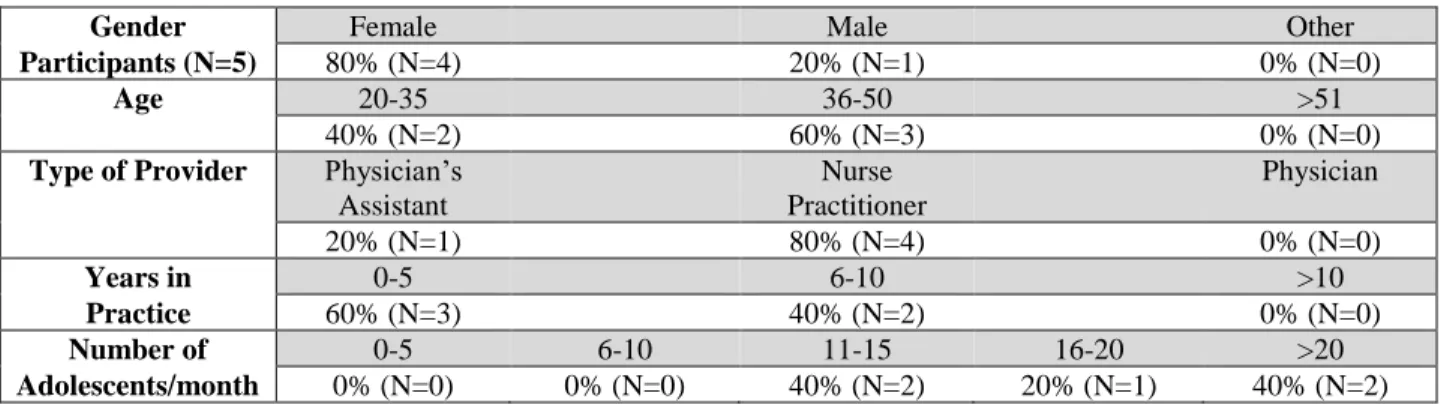
Out of the 15 providers invited to participate, six completed the pre-test survey (Appendix E) and only five completed the intervention and post-test survey (Appendix H). Demographic information (Table 1) depicts the characteristics of study participants who
completed both the pre-test and post-test. One participant was male (N=1, 20%), while four were female (N=4, 80%); two participants were between the ages of 20 to 35 years old (N=2, 40%), and three were between the ages of 36 to 50 years old (N=3, 60%). One participant was a Physician’s Assistant (PA) (N=1, 20%), while the remaining four participants were Nurse Practitioners (NP) (N=4, 80%); no physicians participated. Three participants had less than five years of practice (N=3, 60%) and two had between 6 to 10 years of experience in practice (N=2, 40%). Two participants estimated seeing 11 to 15 adolescent patients per month (N=2, 40%), another one estimated seeing 16 to 20 adolescent patients per month (N=1, 20%), and two estimated seeing more than 20 adolescent patients per month (N=2, 40%).
TABLE 1. Participant demographics.
Gender Female Male Other
Participants (N=5) 80% (N=4) 20% (N=1) 0% (N=0)
Age 20-35 36-50 >51
40% (N=2) 60% (N=3) 0% (N=0)
Type of Provider Physician’s Assistant Nurse Practitioner Physician 20% (N=1) 80% (N=4) 0% (N=0) Years in 0-5 6-10 >10 Practice 60% (N=3) 40% (N=2) 0% (N=0) Number of 0-5 6-10 11-15 16-20 >20 Adolescents/month 0% (N=0) 0% (N=0) 40% (N=2) 20% (N=1) 40% (N=2) Self-Report of Knowledge
After entering demographic information providers were asked to rate their agreement with statements on: 1) knowledge of indications to screen for adolescent depression; 2)
knowledge of common risk factors associated with adolescent depression; and, 3) knowledge of AAP recommended adolescent depression screening tools. Three questions were rated using a five-point Likert scale (5= strongly agree; 4= somewhat agree; 3= neither agree nor disagree; 2=somewhat disagree; 1= strongly disagree), and the results of those averages are displayed
below in Figure 7. Six providers completed the pre-test survey, but only five providers completed the post-test survey questions. Because this participant withdrew from the project prior to completion of the evidence-based educational intervention, their responses have been excluded from results.
The first question asked providers to rank their agreement with the statement, “I know how to identify indications to screen for adolescent depression.” Pre-test responses included four providers marking somewhat agree (N=4) and one provider marking somewhat disagree (N=1). After the intervention, three providers marked strongly agree (N=3), one provider marked
somewhat agree (N=1), and one provider marked neither agree nor disagree (N=1). According to the individual responses, four of the five providers increased by one point of the Likert-scale from the pre-test to the post-test, and one provider responded the same after the educational intervention. The results comparing the pretest to posttest responses can be seen in Figure 7 below.
FIGURE 7. Indications to screen.
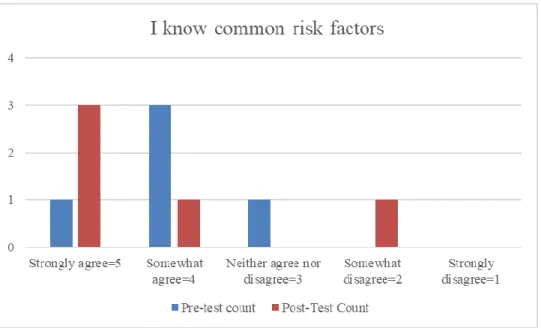
The second question asked providers to rank their agreement with the statement: “I know common risk factors associated with depression among adolescents ages 12 – 17.” On the pre-test survey, one provider marked ‘strongly agree’ (N=1, 20%), three providers marked
‘somewhat agree’ (N=3, 60%), and one provider marked ‘neither agree nor disagree’ (N=1, 20%). For the post-test survey three providers stated they ‘strongly agree’ (N=3, 60%), one provider marked ‘somewhat agree’ (N=1, 20%), and one provider marked ‘somewhat disagree’ (N=1, 20%). Two of the providers remained the same after intervention while two providers increased in agreement by one point and one provider decreased in agreement by one point. The results comparing the pre-test to post-test responses can be seen in Figure 8 below.
FIGURE 8. Risk factor knowledge.
The final five-point Likert-scale question providers were asked was, “I know what adolescent depression screening tools are currently recommended by the American Academy of Pediatrics.” During the pre-test three providers selected ‘strongly agree’ (N=3, 60%), one
selected ‘somewhat agree’ (N=1, 20%), and one selected ‘somewhat disagree’ (N=1, 20%). After the educational intervention, of the five providers that responded, three selected ‘strongly agree’ (N=3, 60%), one selected ‘somewhat agree’ (N=1, 20%), and one selected ‘somewhat disagree’ (N=1, 20%). Three of the providers remained the same after the educational intervention while one provider decreased in agreement with the statement by one point and another increased in agreement by one point. The results comparing the pre-test responses to the post-test responses can be seen below in Figure 9.
FIGURE 9. Screening tool knowledge. Knowledge Based Quiz
After answering the Likert scale questions, participants filled out a five-question multiple choice quiz covering material directly reviewed during the evidence-based educational
presentation. Participants completed the pre-test with an overall group average score of 57%, which increased to 80% after the educational intervention (Figure 10). This is a 23% increase in average test scores for all participants after the evidence-based educational intervention.
However, when comparing individual scores, two participants received the same scores on the pre-test and post-test quiz, one participant’s score decreased, and two participants’ scores increased.
FIGURE 10. Knowledge quiz score. Feedback
The project concluded with two open-ended questions allowing providers to give feedback. Three responded to the question, “what did you find beneficial about the presentation?” One provider stated the powerpoint presentation, another the PHQ-2
recommendation, and a third found the crisis text line recommendation beneficial. Only two participants gave feedback on how the project can be improved for future presentations. One participant suggested further next steps and other helpful ways to easily implement screening. The other participant recommended defining the GLAD-PC acronym, and providing more
DISCUSSION Summary
The purpose of this DNP quality improvement project was to increase primary care provider knowledge about indications for adolescent depression screening. The use of evidence-based educational interventions has been established as an effective method for delivery of information to adult learners (Lewandowski et al., 2016; O’Brien et al., 2016; Sinnema et al., 2015). The primary aim to increase knowledge within a one week time frame by 15% was successful. The project demonstrates that participation in evidence based educational interventions was associated with improvement in adolescent depression knowledge. Additionally, providers’ self report on the Likert-scale question “I know how to identify indications to screen for adolescent depression,” met the goal to increase primary care provider knowledge about indications for screening. Additionally, two providers improved their
knowledge of common risk factors for adolescent depression, and one improved their knowledge of recommended screening tools. The findings are consistent with the effectiveness of QI
projects and evidence-based educational interventions for providers, but show that more emphasis on risk factors and screening tools may be helpful in future PDSA test cycles.
According to the Theory of Planned Behavior (TPB), a person’s attitudes, subjective norms, and perceived behavioral controls all contribute and merge together to determine a person’s intention to perform a behavior (Ajzen 1991; Fishbein & Ajzen, 2010; Burgess et al., 2016; Perkins et al., 2007). Background factors such as providers’ individual differences, knowledge, values, and personality help to form the behavioral, normative, and control beliefs that precede an individual’s attitudes, subjective norms, and perceived behavioral control (Ajzen