HOMOCYSTEINE AND ENDOTHELIAL FUNCTION
by
Michael Francis Bellamy
BSc (Hons), MB BS (Hons), MRCP (UK)
ProQuest Number: U642510
All rights reserved
INFORMATION TO ALL USERS
The quality of this reproduction is dependent upon the quality of the copy submitted. In the unlikely event that the author did not send a complete manuscript and there are missing pages, these will be noted. Also, if material had to be removed,
a note will indicate the deletion.
uest.
ProQuest U642510
Published by ProQuest LLC(2015). Copyright of the Dissertation is held by the Author. All rights reserved.
This work is protected against unauthorized copying under Title 17, United States Code. Microform Edition © ProQuest LLC.
ProQuest LLC
789 East Eisenhower Parkway P.O. Box 1346
Abstract
Dysfunction of the endothelium is an early event in the pathophysiology of atherosclerosis. Elevated plasma homocysteine (Hey) is a risk factor for vascular disease which may be mediated by endothelial injury. The thesis describes a series of clinical and laboratory experiments to investigate the relationship between Hey and endothelial function.
Non-invasive measurement of endothelial dysfunction in humans was assessed in the forearm as an impaired increase in brachial artery diameter during reactive hyperaemia (shear stress-induced, nitric oxide-mediated vasodilatation). Responses were compared with endothelium-independent vasodilatation following sublingual glyceryl trinitrate. Flow-mediated brachial arteiy dilatation (FMD) using this method, was shown to be an endothelium-dependent mechanism and normal values for the population established with the addition of regression modelling to define an appropriate index to represent endothelium-dependent and -independent responses.
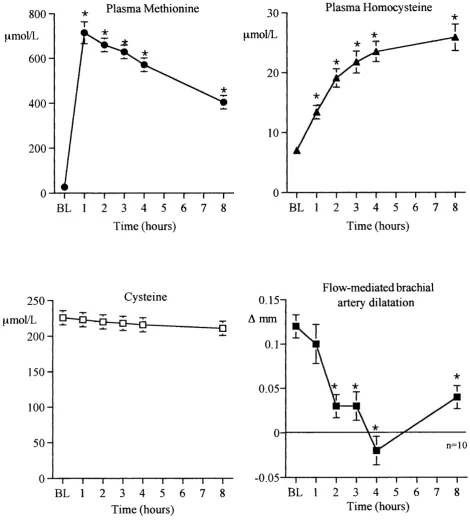
An association between hyperhomocysteinaemia and FMD was demonstrated in (i) homozygous homocystinuria, (ii) following an acute elevation of plasma Hey after oral methionine loading (an effect that was partially reversed by the prior oral administration of vitamin C), and (iii) in subjects with low B 12/folate status (where
elevated Hey resulted from impaired remethylation). However, in a cross-sectional population study across the range of Hey concentrations no correlation between Hey and FMD was observed. In healthy subjects with mild hyperhomocysteinaemia, oral folic acid supplementation (5mg daily for 6 weeks) enhanced FMD and lowered Hey, providing preliminary evidence that folate may have beneficial cardiovascular effects in adults with elevated Hey levels.
Declaration
The work described in this thesis, except where indicated otherwise, is my own and was carried out in the Departments of Cardiology and Pharmacology and Therapeutics, University of Wales College of Medicine (UWCM), Cardiff between May
1995 and July 1997.
Acknowledgements
I wish to thank my supervisor. Professor Malcolm Lewis for his guidance, encouragement and support and Dr Ian McDowell for advice, many hours of patient discussion and analyses of homocysteine samples by HPLC. I am also grateful to Mark Ramsey and Jonathan Goodfellow for their considerable effort in helping to achieve funding for my research, continued support and initial practical advice when the research first started.
I particularly thank Moira Ashton for her help and enthusiasm in all aspects of recruitment, sample collection (made possible by the kind cooperation of the Welsh Blood Transfusion Service) and day to day organisation of the clinical studies together with Sharon Gorman and Catherine Bones for their assistance in performing the large number of vascular measurements. I also thank Robert Newcombe and John Wilson for statistical advice and help with analysis of the data.
The laboratory tissue bath preparations, used to investigate mechanisms of action of homocysteine on endothelial function, were carried out with the help and instruction of Derek Lang with additional thanks to David Edwards for providing tissue samples when required. The MTHFR genotyping was kindly performed by Zoe Clark, methionine and cysteine assays by Don Bradley and vitamin B 12/folate assays by Richard Ellis at UWCM. Nitrotyrosine assays were performed by Professor Richard Bruckdorfer’s laboratoiy at the Royal Free Hospital School of Medicine, London. Finally, I would like to thank my wife Johanna for her encouragement and practical support over a long period of time.
CONTENTS
Page CHAPTER 1 INTRODUCTION
1.1 Background 15
1.2 Metabolism of homocysteine and its regulation 16
1.2.1 Nomenclature 16
1.2.2 The methionine cycle and transsulphuration pathway 16
1.2.3 Regulation of the cycle 19
1.3 Assessment of homocysteine status 20
1.3.1 Methionine loading 20
1.3.2 Determinants of plasma homocysteine 20
1.4 Pathogenesis of hyperhomocysteinaemia 21
1.4.1 Inherited and congenital defects 21
1.4.2 Acquired disorders 23
1.5 Vascular pathology in homocystinuria 26
1.6 Cardiovascular disease and mild hyper homocysteinaemia: cause or indicator?
28
1.7 Putative mechanisms for vascular injury 29
1.7.1 Cellular toxicity and endothelial injury 30
1.7.2 Free-radical mediated damage 32
1.7.3 Homocysteine and thrombosis 33
1.7.4 Cellular matrix effects 34
1.8 Hypotheses and aims 36
CHAPTER 2 NON-INVASIVE MEASUREMENT OF ENDOTHELIAL FUNCTION USING ULTRASONIC VESSEL WALL TRACKING
2.1 Introduction 39
2.2 Subjects 41
2.3 Methods 41
2.3.1 Non-invasive measurement of flow-mediated brachial arteiy dilatation
41
2.3.2 Intra-arterial infusion of L-NMMA 53
2.3.3 Statistical analysis 57
2.4 Results 58
2.4.1 Effect of N^- monomethyl L-arginine (L-NMMA) 58
2.4.2 Normal values and repeatability 58
2.4.3 Regression models for flow-mediated and GTN-mediated brachial artery dilatation
63
2.4.4 Effect of age 66
2.4.5 Estimation of sample size and power calculations 66
CHAPTER 3 HYPERHOMOCYSTEINAEMIA AND ENDOTHELIAL FUNCTION AFTER AN ORAL METHIONINE LOAD
3.1 Introduction 3.2 Subjects
3.3 Methods
3.3.1 Study design
3.3.2 Measurement of endothelial function 3.3.3 Blood samples and assays
3.3.4 Statistical analysis
3.4 Results
3.4.1 Crossover study 3.4.2 Time-course study 3.4.2.1 Methionine
3.4.2.2 Methionine and vitamin C 3.5 Discussion
70 71 71 71 74 75 75 76 76 76 76 81 84
CHAPTER 4 VITAMIN STATUS AS A DETERMINANT OF PLASMA HOMOCYSTEINE AND ENDOTHELIAL FUNCTION 4.1 Introduction
4.2 Subjects
4.3 Methods
4.3.1 Clinical assessment 4.3.2 Blood samples and assays 4.3.3 Protocol
4.3.4 Measurement of endothelial function 4.3.5 Statistical analysis
4.4 Results
4.4.1 Measurements in blood 4.4.2 Brachial artery study 4.4.2.1 Homocystinuria
4.4.2.2 Low vitamin B12/folate status versus controls 4.5 Discussion
87 87 89 89 91 91 91 91 92 92 96 96 96 102
CHAPTER 5 RELATIONSHIP BETWEEN PLASMA HOMOCYSTEINE AND ENDOTHELIAL FUNCTION IN THE GENERAL POPULATION: A CROSS-SECTIONAL STUDY
5.1 5.2 5.3 5.3.1 5.3.2 5.3.3 Introduction Subjects Methods Study design
Measurement of endothelial function Blood samples and assays
5.4.2 Determinants of plasma homocysteine concentration: sex, folate, vitamin B12 and creatinine
110 5.4.3 Relationship between plasma homocysteine and flow-
related endothelial function
110
5.5 Discussion 116
[APTER6 EFFECT OF ORAL FOLIC ACID SUPPLEMENTATION ON ENDOTHELIAL FUNCTION IN MILD
HYPERHOMOCYSTEINAEMIA
6.1 Introduction 118
6.2 Subjects 119
6.3 Methods 120
6.3.1 Study design 120
6.3.2 Measurement of endothelial function 120
6.3.3 Blood samples and assays 120
6.3.4 Statistical analysis 122
6.4 Results 122
6.4.1 Measurements in blood 122
6.4.2 Brachial artery study 125
6.4.3 Methylenetetrahydrofolate reductase genotype 130
6.5 Discussion 132
[AFTER 7 INVESTIGATION OF THE MECHANISMS BY WHICH HOMOCYSTEINE MODULATES ENDOTHELIUM- DEPENDENT RELAXATION IN VITRO
7.1 Introduction 135
7.2 Methods 136
7.2.1 Aortic ring preparations 136
7.2.2 Sample preparation 140
7.2.3 Experiments with antioxidants 140
7.2.4 Experiments with the calcium ionophore, A23187 141
7.2.5 Statistical analysis 141
7.3 Results 142
7.3.1 Homocysteine experiments 142
7.3.2 Other transsulphuration pathway constituents 145 7.3.3 Effect of prior incubation of homocysteine and cysteine
with superoxide dismutase, catalase, vitamin C and Tiron
149
7.4 Discussion 154
CHAPTER 8 SUMMARY, CONCLUSION AND FUTURE PERSPECTIVES
157
LIST OF ABBREVIATIONS
Ach - Acetylcholine
ACE - Angiotensin converting enzyme
ADMA - Asymmetric dimethyl arginine
BL - Baseline
CBS - Cystathionine p-synthase
CAT - Catalase
Choi - Total serum cholesterol
Creat - Creatinine
CV - Coefficient of variation
DBP - Diastolic blood pressure
+E - Endothelium intact
-E - Endothelium denuded
EDD - End-diastolic diameter
A EDO - Change in end-diastolic diameter
A EDDmax - Maximum change in end-diastolic diameter
EDRF - Endothelium derived relaxing factor
ELISA - Enzyme-linked immunosorbent assay
A Flow - Change in arterial blood flow
FMD - Flow-mediated vasodilatation
Glue - Serum glucose
GMP - Guanosine monophosphate
H2O2 - Hydrogen peroxide
HPLC - High performance liquid chromatography L-Arg - L-arginine
LDL - Low density lipoprotein L-NMMA - N^-monomethyl L-arginine Lp(a) - Lipoprotein (a)
MCV - Macrocytic volume
MTHFR - Methylenetetrahydrofolate reductase
NADH - Nicotinamide adenine dinucleotide (reduced)
NADPH - Nicotinamide adenine dinucleotide phosphate (reduced) NO - Nitric oxide
ecNOS - Endothelial constitutive nitric oxide synthase NS - Non significant
OR - Odds ratio
O2 - Superoxide anion
ONOO - Peroxynitrite radical PGA - Perchloric acid PE - Phenylephrine QC - Quality control
r - Correlation coefficient
RF - Radiofrequency (of ultrasound) Rmax - Maximum relaxation response SAH - S-adenosylhomocysteine SAM - S-adenosylmethionine
SBD-F - Ammonium 7-fluoro-2-oxa-l,3-diazole-4-sulphonate
SBP - Systolic blood pressure
SD - Standard deviation
SDMA - Symmetric dimethyl arginine SEM - Standard error of the mean SNP - Sodium nitroprusside SOD - Superoxide dismutase SST - Serum separation tube THF - Tetrahydrofolate
LIST OF TABLES
Page
Table 1.1 Causes of hyperhomocysteinaemia 22
Table 2.1 Subject characteristics
Table 2.2 L-NMMA study: haemodynamic data Table 2.3 Repeatability study
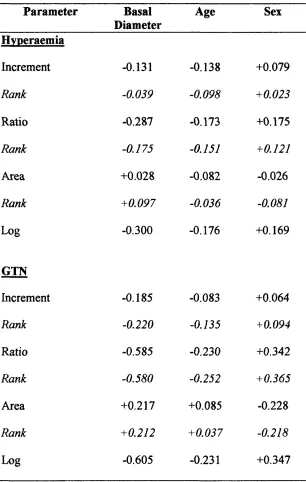
Table 2.4 Correlation data for regression modelling
42 59 61 64
Table 3.1 Subject characteristics: methionine study 73 Table 3.2 Methionine study: haemodynamic data and total plasma 77
homocysteine concentrations
Table 4.1 Subject characteristics: low B12/folate / homocystinuria 88 Table 4.2 Individual patient data and clinical details at recruitment 90
prior to study entry
Table 4.3 Homocystinuria: haemodynamic data 97
Table 4.4 Low vitamin B 12/folate status versus controls: 99 haemodynamic data
Table 5.1 Subject characteristics: cross-sectional study
Table 5.2 Determinants of plasma homocysteine concentration
108
111
Table 6.1 Subject characteristics: folate intervention study Table 6.2 Haemodynamic parameters at baseline (visit 1) and
following placebo and folic acid: basal values and hyperaemia
Table 6.3 Haemodynamic parameters at baseline (visit 1) and following placebo and folic acid: values for GTN
123 128
129
Table 7.1 Homocysteine experiments
Table 7.2 Other transsulphuration pathway constituents Table 7.3 Antioxidant experiments
143 146 150
LIST OF ILLUSTRATIONS
Page
Fig. 1,1 Chemical structures of homocysteine and related 17 compounds
Fig. 1.2 The transsulphuration and remethylation pathways of 18 homocysteine metabolism
Fig. 1.3 Histological findings in homocystinuria 27
Fig. 2.1 Schematic diagram of equipment used in the measurement 45 of forearm vascular responses
Fig, 2.2 Non-invasive hardware and set-up of ultrasound transducer 47 with related equipment
Fig. 2.3 Methodology for the determination of computer-generated 49 waveforms and calculation of brachial artery end-diastolic
diameter by the Vadirec system
Fig. 2.4 Diagram demonstrating data processing steps of the wall- 51 tracking computer from generation of sample volume
markers to displacement and distension waveforms
Fig. 2.5 Blood velocity waveforms 55
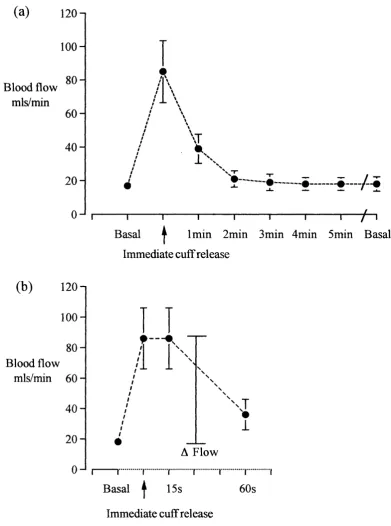
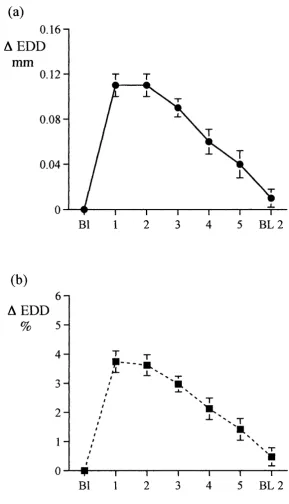
Fig. 2.6 Brachial artery blood flow in response to hand hyperaemia 56 Fig. 2.7 Flow-mediated vasodilatation pre- and post-LNMMA 60 Fig. 2.8 Flow-mediated dilatation - time course 62 Fig. 2.9 Scatter graphs demonstrating relationship between different 65
models used to express endothelium-dependent flow- mediated vasodilatation and basal brachial artery diameter or cross-sectional area
Fig. 2.10 Effect of age on flow-mediated and GTN-mediated brachial 67 artery dilatation
Fig. 3.3 Endothelium-independent vasodilatation following oral 79 methionine
Fig. 3.4 Time course experiment: methionine 80
Fig. 3.5 Time course experiment: methionine and vitamin C 82 Fig. 3.6 Plasma nitro-tyrosine concentrations post methionine load 83
Fig. 4.1 Plasma total homocysteine in cases and controls 93 Fig. 4.2 Scattergrams showing relationship between total plasma 94
homocysteine and serum B 12 and serum folate
Fig. 4.3 Flow-mediated and GTN-mediated responses in 95 homocystinuria
Fig. 4.4 Flow-mediated and GTN-mediated vasodilatation: 98 low B 12/folate versus controls
Fig. 4.5 Changes in blood flow 100
Fig. 4.6 Relationship between plasma homocysteine and flow- 101 mediated brachial artery dilatation in low B^/folate cases
and controls
Fig. 5.1 Outline of subject recruitment and selection protocol 104 Fig. 5.2 Plasma total homocysteine distributions 109 Fig. 5.3 Scatter plots of relationship between total plasma 112
homocysteine and vitamin levels, creatinine and cholesterol concentrations
Fig. 5.4 Log transformed scatter plots for total plasma homocysteine 113 Fig. 5.5 Relationship between flow-mediated vasodilatation and 114
plasma total homocysteine concentration
Fig. 5.6 Relationship between GTN-mediated vasodilatation and 115 plasma total homocysteine
Fig. 6.1 Folate intervention study: outline of recruitment and 121 crossover study protocol
Fig. 6.2 Measurements in blood following 6 weeks placebo and 124 folate treatment
Fig. 6.3 Effects of oral folic acid on plasma total homcysteine 126
Fig. 6.4 Effect of oral folic acid on flow-mediated and GTN- 127 mediated vasodilatation
Fig. 6.5 Plasma total homocysteine according to methylenetetra- 131 hydrofolate reductase (MTHFR) genotype
Fig. 7.1 Aortic ring preparation 138
Fig. 7.2 Acetylcholine-induced relaxation of phenylephrine- 139 preconstricted aortic ring [control-no intervention]
Fig. 7.3 Relaxation responses to acetylcholine and sodium 144 nitroprusside: control versus homocysteine
Fig. 7.4 Relaxation responses to acetylcholine: methionine, 147 S-adenosyl methionine and S-adenosyl homocysteine
Fig. 7.5 Relaxation responses to acetylcholine and sodium 148 nitroprusside: control versus cysteine
Fig. 7.6 Homocysteine experiments: effect of superoxide 151 dismutase, catalase, vitamin C and Tiron
CHAPTER 1
Introduction
1.1 Background
The pattern of cardiovascular disease in the United Kingdom is only partly explained by the known major risk factors for atherosclerosis, which do not account for all vascular events. The search for ‘novel’ risk factors is important in order to identify individuals who may benefit from primary or secondary prevention strategies, and may also provide insights into the aetiology of vascular disease and possible pathophysiologic mechanisms. In recent years, homocysteine has become increasingly implicated in the development of vascular disease with plausible mechanisms proposed for its role in promoting atherosclerosis. A large number of epidemiological studies have now demonstrated it to be an independent and potentially reversible risk factor and clinical trials are underway to determine the effect of homocysteine lowering on cardiovascular endpoints.
Homocysteine is a sulphur containing amino acid derived from the metabolism of dietary methionine. It was originally discovered by du Vigneaud^ in 1932 and recognised some 30 years later as a cause of an inborn error of metabolism. Carson and NeilF described children and infants with mental retardation who displayed high levels of homocysteine in the urine (homocystinuria) in association with other congenital abnormalities and precocious thromboembolism.
Vascular disease is a major pathological feature of homocystinuria^. A direct pathogenic role of homocysteine is implicated by the observation that similar histological appearances occur in several different inborn errors of homocysteine metabolism, in which intermediate metabolites occur in different patterns, all leading to severe hyperhomocysteinaemia^^. In the commonest cause of homocystinuria, due to defective cystathionine B-synthase (1 in 200,000), thromboembolism is a common cause of death and the incidence of vascular complications is reduced when homocysteine is lowered by pyridoxine therapy, in those individuals with a pyridoxine sensitive enzyme defect^. The observation of vascular damage in homocystinuria in combination with some animal experiments led McCully to propose a new theory of atherosclerosis in which homocysteine was implicated^.
The concentration of plasma homocysteine in homocystinuria, is markedly elevated usually in excess of ten times that of normal individuals (normal ca. 10 pmol/L). In the general population homocystinuria is rare but mild hyperhomocysteinaemia (15 to 30 pmol/L) is common. Great interest lies in the proposal that mild elevations in plasma homocysteine may promote vascular disease and be potentially reversed by lowering plasma levels with vitamin supplements.
1.2 Metabolism of homocysteine and its regulation 1.2.1 Nomenclature (see Fig. 1.1)
Homocysteine (Hey) is often used in contexts that encompass several
(oxidised and reduced) species. Thus, free homocysteine in plasma is the acid- soluble, non-protein bound fraction. Only trace amounts (<0.3pmol/l) of reduced Hey can be detected in plasma, whereas most Hey exists as various disulphide forms. About 70% is bound to albumin (protein-bound homocysteine or Hcy-albumin mixed disulphide), whereas the remaining 30% exists as mixed disulphides with other thiols and the cysteine-Hcy disulphide is the most abundant species.
Total homocysteine (tHcy) includes all (free and protein-bound) forms of
Hey in plasma.
Homocystine is formed when two molecules of Hey are linked by a
disulphide bridge.
Homocystinuria refers to genetic diseases characterised by massive urinary
excretion of Hey and its derivatives. A homocystinuric is a patient with homocystinuria.
Hyperhomocysteinaemia refers to elevations of plasma total Hey above
normal values.
1.2.2 The methionine cycle and transsulphuration pathway
NH2
HS-CH2-CH2-ÇH
COOH
Homocysteine
NH2 NH2
I
I ^
Hp-CH2-CH2-S-S-CH2-CH2-CH
COOH COOH
Homocystine
NHo NHo
I I
HC-CH2-CH2-S-S-CH2-CH
COOH COOH
NHo
I
-S-S-CH2-CH2-CH
I
COOH
Horn ocysteine-Cysteine Mixed Disulphide
Protein-bound Homocysteine
Fig 1.1 Chemical structures of homocysteine and related compounds Homocysteine is a sulphur containing amino acid. It may be converted to homocystine or alternatively to homocysteine-cysteine mixed disulphide. Homocysteine also binds to the sulphydryl-moiety of plasma proteins via a disulphide bond and this forms the majority of circulating homocysteine found in plasma.
GLYCINE SERINE
A T P
►METHIONINE THF
S-ADENOSYL METHIONINE N,N DIMETHYL GLYCINE
5,10 METHYL
THF
BETAINEHOMOCYSTEINE M ETHYLTRANSFERASE METHIONINE
SYNTHASE |
B i2
BETAINE
S-ADENOSYL HOMOCYSTEINE
5 METHYL THF
METHYLENE
TETRAHYDROFOLATE HOMOCYSTEINE
REDUCTASE (MTHFR) SERINE
THF = Tetrahydrofolate
CYSTATHIONINE B SYNTHASE
I
B6 CYSTATHIONINECYSTATHIONASE
Be l l i l
l
CYSTEINEfor the synthesis of polyamines and most functions as a methyl donor in various transmethylation reactions. S-adenosylhomocysteine (SAH), the demethylated product of SAM, is further hydrolysed to adenosine and Hey, catalysed by the enzyme S-adenosylhomocysteine hydrolase. This reaction is the only known source of Hey in vertebrates'^.
Homocysteine is catabolised to cysteine through two vitamin Bg-dependent reactions that complete the transsulphuration pathway. In the first of these reactions, homocysteine is condensed with serine to form cystathionine by the enzyme cystathionine 6-synthase. The reaction is irreversible under physiological conditions, and at this point. Hey is committed to the transsulphuration pathway. Cystathionine is further metabolised to cysteine, catalysed by the B^-dependent enzyme y- cystathionase.^
Remethylation of Hey to methionine is catalysed either by 5- methyltetrahydrofolate-homocysteine methyltransferase (methionine synthase) or betaine-homocysteine methyltransferase. The former enzyme, which is widely distributed, requires 5-methyltetrahydrofolate (the reduced circulating form of folate) as a methyl donor and vitamin B]2 as a cofactor. Betaine-homocysteine
methyltransferase is confined to the liver and only minor activity has occasionally been found in kidney and adrenal glands^. Both these reactions conserve methionine.
1.2.3 Regulation of the cycle
Homocysteine is an important branch-point metabolite that connects the metabolism of diverse compounds like methionine, cysteine, cobalamin, reduced folates, and vitamin Bg. This system represents an important regulatory locus^; Hey may be directed into different anabolic or catabolic pathways.
During methionine excess, methionine is catabolised through the transmethylation-transsulphuration pathway to cysteine and finally sulphate. Excess methionine increases SAM and decreases 5-methyltetrahydrofolate in liver. Adaptation involves increased flux of Hey into cystathionine synthesis and the rate of remethylation is low, the latter through inhibition of 5-methyltetrahydrofolate synthesis by SAM.
Metabolite levels and enzyme activities are changed in essentially opposite directions during methionine deficiency, and this regulatory response ensures efficient methionine conservation through enhanced Hey remethylation^®.
1.3 Assessment of homocysteine status
In an adult population, the normal plasma total homocysteine (tHcy) as defined by 95% of healthy subjects is approximately 5-15 pmol/L. Median concentrations are slightly higher in males than females (i.e. 8.5pmol/L and 7.2pmol/L, respectively)^ ^ Hyperhomocysteinaemia is usually defined as a plasma tHcy >15pmol/L, and is defined here as mild (15-30pmol/L), moderate (30- lOOpmol/L) or severe (>100pmol/L), although at present there is no consensus for defining these terms in absolute concentrations.
1.3.1 Methionine loading
The methionine loading test was originally introduced to detect heterozygosity for cystathionine 6-synthase deficiency^^»*^. It is presently used to stress the Hey metabolising pathways and is often included in clinical studies on vascular disease. The procedure involves oral intake of a standard dose of methionine (O.lg/kg) with tHcy measurement after a fixed interval of 4 or 6 hours post-load^ ^
The post-load tHcy concentration is probably more sensitive than the fasting concentration to disturbances in the transsulphuration pathway. Thus subjects with impaired ability to remethylate Hey (cobalamin and folate deficiency) have hyperhomocysteinaemia during fasting, but may have a normal increase in tHcy after methionine loading. In contrast, subjects with a mild disturbance of the transsulphuration pathway often a have a normal fasting tHcy but are methionine intolerant^"^. Fasting and post-load tHcy are significantly correlated: they discriminate between vascular patients and controls equally well, but the results do not completely overlap^^. Fasting tHcy alone may fail to identify a proportion of all subjects with methionine intolerance^^.
1.3.2 Determinants of plasma homocysteine
however, is very low and extensive metabolism of Hey probably takes place in the kidneys^^. Diet and lifestyle influence tHcy concentration. Intake of vitamins
and folate in food or supplements is inversely correlated to plasma tHcy^^. Smoking and coffee consumption cause a shift of the distribution towards higher tHcy values whereas physical activity is associated with lower levels^®’^^.
1.4 Pathogenesis of hyperhomocysteinaemia (Table 1.1)
1.4.1 Inherited and congenital defects
Homocystinuria encompasses a heterogeneous group of diseases caused by inherited defects of Hey, cobalamin or folate metabolism. The most common form is caused by cystathionine B-synthase deficiency and is described below. Homocystinuria due to inherited defects of cobalamin transport and metabolism, although less frequent, may be the result of a wide variety of defects that involve cobalamin coenzyme synthesis, methionine synthase mutations and abnormalities of
22
cobalamin transport . All lead to similar clinical syndromes, regardless of the underlying mechanism.
In cystathionine p-synthase (CBS) deficiency, the enzyme defect responsible was identified by Mudd et al in 1994. The inactivation of CBS results in blockage of the transsulphuration pathway and intracellular accumulation of Hey, which is then
4
exported to the circulation (see reference for comprehensive review). CBS
23
deficiency is inherited as an autosomal recessive trait, three classes of CBS mutants have been identified according to the level of enzyme activity: (i) no detectable enzyme activity; (ii) reduced activity and normal affinity for coenzyme; and (iii)
24
reduced activity and reduced affinity.
Clinical manifestations and complications are thought to be the direct consequence of hyperhomocysteinaemia, rather than to any other associated biochemical abnormalities that are known to occur as a result of the metabolic block in Hey metabolism. The most compelling evidence that incriminates Hey as the agent directly responsible for the vascular and other complications of hyperhomocysteinaemia comes from a comparison of the metabolic derangements seen in the various disorders leading to elevated Hey levels. For example, methionine levels are diametrically different in individuals with defects of the transsulphuration
Table 1.1:
Causes Of Hyperhomocysteinaemia
A: Inherited and Congenital Defects
1. Enzyme deficiencies
a. Cystathionine p synthase
b. Methylenetetrahydrofolate reductase (MTHFR) c. Methionine synthase
d. Cobalamin coenzyme synthesis
2. Transport Defects
a. Transcobalamin II deficiency b. Cobalamin lysosomal transporter
B. Acquired Disorders
Nutritional
a. Folic acid deficiency b. Cobalamin deficiency c. Pyridoxine deficiency
Metabolic
a. Chronic renal disease b. Hypothyroidism c. Psoriasis
Drug induced
a. Methotrexate b. Nitrous oxide c. Azaribine
pathway (CBS deficiency) and those of the remethylation pathway (methionine synthase or methylenetetrahydrofolate reductase). The clinical manifestations of homocystinuria include skeletal abnormalities, lens dislocation, mental retardation and occlusive vascular disease including thrombosis and precocious atherosclerosis^. The underlying mechanisms that give rise to these complications are not known. The vascular complications are a major cause of morbidity and mortality. Several mechanisms have been proposed to explain the vascular damage and predisposition to thrombosis and are outlined below (Section 1.7).
Methylenetetrahydofolate reductase (MTHFR) is a key enzyme in the metabolism of Hey (see Fig. 1.2), and catalyses the reduction of 5,10-methylene tetrahydrofolate to 5-methyl tetrahydrofolate which is the carbon donor for the remethylation of Hey to methionine. Severe deficiency is rare, but partial MTHFR deficiency is much more common affecting approximately 5-15% of the general population^^. This enzyme variant is characterised by its distinctive thermolability under specific conditions of heat inactivation^^. The thermolabile MTHFR mutation is caused by a single base change in DNA (C to T substitution at nucleotide 677)^^ and can now be easily detected by readily available genotyping techniques^*. Inheritance of the mutation leads to moderate elevation in plasma tHcy and there is some preliminary evidence that this thermolabile MTHFR mutation may be over represented in patients with coronary artery disease but this remains controversial^^
1.4.2 Acquired disorders 1.4.2.1 Nutrient deficiency
Folate, cobalamin and pyridoxine are required as cofactors or substrates in the metabolism of Hey. Deficiency of one (or more) of the three vitamins, arising either fi-om nutritional deficiency, malabsorption, increased utilization or inactivation caused by various chemicals or drugs, interferes with Hey metabolism causing an increase in the serum level of Hey. Several studies have shown that plasma concentrations of folate, vitamin and pyridoxal 5’-phosphate are inversely associated with plasma tHcy concentrations*^’^®. The degree of rise in tHcy caused by these nutrient deficiencies is somewhat variable but is sometimes extreme and may attain the levels encountered in patients with homozygous CBS deficiency.
Individuals with suboptimal intake of folate and cobalamin leading to low-normal levels may also have elevated tHcy levels.
(a) Folate deficiency
Dietary folate deficiency accounts for a major proportion of all causes of folate deficiency, the prevalence of folate deficiency being highest among poor, malnourished populations and fi-equently affects the elderly and alcoholics. Folate, in the form of 5-methyltetrahydrofolate, is an obligatory co-substrate in the conversion of Hey to methionine catalysed by methionine synthase. Consequently folate deficiency, whatever the cause, decreases Hey conversion through this pathway increasing plasma Hey levels in most cases. It has been estimated that, under normal circumstances, approximately half of all available Hey is metabolised through remethylation^ ^ Studies have reported elevated concentrations of tHcy in patients with folate deficiency^^, however, not all patients with folate deficiency have elevated tHcy levels, which may in part be explained on the basis that the alternative pathway for transmethylation of Hey through betaine-homocysteine methyltransferase is not folate dependent. Moreover, Hey may be metabolised through the transsulphuration pathway, which is vitamin Be dependent.
Other causes of folate deficiency include a variety of diseases of the small intestine that result in malabsorption, for example tropical and non-tropical sprue as well as extensive inflammatoiy bowel disease^^. Folate deficiency may also occur in conditions associated with increased rates of cellular proliferation as a result of greater utilisation of folate (e.g. chronic haemolysis, myeloproliferative disorders and psoriasis)^"*. Antifolate drugs result in a state of functional folate deficiency, the most widely used being methotrexate. Other drugs associated with folate deficiency include trimethoprim, phenytoin, phenothiazines and tricyclic antidepressants. Long term use of oral contraceptives has also been reported to be associated with folate deficiency^^; the mechanism may be complex and may possibly also act by an effect on pyridoxine metabolism^^.
insufficient in various pathological conditions predisposing towards coronary heart disease, such as patients with chronic renal failure.
(b) Cobalamin deficiency (vitamin B12)
Cobalamin is also required for the major metabolic pathway of Hey remethylation. However, folate is required as a co-substrate for the methionine synthase reaction, whereas cobalamin in the form of methylcobalamin, functions as an essential cofactor for methionine synthase (see Fig. 1.2). Cobalamin deficiency, whatever the cause, is associated with an increase in plasma tHcy concentration^^. Serum cobalamin and folate levels show a statistically significant inverse correlation with tHcy in groups of normal volunteers^*.
Although folate is the most potent Hcy-lowering agent, vitamin supplementation has a small but significant effect on circulating tHcy concentrations^^. Moreover, it has been shown that folic acid supplementation is ineffective in reducing tHcy in patients with vitamin deficiency.
(c) Pyridoxine deficiency (vitamin
Both enzymes involved in the two reactions of the transsulphuration pathway require vitamin Be. Nutritional deficiency is rare in humans but several studies have established a link between pyridoxine deficiency and atherosclerosis^^’^®. Drugs that may interfere with pyridoxine metabolism include isoniazid, hydralazine and penicillamine.
Owing to its important role in treating CBS deficiency, pyridoxine may be regarded as the obvious choice of treatment of hyperhomocysteinaemia. However, high-dose vitamin Bg supplementation, without folate and vitamin Bn, does not lower fasting homocysteine levels significantly in subjects with other causes of raised tHcy It has been postulated that low folate and/or vitamin Bn status results in low S-adenosylmethionine concentrations. SAM is required to activate CBS and the supplementation of only vitamin Bg does not appear to activate the transsulphuration pathway, as the essential activator SAM will remain low owing to the inadequate folate and vitamin B n status. Only when the latter two vitamins are in abundance will remethylation proceed unimpeded with a subsequent rise in SAM concentrations and activation of the transsulphuration pathway^\ Vitamin Bg will however lower the post-methionine load tHcy peak concentration.
1.4.2.2 Metabolic abnormalities
Moderate hyperhomocysteinaemia may also occur in chronic renal disease"^^. Since renal excretion of Hey accounts for 1% of the total Hey produced in the body^^ it can be concluded that raised levels of tHcy in renal failure may not be attributed solely to reduced renal excretion. Metabolism of Hey is increased in chronic renal failure through the transsulphuration pathway and it is likely that remethylation is impaired through lack of folate, in accordance with evidence that there may be an intracellular lack of folate, particularly in patients on dialysis^^.
1.5 Vascular pathology in homocystinuria (Fig 1.3)
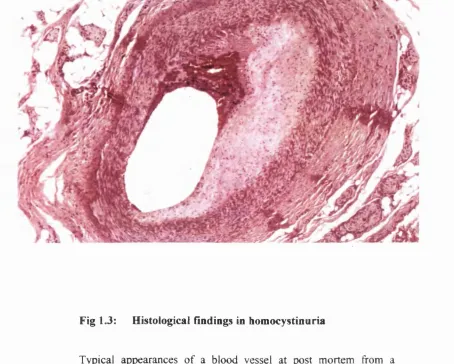
Pathological features of vascular damage in homocystinuria affect both arterial and venous systems. Venous thrombosis is frequently identified as the cause of death although, histologically, the veins are generally normal except for the presence of thrombus^. In contrast, histological abnormalities of arteries are widespread affecting most arterial systems. The lesions are characterised by intimai and medial hyperplasia, with intimai fibrosis, disruption of the internal elastic lamina and thickening of the media being prominent features. There is a notable lack of lipid, in contrast to the classical appearances of atheromatous vascular disease, which is characterized by plaques containing cholesterol crystals and lipid deposits. This histological distinction indicates that homocystinuria is not simply causing accelerated atherosclerosis.
i
%
Fig 1.3: Histological findings in homocystinuria
Typical appearances of a blood vessel at post mortem from a patient with homocystinuria.The major findings are>
(a) thrombus present in the lumen (b) intimai and medial hyperplasia
(c) disruption of the internal elastic lamina
1.6 Cardiovascular disease and mild hyperhomocysteinaemia. Cause or indicator?
The high incidence of vascular complications in severe hyperhomocysteinaemia in homozygotes for CBS deficiency has focused attention upon Hey as an atherogenic and thrombophilic agent. For two decades since McCully and Wilson^ proposed the “homocysteine theory of atherosclerosis” there has been accumulating evidence of mild hyperhomocysteinaemia as a risk factor for vascular disease although interest has waxed and waned.
Evidence that hyperhomocysteinaemia is an independent risk factor for vascular disease (coronary, cerebral and peripheral) has now come from a large number of published epidemiological studies as recently summarised in a meta- analysis'^"* of 27 studies up to 1994. The summary odds ratio (OR) as an estimation of the relative risk in people with elevated tHcy levels was 1.7 (95% Cl 1.5-1.9) for coronary artery disease; 2.5 (95% Cl 2.0-3.0) for cerebrovascular disease; and 6.8 (95% Cl 2.9-15.8) for peripheral vascular disease. These ORs were calculated from all included homocysteine determinations, i.e. fasting, basal or post-load, but did not substantially differ from the values found if the calculations were restricted to those studies that measured exclusively fasting levels. This indicates that elevated fasting tHcy levels constitute as strong an excess risk of cardiovascular disease as do the post-load determinations.
The majority of epidemiological evidence is derived from case-control studies but these do not distinguish between cause and effect, i.e. the presence of the disease may have produced, and not caused, the elevated tHcy. Prospective cohort studies, which in general provide the most rigorous evidence, have provided the strongest data to date showing a clear association between tHcy level and risk of ischaemic heart disease"*^’"*^ and importantly, that the dose-response relationship is continuous"*^. However, a few prospective studies have not yielded a positive association"*^’"*^.
load (> upper quintile [20%]), thereby having more relevance to those levels found in the general population. Despite this selection criteria, with elevated fasting and post-load levels defined to be abnormally high when above 12 and 38 pmol/L respectively, the relative risk for all vascular disease (coronary, cerebral and peripheral) for mild fasting and post-load hyperhomocysteinaemia was 2.1 (95% Cl 1.6-2.7). After adjustment for other risk factors no change in the OR was observed indicating homocysteine was an independent factor for all vascular disease, equivalent as a risk factor to hypercholesterolaemia and smoking; however, hypertension proved to be a greater risk. Significantly, the interaction between mild hyperhomocysteinaemia and smoking and hypertension indicated a strong synergistic effect of these factors if jointly present in an individual.
In summary, from numerous studies it is clear that mild hyperhomocysteinaemia is strongly and independently related to arterial vascular disease. This relationship has not, however, been conclusively shown to be one of cause and effect, although circumstantial evidence is persuasive. Hey interacts with other conventional risk factors, notably with hypertension and smoking. Thus vascular patients with combined risk factors leading to synergism in their joint effects may benefit most from interventions aimed at lowering Hey using inexpensive vitamin supplements, a policy that may have widespread public health implications.
1.7 Putative mechanisms for vascular injury
The mechanism by which Hey may contribute to vascular damage is an active field of investigation. Damage to endothelium appears to be a key early event in many vascular diseases^ ^ and may play a central role in the promotion of atherosclerosis by Hey. The endothelium is a monolayer of cells sited at the interface between blood and vessel wall forming a continuous lining throughout the vascular tree. Endothelium-derived relaxing factor (EDRF), shown to be nitric oxide (NO), is synthesized from L-arginine within the endothelial cell by the constitutive enzyme nitric oxide synthase^^. NO is released fi'om the endothelium in response to various stimuli of which an important physiological stimulus is pulsatile flow. NO plays a vital role in controlling vascular reactivity, vascular remodelling and coagulation. Endothelial dysfunction, leading to reduced NO activity, may occur without histological evidence of endothelial damage or significant atheroma^^.
The ‘response to injury hypothesis’ identifies endothelial injury as a critical initiating event in the development of atherosclerosis^^. Following endothelial damage, proliferation of smooth muscle cells, increased synthesis of sulphated proteoglycosaminoglycans, fibrosis, calcification and deposition of lipoprotein are important processes in the development of atherosclerosis. Homocysteine could potentially be involved in several of these processes. Indeed, a variety of possible mechanisms for Hcy-mediated vascular injury have been proposed and are reviewed below.
1.7.1 Cellular toxicity and endothelial injury
Homocysteine may exert an effect by direct toxicity to any cellular component of the arterial wall. The effect of Hey on endothelial function has been studied in various ways. Studies using endothelial cells in vitro have shown evidence of cellular injury in the presence of Hey. Thus Hey can induce cellular damage as indicated by ^^Cr release from labelled human endothelial cell monolayers in a dose-dependent manner^^. However, the significance of these data must be questioned in that the effect is not specific to Hey as it has been shown by others that cysteine can also induce the detachment of endothelial cells at the concentrations used (ca. 5mM)^^.
Several studies in vivo have demonstrated endothelial abnormalities following Hey infusion. One such study^^, demonstrated endothelial desquamation in baboons infused with Hey thiolactone for 5 days. Sustained infusion (3 months) produced eccentric fibromuscular lesions containing intracellular lipids and foam cells, resembling early atherosclerotic lesions in humans.
Proliferation of vascular smooth muscle cells is a prominent feature of atherosclerosis^^. This is another possible mechanism for Hcy-induced vascular injury. In support of this proposal Hey has been shown to have a direct growth promoting effect on vascular smooth muscle cells in culture^^.
may therefore affect these functions. The bioavailability of nitric oxide may be decreased by reacting with reactive oxygen species such as superoxide, or its activity may be conserved in the presence of reduced thiols forming nitrosothiols. S- nitrosothiols have potent vasodilatory and anti-platelet effects^ ^ In the presence of Hey, nitric oxide forms S-nitrosohomocysteine.
Adverse effects of Hey may occur when the endothelium is unable to support nitrosothiol formation due to endothelial injury. Under these conditions. Hey may then generate H2O2 and undergo conversion to Hcy-thiolactone, which may further
contribute to endothelial dysfunction. Homocysteine-mediated endothelial cell toxicity has been shown to be dependent on the duration of exposure to Hcy^^, brief (15 min) exposure of endothelial cells to Hey resulted in the formation of S- nitrosohomocysteine whereas prolonged (>3 hrs) exposure resulted in impaired NO- mediated responses.
Results, however, from in vitro experiments need to be interpreted with caution. Most have used high concentrations of Hey well above the range for mild hyperhomocysteinaemia and even homocystinuria. Lentz and co-workers have recently reported the effect of more relevant levels of Hey on endothelial function^^. This primate model demonstrated vascular dysfunction in monkeys with hyperhomocysteinaemia, achieving an increase in plasma tHcy from 4 to lOpM by dietary modification (methionine feeding, folate deficient). In vivo changes in blood flow to the leg after infusion of endothelium-dependent and-independent agonists together with vasomotor responses measured ex vivo in carotid arteries were determined. Relaxation to endothelium-dependent vasodilators was impaired in the hyperhomocysteinaemic monkeys as was the endothelium-independent response to nitroprusside, although to a lesser extent. These data suggest that endothelial function and possibly also smooth muscle cell function may be impaired by mild hyperhomocysteinaemia.
The most persuasive evidence is likely to come from studies in man. Confirmation that endothelial dysfunction occurs in homocystinuria comes from a clinical study by Celermajer and colleagues using non-invasive external vascular ultrasound^. Flow-mediated dilatation of the brachial arteiy is endothelium- dependent and is a measure of the flow-related NO response in that artery^^. In this study, brachial or femoral artery responses to reactive hyperaemia (flow-mediated, endothelium-dependent) were measured in 9 children (4 to 17 yrs) with homozygous
homocystinuria. Although plasma homocysteine concentrations were not measured, flow-related endothelial function was markedly impaired in these children but not in their heterozygous parents or normal controls. These data, if confirmed with other studies, would strongly support the proposal that hyperhomocysteinaemia can cause endothelial damage in humans.
1.7.2 Free-radical mediated damage
It has been proposed by many authors that a molecular mechanism for Hcy- mediated damage may involve free radical production^^. At the simplest level of redox reactions it should be noted that Hey in plasma can exist in its reduced form but is usually rapidly auto-oxidized to homocystine, homocysteine-mixed disulphide and homocysteine-thiolactone. Olszewski and McCully have proposed chemical reactions whereby Hey could lead to production of free radicals^^:
-R-SH ^^0% R-S-S-R H2O2
Fe2+ + H2O2 -> Fe3+ + OH + OH"
The sulphydryl group of Hey could act catalytically with ferric or cupric ions in a mixed function oxidation system to generate hydrogen peroxide, hydroxyl radicals and homocysteinyl radicals. Free radicals produced by this or other reactions could cause pathological damage by several mechanisms including direct cellular toxicity, lipid peroxidation and reactions with nitric oxide.
Homocysteine is acutely cytotoxic to cultured endothelial cells, an effect that may be prevented by the addition of catalase, implicating hydrogen peroxide^*. However, this cytotoxicity is dependent on the presence of cupric ions suggesting a direct role of additional oxidants. In vitro high levels of Hey can generate superoxide anions (O2 ) and hydrogen peroxide (H2O2) via auto-oxidation. Attention has
focused on these oxidative products in mediating the cytotoxic properties of Hey. Radicals generated intracellularly may pose a greater threat to cellular function. H2O2 freely crosses the cell membrane and is normally converted to H2O by
activity in vitro unlike other thiols, providing another possible explanation for endothelial cell toxicity^^.
The hydroxyl radical is highly reactive and can initiate lipid peroxidation reactions. Hence, it has been proposed that this could cause oxidative modification of low-density lipoprotein and actively promote atherosclerosis. Although this is an attractive hypothesis, the experimental evidence is not supportive. No increase in lipid peroxides could be found in plasma from patients with severe homocystinuria when assayed by highly specific techniques nor indeed was there consumption of ubiquinoF^ Furthermore, LDL isolated from patients with homocystinuria was not more susceptible to oxidation in vitrrP^^
Alternative free radical mechanisms (other than lipid peroxidation) could operate to increase NO catabolism, particularly the formation of the powerful oxidant peroxynitrite^^ (0 N 0 0 “), the adduct formed from the combination of superoxide anions and nitric oxide. This reaction is more than three times faster than catabolism of superoxide by superoxide dismutase^^. Because peroxynitrite is formed optimally from equimolar concentrations of NO and superoxide^^, it is unlikely that peroxynitrite would achieve high concentrations under normal conditions. In fact low concentrations of peroxynitrite have been shown to behave very similarly to NO and cause vasorelaxation^^’^^. In contrast, higher concentrations of peroxynitrite may be very toxic. It can form the cytotoxic peroxynitrous acid^*, cause hydroxyl radical toxicity^^ and cause protein fragmentation by nitration of amino acids^®. Hypercholesterolaemia, as a risk factor for atherosclerosis, has been shown to impair the glutathione detoxification mechanism against peroxynitrite*^ and this may also potentially occur in hyperhomocysteinaemia^^. The addition of antioxidants may have a beneficial role in these circumstances reducing NO consumption and excessive peroxynitrite formation.
Thus the hypothesis that homocysteine may promote vascular damage by free radical mechanisms is plausible, in some respects, but as yet lacks convincing experimental backing.
1.7.3 Homocysteine and thrombosis
The endothelial surface plays a major role in thrombosis and fibrinolysis. This aspect in relation to Hey has been reviewed in detail*^. In summary.
hyperhomocysteinaemia appears to be able to promote thrombosis by increasing Factor V and Factor XII activity, decreasing protein C activation, inhibiting thrombomodulin expression and suppressing heparin sulphate expression. Thrombin formation is the final common pathway.
Most of these effects have been demonstrated by high concentrations of Hey
in vitro and their application in vivo remains unproven. Of particular recent interest
is the demonstration that patients with concurrent homocystinuria and factor V Leiden have an increased risk of thrombosis*^. Factor V Leiden produces an amino acid substitution in factor V, thereby altering the first cleavage site involved in the activation of factor V. The mutation has been shown to be present in patients of various ethnic origins and in 3 to 7 percent of healthy people in two white populations.
An interesting link between lipoproteins, fibrinolysis and Hey has been postulated to involve lipoprotein (a). Lp (a) may have antifibrinolytic actions and atherothrombotic potential. Lp (a) is closely related to low-density lipoprotein but with the addition of a specific protein (apoprotein (a)) linked to apoprotein B by a disulphide bond. Concentrations of Hey in vitro down to 8 pM markedly increase the affinity of Lp (a) for plasma-modified fibrin surface*"^. Homocysteine-modified Lp (a) could effectively compete with plasminogen for binding sites on fibrin coated surfaces, thereby creating a more thrombotic environment. This effect needs to be examined in more detail in vivo.
Most studies have not reported a consistent or specific effect of Hey on circulating coagulation factors. Therefore any effect of Hey on thrombosis is most likely to be mediated by changes in the endothelium, which has an important role to play in coagulation/fibrinolytic systems.
1.7.4 Cellular matrix effects
essential in determining the tertiary structure of fibrillin microfibrils. One can speculate that hyperhomocysteinaemia may interfere with the chemical structure of the cysteine-rich domains, impairing effective cross-linking of microfibrils. Thus a possible link between Marfan syndrome and homocystinuria may be a defect in fibrillin, genetically acquired in one and metabolically altered in the other.
Homocysteine has been shown to alter the tertiary structure of connective tissue. A reduction in cross-linking of collagen has been demonstrated in patients with homocystinuria and proposed as a possible explanation for the observed skeletal abnormalities, in particular the finding of osteoporosis.^^
In summaiy. Hey appears to be directly toxic to the vasculature in patients with homocystinuria and there is increasing evidence that mild hyperhomocysteinaemia may induce vascular damage. At the cellular level, the primary mechanism for this injury appears to be toxicity to the endothelium leading to disruption of normal vasomotor function and the promotion of endothelium- mediated thrombosis. At a molecular level, the mechanisms are not well understood. Promotion of free radical activity and alterations in intracellular redox status are one possibility but experimental evidence is not strong. In particular, there is evidence that Hey does not promote oxidation of lipoproteins. Other possible effects on cellular matrix are speculative. Therefore, further studies are required directed towards elucidating the effect of Hey on endothelial function, in particular on the effect of mild hyperhomocysteinaemia.
1.8 Hypotheses and aims
Hypotheses
Experimental studies were designed to address the following
hypotheses:-(1) Endothelial function can be measured non-invasively in the brachial
artery in humans by a method utilising the phenomenon o f flow-mediated
vasodilatation
(2) An acute elevation o f plasma homocysteine concentration after an oral
methionine load impairs endothelium-dependent brachial artery dilatation in
humans as a consequence o f an increase in oxidant stress.
(3) Mild hyperhomocysteinaemia is associated with endothelial dysfunction
(4) Folate supplementation lowers plasma homocysteine and improves
endothelial function.
(5) At the molecular level, homocysteine reduces nitric oxide activity by a
mechanism involving the production o f reactive oxygen species and/or alteration in
intracellular redox status.
Aims
The specific aims of the thesis are as
follows:-(i) To demonstrate that brachial artery dilatation in response to hyperaemic
blood flow, measured by ultrasonic vessel wall-tracking, is an
endothelium-dependent mechanism. Non-invasive measurement of endothelial function is
described in Chapter 2. Measurements of brachial artery vasodilatation in response to hyperaemic flow are undertaken before and after infusion of a nitric oxide synthase antagonist, N^-monomethyl-L-arginine.
(a) To determine normal values and investigate the best parameter to
represent flow-mediated and GTN-mediated changes in brachial artery diameter. In
the percentage ratio of post- to baseline arterial diameter, A multivariate analysis is used to investigate this further and to test three alternative parameters, which can be used as a measure of endothelium-dependent and -independent vasodilatation
(Hi) To investigate the effect o f acute hyperhomocysteinaemia on endothelial
function in healthy subjects. Plasma Hey concentrations rise significantly following
an oral methionine load. An acute elevation in Hey would be expected to be injurious to endothelium. This is investigated in Chapter 3 using a randomised crossover study in healthy subjects. The possible protective effect of prior administration of an oral antioxidant (vitamin C) is also studied.
(iv) To determine whether mild hyperhomocysteinaemia is associated with
impaired endothelium-dependent vasodilatation. In order to identify subjects with
elevated Hey levels, two different approaches are used to highlight various abnormalities in the transsulphuration and remethylation pathways: (a) subjects with impaired remethylation of Hey due to low vitamin B ^/ folate status are studied in Chapter 4, (b) a population study cohort consisting of 240 healthy volunteers across the range of plasma Hey concentrations (who may have elevated levels as a consequence of genetic and/or nutritional factors) is described in Chapter 5. Endothelium-dependent and -independent brachial artery responses are compared in both groups.
(v) To test the hypothesis that endothelial dysfunction in
hyperhomocysteinaemia can be improved by lowering plasma homocysteine with
vitamin supplements. Vitamin supplementation can lower plasma Hey concentrations
even in subjects with normal homocysteine levels. Folic acid, in the absence of vitamin B%2 deficiency, is the simplest and most effective Hey lowering agent. In
Chapter 6, the effect of oral folic acid supplementation on flow-related endothelial function is investigated in subjects identified with mild hyperhomocysteinaemia from a large cohort of healthy volunteers in a randomised crossover study. The role of methylenetetrahydrofolate reductase genotype in modulating homocysteine concentrations and the response to folate treatment is also determined.
(vi) To investigate the possible mechanism(s) whereby homocysteine
modulates endothelium-dependent relaxation o f vascular smooth muscle. In Chapter
7, the effect of Hey on agonist-induced, endothelium-dependent relaxation of preconstricted rabbit aortic rings is investigated using a standard tissue bath preparation. The various responses to the other constituents of the transsulphuration
CHAPTER 2
Non-invasive Measurement Of Endothelial Function Using Ultrasonic Vessel Wall-Tracking
2.1 Introduction
Background
Since the initial discovery by Furchgott in 1980 of endothelium-derived relaxing factor^*, subsequently identified as nitric oxide (NO),*^ a number of techniques have been used to measure endothelial function in man, both using direct methods (the stimulation of NO release by receptor-mediated, endothelium- dependent agonists, e.g. acetylcholine^®) and indirect methods (e.g. plasma von Willebrand factor and thrombomodulin assays®^). More recently, non-invasive but direct methods have become available that utilise the phenomenon of flow-mediated vasodilatation®® in conduit arteries, a mechanism mediated by nitric oxide®^ that enables much larger numbers of subjects to be studied compared with invasive techniques. Moreover, despite the measurement of vascular responses in an artery that is not characteristically affected by atheroma, endothelial dysfunction when present is likely to be a generalised phenomenon; it has been shown that there is close association between endothelial dysfunction in the human coronary and peripheral circulations®^.
Celermajer and colleagues originally reported a well described non-invasive method of detecting endothelial dysfunction in 1992®"^. Flow-mediated dilatation of the brachial artery, a surrogate marker of endothelial function (induced by producing hyperaemic flow in the forearm), was shown to be impaired in children and young adults with established risk factors for atherosclerosis prior to the development of any overt clinical disease. Vasodilatation following sublingual glyceryl trinitrate (GTN), which acts on vascular smooth muscle directly, and is therefore independent of the endothelium, was unaffected in these subjects. The technique has now been utilised by a large number of investigators, validated albeit with variations in the methodology used®^’®®, and applied to a wide variety of diseases in which endothelial dysfunction has been demonstrated^ \ More importantly, the technique provides a way of investigating the effect of possible therapeutic interventions in relatively large numbers of subjects.
A drawback of the original method, however, was that brachial artery diameter was measured with standard high-resolution ultrasound equipment with a maximum theoretical resolution of 0.1 mm. In an artery with an internal diameter typically measuring between 3-4 mm, the expected vasodilatation induced by forearm hyperaemia is in the order of 0.1 - 0.2 mm, i.e. very near the maximum resolution of the equipment used. An important point in the methodology was that the cuff used to produce occlusion of blood flow to the lower arm and hand (and thus hyperaemic flow on release) was placed downstream of the brachial artery to avoid ischaemia of the vessel being studied. The success of the original work by Celermajer relied on large numbers of subjects (ca. n=100) in their studies, which allowed clear differences between populations to be determined.
High-resolution wall-tracking
The resolution of vascular measurements can be improved with the use of ultrasonic vessel wall-tracking, a method initially developed by Hoeks^^ to measure carotid artery distensibility and later adapted to measure flow-related endothelial function in the brachial artery by Ramsey and colleagues^*, with a theoretical spatial resolution of ±3p.m. In practice the system, which is never required to reach this specification, operates in the region of ± 10-20 pm, an approximately 100-fold improvement in resolution compared with direct measurement of internal artery diameter from the M-mode image using electronic callipers. In addition, blood flow in the brachial artery is recorded by continuous wave Doppler ultrasound to ensure that the hyperaemic stimulus to brachial artery dilatation is similar between study subjects, allowing valid comparisons to be made.
Aims
2.2 Subjects
Four individual groups of subjects were enrolled (see section 2.3). All volunteers were recruited from members of hospital staff. Characteristics of the study subjects are shown in Table 2.1.
1^-monomethvl-L-arsinine (L-NMMA) study
Five healthy subjects (mean age, 29 years; range, 21 to 49 years; 4 men) volunteered to participate in this invasive study, the infusion protocol having been approved by the Local Research Ethics Committee.
Repeatability Study
Twelve subjects (mean age, 20 years; range, 21 to 40 years; 7 men) had vascular measurements performed on three separate occasions.
Regression modeIIins
Data from 240 ‘normal’ healthy subjects recruited in a cross-sectional study to investigate the relationship between plasma homocysteine and endothelial function (see Chapter 5), were used for regression modelling analysis (mean age, 35 years; range, 19 to 69 years; 110 men).
Eïïect o f a2e
In order to investigate the effect of age in normal subjects without known risk factors for endothelial dysfunction, the above cohort of 240 subjects was used but 17 individuals with plasma homocysteine >15 jumol/L were excluded, leaving n=223 for subsequent analysis (mean age, 35 years; range, 19 to 69 years; 99 men).
All subjects gave informed, written consent and were non-smokers, were normotensive (blood pressure <150/90 mmHg), were not diabetic and had serum cholesterol <6.5 mmol/L. This level of serum cholesterol was selected as the upper limit of “normal” in knowledge of levels in the community and data relating flow- mediated vasodilatation to serum cholesterol concentration^^.
2.3 Methods
2.3.1 Non-invasive measurement of flow-mediated brachial artery dilatation
Protocol
The protocol was established following preliminary exploratory studies. All studies were performed in a temperature-controlled room (21-23°C) on fasting
TABLE 2.1: Subject characteristics
Param eter L-NMMA Repeatability
Study
Population Cohort
No. n=5 n=12 n=223
Age, years 29 (10) 20 (6) 35 (11)
Sex, M/F 4 /1 7 / 5 99/124
Range, years 2 1 -4 9 2 1 -4 0 19-69
Total homocysteine, ^imol/L 10.9 (2.9) 9.4 (2.0) 8.3 (2.5) Total cholesterol, mmol/L 4.6 (0.8) 4.6 (0.5) 4.8 (0.8) Triglyceride, mmol/L 0.8 (0.2) 1.0 (0.3) 1.1 (0.6)
Glucose, mmol/L 4.5 (0.4) 4.8 (0.5) 4.7 (0.4)
subjects following >15 minutes supine rest, with the left arm held outstretched on a pneumatic cushion. Caffeine-containing beverages were avoided for 12 hours before the study.
Measurements of internal brachial artery end-diastolic diameter, blood flow and blood pressure were made at the following
times:-(i) baseline
(ii) during increased brachial arteiy blood flow induced by hand hyperaemia (see below for methodology)
(iii) after continuing return to baseline >15 minutes later
(iv) 3 minutes after sublingual glyceryl trinitrate (GTN) spray (400pg)
The 2 interventions of increased flow and GTN were always performed in that order to avoid pharmacological carryover effects, preliminary experiments having shown that the dilator response to GTN lasts > 40 minutes.
Experimental procedure and data processing
Endothelial function was assessed by measurement of flow-mediated brachial artery dilatation as described by Celermajer^"^, but further adapted using ultrasonic wall-tracking.
The high-resolution wall-tracking system used in these studies consists of a specially adapted duplex colour flow ultrasound machine (Diasonics Spectra™) with a 7.5 MHz linear-phased array transducer (giving high axial resolution). A schematic representation of the equipment used is shown in Fig. 2.1. The brachial artery was identified using the ultrasound transducer. A standoff device containing ultrasound- coupling gel was placed between the transducer to prevent compression of the anterior wall of the artery. The transducer was held in a stereotactic clamp (Fig 2.2) and a two dimensional B-mode image of the brachial artery obtained.
The M-mode cursor was positioned perpendicular to the vessel (Fig 2.3 A) and the horizontal distance between the cursor and the anatomical landmark recorded using the electronic callipers. Depth and focus settings were then optimised to maximise image quality. The radio-frequent (RF) signals from the M-mode output were relayed to the wall-tracking system (Vadirec) and digitised (Fig 2.4). The
Fig 2.1: Schematic diagram of equipment used in the measurement of forearm vascular responses
Measurements are divided into 3 different
modules:-A - measurement of brachial artery end-diastolic diameter
B - measurement of blood velocity and blood flow
C - measure of pulse and blood pressure by photoplethysmography (Finapres)
A.
B.
RF
signal
VADIREC ™
Left arm
Ultrasound scanner
(m-mode) Dopstation
7.5MHZ
Artery
Audio Tape
To VADIREC
120/70
A. Measurement of brachial artery end-diastolic diameter B. Measurement of blood velocity and blood flow