IJSRR, 7(4) Oct. – Dec., 2018 Page 1
Research article Available online www.ijsrr.org
ISSN: 2279–0543
International Journal of Scientific Research and Reviews
Green Computing-Insight Into An Evolving Eco Friendly Technology
Anusha R.
1and Angayarkanni A. *
21,2
Asst.Prof., Department of Computer Science, M.O.P. Vaishnav College For Women(Autonomous), Chennai.
ABSTRACT
Green computing studies about the usage of environment friendly resources in a computing
environment thereby reducing energy consumption. In recent years organizations and industries have
started adapting green computing in their businesses after realizing going green is their best interest
in terms of public relations and reduced costs. This paper focuses on goals, advantages ,
disadvantages and methods to implement green computing.
KEYWORDS:
Energy consumption, Green computing.*Corresponding author
A. Angayarkanni
Asst. Professor,
Department of Computer Science,
M.O.P. Vaishnav College For Women(Autonomous), #20, IV Lane,
Nungambakkam High Road, Chennai- 600034.
IJSRR, 7(4) Oct. – Dec., 2018 Page 2
INTRODUCTION
Computing Technology plays a prominent role in the fast evolving world and has become an
integral part of our daily life activities. As a consequence the associated high volume of energy
consumption has become a major concern for our environment as well as economy. Green
computing technology addresses this issue by providing solutions in the form of reduced energy
consumption. It makes use of environment friendly ways of using computers and associated
components by reducing co2 emissions1.
In recent years focus of enterprises and technology firms has been shifted towards green
computing. It provides solutions to support critical computing needs in a sustainable manner by
reducing the loads on resources and environment. The main objective of green computing is to
improve computing performance thereby reducing energy consumption.
GREEN COMPUTING
Goals of Green Computing and Elements That are Harmful to the Environment
The main goals of Green computing are2
To reduce the use of hazardous materials as computer components
To maximize the energy efficiency during a product’s life time
To reduce paper and other consumables used
To minimize equipment disposal requirements
To reduce travel requirements for employees/customers
The manufacturing of PCs involve the use of following materials which are toxic in nature
Mercury-Used in batteries and switches which can cause chronic brain damage
Cadmium-Used in resistors for chips which will accumulate in the body causing kidney
damages.
Lead-Used in printed circuit boards causes damage to nervous system and kidney failure,
fertility problem, pollutes soil and surface water
Chromium - used in fan causes risk for respiratory cancer or lung cancer , increased risk for
nasal and sinus cancers beryllium- used in computer chip and connectors damages lungs and causes
pneumonia, increase the chance of cancer development and DNA damage
Toxic materials in computer components can harm the environment and, if they enter food
chains, they can harm humans too.
According to Greenpeace3, traces of flame retardants have been found in human breast milk,
IJSRR, 7(4) Oct. – Dec., 2018 Page 3
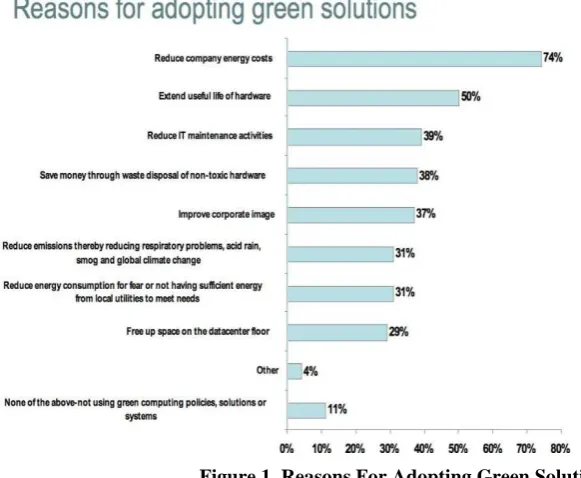
Figure 1 Reasons For Adopting Green Solutions
The figure 1 depicts the various reasons for adopting green solutions. The main reasons being
reducing the energy cost, energy consumption and extending the life of hardware.
Advantages and Disadvantages of Green computing
4,51. Reduced energy usage results in low carbon di oxide emission, stemming from a reduction in
the fossil fuel used in power plants and transportation
2. Less energy required to produce, use and dispose products
3. It includes changing Government policy to encourage recycling and lowering energy use by
individuals and businesses
4. Reduce the risk in the usage of laptops which can be cancerous and immune reactions in
humans.
The disadvantages being costly to implement, underpowered computers and rapid change in
technology.
Approaches to implement Green Computing
6:There are various strategies by which green computing can be implemented.
Buy Energy Efficient Hardware:
Buy notebooks, workstations, and servers that meet the EPA's Energy Star guidelines for
lower power consumption. Multi core processors increase processing output without substantially
IJSRR, 7(4) Oct. – Dec., 2018 Page 4 temperature controlled fans, small form factor hard drives, and low voltage processors may attribute
to green computing
Use Power Management Technology And Best Practices7
OS running ACPI-enabled systems incorporate power-saving features that allows to
configure monitors and hard disks to power down after a specified period of inactivity. Systems can
be set to hibernate when not in use, thus powering down the CPU and RAM as well.
Computer Power Savings Modes Management of power consumption is a standard, yet often
overlooked, feature of most computers and operating systems on the market today. Screen Savers,
Monitor Sleep Mode, Hard Disk Sleep Mode, System Standby Mode, Hibernate Mode
Use Virtualization Technology To Consolidate Servers8,9
Reducing the number of physical servers, and thus the energy consumption, by using
virtualization technology to run multiple virtual machines on a single physical server.
Optimize Data Center Design
Data centers are huge consumers of energy, and cooling all the equipment is a big issue. Data
center design that incorporates hot aisle and cold aisle layout, coupled cooling (placing cooling
systems closer to heat sources), and liquid cooling can tremendously reduce the energy needed to run
the data center.
Another way to "green" the data center is to use low-powered blade servers and more
energy-efficient uninterruptible power supplies.
Use Thin Clients To Reduce GPU Power Usage
Deploy thin clients, as most of the processing is done on the server, the thin clients use very
little energy. In fact, a typical thin client uses less power while up and running applications than an
Energy Star compliant PC uses in sleep mode. Thin clients are also ecologically friendly because
they generate less e-waste. There's no hard drive, less memory, and fewer components to be dealt
with at the end of their lifecycles.
Use More Efficient Displays
Certain LCD displays can save up to 70 percent in energy costs when compared to CRT
monitors.
Recycle Systems and Supplies
Old systems and supplies can be reused, repurposed, and/or recycled to reduce the load on
landfills . Hand-me-down method can be adopted by workplaces, saving money and avoiding
IJSRR, 7(4) Oct. – Dec., 2018 Page 5
Reduce Paper Consumption
By switching from a paper-based to an electronic workflow: creating, editing, viewing, and
delivering documents in digital rather than printed form.
Encourage Telecommuting
The ultimate way to have a greener office is to encourage as many workers as possible to
telecommute, so as to reduce the amount of office space that needs to be heated and cooled, the
number of computers required on site, and the number of miles driven by employees to get to and
from work.
Algorithmic Efficiency
The efficiency of algorithms has an impact on the amount of computer resources required for
any given computing function and there are many efficiency trade-offs in writing programs. While
algorithmic efficiency does not have as much impact as other approaches, it is still an important
consideration. A study by a physicist at Harvard, estimated that the average Google search released
7 grams of carbon dioxide (CO2). However, Google disputes this figure, arguing instead that a
typical search produces only 0.2 grams of CO₂ .]More recently, an independent study
by GreenIT.fr demonstrate that Windows 7 + Office 2010 require 70 times more memory (RAM)
than Windows 98 + Office 2000 to write exactly the same text or send exactly the same e-mail than
10 years ago
Resource Allocation
Algorithms can also be used to route data to data centers where electricity is less expensive.
Researchers from MIT, Carnegie Mellon University, and Akamai have tested an energy allocation
algorithm that successfully routes traffic to the location with the cheapest energy costs. Nonetheless,
a similar strategy could be used to direct traffic to rely on energy that is produced in a more
environmentally friendly or efficient way. A similar approach has also been used to cut energy usage
by routing traffic away from data centers experiencing warm weather; this allows computers to be
shut down to avoid using air conditioning. Larger server centers are sometimes located where energy
and land are inexpensive and readily available. Local availability of renewable energy, climate that
allows outside air to be used for cooling, or locating them where the heat they produce may be used
for other purposes could be factors in green sitting decisions.
CONCLUSION
Green computing is the one of the best solutions for global warming as it addresses the issue
IJSRR, 7(4) Oct. – Dec., 2018 Page 6 businesses can contribute positively to environmental stewardship and protect the environment by
reducing energy consumption and paper costs to a great extent.
FUTURE PROSPECTS
12,13:
List of Tech Companies going green
Intel - Far and away the largest consumer of renewable energy on the EPA's list, Intel utilizes
3.1 billion kWh annually. It gets that energy from a number of different sources, such as solar, wind,
hydro, and biomass, according to the company's Corporate Responsibility Report. It even operates 18
of its own solar panels with a capacity of 7,000 kW on site. A reflection of Intel's commitment to the
environment is its compensation plan, which links a portion of every employee’s variable
compensation to reaching energy efficiency goals.
Microsoft - In 2012, the company implemented a carbon fee charging business groups for
every unit of carbon produced, creating a carbon-neutral model. Microsoft is also working toward
making its cloud data centers greener, focusing on site choice and location, improving efficiency,
lessening environmental impact, and increasing use of renewable energy. To that end, the company
created the position of Director for Datacenter Sustainability
Cisco - With electricity accounting for 85% of Cisco’s greenhouse gas emissions, green
energy usage can make a big difference. Though it uses a large quantity of green energy (1.1 billion
kWh annually), the company is looking to further increase its use of electricity generated from
renewable sources The networking giant also plans to reduce electricity emissions by 40% by 2017
and expand conservation throughout its partner and supply chain ecosystem. A big part of Cisco's
sustainability effort includes making its products more efficient and recyclable.
Apple - In 2014, Apple converted 100% of its US operations to renewable energy, and the
company is working toward a carbon-neutral footprint across its entire supply chain, Apple has
recently taken steps such as purchasing solar farms to make its data centers entirely sustainable and
planting and conserving forests to offset its use of paper packaging. Apple retail stores are also in the
mix, with 360 of its 450 locations worldwide running on 100% renewable energy to date.
Google - Google becoming a carbon neutral company way back in 2007. According to
its Google Green site, Google data centers use only half the power of a typical data center, and the
company purchases 879 million kWh of renewable energy annually. The web giant has an aggressive
plan to make renewable energy the only kind of power it uses in the near future. Google also puts
significant money behind renewable energy innovation, and has invested $2.5 billion in projects
IJSRR, 7(4) Oct. – Dec., 2018 Page 7 Hewlett-Packard - like other computing companies, was once famous for creating polluting
products. This is particularly true of printer ink. Ink cartridges from all printing companies fill up
landfills at an alarming rate. To combat this, not only does HP recycle ink cartridges, but the
company has also made sure all of its own products are 100% recyclable. Additionally, HP runs
hundreds of e-waste centers that turn obsolete technology back into raw materials.
Dell - Electronic equipment are obviously most difficult products to safely dispose of.
Luckily, one of the main leaders in this filed stepped forward to make the task less unnerving. Dell
launched ―no computer should go to waste‖ recycling program which allowed customers to return
dell branded products to the company for free. Dell has also established programs which accept
monitors, printers and computers from other companies for safe disposal!
IBM - another early adopter of sustainability and eco-friendly business. Corporate social
responsibility and environmental stewardship has been part of the company’s mission since the
1960s. Its first sustainability report was published in 1990 and its data centers have received awards
from the European Commission for their long-time energy efficiency successes. Today, IBM’s
efforts include smart buildings that reduce resource demand, green procurement, water resource
management and more for a truly comprehensive approach.
Adobe - Adobe systems was the greenest IT company in Newsweek’s 2014 rankings, a
well-earned distinction. The company has already made some impressive achievements, including
obtaining LEED certification for more than 70 per cent of its workspaces, including retrofitting a
historic building in San Francisco. It also has ambitious goals—including getting to net zero
energy consumption and reducing its packaging, packaging being a resource drain and big
contributor to plastic pollution. Adobe was also a corporate leader in reducing its water use to
respond to California’s historic drought, even after it had already reduced its water use by more than
60 per cent since 2000 through means like installing environmentally friendly fixtures and
landscaping with native plants.
Newsweek has ranked the world’s largest companies on corporate sustainability and
IJSRR, 7(4) Oct. – Dec., 2018 Page 8 Rank 17 Company Oracle Corp Ranking score 75.80%
26 Apple Inc 73.80%
47 Microsoft Corp 70.50%
49 Accenture PLC 69.70%
53 EMC Corp 68.70%
66 ASML Holding NV 66.30%
79 Taiwan Semiconductor Manufacturing Co Ltd 64.70%
87 Cisco Systems Inc 63.80%
91 Intel Corp 62.90%
96 Adobe Systems Inc 62.30%
101 Cognizant Technology Solutions Corp 61.80%
134 SAP SE 58.20%
142 Samsung Electronics Co Ltd 57.30% 145 Telefonaktiebolaget LM Ericsson 57.10% 151 Tata Consultancy Services Ltd 56.10% 153 Murata Manufacturing Co Ltd 56.00%
166 QUALCOMM Inc 53.90%
172 eBay Inc 53.60%
173 Nokia OYJ 53.40%
185 Infosys Ltd 52.00%
197 Canon Inc 50.20%
202 TE Connectivity Ltd 49.90% 206 International Business Machines Corp 49.70%
219 Intuit Inc 47.80%
229 ALPHABET 46.40%
259 Hitachi Ltd 41.40%
301 Yahoo! Inc 35.50%
303 Texas Instruments Inc 35.30% 305 salesforce.com inc 34.70%
314 LinkedIn Corp 33.90%
328 Visa Inc 31.40%
342 Hon Hai Precision Industry Co Ltd 28.50% 344 Automatic Data Processing Inc 28.30%
358 MasterCard Inc 26.40%
370 Tencent Holdings Ltd 25.00%
377 Yahoo Japan Corp 24.30%
383 BROADCOM Ltd. 23.80%
385 Facebook Inc 23.70%
390 NXP Semiconductors NV 23.10%
391 Baidu Inc 23.10%
403 Keyence Corp 21.40%
407 VMware Inc 21.30%
414 NetEase Inc 20.60%
421 PayPal Holdings Inc 20.00% 443 Hewlett Packard Enterprise Co 17.10% 463 Alibaba Group Holding Ltd 15.20% 479 Activision Blizzard Inc 11.90% 483 Hedy Holding Co Ltd 11.10%
REFERENCES:
1. S.V.S.S. Lakshmi, Ms. I Sri Lalita Sarwani, M. Nalini Tuveera / International Journal of
IJSRR, 7(4) Oct. – Dec., 2018 Page 9 Issue4, July-August 2012, pp.1282-1285 1282 | P a g e A Study On Green Computing: The
Future Computing And Eco friendly Technology
2. Surulinathi, M., Amsaveni, N., Maheswaran., and Srinivasaragavan, S. Scientometric
Dimensions of Knowledge Management Research in India: A Study based on Scopus
database, Sri Lankan Journal of Librarianship and Information Management, 2007; 2(2):
13-24.
3. Risco Taufik Achmad, Budiawan and Elza Ibrahim Auerkari. Annual Research & Review in
Biology. Effects of Chromium on Human Body, 2017
4. Mujtaba Talebi and Thomas Way Applied Computing Technology Laboratory Department of
Computing Sciences Villanova University Villanova, Methods, Metrics and Motivation for a
Green Computer Science Program
5. Susan Fogarty. "Tech Goes Green: Top 5 Companies"[online]. 2016.[cited 2016 Mar 17]
Available
from:URL:https://www.networkcomputing.com/data-centers/tech-goes-green-top-5-companies/1668947173.
6. Emily Green. "6 Companies Going Green To Their Part For The Word"[online].2016.[cited
2016 July 31] Available from:URL:https://usgreentechnology.com/6-companies-going-green/.
7. Sulaiman, Ainin & Naqshbandi, M Muzamil & Dezdar, Shahin. Impact of adoption of Green
IT practices on organizational performance Quality and Quantity. 2015;50 (5). Available
from:URL:https://www.researchgate.net/publication/280949290_Impact_of_adoption_of_Gre
en_IT_practices_on_organizational_performance.
8. Kelly Sampson. "10 Leading Companies That Efficiently Went "Green"[online].2015.[cited
2015 Sep 30]. Available
from:URL:http://hummingbirdinternational.net/10-companies-that-efficiently-went-green/.
9. Deb Shinder."10 Tips for implementing green IT"[online].2008.[cited 2008 Sep 3]. Available
from:URL:https://www.techrepublic.com/blog/10-things/10-tips-for-implementing-green-it/.
10.Care2."10 Global Companies that are Environmentally Friendly"[online].2016.[cited 2016
June 2]. Available
from:URL:https://www.virgin.com/virgin-unite/10-global-companies-are-environmentally-friendly .
11.Newsweek."Top Green Companies in the World 2016"[online].2018.[cited 2018 Oct 26].
Availablefrom:URL:https://www.newsweek.com/green-2016/top-green-companiesworld2016.
12.Compactor Management Company."9 Companies with Great Environmental
Initiatives"[online].2017.[cited2017].Availablefrom:URL:https://www.norcalcompactors.net/9
IJSRR, 7(4) Oct. – Dec., 2018 Page 10 13.Murugesan S. "Harnessing Green IT: Principles and Practices".IT Professional 2008; 10(1):
24-33.
14.Ninlawan C, Seksan P, Tossapol K., Pilada W."The Implementation of Green Supply Chain
Management Practices in Electronics Industry", Proceedings of the International
Multiconference of Engineers and computer scientists 2010; 3 March 2015.
15.Piotr Pazowski, Green Computing : Latest Practies and Technologies for ICT Sustainability.
TIIM. Proceedings of Joint International Conference 2015.
16.Prabhjot Kaur , Manoj Agnihotri . A Review on Green Computing By Resource Scheduling in
Cloud Datacenter.IJETA 2016; 3(3): 35-40.
17.Junaid Shuja, Raja Wasim Ahmad, Abdullah Gani et al. Greening Emerging IT Technologies:
Techniques and Practices. JISA 2017; 8(9): 1-11.
18.Basar Bener A, Morisio M, Miranskyy A, Akinli Kocak S. "Green IT and Green Software".
Computing Now; IEEE Computer Society .[online].2014.[cited 2014 Oct]. 7:10. Available
from: URL: http://www.computer.org/web/computingnow/archive/october2014.
19.Dr Kevin Brigden and Dr David Santillo."Toxic Chemicals in Computers
Exposed-Determining the presence of hazardous substances in five brands of laptop computers".
Greenpeace Research Laboratories l Technical Note. Published by Greenpeace International;
Ottho Heldringstraat .Sep 2006.
20.Qi Deng, Shaobo Ji. "Organizational Green IT Adoption: Concept and Evidence".
Sustainability 2015; 7: 16737–16755
21.Bokolo Anthony Jnr, Noraini Che Pa."A Framework for Adoption and Implementation of
Green IT/IS Practice in IT Governance". Proceedings of Third International Conference on
Green Computing, Technology and Innovation (ICGCTI2015), Serdang, Malaysia, 2015.
22.Meenakshi Gupta, Garima Gupta."Green computing – a step towards better milieu".JEC&AS
2013;2(9): Journal of Engineering, Computers & Applied Sciences, 2(9), 1-5.
23.Agarwal, Shalabh, Datta, Arnab, Nath, Asoke. "Impact of Green Computing in IT Industry to
Make Eco-Friendly Environment". Journal of International Research in Computer Science
2014;5:510.Availablefrom:URL:https://www.researchgate.net/publication/276169342_Impact
_Of_Green_Computing_In_It_Industry_To_Make_Eco_Friendly_Environment
24.Kumar Garg, S, Buyya, R."Green Cloud Computing and Environmental Sustainability".2012.
Available from: URL:http://www.cloudbus.org/~raj/papers/Cloud-EnvSustainability2011.pdf
25.Ahmet Ozturk, Koray Umit, Ihsan Tolga Medeni et al. "Green ICT (Information And
Communication Technologies): A Review Of Academic And Practitioner Perspectives"
IJSRR, 7(4) Oct. – Dec., 2018 Page 11 from:URL:http://www.sobiad.org/ejournals/journal_ijebeg/arhieves/2011_1/01ahmet_ozturk.p
df
26.Pushtikant Malviya, Shailendra Singh. ―A Study about Green Computing‖. IJARCSSE
2013;3(6):790-794. Available
from:URL:.http://www.toknowpress.net/ISBN/978-961-6914-13-0/papers/ML15-377.pdf
27.Dr. Pardeep Mittal, Navdeep Kaur, ―Green Computing –Need and Implementation‖,
IJARCET2013;2(3):12001203.Availablefrom:URL:http://ijarcet.org/wpcontent/uploads/IJAR