Comparative Study on the Application of Modern
Heuristic Techniques to SVC Placement Problem
Mehdi Eghbal, Naoto Yorino and Yoshifumi Zoka
Graduate School of Engineering, Hiroshima University, Higashihiroshima, Japan Email: [email protected]
Abstract—This paper investigates the applicability and effectiveness of modern heuristic techniques for solving SVC placement problem. Specifically, Genetic Algorithm (GA), Particle Swarm Optimization (PSO) and Evolutionary PSO (EPSO) have been developed and successfully applied to find the optimal placement of SVC devices. The main objective of the proposed problem is to find the optimal number and sizes of the SVC devices to be installed in order to enhance the load margin when contingencies happen. SVC installation cost and load margin deviation are subject to be minimized. The proposed approaches have been successfully tested on IEEE 14 and 57 buses systems and a comparative study is illustrated. To evaluate the capability of the proposed techniques to solve large scale problems, they are also applied to a large scale mixed-integer nonlinear reactive power planning problem. Results of the application to IEEE 14 bus test system prove the feasibility of the proposed approaches and outperformance of PSO based techniques over GA.
Index Terms—FACTS devices, SVC, Modern heuristic techniques, Evolutionary Programming, Genetic Algorithm, Particle Swarm Optimization, Evolutionary PSO
I. INTRODUCTION
With the worldwide restructuring and deregulation of power systems, sufficient transmission capacity and reliable operation have become more valuable to both system planners and operators. Building new constructions to enhance the loadability of a network is very expensive and many constraints have to be satisfied. As a result, there is a significantly increased potential for the application of FACTS devices due to their important role in power system security enhancement. Among the FACTS devices, Static VAr Compensators (SVCs) are widely used around the world both for their capabilities and for their low maintenance costs. Although investment cost of SVCs are expensive but maintenance costs are low since the devices have no moving parts and repairs are minimal [1].
Basic Optimal FACTS Allocation problem has been solved by various optimization techniques and different objective functions [2]. In general optimal FACTS allocation problem is to determine the optimal size and location of new installed FACTS devices in order to optimize a specific objective function while considering
variety of operating constraints. The main presented objective functions are system loadability maximization, minimization of overall operation cost, minimization of installation cost and congestion management.
Most of the mentioned works in [2] do not consider voltage security constraints, system operation and investment costs in an integrated formulation. A comprehensive formulation for Reactive Power Planning (RPP) problem including the allocation of FACTS devices is introduced in [3]. The problem is formulated as a large scale mixed integer nonlinear programming and the main objective is to make a trade-off between economy and security by determining the optimal combination of fast and slow controls (load shedding, new slow and fast VAR devices) during corrective and preventive control states. Metaheuristic techniques are used to solve the proposed problem and a comparative study on the performance of the optimization techniques is presented in [4,5].
An overview of modern heuristic techniques and specific applications of heuristic approaches to power system problems has been discussed in [6].Some well-known modern heuristic techniques areġ Genetic Algorithm (GA), Simulated Annealing (SA), Tabu Search (TS), Particle Swarm Optimization (PSO) and Evolutionary PSO (EPSO).
A GA algorithm is presented in [7] to optimally locate multiple-type FACTS devices in a power system where, four types of controllers were chosen and modeled for steady-state studies. Authors in [8] introduced a hybrid Genetic Algorithm and Successive Linear Programming (GA/SLP) to solve a voltage constrained VAR planning problem. It has been claimed that GA leads to better solution and disappears any divergence problem mentioned in [9].
Evolutionary PSO (EPSO) was first developed by Miranda, et al. [15] and combines conventional PSO with the evolutionary strategy. EPSO puts together the concepts of Evolution Strategies (ES) and of PSO. The particles are move according to the conventional PSO movement rule, but the strategic parameters are selected according to ES procedure. Therefore, it is expected that the exploratory power of PSO and self-adaptation power of ES is obtained. Successful application in power system problems is reported in [16, 17] while the results are compared with conventional PSO and SA.
This paper aims to evaluate and compare the performance of the above mentioned modern heuristic techniques in solving optimal SVC placement problem. First, a formulation is introduced to find the optimal allocation of SVC devices in order to minimize total cost while deviation from desired load margin is minimized during base case and contingency states. Then, the above mentioned modern heuristic techniques are used to find the near optimal solutions for the proposed problem. A comparative study is worked out to better compare the performance of the solution techniques.
The rest of this paper is organized as follows: Section II describes the problem formulation. Section III, introduces the modern heuristic techniques used in this paper and explains how solution techniques have been applied in the proposed problems. As the IEEE-14 and IEEE-57 bus systems are tested to demonstrate the effectiveness of the proposed method, section IV is devoted to present the numerical study results.
II. PROBLEM FORMULATION
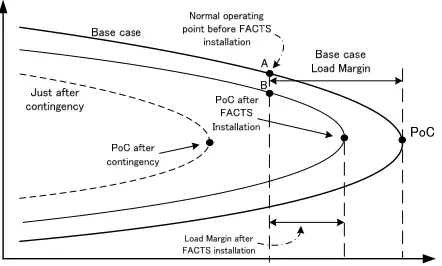
The objective function of the proposed SVC placement problem is to minimize total cost, including investment cost of SVC devices and load margin cost. Fig.1 illustrates some typical P-V curves for different operation situations; base case, just after contingency happens and after utilizing FACTS devices. The nose point of the P-V curve is called “Point of voltage Collapse” (PoC), where the voltage drops rapidly with an increase of load. PoC is also known as the equilibrium point, where the corresponding Jacobian matrix becomes singular. As shown in Fig.1, load margin is defined as the distance between the nose point and the base case operating point (A). After a contingency happens and installed FACTS devices are utilized, the system operating point moves to point (B). As shown in Fig.1, load margin in this case is less than base case, but the system is operating in stable zone.
The proposed objective function may be formulated as follows.
¦
N
k
k lm k Inst
total CRF F F
F Minimize
1
*
: (1)
Subject to:
1) Investment constraints (Upper and lower capacity limits of SVC devices)
2) Operation constraints (Load flow constraints)
Figure 1. P-V curve showing the main concept of PoC and load margin
Where N is the number of contingencies and CRF is the Capital Recovery Factor and is calculated as (2) based on the values of interest rate (ir) and life period of VAr devices (Dy).
1 11
Dy Dy
ir ir ir
CRF (2)
FInst is the investment cost of SVC devices where, ȍ is
the set of all candidate sites, CiSVC is the capacity of the
installed SVC in KVAr.ȝiSVC is the investment cost factor
in $/KVAr based on the data provided in [18].
¦
:
i
iSVC iSVC
Inst c
F P (3)
38 . 127 3051
. 0 0003 .
0 2
iSVC iSVC
iSVC c c
P (4)
The load margin cost (Flm) is defined as (5) where, U is
a penalty cost factor; lmDes is desired load margin; lmIns is
the load margin after SVC installation.
¯ ®
!
otherwise 0
if )
( Des Ins Des Ins lm
lm lm lm
lm
F U (5)
III. MODERN HEURISTIC TECHNIQUES
A. Initialized Population
To expand the solution algorithm introduced in [3] for finding the optimal allocation of different types of FACTS devices, the expanded population structure of individuals is introduced and illustrated in Fig.2. Each individual (Xi) which is considered to be a solution for the
steady state model of FACTS devices in power flow calculations the proposed allocation problem can be straightforwardly applied to locate any type of FACTS devices.
Figure 2. Expanded Structure of the population of individuals
B. Genetic Algorithms (GA)
Genetic Algorithms are global search techniques developed by Holland et al. [19], based on the mechanisms of natural selection and genetics and the principles of Darwinian evolution.
GA searches for the optimal solutions by sampling the search space at random and creating a population of candidate solutions. GA transforms a population of individual objects, each with an associated fitness value, into a new generation of the population using the Darwinian principle of reproduction and survival of the fittest and naturally occurring genetic operations such as
crossover (recombination) and mutation. Each individual
in the population represents a possible solution to a given problem [20].
In this paper a modified version of GA has been used in which integer representation is performed as shown in Fig. 2. Each chromosome of the population consists of two parts, containing the size and the place of the FACTS to be installed. Length of each chromosome is equal to the number of the candidate sites for the installation of all FACTS devices. At the initial step a random population based on the illustrated structure is generated.New generated chromosomes are checked to be within the specified limits and a truncation policy is done for the values according to the capacity constraints. If the value of any chromosome exceeds its limit, it will be given the limit value.
As for the GA operators, one-point crossover is used in this paper and the mutation is exactly the typical one except that the chosen random positions are changed from zero to a randomly selected value within the upper and lower limit and vice versa. Reproduction is implemented using biased roulette wheel method.
C. Particle Swarm Optimization (PSO)
PSO is a kind of evolutionary algorithm, which is basically developed through simulation of swarms such as flock of birds or fish schooling [10]. Similar to evolutionary algorithm, PSO conducts searches using a population of random generated particles, corresponding to individuals (agents). However in PSO, particles evolve
in the search space motivated by three factors: inertia,
memory and cooperation.Inertia implies a particle keeps
moving in the direction it had previously moved. Memory
factor influences the particle to remember the best position of the search space it has ever visited.
Cooperation factor induces the particles to move closer to
the best point in space found by all particles. Each particle is a candidate solution to the optimization problem which, has its own position and velocity represented as x and v.
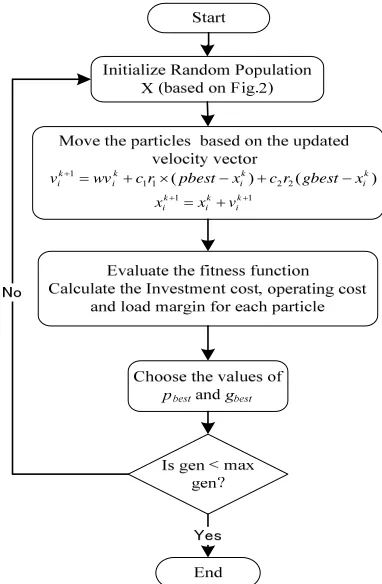
Searching procedure by PSO can be described as follows: a flock of agents optimizes an objective function. Each agent knows its best value (pbest), while the best value in the group (gbest) is also known. New position and velocity of each agent is calculated using current position and best values pbest and gbest as below:
) (
)
( 22
1 1
1 k
i k
i k
i k
i wv cr pbest x cr gbest x
v u (10)
1
1
k
i k i k
i
x
v
x
(11)Where, k is the number of current generation; wis called inertia weight; r1 and r2 are random numbers
between 0 and 1; c1and c2are two positive constants,
called cognitive and social parameter respectively. The computational flowchart of the developed PSO is shown in Fig. 3.
) (
)
( 22
1 1
1 k
i k
i k
i k
i wv cr pbest x cr gbest x
v u
1
1
k
i k i k
i x v x
Figure 3. Computational flowchart of the developed PSO
cooperation factor. Inertia weight was first introduced by Shi and Eberhart [21]. The inertia weight is used to control the impact of the previous velocities on the current velocity, influencing the trade-off between the global and local experience.
Although Zheng et al. [22] claimed that PSO with increasing inertia weight performs better, linear decreasing of the inertia weight is recommended by Shi and Eberhart [21, 23]:
iter iter
w w w w
max min max max
(12)
Where wmax and wmin are maximum and minimum of
inertia weight value respectively, itermax is maximum
iteration number and iter is the current iteration. The authors claimed that the following parameters are appropriate and the values do not depend on the problems:
wmax=0.9, wmin=0.4, c1=c2=2
The values are also reported to be appropriate for power system problems [11, 3].
A so-called constriction factor K, is presented in [24]. It has been claimed that this factor increases the algorithm’s ability to convergence to a good solution and can generate higher quality solution than the conventional PSO approach. In this case, the expression used to update the particle’s velocity becomes:
)) (
) (
(
* 11 22
1 k
i k
i k
i k
i K v cr pbest x cr gbest x
v u (13)
Where,
4 , ,
4 2
2
2 1
2 !
M M M M c c M
K (14)
D. Evolutionary Particle Swarm Optimization (EPSO)
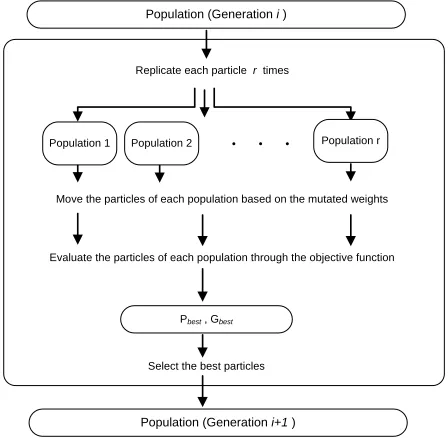
EPSO was developed by Miranda et al. [16] that combines conventional PSO with the evolutionary strategy. EPSO puts together the concepts of Evolution Strategies (ES) and of PSO. The particles move according to the conventional PSO movement rule, but the strategic parameters are selected according to ES procedure. Therefore, it is expected that the exploratory power of PSO and self-adaptation power of ES is obtained.
EPSO starts the same as PSO, with a population of particles, generated randomly in the search space. Then, within the number of iterations, the following steps are implemented:
1) Replication: Each particle is replicated r times
(usuallyr is considered 2)
2)Mutation: The weights of the replicated particles are
mutated according to:
) 1 , 0 (
*
N w
wik ik W (15)
Where IJ is a learning parameter (either fixed or treated also as strategic parameters and therefore also subject to mutation), and N(0,1) is a random variable with Gaussian distribution, 0 mean and variance 1.
3)Reproduction: Each particle generates as offspring a
new particle according to the movement rule by (16), similar to the equations (10) and (11) of conventional PSO. The replicated particles make use of the mutated weights. The offspring is held separately for the original particles and the mutated ones. The value of
gbest is also mutated using a so called learning
parameter (IJ`).
) (
)
( *2 *
* 1 *
0
1 k
i i
k i i
k i i k
i w v w pbest x w gbest x
v u (16)
) 1 , 0 (
' *
N gbest
gbest W (17)
IJ` is a learning parameter (either fixed or treated also as strategic parameters and therefore also subject to mutation).
4)Evaluation: Each particle is evaluated according to
their current position.
5) Selection: The best particles are selected by
stochastic tournament or other selection procedure, to form a new generation.
Figure 4 illustrates the outline of the proposed EPSO.
Population (Generation i)
Pbest, Gbest
Replicate each particle r times
Move the particles of each population based on the mutated weights
Select the best particles
Population 1 Population r
Evaluate the particles of each population through the objective function
Population (Generation i+1) Population 2
Figure 4. Outline of the developed EPSO algorithm
IV. NUMERICAL RESULTS
of VAR control devices (Dy) and the interest rate (ir) are assumed 10 years and 0.04 respectively. Desired load margin is assumed 0.2.
Table I shows the values of minimum voltages and load margins for just after different possible contingencies for IEEE 14-bus test system.
TABLE I.
LOAD MARGINS AND MINIMUM VOLTAGES FOR SEVER CONTINGENCIES
Minimum Voltage
Load Margin Cont 1. (Line 1-2) 0.604 -0.0374 Cont 2. (Line 1-5) 0.583 -0.0147 Cont 3. (Line 2-3) 0.605 0.0383 Cont 4. (Line 2-4) 0.574 0.0914 Cont 5. (Line 2-5) 0.572 0.1012 Cont 6. (Line 3-4) 0.573 0.01651 Cont 7. (Line 4-5) 0.572 0.1451 Cont 8. (Line 6-11) 0.570 0.1667
As it is shown in table I, for some contingencies the load margin is negative and system will be derived to unstable zones. In these cases, installation of FACTS devices to control the voltage and mitigate voltage instability is needed.
To find the optimal allocation of FACTS devices, the optimization problem is solved by the developed modern heuristic techniques. The number of population for all modern heuristic techniques in this paper is assumed 40 and maximum number of iterations (itermax) is 100.
Probabilities of mutation and crossover operators are 0.1 and 0.6, respectively. Learning parameter (W) of EPSO is assumed 0.5.
Table II shows the optimal allocation of SVCs through the proposed modern heuristic techniques for IEEE 14 and 57 buses test systems. Values in table II present the place and amount of SVCs to be installed, for example 8(0.16) means that the capacity of the SVC to be installed in bus 8 is 0.16 pu.
TABLE II.
OPTIMAL ALLOCATION OF SVCS
Test system
Solution Method
Allocation of SVC
GA 8(0.3), 9(0.3), 10(0.28) PSO 8(0.3), 9(0.3), 11(0.26) IEEE-14
buses
EPSO 8(0.3), 9(0.3), 10(0.24) GA 28(0.3), 30(0.3), 32(0.28) PSO 30(0.26), 31(0.3), 32(0.28) IEEE-57
buses
EPSO 31(0.2), 30(0.3), 32(0.28)
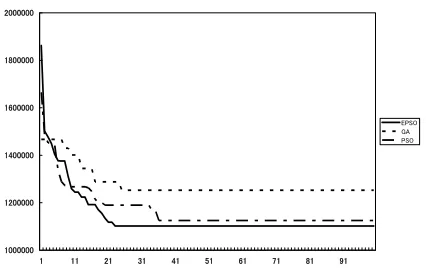
Fig.5 and Fig.6illustrate the convergence graphs of GA, PSO and EPSOfor IEEE-14 and 57 buses test systems, respectively. Population size and the maximum number of iterations in all techniques are the same.
㻝㻜㻜㻜㻜㻜㻜 㻝㻞㻜㻜㻜㻜㻜 㻝㻠㻜㻜㻜㻜㻜 㻝㻢㻜㻜㻜㻜㻜 㻝㻤㻜㻜㻜㻜㻜 㻞㻜㻜㻜㻜㻜㻜
㻝 㻝㻝 㻞㻝 㻟㻝 㻠㻝 㻡㻝 㻢㻝 㻣㻝 㻤㻝 㻥㻝
㻱㻼㻿㻻 㻳㻭 㻼㻿㻻
Figure 5. Convergence characteristics of GA,PSO and EPSO (IEEE-14 buses test system)
㻤㻜㻜㻜㻜㻜 㻝㻞㻜㻜㻜㻜㻜 㻝㻢㻜㻜㻜㻜㻜 㻞㻜㻜㻜㻜㻜㻜
㻝 㻝㻝 㻞㻝 㻟㻝 㻠㻝 㻡㻝 㻢㻝 㻣㻝 㻤㻝 㻥㻝
㻳㻭 㻱㻼㻿㻻 㻼㻿㻻
Figure 6. Convergence characteristics of GA,PSO and EPSO (IEEE- 57 buses test system)
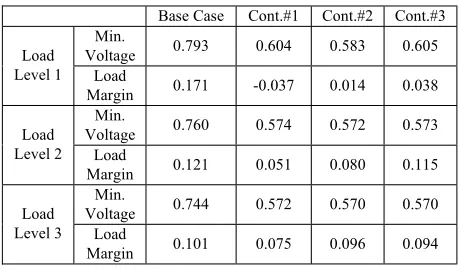
To investigate the application feasibility of the proposed modern heuristic techniquesin solving large scale optimization problems, the above mentioned techniques are also applied to the RPP problem formulation in [3]. In the proposed RPP problem, SVC and SC are utilized during corrective and preventive controls to keep the desired system security level. SVC as a fast control device is utilized during corrective control and SC as a slow control device is utilized during preventive control. Due to the low investment cost of SVC and SC compare to the cost of load shedding, in all obtained solutions load shedding is mitigated after utilization of FACTS devices and considerable cost saving is achieved.
TABLE III.
MINIMUM BUS VOLTAGES AND LOAD MARGINS FOR BASE CASE AND JUST AFTER CONTINGENCY STATES
Base Case Cont.#1 Cont.#2 Cont.#3
Min.
Voltage 0.793 0.604 0.583 0.605 Load
Level 1 Load
Margin 0.171 -0.037 0.014 0.038 Min.
Voltage 0.760 0.574 0.572 0.573 Load
Level 2 Load
Margin 0.121 0.051 0.080 0.115 Min.
Voltage 0.744 0.572 0.570 0.570 Load
Level 3 Load
Margin 0.101 0.075 0.096 0.094
To demonstrate the cost effect of utilizing slow and fast devices during corrective and preventive controls, three scenarios have been analyzed. It has to be mentioned that load conditions and parameter settings for all scenarios are the same. To compare the effectiveness of the optimization methods, each scenario is simulated by GA, PSO and EPSO independently. In scenario 1, there are not any FACTS devices to be installed and load shedding is the only control device. SVC is the only FACTS device which is used to be installed during scenario 2 and finally both SC and SVC are used to be utilized in scenario 3. Table IV presents the cost effect of new VAR installation simulated by the heuristic methods. As expected, load shedding cost is reduced after new VAR installation. All the values in table IV are in US$.
TABLE IV.
MINIMUM BUS VOLTAGES AND LOAD MARGINS FOR BASE CASE AND JUST AFTER CONTINGENCY STATES
Load shedding
cost
SVC Inst. Cost
FSC Inst. Cost
Saving Cost
Scenario 1 2.45*108 0 0 0
Scenario 2 0 8.83*107 0 1.56*108
G A
Scenario 3 0 6.95*107 1.82*107 1.57*108
Scenario 1 2.45*108 0 0 0
Scenario 2 0 8.7*107 0 1.59*108
P S
O Scenario 3 0 1.23*107 4.59*107 1.86*108
Scenario 1 2.45*108 0 0 0
Scenario 2 0 8.3*107 0 1.6*108
E P S
O Scenario 3 0 1.2*107 4.4*107 1.89*108
Fig.7 depicts the convergence of the applied solution methods for the VAR planning problem. With the same population size and the maximum number of iterations, EPSO has better performance than PSO and also GA.
㻟㻝㻞㻜㻜㻜㻜㻜 㻟㻝㻠㻜㻜㻜㻜㻜 㻟㻝㻢㻜㻜㻜㻜㻜 㻟㻝㻤㻜㻜㻜㻜㻜 㻟㻞㻜㻜㻜㻜㻜㻜 㻟㻞㻞㻜㻜㻜㻜㻜 㻟㻞㻠㻜㻜㻜㻜㻜
㻝 㻞㻝 㻠㻝 㻢㻝 㻤㻝 㻝㻜㻝 㻝㻞㻝 㻝㻠㻝 㻝㻢㻝 㻝㻤㻝 㻞㻜㻝 㻳㻭 㻱㻼㻿㻻 㻼㻿㻻
Figure 7. Convergence of the Solution methods
V. CONCLUSIONS
Three well-known modern heuristic techniques have been applied to solve the SVC placement problem and comparative study is conducted to illustrate the performances and effectiveness of the proposed techniques. Even though all the proposed techniques produced optimal or near optimal solution, required numbers of iterations to obtain the optimal solution through PSO and EPSO are less than GA. Moreover comparing the results obtained by GA, PSO and EPSO techniques depicts that PSO based techniques outperform others in terms of calculation time and not trapping into local minima. Proposed modern heuristic techniques have also been applied successfully to a large scale mixed-integer nonlinear programming reactive power planning problem. Numerical results depict that considerable cost saving can be achieved through optimal allocation and combination of VAr devices while maintaining the desired system security level.
REFERENCES
[1] Bhaskar Ray, “PG&E Stabilizes Network During Peak Loads”, Transmission &. Distribution World, vol. 55, pp. 58-63, 2003
[2] Wenjuan Zhang, Fangxing Li and Leon M.Tolbert, “Review of Reactive Power Planning: Objectives, Constraints, and Algorithms”, IEEE Trans. Power Syst., Vol.22, No.4, Nov. 2007, pp. 2177-2186
[3] Eghbal M.,Yorino N.,El-araby E.E. and Zoka Y., “'Multi Load Level Reactive Power Planning Considering Slow and Fast VAR Devices by means of Particle Swarm Optimization”, IET Transaction on Generation, Transmission and Distribution, Vol. 2, Issue 5, September 2008, pp.743-751
[4] Mehdi Eghbal, E.E.El-Araby, Yoichi Ito, Yoshifumi Zoka, and Naoto Yorino, “Application of Metaheuristic Methods to Reactive Power Planning: A Comparative Study for GA, PSO and EPSO”, in Proc. Of IEEE International
conference on Systems, Man and Cybernetics (SMC`2007),
[5] Mehdi Eghbal, Naoto Yorino, E.E.El-Araby, “Application and Comparison of Metaheuristic Techniques to reactive Power Planning Problem”, to be appeared in IEEJ Trans.
on Electrical and Electronic Engineering, Vol.3, 2008
[6] Kwang Y.Lee and Mohamed A.El-Sharkawi, “Modern Heuristic Optimization Techniques”, Wiley-IEEE Press [7] Gerbex, S., Cherkaoui, R. and Germond, A.J., “Optimal
location of multi-type FACTS devices in a power system bymeans of genetic algorithms”, IEEE Transactions on Power Systems, Vol.16, Issue 3, Aug 2001 pp:537 – 544 [8] E.E.El-Araby, Naoto Yorino, Hiroshi Sasaki. , “A new
approach for preventive/corrective control strategy to avoid voltage collapse based on FACTS devices investment,”
IEEJ Transaction on Power and energy, Vol.123 , NO.5,
pp. 569–576 , May. 2003.
[9] Naoto Yorino, E.E.El-Araby, Hiroshi Sasaki, Shigemi Harada.M. , “A new formulation for FACTS allocation for security enhancement against voltage collapse,” IEEE
Trans. Power Syst., Vol. 18, NO.1, pp. 253–260 , Feb.
2003.
[10] J.Kennedy and R.Eberhart, “Particle swarm optimization,” in proceedings of IEEE International
conference on Neural Networks, Vol. IV, Perth, Australia,
1995, pp. 1942-1948.
[11] Hirotaka Yoshida, Kenichi Kawata, Yoshikazu Fukuyama, Shinichi Takayama, and Yosuke Nakanishi, “A particle swarm optimization for reactive power and voltage control considering voltage security assessment”, IEEE Trans.
Power Syst., Vol. 15,No. 4, pp.1232-1239, Nov. 2000.
[12] Yorino N., Eghbal M., El-Araby E.E., Zoka Y., “Voltage security constrained reactive power planning considering the costs and performance of VAR devices”, Proc. Of iREP Symposium, Charleston, South Carolina, USA, 19-24 Aug.2007 pp.:1 - 11
[13] Ping Ren, Li-Qun Gao, Nan Li, Yang Li, Zhi-Ling Lin, “Transmission Network Optimal Planning Using the Particle Swarm Optimization Method”, Proceedings of the Forth International conference on Machine Learning and
Cybernetics, Guangzhou, 18-21 August 2005,
pp.4006-4011.
[14] Klaus Habur, Donal O’Leary, “A Multiagent-Based Particle Swarm Optimization Approach for Optimal Reactive Power Dispatch”, IEEE Trans. Power Syst., Vol. 20,No. 2, pp.1070-1078, May. 2005.
[15] Vladimiro Miranda, and Nuno Fonseca, “EPSO-Best-of-Two-Worlds Meta-Heuristic Applied to Power System Problems,” in Proc. Of the IEEE congress
on Evolutionary Computation, June 2002, pp.1080-1085.
[16] Vladimiro Miranda, and Nuno Fonseca, “EPSO-Evolutionary Particle Swarm Optimization, a New Algorithm with Application in Power Systems,” in Proc.
Of the IEEE congress on Evolutionary Computation, June
2002, pp.745-750.
[17] Vladimiro Miranda, and Nuno Fonseca, “New Evolutionary Particle Swarm Algorithm (EPSO) Applied to Voltage/VAR Control,” in Proc. Of 14the PSCC, Sevilla, June 2002, session 21, paper 5, pp.1-6.
[18] Klaus Habur, Donal O’Leary, “FACTS For cost effective and reliable transmission of electrical energy”, Available: www.worldbank.org/html/fpd/em/transmission/facts_sieme ns.pdf ).
[19] J. H. Holland, “Adaptation in natural and artificial system,”
The University of Michigan Press, 1975.
[20] Kenneth E. Kinnear,Jr. , Advances in Genetic Programming, A Bradford Book, 1994.
[21] Y.Shi and R. Eberhart, “A Modified Particle Swarm Optimizer”, Proc. Of IEEE International conference on
Evolutionary Computation (ICEC`98), Anchorage, Alaska,
May 4-9, 1998.
[22] Zheng,Y., Ma, L., Zhang, L., and Qian, J.,”On the convergence analysis and parameter selection in particle swarm optimization”, in Proc. Of international conference
on Machine Learning and Cybernetics 2003,
pp.1802-1807.
[23] Y.Shi and R. Eberhart, “Parameter selection in Particle Swarm Optimization”, in Proc. Of the 1998 Annual
Conference on Evolutionary Programming, San Diago,
1998.
[24] R.C. Eberhart, and Y.Shi, “Comparing Inertia Weights and Constriction Factors in Particle Swarm Optimization”, in
Proc. Of the 2000 congress on Evolutionary Computation,
Vol.1, pp.84-88.
Mehdi Eghbal received B.S. degree in Electrical Engineering from Ferdowsi University of Mashhad, Iran in 1998, M.S. degree in 2001 from Tarbiat Modares University, Tehran, Iran.
He is currently preparing for a PhD in the area of application of modern heuristic techniques to power system operation and planning at the Department of Artificial Complex Systems Engineering, Hiroshima University. He was with Tavanir Organization, Iran from 2000 to 2002. His research interest lies in power system planning, application of heuristic techniques in power system.
Naoto Yorino received B.S., M.S. and Ph.D degrees in Electrical Engineering from Waseda University, Japan, in 1981, 1983, and 1987, respectively.
He is a Professor in Graduate school of Engineering, Hiroshima University, Higashihiroshima, Japan. He was with Fuji Electric Co., Ltd., Japan from 1983 to 1984. He was a Visiting Professor at McGill University, Montreal, QC, Canada, from 1991 to 1992. His research interests are power system planning, stability and control problems.
Dr. Yorino is a member of IEEE, IEE of Japan and SICE.
Yoshifumi Zoka received B.S. degree in Electrical Engineering, M.S. and Ph.D. degrees from Hiroshima University, Japan. He is currently an associated professor in Graduate school of Engineering, Hiroshima University. He was a research associate at University of Washington, Seattle, WA, USA from 2002 to 2003. His research interest lies in power system planning, stability and control problems.