ISSN (e): 2250-3021, ISSN (p): 2278-8719
Vol. 05, Issue 11 (November. 2015), ||V2|| PP 33-37
Construction and development of the theoretical basis of physical
simulation
Feng jun
1, YU deyi
21( Northeast Petroleum University,Heilongjiang Province163318, China ) 2
(Northeast Petroleum University,Heilongjiang Province163318, China)
Abstract: - Construction simulation experiment is to study the geological structure and simulate the natural phenomenon of deformation features, a physical experimental methods genetic mechanism and kinetics of theoretical physics simulation infrastructure, the development process and the status quo, the experimental device, get people's attention.
Keywords: - experimentics of structural modeling, development, application.
I.
INTRODUCTION
People invented the "construction physics simulation" method, using the model to reproduce the tectonic deformation, which studies the nature of tectonic deformation process less observed, which is the "construct physical simulation experiment"[1]. Normal "construction physics simulation" mainly refers to the "sandbox physical simulation," "sandbox physics simulation" has proven to be a useful tool for studying the basin structure, In recent years, many research institutions outside this area have done a lot of work and achieved fruitful research results[2]. In the petroleum geology of the application structure physical simulation as a unique experimental method, it can be reproduced under laboratory conditions including oil and gas formation and evolution process of structural system, Tracking genetic mechanism of their formation kinetics[3], oil and gas exploration and study by the semi-quantitative analysis and the qualitative description quantitative analysis into an effective way, In recent years, it is widely used in construction structural geology petroleum geology research, and research in the field of oil exploration and[4-6].
II.
CONSTRUCTION
OF
THE
THEORETICAL
BASIS
OF
PHYSICAL
MODELING
2.1 Construction of the theoretical basis of physical modeling
Geometry constraints are structural deformation factor, it is important to follow the geometric similarity. Essence Physical modeling of deformation geometry method, Numerous studies also showed that the process and the results of tectonic deformation is mainly controlled by the geometry, the relationship between stress and the mechanical properties of the rock and the relatively small size[7-8]. Thus, structural modeling method is to study the physics practical approach structural deformation problems several basic principles of construction physics simulation to follow: Similar principle, the selection principle, decomposition principle, the principle of successive approximation, statistical principles[9]. Overall, it is to try to make it similar, focusing on the main issues to avoid secondary issues, and to carry out several experiments, performed the statistical analysis to find rules and factors which ultimately get results.
For the formation and evolution of the basin, the general techniques are mostly based on data for the calculation and analysis of tectonic evolution of the present-day equivalent to the inversion of the process; The basin modeling is being played from the perspective of the basin based on the results of structural analysis, to model the deformation of certain pre-conditions, Including experimental materials, stress, boundary conditions and deformation, etc., after the end of the simulation compared to simulation results and the actual basin morphology, thereby confirming the correctness of tectonic resolution.
Basin modeling methods include numerical simulation and physical simulation, numerical simulation in which the advantage lies mainly in terms of calculation of stress, The physical simulation is basically the size of the model does not consider the stress, usually to determine the appropriate test material to determine the boundary conditions and strain mode model, Research With increased strain, the evolution of the basin model. In general, the factors considered in the experiment are geometric parameters, so the essence of the physical structure is deformed geometry modeling method[35].
The current method for determining similarity model, Scholars widely used Soviet physicist Gerbiqief, aigensong, Gu Heman according to conditions similar to rock deformation mechanics equations deduced formulas (Cη=CρCLCt, CP=CρCL CE=CP, Where Cη viscosity similar factor, Cρ similar density factor, CL is the
length of a similarity factor, Ct is similar to the time factor, CP is similar intensity factor, CE is the shear modulus
-5,C
η=10-15~10-19, In determining the specific use of the experimental material, the brittle ground simulation
environments typically use stretch loose quartz sand[36-38]. Majin tensile strength calculated on the difference between various types of crustal rocks less than 4MPa, scaled back, Intensity difference of model materials in 4*10-4~10-5MPa, On experimental deformation is negligible [39], thus extending the experimental model of the basic structure can not consider differences in rock strength problems [35].
2.2 General structure physical modeling experiment: 2.2.1 Geological Survey to determine the structure prototypes. 2.2.2 The main factors controlling the prototype structure analysis.
2.2.3 Determined based on the prototype scale model geometry and simulation methods used factor.
2.2.4 According to the physical environment of the construction process and prototype rock mechanics properties, select the appropriate model material.
2.2.5 Based on field observations and geophysical data inferred prototype force way constraints, and constraints to determine the loading model.
2.2.6 Record simulation process and results in a timely manner to organize.
2.2.7 Analysis of the accuracy of the simulation results and the degree of similarity with the natural entities if below standard, you can repeat steps 2,4,5,6,7, even for further study of the Step 1.
2.2.8 A reasonable conclusion for the analog practical problems. Above 8 steps constitute go to the actual circulation from practice[10].
III.
RESEARCH AND APPLICATION OF PHYSICAL
MODELING OF STRUCTURE
3.1 from the initial stage to the important stage to the development stage and then to the status quo From the early 19th century to the 19th century, as the initial stage of development of physical simulation lack of maturity similar to the theory, the experiment is not considered substantially similar conditions. Model materials include zinc, iron, aluminum and other metal materials, clay, plaster, glass, soap, cloth, paper and non-metallic materialsAs well as plaster, wax, asphalt, a mixture of turpentine, etc[11-13]. The first half of the 20th century, is an important stage of development of simulations to verify .Sheldon cut joints and Zhang joint plane nature do a lot of experiments[14]. Mead by experiments that with the formation of wrinkles in many cases may be affected by the formation of shear. Chamferlin and Shepard also made Simulating folds. The second stage, the structural model similar theory has been well developed, and conscious use of clay, asphalt, molasses a class of similar material, made a lot of successful experiments. Representatives of Lee, Li siguang et al [15-16]. Since the beginning of the 1950s, simulations entered a new stage of development. In the former Soviet Union Belousov Soviet leadership set up a theory of tectonic laboratory, Foreign in faults
[17-19], fold structure [20-22], the regional structure [23], diapirs [24] physical simulation, carried a lot of work.
Status: Over the last decade, due to the continuous introduction of new technologies, new methods, structure Physical modeling has made a number of important new developments, In particular, we have made very significant achievements in research related to the oil and gas basin construction. By constructing physical modeling experiments provide a basis for the study of basic genetic mechanism of formation and structure of the oil and gas basins, and for those data quality is not high or only superficial information, the lack of deep seismic data interpretation provides pattern and ideas. Therefore, this method of oil by the attention, and to the rapid development, such as the Department of Geology, University of London McClay and Ellis et al influential research group published dozens of articles. As compressional tectonic squeezing into forward, oblique compression, extrusion and complex boundary differences bottom extrusion and the like. American University of Texas at Austin, University of Minnesota and Massachusetts Institute of Technology, University of Manchester, UK, Australian National University, Queen's University, Canada and Sweden's Uppsala University and other internationally renowned universities, in terms of construction physics simulation studies also have good research report.
Currently there has been some progress in the experimental aspects of new sand box. Some new construction methods such as Ramberg centrifuge simulation laboratory experiments have also been new results come out [25-26]. Principles and methods of use of brittle coating method, performed faulting and joints interval simulation. X-Ray radiography experiments sandbox model for cross-sectional observation in the experimental loading unit also has a number of improvements [27]. Internal structure measurement and 3D reconstruction techniques, finite element and discrete element modeling techniques. Internal structure measurement techniques, including mold slicing, CT scanning technology, seismic reflection imaging technology. And so all use them to construct a physical simulation.
But the structure is an important means of physical simulation study tectonic deformation mechanisms,
composed of loose sand of different characteristics of the impact extrusion direction transpressional structural formation [29], Tikoff and other soft materials research base is uniform shrinkage direction under the extrusion pressure torsion structure [30]. These studies transpressional structure is still relatively shallow do not do in-depth research on the characteristics of the conditions under pressure torsion structure formation. Physical simulation for salt structure is nearly 20 years to do. Although geologists different geological salt structures simulated situations, such as salts of regional extension under construction background [31], salt tectonics sedimentary load caused by differences [32], salt tectonics salt caused the lower part of active faults [33] and so on. However, for extrusion tectonic physics simulation load or lateral extrusion pressure caused by salt tectonics relatively small
[34].
3.2 Structural modeling laboratory equipment
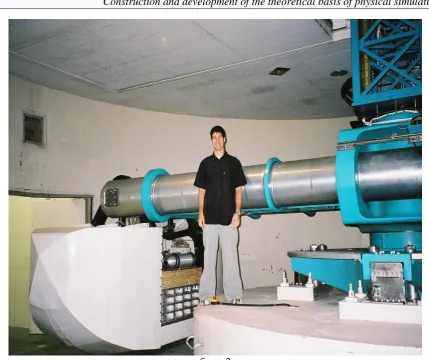
Construction physics simulation equipment and their functions and drive mode broadly divided into two categories: one is the platform deformation device, shown in Figure 1, can include squeezing, stretching, shearing and tectonic deformation of arch forms Shengdeng simulation, it can be used both soft material (such as clay, silica, etc.) for experiments. Experiments may be performed in the bulk material. Drive means may be manually or electrically, characterized by the experimental model in which the acceleration of gravity during 1g, such devices are more common. The other is a centrifuge simulation apparatus shown in Figure 2, which is characterized above can apply more than 1g gravitational acceleration (up to 2000g) model, such devices are especially useful for simulation diapir, but the high cost of manufacturing such devices, it is not very common, laboratory such devices currently used in the international arena is not a lot, ramberg structure is more famous Simulation Laboratory at the University of Uppsala in Sweden and Canada, Queens University simulation laboratory construction. In addition, the experimental device supporting some control, measurement, recording camera, video equipment and computer equipment.
4. Structural modeling experiments outlook
Physical modeling to develop topographic survey techniques, including laser scanning technology, three-dimensional imaging technology, fringe projection technology. Developing centrifuge technology but also with actual field geological phenomena, there is this 3D, 4D three-dimensional direction, towards more intuitive direction.
figure 2
REFERENCES
[1] Storti F. Salvini Synchronous and Velocity-Partitioned Thrusting and Thrust Polarity Reversal in Experimentally Produced, Doubly vergent Thrust Wedges: Implication foc Natural Oroges[J]. Tectoics, 2000, 19: 378-396.
[2] Bonini M, Sokoufis D, Talhot C J. Boecaletti Ma Lndenter Growth in Analogue Models of Alpine type Deformation[M]. Tectonics 1999, 18, 119-128.
[3] Shan jiazeng, Zhang zhanwen, Xiao qianhua. Structural modeling experiments of Liaohe Depression Paleogene two tectonic evolution [J]. Petroleum Exploration and Development, 2004, 3( 31): 14-17. [4] McClay K, Bonora M. Analog models of restraining stopovers in strike slip fault systems [J]. AAPG,
2001, 85(2): 233-260.
[5] Giacomo Corti, et al. Magma induced strain localization in centrifuge models of transfer zones [J]. Tectonophysics 2002, 348(2): 205-218.
[6] Marques F O, Cobbold P R. Topography as a major factor in the development of arcuate thrust belts: insights from sandbox experiments [J]. Tectonophysics, 2002, 348 (2): 247-268.
[7] Jean Braun. A simple kinematic model for crustal deformation along two- and three-dimensional listric normal faults derived from scaled laboratory experiments [J]. Journal of Structural Geology, 1994, 16[10], 1477-1490.
[8] Keller, J. V. A.; McClay, K. R. 3D sandbox models of positive inversion [J]. Geological Society, 1995, 88[1], 137-146.
[9] 格佐夫斯基, tectonophysics foundation [M] Beijing: Seismological Press, 1975.
[10] Zhou Jianxun, Qi Jiafu, Tong Hang Mau structure study basin sandbox simulation experimental study [M] Beijing: Seismological Press, 1999.
[11] Daubree,A. Etudes synthetiques de geologie experimentale[M]. Paris, 1879.
[12] Hall, S. J. On the vertical position and convolutions of certain strata and their relation with Granite [J]. Transactions of the Royal Society of Edinburgh, 1815, 7(1), 79-108.
[15] Lee, J. S. The strain ellipsoid and shear planes in rocks [J]. Acta Geologica Sinica, 1948, 28(1-2): 13-24. [16] Li siguang, convolute construction and other complex issues related to the tectonic system in
northwestern China [J]. Geology, 1954, 4.
[17] Cloos E. Experimental analysis of gulf coast fracture patterns [J]. American Association of Petroleum Geologists Bulletin, 1968,52(3): 420-444.
[18] Davis D, Suppe J, Dahlen F A. Mechanics of fold and thrust belts and accretionary wedges [J]. Journal of Geophysical Research. Part B: Solid Earth, 1983, 88(2): 1153-1172.
[19] Horsfield W. An experimental approach to basement-controlled faulting [J]. Geol.Mijibouw, 1977,56(4). [20] Currie J B, Patnode H W,Trump R P. Development of fold in sedimentary strata [J]. Geological Society
of America Bulletin, 1962, 73(6): 655-674.
[21] Ghosh S K, Ramberg H. Buckling experiments on intersecting fold patterns [J]. Tectonophysics, 1968, 5(2): 89-105.
[22] Jacoby W R. Paraffin model experiment of plate tectonics[J]. Tectonophysics, 1976, 35(1-3): 103-113. [23] Elmohandes S. The central European graben system rifting imitated by clay modelling [J].
Tectonophysics, 1981,73(1-3): 69-78.
[24] Vendeville B C, Jackson M P. Physical modeling of the growth of extensional and contractional salt tongues on continental slopes [J]. AAPG, 1990, 74(5).
[25] Davison I, Insley M, Harper M. Physical modelling of overburden deformation around salt diapirs [J]. Tectonophysics, 1993,228(3-4): 255-274.
[26] Koyi H. Mode of internal deformation in sand wedges [J]. Journal of Structural Geology, 1995, 17(2): 293-300.
[27] Roure F, Brun J P, Colletta B. Geometry and kinematics of extensional structures in the Alpine foreland basin of sourtheastern Franch[J]. Jour.Struct.Geol, 1992, 14.
[28] Zhou Jianxun, war Zhu Jun, Liang Hui community structure of oblique compression physical simulation and structural interpretation of the Yanqi Basin [J] Coal Geology & Exploration, 2002, 30 (5): 5-7. [29] Casas A M, Gapais D, Nalpas T, et al. Analogue models of transpressive systems [J] . Journal of
structural Geology, 2001, 23(5): 733-743.
[30] Tikoff B, Peterson K. Physical experiments of transpressional folding [J]. Journal of Structural Geology, 1998, 20 (6): 661-672.
[31] Jackson M P A, Vendeville B C. Regional extension as a geologic trigger for diaprism [J]. Geological Society of American Bulletin, 1994, 106(1): 57-73.
[32] Ge H, Jackson M P A, Vendeville B C. Kinematics and dynamics of salt tectonics driven by progradation [J]. AAPG Bulletin, 1997, 81(3): 398-423.
[33] Withjack M O, Gallaway S. Active normal faulting beneath asalt layer: An experimental study of deformation patterns in the cover sequence [J]. AAPG Bulletin, 2000, 84 (5): 627-651.
[34] Chen Shuping, Tang Liangjie, Jia contractors, and other power transmission structure simulation mode Qiulitake salt structure formed by tectonic belt [J] Xi'an Shiyou University (Natural Science), 2004, 19 (1): 6-10.
[35] Hubbert M K. Theory of scale models as applied to the study of geologic structures[J]. Geological Society of America Bulletin, 1937,48(10):1459-1520.
[36] McClay K, Dooley T. Analogue models of pull-apart basins[J]. Geology, 1995,23(8):711-714.
[37] Duerto L, McClay K. The role of syntectonic sedimentation in the evolution of doubly vergent thrust wedges and foreland folds[J]. Marine and Petroleum Geology, 2009,26(7):1051-1069.
[38] Buchanan P G, McClay K R. Sandbox experiments of inverted listric and planar fault systems[J]. Tectonophysics, 1991,188(1):97-115.