World Inventia Publishers
J
ournal of
S
cientific
R
esearch in
P
harmacy
http://www.jsrponline.com/
Vol. 6, Issue 12, 2017 ISSN: 2277-9469
USA CODEN: JSRPCJ
Research Article
A COMPARATIVE STUDY OF TWO CONVENTIONAL SYSTEMIC THERAPEUTIC REGIMEN ON PSORIASIS
TREATMENT OUTCOMES
Anup Jagarlamudi
Department of Pharmacy Practice, Avanthi Institute of Pharmaceutical sciences, Gunthapally, Hyderabad, Telengana, INDIA. 501512.
Received on: 26-11-2017; Revised and Accepted on: 18-12-2017
ABSTRACT
Introduction: Psoriasis is a dynamic, genetic, immunological, systemic disorder manifesting on the body surface as well as in the joints in a significant
proportion of patients. Psoriasis affects both sexes equally and can occur at any age. The pathogenesis involves a complex system of mixture of many factors like environmental, chemical, genetic and immunological factors. Many treatment options were available and our objective is to find out which of the two oral therapies are better from therapeutic outcomes point of view i.e. 75% improvement in PASI score. Materials and methods: PASI score sheets, patients with moderate to severe forms of psoriasis were included in the study and were assigned to either methotrexate or acitretin treatment group. The study was randomized controlled study and was conducted for a period of 8 months. Results: A total of 30 patients were inducted into the study (N=30), males were 15 and females were 15. For psoriasis vulgaris, acitretin took 6.07 weeks to achieve 75% improvement in PASI score whereas Methotrexate took 7.9 weeks. For Plantar psoriasis, acitretin took 5.95 weeks whereas methotrexate took 9.47 weeks. For palmoplantar psoriasis, acitretin took 8.32 weeks and for palmar psoriasis, acitretin took 3.4 weeks. For plaque psoriasis, acitretin took 5 weeks, whereas methotrexate took 8.5 weeks to achieve 75% improvement in PASI score. Conclusion: Although Acitretin appears to be more efficient than MTX in terms of number of days required to achieve 75% improvement in PASI score and ADRs, actually MTX is more effective than Acitretin if the frequency of dose or number of doses is compared.
KEYWORDS: Acitretin, Methotrexate, PASI, Psoriasis, Therapeutic outcomes.
INTRODUCTION
P
soriasis has traditionally been considered an inflammatory skin disorder of unknown etiology producing red, scaly patches of mere cosmetic nuisance to patients. But, with recent knowledge gleamed from the immuno-pathogenesis and genetics of psoriasis together with what may be termed the biological revolution in therapy, psoriasis now has to be considered a dynamic, genetic, immunological, systemic disorder manifesting on the body surface as well as in the joints in a significant proportion of patients. Now it is the time to consider psoriasis as a condition no different from other immune-mediated disorders such as Crohn’s disease, Rheumatoid Arthritis, and Lupus Erythematosus, all of which have a vast range of clinical manifestations [1]. The Committee on Guidelines of Care and the Taskforce on Psoriasis of the American Academy of Dermatology defines psoriasis as “A chronic skin disease that is classically characterized by thickened, red areas of skin covered with silvery scales” [2]. The extent of skin involvement can range from discrete, localized areas to generalized body involvement. The joints, nails, and mucous membranes may also be affected with the disease. Psoriasis may be symptomatic throughout one’s lifetime, may progress with age, or may wax and wane in severity [3]. The most frequently*Corresponding author:
Anup Jagarlamudi, M.Pharm (Ph.D.)
Associate Professor
Department of Pharmacy Practice
Avanthi Institute Of Pharmaceutical Sciences,
Gunthapally village, Abdullapurmett Mandal, RR district, Hyderabad, Telengana-501512, INDIA.
* E-Mail: [email protected]
DOI:https://doi.org/10.5281/zenodo.1129462
experienced psoriasis symptoms include- Scaling, Itching, Skin redness, Skin tightness, Bleeding, Burning sensation & Fatigue [4]. Psoriasis has traditionally been classified purely on the basis of body surface area involvement:
Mild psoriasis corresponds to less than 5% of body surface area involvement,
Moderate corresponds to 5-15% of body surface area involvement,&
Severe psoriasis, over 15-20% of body surface area involvement.
Psoriasis can be classified according to morphological variants as follows - Discoid plaque, Elephantine, Erythrodermic, Flexural, Guttate, Palmar-plantar, Pustular - (Localized and Generalized), Nail psoriasis, Psoriatic arthritis [5]. The cause of psoriasis is unknown. There are various hypotheses proposed of etiological factors, which are----
Defects in epidermal cell cycle
Disruption in arachidonic acid metabolism
Genetics
Exogenous trigger factors— Climate
Stress Infection Trauma
Drugs (Corticosteroids, Lithium, antimalarials, beta-blockers, ACE inhibitors, etc.)
Immunologic mechanisms.
Psoriasis treatment ladder: [Lebwohl M et al 1995; Abel EA 1995; Greaves MW et al 1995]
The topical treatment of psoriasis is first-line and mainstream in the US as well as in India. Topical agents are generally considered to be easy to administer, cost-effective, safe, and acceptable to patients. They are typically prescribed as the initial treatment when plaque psoriasis affects less than 20% of the body surface. But, for patients with moderate to severe disease, topical agents may not be appropriate or acceptable. Application to a large body surface area is time-consuming, expensive, and puts the patient at increased risk for systemic adverse effects. Cutaneous side effects may be intolerable over a large area. Topical agents can be messy and may look or feel unacceptable to the patient. Using quality-of-life parameters, response to treatment has been used to define severity; by this definition severe psoriasis does not have a satisfactory response to treatments that have minimal risks [6]. In treating patients with a chronic disease such as psoriasis, treatment effectiveness, duration of effectiveness, and safety are integral components of a treatment plan. Topical steroids may have good short-term effects but long-short-term lesion clearance is far from satisfactory. By including both the quality and duration of improvement criteria, it was perceived that photo/systemic treatments work better than topical steroids. In a report, an analysis of multiple studies on the effectiveness of these therapies was performed. This report quantitates the clearance rates of available treatments and was concluded that the available topical forms of therapy are not yet as effective for psoriasis, lesion for lesion, as the photo/systemic modalities [7]. Systemic therapy usually refers to the drugs or biologicals that are administered orally without any exposure to UV radiation. But there is systemic PUVA therapy in which the patient is given methoxsalen orally and is subsequently exposed to an indoor artificial ultraviolet A radiation within the range of 302-400 nm. The methoxsalen is a photosensitizer, i.e., photon absorbing agent, that is found in plants. This PUVA has got severe side effects and results in non-compliance wherein the rate is too high. In India the frequently used systemic therapies are Acitretin and MTX. MTX is indicated for the treatment of patients with moderate to severe psoriasis unresponsive to topical therapy. The other conditions are -
1.Patients with moderate to extensive plaque lesions 2.Erythrodermic psoriasis
3.Pustular psoriasis (acute & localized) 4.Psoriatic arthritis
5.Extensive psoriasis unresponsive to less toxic therapies
6.Psoriasis that significantly affects a patient’s economic or psychological well-being
7.Lack of response to phototherapy, PUVA, or retinoids.
MTX blocks the synthesis of DNA by inhibiting dihydrofolic reductase, preventing the donation of methyl groups during synthesis of purine and pyrimidine nucleotides and, particularly, thymidylate [8] . Thymidylate, one of the four DNA precursors, is necessary for DNA
synthesis and the cell division that follows within hours. MTX may exert a therapeutic effect in psoriasis by directly interfering with epidermal cell proliferation. Psoriatic skin contains twice as many proliferating cells and eight times as many cells in the S( synthesis ) phase of cell division as normal skin. In addition, the proliferating cells have a cell cycle of 36 h, which is eight times faster than normal [9]. Also after systemic or intralesional administration MTX inhibits DNA synthesis in psoriatic epidermal cells followed within several hours by the cessation of mitoses [10]. MTX also have a major immuno-suppressing effect on psoriatic disease at levels that do not appear to produce a clinically suppressing side effect profile in patients. This immuno-suppressing effect of MTX is exhibited by inhibiting both the lymphocytes and keratinocytes. MTX is administered for psoriasis principally by two schedules: The triple-dose regimen or a single weekly dose, either orally or intramuscularly. A majority of dermatologists use the triple-dose schedule [11].
Acitretin is the principal active metabolite of the prodrug etretinate. They are very similar, except that etretinate is the ethyl ester form of acitretin. Under physiological conditions, etretinate is in an uncharged state and is 50 times more lipophilic than acitretin, which carries a negative charge [12]. Acitretin is a second-generation retinoid, one of a group of natural and synthetic analogues of vitamin A that control cell differentiation and proliferation in a number of epithelial tissues [13]. Retinoids elicit their biological effects by activating nuclear receptors and regulating gene transcription [14-16]. The exact molecular mechanism by which retinoids are able to exert their effects on psoriasis is unknown. It has been demonstrated that acitretin modulates the cellular differentiation of the epidermis, which results in decreased scaling, erythema and thickness of the plaques. There is also histological evidence that acitretin decreases the thickness of the stratum corneum and the inflammation in the epidermis associated with psoriasis [17]. The usual dose of acitretin is 10-25 mg/day , when being used as monotherapy. But there are reports suggesting a daily dose of 75 mg/day for a rapid response. In pustular psoriasis, 25 mg/day is required. A rapid resolution of generalised pustular psoriasis is achieved within 10 days of initiating acitretin. After the clearance of postulation, the dose may be tapered down to the lowest effective dose { e.g., from 25 mg/day to 25 mg every other day or to 10 mg/day}. In exfoliative erythrodermic psoriasis, a sequential therapy using cyclosporine and acitretin is recommended [18].
MATERIALS AND METHODS
patients visit these clinics every day and these clinics have attached Bio-analysis labs and Dispensaries.
Study Design: Randomised Controlled Trial.
Study subjects: Patients diagnosed for moderate and severe form of
psoriasis of types Plaque, Pustular, Palmo-plantar pustulosis etc. Patients with mild form of psoriasis who had not responded to topical treatments were also considered for inclusion in the study. Patients of ages below 18 years were excluded from the study.
Patient screening and enrolment: Diagnosis was made on the basis of
appearance of plaques, itching, thickness, erythema, and scaling. Differential diagnosis was done in order to rule out the occurrence of other types of skin diseases which resemble psoriasis, like seborrhoeic dermatitis, chronic eczematous dermatitis etc.
Patients fulfilling the inclusion and exclusion criteria were eligible for inclusion and were counseled on the disease and the treatment and were then explained about the purpose of the study. Patients were also provided information sheet and were requested to inform about their consent to participate on the next day. Consenting patients who signed the written informed consent form were assigned to one of the two treatment arms, viz., Acetretin arm and Methotrexate arm, using a simple randomization technique.
Study period: The total study period was for 8 months, which included
induction period as well as follow-up period.
Dosage schedule: For patients inducted into the MTX arm, triple-dose
schedule was followed wherein 2.5 mg of MTX under the brand name NEOTREXATE or ONCOTREX was administered orally every 12 h for three doses (1/1/1), totaling 7.5 mg for the week. One week later, if there are no adverse effects, the dosage is increased by one 2.5 mg i.e., a total dosage of 10 mg per week (2/1/1).
For patients inducted into the ACITRETIN arm, a daily dose of 25 mg/day was administered under the brand name ACITRIN.
Also some of the patients (with severe plaques) in both the groups were given topical therapy concomitantly with the agent into whom they are inducted into. This was done only if the concerned dermatologist thought that it was appropriate to use topical therapy also in those patients. In topical therapy, the agents used were either betamethasone+ salicylic acid or emollients.
Outcome measures: The treatment success was measured by
estimating the percentage of patients who achieved 75% improvement in PASI score from that recorded on baseline date. Also the number of days taken by the therapeutic agent to achieve PASI 75 was noted down and was also taken as one of the outcome measures.
Outcome measuring Techniques: The outcome measures were
recorded by using the following techniques:
PASI score sheet with pictograms {annexure 4& 5}
Visual Analogues {photographs of body areas affected, from baseline date to the date on which PASI 75 was achieved}
Patient data documentation form {annexure 3, which contained all the information about the patient and also the date of baseline or enrollment date}
SOP FORMAT ANNEXURE - 1
VERSION – 001/2006
A Comparative study on two systemic therapeutic regimens on psoriasis treatment outcomes
TABLE OF CONTENTS
S. No. Patients Name with Pasi score File No. Date of Enrolment Therapeutic Wing Assigned
SOP FORMAT ANNEXURE - 2
VERSION – 001/2006
PATIENT CONSENT FORM
Name of the Patient……….. Name of the Investigator……….. Name of the Institution……….. Name of the Research Coordinator(s)………..
For the Patient
I ………. exercising my free power of choice, hereby give my consent to be included as a subject in the clinical study “A Comparative study on two Conventional systemic Therapeutic regimens on Psoriasis treatment Outcomes”.
I agree to the following.
I understand that, since I am a psoriatic patient,I become eligible to be included in the study and will be allocated to any one of the study regimen.
I also understand that if I consent I will be photographed(body parts that are affected by psoriasis)frequently during the course of the study and also during the follow up sessions.
I understand that the photographs thus taken will be useful in evaluating the pasi score as the treatment goes on as well as the photographs act as permanent records of the treatment as well as visual witnesses of the therapeutic outcomes.
Also I understand that based on these photographs pasi score can be calculated and thus optimizing the drug dosing will be decided by the doctor.
I have been informed to my satisfaction by the attending physician about the purpose of the clinical study and study procedures including the investigations to monitor and safeguard my body functions.
I have been given a full explanation by the supervising doctor of the nature, purpose likely duration of the study and about what I will be expected to do. I have fully understood the information sheet given to me.
I have been informed that it is my RIGHT to question the attending doctor on all the aspects of the study and I have understood the above information as a result.
I have not taken part in any investigational study for the past one month.
I am also aware of my right to opt out of the study at any time without giving any reason for doing so.
I hereby give permission for the doctors in charge of this study to release the information regarding or obtained as a result of the participation in the study to Mr. Anup Jagarlamudi. I understand that medical records that reveal my identity will be kept confidential except that they will be provided as noted above or as may be required by law.
Signature of the patient* with date……… Signature of the impartial witness* with date………
I confirm that I have explained the nature, purpose and possible hazards of the above study to ……… Signature of the Investigator with date………..
* Signature of the impartial witness is required only if the patient is illiterate : impartial witness will ensure that the patient information sheet and patient consent form were explained to the patient in a language understood by the patient.
Name and address of the impartial witness……….
SOPFORMAT ANNEXURE - 3
VERSION- 001/2006
INFORMATION TO THE PATIENTS
A Comparative study on Two Conventional Systemic Therapeutic Regimen on Psoriasis Treatment Outcomes.
Purpose of the study and benefits:
The proposed clinical research study in which you participate willingly is an open prospective comparative study in which you will be assigned randomly to any one of the two treatment arms, viz.
1. Methotrexate or
2. Acitretin, which are the standard modes of treating psoriasis systemically.
Upon your enrollment in the study, initially you will be required to undergo the standard diagnosing session and you will be assessed by the Doctor about the severity of the disease condition by using PASI SCORE SHEET. Then you will be photographed and will be assigned to any one of the above said therapeutic regimen randomly.
As the therapeutic regimens in dermatology are usually long term processes, you will be required to visit the Doctor as and when it is necessary to attend the follow up sessions. In due course of the treatment (study) , you will be photographed frequently and these photographs will be used as visual documents or as visual witnesses of the therapeutic out comes. No photograph will be displayed without your prior consent Also frequent photographing of the subject and PASI SCORE calculating will enable the Doctor to evaluate the therapeutic outcomes and subsequently the Doctor will be able to optimize the doses and their frequency as needed.
About PASI, it is a standard tool used globally both,by Physicians or Dermatologists and by patients themselves to evaluate the severity of the disease. When the patient uses PASI himself to evaluate the severity of the disease, it is termed as SAPASI, which in its full form stands for self-administered psoriasis area and severity index. The various parameters used to calculate PASI are - intensity of redness,of the area affected (erethyma), degree of thickness, intensity of scaling, and the intensity of the plaque affecting the area. Psoriasis can affect any part of the body, even nails. The intensity of various parameters will be measured with a scale ranging from 0 to 4 where in a value of 0 indicates no symptoms, a value of 1 indicates a slight degree of severity, a value 2 indicates moderate degree of severity, a value of 3 indicates marked degree of severity and a value of 4 indicates a very marked degree of severity of the disease. The surface involved is also measured by using a scale ranging from 1 to 6 where in a value of 1 indicates <10% of surface involvement, a value of 2 indicates 10%-29% of surface involvement, a value of 3 indicates 30%-49% of surface involventant, a value of 4 indicates 50%-69% of surface involvement, a value of 5 indicates 70%-89% of surface involvement, a value of 6 indicates 90%-100% of the surface involvement Thus by giving a specific number to a parameter or to the surface, involved, the Doctor will be able to calculate the PASI SCORE as 25% or 80% depending on the severity of the disease.
Possible Risks:
Study Procedure:
Allocating the subjects randomly to any one of the therapeutic regimens and collecting the data in the form of photographs and PASI SCORE as the treatment goes on and evaluating the outcomes of the treatment.
Study Participation:
Your participation in the study is voluntary and you may withdraw from the study at any time without having to give reason. If the study appears to be unsuitable to you, it will be stopped.
Your Responsibilities:
You should adhere to all prescriptions and precautions advised by your Doctor. You should inform the Doctor about your previous illnesses/medications that you intend to take along with those prescribed by the Doctor.
Our Liabilities:
In case of any adverse drug event or undesirable event, we will take responsibility to fully take care of your treatment needs at our own cost.
FOR FURTHER QUERIES CONTACT THE FOLLOWING PERSON(S): Investigators name and address:
Dr.--- --- --- --- ---
SOP FORMAT ANNEXURE - 6 VERSION – 001/2006
A Comparative study on two systemic therapeutic regimens on psoriasis treatment outcomes
PATIENT DATA DOCUMENTATION FORM
Patient Demography Date of 1st Consultation:
Patients I.D. : Sex: Age (Yrs): Weight (kg): Height (cm):
Body surface area (BSA): Mosteller’s formula
Sqrt { height (cm) x weight(kg) } 3600
Patient Personal Profile
Education: Occupation: Social Habits: Residence
Illiterate □
High School □
Degree □
Smoking □
Tobacco use □
Alcohol consumption □
Urban □
Rural □
Diet :
Medication History
Any Other ailments : (Please Specify) Currently if taking any Medication, Please Specify.
Page 1 0f 2
Family History
Married □ Yes □ No
Any Other person in Family Suffering from Arthritis or Psoriasis or any other ailments : (Please Specify)
Any increase in severity or scaling or itching with climate changes (Please Specify):
Current Diagnosis
Type of psoriasis:
Please Specify PASI Score Recommended Therapeutic Wing Drugs Prescribed
Date of next follow up Session: ADRs Observed: (Please Specify)
Address of the patient :--- --- --- --- --- Phone No. of the Patient:--- Remarks:-
SOP FORMAT ANNEXURE - 8 VERSION 001/2006
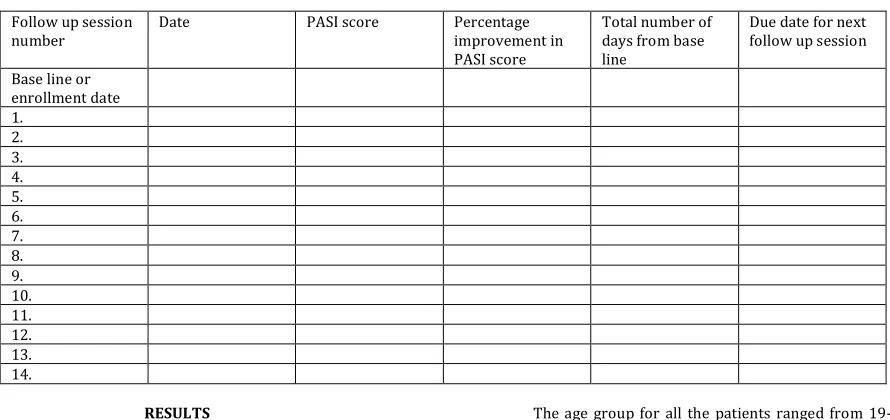
CONSOLIDATED PASI SCORE SHEET
Follow up session number
Date PASI score Percentage
improvement in PASI score
Total number of days from base line
Due date for next follow up session Base line or
enrollment date 1. 2. 3. 4. 5. 6. 7. 8. 9. 10. 11. 12. 13. 14. RESULTS
A
total of 30 patients who attended the dermatology clinics and diagnosed as psoriatic patients were inducted into the study. All these patients had moderate-to-severe psoriasis of various types.Out of 30 patients there were 15 males (50 %) and 15 females (50 %) [Table 1]
Table No. 1: Gender Distribution
Gender Frequency Percent
Male 15 50
Female 15 50
Total(n) 30 100
Out of the 30 patients, 15 were inducted into MTX group,15 were inducted into Act group.Table.no.2
Table No. 2: Group Distribution
Total(n) MTX group Act group
30 15 15
Table.No.3 shows the incidence of concomitant diseases in these 30 patients.
Table No. 3: Incidence of concomitant diseases
Disease type Frequency Percent
Diabetes 4 13.33
Hypertension 5 16.66
Arthritis 3 10
HIV 1 3.33
Oral cancer 1 3.33
Liver cirrhosis 1 3.33
Hypo
thyroidism 1 3.33
Hypo tension 1 3.33
Cellulites 1 3.33
Total 18 60.00
The age group for all the patients ranged from 19-75 years. The maximum incidence of psoriasis was in the age group between 50-55 years.
The incidence of various subclinical types of psoriasis was shown in Table No. 4.
Table No. 4: Clinical sub-types distribution of Psoriasis
Clinical sub type Frequency Percent
Psoriasis vulgaris 10 33.33
Plantar 9 30
Palmar 1 3.33
Pustular 1 3.33
Palmo-plantar 2 6.66
Plaque 3 10
Erythro dermic 1 3.33
Plantar +vulgaris 1 3.33
Palmoplantar+ nail 2 6.66
Total 30 100
Out of 30 patients,1 patient experienced nausea and abdominal discomfort with oral methotrexate and hence was shifted to intra muscular MTX therapy (incidence 6.66%). 2 patients experienced abdominal discomfort with cetrizine tablets and hence were shifted to levo citrizine soft gelatin capsules .
Table no. 5 compares the efficacy of both Acitretin and MTX in the treatment of various clinical types of psoriasis.
Table No. 5: comparison of efficacy of Acitretin and MTX in terms of days to reach 75% improvement
Psoriatic
clinical type Mean number of days taken by Acitretin to reach 75% improvement
Mean number of days taken by MTX to
reach 75% improvement
Pso. vulgaris 42.5 (6.07 weeks) 55.33 (7.9 weeks)
Plantar 41.66 (5.95 weeks) 66.33 (9.47 weeks)
Palmoplantar 58.25 (8.32 weeks) ---
Palmar 24 (3.4 weeks) ---
Plaque 35 (5 weeks) 60 (8.5 weeks)
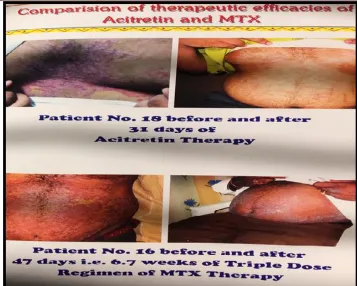
Fig. 1: Comparison of therapeutic efficacies of Acitretin and MTX
CONCLUSION
A
lthough Acitretin appears to be more efficient than MTX in terms of number of days required to achieve 75% improvement in PASI score and ADRs, actually MTX is more effective than Acitretin if the frequency of dose or number of doses is compared. Low dose MTX is an effective therapy for extensive and severe forms of psoriasis if patients are selected carefully and monitored regularly with respect to liver and bone marrow toxicity. This helps to reduce severe side effects even during long-term treatment. Monitoring of therapy intermittently is necessary.In the concept of Pharmaco-Economics, if we compare Acitretin with MTX, MTX outweighs Acitretin. Acitretin costs Rs.60/25 mg tab i.e. suppose a patient had to use Acitretin for 42 days in managing pso.vul., he had to spend 42X60=Rs.2520, which is only for the temporary management of psoriasis. On the other hand 2.5 mg of MTX costs Rs.5 and the patient requires only 3 doses per week i.e.3X5=Rs.15 per week and if he undergoes 8(55 days) weeks of management therapy, it will cost him 15X8=Rs.120. We should always remember that there is no universal treatment for psoriasis, and that it can only be managed temporarily. In the light of this concept we should always remember the principles of Pharmaco-Economics. No psoriatic patient will be willing to spend an extra of Rs.2400 only for the management of psoriasis temporarily. Thus MTX becomes the drug of choice to both the patients as well physician’s altogether.
ACKNOWLEDGEMENT
T
he author acknowledges the support given to him by department of pharmacy practice, Avanthi Institute of Pharmaceutical Sciences and also Dr. A. Kavitha MD and Dr. K.A. Seetharam MD for their valuable guidance and support in conducting this study.Abbreviations used:
PASI: Psoriasis area and severity index; ADR: Adverse drug reaction; MTX- Methotrexate; UVA: Ultra violet A radiation; UVB: Ultra violet radiation B; PUVA: Psoralen+ Ultra violet A radiation; ACE:
Angiotensin converting enzyme.
REFERENCES:
1. Weinstein GD and Alan Menter Psoriasis an overview. In: therapy of moderate-to-severe psoriasis. Gerald Weinstein D, Alice Gottleib {eds},2nd edition,Marcel Dekker Inc, New York,Special Pharma Edition 2006; p 1.
2. Drake LA, Ceilley RI, Cornelison RL, Dinehart SM, Dorner W, Goltz RW, Graham GF, Hordinsky MK, Lewis CW, Pariser DM, et al. J Am Acad Dermatol 1993;28:632-637.
3. Weinstein GD and Alan Menter Psoriasis an overview. In: therapy of moderate-to-severe psoriasis. Gerald Weinstein D, Alice Gottleib {eds}, 2nd edition, Marcel Dekker Inc, New York, Special Pharma Edition 2006; p 2
4. Krueger G, Koo J, Lebwohl M, et al. The impact of psoriasis on quality of life: results of a 1998 National Psoriasis Foundation patient-membership survey. Arch Dermatol 2001 ;137:280-284.
5. Menter A, Barker J, Fonelli WN. Psoriasis in practice. Lancet
1991;338:231-234.
6. Kruger GG, Feldman SR, Camisa C, et al. Two considerations for patients with psoriasis and their clinicians: what defines mild, moderate and severe psoriasis? What constitutes a clinically significant improvement when treating psoriasis? J Am Acad Dermatol 2004;43(2Pt 1):281-285.
7. Al-Shevarden S, Feldman S. Clearance is not a realistic expectation of psoriasis treatment. J Am Acad Dermatol 42: 796-802.
8. Olsen EA. The pharmacology of MTX. J Am Acad Dermatol
1991;25:306-316.
9. Weinstein GD, Mc Cullough JL, Ross PA. Cell kinetic basis for pathophysiology of psoriasis. J Invest Dermatol 1985 ;85:579-583.
10. Weinstein GD, Goldfaden G, Frost P. MTX: mechanism of action on DNA synthesis in psoriasis. Arch Dermatol
1971;104:236-243.
11. Peckham PE, Weinstein GD, Mc Cullough JL. The treatment of severe psoriasis. A national survey. Arch Dermatol
1972;123:1303-1307
13. Pilkington T, Brogden RN. Acitretin: a review of its pharmacology and therapeutic use. Drugs 1992 ;43(2):597-627.
14. Chandraratna RA: Rational design of receptor-selective retinoids. J Am Acad Dermatol 1998;39:S 124- S 128. 15. Kang S, Li SY, Voorhees JJ. Pharmacology and molecular action
of retinoids and vitamin D in skin. J Invest Dermatol. Symposium Proc 1996;1:15-21.
16. Rowe A. Retinoids X receptors. Int J Biochem Cell Biol
1997;29:276-278.
17. Yamauchi PS, Rizk D, Kormili T, Patnaik R, Lowe NJ. Systemic retinoids in therapy of moderate -to -severe- psoriasis. GD Weinstein; AB Gottlieb; Marcel Dekker, Inc,New York, NY, USA. 2003;137-150.
18. Koo J. Sequential therapy of psoriasis. Introducing a new therapeutic paradigm for better clinical results. J Am Acad Dermatol 1999;41:S25-S28.
How to cite this article:
Anup Jagarlamudi. A COMPARATIVE STUDY OF TWO CONVENTIONAL SYSTEMIC THERAPEUTIC REGIMEN ON PSORIASIS
TREATMENT OUTCOMES. J Sci Res Pharm 2017;6(12):169-178.
DOI:
https://doi.org/10.5281/zenodo.1129462
Conflict of interest: The authors have declared that no conflict of interest exists.