WWJMRD 2017; 3(6): 53-58 www.wwjmrd.com Impact Factor MJIF: 4.25 e-ISSN: 2454-6615
Gülay BAŞOL
Department of Electrical and Electronics Engineering, Faculty of Technology, Dumlupinar University, Simav/ Kutahya, Turkey
Rüştü GÜNTÜRKÜN Department of Electrical and Electronics Engineering, Faculty of Technology, Dumlupinar University, Simav/ Kutahya, Turkey
Erkan BAŞOL Simav Technical and Industrial Vocational High School Computer Department Simav/ Kutahya, Turkey
Correspondence: Rüştü GÜNTÜRKÜN Department of Electrical and Electronics Engineering, Faculty of Technology, Dumlupinar University, Simav/ Kutahya, Turkey
Smart Home Design and Application
Gülay BAŞOL, Rüştü GÜNTÜRKÜN,
Erkan BAŞOL
Abstract
In this study, design and application of a prototype smart home which is 120x90x70 sized and which meets its electrical demands from the solar panels that were placed on the roof has been performed. Lighting, heating, stove, temperature, moisture and security of the prototype house is controlled remotely via GSM. Arduino Mega 2560 R3, Wiznet 5100 ethernet module, HC-06 bluetooth module and various sensors have been used in the smart home. The software control of the smart home system has been made via interface software which was developed on three different platforms; PC, smart phone and internet. Visual C# programming language for PC interface, App Inventor 2 software developed by Google and MIT for smart phone interface, HTML and AJAX scripting languages whose codes can be written by using any text editor for internet interface have been used. Room temperatures, water temperature for heating, gas leakage, fire, lighting and security system of the house have been controlled with the sensors. The necessary electrical demand for the electrical devices to operate at home has been met by the solar panels installed on the roof.
Keywords: smart home, sensor, Arduino, GSM
1. Introduction
In the studies, DTMF (Dual Tone Multi Frequency) tones that are generally used in dialling have been preferred for the smart home control [1]. There are android-based mobile applications for developing control systems of smart home technology [2]. Wireless communication technologies are used, too [3]. On the model house, applications such as garage-door control, burglar alarm, lighting control, garden lighting, watering and audio system have been performed via various sensors [4]. In the home control system, an application of fuzzy logic algorithm has also been performed instead of application of classical logic [5]. The design and application of the building security system which is composed of two modules of hardware and software that can be attached to a computer additively have been performed [6]. Integrating the home systems allows them to communicate with one another through the home controller, thereby enabling single button and voice control of the various home systems simultaneously, in preprogramed scenarios or operating modes [7]. The home network encompasses communications, entertainment, security, convenience, and information systems [8]. According to the analysis and processing of power-expenditure information of devices and photovoltaic output data, the home server can realize household electricity dispatching and home energy management [9]. The PV system of solar energy can directly convert solar radiation energy into electric power [10]. Meanwhile the module controls to turn on the circuit of related electric equipment’s [11]. In this study, a smart home application has been performed whose remote control can be provided with arguing card and android programming. Bluetooth, web and android system smart phone applications have been used to control. Moreover, besides smart home control system, electrical demand of the house has been supplied from solar energy in this study. For that aim, two solar panels have been placed on the roof of the prototype house and electricity cost which is increasing day by day has been reduced. Thus, a smart home design and application both thrifty and secure has been performed.
2. Materials and methods
2.1. Prototype House Design
In this study, it is aimed to remote control the lighting, central heating, security and gas range systems of the house. In order to realize the study, 120x90x70 sized a prototype house has been designed by using melamine coated chipboards and aluminium’s.
Fig. 1: Link of the central heating system.
The top of the prototype house has been made collapsible. Thus, a more easy work environment has been created
inside the house. As seen in Fig. 1, central heating system and heater cores have been placed in the rooms for heating.
Fig. 2: Installing solar panels on the roof.
Electrical power that will be used in the house has been provided via the solar panels that were placed on the roof in Fig. 2. Because direct current (DC) has been obtained from
the solar panels, the necessary alternating current (AC) has been provided via inverter (DC/AC) transformer.
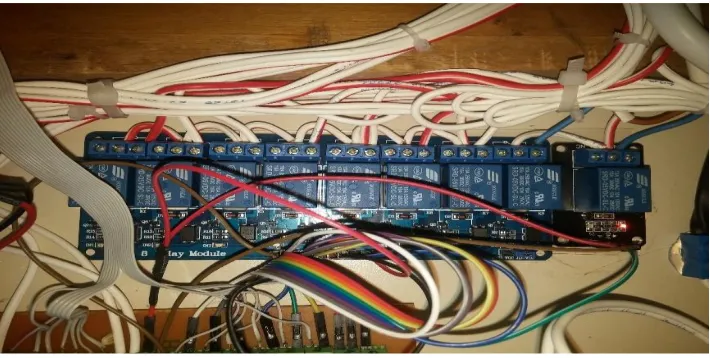
Fig. 3: Link of the actuators to the relay card
In the study, many variables have been controlled. Because each variable has been controlled separately, octal relay has
Core Valve, Relay 3:Bedroom’s Heater Core Valve, Relay 4: Circulation Pump, Relay 5: Electronic Lighter, Relay 6: Gas Valve, Relay 7:Kitchen Lighting, Relay 8: Bedroom Lighting, Relay 9: Veranda Lighting
Range Design
A selenoid valve that will open the gas, an electronic lighter that will fire and flame sensor and gas sensor for security have been utilized in order for the gas range to be burned remotely.
Fig. 4: Range Design
The Software that have been used Webpage
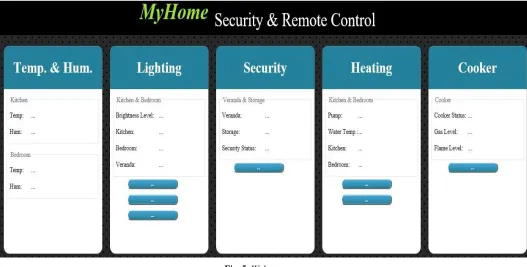
In order for the Arduino card to respond to the demands on the webpage, the necessary code has been written on
Ardunio card. A webpage has been designed by using HTML and AJAX script languages for arduino to realize the orders coming through the webpage.
Arduino IDE
Fig. 6: Arduino IDE
Arduino IDE is a program created by Arduino firm, that is written in Java language, that we use while programming Arduino cards and loading the written codes to Arduino cards.
Programming
Arduino Programming
Ardunio constitutes the basis for smart home system. The orders given to the other actuators in the smart home system and the software are interpreted on ardunio chip and the acts are executed.
Android Interface
An interface has been written by using App Inventor software in order for the smart home system to be controlled via smart phone and for communicating through Bluetooth via ardunio.
Lighting: Kitchen, bedroom, veranda and garden lighting of the house has been controlled remotely. Garden lighting has blinked automatically via photo resistance. Range, temperature, moisture, security and heating systems have been controlled with the developed interface.
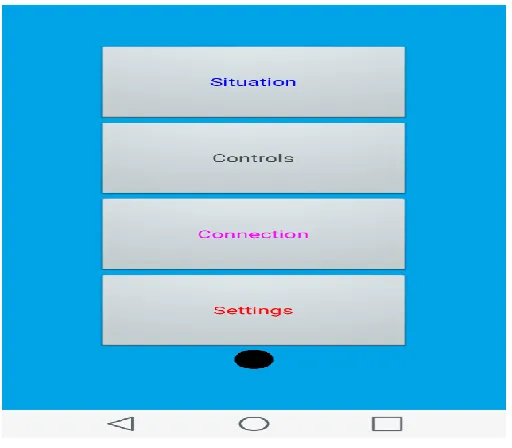
Fig. 8: Welcome screen of Android software
There are buttons prepared for activating the controlled devices and the parts of the house in the controller page. The colorful circles near the buttons demonstrate whether
Fig. 9: Controller page of Android software
Range: The range used in the kitchen of the house can be switched on and off remotely via GSM. A selenoid valve has been attached to the valve input in order to control the gas, and an electronic lighter has been used in order to make the range remote controllable. Flame and gas sensors near the range checks gas leakage and whether the range burns. In an event of gas leakage, gas sensor sends notification to the user’s telephone automatically, and the buzzer in the system is activated and the gas is turned off. If the flame sensor detects flame, electronic lighter in the range is stopped if it is active; if it is not active, the buzzer
in the system is activated and a message is sent to the user.
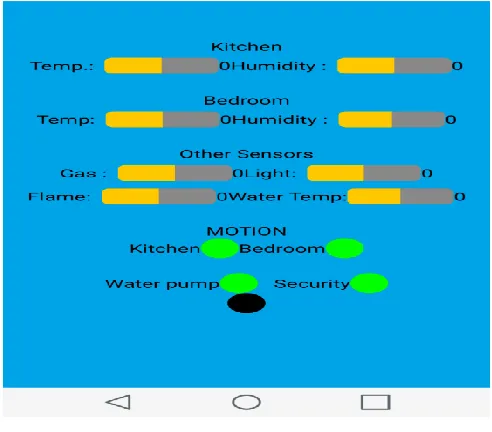
Temperature and Moisture: Temperature and moisture
sensors measure the temperature and moisture of the rooms, and the user can follow these. Temperature sensors are also used for the central heating system of the house to run and stop automatically. When the temperature in the rooms is at certain degrees, the heater cores in the rooms can be run or stopped separately. When the temperature in the rooms is at 35°C or over, a message is sent to the user’s phone.
Fig. 10: Android software conditions page
Security: If the motion sensors in the rooms detect motion at home, they activate the buzzer in the system and send a message to the user’s phone.
Heating System: The heater cores in the kitchen and bedroom of the smart home can be controlled. Thanks to the digital temperature sensor in the water tank, the user has the opportunity to see the temperature of the water circulating in the heater cores.
Results & Discussion
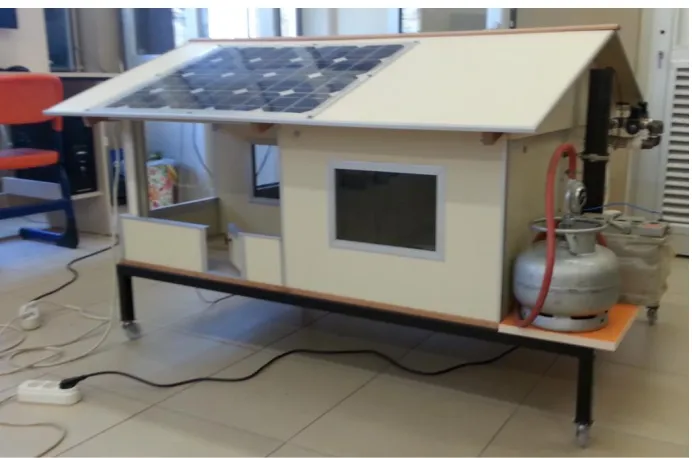
Fig. 11: The final state of the smart home
Thanks to smart phone with android operating system, in an event of any problem at home, notification has been sent to the user’s telephone. Motion detecting sensor (PIR) has been used in order to detect the objects moving at home. Thus, it has been provided to deliver emergency warning in order to protect the house from the burglars and those who will damage the house. In an event of gas leakage at home, the security has been provided via gas sensor which will give notice. Heating water oriented heating core application that operates automatically or manually according to the temperature of the room has been performed. Each room has been handled separately and a separate controller has been designed for each room. The results of the operations performed by the room controller have been submitted to the user via the LEDs on the main panel. If the internet connection is cut off while the user is at home, the user can control the system via Bluetooth. Thanks to the interfaces written with Computer program, web program and android program, the information of the sensors and other control devices at home can be viewed in an instant.
References
1. Özer, H.İ., Akıllı Ev Otomasyon Sistemi Tasarımı, Yüksek Lisans Tezi, Selçuk Üniversitesi Fen Bilimleri Enstitüsü, 2005 Konya.
2. Erbey, A., Akıllı Evler için Mobil Uygulama Geliştirilmesi, Yüksek Lisans Tezi, Afyon Kocatepe Üniversitesi Fen Bilimleri Enstitüsü, 2016, Afyon. 3. Kargacı, M., Ev Tipi Klimalara Kablosuz Ağ
Üzerinden Erişim ve Kontrol ile Akıllı Ev Teknolojilerinin Geliştirilmesi, Yüksek Lisans Tezi, Yıldız Teknik Üniversitesi Fen Bilimleri Enstitüsü, 2015, İstanbul.
4. Gül, F., Akıllı Ev Sistemleri, Yüksek Lisans Tezi, Gazi Üniversitesi Fen Bilimleri Enstitüsü, 2010, Ankara.
5. Kongaz, H., Akıllı Ev Otomasyonunun Mikro
denetleyici ile Gerçekleştirilmesi, Yüksek Lisans Tezi, Yıldız Teknik Üniversitesi Fen Bilimleri Enstitüsü, 2007, İstanbul.
6. Güntürkün, R., Bilgisayar Kontrollü Bina Güvenlik Sistemleri, Yüksek Lisans Tezi, Gazi Üniversitesi Fen Bilimleri Enstitüsü, 1997, Ankara.
7. SmartHomeUSA.com "What is a Smart Home" http://www.smarthomeusa.com/info/smarthome/ 8. Vendela Redriksson (2005) "What is a Smart Home or
Building"
http://searchciomidmarket.techtarget.com/sDefinition/ 0,,sid183_gci540859,00.html#
9. Li, J.F., Wang, Z.X., Wang, L., Lu, B.F. and Zhang, C. (2014) Research on Control Strategy of Smart Home Efficiency Management System with Household Distributed Photovoltaic Power Station. Electrical & Energy Management Technology, 9, 52-57.
10. Zhang Jin-hua.Compute Analysis of the Capacity of PV System of Solar Energy. Gansu Science and Technology[J], 2009.6, PP: 57-60