United Kingdom Vol. IV, Issue 10, October 2016
Licensed under Creative Common Page 836
http://ijecm.co.uk/
ISSN 2348 0386
INFLUENCE OF SELECTED FACTORS ON LIVELIHOOD
STRATEGY CHOICES AMONG THE PERI-URBAN
SMALLHOLDER FARMERS IN LANET DIVISION
OF NAKURU EAST SUB-COUNTY, KENYA
Tabitha Wanjiru Githaiga
Egerton University, Njoro, Kenya [email protected]
Milcah Mulu- Mutuku
Egerton University, Njoro, Kenya [email protected]
Lydia Nkatha Kinuthia
Egerton University, Njoro-Nakuru, Kenya [email protected]
Abstract
Small scale farmers have over the years been faced with challenges that constantly put
pressure on their livelihoods. However, the greatest threat to agriculture as a source of
livelihood in the developing countries is rapid urbanization due to population growth, urban
expansion and informal settlements. This study sought to investigate factors influencing
peri-urban smallholder farmer’s livelihood strategy choices as an adaptation to reduced land holding.
The study focused on Lanet Division of Nakuru East Sub-County, Kenya. The study used ex
post facto correlation design. A sample of 136 smallholder farmers was selected. Data was
collected using a questionnaire administered to the household heads. Statistical Package for
Social Science (SPSS) was used for data analysis. Data was analyzed using both descriptive
(percentages, frequencies, means and standard deviation) and inferential statistics (Pearson
Licensed under Creative Common Page 837 market accessibility was significant in influencing small holder farmers’ livelihood strategy
choices in Lanet Division, Nakuru East Sub-County, Kenya. The researcher recommended that
the county and the national government should empower the small holder farmers through
providing them with Tenders to supply their farm products in government offices hence boosting
their markets.
Keywords: Strategy, Strategy Choices, Market, Market Access, Livelihood
INTRODUCTION
Farming is the single largest source of livelihood in the world, where about 40% of today’s global population derives its livelihood. Farming is also the largest source of income and jobs for poor rural households providing jobs for 1.3 billion smallholder farmers and landless workers (Food and Agriculture Organization [FAO], 2011). For the developing world’s 5.5 billion people, about 3.8 billion live in peri-urban and in rural areas, where farming remains the main source of livelihoods (International Labour Organization [ILO] 2011; FAO, 2011). It is therefore the backbone of not only livelihoods in Africa but also the continent’s economy where about 70% of Africans and roughly 80% of the continent’s peri-urban and rural dwellers depend mainly on it for their livelihood (FAO, 2011).
The World Bank (2010) states that, Smallholder farms account for about 85% of the estimated 525 million farms worldwide, each occupying an average of about of 2 hectares of land and was practiced on about 60% of the world’s arable land. Asia, Africa, Europe and Americas account for 87%, 8%, 4% and 1% of smallholder farming activities respectively. World Bank continues to report that smallholder farming directly supports about 2 billion livelihoods globally, and that the smallholder farmer’s produce about 25%, 80% and 75% of the global, Africa’s and East Africa’s food demands respectively.
Licensed under Creative Common Page 838 According to United Nations World Urbanization Prospectus (UNWUP) (2006), factors accounting for the declining mean farm size included rapid population growth rate and urbanization among others. Kenya’s towns’ sizes are experiencing population growth, urban expansion and an increase in informal settlements (Yamano, Place, Nyangena, Wanjiku & Outsnka, 2009). Urbanization, rapid population growth and conversion of farmlands to non-agricultural uses have not only led to the decline in mean farm size, but also made traditional farming practices in peri-urban areas unviable (Jayne et al. 2003; Stambuli, 2002; Yamano et al. 2009).
In Kenya, farming accounts for about 26% of Kenya’s Gross Domestic Product (GDP) with an estimated 75% of the population depending on farming either directly or indirectly (Foeken & Owuor, 2006). Agricultural sector employs approximately 4.5 million people countrywide directly in production, processing, and marketing, while another 3.5 million people benefit indirectly through trade and other activities. Up to 80% of this population lives in the rural and peri-urban areas. The agricultural sector is a major source of livelihood to smallholder farmers and has been identified as a key “driver” towards the realization of the “Vision 2030”, which envisages Kenya as middle income earner economy and a semi-industrialized country by the year 2030 ( National Vision Steering Committee, 2006).
Licensed under Creative Common Page 839 Statement of the Problem
Farming is practiced on about 15% of Kenya’s landmass. It is one of the main drivers of the economy and also accounts for over 70% of employment opportunities in the country (Onim, 2002). Over the years agricultural activities have been faced with disruptive factors such as rising urbanization and rapid population growth among others. These have resulted in reduced agricultural land sizes. Lanet Division of Nakuru County has farming as one of its major source of livelihood despite being one of the most populated Division in Nakuru County, with a population density of about 1,862 people per km2 as compared to the County population density of 66 people per km2 ( KNBS, 2009). Increased demand for land for property development, institution development, establishment of industrial parks and hospitality industry has resulted in reduction in farm size per farmer, with farmers owning less than an acre. Despite these, farming continueS to persist as a source of livelihood, a pointer to the ability of the smallholder farmers to adapt to the emerging obstacles. However, it remains unclear as to what influences the choices of these strategies. It was on this basis that this study examined selected factors influencing livelihood strategy choices among peri-urban small holder farmers in Lanet Division of Nakuru County, with specific focus on farmers social status, market accessibility land size and access to credit.
Purpose of the Study
The purpose of this study was to examine influence of selected factors on livelihood strategy choices among peri-urban smallholder farmers in Lanet Division of Nakuru East Sub-County, Kenya. Specifically, the study sought to establish the influence of market accessibility on peri-urban smallholder farmers’ choice of livelihood strategies in Lanet Division of Nakuru East Sub-County, Kenya.
Hypothesis of the Study
H01:There is no statistically significant influence of market accessibility on smallholder farmers’
livelihood strategy choices in Lanet Division, Nakuru East Sub-County, Kenya.
Conceptual Framework
Licensed under Creative Common Page 840 Figure 1: Conceptual Framework
LITERATURE REVIEW Theoretical Framework
The study is anchored on Rational Choice Theory (Coleman, 1990). Rational Choice theory was used to explain why persons as individuals or groups choose to adopt certain livelihood strategies given a range of livelihood opportunities. Rational Choice Theory is an approach used by social scientists to understand human behavior. The approach has long been the dominant paradigm in economics, but in recent decades it has become more widely used in other disciplines such as Sociology, Political Science, Anthropology, Public Policy and even Community Development Studies.
In community development, rational choice theory is based on the fundamental tenets, which hold that people freely choose their behavior and are motivated by the avoidance of failure and the pursuit of livelihood opportunities that addresses their felt needs. The theory posits that people evaluate their choice of actions in accordance with each option's ability to produce the maximum benefits.
Rational Choice Theory generally begins with consideration of the choice behavior of one or more individual decision-making units which in basic economics are most often consumers and/or firms (Coleman, 1990). The rational choice theorist often presumes that the individual decision-making unit in question is “typical” or “representative” of some larger group such as buyers or sellers in a particular market. Once individual behavior is established, the analysis generally moves on to examine how individual choices interact to produce outcomes.
This theory posits that the choices made by buyers and sellers are the choices that best help them achieve their objectives, given all relevant factors that are beyond their control (Coleman, 1990). The basic idea behind rational choice theory is that people do their best under prevailing circumstances (Coleman, 1993). For instance, the consumer will choose the most preferred alternative. If the consumer is indifferent between two or more alternatives that are preferred to all others, he or she will choose one of those alternatives.
Factors influencing
livelihood strategy choices:
Market Accessibility
Livelihood strategy choices:
Animal husbandry
Horticulture
Licensed under Creative Common Page 841 In this study, smallholder farmers in Lanet Division have several choices of livelihood strategies through which they can pursue in their farming activities. These may serve as the alternatives, but the choices they make must reflect their interest, capacity as well as commitment/desire in the farming activities. People have different interest and their pursuit of certain issues may be dictated as to whether or not there interests will be best served. Capacity here refers to ability to participate in any initiative with least external support. For instance choices of livelihood strategies adopted by farmers may be determined by their social status-level of education, gender and marital status. Further, farmers’ choices of livelihood strategies may be brought about by their belief that the size of land available at their disposal can support certain farming activities and not others. Similarly, the choices of livelihood strategies adopted by farmers must also be dictated by access to markets and credit.
Empirical Review
Farming as a primary source of income has failed to guarantee sufficient livelihood for most farming households in sub-Sahara African countries (Babatunde, 2013). This is because the agricultural sector in the sub-Saharan African countries is highly characterized by decreasing farm sizes, low levels of output per farm, and a high degree of subsistence farming (Jirstrom et al., 2011). When farmers lack assets, they can be proscribed from participating in activities that might improve their well-being. While evidence shows that returns from one additional year of schooling are quantitatively and statistically significant in rural areas of Latin America (Taylor, et al. 2000). Lack of education may slow diversification and contribute to poverty.
Decisions about a livelihood strategy depend on household assets. Assets are stocks of productive factors that produce a stream of cash or in kind returns and they have significant importance at the moment of choosing a livelihood strategy. For example, in Mexico the asset position of rural households has a significant effect on household participation in income-generating activities and returns to those activities. Increasing schooling of the household head discourages participation in staple production, while encouraging participation in wage work and international migration (Taylor and Yunez, 2000).
Licensed under Creative Common Page 842 households that own extensive amounts of land might engage in agricultural production, but if they have the option to transfer land and access financial capital they might diversify their strategy. In Kenya situation however, land is highly transferable and as such, there is an increased strategy choices as far as livelihood strategies are concerned. Therefore, the study seeks to establish factors influencing livelihood strategy choices among small peri-urban farmers in Lanet Division in Nakuru County. This section provides a review of empirical studies on selected factors influencing livelihood choices among farmers in maintaining and strategically using land and natural resources. Thus, in any debate on farming, gender requires special treatment, and any set of strategies for sustainable food security must address women’s access to productive resources. In Africa, the predominance of patriarchcal systems relegates women positions, ensuring that women only have access to minimum farm acreage. One of the most serious obstacles to increasing the agricultural productivity and income of rural women is their insecurity of land tenure. Security of tenure is the key to having control over major decisions, such as what crop to grow, what techniques to use, what to consume and what to sell (Obunde et al., 2004). A comprehensive analysis of case studies from five South Asian countries showed that fewer women than men have command over the use of arable land, women have more limited land use rights, and many women have no control at all over production and management decisions (Agarwal, 1994).
Market Access and Farmers’ Livelihood Choices
The strategies discussed in the previous section as adopted by the smallholder farmers from various parts of the world are largely aimed at maximizing production and conserving soil fertility. The following discussion focused on the strategies of smallholder farmers in their effort to secure market for their farm produce.
Licensed under Creative Common Page 843 Silesh, 2002). Similar situations were reported from Kampala, Dar es Salaam and Nairobi (Ishagi, Ossiya, Aliguma, Aisu, 2002); (Ishani, Gathuru, and Lamba, 2002).
Contract farming was one of the strategies used by smallholder farmers to secure reliable markets for their produce. In Kampala and Dar es Salaam for instance, the linkage of producers to big outlets such as supermarkets and chain stores through contractual arrangements has enabled peri-urban smallholder farmers to maintain their incomes and sustenance (Crush & Frayne 2011). It was clear here that contract farming and collective action can help incorporate smallholder farmers in high-value supply chains that require specialized inputs and sell to markets for specialized outputs. If well-utilized, stronger linkages of smallholder farmers with supermarket chains are likely to improve marketability and profitability of their products. What was not clear here was whether farmers deliberately adopted livelihood choices whose markets already exist. Further, it would be significant to understand other market outlets other than the supermarkets highlighted here that farmers used to channel their produce. In Kenya, Nakuru town has numerous supermarket chains and other outlets that sell fresh farm produce. It would thus be interesting to understand the extent to which farmers have utilized the supermarkets and municipal markets as market outlets for their produce.
Another farm household characteristic that influenced smallholder farmers’ livelihood strategies was the proximity to markets and urban centers, which was seen in the context of distances from the farms to the markets (Ellis 1998). Households located nearer to factor markets are expected to have higher farm productivity than those located in remote areas. Proximity to good roads increases access to affinity to engaging in horticultural farming, in which the perishable nature of its products to be disposed off in a timely manner. Lanet Division is fairly close to major urban settlements including Nakuru town, Gilgil and even Naivasha town. What remains unclear is whether farmers in the division have fully exploited the market opportunities given their close proximity to major urban areas. It would be important to establish whether consumption trends of farm produce has in any had a significant bearing on the livelihood choices made by farmers in the division.
Licensed under Creative Common Page 844 the major disadvantages of geography, bad local infrastructure, low rural education levels, and high compliance and transaction costs.
RESEARCH METHODOLOGY Research Design
The term research design refers to the way the study was conducted and the procedures used to either test a research hypothesis or answer research questions (Ngau 2004). The study used ex–post facto research design. Kothari (2008) observed that ex–post facto research design is applied in those studies whereby the independent variable has already established itself. Consequently, the researcher has no direct control of the variables and thus cannot manipulate them so as to determine whether they have any influence on the Dependent variable. Therefore, variables are studied in retrospect in search of possible relationships and effects (Kerlinger, 1973). Ex post facto design was suitable for this study because it seeks to investigate any existing relationship between the Independent and Dependent relationship on selected factors influencing livelihood strategy choices among peri-urban smallholder farmers in Lanet Division.
Study Location
Lanet Division in Nakuru Sub-County was the site of the proposed study. It covers an area of 36.7 kilometer square bordering Gilgil Division to the south, Ndundori Division to the west, Beruti Division to the North West, and Bahati Division to the east. The division is surrounded by the major urban area of Nakuru town. Livestock keeping including dairy farming, sheep, and pig keeping are extensively practiced in Lanet Division. Other economic activities practiced in the division include poultry, rabbit and fish farming and bee keeping. Crop farming as an economic activity is done at small and large scale levels in the division. Small scale farming are largely in an average land area of 0.8 hectares, with large scale ones on 10 hectares (Nakuru District Development Plan, 2008-2012).
Population of the Study
Licensed under Creative Common Page 845 Table 1: Population Distribution in Lanet Division
Location Population Households Smallholder farmers
Lanet 19,276 4,649 965
Free Area 49,049 14,448 1,445
Total 68,321 19,097 2,410
Source: National Bureau of Statistics (2009), Page 158.
Sampling Procedure and Sample Size
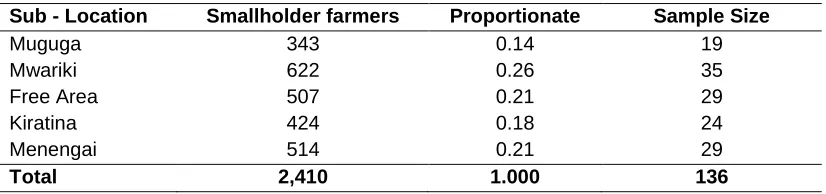
A sample size was proportionately allocated for each location from the sampling frame of 2,410 smallholder farmers (MoA, 2012). The Division does not have a complete accurate list of farmers so convenience sampling was used with the help of the agriculture officer to access the farmers from each location as indicated in Table 2. The study focused on household heads as the unit of study since they are the decision makers. Mathematical formula by Nassiuma (2000) was used to determine the sample size as follows:
NC2 n =
C2 + (N-1) e2 N – The population size n – Sample size
C- The coefficient of variation – 0.6. For this study, the coefficient of variation was set at 60% because this is the most commonly used, (Nassiuma, 2000).
e – The margin of error (0.05) N = 2,410
n = 2,410 x 0.62 0.62+ (2,410 - 1) 0.052 = 867.6
6.385 = 137
This was sample size for the whole division. It was proportionally distributed in the two locations as per sub-locations as indicated in Table 2:
Table 2: Distribution of Sample Size
Sub - Location Smallholder farmers Proportionate Sample Size
Muguga Mwariki Free Area Kiratina Menengai 343 622 507 424 514 0.14 0.26 0.21 0.18 0.21 19 35 29 24 29
Licensed under Creative Common Page 846 Instrumentation
Primary data was collected using a self constructed questionnaire which was personally administered to the respondents by the researcher. The questions on the questionnaire were based on the four objectives of this study. The questionnaire was preferred due to its suitability for the study as suggested by Mugenda (1999) who observed that questionnaire is commonly used to obtain important information about a population. Questionnaire is preferred because they give information on specific cases of interest to the researcher by allowing their respondents to give their views on some questions. Questionnaire was also suitable since there was minimal interaction between the researcher and the respondent thereby enhancing respondent anonymity, reduce biasness, encouraged truthfulness and gave the respondents adequate time to think through the questions which is not usual with the interviews.
Data Collection Procedure
An introductory letter was obtained from Egerton University’s Graduate School to facilitate the acquisition of a research permit from the National Commission for Science, Technology Innovation (NACOSTI). Prior to data collection, a visit to the study area was conducted to obtain permission from the local administration. Chief and the assistant were briefed on the study. To make the data collection process efficient, the Lanet Division Agricultural Officer (DAO) was requested to assist in identifying the selected respondents. Data collection then commenced. This involved visiting and administering the questionnaires to each of the selected household heads. This was done by visiting them in their homes and others visiting them in their group meetings. The respondents were given time to provide the answers to the questions. Afterwards, the questionnaires were collected by the researcher for analysis.
Data Analysis Approach
After administering the research instruments and collection of primary data, it was edited to minimize errors by respondents. Coding was done to translate question into specific categories. The coded items were analyzed with the aid of a SPSS Version. Data was analyzed using both descriptive (frequencies, percentages, means and standard deviations) and inferential statistics; Pearson’s Product Moment, Chi-square test and Simple Regression analysis were used.
ANALYSIS AND FINDINGS
Licensed under Creative Common Page 847 required one response. This represented a response rate of 72.1 % which was characterized as very good. Characteristics in terms of gender, age, experience, level of, marital status and level of education are presented in this section.
Livelihood Strategy Choices
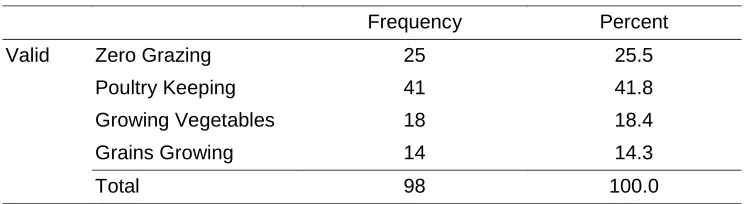
The study sought to establish the main farming activities the respondents were engaged in. The findings from the analysis were as presented in Table 3.
Table 3: Farming Activity Practiced
Frequency Percent
Valid Zero Grazing 25 25.5
Poultry Keeping 41 41.8
Growing Vegetables 18 18.4
Grains Growing 14 14.3
Total 98 100.0
It was established that 41.8%, 25.5 %, 18.4% and 14.3% of the respondents practiced poultry keeping, zero grazing, growing vegetables and grains growing respectively. Thus the researcher observed that poultry farming is more popular in this region. The researcher enquired about the level of success of these activities in terms of returns. The findings of the analysis were as in Table 4
Table 4: Level of Success of the Farming Activity
Frequency Percent
Valid Least Success 4 4.1
Some Success 64 65.3
Great success 30 30.6
Total 98 100.0
Licensed under Creative Common Page 848 zero grazing 17.2%, poultry keeping 46.9%, vegetable growing 20.3% and grains growing 15.6%. Only four of the respondents considered their farming activities to be least successful. In respect of gender, 68% of male respondents indicated having had some success in their farming activities while 32% of them had great success. Among the female respondents, 64.4% registered some success in their farming activities, 30.1% great success and 5.5% least success. In addition the researcher sought to establish the reason for the choice of the farming activity respondents practiced. Table 5 demonstrates the findings.
Table 5: Reason for Choosing Farming
Frequency Percent
Valid Income earning 79 80.6
Source of food 19 19.4
Total 98 100.0
The table indicated that 80.6% of the respondents took their farming activity as a source of income while 19.4% took their farming activity as a source of food. The researcher established that 62% of those practicing farming for income purposes indicated they had some success and 32.9% had great success. In addition, of those whose farming activities were for food production, 78.9% had some success while 21.1% had great success.
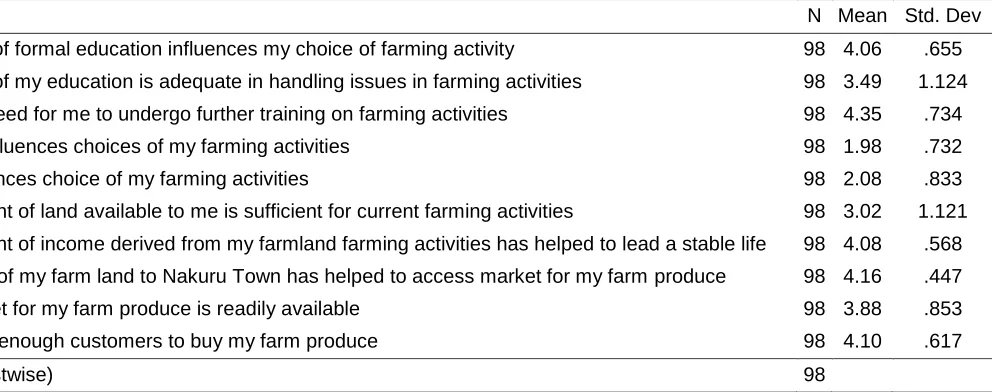
Then the researcher sought to establish the respondents’ perceptions towards the various aspects of livelihood strategy choices. The responses were on a Likert scale ranging from 1-strongly Disagree, 2-Disagree, 3-Undecided, 4-Agree and 5-Strongly agree. The means and standard deviations were established. These were presented in the table below.
Table 6: Perceptions on Livelihood Strategy Choices
N Mean Std. Dev
The level of formal education influences my choice of farming activity 98 4.06 .655
The level of my education is adequate in handling issues in farming activities 98 3.49 1.124
There is need for me to undergo further training on farming activities 98 4.35 .734
Gender influences choices of my farming activities 98 1.98 .732
Age influences choice of my farming activities 98 2.08 .833
The amount of land available to me is sufficient for current farming activities 98 3.02 1.121
The amount of income derived from my farmland farming activities has helped to lead a stable life 98 4.08 .568
Nearness of my farm land to Nakuru Town has helped to access market for my farm produce 98 4.16 .447
The market for my farm produce is readily available 98 3.88 .853
There are enough customers to buy my farm produce 98 4.10 .617
Licensed under Creative Common Page 849 The table 6 showed that respondents were in agreement with six out of the ten aspects of livelihood strategy choices registering mean values approximately equal to four (Agree). They agreed that the level of formal education influences their choice of farming activity, that there is need for them to undergo further training on farming activities and that the amount of income derived from their farmland activities has helped them lead a stable life. In addition they agreed that nearness of their farms to Nakuru town has helped them access the market for their farm produce, that the market for their farm produce is readily available and that there are enough customers to buy their farm produce. However respondents disagreed on the assertion that gender and age influences the choice of their farming activity. On the other hand respondents were apprehensive on whether their level of education is adequate in handling issues on farming activities and on whether the amount of land available to them is sufficient for their current farming activities. The respondents demonstrated great cohesion in their responses with eight of the ten aspects indicating standard deviation values of less than 1. As such respondents had close knit responses on these aspects. However two of the aspects had standard deviation values greater than 1 indicating that respondents expressed diverse views in regard to these aspects.
Market Accessibility
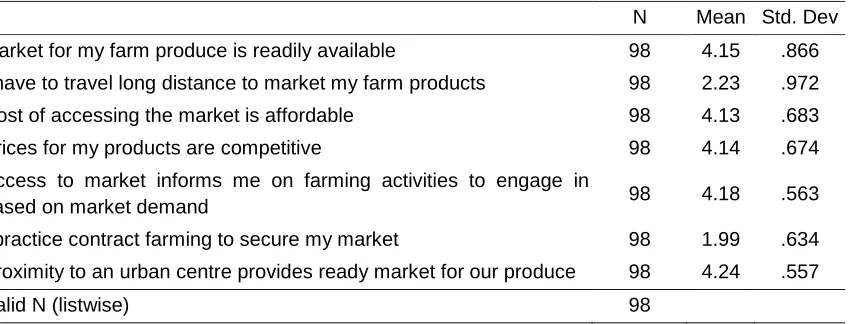
The responses regarding this variable were on a 5 point likert scale. In the scale, the numbers 1 stood for strongly disagree (SD), 2-Disagree (D), 3-Undecided (U), 4-Agree (A) and 5 stood for Strongly Agree (SA). The researcher established means and standard deviations of the responses. The findings were as presented below.
Table 7: Respondents Perceptions on Market Accessibility
N Mean Std. Dev
Market for my farm produce is readily available 98 4.15 .866
I have to travel long distance to market my farm products 98 2.23 .972
Cost of accessing the market is affordable 98 4.13 .683
Prices for my products are competitive 98 4.14 .674
Access to market informs me on farming activities to engage in
based on market demand 98 4.18 .563
I practice contract farming to secure my market 98 1.99 .634
Proximity to an urban centre provides ready market for our produce 98 4.24 .557
Licensed under Creative Common Page 850 It was established that the respondents concurred that the market for their farm produce was readily available and that the cost of accessing the market was affordable. In addition they agreed that prices for their products were competitive, that access to market informs the farming activities they engage in and that proximity to an urban centre provides ready market for their produce. The mean values for the five aspects were approximately 4 indicating agreement with the said aspects. Respondents disagreed that they have to travel long distances to market their farm products and that they practice contract farming to secure the market. The two assertions had an approximate mean of 2 indicating their disagreement with the said aspects. The standard deviations for all the responses were less than one demonstrating that there was agreement in respondents views regarding the aspects. Therefore, most of the responses concentrated around the mean.
Influence of Market Accessibility on Livelihood Strategy Choices
The first objectives of the study sought to find out whether market accessibility had any influence on livelihood strategy choices in Lanet division, Nakuru East sub-county, Kenya. To achieve this, the following null hypothesis was formulated.
H01:There is no statistically significant influence of market accessibility on smallholder
farmers’ livelihood strategy choices in Lanet Division, Nakuru East Sub-County, Kenya.
The hypothesis presumed that market accessibility has no statistically significant influence on livelihood strategy choices. To ascertain the truth of this assumption, simple linear regression analysis was carried out. The researcher first transformed the responses into a composite score of their means for market accessibility and livelihood strategy choices. The composite means were then taken through a regression analysis as shown in the following tables.
Table 3: Model Summary between Market Accessibility and Livelihood Strategy Choices
Model R R Square Adjusted R Square Std. Error of the Estimate
1 .357a .127 .118 .32558
a. Predictors: (Constant), Market accessibility
Licensed under Creative Common Page 851 result of nearness to the urban centers as many of the respondents observed, contracting farming and other strategies. The R-squared value of 0.127 further indicated that market accessibility accounted for 12.7 % of the variance in livelihood strategy choices. This implied that market accessibility and livelihood strategy choices were not independent. The Analysis of variance yielded the following results.
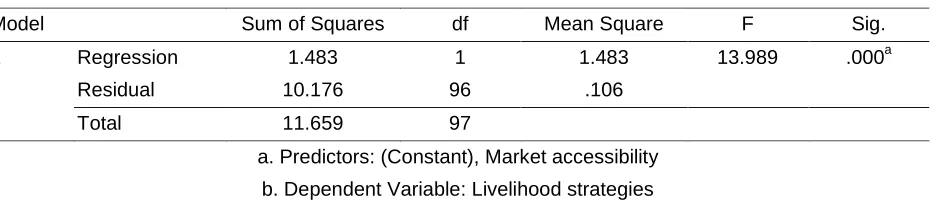
Table 4: ANOVA for Market Accessibility and Livelihood Strategy Choices
Model Sum of Squares df Mean Square F Sig.
1 Regression 1.483 1 1.483 13.989 .000a
Residual 10.176 96 .106
Total 11.659 97
a. Predictors: (Constant), Market accessibility
b. Dependent Variable: Livelihood strategies
The analysis of variance yielded an F value (F (1, 96) =13.989) that was significant at p=.000. This
indicates that market accessibility had a significant influence on livelihood strategy choices. Therefore the null hypothesis that market accessibility has no statistically significant influence on livelihood strategy choices was rejected. This led to the conclusion that if market accessibility is available, farmers are more likely to progress successfully through livelihood strategy choices. The findings are a reflection of a study done in Kampala and Dar es Salaam which observed that the linkage of producers to big outlets such as supermarkets and chain stores through contractual arrangements has enabled peri-urban smallholder farmers to maintain their incomes and sustenance (Crush & Frayne 2011). Nakuru being an urban center thus provides a ready market for the peri urban farmers thus influencing their livelihood strategy choices.
Summary of Findings
Licensed under Creative Common Page 852 the amount of income they derive from their farming activities helps them lead a stable life. This was contrary to Babatunde, (2013) who asserted that farming as a primary source of income has failed to guarantee sufficient livelihood for most farming households in sub-Sahara African countries.
They further acknowledged that nearness to Nakuru town has helped them to access market for their produce, that the market is readily available and that there are enough customers who purchase their farming products. The researcher also noted that most of the respondents comprising of 59% had up to secondary school education bringing to the fore the need for further training for the farmers. The respondents however could not agree that gender and age influences their choice of farming activities. They further remained indifferent on the sufficiency of their land on their current farming activities and on whether their level of education was adequate for their handling of issues to do with their farming activities.
The findings demonstrated a mixed perception from the respondents in regard to market accessibility. They generally agreed that the market for their farm produce was readily available, that the cost of accessing the market is affordable and that prices for their products were competitive. In addition they agreed that access to the market makes them informed of goods in demand, that proximity to an urban centre provided ready market for their produce. They disagreed that they had to travel for long distances to market their products and that they had to practice contract farming to secure the market.
Regression analysis indicated that there was a weak positive significant relationship between market accessibility and small holder farmers’ livelihood strategy choices. Further, market accessibility had a statistically significant influence (F (1, 96) =13.989, p=.000) on livelihood strategy choices in lanet division in Nakuru East Sub-county Kenya. The findings also showed that market accessibility could account for 12.7% of the total variance in the small holder farmers’ livelihood strategy choices.
CONCLUSION OF THE STUDY
Licensed under Creative Common Page 853 contracts to supply their farm produce in government department thus boosting the market for the farmers. Further, to increase market accessibility the government should attract industries in the county that can process some of the products from the farmers thus increasing the size of the market. The farmers should also be encouraged to adopt the use of e-marketing strategy that will widen their market reach.
REFERENCES
Agarwal, B. (1994). A Field of One’s Own: Gender and Land Rights in South Asia. South Asian Studies. New York: Cambridge University Press.
Babatunde RO (2013). On-Farm and Off-farm Works: Complement or Substitute? Evidence from Rural Nigeria. Contributed paper for the 4th International Conference of the African Association of Agricultural Economists, September 22-25, 2013, Hammamet, Tunisia. URL: http://ageconsearch.umn.edu. Accessed on June 10, 2014.
Coleman, J.S. 1990. Foundations of Social Theory. Cambridge: Harvard Univ. Press. Coleman, J.S. 1993. The rational reconstruction of society. Am. Sociol. Rev. 58:1–15.
Crush, J. & Frayne, B. (2011). Supermarket Expansion and the Informal Food Economy in Southern African Cities: Implications for Urban Food Security. Journal of Southern African Studies, 37(4), 781–807. De Janvry, A., & Sadoulet, E. (2000). “Rural Poverty in Latin America Determinants and Exit Paths,” Food Policy 25, 389-409.
Ellis, F. (1998). Household strategies and rural livelihood diversification. Journal of Development Studies 35, (1): 1-38.
Ellis, F., Kutengule, M. & Nyasulu, A. (2003), “Livelihoods and Rural Poverty Reduction in Malawi,” World Development 31, (19), 1495-1510.
FAO (2011a). “The State of Food and Agriculture (SOFA). Women in Agriculture: closing the gender gap for development”, FAO, Rome.
FAO, (2011). The State of Food Insecurity in the World. Rome : Food and Agriculture Organization of the United Nations.
Foeken, D. & Owuor, S.O. (2006). Livestock in Middle Sized East Africa Town; Urban Agriculture Magazine, Vol. 1, No. 2, October, pp. 20-22.
Gregory, P. (2005). A Synthesis of peri-urban research of Kumasi, Hubli-Dharwad and Kolkata PUIs, NRSP, Final Report R 8491.
Guendel, S. (2002). Peri-Urban and Urban Livestock Keeping in East Africa – A Coping Strategy for the Poor? Aylesford, UK: NR International.
ILO (2011), “Food Security through Decent Work”, Policy Brief, ILO, Geneva.
Ishagi, N, Ossiya, S., Aliguma, L & Aisu, C (2002). Urban and peri-urban livestock keeping among the poor in Kampala City. Ibaren Konsultants, Kampala, Uganda.
Ishani, Z., Gathuru, P. K., & Lamba, D. (2002). Scoping study ofUrban and Peri-urban poor Livestock keepers in Nairobi. Mazingira Institute, Nairobi, Kenya.
Jayne, T.S. Yamano, T., Weber, M., Tschirley, D., Benfica, R., Chapoto, A. & Zulu, B. (2003). Smallholder Income and Land Distribution in Africa: Implications for Poverty Reduction Strategies. Food Policy, 28(3), 253-275.
Licensed under Creative Common Page 854 Kenya National Bureau of Statistics (2009). The population Census Report. Nairobi: Government Printers. Kerlinger FN (1973). Foundation of Behavioral Research. NewYork: Holt, Rinehart and Winston
Kothari, C.R. (2008). Research Methods: Methods and Techniques. New Delhi, New Case International (P) limited publishers
Minten, B., Randrianarison, L. & Swinnen, J. 2009. Global retail chains and poor farmers: evidence from Madagascar. WorldDevelopment, 37(11): 1728–1741.
Mugenda, O.M.. & Mugenda, A. B. (I 999). Research Methods. Quantitative and Qualitative Approaches. Nairobi: African Center for Technology Studies (ACTS) Press.
Nassiuma, D.K., 2000. Survey Sampling: Theory and Methods. Nairobi University Press, Nairobi.
Ngau, P.M. (2004). Problem Formation and Research Design . In P. Ngau & A.Kumsa (Eds). Research Design. Data collection and Analysis: ATraining Manual (pp19-21). United Nations Centre for Regional Development Africa office.
Obunde, P., Mbogo, C., Kosura, W. & Kamoni, W. (2004), "Effects of Land Tenure on Agricultural Productivity, and the Environment: A Case Study of Suba and Laikipia Districts," IFPRI Eastern Africa Food Policy Network, Report No. 7, Kampala, Uganda.
Onim, M. (2002). Final report of scoping study for urban and peri-urban livestock keepers in Kisumu City, Kenya. Lowland Agricultural and Technical Services Limited (Lagrotech), Kisumu, Kenya
Samaniego, J. (2006). Informe Conferencia Internacional Sobre Reforma Agrariay Desarrollo Rural. Porto Alegre, Brasil: Ministerio de Agricultura y Ganadería.
Stambuli, K. (2002). Elitist Food and Agricultural Policies and the Food Problem in Malawi. Journal of Malawi Society - Historical & Scientific, 55(2).
Taylor, E., & Yunez, A. (2000). “The Returns from Schooling in a Diversified Rural Economy,” American Journal of Agricultural Economics 82, 287-297.
Tegegne, A., Tadesse, M.; Alemayehu, M.; Woltedji D. & Sileshi, Z. (2002) Scoping study on urban and peri-urban livestock production in Addis Ababa, Ethiopia. International Livestock Research Institute and Ethiopia Agricultural Research Organization, Addis Ababa, Ethiopia
Winters, P., Davis, B. & Corral, L. (2002). “Assets, activities and income generation in rural Mexico: factoring in social and public capital,” Agricultural Economics 27, 139-156.