© 2015 IJSRST | Volume 1 | Issue 2 | Print ISSN: 2395-6011 | Online ISSN: 2395-602X Themed Section: Science
Microcrystal Tests for Detection of Nicotine in Hookah Bar Samples
1
Falguni Patel, Astha Pandey
1*1
Research Scholar, National Institute of Occupational Health, Ahmedabad, Gujarat, India
1*Assistant Professor, Institute of Forensic Science, Gujarat Forensic Sciences University, Gandhinagar, Gujarat, India
ABSTRACT
Microcrystalline test is hardly used in forensic science laboratory for the confirmation of drug or alkaloids present in the plants. Therefore an attempt was made to identify and confirm the presence of nicotine in hookah bar samples. Hookah bar samples are rampantly available in the market whose consumption has been found to be harmful to the youngsters and adults. Microcrystalline tests have been conducted for drugs like cocaine, morphine etc but neither on nicotine samples nor hookah bar samples it were done. Thus this study was done after performing the color tests and was found to be successful for the detection of alkaloids by microcrystal method and its sensitivity was found to be greater when compared to color tests.
Keywords: Micro-Crystal Tests, Small Cubic And Spherical Crystals ,Mercuric Chloride, Barium Nitrate, Picric Acid, Microcrystalline Test , NDPS Drugs , TLC, Chloroplatinic Acid
I.
INTRODUCTION
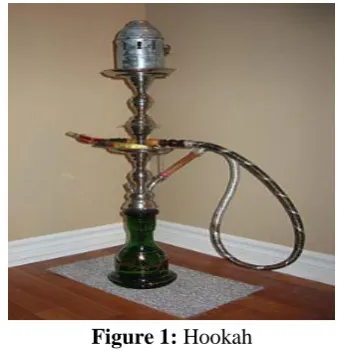
A hookah is a water pipe used to smoke tobacco through cooled water. The tobacco is heated in the bowl at the top of the hookah and the smoke is filtered through the water in the base of the hookah. Alternate names for hookahs include: water pipe, goza, hubble-bubble, borry, arhile, and narghile. It has been found that compared to a single cigarette, hookah smoke is known to contain higher levels of arsenic, lead and nickel, 36 times more tar, and 15 times more carbon monoxide than cigarettes. This is because smoking a hookah requires taking longer and harder drags, increasing levels of inhaled nicotine and carcinogens in the lungs. The concept of hookah is thought to have originated in India [1].
Tobacco is smoked in hookahs in many villages as per traditional customs. Smoking tobacco molasses is now becoming popular amongst the youth in India. There are several chain clubs, bars and coffee shops in India offering a wider variety of mu„assels, including non-tobacco versions. Hookah was recently banned in Bangalore. However, it can be bought or rented for personal usage or organized parties [2]. As hookah makes resurgence in India, there have been numerous
raids and bans recently on hookah smoking, especially in Gujarat [3].
presence of other alkaloids related to morphine, codeine, amphetamine etc NDPS drugs which requires confirmation through GC-MS. Our study is more focused on microcrystalline tests for alkaloids of nicotine but further scope lies in using it with combination of other instrumental techniques.
Microcrystalline tests are confirmatory tests in which a substance is identified by the formation of crystals with the use of a specific reagent. The crystals formed are observed under the microscope, thus it is called as microcrystalline tests. These tests have got several advantages like they are simple, do not take much time, chemical consumption is also less and most importantly they are non-destructive. In the year 1961 Charles C. Fulton did the study on identification of microcrystal test for certain drugs4. Of 41 opium alkaloids and derivatives described by Small and Lutz[10], eighteen are recorded as giving crystalline precipitates with chloroplatinic acid, nine with chlorauric acid, and fourteen with picric acid. In Stephenson‟s studies on fifty-four alkaloids, twenty two crystalline precipitates were obtained with chlorauric acid, nineteen with chloroplatinic acid and thirteen with picric acid5.
Microcrystalline test for the detection of 4-methylmethcathinone (mephedrone), benzylpiperazine (BZP) and 5, 6-methylenedioxy-2-aminoindane (MDAI) using aqueous solutions of mercury chloride was also described by Elie L. et.al (2011) [6]. In the identification of small amounts of suspected drugs the most valuable tests are of two kinds: color tests on the spot-plate, and crystal tests under the microscope. The former are especially useful for compounds of phenolic character, such as adrenalin, arbutin, aspirin, and the opium alkaloids. The micro-crystal tests are particularly useful for amines, such as all alkaloids, and amides, such as phenacetin and acetanilide. This method of identification by recognition of characteristic crystals under the microscope was begun by Wormley (1), Lyons (2), Behrens (3), and others, and developed in more recent years for the alkaloids especially by Grutterink (4), Stephenson (5), and Amelink (6).
More recently the use of microcrystal tests for identification of drugs has been criticized1, and SWGDRUG [2] is recommending that when identification of chemical species is performed using
be supplemented with an uncorrelated test such as gas chromatography or thin layer chromatography [2]. Others, however, argue that microcrystal testing is perfectly reliable [1, 3-5]. It is generally recognized that spot (color) tests, though quickly performed and useful for narrowing the number of possible drug classes to which the unknown sample belongs [6], lack of specificity can result in false positive or false negative conclusions [7-9].These tests are also subject to interference by adulterants and diluents commonly found in illicit drug samples [9-10].
Figure 1: Hookah
II.
METHODS AND MATERIAL
Chemicals: Hookkabar flavored samples were collected from Ahmedabad, Chloroform (CHCl3), Methanol
(CH3OH), Acetone (CH3COCH3), Potassium hydroxide
(KOH), Strong Ammonia (NH3) of Merck (AR) grade
were used. Whatman filter paper no.41, Dragondroff‟s reagent, 0.05 N Hydrochloric acid (HCL) Kraut‟s Regent, Wagner‟s Reagent, Mayer‟s Reagent, Picric acid, Barium Nitrate, Mercuric chloride reagent were prepared accordingly.
Equipments and Apparatus
60 ml Separating Funnel, Porcelain dish (Spotting plate), 25 ml volumetric flask, Compound microscope, Micropipette, Glass slides were used.
Preparation of Reagents for microcrystal tests a) Kraut‟s Reagent: 80 gm Bismuth nitrate, 200 ml
Nitric acid, 272 gm KI in H2O
b) Wagner‟s Reagent: 10 gm Iodine, 50 gm KI, and 1000 ml H2O
d) Picric acid: 10 % solution of picric acid in methanol. e) Barium nitrate: Dissolve in water.
f) Mercuric chloride: Dissolve in water
Extraction Method
For the sample preparation, the contents of hukka flavor was accurately weighed and transferred to a dry porcelain dish. Followed by which 0.5 gm or 500 mg of sample was taken and to this 0.5 ml of 0.5 M methanolic KOH solution was added and triturated well. The mixture was allowed to dry for 30 min. at room temperature. The content was then transferred to a 60 ml separating funnel and extracted with solvent CHCL3:NH3 (24:1). The extract was filtered through
Whatman filter paper no.41 in to a 25 ml volumetric flask and the volume was adjusted with solvent. It was then evaporated to dryness and further reconstituted with 0.5ml.of CHCL3.
Procedure
Microcrystal tests A drop of a reagent was added to a small quantity of the extract on a glass slide, followed by which the solution began to re-crystallize. The slide was then examined under the compound microscope at 10 X. The size and shape of the crystals were characteristic of the specific reagent.
Crystals were generally formed at once, though the slide was kept for 5 mins after adding the reagent to the sample of hookah bar. Precaution was taken that cover slip was not placed on the on the sample reagent solution, as crystallization is often accompanied due to concentration by evaporation. The following micro-crystals were observed for the alkaloids in the hookah bar samples.
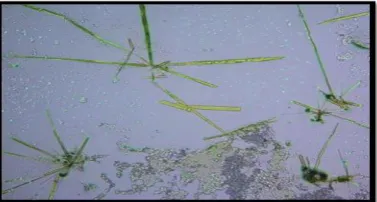
Figure 2: Kraut‟s Regent: Needle shaped crystals, often in Rosettes. In the more concentrated solutions, the crystals were large rods,
light-yellow in color.
Figure 3: Wagner’s Reagent: Needle and Rod shaped crystals
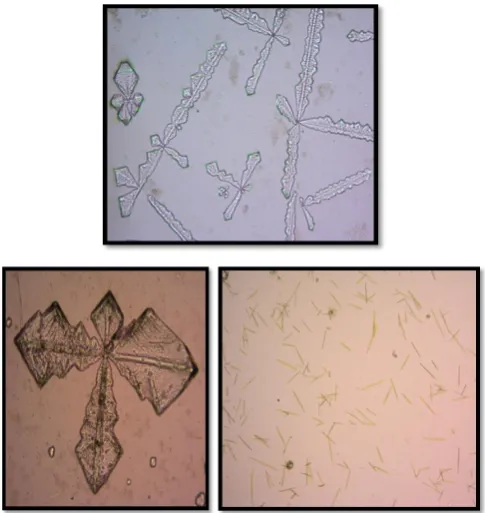
Figure 4: Mayer‟s Reagent: Small cubic and spherical crystals
Figure 6: Barium Nitrate: Rectangular, cubic, shape
Figure 7: Picric acid: The crystals are large Needle shaped.
III.
RESULT AND DISCUSSION
Total 25 samples were collected of hookah bar which were tested for color test of nicotine followed by microcrystal test for nicotine with total six (6) reagents. All the six reagents gave positive for all the 25 samples of hookah bar. It was seen that kraut‟s reagent gave
needle shaped crystals, often in Rosettes. In the more concentrated solutions, the crystals were large rods, light-yellow in color. Wagner‟s Reagentgave needle and rod shaped crystals. Followed by which Mayer‟s
Reagent gave small cubic and spherical crystals indicating the presence of nicotine. Mercuric chloride reagent gave small, clear-cut Rosettes of plates as crystals of nicotine. Later Barium Nitrate reagent was used which gave rectangular, cubic, shaped crystals. Finally picric acid reagent was used which gave fine crystals of Needle shape.
As far as literature survey has been done it was found that there were no chemicals that produced a false positive relative to nicotine provided that the correct set of tests is performed properly. But for an analyst to reach an accurate conclusion the use of a more sophisticated analytical procedure might be required to present the evidence in the court apart from color and crystal test. In this regard, Wielbo and Tebbett6 have proposed the combined use of microcrystal testing with Fourier transform IR spectrophotometry being applied to
the product of the microcrystal test. Gas
chromatography/mass spectrometry (GC/MS) testing identifies compounds based on specific chemical structures, rather than on empirical and not clearly understood chemical reactions. Microcrystal testing of hookah bar samples may not allow for clear identification of compounds present in it apart from alkaloid nicotine , while GC/MS analysis would likely separate and accurately identify each component. In some situations, the identification of enantiomers, however, may be more easily accomplished using microcrystal tests13.
IV.
CONCLUSION
Most of the laboratories in India are utilizing preliminary screening test like colour test and TLC and confirmatory tests are being done using instrumentation. Thus there is an urgent need for the rapid and economical screening methods like microcrystal tests for drugs or poisonous toxins of forensic significance i.e. alkaloids present in various plant species.
The present study showed excellent results using microcrystal tests and therefore it gave a scope for further research to explore the potential detection methods like microcrystal test which is superior to conventional color test used in forensic science laboratories for the detection.
V.
REFERENCES
[1] "Origins"(2013) Article Niche History of Hookah. Retrieved 09-03.
[2] "Business at hookah-less cafes go up in smoke"(2011) The Times of India. 7 June.
[3] "Hookah",2008. Indian Express. Retrieved 06-08.
[4] Fulton CC. Modern Microcrystal Tests for Drugs-The Identification of Organic Compounds by Microcrystalloscopic Chemistry, Wiley-Interscience, New York.
[5] Small L F and Lutz RE, (1932) Chemistry of the Opium Alkaloids, U.S. govt Printing Office, Washington, Supplement no.103 to the Public Health Reports.
[6] Stephenson CH and Parker CE, (1921).Micro chemical tests for alkaloids, J.B. Lippincott Co.Phil.
[7] Elie L. et.al. (2011) Reversing microcrystalline tests-An analytical approach to recycling of micro crystals from drugs of abuse” Forensic Science International.Volume 207(1), 55- 58.
[8] De Forest PR.(1988) Letters to the Editor. Microscope; 36:373–81
[9] SWGDRUG Methods and Reports Subcommittee Recommendations, Recommended Minimum Standards for Forensic Drug Identification, http://www.swgdrug.org. [10] Nichols RG, (1997) Drug proficiency test false positives: a
lack of critical thought. Science & Justice; 37(3):191–6. [11] Hourigan J, Ascano M. Microcrystal test and quality control
procedures employed at the LAPD narcotics analysis unit. In: Proceedings of the American Academy of Forensic Science. [12] McCrone WC, (2000) Chemical problem solving without
FTIR, EDX, NMR, XRD, etc. or why I still use the polarized light microscope, PLM. Microscope; 48 (3):155–66. [13] Wielbo D, Tebbett IR, (1992) The uses of microcrystal tests
in conjunction with Fourier transform infrared spectroscopy for the rapid identification of street drugs. J Forensic Sci; 37(4):1134–48.
[14] Masoud AN, (1975) Systematic identification of drugs of abuse I: spot tests. J. Forensic Sci 64:841–4.
[15] Johns SH, Wist AA, Najam AR, (1979) Spot tests: A color chart reference for forensic chemists. J Forensic Sci.; 24:631– 49.
[16] Siegel JA. (1988) Forensic identification of controlled substances. In: Saferstein R, Editor. Forensic Science Handbook, Vol. II. Englewood Cliffs: Prentice Hall, 68–160. [17] Clarke EGC, (1955) Williams M. Microchemical tests for the identification of alkaloids. J Pharmacy and Pharmacology; 7:255–62.
[18] Clarke EGC, (1969) Isolation and identification of drugs. London: The Pharmaceutical Press.