Interventions to Reduce Pediatric Medication Errors:
A Systematic Review
abstract
BACKGROUND AND OBJECTIVE:Medication errors cause appreciable morbidity and mortality in children. The objective was to determine the effectiveness of interventions to reduce pediatric medication errors, identify gaps in the literature, and perform meta-analyses on comparable studies.
METHODS:Relevant studies were identified from searches of PubMed, Embase, Scopus, Web of Science, the Cochrane Library, and the Cumu-lative Index to Nursing Allied Health Literature and previous systematic reviews. Inclusion criteria were peer-reviewed original data in any language testing an intervention to reduce medication errors in children. Abstract and full-text article review were conducted by 2 independent authors with sequential data extraction.
RESULTS: A total of 274 full-text articles were reviewed and 63 were included. Only 1% of studies were conducted at community hospitals, 11% were conducted in ambulatory populations, 10% reported preventable adverse drug events, 10% examined administering errors, 3% examined dispensing errors, and none reported cost-effectiveness data, suggesting persistent research gaps. Variation existed in the methods, definitions, outcomes, and rate denominators for all studies; and many showed an appreciable risk of bias. Although 26 studies (41%) involved computerized provider order entry, a meta-analysis was not performed because of methodologic heterogeneity. Studies of computerized provider order entry with clinical decision support compared with studies without clinical decision support reported a 36% to 87% reduction in prescribing errors; studies of preprinted order sheets revealed a 27% to 82% reduction in prescribing errors. CONCLUSIONS:Pediatric medication errors can be reduced, although our understanding of optimal interventions remains hampered. Re-search should focus on understudied areas, use standardized def-initions and outcomes, and evaluate cost-effectiveness.Pediatrics 2014;134:338–360
AUTHORS:Michael L. Rinke, MD, PhD,aDavid G. Bundy, MD,
MPH,bChristina A. Velasquez, MD,cSandesh Rao, MD,d
Yasmin Zerhouni, MD,eKatie Lobner, MLIS,fJaime F. Blanck,
MLIS, MPA,fand Marlene R. Miller, MD, MScg
aDepartment of Pediatrics, Children’s Hospital at Montefiore, Bronx, New York;bDepartment of Pediatrics, Medical University of South Carolina, Charleston, South Carolina; Departments of cEmergency Medicine,dInternal Medicine, andgPediatrics, Johns
Hopkins University School of Medicine, Baltimore, Maryland; eDepartment of Surgery, University of California, San Francisco
East Bay, Oakland, California; andfWelch Medical Library, Johns Hopkins University, Baltimore, Maryland
KEY WORDS
pediatric, medication error, systematic review, intervention, computerized physician order entry
ABBREVIATIONS ADE—adverse drug event CDS—clinical decision support
CPOE—computerized provider order entry
CINAHL—Cumulative Index to Nursing and Allied Health Literature ISMP—Institute for Safe Medication Practices
This statement attests that all of the above listed authors contributed significantly to the (1) conception and design, acquisition of data, or analysis and interpretation of data; (2) drafting the article or revising it critically for important intellectual content; and (3)final approval of the version to be published. All authors agree to be accountable for all aspects of the work.
Dr Rinke conceptualized and designed the study, participated in data acquisition, led data analyses, and drafted the initial manuscript; Drs Bundy and Miller assisted in design of the study, participated in data analyses and interpretation of data, and reviewed and revised the manuscript; Drs Velasquez, Rao, and Zerhouni assisted in the design of the study, participated in data acquisition and data analyses, and reviewed and revised the manuscript; Ms Lobner and Ms. Blanck assisted in the design of the study, participated in data acquisition, and reviewed and revised the manuscript; and all authors approved thefinal manuscript as submitted.
www.pediatrics.org/cgi/doi/10.1542/peds.2013-3531
doi:10.1542/peds.2013-3531
Accepted for publication May 7, 2014
Address correspondence to Michael L. Rinke, MD, PhD, Children’s Hospital at Montefiore, 3415 Bainbridge Ave, Bronx, NY 10467. E-mail: mrinke@montefiore.org
PEDIATRICS (ISSN Numbers: Print, 0031-4005; Online, 1098-4275).
Copyright © 2014 by the American Academy of Pediatrics
Medication errors are common in pedi-atric patients; 5% to 27% of all pedipedi-atric medication orders result in a medication error.1–3Medication errors cause signif-icant mortality and morbidity, including 7000 patient deaths annually from med-ication errors in the United States.4,5 Pediatric inpatients may have 3 times more medication errors than adult inpatients, and these errors are fre-quently harmful.2For children, 1% of all medication errors carry significant po-tential for harm, with 0.24% of errors causing actual harm.2 Children are at high risk for these errors6due in part to the need for weight-based dosing.7,8 To reduce this preventable harm, pedi-atric health systems, institutions, and providers must understand, implement, and augment interventions to reduce pediatric medication errors.9Previous systematic reviews on pediatric medi-cation error epidemiology or specific pediatric medication error intervention subsets,10–20including 1 review by our group,10found appreciable variation in medication error definitions, popula-tions, and outcomes, precluding true synthesis of data. All previous system-atic reviews looking at interventions to reduce pediatric medication errors ex-amined subsets of interventions only,11–18 and all searches in epidemiologic or intervention reviews were performed before 2008,10,11,13–18except 1 that ex-amined nurse staffing interventions performed in 2010.12
The large increase in quality improve-ment intervention publications in the 6 years after our previous review,10,21the lack of a systematic review looking at all interventions to reduce pediatric medi-cation errors, and the hypothesis that newer publications might use consis-tent definitions and outcomes allowing quantitative data synthesis suggest an updated systematic review on inter-ventions to reduce pediatric medication errors is warranted. By using rigorous systematic review methodology, we
aimed to determine the effectiveness of interventions to reduce pediatric medi-cation errors, identify persistent gaps in the pediatric medication error re-duction literature, and perform meta-analysis on comparable studies.
METHODS
Search Strategy
The authors searched PubMed, Embase, Scopus, Web of Science, Cochrane Library, and the Cumulative Index to Nursing and Allied Health Literature (CINAHL) for studies investigating interventions to reduce pediatric medication errors (Supplemental Information). The search included a pediatric concept and a medication error concept. Terms were searched as controlled vocabulary in applicable databases (PubMed, Embase, CINAHL, Cochrane) and as keywords in all databases. The search was run as an update to a previous literature review,10 with the previous search strategy broadened to ensure complete article retrieval (Supplemental Information). The date parameters were limited from 2005 to the search date to capture liter-ature published since the first review. Performing a complete search on all dates was beyond the scope of available resources. All searches were conducted on November 22, 2011. Articles included in previous systematic reviews on pedi-atric medication errors10–20 were also included in the full-text review to augment our previous review and to ensure all relevant articles published before 2005 were retrieved.
Eligibility Criteria
The study types for this review included randomized controlled trials, quasi-randomized controlled trials, controlled before and after trials, and interrupted time-series studies published in any language and in any country. An in-tervention was defined as anything aimed at reducing medication errors.
Secondary outcomes included (1) pre-ventable adverse drug events (ADEs; preventable errors that reached a pa-tient and resulted in harm as defined by the Institute for Safe Medication Prac-tices [ISMP] categories 5, 6, or 7 [sig-nificant temporary harm, permanent harm, near death or death])23 and (2) serious preventable ADEs including ISMP categories 6 or 7 only (permanent harm, near death or death).23 Studies using voluntary error reports as their outcome (numerator or denominator) were ex-cluded because voluntary error reports may underestimate the true incidence of medication errors; it is also difficult to interpret true denominators for these interventions.21,24“Orders”were defined as inpatient medication prescribing, and “prescriptions” were defined as ambu-latory medication prescribing. We ex-cluded studies conducted in simulation settings only (eg, nurses administered medications to a mannequin) because of concern that they did not represent real-world efficacy. Studies designed solely to change the volume of prescribing were also excluded.
Abstracts from conference presentations and full-text articles were included. All authors of abstracts included in the systematic review were contacted for additional information (n = 3), and 2 responded.
Data Abstraction and Study Quality Assessment
Two independent, nonblinded authors (M.L.R. and C.A.V., S.R., or Y.Z.) reviewed each title and abstract for inclusion. Full-text review was also conducted by 2 independent, nonblinded authors (M.L.R. and C.A.V., S.R., or Y.Z.) and discrepancies were resolved through author consensus discussions. Both abstract reviews and full-text reviews were piloted on sample abstracts or articles respectively, to ensure reviewer consistency in judging inclusion criteria. For non–English-language studies
in-cluded in the full-text review (n= 13), independent reviewers with fluency in the article’s language translated and abstracted data from the article. To ensure accurate translations, the pri-mary author (M.L.R) independently translated all foreign-language articles with computer translation software, previously shown to be effective for systematic reviews.25 As above, 2 authors made inclusion decisions for non–English-language studies based on translations.
Using identical methodology as our previous review,10data abstraction for included articles was conducted in sequential fashion, as the second ab-stractor (M.L.R.) was able to see the first reviewer’s or translator’s ab-stracted data. Data abstraction was conducted via an electronic abstrac-tion form, which was pilot tested for consistency among reviewers (Sup-plemental Fig 3). When data were un-clear or missing, the corresponding author was contacted via e-mail at least twice. In addition to collecting the
standard systematic review data
points of population, intervention, and outcomes, we also abstracted data on quality improvement markers.26 We selected the following markers to help assess whether studies used robust quality improvement methodologies: sustainability (number of months that data were collected after beginning the intervention), cost of intervention, pa-tient or family involvement at any point in the design, conduct or interpretation of the study, and target population ac-ceptance of the intervention (defined as any qualitative or quantitative as-sessment of feedback from the partic-ipants at whom the intervention was directed).
To assess article quality, 2 independent reviewers (M.L.R. and C.A.V., S.R., or Y.Z.) used the Cochrane Effective Practice and Organization of Care Review Group guidelines.27 Individual article
poten-tial bias from funding sources and aggregate article publication bias (the number of studies published with positive and negative findings) were also assessed. Finally, study rigor was assessed by examining if a second person verified that medication errors met error definitions stated in the manuscript. This was done because reviewer discrepancies often exist in determining whether a medication er-ror is truly an erer-ror.28
Synthesis of Results and Statistical Analysis
RESULTS
Search Results
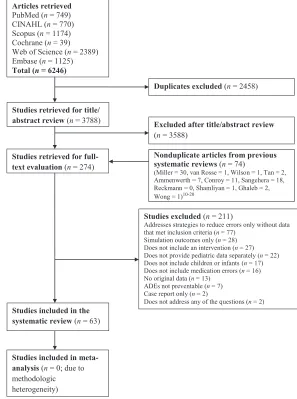
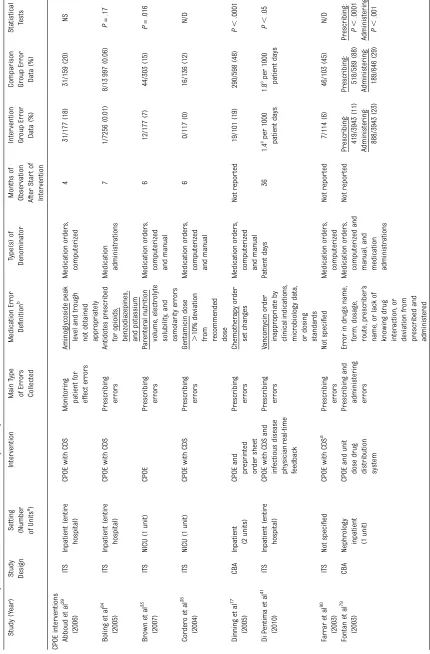
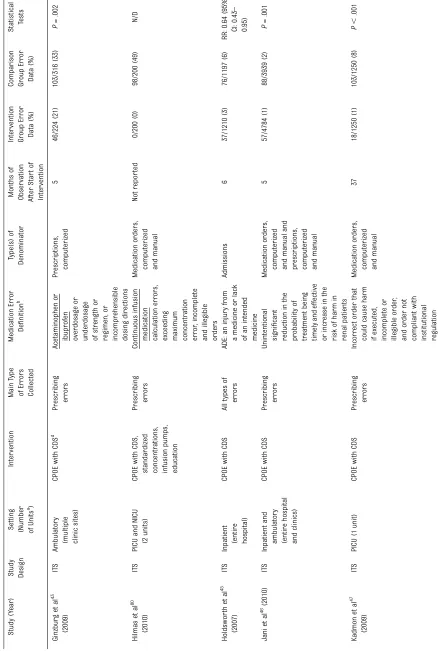
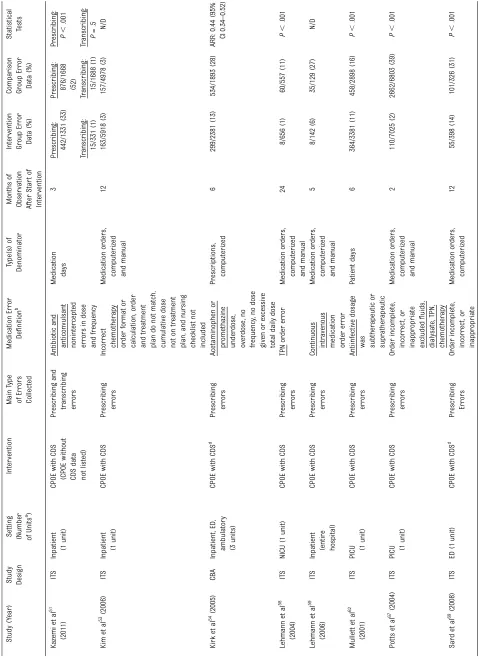
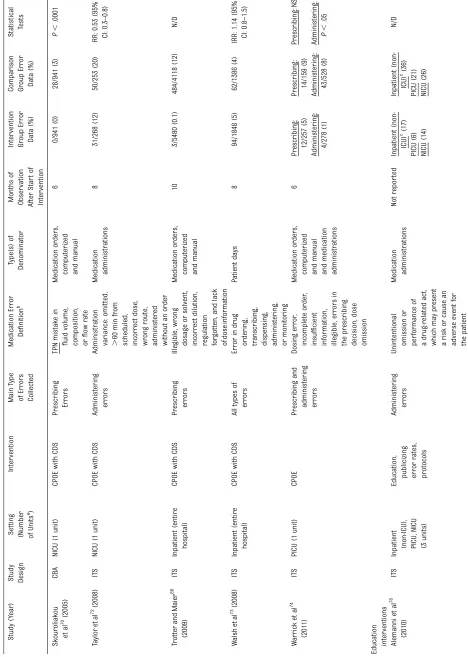
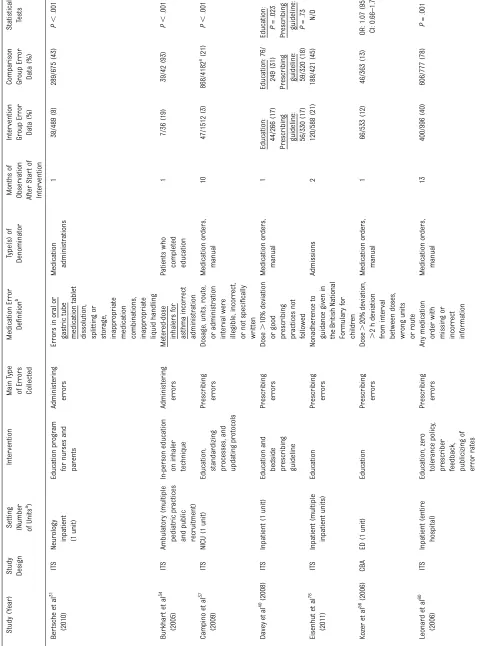
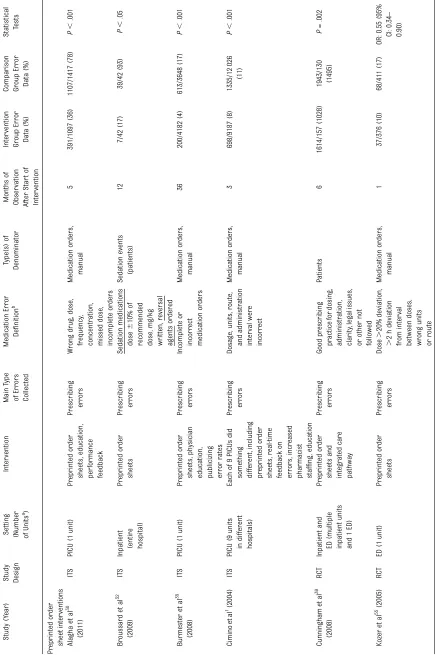
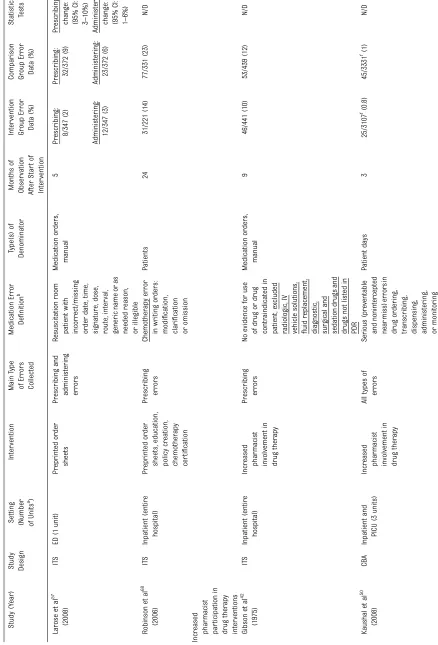
Our search identified 6246 abstracts composed of 3788 unique abstracts. A total of 3588 abstracts were excluded during abstract review. An additional 74 articles from previous systematic reviews were identified for full-text re-view.10–20 A total of 274 articles were included in full-text review, and of these, 63 were deemed eligible for in-clusion in the systematic review (Fig 1).1,29–91 Ten articles (16%) were included from previous systematic reviews, and 53 (84%) were identified by the current search protocol. The most common reason for exclusion in the full-text review was articles dis-cussing strategies to reduce medica-tion errors without data that met inclusion criteria (n= 77). Of these 77 studies, 29 were excluded for using voluntary error reports only, 27 had no preintervention or during-intervention comparator group, 13 discussed qual-itative outcomes only, and 8 were ex-cluded for other reasons. A summary of all articles included in this study is presented in Table 1.
Aggregate Data Synthesis
Most studies were conducted in the United States (51%) and in a single site (95%) that was academic/university-affiliated (90%). Nine studies (14%) included emergency department pa-tients and 7 (11%) included ambulatory patients. Twenty-six studies (41%) in-vestigated the effects of CPOE on medi-cation errors (22 investigated CPOE and CDS and 4 investigated CPOE without CDS), 20 studies (32%) investigated the effects of education, 9 (14%) investigated the effects of preprinted order sheets, 8 (13%) investigated the effects of protocol implementation, 7 (11%) investigated the effects of publicizing/reporting error rates, and 5 (8%) investigated the effects of increased pharmacist participation in medication ordering. Additional
inter-ventions are described in Table 2. Only 6 studies (10%) investigated solely ad-ministering errors and 2 (3%) investigated solely dispensing errors. Twelve articles (19%) assessed severity of errors by using variations on “no harm, minor harm, severe harm, or death,” with a wide variation in the number of se-verity categories from 2 to 11 (mean: 3.7). Wide variation also existed in the denominator used for outcome rates (Table 2).
With regard to our secondary out-comes, 6 studies (10%) reported pre-ventable ADEs and no studies reported serious preventable ADEs. Of the studies
reporting preventable ADEs,1,40,45,62,66,73 2 studies1,45 reported statistically sig-nificant decreases in ADEs after an intervention: a 77% reduction in pre-ventable ADE prescribing errors using multiple error reduction strategies (n= 16 of 12 026 pre versus 3 of 9187 post) and a 43% reduction in all types of preventable ADE errors using CPOE with CDS (n= 46 of 1197 pre versus 26 of 1210 post), respectively. Two of the other studies40,66reported only 1 pre-ventable ADE during their respective pre- and postintervention periods, and a third study62reported 2 preventable ADEs, 1 during the pre- and 1 during the postintervention periods.
FIGURE 1
T ABLE 1 Continued Study (Y ear) Study Des ign Setti ng (Numbe r of Units a ) Intervention M a in Type of Err ors Collec ted Medicat ion Err or De fi nition b Type (s) of Denom inator Months of Observ ation After Star t of Interv ention
Intervention Group
Err or Dat a (%) Comparis on Gr oup Err or Dat a (%) Statistical Tests K azemi et al 51 (2011 ) IT S Inpatien t (1 unit) CPO E with CDS (CPOE withou t CDS data not lis ted) Pr escri bing and tr anscribin g err ors Ant ibiotic and antic onvulsant nonint er cepted err ors in dose and fr equen cy Me dication da ys 3 Pr escri bing: 442/1 331 (33) Pr escribing: 876/166 8 (52) Pr
escribing: P,
TABLE 1 Continued Study (Y ear ) Study Des ign Setti ng (Number of Unit s a) Int ervention Main Type of Err ors Collecte d Medicat ion Err or De fi nition b Type (s) of Denom inator Mo nths of Observat ion Af ter Star t of Interv ention Int ervention Gr oup Err or Dat a (%) Com pariso n Gr oup Err or Data (%) Sta tistical Tests Ber ts che et al 31 (2010 ) IT S Neur olo gy inpati ent (1 unit) Educa tion pr ogr am for nurses and par ents Admini stering err ors Err ors in or al or gastric tub e medicat ion tablet dissolut ion, splittin g or stor age, inappr opri ate medicat ion combi nations, inappr opri ate liquid han dling Me dication admini str ations 1 38 /489 (8) 28 9/675 (43) P , .001 Burk har t et al 34 (2005 ) IT S Ambulato ry (mult iple pediatric pr actices and public rec ruitment ) In-pers on education on inhaler techniqu e Admini stering err ors Me ter ed-dose inhale rs for asthma inc orr ect admini str ation P ati ents who complet ed education 1 7/36 (19) 39/42 (93) P , .001 Cam pino et al 37 (2009 ) IT S NICU (1 unit ) Educa tion, standar dizi ng pr ocesse s, and updating pr otoco ls Pr escri bing err ors Dos age, units , route, or admini str ation interval wer e illegible, incorr ect, or not speci fi cally written Me dication or der s, manua l 10 47/1512 (3) 868/418 2 e (21) P , .001 Da vey et al 40 (2008) IT S Inpatien t (1 unit) Educa tion and
bedside prescribing guideline
TABLE 1 Continued Study (Y ear ) Study Design Setting (Number ofUnit
With regard to the robustness of quality improvement methodology, only 10 studies (16%) reported whether their intervention was accepted by the target population and 5 studies (8%) involved patients or families at any point in the design, conduct, or interpretation of the study. Sixteen studies (25%) collected data for#3 months after implement-ing the intervention.
There was an appreciable risk of bias in most studies (Fig 2), with, for example, 67% of the 52 interrupted time-series studies not protecting against secular changes. Sixty studies (95%) reported positive results for their intervention, suggesting possible publication bias. Thirty-four of those studies reported statistically significant positive results, 7 reported non–statistically significant results (P..05), and 19 did not report statistical inferences for the outcome of interest. Of the 3 studies included that did not report positive results for their intervention, 2 reported non– statistically significant results. Thirty-seven studies (59%) did not report funding sources for their research, and four of those who did (6%) had a potential conflict of interest. In 27 studies (43%), no one verified that the errors collected were truly errors, and in 9 additional studies (14%) it was unclear if someone verified errors.
Data Synthesis for Specific Interventions
Of the 63 studies included, 52 (83%) were able to be included in qualitative data synthesis for a specific in-tervention: 26 for CPOE, 14 for educa-tion, 9 for preprinted order sheets, and 5 for increased pharmacist participa-tion in drug therapy. One study1 evalu-ated both preprinted order sheets and increased pharmacist preparation, and 1 study77evaluated both CPOE and preprinted order sheets. Although summary ranges are presented below, appreciable heterogeneity still exists
between many studies using the same intervention. All other intervention sub-sets (protocol implementation, publicizing/ reporting error rates, double checking, environmental changes, unit drug dose distribution system, non-CPOE technol-ogy for medication administration) were too heterogeneous for synthesis (Table 3).
Of the 26 CPOE interventions, 4 in-vestigated the effects of CPOE without CDS compared with manual order en-try33,74,77,79and reported a 44% to 88% reduction in prescribing errors. Five studies examined the effect of CPOE with CDS for multiple medications on inpatients45,46,51,73,88 and found a 14% increase in errors to a 99% decrease in all types of errors. The study reporting a 14% increase in all types medication errors73 noted that this change was non–statistically significant (P . .05) and also reported a statistically signif-icant 7% decrease in nonintercepted, serious medication errors. Ginzburg et al43and Kirk et al54looked at ambu-latory prescribing errors for acetamin-ophen or ibuprofen and reported a 36% reduction (n= 103 of 316 pre vs 46 of 224 post) and an adjusted risk of 56% (n= 534 of 1893 pre vs 299 of 2381 post) in these types of prescribing errors, respectively. When applying meta-analytic models, I2statistics for each CPOE subset were.80%. On the basis of criteria in the Cochrane Handbook for System-atic Reviews of Interventions,92 this finding suggests large heterogeneity and therefore meta-analysis results are not presented.
Although 20 studies reported provider education as part of their intervention to reduce pediatric medication errors, 14 studies31,34,37,40,56,60,65,71,75,76,78,82,85,87 used education as their main in-tervention to reduce pediatric medi-cation errors. Seven of these 14 studies collected data for #3 months after implementing the intervention and 2 did not report on the months of
TABLE 2 Aggregate Data Synthesis for 63 Included Studies
Characteristic Number of Studies (%)
Population Location of study
United States 32 (51)
Other North America 5 (8)
Europe 18 (29)
Africa 1 (1)
Asia 5 (8)
Australia 0
South America 2 (3)
Study conducted at 1 site 60 (95)
Type of institution
Academic/university-affiliated site 57 (90)
Community/private practice site 1 (1)
Mix, Army medical center or prehospital emergency care services
3 (5)
Not reported 2 (3)
Patient locationsa
Inpatients 31 (49)
PICU patients 16 (25)
NICU patients 19 (30)
Emergency department patients 9 (24)
Ambulatory patients 7 (11)
Not reported 2 (3)
Patient ages
All pediatric ages 44 (70)
Infants only (0–1 y) 13 (21)
Children only (2–11 y) 1 (1)
Adolescents only (12–18 y) 0
Mix but not all 5 (8)
Intervention Type of study
Interrupted time series 52 (82)
Controlled before and after design 8 (13)
Randomized controlled trials 3 (5)
Type of interventiona
CPOE6CDS 26 (41)
Education and training 20 (32)
Preprinted order sheet 9 (14)
Protocol implementation 8 (13)
Publicizing/reporting error rates 7 (11)
Increased pharmacist participation in medication ordering 5 (8)
Double checking 4 (6)
Environmental changes 4 (6)
Unit drug dose distribution system 3 (5)
Non-CPOE technology for medication administration 2 (3)
Other 10 (16)
Outcomes
Types of medication errors collected
All types 5 (8)
Prescribing only 38 (60)
Administering only 6 (10)
Dispensing only 2 (3)
Transcribing only 1 (1)
Monitoring patient for effect only 1 (1)
Mix but not all 10 (16)
Error severity
Assessed severity of errors in any way 15 (24)
Reported preventable ADEs 6 (10)
Reported serious preventable ADEs 0
No verification of errors 27 (43)
Types of denominators used
observation after implementation. The 5 studies that collected data for .3 months after implementing the in-tervention37,60,65,71,85reported a 49% to 87% reduction in any type of medica-tion error.
The 9 studies that investigated the effectiveness of preprinted order sheets in reducing pediatric medication errors1,30,32,35,39,55,57,68,77 reported a 27% to 82% reduction in prescribing errors. Of the 5 studies investigating increased pharmacist participation in drug therapy1,42,50,64,89, 4 reported a 17% to 50% decrease in medication errors. The fifth article89 reported a 16% increase (n = 389 of 856 pre versus 280 of 540 post) in administer-ing errors after the intervention but investigated the impact of opening a satellite pharmacy; although we as-sume that closer proximity of phar-macists led to increased involvement in the prescribing/administering pro-cess, it was unclear whether this was the case and therefore this article may not be comparable to the others.
DISCUSSION
In this systematic review of all types of interventions to reduce pediatric medi-cation errors, multiple interventions revealed statistically significant effects. Unfortunately, appreciable gaps in the
pediatric medication error literature were identified: no studies that met in-clusion criteria investigated the effects of medication reconciliation, only 1% of studies were conducted at community hospitals, 11% of studies were con-ducted in ambulatory populations, 10% of studies reported preventable ADEs, 10% of studies examined administering errors, 3% of studies examined dis-pensing errors, and appreciable varia-tion existed in the methods, definitions, outcomes, and rate denominators. No study reported outcomes using a stan-dard definition of serious preventable ADEs. Although 41% of studies involved some version of CPOE, a meta-analysis could not be performed because of methodologic heterogeneity. Despite a large increase in the number of pub-lished studies aiming to reduce pediatric medication errors since 2005,10 our knowledge of interventions to prevent pediatric medication errors remains hampered by nonuniform definitions, nonuniform data collection methodology, and nonuniform outcome reporting. The heterogeneity in current pediatric medication error intervention studies prevents wide generalizability of re-sults and yields unclear guidance to hospitals on which interventions are best to adopt.
Interestingly, studies implementing CPOE and those implementing
pre-printed order sheets reported similar reductions in medication errors despite vastly different cost levels.93CPOE with CDS studies43,51,54,69,90reported a 36% to 87% reduction in prescribing errors when compared with CPOE without CDS. Preprinted order sheet studies re-ported a 27% to 82% reduction in pre-scribing errors,1,30,32,35,39,55,57,68,77 when compared with manual order entry, a condition comparable to CPOE with versus without CDS. Of CPOE studies that looked at the broadest range of patients and outcomes, Holdsworth et al45and Trotter and Maier88reported reductions in error rates, whereas Walsh et al73 reported a non–statistically significant increase in all-cause medication errors. Kadmon et al47and Potts et al67looked at CPOE with CDS for all medications in PICU settings and reported significant reductions in prescribing errors (88% and 95%, respectively), whereas Algaha et al30 and Burmester et al35 also reported significant reductions in errors for all medications using pre-printed order sheets in PICU settings (53% and 76%, respectively). Compara-ble outcomes between CPOE and pre-printed order sheets could imply that resource-constrained settings may wisely focus on implementing in-tegrated care pathways and preprinted order sheets if CPOE with CDS is deemed too expensive despite national efforts to incentivize its implementation.94These conclusions are limited by the hetero-geneous nature of outcomes and defi -nitions in these studies, which likely contributes to the wide range of out-comes. The authors would recommend investigating each relevant study (Ta-ble 1) to clearly understand its appli-cability and context before drawing policy-level conclusions.
In 2001, the ISMP published guidelines for preventing medication errors in pediatrics9 that recommended CPOE, barcoding technology, unit dose-dispensing systems, and educational
TABLE 2 Continued
Characteristic Number of Studies (%)
Computerized medication orders 20 (32)
Patients/admissions 14 (22)
Patient days 10 (16)
Computerized prescriptions 3 (5)
Manual prescriptions 2 (3)
Medication days 2 (3)
Other 3 (5)
Quality improvement markers
Reported acceptance of intervention by target population 10 (16) Involved patients or families at any point in the design,
conduct, or interpretation of the study
5 (8)
Median months data were collected after intervention (interquartile range)
6 (3–12)
Reported the cost of the intervention 0
systems for all providers. More than a decade later, we are unable tofind bias-free, robust, and rigorous evidence in the literature to support these rec-ommendations for children. Clearly, not all interventions require randomized controlled trials before implementation, but it is integral in current resource-constrained environments to identify interventions with maximum return on investment both in terms of dollars and,
more importantly, patient lives. Future research should focus on determining the reduction in medication errors
compared with the investment in
resources and time required for an intervention’s implementation, because institutions are faced with multiple po-tential interventions to reduce medica-tion errors. Applicability and efficacy of interventions in non– university-affiliated and/or developing countries
are also prime areas for future study because 90% of studies were conducted at academic/university-affiliated medi-cal centers and 88% of studies were conducted in North America or Europe. One of thefirst steps in remedying the gaps identified in this study is the standardization of definitions and re-search methodologies for medication error studies. Universal adoption of the National Coordinating Council for
FIGURE 2
Risk of bias of studies by type of trial. A, Interrupted time-series studies (52 studies). B, Controlled before/after studies (8 studies). C, Randomized controlled
trials (3 studies). Article quality was assessed with the Cochrane Effective Practice and Organization of Care Review Group guidelines,27and sample definitions
FIGURE 2 Continued.
TABLE 3 Qualitative Synthesis for Selected Intervention Subsets
Intervention First Authors and References Outcomes
CPOEa
(N= 26)
CPOE without CDS to reduce prescribing errors Brown,33
Dinning,77
Fontan,79
and Warrick74
44% to 88% reduction in prescribing errors CPOE without CDS to reduce administering errors Fontan79
and Warrick74
21% to 88% reduction in administering errors CPOE with CDS for medications on inpatients Holdsworth,45
Jani,46
Kazemi 2011,51
Trotter,88
and Walsh73
14% increase in errors; 99% reduction in all types of errors
CPOE with CDS for PICU patients Kadmon47and Potts67 88% to 95% reduction in prescribing errors CPOE with CDS for continuous infusions Lehmann 200659and Hilmas80 78% to 100% reduction in prescribing errors CPOE with CDS for total parenteral nutrition Lehmann 200458and Skourolaikou70 91% to 100% reduction in prescribing errors CPOE with CDS for antiinfective medications Abboud,29Cordero,38Di Pentima,41and Mullet62 10% to 100% reduction in prescribing and/or
monitoring patient for effect errors CPOE with CDS compared with CPOE without CDS Farrar,90Ginzburg,43Kazemi 2011,51Kirk,54
and Sard69
36% to 87% reduction in all prescribing errors; 36% to 59% reduction in ambulatory prescribing errors for acetaminophen or ibuprofen Education (N= 14)b
Reduce prescribing errors Campino 2009,37
Davey,40
Eisenhut,78
Kozer 2006,56
Leonard,60
Pallás,65
Sagy,85
and Zukowski87
8% to 87% reduction in prescribing errors
Reduce administering and/or dispensing errors Alemanni,76
Bertsche,31
Burkhart,34
Raja Lope,82
Sullivan,71
and Yamanaka75
14% to 81% reduction in administering and dispensing errors
Reduce all error types and collect data for.3 months
Campino 2009,37
Leonard,60
Pallás,65
Sagy,85
and Sullivan71
49% to 87% reduction in any type of medication error
Preprinted order sheets (N= 9)
Reduce prescribing errors for all patients Alagha,30
Broussard,32
Burmester,35
Cimino,1
Cunningham,39
Dinning,77
Kozer 2005,55
Larose,57and Robinson68
27% to 82% reduction in prescribing errors
Reduce prescribing errors for ICU patients Alagha,30Burmester,35and Cimino1 27% to 76% reduction in prescribing errors Reduce prescribing errors for inpatient
chemotherapy
Dinning77and Robinson68 39% to 60% reduction in prescribing errors
Reduce prescribing errors for emergency department patients
Kozer 200555and Larose57 41% to 78% reduction in prescribing errors
Pharmacist participation in drug therapy (N= 5)
Pharmacists on units Cimino,1Gibson,42Kaushal,50and Otero64 17% to 50% reduction in all types of medication errors.
Satellite pharmacy Olsen89
16% increase in administering errors
Although summary ranges are presented above, appreciable heterogeneity still exists between many studies using the same intervention, likely accounting for the large outcome ranges.
aUnless specified, CPOE interventions were compared with manual order entry.
Medication Error Reporting and Pre-vention guidelines22 for grading medi-cation errors would permit providers to know if an intervention prevents not
only medication errors but also
harmful medication errors. Addition-ally, consistent denominators for med-ication error rates that reflect the total opportunities for error in each category would allow for better com-parisons across studies and sites: prescribing errors per 1000 orders or prescriptions, administering errors per 1000 opportunities for medication administration, and dispensing errors per 1000 medications dispensed.93 Al-though patient days and patients are often easier denominators to collect, they prevent comparisons between studies because it is unclear if patients in tertiary care centers are sicker, have more medications ordered, and there-fore are at greater risk for a medica-tion error. The universal use of the SQUIRE (Standards for QUality Im-provement Reporting Excellence) guide-lines for quality improvement reporting,26 although challenging to implement in its entirety, would allow readers to understand the complete quality improvement process for each
in-tervention and increase the spread of effective studies. Finally, inclusion of cost analysis and return on investment figures in intervention studies, which is difficult in locally funded quality im-provement projects, could allow policy makers and medical leaders to weigh the costs and benefits of possible in-terventions before choosing which of the many potential medication error interventions to implement.
Implementing these suggestions in pediatric medication error research remains challenging. We appreciate that not all quality improvement re-search projects can meet every metric regarding high-quality, bias-free stud-ies as laid out by the Cochrane Effective Practice and Organization of Care Re-view Group guidelines.27 Recognizing these challenges, front-line quality im-provement experts would benefit from training in both quality improvement and scientific methodology to produce more impactful research. Further-more, increased collaboration between front-line clinicians looking to im-prove practices and trained clinical researchers would aid in the quality and quantity of medication error re-search, and protect patients from
these harmful errors. Finally, given the small sample size problem frequently encountered when researching pedi-atric patients, medication error re-duction collaboratives, with larger groups of pediatric patients to study and more pediatric centers sharing resources, could make a larger impact on both medication error science and harm prevention.
CONCLUSIONS
Pediatric medication errors can be reduced through multiple interventions aimed at improving the medication process. More research is needed in the areas of ambulatory patients, nondeveloped countries, administering and dispensing errors, and community hospitals and should use standardized definitions for medication errors and outcomes. Additional cost-effectiveness data on interventions to reduce pedi-atric medication errors would benefit policy makers and medical leaders as they choose between multiple possible interventions. Reducing medication errors presents an important oppor-tunity for improving the quality and diversity of current research.
REFERENCES
1. Cimino MA, Kirschbaum MS, Brodsky L,
Shaha SH; Child Health Accountability Ini-tiative. Assessing medication prescribing
errors in pediatric intensive care units. Pediatr Crit Care Med. 2004;5(2):124–132 2. Kaushal R, Bates DW, Landrigan C, et al.
Medication errors and adverse drug
events in pediatric inpatients.JAMA. 2001;
285(16):2114–2120
3. Marino BL, Reinhardt K, Eichelberger WJ, Steingard R. Prevalence of errors in a
pe-diatric hospital medication system:
impli-cations for error proofing. Outcomes
Manag Nurs Pract. 2000;4(3):129–135
4. Institute of Medicine. To Err Is Human:
Building a Safer Health System.
Wash-ington, DC: National Academies Press; 1999
5. Institute of Medicine.Crossing the Quality
Chasm: A New Health System for the 21st Century. Washington, DC: National
Acade-mies Press; 2001
6. Barber ND, Batty R, Ridout DA. Predicting
the rate of physician-accepted
inter-ventions by hospital pharmacists in the
United Kingdom.Am J Health Syst Pharm.
1997;54(4):397–405
7. Rinke ML, Bundy DG, Shore AD, Colantuoni E, Morlock LL, Miller MR. Pediatric
antide-pressant medication errors in a national
error reporting database. J Dev Behav
Pediatr. 2010;31(2):129–136
8. Rinke ML, Shore AD, Morlock L, Hicks RW, Miller MR. Characteristics of pediatric
chemotherapy medication errors in a
na-tional error reporting database. Cancer.
2007;110(1):186–195
9. Levine SR, Cohen MR, Blanchard N, et al. Guidelines for preventing medication errors
in pediatrics. J Pediatr Pharmacol Ther.
2001;6:426–442
10. Miller MR, Robinson KA, Lubomski LH, Rinke
ML, Pronovost PJ. Medication errors in paediatric care: a systematic review of
epidemiology and an evaluation of evidence
supporting reduction strategy
recom-mendations.Qual Saf Health Care. 2007;16
(2):116–126
11. van Rosse F, Maat B, Rademaker CM, van
Vught AJ, Egberts AC, Bollen CW. The effect of computerized physician order entry on
outcome in pediatric and intensive care:
a systematic review. Pediatrics. 2009;123
(4):1184–1190
12. Wilson S, Bremner A, Hauck Y, Finn J. The
effect of nurse staffing on clinical
out-comes of children in hospital: a systematic
review.Int J Evid-Based Healthc. 2011;9(2):
97–121
13. Tan K, Dear PR, Newell SJ. Clinical decision
support systems for neonatal care.Cochrane
Database Syst Rev. 2005;(2):CD004211
14. Ammenwerth E, Schnell-Inderst P, Machan C, Siebert U. The effect of electronic pre-scribing on medication errors and adverse
drug events: a systematic review.J Am Med
Inform Assoc. 2008;15(5):585–600 15. Conroy S, Sweis D, Planner C, et al.
Inter-ventions to reduce dosing errors in chil-dren: a systematic review of the literature. Drug Saf. 2007;30(12):1111–1125
16. Sanghera N, Chan PY, Khaki ZF, et al. Inter-ventions of hospital pharmacists in improv-ing drug therapy in children: a systematic
literature review.Drug Saf. 2006;29(11):1031–
1047
17. Reckmann MH, Westbrook JI, Koh Y, Lo C, Day RO. Does computerized provider order entry reduce prescribing errors for
hos-pital inpatients? A systematic review.J Am
Med Inform Assoc. 2009;16(5):613–623 18. Shamliyan TA, Duval S, Du J, Kane RL. Just
what the doctor ordered: review of the evidence of the impact of computerized physician order entry system on
medica-tion errors.Health Serv Res. 2008;43(1 pt
1):32–53
19. Ghaleb MA, Barber N, Franklin BD, Yeung VW, Khaki ZF, Wong IC. Systematic review of medication errors in pediatric patients. Ann Pharmacother. 2006;40(10):1766–1776 20. Wong IC, Ghaleb MA, Franklin BD, Barber N.
Incidence and nature of dosing errors in paediatric medications: a systematic
re-view.Drug Saf. 2004;27(9):661–670
21. Classen DC, Resar R, Griffin F, et al.‘Global
trigger tool’shows that adverse events in
hospitals may be ten times greater than
previously measured.Health Aff (Millwood).
2011;30(4):581–589
22. National Coordinating Council for Medica-tion Error Reporting and PrevenMedica-tion. About medication errors. Available at: www.nccmerp. org/aboutMedErrors.html. Accessed June 26, 2013
23. Institute for Safe Medication Practices. Severity categories. Available at: www.ismp. org. Accessed June 26, 2013
24. Mahajan RP. Critical incident reporting and
learning.Br J Anaesth. 2010;105(1):69–75
25. Balk EM, Chung M, Hadar N, et al. Accuracy of Data Extraction of Non-English Language
Trials with Google Translate. Rockville, MD: Agency for Healthcare Research and Qual-ity; 2012
26. Ogrinc G, Mooney SE, Estrada C, et al. The SQUIRE (Standards for QUality Improve-ment Reporting Excellence) guidelines for quality improvement reporting: explanation
and elaboration. Qual Saf Health Care.
2008;17(suppl 1):i13–i32
27. McAuley L, Ramsay C, Mayhew A; Cochrane Effective Practice and Organization of Care Review Group. Data collection checklist. 2002. Available at: http://epoc.cochrane.
org/sites/epoc.cochrane.org/files/uploads/
datacollectionchecklist.pdf. Accessed June 26 2013
28. Kaushal R, Goldmann DA, Keohane CA, et al.
Medication errors in paediatric
out-patients.Qual Saf Health Care. 2010;19(6):
e30
29. Abboud PA, Ancheta R, McKibben M, Jacobs BR; Clinical Informatics Outcomes Research
Group. Impact of workflow-integrated
cor-ollary orders on aminoglycoside
monitor-ing in children.Health Informatics J. 2006;
12(3):187–198
30. Alagha HZ, Badary OA, Ibrahim HM, Sabri NA. Reducing prescribing errors in the paediatric intensive care unit: an
experi-ence from Egypt. Acta Paediatr. 2011;100
(10):e169–e174
31. Bertsche T, Bertsche A, Krieg EM, et al. Prospective pilot intervention study to prevent medication errors in drugs ad-ministered to children by mouth or gastric tube: a programme for nurses, physicians
and parents.Qual Saf Health Care. 2010;19
(5):e26
32. Broussard M, Bass PF III, Arnold CL, McLarty JW, Bocchini JA Jr. Preprinted or-der sets as a safety intervention in
pedi-atric sedation.J Pediatr. 2009;154(6):865–
868
33. Brown CL, Garrison NA, Hutchison AA. Error reduction when prescribing neonatal
par-enteral nutrition. Am J Perinatol. 2007;24
(7):417–427
34. Burkhart PV, Rayens MK, Bowman RK. An
evaluation of children’s metered-dose
in-haler technique for asthma medications. Nurs Clin North Am. 2005;40(1):167–182 35. Burmester MK, Dionne R, Thiagarajan RR,
Laussen PC. Interventions to reduce medi-cation prescribing errors in a paediatric
cardiac intensive care unit.Intensive Care
Med. 2008;34(6):1083–1090
36. Campino A, Lopez-Herrera MC, Lopez-de-Heredia I, Valls-i-Soler A. Medication errors
in a neonatal intensive care unit: influence
of observation on the error rate. Acta
Paediatr. 2008;97(11):1591–1594
37. Campino A, Lopez-Herrera MC, Lopez-de-Heredia I, Valls-i-Soler A. Educational strat-egy to reduce medication errors in a neonatal
intensive care unit.Acta Paediatr. 2009;98(5):
782–785
38. Cordero L, Kuehn L, Kumar RR, Mekhjian HS. Impact of computerized physician order entry on clinical practice in a newborn
in-tensive care unit. J Perinatol. 2004;24(2):
88–93
39. Cunningham S, Logan C, Lockerbie L, Dunn MJ, McMurray A, Prescott RJ. Effect of an integrated care pathway on acute asthma/ wheeze in children attending hospital:
cluster randomized trial. J Pediatr. 2008;
152(3):315–320
40. Davey AL, Britland A, Naylor RJ. Decreasing paediatric prescribing errors in a district
general hospital. Qual Saf Health Care.
2008;17(2):146–149
41. Di Pentima MC, Chan S. Impact of antimi-crobial stewardship program on vancomy-cin use in a pediatric teaching hospital. Pediatr Infect Dis J. 2010;29(8):707–711 42. Gibson JT, Alexander VL, Newton DS.
In-fluence on medication therapy of increased
patient services by pharmacists in a
pedi-atric hospital. Am J Hosp Pharm. 1975;32
(5):495–500
43. Ginzburg R, Barr WB, Harris M, Munshi S.
Effect of a weight-based prescribing
method within an electronic health record
on prescribing errors. Am J Health Syst
Pharm. 2009;66(22):2037–2041
44. Gokmen-Ozel H, Daly A, Davies P, Chahal S, MacDonald A. Errors in emergency feeds in inherited metabolic disorders: a randomised controlled trial of three preparation
methods. Arch Dis Child. 2010;95(10):
776–780
45. Holdsworth MT, Fichtl RE, Raisch DW, et al. Impact of computerized prescriber order entry on the incidence of adverse drug
events in pediatric inpatients. Pediatrics.
2007;120(5):1058–1066
46. Jani YH, Barber N, Wong IC. Paediatric dosing errors before and after electronic
prescribing.Qual Saf Health Care. 2010;19
(4):337–340
47. Kadmon G, Bron-Harlev E, Nahum E, Schiller O, Haski G, Shonfeld T. Computerized order entry with limited decision support to
prevent prescription errors in a PICU.
Pe-diatrics. 2009;124(3):935–940
48. Kaji AH, Gausche-Hill M, Conrad H, et al. Emergency medical services system changes reduce pediatric epinephrine dosing errors
in the prehospital setting.Pediatrics. 2006;118
(4):1493–1500
adverse drug events in pediatric trauma
patients in an adult trauma center.Pediatr
Emerg Care. 2009;25(7):444–446
50. Kaushal R, Bates DW, Abramson EL, Soukup JR, Goldmann DA. Unit-based clinical
phar-macists’prevention of serious medication
errors in pediatric inpatients.Am J Health
Syst Pharm. 2008;65(13):1254–1260 51. Kazemi A, Ellenius J, Pourasghar F, et al.
The effect of computerized physician order entry and decision support system on medication errors in the neonatal ward: experiences from an Iranian teaching
hos-pital.J Med Syst. 2011;35(1):25–37
52. Kazemi A, Fors UG, Tofighi S, Tessma M,
Ellenius J. Physician order entry or nurse order entry? Comparison of two imple-mentation strategies for a computerized order entry system aimed at reducing
dosing medication errors.J Med Internet
Res. 2010;12(1):e5
53. Kim GR, Chen AR, Arceci RJ, et al. Error
reduction in pediatric chemotherapy:
computerized order entry and failure
modes and effects analysis. Arch Pediatr
Adolesc Med. 2006;160(5):495–498 54. Kirk RC, Li-Meng Goh D, Packia J, Min Kam
H, Ong BK. Computer calculated dose in
paediatric prescribing. Drug Saf. 2005;28
(9):817–824
55. Kozer E, Scolnik D, MacPherson A, Rauchwerger D, Koren G. Using a preprinted order sheet to reduce prescription errors in a pediat-ric emergency department: a randomized,
controlled trial. Pediatrics. 2005;116(6):
1299–1302
56. Kozer E, Scolnik D, Macpherson A, Rauchwerger D, Koren G. The effect of a short tutorial on the incidence of prescribing errors in pediatric
emergency care.Can J Clin Pharmacol. 2006;13
(3):e285–e291
57. Larose G, Bailey B, Lebel D. Quality of orders for medication in the resuscitation
room of a pediatric emergency
de-partment.Pediatr Emerg Care. 2008;24(9):
609–614
58. Lehmann CU, Conner KG, Cox JM. Prevent-ing provider errors: online total parenteral
nutrition calculator.Pediatrics. 2004;113(4):
748–753
59. Lehmann CU, Kim GR, Gujral R, Veltri MA, Clark JS, Miller MR. Decreasing errors in pediatric continuous intravenous infusions. Pediatr Crit Care Med. 2006;7(3):225–230 60. Leonard MS, Cimino M, Shaha S, McDougal
S, Pilliod J, Brodsky L. Risk reduction for adverse drug events through sequential implementation of patient safety initiatives
in a children’s hospital.Pediatrics. 2006;118
(4). Available at: www.pediatrics.org/cgi/ content/full/118/4/e1124
61. Morriss FH Jr, Abramowitz PW, Nelson SP, et al. Effectiveness of a barcode medica-tion administramedica-tion system in reducing
preventable adverse drug events in
a neonatal intensive care unit: a
pro-spective cohort study.J Pediatr. 2009;154
(3):363–368, e361
62. Mullett CJ, Evans RS, Christenson JC, Dean JM. Development and impact of a comput-erized pediatric antiinfective decision
sup-port program. Pediatrics. 2001;108(4).
Available at: www.pediatrics.org/cgi/con-tent/full/108/4/e75
63. O’Brodovich M, Rappaport P. A study pre
and post unit dose conversion in a
pediat-ric hospital.Can J Hosp Pharm. 1991;44(1):
5–15, 50
64. Otero P, Leyton A, Mariani G, Ceriani Cernadas JM; Patient Safety Committee. Medication errors in pediatric inpatients: prevalence and results of a prevention
program.Pediatrics. 2008;122(3). Available
at: www.pediatrics.org/cgi/content/full/ 122/3/e737
65. Pallás CR, De-la-Cruz J, Del-Moral MT, Lora D, Malalana MA. Improving the quality of medical prescriptions in neonatal units. Neonatology. 2008;93(4):251–256
66. Porter SC, Kaushal R, Forbes PW, Goldmann D, Kalish LA. Impact of a patient-centered technology on medication errors during
pediatric emergency care. Ambul Pediatr.
2008;8(5):329–335
67. Potts AL, Barr FE, Gregory DF, Wright L, Patel NR. Computerized physician order entry and medication errors in a pediatric
criti-cal care unit.Pediatrics. 2004;113(1 pt 1):
59–63
68. Robinson DL, Heigham M, Clark J. Using failure mode and effects analysis for safe administration of chemotherapy to
hospi-talized children with cancer.Joint Comm J
Qual Patient Saf. 2006;32(3):161–166 69. Sard BE, Walsh KE, Doros G, Hannon M,
Moschetti W, Bauchner H. Retrospective evaluation of a computerized physician order entry adaptation to prevent pre-scribing errors in a pediatric emergency
department. Pediatrics. 2008;122(4):782–
787
70. Skouroliakou M, Konstantinou D,
Papasarantopoulos P, Matthaiou C. Com-puter assisted total parenteral nutrition for
pre-term and sick term neonates. Pharm
World Sci. 2005;27(4):305–310
71. Sullivan MM, O’Brien CR, Gitelman SE,
Shapiro SE, Rushakoff RJ. Impact of an in-teractive online nursing educational
mod-ule on insulin errors in hospitalized
pediatric patients.Diabetes Care. 2010;33
(8):1744–1746
72. Taylor JA, Loan LA, Kamara J, Blackburn S, Whitney D. Medication administration var-iances before and after implementation of computerized physician order entry in
a neonatal intensive care unit. Pediatrics.
2008;121(1):123–128
73. Walsh KE, Landrigan CP, Adams WG, et al. Effect of computer order entry on pre-vention of serious medication errors in
hospitalized children. Pediatrics. 2008;121
(3). Available at: www.pediatrics.org/cgi/ content/full/121/3/e421
74. Warrick C, Naik H, Avis S, Fletcher P, Franklin BD, Inwald D. A clinical information system reduces medication errors in
pae-diatric intensive care.Intensive Care Med.
2011;37(4):691–694
75. Yamanaka TI, Pereira DG, Pedreira ML, Peterlini MA. Redesigning nursing activities to reduce medication errors in pediatrics.
[in Spanish]Rev Bras Enferm. 2007;60(2):
190–196
76. Alemanni J, Touzin K, Bussières JF, Descoteaux R, Lemay M. An assessment of drug ad-ministration compliance in a university
hospital centre.J Eval Clin Pract. 2010;16
(5):920–926
77. Dinning C, Branowicki P, O’Neill JB, Marino
BL, Billett A. Chemotherapy error reduction: a multidisciplinary approach to create
templated order sets.J Pediatr Oncol Nurs.
2005;22(1):20–30
78. Eisenhut M, Sun B, Skinner S. Reducing prescribing errors in paediatric patients by assessment and feedback targeted at
prescribers.ISRN Pediatr. 2011:1–5
79. Fontan JE, Maneglier V, Nguyen VX, Loirat C, Brion F. Medication errors in hospitals: computerized unit dose drug dispensing system versus ward stock distribution
system. Pharm World Sci. 2003;25(3):112–
117
80. Hilmas E, Sowan A, Gaffoor M, Vaidya V. Implementation and evaluation of a com-prehensive system to deliver pediatric
continuous infusion medications with
standardized concentrations. Am J Health
Syst Pharm. 2010;67(1):58–69
81. MacDonald A, Manji N, Evans S, et al. Home delivery of dietary products in inherited metabolic disorders reduces prescription
and dispensing errors. J Hum Nutr Diet.
2006;19(5):375–381
82. Raja Lope RJ, Boo NY, Rohana J, Cheah FC. A quality assurance study on the adminis-tration of medication by nurses in a
neo-natal intensive care unit.Singapore Med J.
2009;50(1):68–72
83. Booth R, Sturgess E, Taberner-Stokes A,
Peters M. Zero tolerance prescribing:
the paediatric intensive care unit.Intensive Care Med. 2012;38(11):1858–1867 84. Boling B, McKibben M, Hingl J, Worth P,
Jacobs BR; The Clinical Informatics Out-comes Research Group. Effectiveness of computerized provider order entry with dose range checking on prescribing forms. J Patient Saf. 2005;1(4):190–194
85. Sagy M. Optimizing patient care processes
in a children’s hospital using Six Sigma.J
Clin Outcomes Manag. 2009;16(9):411–414 86. Thomas C, Kamalanathan AN, Subhedar NV.
The impact of the introduction of a
genta-micin pathway. Arch Dis Child. 2011;96
(Suppl 1):Fa50–Fa51
87. Zukowski M, Mendelson J, Pantanwala A, Bentley R, Saks K, Woolridge D. Pediatric prescribing errors: the effect of an educa-tional based intervention on prescription
errors among emergency medicine
resi-dents.Acad Emerg Med. 2011;18(5):S20
88. Trotter A, Maier L. Computerized physician order entry system in pediatric inpatients: prevention of medication errors and
ad-verse drug events [in German].Monatsschr
Kinderheilkd. 2009;157(2):160–165 89. Olsen PMG, Lorentzen H, Thomsen K, Fogtmann
A. Medication errors in a pediatric
depart-ment [in Danish].Ugeskr Laeger. 1997;159
(16):2392–2395
90. Farrar K, Caldwell NA, Robertson J, Roberts W, Power B, Slee A. Use of structured pae-diatricprescribing screens to reduce the risk of medication errors in the care of
children. Br J Healthcare Comput Inform
Manag. 2003;20(4):25–27
91. Sturgess E, Booth R, Taberner-Stokes A, Peter MB. Reduction in prescription errors
on paediatric intensive care with’zero
tol-erance prescription’.Pediatr Crit Care Med.
2011;12(3):A147
92. Higgins JPT, Green S, eds.Cochrane
Hand-book for Systematic Reviews of Inter-ventions. The Cochrane Collaboration; 2011. Available at http://handbook.cochrane.org/. Accessed June 7, 2014.
93. Zimlichman E, Keohane C, Franz C, et al. Return on investment for vendor comput-erized physician order entry in four
com-munity hospitals: the importance of
decision support. Joint Comm J Qual
Pa-tient Saf. 2013;39(7):312–318
94. Centers for Medicare and Medicaid Ser-vices. Meaningful use. 2013. Available at: www.cms.gov/Regulations-and-Guidance/ Legislation/EHRIncentivePrograms/Meaningful_ Use.html. Accessed October 16, 2013
(Continued fromfirst page)
FINANCIAL DISCLOSURE:The authors have indicated they have nofinancial relationships relevant to this article to disclose.
FUNDING:No external funding.
DOI: 10.1542/peds.2013-3531 originally published online July 14, 2014;
2014;134;338
Pediatrics
Zerhouni, Katie Lobner, Jaime F. Blanck and Marlene R. Miller
Services
Updated Information &
http://pediatrics.aappublications.org/content/134/2/338
including high resolution figures, can be found at:
References
http://pediatrics.aappublications.org/content/134/2/338#BIBL
This article cites 77 articles, 25 of which you can access for free at:
Permissions & Licensing
http://www.aappublications.org/site/misc/Permissions.xhtml
in its entirety can be found online at:
Information about reproducing this article in parts (figures, tables) or
Reprints
http://www.aappublications.org/site/misc/reprints.xhtml
DOI: 10.1542/peds.2013-3531 originally published online July 14, 2014;
2014;134;338
Pediatrics
Zerhouni, Katie Lobner, Jaime F. Blanck and Marlene R. Miller
Michael L. Rinke, David G. Bundy, Christina A. Velasquez, Sandesh Rao, Yasmin
Interventions to Reduce Pediatric Medication Errors: A Systematic Review
http://pediatrics.aappublications.org/content/134/2/338
located on the World Wide Web at:
The online version of this article, along with updated information and services, is
http://pediatrics.aappublications.org/content/suppl/2014/07/09/peds.2013-3531.DCSupplemental
Data Supplement at:
by the American Academy of Pediatrics. All rights reserved. Print ISSN: 1073-0397.