ARTICLE
Comparison of the 4-Digit Diagnostic Code and the
Hoyme Diagnostic Guidelines for Fetal Alcohol
Spectrum Disorders
Susan J. Astley, PhD
Department of Epidemiology, School of Public Health and Community Medicine, University of Washington, Seattle, Washington
The authors have indicated they have no financial relationships relevant to this article to disclose.
ABSTRACT
OBJECTIVE.The 4-Digit Diagnostic Code for fetal alcohol spectrum disorders and the Hoyme fetal alcohol spectrum disorders diagnostic guidelines differ markedly. The performances of the 2 diagnostic systems were compared.
METHODS.The fetal alcohol syndrome diagnostic criteria from the 4-Digit Code and Hoyme guidelines were applied to 952 patients who had received an interdisci-plinary, fetal alcohol spectrum disorders, diagnostic evaluation at the University of Washington with the 4-Digit Diagnostic Code and 16 children with confirmed absence of prenatal alcohol exposure.
RESULTS.The prevalence of fetal alcohol syndrome was 3.7% with the 4-Digit Code and 4.1% with the Hoyme guidelines. Although the prevalences were similar, the patients identified were not. Only 17 individuals met the fetal alcohol syndrome criteria for both systems. An extraordinary number of patients (35%) met the Hoyme criteria for the fetal alcohol syndrome facial phenotype, but only 39 of those 330 patients met the Hoyme criteria for fetal alcohol syndrome. Even some children with no alcohol exposure (25%) had the Hoyme fetal alcohol syndrome face. The specificities of the Hoyme fetal alcohol syndrome face for the Hoyme fetal alcohol syndrome diagnosis and prenatal alcohol exposure were low in these populations.
CONCLUSIONS.Without a specific facial phenotype, a valid diagnosis of fetal alcohol syndrome cannot be rendered for patients with prenatal alcohol exposure, because a causal link between their outcomes and exposure cannot be established, and a valid diagnosis of fetal alcohol syndrome cannot be rendered for patients with unknown alcohol exposure, because the face cannot serve as a valid proxy measure for alcohol exposure. Diagnostic guidelines must confirm the specificity of their fetal alcohol syndrome facial criteria to validate their diagnostic criteria.
www.pediatrics.org/cgi/doi/10.1542/ peds.2006-0577
doi:10.1542/peds.2006-0577
Key Words
diagnostic methods, fetal alcohol syndrome, fetal alcohol spectrum disorders, evaluation, guidelines
Abbreviations
FASD—fetal alcohol spectrum disorders FAS—fetal alcohol syndrome OFC— occipital frontal circumference PFL—palpebral fissure length IOM—Institute of Medicine CDC—Centers for Disease Control and Prevention
ARND—alcohol-related neurodevelopmental disorder ARBD—alcohol-related birth defects CNS— central nervous system DPN—Diagnostic and Prevention Network CI— confidence interval
Accepted for publication May 26, 2006 Address correspondence to Susan J. Astley, PhD, Center on Human Development and Disability, Box 359720, University of Washington, Seattle, WA 98195-7920. E-mail: [email protected]
F
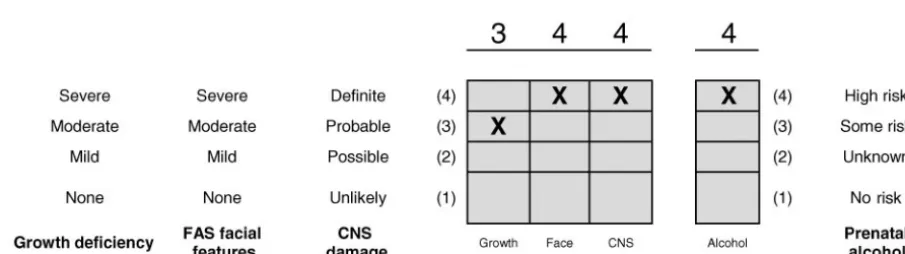
ETAL ALCOHOL SPECTRUMdisorders (FASD) is a gen-eral term used to describe the full spectrum of ad-verse outcomes observed among individuals with prena-tal alcohol exposure. Feprena-tal alcohol syndrome (FAS) and partial FAS are 2 of several medical diagnoses that fall under the designation of FASD. In the past 10 years, several diagnostic guidelines for FASD have been pub-lished, including the Institute of Medicine (IOM) FASDguidelines in 1996,1the FASD 4-Digit Diagnostic Code
(Fig 1) in 1997, 1999, and 2004,2–5the Centers for
Dis-ease Control and Prevention (CDC) FAS guidelines in
2004,6the Canadian FASD guidelines in 2005,7and the
Hoyme FASD guidelines in 2005.8An interdisciplinary
approach to diagnosis, with a more case-defined ap-proach, as proposed originally by Astley and Clarren and
colleagues,4,9,10 was adopted in principal in all
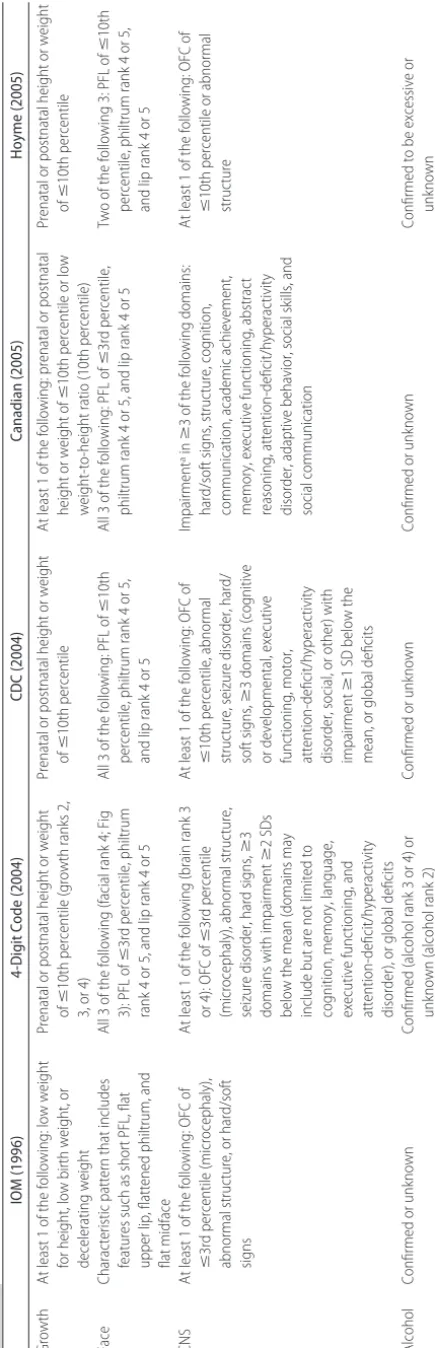
subse-quent guidelines. Key contrasts do exist, however (Table 1). Of all guidelines published after the 4-Digit Code, the Canadian guidelines are most similar to the 4-Digit Code. Both systems cover the full spectrum of diagnostic outcomes and adhere to strict criteria that use the
stan-dard medical statistical definition of “abnormal” as ⱖ2
SDs below the mean or its equivalent,ⱕ2.5th percentile.
The criteria used by the 2 systems to define each diag-nosis under the designation of FASD are nearly identical. In contrast to the 4-Digit Code and Canadian guide-lines, the CDC guidelines address only FAS and have more-relaxed facial and central nervous system (CNS)
criteria, using diagnostic cutoff values ofⱖ1 SD below
the mean or ⱕ10th percentile. By definition, the 10th
percentile and⫺1 SD are both within the normal range.
One standard deviation below the mean is equivalent to the 16th percentile. The 10th percentile is equivalent to 1.3 SDs below the mean.
The Hoyme guidelines, while addressing the full spec-trum of outcomes, diverge considerably from the 4-Digit Code, the CDC guidelines, and the Canadian guidelines. For the diagnosis of FAS, the Hoyme guidelines further relax the facial criteria, requiring only 2 of the 3 diag-nostic features specified by the CDC; restrict the CNS criteria to structural abnormalities only; and relax the criterion for small head circumference from the medical
definition of microcephaly (ⱕ2.5th percentile) toⱕ10th
percentile. Hoyme et al8referred to their FASD
diagnos-tic guidelines as a clarification of the 1996 IOM criteria. The 2 sets of guidelines are authored by separate groups, however.
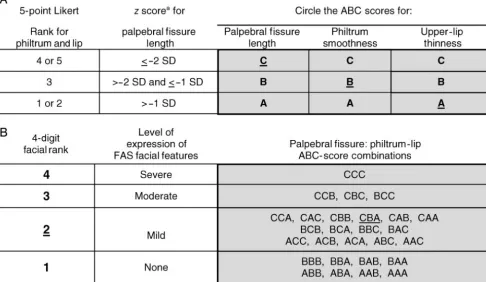
All 4 sets of guidelines require prenatal alcohol expo-sure to be confirmed but allow a diagnosis of FAS to be rendered if prenatal alcohol exposure is unknown. The Hoyme guidelines go farther by requiring that the con-firmed exposure be excessive. The 4-Digit Code does not require confirmation of excessive exposure because (1) there is no known threshold of exposure below which all fetuses are not at risk for FAS; (2) requiring excessive exposure may send an unsafe message that only high levels of alcohol use are damaging to the fetus; and (3) it is rarely, if ever, possible to confirm the accuracy of the quantity, frequency, and timing of exposure reported to a diagnostic clinic. There are many potential threats to the reliability of a prenatal alcohol exposure history. Birth mothers may be reluctant to report that they drank during pregnancy. They may be unable to recall accu-rately how much they drank, because the child’s diag-nostic evaluation is often conducted several years after the pregnancy. Furthermore, frequently the birth mother is not present at the time of the child’s diagnostic evaluation. Eighty-one percent of children diagnosed at Washington State FAS Diagnostic and Prevention Net-work (DPN) clinics are in foster or adoptive care; there-fore, information on maternal alcohol exposure is ob-tained frequently from indirect sources. The 4-Digit Code has demonstrated, however, that rendering a di-agnosis of FAS, as defined by the 4-Digit Code, when alcohol exposure is unknown is medically valid. This is because the rank 4 FAS facial phenotype (Fig 2), as defined by the 4-Digit Code, is so specific to FAS
(99.8%)11–14 that it serves as a valid proxy measure of
prenatal alcohol exposure. The sensitivity (100%) and specificity (99.8%) of the rank 4 FAS facial phenotype to the 4-Digit diagnosis of FAS have been derived from properly designed split-half empirical studies12,13and val-idated through population-based screening and surveil-lance programs.11,14As the FAS facial criteria are relaxed,
FIGURE 1
their sensitivity and specificity for FAS decrease mark-edly. Neither the CDC guidelines nor the Hoyme guide-lines assessed or reported the sensitivity or specificity of their relaxed criteria for the FAS facial phenotype as their criteria for a FAS diagnosis.
The Hoyme diagnostic criteria for FAS also differ from the 4-Digit Code, CDC guidelines, and Canadian guide-lines in that the diagnosis is based solely on physical features of growth, facial anomalies, and structural brain abnormalities. Therefore, an interdisciplinary clinical team (eg, psychologist, occupational therapist, and speech/language pathologist) would have no role in the derivation of a FAS diagnosis. Typically, the most dis-abling feature of FAS is the cognitive/behavioral impair-ment. With the Hoyme guidelines, a child would meet the CNS criteria for FAS by having nothing more than an occipital frontal circumference (OFC) in the 10th per-centile, even in the presence of normal or above-normal cognitive/behavioral function. An OFC in the 10th per-centile does not meet the medical definition of
micro-cephaly (ⱕ2.5th percentile). By definition, 10% of the
general population has an OFC ofⱕ10th percentile. In
contrast, a child who presents with severe mental retar-dation (IQ of 55) but no evidence of structural brain abnormalities would fail to meet the Hoyme diagnostic criteria for FAS, because brain dysfunction is not in-cluded as a diagnostic feature of FAS in the Hoyme guidelines.
Because of concerns regarding the Hoyme FAS diag-nostic criteria, namely, (1) they relax the FAS facial phenotype criteria without confirming the phenotype’s specificity for FAS or prenatal alcohol exposure, (2) they allow FAS to be diagnosed when prenatal alcohol expo-sure is unknown, with the use of FAS facial criteria of unknown specificity for prenatal alcohol exposure, (3) they require confirmation of excessive prenatal alcohol exposure, when documentation of prenatal alcohol ex-posure is typically unreliable, (4) they include only structural/morphologic measures of CNS damage and exclude functional and neurologic measures of CNS damage, (5) they allow a single structural abnormality to serve as evidence of CNS damage, while relaxing the criterion for one of the key structural features (OFC) into
the normal range (ⱕ10th percentile), and (6) the
diag-nostic guidelines were created by using a nonrepresen-tative population base (South Africans and Native Amer-icans) and invalid application of a measurement tool (white lip-philtrum guide), this study was conducted to assess the performance of the Hoyme FAS diagnostic criteria when applied to 2 populations, namely, the Uni-versity of Washington FASD clinical population (a large population that is highly representative of a US popula-tion seeking FASD diagnostic services) and a group of high-functioning children with confirmed absence of prenatal alcohol exposure, enrolled as control subjects in a research study. The specific aims of this study were (1)
to assess the specificity of the Hoyme FAS facial pheno-type for the Hoyme FAS diagnosis when the Hoyme guidelines were applied to the University of Washington FASD clinical population, (2) to assess the specificity of the Hoyme FAS facial phenotype to prenatal alcohol exposure when the Hoyme diagnostic guidelines were applied to a study population with confirmed absence of prenatal alcohol exposure, (3) to compare the preva-lence of FAS (with and without confirmed prenatal al-cohol exposure) between the Hoyme and 4-Digit Code criteria for FAS, when the 2 sets of criteria were applied to the University of Washington FASD clinical popula-tion, and (4) to compare, on a case-by-case basis, which patients did and did not receive a diagnosis of FAS when the Hoyme and 4-Digit Code FAS criteria were applied to the University of Washington FASD clinical population.
METHODS
FASD Clinical Population
The target clinical population for this study included all patients diagnosed to date at the University of
Washing-ton FAS DPN clinic. A comprehensive set of data (⬎2000
fields of information, documenting prenatal and lifetime exposures and outcomes, including standardized facial photographs) is collected and entered into a database for each patient who receives a FASD diagnostic evaluation
at the FAS DPN clinic, with informed consent and Uni-versity of Washington Human Subjects Review Board approval. More than 98% of patients provide consent; therefore, the data set is highly representative of the entire University of Washington FAS DPN patient pop-ulation. All FAS DPN patients have been diagnosed by an interdisciplinary clinical team10with the 1997, 1999,
or 2004 version of the 4-Digit Diagnostic Code.2–5 The
records of all patients who met the inclusion criteria were included in this study; there were no exclusion criteria. The inclusion criteria were as follows: (1) the patient received an interdisciplinary FASD diagnostic evaluation at the University of Washington FAS DPN clinic with the FASD 4-Digit Diagnostic Code; (2) the patient gave consent for use of the FAS DPN clinical data for research purposes; and (3) all data required to render a FAS diagnosis with the Hoyme guidelines (ie, measures of growth, face, brain growth and/or morphogenesis, and prenatal alcohol exposure) were available in the patient’s record.
Research Population With No Alcohol Exposure
The records of 16 children with confirmed absence of prenatal alcohol exposure, who were enrolled as control subjects in a recently completed MRI research study,
were also included in this study.15The MRI study was
FIGURE 2
conducted with subject consent and University of Wash-ington Human Subjects Review Board approval. Because only 4 of the 952 patients in the FASD clinical popula-tion had a confirmed absence of prenatal alcohol expo-sure, this larger data set of unexposed subjects was in-cluded for better assessment of the specificity of the Hoyme FAS facial phenotype for prenatal alcohol expo-sure. If the Hoyme FAS facial phenotype is specific to (caused only by) prenatal alcohol exposure, then none of these children should have the FAS facial phenotype. The 16 children in this study population were 8 to 15 years of age; 8 were female, 13 were white, 2 were black, and 1 was Asian American. Their Wechsler Intelligence Scale for Children-III full-scale IQs ranged from 112 to 133.
Hoyme FASD Diagnostic Guidelines
The Hoyme criteria (Table 2) for the diagnostic classifi-cations of FAS with confirmed maternal alcohol expo-sure and FAS without confirmed maternal alcohol ex-posure were applied to the 2 study populations. These criteria were used to generate 2 outcome variables, namely, Hoyme FAS facial phenotype (present or ab-sent) and Hoyme FAS diagnosis with or without con-firmed maternal alcohol use (present or absent). Be-cause the criteria for these diagnostic outcomes are based solely on physical features measured on numeric scales (eg, height, weight, palpebral fissure length [PFL], and head circumference), computer algorithms were written and applied to the electronic data sets to generate the outcome variables. This eliminated any potential for hu-man error, bias, or interrater discordance.
FASD 4-Digit Diagnostic Code (2004)
All patients in the clinical study population (n ⫽ 952)
had been diagnosed previously by the University of
Washington interdisciplinary FASD diagnostic team. Their 4-Digit Diagnostic Codes and all exposure and outcome data collected for their diagnostic evaluations were recorded in the FAS DPN clinical database. The FASD 4-Digit Diagnostic Code was first printed in 1997 and was updated in 1999 and 2004. For the purposes of this study, all FASD 4-Digit Codes were updated to re-flect the 2004 version of the FASD 4-Digit Diagnostic
Code.5These updates included use of the black
lip-phil-trum guide and black PFL normative values16 for all
black patients, use of the upper lip circularity tables to rank lip thinness, use of the new growth rank tables, and
coding of full-scale IQ ofⱕ60 as CNS rank 3 rather than
rank 4. Because all updates were simply numeric trans-formations of existing numeric data, the 4-Digit Codes were updated to the 2004 criteria by writing computer transformation algorithms and applying them to the ex-isting data set. Therefore, there was no risk of human error, bias, or interrater discordance in the updating process. All subjects in the MRI study population re-ceived a 2004, 4-Digit Diagnostic Code at the time of the MRI study. Therefore, their 4-Digit Codes did not require updating.
The 4 digits of the diagnostic code reflect the magni-tude of expression of the 4 key diagnostic features of FASD, in the following order: (1) growth deficiency, (2) FAS facial phenotype, (3) CNS abnormalities, and (4) prenatal alcohol exposure (Figs 1–3). A detailed
descrip-tion of the 4-Digit Code is presented in the Diagnostic
Guide for Fetal Alcohol Syndrome and Related Conditions: The
4-Digit Diagnostic Code.5Briefly, the magnitude of
expres-sion of each feature is ranked independently on a 4-point Likert scale, with 1 reflecting complete absence of the FAS feature and 4 reflecting a strong “classic” presence of the FAS feature. Each Likert rank is specif-ically case defined. There are 256 possible 4-digit diag-nostic codes, ranging from 1111 to 4444. Each 4-digit diagnostic code falls into 1 of 22 unique clinical diagnos-tic categories (labeled A through V). Eight of the 22 diagnostic categories (categories A–C and E–I) fall broadly under the designation of FASD. This study fo-cuses on diagnostic categories A and B, that is, FAS (alcohol exposed) and FAS (alcohol exposure un-known), respectively. The 2004 criteria for these 2 diag-nostic categories are presented in Table 3 in a format to facilitate direct comparison with the Hoyme FAS criteria in Table 2. This study also focuses on the FAS facial phenotype. The 4-point ranking system for the 4-Digit Code FAS facial phenotype is presented in Figs 2 and 3. The 4-point ranking system for growth deficiency is as
follows: rank 1, height and weight of⬎10th percentile;
rank 2, height or weight ofⱕ10th percentile but ⬎3rd
percentile; rank 3, height or weight ofⱕ3rd percentile;
rank 4, height and weight of ⱕ3rd percentile. The
4-point ranking system for the CNS is as follows: rank 1, no evidence of dysfunction/delay; rank 2, evidence of TABLE 2 Hoyme Diagnostic Criteria for FAS With or Without
Confirmed Maternal Alcohol Exposure8
FAS with confirmed maternal alcohol exposure requires all features A–D A Evidence of prenatal and/or postnatal growth retardation
1. Height or weight ofⱕ10th percentile, corrected for racial normative
values, if possible
B. Evidence of a characteristic pattern of minor facial anomalies, includingⱖ2
of the following:
1. Short palpebral fissures (ⱕ10th percentile, equivalent toⱖ1.28 SDs
below the mean)
2. Thin vermilion border of upper lip (score 4 or 5 on the Lip-Philtrum Guide)
3. Smooth philtrum (score 4 or 5 on the Lip-Philtrum Guide)
C. Evidence of deficient brain growth or abnormal morphogenesis, including
ⱖ1 of the following:
1. Structural brain abnormalities
2. Head circumference ofⱕ10th percentile
moderate dysfunction; rank 3, evidence of severe dys-function; rank 4, evidence of structural or neurologic damage. The 4-point ranking system for prenatal alcohol exposure is as follows: rank 1, confirmed absence of alcohol exposure from conception to birth; rank 2, alco-hol exposure unknown; rank 3, exposure is confirmed and the level of exposure is low-moderate or unknown; rank 4, exposure is confirmed and level is high. More-detailed case definitions of these ranks have been pub-lished.5
This study did not compare the other diagnoses (par-tial FAS, alcohol-related neurodevelopmental disorder [ARND], and alcohol-related birth defects [ARBD]) un-der the designation of FASD across the 2 diagnostic systems, for the following reasons. The Hoyme criteria for partial FAS and ARND include “evidence of a com-plex pattern of behavioral or cognitive abnormalities,” but the Hoyme description of this complex pattern is not specific enough for reliable application of the criteria to the FAS DPN data set. For example, the Hoyme guide-lines do not define how severe the abnormalities must
be (1 SD below the mean? 2 SDs below the mean?) or how many domains of function must be impaired (2 domains? 3 domains?) to constitute a complex pattern. In contrast, the 4-Digit Code, CDC guidelines, and
Ca-nadian guidelines provide specific thresholds (eg, ⱖ3
domains of function,ⱖ2 SDs below the mean) (Table 1).
The Hoyme criteria for ARBD could not be compared across the 2 systems because, like the CDC guidelines and the Canadian guidelines, the 4-Digit Code does not recognize ARBD as a medical diagnostic classification.
Analysis
The prevalence of FAS in the FASD clinical population was computed by using the 2004, 4-Digit Code and Hoyme criteria for FAS (with and without confirmed prenatal alcohol exposure). The number of patients who met the Hoyme criteria for the FAS facial phenotype was computed for both study populations. The specificity of the Hoyme FAS facial phenotype for the Hoyme FAS diagnosis was computed as follows: number of patients without the Hoyme FAS facial phenotype divided by number of patients without a Hoyme diagnosis of FAS. The specificity of the Hoyme FAS facial phenotype for prenatal alcohol exposure was computed as follows: number of patients without the Hoyme FAS facial phe-notype divided by number of patients with a confirmed absence of prenatal alcohol exposure. Each estimate of specificity was accompanied by a 95% confidence inter-val (CI). Specificity refers to the ability of a test or outcome to indicate nondisease when no disease is present. If an outcome is not specific, then it indicates falsely the presence of disease in nondiseased subjects. A binomial test was used to compare the observed fre-quency of the Hoyme FAS facial phenotype with the expected frequency (0%) among the 16 children with confirmed absence of prenatal alcohol exposure.
RESULTS
Hoyme Guidelines Applied to the FASD Clinical Population
Study Group
Of the 956 patients diagnosed to date in the FAS DPN Clinic, 952 (99.6%) met the inclusion criteria for this study (Table 4). Therefore, this study population is highly representative of the entire FAS DPN patient population seen over 13 years. The study population represents a racially diverse group, ranging in age from 0.2 and 50.8 years of age at the time of the FASD diagnostic evaluation. A total of 732 of the patients (77%) had 2004, 4-Digit Codes that fell under the gen-eral designation of FASD. An additional 147 (15%) had growth, facial, and/or CNS abnormalities but their pre-natal alcohol exposures were unknown. An additional 4 patients had a confirmed absence of prenatal alcohol exposure. Therefore, this patient population reflects the range of outcomes and exposures encountered typically
FIGURE 3
by a FASD diagnostic clinic; not all patients referred to the clinic receive a diagnosis under the designation of FASD.
Specific Aim 1
Thirty-five percent of the patients (330 of 952 patients) met the Hoyme criteria for the full FAS facial phenotype. Only 39 (11.8%) of the 330 patients with the Hoyme FAS facial phenotype met the Hoyme criteria for a diag-nosis of FAS (with or without confirmed maternal alco-hol use). The specificity of the Hoyme FAS facial phe-notype for the Hoyme FAS diagnosis in this clinical population was 68% (622 of 913 patients; 95% CI: 65%–71%). Of the 330 patients with the Hoyme FAS facial phenotype, most did not present with other fea-tures of FAS; 60% presented with no growth deficiency
(height and weight percentiles of ⬎10th percentile),
74% did not have the 4-digit FAS facial phenotype (rank
4), 82% did not have microcephaly (OFC of ⱕ2.5th
percentile), 77% had an OFC of⬎10th percentile; 89%
of the 32 clinically indicated MRI studies were normal; and 64% of subjects did not have confirmed, excessive, prenatal alcohol exposure. It is worth noting that an additional 84 (25%) of the 330 patients would likely meet the Hoyme criteria for partial FAS (with or without confirmed maternal alcohol use). This is based on the assumption that the Hoyme criteria for a complex pat-tern of behavioral or cognitive abnormalities are compa-rable to the 4-digit CNS rank 3. However, 24 of these 84 children had no evidence of brain damage/dysfunction. Their only impairment was growth deficiency. If the
specificity of the Hoyme FAS facial phenotype is com-puted for the Hoyme diagnoses of FAS plus partial FAS, then specificity increases, but only to 75% (622 of 829 subjects; 95% CI: 72%–78%).
Specific Aim 3
The prevalence of FAS (with or without confirmed pre-natal alcohol exposure) determined with the 2004, 4-Digit Code was 3.7% (35 of 952 subjects). The preva-lence of FAS (with or without confirmed maternal alco-hol use) determined with the Hoyme FASD guidelines was 4.1% (39 of 952 subjects). Although the prevalences were similar, the patients identified with the 2 systems were not. Only 17 patients met both the 4-Digit Code and Hoyme criteria for FAS.
Specific Aim 4
Of the 39 patients who met the Hoyme criteria for FAS, 22 (56.4%) did not meet the 4-Digit Code criteria for FAS. The 22 patients ranged in age from 0.8 to 21.4 years and were racially diverse (white, 64%; black, 14%; Na-tive American, 0%; other, 22%). They did not meet the
4-Digit Code criteria for FAS for ⱖ1 of the following
reasons. Thirteen (59%) had facial phenotypes within the normal range (facial rank 2), as defined with the 4-Digit Code. Two had unknown prenatal alcohol expo-sures and facial features that were too mild (rank 2 or 3, not sufficiently specific for FAS) to allow labeling of the outcome as FAS in the absence of confirmed exposure. Seven (32%) met the 4-Digit Code for Partial FAS.
To portray just how different the Hoyme and 4-Digit TABLE 3 Four-Digit Code Diagnostic Criteria for FAS With and Without Confirmed Prenatal Alcohol
Exposure5
FAS with confirmed prenatal alcohol exposure requires all features A–Da
A. Evidence of prenatal and/or postnatal growth retardation (growth rank 2, 3, or 4); height and/or weight ofⱕ10th
percentile, corrected for race and midparental height when possible B. Presence of all 3 of the following minor facial anomalies (facial rank 4):
1. Short palpebral fissures (ⱖ2 SDs below the mean, equivalent toⱕ2.5th percentile)
2. Thin upper lip (rank 4 or 5 on Lip-Philtrum Guide 1 or 2, as appropriate for race) 3. Smooth philtrum (rank 4 or 5 on Lip-Philtrum Guide 1 or 2, as appropriate for race)
C. Evidence ofⱖ1 of the following (CNS rank 3 or 4):
1. Structural brain abnormalities
a. Structural brain abnormalities (as may be viewed by brain imaging)
b. Microcephaly (head circumferenceⱖ2 SDs below the mean, equivalent toⱕ2.5th percentile)
2. Neurologic abnormalities a. Seizure disorder of prenatal origin b. Hard neurologic signs (eg, cerebral palsy) 3. Significant brain dysfunction
a. Three or more domains of brain function,ⱖ2 SDs below the mean, when assessed with validated, standardized,
psychometric tools; domains may include but are not limited to executive function, memory, cognition, and language
D. Confirmed prenatal alcohol exposure (alcohol rank 3 or 4); a specific pattern or level of exposure is not required because it is rarely known when this information has been obtained reliably in a clinical setting and the risk of a specific pattern of exposure is not identical across all fetuses
FAS without confirmed prenatal alcohol exposure requires features A, B, and C, with prenatal alcohol exposure not
confirmed to be present and not confirmed to be absentb
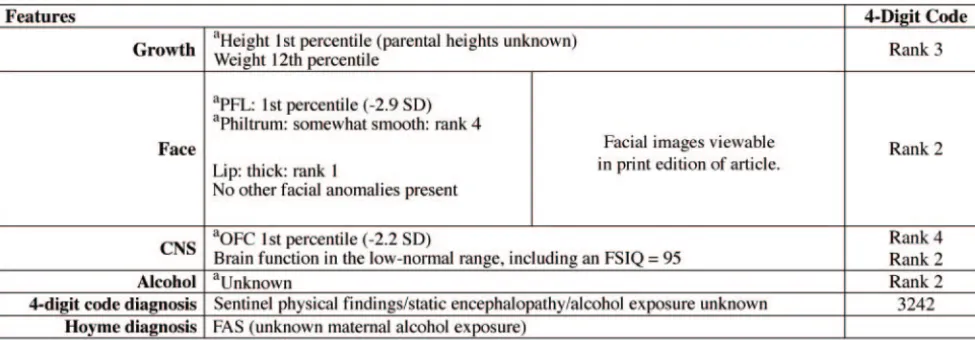
Code criteria for FAS are, the outcomes for 1 of the 22 children (a 14-year-old white youth) who met the Hoyme criteria for FAS but not the 4-Digit criteria for FAS are presented in Table 5. The 4-Digit Code did not classify this child as having FAS or any diagnosis under the designation of FASD, because alcohol exposure was unknown and the outcomes observed in this child (short stature and microcephaly) were not specific to FAS. Because the Hoyme guidelines require that only 2 of the 3 FAS facial features be present (in this case, PFL in the
1st percentile and philtrum rank 4), this child can and does present with a very thick upper lip (Lip-Philtrum Guide rank 1). This results in a facial phenotype that neither looks dysmorphic nor resembles FAS (Fig 4). The facial features of this child were measured at the time of diagnosis, directly by 2 clinicians and through photo-graphic analysis, with concordance across all 3 measure-ments. Photographic examples of the rank 4 FAS facial phenotype, as defined with the 4-Digit Code, are pre-sented for comparison in Fig 3.
Conversely, of the 35 patients who met the 4-Digit Code criteria for FAS, 18 (51.4%) did not meet the Hoyme criteria for FAS. The 18 patients ranged in age from 1.5 to 24.3 years and were racially diverse (white, 39%; black, 11%; Native American, 0%; other, 50%).
They did not meet the Hoyme criteria for FAS forⱖ1 of
the following reasons. Seven (39%) did not have dence of structural brain anomalies, but all 7 had evi-dence of significant brain dysfunction (4-Digit Code CNS rank 3) (Table 1), including 3 with IQ scores between 56 and 64. Twelve (67%) had confirmed prenatal alcohol exposure (4-Digit Code alcohol rank 3), but information was not available to confirm that exposure was excessive (4-Digit Code alcohol rank 4). Six of these 12 children had 4-digit codes of 4443, which demonstrates clearly that confirmed excessive exposure is not required for a child to present with the most severe end of the spec-trum for growth deficiency, FAS facial features, and CNS damage. Six children (33%) likely would have met the Hoyme criteria for partial FAS. These individuals had significant brain dysfunction (4-Digit CNS rank 3) but no known evidence of structural brain anomalies.
Hoyme Guidelines Applied to the Population With Confirmed Absence of Prenatal Alcohol Exposure
Specific Aims 2 and 3
When the Hoyme criteria for the FAS facial phenotype were applied to the 16 children with confirmed absence of prenatal alcohol exposure who were enrolled as con-trol subjects in a MRI research study, 4 (25%) of the 16 children met the Hoyme criteria for the FAS facial phe-notype. This observed frequency of 25% was signifi-cantly greater than the expected frequency of 0%
(bi-nomial test,P⬍.001). The specificity of the Hoyme FAS
facial phenotype for prenatal alcohol exposure in this study population was 75% (12 of 16 children; 95% CI: 50%– 89%). All 4 subjects had normal growth, normal facial phenotypes according to the 4-Digit Code (facial rank 2), normal OFCs, normal cranial MRI results, and neuropsychological performance significantly above av-erage, including full-scale IQ scores between 124 and 128. None of the 16 children met the 4-Digit Code criteria for the FAS facial phenotype (rank 4). The sole purpose of including these 16 children in this study was to assess the specificity of the FAS facial phenotype for TABLE 4 Sociodemographic and Clinical Profile of University of
Washington FAS DPN Clinical Study Population
Characteristic Total
Sample (N⫽952)
Female gender,n(%) 416 (43.8)
Race,n(%)
White 490 (51.5)
Black 53 (5.6)
Native American 59 (6.2)
Hispanic (full or mixed race) 107 (11.2)
Asian (full or mixed race) 15 (1.6)
Other (full or mixed race) 228 (23.9)
Age at time of diagnosis, y
Mean⫾SD 10.2⫾7.4
Range 0.2–50.8
Age distribution,n(%)
0–2.9 y 101 (10.6)
3–10 y 452 (47.9)
11–17 y 295 (31.0)
ⱖ18 y 100 (10.5)
2004, 4-Digit Diagnostic Categories,n(%)
A (FAS; alcohol exposed)a 29 (3.0)
B (FAS; alcohol exposure unknown)a 6 (0.6)
C (partial FAS; alcohol exposed)a 46 (4.8)
E (physical findings/static encephalopathy; alcohol
exposed)a
58 (6.1)
F (static encephalopathy; alcohol exposed)a 163 (17.1)
G (physical findings/neurobehavioral disorder; alcohol
exposed)a
87 (9.1)
H (neurobehavioral disorder; alcohol exposed)a 323 (33.9)
I (physical findings; alcohol exposed) 20 (2.1)
J (no physical findings or CNS abnormalities detected; alcohol exposed)
58 (6.1)
K (physical features/static encephalopathy; alcohol exposure unknown)
16 (1.7)
L (static encephalopathy; alcohol exposure unknown) 39 (4.1)
M (physical findings/neurobehavioral disorder; alcohol exposure unknown)
26 (2.7)
N (neurobehavioral disorder; alcohol exposure unknown) 66 (6.9)
P (no physical findings or CNS abnormalities detected; alcohol exposure unknown)
11 (1.2)
Q (physical findings/static encephalopathy; confirmed absence of exposure)
1 (0.1)
R (static encephalopathy; confirmed absence of exposure)
1 (0.1)
S (physical findings/neurobehavioral disorder; confirmed absence of exposure)
1 (0.1)
T (neurobehavioral disorder; confirmed absence of exposure)
1 (0.1)
prenatal alcohol exposure. For the sake of completeness, it could be stated that none of the 16 children met the Hoyme or 4-Digit criteria for a diagnosis of FAS, but this was known from the start. By definition, an individual who was not exposed to alcohol cannot be at risk for FAS.
It is interesting to note that, although only 4 of the 952 patients in the FASD clinical population had a con-firmed absence of prenatal alcohol exposure, 1 (25%) of those 4 also met the Hoyme criteria for the full FAS facial phenotype. The child had a normal facial phenotype according to the 4-Digit Code (rank 2) and was growth deficient (rank 4). This observation also reflects a spec-ificity of 75%.
DISCUSSION
Specificity of the FAS Facial Phenotype and Its Impact on Diagnosis
This study demonstrated that an extraordinary number of patients in the FAS DPN clinic met the Hoyme criteria for the full FAS facial phenotype (35%; 330 of 952 subjects), whereas very few of them met the Hoyme criteria for a diagnosis of FAS (11.8%; 39 of 330 sub-jects). If the Hoyme FAS facial phenotype were specific to FAS, then it would be expected that the vast majority of those with the FAS face would have FAS; the opposite was observed, however. The vast majority of those with the FAS face (88.2%; 291 of 330 subjects) did not have FAS. If the Hoyme FAS face were specific to (caused only by) prenatal alcohol exposure, then individuals could not have the FAS face if they had not been exposed to alcohol. However, this study found that 25% of the children with confirmed absence of prenatal alcohol ex-posure, in both study populations, met the criteria for the Hoyme FAS face.
Although these results are concerning, they were not
unexpected. By relaxing 1 of the facial criteria into the
normal range (PFL ofⱕ10th percentile), requiring only
2 of 3 features to be present, and allowing the 2 features to be expressed at the mildest end of the spectrum (for example, a white subject with a PFL in the 10th percen-tile with a somewhat smooth philtrum [rank 4] but a very thick upper lip [rank 1]), the diagnostic criteria identify many individuals with normal facial pheno-types. One hundred fifty of the 330 patients with the Hoyme FAS facial phenotype had facial phenotypes that were only rank 2 according to the 4-Digit Code. Rank 2 (by definition) is well within the normal range for the general population.
Although the primary focus of this study was on the diagnosis of FAS, the relaxed Hoyme FAS facial criteria also jeopardize the clinical validity of the Hoyme criteria for partial FAS. The Hoyme criteria for partial FAS use the same relaxed criteria for the FAS facial phenotype and require only 1 other feature to be present (growth deficiency, deficient brain growth or abnormal morpho-genesis, or evidence of a complex pattern of behavioral or cognitive abnormalities). Confirmed prenatal alcohol exposure is not required. Therefore, a white individual who presents with the following features would meet the Hoyme criteria for partial FAS: growth, height in the 10th percentile and weight in the 95th percentile; face, PFL in the 10th percentile, somewhat smooth philtrum (rank 4), and very thick upper lip (rank 1); CNS, normal structure and function; alcohol, unknown exposure. With the 4-Digit Code, this child would not even fall under the designation of FASD, because the outcomes are in the normal to very mildly impaired range, the only impaired outcome (height in the 10th percentile) is not specific for prenatal alcohol exposure, and alcohol exposure is unknown. In contrast to the Hoyme guide-lines, the 4-Digit Code requires confirmed prenatal
alco-TABLE 5
hol exposure for partial FAS, because the 4-Digit diag-nosis of Partial FAS allows the facial criteria to be relaxed to facial rank 3 in some instances. Facial rank 3 is less specific for FAS and prenatal alcohol exposure; there-fore, the 4-Digit Code does not allow it to be used as a proxy measure of prenatal alcohol exposure for partial FAS when prenatal alcohol exposure is unknown.
Why are the sensitivity and specificity of the FAS facial phenotype so important for the medical validity of a diagnosis of FAS? When we make a diagnosis of FAS, we are stating implicitly that the individual has a syn-drome caused by prenatal alcohol exposure. We are also stating implicitly that the birth mother drank alcohol during pregnancy and, as a result, harmed her child. These are bold conclusions to draw and are not without medical and ethical consequences. How confident are we when we infer a causal link between an individual’s prenatal alcohol exposure and his or her syndromic fea-tures, especially when 2 of the 3 diagnostic features of this syndrome (growth deficiency and CNS damage/dys-function) are not specific to (caused only by) prenatal alcohol exposure. The validity of the diagnosis rests solely on the specificity of the facial phenotype for the exposure (alcohol) and the outcome (FAS). If a cluster of facial features truly is unique to prenatal alcohol expo-sure (meaning that alcohol is the only agent that can cause this facial phenotype) and is unique to the diag-nosis of FAS (meaning that this exact phenotype is not present in any other medical condition), then we would expect to observe the following: (1) the face would be highly sensitive for FAS (individuals with FAS would have the FAS facial phenotype), (2) the face would be highly specific for FAS (individuals without FAS would not have the FAS facial phenotype), and (3) the face would be highly specific for prenatal alcohol exposure (individuals without prenatal alcohol exposure would not have the FAS facial phenotype). The rank 4 FAS facial phenotype, as defined with the 4-digit code, dem-onstrates all 3 of these qualities.4,11–14 A highly specific FAS facial phenotype validates the FAS diagnosis, be-cause the presence of the face confirms that individuals were affected by their prenatal alcohol exposure. The face not only confirms that individuals were affected by prenatal alcohol exposure but also confirms that they were exposed to alcohol. We depend on the latter when we render a diagnosis of FAS in the absence of con-firmed prenatal alcohol exposure. If the face is truly specific to alcohol, then individuals cannot have the face if they were not exposed to alcohol. This is why all diagnostic guidelines can and do allow FAS to be diag-nosed even when prenatal alcohol exposure is un-known. The face is so specific for alcohol exposure that it serves as a valid proxy measure for exposure. This is also why all diagnostic guidelines cannot and do not allow ARND (or its equivalent) to be diagnosed when alcohol exposure is unknown. Because the FAS facial
phenotype is not present in ARND, it cannot serve as a proxy measure for alcohol exposure. In the absence of a highly specific facial phenotype, the validity of the diag-nostic process breaks down precipitously; individuals’ outcomes cannot be linked to their prenatal alcohol expo-sure, FAS becomes indistinguishable from ARND/fetal al-cohol effects, and diagnoses cannot be made when alal-cohol exposure is unknown. Considering the fundamental role that the FAS facial phenotype plays in FAS diagnosis, its specificity cannot be assumed and must be confirmed through properly designed empirical studies.
The Evidence Base Underlying the FAS Facial Phenotype
A series of empirical laboratory,17clinical,4,12,13and
pop-ulation-based screening and surveillance11,14 studies
were conducted by Astley, Clarren, and colleagues over the course of 10 years, to establish the evidence base that supports the diagnostic validity of the 4-Digit Code rank 4 FAS facial phenotype. In 2004, the CDC incorporated the 3 facial anomalies into their FAS guidelines but
relaxed the PFL criterion from ⱕ2.5th percentile to
ⱕ10th percentile. The CDC did not report measures of
sensitivity or specificity to validate their relaxed facial criteria. The CDC guidelines6cite a series of studies that are intended to support their FAS facial phenotype cri-teria, but relaxation of the PFL criterion actually goes against the evidence-based literature. For example, the CDC guidelines report, “Use of these three cardinal fea-tures (smooth philtrum, thin vermilion, and small pal-pebral fissures) to assess whether an individual’s dys-morphia is consistent with FAS is compatible with the IOM report and other diagnostic systems currently in
use.”6The 3 features are “compatible” with the IOM and
4-Digit Code guidelines, but the magnitude of expression of the PFL is not. The IOM guidelines state, “In this area, the palpebral fissures (eye slits) are short, usually
mea-suring well below⫺2 SD (standard deviation) for age.”1
The mean PFL among all patients diagnosed as having
FAS in the Washington State FAS DPN clinic was⫺4.0
SD (⫾1.3 SD).13Both the IOM and FAS DPN PFL
refer-ences are substantially below the 10th percentile (or its
equivalent, ⫺1.28 SD) criterion set by the CDC. The
CDC does report that use of the 3rd percentile cutoff value for the PFL reduces potential false-positive results for the diagnosis. The CDC guidelines also reported that, “Using anthropometric measurements of all facial fea-tures, clinical researchers have confirmed the midline
feature abnormalities.18”6 In actuality, the study by
Moore et al18 did not include all facial features. Two of the 3 key midline facial features (philtrum smoothness and lip thinness) were never assessed, and the mean PFL
among the 41 alcohol-exposed subjects was ⫺3.6 SD
(⫾1.6 SD), again well below the 10th percentile set by
not report that these features are discriminant for FAS when the PFL is relaxed to the 10th percentile. Coles et
al19 did not include a study group diagnosed as having
FAS, did not report what facial features were assessed, and did not conduct a discriminant analysis to delineate the FAS facial phenotype.
In 2005, the Hoyme criteria8further relaxed the
di-agnostic criteria for the FAS facial phenotype to ⱖ2 of
the 3 CDC facial criteria. Like the CDC, Hoyme et al8did not provide measures of sensitivity or specificity to val-idate their relaxed criteria. They also did not report what methods they used (eg, discriminant analyses) to con-clude that the facial criteria should be relaxed to 2 fea-tures. It is interesting to note that these relaxed criteria are no longer consistent with the facial criteria defined by David Smith, who originally coined the term FAS. In
1979, Smith20reported,
As far as the diagnosis is concerned, perhaps the most important point to emerge in the last few years is that the facial abnormalities seen in affected infants are the key cluster of features that tend to make FAS a clinically discernible entity. Many disorders result in mental and growth deficiency, but in FAS the deficiencies are typi-cally present in a patient whose face has short palpebral fissures, a hypoplastic upper lip with a thinned vermilion border, and a smoothed or absent philtrum. Up to now, the descriptions of the facial features of FAS that have appeared in the literature have not always emphasized the same abnormalities. This has led to some confusion, but inspection of the photographs accompanying these reports leaves no doubt about the facial similarities of FAS patients.
Strengths and Limitations That Affect Validity
The study design and methods used by Hoyme et al8to
formulate their diagnostic guidelines present both strengths and limitations. Key strengths include the use of skilled multidisciplinary teams led by experts in the field of FASD diagnosis; use of standardized objective measurement tools to enhance reliability; and access to a reasonably large, population-based, study sample. Sev-eral limitations, however, jeopardize the validity of the
guidelines. (1) Hoyme et al8reported that the objective
of their study was to formulate more-precise clarifica-tions of the 1996 IOM diagnostic guidelines1for “general pediatric practice.” However, the racial distribution of
their study population (92 South Africans21 and 72
Na-tive Americans22) is not representative of their intended target population (general pediatric practice). (2) Hoyme
et al8used data for previously diagnosed South African
and Native American patients (1998 –2003)22to
formu-late their diagnostic criteria. However, an incorrect lip-philtrum guide (white) was used to measure lip thinness in their South African population. Use of a white Lip-Philtrum Guide for a predominantly South African pop-ulation would result in substantial diagnostic
misclassi-fication. The direction of error would be to
underestimate the prevalence of the FAS facial pheno-type. Creation of diagnostic criteria from a data set pre-dominated by subjects who had a key facial feature measured with an incorrect tool would jeopardize the clinical validity of those criteria. Hoyme et al8reported, “A weakness of the proposed diagnostic approach is that the normative values currently used for growth and facial morphologic features are based largely on white populations.” The black Lip-Philtrum Guide was made available to clinicians in 2003, before the publication of the Hoyme diagnostic guidelines in 2005. Because the black Lip-Philtrum Guide was not available at the time the South African population was being diagnosed, the South African population may not have been an appro-priate population to include in the formulation of the Hoyme guidelines. (3) The Hoyme guidelines described the Lip-Philtrum Guide as follows: “A score of 1 is con-sidered completely normal, whereas a score of 5 is most indicative of FAS.”8This is incorrect; a score of 1 is highly abnormal. The Lip-Philtrum Guide reflects a normal curve in which rank 3 is the mean (50th percentile) and ranks 1 and 5 reflect the extreme ends of the normal
curve (⬍2.5th percentile and ⬎97.5th percentile,
re-spectively). Rank 4 for the lips and philtrum is not 4 ranks above normal but only 1 rank above normal. Therefore, relaxation of the facial criteria to just 2 of the 3 features, while allowing the 2 features to be expressed near or within the normal range (rank 4 or 10th per-centile), would identify a preponderance of individuals with normal facial phenotypes. This is exactly what oc-curred when the Hoyme FAS facial criteria were applied to the FAS DPN clinical population and a control popu-lation of children with confirmed absence of prenatal
alcohol exposure. (4) Finally, Hoyme et al8 reported,
“Our aim was to improve both the reliability and validity of diagnoses within the FASD continuum.” They con-cluded, “Application of our guidelines to our extensive database of children prenatally exposed to alcohol
dem-onstrated that the method was rigorous and accurate.”8
The authors convey an important point, that is, guide-lines should undergo rigorous evaluation of their perfor-mance. However, the authors did not report standard-ized measures of reliability (eg, test-retest and interrater reliability), validity (eg, construct validity, convergent validity, and criterion validity), or accuracy (eg, sensitiv-ity, specificsensitiv-ity, and positive and negative predictive val-ues). These measures have been assessed, confirmed to be high, and published for the 4-Digit Code.4,11–14
Hoyme et al8used data for 164 children to formulate
their FASD diagnostic guidelines. These children were
diagnosed originally by May and colleagues21,22between
1998 and 2003, with a gestalt approach to diagnosis.
Hoyme et al8reported that 97 of the 164 children
FAS. Ten of the 59 children did not have confirmed prenatal alcohol exposures. The remaining 38 received revised diagnoses across the entire spectrum of FASD, documenting the magnitude and prevalence of errors in the original FAS diagnoses. Sixteen of those who were diagnosed originally as having FAS were reclassified as having ARND (ie, reclassified from the full FAS facial phenotype to a complete absence of the FAS facial phe-notype). The inaccurate and highly variable diagnostic outcomes that result from the gestalt approach to
diag-nosis were demonstrated in 2000 by Astley and Clarren.4
When the 1997 version of the 4-Digit Code was applied to 69 patients who had received previously a gestalt diagnosis of FAS at the University of Washington FAS DPN clinic, only 9 maintained their FAS diagnosis. Sixty lost their diagnosis of FAS because 37 had no evidence of growth deficiency, 27 had only 1 of the 3 FAS facial features, 29 had no psychometric or structural evidence of brain damage, and 5 had unknown exposure to alco-hol. The extraordinarily high FAS prevalence rates (40.5– 46.4 cases per 1000 subjects) reported by May et
al21for a South African community were based on FAS
diagnoses that Hoyme et al8 reported were inaccurate
and overestimated.
The Potential to Overdiagnose Alcohol-Related Disabilities
Another marked contrast between the 4-Digit Code and the Hoyme guidelines is in the use of the terms ARND and ARBD. The Hoyme guidelines use the terms, and the 4-Digit Code does not. Both sets of guidelines acknowl-edge that growth deficiency and CNS damage/dysfunc-tion are not specific to prenatal alcohol exposure, a fact that has been accepted in the field of FASD from the
start.20With regard to the diagnosis of individuals who
present with prenatal alcohol exposure and CNS dam-age/dysfunction but no FAS facial phenotype, Hoyme et
al8 expressed the following concern about the 4-Digit
Code.
The Washington criteria place much emphasis on the encephalopathy and neurobehavioral disorder present among affected children. These 2 findings are not specif-ically defined and, as general terms, they are not unique to the prenatal effects of alcohol on fetal development. In addition, the family and genetic background of the child is not adequately integrated into the criteria. Because this highly structured system seems all-encompassing, there is the potential for over-diagnosis of alcohol-re-lated disabilities; any child with a disability who has been exposed to alcohol prenatally can be assigned a diagnos-tic classification easily, even if the cause of the disability is genetic.
To the contrary, the 4-Digit Code cannot overdiagnose alcohol-related disabilities because the 4-Digit Code does not render “alcohol-related” diagnoses. The only diag-noses that the 4-Digit Code links causally (or relates) to prenatal alcohol exposure are FAS and Partial FAS. This is the most important feature of the 4-Digit Code that
distinguishes it from all other FASD diagnostic guide-lines. The 4-Digit Code was developed with the premise that a diagnosis should be based on verifiable facts, not supposition. The diagnostic nomenclature used by the 4-Digit Code reflects this. Growth deficiency and CNS damage/dysfunction are not specific to (caused only by) prenatal alcohol exposure. When an individual presents in a clinic with prenatal alcohol exposure and CNS dam-age/dysfunction but does not have the FAS facial phe-notype, the damage/dysfunction may be entirely attrib-utable to the prenatal alcohol exposure, partially attributable to the prenatal alcohol exposure, or unre-lated to the prenatal alcohol exposure. Current medical technology is unable to confirm or to exclude the etio-logic role of alcohol for an individual patient. This does not pose a problem, however. An accurate diagnosis and effective intervention can proceed without confirmation of an etiologic role of alcohol. When an individual pre-sents with CNS damage/dysfunction and prenatal alco-hol exposure, the 4-Digit Code names it exactly what it is, that is, static encephalopathy/alcohol exposed if the CNS damage/dysfunction is severe or neurobehavioral disorder/alcohol exposed if the CSN dysfunction is less severe. The terms do not state or imply a causal associ-ation between the exposure and outcomes. Rather, in-cluding the phrase “alcohol exposed” in the diagnostic terms serves to alert clinical providers that the individual was exposed to a teratogen and thus is at risk for under-lying brain damage. Knowledge of this risk is important, because the presence of underlying brain damage could affect the clinician’s future care and intervention efforts for that patient. In contrast to the 4-Digit Code, when an individual presents with CNS damage/dysfunction and prenatal alcohol exposure but no FAS facial phenotype, the Hoyme FASD guidelines label the condition alcohol-related neurobehavioral disorder, stating that the pa-tient’s neurobehavioral disorder is related to their alco-hol exposure. Aase et al23argued effectively that clinical use of the term fetal alcohol effects, with its implications of causation, should be abandoned. Those same argu-ments apply to ARND and ARBD. Clinicians new to the field of FASD diagnosis are encouraged to read that
seminal article. Aase et al23urged “simple recording of
as the patient’s genetic background, other potential posures or problems during pregnancy, and various
ex-periences since birth.”3,5 The 4-Digit Code devotes an
entire chapter and 4-Digit ranking system to documen-tation of other prenatal (including genetic) and postnatal exposures and events that occur frequently with prena-tal alcohol exposure and likely contribute to the
out-comes observed for individuals.3,5 In fact, the vast
ma-jority of the 952 patients seen in the University of Washington FAS DPN clinic presented with multiple risk factors (81% were exposed to illicit drugs in utero, 25% had poor prenatal care, 29% had other complications during pregnancy, 2% had other syndromes, 25% were physically or sexually abused, and 70% were in foster/ adoptive care). The impact of prenatal alcohol exposure is never assessed in isolation from other risk factors. The Hoyme guidelines state, “FASD must always be a diag-nosis of exclusion. Many genetic and malformation syn-dromes have some of the other clinical characteristics of FAS. If there is no indication of another genetic or mal-formation syndrome, then the revised IOM criteria can be applied to categorize a diagnosis within the FASD
continuum.”8 Overlap between individual symptoms/
anomalies is common throughout medicine. An astute clinician would not mistake FAS for William’s syndrome simply because the 2 have some but not all features in common, because it is the constellation of features that distinguish the 2 syndromes. The statement that FASD diagnostic criteria should be applied only if there is no indication of another genetic syndrome implies that al-cohol is not a teratogen to a child born with another syndrome. Clearly this is not true. A FASD diagnostic team should consider alternative or co-occurring syn-dromic diagnoses and medical conditions at all times.
CONCLUSIONS
Accurate, reliable, medical diagnoses across the full con-tinuum of FASD have been available to families and clinicians for almost a decade. As medical technology and our understanding of FASD advance, so must our diagnostic methods and tools. It is imperative that ad-vancements in diagnostic methods be guided by an evi-dence base of rigorously designed, implemented, and peer-reviewed research. When a diagnosis under the designation of FASD is made, 2 individuals are affected directly, namely, the child and the birth mother. The consequences of an incorrect diagnosis for both mother and child must be considered carefully. Diagnostic guidelines should guide professionals in rendering an accurate medical diagnosis. A diagnosis reflects the con-dition of a patient; however, because a diagnosis serves many purposes (eg, treatment, prevention, communica-tion among specialists, and qualificacommunica-tion for services), the process of rendering a diagnosis can sometimes be influenced by those different purposes. The only diag-nosis that serves all purposes most effectively is a correct
diagnosis. Access to services should be based on an in-dividual’s disabilities and not on what caused their dis-abilities. Therefore, services should be available for indi-viduals across the full continuum of FASD and not just those with FAS.
It is critical to identify all individuals at risk for FASD. This is achieved through screening and not through relaxation of diagnostic criteria. Screening criteria typi-cally use relaxed diagnostic criteria to identify correctly all individuals with the disease (true-positive results). However, this comes at the risk of incorrectly identifying some individuals who do not have the disease (false-positive results). All subjects identified as screen-(false-positive receive a comprehensive diagnostic evaluation. It is at that time that accurate diagnoses are rendered and the false-positive screens are confirmed to be false-positive results. Through this process, an individual may receive a false-positive screening outcome. No one should re-ceive a false-positive diagnosis, however.
Patients and their families deserve accurate diagnoses. Effective intervention and prevention require accurate diagnoses. Professionals now have access to several FASD diagnostic guidelines. Ultimately they will decide which guidelines are adopted into practice. Their deci-sion will be influenced in large part by a measure of validity that is not easily quantified, namely, construct validity, the extent to which the guidelines produce meaningful results that are commensurate with their clinical impression.
ACKNOWLEDGMENTS
The data used to conduct the secondary analyses for this study were obtained originally through support from the following: grants 216 – 0, 6437–2, 7158 – 0, 7923– 0, 8403– 0, and 8945– 0 from the Division of Alcohol and Substance Abuse, Washington State Department of So-cial and Health Services (1995–2007), and grant AA12915-01A1 from the National Institute on Alcohol Abuse and Alcoholism (2002–2006). Support was also received through the Center on Human Development and Disability (National Institute of Child Health and Human Development grant P30 HD02274).
Special thanks are extended to all individuals and their families who generously contributed data to the FAS DPN databases over the years, to advance the field of FASD and ultimately to help other children and fam-ilies in need.
REFERENCES
1. Stratton K, Howe C, Battaglia F, eds.Fetal Alcohol Syndrome: Diagnosis, Epidemiology, Prevention, and Treatment. Washington, DC: National Academy Press; 1996
2. Astley SJ, Clarren SK.Diagnostic Guide for Fetal Alcohol Syndrome and Related Conditions: The 4-Digit Diagnostic Code.Seattle, WA: University Publication Services; 1997:93
and Related Conditions: The 4-Digit Diagnostic Code.2nd ed. Seat-tle, WA: University Publication Services; 1999:111
4. Astley SJ, Clarren SK. Diagnosing the full spectrum of fetal alcohol exposed individuals: introducing the 4-Digit Diagnostic Code.Alcohol Alcohol.2000;35:400 – 410
5. Astley SJ. Diagnostic Guidelines for Fetal Alcohol Spectrum Disorders: The 4-Digit Diagnostic Code.3rd ed. Seattle, WA: Uni-versity Publication Services; 2004:114
6. Centers for Disease Control and Prevention. Fetal Alcohol Syndrome: Guidelines for Referral and Diagnosis. Atlanta, GA: Cen-ters for Disease Control and Prevention; 2004
7. Chudley AE, Conry J, Cook JL, Loock C, Rosales T, LeBlanc N. Fetal alcohol spectrum disorder: Canadian guidelines for diag-nosis.Can Med Assoc J.2005;172(suppl 5):s1–s21
8. Hoyme HE, May PA, Kalberg WO, et al. A practical clinical approach to diagnosis of fetal alcohol spectrum disorders: clar-ification of the 1996 Institute of Medicine criteria. Pediatrics.
2005;115:39 – 47
9. Clarren SK, Astley SJ. The development of the Fetal Alcohol Syndrome Diagnostic and Prevention Network in Washington State. In: Streissguth A, Kanter J, eds. The Challenge of Fetal Alcohol Syndrome: Overcoming Secondary Disabilities. Seattle, WA: University of Washington Press; 1997:40 –51
10. Clarren SK, Carmichael-Olson H, Clarren SGB, Astley SJ. A child with fetal alcohol syndrome. In: Guralnick MJ, ed. Hand-book of Clinical Assessment for Young Children With Developmental Disabilities. Baltimore, MD: Paul H. Brookes; 2000:307–326 11. Astley SJ, Stachowiak J, Clarren SK, Clausen C. Application of
the fetal alcohol syndrome facial photographic screening tool in a foster care population.J Pediatr.2002;141:712–717 12. Astley SJ, Clarren SK. A case definition and photographic
screening tool for the facial phenotype of fetal alcohol syn-drome.J Pediatr.1996;129:33– 41
13. Astley, SJ, Clarren SK. Measuring the facial phenotype of
individuals with prenatal alcohol exposure: correlations with brain dysfunction.Alcohol Alcohol.2001;36:147–159
14. Astley SJ. Fetal alcohol syndrome prevention in Washington State: evidence of success.Paediatr Perinat Epidemiol.2004;18: 344 –351
15. Astley SJ, Aylward E, Brooks A, et al. Associations between brain structure, chemistry, and function as assessed by MRI, MRS, fMRI, and neuropsychological testing among children with fetal alcohol spectrum disorders (FASD).Achohol Clin Exp Res. 2006;30(suppl):229A
16. Iosub S, Fuchs M, Bingol N, Stone RK, Gromisch DS, Wasser-man E. Palpebral fissure length in black and Hispanic children: correlation with head circumference. Pediatrics. 1985;75: 318 –320
17. Astley SJ, Magnuson S, Omnell LM, Clarren SK. Fetal alcohol syndrome: changes in craniofacial form with age, cognition and timing of ethanol exposure in the macaque. Teratology.
1999;59:163–172
18. Moore ES, Waard RE, Jamison PL, Morris CA, Bader PI, Hall BD. New perspectives on the face in fetal alcohol syndrome: what anthropometry tells us. Am J Med Genet. 2002;109: 249 –260
19. Coles CD, Brown RT, Smith IE, Platzman KA, Erickson S, Falek A. Effects of prenatal alcohol exposure at school age, part I: physical and cognitive development.Neurotoxicol Teratol.1991; 13:357–367
20. Smith DW. The fetal alcohol syndrome.Hosp Pract.1979;49: 121–128
21. May PA, Brooke L, Gossage JP, et al. Epidemiology of fetal alcohol syndrome in a South African community in Western Cape Province.Am J Public Health.2000;90:1905–1912 22. May PA, Gossage JP. Estimating the prevalence of fetal alcohol
syndrome: a summary.Alcohol Res Health.2001;25:159 –167 23. Aase JM, Jones KL, Clarren SK. Do we need the term “FAE”?
DOI: 10.1542/peds.2006-0577
2006;118;1532
Pediatrics
Susan J. Astley
for Fetal Alcohol Spectrum Disorders
Comparison of the 4-Digit Diagnostic Code and the Hoyme Diagnostic Guidelines
Services
Updated Information &
http://pediatrics.aappublications.org/content/118/4/1532
including high resolution figures, can be found at:
References
http://pediatrics.aappublications.org/content/118/4/1532#BIBL
This article cites 15 articles, 3 of which you can access for free at:
Subspecialty Collections
http://www.aappublications.org/cgi/collection/genetics_sub
Genetics
following collection(s):
This article, along with others on similar topics, appears in the
Permissions & Licensing
http://www.aappublications.org/site/misc/Permissions.xhtml
in its entirety can be found online at:
Information about reproducing this article in parts (figures, tables) or
Reprints
http://www.aappublications.org/site/misc/reprints.xhtml
DOI: 10.1542/peds.2006-0577
2006;118;1532
Pediatrics
Susan J. Astley
for Fetal Alcohol Spectrum Disorders
Comparison of the 4-Digit Diagnostic Code and the Hoyme Diagnostic Guidelines
http://pediatrics.aappublications.org/content/118/4/1532
located on the World Wide Web at:
The online version of this article, along with updated information and services, is
by the American Academy of Pediatrics. All rights reserved. Print ISSN: 1073-0397.