Open Research Online
The Open University’s repository of research publications
and other research outputs
Teacher Educators as Agents of Change? A Critical
Realist Study of a Group of Teacher Educators in a
Kenyan University
Thesis
How to cite:
Stutchbury, Kristina (2019). Teacher Educators as Agents of Change? A Critical Realist Study of a Group of Teacher Educators in a Kenyan University. EdD thesis The Open University.
For guidance on citations see FAQs.
c
2019 The Author Version: Version of Record
Copyright and Moral Rights for the articles on this site are retained by the individual authors and/or other copyright owners. For more information on Open Research Online’s data policy on reuse of materials please consult the policies page.
1
The Open University
Doctorate in Education (EdD)
Teacher educators as agents of change?
A critical realist study of a group of
teacher educators in a Kenyan university
Kristina Stutchbury MEd, PGCE, MA (Hons)
3
Abstract
This study focuses on the professional identity of a group of teacher educators in a Kenyan university. In order to improve student outcomes in sub-Saharan Africa, the quality of teaching and therefore the quality of teacher education (TE) needs to improve. Policy aspirations across the region call for a greater focus on the teaching and learning of skills, attitudes and values, with many making specific reference to learner-centred education (LCE); teachers need to change their practice, which means that teacher educators need to change as well. The study concludes that these pedagogic changes require a public consensus around the nature of knowledge about teaching, alongside conscious efforts to create opportunities for collaboration amongst teacher educators.
The context for the study is the Teacher Education in sub Saharan Africa (TESSA) programme of activities, run by The Open University alongside African partners, designed to support
improvements in teaching and in teacher education. At the heart of the programme is a bank of Open Educational Resources (OERs). Experience gathered over the last ten years, suggests that achieving pedagogic change in teacher education is challenging; many will mediate the OERs for teachers, but do not see them as being relevant to their own practice. This study set about to determine why this is the case.
Working within a critical realist framework, the perceived agency of five teacher educators was investigated, alongside the nature of the social structures in the institution in which they work and the way in which the structures interact to constrain and empower agency, with respect to pedagogic change.
Analysis of data from documents, observations and interviews revealed a number of
disconnections between theory and practice, and led to the identification for two underlying
‘causal mechanisms’ concerning the nature of knowledge about teaching and the importance of
collaborative spaces. TESSA is identified as a causal mechanism that has not been fully activated in this institution. This has highlighted ways in which we can work more effectively with this
professional group. The study has also demonstrated that critical realism can provide a robust theoretical framework for small-scale qualitative research.
Key words: teacher education, learner-centred education, critical realism, professional identity, pedagogic change
5
Table of Contents
Abstract ... 3 Table of Contents ... 5 Tables ... 7 Figures ... 7 Acknowledgements ... 9 Glossary ... 111. An introduction to this study ... 13
1.1 Introduction ... 13
1.2 My professional background ... 14
1.3 The background to this study ... 15
1.4 The study ... 17
1.5 The structure of my thesis ... 18
2. The context for the study ... 21
2.1 Background ... 21
2.2 Education in Kenya ... 21
2.3 Teacher education in Kenya ... 22
2.4 The policy context for this study ... 23
2.5 The university ... 24
2.6 Summary ... 25
3. Building a theoretical framework ... 27
3.1 Introducing a theoretical framework ... 27
3.2 ‘Agency’ and ‘structure’ in the context of teacher education ... 32
3.3 Professional identity ... 38
3.4 An alternative interpretation of the concept of ‘structures’ ... 41
3.5 Research questions in critical-realist terms ... 43
4. Understanding pedagogic change... 45
4.1 Teacher learning ... 45
4.2 Learner-centred education ... 51
4.3 Implementing change ... 55
4.4 Summary ... 57
5. Developing a methodology within a critical-realist framework ... 59
5.1 Research design ... 60
5.2 Positionality ... 62
5.3 Ethics ... 63
5.4 Data collection ... 70
6
5.6 Data analysis ... 78
5.7 Summary ... 83
6. Findings ... 85
6.1 The empirical level: what is this situation like? ... 85
6.2 The actual level: what are the events that inform this situation? ... 88
6.3 What are the disconnections that emerge at the ‘actual’ level of reality? ... 111
6.4 The real level of reality: underlying causal mechanisms ... 114
6.5 Summary ... 120
7. Discussion ... 123
7.1 Summary of findings ... 123
7.2 Knowledge about teaching is objective ... 124
7.3 A lack of collaborative spaces ... 128
7.4 The implications for pedagogic change ... 129
7.5 TESSA as a causal mechanism ... 132
7.6 Reflections ... 134
7.7 Summary ... 135
8. Conclusion ... 137
8.1 Review of research questions ... 137
8.2 The authenticity of my findings ... 139
8.3 My contribution to knowledge ... 140
8.4 The implications for my professional practice ... 146
8.5 Further research ... 148
8.6 Dissemination strategy ... 149
8.7 Final reflections ... 150
References ... 151
Appendix 1: Ethical questions ... 171
Appendix 2: Teacher Educator consent form ... 173
Appendix 3: Interview questions guidance ... 177
Appendix 4: An example professional narrative ... 179
Appendix 5: Analysis of how teaching is assessed ... 197
Appendix 6: sub-codes which emerged from the data ... 201
Appendix 7: The department ... 203
Appendix 8: Analysis of examination papers ... 207
7
Tables
Table 3.1: Scott’s typology of structure (2010, adapted from p97) ... 36
Table 4.1: A summary of different types of knowledge about teaching and the implications for teacher learning ... 47
Table 4.2: The four generative mechanisms of implementation (May and Finch, 2009) ... 56
Table 5.1: The relationship between the data and research questions. ... 71
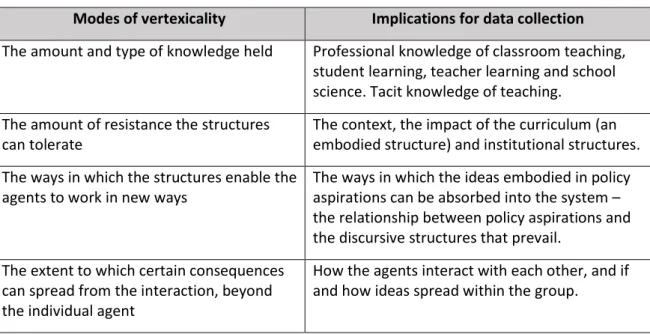
Table 5.2: Modes of vertexicality ... 72
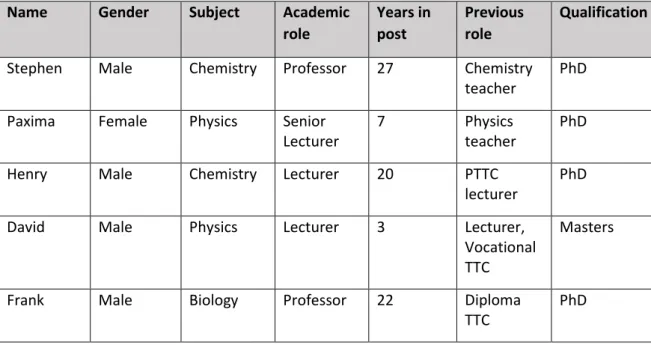
Table 5.3: The participants in the study ... 73
Table 5.4: Documentary sources of data ... 75
Table 5.5: Document analysis ... 81
Table 6.1: Examples from the analysis of Government policy documents ... 86
Table 6.2: How four documents used to assess teaching demonstrate the principles of LCE. ... 90
Table 6.3: The link between the findings at the empirical and actual levels of reality ... 114
Table 6.4: Evidence demonstrating the nature of the research carried out in this department ... 115
Table 6.5: Agenda for departmental staff meeting ... 118
Table 7.1: Schweisfurth’s ‘barriers’ LCE (2011) and the link to the first causal mechanism ... 127
Figures
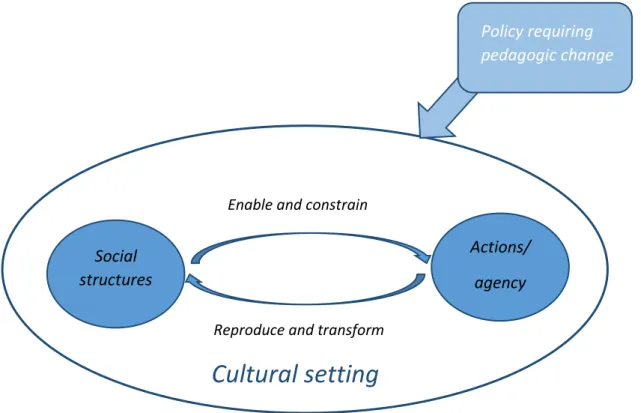
Figure 3.1 The relationship between structure and agency ... 29Figure 3.3 The relationship between structure, agency and PI ... 38
Figure 3.2 A representation of how changes in policy impact on a cultural setting ... 42
Figure 5.1: Heuristic representation of the research process in a naturalistic setting (Ball, 1993 p35) ... 61
Figure 5.2: The link between the three levels of reality and the data-analysis process... 80
Figure 6.1: A summary of my findings at each level of reality and how they link together. ... 122
9
Acknowledgements
My thanks go to my participants who welcomed me into their institution and generously
gave up their time to talk openly about their practice. I am grateful not only for their
support during this study, but for their friendship and professional collaboration since I
have been working on TESSA. I have learnt a great deal from them all.
I am indebted to my supervisors, over the last four years, Pete Bradshaw, Janet Soler,
Freda Wolfenden and Alison Buckler, and my colleagues at the Open University, for their
encouragement, support and wisdom.
I received a travel grant from the University Council for the Education of Teachers (UCET)
which enabled me to undertake field work in Kenya. I am grateful to James
Noble-Rodgers and his committee for the award of the grant.
Finally, I would like to express my gratitude to my friends and family for their tolerance
and emotional support; I could not have done this without them. In particular I am
grateful to my father and my sister, for their wisdom and encouragement, and to Ivor
Normand for his help with the presentation of this thesis. Special thanks go to my
husband for waiting patiently for me to return.
11
Glossary
AD academic director BEd Bachelor of Education
BERA British Educational Research Association
CCETM Co-operative Class Experiment Teaching Method CCM Co-operative Concept Mapping
CPD continuing professional development CR critical realism/realist
EFA Education for All FN field notes
GMR Global Monitoring Report
HIV AIDS human immunodeficiency virus (Acquired Immune Deficiency Syndrome) IT information technology
KCPE Kenya Certificate in Primary Education KICD Kenya Institute of Curriculum Development LC learner-centred
LCE learner-centred education MoE Ministry of Education
MoHEST Ministry of Higher Education, Science and Technology MOOC massive open online course
OER(s) open educational resource(s) OU Open University
PCK pedagogical content knowledge PGCE Post-Graduate Certificate in Education PhD Doctor of Philosophy
PI professional identity
PISA Programme for International Student Assessment PTTC Primary Teacher Training College
QA quality assurance
RISE Researching Improvements in Systems of Education RQ research question
SDGs Sustainable Development Goals SS secondary science
SSA sub-Saharan Africa TE(s) teacher educator(s)
TESSA Teacher Education in Sub-Saharan Africa TP teaching practice
TTC teacher-training college
UKFIET United Kingdom Forum for International Education and Training UNESCO United Nations Educational, scientific and Cultural Organisation
UNICEF United Nations Children’s Fund (originally United Nations International Children’s
Emergency Fund)
USAID United States Agency for International Development ZEST Zambian Education and School Training
13
1.
An introduction to this study
1.1
Introduction
This study is about the professional identity of a group of teacher educators (TEs) in a Kenyan university, and the prospects for this professional group as ‘agents of change’. It is a small-scale qualitative study of the work of five lecturers drawing on interviews, observations and
documents, to understand their practice.
Pre-service and in-service teacher education are crucially important in building a highly qualified and competent teaching force, capable of helping young people to help themselves (Griffin, 2012). The global discourse (e.g. EFA GMR team, 2013; Dembele & Miaro-II Be-Rammaj, 2003; UNESCO, 2011) calls for teachers’ pedagogic change in order to improve the quality of education,
away from lecturing in which learners are seen as passive recipients of knowledge, to more active pedagogies which engage and challenge learners, and provide the opportunity to develop a range of skills. If teachers are to change, then teacher education has to change as well. Yet there remains a disconnect between the pedagogy being promoted in school, and the pedagogy of teacher education (O’Sullivan, 2010). Furthermore, Moon and Umar (2013, p234) suggest: ‘Within the teacher educator community there is, as we have observed, a resistance to change’.
Teacher education is complicated because the medium is the message; teachers and student teachers will learn as much from what is done as from what is said. The lack of modelling of the sort of active pedagogies that are being promoted is therefore problematic (Cochran-Smith, 2009; O'Sullivan, 2010) and is preventing TEs from having the sort of influence and impact that they could (Cochran-Smith, 2006).
Studies show that pedagogic change by teachers is demanding and takes a long time (e.g. Murphy
& Wolfenden, 2013; O’Sullivan, 2004; Schweisfurth, 2011; Vavrus, 2009) and that, for sustainable change, teachers need access to ‘other communities of professionals to nurture and sustain their evolving practice’ (Murphy & Wolfenden, 2013, p271). Teacher education is of crucial importance, particularly across the developing world where many teachers are unqualified (Moon &
Wolfenden, 2012). TEs, therefore, have an important role to play in providing the ongoing support that is necessary to achieve sustainable change. For that reason, much of the international
education development work at the Open University (OU) (where I work) has positioned this group of professionals as potential agents of change.
This chapter introduces the study by describing my professional background, the context in which I work, the journey that led to this study, including my professional dilemma, and initial research questions. Finally, it sets out the structure of the thesis.
14
1.2
My professional background
I came to the Open University (OU) in 2005 as a part-time tutor on the Post-Graduate Certificate in Education (PGCE), while still working as a part-time teacher. My long-term ambition had always been to move into teacher education, and for many years I mentored student teachers from different institutions. In 2004, I had had the opportunity to study for a Masters in Education, and in 2009 I became a full-time TE after 20 years of teaching science in secondary schools in England. For six years, my substantive role was subject leader for science on the PGCE, and then course director. But I also developed an interest in international teacher education. My current
professional role is the academic director of Teacher Education in Sub-Saharan Africa (TESSA) – an international development project run by the OU. This study is related to that role, but my
personal history as a teacher and TE are highly relevant and have impacted on my research.
1.2.1 An introduction to TESSA
TESSA is not the focus of this study, but it provides the context. TESSA is a programme of activities designed to support teachers and TEs in developing more participatory approaches to teaching (Anamuah-Mensah, Banks, Moon, & Wolfenden, 2013; Moon, 2010; Wolfenden, 2008;
Wolfenden, Umar, Aguti, & Amani, 2010). It was originally conceptualised as an emergency teacher training programme, for unqualified teachers. With huge numbers of unqualified teachers in schools today, an increased demand for education as a result of universal primary education, and a greater emphasis on the quality of the education available to children, TESSA remains as relevant today as it was when it was when it was first conceived in 2005. At the heart of the programme is a resource bank: 75 units of work, published in 2008 as open educational resources (OERs) based on the primary-school curriculum, and versioned for different African countries by our partners, most of whom are based in universities and all of whom are involved with the pre-service and in-pre-service training of teachers. The OERs describe activities for teachers to carry out in their classrooms and are underpinned by the belief that teachers will learn through participation
in new practices, collaboration and reflection. The TESSA ‘programme’ now consists of different
projects, in different countries, focusing on the use of the OERs as a vehicle for pedagogic change. It is co-ordinated by the OU working with partners to find ways of mediating the OERs, and currently has funding from the Allan and Nesta Ferguson Foundation.
Many African countries are currently revising, or have recently revised, the school curriculum (eg Kenya, Zambia, Ghana, and Uganda) to include the teaching of skills and values. Teacher
educators are thus preparing teachers to teach in a way in which they have never been taught, and urgently need resources to support them in this endeavour. Under the current grant we have been working in Colleges of Education, and in schools to mediate the use of TESSA OER in the context of the new curricula, emphasising the need for teacher educators to model the teaching
15 approaches they are asking for, from their students. The more we can learn about this
professional group, the more successful the activities of TESSA are likely to be.
TESSA is not a specific intervention, targeting a particular subject or skill. The OERs – which cover the whole of the primary school curriculum - are designed to open up possibilities for teachers, and the model of change is one of evolution and not revolution. The aim is to encourage small changes in practice that will elicit new responses from learners, which in turn will encourage teachers to try new approaches. Much of our work is with TEs, as they are in a position to mediate the OERs for significant numbers of pre-service and in-service teachers. We have found that there
is a ‘contradiction between the stated aims of teacher educators in terms of what should be
happening in schools and their own practice’ (Harber, 2012, p67). Through the provision of contextualised examples of classroom practice, and an explicit theoretical stance, the TESSA OERs have the potential to support changes in teacher-education practice.
1.3
The background to this study
My involvement with TESSA started in 2010 when I took on the co-ordination of TESSA secondary science (SS). The plan was to extend the TESSA approach to secondary level by producing 15 OERs to support secondary science teaching. Working with colleagues from the UK, Zambia, Kenya, Tanzania, Ghana and Uganda, I ran two writing workshops and co-ordinated the final production of the units, between 2010 and 2012. These new OERs were published online in 2013 and were designed to support science teachers and TEs in moving away from formal lecturing towards more active pedagogies that engage learners, at all levels of the system.
This was my first experience of co-ordinating an international project – and I took steps, from the beginning, to plan for implementation. Drawing on the literature around the implementation of change (Elmore, 1980; Fullan, 2001; May, 2013; May & Finch, 2009; Wedell, 2009) and interview data gathered during workshops, the focus of the implementation phase was ‘How are you going
to use these materials in your own work?’ It was disappointing, therefore, to find during a visit to
Tanzania and Kenya in 2015 that the answer to the question ‘How are TEs using TESSA secondary science OERs?’ was essentially: we tell people about TESSA (Stutchbury, 2016). As a result, some individuals (teachers and student teachers) had enthusiastically adopted new approaches, but there was no evidence that the OERs were institutionalised or were seen by TEs as being relevant to their own teaching. As part of my initial study, I interviewed Professor Bob Moon, the first TESSA Director, and he suggested that if he was to start the TESSA project knowing what he now knows, he would try to secure a greater commitment from the university partners, in particular, to integrate the TESSA OERs into their teacher-education programmes. Like others, he is of the view that teachers need to change, but has observed that many teacher educators do not see themselves as part of the solution.
16
1.3.1 My professional dilemma
Thus, in my role as TESSA academic director (AD), with joint responsibility for spending a substantial grant to improve teacher education in SSA, I am keen to find out more about the professional lives of TEs in an African university and to understand how they could be better supported in driving the sorts of changes in pedagogy advocated in policy documents (e.g. Ministry of Education, 2012), reports, (e.g. EFA GMR team, 2013) and the research literature (e.g. Schweisfurth, 2013).
Schweisfurth highlights the difficulties in bringing about pedagogic change (2011). In a review of 72 papers (from a range of global contexts) about promoting active classroom pedagogy, she
concludes that ‘the stories of unequivocal success in implementation are few and far between’
(p430). She goes on to highlight the ‘barriers’ to implementation. However, as a result of my growing international experience in challenging contexts, I am not convinced that ‘barriers’ is a
particularly helpful metaphor, rather that they are constructions used by actors to justify the non-implementation of policy. Checkland, Harrison, & Marshall (2007) found that non-non-implementation of policy in the field of health was an emergent property of underlying organisational realities, and could be modified if these realities were addressed. ‘Barriers’ therefore are external to the
situation and thinking in this way has the danger of allowing actors to maintain their identity as hard-working individuals, laying the blame elsewhere. From this viewpoint, individuals become less important than the context and the underlying social relations which give rise to them. It became clear that it was the ‘underlying realities’ which are perhaps what need to be
investigated. Thus, it is my work on TESSA SS and now as TESSA AD that has driven my interest in
this problem; I wanted to understand more about the underlying social realities of life as a teacher educator in an African university, and how they perceive their professional identity. Through this study, I found out more about the professional lives of TEs and the contexts in which they work, which is informing my work as TESSA AD. A review of teacher education (Lunenberg, Dengerink, & Korthagen, 2014) draws on 137 papers, only two of which are from Africa; this study makes a contribution to our understanding of the roles, responsibilities and professional lives of this professional group in Kenya. Previous research in the TESSA programme focused on
understanding the professional lives of female teachers in rural communities in SSA (Buckler, 2011), understanding how teachers engage with new forms of practice (Wolfenden & Buckler, 2013) and a study from Kenya which examined how two teachers were introduced to TESSA OERs and subsequently brokered them within their schools (Murphy & Wolfenden, 2013). This study contributes to an emerging body of knowledge about the conditions for supporting pedagogical change in SSA, and extends the focus from teachers to teacher educators. While I cannot claim generalisability based on one small-scale study, my findings make a contribution to better
17 understanding the key challenges facing teacher education, and makes recommendations about which aspects of the system could be changed to greatest effect.
1.3.2 Why Kenya as a location for the study?
Through my work on TESSA, I have made numerous contacts among TEs across the continent, but particularly in Kenya and Tanzania. My colleagues in Kenya have been involved in TESSA since its inception, taking part in the development and versioning of both primary and secondary OERs; they are open, friendly, and keen to share their experiences with the TESSA network. They acknowledge the difficulties they face and, during my evaluation visit in 2015, expressed an interest in taking part in this work. As a result, I was able to identify a group of five TEs, working on the BEd in secondary science education, to take part in the study. A significant contributing factor to this decision was the fact that English is the prevailing language in this university. My colleagues speak English to each other in the university, and in some cases, at home as well. Thus, my professional dilemma arises from my current role as TESSA AD. The focus of this study is a group of university TEs in a Kenyan university and the challenges they face in adopting new pedagogic practices. I bring to the study experience as a teacher and as a TE, and a deep interest in social theory as a means of understanding how and why people act in the social world.
1.4
The study
My interest is in the underlying social realities that give rise to the perceived ‘barriers’ to change, and my over-arching questions for this study are:
What are the conditions that enable and constrain TEs in a Kenyan university in their work with student teachers?
How do these impact on their ability to implement changes in their practice? I focused on their professional identity as a way of finding out about:
• why people behave in particular ways;
• how the context in which they are working affects what they can and cannot achieve;
• how their behaviour impacts on the context in which they are working.
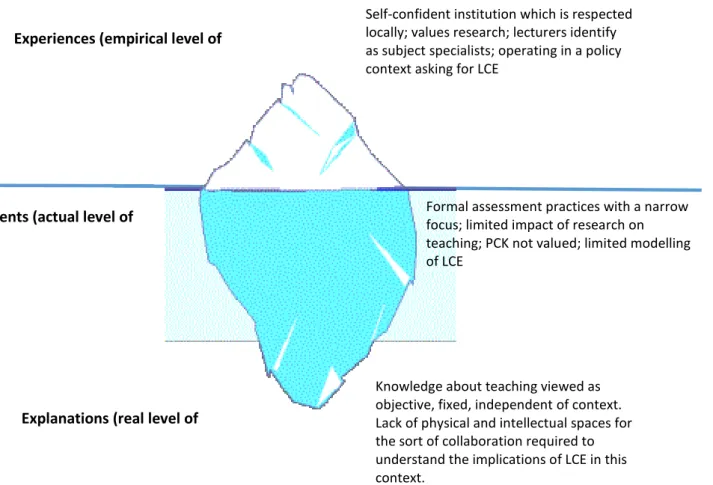
I used a critical-realist perspective in order to investigate these questions. Critical realism (CR) is about looking for explanations (causal mechanisms) through a focus on what people are able to achieve (agency) in the social context in which they are operating (structures). It sees reality as being like an iceberg: most of reality (the iceberg) is invisible to the observer. The casual
mechanisms exist below the surface, but give rise to ‘experiences’ and ‘events’, and are identified through a process of inference, based on the analysis of data collected within the context under investigation. CR combines a realist ontology with a relativistic epistemology, and is ‘theory
-18
driven’ drawing on a variety of social theories in order to seek explanations for observed phenomena. It assumes ‘judgemental rationality’ which allows researchers to ‘evaluate and
compare the explanatory power of different theoretical explanations and, finally, to select
theories which most accurately represent the ‘domain of real’ given our existing knowledge’ (Hu, 2018, p130). The ‘critical’ in critical realism thus highlights the fact that researchers are required
to be critical of the theories that they use and the explanations that they propose. The ultimate aim of CR research is to improve the world (Price and Martin, 2018) through increasing our understanding of underlying social phenomena, so in that respect the term ‘critical’ also has similar emancipatory implications as ‘critical theory’. CR, and how I have interpreted its main tenets, are discussed in chapters 3 and 5. At the end of Chapter 3, I re-present the questions using the terminology of critical realism, and in Chapter 5 I use the tenets of CR to develop a
methodology.
I have found just two studies that specifically take a critical realist perspective in the context of education – one which investigates the reasons why teacher absenteeism in Tanzania is so high (Tao, 2013), and one which explores teachers’ responses to curriculum change in Scotland
(Priestley, 2011a) but both Tikly (2015) and Cochran-Smith et al. (2014) argue for CR as a lens for studying learning and teacher education respectively. In order to design the research, I drew on the studies mentioned, and on others from various social-science disciplines (e.g. Davey, 2010; Davis, 2013; Fletcher, 2016; Bygstad, Munkvold, & Volkoff, 2016)
1.5
The structure of my thesis
Chapters 2–4 draw on various aspects of the literature to
• describe the context (Chapter 2);
• develop a theoretical framework (Chapter 3); and
• explore the ideas pertaining to teacher learning, learner-centred education (LCE) and pedagogic change that are relevant to this study (Chapter 4).
Chapter 5 explains how I built my methodology within a critical realist paradigm, the implications of my position as a TE working with professional colleagues from another culture, the ethical issues that have arisen and how I have addressed them, how I have ensured the quality of the research and my approach to data analysis.
Chapter 6 presents my findings – what I believe I have found out about the situation I am studying.
Chapter 7 explores the implications of what I have found out about the prospect for pedagogic change driven by TEs in relation to the literature.
19 Chapter 8 summarises my contribution to knowledge, the wider implications of my findings and opportunities for further research. It critically reviews the use of CR as a paradigm for small-scale qualitative studies of this type and explains the implications for my professional practice.
21
2.
The context for the study
This study took place in a university department of education in Kenya, in the context of training secondary science teachers. The focus was their work with pre-service teachers, but all of them are also involved in up-grade programmes for in-service teachers. In this chapter, I explain: the background to recent policy developments in education in Kenya, how education is organised, how teacher education is organised, the Government’s assessment of what needs to change, and the aspects of the draft policy framework that are relevant to this study
2.1
Background
In 2007–8 following presidential elections, ethnic violence broke out in Kenya, killing 1,300 people and displacing around 600,000 (Brownsell, 2013). After interventions from the international community, stability was reached in March 2008, and it was agreed to establish a new
constitution. This resulted in the publication of ‘Unlocking the Future Potential for Kenya: The Vision 2030’(Ndung’u, Thugge, & Otieno, 2009), which set out three pillars - economic, social and political – through which to achieve the transformation of Kenya into ‘a newly industrialised
middle-income country providing a high quality of life to all its citizens by 2030’ (p6). Education is
a key aspect of the social pillar, and the aspiration is to create an inclusive system with a relevant curriculum which fosters social responsibility, enhances moral and ethical values, and increases literacy. This resulted in a more detailed draft policy framework (Ministry of Education (MoE) and Ministry of Higher Education, Science, Technology, (MoHEST) 2012) for educational reform. This was still under consideration when I undertook my fieldwork, but subsequently the framework has been finalised and a new school curriculum is under development.
2.2
Education in Kenya
The working lives of the participants in this study are strongly influenced by what is happening in secondary schools. Education in Kenya in 2016 was organised in what is termed an ‘8-4-4’ system: eight years of primary education followed by four of secondary and four of tertiary (MoHEST, 2014). At the end of the primary phase, students sat the Kenya Certificate in Primary Education (KCPE), a high-stakes examination testing the recall of knowledge across eight subjects
(O’Milligan, 2017)1. Primary education has been free since 2003, and secondary education since
2008.
Educational outcomes remain poor. For example, fewer than 19% of class 2 pupils were reading at the expected fluency and comprehension levels in 2012, and only 14% of the population expected to complete secondary school (MoEST, 2014). There has been a rapid expansion in secondary
22 provision, with 2,678 schools in 1999 and 7,308 by 2011. The transfer rate to secondary school is around 70% (slightly different values are given in the various policy documents). Likewise, there has been a rapid rise in the number of students admitted to university – a policy which is impacting directly on my participants. The pupil–teacher ratio is 1:52 in primary and 1:32 in secondary. The aspiration is to achieve 1:40 in primary, but, to do that, 5,000 more teachers are needed (ibid.)
There remain many problems at secondary level, including an unfriendly environment, teacher absenteeism, household poverty (impacting on student attendance), HIV AIDS and a rising repetition rate (MoE and MoHEST, 2012). The ‘Education for all (EFA) 2015 National Review’
(MoHEST, 2014) states that Kenya outperforms 15 sub-Saharan African countries. This is
consistent with a World Bank report (Bold et al., 2017) in which Kenya generally does better than Mozambique, Senegal, Nigeria, Togo, Uganda and Tanzania. Overall, my interpretation of these documents is that education in Kenya is probably best described as one of the ‘best of the worst’
performers worldwide. The Government intend to tackle this through the introduction of a new
‘competency-based’ curriculum (the current curriculum has been in place since 2002) and are
investing heavily in IT infrastructure. At the time of the research (2016), the new curriculum was promised but had not been published.
2.3
Teacher education in Kenya
Teacher-training takes place in colleges of education and in universities. At primary level, teachers require a teaching certificate (a two-year course); and at secondary level, a diploma (a three-year course). The universities run BEd courses (four years) for prospective primary and secondary teachers, and many of those completing a degree teach for a few years and then move to the Primary Teacher Training Colleges (PTTCs). There are 22 Government-run PTTCs and 97 private institutions. In 2013, there was a dramatic increase in the number of graduates (from 6,865 to 19,273), but they still only represent about 10% of all teachers across both sectors (MoE and MoHEST, 2014). This university is therefore training some of the most highly qualified teachers in Kenya.
There are many unqualified teachers in the system, who undertake ‘upgrading’ distance-learning courses, attending face-to-face lectures during the school holidays. My participants therefore teach pre-service teachers during term-time, and in-service teachers in the school holidays. There are teacher shortages in Kenya, particularly in rural areas, but the situation is better than in many African countries.
23
2.4
The policy context for this study
At the time of this study, new policies were emerging and a new school curriculum was under development. The strategic priorities of the Government had been set out in a number of documents. These documents set out a direction of travel urging pedagogic change, and make significant criticism of the quality of teacher education (MoE and MoHEST, 2012, 2014, 2015; MoEST, 2014; Ndung’u et al., 2009).
Teacher education in Kenya is acknowledged to have ‘questionable impact’ (MoE and MoHEST, 2012, p61), with a lack of continuing professional development (CPD) and career development for TEs, and there is a suggestion that courses should place more emphasis on practice (p63). At secondary level, TEs are said to lack experience of secondary-school teaching, and there is an aspiration that the teacher-education curriculum should be more closely aligned to the school curriculum. However, one of the perceived challenges for policy-makers is that universities enjoy autonomy and largely set their own curriculum (MoE and MoHEST, 2012).
This assessment of the quality of teacher education is consistent with that provided in an independent study of teacher education in Tanzania, Kenya and Uganda, funded by the
Department for International Development (DFID) and UNICEF (Hardman, Ackers, Abrishamian, &
O’Sullivan, M., 2011), which highlights the need for more coherence between pre-service and in-service teacher education, capacity-building within the system, and more effective monitoring and evaluation of the quality of the training provided. The policy statement (2012) calls for greater regulation of, and accountability in, teacher education with quality-assurance procedures which reflect emerging trends. It also highlights the need to expand the university sector in general, encouraging them to produce more PhD graduates and strengthen their research (p104). The EFA 2015 National Review ( MoEST, 2014) identifies the key priorities as: ‘the enhancement
of learner outcomes through addressing issues related to quality including, introduction of a more relevant curriculum, enhancement of early grade literacy and numeracy, use of assessments and
enhancement of teachers’ pedagogical skills’ (p19).
Hence, for the last six years, TEs in Kenya have been operating in a policy environment in which pedagogic change has had a high profile.
In a study of the current provision for teacher education in Kenya (Katitia, 2015) it is suggested that there is insufficient emphasis on pedagogical content knowledge (Shulman, 1986) and practical teaching experience, with too much emphasis on examinations which largely test the recall of knowledge. Student teachers are not encouraged to be reflective, and are assessed according to the lesson objectives in the lesson plan, rather than on what has been learned in the lesson (Katitia, 2015). The reform of teacher education in Kenya is part of the agenda (KICD, 2016)
24 but the current proposals lack detail, and the pace of change is slow. Part of the problem is perhaps that the body advocating reform – the Kenya Institute of Curriculum Development (KICD)
– has no jurisdiction over the universities.
The new policy will bring changes in the school curriculum, and these will impact on TEs in Kenya, including my participants. . The sort of changes anticipated are congruent with the global
discourse, and with the ideas and practices embedded in the TESSA OERs.
The draft policy framework indicates that the government does not lack ambition. It
acknowledges the importance of a ‘learner-centred curriculum and responsive learning systems
and materials’ (MoE and MoHEST, 2012, p26). This is reinforced later with a reference to the
‘need to improve teaching and learning processes in the schools’ (p61). There is also reference to
the importance of developing different sorts of relationships, including ‘the development of
teachers with a different mind-set’ (p45) and the acknowledgement that ‘the hardest element to
change and the major challenge facing the profession concerns the changing instructional
practices towards greater collaborative relationships between teachers and learners’ (p61). What
is meant by learner-centred education will be examined in more detail in Chapter 4, and the policy documents will be analysed in terms of these ideas in order to define more critically the policy environment which underpins this study.
2.5
The university
The university is a long-established institution in rural Kenya, with a good reputation. Several people to whom I spoke expressed pride in the quality of the students and the fact that they are highly employable. The BEd in secondary science education was established 30 years ago, and during that time there has been considerable expansion in the provision for teacher education, with primary face-to-face and distance learning courses as well.
The pleasant working environment means that there is a relatively stable staff, with most of my participants having worked there for ten years or more. As academics, they are held in greater esteem than teachers; they are relatively well paid and have permanent jobs and nice homes. The university is seeking to develop its reputation for research and publishes a journal. This provides members of staff and students with the opportunity to publish masters and doctoral studies. Staff are under considerable pressure to publish research, which impacts on my participants.
The department runs three BEd programmes (Primary, Secondary Arts and Secondary Science); and compared to other programmes in Africa with which I am familiar, the BEd in secondary science has two distinctive features:
25
• There is a significant practical component, with students undertaking a whole term of teaching practice (TP). The supervision of TP is taken very seriously, with staff often travelling extensively in order to visit students some way from the university.
• Students are taught the subject content of the BEd in Science Education in the Science department alongside students of Physics, Chemistry and Biology. However, my
participants identify strongly as scientists themselves and bring their subject knowledge into their teaching of methodology.
Within the university, this department is considered to have pedagogical expertise and has established a course for new academics across the university on how to teach. Several people told me about this course, but it has not run for the last four years owing to the pressures my
colleagues are experiencing, arising from a rapid expansion in the university sector.
2.6
Summary
The university in which this study took place has a good reputation nationally and, it could be
regarded as representing the ‘elite’ in teacher education (the vast majority of teachers are trained
in colleges of education, to certificate and diploma level) and not, therefore, typically
representative of the sector. However, given that lecturers are highly qualified and have access to
international partnerships, it could be argued that they have the opportunity to become ‘trail
-blazers’, supporting the development of teacher education into a profession that is taken seriously, and leading the implementation of government policy by operationalising learner-centred pedagogy and supporting others in doing so as well.
Given the difficulties in teacher education described in section 2.3 (and repeated across Africa), Moon (2010) argues for large-scale structural reform of teacher education, with school-based opportunities for certificated teacher learning forming the basis of a system that trains significantly increased numbers of teachers to meet the demand for qualified teachers in SSA. However, there is much that can be done within existing systems, and the purpose of this study is to better understand the link between what TEs are able to do (agency) in the context in which they work (structure), in order to support those with whom we are working in TESSA, to embrace more active approaches to teaching and, at the same time, re-evaluate their attitudes to learners and learning, and hence achieve the pedagogic changes called for by the Government. The link between agency and structure is at the heart of CR; and, as I explain in the next chapter, it was CR that provided the ontological and epistemological framework for the study.
27
3.
Building a theoretical framework
Any research in social settings needs to be underpinned by an explicit account of what counts as knowledge (an ontology) and a framework for thinking about knowledge (an epistemology) (Guba & Lincoln, 1994). The framework for this study is provided by critical realism (CR), which focuses
on the relationship between ‘agency’ and ‘structure’. In this chapter I set out my theoretical
framework for the study, explain how I am interpreting ‘agency’and ‘structure’ in the context of
teacher education, and explain how these relate to a key theoretical concept in the field of teacher education: professional identity. Finally I re-present my research questions in critical-realist terms.
3.1
Introducing a theoretical framework
CR provides a way of thinking about the world which draws on social theory in order to seek explanations for social phenomena, alongside analytical tools to support data collection and data analysis. CR combines a realist ontology (there is something real to find out about) with a
relativistic epistemology (different people will come to know different things in different ways). As I came to understand more about CR, I realised that it describes the way in which I think about the world and, during the course of my study, a set of philosophical ideas (e.g. Archer, 1998b; Bhaskar, 1998; Scott, 2010) began to seem like common sense. The main advantage for me, is that CR goes beyond rich descriptions in order to seek explanations and recognises the fact that, in the complexity of everyday life, those explanations may draw on different social theories (Tikly, 2015). Scott (2010) suggests that ‘though the philosophy of critical realism is well developed, its
application to the collection and analysis of data at an empirical level is manifestly under-developed’ (p9). This study attempts to demonstrate how the concepts that underpin CR can
provide an explanatory framework in the context of a small-scale qualitative study in an educational context.
3.1.1
An introduction to critical realism
CR assumes the existence of independent structures (or social forms) that constrain and enable actors to pursue certain actions in a particular setting (agency) (Tao, 2016). In the context of this study, the relevant structures are those which will impact on the ability of TEs to bring about pedagogic change. Critical realists use the concept of ‘agency’ to embrace the capacity of
individuals to act, and recognise that individuals will be working in institutions, where they can be both constrained and supported by various social forms or, in CR terms, ‘structures’.
Understanding the relationship between structure and agency is at the heart of any research in a CR paradigm (Archer, 1998b; Bhaskar, 1998; Scott, 2010).
28
‘Independent’ implies structures that exist beyond our knowledge of them. However, knowledge
of these structures will be subjective, relative and constructed by individuals; the nature of the reality cannot be unproblematically understood, characterised or measured (Wynn & Williams, 2012). The tenet, therefore, is that a social reality exists which is independent of our knowledge of it (Tikly, 2015). This reality is stratified, differentiated, structured and changing. It can be regarded as consisting of two domains: the transitive (things that we can know about) and the
intransitive (things that we can’t know about, but through research can seek to find out about and to explain). In summary, the aim of research within a critical realist paradigm is to seek
explanations for observed experiences and phenomena in the social world (such as the uptake or not of a set of ideas or practices), by exploring the relationship between structure and agency. It draws on social theory to identify underlying causal mechanisms that give rise to observed events, but requires the researcher to be critical of the theories they use. In this way, research in a critical realist paradigm can contribute to social theory.
On-going contemporary academic discussions (Whelan, 2019) suggest that critical realism has
drawn upon critical theory to inform the way being “critical’ is understood and utilised. In both traditions, critique is a central and active part of the research process and the ultimate aim of research is to go beyond highlighting trends and common-sense explanations, to look beneath the surface of the social world in order to offer alternative understandings and bring about change. Critical realism does this through a focus on structure and agency, whereas critical theorists focus on the underlying ideology. The term ‘critical’ ensures the analysis goes beyond the technical
approaches of a purely realist perspective (Porter, 2015).
3.1.2
Structure and agency
In his development of CR, Bhaskar (1994) explained the relationship between structure and agency as follows (italics in the original text):
‘…all social life is embodied in a network of human relations. This may be demonstrated by the mental experiment of subtracting from society the human agency required for it to be an ongoing affair. What we are left with are dual points of articulation of structure and agency, which are differentiated and processually changing positioned practices human agents occupied, engaged, reproduced or transformed, defining the (changing) system of social relations in which human praxis is embedded. Here again, on the relational model we have a figure of a duality-with-a hiatus, preventing reductionist collapse in either direction.’ (p93) Put more simply, he is suggesting that we can treat structure and agency separately, while recognising that they are intimately connected.
29 Bhaskar was a philosopher, but his ideas have been adopted and interpreted by sociologists so that they can be used to explain social phenomena. Archer (1995) argues for ‘analytical dualism’ and makes two propositions: that ‘structure necessarily predates the actions which transform it’ and that ‘structural elaborations necessarily post-date those actions’ (1998c, p202). She defines a
‘morphogenetic approach’, by which she means we can investigate how the shape of society emerges (morphs) from agents and the intended and unintended consequences of their actions. In practical terms, studying what people do and why they do it will reveal social structures, and in turn, understanding the social structures will explain why they can and cannot do certain things. CR thus seeks separate accounts of structure and praxis, but recognises that it is the interplay between them that leads to greater understandings (Archer, 1998b).
CR sees structure and agency as dialectic and giving rise to emergent properties that are not reducible to the sum of their parts (Tikly, 2015). Emergence is a key concept in CR. Interactions between agents, between structures and between agents and structures can give rise to new phenomena which cannot be reduced to the components from which they arise. In social situations, these can sometimes be considered to be the unintended consequences of an action or a set of actions.
The properties of a given ‘structure’ (such as a university department of education) will emerge
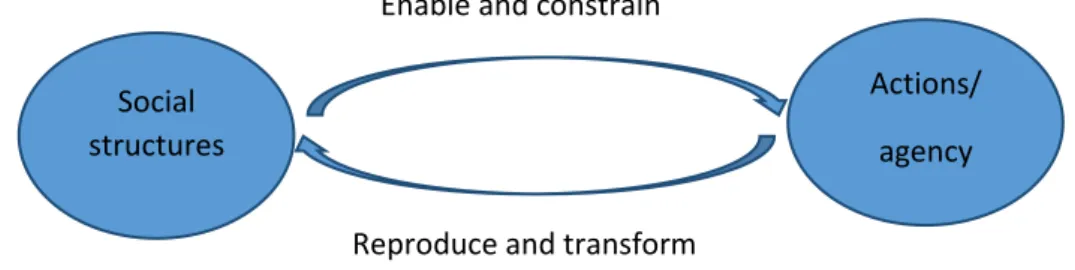
from interactions between sub-structures (social forms), between agents, and between structures and agents. The realist perspective thus provides an analytical framework for studying social situations (see Figure 3.1).
Figure 3.1 The relationship between structure and agency
Critical realists assume that social structures exist independently of actions, but that these structures enable and constrain actions, which in turn reproduce and transform social structures.
(Some accounts of CR separate ‘culture’ from structure and agency (Archer, 1998a), but as I explain in section 3.4 (below), I take a different view).
CR represents a particular worldview, which has been used as a basis for research in several different fields within social science such as management, health and information technology (e.g. Bygstad et al., 2016; Davis, 2013; Easton, 2010; Fletcher, 2016; O’Mahoney and Marks, 2014;
Social structures
Actions/ agency Enable and constrain
30 Wynn and Williams, 2012). It is gradually gaining support in the field of educational research (Cochran-Smith et al., 2014; Priestley, 2011b; Tao, 2016; Tikly, 2015).
This theoretical framework provides an analytical lens through which to study ‘structure’ and ‘agency’. Before explaining how I see ‘structure’ and ‘agency’ in this study, I summarise why I
chose CR.
3.1.3
Why critical realism?
There are several reasons why this way of thinking about the world is appropriate for this study. Firstly, I am looking for explanations (what are the conditions which support pedagogic change in teacher education?); and for an understanding that goes beyond rich descriptions (Tikly, 2015). I am keen to understand the work of university TEs in this context and the pressures they face. CR accepts emancipation as part of the research process; and, by providing an account of the generative mechanisms that give rise to certain events and institutions, CR is simultaneously engaged in a critique of their role in, and influence on, social action. Asking ‘why’ questions in social science implies that there is ‘something’ to find out about. By acknowledging the possible existence of a ‘social reality’, CR enables us to go further than interpretative approaches and seek explanations. This relativistic epistemology, and the requirement to be critical in the use of social theory, ensures that positivist claims are not made and that explanations within this paradigm are process-orientated rather than variable-orientated (Maxwell and Millapalli, 2007).
Secondly, CR recognises the contribution that social theory can make to understanding social situations and explaining events (Maxwell and Millapalli, 2007; Scott, 2010; Tikly, 2015), but is critical of those theories, providing the opportunity to deepen understanding in a field where
‘theory’ cannot be treated in the same way as scientific theories. Social theories attempt to explain how the social world operates (Turner, 2013) and are based on the assumption that the social universe reveals certain basic fundamental properties and processes that can explain the flow of events in specific contexts. Tikly (2015) argues that interpretivism places too much emphasis on inductive methods and therefore does not use theory to build knowledge about social settings. He suggests that learning is a good example of a phenomenon that could be investigated using a critical realist perspective. Interpretivists emphasise social and cultural forms of learning, but he suggests that learning is highly complex and that in some circumstances, in some contexts, individual, cognitive and biological theories can provide insights. CR acknowledges the role of social theory in social research, but also acknowledges its limitations; this enables researchers to draw on theories appropriate to the situation under investigation. In my
scholarship work in the field of international development, I have explored various theories in an attempt to understand what we do and how we might do it better. These include theories of
31 learning (Lave & Wenger, 1991; Vygotsky, 1978); theories of social action (e.g. Checkland & Casar, 1986; Vickers, 1965); and theories of implementation (e.g. Elmore, 1980; May, 2013; May & Finch, 2009). I have come to realise that in the messiness of real life, various social theories can offer insights into different aspects of the situation. CR offers a holistic perspective and the opportunity to draw on different theories to explain different aspects of the situation. It recognises the
fallibility of theories and encourages us to critically examine the theories we choose to use. In this way, it has the potential to contribute to social theory.
Thirdly, the CR perspective recognises the central importance of context (Maxwell & Millapalli, 2007). Having worked as a teacher and a TE in many different settings, this is consistent with my
own worldview and my own experience. Causal explanations won’t simply vary across contexts;
rather, the context is intrinsically involved in the causal processes. The phenomena (events) that I am trying to explain depend on causal mechanisms available in the prevailing social structures, and these depend on changing contextual conditions (Wynn & Williams, 2012). My experience suggests that understanding the causal explanations and mechanisms at work in this university department, while not being necessarily transferable to a new context, would provide insights into how similar mechanisms might operate in other universities, and hence suggest what questions to ask, or avenues to follow.
Fourthly, the concept of emergence – the recognition that social phenomena cannot be reduced to the sum of the parts – is particularly helpful. Cochran-Smith et al. (2014) advocate for CR as a platform for research in teacher education, as it provides a way of thinking about aspects of teacher education that emerge from the complex interaction of the policy environment, teacher-education institutions, schools and individual classrooms. CR recognises that what we observe will be the product of contingent causal mechanisms that are not necessarily directly accessible to us.
In these circumstances, individuals’ reasons and meanings are treated as part of the real world; beliefs, perceptions and interpretations can be studied as part of causal mechanisms. Tao (2016)
makes a link with the Capability Approach, arguing that a person’s ‘essence’, or what she or he is
disposed to do or become, is a causal mechanism.
Finally, ontologically, CR proposes the existence of a stratified depth reality (Fletcher, 2016). This means that reality is considered to be like an iceberg – we can observe some of it, but there is a great deal going on beneath the surface that we can’t know about. The tenet is that observable
events arise as a result of activities within social structures – structures that are constantly changing as a result of those activities. These activities are going on beneath the surface but can be accessed through research. I have found that this provides a structured way of thinking about the disconnections that arise in teacher education, in particular the mismatch between theory and practice.
32 Critical realists think in terms of three relatively autonomous levels of depth reality: the empirical level (the experiences and sensed perceptions of knowing subjects), the actual level (objects and events that occur in the real world) and the real level (deeper-lying structures and causal
mechanisms) (Fletcher, 2016; Scott, 2005; Tikly, 2015). The empirical level can be seen and/or measured (the visible part of the iceberg); the actual level can be investigated relatively easily through qualitative research methods (just below the surface); and the real level (the bottom of the iceberg) has to be inferred through a process of abduction (theoretical re-description) and retroduction (a focus on causal mechanisms). Contradictions arise in the ‘actual’ level of reality, which, as I will demonstrate, can be better understood by investigating the ‘real’ level of reality. Abduction involves taking a set of observations and looking for a plausible interpretations or explanations. Retroduction involves testing the proposed explanations against the evidence in order to identify the causal mechanisms (i.e. what it is about the situation which is giving rise to the observed phenomena). The purpose of critical realist research is to determine which causal mechanisms have been triggered in this situation, and what effect they are having. It also
provides a way of thinking about what causal mechanisms have not been actualised and could be if things were different.
Having explained why this way of thinking about the world provides a suitable framework for my investigation, I will examine in more detail how I am interpreting agency and structure in the context of teacher education, and how one of the key theoretical concepts in teacher education –
professional identity – fits into my theoretical framework.
3.2
‘Agency’ and ‘structure’ in the context of teacher education
At the heart of critical realism, is the relationship between ‘agency’ and ‘structure’ (see figure
3.1). Here, I explain how these terms are interpreted in the context of this study.
3.2.1
Agency
‘Agency’ – the capacity for individuals to act – is at the heart of this study. The willingness of my TE colleagues, all over Africa, to embrace the ideas set out in the TESSA OERs and Government policy documents depends on their motivation, commitment, professional knowledge and past experiences, but also on the extent to which they are constrained and supported by the various
social forms (‘structures’). This is consistent with Archer’s message (quoted in Pawson, 2013), that
social science ‘should commence with an understanding of how people come to make choices, for
their collective decision-making constitutes the underlying mechanism that generates all social
outcomes’ (p5). This study recognises that pedagogic change requires new patterns of behaviour, some of which may be problematic, as they require the investment of individuals in new ideas. It has been suggested that ‘to be effective changes need to alter the constrained choices of
33 realist perspective, but they do not acknowledge the understandings of change and
transformation that are implicit in the critical realism of Bhasker and Scott (Porter, 2015). In this
study I shall be investigating how the ‘constrained choices of individuals’ interact with social
structures to determine the possibility for pedagogic change.
Within CR, agency is a central concept. Bhaskar (1994) suggests that agency concerns the capacity of humans to transform situations and themselves through reflexivity. He suggests that human
beings are characterised by a ‘capacity for intentional agency and for reflexive awareness and organisation of such agency and by a thoroughly social existence’ (Bhaskar, 1998, p411). Archer’s
theory of human agency (1995) places powerful people, capable of bringing about
transformation, at its heart, and she argues that choices about how to behave are the result of reflexive deliberations on social situations. She argues that not everyone will be in a position to become agents or actors who can develop the sort of agential powers necessary to affect
transformation. She defines ‘agency’ by reflexivity – capabilities that are developed as a consequence of reflexive deliberations on social situations.
In a critique of Archer, Elder-Vass (2007) asserts that we often perform actions that are
intentional and meaningful, without necessarily being aware of the decision-making process; we may act without intensive prior deliberation. This is consistent with my own view that, although being human might mean that we have the capacity to be reflective and reflexive, it is not a necessary condition for acting purposefully. We can act effectively, yet instinctively, drawing on past experiences and tacit expertise in a subconscious manner. For example, in a vivid and authentic description of classroom teaching, McIntyre (2002) highlights the fact that teachers make many instantaneous, subconscious decisions in the course of a lesson, based on their professional instinct. This is consistent with other scholars who have studied social processes (Checkland & Casar, 1986; Checkland & Poulter, 2006; Vickers, 1968) in which the capacity to take purposeful action is seen as being fundamental to being human (rather than reflexivity), and
‘choices’ are seen to be the result of noticing, discriminating and judging – a process that might be instinctive and instantaneous, or the result of deliberation over an extended period of time (Checkland & Casar, 1986). I would argue therefore that ‘agency’ (choosing to act purposefully)
does not necessarily have to be the result of measured prior deliberation (reflexivity), although of course it can be.
My experience of working in Africa over a period of six years is that people are not in the habit of examining their own practice or questioning the status quo – reflexivity and reflexive discourse is not common. Yet this does not mean that people are not ‘agentive’ in many different ways. For example, people often negotiate difficult political situations and manage to create opportunities for themselves. The challenge in the work that we do on international development projects is to
34 better understand the relationship between individual agency and social structures so that we can collaborate more effectively.
Bhaskar (1994, 1998) links human agency to a ‘thoroughly social existence’ (see above). This is
consistent with alternative views of agency which focus on interaction, discourse and participation, rather than on individual reflexivity (Lave & Wenger, 1991; Lipponen &
Kumpulainen, 2011). In this project, I see agency in broader terms than Archer and something which is not confined to powerful, reflexive people. I see it as ‘the capacity to initiate purposeful action that implies will, autonomy, freedom and choice’ (Lipponen & Kumpulainen, 2011, p812). Purposeful action may be the result of reflexive deliberation, but it can also be instinctive, based on judgements which draw on past experiences and personal standards (Vickers, 1965), or on relationships, social interactions and personal identity within a particular cultural context (Lave & Wenger, 1991). The implication of this is that understanding why people act as they do needs to take account of their past experiences; their values, beliefs, interests and agendas; the social situation in which they are working; and their sense of self (personal identity).
In this context, TEs may well be ‘agentive’ in that they ‘get things done’ (in line with departmental
priorities) and are successful in pursuing their own agendas, but not necessarily in leading on developing new approaches to teaching and learning within the department in which they work. In a group of TEs, people will have different priorities and will be working towards their individual agendas (although there might be some shared agendas), yet I am approaching the situation with a particular lens: the adoption and modelling of more participatory approaches to learning. A department might include some advocates for pedagogic change in the form of more
learner-centred practices, some who are aware of possibilities, and some who are don’t see any need for pedagogic change in their situation. Critical realists take the view that it is how the advocates are able to interact with the social structures which will determine whether they can exercise their agency with respect to pedagogic change.
3.2.2
Structures
The capacity to act is supported, or constrained, by ‘structures’ (Archer, 1995) . Within CR,
structures are considered to be ‘real’ because they have causal powers and emergent properties,
although it is recognised that they only exist in relation to the people concerned. Archer (1995)
suggests that it is ‘possible to identify structures because of their irreducible character,
autonomous influence and relatively enduring character’ (p168). The properties emerge through
interactions between components and, as the causal mechanisms are enacted, structures will change. Scott (2010) provides some guidance about what form ‘structures’ might take. He
develops a typology of five types of structures (social forms) that could be interpreted as being
35 1965), and could influence how agents might act. Table 3.1 summarises these and indicates how they might be interpreted in the context of TEs working in a university, recognising that they are dynamic and will change over time.
36
Table 3.1: Scott’s typology of structure (2010, adapted from p97)
Type of structure
Scott’s description What this might mean in this study Embodied Structures which keep people in one
place and prevent them from moving to a different place. Resistance is possible, but only by removing the structure and effectively transforming the site of the activity to allow a different range of activities to take place.
The school curriculum or the curriculum of a teacher-education course could be interpreted as an embodied structure. The curriculum dictates much of the day-to-day activity in any educational setting. Some social norms may also be considered to be embodied structures, as they can restrain action.
Discursive Structures that potentially effect change. Agents are confronted with ideational resources or structured discourses which act as a resource for their belief systems. They sustain the individual and may include stories, narratives, arguments and chronologies. They play a role in the construction and maintenance of structures of agency. These are psychosocial narrative forms which impact on intentionality. Individuals cannot create discursive structures, but they can contribute to them.
This is the framework of ideas that underpin agents’ activities. In this case, it could be the ideas about knowledge, learning and teaching that underpin the national policy framework, course structures, examinations and the way TEs interact with students. It could also be ideas they have been exposed to in their role and in the past, including any exposure they have had to LCE or opportunities they have had to collaborate internationally. This is a structure in which contradictions can arise, which can empower or constrain agency.
Structures of agency
Structures that refer to the discursive and material affordances in the world which impact directly on the agency of the individual. They may influence the acquisition of capabilities (conscious or tacit). Structures of agency refer to the different forms the ‘self’ might take and
are therefore linked to personal identity.
Individuals’ identities will be built on past experiences, ideas they relate to, and relationships which have influenced them. All of these will have affected their confidence as a TE and their desire and ability (or otherwise) to challenge the status quo. They will bring to their role a worldview shaped by values, attitudes, interests, expectations and beliefs about teaching and learning. The juxta-positioning of differing worldviews
will create a ‘structure’ which may
impact on how individuals choose to act.
Institutional and systemic
These concern the relations between people that endure over time. Such structures are regulated either explicitly or tacitly through the norms, values and roles woven into the fabric of social discourses.
This refers to the social norms, values and roles of the institution in which the activity takes place. The relationships, the hierarchy, the norms and
expectations of individuals that work in it – which behaviours are highly valued, which attract sanctions.
Social markers
These include gender, class or race, all of which can influence how actors are treated, their sense of identity, and the resources available to them.
Age, gender, background (social and ethnic), of the participant will impact on how they undertake their role as a TE.