Worcester Polytechnic Institute
Digital WPI
Interactive Qualifying Projects (All Years) Interactive Qualifying Projects
May 2018
Facilitating the Growth and Development of the
Namibia Project Center
Jessica Marie Elder Worcester Polytechnic Institute Matthew Charles Moore Worcester Polytechnic Institute Steffany Paige Halfrey Worcester Polytechnic Institute Stephanie Anne Sontgerath Worcester Polytechnic Institute
Follow this and additional works at:https://digitalcommons.wpi.edu/iqp-all
This Unrestricted is brought to you for free and open access by the Interactive Qualifying Projects at Digital WPI. It has been accepted for inclusion in Interactive Qualifying Projects (All Years) by an authorized administrator of Digital WPI. For more information, please [email protected].
Repository Citation
Elder, J. M., Moore, M. C., Halfrey, S. P., & Sontgerath, S. A. (2018).Facilitating the Growth and Development of the Namibia Project Center. Retrieved fromhttps://digitalcommons.wpi.edu/iqp-all/5198
Facilitating the Growth and Development of
the Namibia Project Center
Interactive Qualifying Project Report
Sponsoring Agency:
Worcester Polytechnic Institute International and Global Studies Division (WPI IGSD)
Agency Contact:
R. Creighton Peet, Namibia Project Center Director
Submitted to:
Project Advisors: Aaron Sakulich (Associate Professor) & Alexander Smith (Associate Professor)
Submitted by:
Jessica Elder Steffany Halfrey Matthew Moore Stephanie Sontgerath
ii
Abstract
Our goal was to develop sponsor relationships and find projects for the Namibia Project Center (NPC). We identified suitable IQP and MQP sponsors and their proposed projects. We ranked these organizations based on their ability to sponsor and enthusiasm, and their projects on expected quality. We assessed our sponsor communication methods to determine which were the most effective. Our methods will assist the NPC Director in expanding the NPC, and can be adapted for use at other project centers.
iii
Acknowledgments
We would like to thank the following individuals for their advice and support:
● The Namibia Project Center Director, Professor R. Creighton Peet, for his extensive knowledge of Namibia, for making our preparatory term an enjoyable and educational experience, and for his continued support during our time in Namibia.
● Project Co-Advisors Dr. Alexander Smith and Dr. Aaron Sakulich, for their helpful critiques and for motivating our team to work to the best of our ability.
● All WPI faculty and staff that we met with, for their advice and for sharing their past experiences with WPI projects.
● All members of the Namibian organizations that we met with, for taking the time out of their busy schedules to learn about WPI projects, and for teaching us about Namibian work culture.
● The 2016-2019 NPC students, for taking the time to tell us about their experiences with their sponsors and their ideas for the future, and for brightening our time in Namibia.
iv
Executive Summary
Worcester Polytechnic Institute’s (WPI) 47 Interactive Qualifying Project (IQP) and Major Qualifying Project (MQP) global project centers must accommodate the increasing number of WPI students who desire to complete their IQP and/or MQP, around the world. Each project requires a partner to provide the project idea. This partner is typically known at WPI as the project’s “sponsor”, and is usually an educational institution, a non-profit organization, a government agency, or a for-profit company. Project center directors must identify suitable sponsors with project opportunities for students. These projects must meet the educational requirements of an IQP or MQP, and help the students achieve personal growth and advance their interpersonal skills. These projects are also meant to assist the sponsoring organization. Relationships with sponsors are difficult to maintain due to many challenges, such as
communication issues, shortages of project ideas, limited resources to host students, and changes in leadership within the organization. The Namibia Project Center (NPC) in Windhoek has faced all of these problems. As the NPC expands to include a second term of IQPs per year, and may host MQPs in the future, it is increasingly important to create lasting relationships with
organizations. Therefore, our team’s goal was to develop sponsor relationships and find projects for the NPC.
To accomplish our goal, we identified and contacted potential sponsors that could partner with students at the NPC. We identified these organizations through suggestions from R.
Creighton Peet, the NPC Director, and mutual contacts, such as other IQP teams or
representatives from organizations, and by conducting our own search online and in person. We found that using a reference to an organization from a mutual contact, was the most effective way to find these organizations. We also found that we often had to conduct drop-in visits to organizations’ offices to set up meetings. To ensure that each new organization understood the IQP and MQP, we created marketing materials and interaction protocols. Our marketing materials included a NPC informational flyer, an example brochure of IQPs, an example brochure of MQPs, and a sponsor guide. Our interaction protocols consisted of step-by-step communication methods and pre-determined interview questions for past, current, and potential sponsors. We asked past and current sponsors about their experience working with WPI students, to better understand how to maintain partnerships. Most of our time with potential sponsors was
v
spent explaining WPI’s program. After meeting with each organization, we evaluated them based on their ability to sponsor a project and enthusiasm. We also assessed all proposed projects based on their expected quality. We then used these assessments to rank organizations and proposed projects, and recommend the organizations which the NPC Director should prioritize for future projects. Our team also created a directory of sponsor contact information and a booklet of organization summaries, including their purpose, their scores based on our sponsor and project analysis, project ideas, and our recommendations for the NPC Director’s use.
We contacted 47 organizations to develop relationships. Among these organizations, we identified 20 potential IQPs, five potential MQPs, and 11 organizations capable of hosting MQPs. The proposed IQPs involved research on the organization’s current and potential
initiatives, recommendations for improvement, and implementation of new systems. Specifically, some of these projects involved development of academic content, research to benefit wildlife conservation, the effects of culture on technological advancements, and feasibility studies in the transportation industry. These projects were well-defined, could span multiple terms, and would allow WPI students to interact with Namibians.
After evaluating these sponsors, we ranked the Cheetah Conservation Fund, the Hanns Seidel Foundation, the NUST Faculty of Natural Resources and Spatial Sciences, the Namibia Housing Action Group, the NUST Faculty of Engineering, and the Namibia Development Trust as our top organizations based on their ability to sponsor and enthusiasm, and Physically Active Youth based on the expected quality of their proposed project. This ranking excludes D 2018 and A 2018 NPC sponsors as they are already in contact with the NPC Director. In addition to D 2018 and A 2018 NPC sponsors, we recommend that the NPC Director prioritize EduVentures, the Walvis Bay Corridor Group, the NUST Centre for Teaching and Learning, the NUST Faculty of Health and Applied Sciences, and TransNamib Holdings Limited, when searching for future sponsors.
We also recommend that MQP coordinators for WPI departments and programs continue communication with the 11 potential MQP sponsors. These sponsors proposed projects typically applicable to the WPI Foisie Business School, Computer Science Department, Civil &
Environmental Engineering Department, Electrical & Computer Engineering Department, and Mechanical Engineering Department. The proposed MQPs involved student development of mobile applications and assistance to design and construct affordable housing. Other
vi
organizations without project ideas are considering projects related to water treatment and distribution, power systems, constructing and designing cultural tourism buildings, business operations, and transportation. Based on the organizations that expressed interest in hosting MQPs, the WPI departments with the most project opportunities at the NPC are the Computer Science Department and the Civil & Environmental Engineering Department.
Other center directors and future IQP teams can modify our methods to be used at other project centers. Specifically, they can adapt our identification and communication methods to fit the culture of their center. They can also adjust our assessment tools to fit their main criteria and concerns. If these steps are taken at all project centers, the Global Projects Program will be in a position for sustained growth.
vii
Authorship Page
Section Primary Author(s)*
Abstract Jessica Elder
Executive Summary Stephanie Sontgerath
Introduction Steffany Halfrey
Background 2.1 Stephanie Sontgerath
2.2 Jessica Elder 2.3 Steffany Halfrey 2.4 Matthew Moore 2.5 Matthew Moore
Methodology 3.1 Matthew Moore and Stephanie Sontgerath
3.2 Stephanie Sontgerath and Steffany Halfrey 3.3 Matthew Moore
3.4 Jessica Elder
Results 4.1 Stephanie Sontgerath and Jessica Elder
4.2 Steffany Halfrey and Jessica Elder 4.3 Steffany Halfrey and Matthew Moore 4.4 Steffany Halfrey
Recommendations & Conclusions I Stephanie Sontgerath
II Matthew Moore III Stephanie Sontgerath Summary Matthew Moore
Results Booklet Jessica Elder
IQP and MQP Example Brochures Jessica Elder
NPC Informational Flyer and Sponsor Guide
Steffany Halfrey
viii
Table of Contents
Abstract ... ii
Acknowledgments... iii
Executive Summary ... iv
Authorship Page ... vii
Table of Contents ... viii
Table of Tables ...x
Table of Figures ... xi
Chapter 1: Introduction ...1
Chapter 2: Background and Literature Review ...3
2.1 IQP & MQP Information ...3
2.2 Impact Assessment ...5
2.3 Project Center Expansion ...6
2.4 Background on Namibia ...9
2.5 Summary ...11
Chapter 3: Methodology ...12
3.1 Identify Potential IQP Sponsors ...12
3.1.1 Identification Methods...12
3.1.2 Sponsor and Project Analysis ...14
3.2 Maintain Sponsorship ...19
3.3 Foundation for MQPs ...21
3.4 Summary ...22
Chapter 4: Results ...23
4.1 Identify IQP Sponsors ...23
4.1.1 Identification Methods...26
4.1.2 Sponsor and Project Analysis ...26
4.1.3 Effectiveness of Sponsor and Project Analysis ...36
4.2 Determine Methods to Maintain Sponsorship ...39
4.3 Create a Foundation for MQPs ...40
ix
Chapter 5: Recommendations & Conclusions ...44
5.1 Recommendations ...44
5.2 Conclusion ...48
References ...50
x
Table of Tables
Table 2.1: Sponsor Evaluation Matrix Used in Wellington, New Zealand ...7
Table 2.2: Sponsor Evaluation Matrix Used in Cuenca, Ecuador ...8
Table 4.1: Organizations Identified and Purposes ...24
Table 4.2: Organizations and Proposed IQP Ideas ...31
Table 4.3: Summary of Scores for Each Organization ...43
Table 4.4: Criterion 1 Variance ...36
Table 4.5: Criterion 2 Variance ...37
Table 4.6: Criterion 3 Variance ...38
xi
Table of Figures
Figure 2.1: Map of the Distinctive Regions of Namibia ...10
Figure 3.1: Sponsor Assessment for Criterion 1, Ability to Sponsor ...15
Figure 3.2: Sponsor Assessment for Criterion 2, Sponsor Enthusiasm ...16
Figure 3.3: Example of Scoring Process ...17
Figure 3.4: S.W.O.T Analysis for Criterion 3, Expected Project Quality ...18
Figure 3.5: Sponsor Interaction Steps ...20
Figure 4.1: Scores for Criterion 1, Ability to Sponsor ...27
Figure 4.2: Scores for Criterion 2, Sponsor Enthusiasm ...28
Figure 4.3 Organization Overall Weighted Score Based on Criteria 1 and 2 ...29
Figure 4.4: Scores for Criterion 3, Expected Project Quality ...32
1
Chapter 1: Introduction
Students at Worcester Polytechnic Institute (WPI) have the opportunity to travel to off-campus locations to complete their Interactive Qualifying Project (IQP) and Major Qualifying Project (MQP). When students complete their IQP, they partner with an outside organization or project “sponsor” to complete a social science project related to science and technology. Students completing their MQP also occasionally work with outside sponsors on their major capstone project. The number of WPI students interested in traveling abroad for these projects has
increased, and WPI’s administration’s goal is to enable more students to complete these projects. This has resulted in the creation and expansion of project centers, that subsequently require more sponsoring organizations to provide enough project ideas for WPI students. Some project centers must find and gather sponsors and projects for multiple terms, which is a challenge, because many sponsors are only able to support one project per year. Sponsors are also occasionally unwilling to continue working with WPI once a project is completed, usually because they lack resources or did not find the relationship beneficial. Due to these challenges, new sponsors must continually be found. This is a common problem amongst many project centers.
Students have completed projects through the Namibia Project Center (NPC) each spring for the past 16 years (Worcester Polytechnic Institute, 2018b). Due to the success and popularity of the NPC, which received 48 applications for 24 available spots for D Term of 2018, WPI has expanded the project center to include an additional term in the fall of each year and to establish MQP opportunities (R. Peet, personal communication, January 19, 2018; Worcester Polytechnic Institute, 2018f). This expansion will require more sponsors and projects, the latter of which can be supplied from committed and consistent sponsoring organizations. Although the NPC has found many sponsors to work with in the past, as with other centers, not all of these sponsors provide projects every year. The main reasons for inconsistent sponsor commitment at the NPC relate to limited funding and changes of leadership within the organizations.
At project centers that have experienced similar growth as the NPC, center directors and other IQP teams have examined sponsor relationships and projects. Some of these project centers include: New Zealand, Switzerland, Australia, and Ecuador (Richards et al., 2015; San Andres et al., 2016; Seely et al., 2017; Woodnorth et al., 2009; Zuccolo et al., 2016). Teams completed
2
IQPs at these centers to help develop new relationships with sponsors, measure the effectiveness of previous sponsor recruitment methods, and assess the impact of projects. Students used various methods of communication and evaluation at these centers, based on the center location and culture of the communities in which they reside. The teams used these methods to assess past sponsors’ experiences with WPI and the IQP program, and to evaluate the likelihood of new sponsors to partner with WPI.
To maintain a project center, the center director should have an extensive list of contact information for potential organizations. The center director must also have a protocol to reach out to these organizations and strategies to explain the IQP in relatable terms. These
organizations also need to be assessed, to determine their ability to host an IQP. Currently, R. Creighton Peet, the NPC Director, does not have a formal list of sponsors, marketing materials, or standardized methods to evaluate sponsors, their projects, and their experiences with WPI. The development of these tools will help create sustainable partnerships in the future.
With this project, we increased the number of sponsor relationships and project ideas for the NPC. We identified organizations to work with WPI students to complete IQPs and MQPs, and created marketing materials, which can be used in Namibia and adapted for other centers in the future. We have also reached out to past and current sponsors to assess their experiences with WPI and to gauge their interest in sponsoring future projects. We collected the contact
information in a sponsor directory and created a booklet with organization summaries and our recommendations. These procedures, along with the sponsor directory and booklet, will improve the current process of acquiring new sponsors, and will assist the NPC Director to find future projects that will benefit WPI students and Namibian communities.
3
Chapter 2: Background and Literature Review
For over 40 years, WPI students have completed social-science projects around the world to further their education and help global communities. Specifically, the center in Windhoek, Namibia, hosts projects typically related to education, health, transportation, and the
environment, that facilitate students’ personal growth through involvement in community development. This chapter details information regarding the projects students complete at WPI, the knowledge we gathered for our project, and information about the Namibia Project Center (NPC).
2.1 IQP & MQP Information
In 1970, WPI implemented the WPI Plan (Dorsey, 1996). This plan was a radical new design for academics at WPI, and was meant to depart from conventional lecture teaching styles. The WPI Plan introduced two qualifying projects. These projects started out as broad
requirements, explained simply as:
at least two units established by Acceptable or Distinguished work in an advanced level activity involving Independent-Study or Project work. One of these units would have to be in the student’s major field. An activity relating science or technology to society is recommended for the second unit.
(President’s Planning Group, 1969, p.4)
These two projects later became what the WPI community now refers to as the
Interactive Qualifying Project (IQP) and the Major Qualifying Project (MQP). The WPI Course Catalog describes an IQP as “a project which relates technology and science to society or human needs” and an MQP as “a project in the major field of study” (Worcester Polytechnic Institute, 2017, p.14).
When the IQP and MQP were implemented as graduation requirements for students, faculty and students began searching for project ideas. The first projects were completed in Worcester and in the surrounding area. In 1974, WPI opened its first off-campus project center in Washington, D.C. (Durgin & Zwiep, 2000); 13 years later, the first overseas project center was opened in London. Since that time, the number of IQP and MQP centers available to students has
4
grown to 47 centers around the global, everywhere from Australia to Boston (Worcester Polytechnic Institute, 2018b; Worcester Polytechnic Institute, 2018d). The number of students completing off-campus projects has risen from one group of 24 students in 1974 to over 900 students each year (Worcester Polytechnic Institute, 2015; Baron, Andy & Brangan Mell, Eileen, 2017).
Global projects allow students to develop in both a professional and personal manner (Vaz & Quinn, 2014). This growth is achieved through the advancement of interpersonal and communication skills. In a study comparing WPI students who went through the Global Projects Program and those who did not, students were asked to answer how applicable a series of
statements were to them. When asked if their project work enriched their lives, 70% of students who completed off-campus programs answered that their projects enriched their lives “much” or “very much”, whereas only 28% of students who completed on-campus programs answered this way. Vaz and Quinn also found that a larger percentage of students who worked off-campus felt that they had improved presentation and communication skills. Overall, many more students who completed off-campus projects believed that they matured personally and professionally from their projects. Project completion helped to develop skills related to cultural awareness, self-efficacy, and professional success, as well as interpersonal, leadership, project management, and communication skills. Many of these students felt that they could apply these skills to their future careers.
WPI faculty members also experience positive effects from off-campus projects. When faculty advise projects on-campus, it is in additional to their typical work, and therefore is not their only focus (R. Vaz, personal communication, February 14, 2018). In contrast, off-campus projects allow faculty members to devote more attention towards successfully structuring projects. Faculty members can identify more strategies to improve project format than they may be able to on campus, and then bring some of these ideas back to their on-campus projects. For example, some faculty have adopted a calendar for deadlines, introduced interim presentations, and encouraged students to write multiple drafts of their report for off-campus IQPs. Adaptation and implementation of ideas has allowed these faculty members to shape the WPI project-based curriculum into its current state of success.
Although IQPs vary greatly in topic, scope, and deliverables, they all have a social and technical aspects. The main focus of the project is typically the social component, and may
5
involve technology through its social implications. For example, a 2017 project in Australia developed a plan for microplastic pollution monitoring in Port Phillip Bay (Bayas, Buckley, Ford, & Lawes, 2017). The team studied the social aspects of the plan and created informational materials and videos for use in the community. Another project team from 2017 studied the potential uses and usefulness of an electronic record system for the Armenian Eye Care Project (Alvarez, Dunn, Dunphy, & Lemmon, 2017). Despite having technical aspects, this project primarily involved social science research since the team studied the social impacts of the technology. While these two examples are related to the environment and health, IQPs can cover many topics such as education, transportation, safety, and agriculture. The deliverables between each project can range from a set of recommendations to a concrete product.
With ever-expanding participation in off-campus projects, more opportunities for global experiences have been created with the addition of off-campus MQPs (Worcester Polytechnic Institute, 2018c). WPI currently operates 14 MQP centers, nine of which are international. These centers range from computer science projects in Silicon Valley, to environmental engineering projects in Nancy, France. Off-campus MQP centers can be attended by students from 17 different majors, with some locations hosting multiple majors. For example, Panama City hosts projects related to civil engineering and environmental engineering, under the sponsorship of the Panama Canal Authority (Almonte et. al., 2016). Civil engineering and environmental
engineering projects are also completed at Stantec, a consulting firm, in Burlington, MA (Beatty, Lund, & Robertie, 2010). A science, technology, and policy project completed in Hong Kong looked into the potential improvements to be made to Victoria Harbour (Muir, 2010). Off-campus MQP opportunities help meet the need for global projects, ultimately giving students more opportunities to complete a project off-campus.
2.2 Impact Assessment
An IQP’s social component plays a role in its impact (S. Vernon-Gerstenfeld, personal communication, January 30, 2018). Even if a sponsor meets the logistical requirements to host an IQP as determined by WPI, the IGSD, and the center director, it is important to the NPC Director to have projects that reflect a social component addressing the current key problems in Namibia (R. Peet, personal communication, February 2, 2018). The goal of completing projects at the NPC is to provide an enriching experience for students, as well as have the possibility to
6
facilitate change in Namibia (R. Peet, personal communication, April 26, 2018). Although projects may positively impact their respective communities, the NPC has limited resources to follow impact assessment over multiple years, and IQPs are too short-term to address large-scale issues in Namibia. Therefore, the impact on WPI students when completing their IQP should be the primary focus for assessment, and impact on WPI and Namibian communities should be secondary (R. Vaz, personal communication, February 14, 2018).
2.3 Project Center Expansion
WPI’s project centers must have enough sponsors to accommodate the students who would like to participate in the Global Projects Program (Worcester Polytechnic Institute, 2018a; Worcester Polytechnic Institute, 2018d). Directors at each center must devise methods based on the center’s location and culture, to attract sponsoring organizations (R. Peet, personal
communication, January 19, 2018; N. Bulled, personal communication, February 8, 2018). Center directors have reported difficulty when explaining the IQP during initial communications. For example, Professor Glenn Gaudette described the IQP as, “how science and technology intersect with society”, and Professor Richard Vaz described it as the “general education
capstone”, in an attempt to make it easier to understand (personal communication, February 13, 2018; personal communication, February 14, 2018). Center directors use different methods to explain their specific center and WPI’s required project requirements, to clarify the program goals and specifications to the sponsor. Directors accomplish this by referring to the IQP as a “community-based research project” and by stressing that students are not interns, but are receiving academic credit (L. Roberts, personal communication, February 21, 2018). Center directors evaluate organizations through personal communication and assessment of their
resources, to determine if a partnership between WPI and a sponsor is feasible and beneficial for both parties, and WPI students.
Teams at various centers have completed IQPs with similar goals to ours, to determine methods of communication with sponsors, assess sponsors, and evaluate project impact (Richards, Keyes, Creaghan & Smith, 2015; San Andres, LaFlamme, Espinoza & Cederberg, 2016; Seely, Day, Cochran & Carlson, 2017; Woodnorth, Whorton, Nesbitt, Heller & Fancher, 2009; Worcester Polytechnic Institute, 2018e; Zuccolo, Henson, Filippou & Callahan, 2016). Four IQPs at the Wellington, New Zealand Project Center (NZPC), the Switzerland Project
7
Center (SPC), the Melbourne, Australia Project Center (MPC), and the Cuenca, Ecuador Project Center (EPC) are examples of this project type completed within the past 10 years, and are diverse representations of WPI’s international project experience.
The IQPs conducted at the NZPC and the EPC assessed the feasibility of establishing project centers in these countries. (Woodnorth et. al., 2009; San Andres et. al., 2016). Therefore, these projects evaluated both WPI’s requirements for a project center and the potential projects at that center. The NZPC team created an assessment protocol for potential sponsors, which
consisted of positive and negative characteristics of each organization, and an evaluation of an organization’s willingness to sponsor projects (Woodnorth et. al., 2009). Sponsors were evaluated on perceived willingness and stated willingness, then given a qualitative score of likelihood to sponsor a project (Table 2.1).
Table 2.1: Sponsor evaluation matrix used in Wellington, New Zealand (Woodnorth et.al, 2009,
p. 57).
The EPC team also developed tables for their sponsor assessment (San Andres et. al., 2016). This team used a qualitative metric to evaluate sponsors. However, they created several tables to analyze different criteria. They evaluated sponsors using the tables to determine whether the sponsor fit the criteria, and their degree of fit (Table 2.2).
8
Table 2.2: Sponsor evaluation matrix used in Cuenca, Ecuador (San Andres et al., 2016, p. 34)
In this instance, the team referred to the organization being evaluated as the “project center”. The EPC team’s metrics contain more evaluation criteria than the NZPC team’s, which allowed them to compare specific sponsor characteristics. In addition to sustainability, the team assessed three other criteria: impact on the community, interest of the sponsor, and overall suitability. The EPC team’s metrics also allowed for more detail and variance for each criterion than the NZPC team’s method of sorting sponsors into categories. This made comparing and ranking potential sponsors more straightforward.
The IQPs completed at the SPC and MPC were general appraisals of these project centers, specifically to recommend methods of improvement and expansion (Richards et. al., 2015; Zuccolo et. al., 2016; Seely et. al., 2017). The SPC IQP team refined the marketing
methods used to establish sponsor relationships (Richards et. al., 2015). They contacted multiple sources including sponsors, WPI students, and WPI faculty and staff, to gain insight on
important information to include in their marketing materials. They found that most sponsors wanted more information about the IQP, specifically regarding the timeline of the IQP process and feedback for project proposals that were not selected. Using this information, the team then created a series of marketing materials for reuse at the SPC. These included:
9
● A sponsor guide defining the responsibilities of a WPI partner,
● An informational flyer highlighting key aspects of the IQP and important dates, ● A PowerPoint presentation to explain the IQP to prospective sponsors, and ● A packet containing sample abstracts of past IQPs.
The two IQP teams at the MPC assessed the impact of past projects and sponsor relationships (Zuccolo et. al., 2016; Seely et. al., 2017). The 2016 team investigated project impacts through surveys of MPC alumni and interviews of past sponsors (Zuccolo et. al., 2016). They asked questions regarding both impact on the student and impact on the community. Their team organized the information into a database of project reports, sortable by theme, sponsor type, and deliverables. Both teams then developed marketing materials to provide to sponsors and potential MPC students. The 2016 team made a project center events timeline, a map of sponsors, and an IQP informational pamphlet. The 2017 team developed a website for the project center, informational videos, a Facebook group, and a YouTube channel, to present further information about the MPC (Seely et. al., 2017).
These five IQPs provide helpful insight into communication strategies with sponsors and techniques for sponsor assessments. Although these centers differ, problems that arise from sponsor inconsistency and project quality are present at all project locations.
2.4 Background on Namibia
An organization’s ability to address their country’s fundamental problems and history is important when evaluating a sponsor (N. Bulled, personal communication, February 8, 2018). Therefore, it is common for center directors to find sponsors by identifying the major challenges faced by the communities that their centers serve. The NPC Director, also considers this when looking for projects. For this reason, we researched some of the current problems in Namibia to direct our search for sponsoring organizations. Namibia struggles with poverty, education, a problematic climate, and insufficient access to healthcare (Nguvenjengua, 2017).
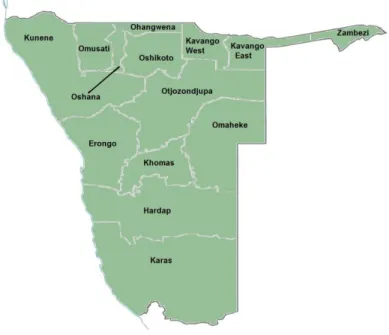
Nearly a third of the population of Namibia is in poverty (28%). Although the poverty rate is lower in urban areas of the country (about 14%), it increases in the more rural areas, such as the Kavango and the Kunene Regions (about 37.5%), where over half of the population lives (Figure 2.1). High poverty rates in the rural regions of Namibia are also accompanied by
10
problems with unemployment, sanitation, energy availability, and safe water availability
(Nguvenjengua, 2017). As of 2016, the unemployment rate had increased to 34% from 28.1% in 2014 (Trading Economics, 2018). As of 2015, only 24% of households in rural areas had access to electricity, compared to 75% of households in urban areas. In addition, in the most rural areas of the Kavango the percentage of households with access to safe water can be as low as 11%, and access to sanitation can be as low as 6.1%.
Figure 2.1: Map of the distinctive regions of Namibia (Katangais, 2017)
Namibia has relatively widespread and effective education for younger generations; however, secondary schools are limited, which reduces the number of children able to attend college or university (Garrouste, 2011). Since schooling is only required between the ages of six and 16, many Namibians’ level of education limits which occupations they can to hold. Thus, these individuals resort to careers in unskilled labor such as mining and farming. Some Namibian organizations have attempted to increase educational opportunities for children in rural areas of Namibia, as well as educate teachers on lessons they can use in their classrooms, in hopes of better education as a whole (Pelissari et. al., 2017).
Namibia’s climate plays a role in the environmental and economic challenges that Namibians face, and has been the subject of multiple IQPs. Considerable problems such as
11
erosion and flood damage arise from Namibia’s dry climate, combined with sudden, intense periods of rainfall (Reid et. al., 2008). This damage affects Namibia’s agricultural sector, as entire landscapes containing crops and cattle can be destroyed.
Another challenge faced by Namibians is limited access to healthcare. This is shown by the HIV/AIDS crisis. Prior to 2004, Namibia received adequate funding from the Global Fund and the President’s Emergency Plan for AIDS relief (Cairney, 2014). However, in the years following, there was a significant scale-down in donor funds, from which the program was not able to recover. Organizations that work to combat the virus and administer testing are currently struggling to fund their operations, and to educate individuals on the importance of being
screened. Namibians continue to struggle to eradicate HIV/AIDS despite the efforts of these organizations, due to the social stigma behind treatment and being diagnosed. Because of this social stigma, many individuals are unaware they carry the disease and spread it unknowingly. To combat the spread of HIV/AIDS, research needs to be completed to determine the reasons for reluctance to be treated or diagnosed. Outside of HIV/AIDS, there are organizations working to provide general healthcare to Namibians in rural areas or those who cannot afford it.
Poverty, education, climate effects, and healthcare access are some pertinent problems in Namibia. These problems, as well as others, guided our search for sponsoring organizations.
2.5 Summary
WPI students have completed projects across the globe for over 40 years. These projects help students to grow professionally, and to learn about other cultures. As the Global Projects Program expands, it is important for center directors to have a sufficient number of projects. These projects, as well as the project sponsors, must be properly assessed, and should address key issues within the center’s society. Our team identified a lack of a systematic method to form IQP and MQP sponsor relationships in the Global Projects Program. We will address the
methods we developed to identify, assess, and communicate with organizations in more detail in the next chapter.
12
Chapter 3: Methodology
As the Namibia Project Center (NPC) grows and faces the challenge of inconsistent sponsorship, our goal was to develop sponsor relationships and find projects for the NPC. To achieve this goal, we:
1. Identified potential IQP sponsors,
2. Determined methods to maintain sponsorship through marketing strategies and communication protocols,
3. Created a foundation for MQPs by identifying applicable sponsors and WPI academic departments.
In this chapter, we will outline the methods we used to achieve our objectives and reach our goal.
3.1 Identify Potential IQP Sponsors
The NPC is expanding, making it important to identify new sponsors capable of hosting IQPs. An organization’s project must meet the educational requirements of an IQP to be
considered. Organizations should also meet WPI’s non-educational requirements to host an IQP, and should have space for students to work and an organization liaison. The projects should also be beneficial to sponsors as well as students, so that students can have a worthwhile experience and the sponsors will continue to work with WPI. We identified potential sponsors using a variety of methods, such as online searches and networking through current sponsors, and developed sponsor and project impact assessments to evaluate the criteria above. We assessed organizations using the metrics we created, and used the results to make a sponsor directory and booklet of organization summaries reflecting their relative strengths in each criterion, and a sponsor directory containing each organizations’ contact information.
3.1.1 Identification Methods
We used three methods to identify potential sponsors in Namibia: self-search, suggestions from the NPC Director, and suggestions from other contacts. Self-search consisted of our team using search engines to find organizations related to some prevalent issues in Namibia, as we
13
outlined in Chapter 2. R. Creighton Peet, the NPC Director, provided our team with many suggestions of past, current, and new organizations to meet with. We also received suggestions for additional organizations to meet with from contacts, such as WPI faculty, organization liaisons that we met with, and other project teams. We identified these search methods by interviewing a series of center directors, specifically:
● Professor Emeritus Arthur Gerstenfeld, Co-Founder and former Co-Director of the NPC, and Founder and former Director of the Wall Street Project Center, ● Assistant Teaching Professor Nicola Bulled, Director of the Cape Town Project
Center,
● Associate Teaching Professor Dominic Golding, Director of the London and
Nantucket Project Centers, and
● Laura Roberts, Assistant Director of the Worcester Community Project Center.
We interviewed these center directors because they have experience in situations similar to the NPC’s. Arthur Gerstenfeld and Nicola Bulled have both built sponsor relationships with
organizations in developing countries; Dominic Golding and Laura Roberts have to find project opportunities for their centers in multiple terms each year. These center directors advised our team to determine which organizations address Namibia’s prevalent challenges by researching their respective purposes (A. Gerstenfeld & S. Vernon-Gerstenfeld, personal communication, January 30, 2018; N. Bulled, personal communication, February 8, 2018; L. Roberts, personal communication, February 20, 2018; D. Golding, personal communication). They also
recommended that we interview current sponsors for suggestions of other organizations able and willing to partner with WPI. Based on this advice, we used search engines to find the purposes of all organizations that we identified and always asked organizations for suggestions.
In addition, our team sent a survey to 2016 and 2017 NPC students, and interviewed D 2018 NPC students, to gain students’ perspectives on their relationships with their sponsors. We asked questions regarding the sponsor’s enthusiasm, clarity, and communication with the
students. The survey results revealed some negative experiences with organizations, and thus our team did not pursue these entities. These negative experiences included liaisons that did not
14
support the team by answering questions or being present at meetings, as well as organizations that provided projects that were either too broad or too narrow to qualify as an IQP.
To keep track of and to simplify our future sponsor communications, we cataloged the contact information of the organizations that we found into a sponsor directory. Our methods of self-search and contacts’ suggestions helped us find sponsoring organizations in a targeted manner.
3.1.2 Sponsor and Project Analysis
WPI must be confident in an organization’s ability to host projects and provide students with the resources to complete the project. We identified three key criteria from similar IQPs and advice from center directors. They are: Ability to Sponsor, Sponsor Enthusiasm, and Expected Project Quality.
The first criterion we evaluated was the organization’s ability to sponsor a project, which means that an organization meets WPI’s requirements to host an IQP. Organizations may require resources to support a project, which can consist of funding for any travel, a liaison for students to work with in Windhoek and in the field, a work space for the students, and other amenities such as internet access (R. Peet, personal communication, January 19, 2018).
The second criterion we evaluated is sponsor enthusiasm. This involves stated and perceived willingness, based on our interactions with organizations’ representatives during meetings. We noted sponsors who explicitly expressed interest in supporting a project, sponsors who declined, and their level of engagement during our meeting. We also noted follow-up communications, but did not consider a lack of follow-up contact as a sign of disinterest.
The third criterion is the expected project quality, which reflects the availability, suitability, and sustainability of projects. Project availability means that the organization has projects that WPI students could work on. A project is suitable if it has the educational value to qualify as an IQP, and is typically related to the effects of technology on society. Projects can be simplified or made more complex to fit the scope of an IQP. These projects must also have some educational value for the students. Ideally, these projects are sustainable, meaning they would span multiple years, so multiple groups could work on them. This is not a requirement of the project, but makes the project more desirable.
15
We created a sponsor analysis which consisted of two metrics of yes/no questions. One of these metrics evaluated Criterion 1, Ability to Sponsor (Figure 3.1), and the other assessed Criterion 2, Sponsor Enthusiasm (Figure 3.2). The Criterion 1 metric contained questions
concerning the organization’s purpose, community involvement, ability to communicate with the NPC Director and WPI students, and resources. The Criterion 2 metric contained questions pertaining to the stated willingness to partner with WPI, perceived enthusiasm, and engagement during our meetings with the organizations’ representatives.
Within the assessments, we indicated which response was favorable for each question (Figure 3.1 and 3.2). For each positive response, the organizations gained a point. For example, if question one for Criterion 2, “Did the sponsor explicitly state their willingness to work with WPI?”, had the answer “yes”, per the scoring guide they receive a point as this is the desired answer. If we answered maybe or somewhat for a question, this was indicated with a score of 0.5. This scoring system resulted in a highest possible score of eight for Criterion 1 and five for Criterion 2.
Question If Y: If N:
1. Does the purpose of the organization align with the goals of the project center? +1 0
2. Has the organization had a positive impact on the community? +1 0
3. Can the sponsor easily communicate with the center director and the project team? +1 0
4. Does the sponsor have the resources to support a project? (office space, transportation, housing and liaison for any fieldwork)
+1 0
5. Did the organization mention limited funding? 0 +1
6. Did the sponsor provide ideas for projects? (If yes, fill out the S.W.O.T. Analysis for each idea.) +1 0
7. Does the organization have a project coordinator that could act as a liaison for the students? +1 0
8. Has the organization had student interns/workers in the past? +1 0
16
Question If Y: If N:
1. Did the sponsor explicitly state their willingness to work with WPI? +1 0
2. Did the sponsor explicitly decline to work with WPI? 0 +1
3. On a scale of 0-2, what was the team’s perception of the sponsor’s enthusiasm? (0 being low/no enthusiasm, 2 being high enthusiasm)
1-2 0
4. Was the contact person engaged during the meeting? (taking notes, asking questions, etc.) +1 0
Figure 3.2: Sponsor assessment for Criterion 2, Sponsor Enthusiasm
We scaled the scores for Criterion 1 and 2 to reflect a scale of 0-1, to allow us to compare each organization based on each criterion. Then, we weighed Criteria 1 and 2 based on
importance, and used these to obtain a total weighted score for each organization. Our team determined the importance of each criterion through communication with WPI project center directors, and other WPI faculty and staff. We gave Criterion 1, Ability to Sponsor, a weight of 67%, while we gave Criterion 2, Sponsor Enthusiasm, a weight of 33%. We determined that Criterion 1 should be weighted as twice as important as Criterion 2 because organizations that do not have a purpose that aligns with the goal of the NPC, the ability to communicate with the NPC Director and WPI students, or the required resources may not be able to host an IQP. We weighted Criterion 2 less than Criterion 1, because it is difficult to accurately evaluate
enthusiasm, particularly in a different culture than our own. Also, we typically met with only one or two members of an organization, which is not a representative sample of the organization’s interest as a whole. We combined the scaled scores from Criteria 1 and 2 into an overall weighted score, a fraction out of one, to compare all organizations (Figure 3.3).
17
Organization: Men on the Side of the Road (MSR)
Criterion Score Scaled Score Weighted Score
Ability to Sponsor 7/8 7 ÷ 8 = 0.875 0.875 × 0.67 = 0.586
Sponsor Enthusiasm 4/5 4 ÷ 5 = 0.8 0.8 × 0.33 = 0.264
Total: 0.85
Figure 3.3: Example of scoring process
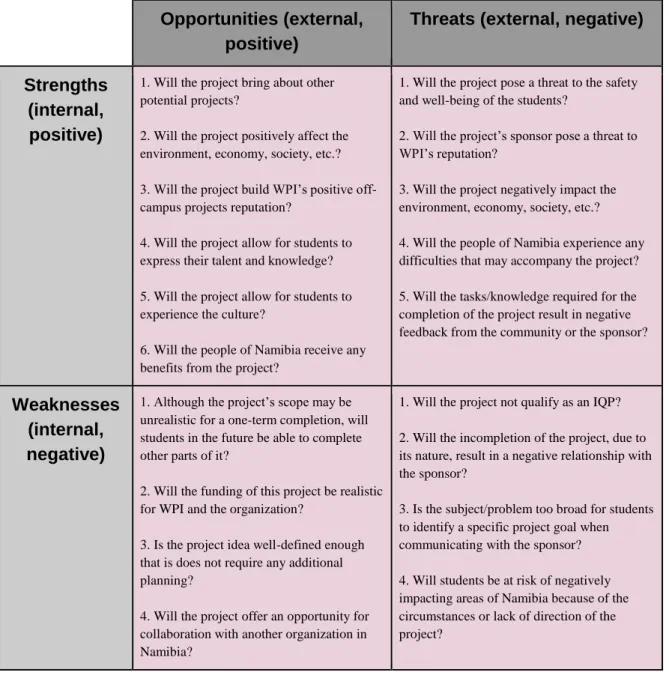
Our team evaluated Criterion 3, Expected Project Quality, using a S.W.O.T. analysis (Figure 3.4). A S.W.O.T. analysis is used to assess a project’s strengths, weaknesses,
opportunities, and threats (Verboncu, 2016). These elements are applied to the stakeholders involved and to the environment in which the project would be completed. The potential for success and degree of impact are determined by comparing the positive aspects of a project to the negative aspects. We analyzed elements such as: the benefits of the project, the project’s
influence on future projects, and the potential negative environmental or societal effects. The stakeholders are: the sponsoring organization, Namibian communities, WPI, and WPI students. Our S.W.O.T. analysis (Figure 3.4) consisted of a series of yes/no questions, which allowed us to evaluate the potential success of the proposed projects based on potential opportunities and threats.
18 Opportunities (external,
positive)
Threats (external, negative)
Strengths (internal, positive)
1. Will the project bring about other potential projects?
2. Will the project positively affect the environment, economy, society, etc.?
3. Will the project build WPI’s positive off-campus projects reputation?
4. Will the project allow for students to express their talent and knowledge?
5. Will the project allow for students to experience the culture?
6. Will the people of Namibia receive any benefits from the project?
1. Will the project pose a threat to the safety and well-being of the students?
2. Will the project’s sponsor pose a threat to WPI’s reputation?
3. Will the project negatively impact the environment, economy, society, etc.?
4. Will the people of Namibia experience any difficulties that may accompany the project?
5. Will the tasks/knowledge required for the completion of the project result in negative feedback from the community or the sponsor?
Weaknesses (internal, negative)
1. Although the project’s scope may be unrealistic for a one-term completion, will students in the future be able to complete other parts of it?
2. Will the funding of this project be realistic for WPI and the organization?
3. Is the project idea well-defined enough that is does not require any additional planning?
4. Will the project offer an opportunity for collaboration with another organization in Namibia?
1. Will the project not qualify as an IQP?
2. Will the incompletion of the project, due to its nature, result in a negative relationship with the sponsor?
3. Is the subject/problem too broad for students to identify a specific project goal when communicating with the sponsor?
4. Will students be at risk of negatively impacting areas of Namibia because of the circumstances or lack of direction of the project?
Figure 3.4: S.W.O.T. analysis for Criterion 3, Expected Project Quality
Ultimately, we wanted yes responses for opportunities, and no responses for threats. We then gave the project a total score out of 19, one possible point for each ideal answer. Because some organizations did not provide project ideas, we felt that this should not affect a sponsor’s overall rank, thus we chose to rank proposed projects separately. We also spoke to the
organizations about projects nearly a year in advance; project ideas will likely change. We scaled the scores for Criterion 3 to a scale of 0-1, which allowed us to compare the proposed projects.
19
We then summarized each sponsor we met with in a booklet, which contained the organization’s contact information, their purpose, past projects, our recommendations, and our scores for the organization and any proposed projects. We also added each organization’s contact information to a sponsor directory. We then gave this booklet and the sponsor directory to the NPC director, who will contact, or meet with, the proposed sponsors in the future.
3.2 Maintain Sponsorship
Sponsoring organizations are integral to the IQP process, thus the center director should have a repository of sponsors to reach out to in order to arrange enough projects per project term. This allows the center director to more easily find additional project opportunities, if other sponsors are not able to host additional projects. Therefore, communication and feedback protocols are essential to ensure a surplus of project ideas. To allow for clear communication, our team used a sponsor directory to maintain the contact information of sponsors, developed sponsor interaction protocols, and noted what sponsors need from WPI. Through sponsor interactions, we were able to recommend updated protocols for future use at the NPC that can also be adapted for other project centers.
A large portion of our project involved remote and in-person sponsor interactions. Thus, it was important for us to have a clear procedure for these interactions. After we identified as many potential sponsors as possible, we contacted each organization to set up meetings to discuss project opportunities (Figure 3.5).
20
Figure 3.5: Sponsor interaction steps
We first made contact with organizations via email. In this email, we described who we are, an outline of the IQP, and the expectations of each organization. If the organizations responded to this email, we attempted to set up a face-to-face meeting. If the sponsor did not respond to email within a week, we called. If the sponsor expressed interest, we set up a face-to-face meeting to discuss further questions and establish a rapport. If the sponsor did not respond to either form of initial contact, we went to the organization’s office to set up a meeting. If they were not interested in sponsoring a project, we did not attempt further communication. If they were not able to meet when we visited, we left hard-copies of our marketing materials and contact information. We also provided electronic copies of these materials in our follow-up
21
communications. We tracked all forms of communication in a contact log, including emails, phone calls, and meetings.
We developed a protocol for sponsor interactions that was generally followed, but due to the methods we found most successful, we altered these steps three weeks into our project. Our revised method was to either call or send an initial email, then to go to the office if we received no response. Limited phone call responses, time constraints, and the number of initial contacts we made when we dropped in on organizations, made this tactic more efficient for our team.
Every meeting was different, however the main topics we discussed were similar. With past or current sponsors, we asked about their experiences working with WPI, and for
information that they found useful during the project they hosted or wished that they were given before hosting a project. With new sponsors, we explained our project and the WPI project-based curriculum in greater depth than our initial contact. We did this by using our marketing materials to supplement our verbal explanation. With every sponsor, we then asked questions that aligned with the metrics we created to assess Ability to Sponsor, Sponsor Enthusiasm, and Expected Project Quality. We concluded each sponsor meeting by asking for suggestions of other organizations that may want to work with WPI. We then referred sponsors who expressed interest in working with WPI to the NPC director, and informed them of his upcoming visit in August.
We created marketing materials including a NPC informational flyer, brochures with examples of past IQPs, and a sponsor guide. We did this using information from previous IQPs that we detailed in Chapter 2 and from interviews with WPI center directors and IGSD staff. We made prototypes of these materials prior to leaving for Namibia. Although we planned to update them, we found this was unnecessary. Our team used these materials to explain the IQP, show the requirements and flexibility of projects, and outline sponsor requirements. The materials are reusable for future interactions with potential sponsors in Namibia, and can be adapted for use at other project centers.
3.3 Foundation for MQPs
Our team also determined which organizations have the potential to host an MQP. When interviewing organizations interested in hosting IQPs, if the organization suggested a project idea that was more technical or more applicable for an MQP opportunity, we introduced the MQP to
22
them. We also contacted organizations that were suggested to us for MQP opportunities, either because of the organization’s stated interest in partnering with WPI to our mutual contact, or because of a specific project at that organization. We considered project ideas as more likely to qualify as an MQP if they lacked social science research, required more technical knowledge than those found in IQPs, or had a deliverable that would require the knowledge of students with certain academic majors.
Although sponsors interested in hosting IQPs, as well as MQPs, were evaluated using the sponsor analysis we described in Section 3.1.2, we did not complete a sponsor analysis for organizations only interested in hosting MQPs or rank potential MQP sponsors. This is because the resources and requirements to host MQPs vary by project, and our assessment only targets the requirements specific to IQPs. Instead, we collected the potential MQP topics along with the organization’s purpose and identified relevant WPI departments with which each organization would work.
We used methods similar to those described in Section 3.2 to market the MQP. We used the same informational flyer, a separate brochure with example MQPs, and the sponsor guide. We then forwarded the project ideas to the NPC Director and Dr. Aaron Sakulich, one of our team’s NPC advisors and the Director of the Iceland and Panama Project Centers, so that the information could be passed on to relevant WPI faculty. These faculty members will then decide whether or not they would like to pursue the opportunity. We also emailed 24 WPI departments and programs to gauge the need for off-campus MQPs, as well as interest in MQPs in Namibia. These MQPs have the potential to impact the Namibian community in a different way and on a larger scale, than an IQP. MQPs would allow for more projects in Namibia, and would help meet the growing need for global opportunities at WPI.
3.4 Summary
As the NPC grows and faces inconsistent sponsorship, it is important to increase and maintain the number of potential partnerships. After our team determined potential sponsoring organizations, we marketed the IQP to new sponsors and the MQP to all relevant sponsors. We then evaluated each sponsor and IQP idea, and assessed each organization’s overall suitability to partner with WPI. Our project will facilitate the sustainable growth of the NPC, and provide a basis for other center directors and future IQP teams.
23
Chapter 4: Results
We used our methods to identify, evaluate, and communicate with Namibian
organizations, which enabled us to determine which organizations are willing and able to host projects for the NPC. We ranked these organizations using our sponsor analysis scoring system, based on Ability to Sponsor and Sponsor Enthusiasm, Criteria 1 and 2. We ranked the proposed projects on Expected Project Quality, Criterion 3. We then relayed this information to Professor R. Creighton Peet, the NPC Director, and other WPI faculty and staff. The following sections outline the data we collected.
4.1 Identify IQP Sponsors
Our first objective was to find organizations in Namibia and evaluate their ability to partner with WPI. We used three methods to identify sponsors, and tracked our use of each method to determine which resulted in the most meetings. We scored each organization based on three criteria, then gave them an overall weighted score, as we described in Chapter 3. We compiled the names and purposes of each organization (Table 4.1).
24
Table 4.1: Organizations identified and purposes
(Organizations we met with are marked in orange and organizations we were unable to meet with are marked in pink, all purposes obtained from organization websites, listed in Chapter 6)
ORGANIZATION PURPOSE
Automobile Association of Namibia (AA) Provides motoring amenities and facilities to its members
Beautiful Kidz Provides support and education to children in need and their families Cheetah Conservation Fund (CCF) To maintain the wild cheetah population
City of Windhoek Promotes businesses, residential areas, and tourism
Desert Research Foundation of Namibia (DRFN) Focused on sustainable development in arid lands
EduVentures Provides rural areas with environmental education
Elimination 8 Provides malaria testing and treatment in rural areas of eight south African countries
Elite Employment An employment recruitment agency in Namibia
Environmental Investment Fund (EIF) Invests in multiple organizations focused on the environment
FP du Toit A transport group and freight company
Friedrich Ebert Foundation Facilitates political and social education, and provides scholarships Gobabeb Research and Training Centre Conducts research on many issues related to the desert and arid land Hanns Seidel Foundation (HSF) Promotes democratic, environmental, and economic advancement Healthworks Provides wellness services to employees to promote a healthy workforce Institute of Public Policy Research (IPPR) Completes research into social, political, and economic issues in Namibia Integrated Rural Development and Nature Conservation
(IRDNC)
Diversifies the socio-economy of wildlife and natural resources topics to improve the lives of rural people
Labor Resource and Research Institute (LaRRI) Promotes political and economic independence of working individuals Men on the Side of the Road (MSR) Connects unemployed Namibians to job and training opportunities
Michelle McLean Children Trust (MMCT) Encourages children to recognize beneficial opportunities
Ministry of Agriculture, Water, and Forestry (MAWF) Uses Namibia’s agriculture, water, and forest resources, sustainably and equitably, for improved livelihood, well-being, and wealth
Ministry of Fisheries and Marine Resources (MFMR) Manages Namibia’s fishing industry
Ministry of Land Reform (MLR) Ensures that Namibia’s land resources are managed efficiently Ministry of Veterans’ Affairs (MOVA) Initiates projects and programs to assist veterans
25 Namibia Development Corporation (NDC) Promotes a society made up of self-managed and sustainable companies Namibia Development Trust (NDT) Promotes self-management through participatory development Namibia Housing Action Group (NHAG) /
Shack Dwellers Federation of Namibia (SDFN)
To improve living conditions for those without commercial housing
Namibia Nature Foundation (NNF) Promotes the conservation of biological diversity and natural resources Namibia Tourism Board To market and develop tourism and improve the standard of living
Namibian Olympic Committee To organize and plan participation of Namibian athletes in the Olympic and Commonwealth Games
NamPower Allows bulk electricity to be supplied to local establishments and mines
NamWater Supplies water to industries, municipalities, and the Directorate of Rural Water Supply National Art Gallery of Namibia (NAGN) To preserve and encourage art in Namibia
National Botanical Research Institute (NBRI) Promotes the conservation and sustainable use of Namibian plants National Theater of Namibia Promotes the art of theater throughout Namibia
National Youth Council (NYC) Promotes national unity and awareness of current day culture and politics for Namibian youth
NUST Centre for Teaching and Learning (NUST CTL) To better teaching and learning abilities of NUST faculty and students
NUST Faculty of Engineering (NUST Eng) Oversees the Departments of Civil & Environmental Engineering, Electrical & Computer Engineering, Mechanical & Marine Engineering, and Mining & Process Engineering NUST Faculty of Health and Applied Sciences (NUST
H&AS)
Oversees the Departments of Mathematics & Statistics, Health Sciences, and Natural & Applied Sciences
NUST Faculty of Management Sciences (NUST MS) Oversees the Departments of Marketing & Logistics, Accounting, Economics & Finance, Hospitality & Tourism, and Management
NUST Faculty of Natural Resources and Spatial Sciences (NUST NR&SS)
Oversees the Departments of Agriculture & Natural Resources Sciences, Architecture & Spatial Planning, Geo-Spatial Sciences & Technology, and Land & Property Sciences Owela Museum Educates visitors about Namibia’s diverse natural and cultural history
Physically Active Youth (PAY) Promotes life skills and physical activity for children through after-school program
Sister Namibia Collective Promotes gender equality
TransNamib Holdings, Ltd. Provides freight and passenger services by rail and road
Walvis Bay Corridor Group (WBCG) Promotes the utilization of the network of transport corridors in Namibia
Windhoek Vocational Training Center (WVTC) Provides Namibians with vocational training
26
4.1.1 Identification Methods
We identified 46 organizations that were suitable to host IQPs based on their organization’s stated purpose, and kept a record of our identification methods and
communications in a contact log. These organizations consisted of 12 educational institutions, 16 non-profit organizations, eight for-profit organizations, eight government agencies, one political foundation, and one Feminist and Women’s Rights Group. Of the organizations we contacted, we found 14 through self-search, such as using an online search engine, 17 through suggestions from the NPC Director, and eight through a mutual contact, such as a current or former center director or an organization liaison. Furthermore, we found four organizations through both the NPC Director’s suggestions and through a mutual contact, and three through a mutual contact and self-search. From these data, we found that we used suggestions from the NPC Director most frequently. One, or 7.1%, of the organizations found through self-search responded to our initial communications, while seven, or 41.2%, found from the NPC Director’s suggestions responded, and two, or 25%, found from a mutual contact responded. Three, or 75%, responded that were suggested by the NPC director and a mutual contact, and zero responded that were suggested by a mutual contact and found through self-search. Individually, a suggestion from the NPC
Director was the most effective method for receiving response to initial communications.
4.1.2 Sponsor and Project Analysis
We met with 19 potential IQP sponsors, but assessed 20, and we scored organizations based on two criteria: Ability to Sponsor and Sponsor Enthusiasm. Although we were unable to meet with the current sponsor EduVentures, we were able to analyze them based on interviews with the two D 2018 teams. We then compared each organization using their score for each criterion and their overall weighted score. We used the overall weighted score to rank organizations on their capability and likelihood to partner with WPI. We then used our third criterion, Expected Project Quality, to rank all proposed projects.
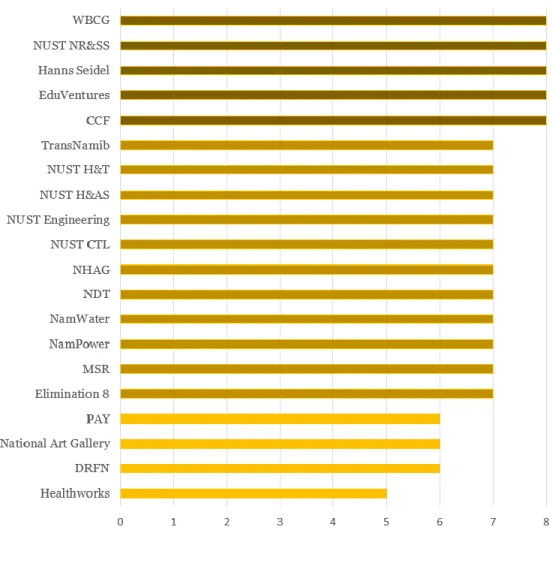
We gave the organizations a score based on a series of yes/no questions to evaluate Criterion 1 (Figure 3.1). Of the organizations that we assessed, those that we ranked higher typically had a reliable source of funding, project ideas, and a clearly defined project coordinator that could be used as a project liaison (Figure 4.1). For example, the Hanns Seidel Foundation had multiple project ideas, and a stable source of funding. Organizations that we ranked lower
27
typically had limited funding, or did not have an area of project work for WPI students. For example, the Healthworks representative stated that they have limited funds, and we ranked their enthusiasm a one out of two.
Figure 4.1: Scores forCriterion 1, Ability to Sponsor
The second criterion we evaluated was Sponsor Enthusiasm (Figure 4.2). We analyzed this using another series of yes/no questions (Figure 3.2). Of the potential IQP sponsors that we interviewed, 15 out of 20 organizations stated willingness to work with WPI in the future, four organizations did not explicitly state interest or decline a partnership, and the DRFN declined. We based this criterion on the contact person’s stated and perceived level of interest and their engagement during the meeting. Our team cannot determine the exact level of a sponsor’s enthusiasm, as we cannot accurately quantify body language and attitude, especially in a foreign
28
culture. We noted follow-up communications, but did not use these as a way to assess a
sponsor’s enthusiasm. The contact person’s personal habits and cultural differences in terms of normal email response times, may affect follow-up responses without meaning lowered interest.
Figure 4.2: Scores for Criterion 2, Sponsor Enthusiasm
We then created an overall weighted score for each organization using their scores for Criteria 1 and 2 (Figure 4.3). We assigned Criterion 1, Ability to Sponsor, a weight of 67% and Criterion 2, Sponsor Enthusiasm, a weight of 33%. We then displayed the overall weighted score as a fraction out of one. From this evaluation, we were able to rank all organizations that we met with in order of suitability to sponsor projects.
29
Figure 4.3: Organization overall weighted score based on Criteria 1 and 2
The top six organizations were:
1. EduVentures
2. The Walvis Bay Corridor Group
3. The Cheetah Conservation Fund
4. The Hanns Seidel Foundation
5. NUST Faculty of Natural Resources and Spatial Sciences
30
We emphasized six organizations because there are, at most, six IQPs per term at the NPC. These organizations typically had the necessary resources to host projects and are enthusiastic about working with WPI. The most important organizations in this list are the new relationships made or the renewed connections to past sponsors. Whereas the NPC Director is in touch with the current or very recent sponsors, he can now also begin communication with all newly identified organizations to set up projects for the future.
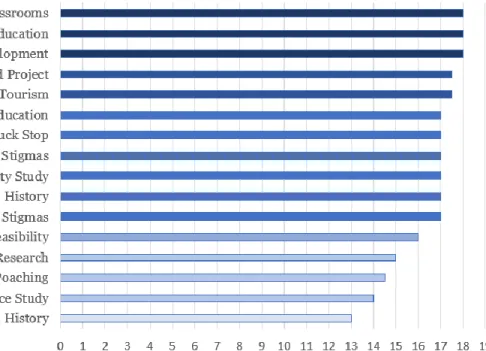
The final criterion we evaluated was Expected Project Quality, which we assessed for 16 of the proposed projects (Table 4.2). This criterion refers to the impact that a proposed project will have on a student, the organization, or the community, thus this is a main component in determining an organization’s potential success as a sponsor.